






















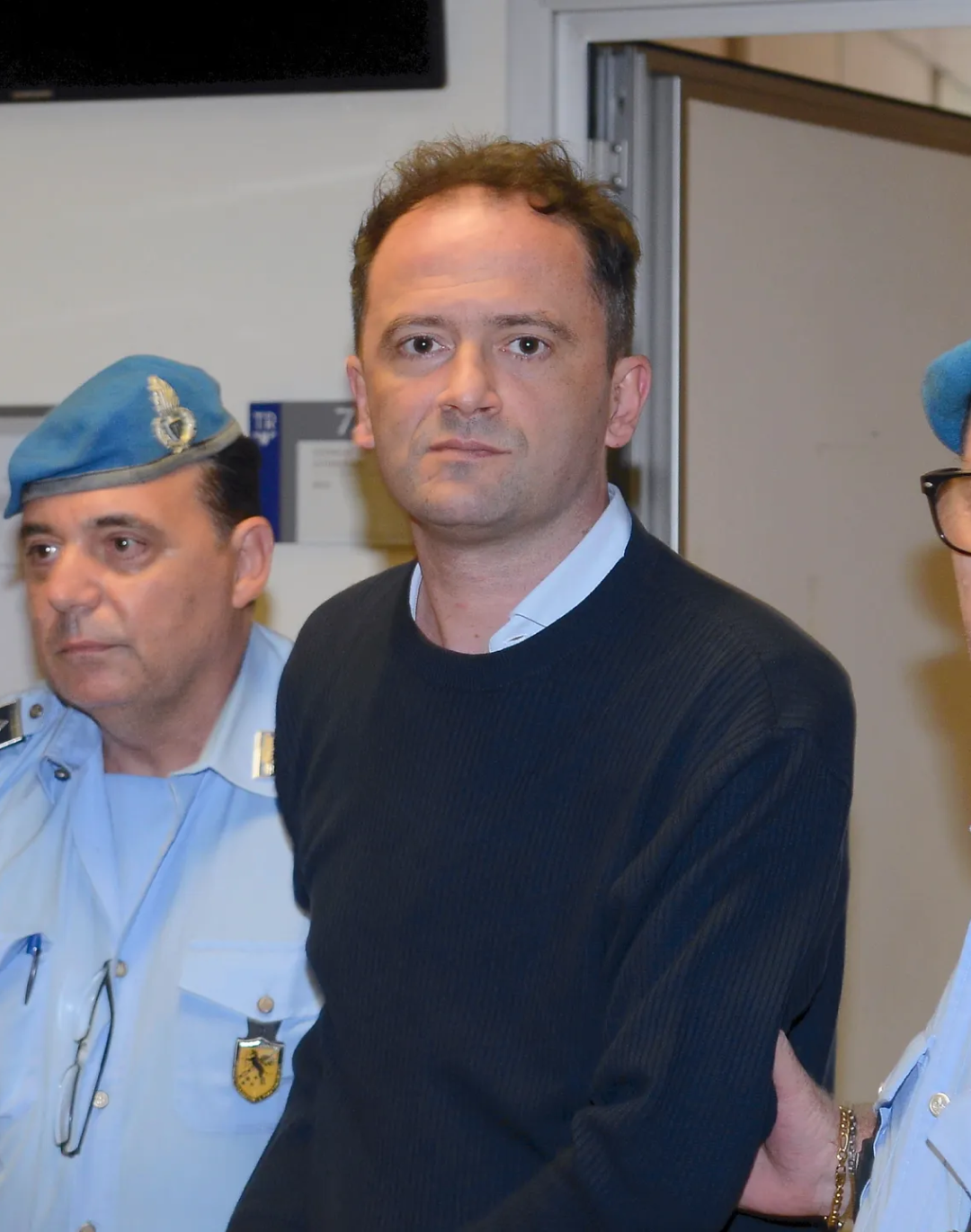
"Start Up, Fall Down: From Billionaire to Convict" and the dark side of Milan's nightlife The new Netflix docuseries focuses on the high-profile case of entrepreneur Alberto Genovese
There is one genre that has now firmly established itself on Netflix: the docuseries. Over the years, the platform has increasingly refined it. A topic is chosen, interviews are conducted, reconstructions are added so that the spoken words have a visual counterpart, and everything shown on screen is even aestheticized to achieve a clean, flawless, almost anesthetized package. The first docuseries to set the standard was SanPa – Luci e tenebre di San Patrignano, which, unlike all the other productions that followed in its footsteps, had something that was never repeated: spontaneity.
Not that of the interviewees or in the way the facts were presented, but in the genuine desire to tell a story — to do so with a certain structure and specific choices that, in fact, suited the subject matter. Yet, there have been others since then, each one losing more and more of that raw honesty that made the original a success. It is along this line that Terrazza Sentimento arrives.
Who is Alberto Genovese?
The three-part docuseries reconstructs the case of entrepreneur Alberto Genovese and the violence inflicted on several young women who used to frequent his home. The scandal broke in October 2020, shedding new light on the so-called Milano da bere lifestyle, on cocaine and its effects, and on the party scene that thrived in the period immediately following the pandemic (and, apparently, even during it).
Unlike the docuseries itself — whose goal seems to be producing new content without finding an original or incisive way to do so, ending up as a mere container of facts — the result feels more like an addition to the Netflix library than a true investigation into one of Italy’s most recent public scandals. This impression is reinforced by the short time gap between the real-life events and their streaming adaptation.
Start Up, Fall Down: From Billionaire to Convict
ho visto il documentario “terrazza sentimento “ ed il mio disgusto per Milano, gli uomini e quel tipo di società sta triplicato. un orrore
— Lasinneristaveneta (@camiziani) November 6, 2025
Terrazza Sentimento could have been an opportunity to shed more light on how privilege becomes an excuse to justify the most reprehensible acts, on the ease with which women remain constantly exposed to danger, and especially on how quickly they are accused of “asking for it” rather than being supported. The docuseries is not bad, though it is questionable in some of its choices — such as the need to go back to Genovese’s childhood to show that he was bullied and excluded from parties, an explanation that clashes with the narrative about the hedonistic parties he organized as an adult and the abuse inflicted on drugged, sedated, and raped women.
Another debatable choice is the use of digital reconstructions where original materials are missing, complete with simulated chats. That Terrazza Sentimento quickly reached the top of the Netflix charts was predictable. But what deserves more reflection is our ongoing fascination with delving lightly into disturbing stories and our pursuit of the spectacularization of evil — a phenomenon that has little to do with the production quality of these docuseries.
What to read next
"Wild Horse Nine" by Martin McDonagh is tender and ruthless at once
With an award-worthy John Malkovich
How much did the Milan protests cost local shops?
With Via Montenapoleone on lockdown and sales lost, some estimates put "damages" at 4 million euros
"Un tranquillo funerale di famiglia" is everything comedy should not be today
Massimiliano Bruno's film had its premiere at the Rome Film Festival