




















The Grande Fratello documentary is a page in the history of Italian television And perhaps also on us as viewers
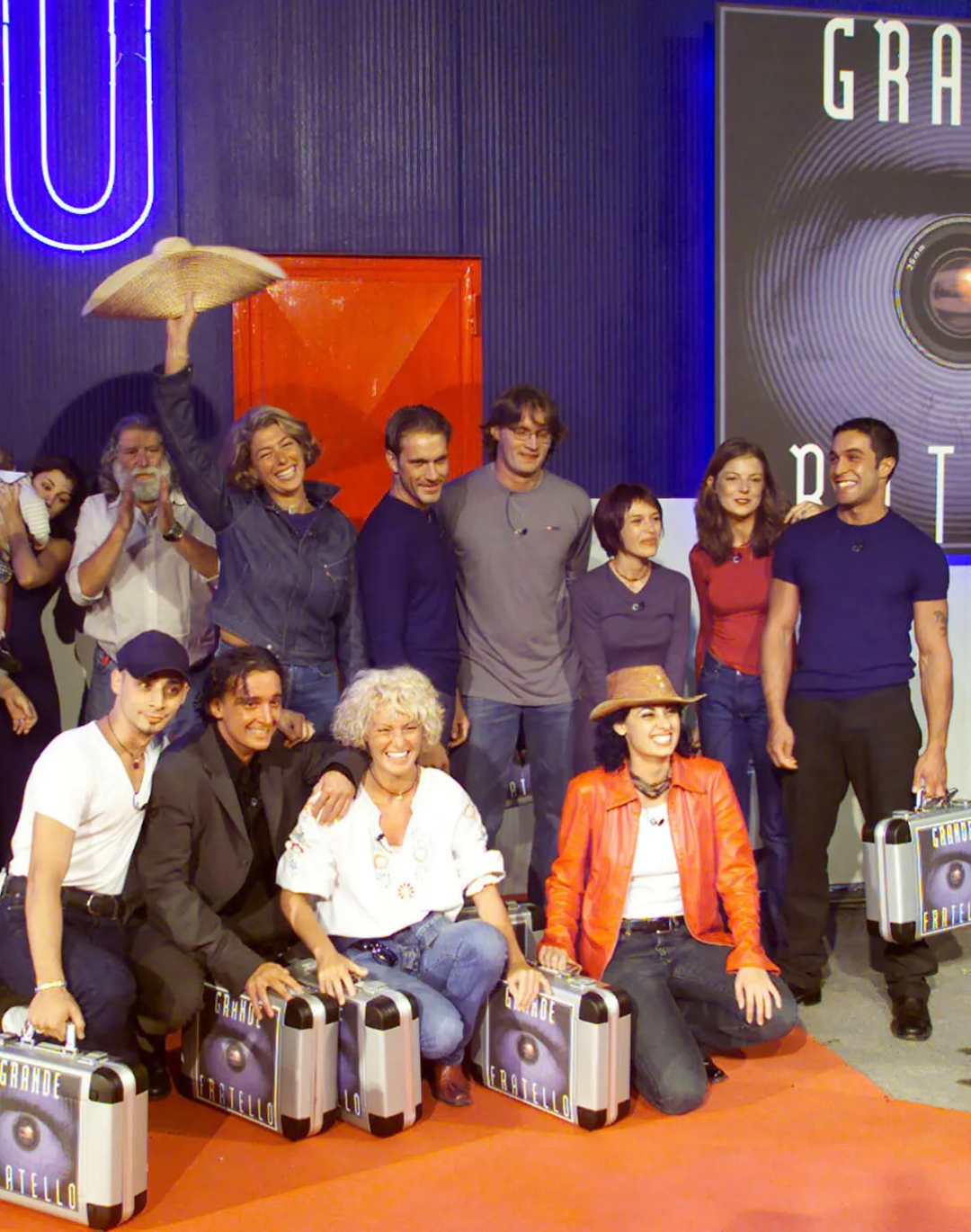
On the Mediaset Infinity platform, completely free of charge – despite at least ten advertising interruptions – you can revisit a piece of television history with the documentary Grande Fratello - The Beginning. It is a true entrance through the most famous red door of the small screen, one that revolutionized the way of producing, watching, and experiencing home entertainment. The release on the platform coincides with the twenty-fifth anniversary of the program, one of the longest-running shows on Italian television, still surviving season after season where many other countries eventually gave up. The format was originally inspired by the Netherlands, became a massive success in Spain, and then exploded on Italian networks. An epochal shift in the way television was made, which is exactly what this tribute focuses on.
The story of Grande Fratello
A Mediaset documentary about Mediaset’s most important show, which of course chooses not to show its shadows, only the spotlights still shining on it. But that’s fine, it doesn’t need to, because Grande Fratello - The Beginning has the same intent as the show that first aired in 2000: simply to show, not explain or dig deeper. To bring back what it was and the impact it had. This can still be seen today as the show launches its nineteenth season, whose first episode reached a 20.4% audience share. A tough result in a landscape where it will never again reach the 60% of the first season finale – numbers perhaps only matched today by the Sanremo Festival – but the show is regaining its original shape with the return, fifteen years later, of Simona Ventura as host and a polished-up look that tries to limit the excesses of recent years, bringing it closer to the initial experiment with Daria Bignardi.
Because yes, the very first edition of Grande Fratello was an experiment, and it was hosted by Daria Bignardi. Two crucial elements to understand the making and the subsequent phenomenon that followed, which is no coincidence happened at the turn of the century, when the twentieth century (along with its vision, its arts, and its artists) was coming to an end, leading to a digital revolution. In many ways, Grande Fratello back then was the equivalent of the Instagram stories we post every day today.
The crisis of television (and how GF seized the moment)
What emerges most strongly from the documentary is the breaking point to which television entertainment had inevitably come. The generalist networks, in ratings crisis, seized the opportunity to try to regenerate themselves, looking for new vitality. Variety shows no longer worked, yet the screens were still filled with familiar faces, actors, and singers who no longer attracted the public. While in cinema the digital era meant access to lighter, cheaper technology, opening up new spaces for emerging talents and forms of expression, for television it was the exact opposite: the crisis deepened and innovation struggled to find room.
There was no need – in fact, it almost wasn’t required – to be talented. The talented were overshadowed by those who had nothing to offer but themselves. And yet, even behind this claim, which is true and even stated in the documentary by Giorgio Gori, lies a paradox. Because while on camera the show was about everyday life, about banality, about the sweetness of doing nothing, behind the cameras of Grande Fratello a series of creative minds were able to extract the honey from the era of reality shows. GF became like a queen bee, from which all the other formats still on air today have derived.
How Grande Fratello changed Italian television
Chi ha visto il documentario dell'inizio può non capire o solo immaginare. Chi come me invece l'ha visto 25 anni fa lo sa. Le successive saranno state anche divertenti ma è show, di reality ben poco. Quella edizione è storia. L'unico vero #GrandeFratello è quello del 2000 pic.twitter.com/ipuKDiLMij
— Stefania (@Stefyeros) September 30, 2025
Careful producers, set designers capable of creating a well-coded visual world in contrast with the monotonous days of the contestants, but above all casting directors who knew exactly who to look for, why to look for them, and how to build a line-up of personalities able to weave a story. That this story would then unfold naturally was another matter; but the ability to immediately recognize the archetypes behind the faces, coupled with a certain eagerness to appear on camera, allowed them to steer the most unsteerable show one could imagine. Thus, Grande Fratello - The Beginning, just like today’s Grande Fratello, seems to tell us more about ourselves than about them. It shines a light on the obsession with visibility and on those who decide to live “live” 24/7, but even more so on the 16 million people who, on the night of the finale, chose to gather around their TV sets to see who would be the last to leave the house. The same questions apply today, considering the show is still the most watched on Italian television, with its ups and downs.
The question remains: what is worse, those who voluntarily choose to be the Truman Burbank of the situation, or those who constantly watch him on their devices? Then as now, the unresolved issues remain the same. Only, twenty-five years ago, Grande Fratello was an experiment in putting strangers together in a house to see what they would do and maybe draw a conclusion from it. Today, after many such experiments, it simply shows how much we enjoy judging the lives of others (and their home viewing habits), while reality shows – supposedly so deplorable – continue to be among the most watched programs in our country. So who is really to blame: us or them?
What to read next
In "The Debut" Julianne Moore gives a masterclass in acting
The film, premiering at the Rome Film Fest, hits theaters on January 1, 2027
"Masterplan" is everything a heist movie shouldn't be
The film starring Stanley Tucci, Simona Tabasco and Victor Belmondo is available on Prime Video
"Fjord" is an impressive piece of writing
Cristian Mungiu's film, winner of the Palme d'Or at Cannes, arrives in cinemas on November 19