






















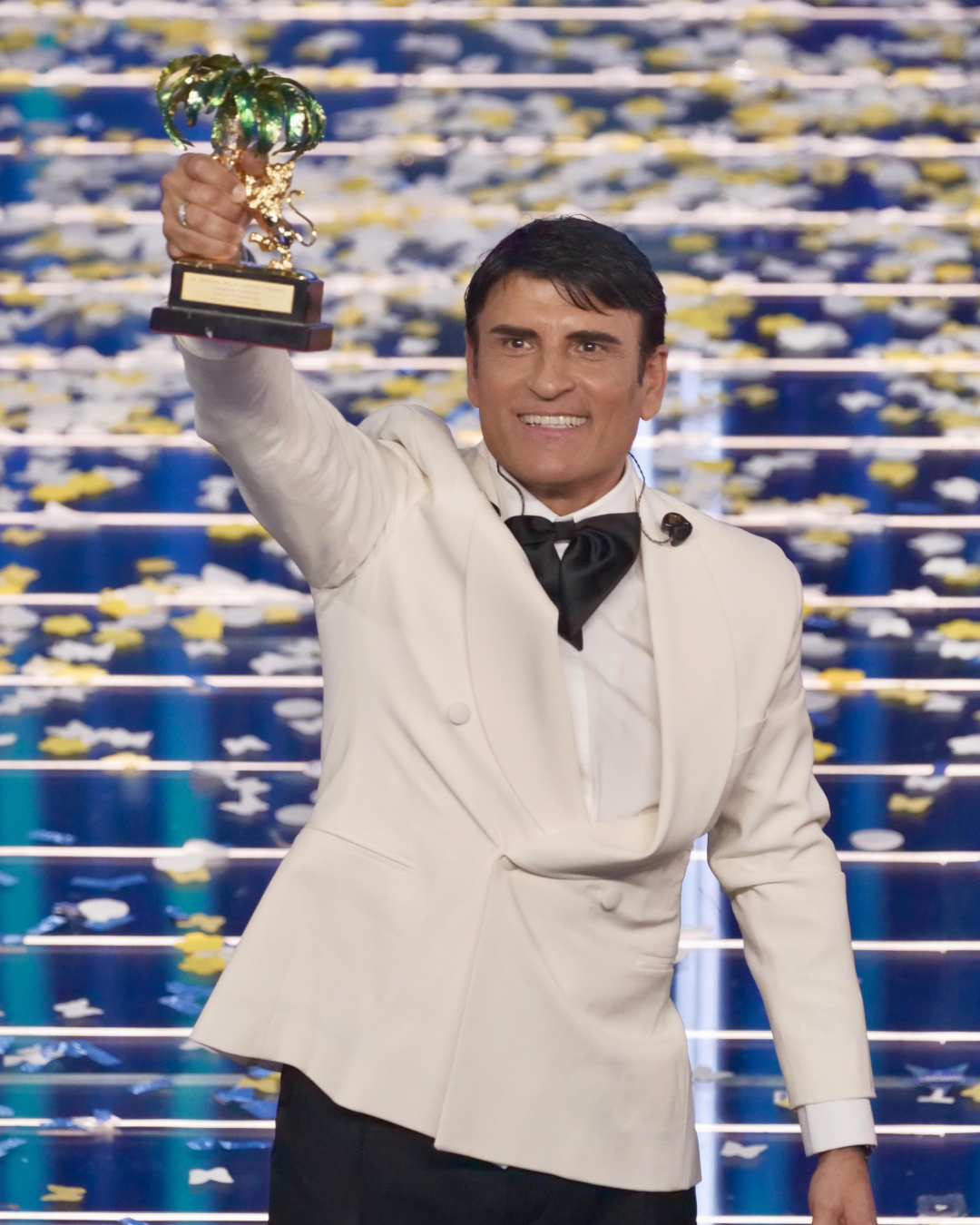
In the end, the good guys won at Sanremo 2026 (and Naples too) How did the last night of the Italian song festival go?
Sal Da Vinci sang about a promise on the Ariston stage. About a yes that would change everything, and that is exactly what it did for the performer who took home the first prize at the 76th edition of the Italian Song Festival. In Sanremo, in this 2026 where problems outside the stage are making an enormous amount of noise, Per sempre sì brought a breath of lightness, placing back on the podium an artist who returned to the spotlight in 2024 with Rossetto e caffè. A career entirely on the rise, one that never truly stopped for the Neapolitan singer, who dedicates the song to his family and, at the same time, to the city he comes from, reaffirming that within our cultural landscape there is a great deal of neomelodic music that is impossible to ignore, especially when it comes to national music and culture.
The dystopian scenario of the Sanremo 2026 final
Nulla assomiglia di più all'ultima festa danzante sul Titanic che la serata finale di Sanremo durante l'aggressione all'Iran da parte di Usa e Israele.
— Kermit the Frog (@meltingmax) February 28, 2026
At Sanremo 2026, the good guys won and, on a day when yet another crucial global conflict was added, such as the USA-Israel-Iran clash, the sense of confusion grows even stronger when devoting oneself to certain lighthearted distractions while there are countries literally going up in flames. It is far too easy to quote Boris every time with its locura, but increasingly, and perhaps more than ever this year, the festival represented the disconnect between what is happening and what we experience, as we look for an escape in the mad circus offered by Rai, perhaps to distract ourselves a little: «This is the Italy of the future: a country of catchy little tunes while outside there is death». And so we all learn the dance to Per sempre sì and get ready to upload our video to TikTok. Is there something wrong with this? Not at all. Is it the paradox of the times we are living in? Absolutely yes.
Sal Da Vinci’s journey at Sanremo
And so, over the Male necessario by Fedex & Masini, it is the energy and hope of Sal Da Vinci that prevail. Against the two favorites, who poured anger and resentment onto the stage, the choice fell on the simple, linear, utterly predictable yet exhilarating message of a song that will be played on every possible occasion, especially for those about to get married. Da Vinci won the Sanremo Festival and all the SIAE royalties from now until the end of his days. The wedding business is by no means something to underestimate, and it is certainly not something the Neapolitan singer has overlooked.
Good feelings are an important part of the artist’s victory, whose professional path has deep roots, even starting from his father’s profession. A singer and actor himself who, while touring in America in the late Sixties, saw his son born in New York, where he began singing at the age of six. For those who only discovered him with the hit Rossetto e caffè, the entire background of years spent touring Italian theaters and his previous participation in Sanremo, where he placed third with Non riesco a farti innamorare in 2009, may be missing. But Sal Da Vinci never stopped, recording in the studio, acting in musicals and even doing a bit of cinema.
A song, Per sempre sì, that comes as the crowning achievement of a decades-long journey, recounted by the singer in recent days through the moments of hardship he went through with his family, from his son’s bout with meningitis to the financial struggles he had to overcome. And while it may not be the most original, the most refined or the most technically impeccable song, it nonetheless seems to be exactly what everyone needs in this moment of drama and misfortune. It is the victory of a trajectory, of a story that unfolded even offstage through viral videos and the singer’s likeability, as well as the definitive affirmation of his national-popular status.
The end of Carlo Conti’s reign
Sanremo 2026 closes with the triumph of a Neapolitan artist and will open in 2027 with the opportunity for a fellow countryman to prove his worth. Carlo Conti steps aside (thankfully) as host, handing over to Stefano De Martino, who from next year will be the master of ceremonies at the Ariston. A live on-air announcement, a genuine passing of the torch, and a source of curiosity above all because of the young age of the Affari tuoi host, who with the festival will have the opportunity to further broaden his audience and show whether or not the revival of the game show has been justified.
As for the rest, the final night of Sanremo 2026 unfolded in much the same way as the previous ones, except that this time the co-hosts were Nino Frassica and Tg1 journalist Giorgia Cardinaletti (him faltering, her impressive), Andrea Bocelli arrived riding a white horse, and Dargen D'Amico demonstrated that images can speak even without words by wearing the colors of Palestine. The appointment is for next year and all those to come that Sanremo may wish to give us and, as Sal Da Vinci would say, «accussì, sarà p semp sì».
What to read next

When Rei Kawakubo designed a furniture line
An experimental collection created by the designer in the 1980s for Comme des Garçons
In "The Stranger" the family is fertile ground for horror and fear
Paolo Strippoli's new film puts the mother-daughter relationship back at the center