





















At Sanremo 2026 war is bad but must not be named The third night was an alternation of important issues and current hit songs
We enter Instagram. We scroll. Holiday photos of our friends. Carousel about the dead in Gaza. Scroll again. Selfies of acquaintances at that event that seems so fun. New discoveries from the Epstein Files. Scroll again. Videos of people killed in Palestine, in Ukraine, a few tender reels with puppies, whether dogs, cats or even an abandoned monkey, in short, any kind of cub. And, in between, a few selfies. The third night of the 76th edition of the Sanremo festival was exactly like this. Or rather, it seemed so, since words like Gaza or Palestine are unpronounceable on the Ariston stage.
The past that obscures the present
"a casa mia eravamo sicuri, tutti di sinistra" detto da una donna di 105 anni a sanremo, in diretta rai telemeloni, mi sto pisciando sotto, servito signoraaa
— apatica (@apatica_) February 24, 2026
pic.twitter.com/SDwx7o6KqZ
The same reception mode, the same contents proposed, the now constant sensation of dismay that the news we receive every day leaves us as it alternates on our smartphones: everything was amplified on one of the most famous stages in Italy. That Sanremo has spaces reserved for tear-jerker moments is now well known. Even Gianna Pratesi, the centenarian known from the festival’s first meeting, was there to represent the history of the birth of the Italian “Repupplica”, while also giving us a sense of warmth through her venerable age.
A bit like what happened again with Mogol, who will turn ninety next August, who received a lifetime achievement award, just as the previous evening one was also given to Fausto Leali (81 years old), just to maintain internal narrative coherence of the event — namely that it is fine to have competitors in the race with names like Aka 7even, Nyat, Samurai Jay, but our recognitions always go only to octogenarians and older.
A bombardment of random information
Sanremo 2026 prima serata out of context #Sanremo2026 pic.twitter.com/1xUKg465Nu
— yeehaw de angelis (@mnlghtindanish) February 24, 2026
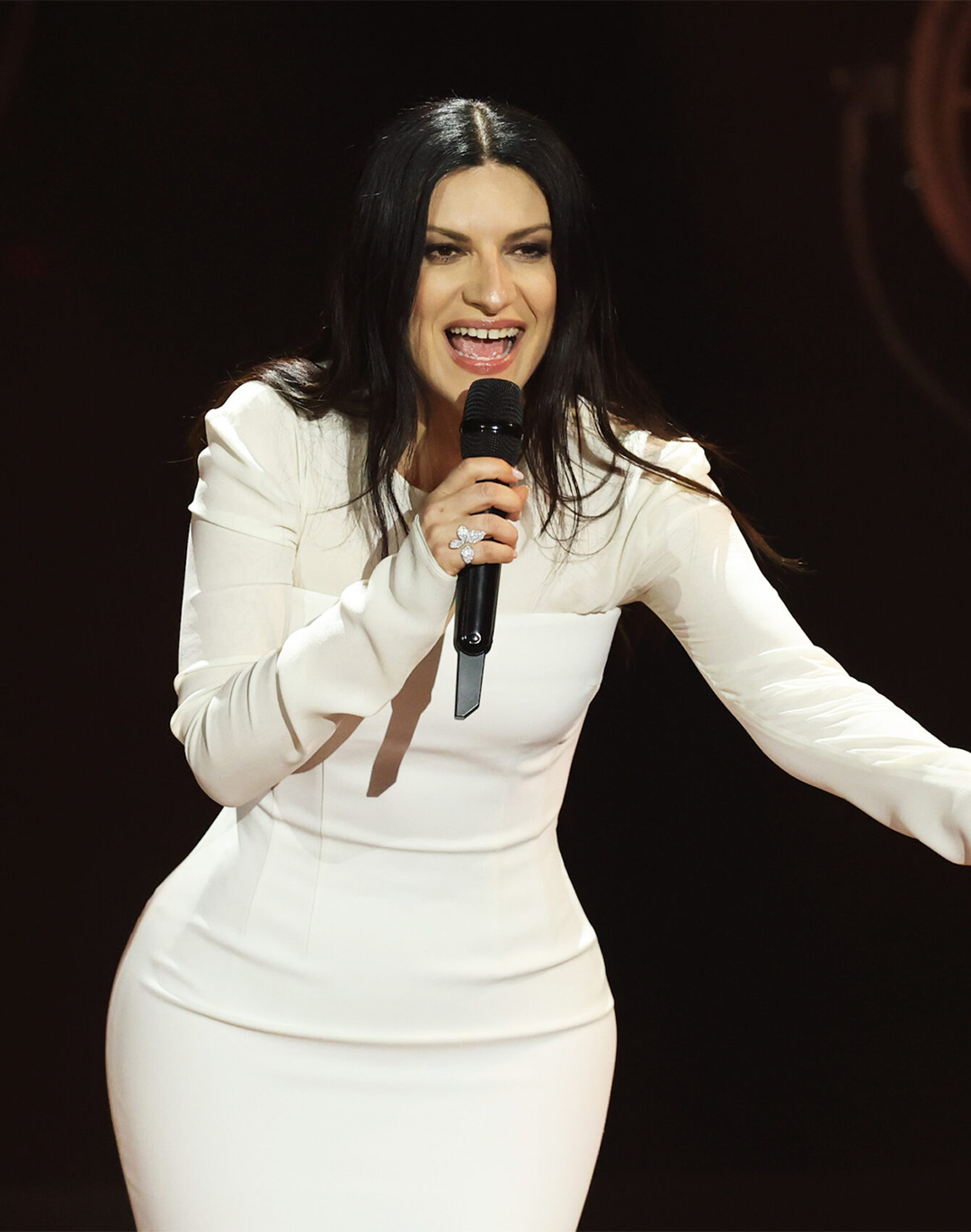
Honors aside, even if integrated into the schizophrenic soul of Sanremo’s narrative, what the evening demonstrated was how this bombardment of random information we are all immersed in every day — from the most serious issues to the most superficial ones — has now become a pattern that even public television must submit to. First the young Sanremo competition, then Mogol, then songs, then Laura Pausini performing for world peace, then songs again, then Carlo Conti reminding that no means no and consent is important, then again songs, then a moment against violence toward young people, and finally more songs.
A sequence that repeated like a drumbeat, releasing one idea after another in a climate of surrealism and hypocrisy. Where wars are all bad, but cannot be named. Where a singer like Ermal Meta brings to the festival a song about children killed in Palestine, but cannot even appear on stage with a pin. Where Laura Pausini sings Heal the World with children from the Piccolo Coro dell'Antoniano to spread a message of peace and, the next second, the host asks them if they know Le tagliatelle di nonna Pina.
That the public service has the duty and responsibility to send important messages to a wide audience — with share ratings continuing to fall, stuck at 59.5% in the second evening — is a noble gesture. But if they must be moments that are only rhetorical, approximate and merely transitional between one contestant and another, then it would be better if they did not exist at all, because this is just a way to hide behind a finger. We said war is bad (as Corrado Guzzanti taught in Il Caso Scafroglio), so they cannot blame us. We said that no means no — so why should we deepen the issue of violence against women?
At the festival there is no space for current affairs
The truth in all of this is that Sanremo does not seem to be the right place to talk about certain things. Currently, and probably not even in the future, just as it has not been in several cases in the past. The impression is that there is no clear trajectory for the evenings, in which what should be mandatory — entertainment — is precisely what is most lacking. This is shown by the guest called to replace comedian Andrea Pucci, model Irina Shayk, who may also have wondered what the meaning of her presence was, since they did not even manage to make her speak (also due to the language barrier), and at the end of the evening she seems to have simply continued the tradition of beauties on stage that over the years have seen supermodels such as Vittoria Ceretti, Eva Herzigová and Megan Gale pass through the Ariston.
The world outside the Ariston
And while on the Sanremo stage a messy show is staged, it is always those outside who do something. Starting from Barcelona and arriving in Ligurian waters, artist Laika and her team arrived after a boat journey whose sails had painted on them the faces of a Gazan woman and children. The work, titled AGAIN, aims to rekindle attention on what is still happening in Palestinian territories and on the new expedition of the Global Sumud Flotilla scheduled for next 12 April. Alongside the boat, another Laika work serves to not forget what is happening: titled Come le farfalle, a poster depicting a girl with flowers in her hands and wings growing behind her back was posted in the center of Sanremo. A single gesture that is worth more than all those seen on stage.
What to read next
Miu Miu's commercial boom is coming to a halt
The rest of the Prada Group, however, is holding up well
5 Style Lessons We Can Learn from Jeff Goldblum
How to put together a look inspired by the iconic actor
Kartik Kumra is the second guest designer of Pitti Uomo 111
Indian craftsmanship and modernity come together for the next edition of the event