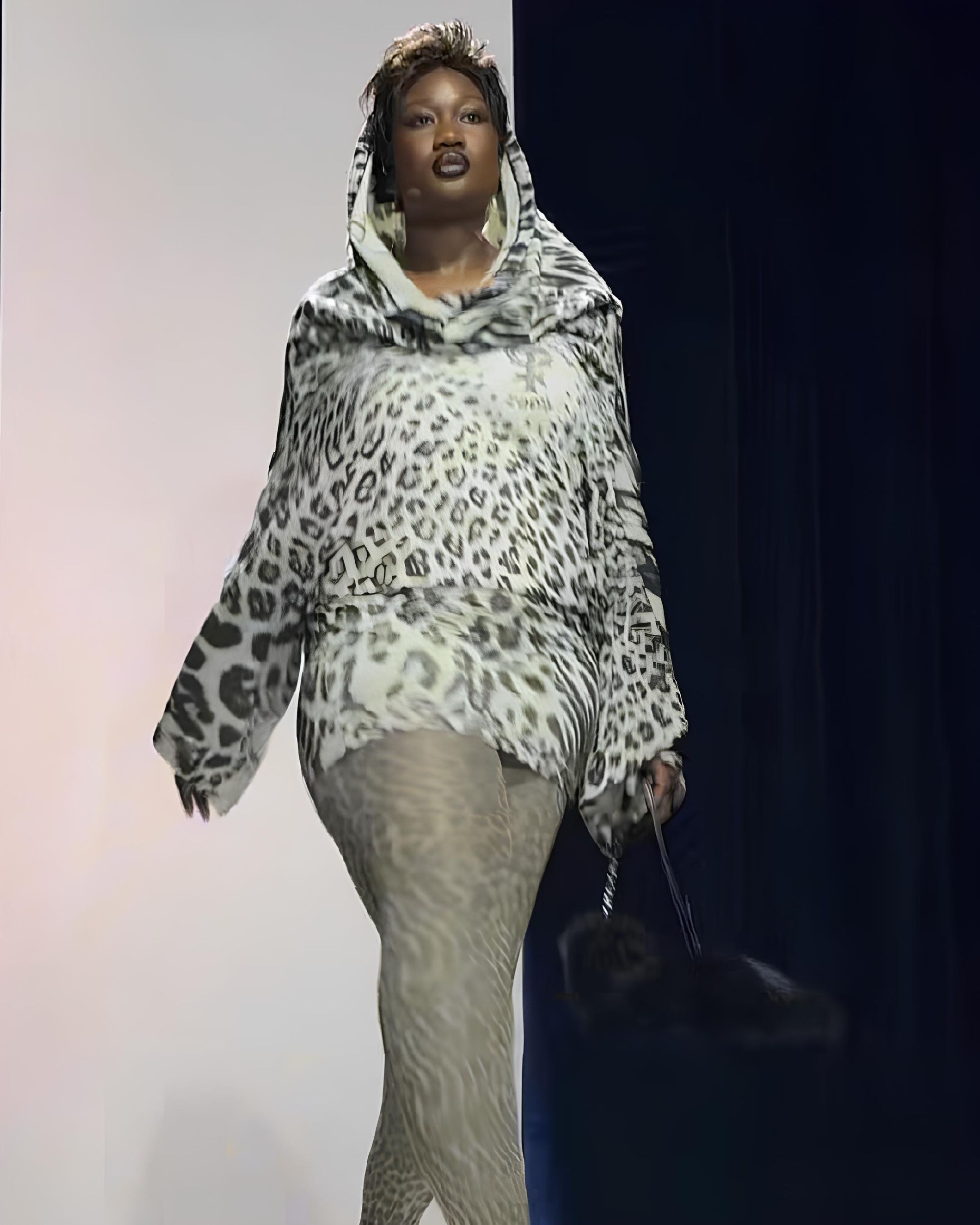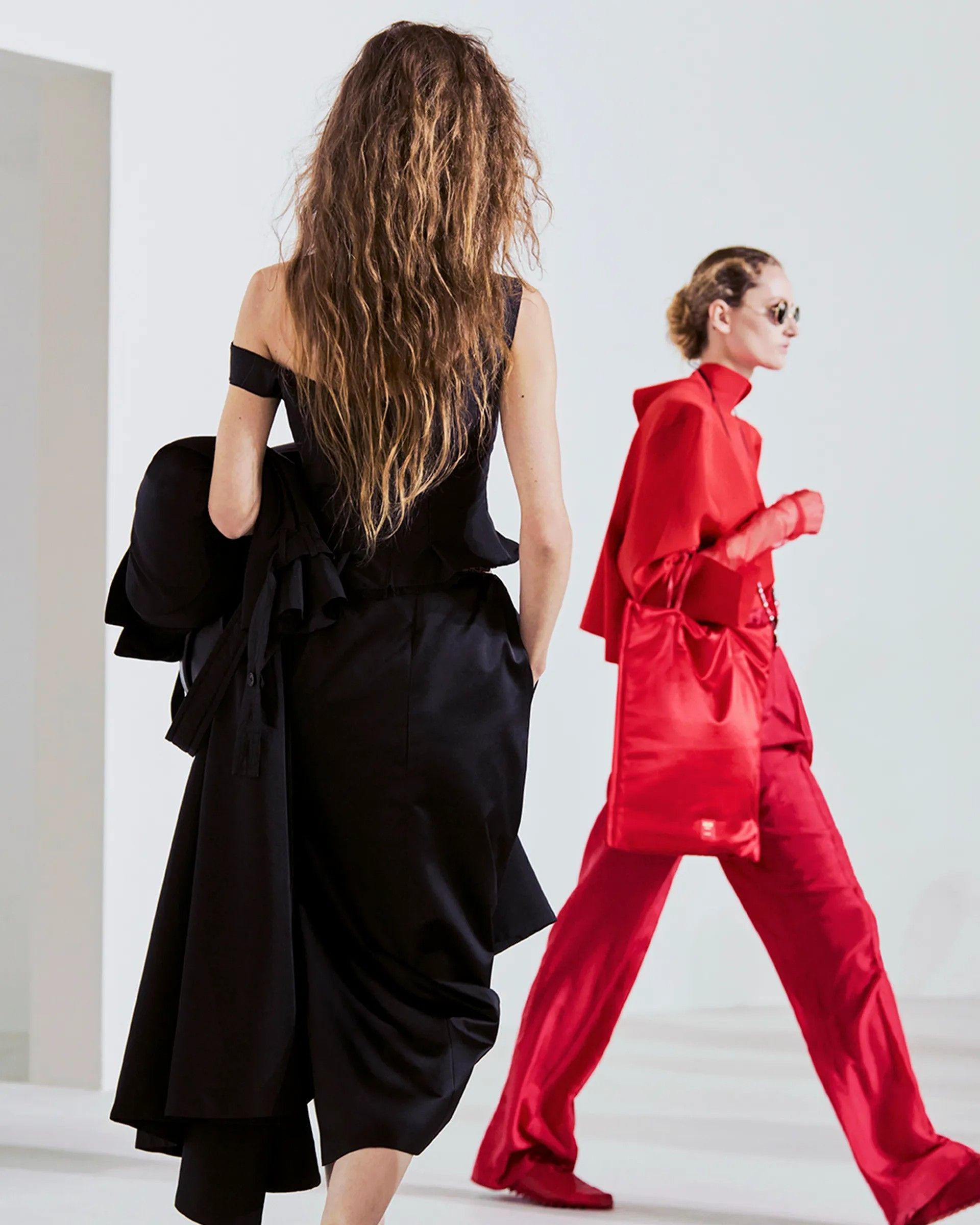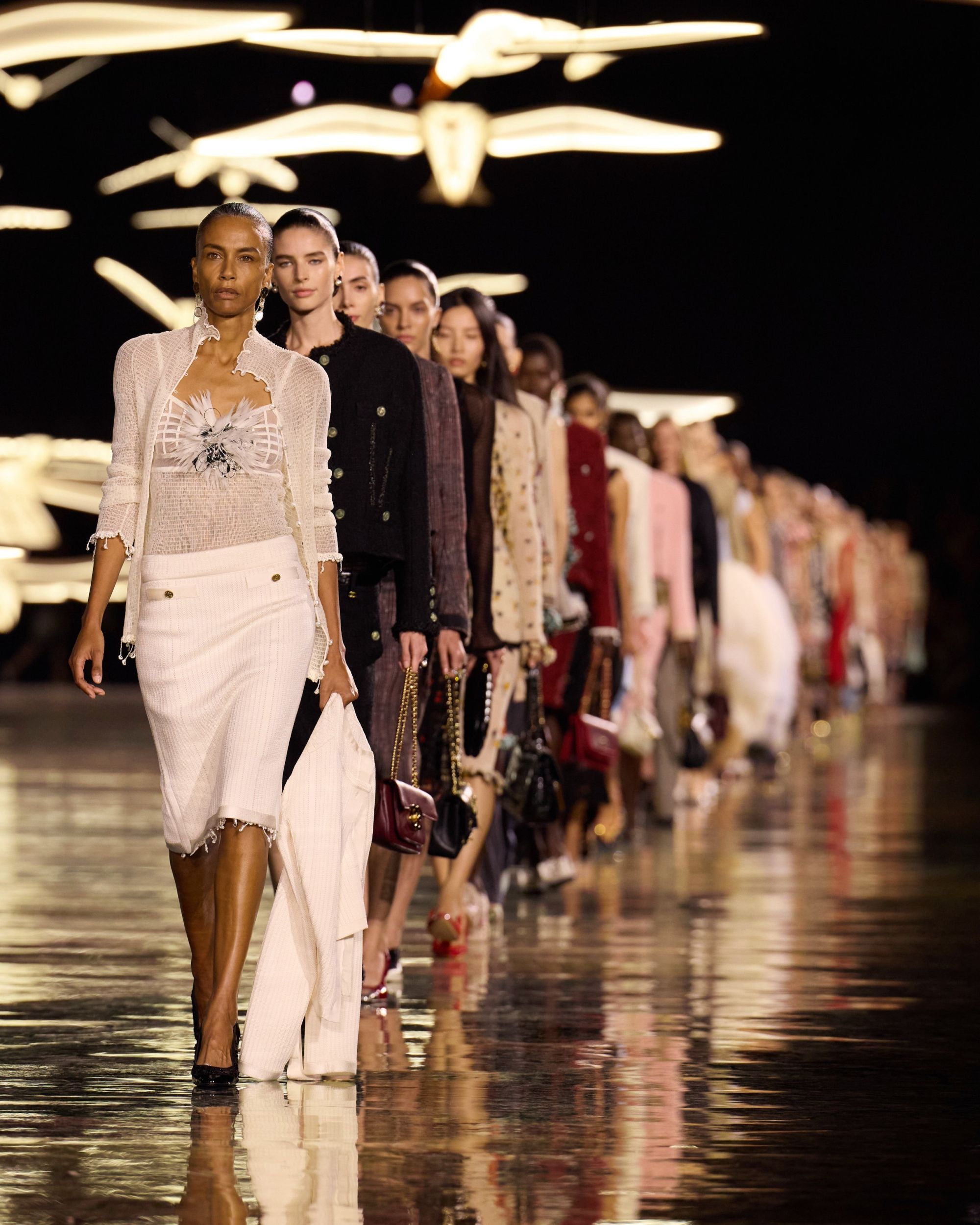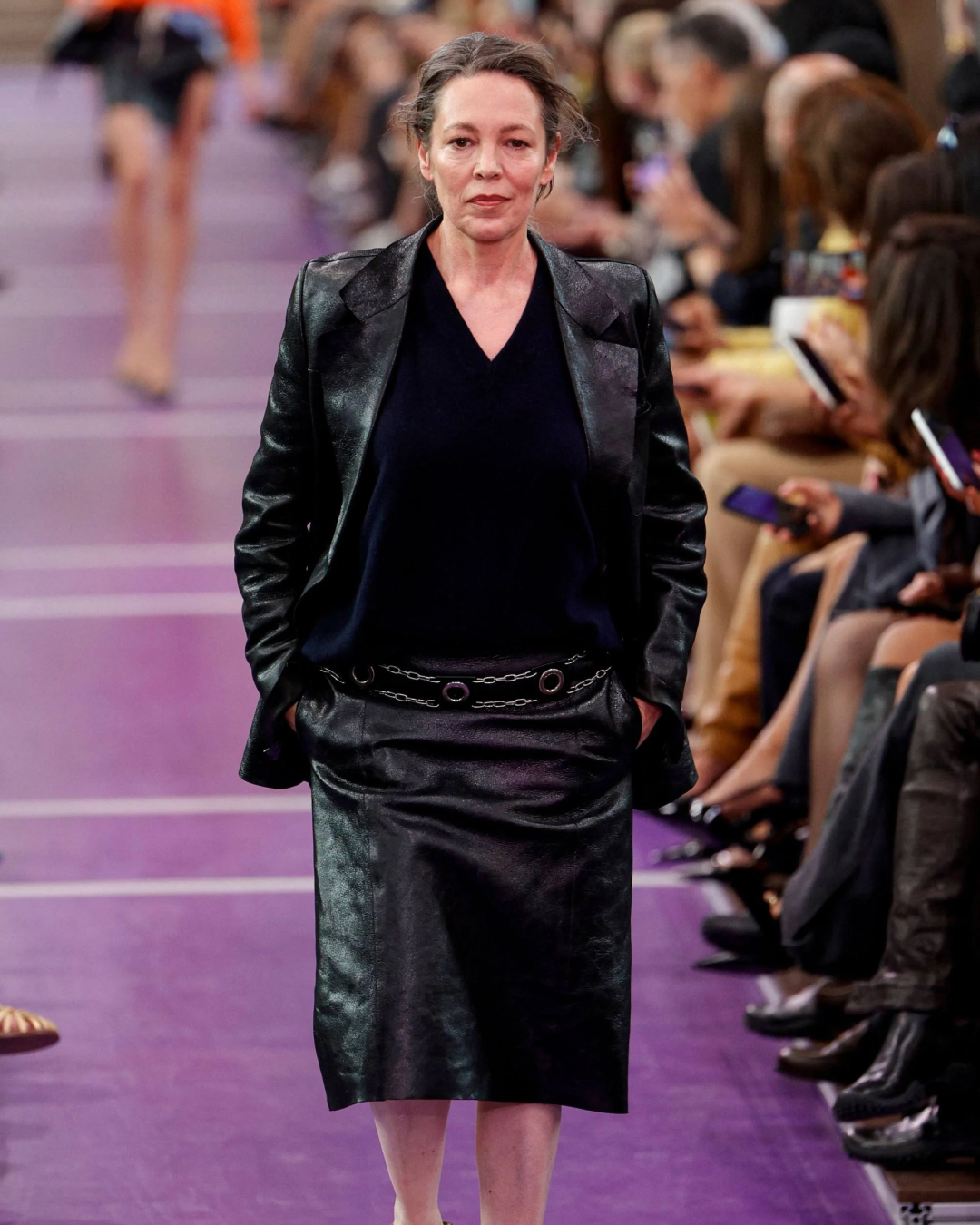









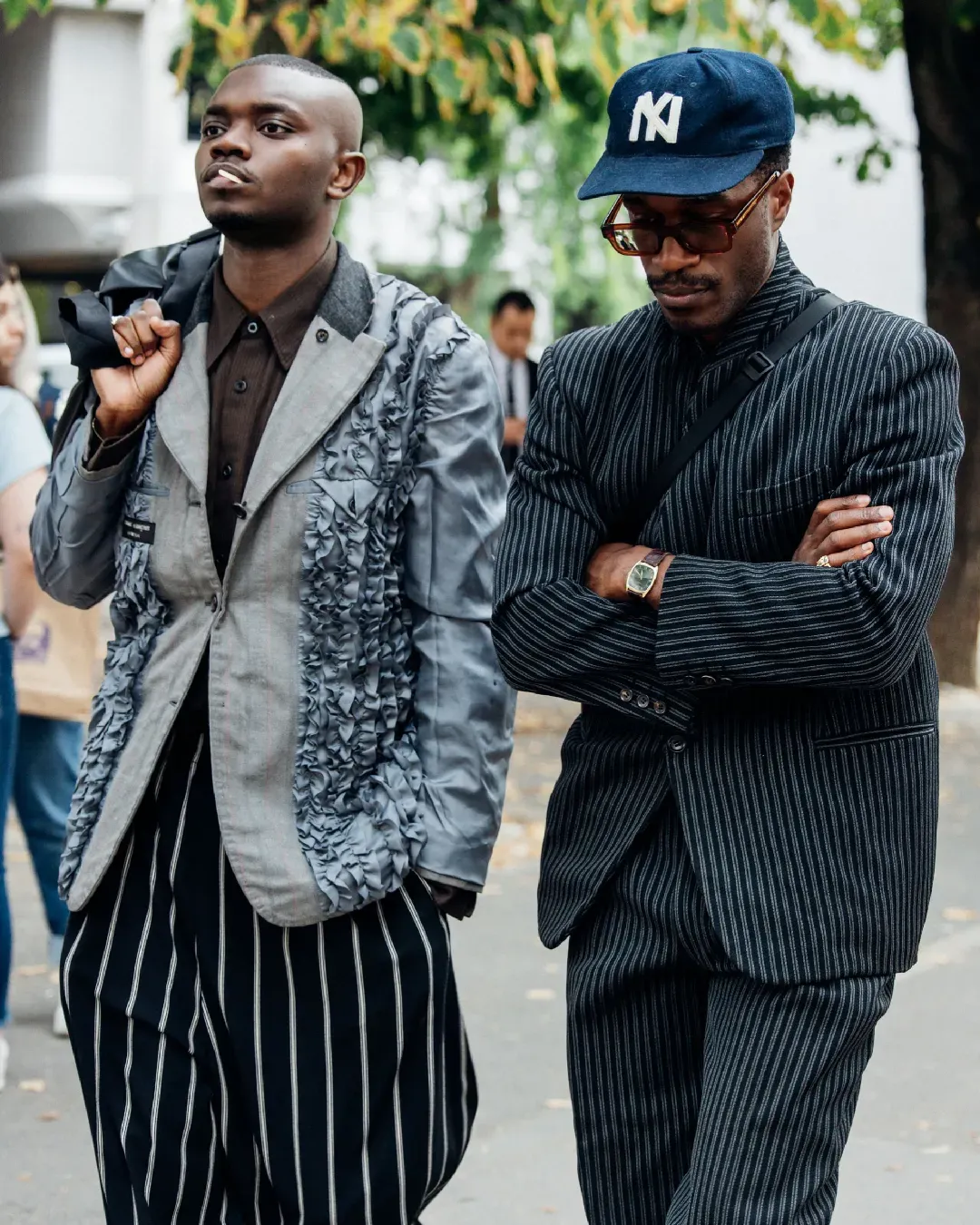
























The fashion of the day after of Diesel's FW26 collection Because nothing screams successful living like looking like you had a blast the night before
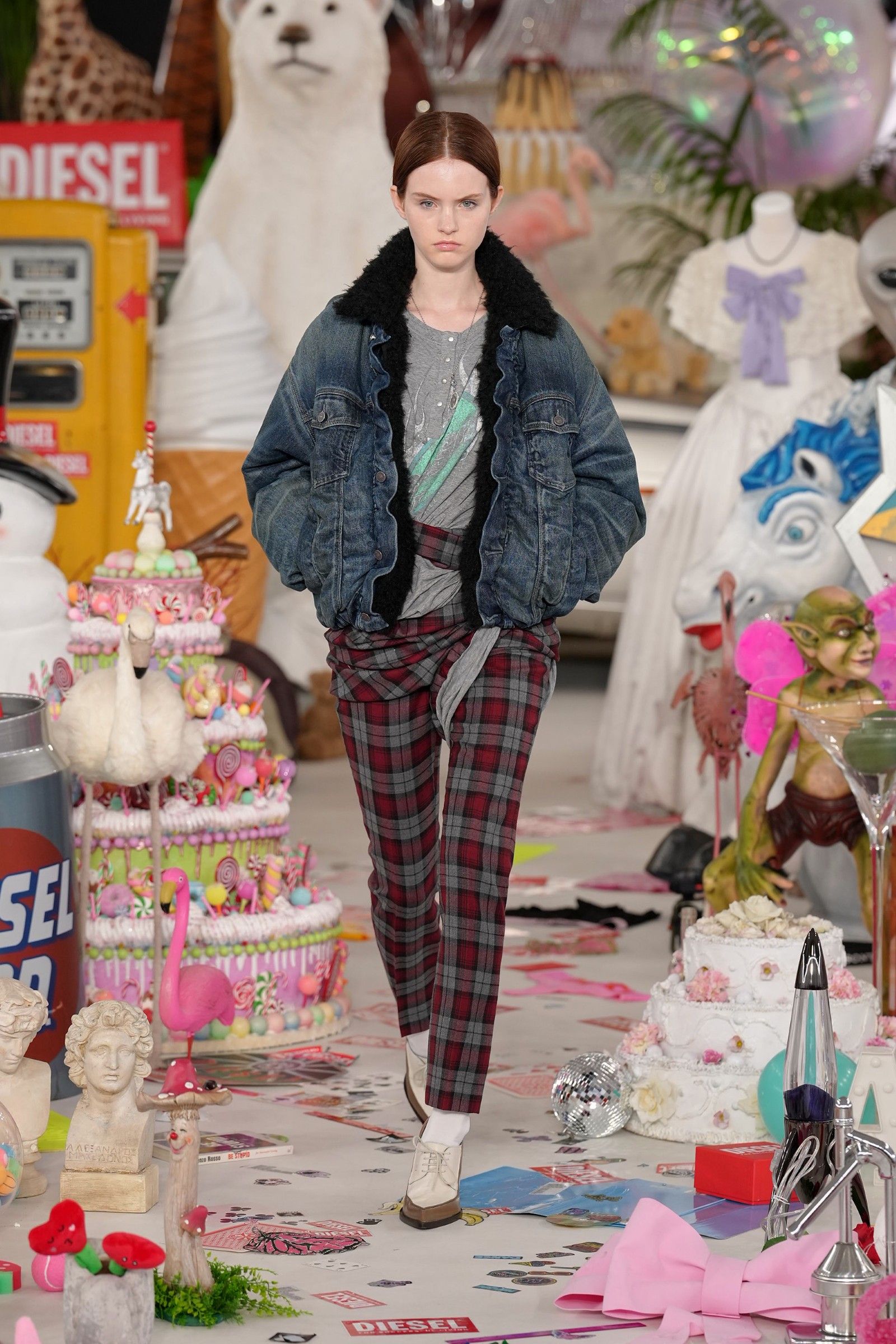
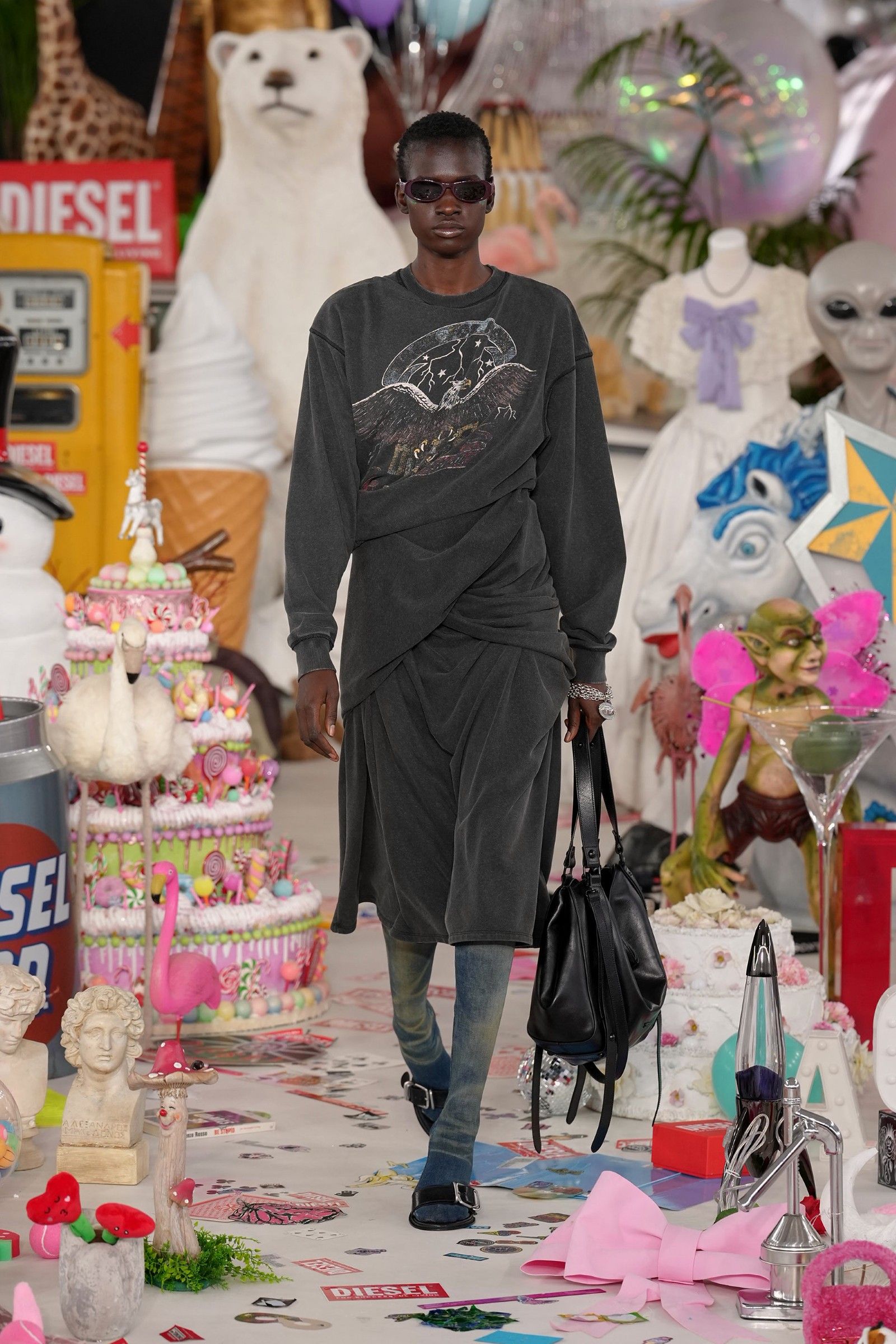
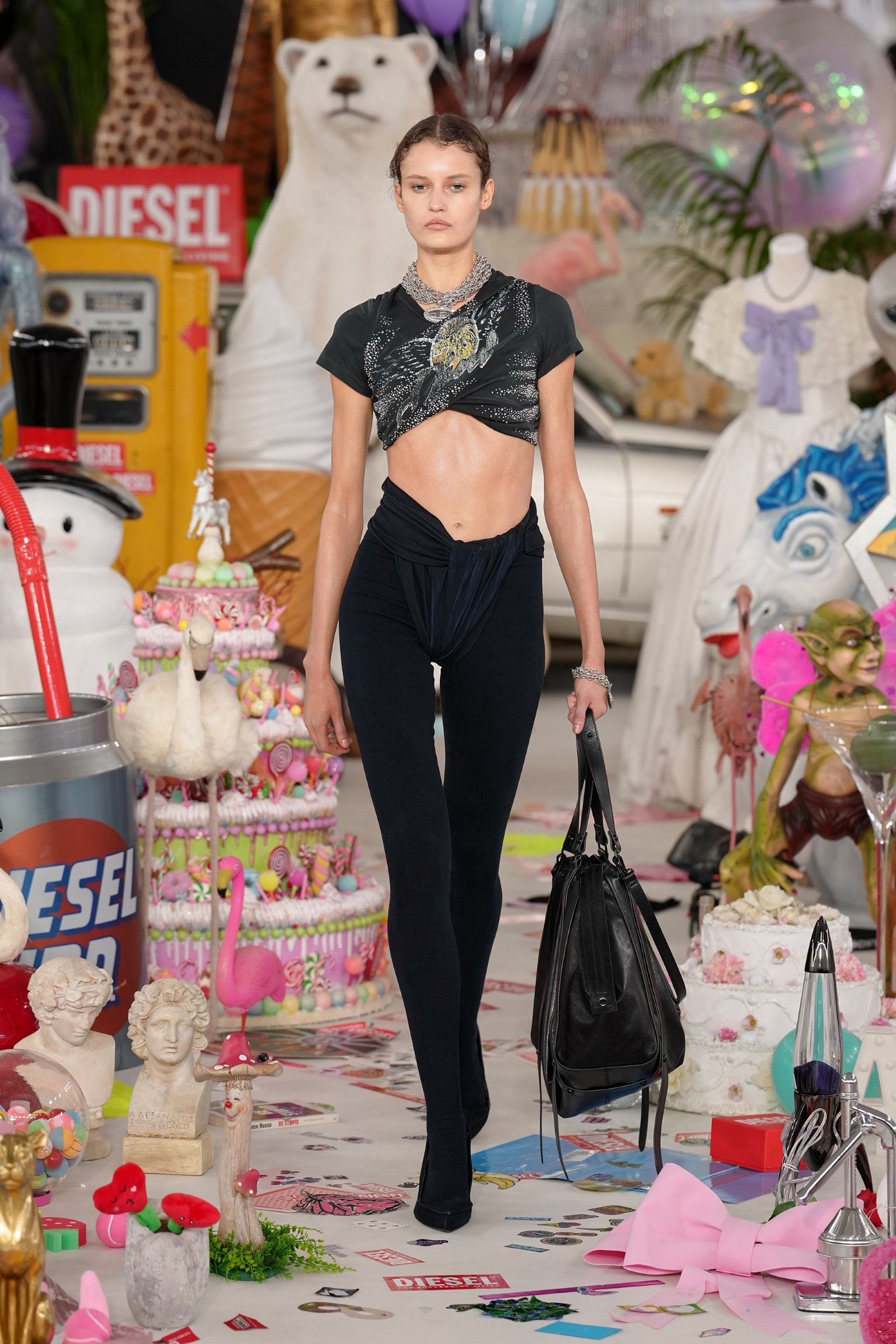
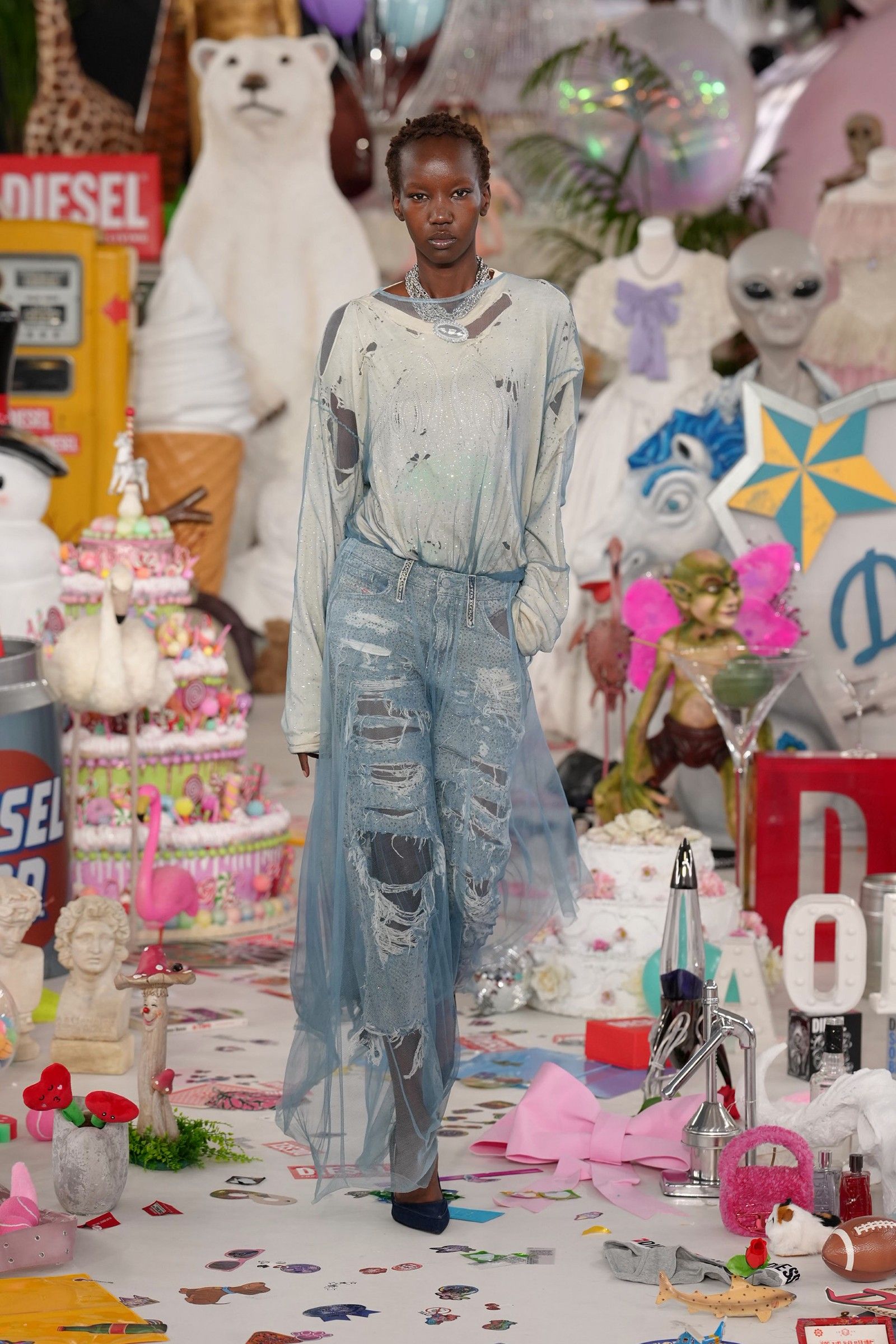
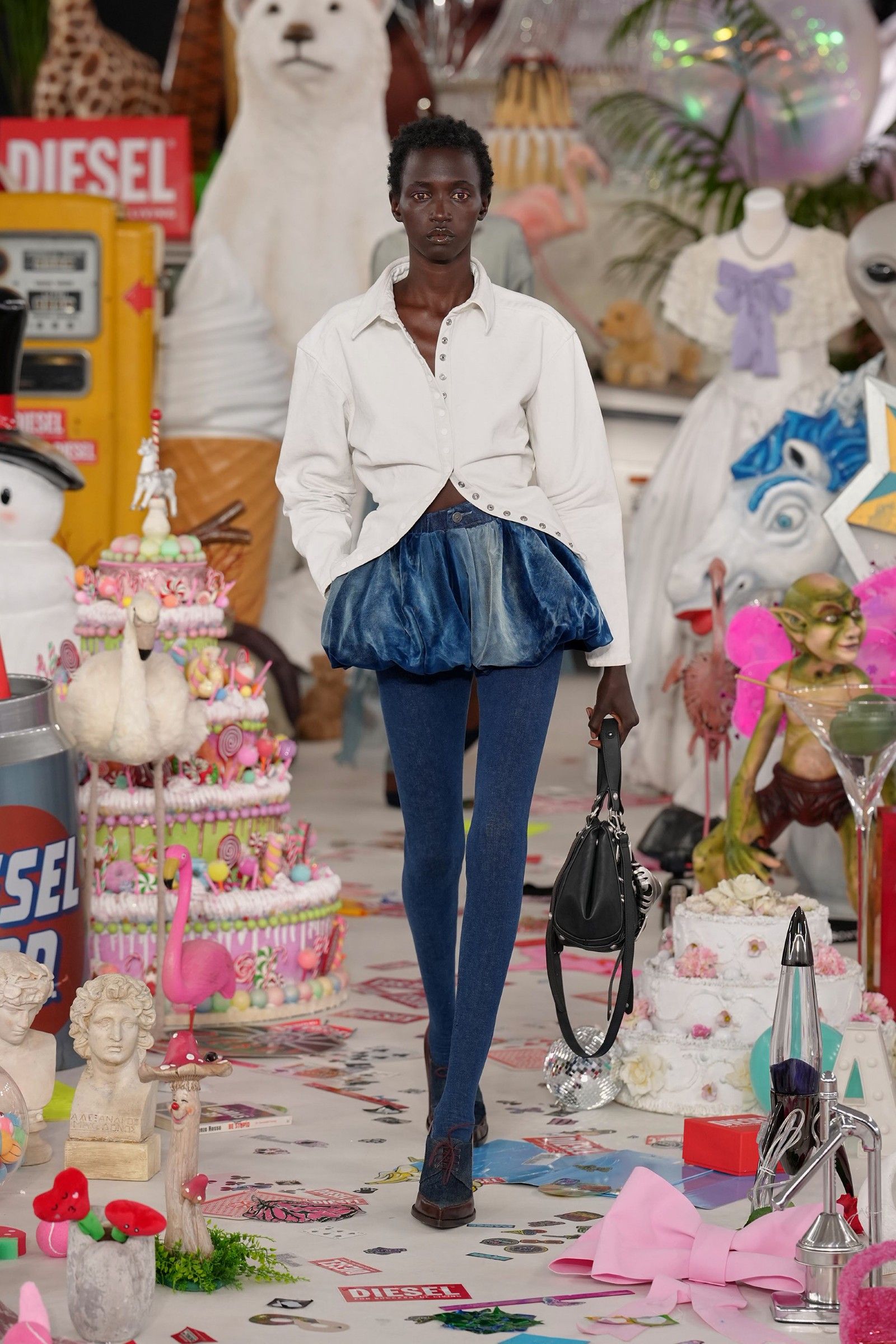
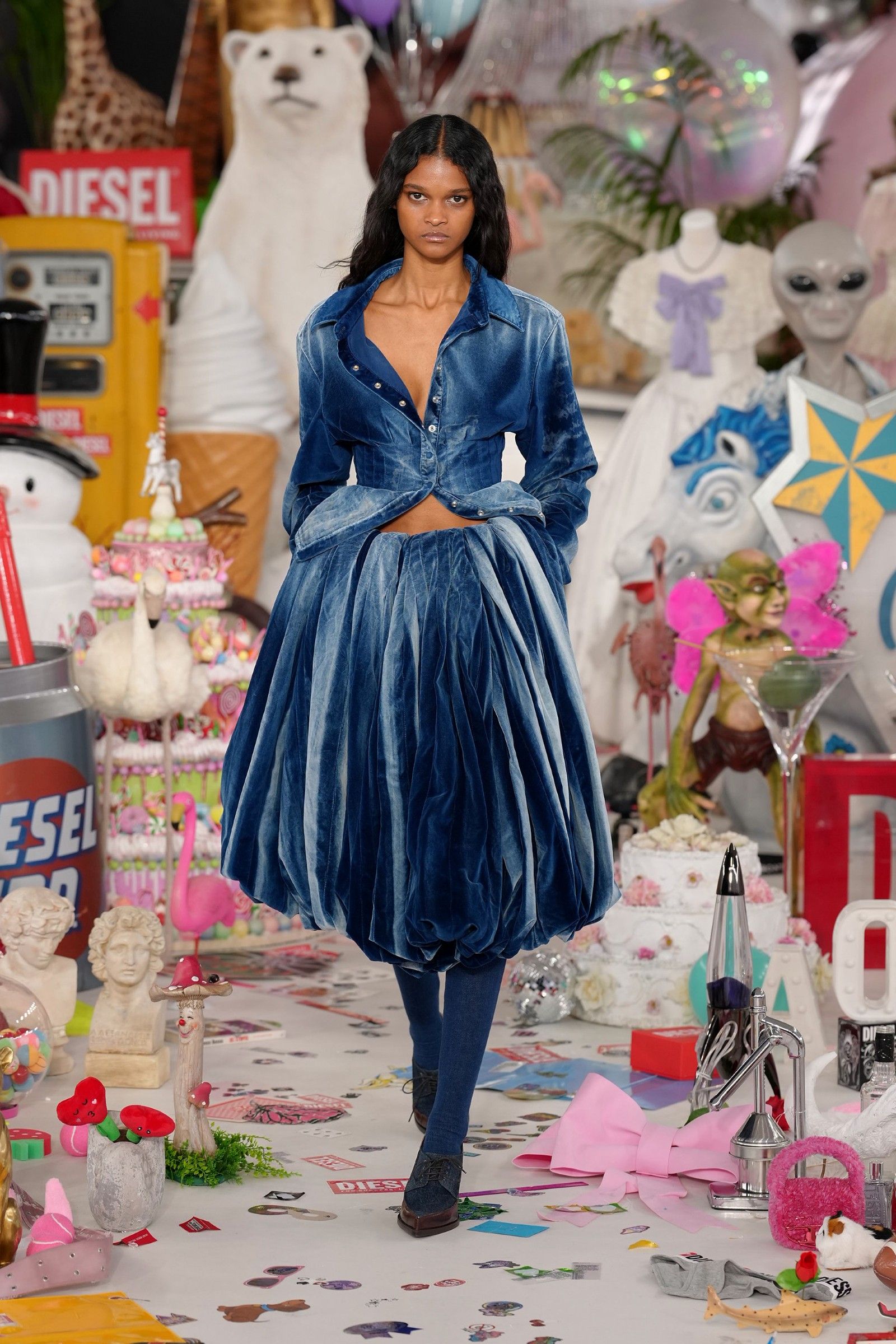

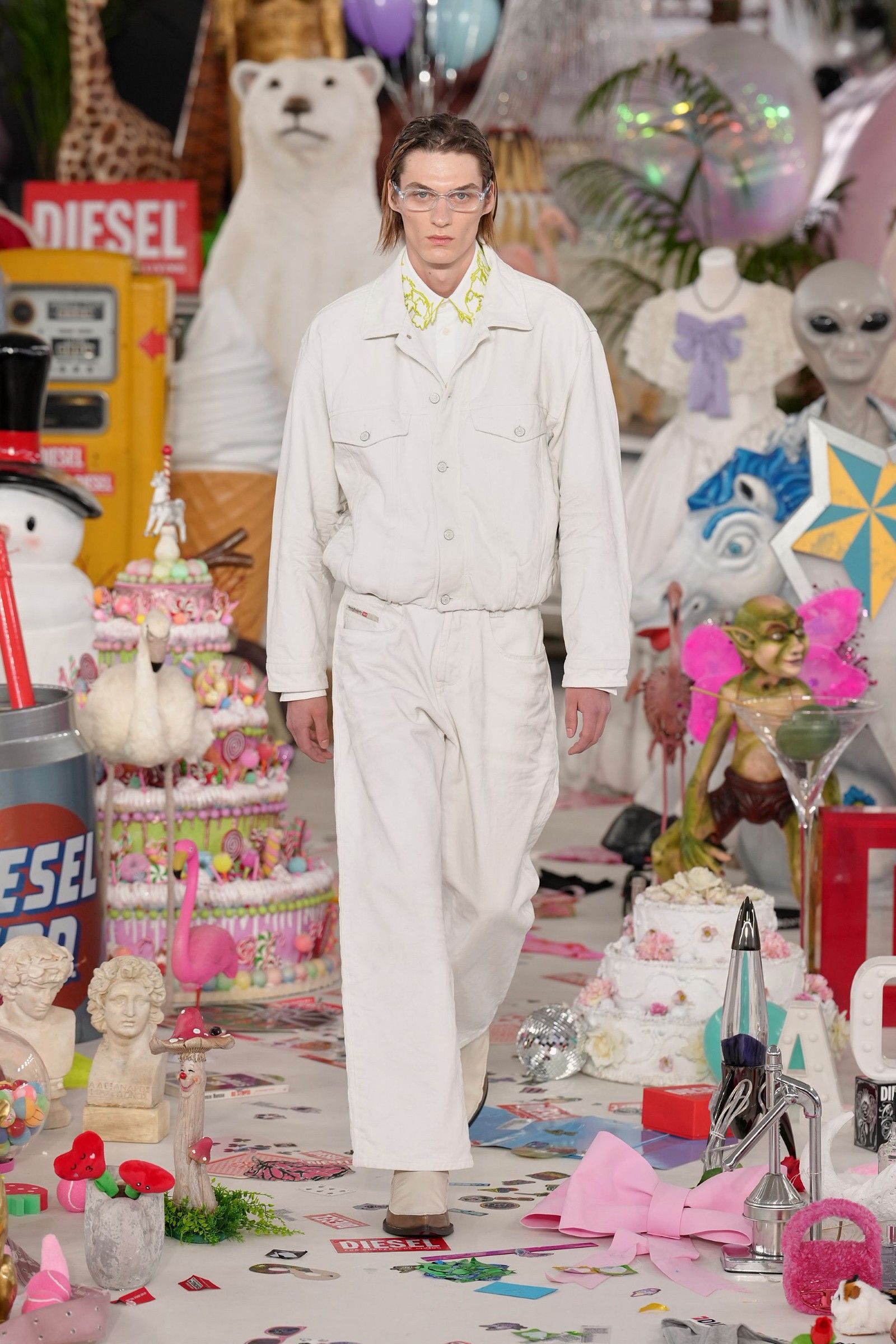
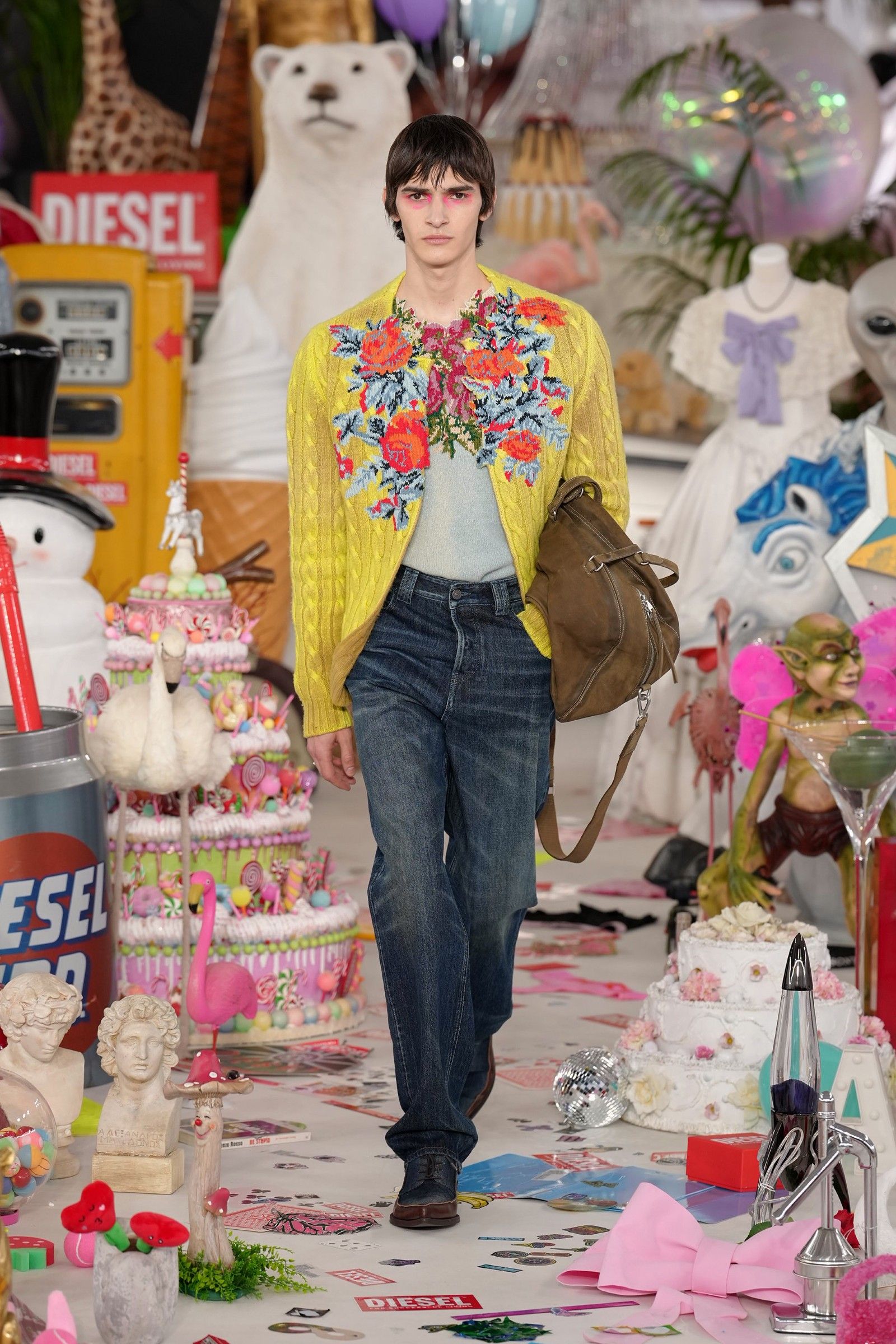
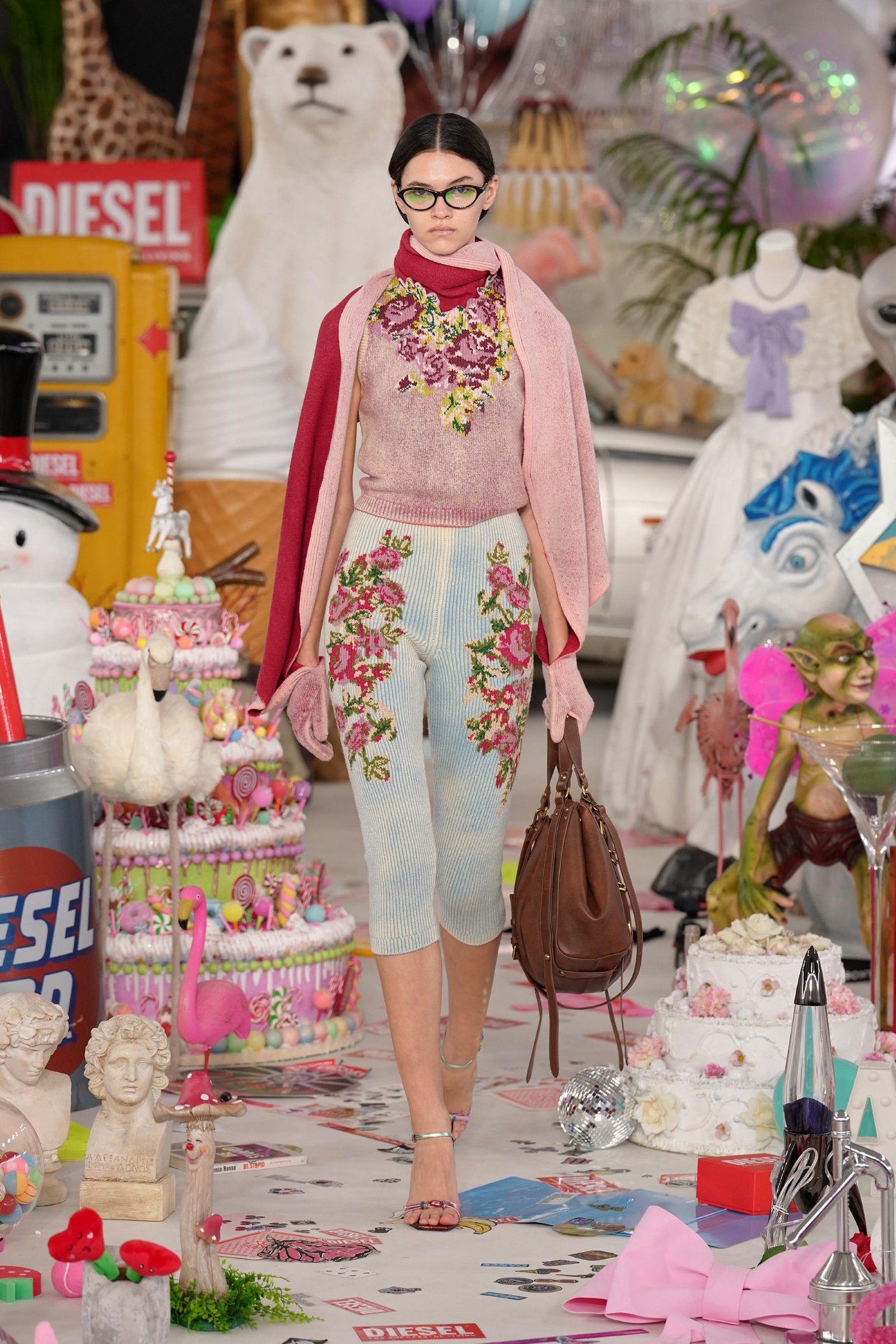
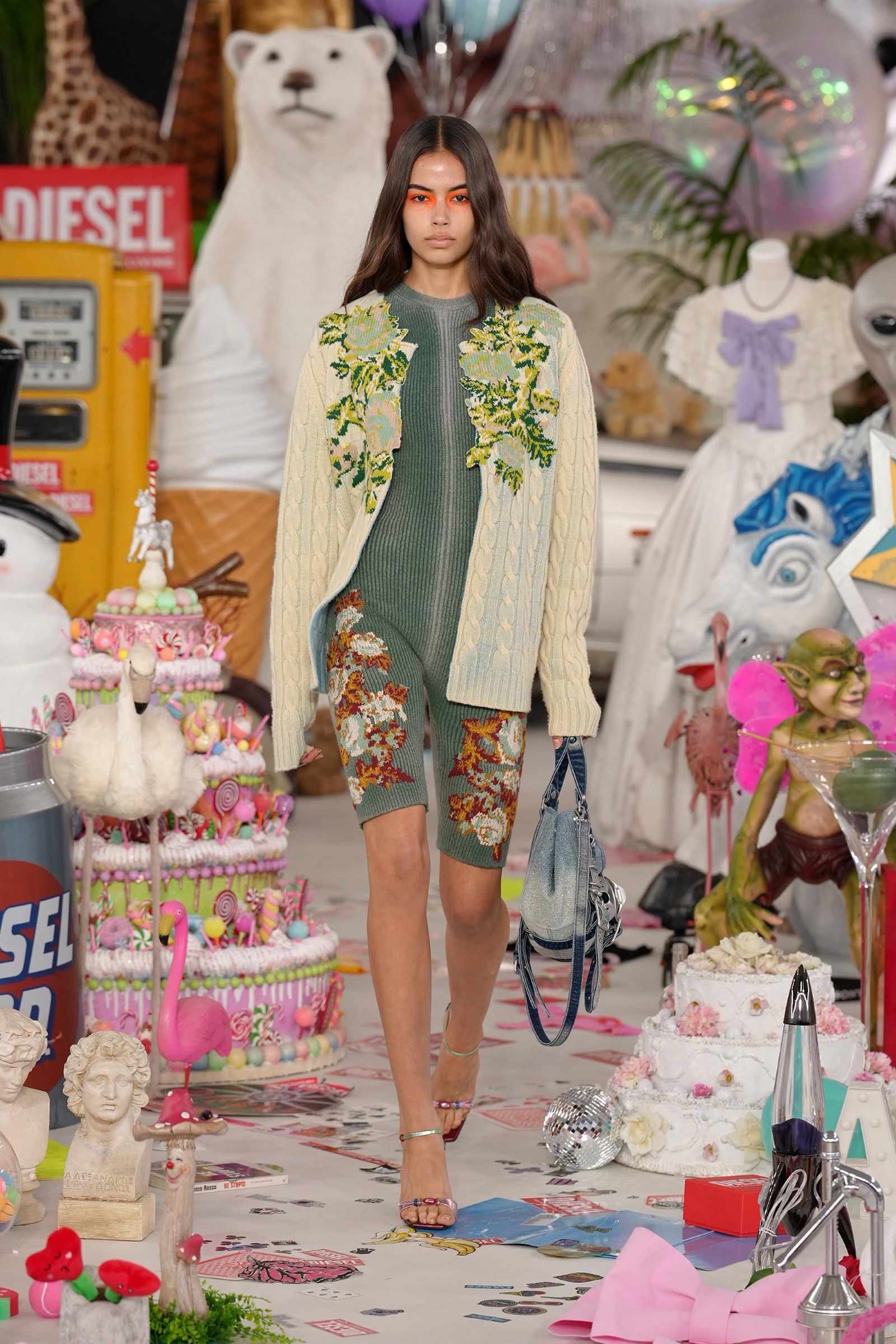
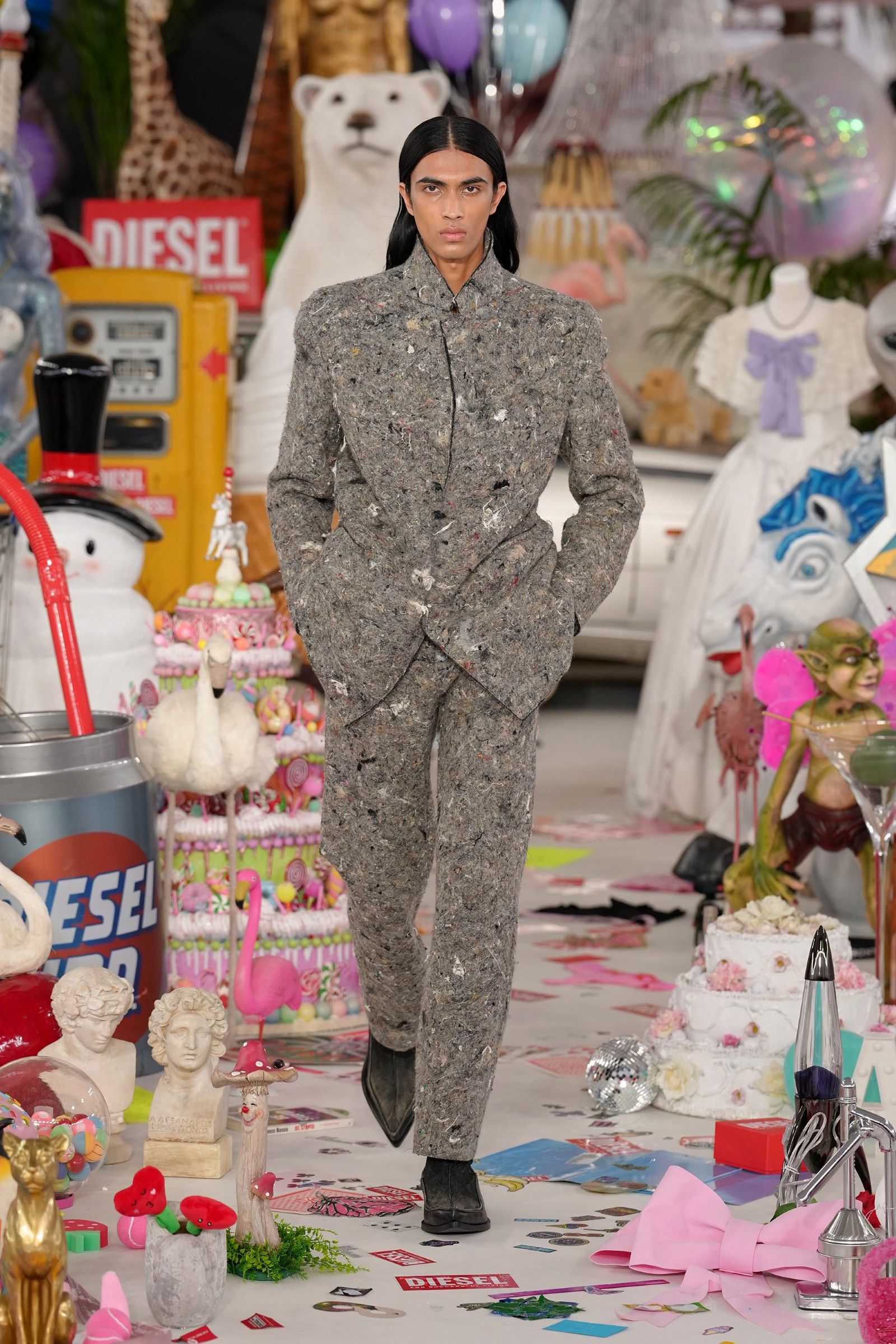
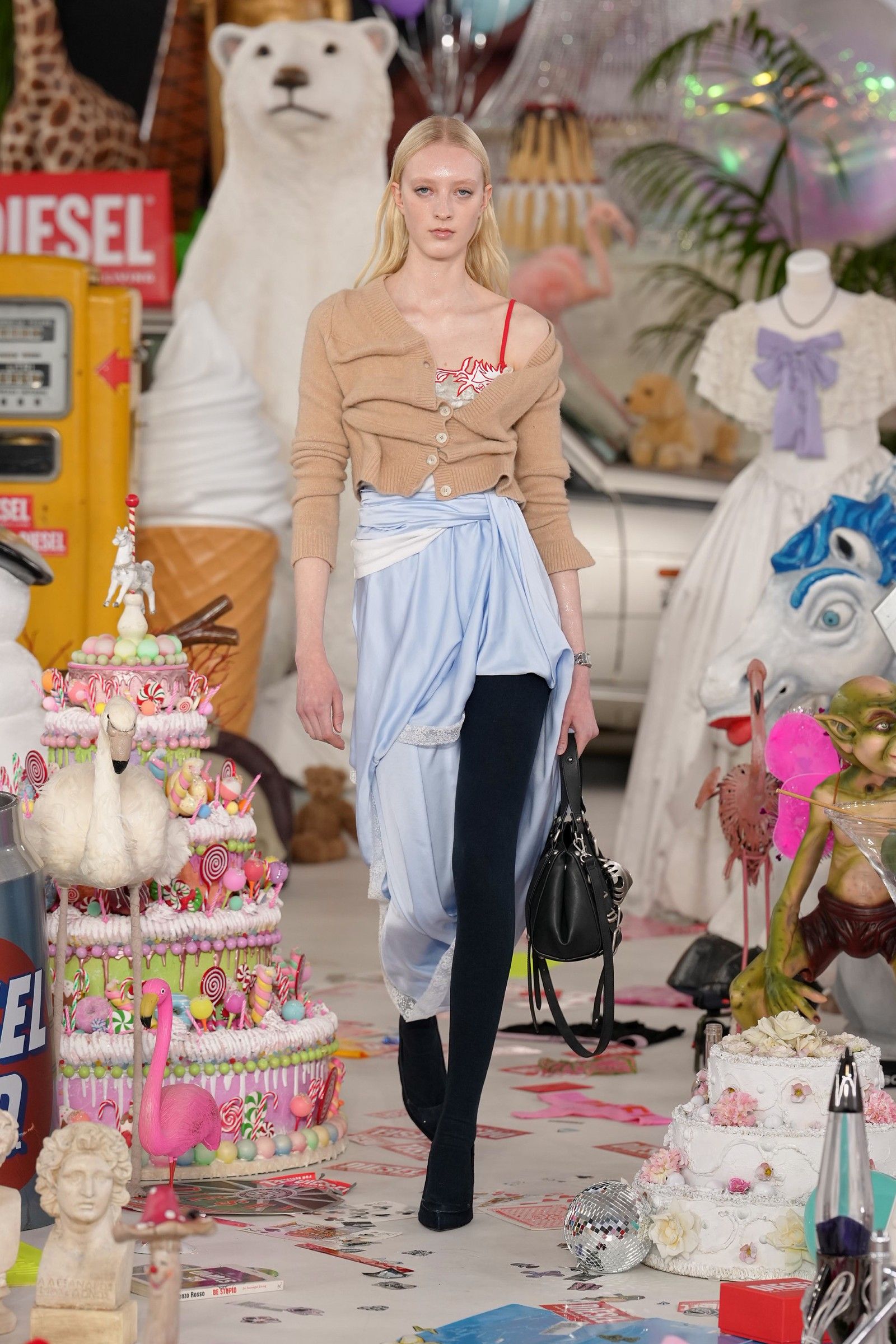
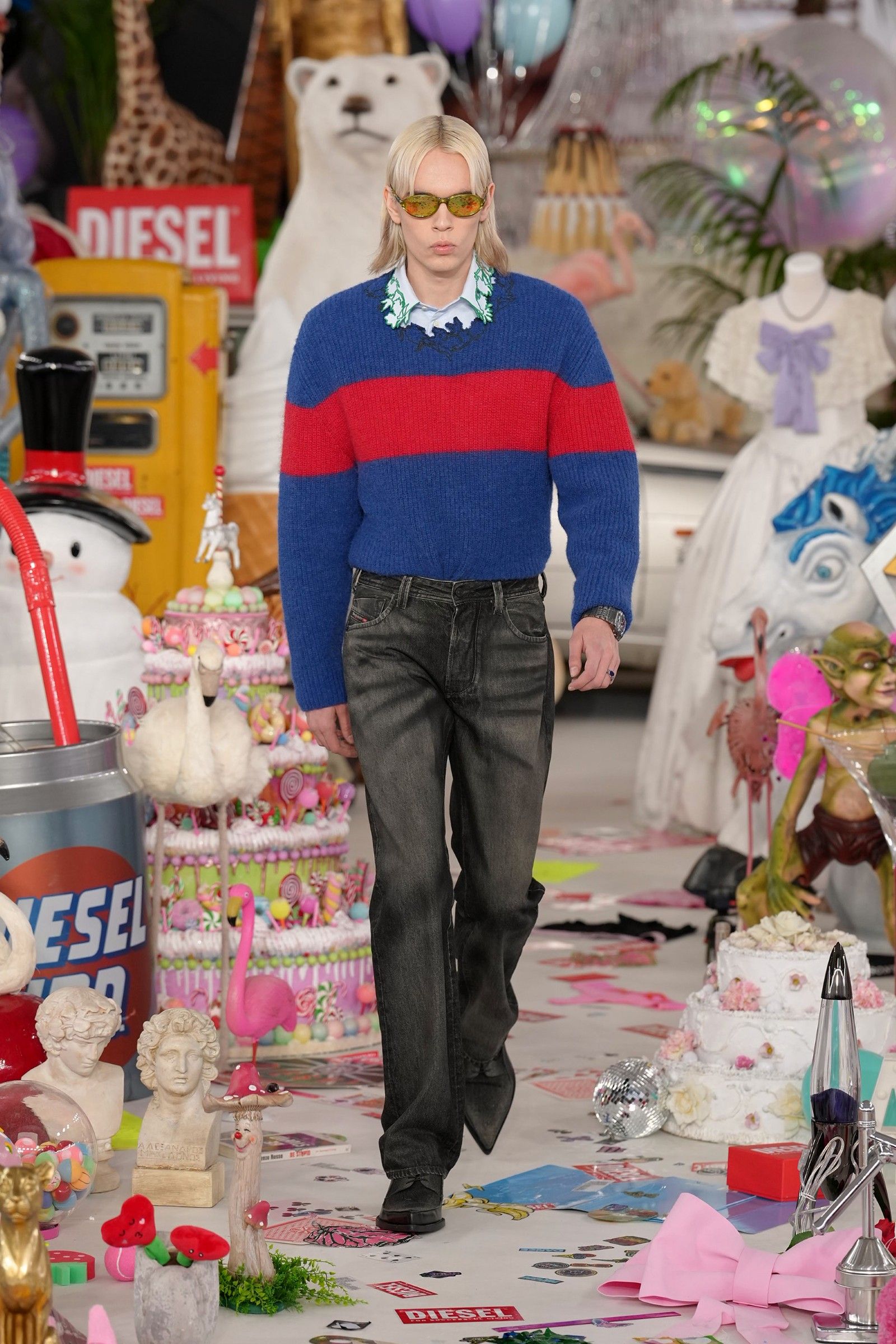
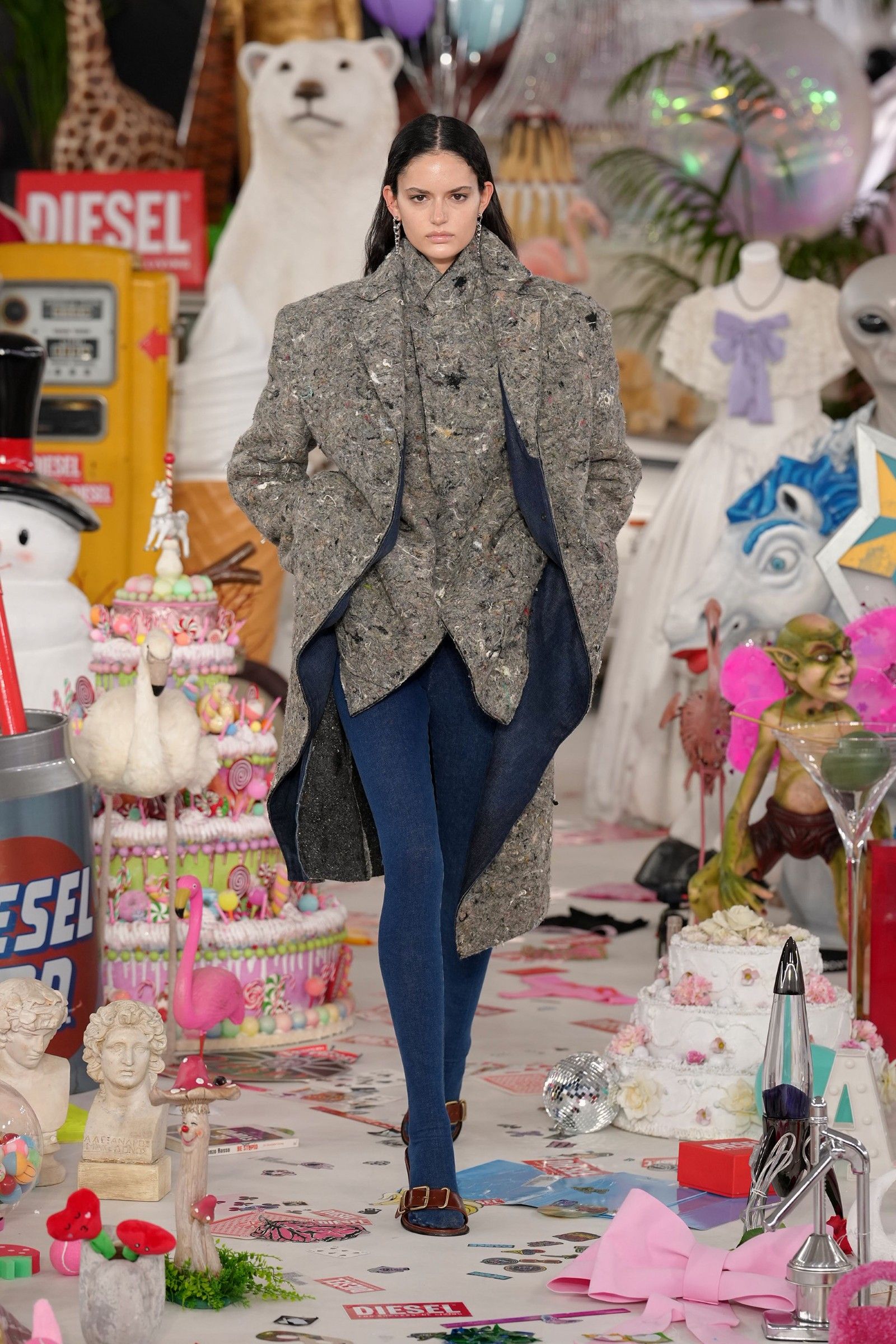
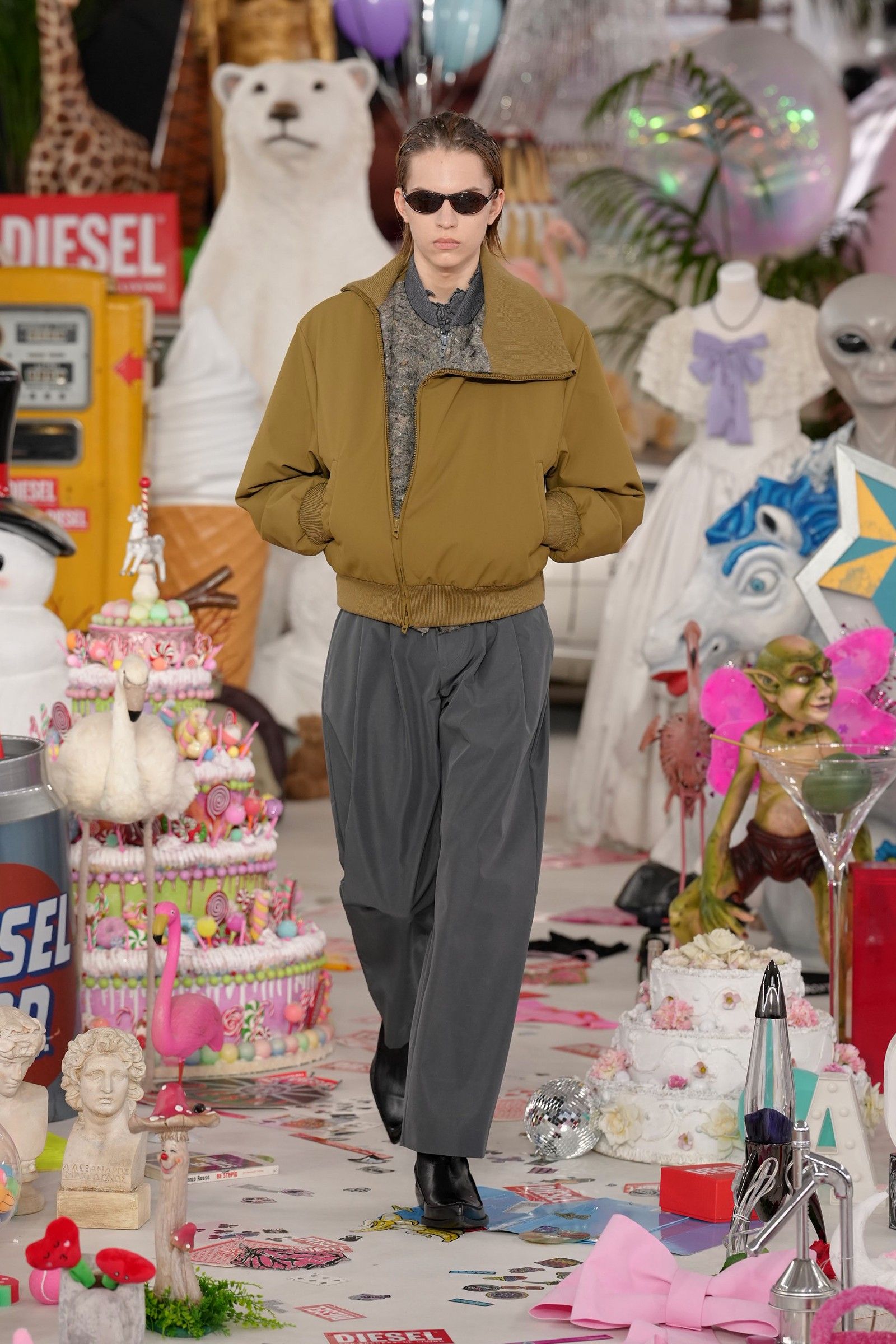
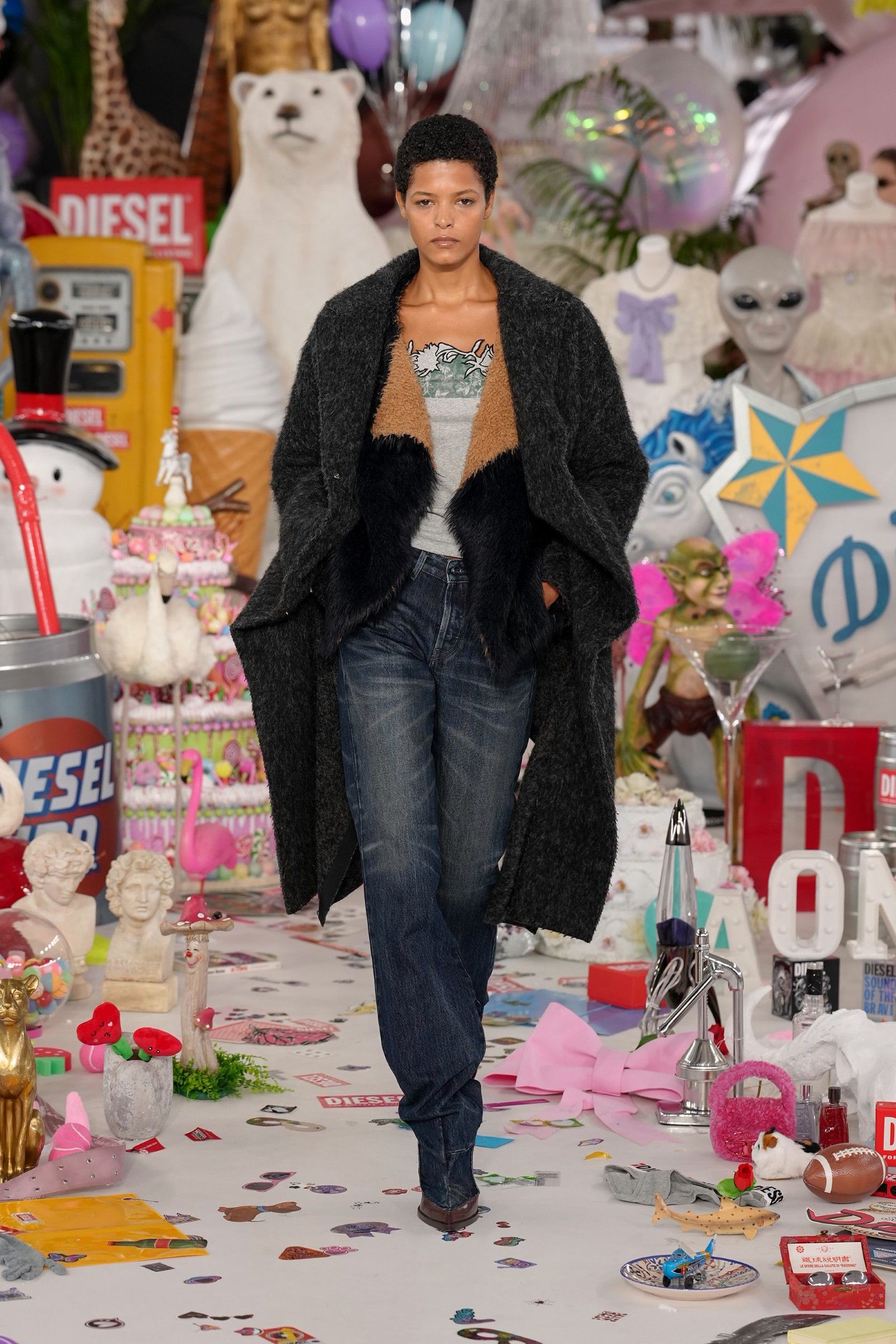
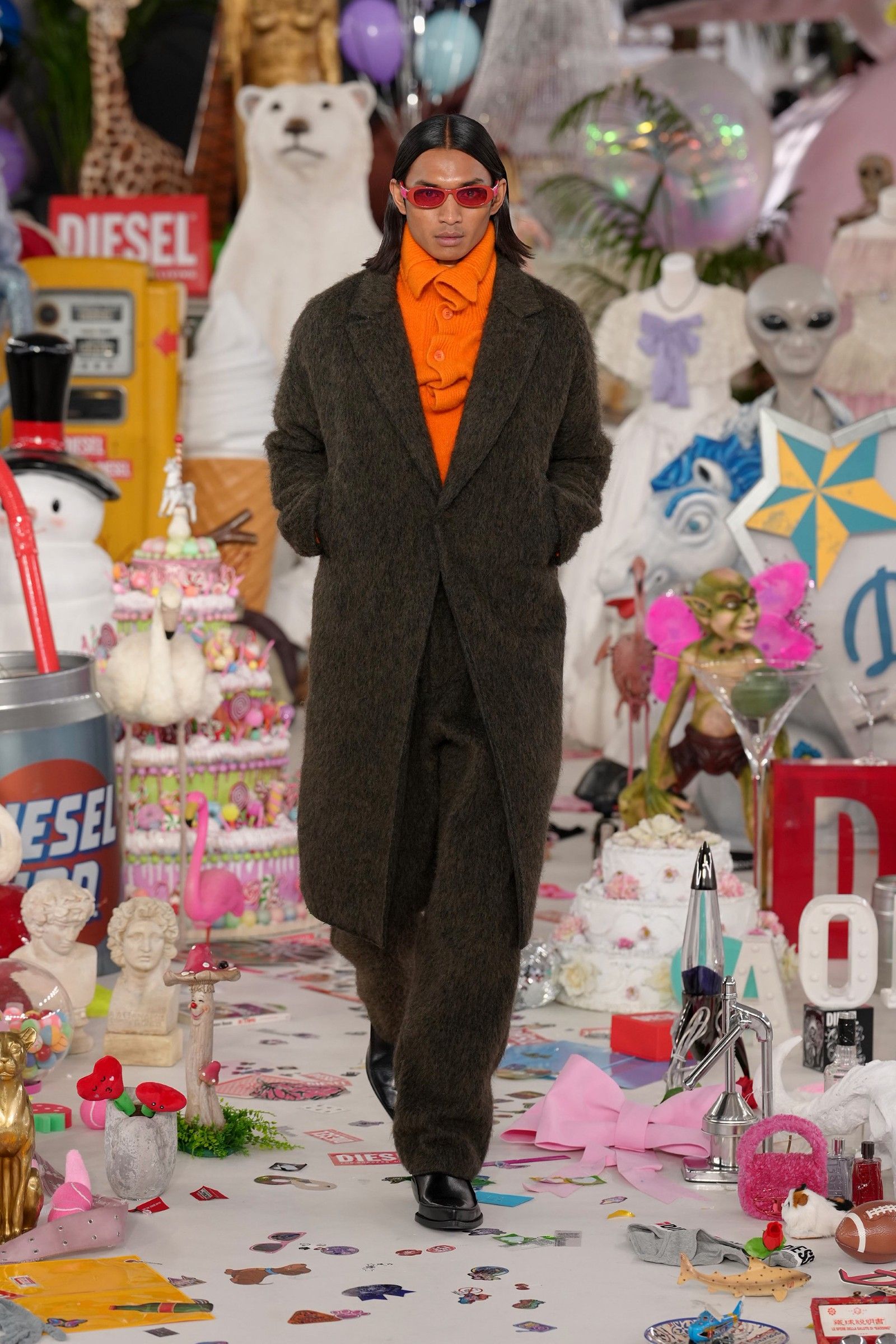
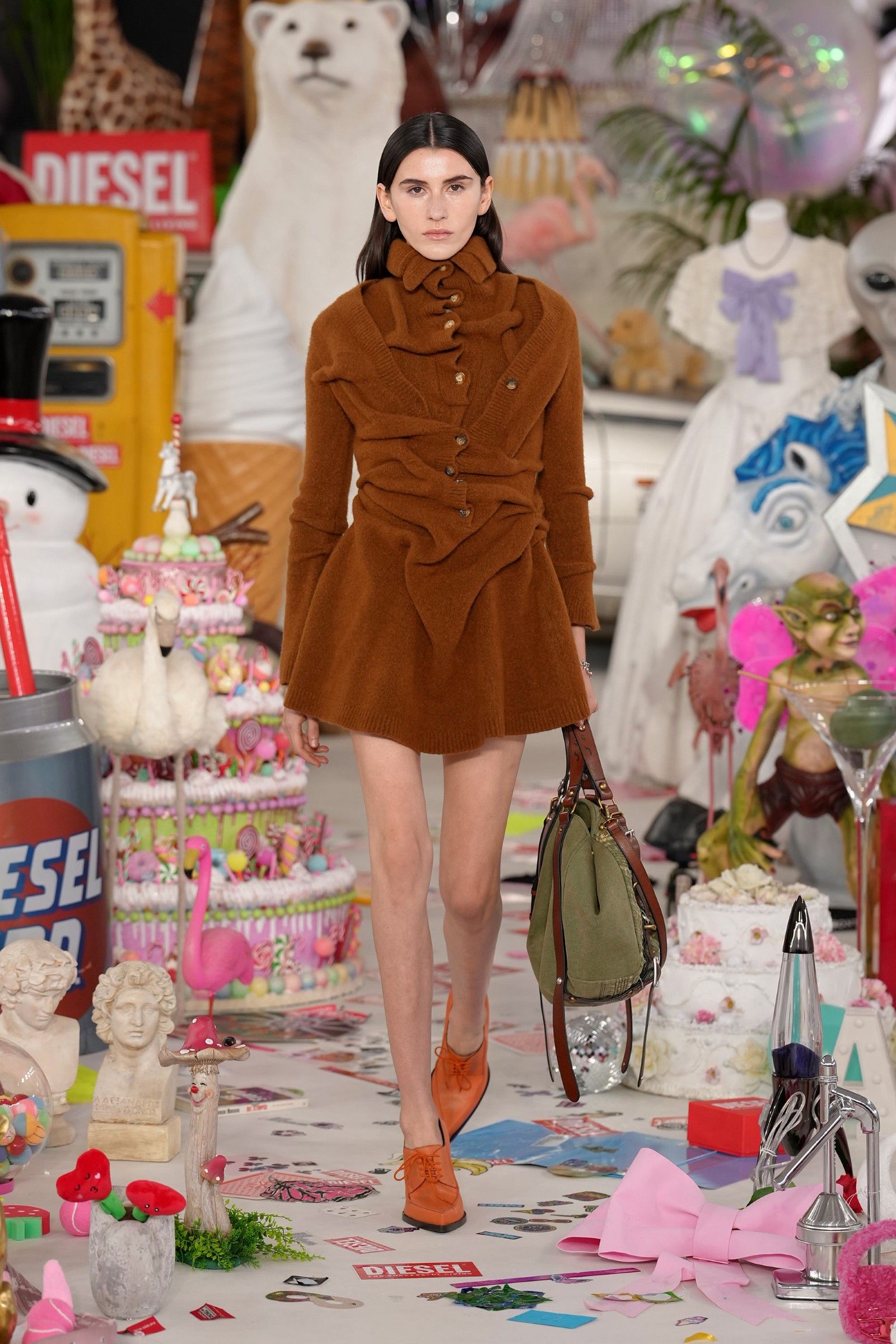
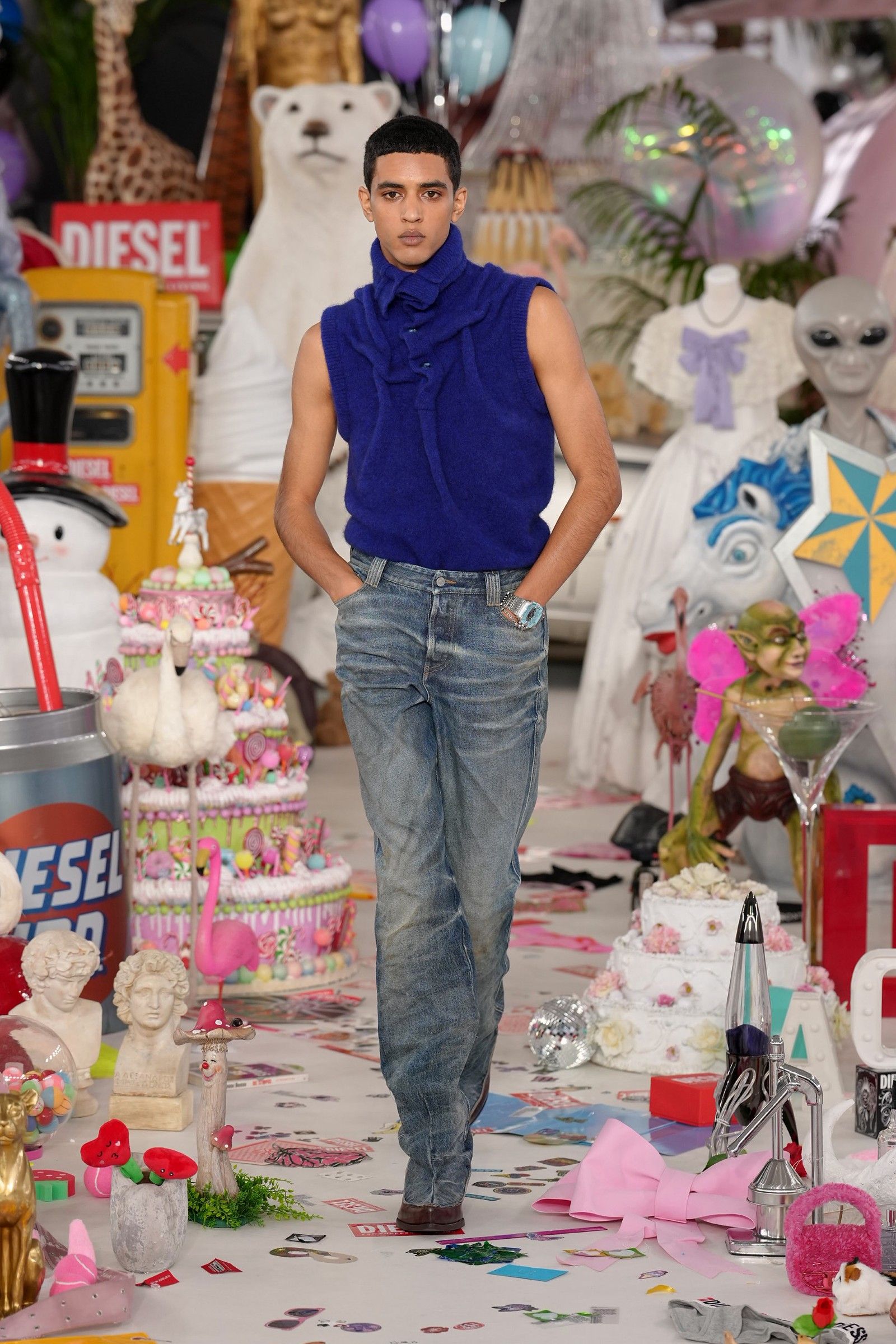
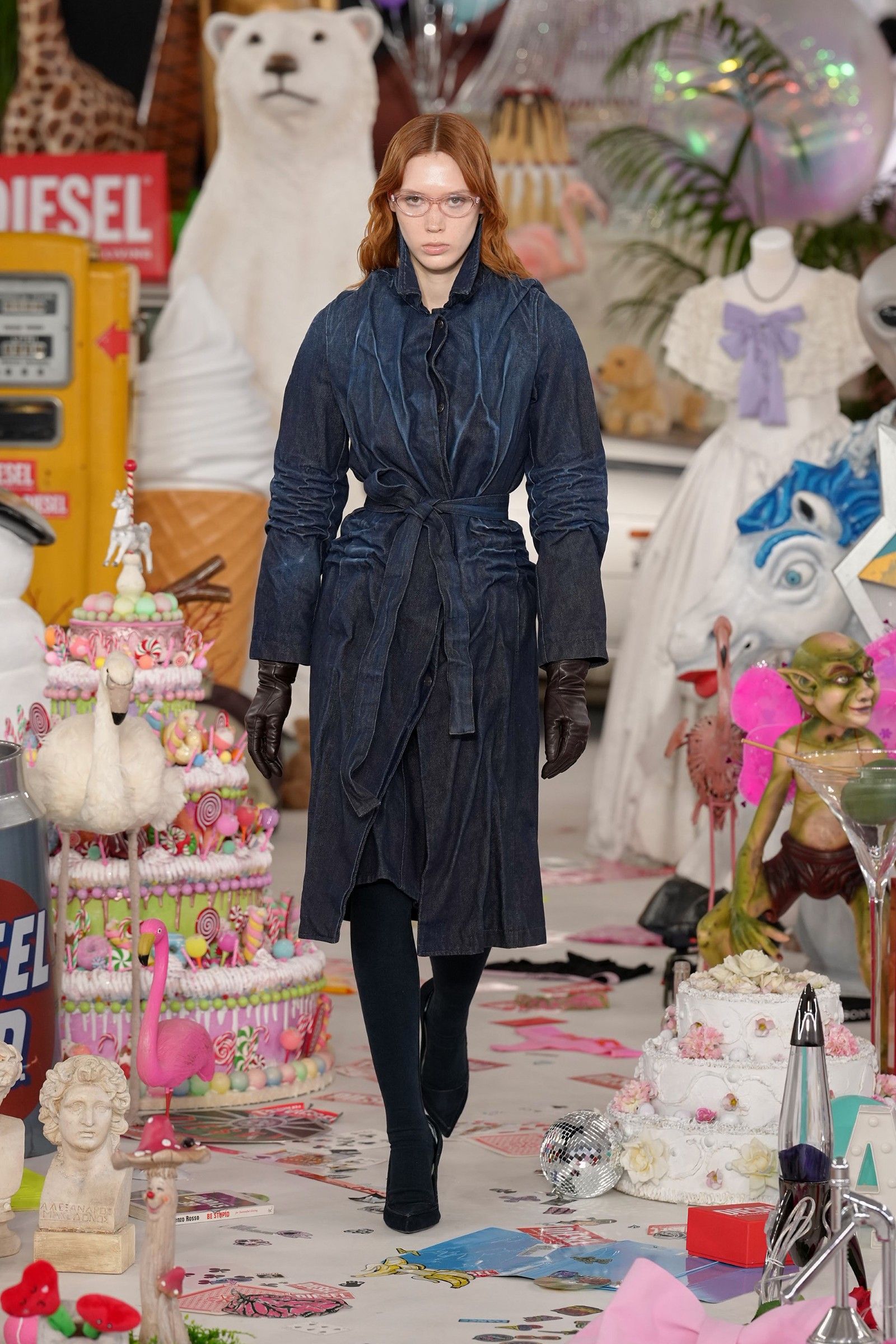
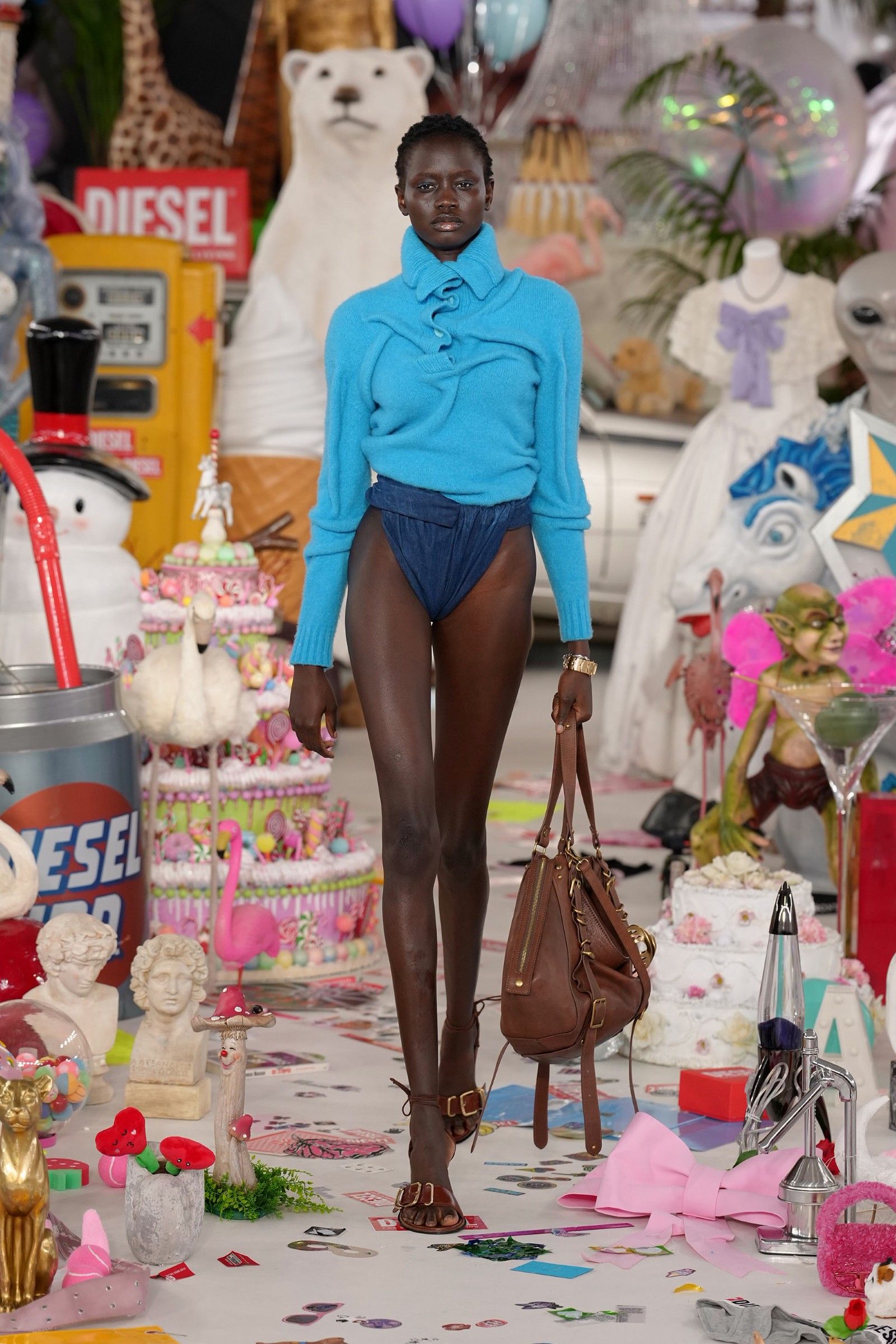
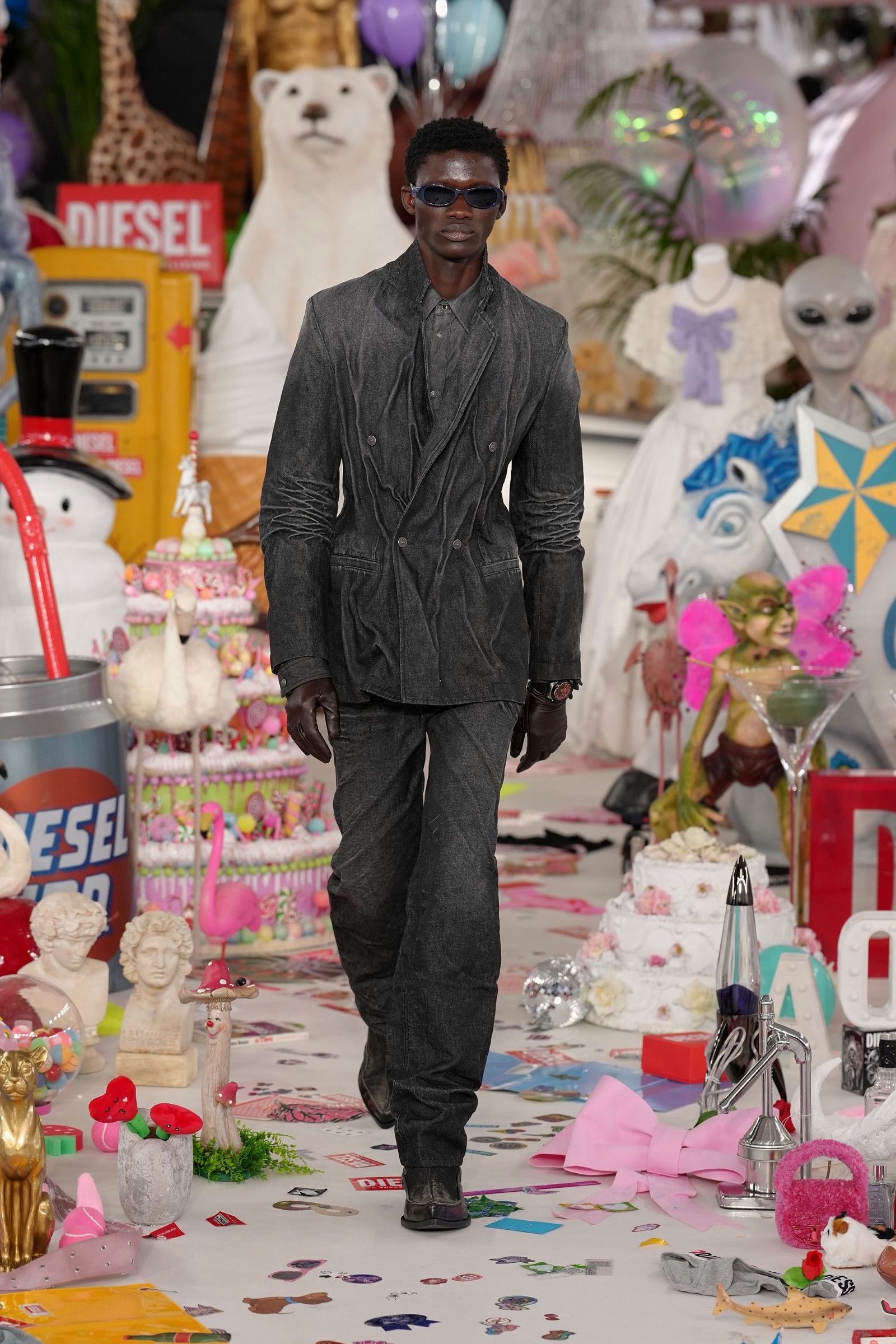
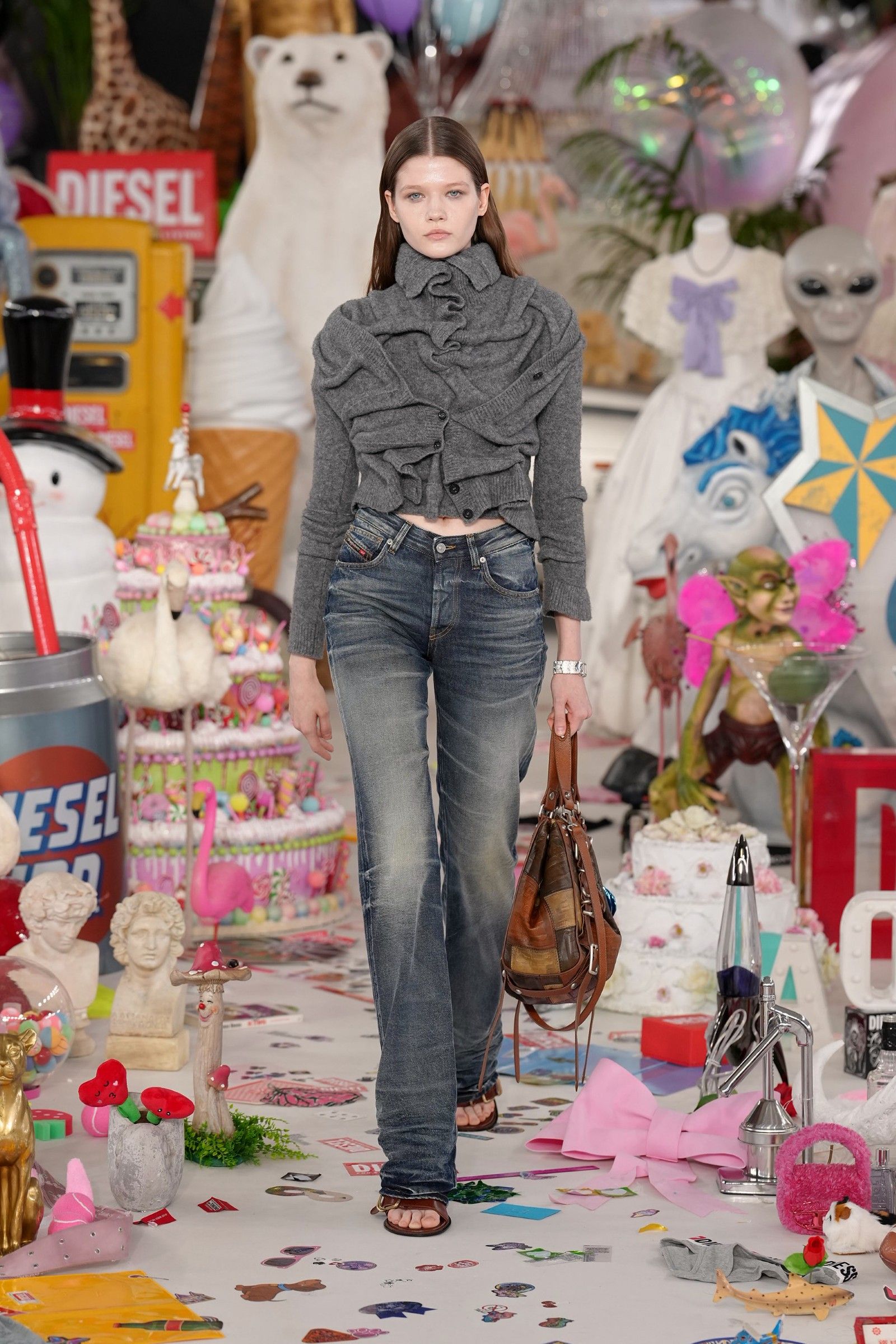
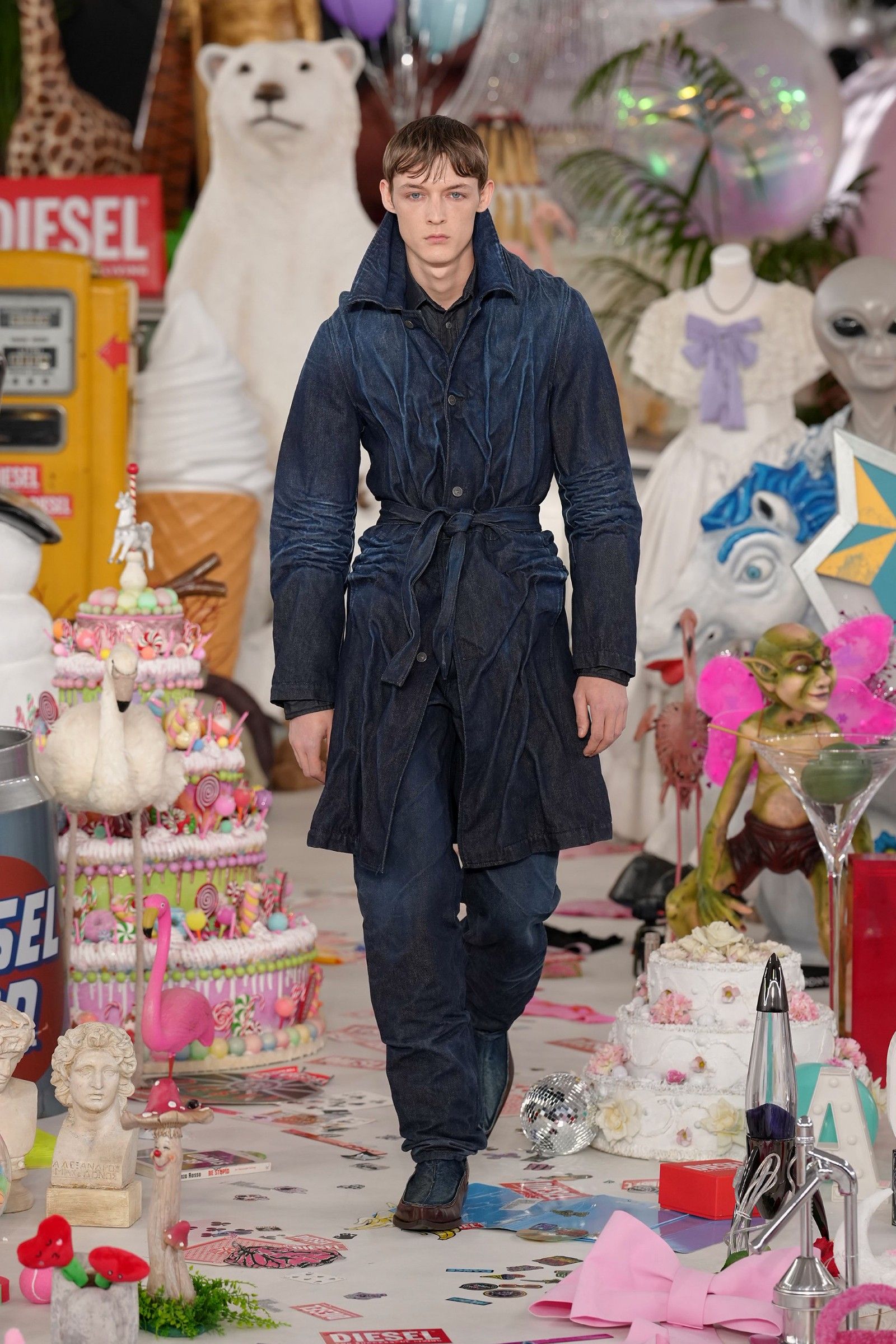

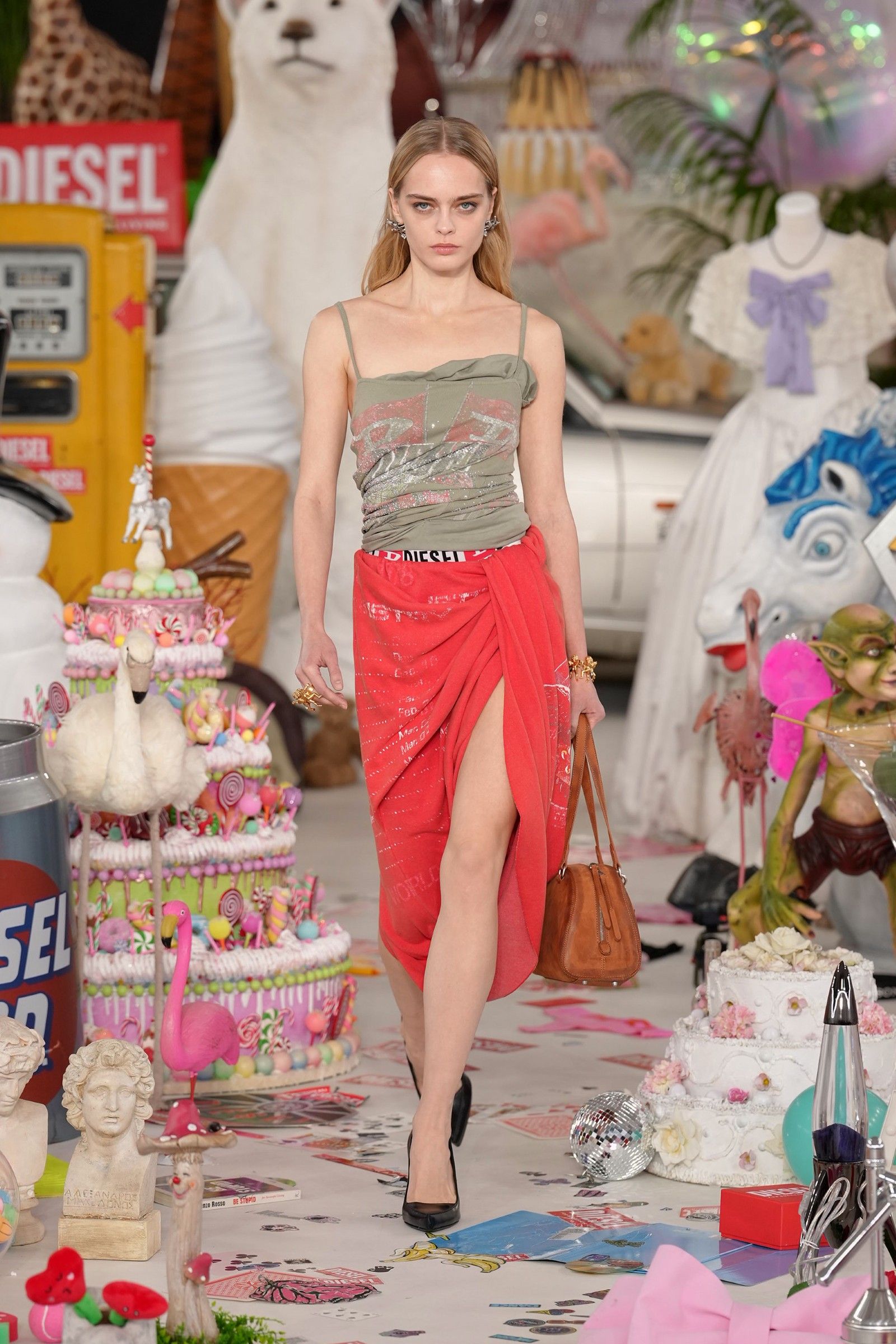
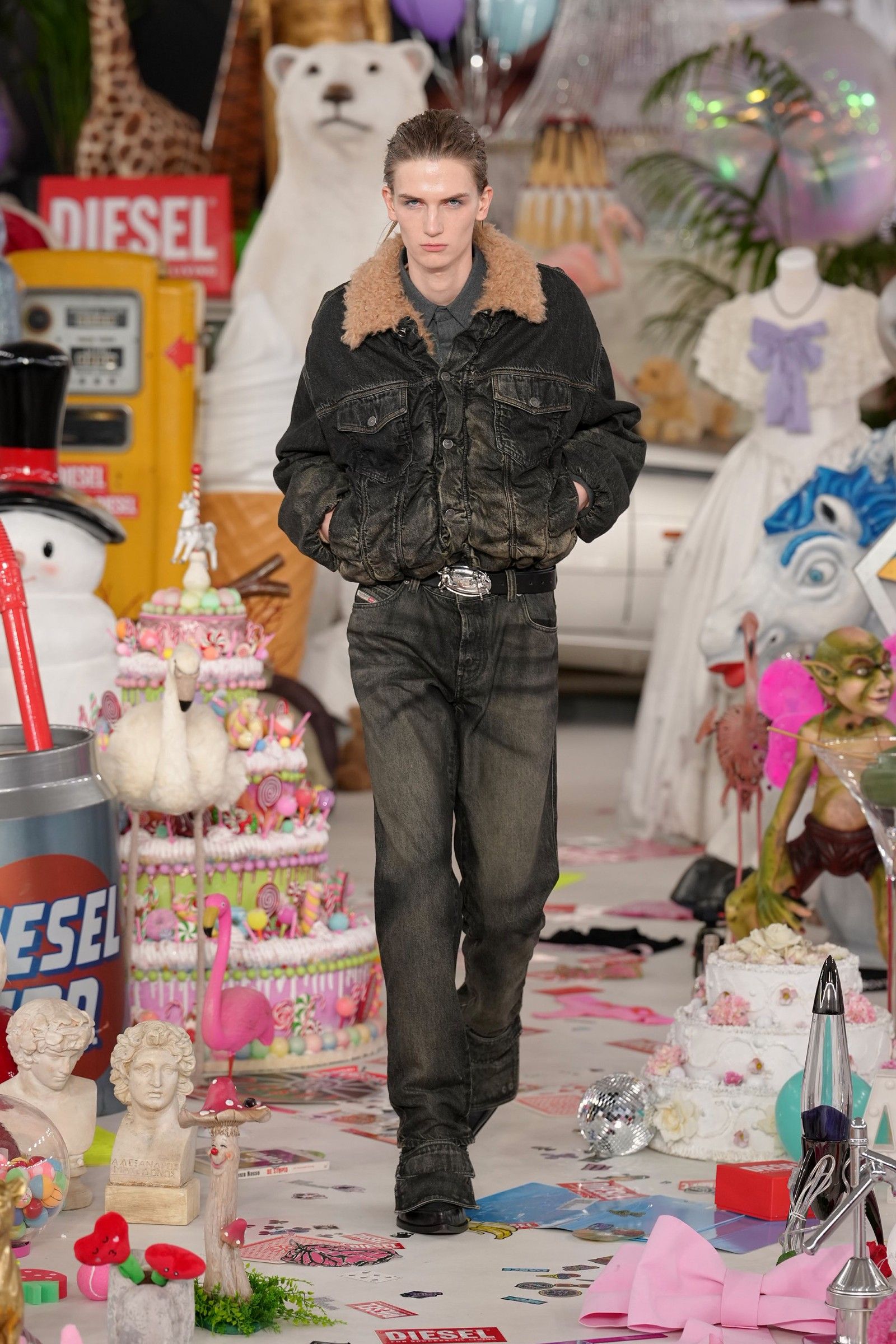
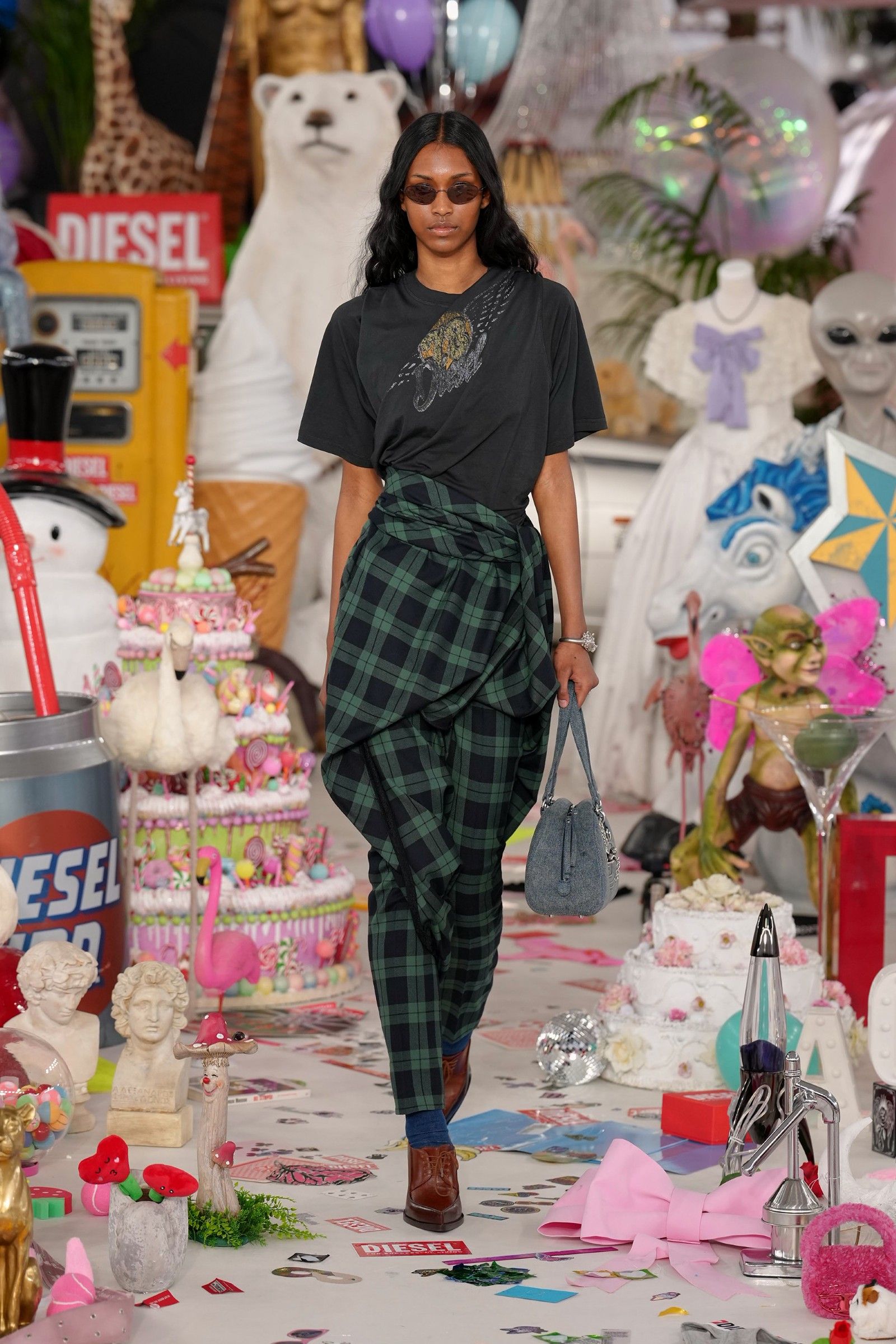
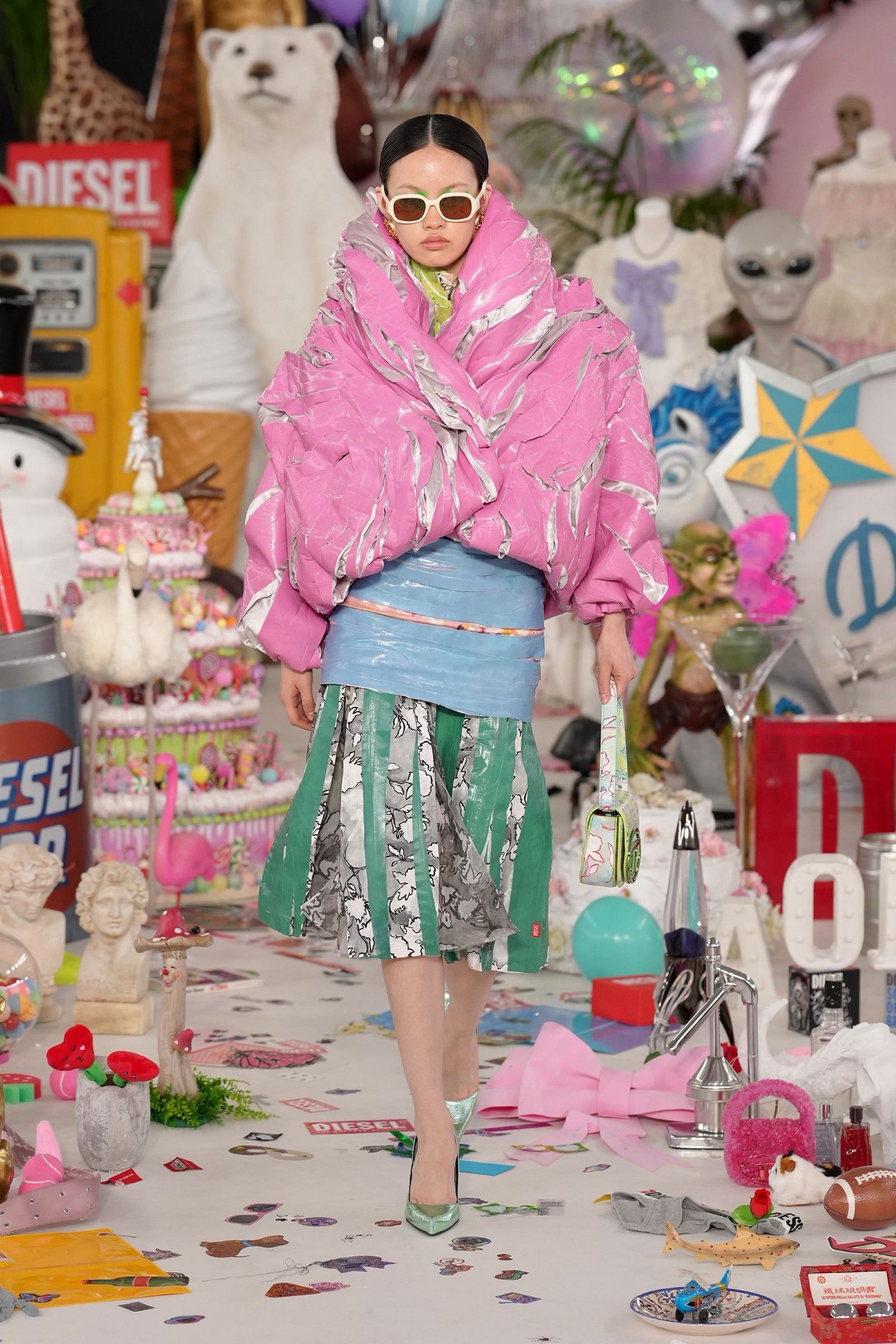
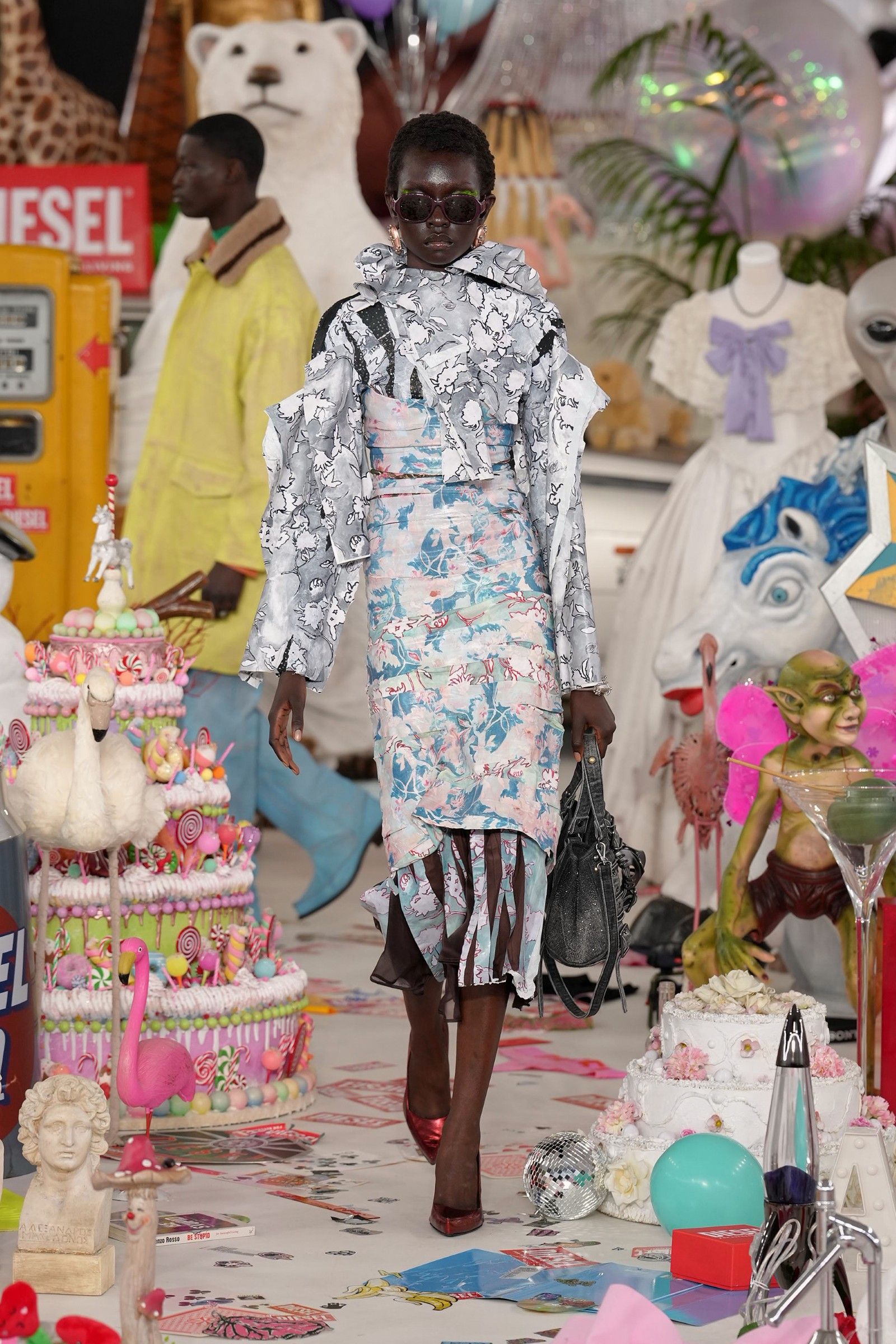
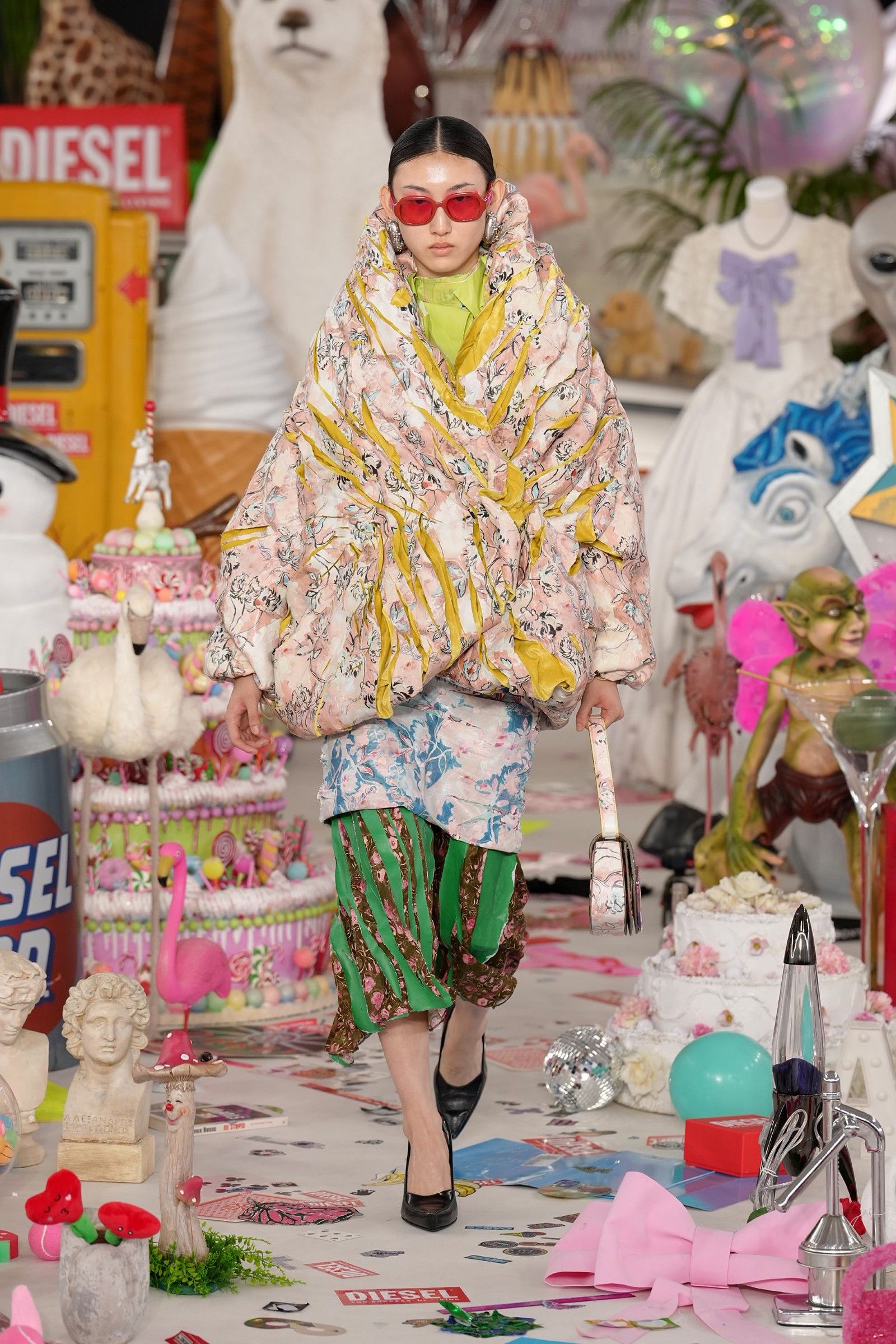
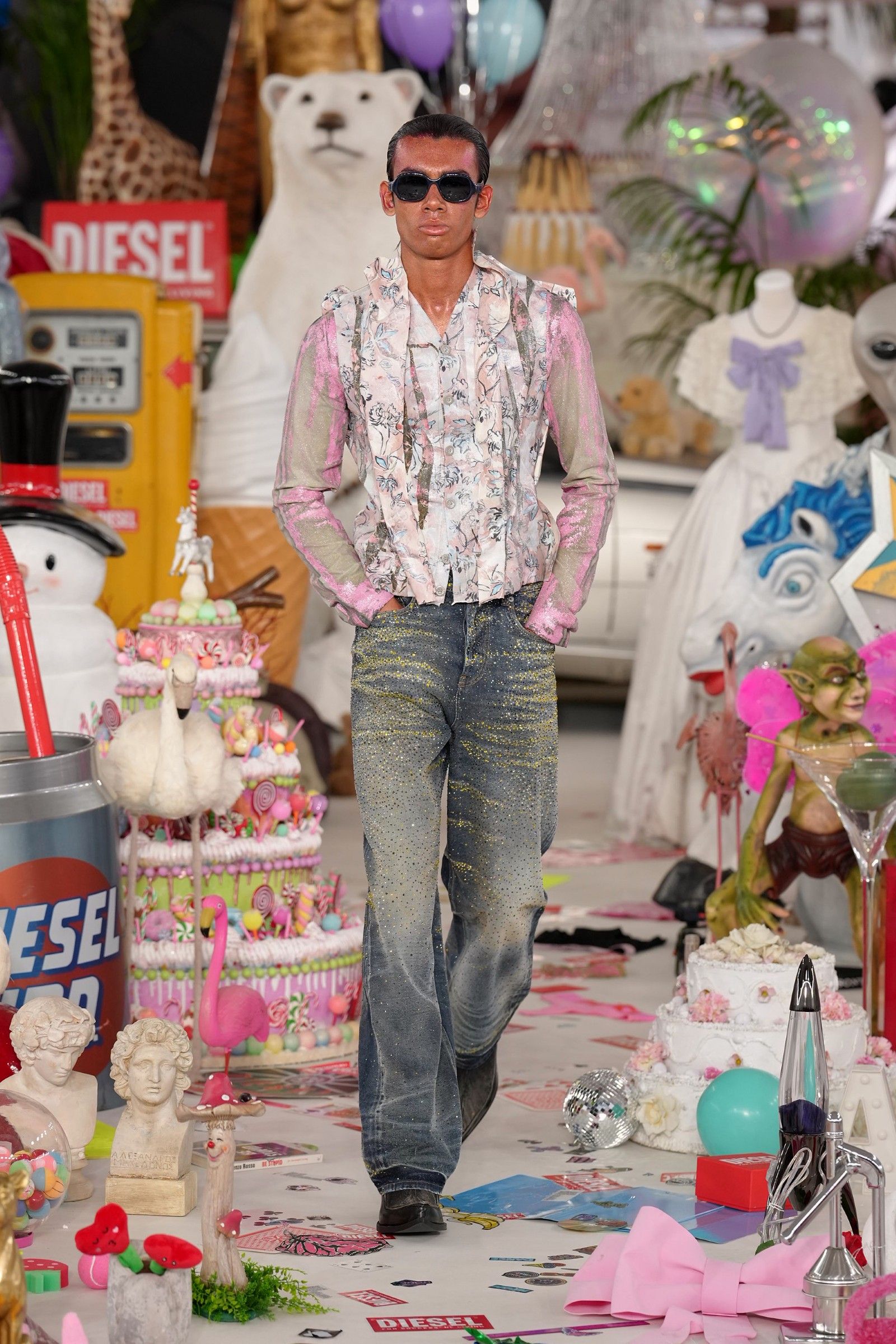
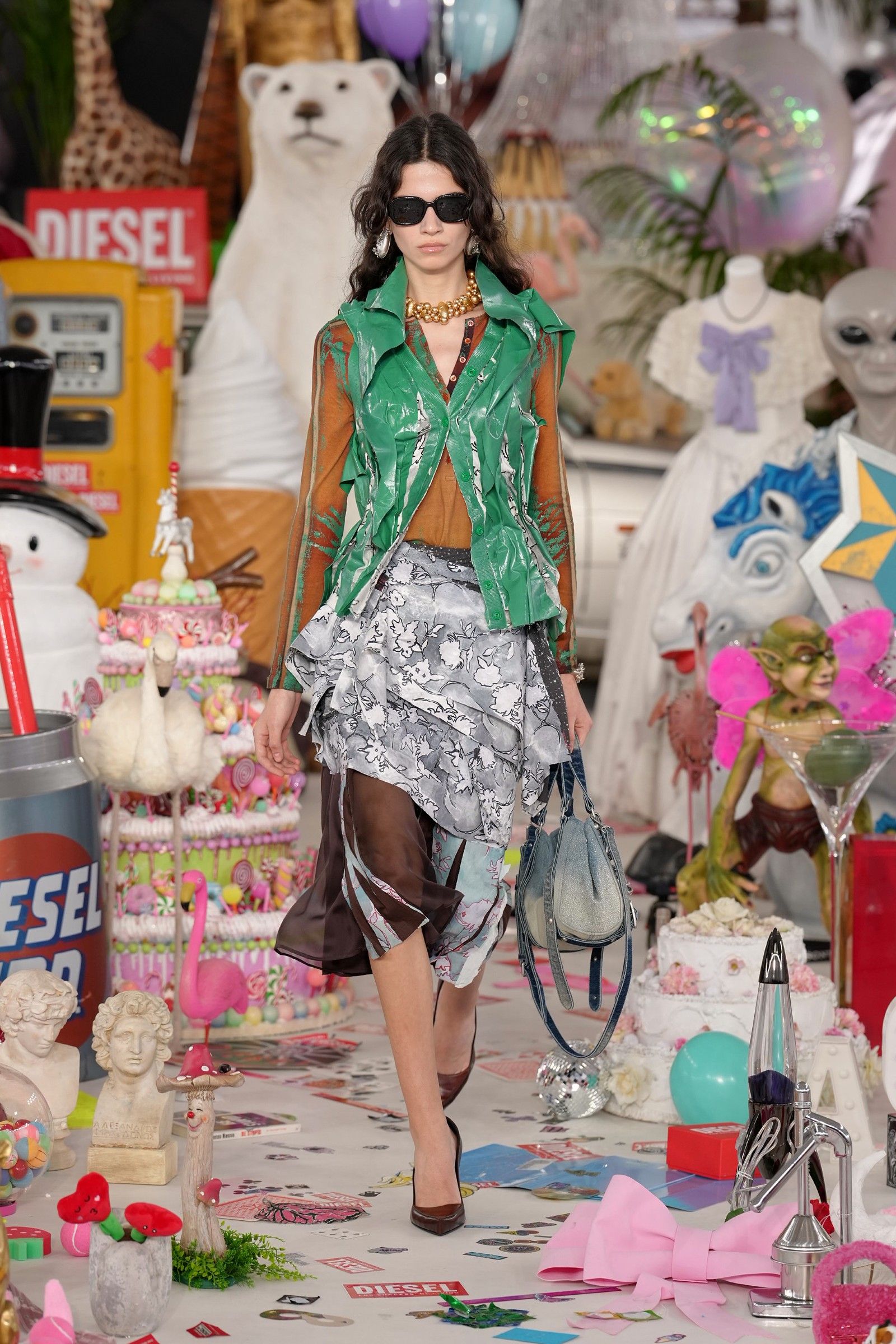
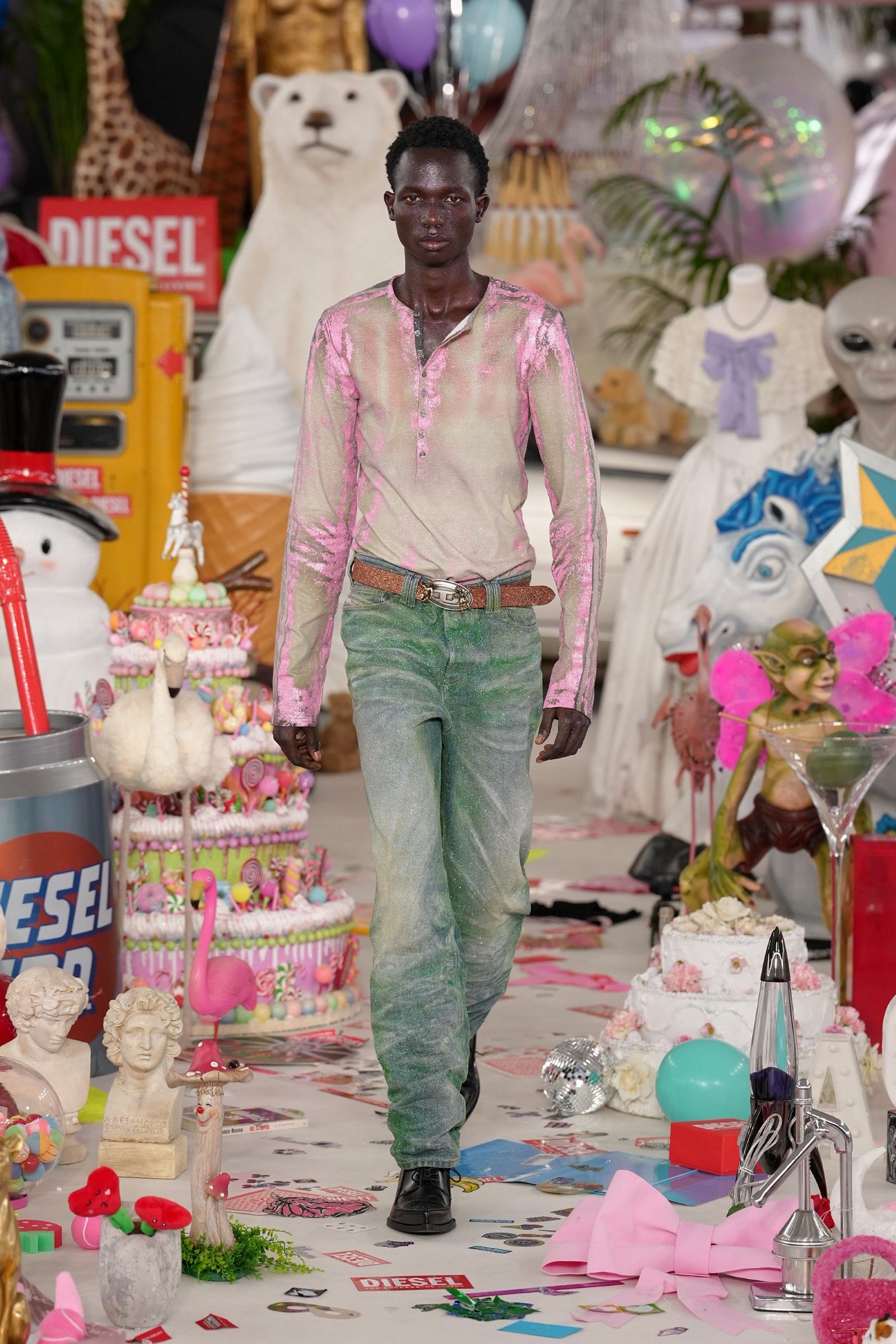
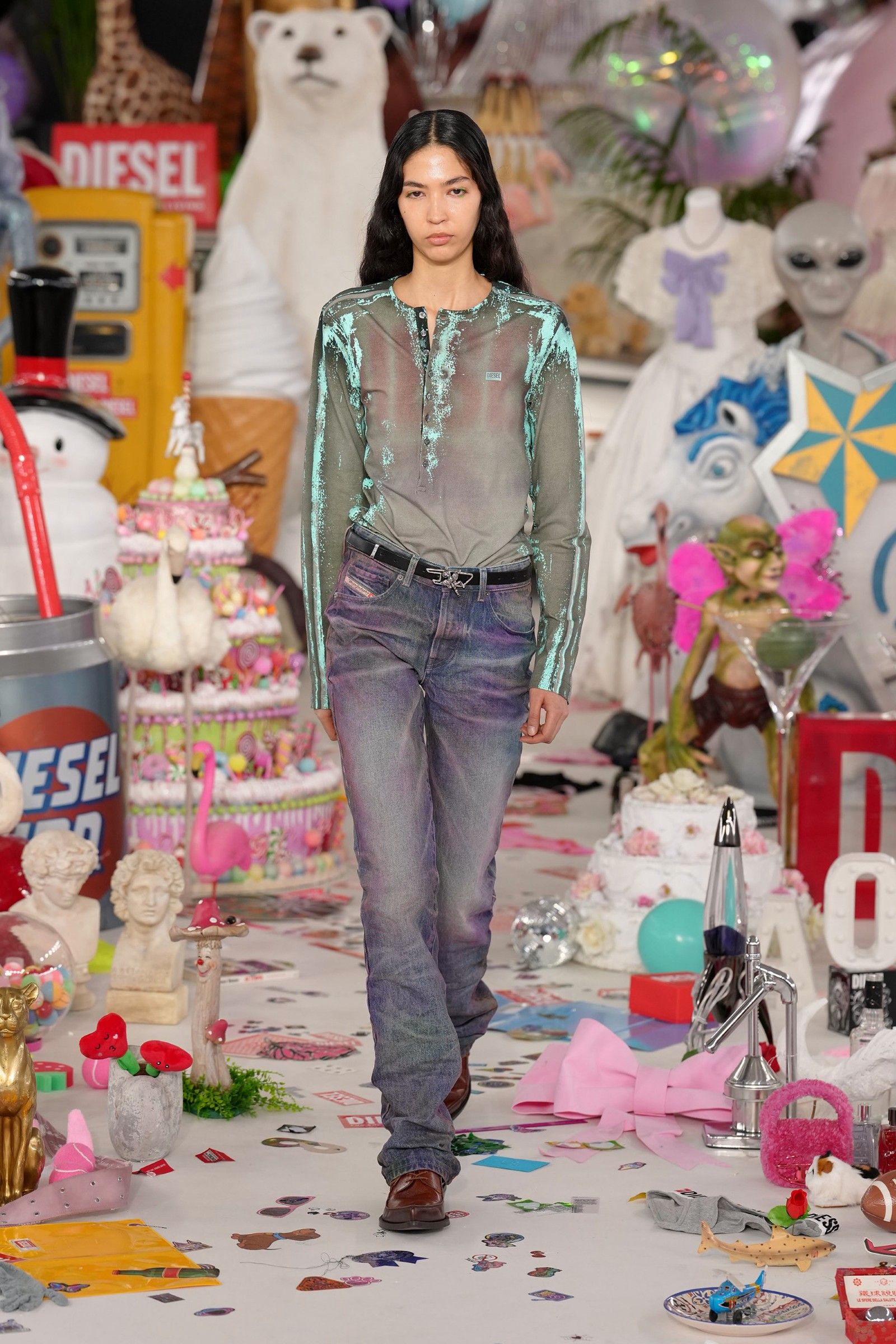
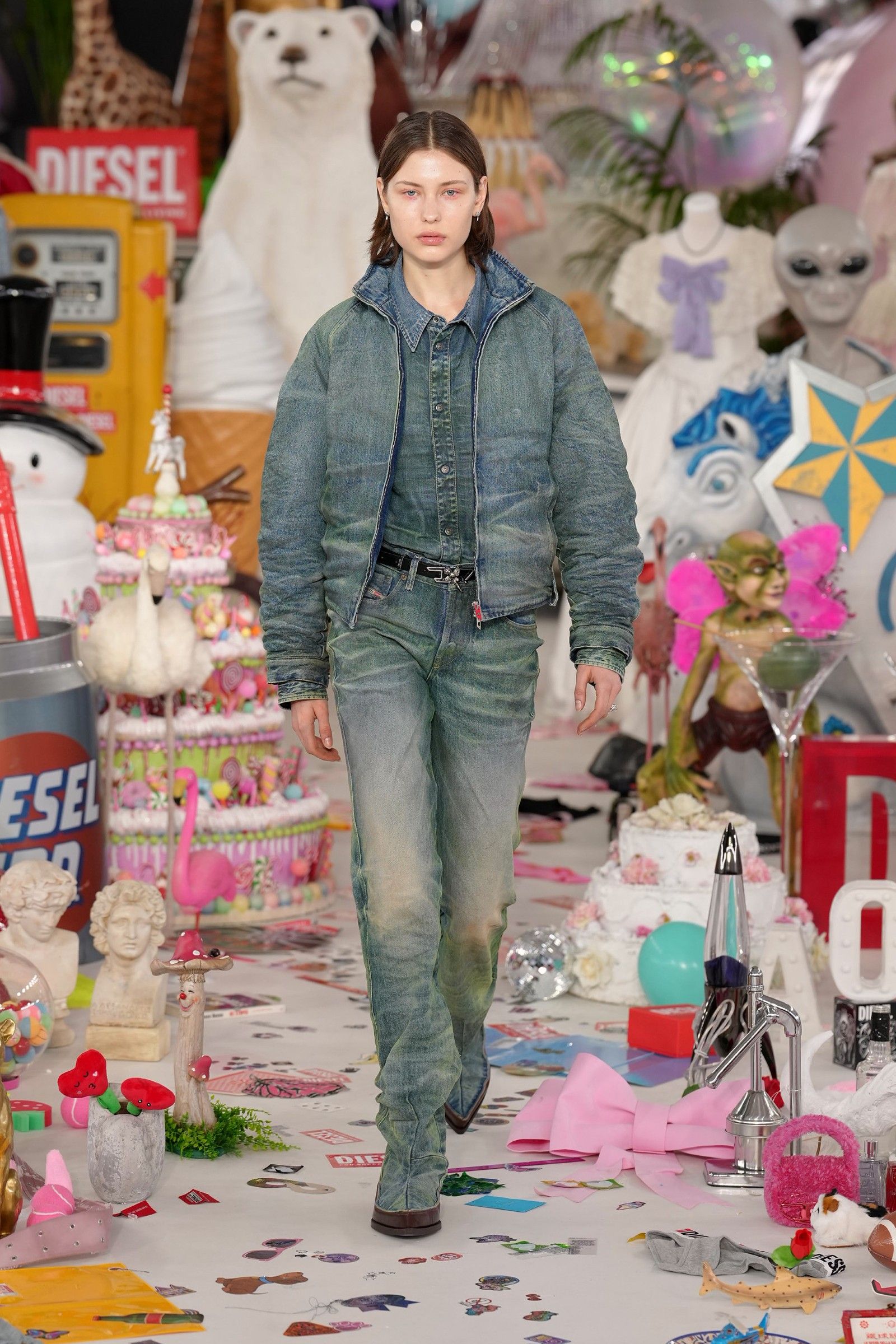
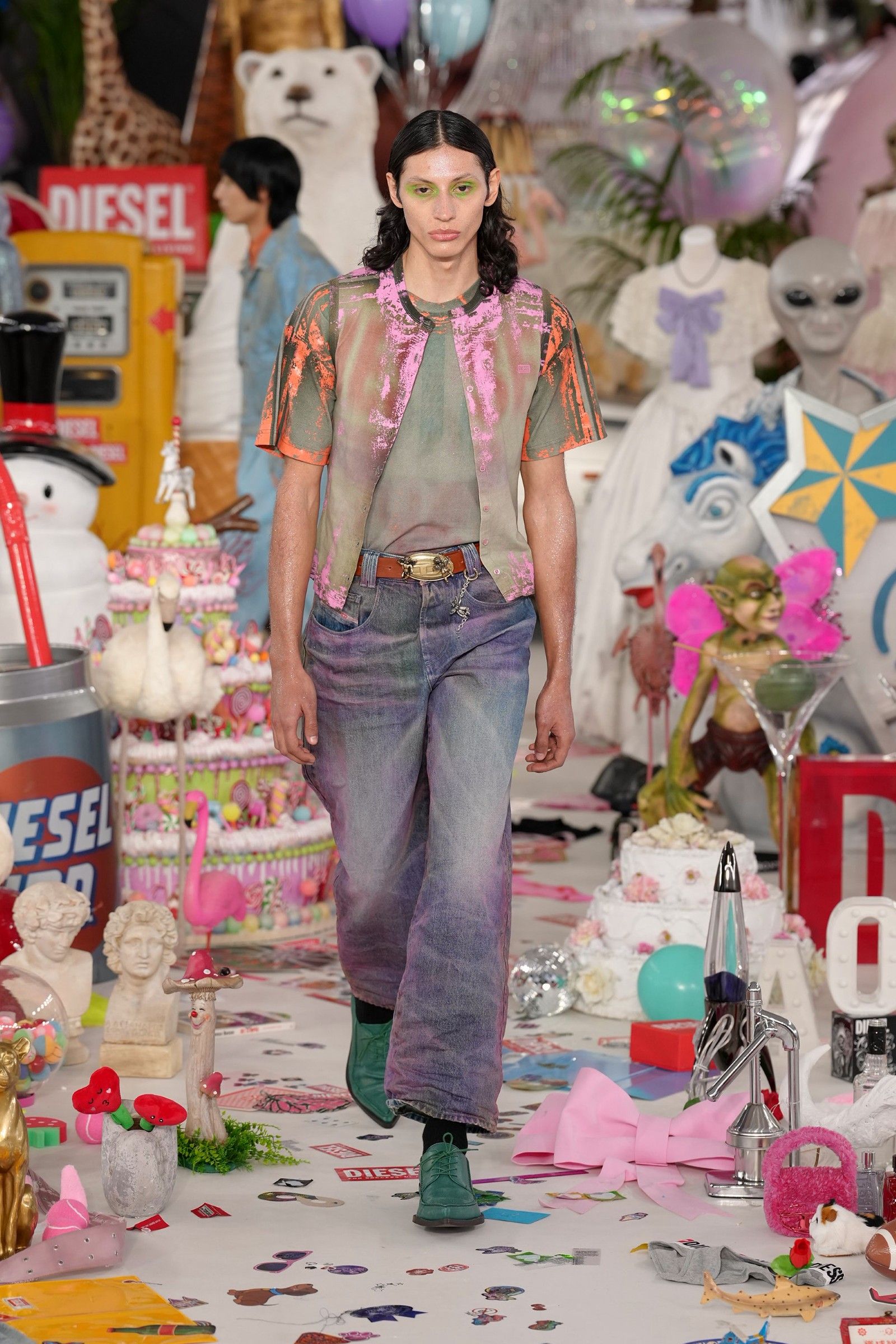
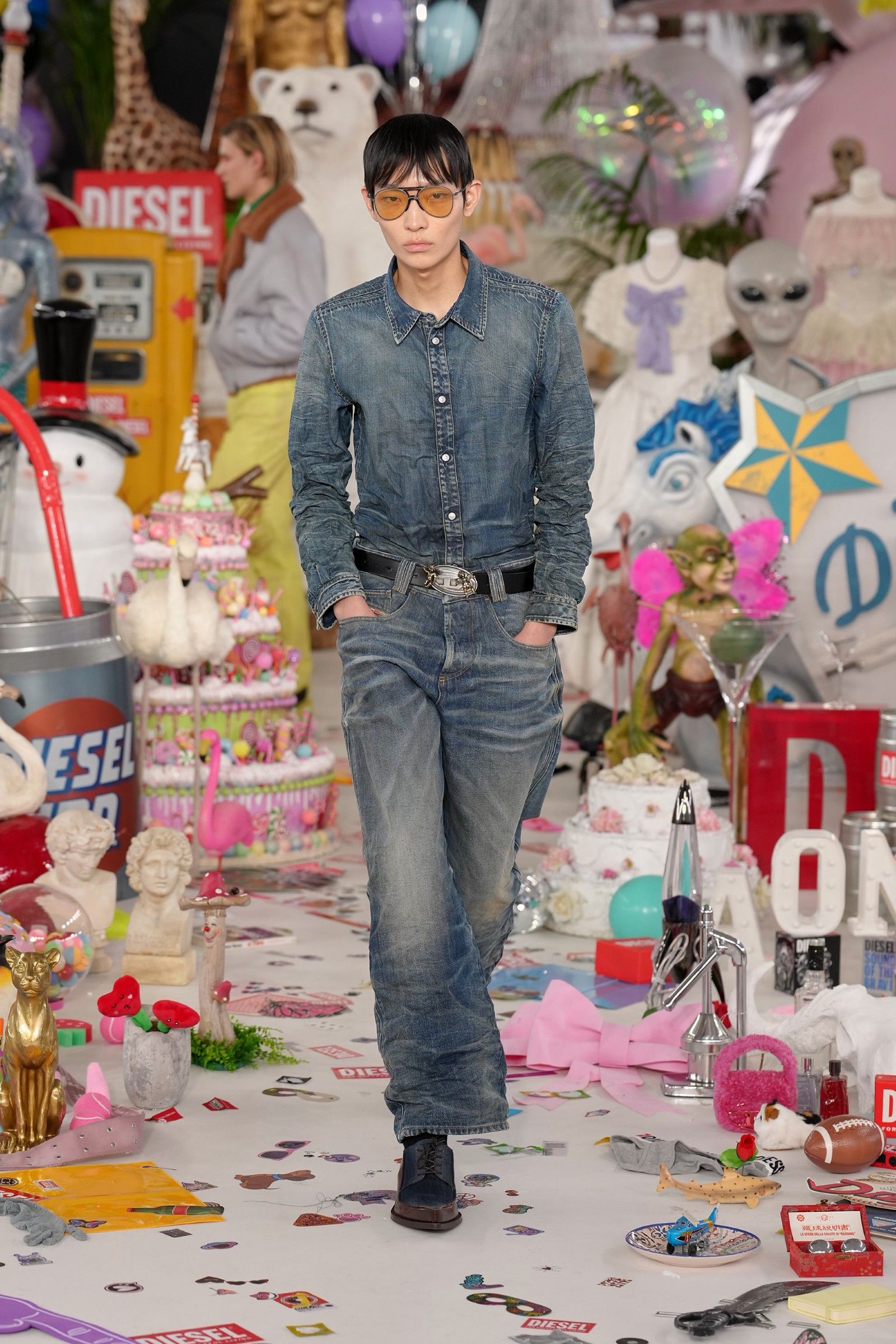
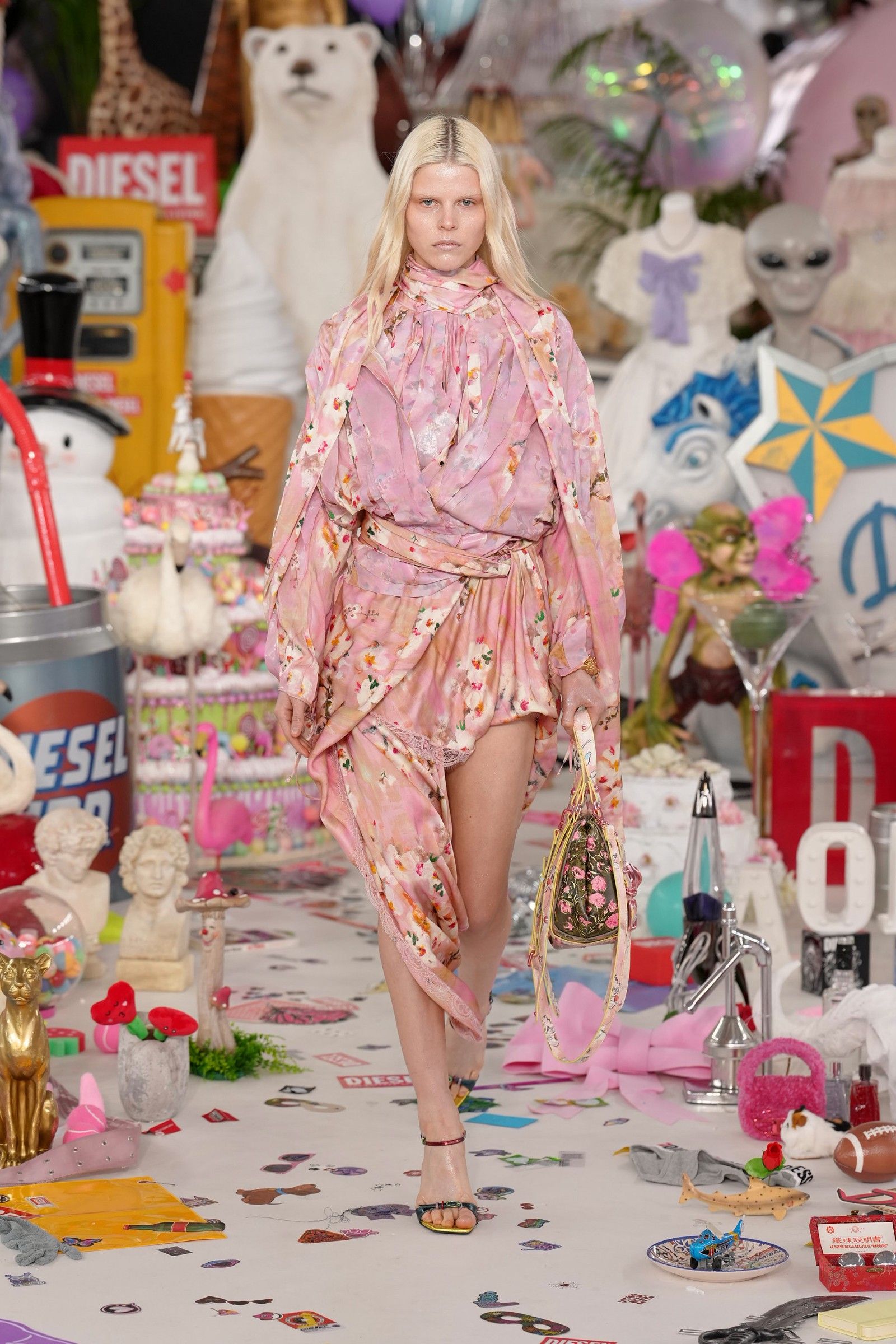
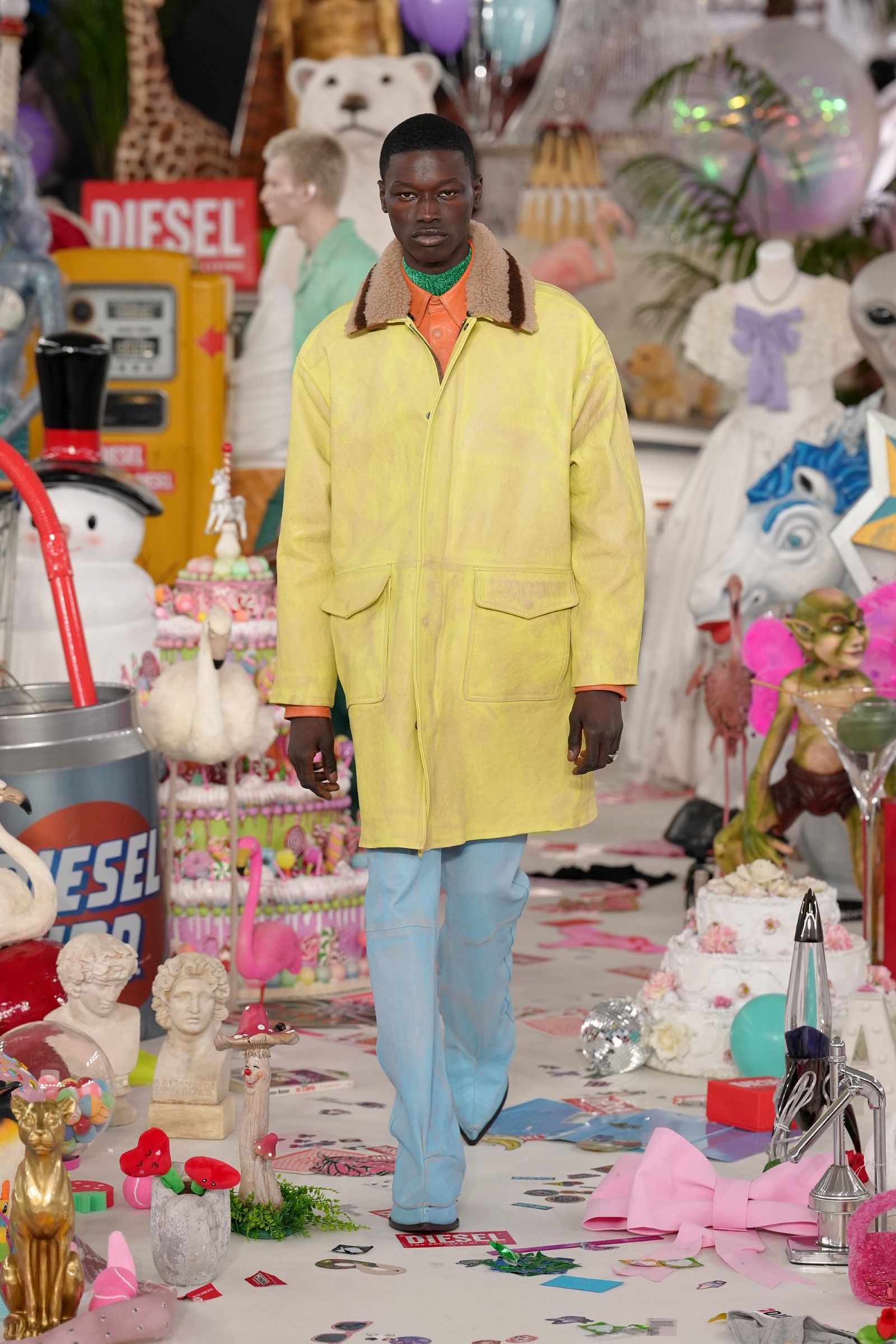
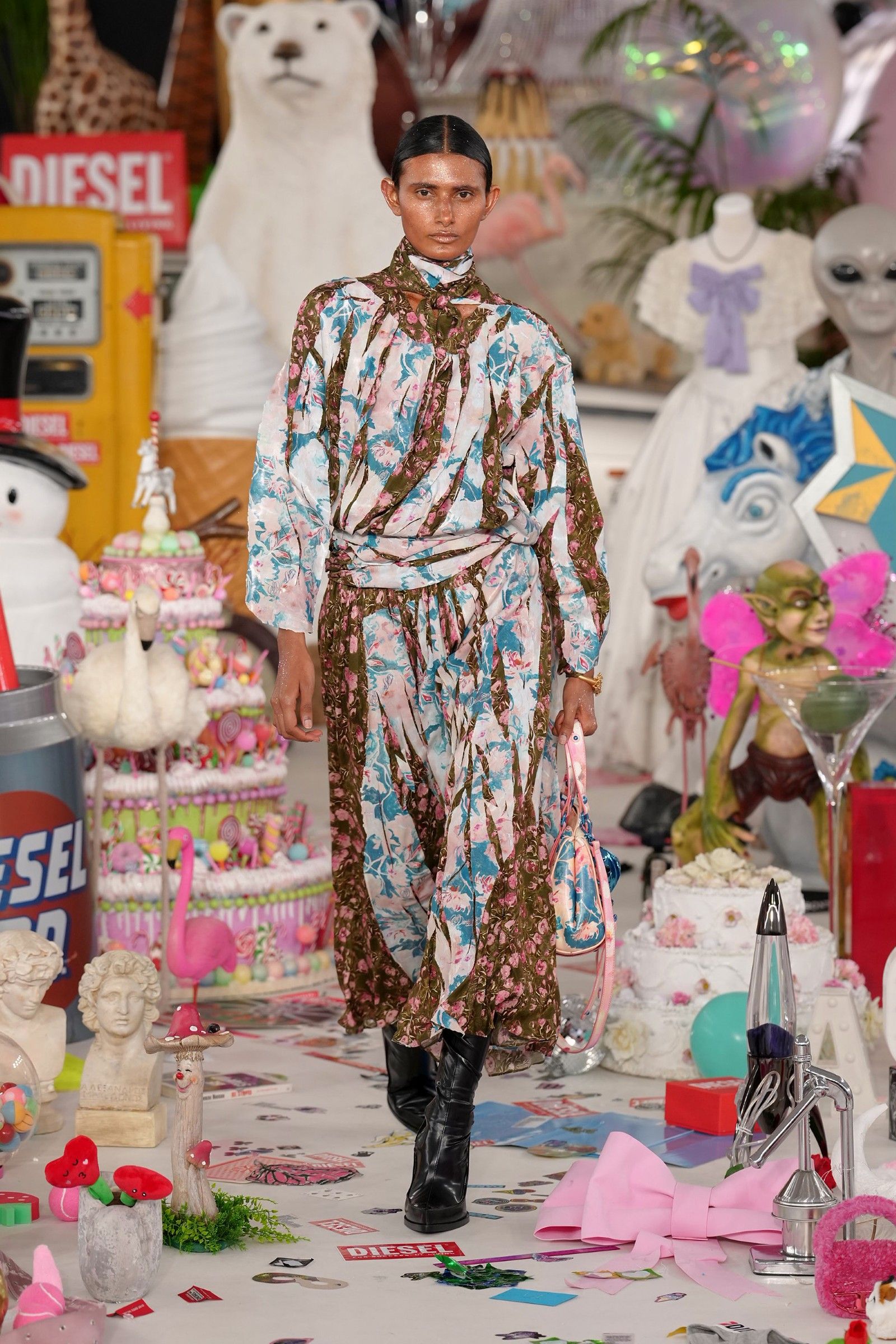
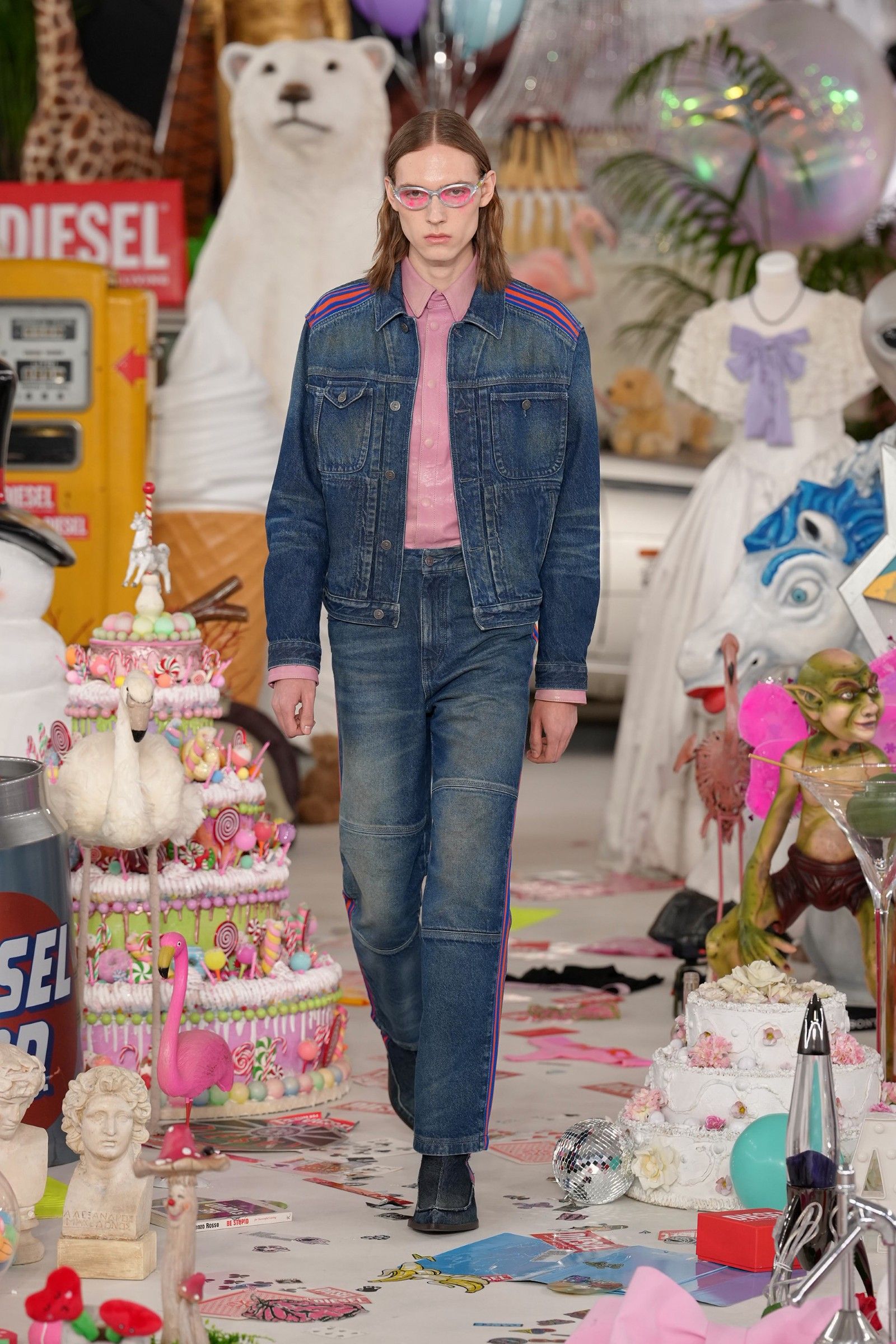
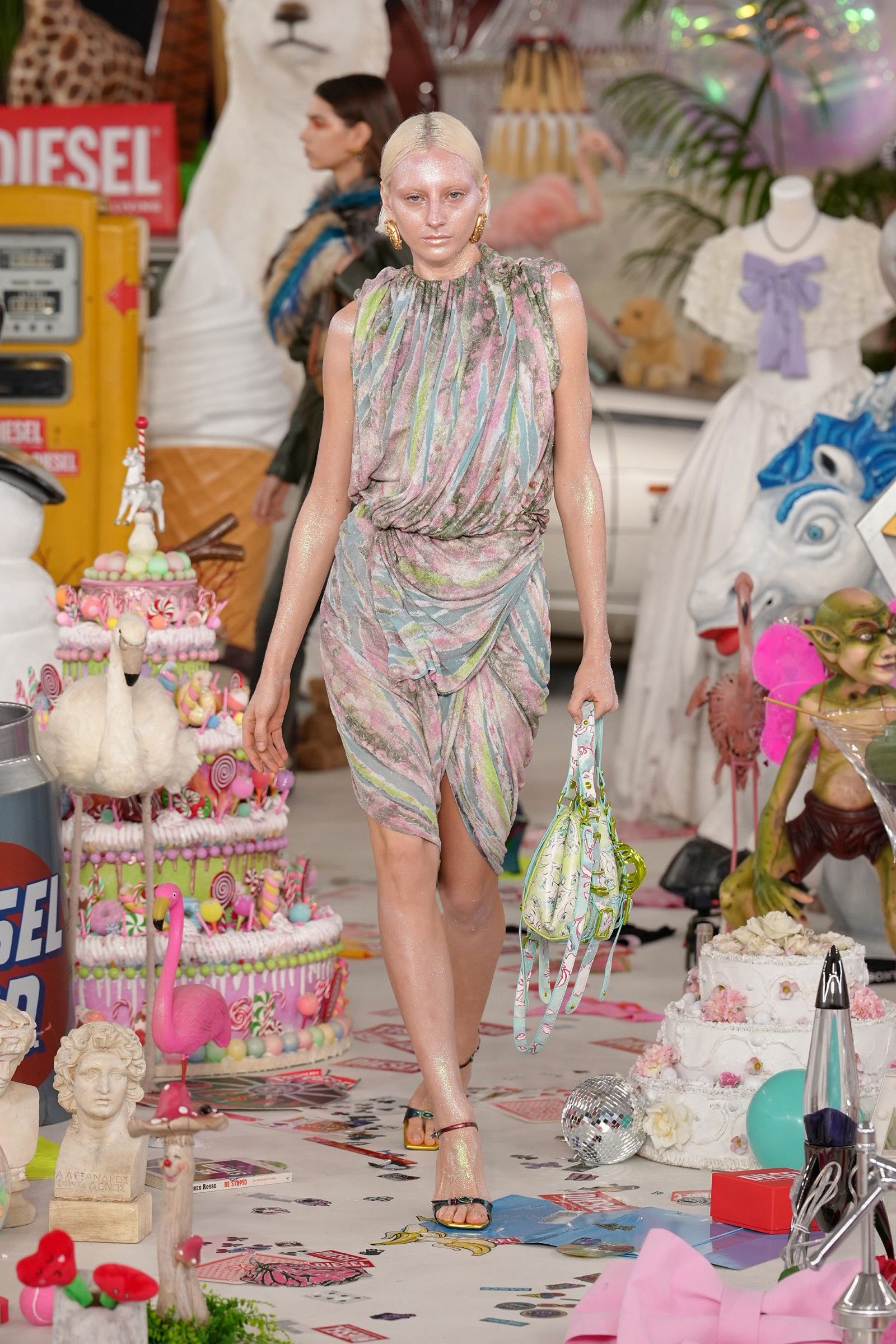
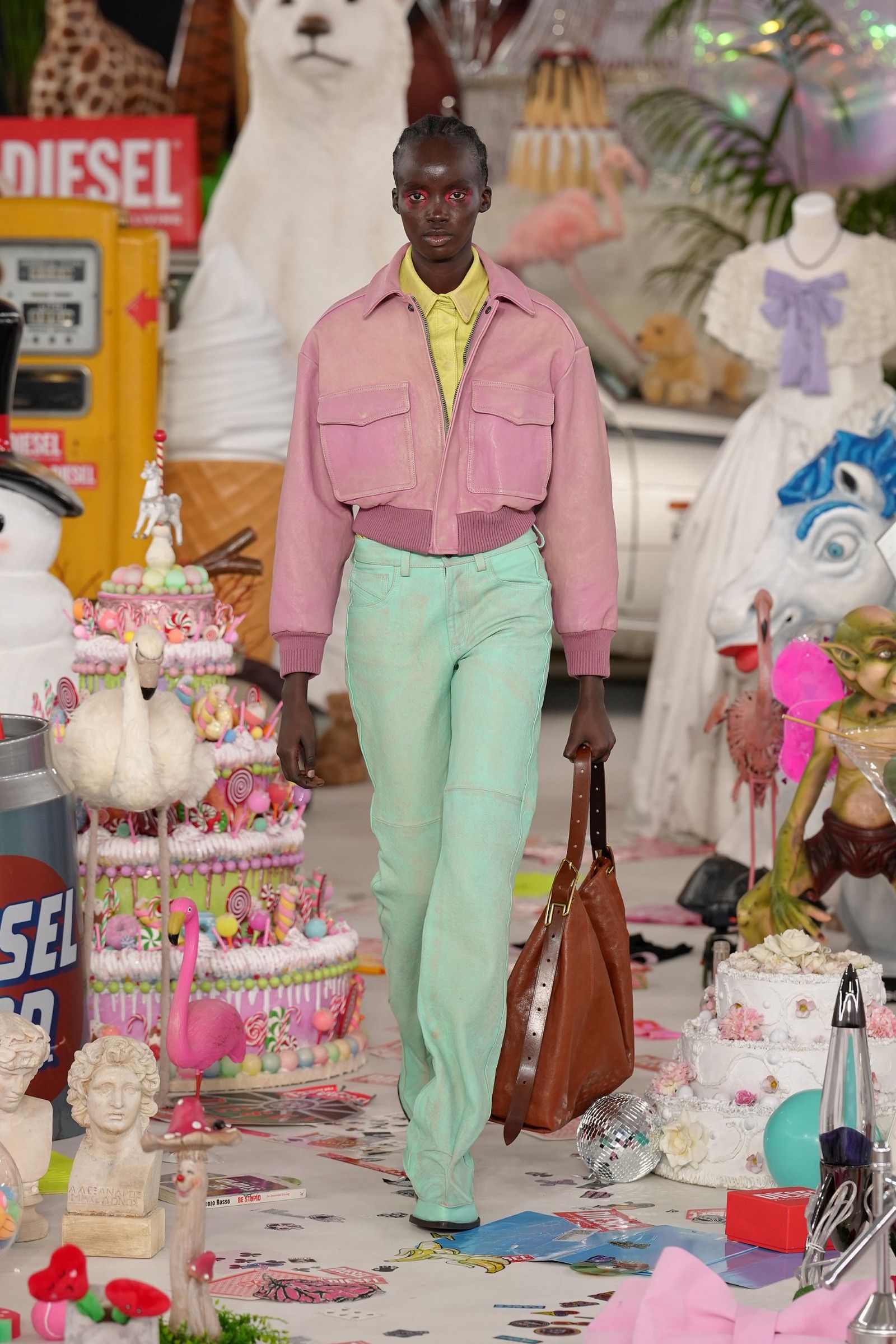
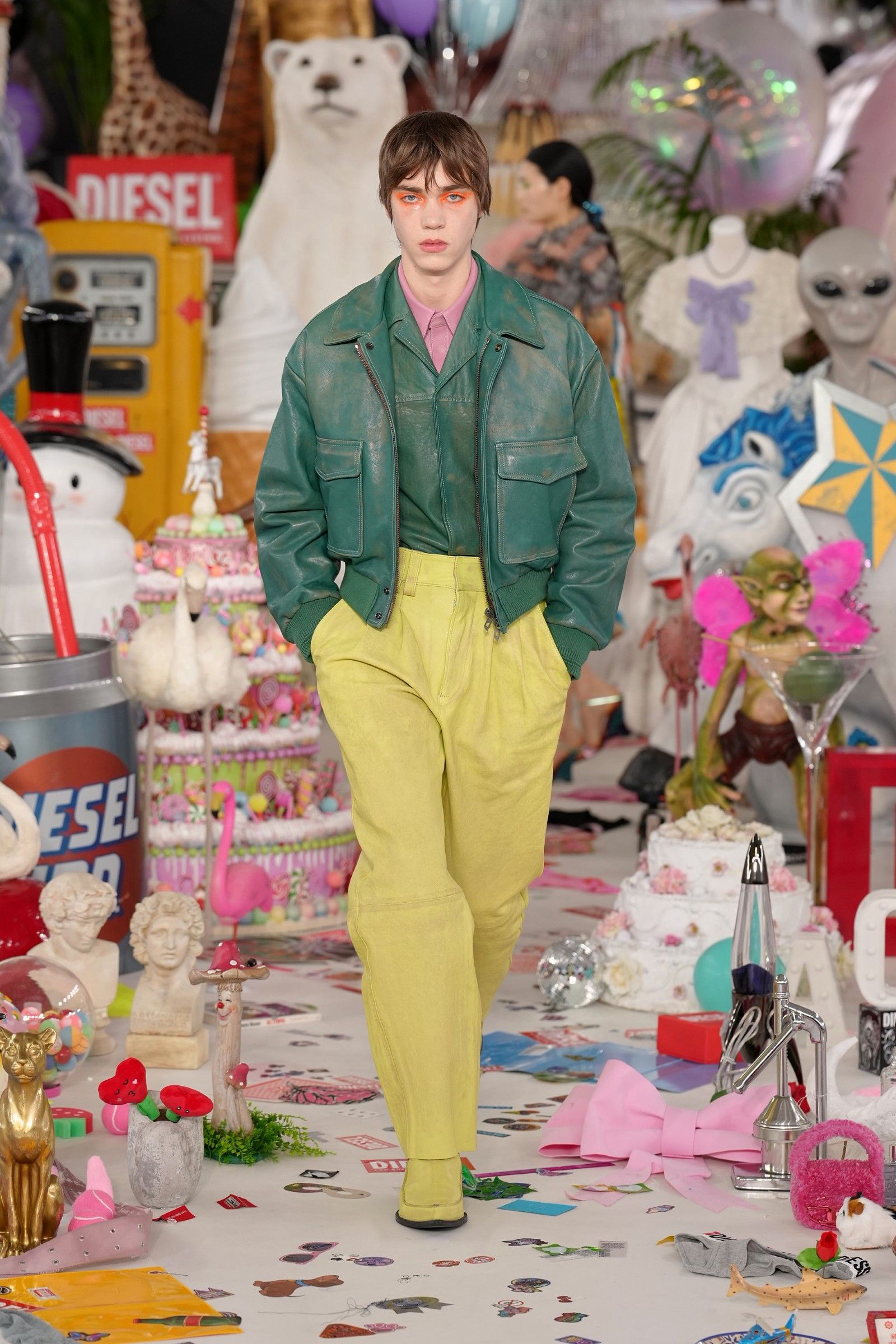
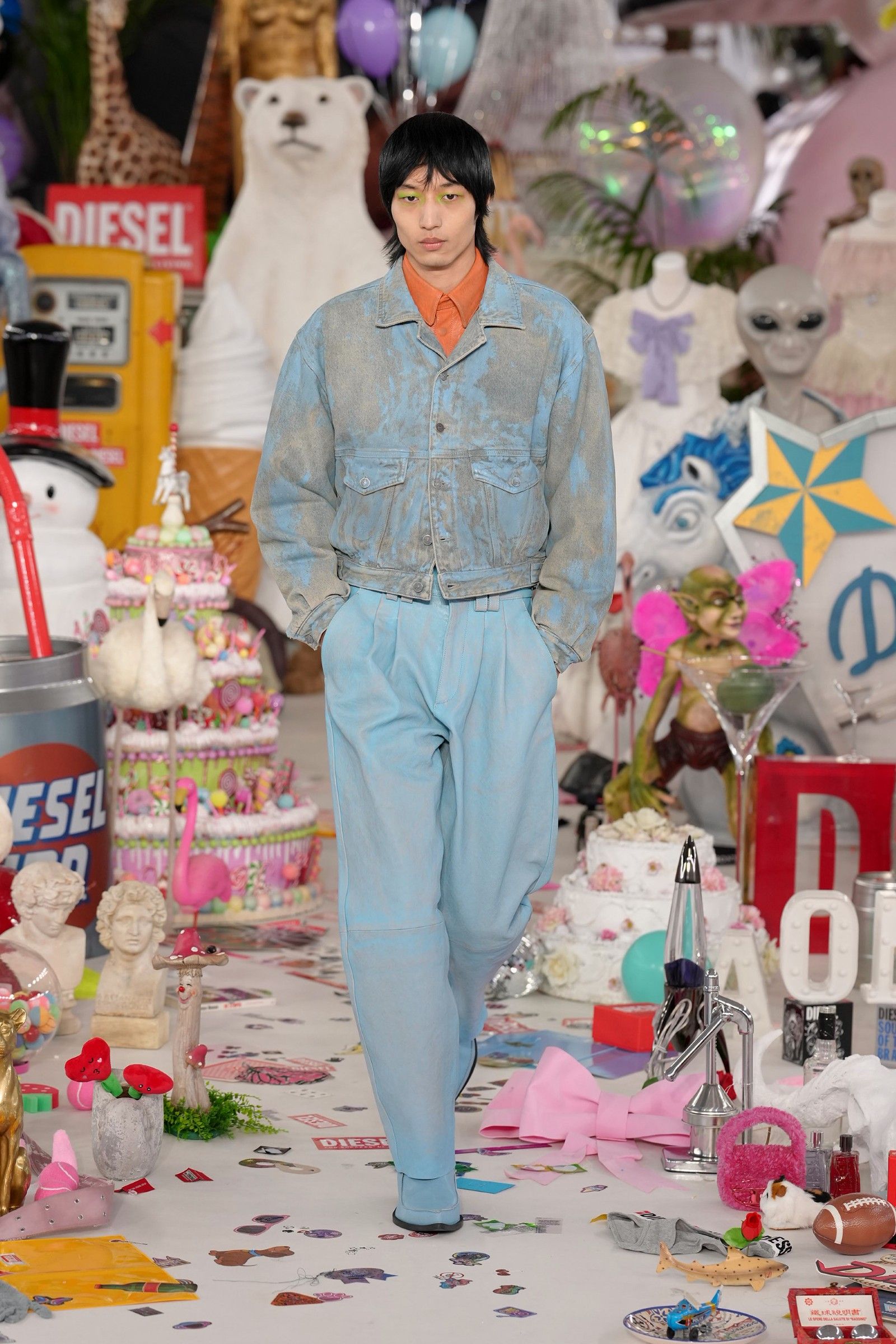
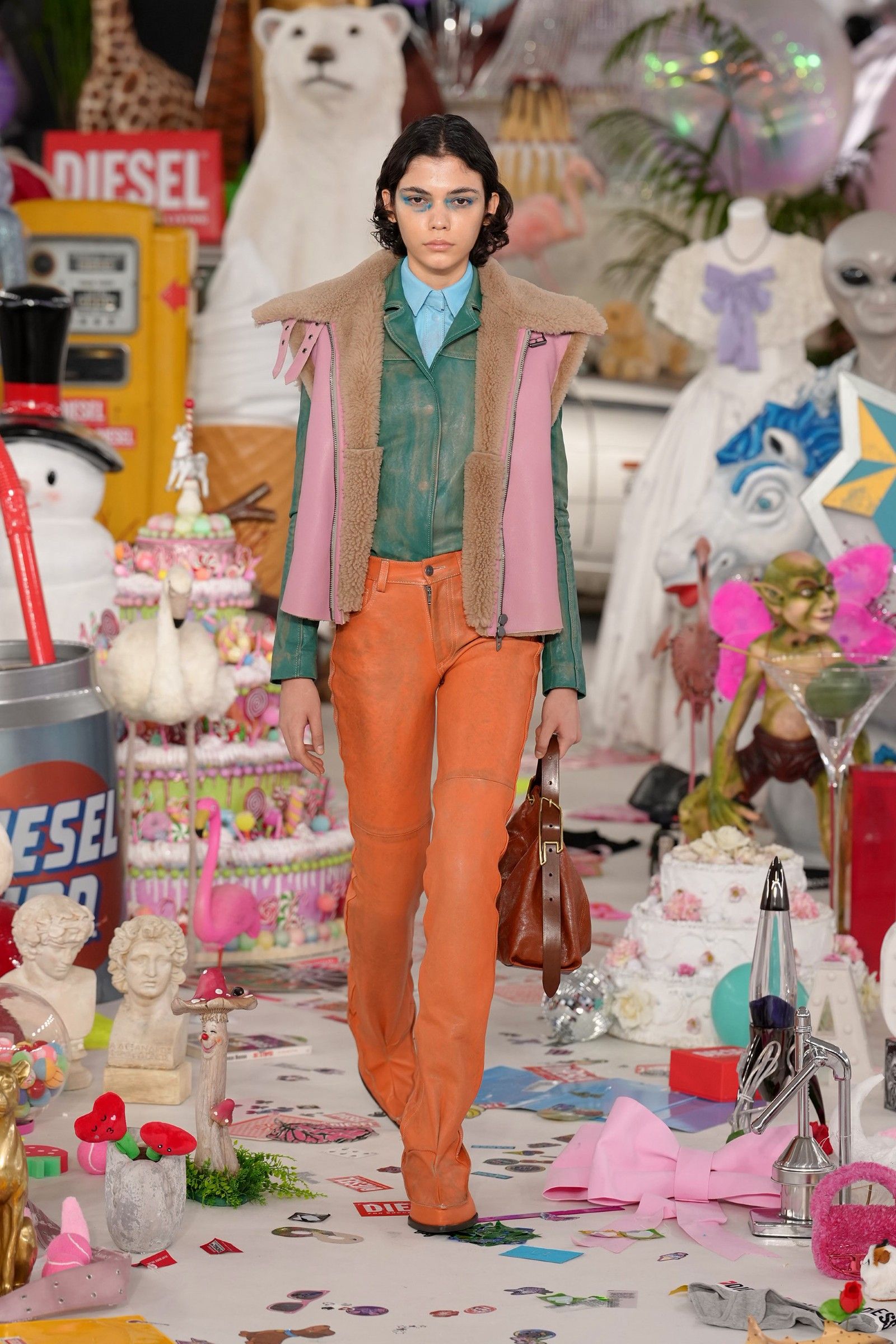
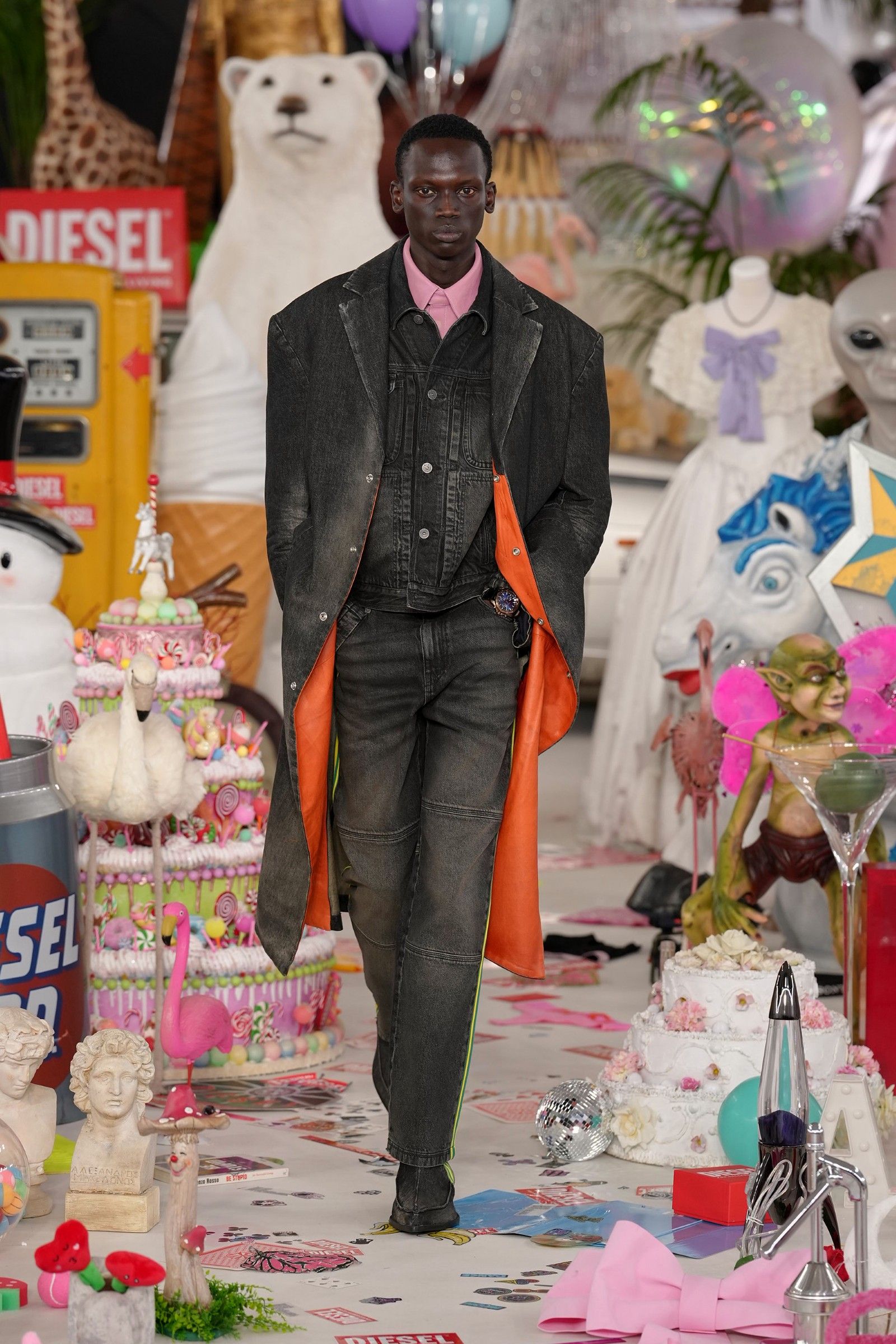
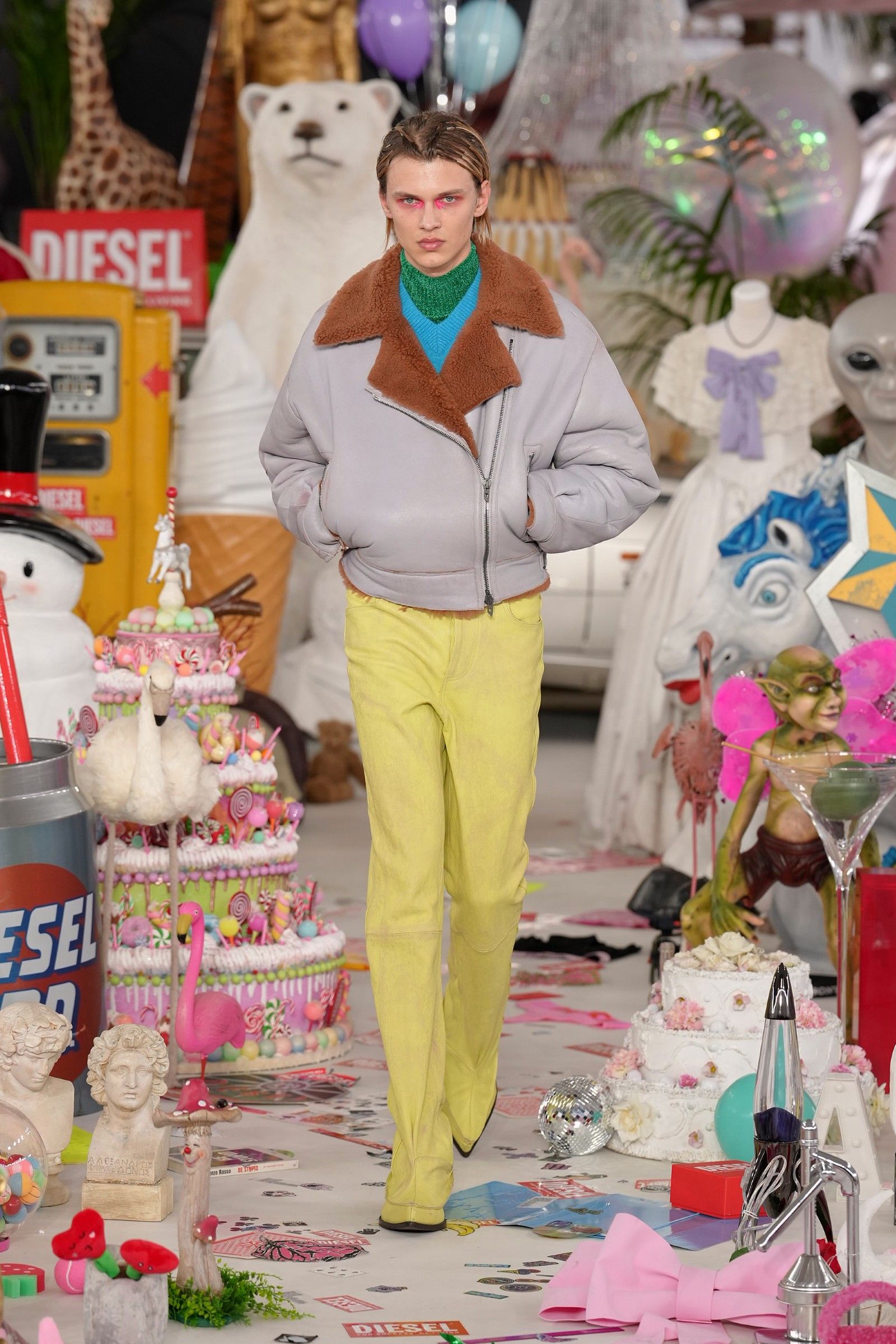
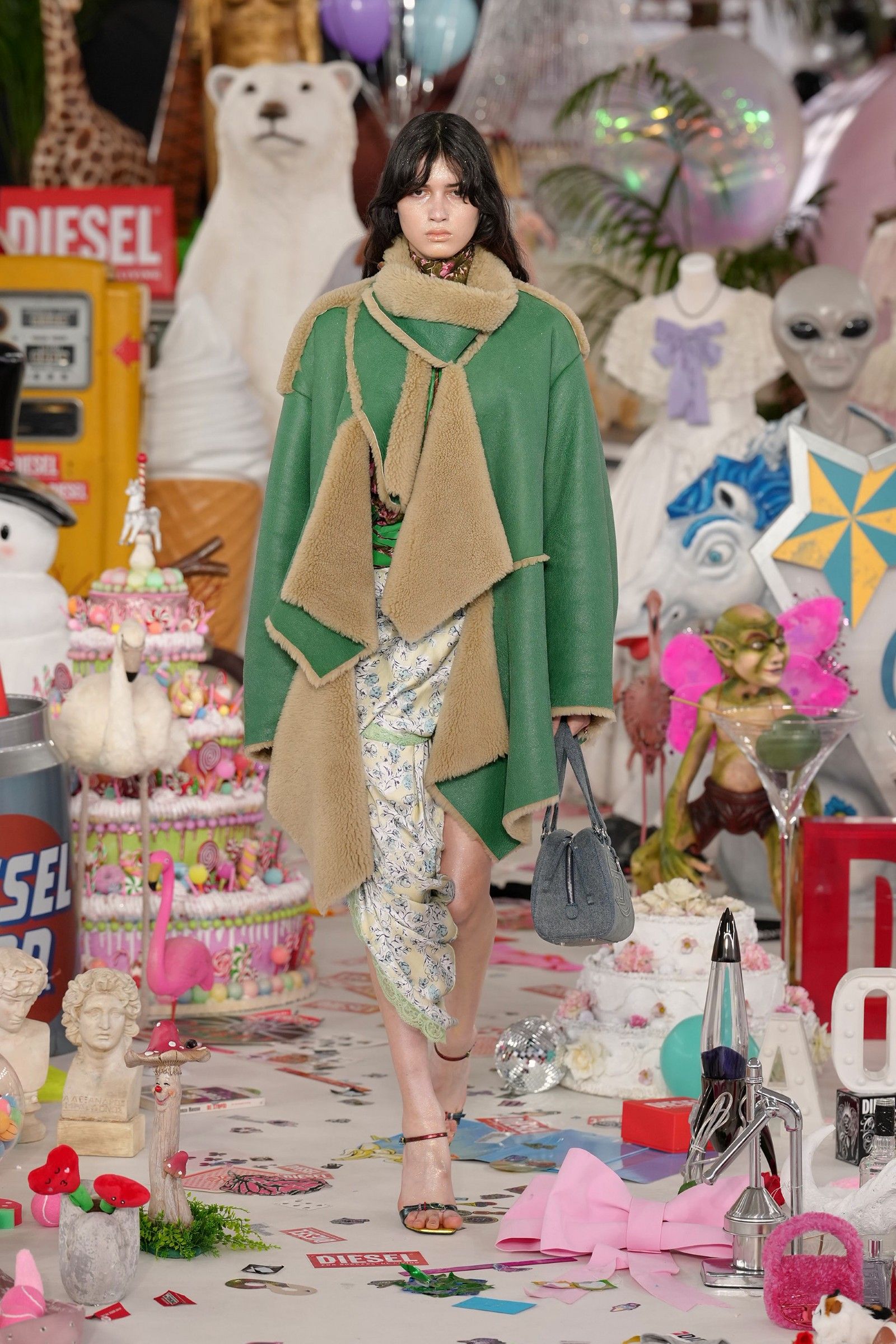
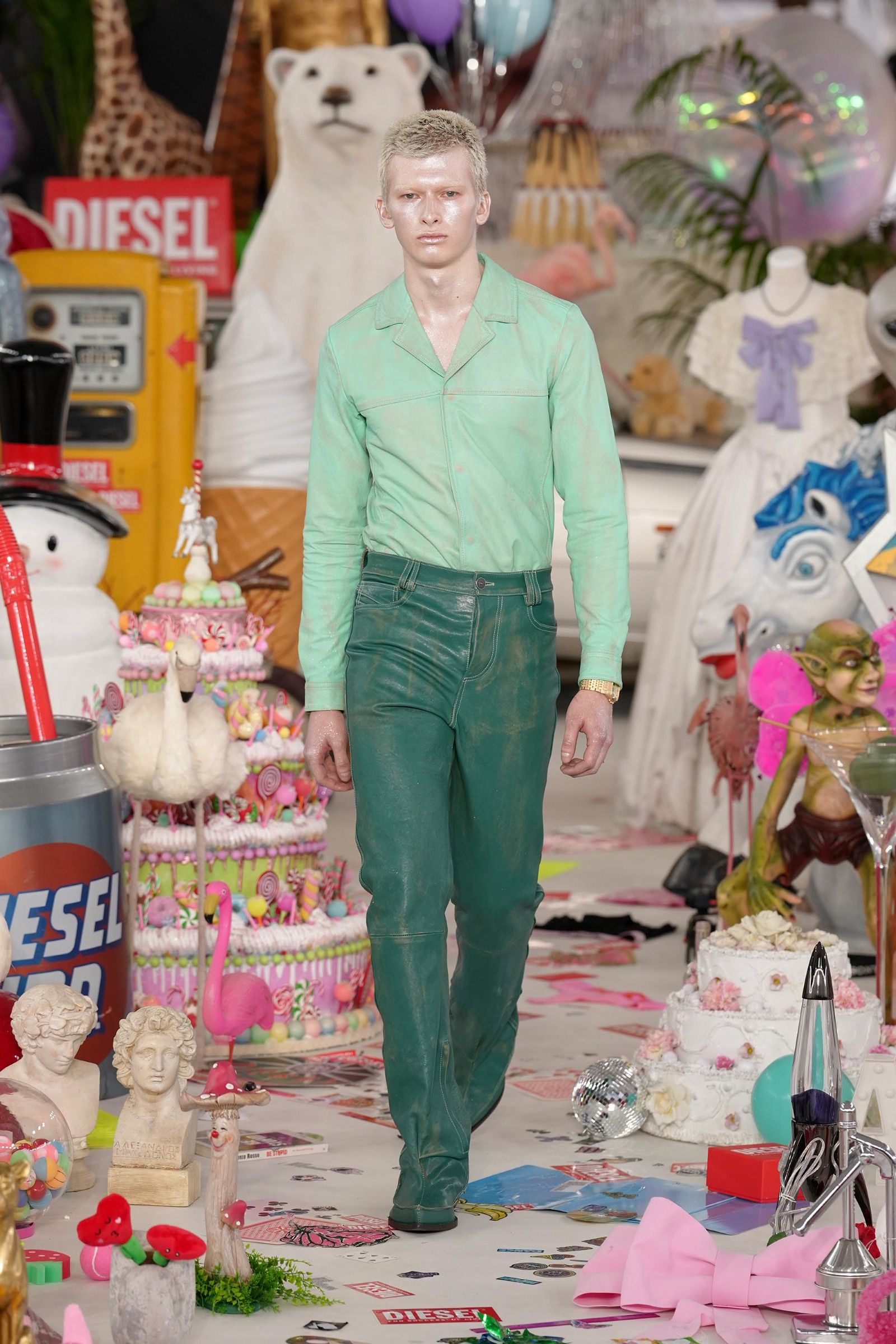
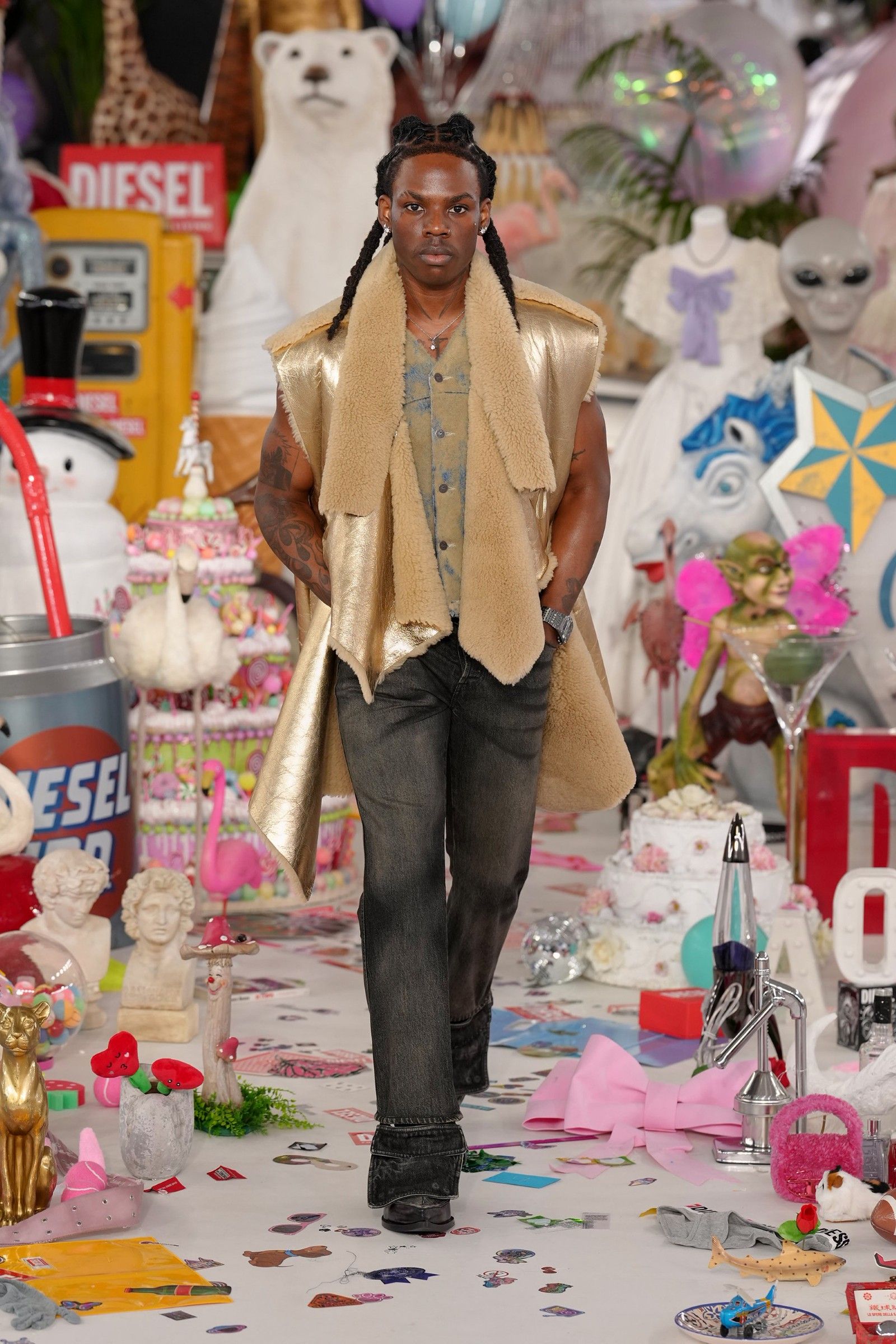
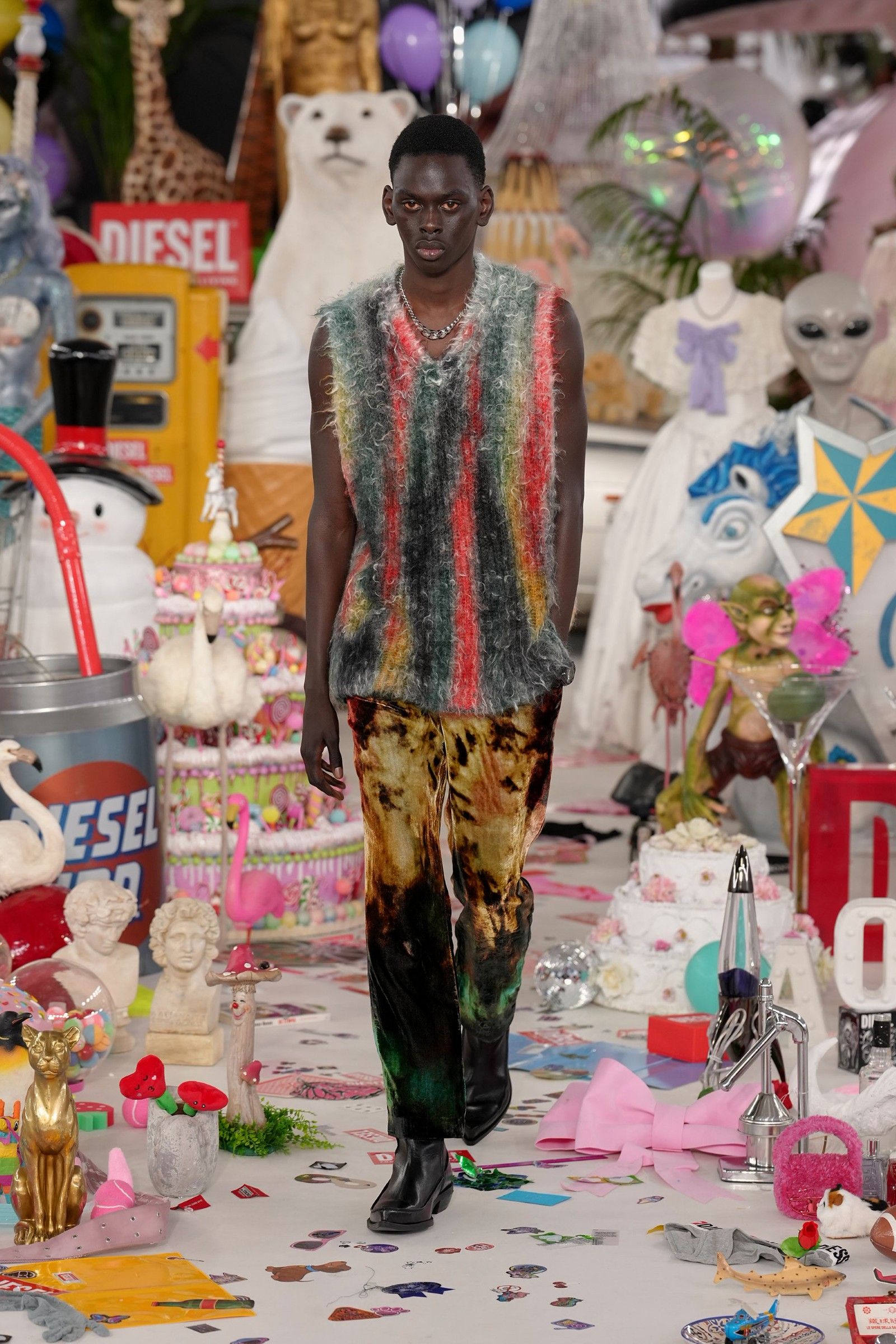
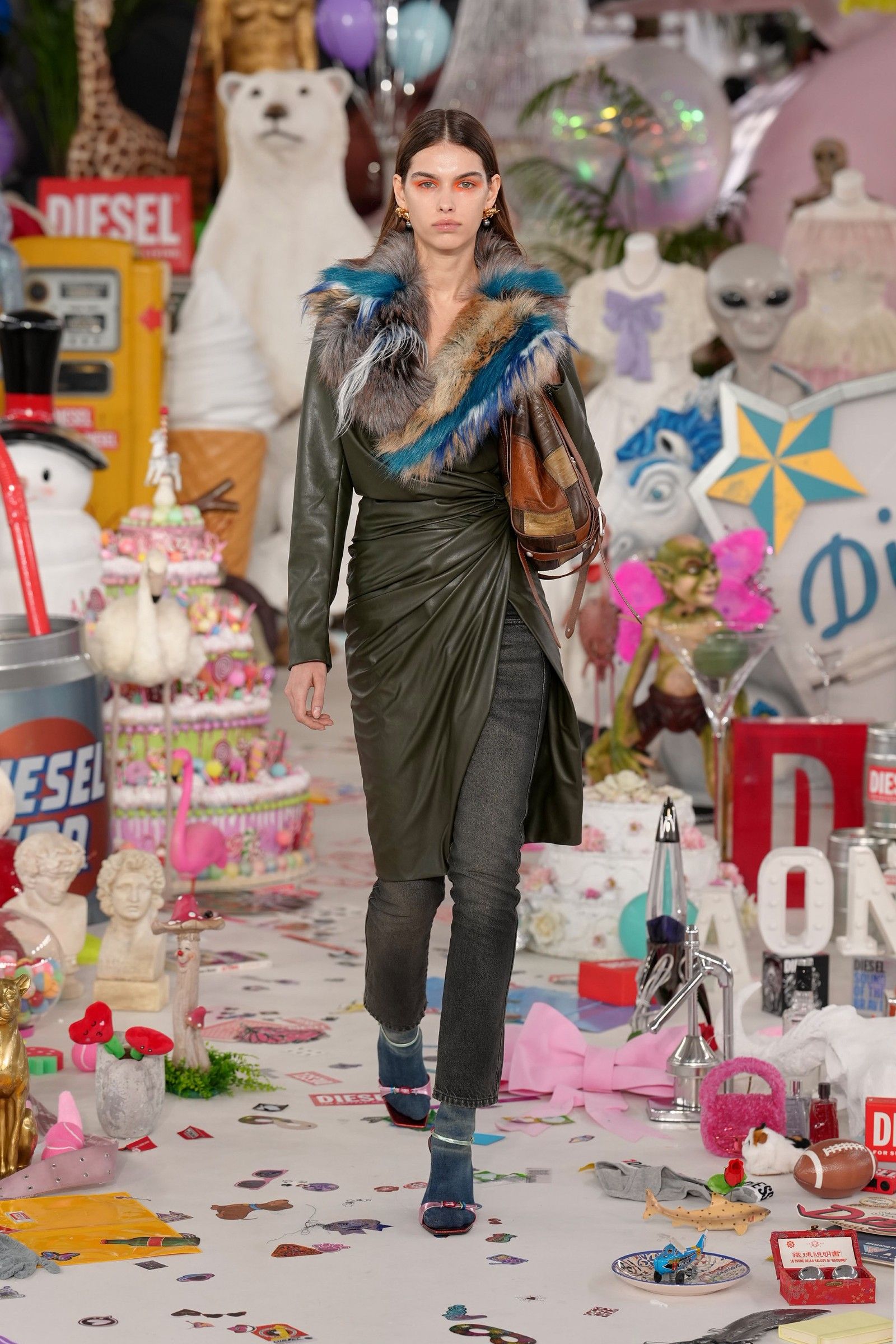
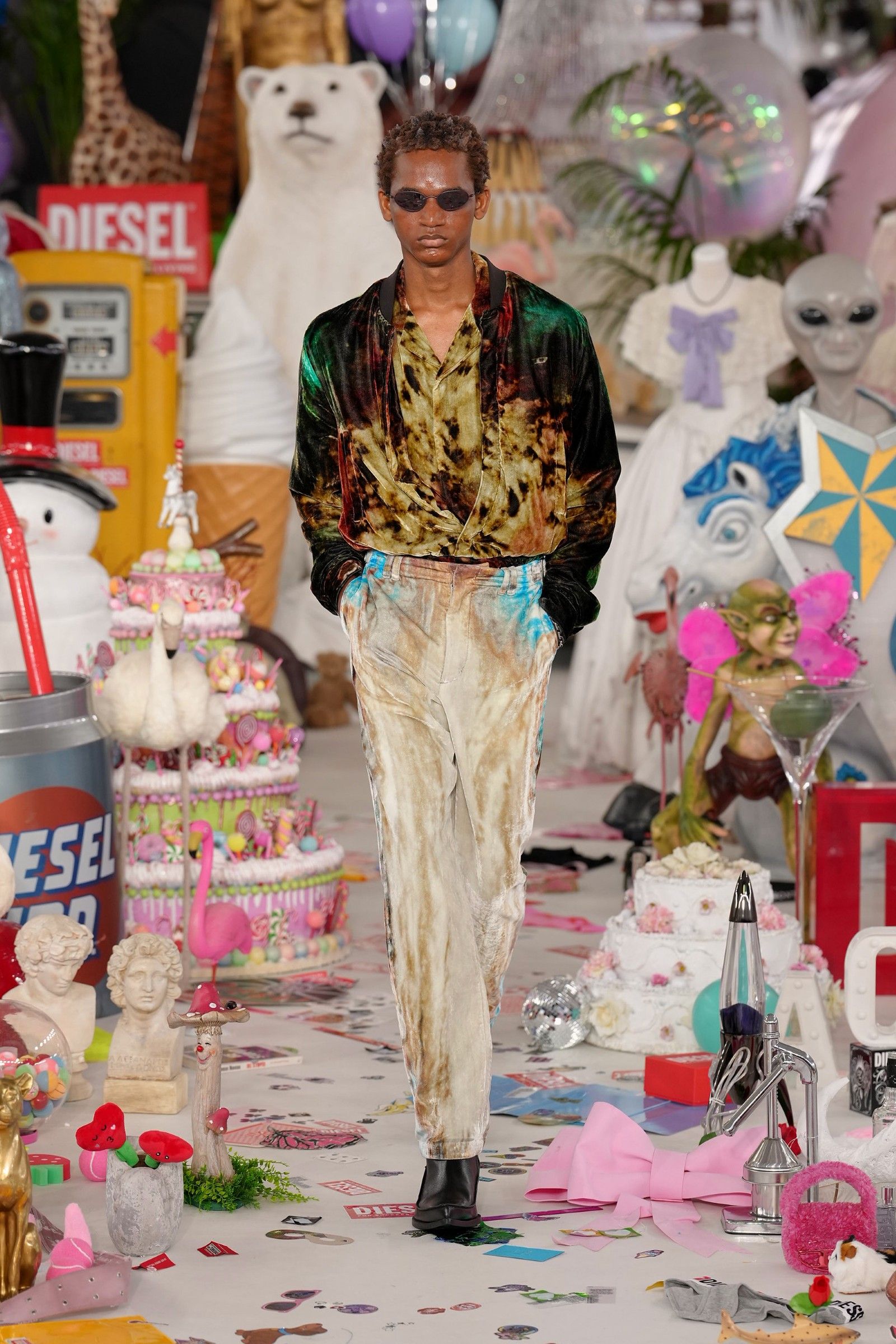
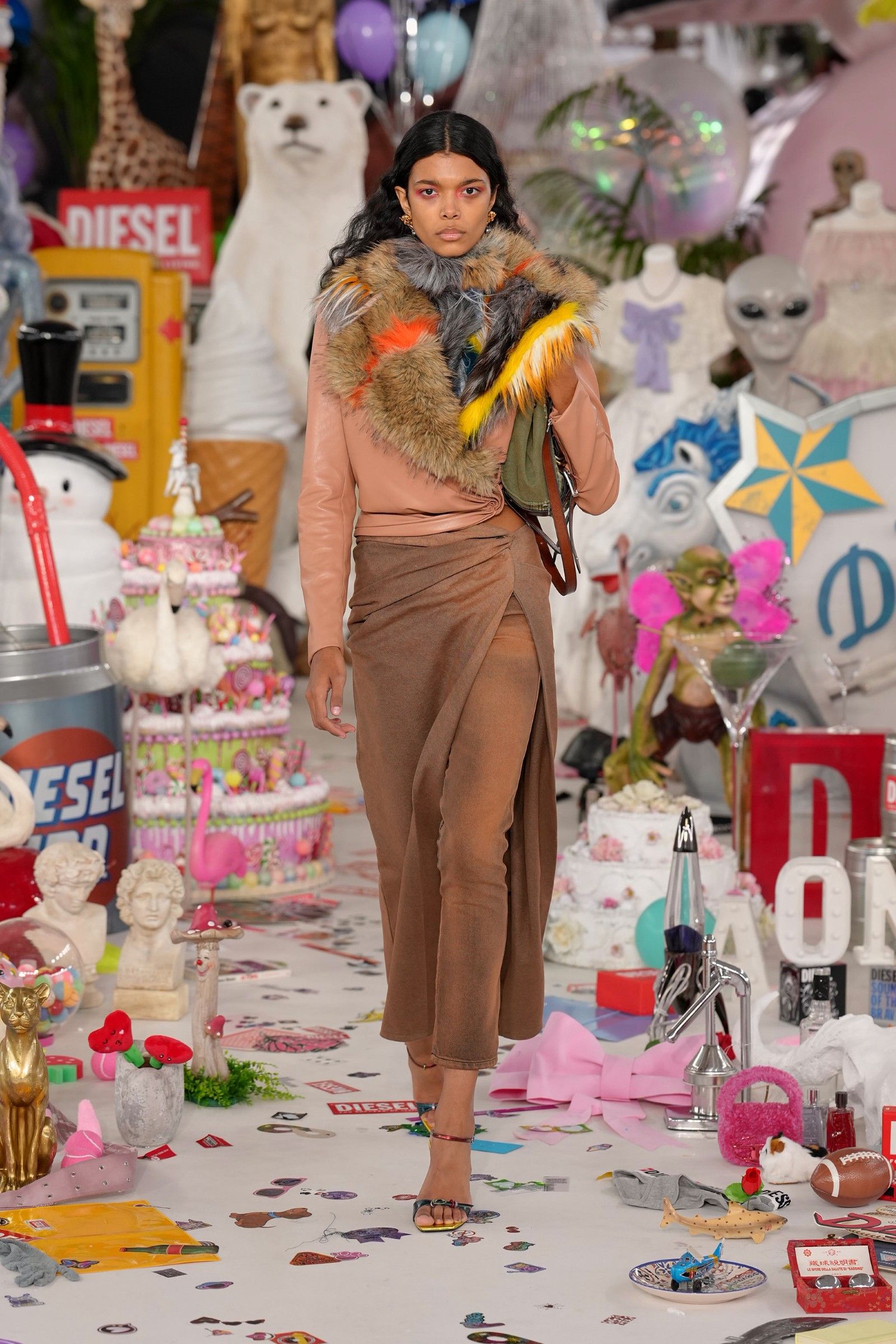
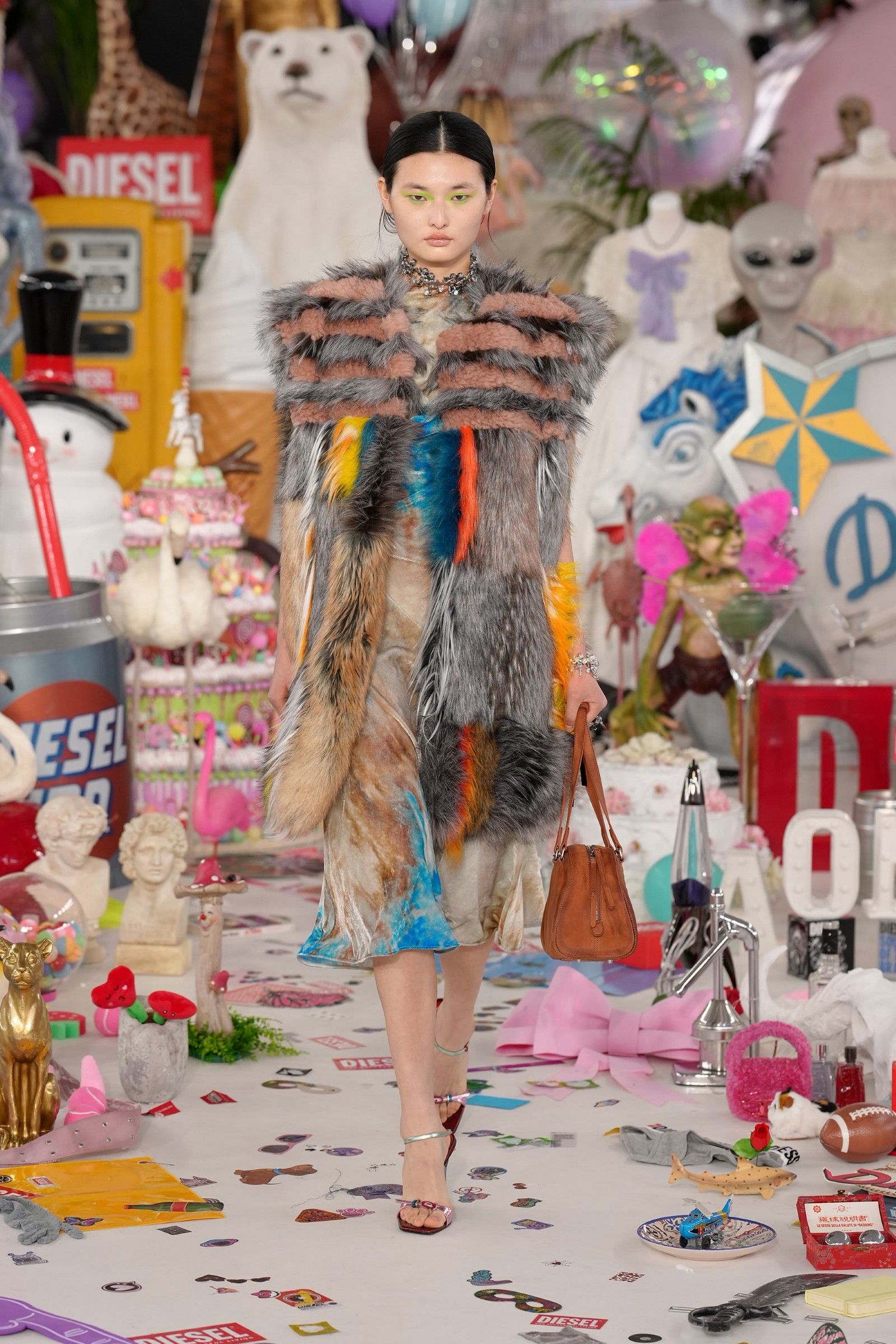

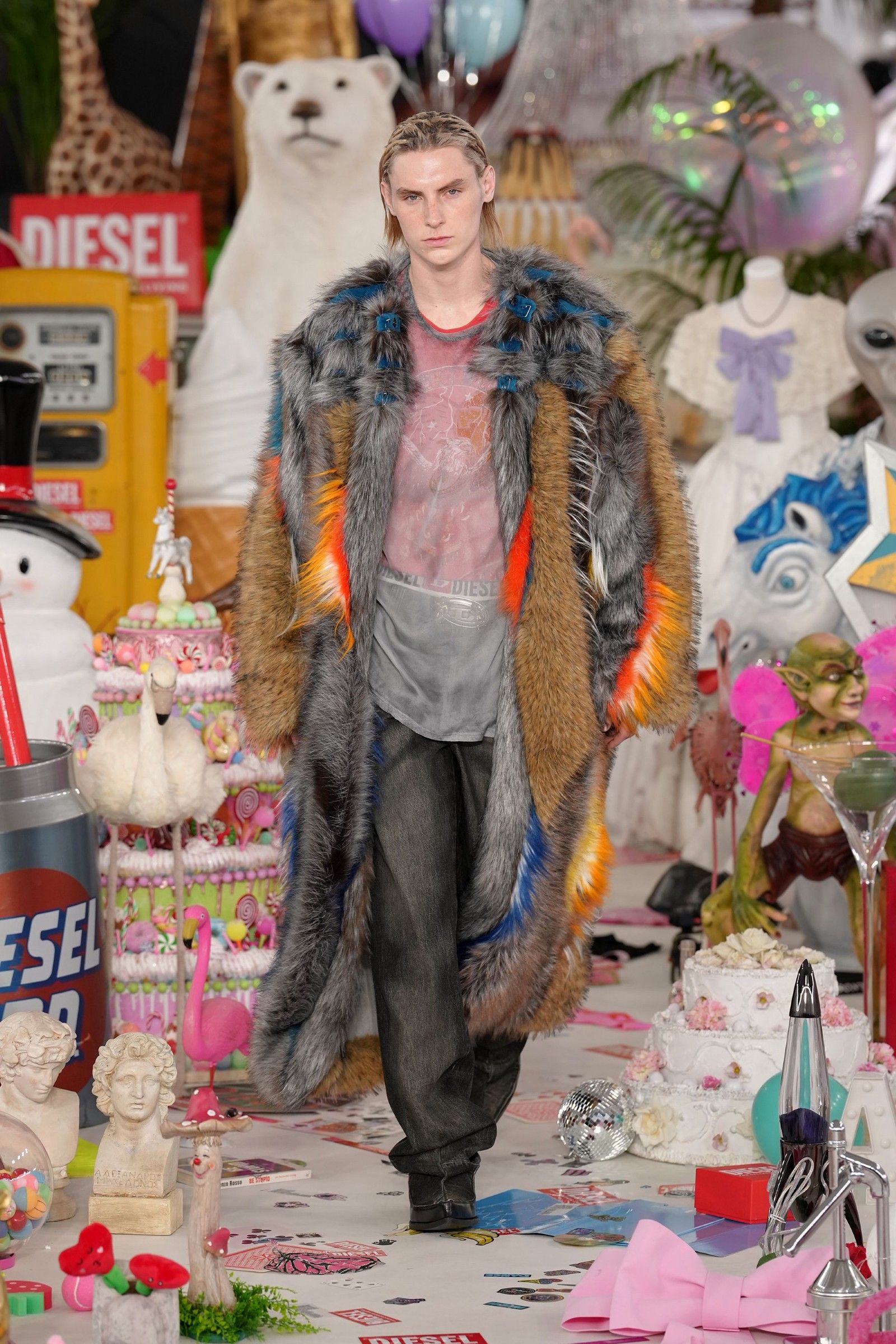
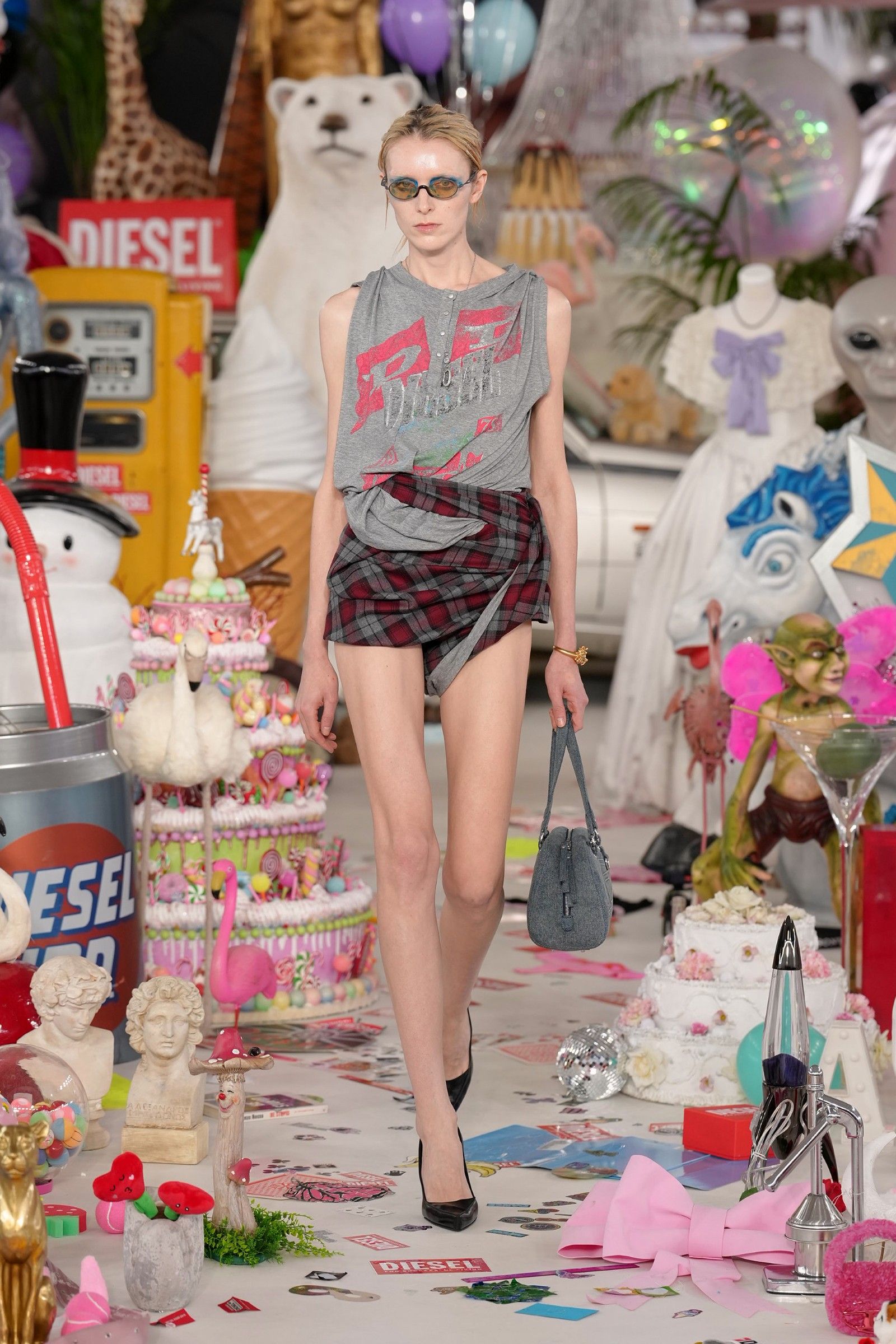
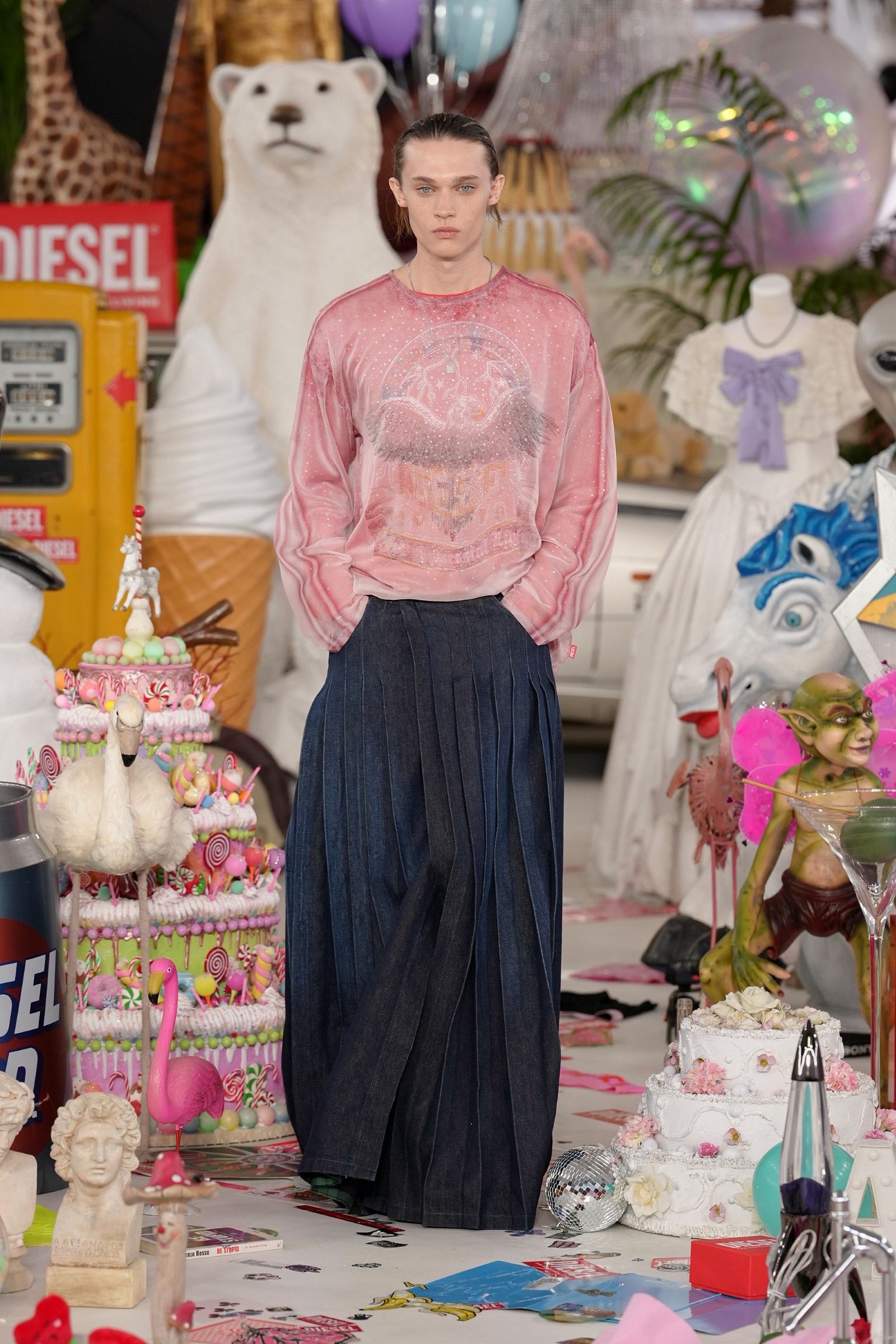
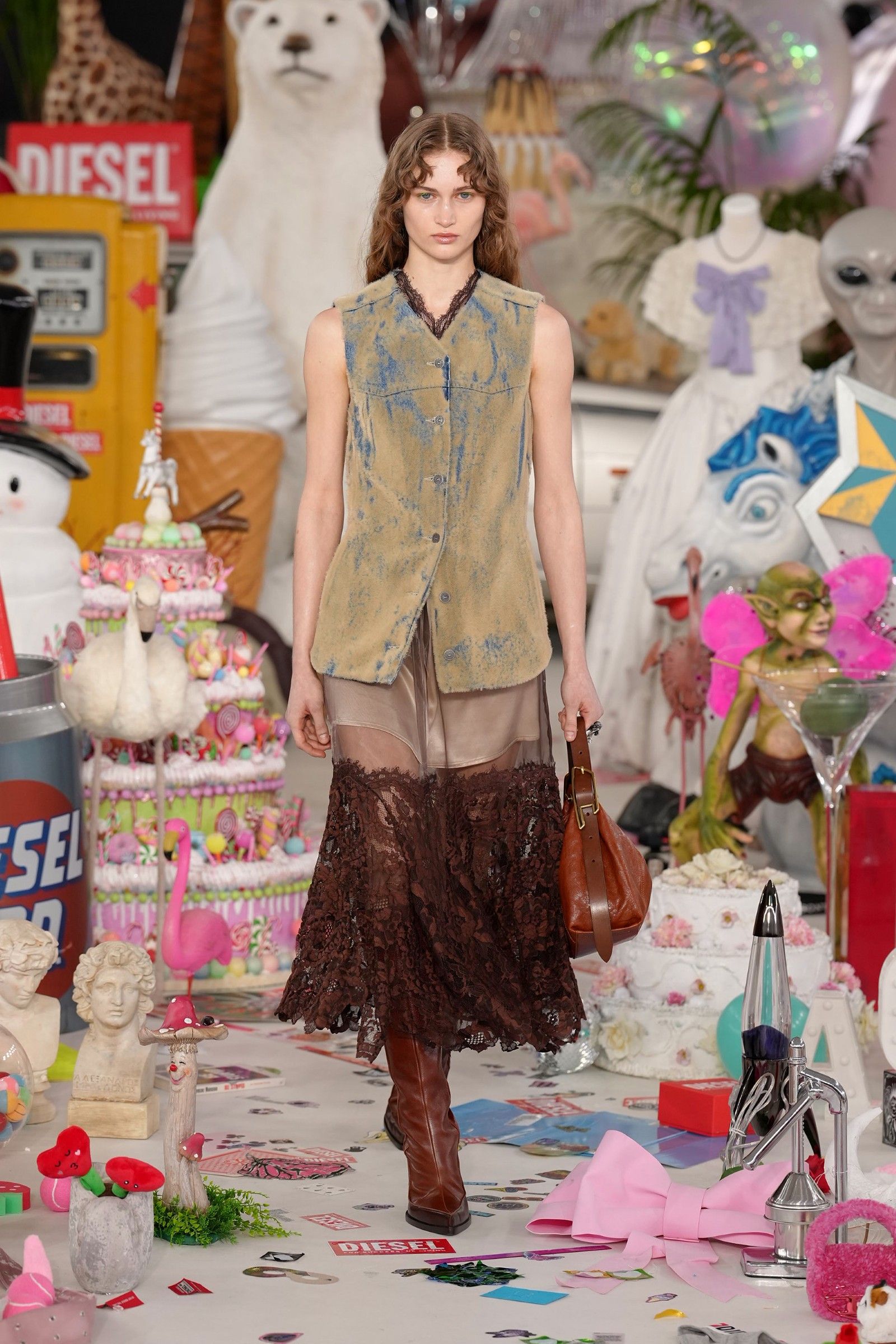
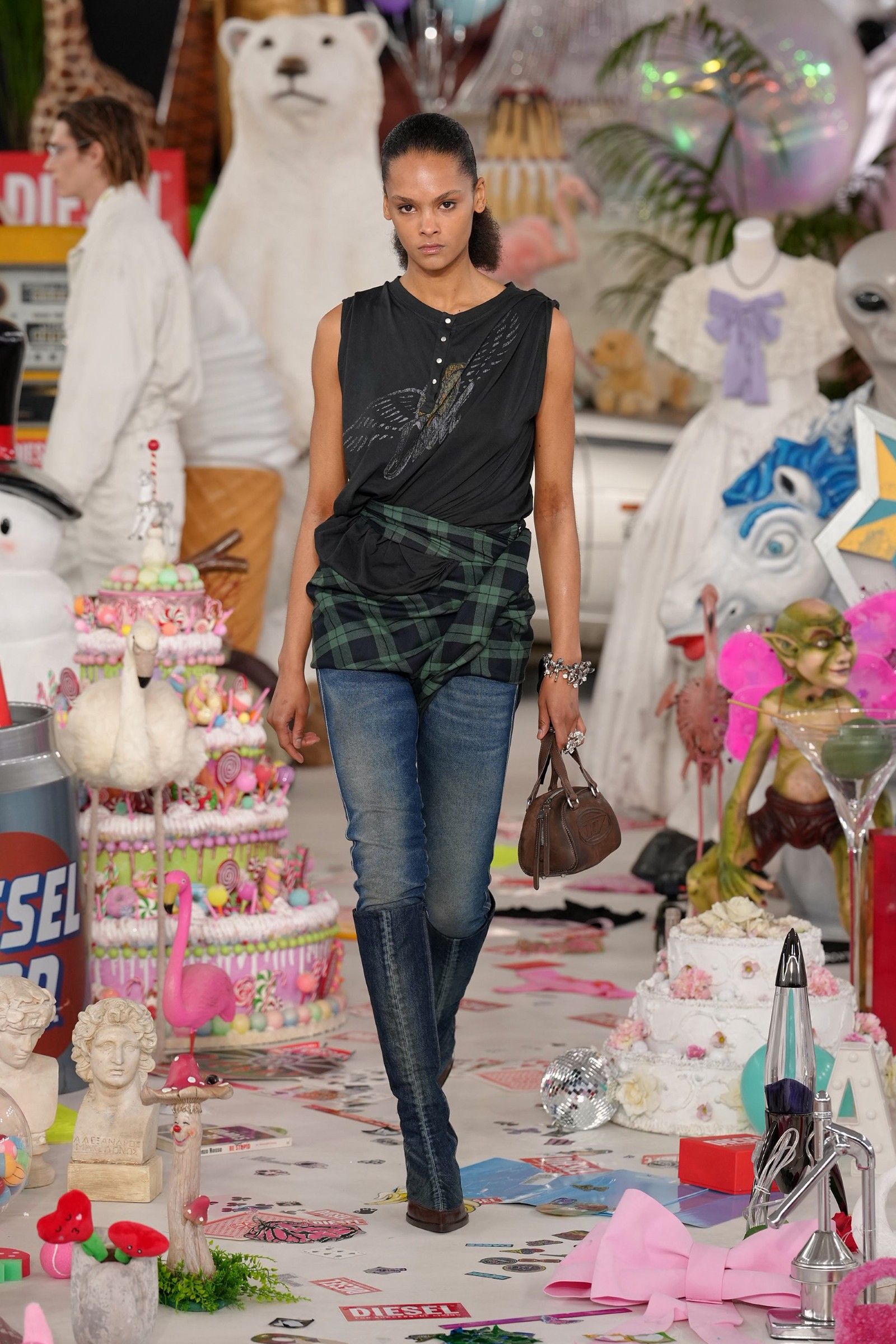
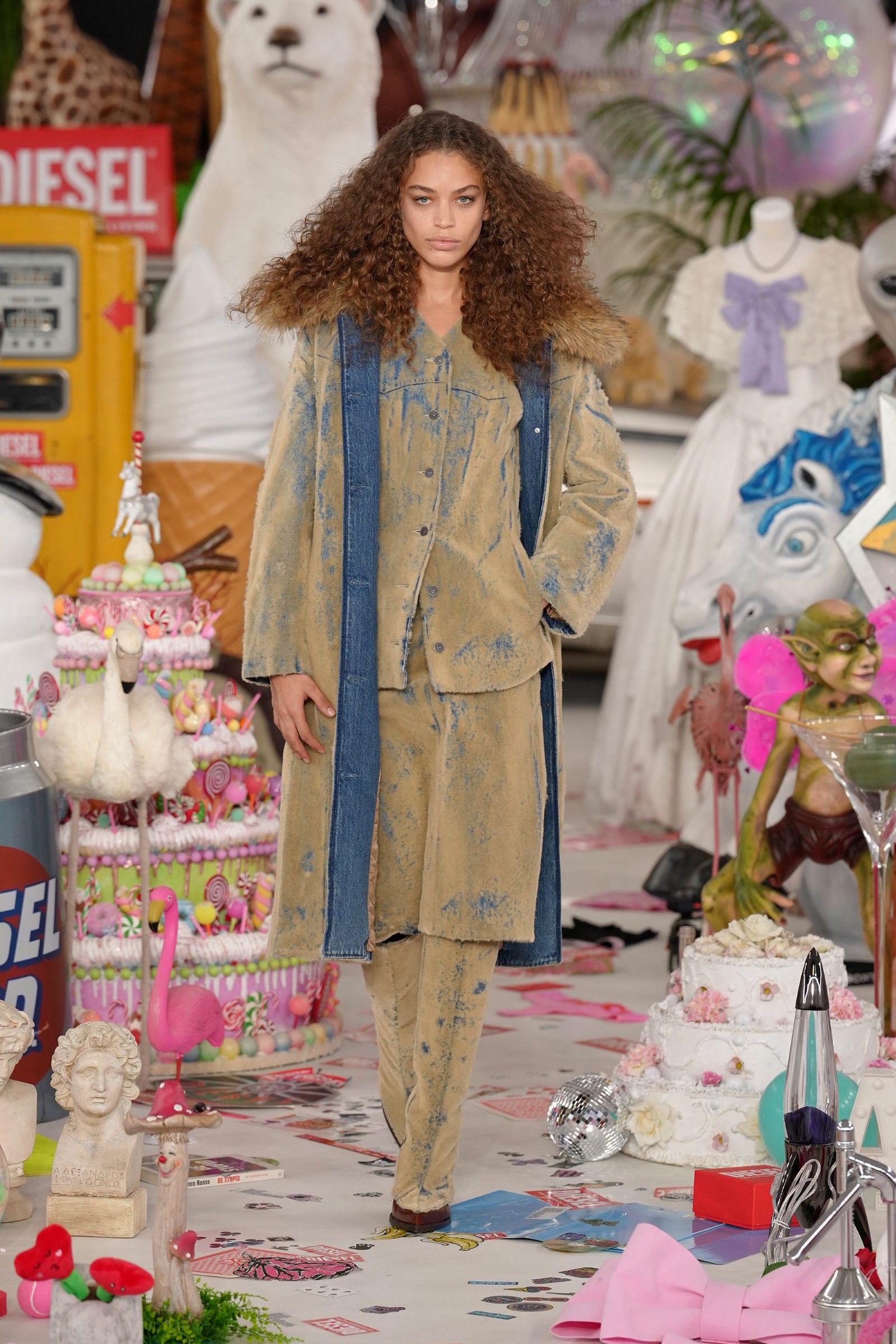
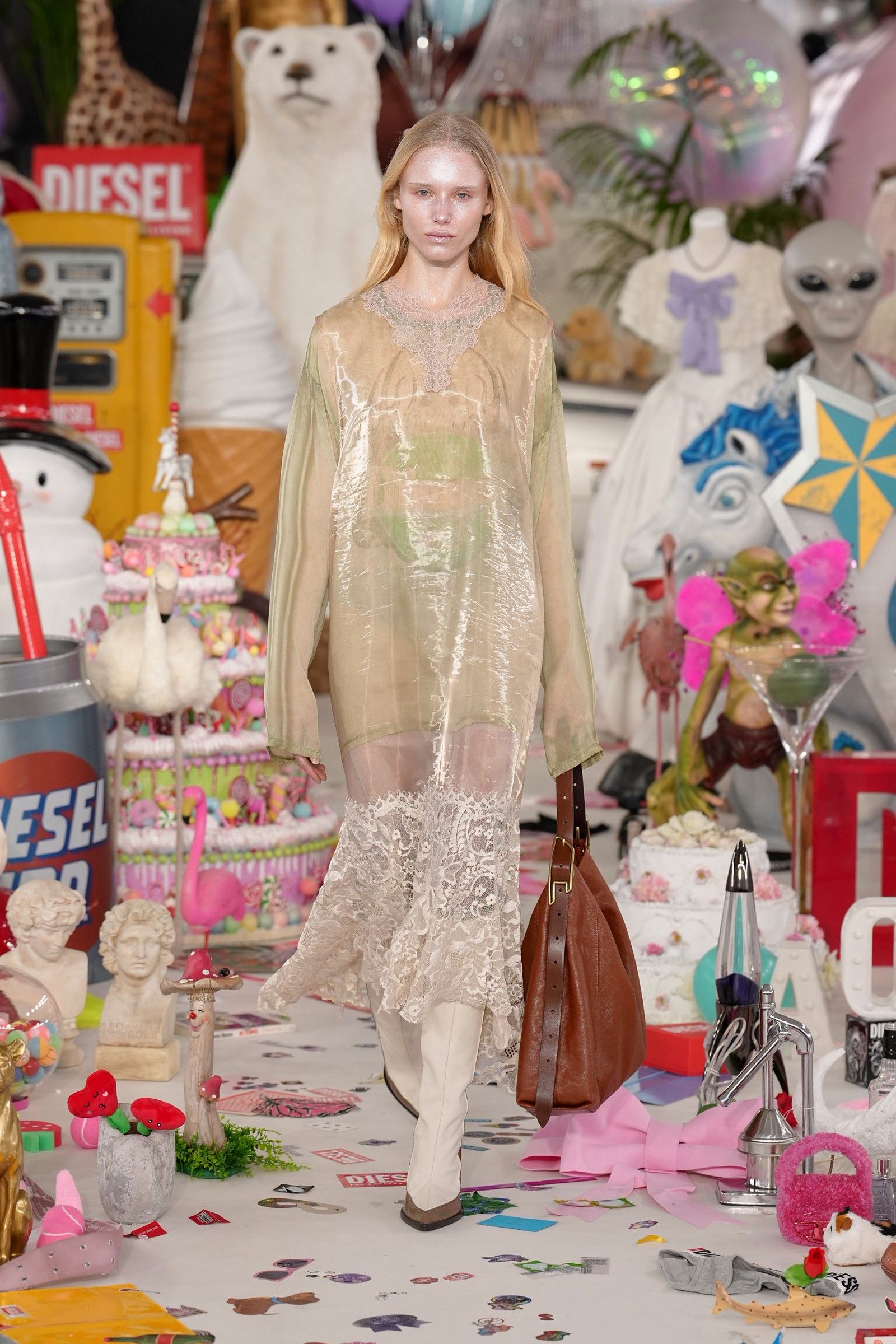
We are all familiar with the concept of the “walk of shame”, especially after a night of wild parties and all kinds of excess. But for Glenn Martens it should be called “walk of fame” because nothing can surpass the ecstasy of waking up without knowing where you are, gathering your clothes from the floor and, with a completely wrecked appearance, heading back home—destroyed but fabulous. This is the moment that seemed to return again and again in the Diesel FW26 show, which opened yesterday's Milan Fashion Week with a presentation that aimed to place the latest collection in historical perspective within the entire history of Diesel. After all, the parties of yesterday are not too far removed from those of today.
Diesel’s past as a concept
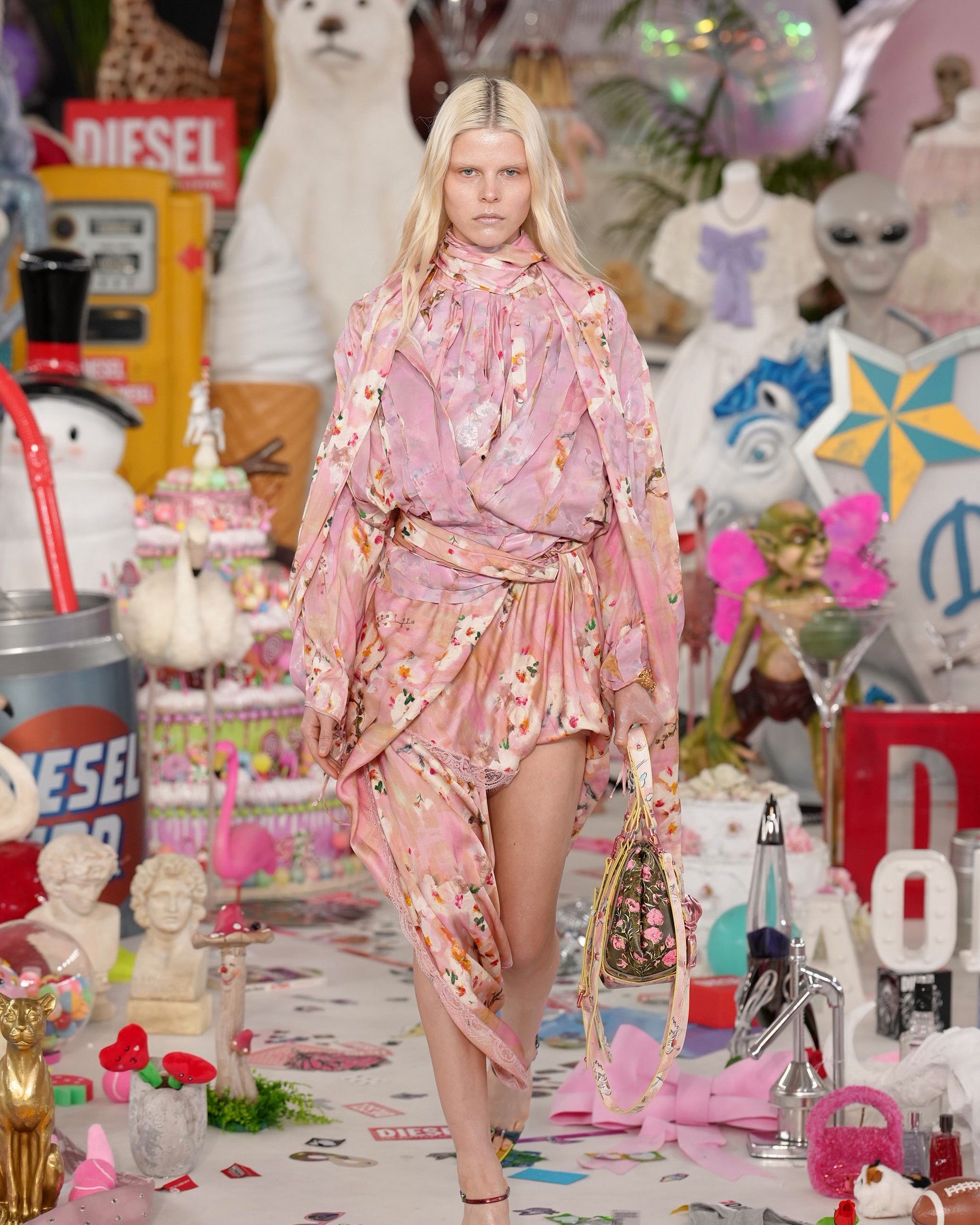
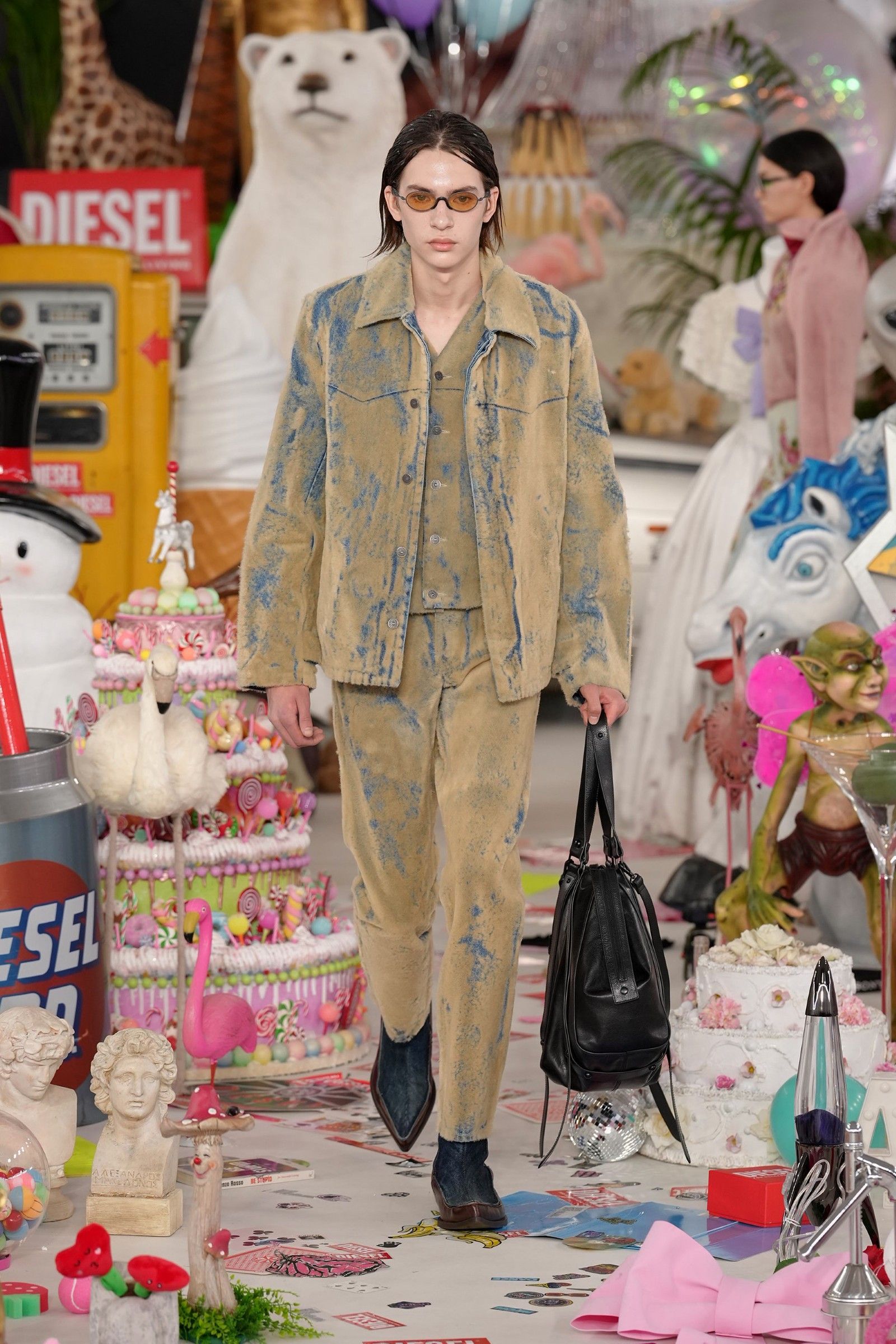
The location of the show was in fact a large immersive installation that transformed the space into a living archive of the brand. Around 50,000 pieces of memorabilia from Diesel’s archives were displayed, accumulated from 1978 to today, organized into over 6,000 different categories and arranged under intense lights, like those in a laboratory, as material evidence of nearly fifty years of the brand’s partying history and culture. The idea was not only to connect the past to the present, but also to materially demonstrate how the brand’s artificially “ruined” aesthetic is achieved through the recovery and creative transformation of objects and materials.
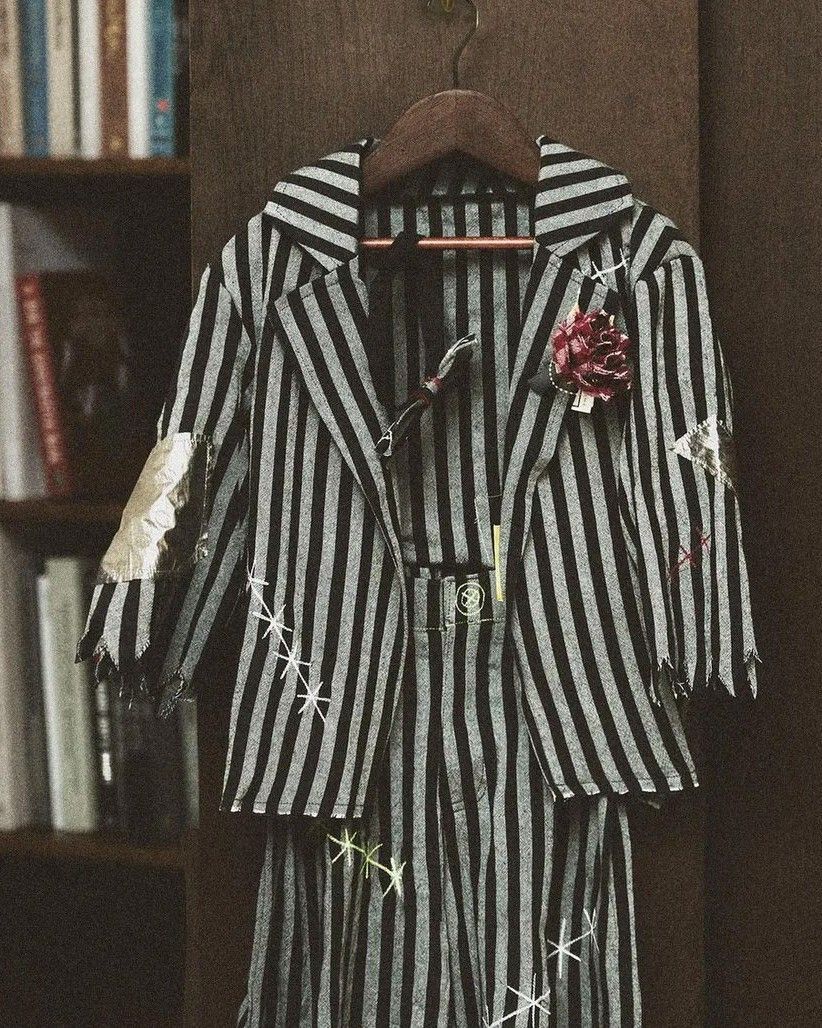
Indeed, several pieces seen on the runway were the result of those upcycling processes so characteristic of Glenn Martens’ work. Particularly significant is the “felted tailoring,” that is, a series of pieces made with production scraps and recovered industrial leftovers, transformed into compact, multicolored felt with which surprisingly sharp and clean sartorial silhouettes were then composed. But throughout the rest of the collection, various recycled materials could be seen, such as denim pieces treated with resin for permanent pleats or flocked, as well as pieces decorated with patchwork.
The aesthetic of the inexact
The rest of the collection then embodies the essence of a wardrobe that seems to have survived the longest and most fun rave in history. In the notes, Glenn Martens spoke of a specific feeling—that of slipping away from a hotel room where one has woken up in a stranger’s bed. The pieces possess an intentionally “wrong” aesthetic and seem almost on the verge of falling off the body: denim with permanent pleats achieved through resin applications, as if they had been worn nonstop; various double-layer tank tops buttoned and twisted around the body; deliberately shrunk sweaters obtained by boiling oversized garments until they shrink; and a series of intarsia sweaters and shirts where floral motifs were not embroidered but almost cut out along the edges, with a certain surreal effect.
Nor are there lacking designs that appear optimized for a real rave: there are extra-long jeans with hidden vertical openings at the ankles to let stiletto heels pass through, closed with hooks and eyes; pantaboots; short and round skirts in velvety denim that include integrated leggings; trousers equipped with additional pockets at the hem; full-body suits that, through trompe-l’œil, imitate wrinkled t-shirts and skirts; but also ripped and worn jeans covered in crystals and wrapped in layers of plastic-looking tulle, as well as reversed shearling vests dyed gold and other synthetically flavored colors that fall and drape with ends of varying lengths.
A new sense of color
[img