



















Maria Grazia Chiuri has returned home with Fendi's FW26 collection The first debut of the Milanese calendar
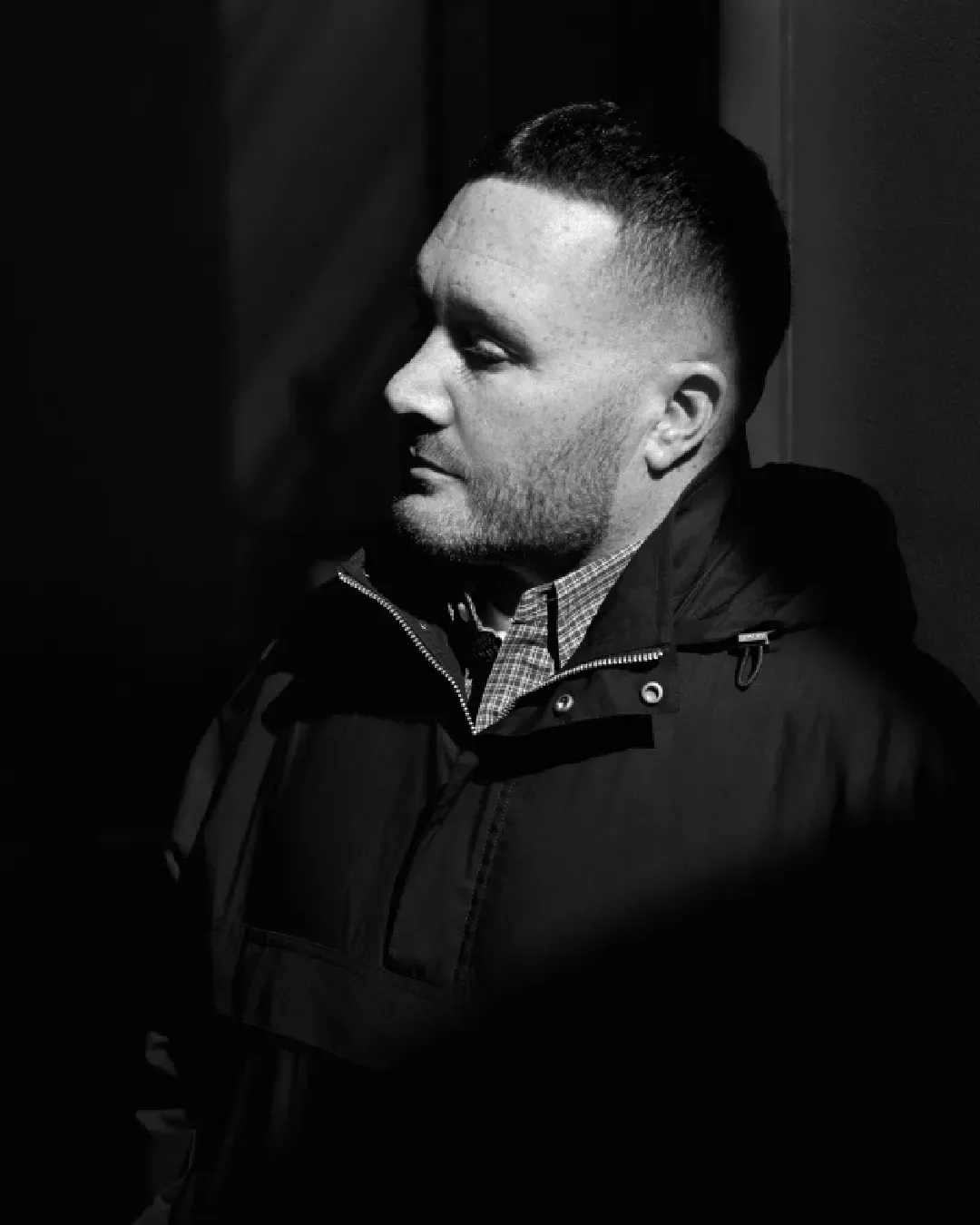
It’s hard, almost impossible, to reinvent yourself creatively at 64, even more so when you return, thirty years later, to the very place where your career began. That’s also why Maria Grazia Chiuri’s debut at Fendi felt, first and foremost, balanced. Balanced because it preserved the Italian Maison’s century-old codes, but balanced, too, because Chiuri’s hand was unmistakable in every look that walked the runway. A runway that, along its entire length, displayed the collection’s motto, «Less I, More Us», a phrase that resonates in the Fendi/Chiuri pairing but that, in practice, struggled to come through with the same force within the collection itself.
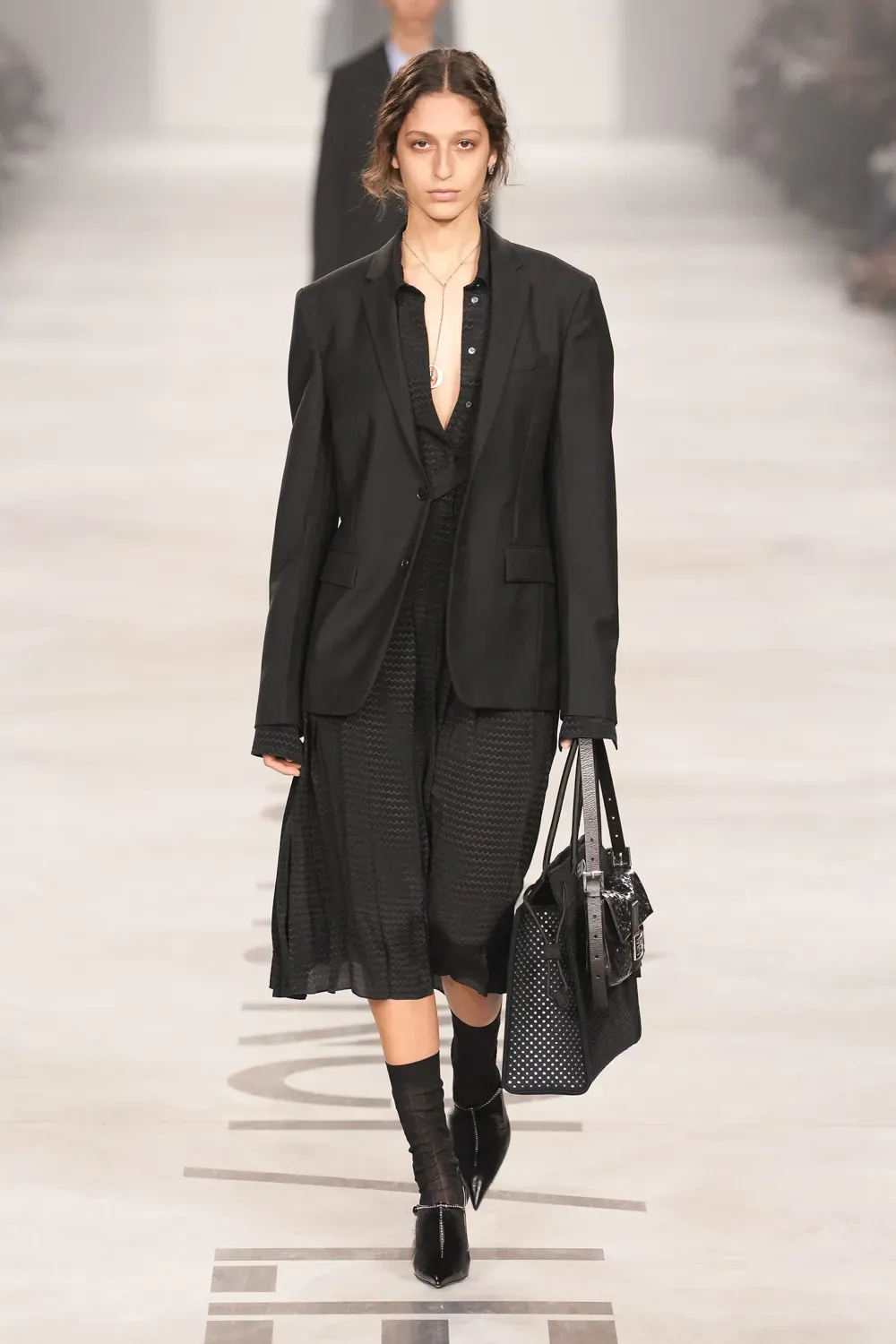
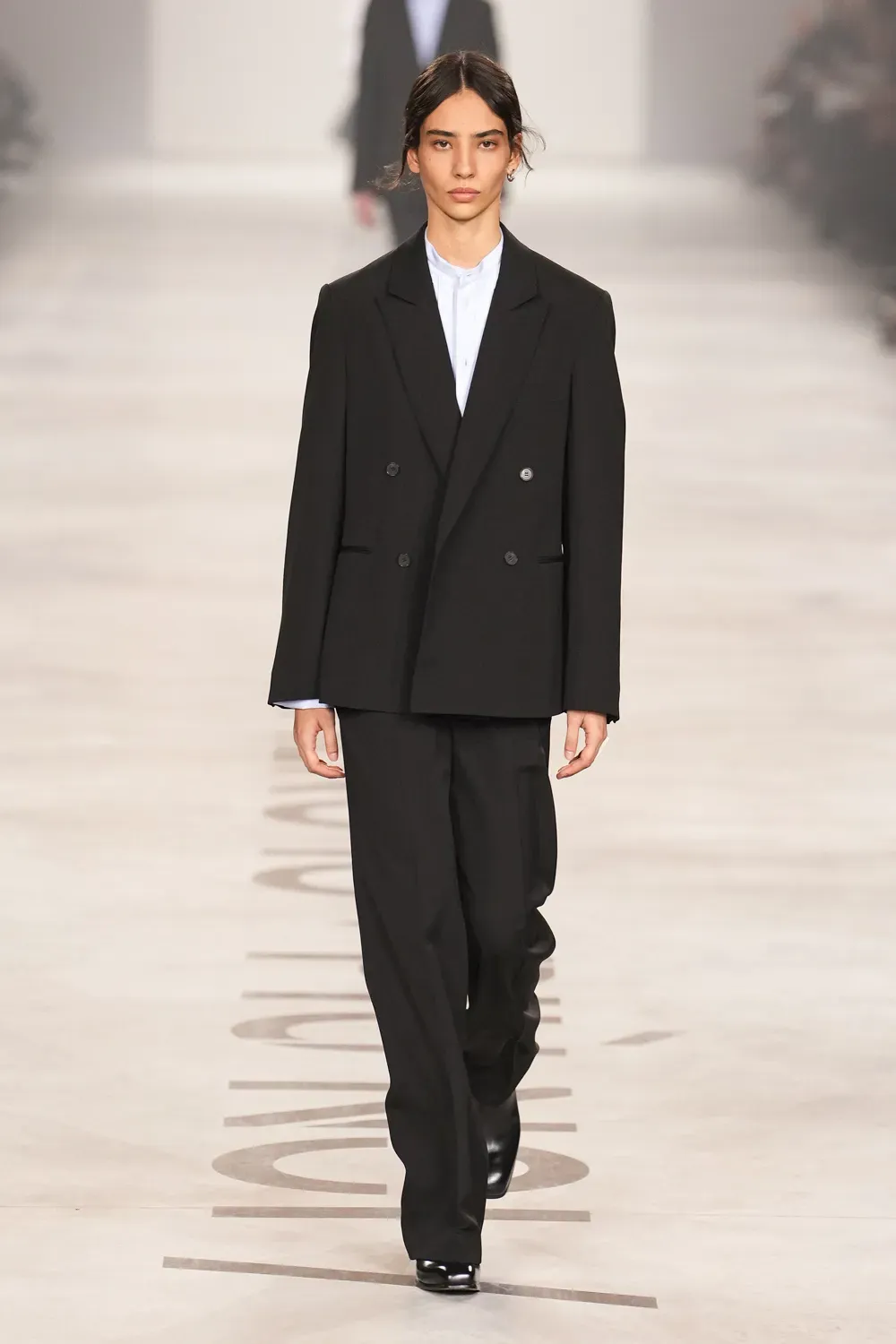
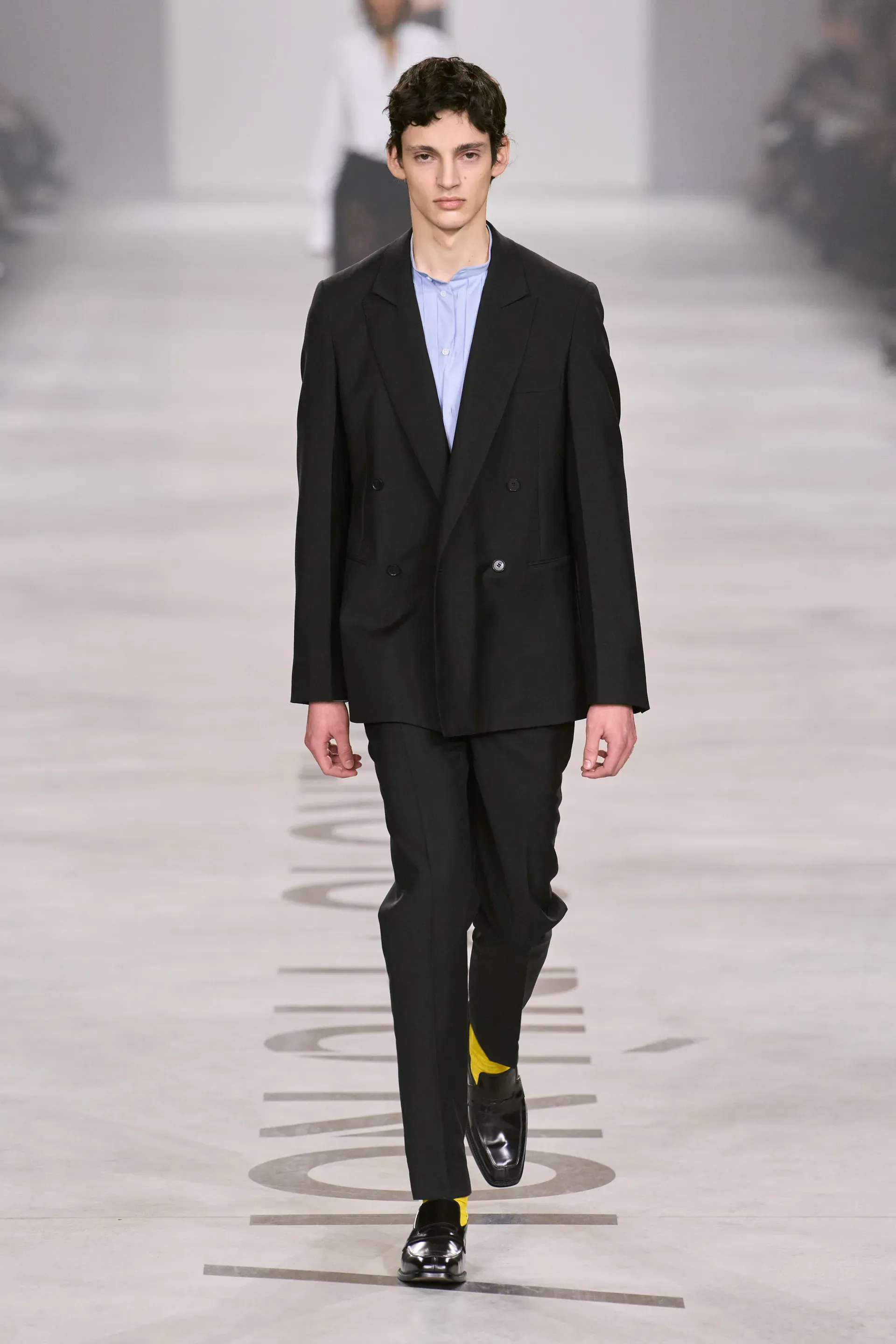
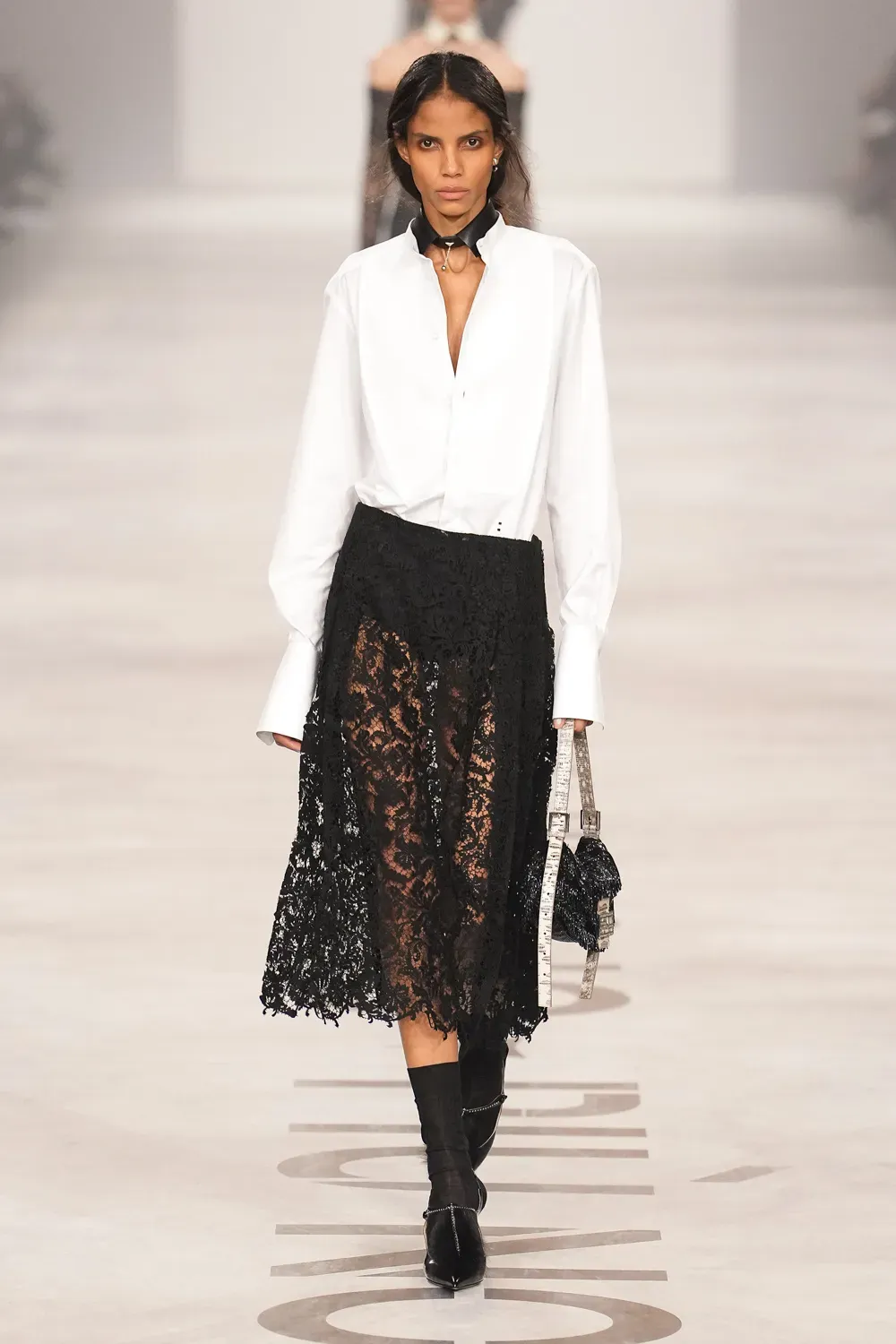
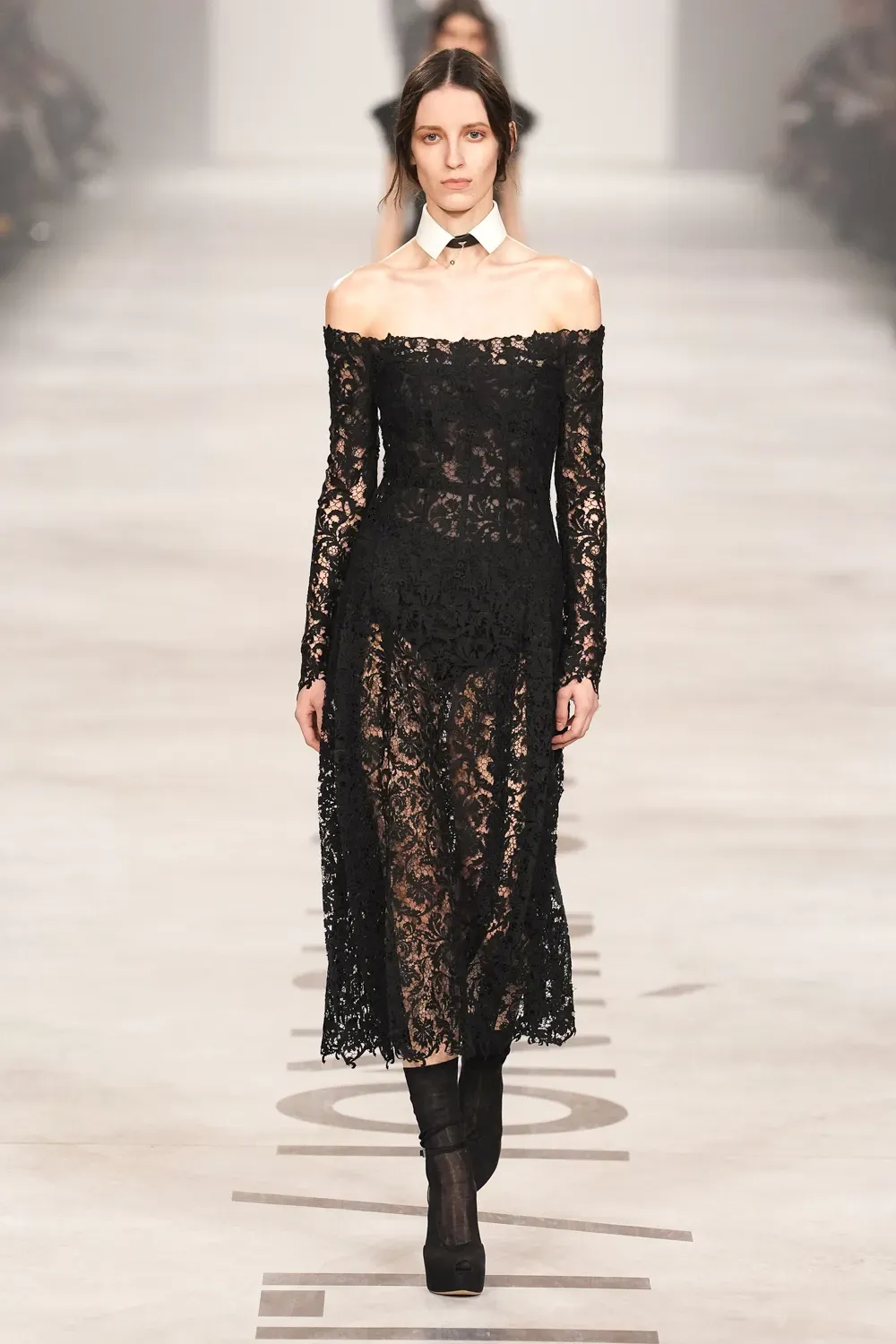
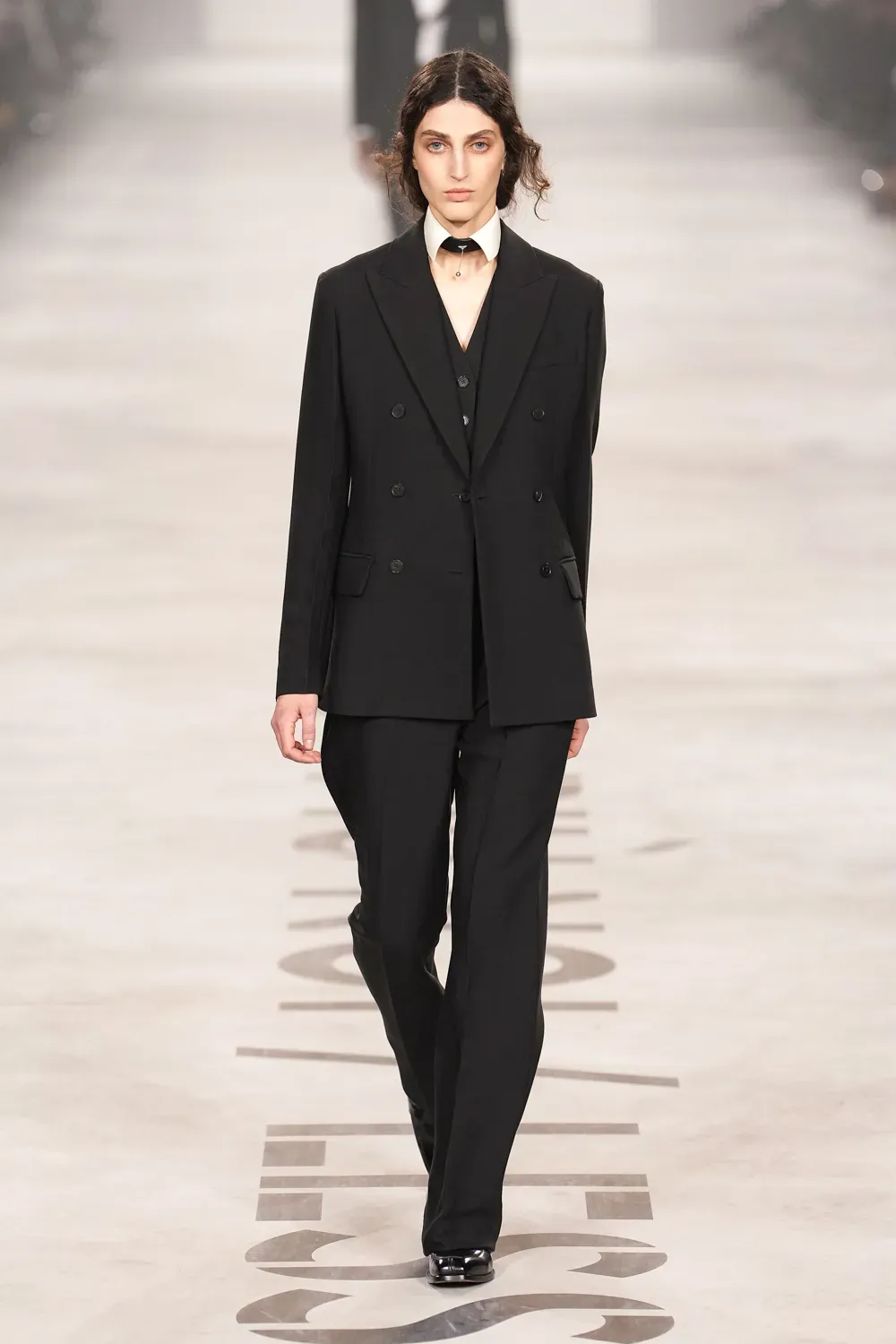
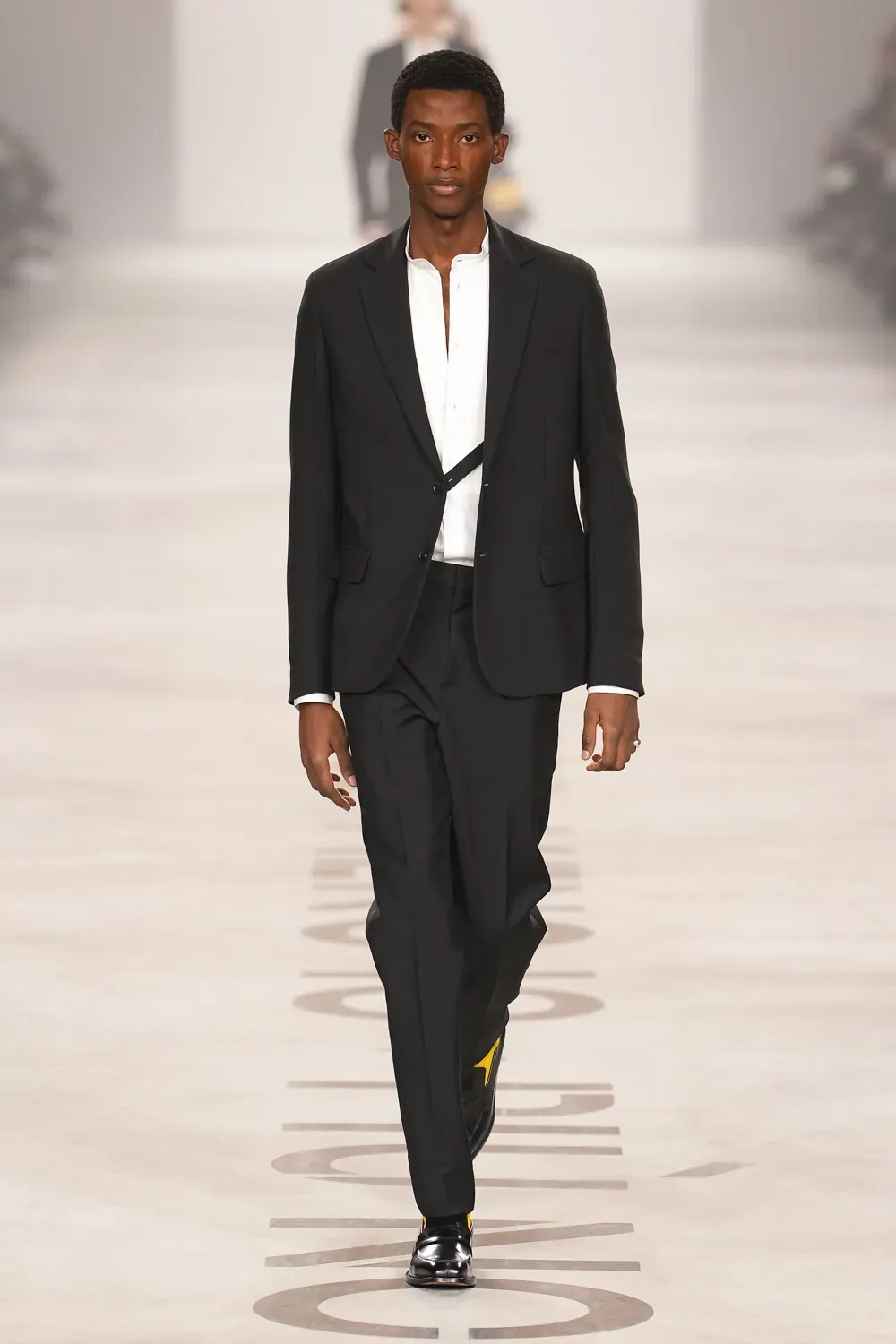
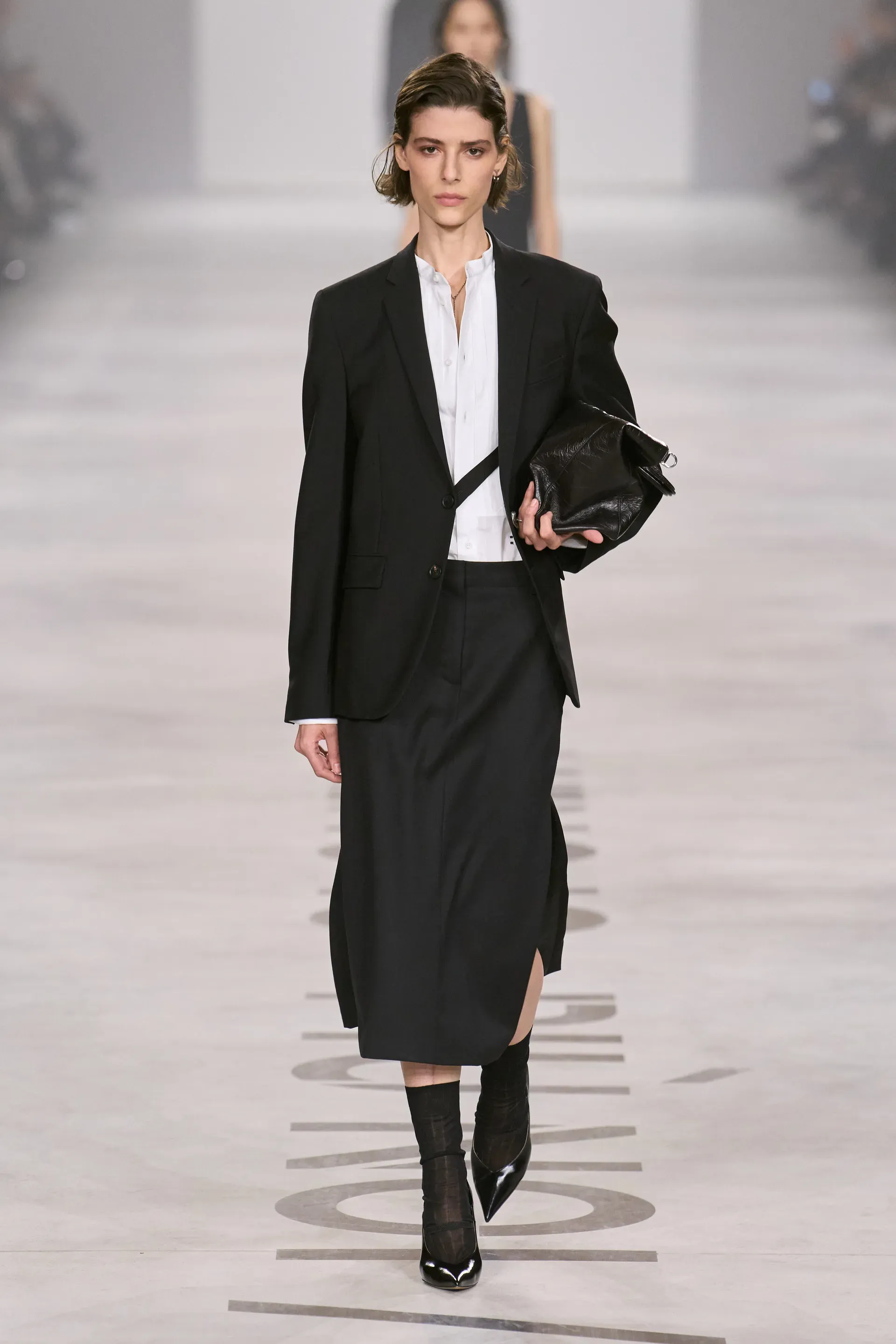
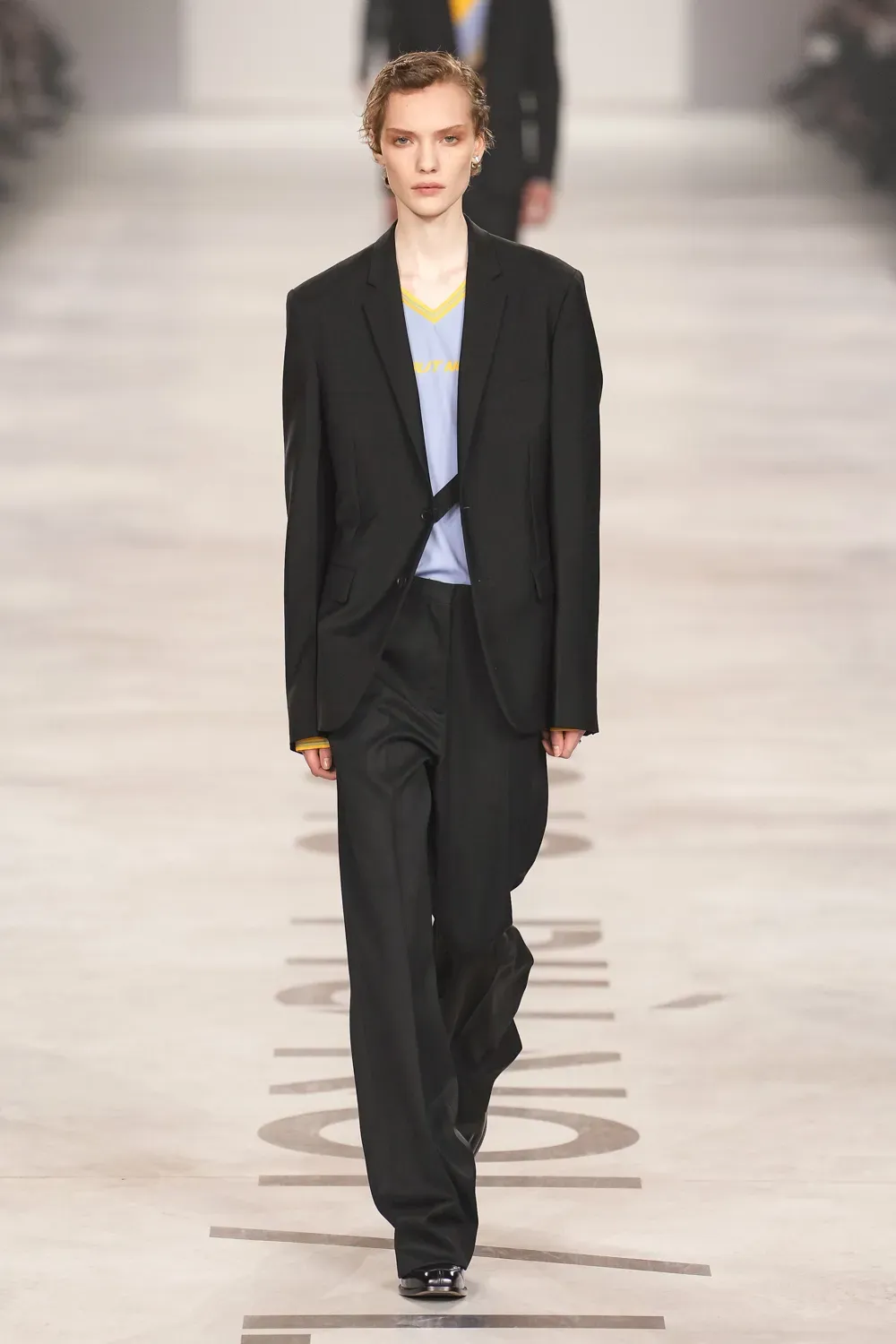
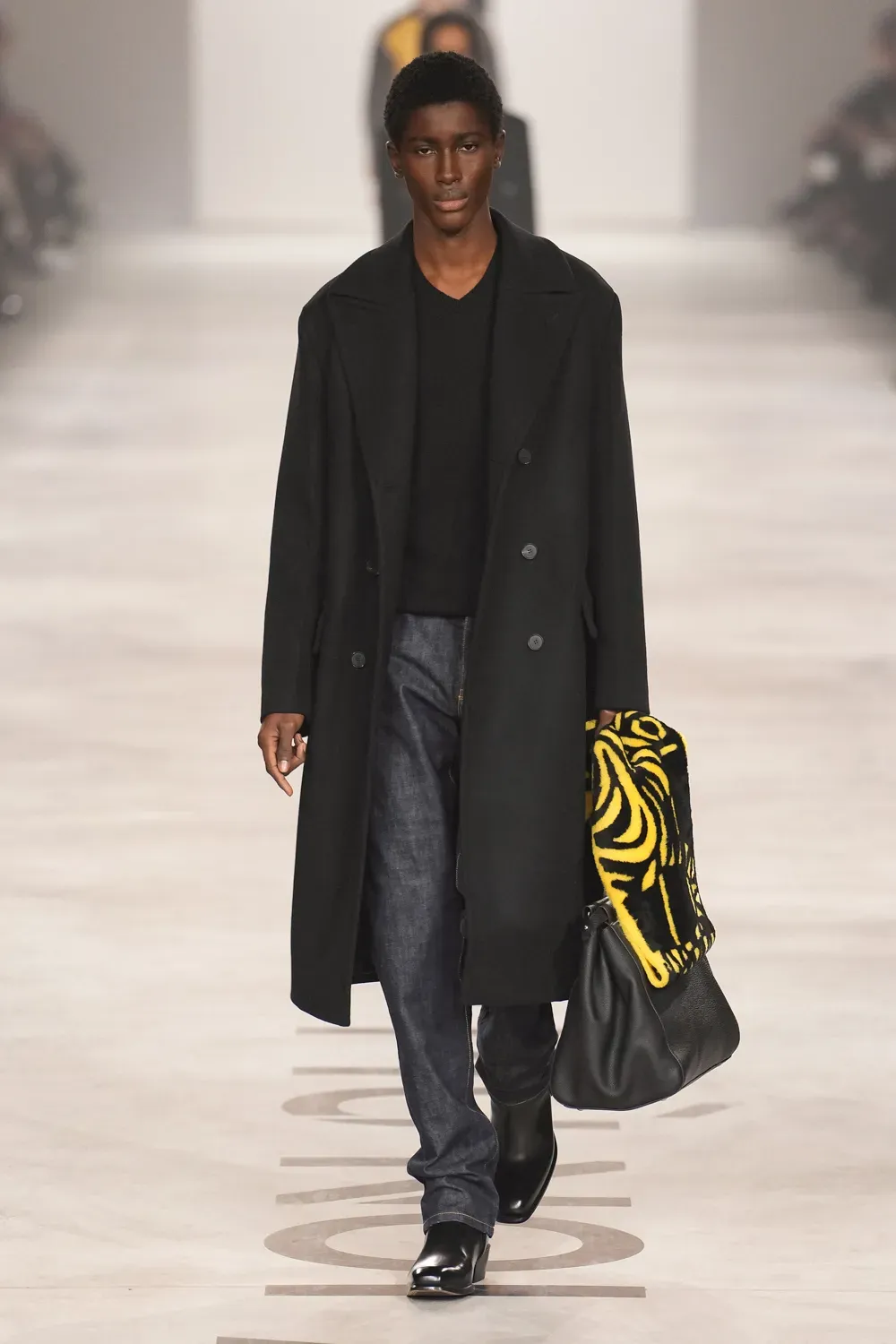
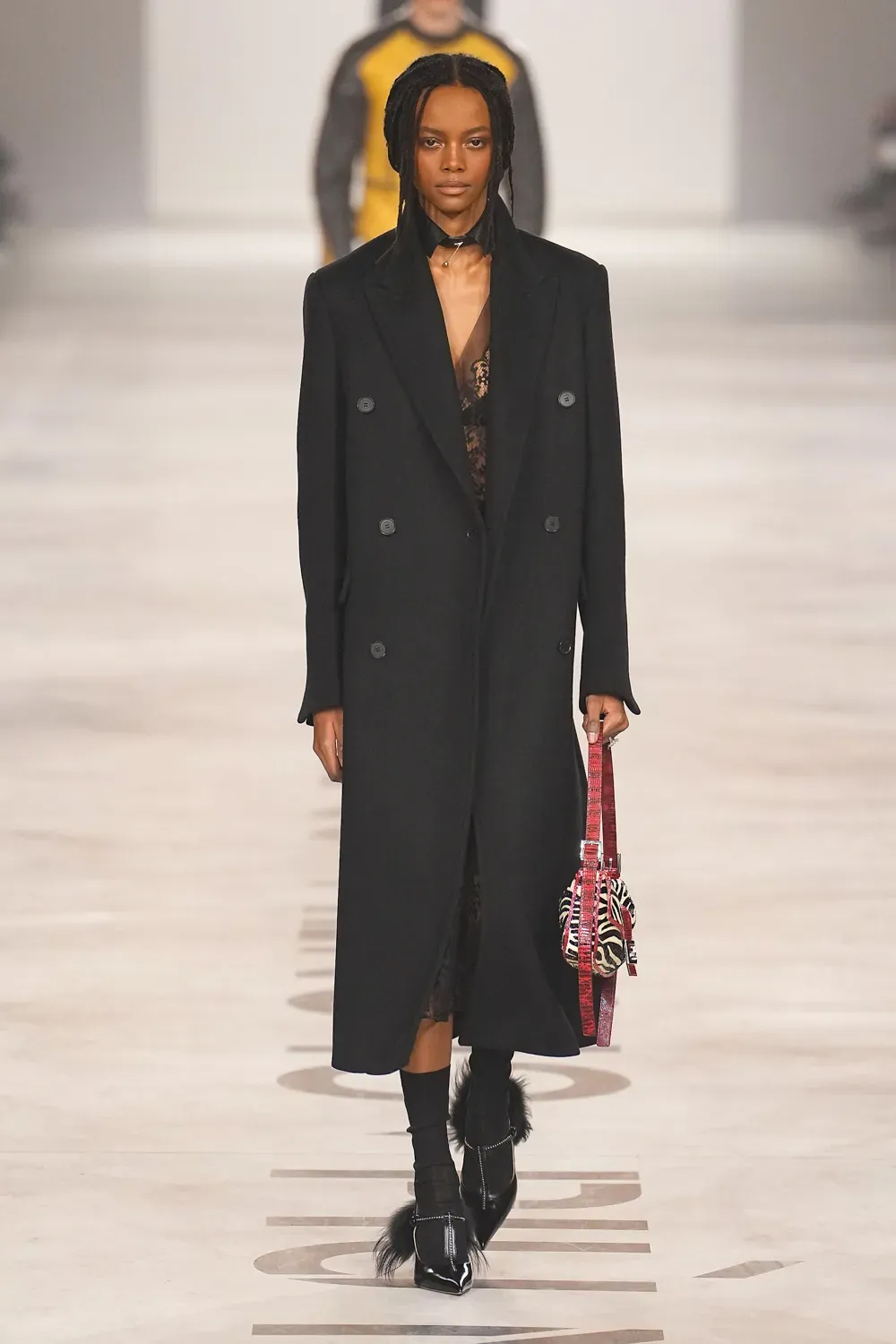
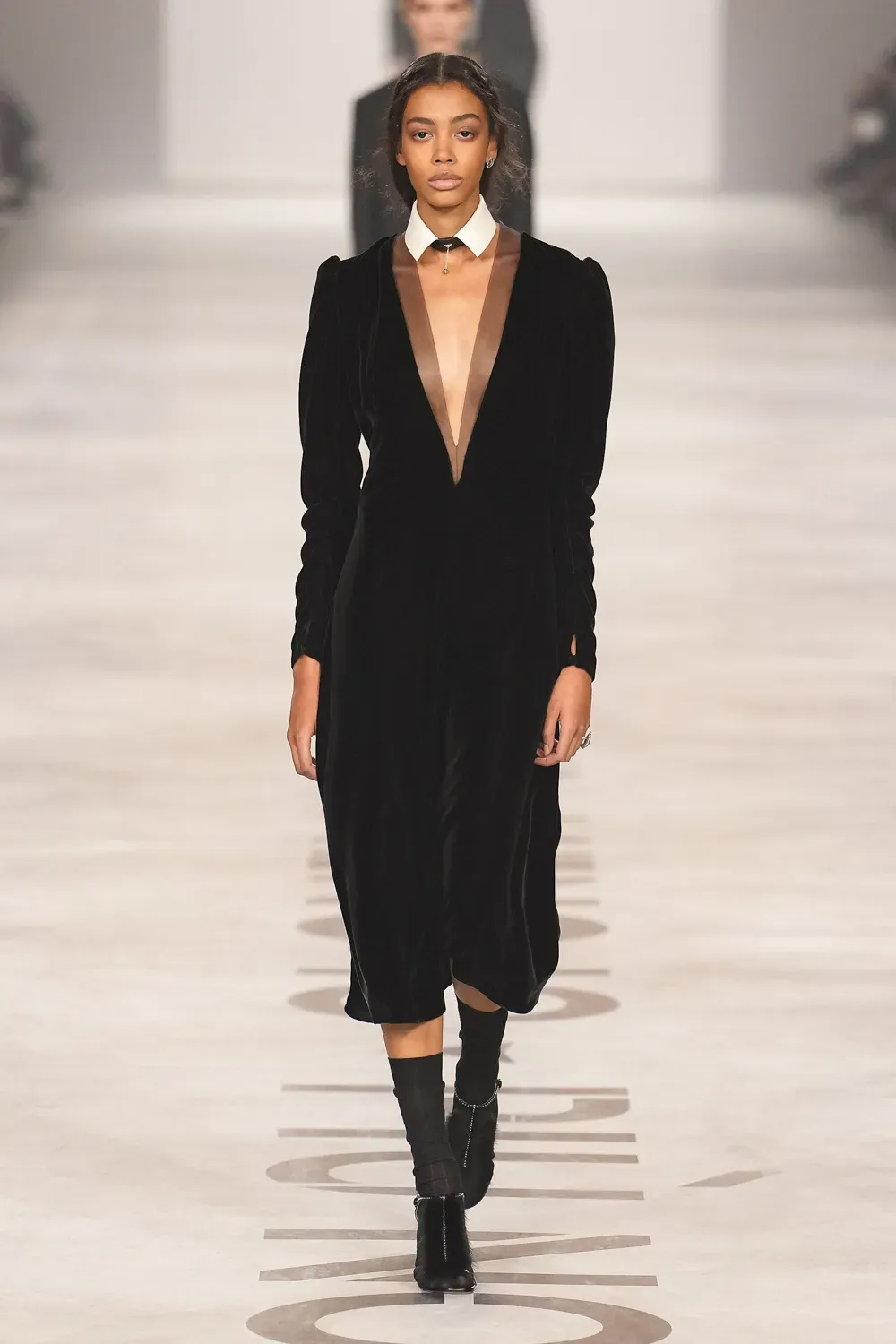
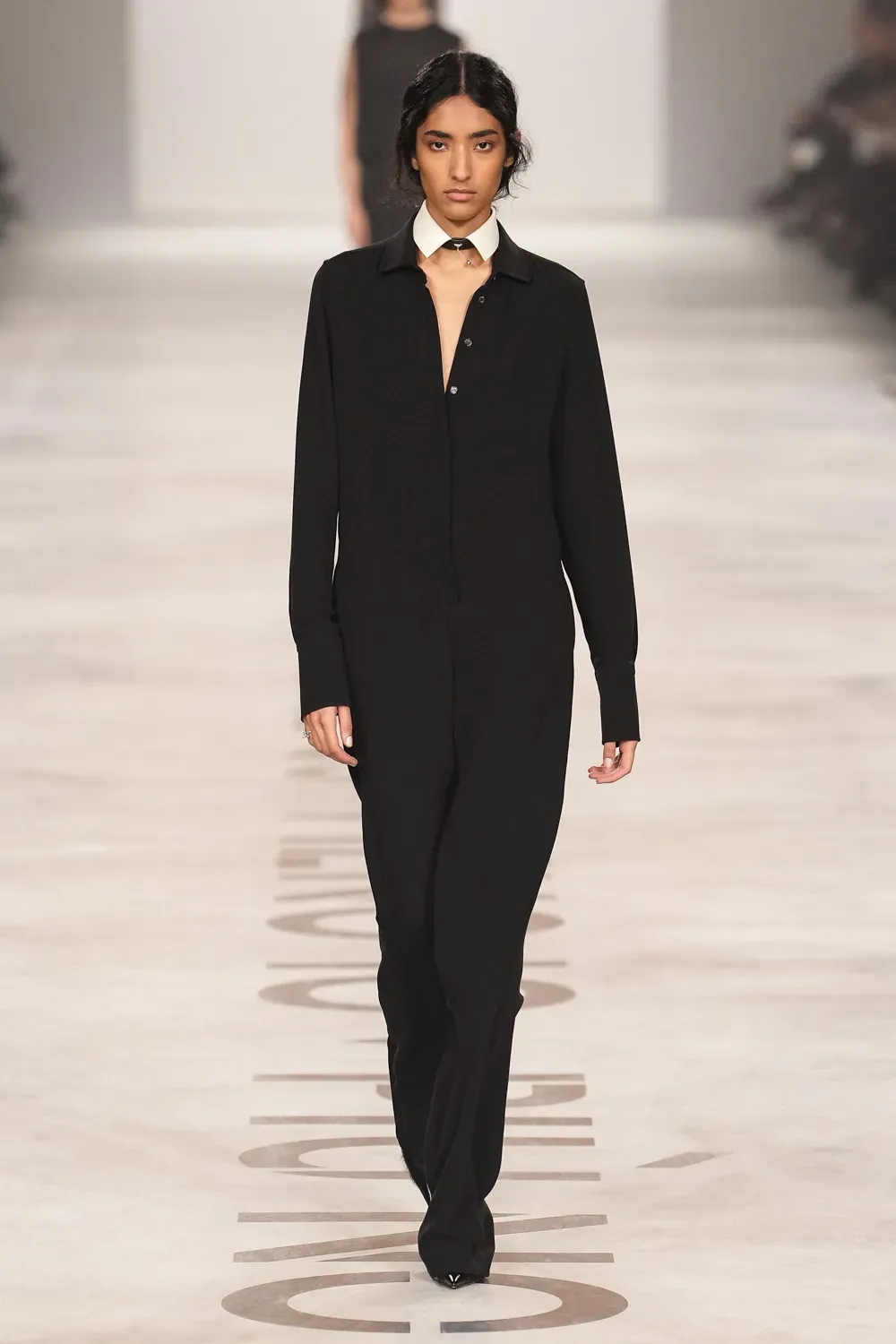
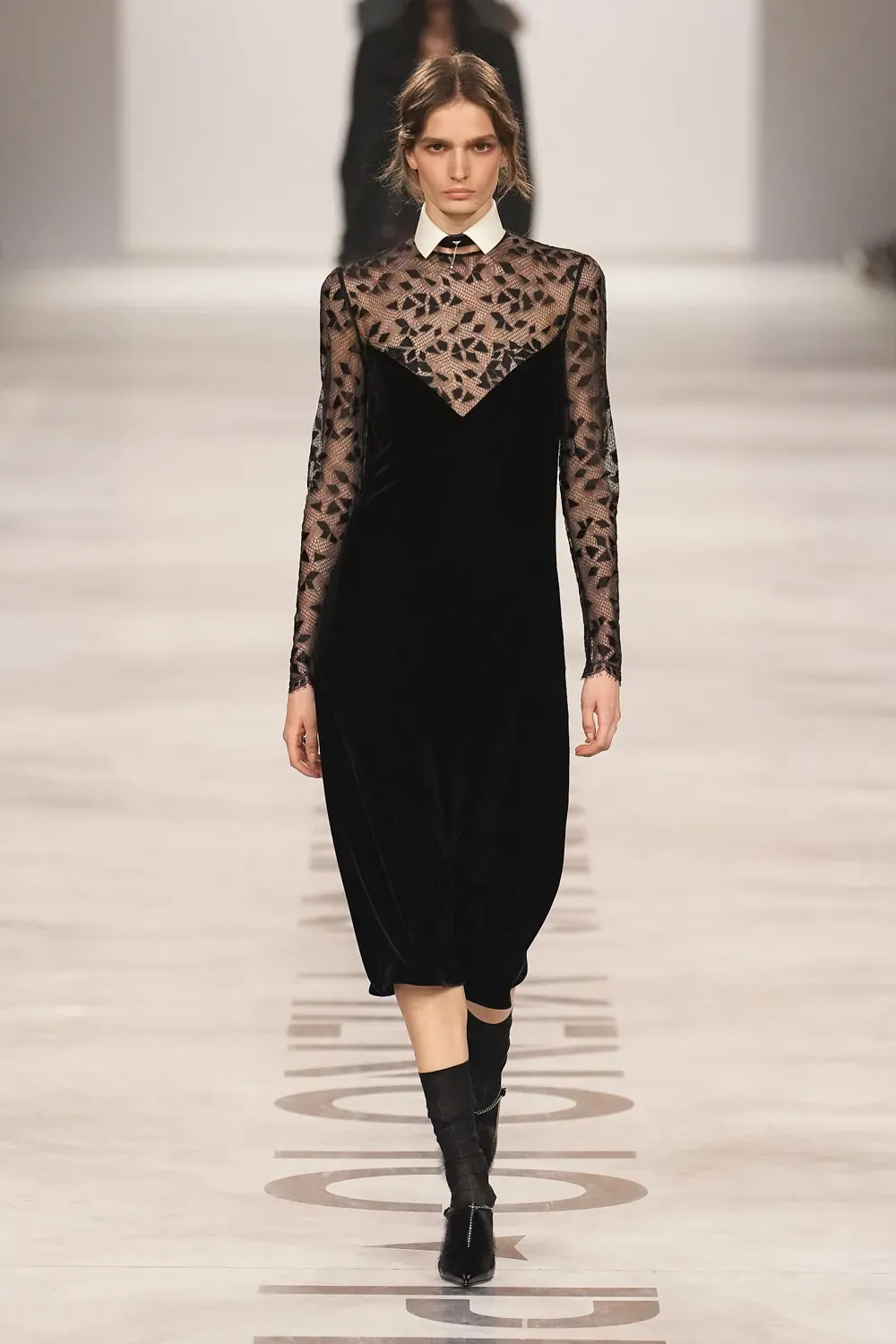
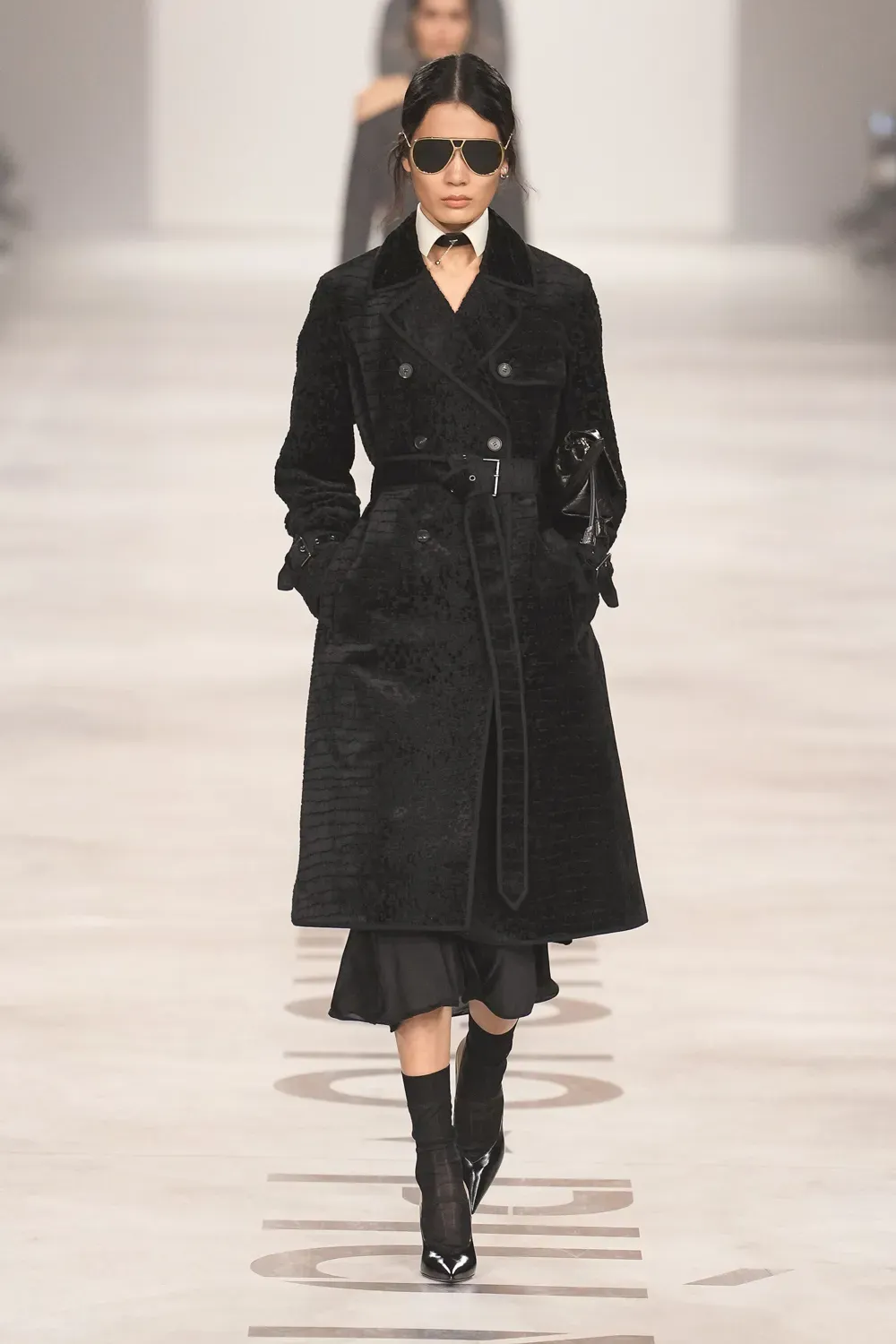
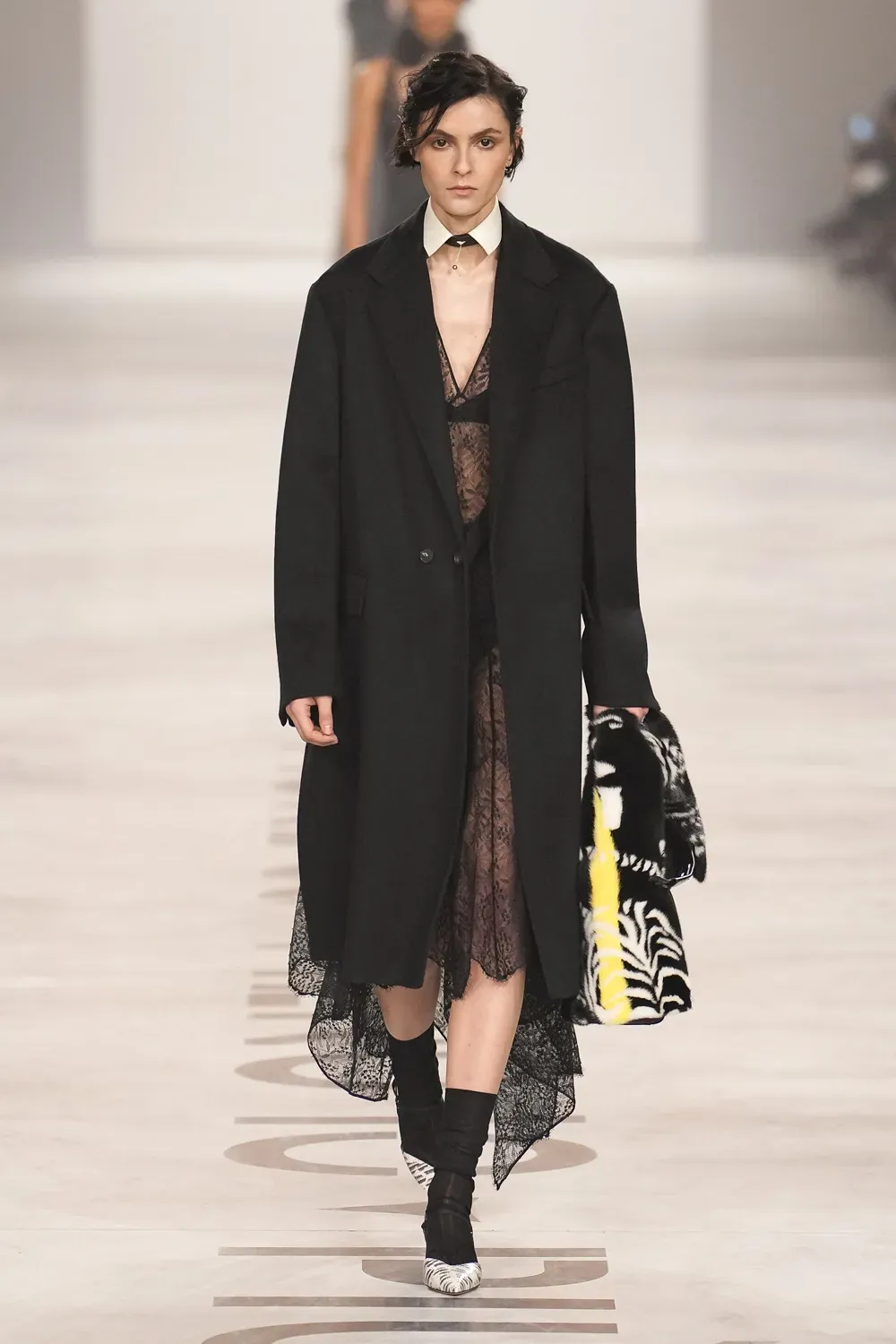
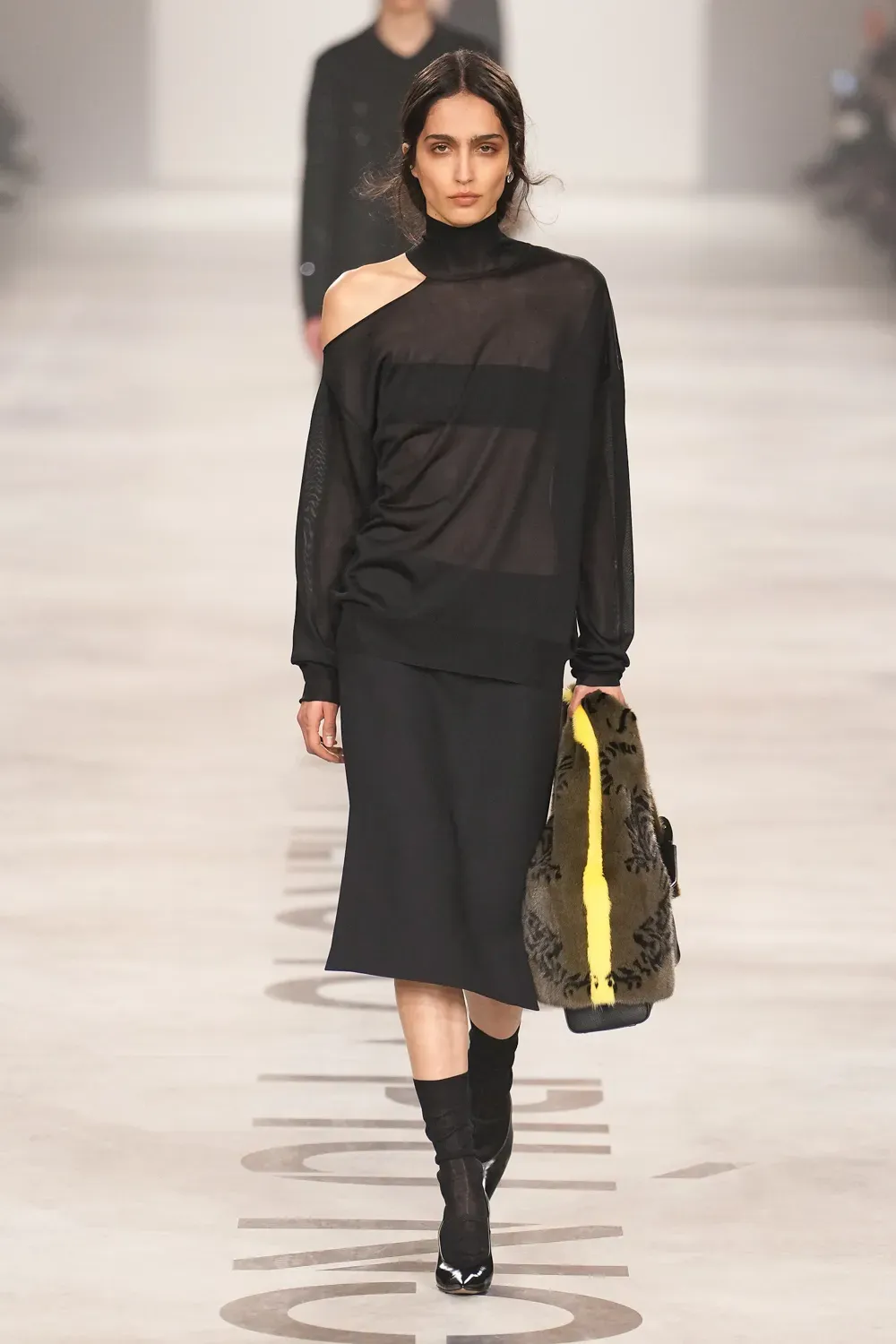
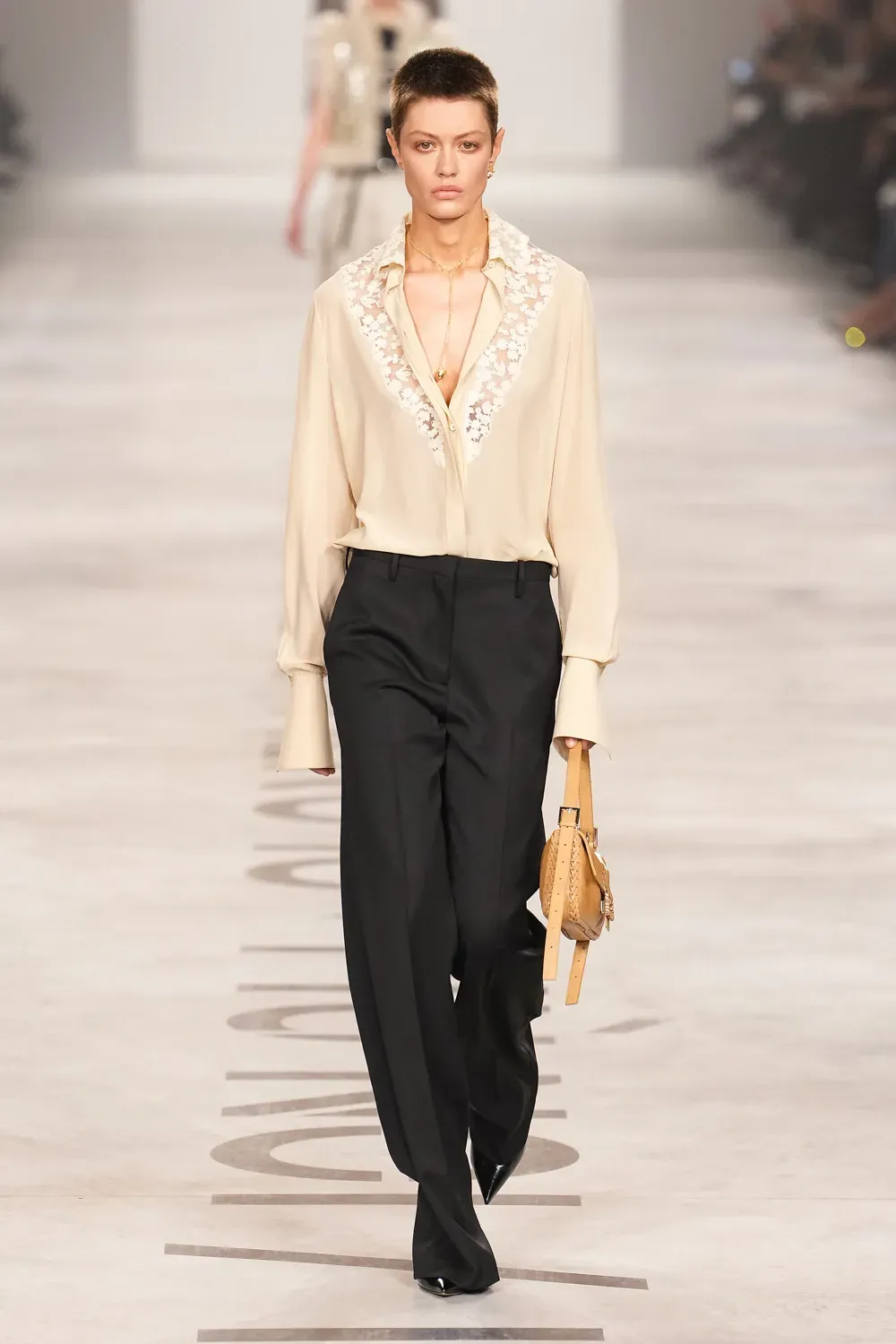
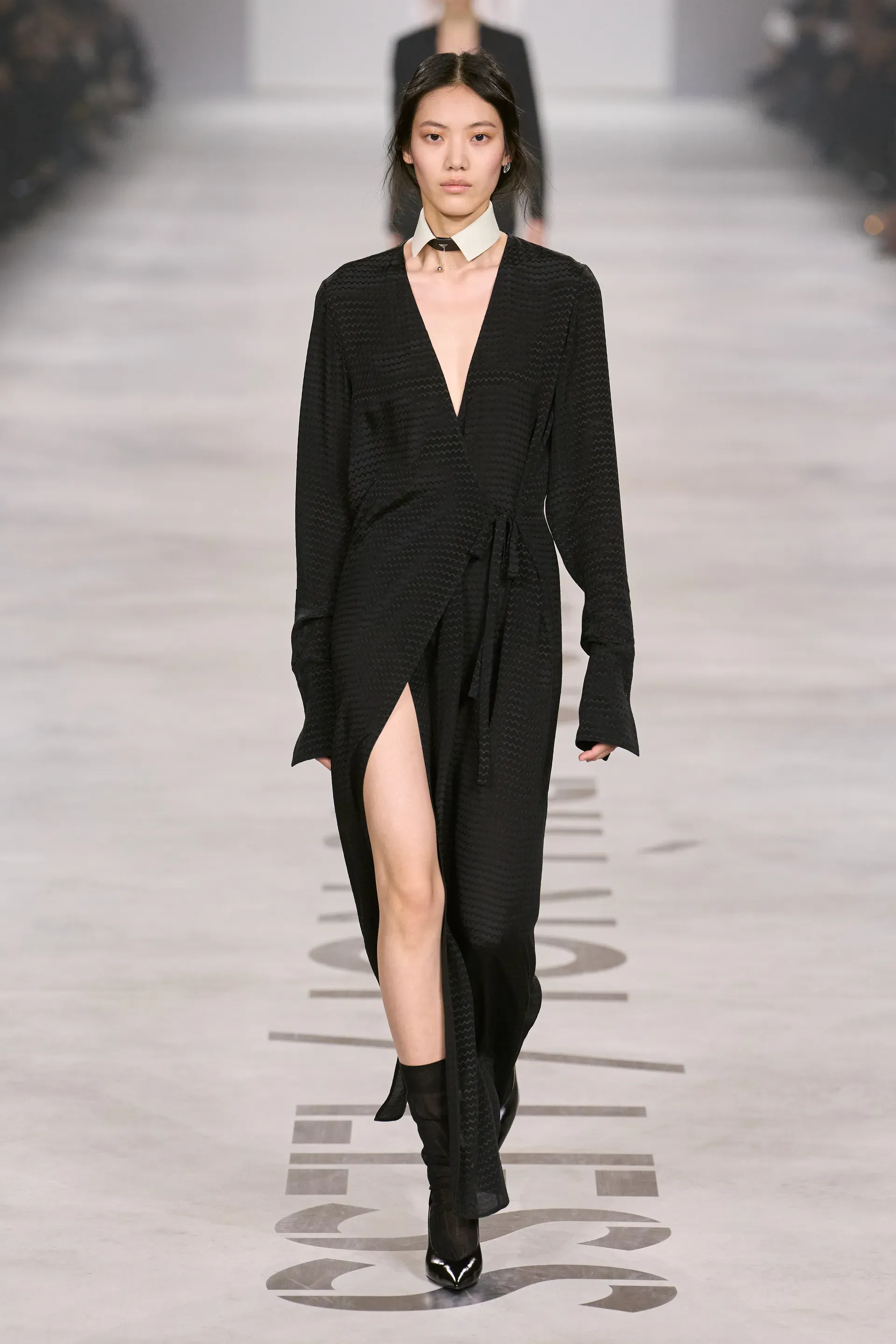
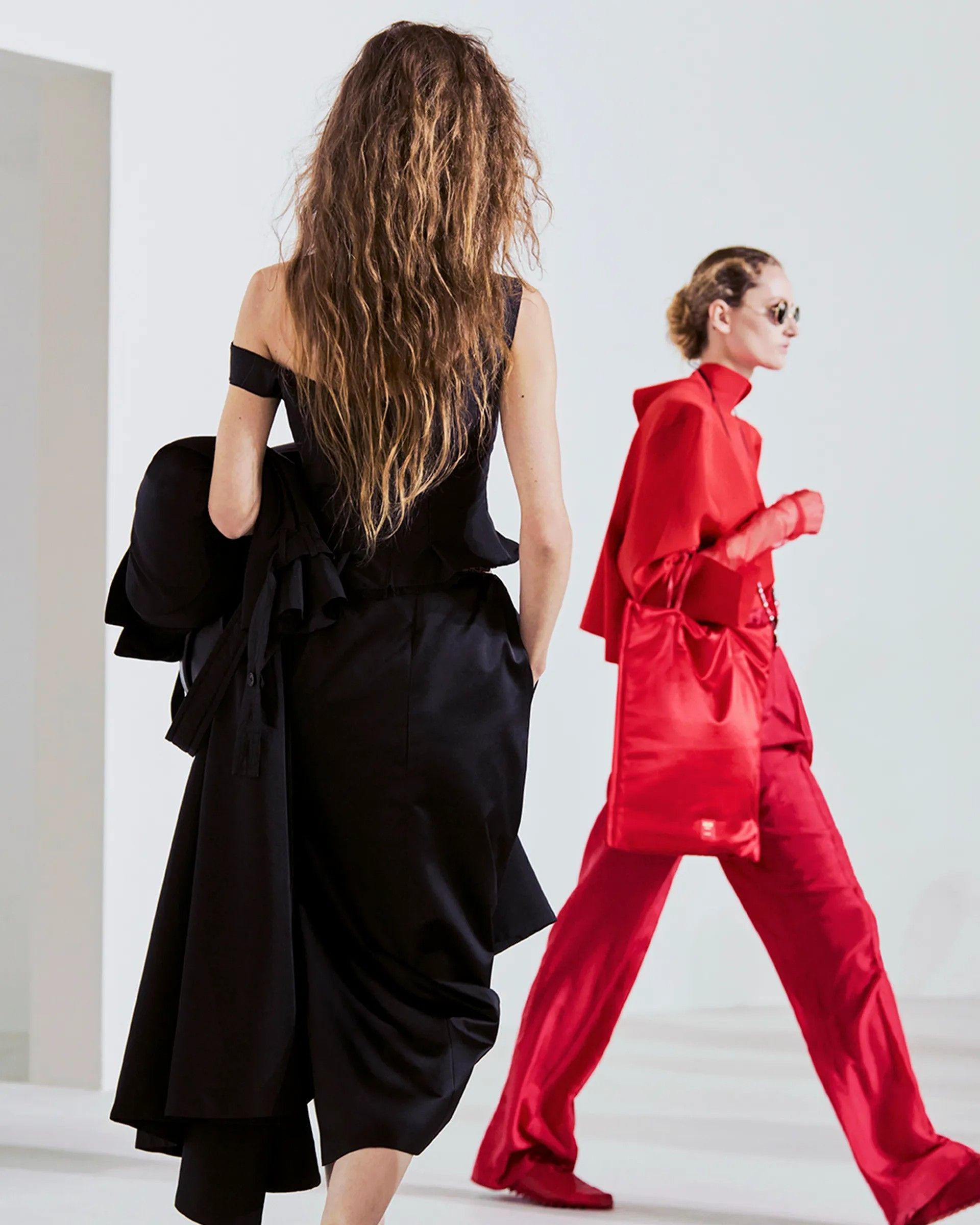
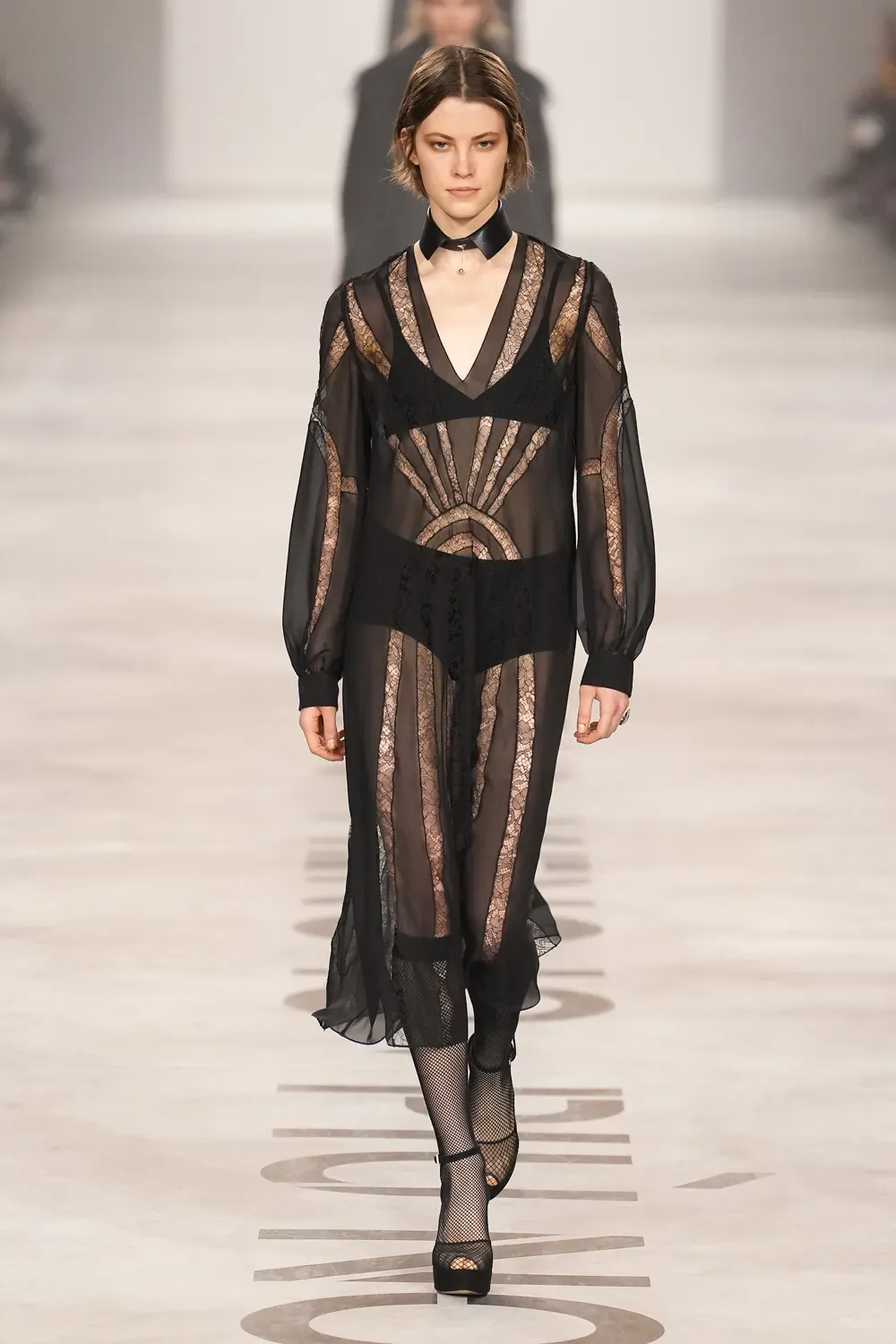
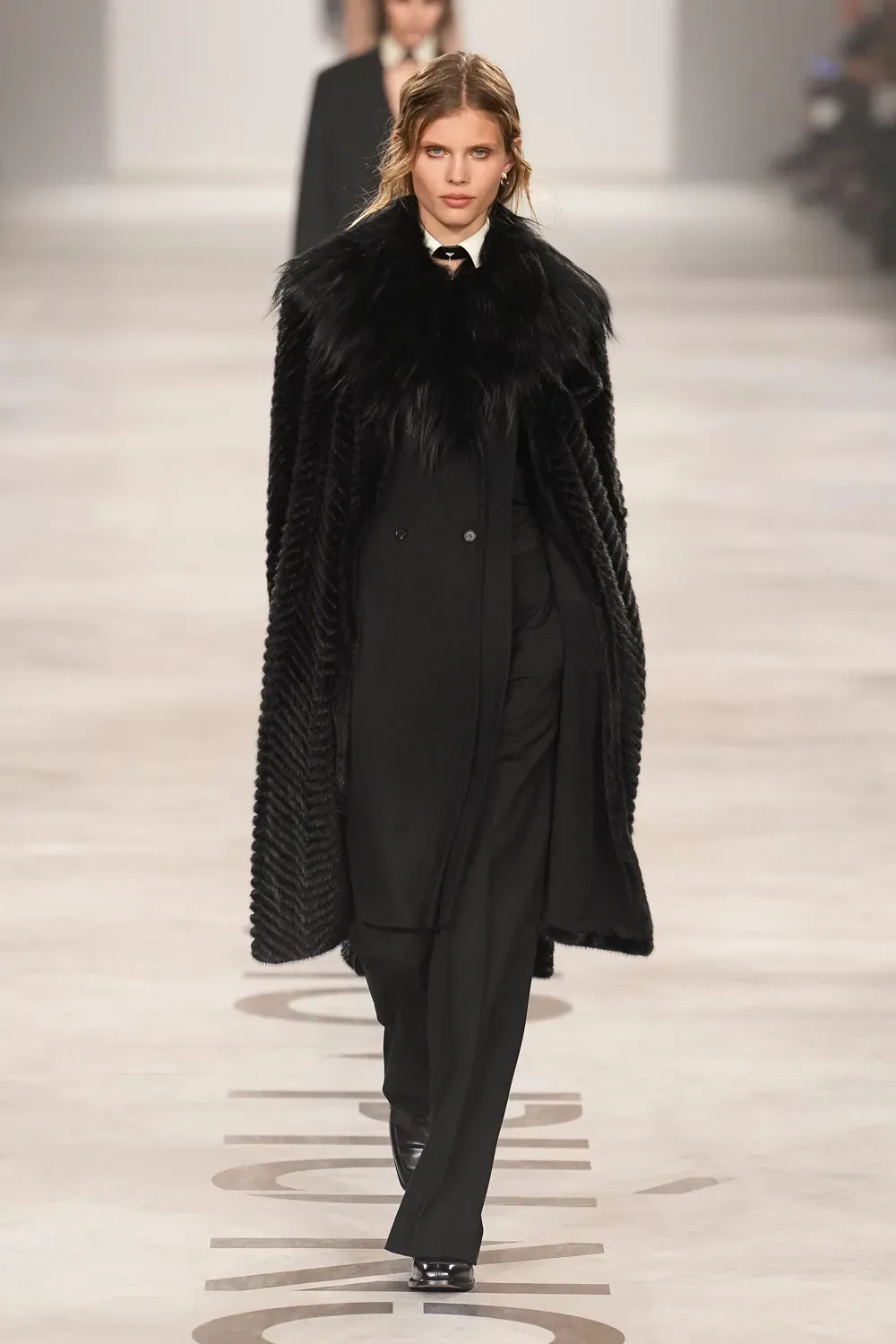
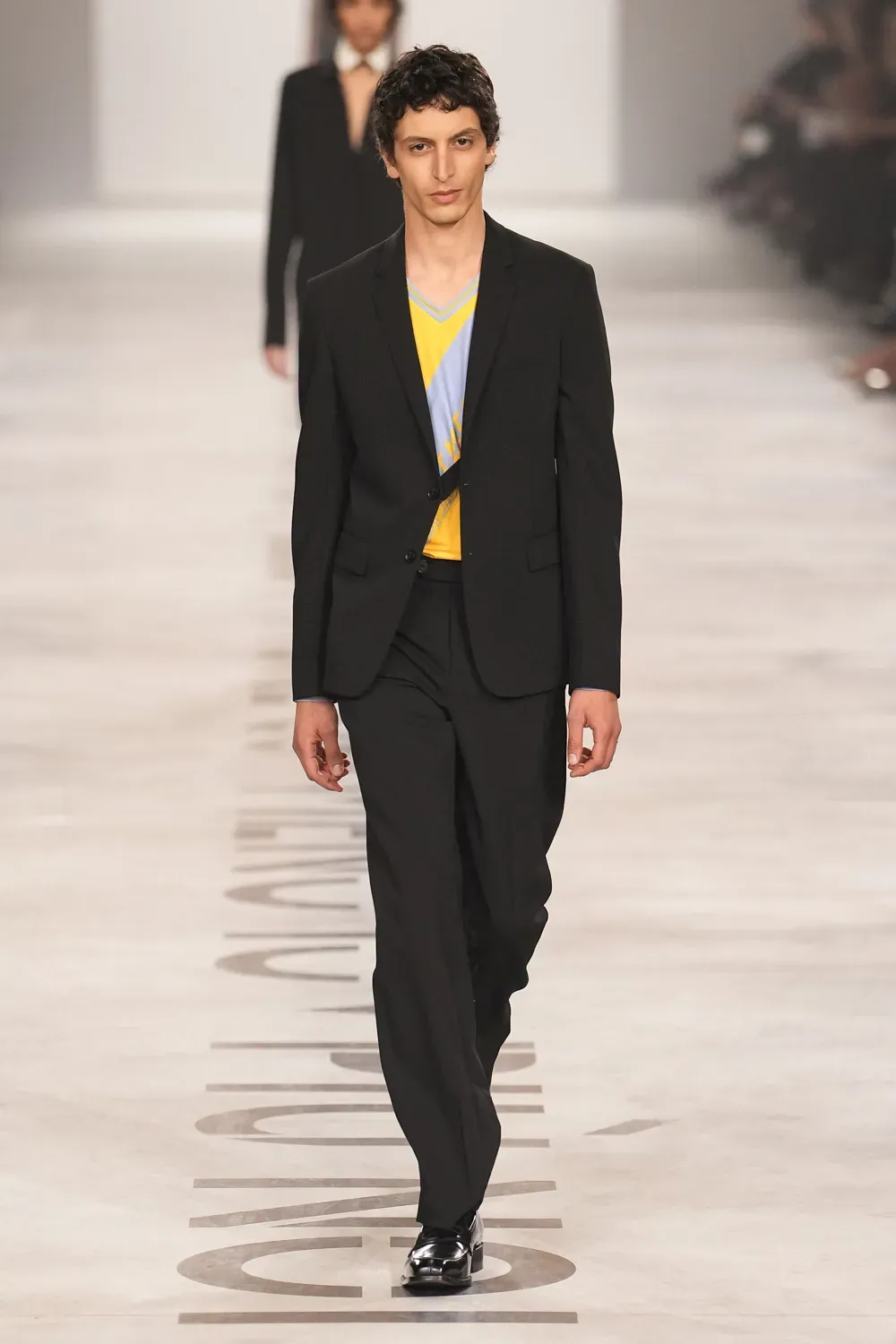
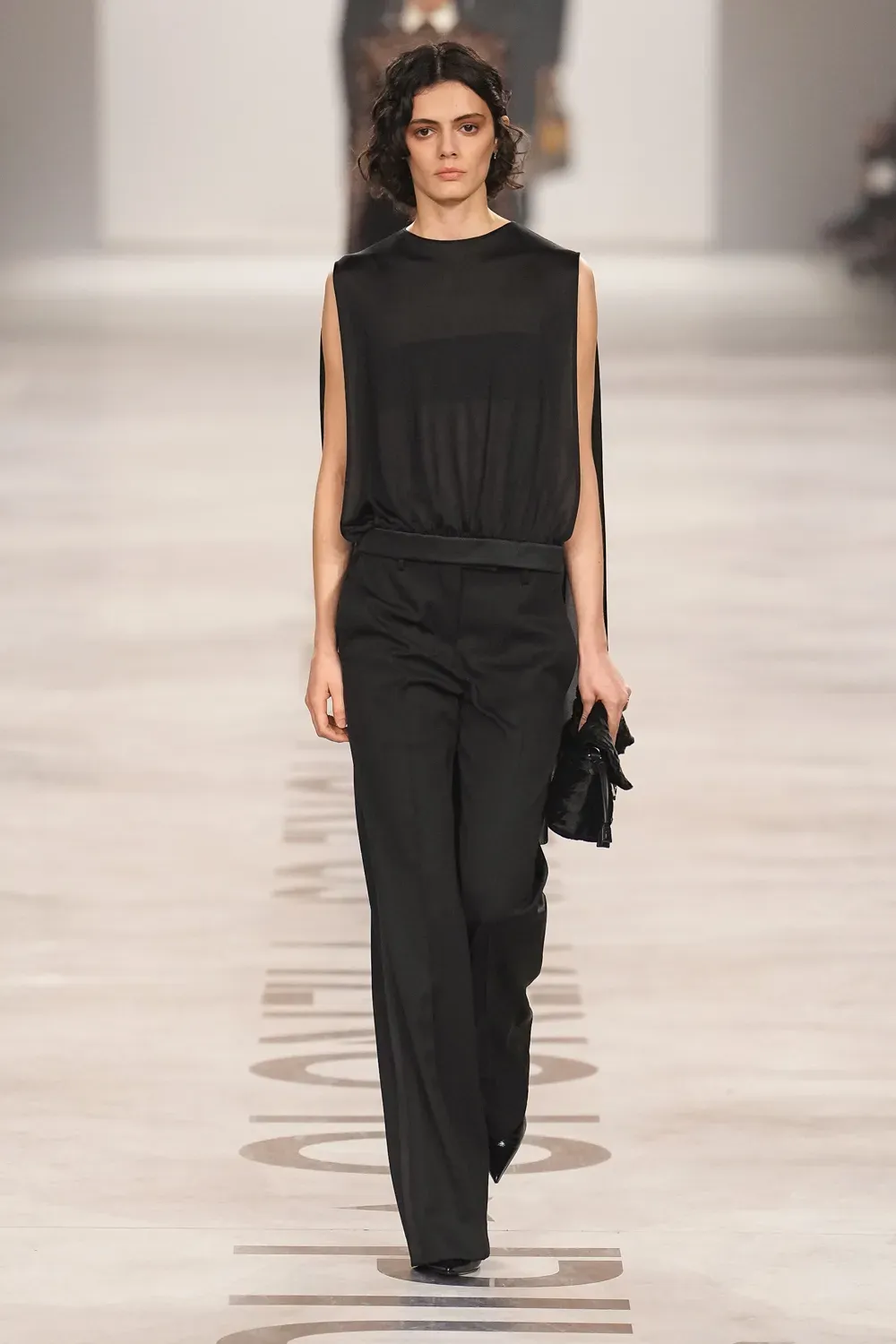
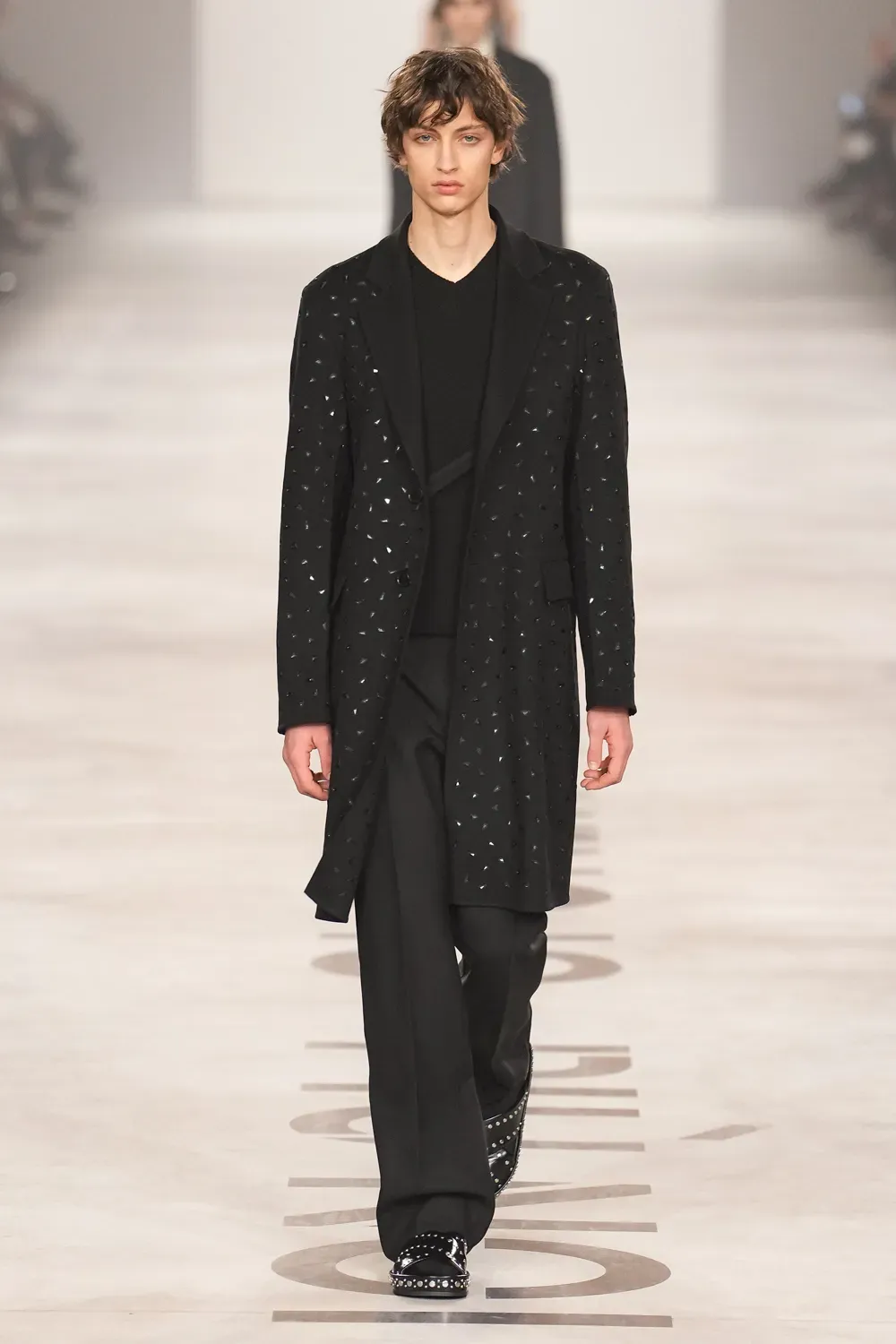
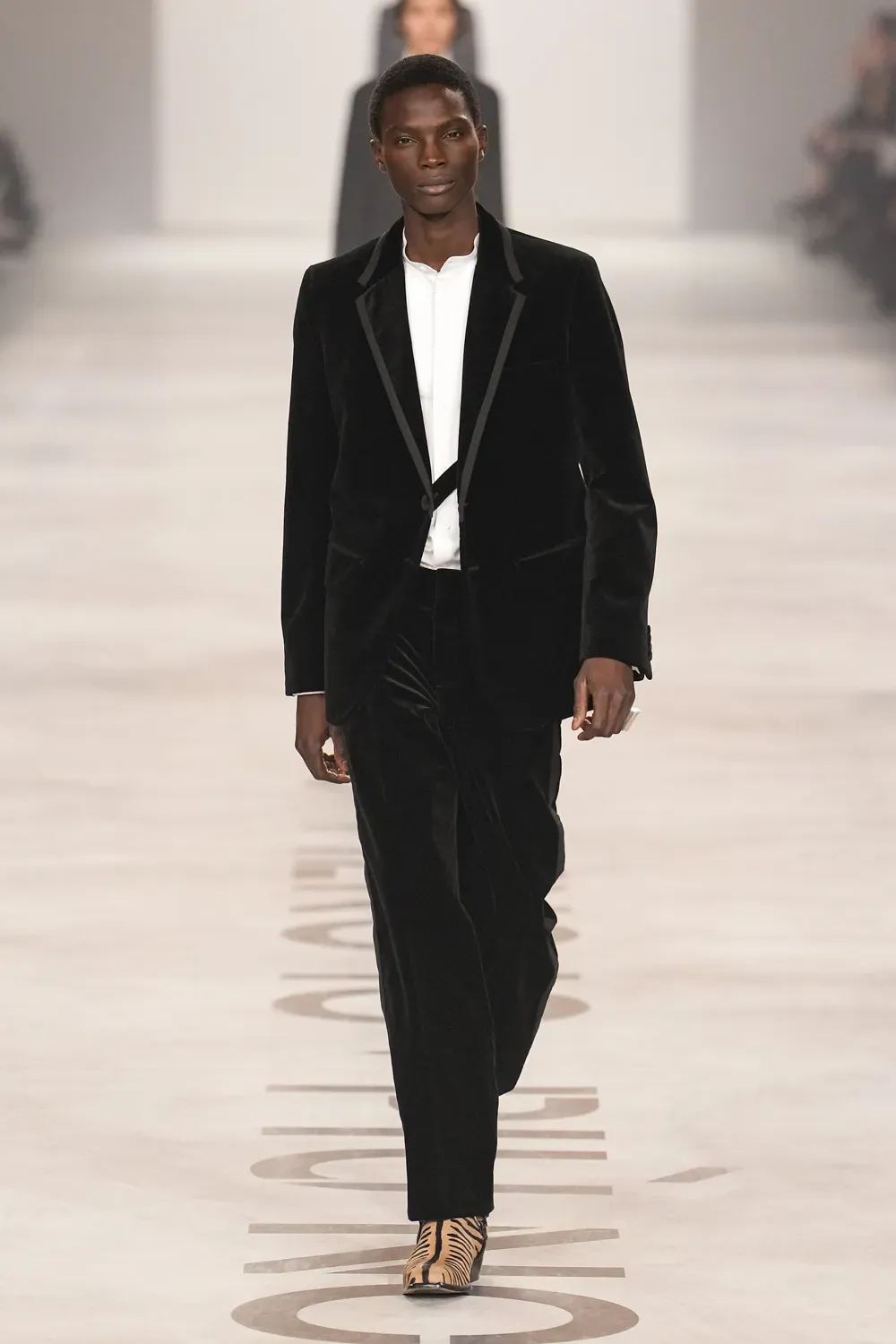
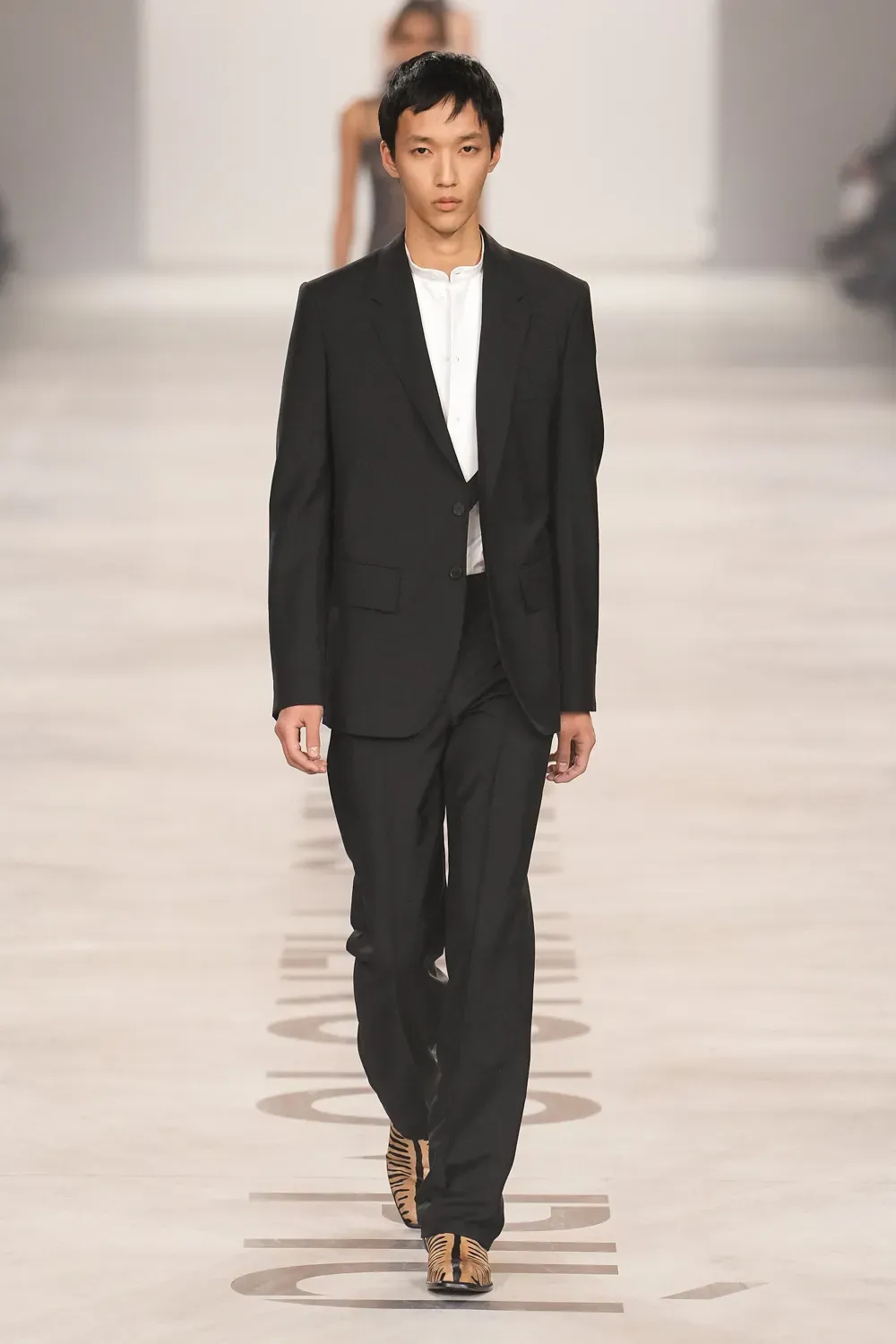
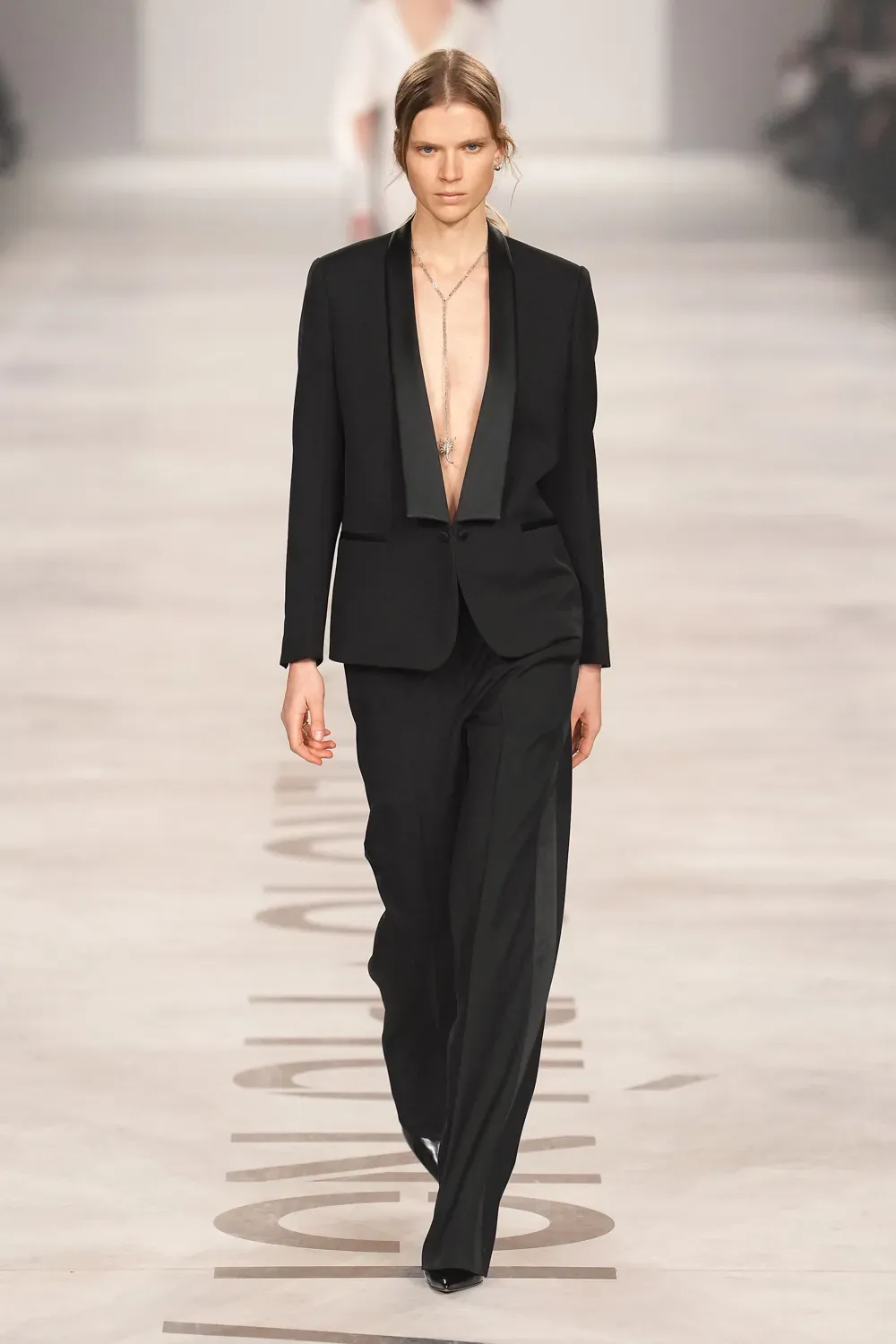
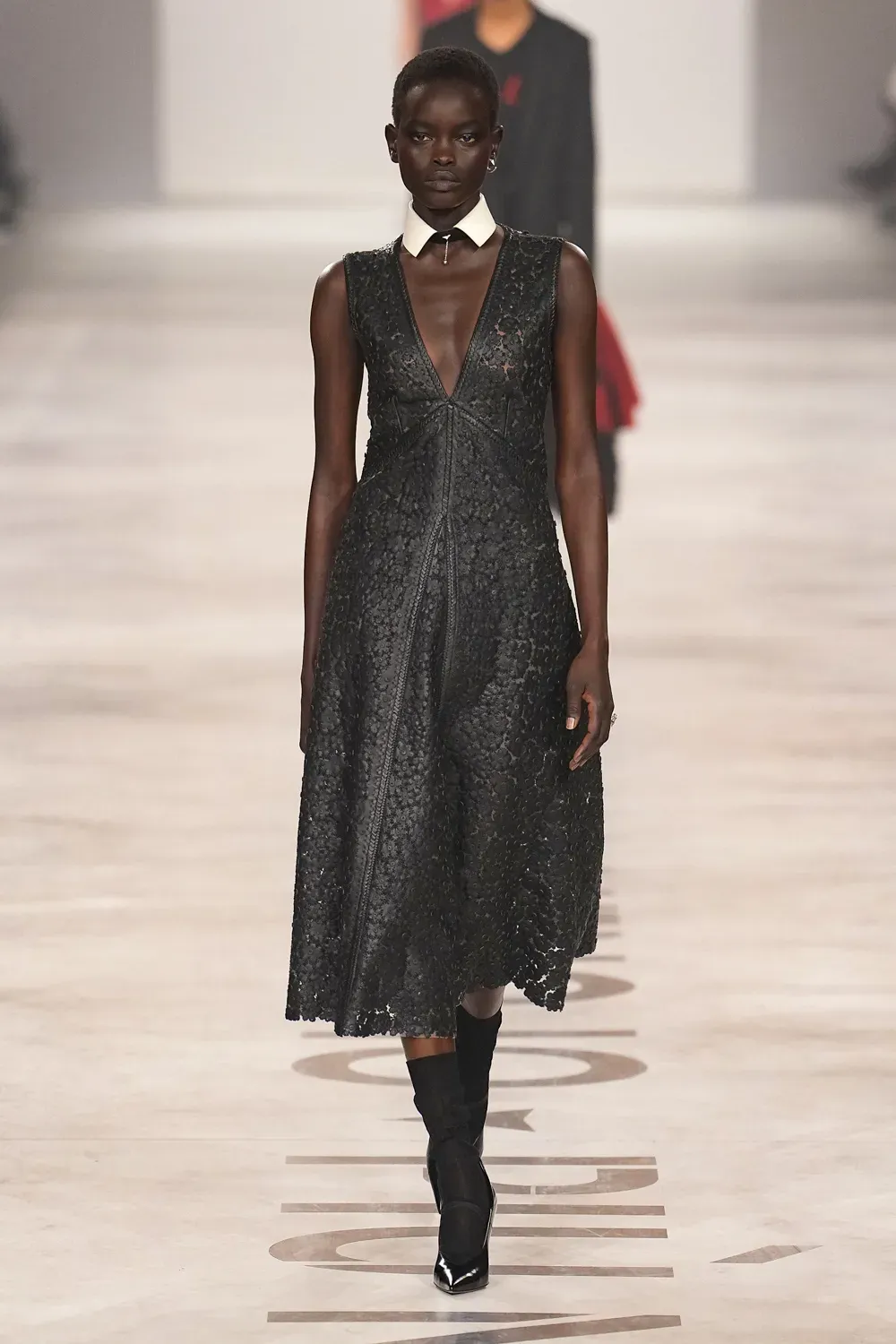
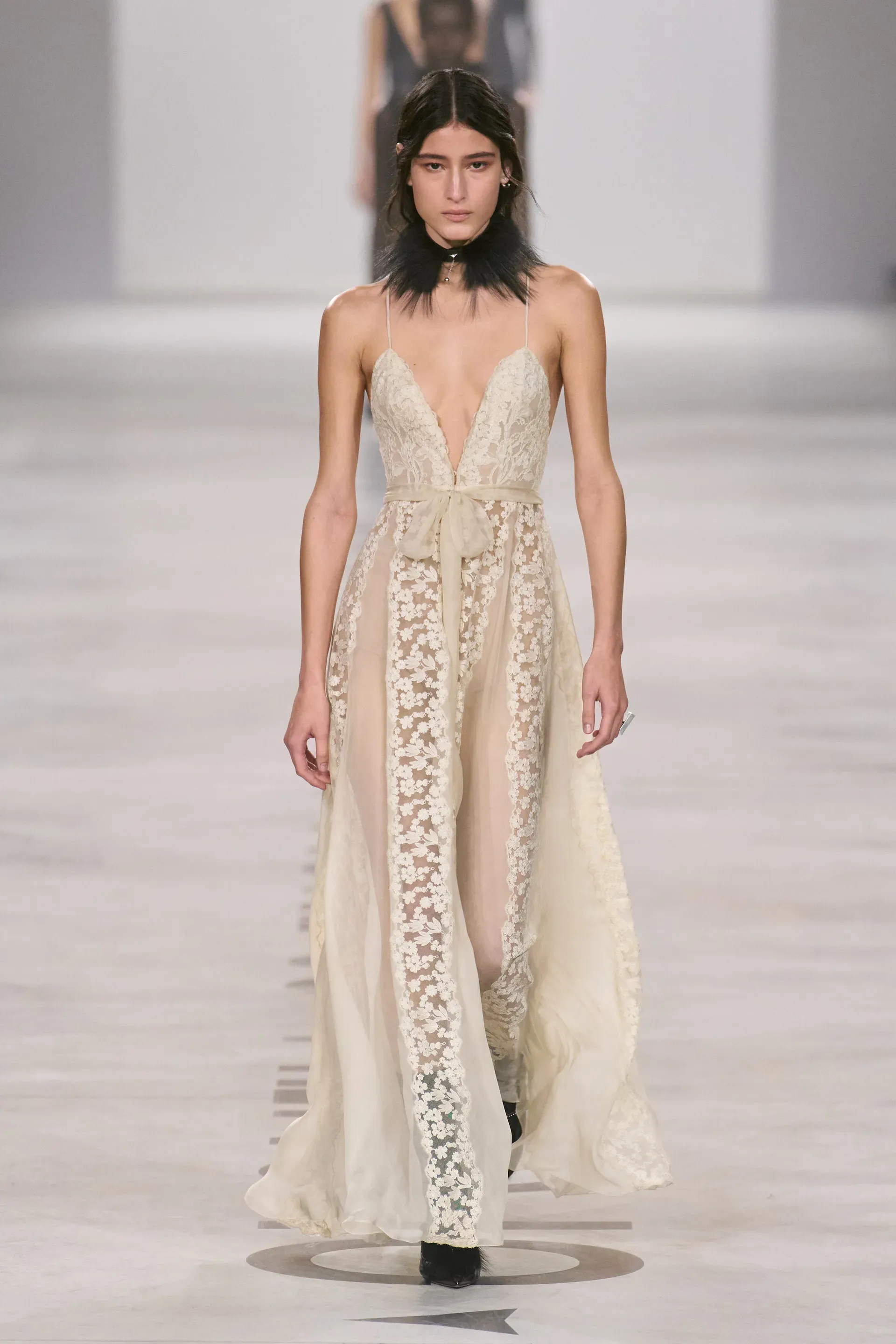
Fendi’s FW26 opened with a long sequence of jackets, tailored suits, double-breasted pieces, and shirts, framed within a deliberately classic, if not outright austere, vision. The palette was almost entirely devoid of colour, save for a few mandarin-collar shirts in a soft, pale blue. Lace, a material long associated with Chiuri’s aesthetic, appeared only in the very first looks, before quickly giving way to more masculine silhouettes, with barely defined waists and legs that were only hinted at.
A stylistic choice that felt far removed from what the teasers released by the brand in the days leading up to the show had suggested. Those images had in fact sparked controversy on social media, depicting a woman’s ankles held tightly in a man’s hands, in a composition many read as provocative, almost Tom Ford–like. For many, it was hard to accept that the same designer who for years had championed the message «we should always be feminists» could endorse a depiction of the female body perceived as regressive. Few, however, recognised the direct reference to Hands on Ankles by photographer and feminist activist Jo Ann Callis, which the image was drawing from.
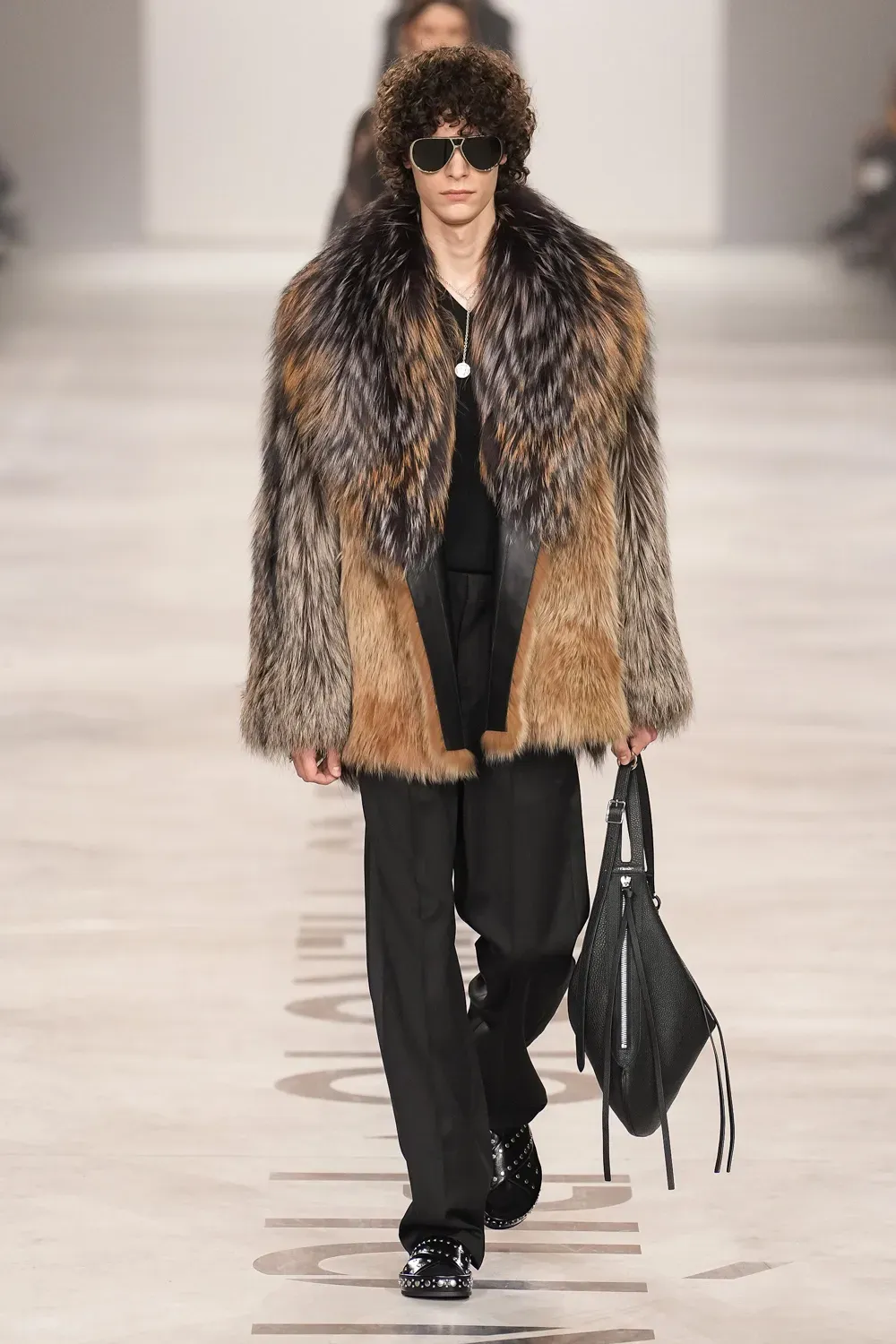
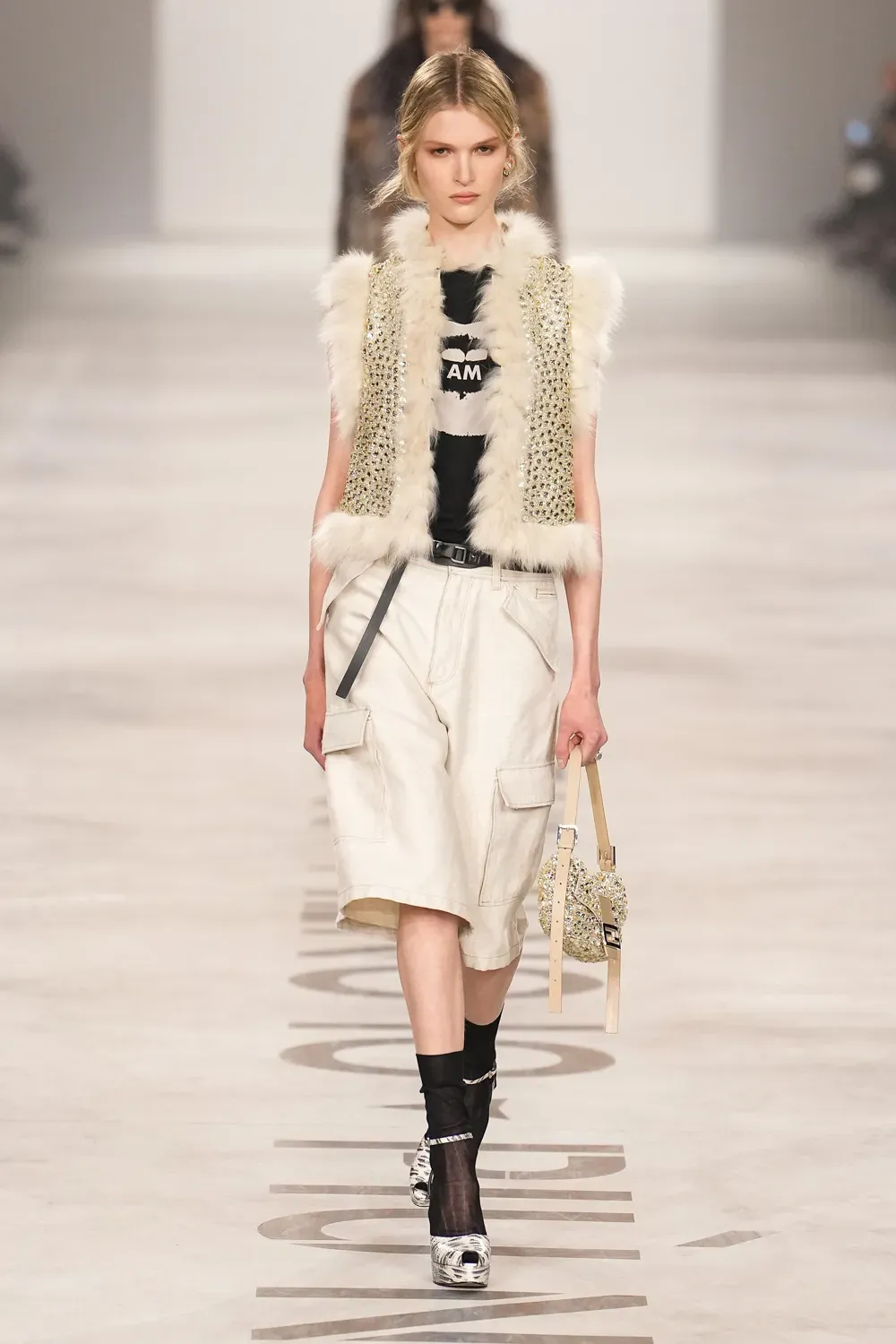
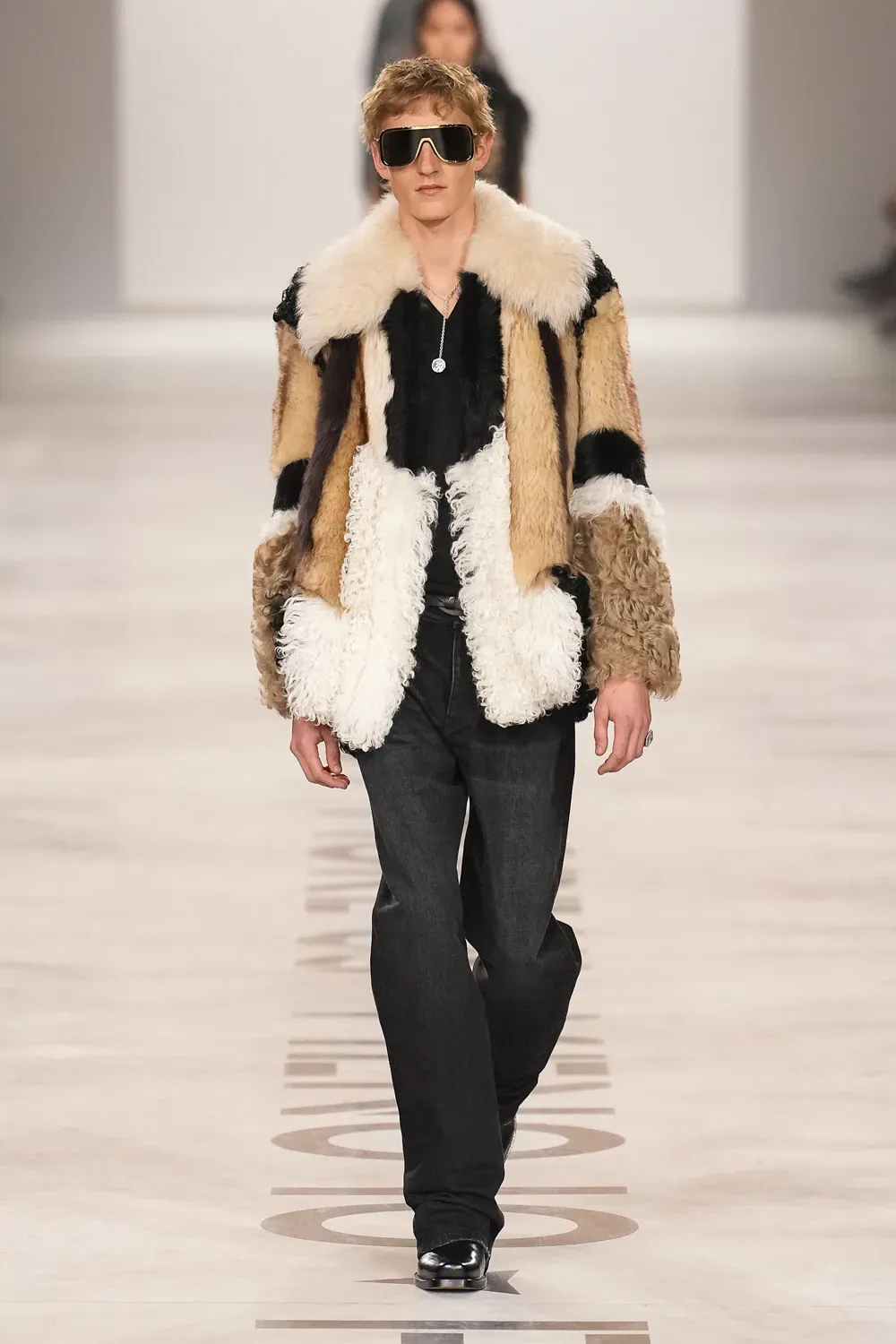
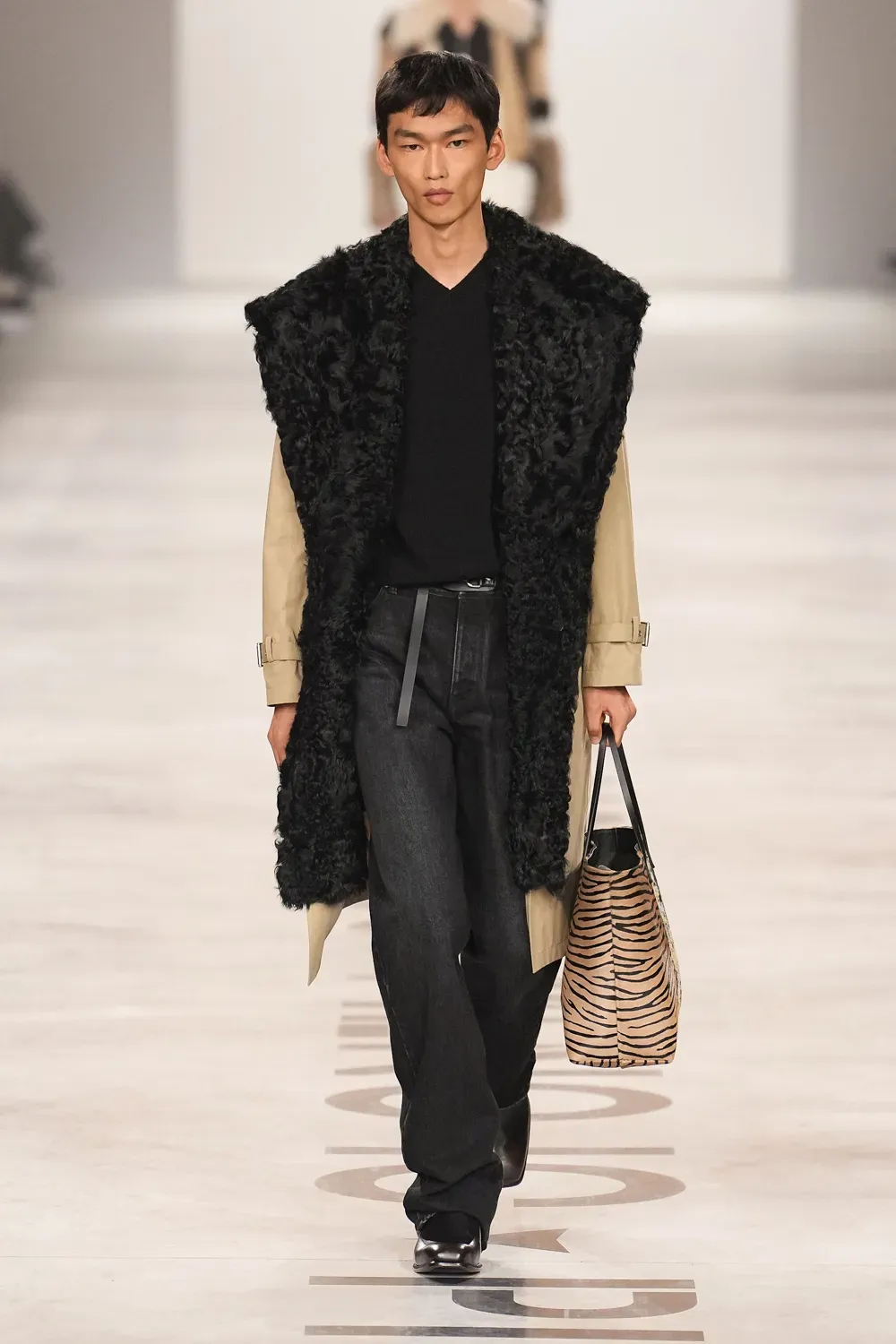
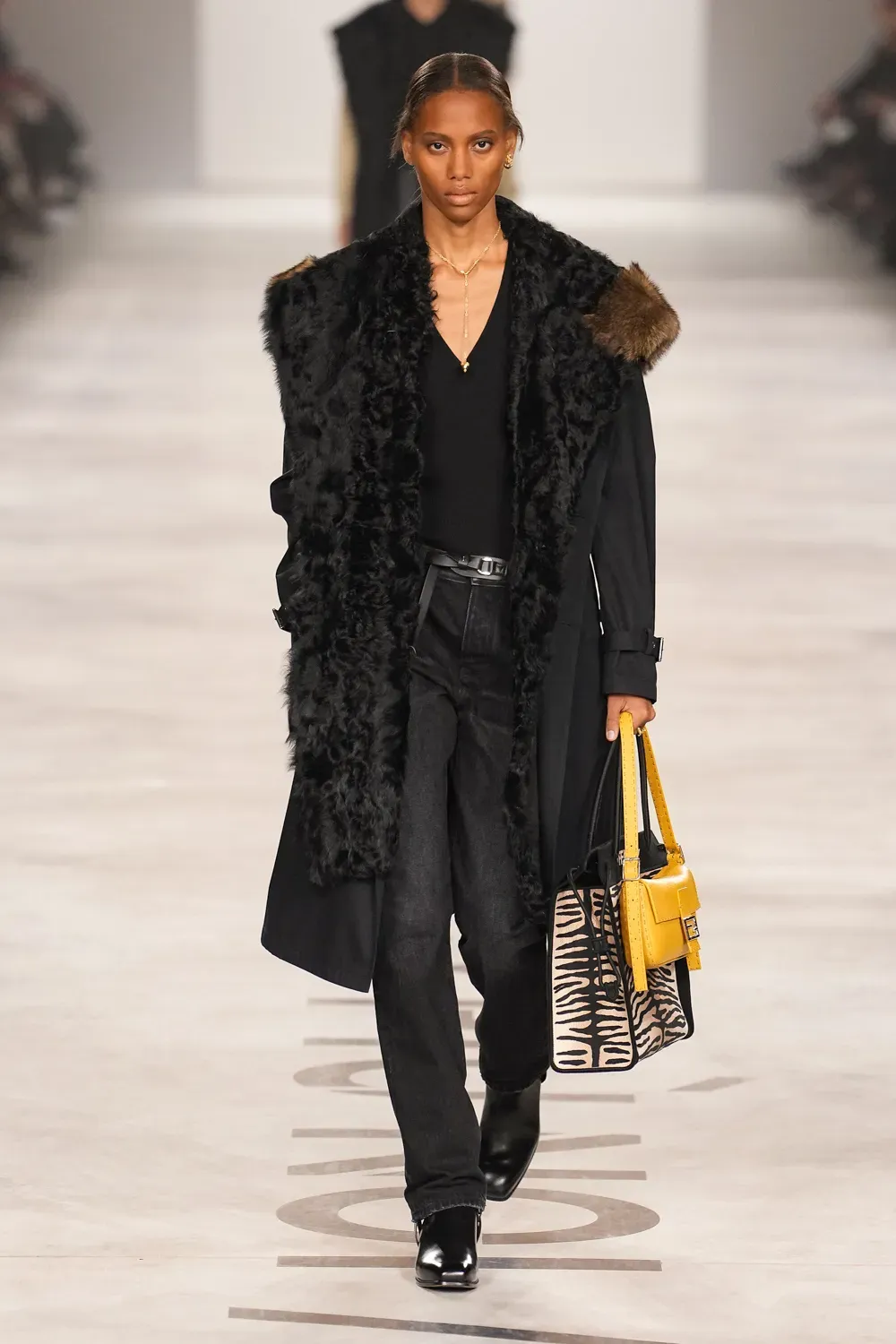
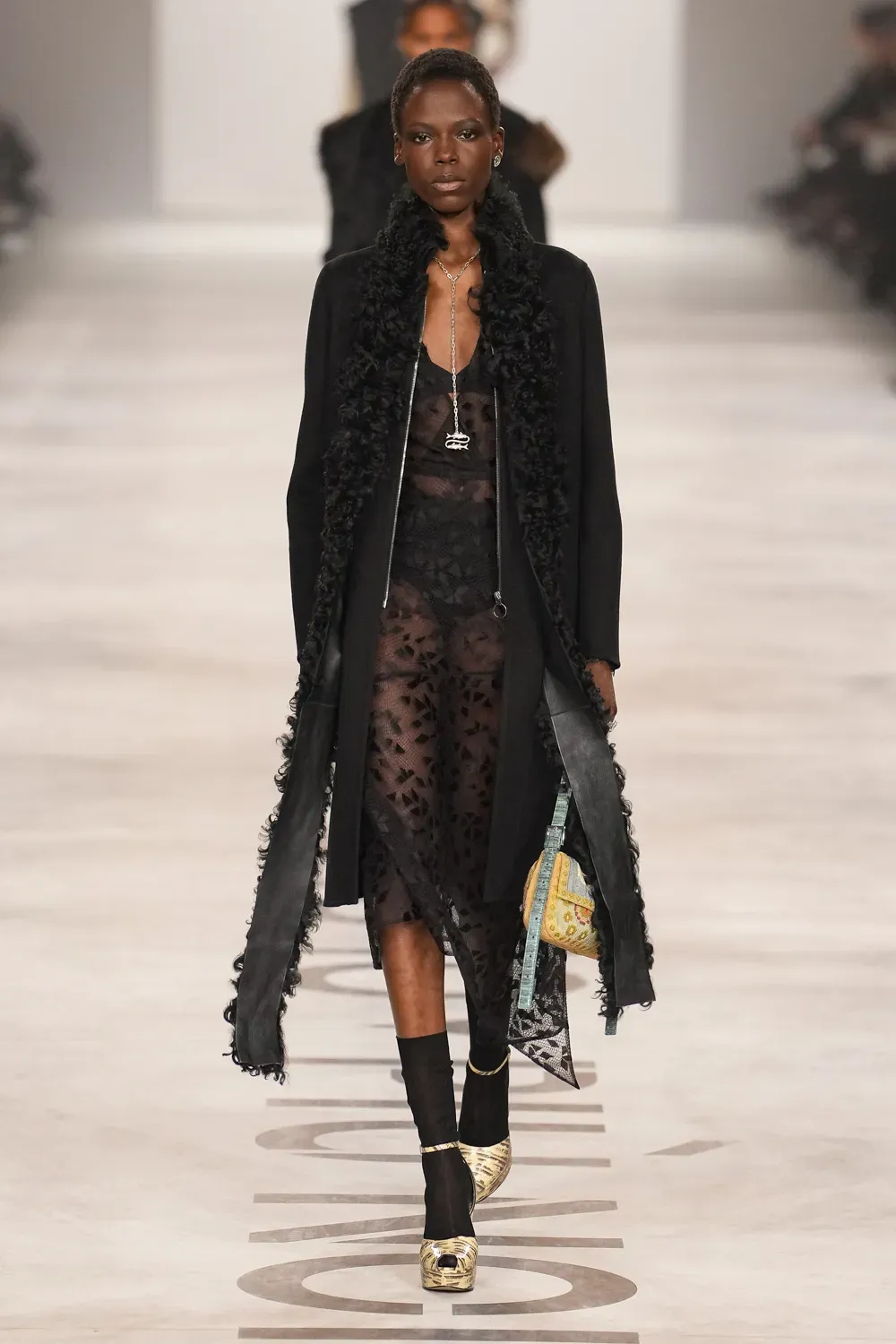
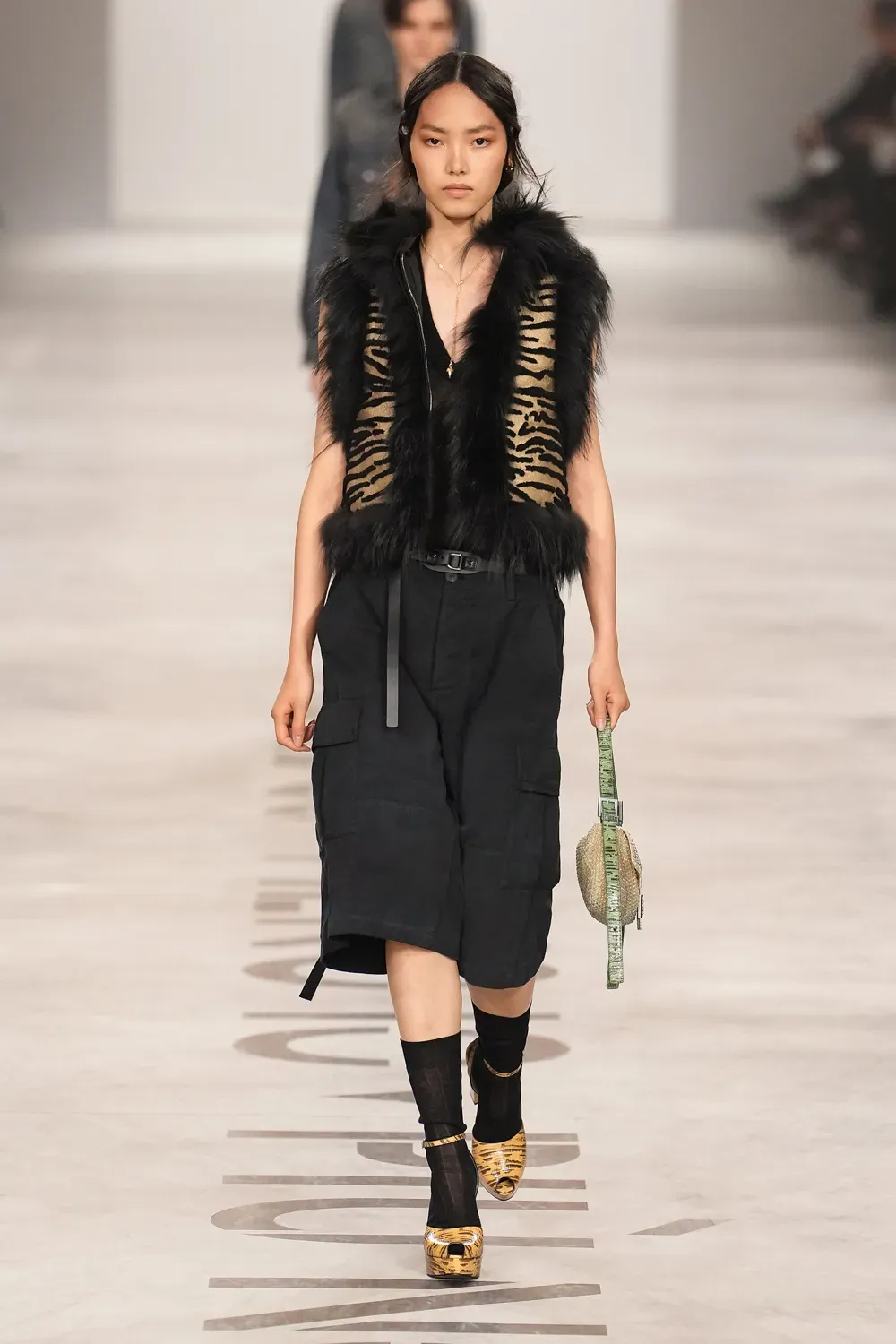
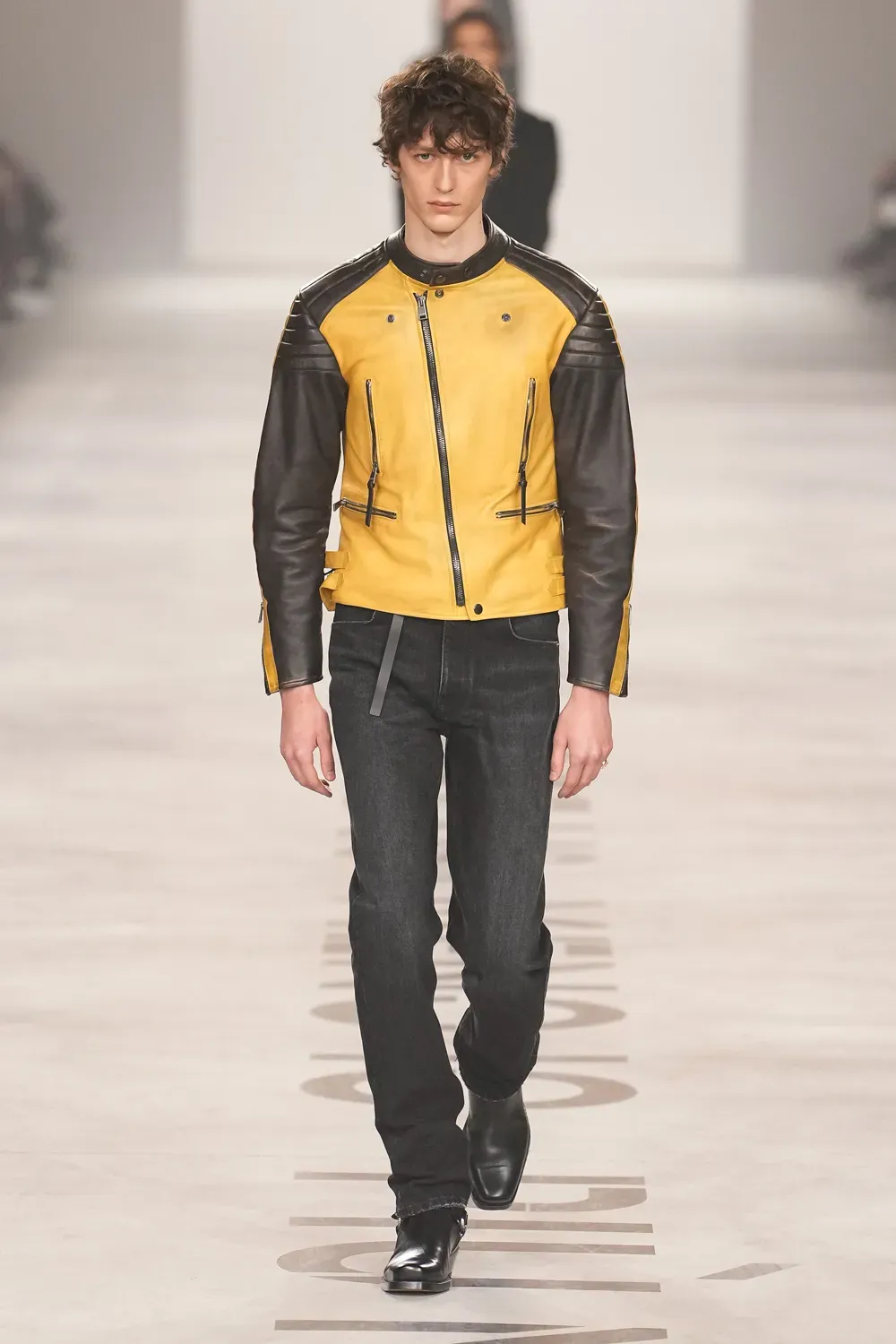
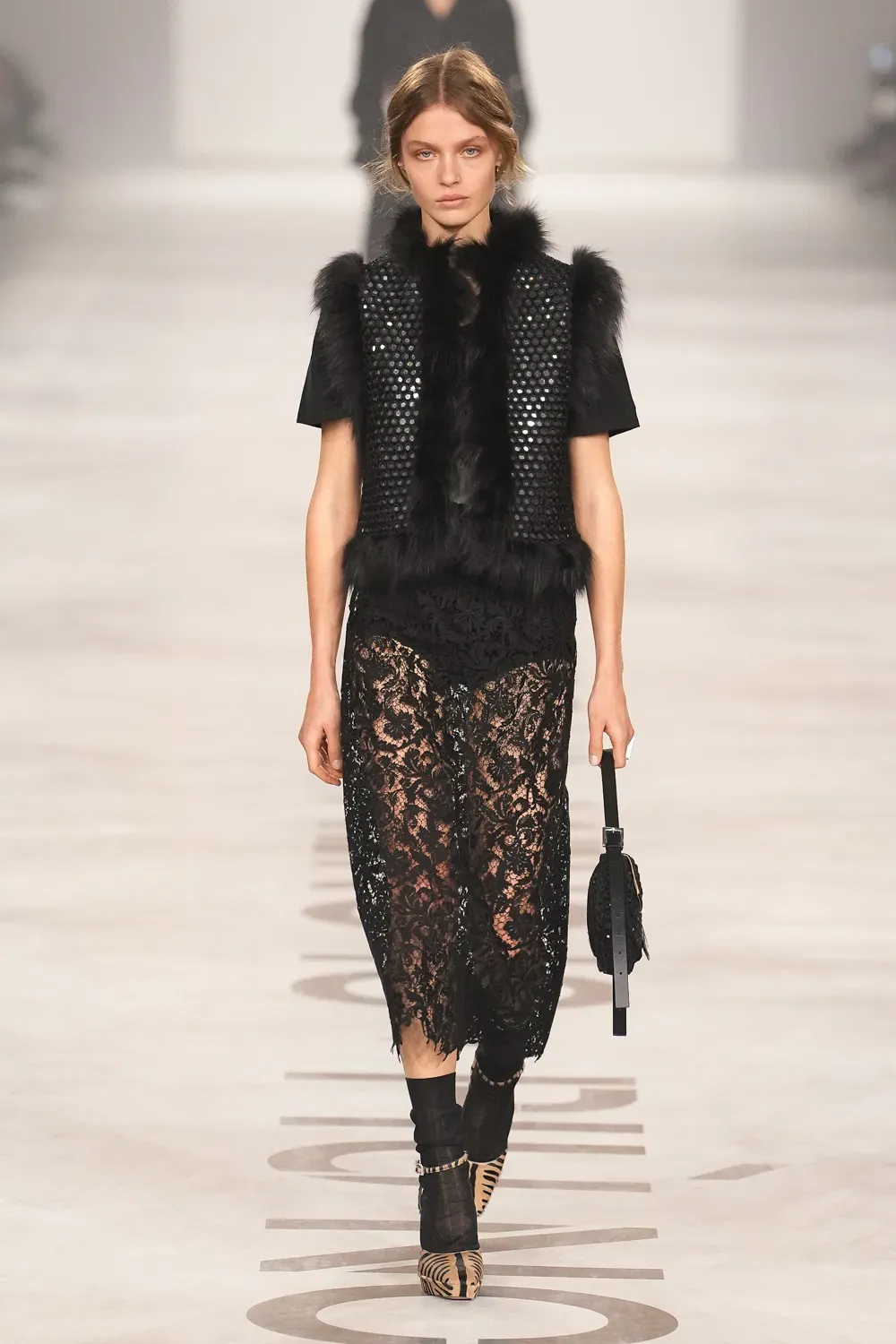
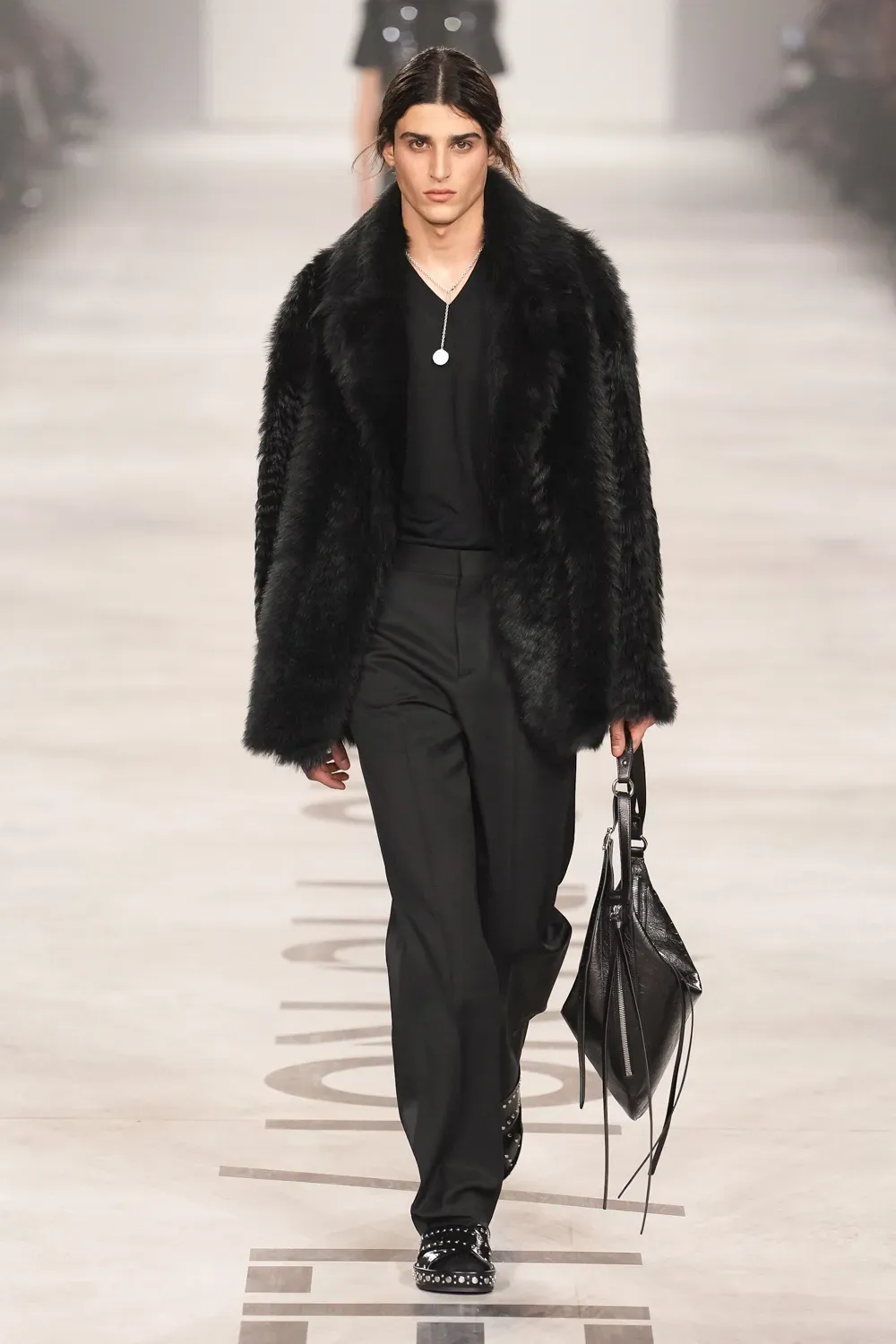
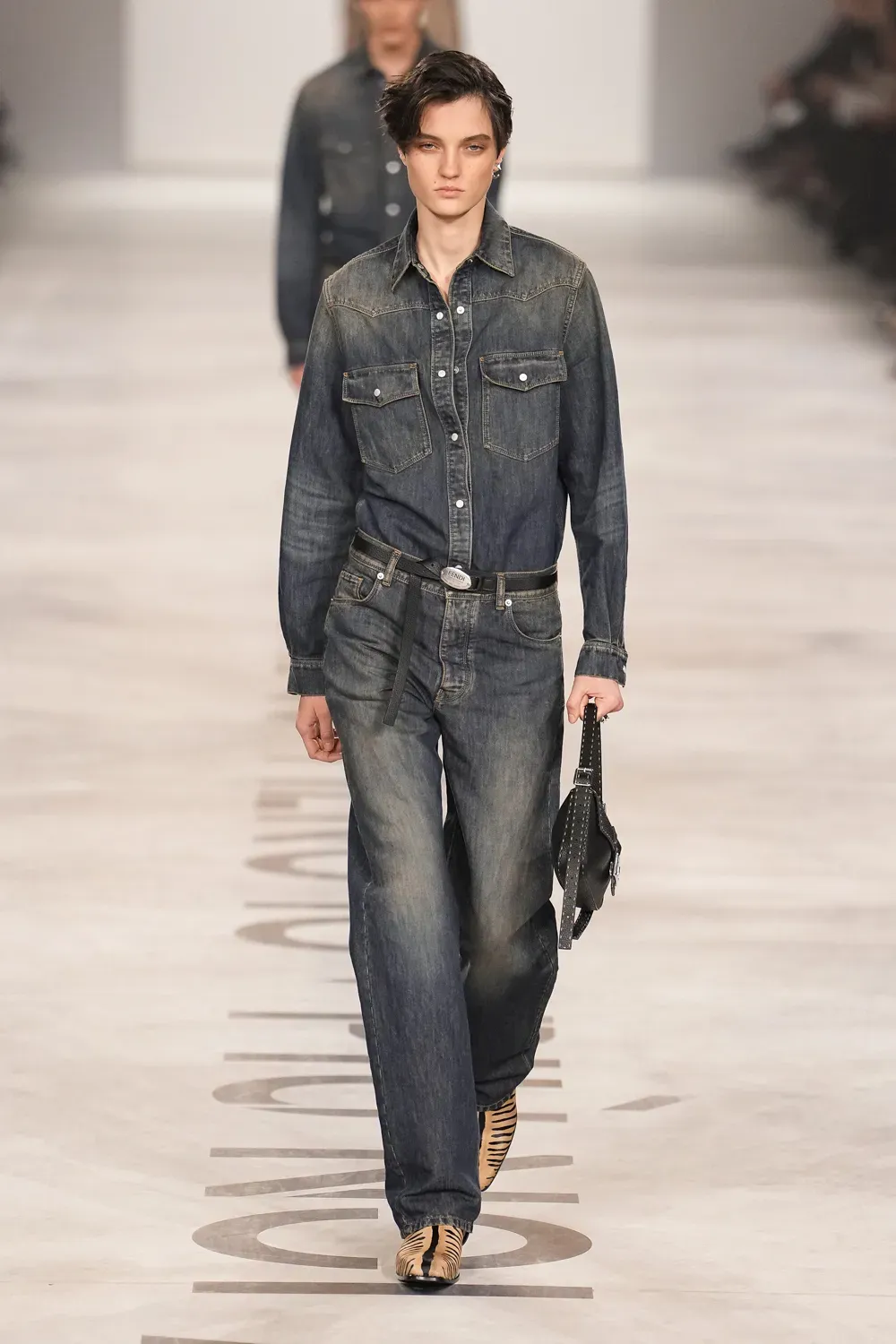
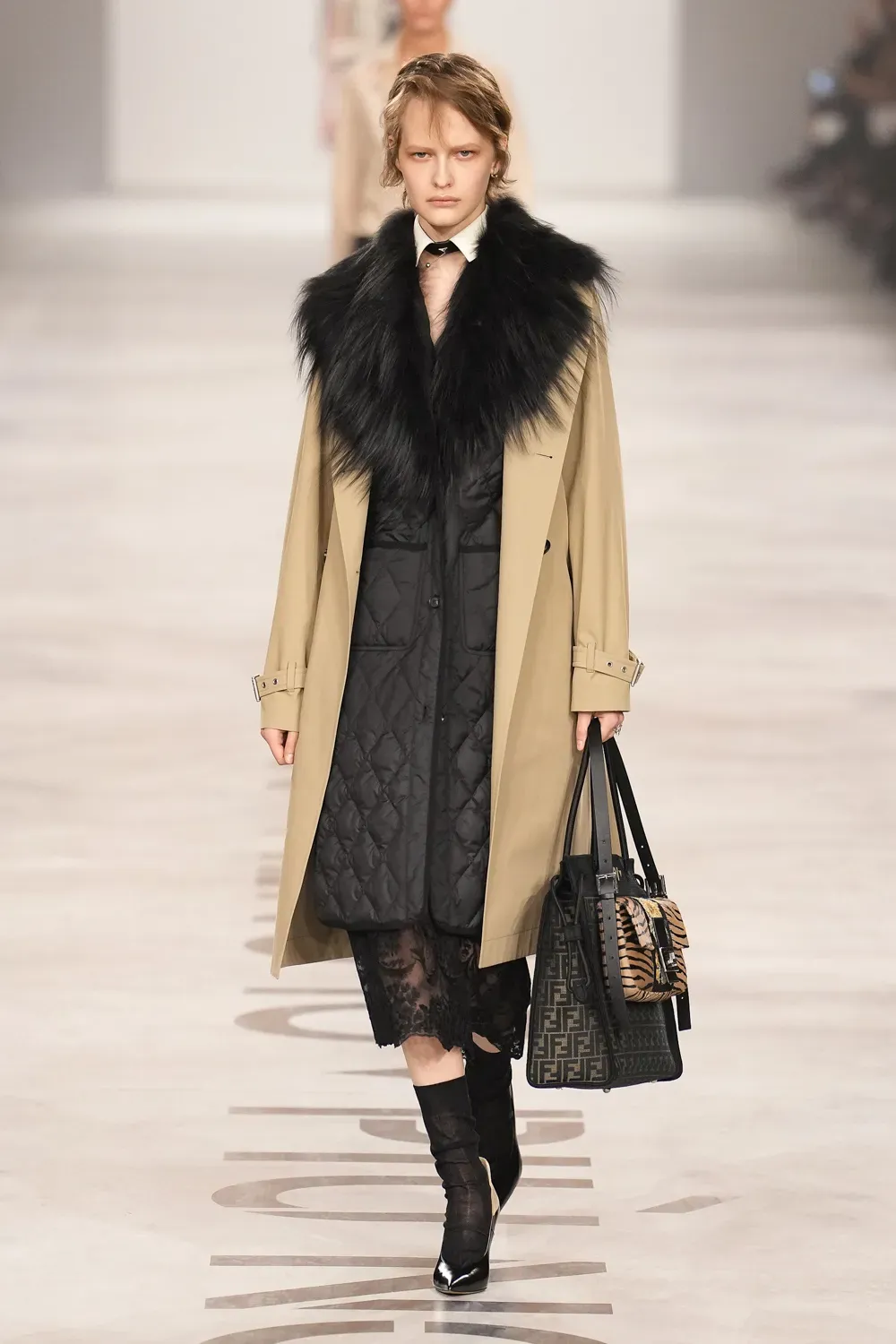
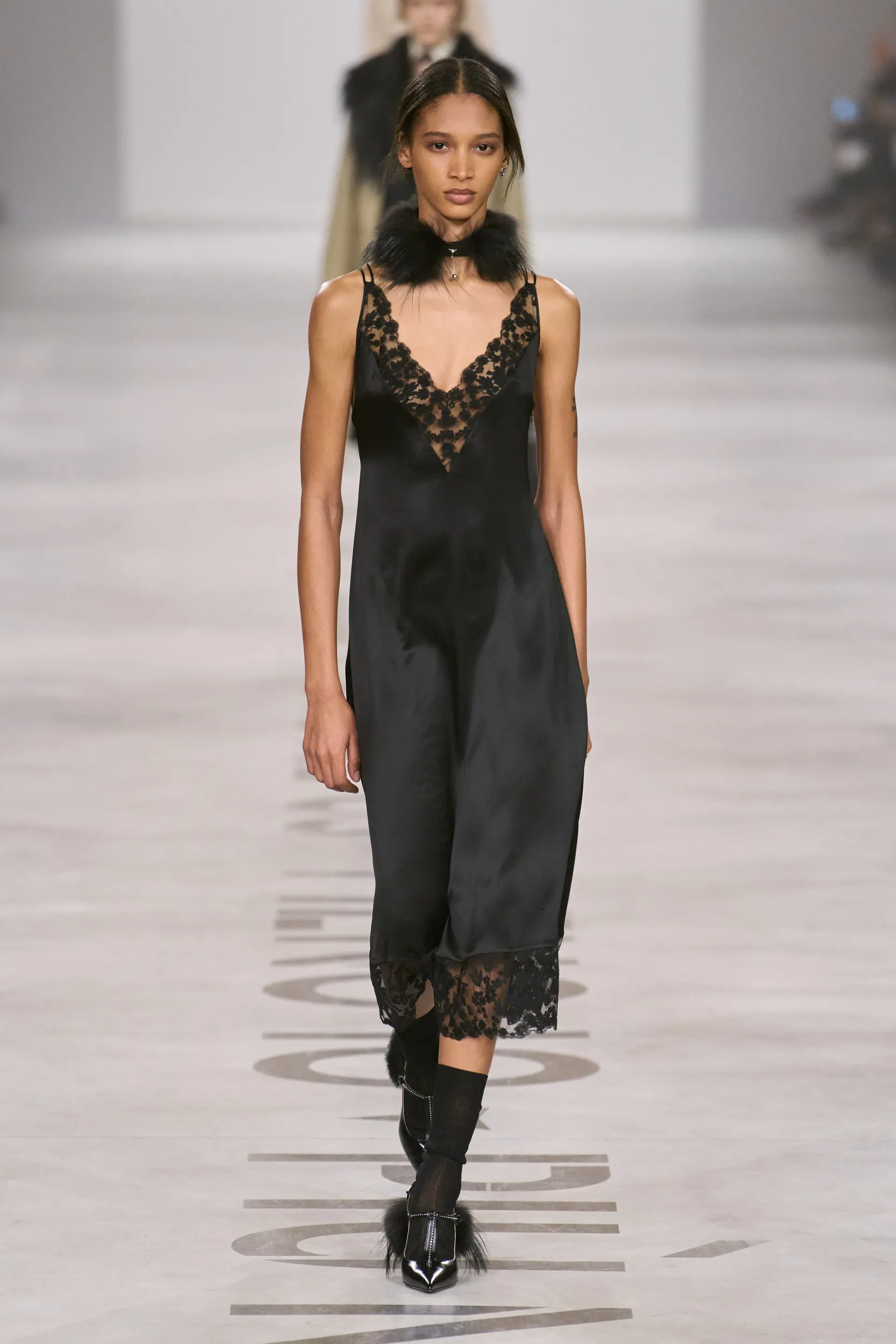
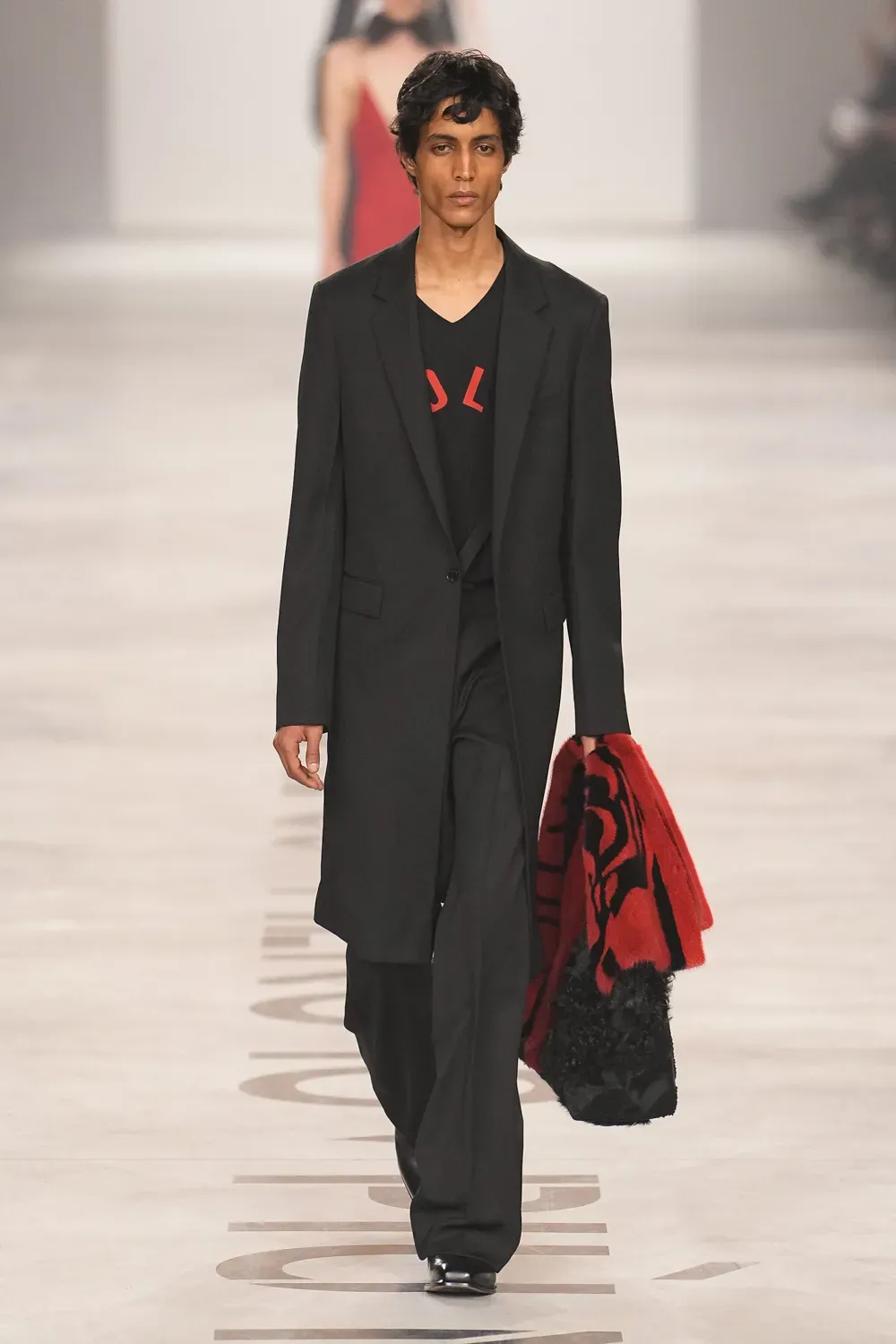
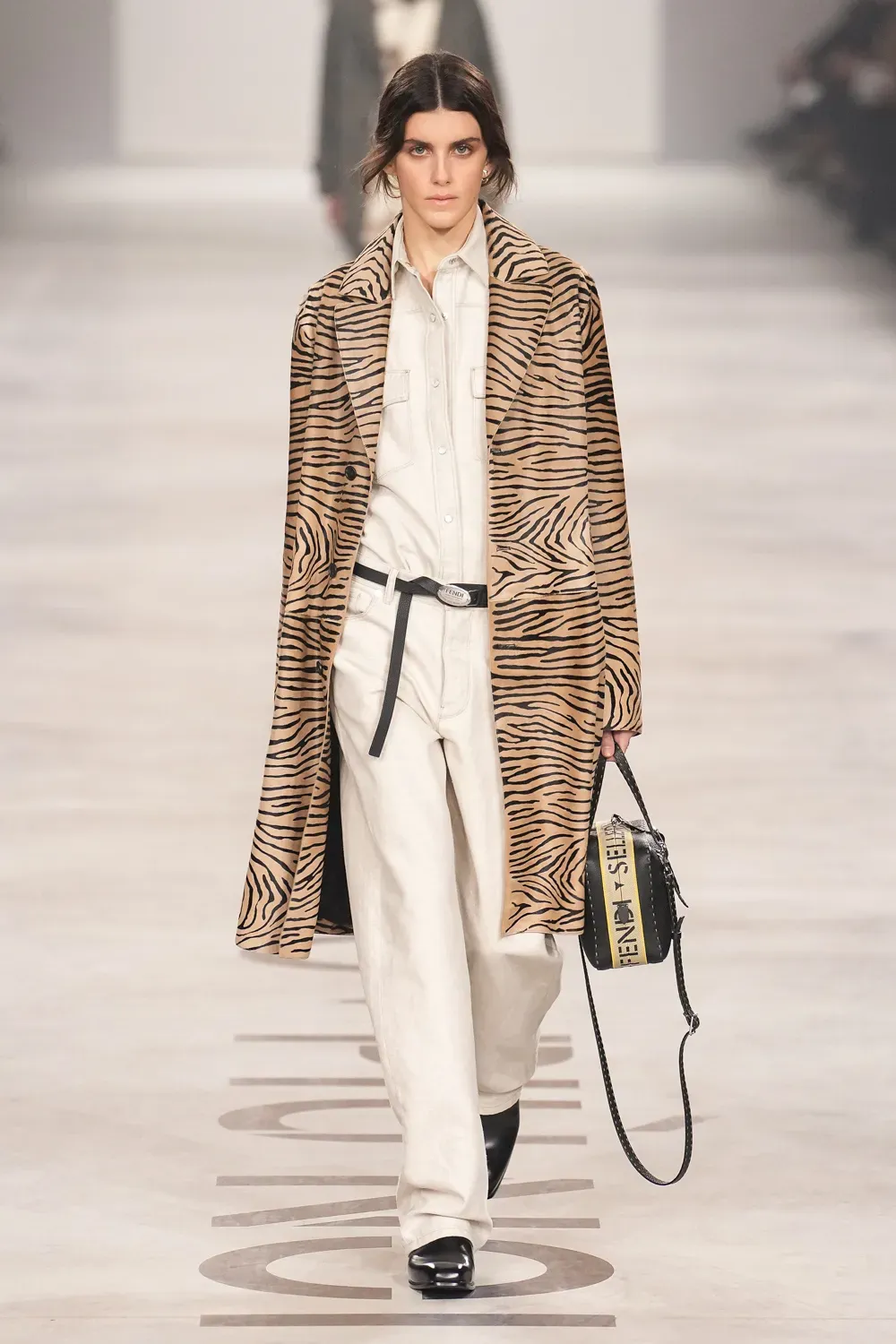
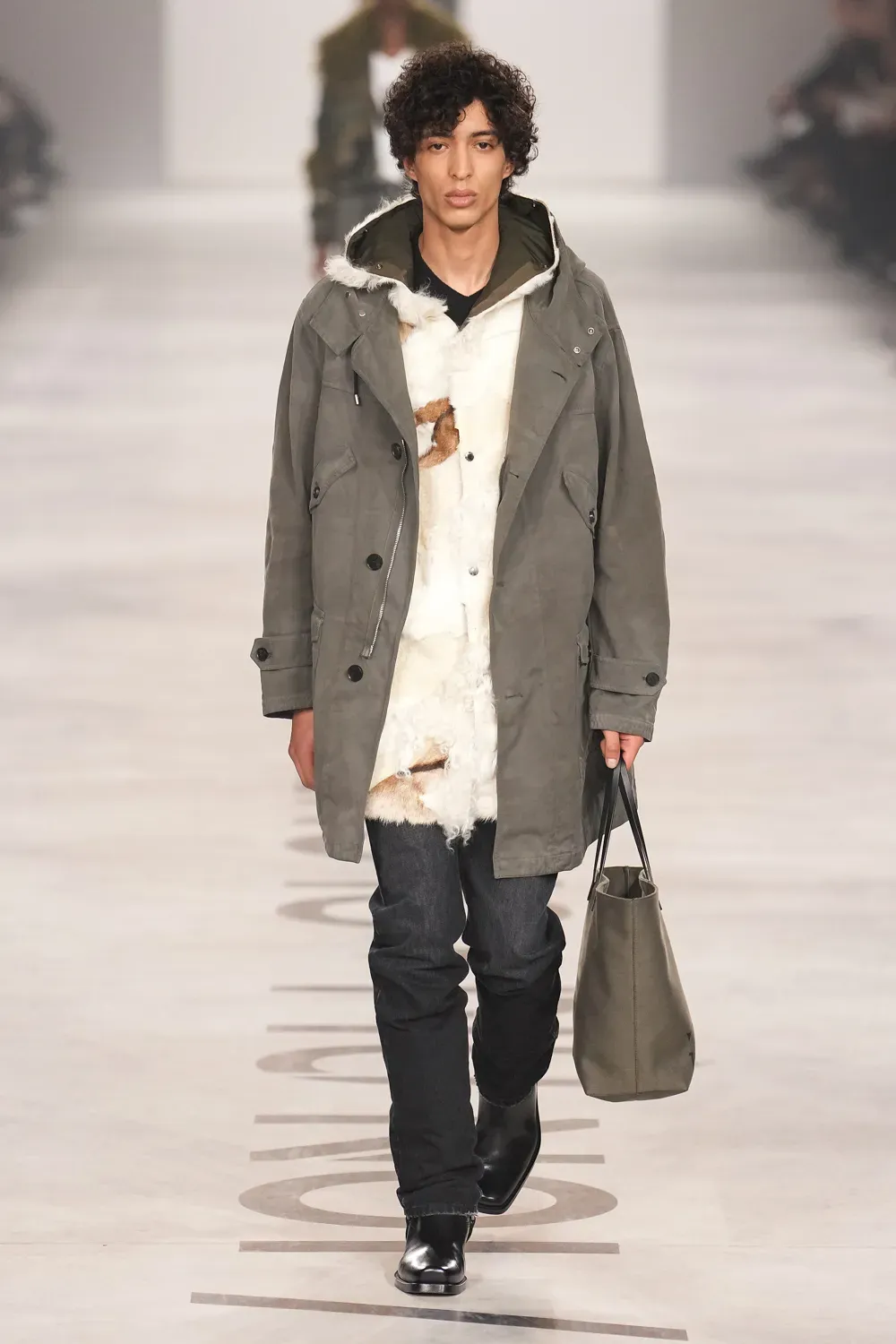
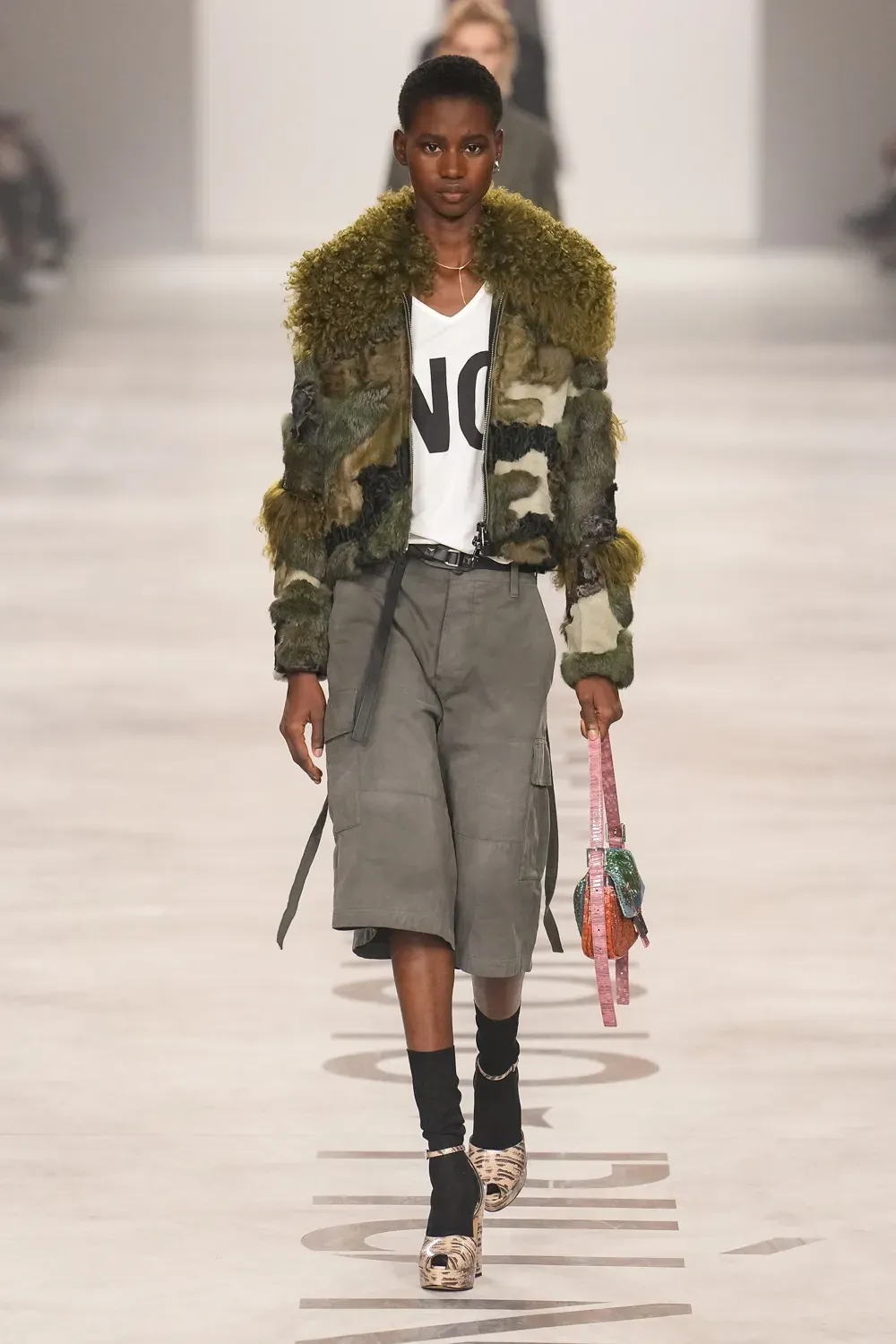
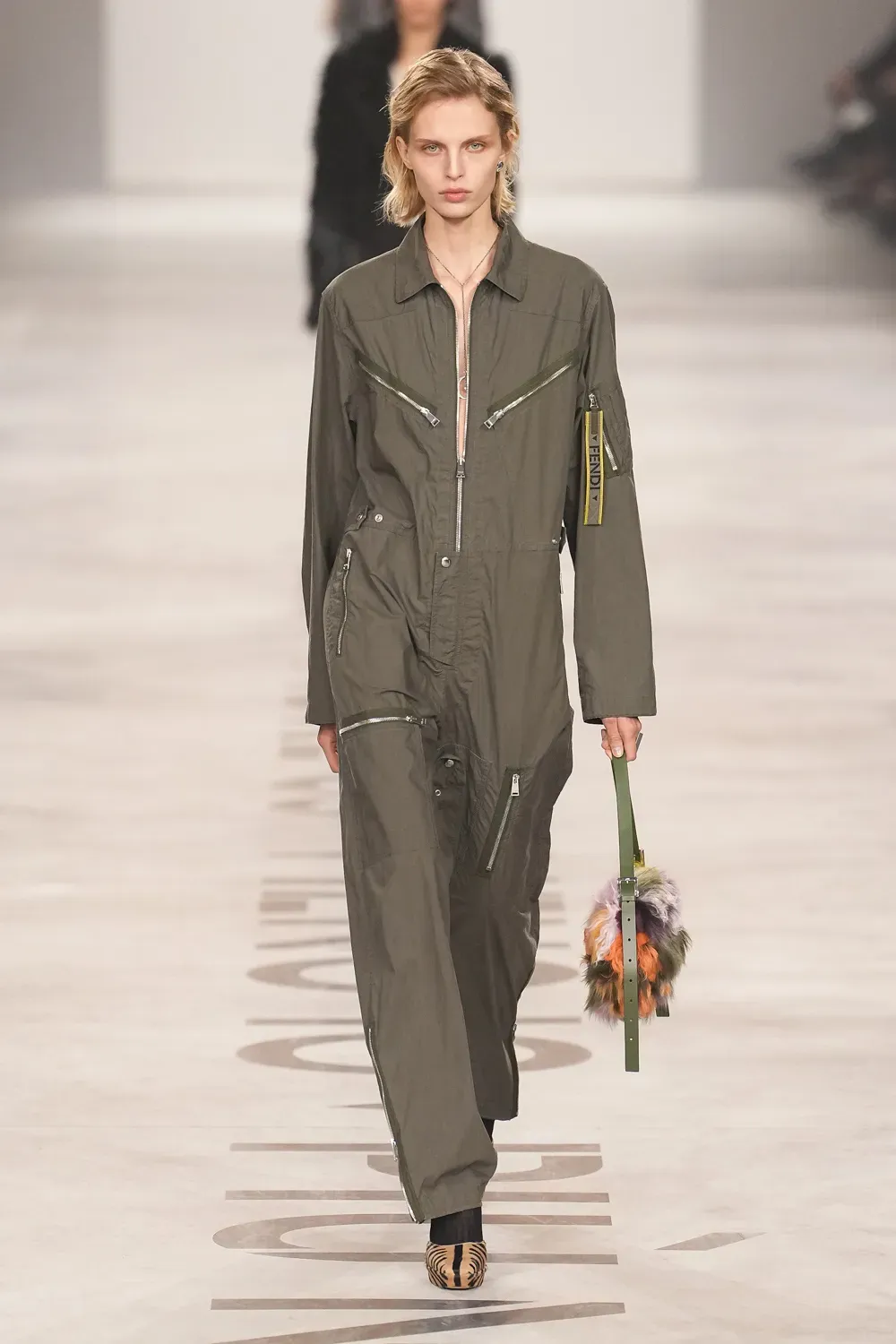
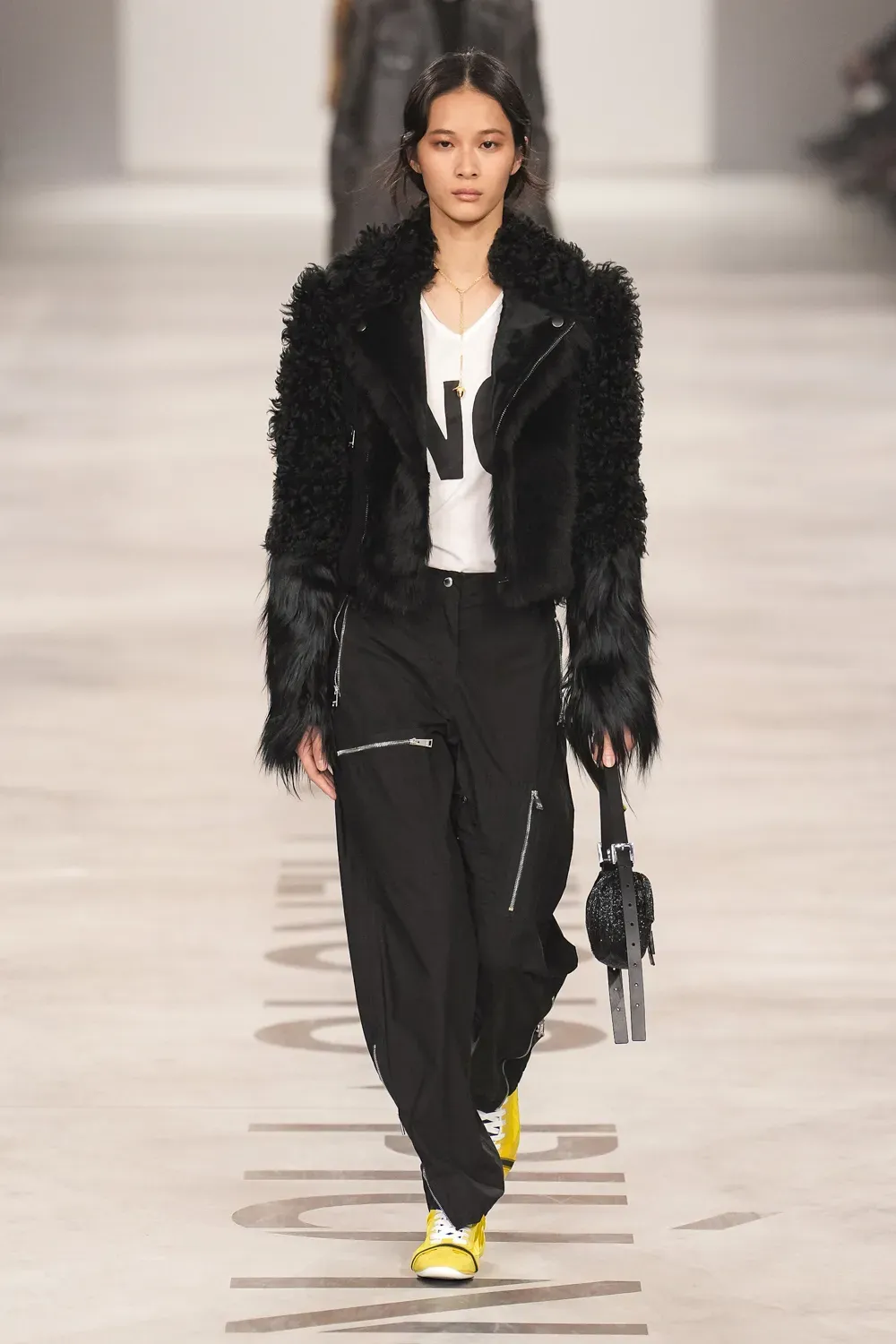
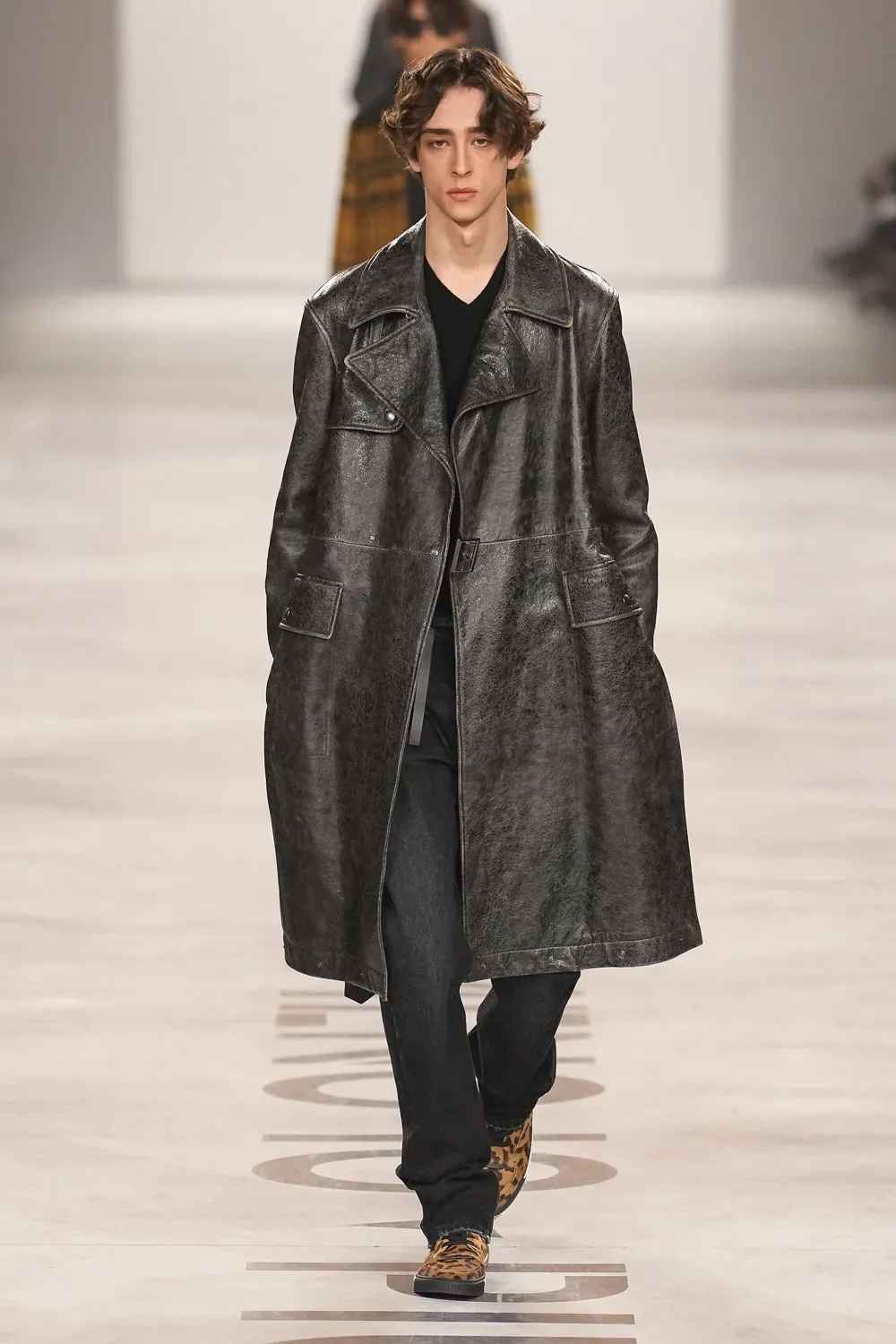
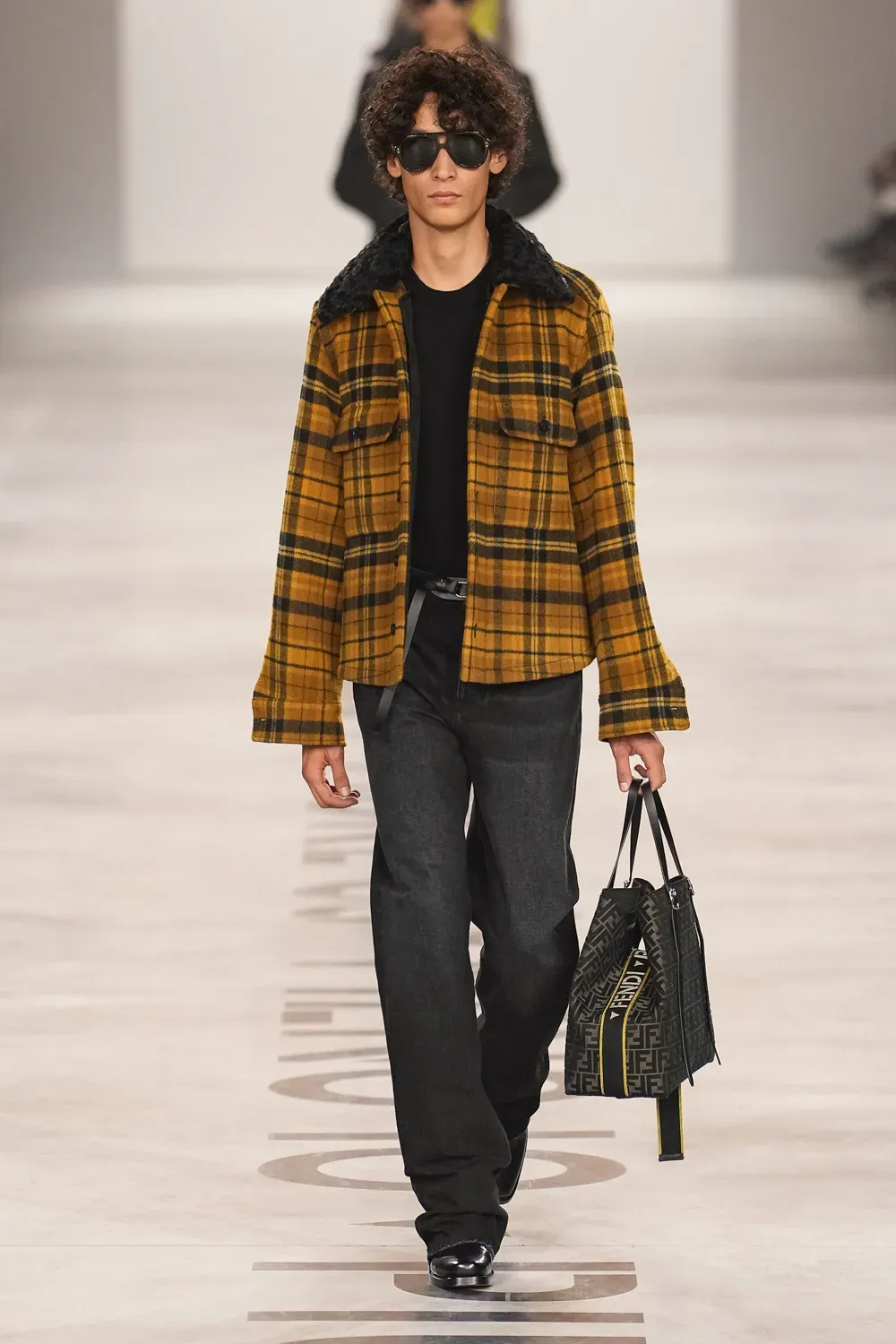
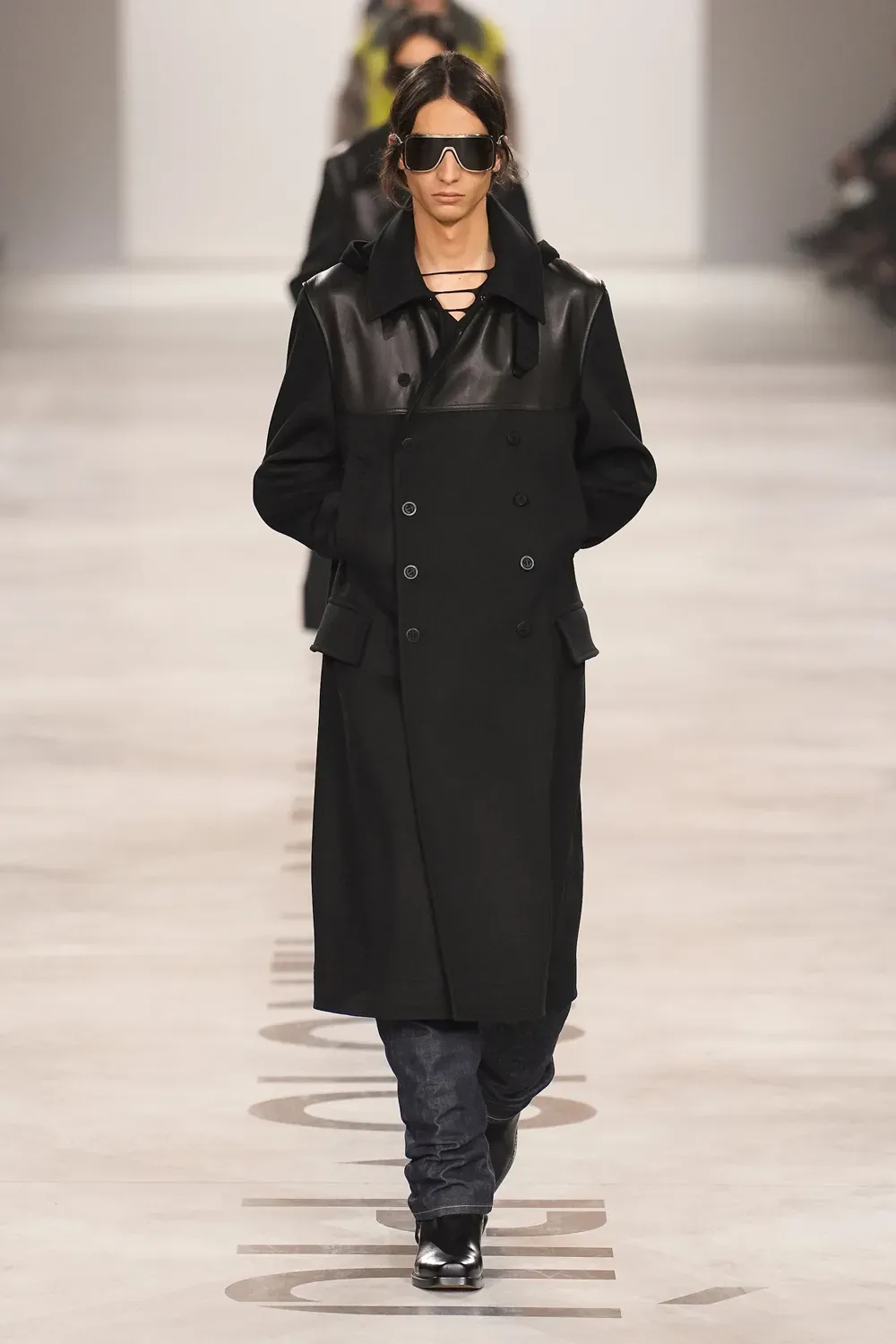
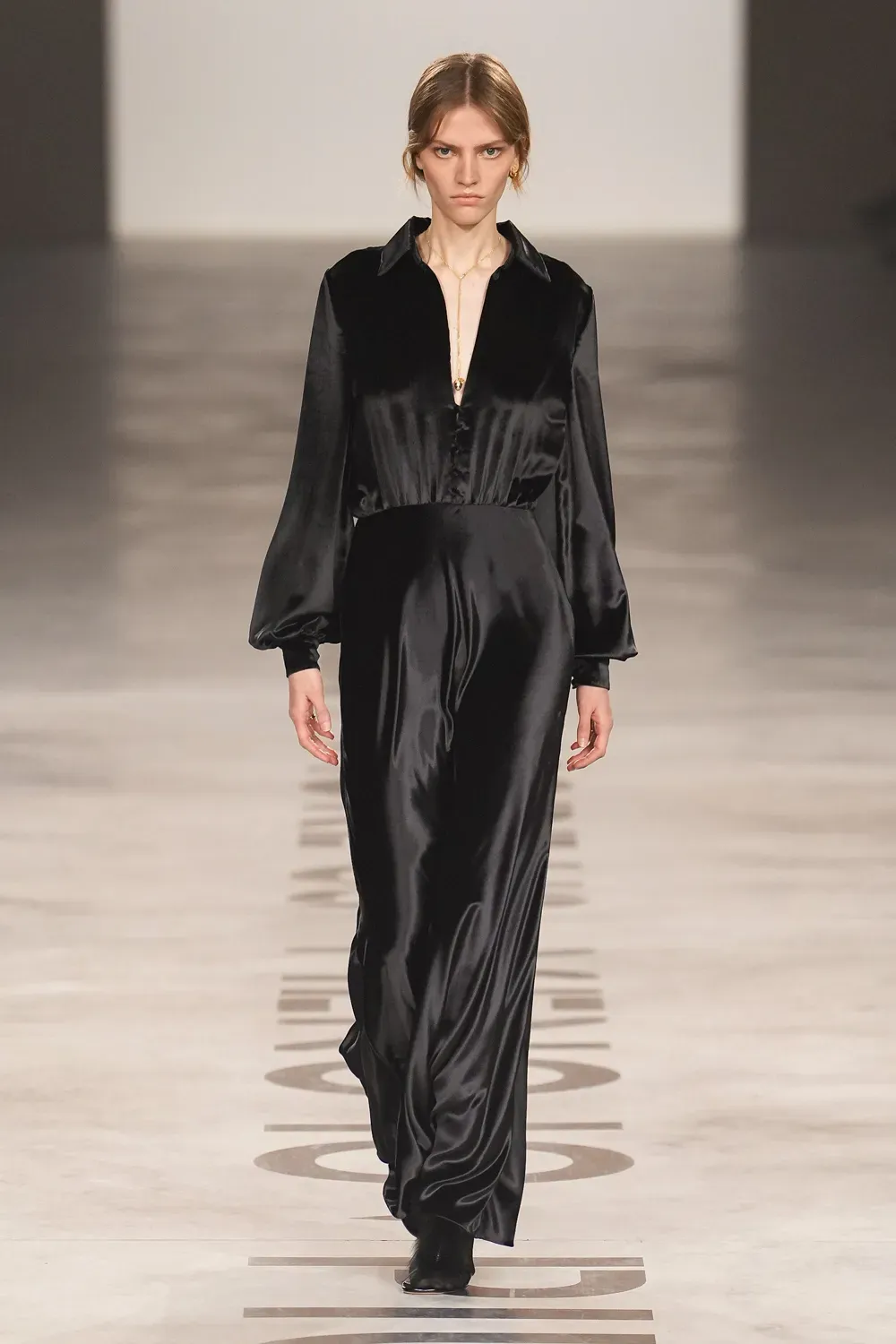
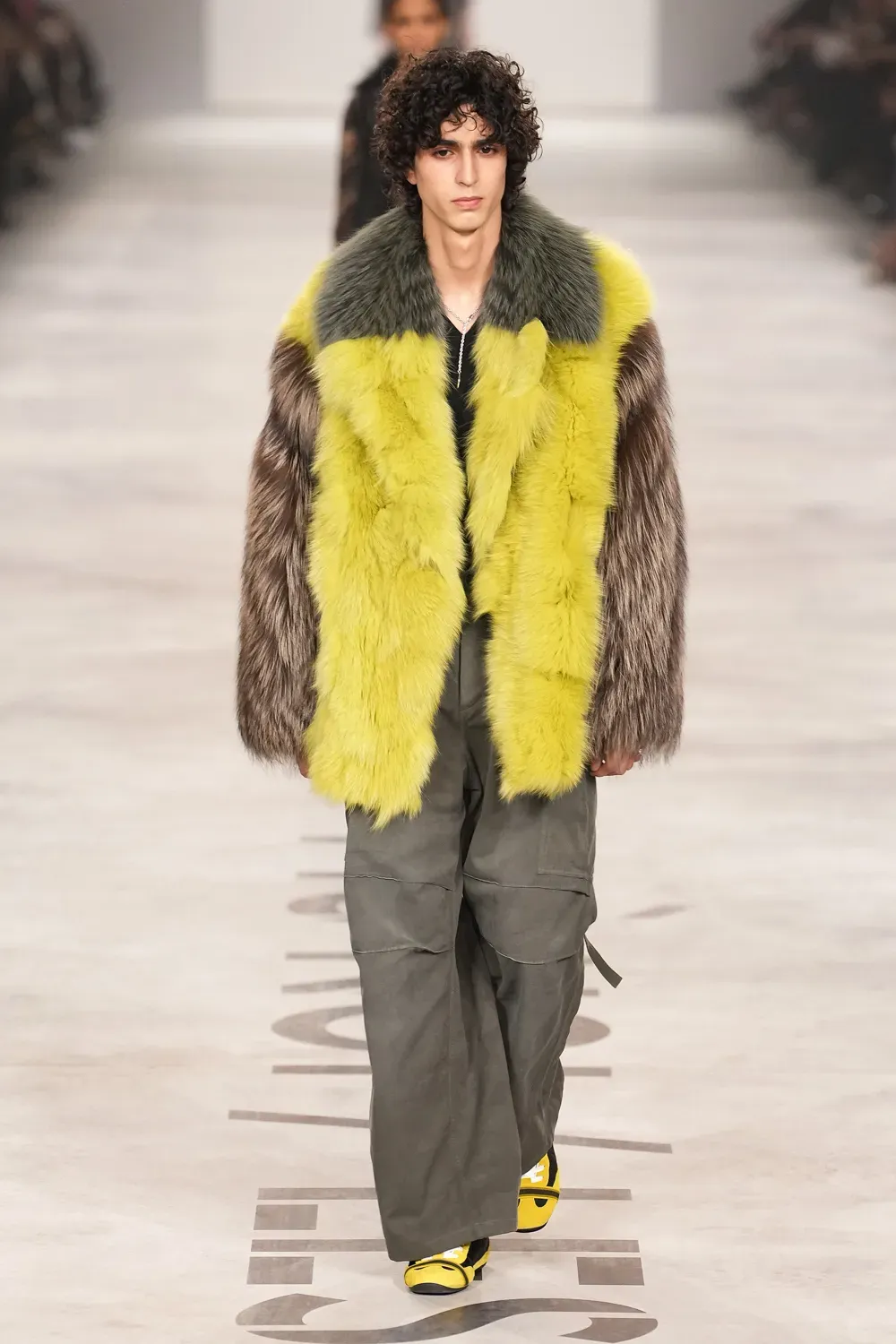
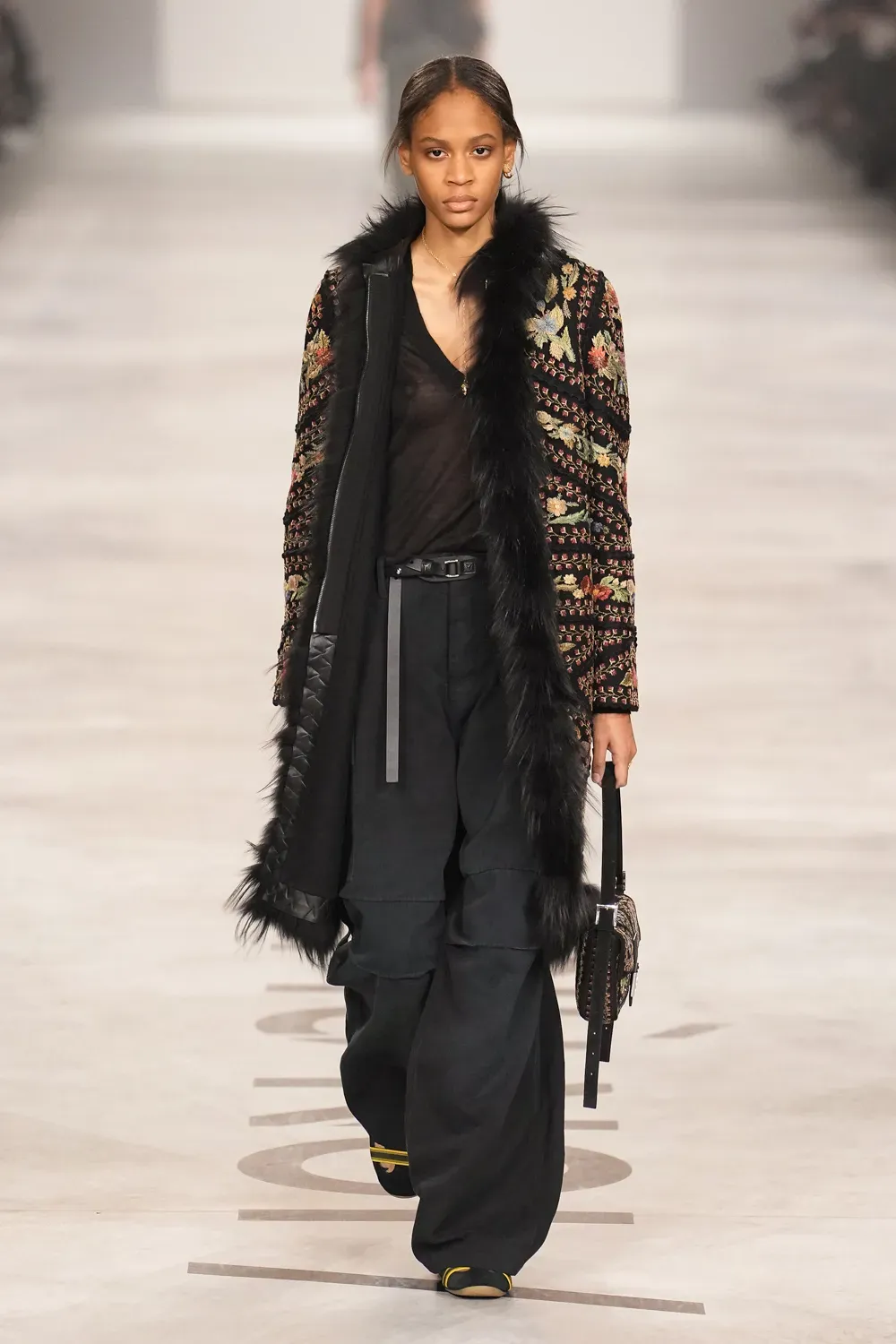
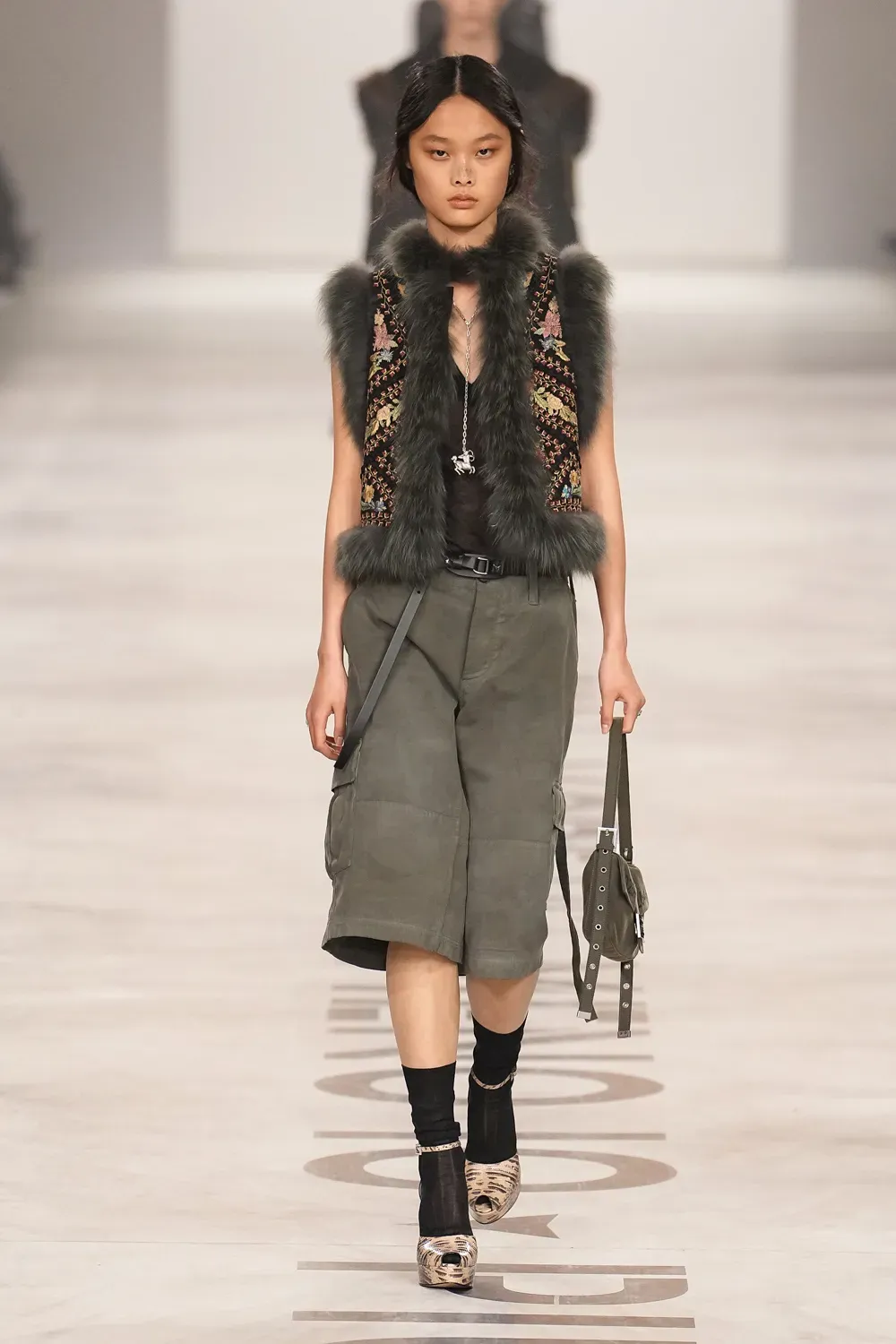
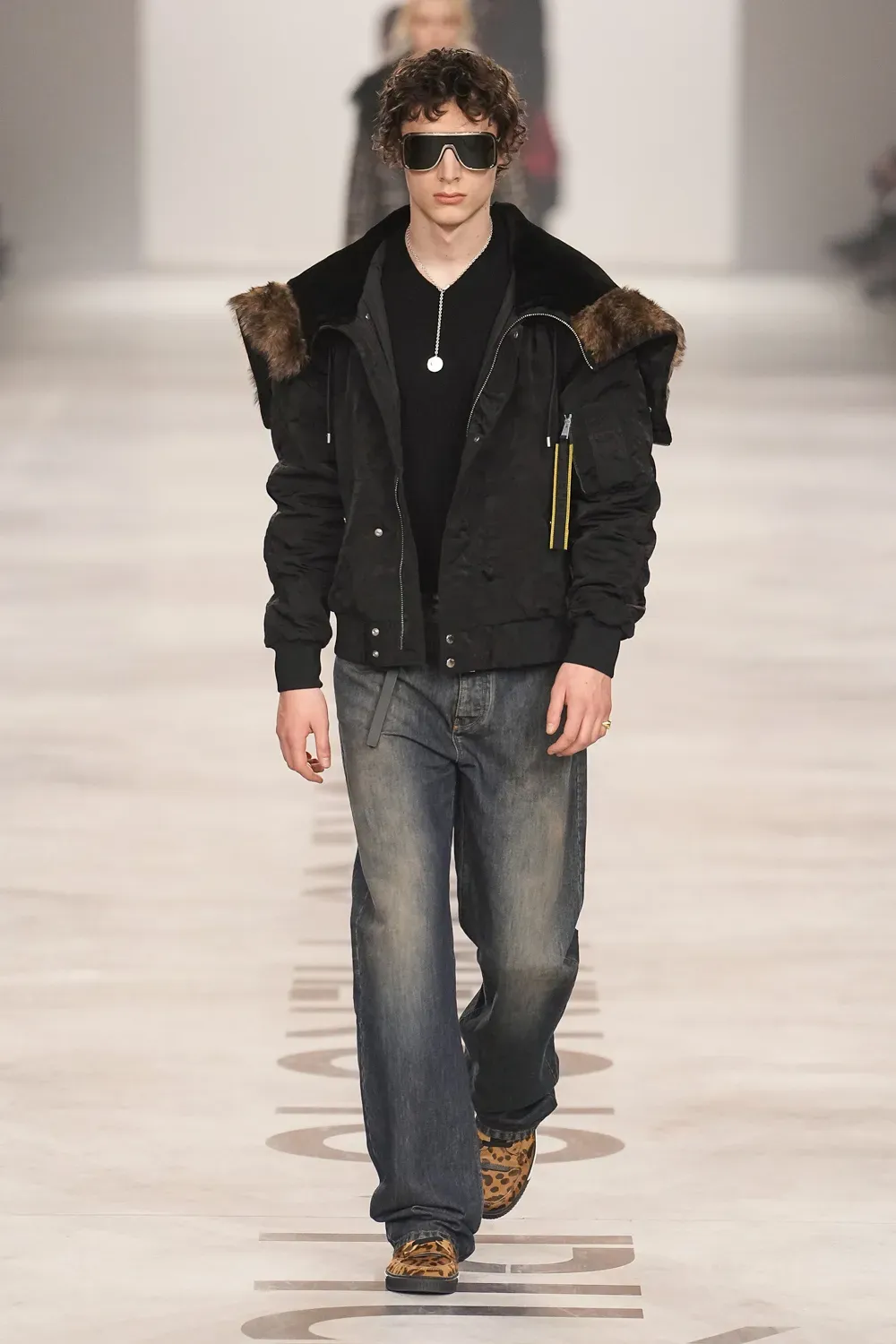
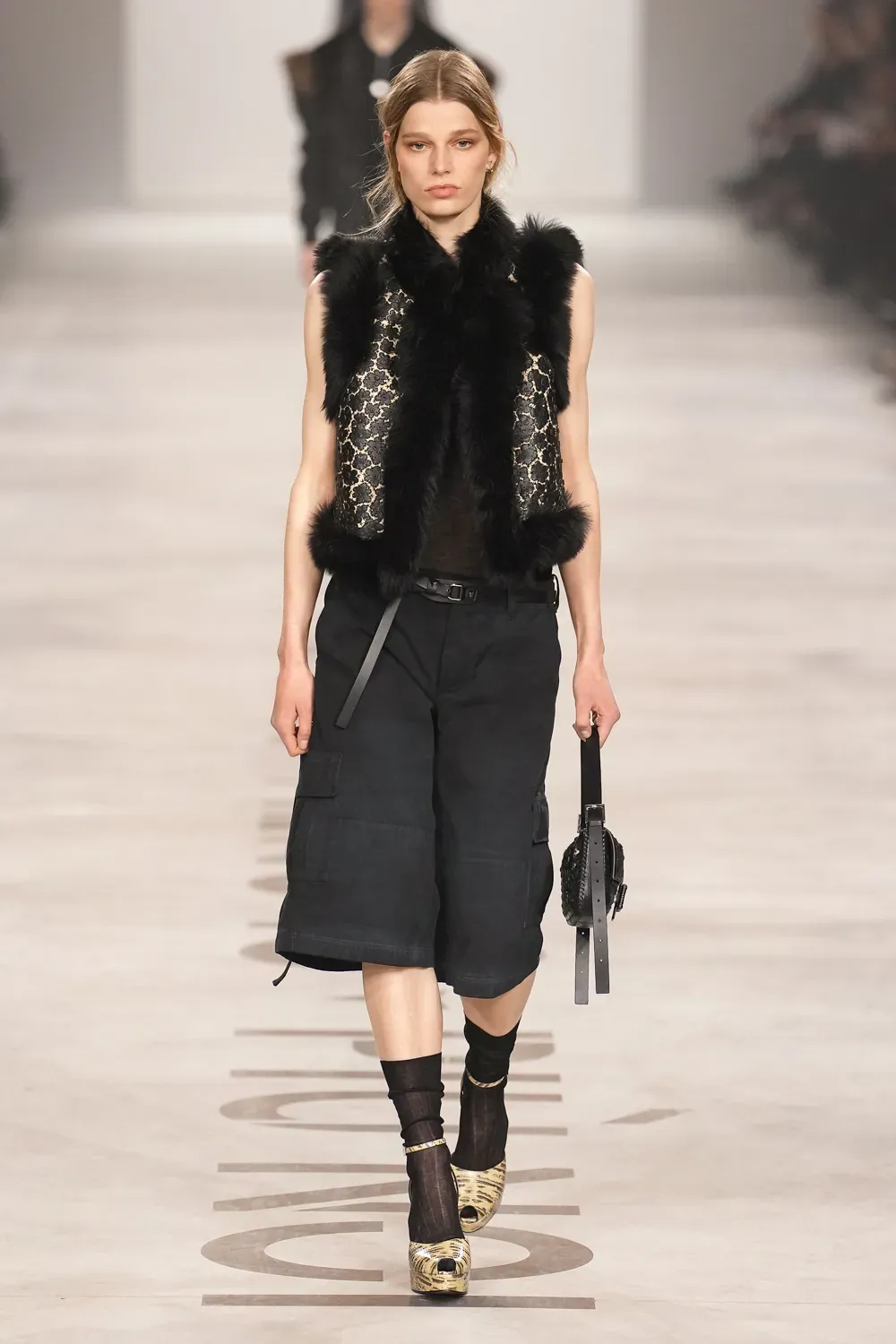
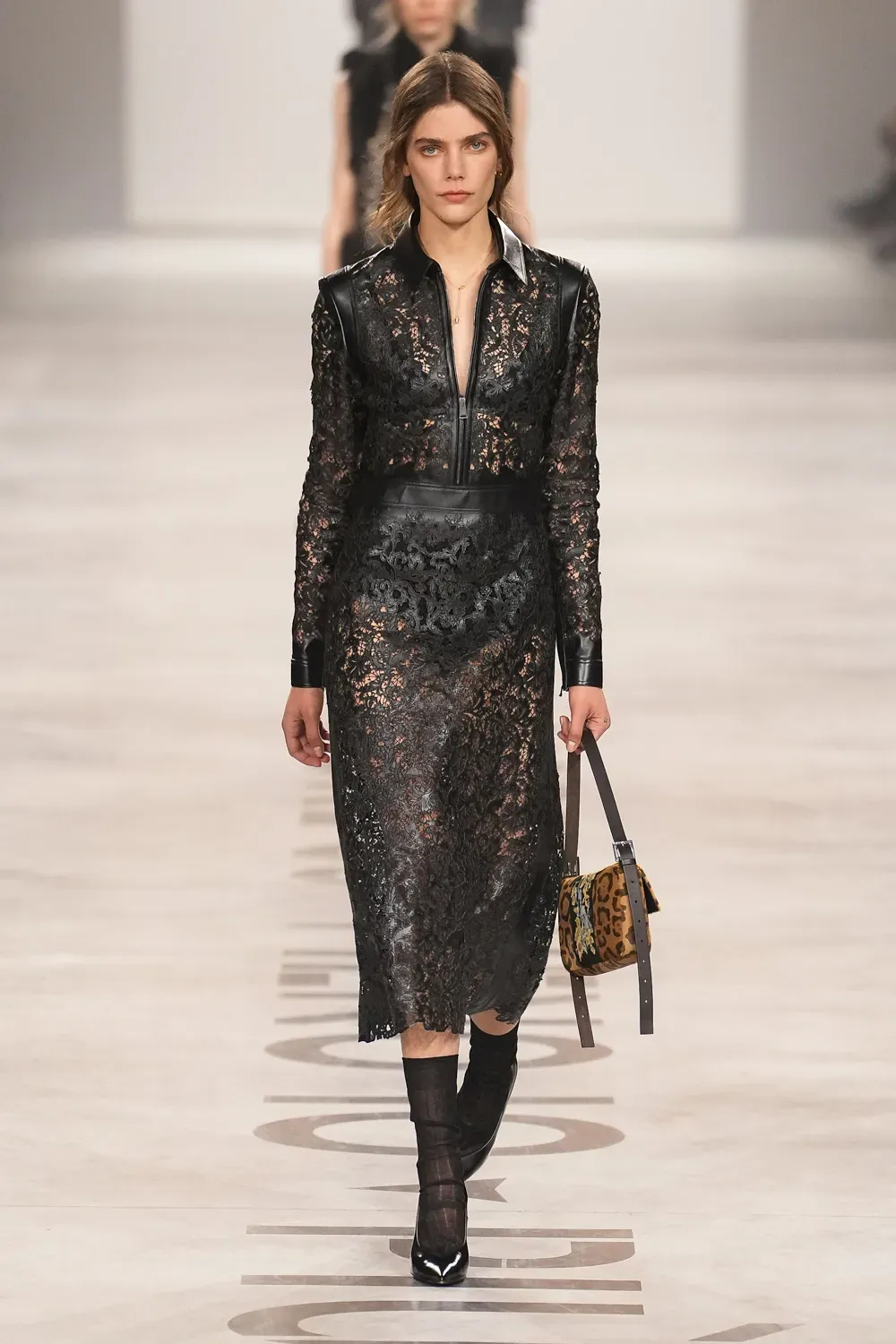
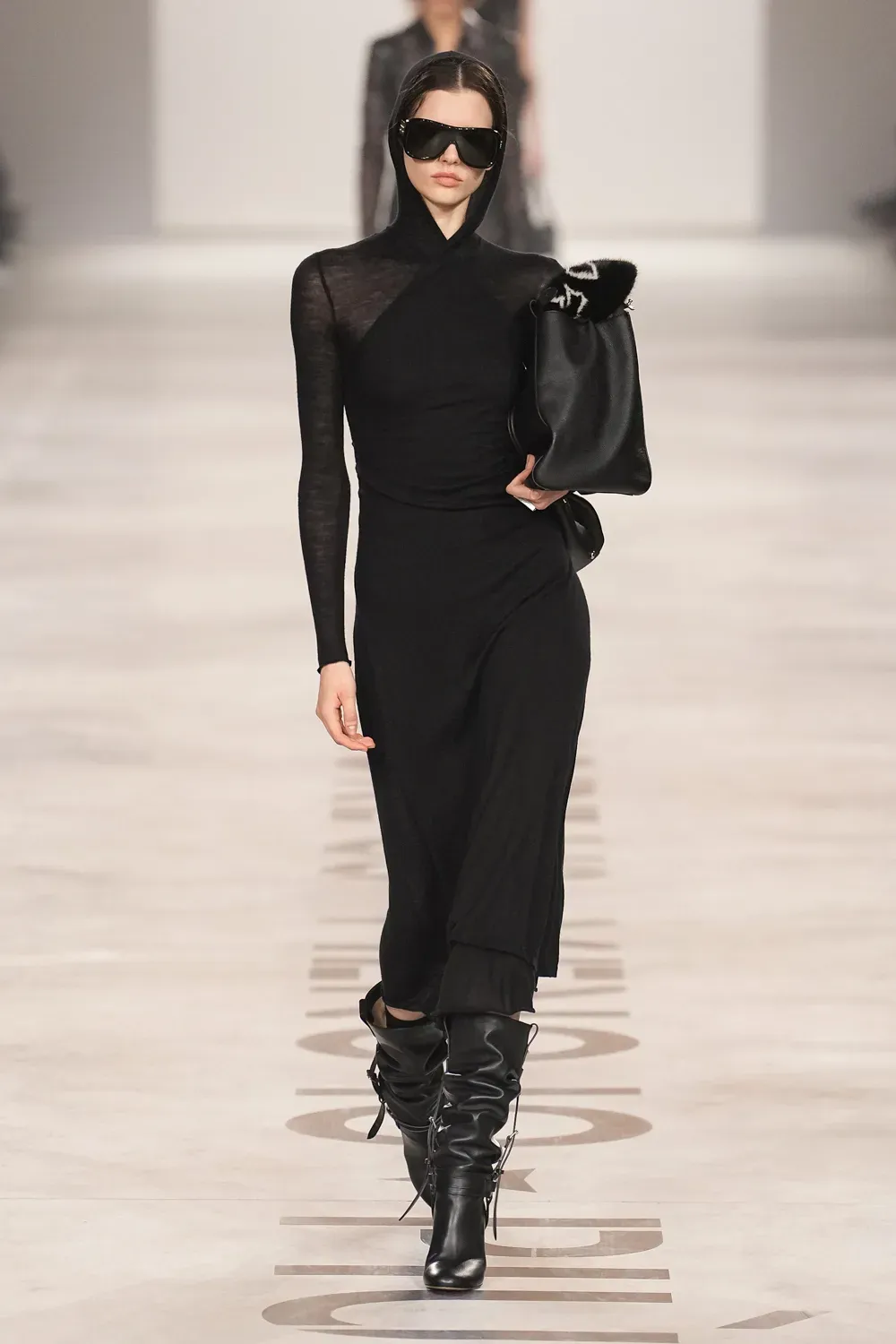
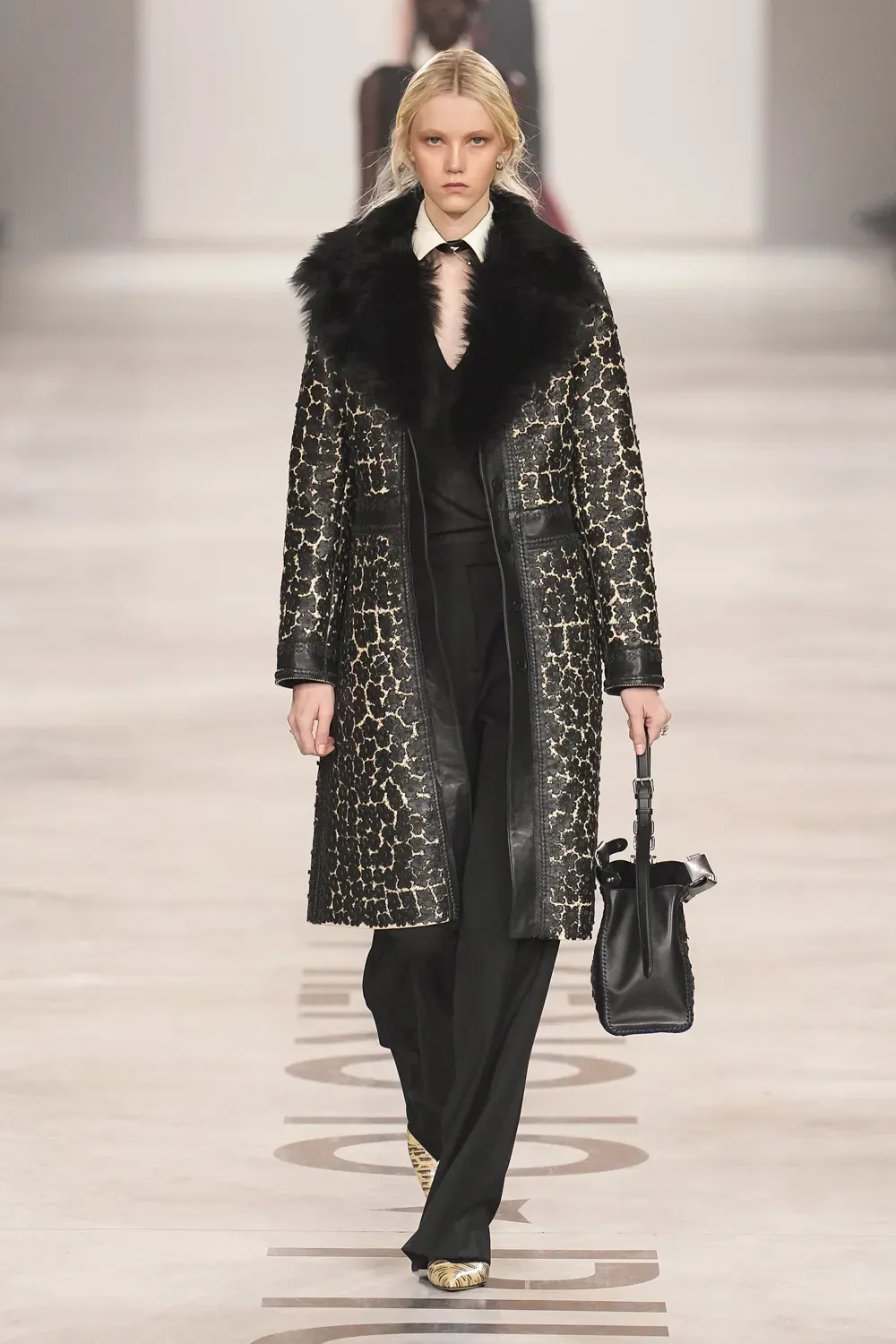
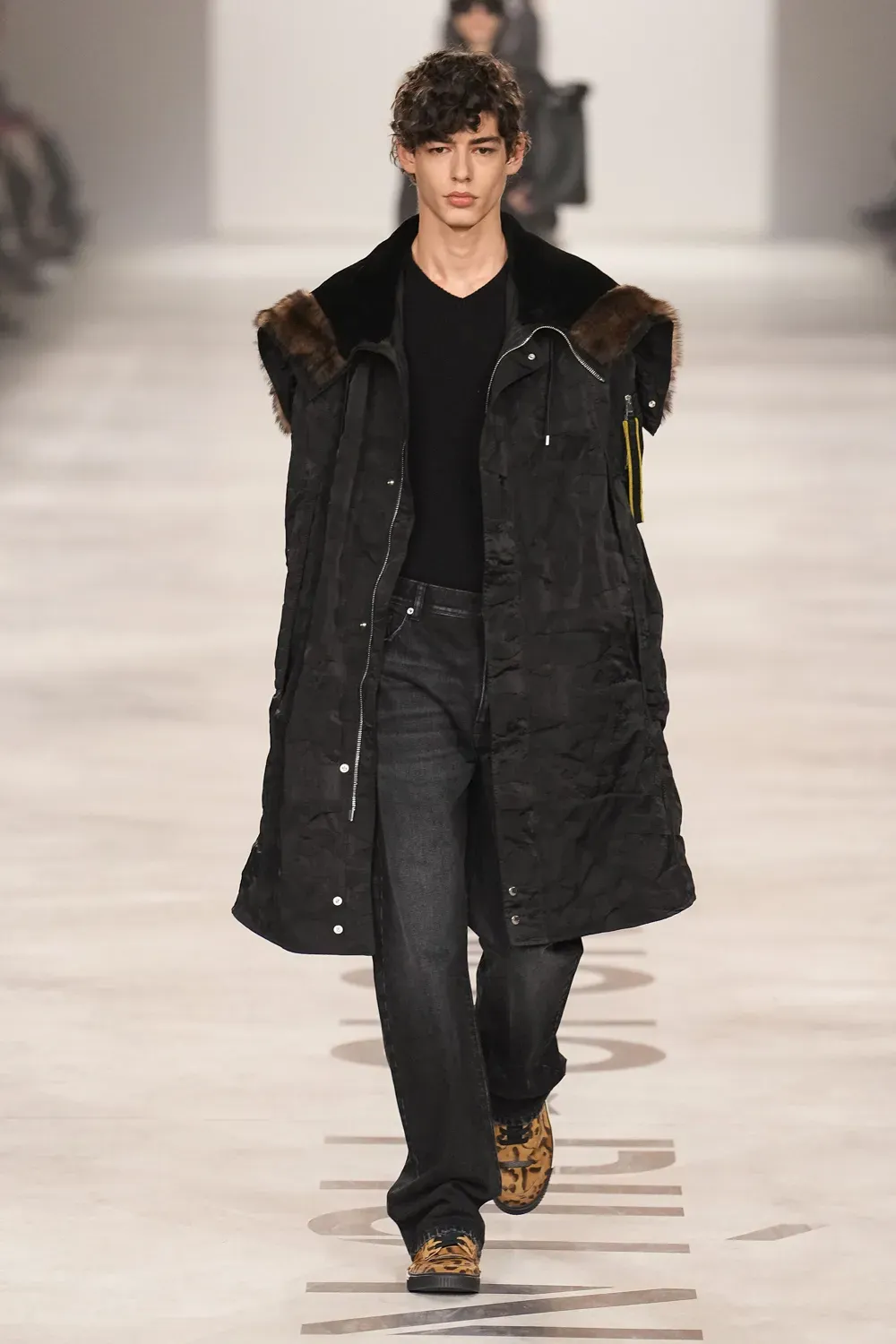
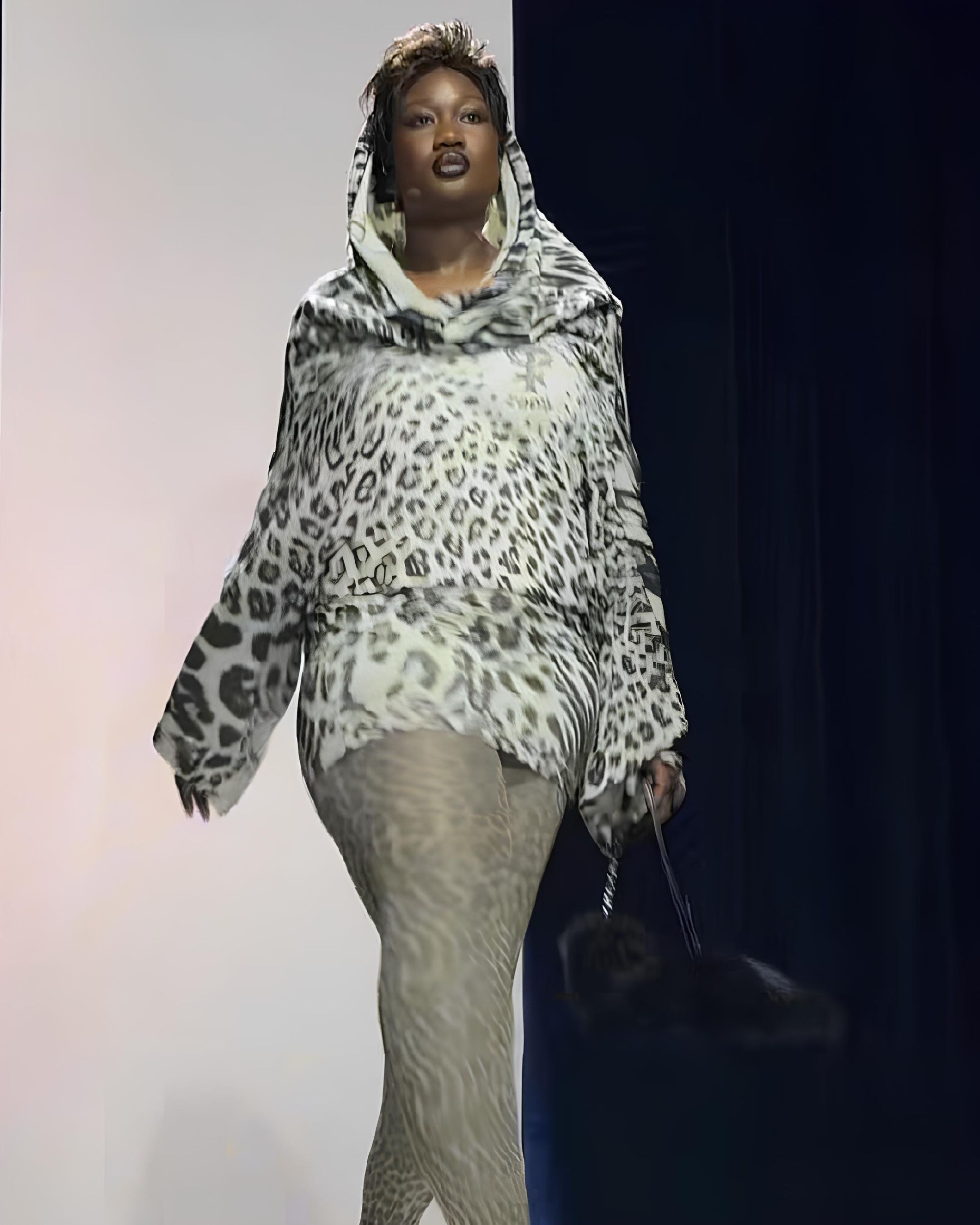
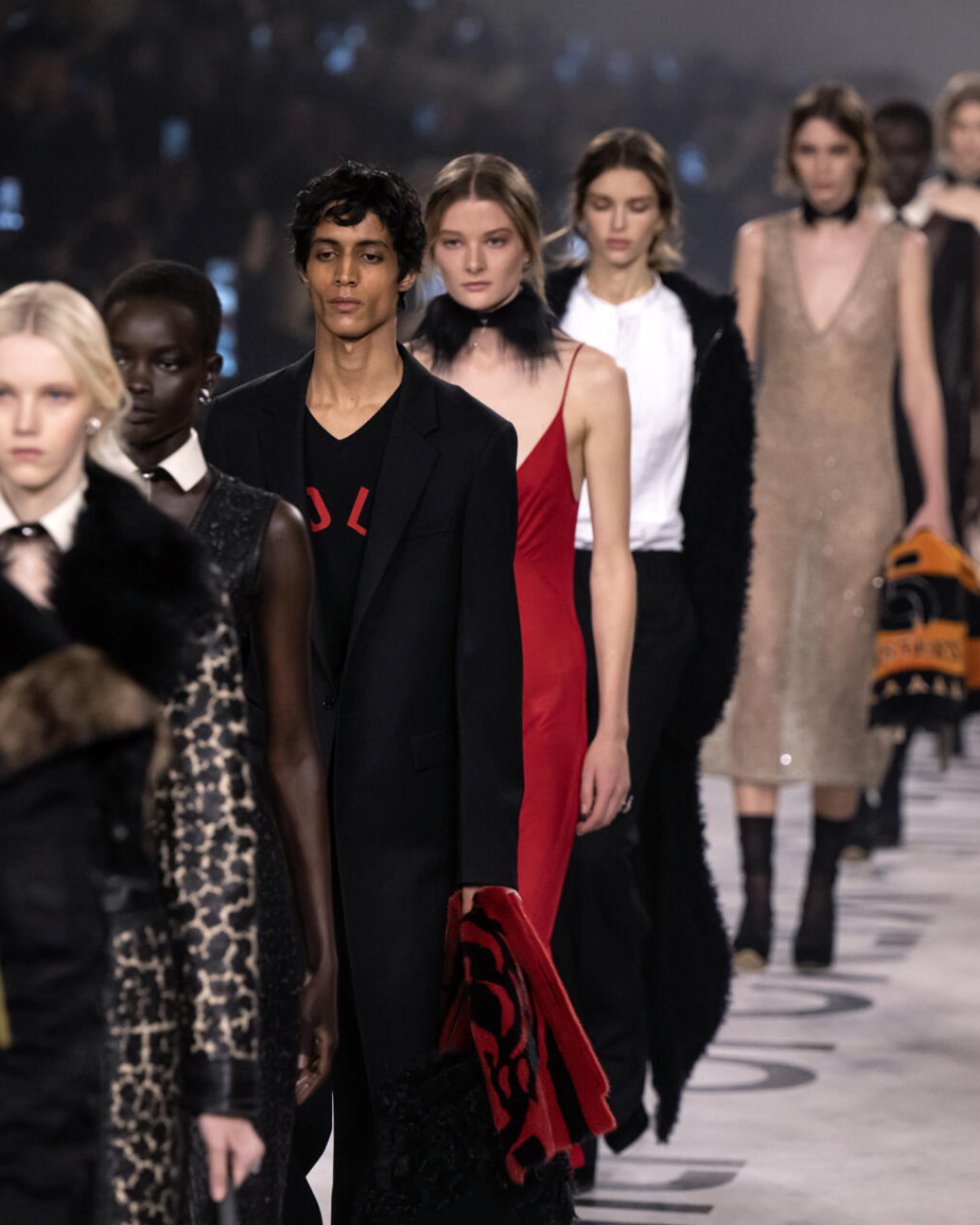
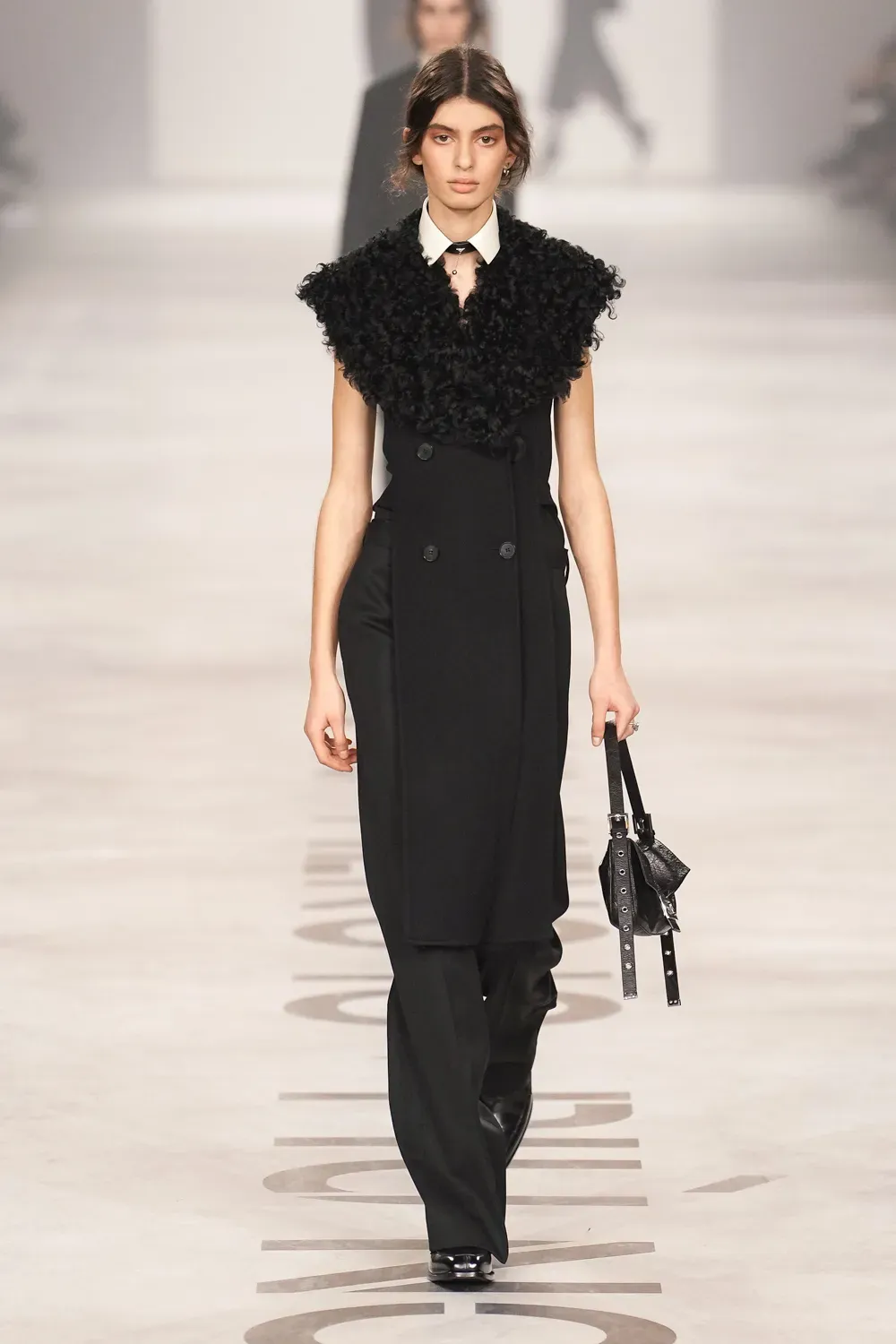
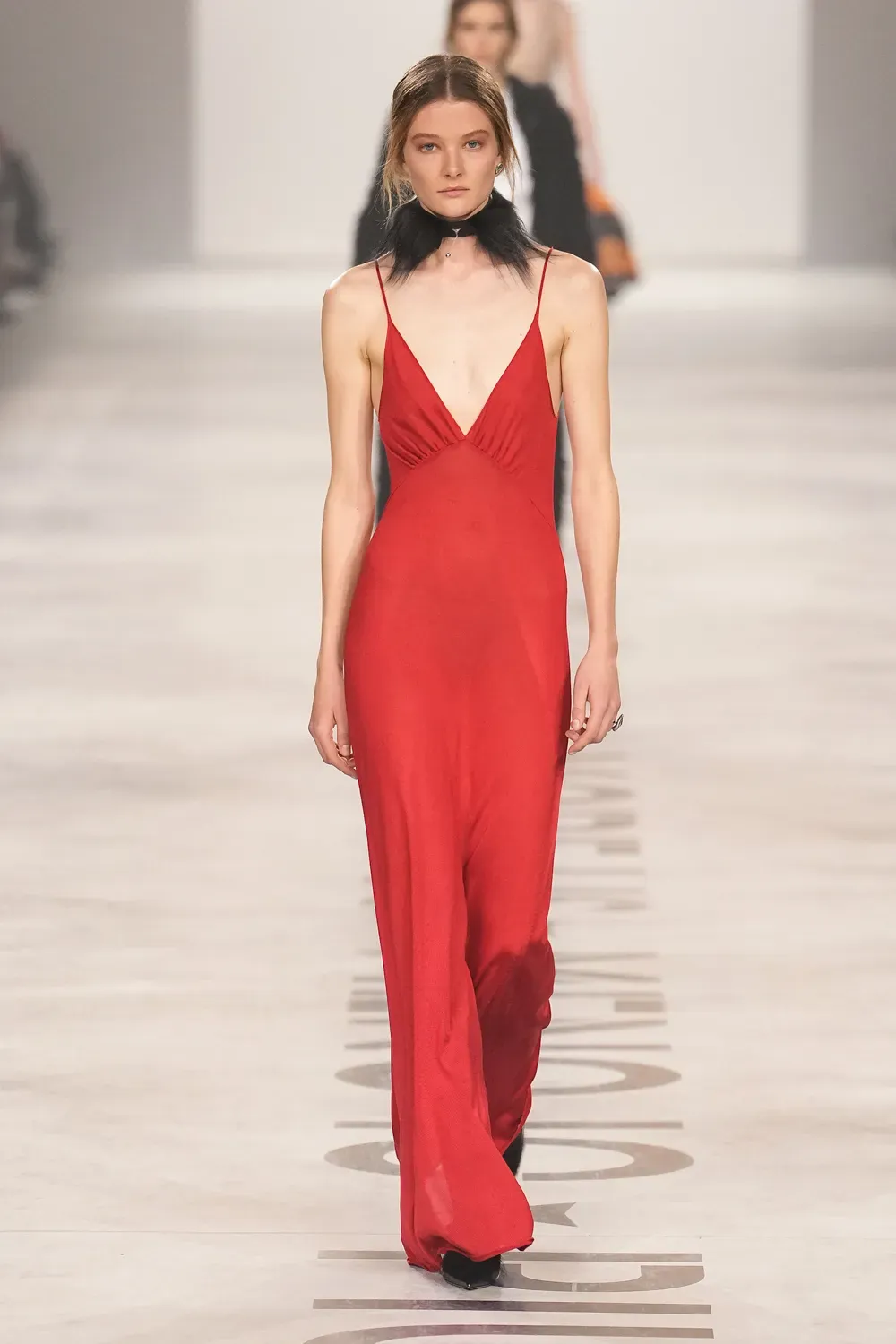
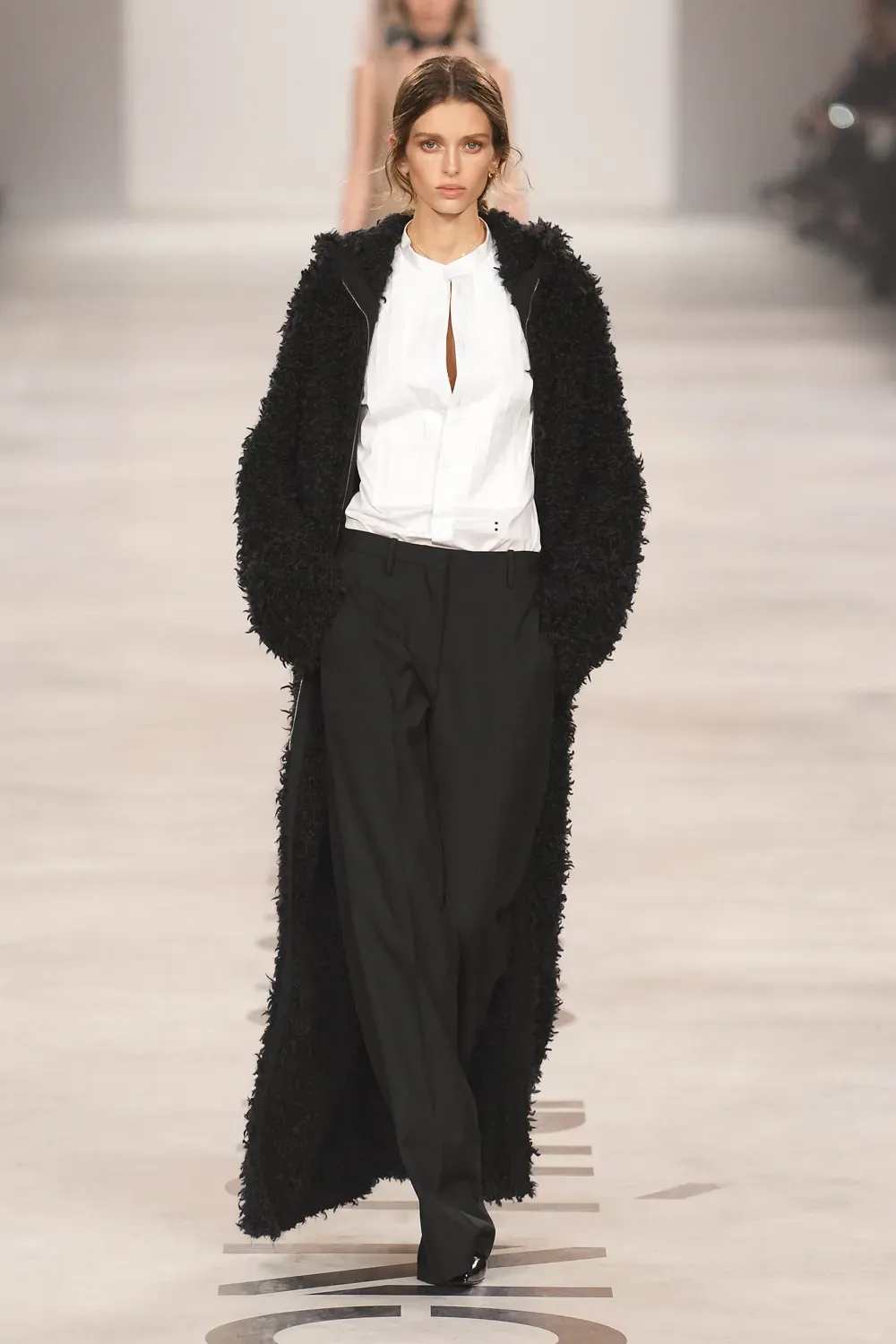
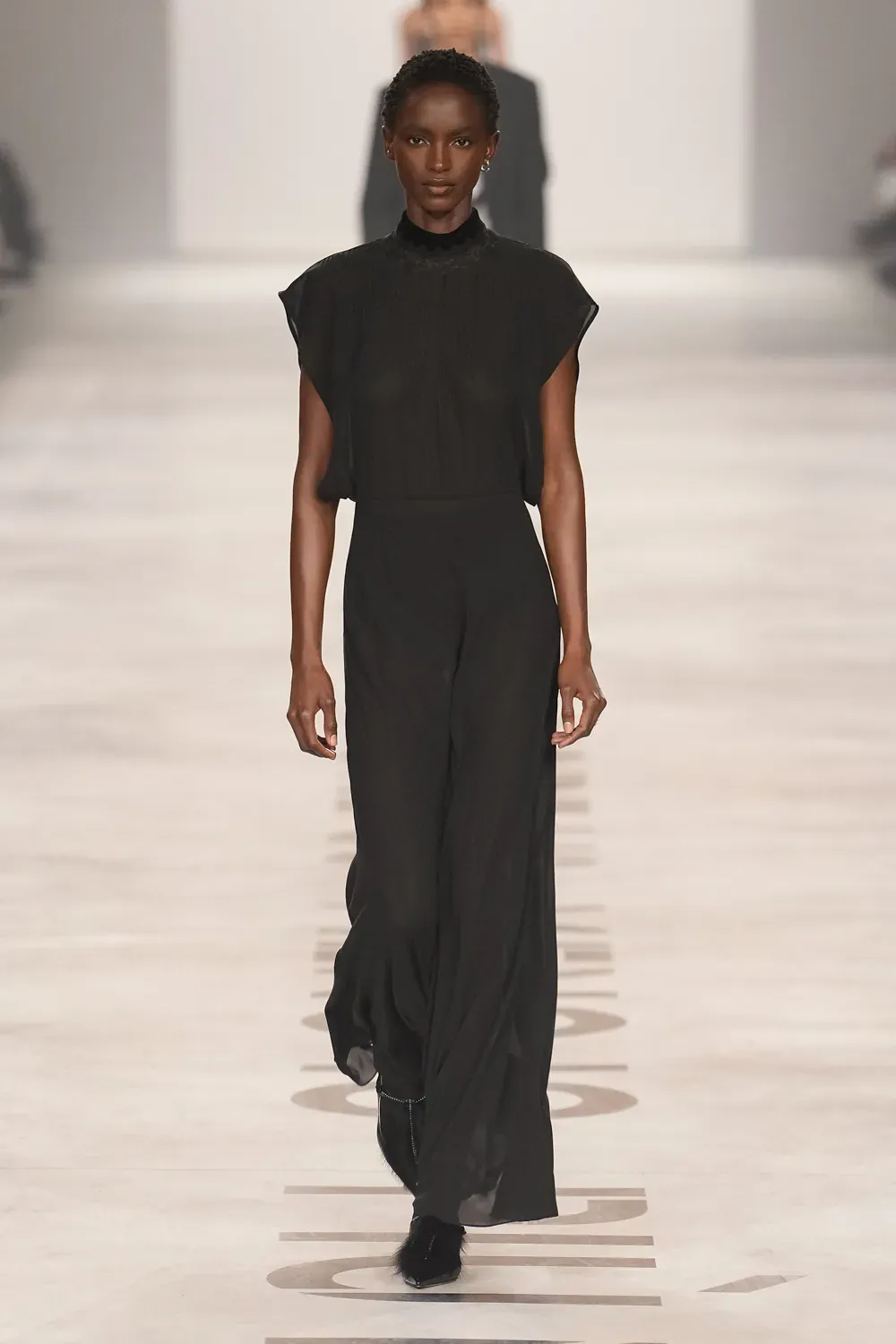
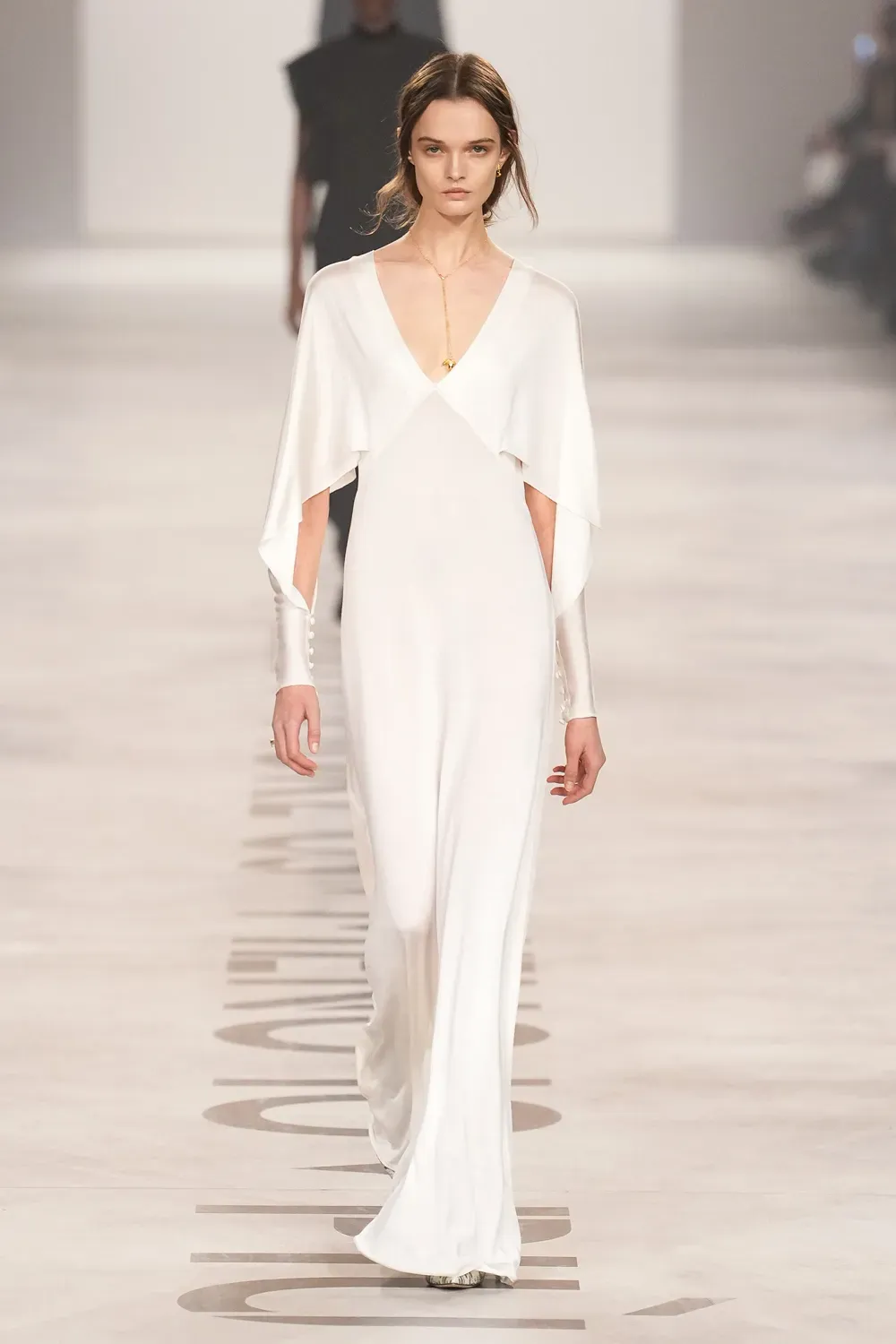
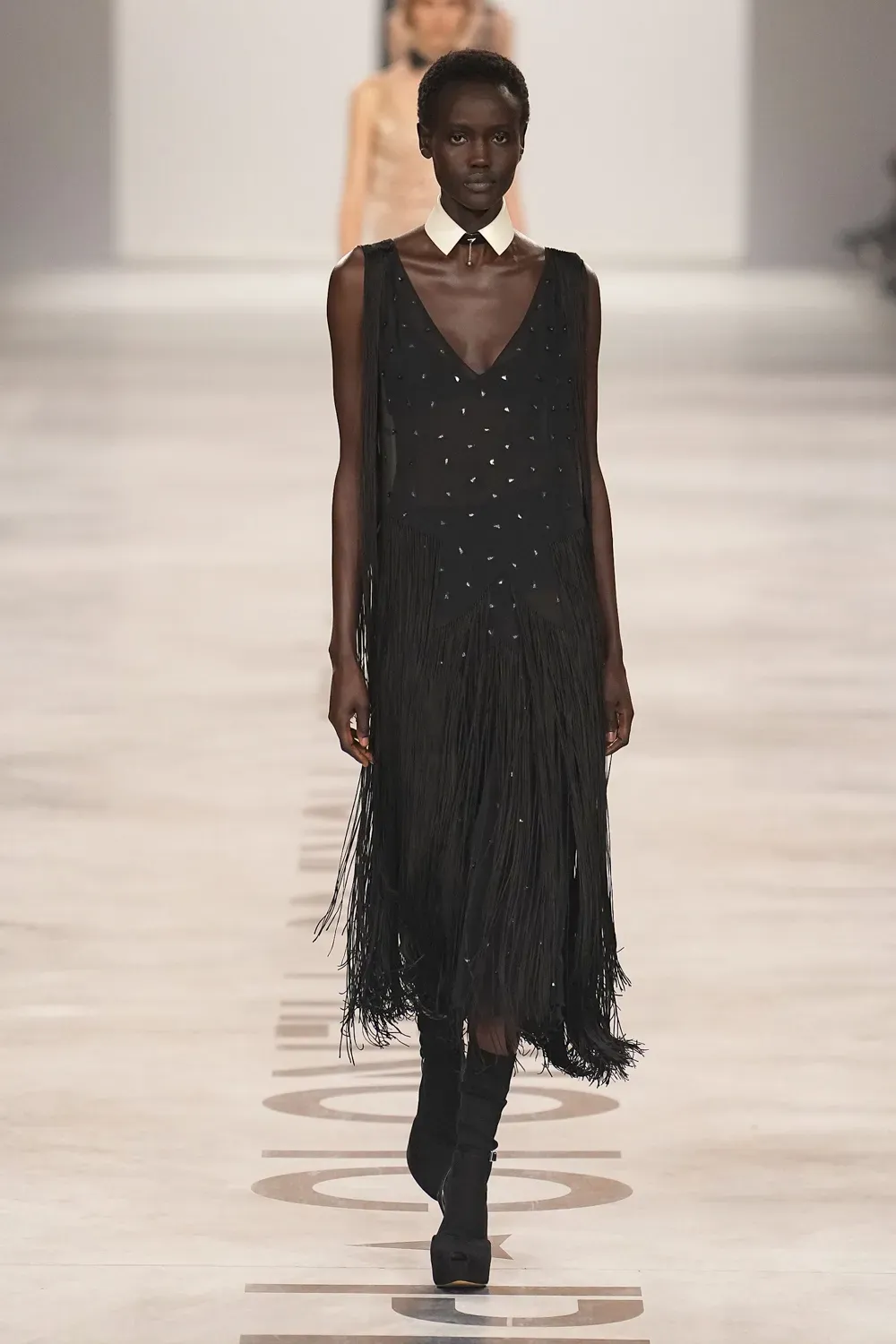
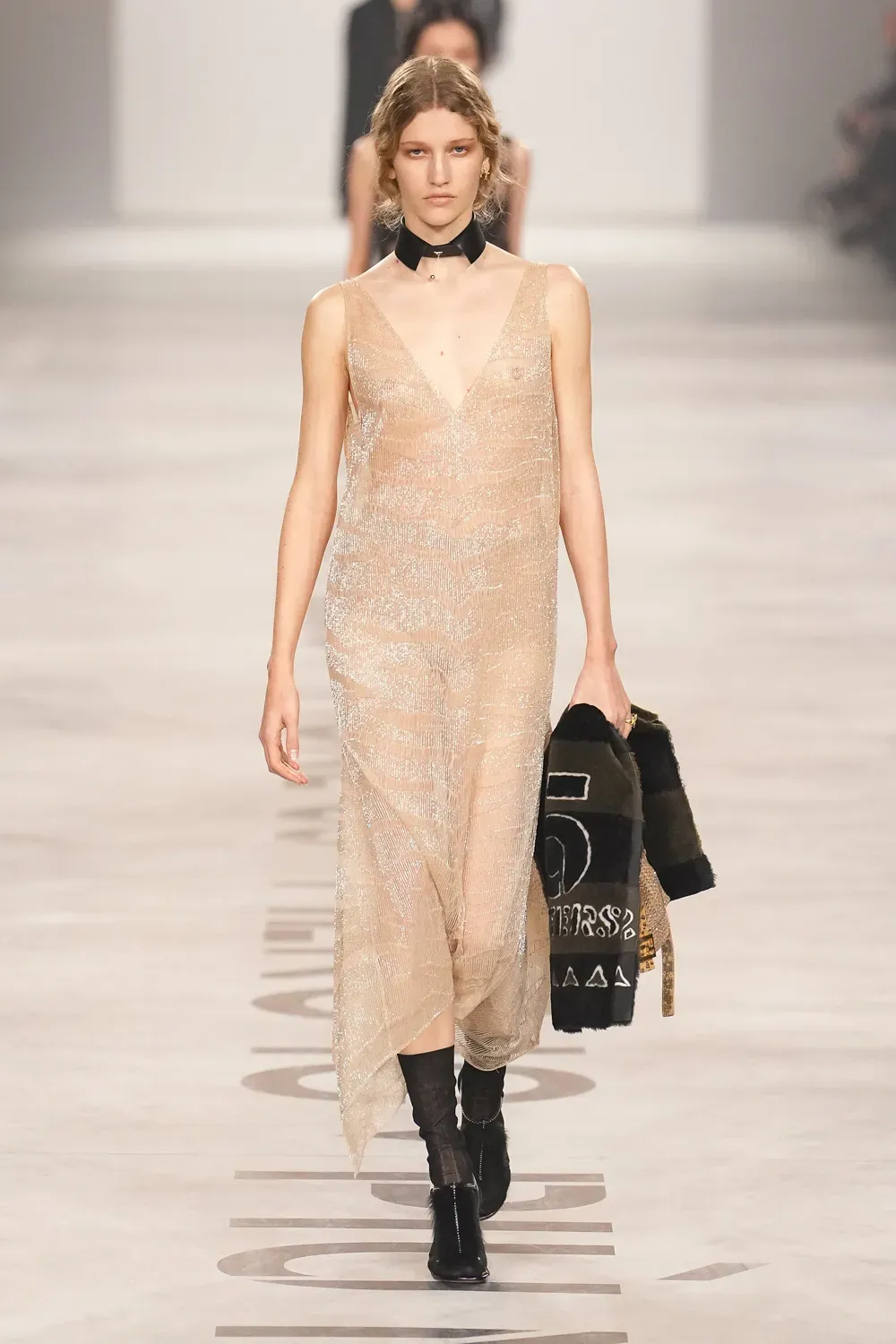
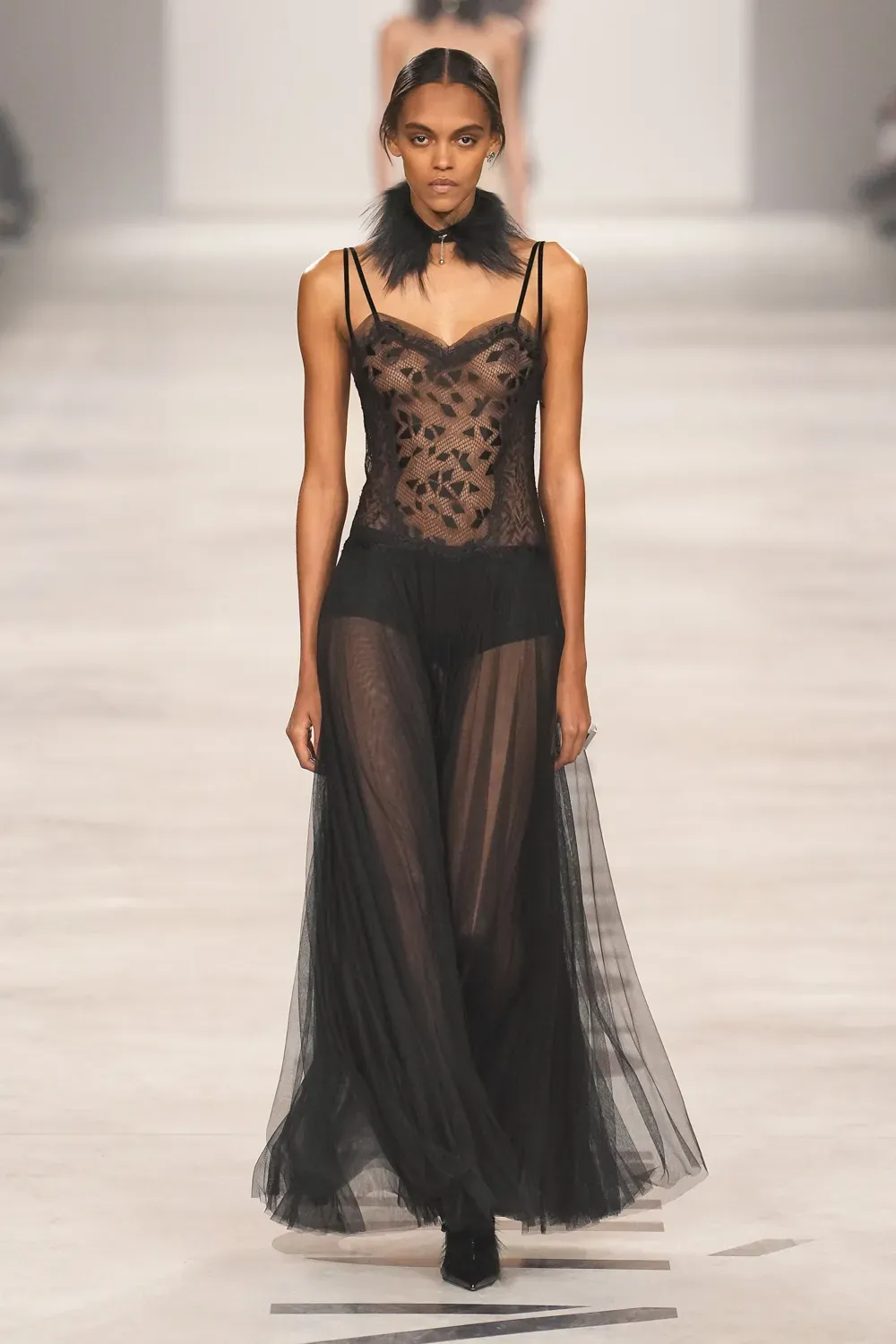
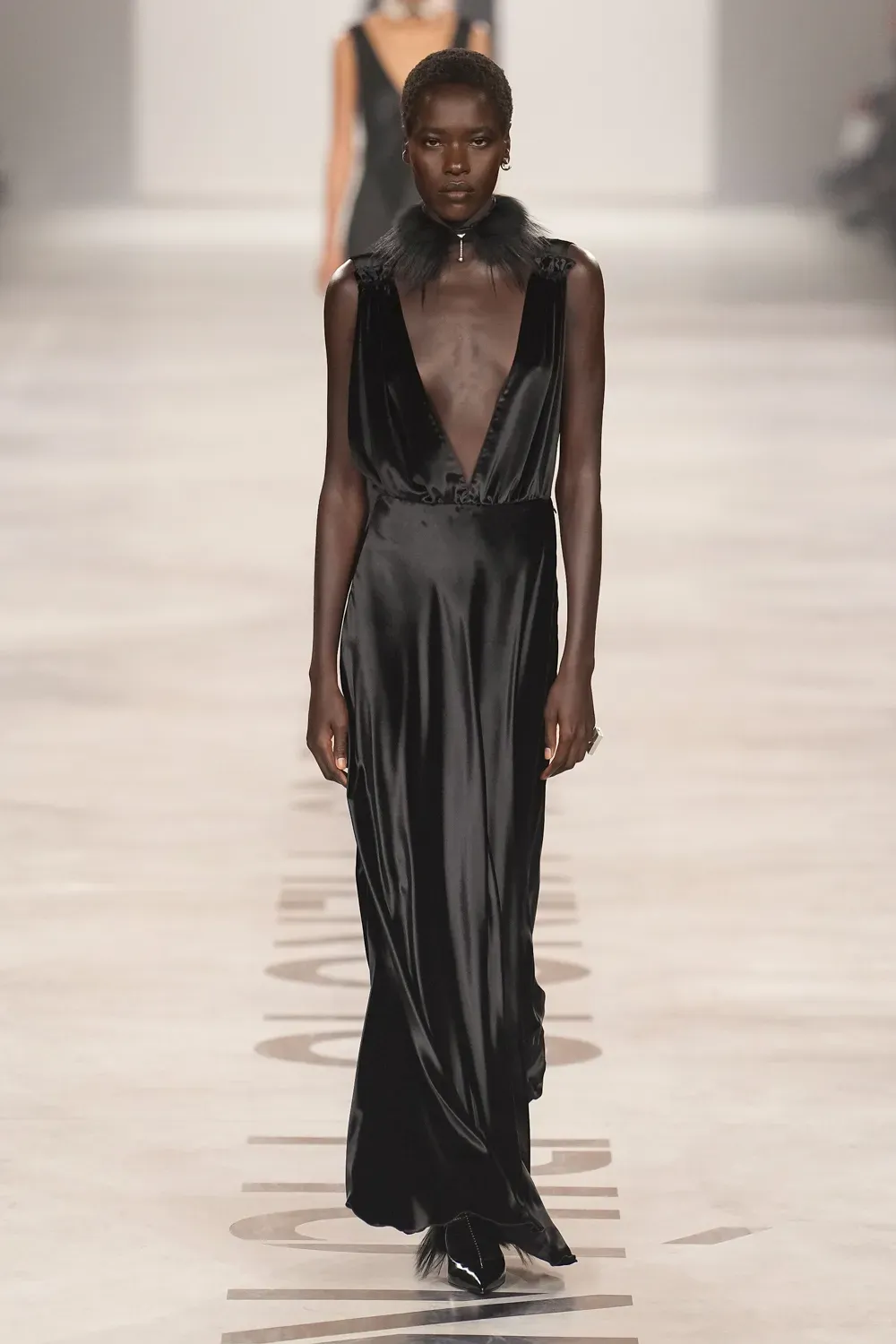
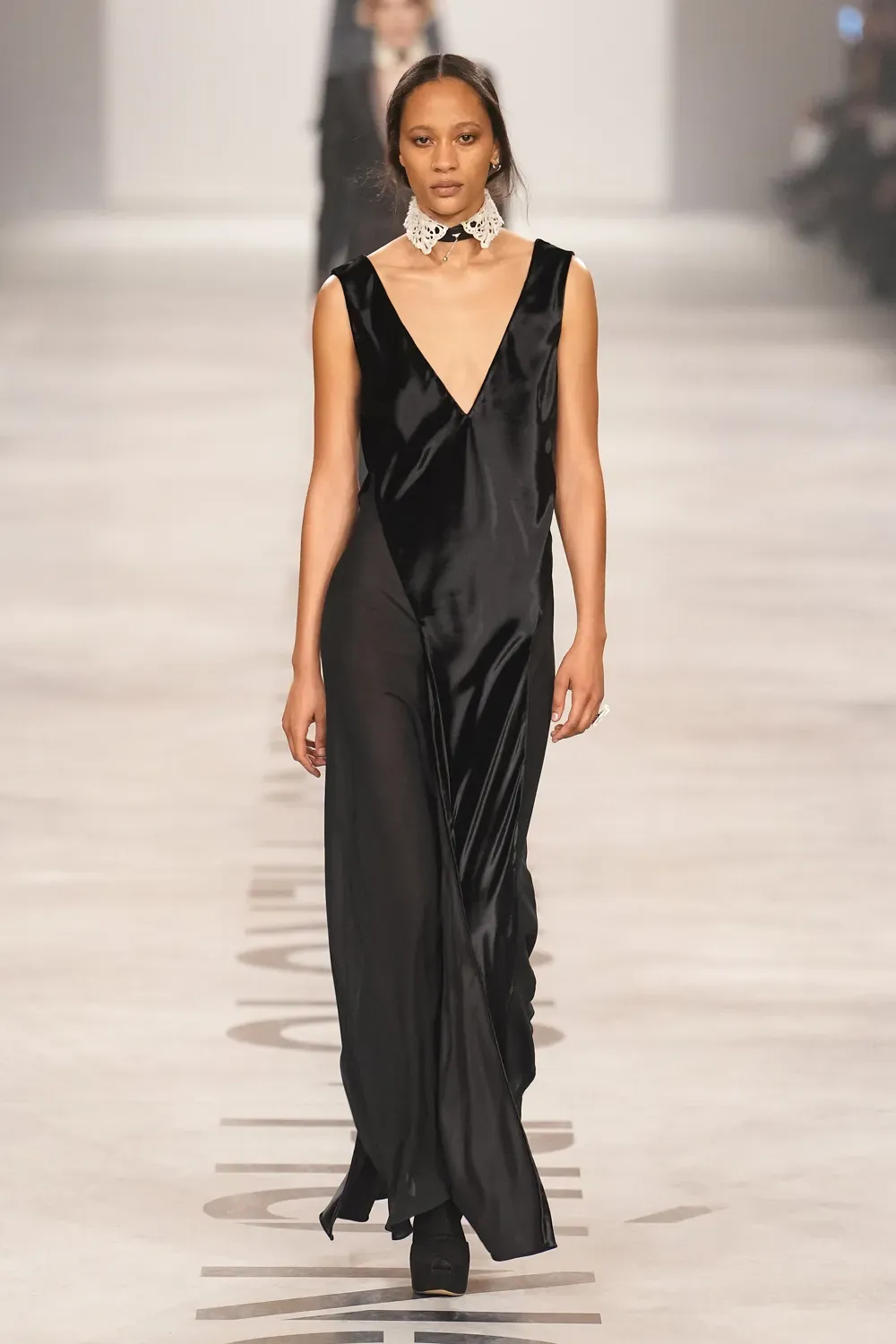
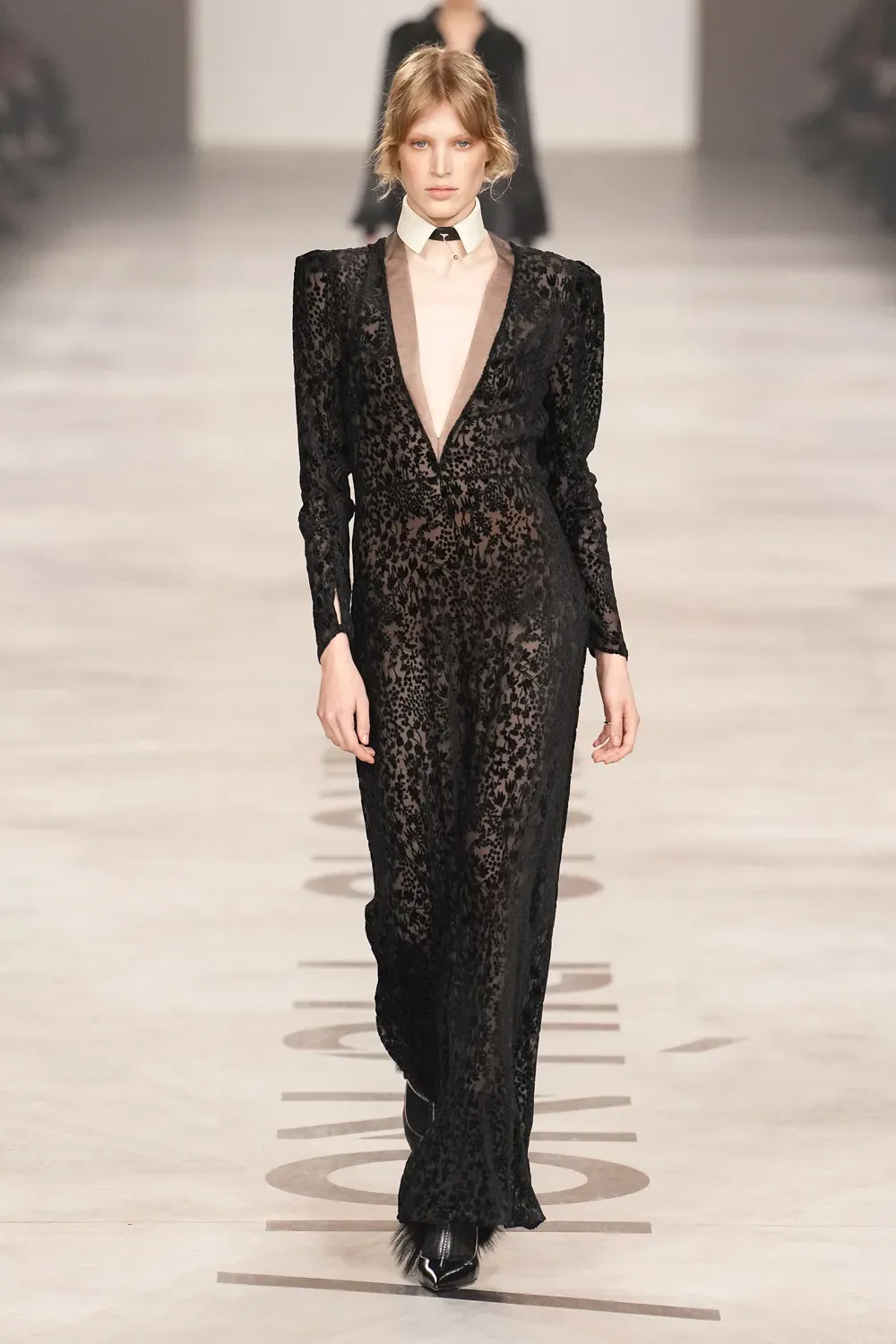
Back to the collection: after an opening defined by rigour and the near-total absence of colour, midway through the show came an abrupt change of direction. A kind of boho-chic turn, with fur gilets, shearling coats, cargo trousers, muddy tones and a range of animal prints, with nods to a vaguely military aesthetic. A sharp shift that felt out of step with the initial framework and made the show’s narrative less linear. The finale then brought everything back to a more classic register, with long evening gowns, tuxedo suits, and a single pop of colour: an isolated carmine-red look.
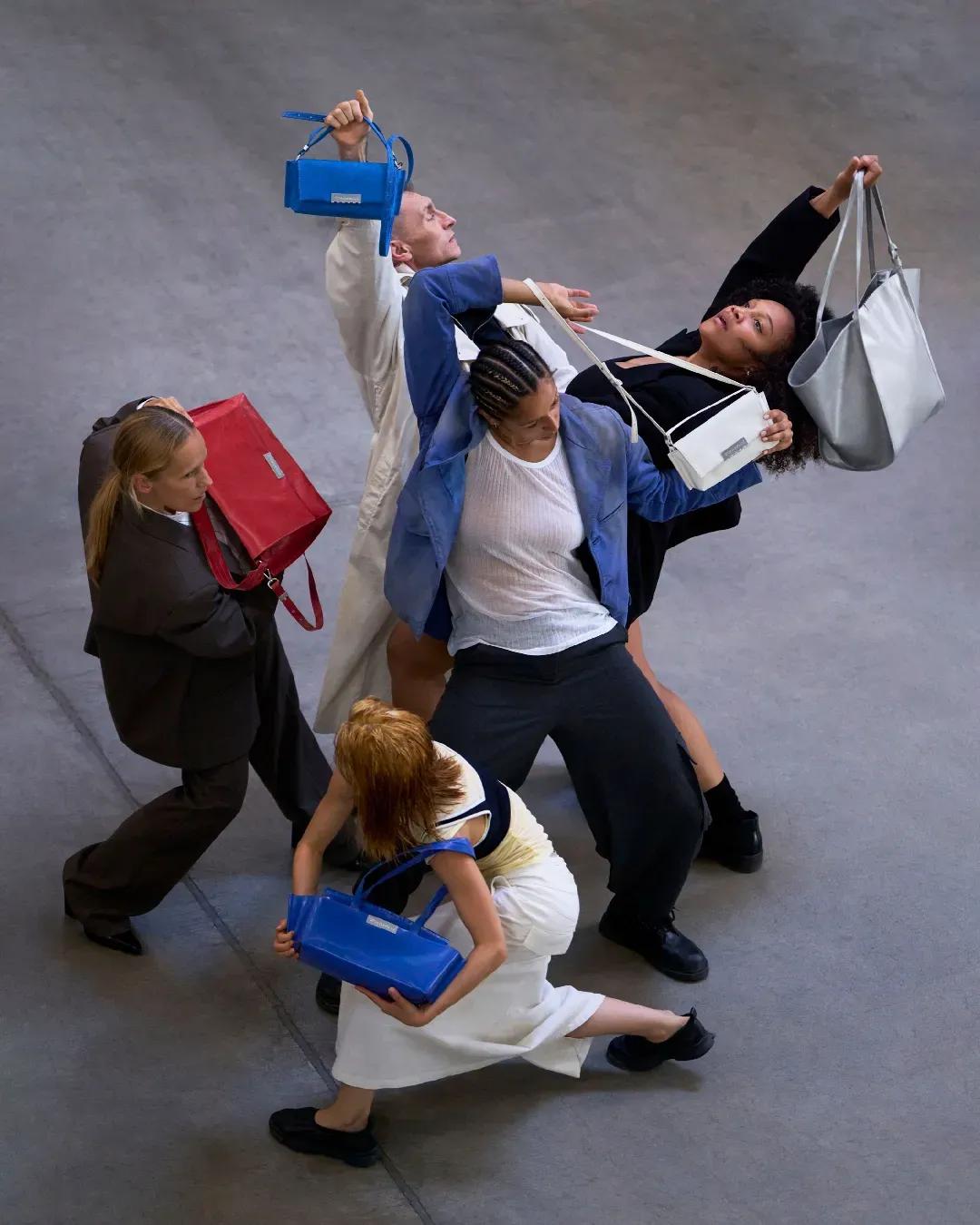
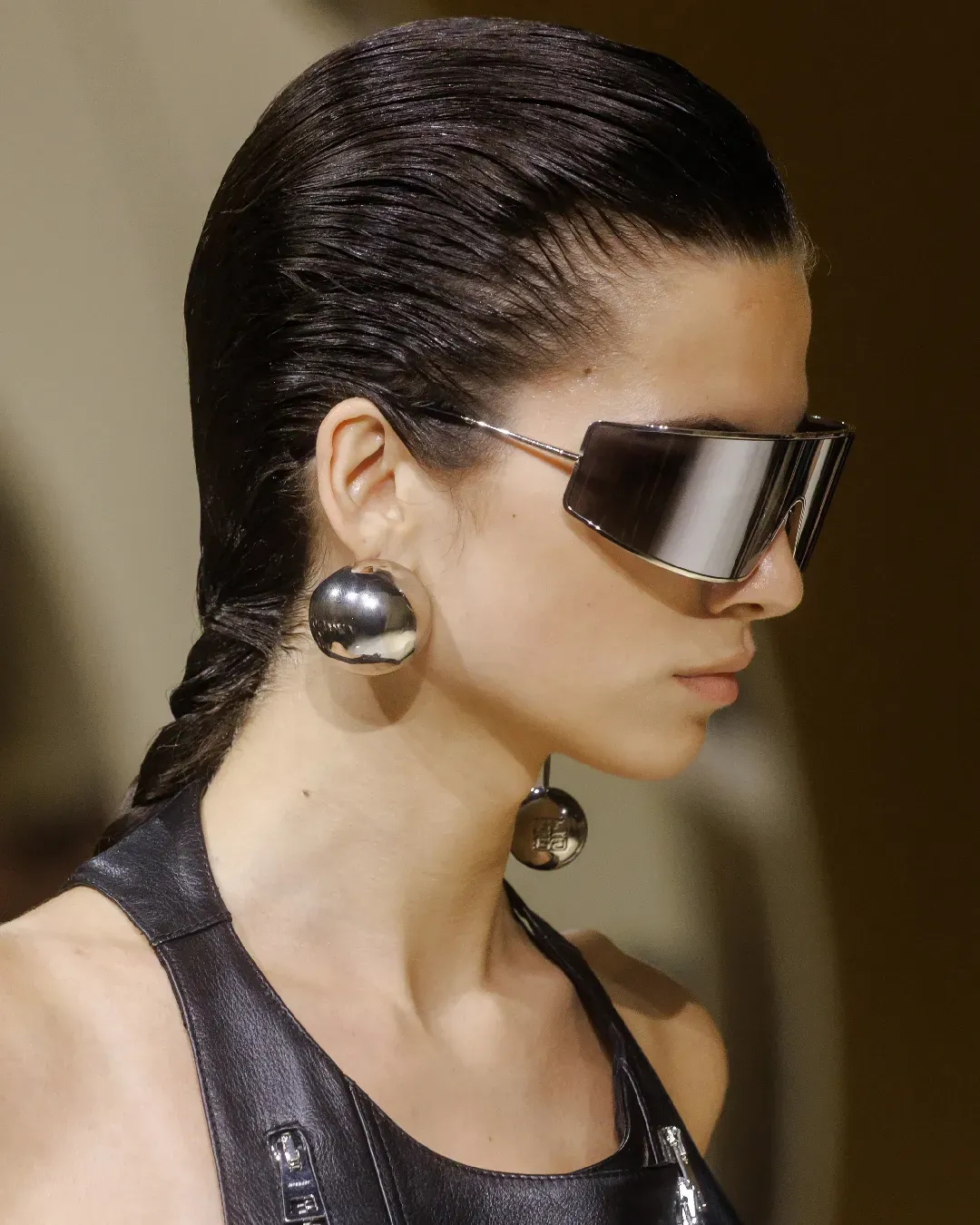
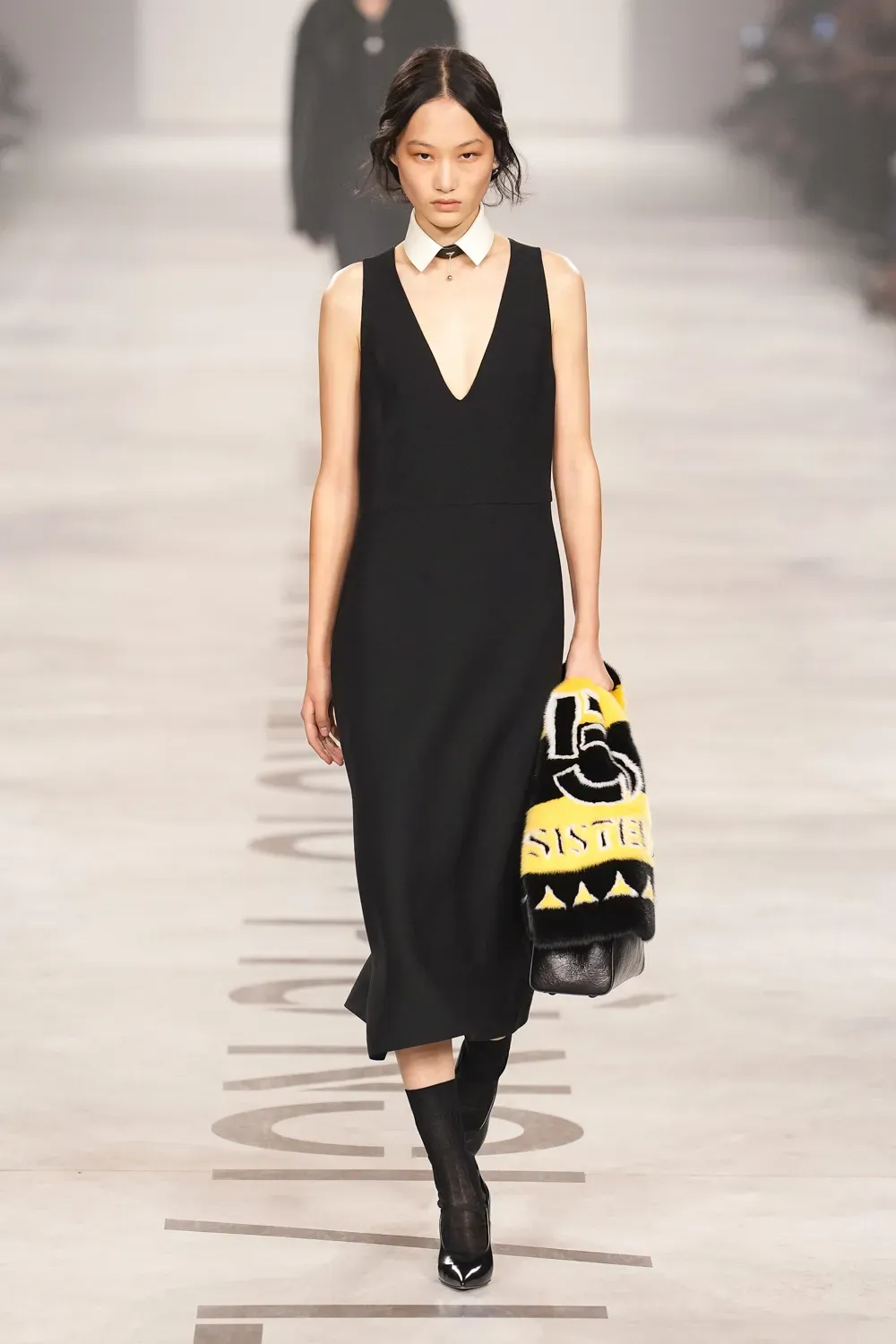
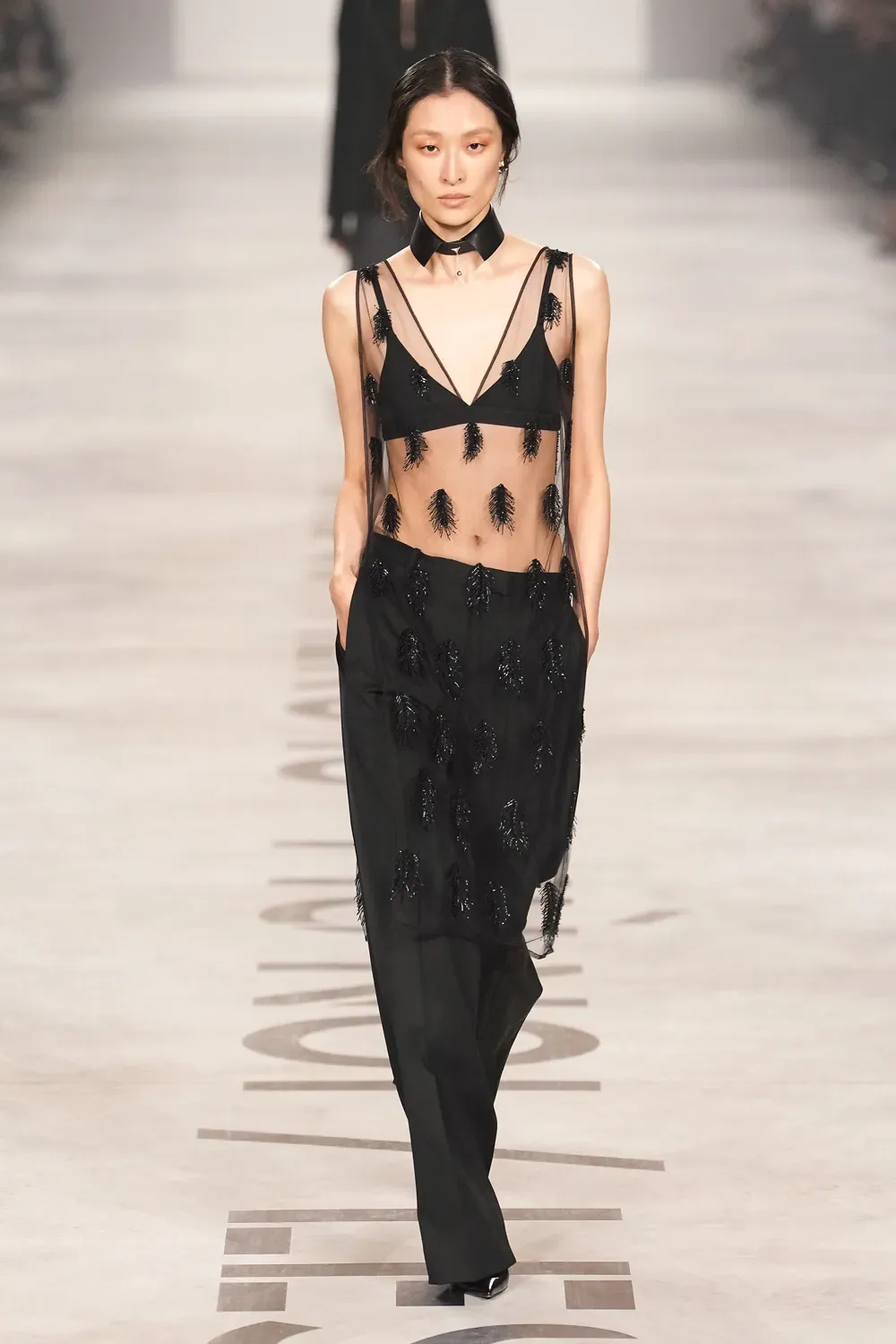
If the ready-to-wear didn’t fully convince, accessories remain Chiuri’s strongest territory. The Baguette, the brand’s hero bag and a creation by the Roman designer during her first stint at Fendi in the ’90s, returned soft, playful, and unapologetically showy. Reworked with a double buckle, it can now be worn both tucked under the arm and crossbody. The collection’s real through-line, however, was the series of chokers and collars, present in nearly half the looks, paired with women’s tailoring in crisp white classic variations, and with evening dresses, where they took on a more “feathered” shape.
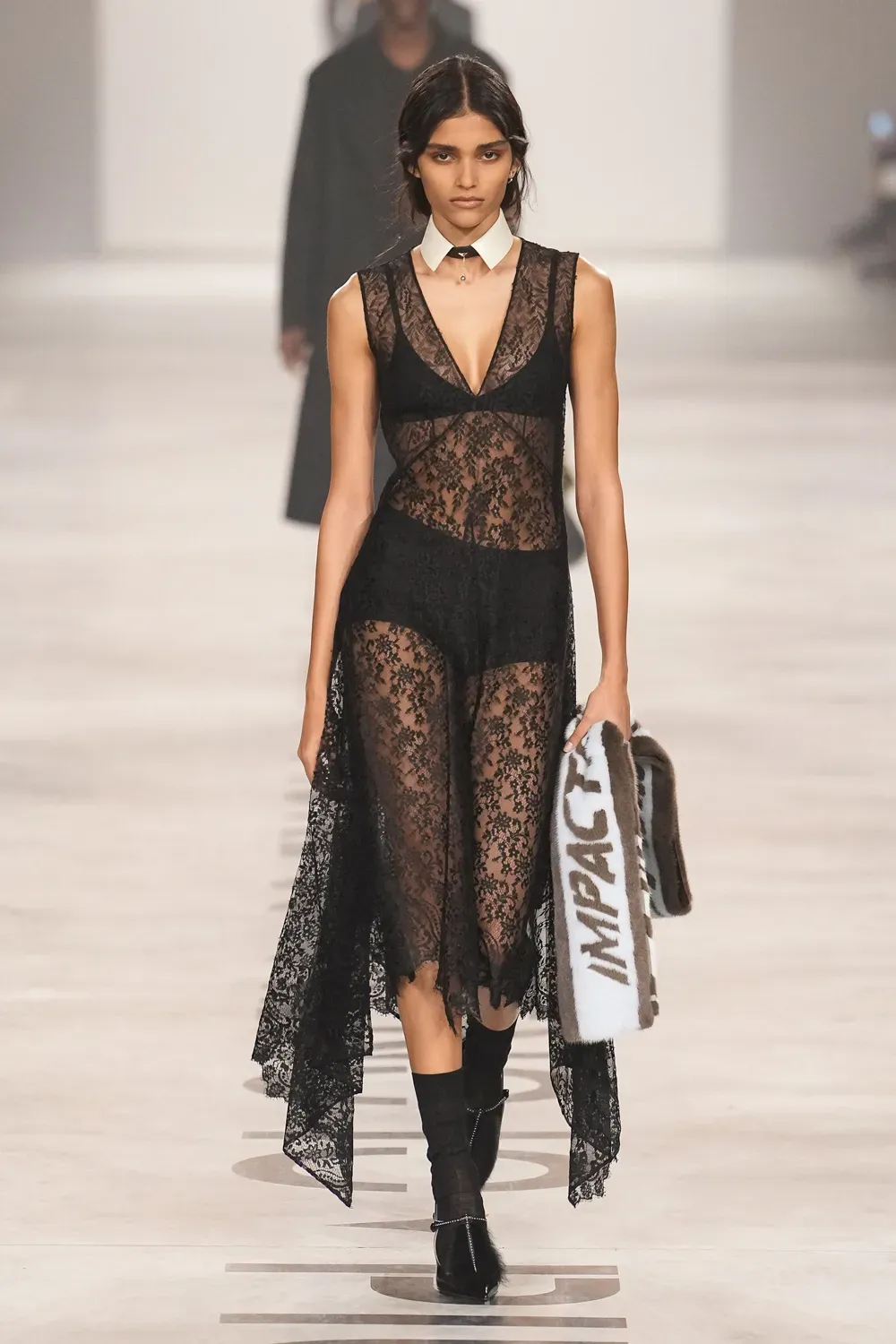
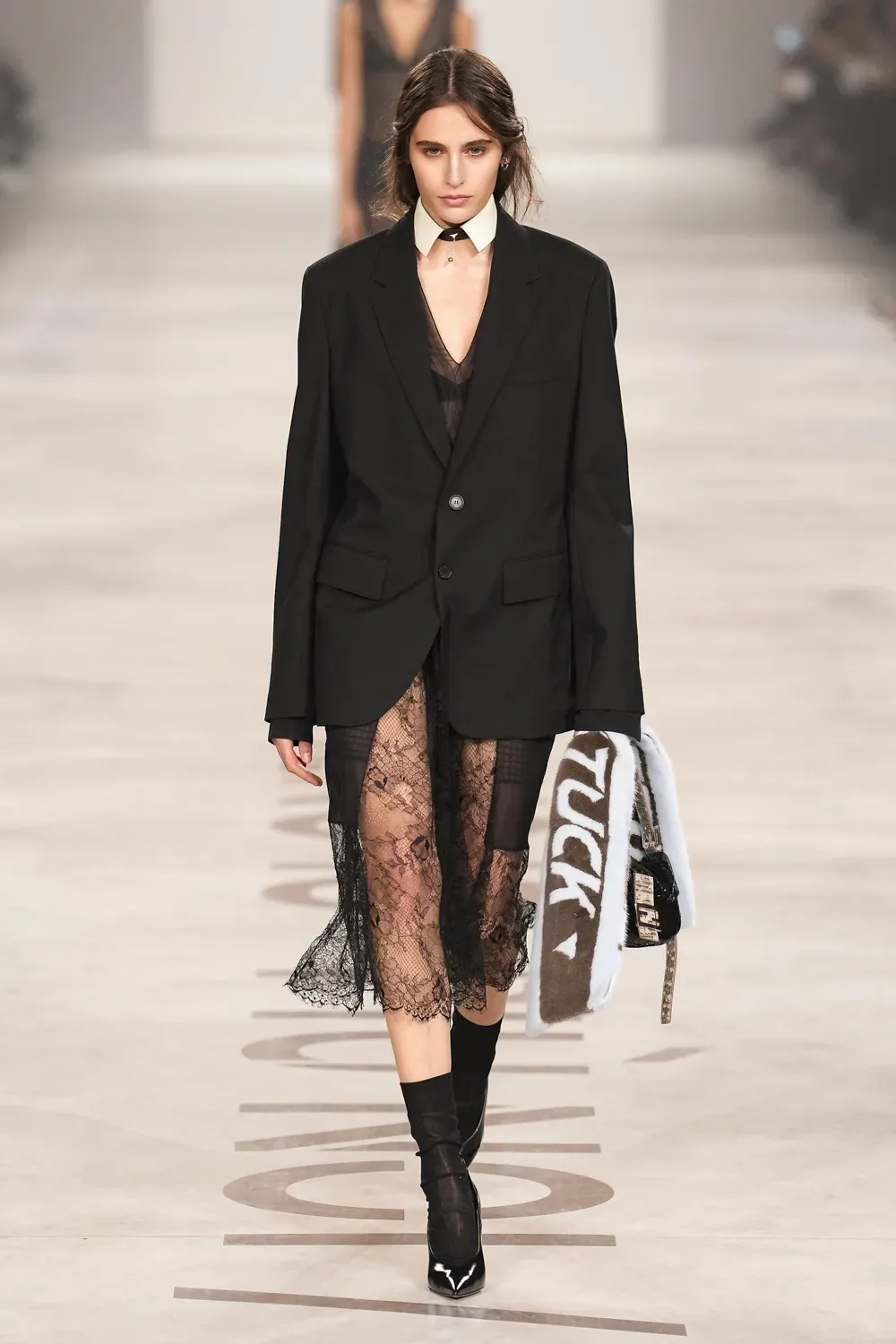
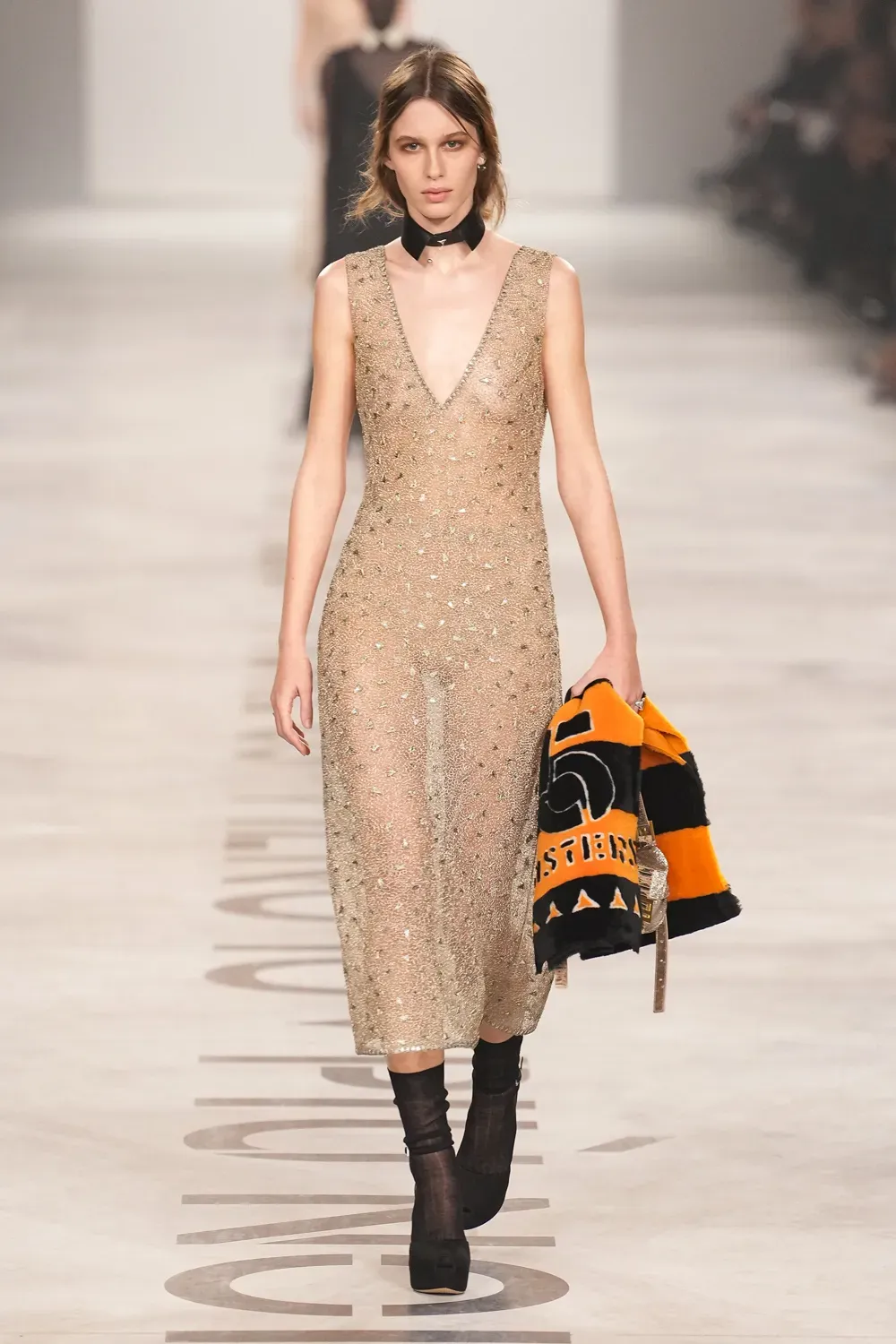
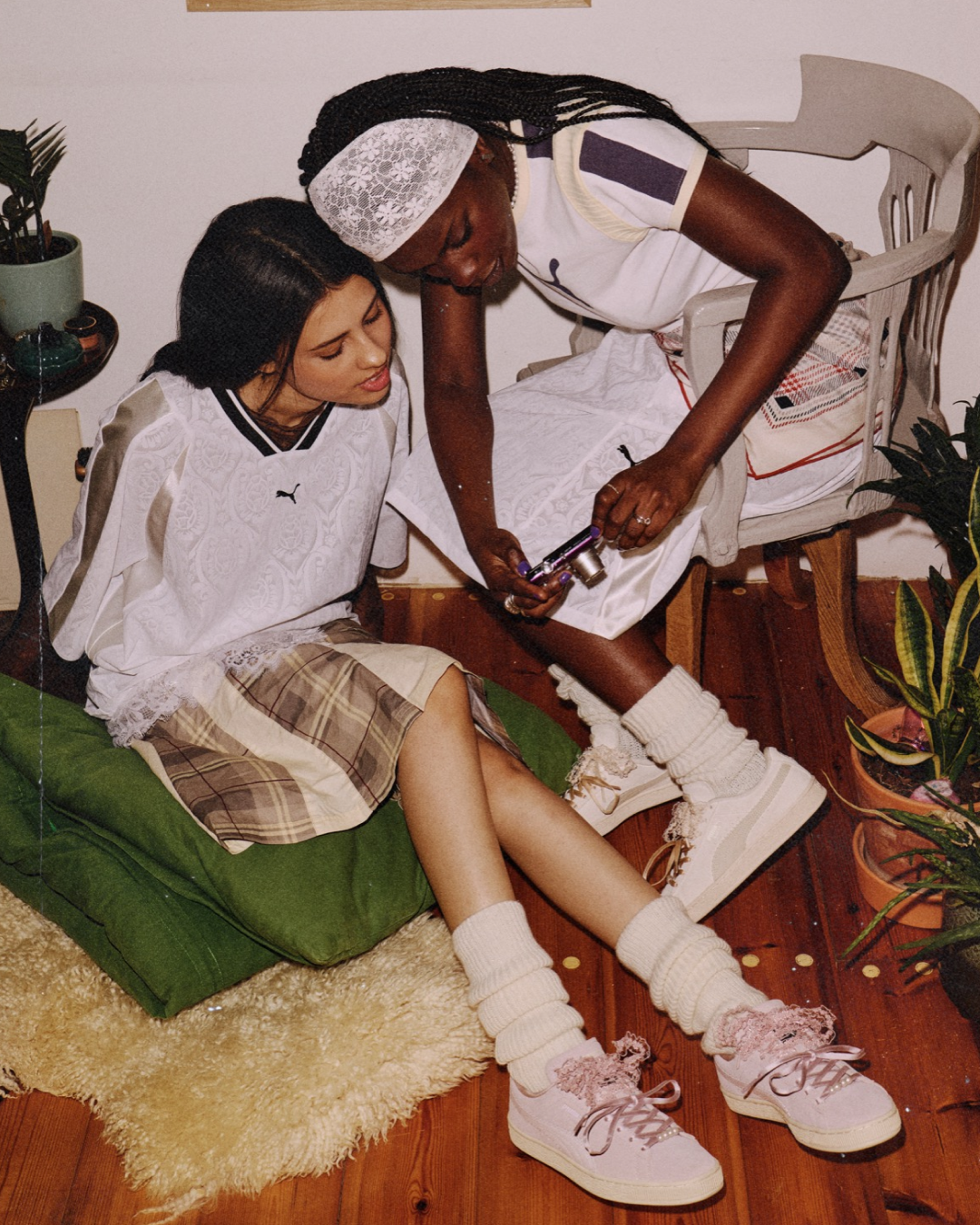
Among the FW26 collaborations, there’s one that works better than the others: the one with Neapolitan artist SAGG Napoli. For Fendi, SAGG developed a series of manifesto-like phrases applied to football scarves and T-shirts, built as affirmations paired with a limit. Expressions like «Rooted but not stuck» or «Loyal but not obedient» speak of belonging without fusion, of identity as a balance between individuality and collectivity. It’s work that reflects on the idea of a group without self-erasure, on a shared strength that doesn’t turn into submission, and it aligns more immediately with the collection’s motto than what we saw on the runway.
«Less I, More Us» remains, then, a statement of intent, perhaps more legible on a conceptual level than a visual one. As the show notes put it, it’s a nod to Fendi’s history, to the five sisters, and to an idea of work built on collaboration, continuity, and layering, rather than on creative ego. It’s a message that tries to bring the body, desire, and everyday experience back to the centre of the wardrobe, without controlling or idealising them, but by accompanying them—if not always coherently, then at least with the awareness of a return that, by definition, couldn’t be neutral (except, perhaps, in the palette).