





Fashion is a character in its own right in Wong Kar-wai's series “Blossoms Shanghai” The legendary director transports us to the golden age of 1990s China
More and more great filmmakers are experimenting with the TV series format. And after the experiments by directors like Nicolas Winding Refn and Xavier Dolan seen in recent years, now it's the turn of the great Wong Kar-wai to sign his first series: Blossoms Shanghai. The show is an ode to the era of China's economic transformation in the 1990s, centered on the vibrant life of Shanghai during Deng Xiaoping's reforms.
Based on the celebrated novel by Jin Yucheng, the series follows the ups and downs of an ambitious entrepreneur and his professional and romantic adventures, all told in Wong Kar-wai's unmistakable style, with its hypnotic sequences and expressionistic use of colors and framing. With meticulous attention to style and fashion, Wong elevates the narrative to an aesthetic level that echoes his classic films like In the Mood for Love and Chungking Express, while expanding the narrative scope to many more characters and themes to tell us a moral fable about ambition, nostalgia, and the dynamics of social change.
What is Blossoms Shanghai about?
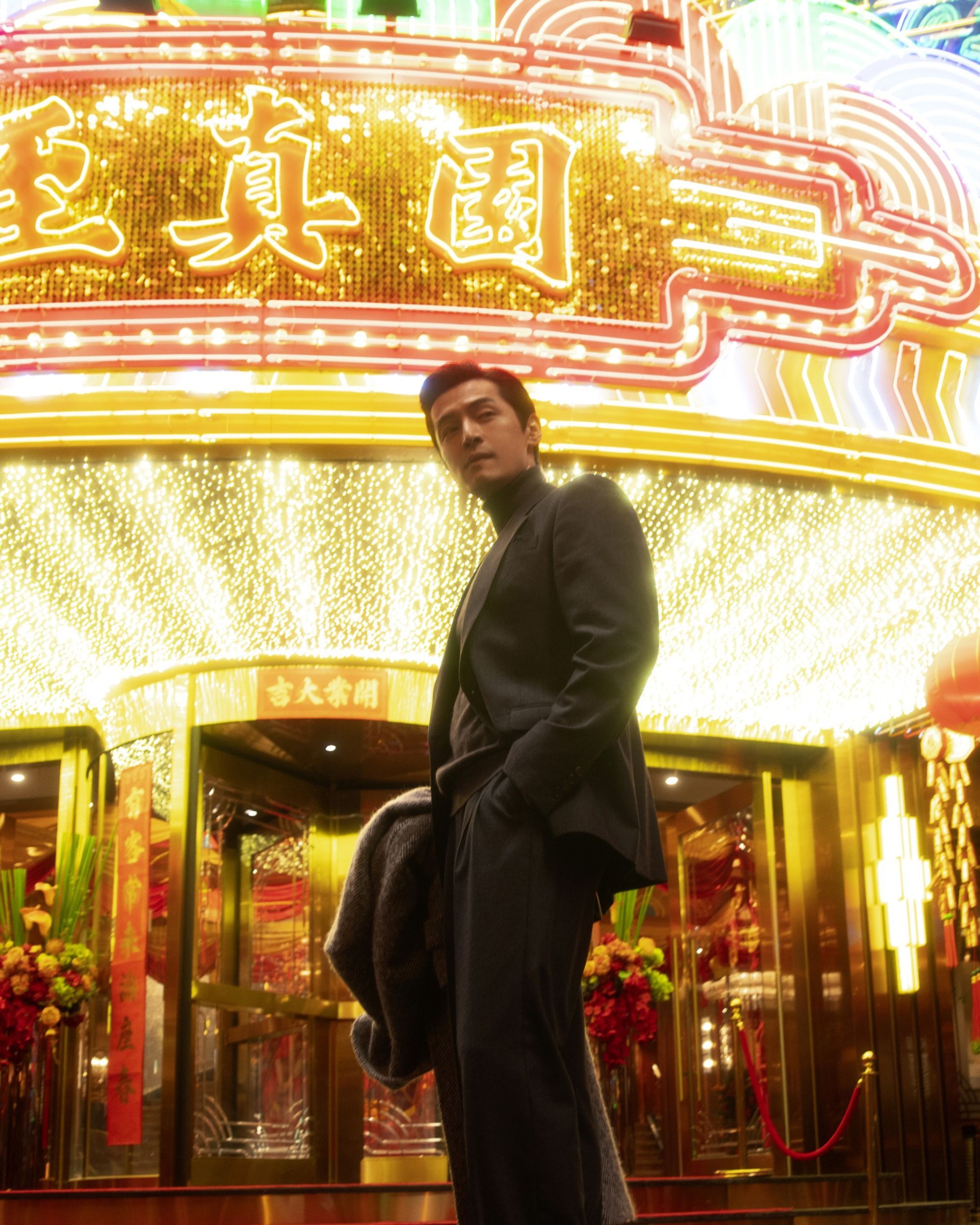
The show's plot revolves around the rise and fall of Ah Bao, played by Hu Ge, an enigmatic businessman who embodies the entrepreneurial spirit of 1990s China. In that period, the Communist Party opened up the economy and inaugurated the Shanghai Stock Exchange, ushering in a historic moment of great social mobility, influx of wealth and capital, and consumerism.
Starting from humble origins, Ah Bao transforms into Mr. Bao through the risky import business, guided by his mentor Uncle Ye, played by You Benchang. At the center of the narrative are his relationships with three women: Ling Zi (Ma Yili), his partner at the Tokyo Nights restaurant; Miss Wang (Tang Yan), the virtuous official from the Foreign Trade Office; and Li Li (Xin Zhilei), a seductive femme fatale owner of the Grand Lisboa casino.
The plot unfolds in a succession of romantic relationships, rivalries, intrigues and incidents, arguments and reconciliations, all set in the famous Shanghai street (today known as the city's premier gastronomic district) Huanghe Road, where different social classes meet in a true theatrical scene where ambitions, power games, and betrayals reveal both the bright and dark sides of an era of furious change.
The style of the series
For the series, Wong Kar-wai remained faithful to his famous filming style, with an almost manic attention to pictorial details: in a remarkable scene, one of the female character's blouse is coordinated with the restaurant furnishings, while the camera lingers with loving attention on Art Deco facades, vintage telephones, and all those beautiful and antiquated elements of the protagonists' daily life.
The narration moves through elliptical time jumps, poetically intertwining music and images, while the characters are immersed in an utterly opulent color palette of deep reds, velvety blues, and golden accents that give way, in the many nighttime scenes, to the nostalgic beauty of neon lights. Several historic locations of the city appear in the series: the Peace Hotel and the Oriental Pearl Tower under construction are the main ones and represent the optimism and growth of the country in this historical phase.
In fact, among the many references to Hong Kong cinema and classics in general, the entire production of the series at times recalls that of an old-fashioned musical: grand hyper-realistic sets, crowds of extras, shots ranging from dynamic to static. Great emphasis is placed on dialects, such as the specific Shanghai one; but also on food (the Peace Hotel in the show created a sold-out menu based on the series) and above all on fashion.
The fashion of Blossoms Shanghai
lingzi’s outfits in #blossomsshanghai are from prada archives from the 90s and early 00s so now prada has launched a special ‘prada for blossoms shanghai’ collection. ma yili & several other fanhua cast also attended the launch event yesterday pic.twitter.com/hnbPT8ZISm
— e. (@toujoursfaye) February 29, 2024
According to South China Morning Post, at the time of its release in China (the show arrives in Europe and the USA two years after its original presentation), the series' success drove many people to turn to bespoke tailors in Ningbo and in general sparked a small, temporary craze for 1990s vintage fashion. The costumes of Blossoms Shanghai, curated by costume designer Shirley Chan, play a central role in the narrative, as they outline the social and personal transformations of the characters in a 1990s Shanghai marked by rapid economic changes, where clothing reflects not only individual status but also the intersection between Chinese traditions and the arrival of Western influences.
The wardrobe of the various characters tells the dynamics of power and ambition, with Ah Bao's custom Armani suits symbolizing the rise from poverty to wealth, Uncle Ye's classic Mao-style suits showing the tension between the revolutionary past and the capitalist present, and luxurious accessories like furs or leather trench coats that instead highlight the new fashions and class distinctions of a society just opening up to the international market. The series also incorporates authentic period elements, such as imported European shirts, black velvet jackets, oversized sunglasses, and bulky cell phones that almost seem like accessories, reinforcing historical authenticity and the contrast between humble origins and global aspirations.
A recurring theme in the series is that of economic prosperity "contaminating" Chinese culture with European luxury. An influence we see in the emphasis on British-style tailoring, the presence of brands like Montagut, Versace, and Gucci – but also archive pieces from Issey Miyake representing the more avant-garde attitudes of fashion arriving in China at that time.
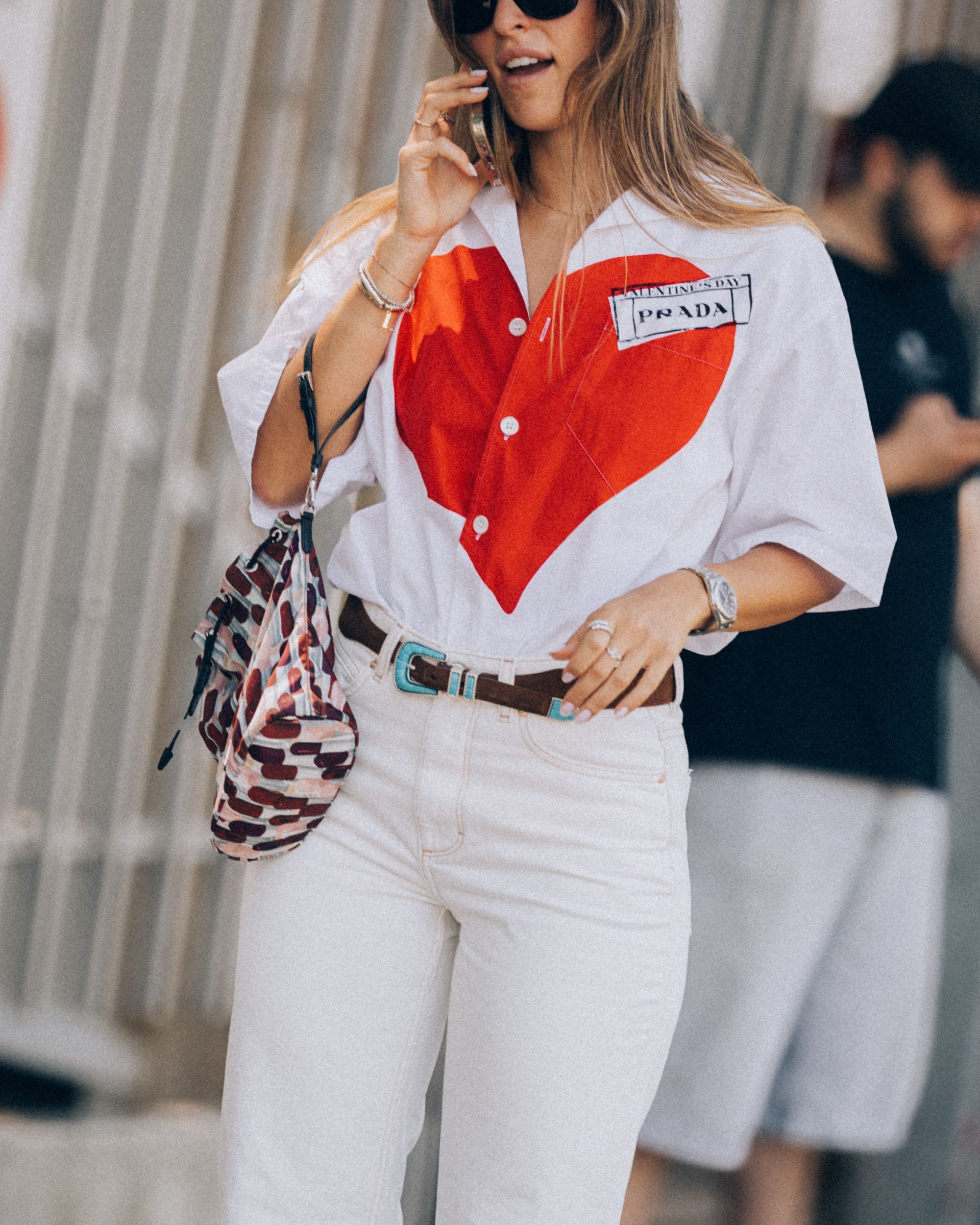
A special case is that of Prada, which provided the costume department with archive pieces worn by actress Ma Yili in the role of Ling Zi, including a tie-dye chemisier dress from Spring 2004, an orange mohair coat, a green wool cloquet ensemble with gradient effect, and a double-breasted alpaca coat. At the time of the series' release in China, Prada also launched a dedicated capsule collection, "Prada for Blossoms Shanghai", inspired by the show's looks and available by appointment only at Prada Rong Zhai in Shanghai, including coats, dresses, knitwear, shimmering skirts, alpaca pieces, and leather bags.
What to read next
5 trends that Trainspotting anticipated Back in 1996
There is much more to the film than the famous Helmut Lang tank top
Andrew Scott gives the best performance of his career in "Elsinore"
Simon Stone's film tells the true story of actor Ian Charleson and his production of "Hamlet"
"Il rumore delle cose" by Paolo Genovese opens the 2026 Rome Film Festival
The film, adapted from Genovese's novel of the same name, is nonetheless the usual Italian drama