



































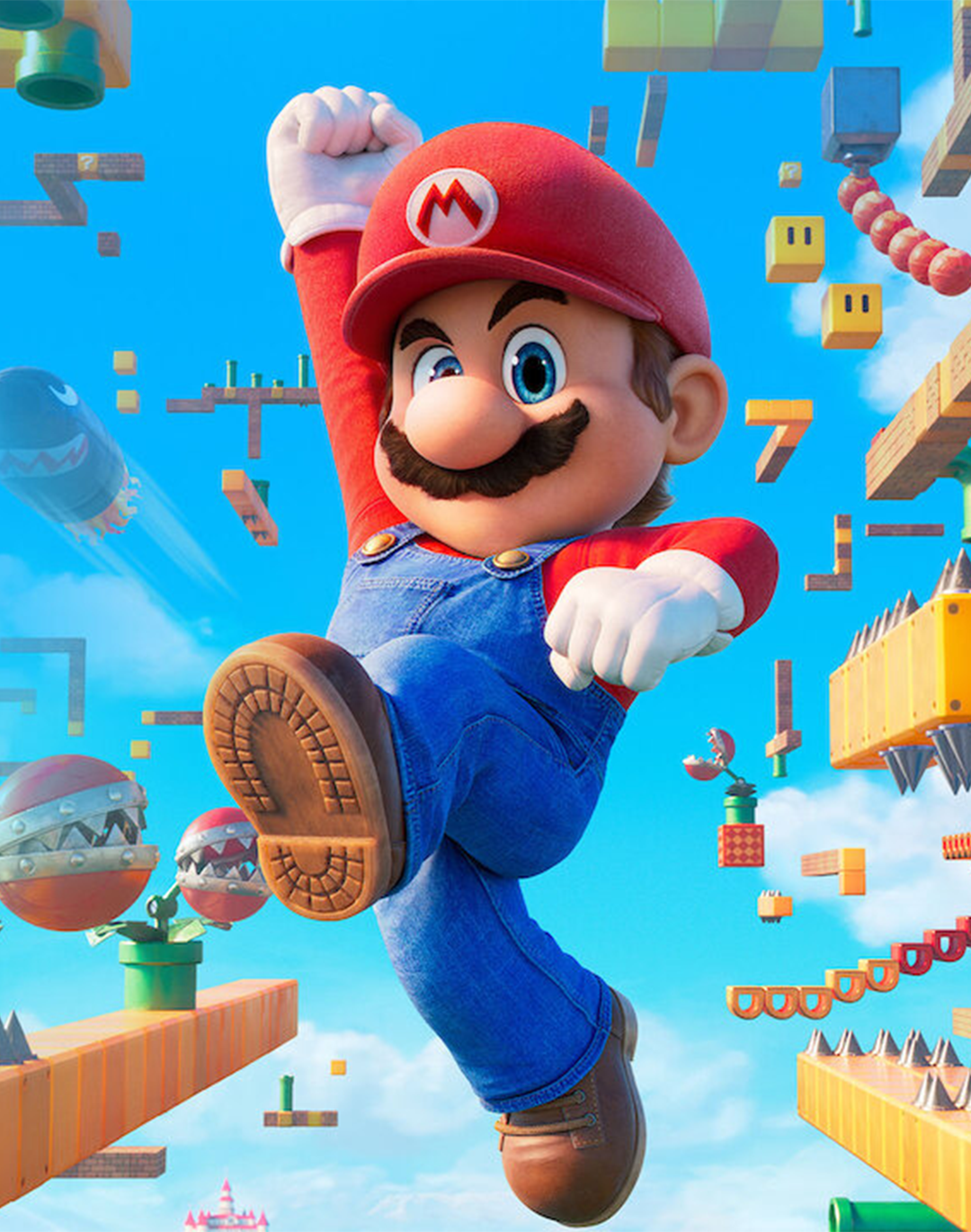
The video game market continues to expand When nostalgia becomes an investment
There was a time when video games were just video games. Cartridges inserted into consoles with no updates to download, entire afternoons spent in front of the TV, games received at Christmas or for birthdays and played for months, simply because there were no others. Before valuations, auctions, tamper-proof cases and certifications, they were primarily this: domestic, emotional objects, filled with memory. Today, that world is changing shape.
For the first time in Europe, collectible video games have entered the institutional auction circuit with Pop Culture #1 - Video Games, the project promoted by The Games Market together with Galleria Allegrini and Meeting Art. A shift that concerns not only retrogaming, but also the way our generation is beginning to look at its cultural objects: no longer simple shelf relics, but assets to be preserved, certified, traded and, in some cases, invested in.
The Games Market by Trussardi
The context is that of a collectibles market that has already surpassed $300 billion in 2024 and which, according to estimates, could exceed $500 billion by 2033. Within this scenario, video game collecting is also emerging from its niche to enter a more structured system, made of quality standards, traceability and official channels. The Games Market, founded by Alberto Trussardi, moves precisely in this direction: it is the first Italian entity specialized in video game collecting and has developed TGM Grading, a proprietary grading system compliant with ISO 9001 standards and certified by Bureau Veritas, which also uses low-intensity X-ray scans to verify titles in a non-invasive way.
In other words, video games are beginning to be treated as has long been the case for coins, trading cards, comics or sports memorabilia. The difference is that here something even more personal comes into play: nostalgia. And it is precisely from this tension between emotional dimension and economic value that we started our conversation with Alberto Trussardi and Pablo Carrara, President of Meeting Art.
The value of the emotional dimension
Retrogaming almost always stems from nostalgia. For Alberto Trussardi, founder of The Games Market, it is difficult to imagine a collector without a personal memory tied to the video games of their childhood. It is this emotional dimension that continues to be the true driving force of collecting. In recent years, however, a new awareness has joined this impulse: some video games, especially in their rarest versions or preserved in perfect condition, are beginning to be perceived as structured collectible assets. Passion does not disappear, but becomes the foundation upon which a more mature market is built. A dynamic that is also reflected in how these objects are evaluated.
— Hoops (@Hoopss) April 7, 2026
The grading system, now central to video game collecting, actually originates much earlier in the world of numismatics, as a response to a simple need: to make the evaluation of an object objective. From there, it expanded into other sectors until reaching video games, following a trajectory already well established in the United States. According to Trussardi, it is precisely the introduction of shared standards that has transformed the market, bringing transparency and trust to transactions.
Today, certified video games can reach very high prices, and the global market continues to grow rapidly. In Europe, however, we are still in an early phase, closer to accumulation than to structured collecting. But something is changing. More and more people are beginning to recognize that the objects preserved over the years also represent a cultural heritage. For this reason, grading is not just a technical evaluation, but a tool that helps build a market. Auctions, in turn, make that value visible, public and measurable.
Retrogaming as an investment
Videogames are more of a rich guy's hobby than ever, says analyst, and that's 'leaving a whole portion of the market to Fortnite, Minecraft, Roblox' https://t.co/wRmwjVNYqn
— PC Gamer (@pcgamer) March 26, 2026
If the market evolves, however, the root remains the same. Trussardi traces it back to a precise image: the first Game Boy with Tetris, batteries running out, afternoons spent chasing a high score. Then come shared moments: Pokémon, Super Mario Bros., Duck Hunt, experiences that do not belong to a single story, but to an entire generation. And this is where video games stand apart. They are not just technology, but memory. Not just products, but pop culture. As Trussardi himself defines them, they are containers of memory. Objects that tell of a time when a video game was truly yours: you inserted the cartridge and played, without updates, without extra content.
Alongside this emotional dimension, however, there is also a more structured market logic at play. Meeting Art, a historic Italian auction house, has chosen to open up to video games precisely by intercepting this evolution. Always attentive to anticipating trends and opportunities, it has identified video game collecting as a still underexplored field with evident potential. According to Pablo Carrara, President of Meeting Art, cultural value and economic value are not in contradiction. On the contrary, they feed into each other. Rarity determines market price, but it is the cultural meaning of the object that truly drives the collector to invest. Unlike other sectors, in video game auctions emotion remains central: every lot can be tied to a personal memory, a story, a moment.
The new assets of the market
I think we need seals of quality to make a come back.
— Gero (@Geero_Gero) September 11, 2025
I remember they were key to why Nintendo found success as a vg company and why they sort of saved the gaming industry at the time too in the process.
Back then the gaming market was filled with low quality "slop" videogames,… pic.twitter.com/Gzfa0gBz58
At the same time, entering the auction circuit also marks a more pragmatic shift: for Meeting Art, it means recognizing the cultural value of video games, but also identifying new market opportunities. The sector today appears mature enough to sustain an institutional context, opening new possibilities for development. And this very opening is changing the audience. Video game collecting is no longer just nostalgia. As Trussardi points out, the market today is made up of very different actors: collectors, investors, museums, design enthusiasts, and even so-called “case lovers”, drawn to the object also as an aesthetic element.
Nostalgia remains the starting point, but it is no longer the only driving force. Video game collecting is beginning to speak to a broader audience, not necessarily those who experienced those games firsthand. For Meeting Art as well, entering institutional auctions opens the sector to new profiles: collectors from other fields, investors, operators interested in alternative forms of investment. An expansion that will inevitably contribute to the growth of the market.
An unstoppable expansion
The result, in the meantime, has already arrived. Pop Culture #1 – Video Games, the auction promoted by The Games Market, Galleria Allegrini and Meeting Art in Vercelli, concluded with 50 lots out of 50 sold for a total of €69,500, almost double the initial estimates. A signal that does not only reflect the success of an event, but the fact that in Europe there is now a real interest in this market, with participants from different countries and profiles ranging from art collectors to dealers. Among the top lots were Monkey Island 2, sold for €8,900, Indiana Jones and the Fate of Atlantis for €5,900, Taro Maru for €3,500, Tekken for €2,600, Golden Sun: L’Era Perduta in its first Italian print for €2,200, the Sony PlayStation SCPH 9002-C for €2,000 and Golden Sun for €1,700.
Perhaps this is the point. Collectible video games today are ceasing to be merely intimate shelf relics and are becoming something more ambiguous and contemporary: objects that bring together affection, design, memory, pop culture and finance. And ultimately, it makes sense that this is happening now. When a generation truly grows up, the symbols it grew up with begin to increase in value.
What to read next

Data centers are invading our cities
The more demand for artificial intelligence grows, the more everything needed to make it work grows too

Will the Biebes manage to resurrect MP3 players?
The pop star's intriguing bet on the return of analog
There's a Chinese film so bad it became a hit
The absurd story of the animated film "Niu Lai"