





















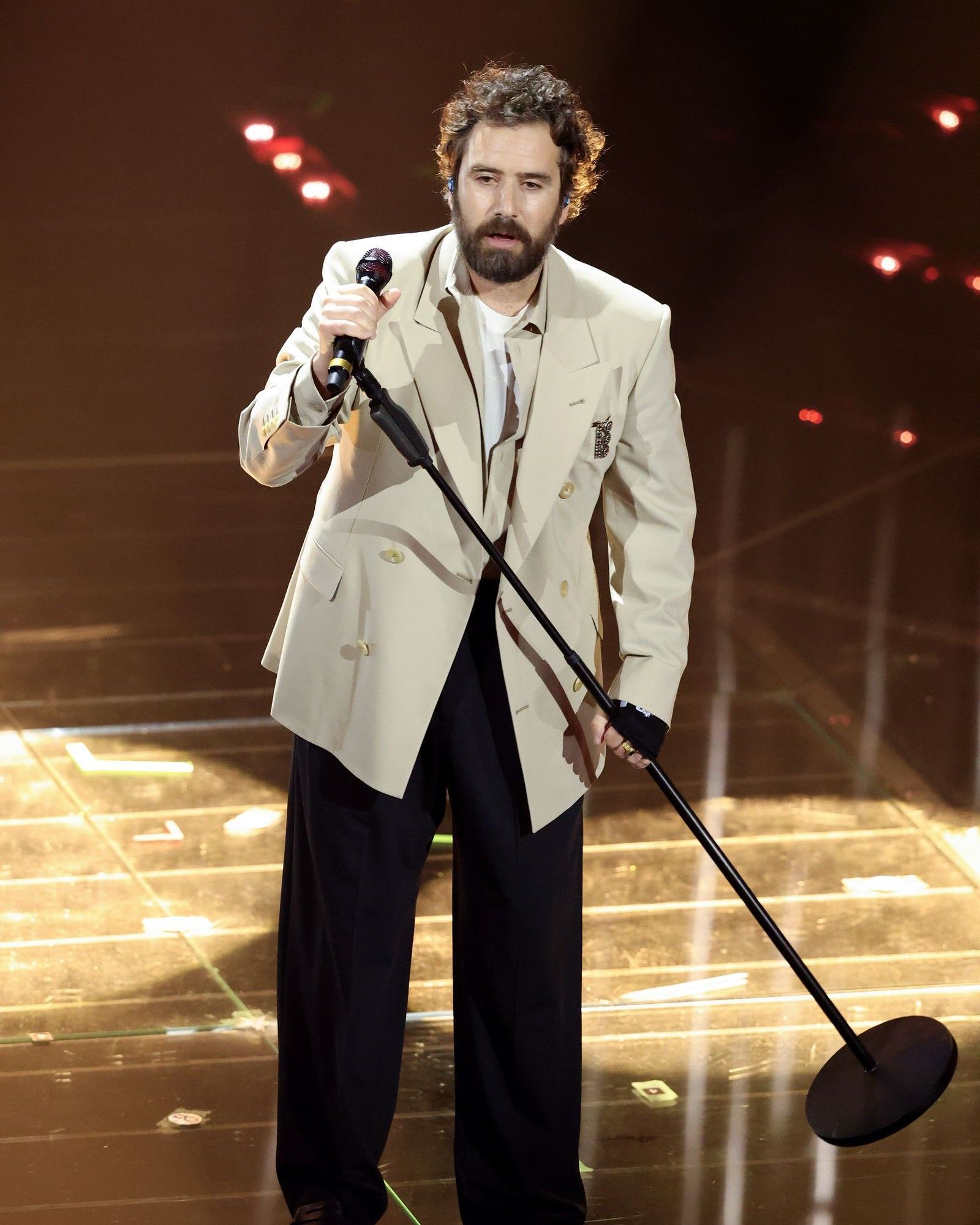
Why are Sanremo songs so often so “Sanremo-like”? If you think that many of the songs in the competition are too similar to one another, you’re not alone
For years the Sanremo Festival has had an obvious problem: the increasingly marked gap between the artists most listened to on streaming platforms and those selected for the competition. The progressive opening to personalities coming from a certain type of pop, from indie, and to a more limited extent from the trap or hip hop scene has however contributed to making the event more contemporary.
This change has helped Sanremo regain centrality, becoming once again a highly followed event, especially – and above all – among the youngest audiences, after a period of clear stagnation. Even when these artists come from alternative music scenes, however, their songs tend to align with a very classic romantic ballad aesthetic that is in some ways stereotypical (think of Tony Effe’s song from last year), giving the impression that we are always faced with a “Sanremo-style” song. But why is that?
Sanremo 2026 and the indie scene
In the 2026 edition – despite having so far been judged not very exciting – the tendency to open up to sounds most appreciated by young people appears even more evident: compared to previous years, in fact, there has been an increase in artists known mainly to GenZ and still little known to the general public, while those with a well-established career behind them have decreased; quite numerous, indeed, are the artists who in some way come from trap or hip-pop.
The same cannot be said, however, for those coming from Italian indie, which under Amadeus’s direction had found particular space: this year the genre is represented almost exclusively by Fulminacci and the duo Maria Antonietta & Colombre, although both, like almost everyone else, have presented tracks rather distant from their respective backgrounds.
The problem with Sanremo’s musical offering
Music at the Sanremo Festival, however, often ends up playing a relatively secondary role, turning the event above all into a pop-culture phenomenon. A recurring criticism that emerges every edition concerns the excessive similarity of many competing songs: predictable structures, standardised harmonic solutions and lyrics that recycle the same themes or imagery. This creates a widespread feeling of repetitiveness and little inclination toward experimentation, which seems to contradict the arrival of younger artists or those coming from so-called “alternative” musical currents. Even singers linked to genres far from pop, if you pay attention, almost always tend to present songs aligned with the reassuring and low-risk “Sanremo canon”.
This tendency is related to the current functioning of the record industry, in which the centrality of songwriters (often few, highly sought-after and working across multiple projects) favours the standardisation of the music produced and released on the market. And Sanremo does nothing but amplify this already existing dynamic: more than a music festival, it becomes a showcase that prioritises the recognisability of the songs, at the expense of research, due to a whole series of more or less complex dynamics. This aspect, however, perhaps helps make Sanremo that great collective event it has long been, managing to bring together new and old generations.
The role of songwriters in contemporary music
Il fatto che le canzoni e i cantanti delle nuove proposte siano meglio dei big in gara la dice tutto su questo Sanremo. #Sanremo2026
— io (@fabbsmantis) February 25, 2026
pic.twitter.com/kdtRehQV6s
It is not uncommon for the same songwriter to participate in the writing and composition of multiple songs in competition at the Sanremo Festival. An emblematic case occurred in 2024 with Tropico, who was involved in the creation of four songs presented simultaneously in the contest. A confirmation of the growing centrality of these figures in the music market. But the phenomenon is the direct consequence of a series of upheavals that have affected the sector in recent years.
Following the increasing relevance of social networks, the record industry’s propensity for risk has gradually weakened: labels invest less and less in developing new projects and favour artists already able to guarantee a certain level of listens on streaming platforms.
In this context, songwriters have become key figures because – thanks to their know-how and in-depth knowledge of market dynamics – they reduce commercial uncertainty for labels, who pair them with the artists they have decided to bet on. It is no coincidence that many summer hits are often signed by the same songwriters, backed by a long series of previous successes. This trend, however, directly affects part of the music in circulation, which then finds space at Sanremo – where almost inevitably tracks are selected that all sound somewhat alike.
What to read next

How brands advertise during the Sanremo Music Festival
And why Italy's favourite week is the Super Bowl equivalent

In the end, the good guys won at Sanremo 2026 (and Naples too)
How did the last night of the Italian song festival go?
The winners and losers of the Sanremo 2026 cover night
Amid controversy, duets, and not enough of Bianca Balti