












Why you shouldn’t name your brand after yourself The role of ego in fashion is not what it seems
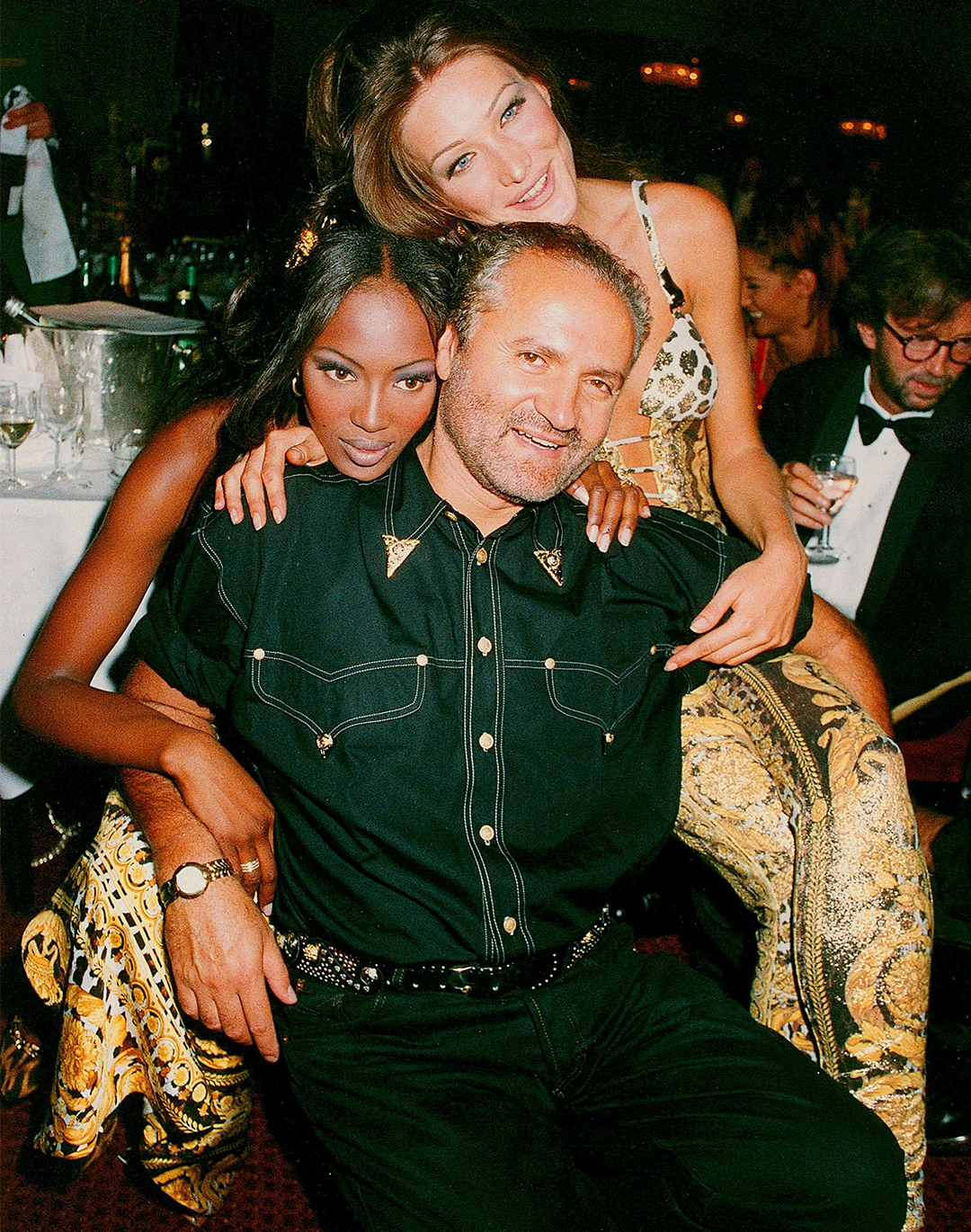
The theme of intelligent growth and evolution for an entity, project, brand, or studio also — and especially — depends on the choice of avoiding using one’s own name to identify a project. This is an act that demonstrates contemporary vision, strategic financial foresight, and above all a fundamental statement that places the collaborative nature of today’s creative labor world at the center, rather than an self-referential narrative.
The Dissolution of the Creative Ego
Valentino’s thoughts on Dolce & Gabbana. RIP King! pic.twitter.com/YkGjcmrLCH
— Louis Pisano (@LouisPisano) January 19, 2026
Activities that take shape from the bottom up are now more than ever a sensory device. The ancient idea of the solitary creator designing in their own room is a misleading construction belonging to the last century. In the seminal Dissolving the Ego of Fashion, Danielle Bruggeman describes the dissolution of the ego not as a loss of authorship, but as a shift of attention from the figure of the single creator to the experiences and material values that the objects themselves emanate. A necessary path that today moves the focus from personal identity to project perception. As if there were an obligation to always observe it from the outside and rarely from the perspective of its founder.
The ego demands recognition, while the project demands continuity, trust, and exchange. It works on the senses, on the contact with a material, on the duration of a gesture, on the memory of a scent, and builds meaning without having to constantly reaffirm who created it. It shifts attention away from the bio to move through memories and sensations that become automatically personal and forcibly speak of complexity and shared design. Today, the maturity of a creative lies in the ability to produce mutable devices, capable of surviving without the obligation of transforming personal identity into a logo.
Following Bruggeman’s words, the Fashion Ego is formed by the spectacle of the runway, by glamour, by star designers, by constructed desire and seduction, by money, by an abundance of visual images and by excessive consumer products. This often denies the subjective dimension and the lived experiences of the human beings who actually wear or make the clothes. Furthermore, the fashion ego generally ignores the concrete material dimension of what it produces.
Putting Ideas at the Center, Not the Creator
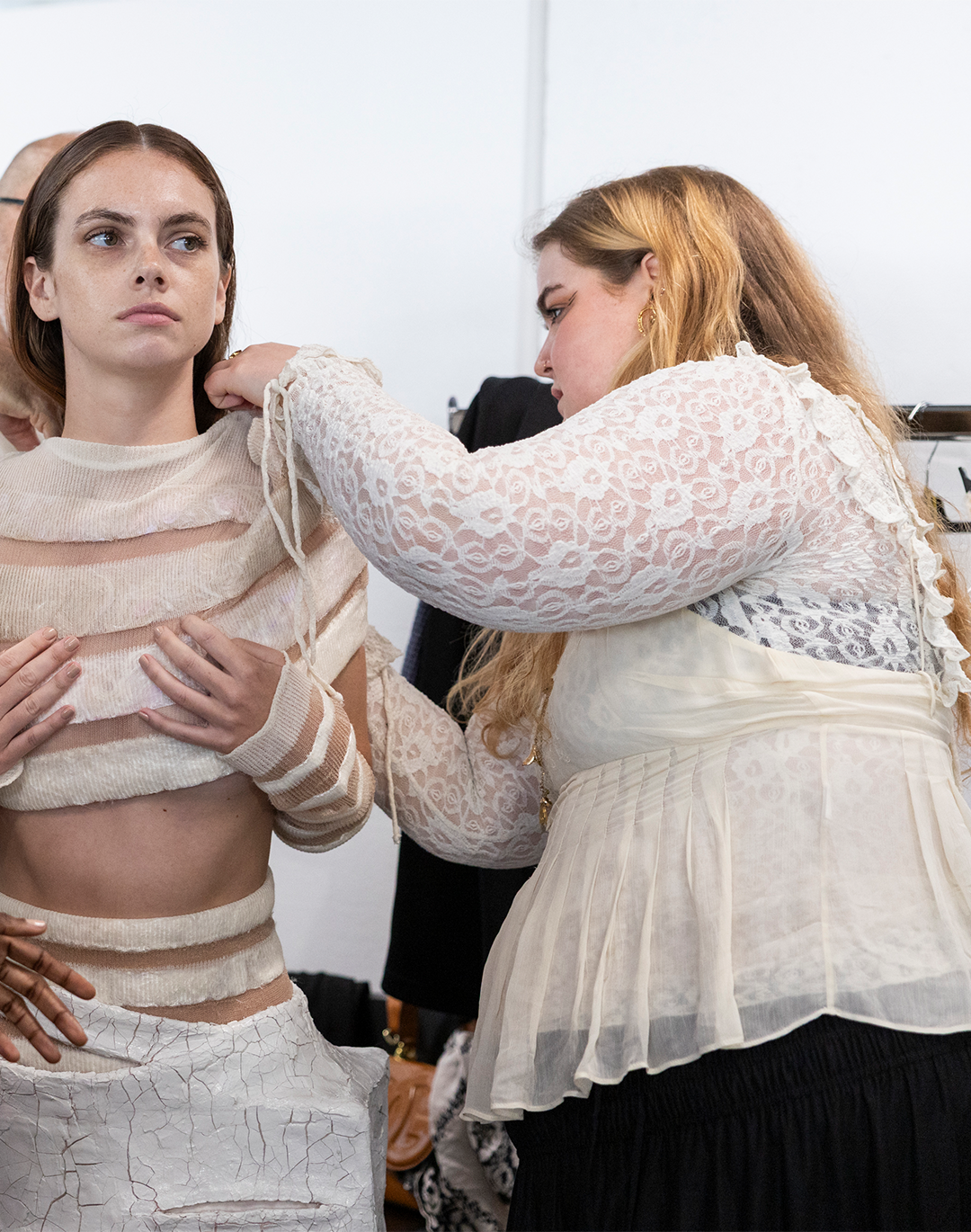
With these principles, the idea of the solitary designer, which we thought had stopped with Karl Lagerfeld, persists and keeps resurfacing. Just take a contemporary example to realize that in all creative work, collaboration is the winning tool — from graphic designers who need input and feedback from other creatives to improve their projects, to artists who must observe other art to challenge their own practice. In fashion, a garment cannot be completed without a tailor who sews it and a craftsperson who weaves the thread.
Not naming one’s activity after the founder is also a way to free oneself from the burdens of being, as a founder, the voice that begins and ends an act, that alone carries responsibility and drives an activation. Moving through an ambiguous identity strengthens the power of imagination, just like when a singer decides not to use their own name to be able to say whatever they want.
Rei Kawakubo, who we know is extremely meticulous about her brand details (she even controls the interiors of all her stores worldwide), once said in favor of Comme des Garçons: “I did not consider myself a designer. It was a company, a group of people working together. I wanted a name that represented the entire group. Putting at the center the evolution of ideas rather than individuality.”
In a recent article by Joe Bobowicz for 1GRANARY, several fashion designers were interviewed on this controversial topic of naming. British designer Christopher Shannon, for example, said that “investors actually prefer brands that do not carry the designer’s name, in case they want to sell a share or the entire company. If a brand is not eponymous, there is less cult associated with the designer and more with a transferable set of brand values that can be taken over by another internal team, without a named creative director. Therefore, it is a safer long-term investment.” Tante delle promesse di questi anni di cambiamento nella sfera creative si sono dimostrate nulle. It might be time to rethink bottom-up strategies to avoid being suffocated.
What to read next
5 Style Lessons We Can Learn from Jeff Goldblum
How to put together a look inspired by the iconic actor
Kartik Kumra is the second guest designer of Pitti Uomo 111
Indian craftsmanship and modernity come together for the next edition of the event
Fashion Graduate Italia presents “Speak Up”
A new edition dedicated to young future professionals in the fashion world