




















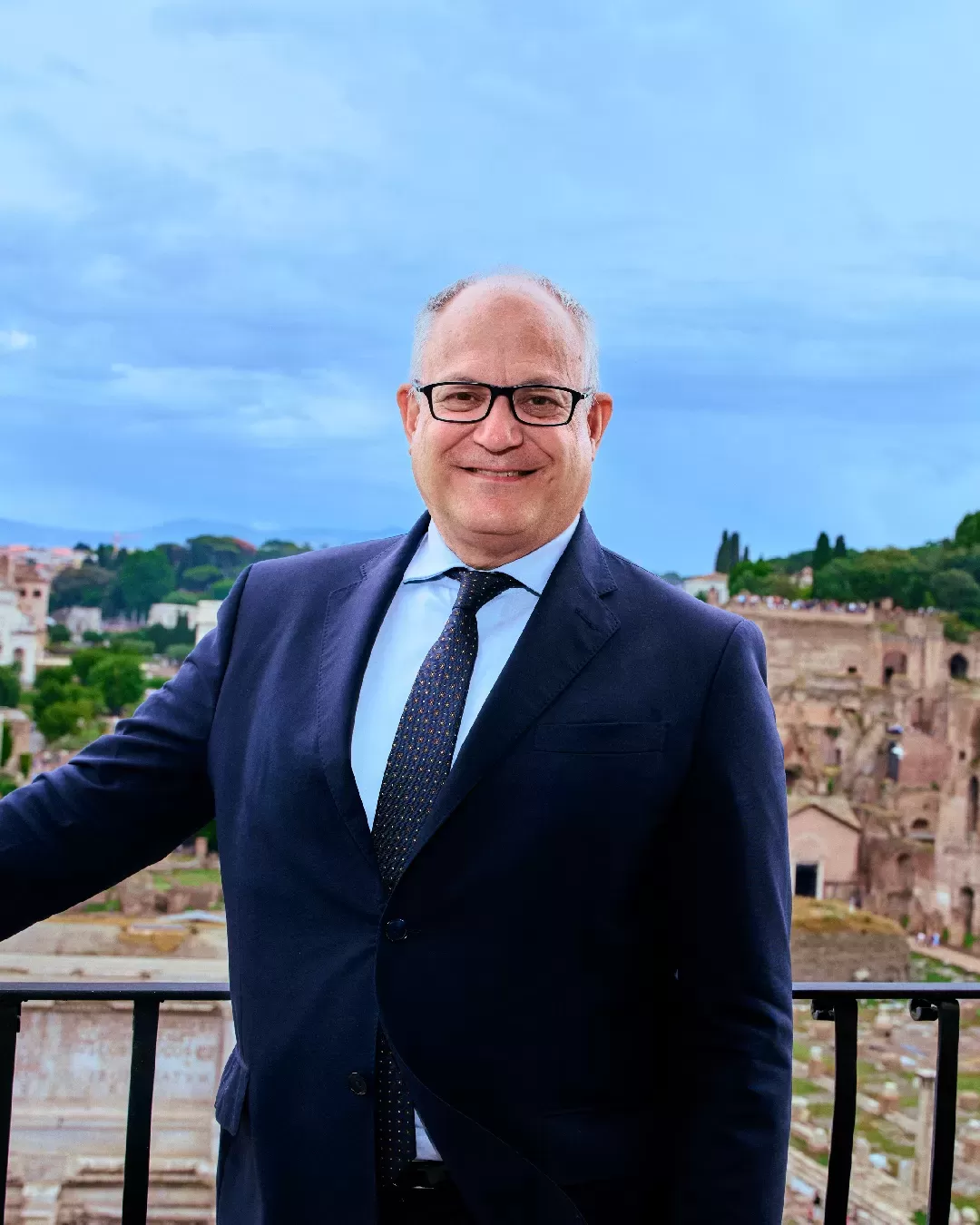
Gen. City Rome, the interview with Mayor Roberto Gualtieri «Creating spaces for culture and creativity is crucial, all the more so in the suburbs»
This year, the buzz in the streets of Rome is louder than usual. Flocks of tourists, pilgrims, nuns, and curious visitors flock to St. Peter’s to welcome the new pope, to cross the Holy Door of the basilica for the expiation of sins, to complete a long journey, or simply to take part in the Jubilee celebrations. Meanwhile, in the city center, groups of young people of all ages and from various places gather, kiss, walk hand in hand, talk, and exchange ideas. Despite the excitement, when you ask a Roman if they like their city, they always respond with great dismay, listing a series of long-standing problems: there’s no space, no time, no organization. It’s a special year for the Eternal City, a key moment in the capital’s history that Mayor Roberto Gualtieri is trying to make the most of to transform Rome from a hit-and-run tourist destination into a cultural and work opportunity for all young people with good ideas. He has been talking about it on social media since 2021, the year he took office at the Capitol, and discussed it with nss magazine a few days ago for a new chapter of Gen. City, a project that tells the story of major Italian cities through their mayors in direct dialogue with Gen Z. From the slogan «Rome is transforming» to the concrete actions taken to revitalize the city and its outskirts—a fertile ground for youth cultural movements—Gualtieri believes the word that will define Rome in 2025 is innovation.
The redevelopment of Rome began in 2021, Gualtieri tells us, an ambitious plan which, as the political slogan chosen by the administration indicates, «aims not only to make the city more efficient, to recover a maintenance deficit, but to truly transform it.» In response to the resignation of Romans, the mayor launched a city renovation project to prove that Rome «can have public spaces on par with the best European capitals.» From urban planning interventions to digital development, for this jubilee, 14 billion euros have been invested, committed as much to strategic innovation as to the protection of the city's cultural heritage. As we well know, there is no construction site in Rome without an archaeological discovery. «The new Piazza Pia – which connects Castel Sant’Angelo to St. Peter’s – was a big challenge, we had very little time to complete it. But this Mission Impossible gave us great motivation.» Highlighting the surprises "gifted" by the work at Piazza Pia, the mayor also talks about the opening of the Roman laundry in the gardens of Castel Sant’Angelo and the Porta Metrovia subway station, which hosts a barracks from Ancient Rome. Discoveries in Rome «delay the timeline, but they make the new works unique, they engage with the past, and we really like this idea of a layered Rome that characterizes new urban developments.»
An issue that Mayor Gualtieri clearly cares about is young people—first by actively posting on social media, and secondly by dedicating spaces and growth opportunities to the new faces of Rome—because ultimately, as we discussed at the end of the interview, politics is not just about communication. Gualtieri’s administration wants to transform Rome from a hit-and-run tourist destination into a «city to return to because there are things to do and there is a rich cultural life, and for us, young people are the thermometer.» The city’s cultural programming is strongly targeted at young people, says the mayor, who recognizes the importance of «creating spaces for culture and creativity as fundamental» for Rome’s development. «We are increasing the calls for cultural initiatives throughout the city, especially in the suburbs, because there is extraordinary vitality there in terms of youth culture.» The Rome administration is also trying to support young people with training and employment programs, adds Gualtieri, such as the House of Emerging Technologies, a lab inside Tiburtina station to «support start-ups and innovative entrepreneurial ventures.» Beyond cinema and fashion, two pillars of Roman culture, Gualtieri emphasizes that Rome is working for young people in all fields, even the lesser-known ones. «We especially try to speak to those who want to come to Rome to bring creativity: we’ve created spaces in some subway stations where you can book to play live music.» Not to forget the issue of high rent costs, which has long affected young people and students in Rome.
«It’s a disgrace,» comments Gualtieri on the problem of housing for young people who want to study or work in Rome but face sky-high rents or, worse, homelessness or unsustainable living conditions. «Together with the mayor of Barcelona, we created a group, Mayor for Housing, and we presented a plan in Brussels to get European support for a new era of public and social housing.» The main goal for the mayor of Rome, as for the mayors of other European cities in the group, is to create «affordable student residences able to offer dignified prices,» to support talent before income.
The high rent issue goes hand in hand with the phenomenon of overtourism, a double-edged sword for all major tourist destinations which this year, with the arrival of the jubilee, risks seriously harming Rome and its residents. To address the problem of excessive crowding in the city's so-called tourist hotspots, the municipality of Rome sought help from artificial intelligence, launching an app supported by ChatGPT to guide visitors toward the hidden treasures of the Eternal City. «Rome must not lose its residents, or it risks becoming a kind of Disneyland,» comments Gualtieri. Ironically named Julia, it is «the world’s first AI virtual assistant created by a public city,» and is available in eighty different languages. Meanwhile, the mayor notes, a ten-year plan has been launched to build 30,000 social housing units that will include residences for both students and senior residents of Rome. Having even attempted in 2022 to nominate Rome for the 2030 World Expo—a bid ultimately won by Riyadh—the mayor’s plans for Italy’s capital seem larger than the city itself. After all, Rome speaks to the entire world, not just Italy, and this year is the perfect occasion to prove it.
What to read next
"Maxxing" has been named the word of 2026
The announcement was made by Dictionary.com, which every year draws up a ranking of the latest linguistic trends

With Ray-Ban, the Marvel universe comes to eyewear
The worlds of Marvel Superheroes Spider-Man, Captain America, Doctor Doom and Deadpool brought to life in some of Ray-Ban's most iconic models
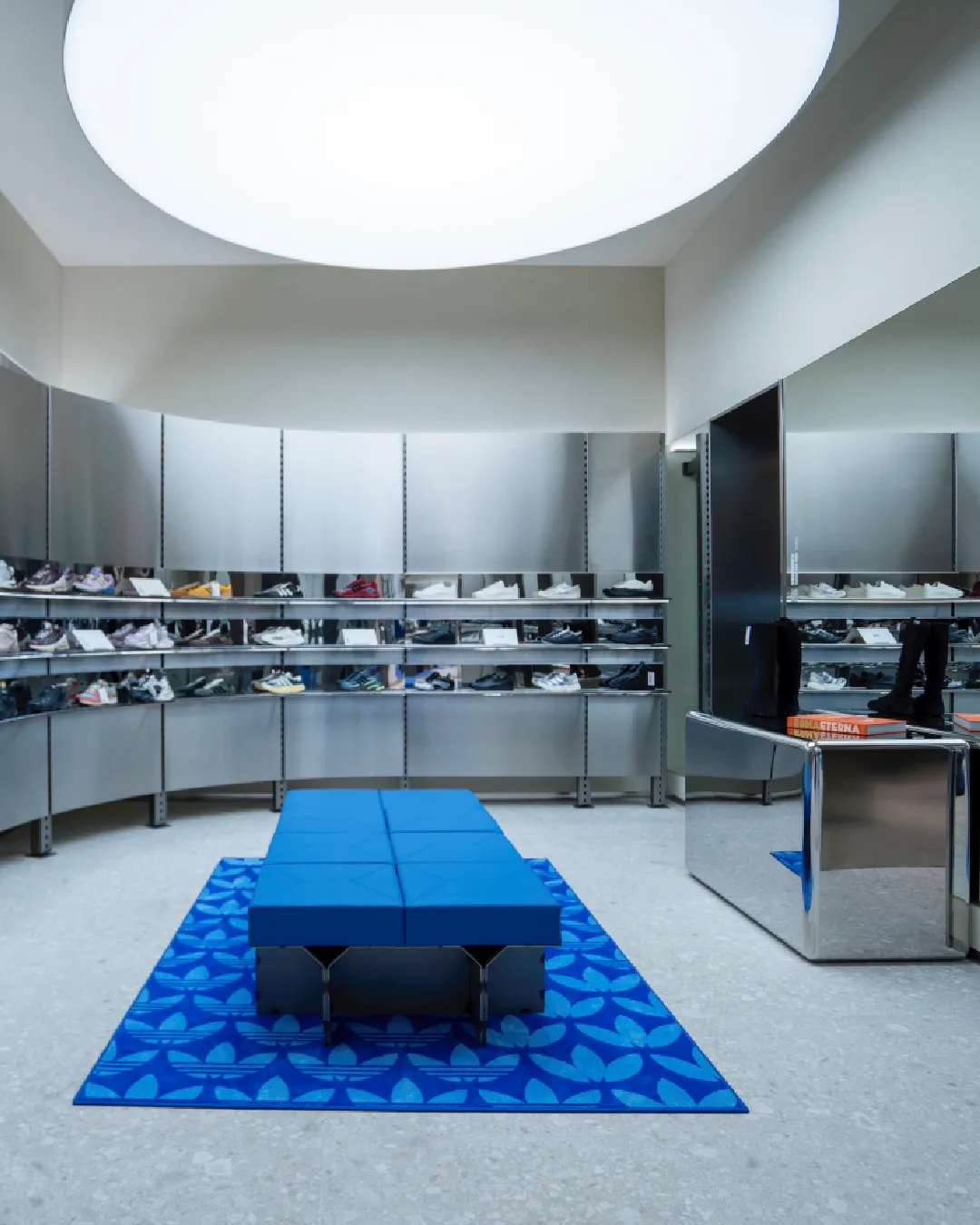
adidas Originals opens a new store in Rome on Via del Babuino
Here's what went down at the opening event