




























"Hope" is the surprise of Cannes 2026 Na Hong-jin’s monster movie is competing at the film festival
Hope is a strange monad within the competition lineup of the 79th edition of the Cannes Film Festival. And precisely because of this, the excitement it generates is the result of a combination of factors that transcend the film itself. The work marks Na Hong-jin’s return to feature filmmaking ten years after the release of his last film, The Wailing. It is currently the most expensive Korean film ever made, the first chapter of a saga whose sequel already has a completed screenplay, as the director himself has revealed, hoping he will be able to bring it to life. And above all else, it is a monster movie. A monster movie screening within the most institutional cinematic event in existence. If monsters arrive in competition here, it is to shake the very austerity that cinema is believed to conform to, and for this reason the film erupts with disruptive force while being watched in the world’s most sacred place for the seventh art.
An unexpected genre at Cannes
These are not, in fact, metaphorical monsters. They are not suggested creatures, barely glimpsed beings meant to say something more human than humans themselves. They are instead massive creatures, slimy, with worms crawling out of their bodies, capable of transforming into beasts before returning to their ordinary form, though still monstrous. They run wildly, giving the impression of being the fastest monsters ever put on screen. They cannot die, not even when a bullet is fired straight down their throats. They are the creatures of blockbusters, the aliens of cinematic franchises. The calamities of disaster movies, the giant creatures turned into collectibles and miniatures. They are exactly what you would never expect from Cannes, and yet the festival places them among its main attractions. Intoxicating because they are entirely unexpected. Overwhelming because of this hybridization between masterful filmmaking and pure sci-fi aesthetics, the kind one could encounter in a Marvel or DC film.
Na Hong-jin’s dynamic direction
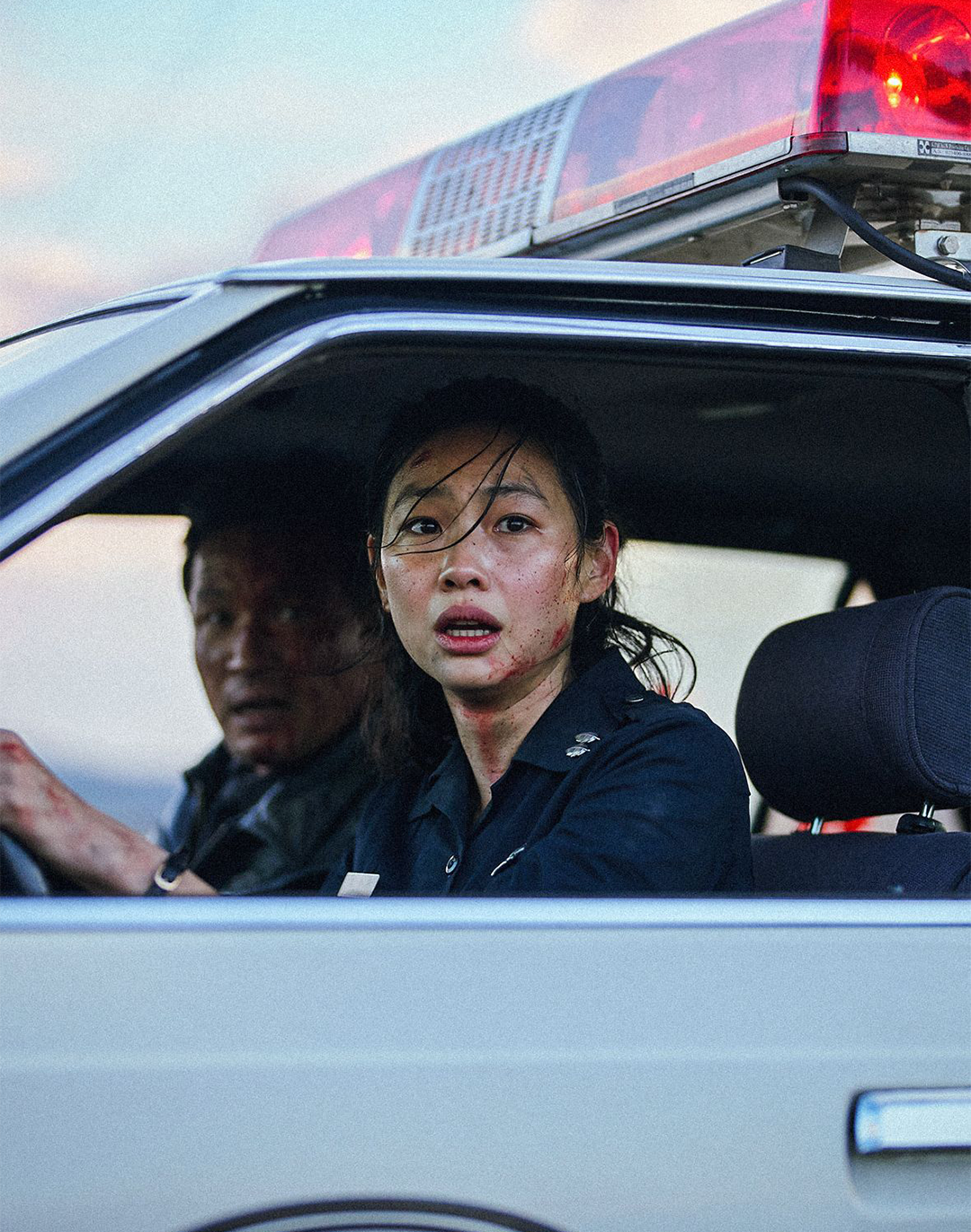
HOPE rules! A Spielbergian scifi action thriller via Korean dark comedy that starts with an hour long action scene that leads to a delightful creature feature. A bit War of the Worlds, Aliens, & Predator. Jung Ho-yeon has one of the great character intros of all time. A blast! pic.twitter.com/C1DRj51S54
— Karl Delossantos @ Cannes (@karl_delo) May 17, 2026
It is through the chase sequences that one truly gets lost inside Hope. By following the camera as it, in turn, follows the desperate races of the protagonists, whether on foot, by car, or on horseback. It is about trying to survive while the geography of the town where the strange events unfold stretches and expands. A layout that must have required meticulous work from the director and especially from the editing and production design teams, who reconstructed not just a portion of Hope Harbor, where the monsters and aliens dwell, but its entirety. From the beginning through the middle of the film, it is above all the roads that create what becomes for the audience a labyrinth deeply familiar to the town’s inhabitants, who move through it freely, allowing for the endless chases that cover the film.
It is almost ironic to speak about the use of space in Na Hong-jin’s work when, within the same film, a far greater one opens up before the characters, reaching all the way into the universe itself. And yet the director’s understanding of the boundaries of his film, and the way he moves within them, allows the audience to feel immersed in every street the characters run through while escaping or trying to hide. Every turn becomes a repetition that calls forth another, and another still, until eventually it becomes impossible not to lose oneself. Nature itself steps in to beautify the destructive violence of the creatures in Hope, transforming the hunt between prey and predator into something that is not only shocking, but also a visual pleasure, with every relentless and unstoppable blow landing whether delivered by humans or aliens.
A spectacular momentum
It is the film’s spectacular dimension that leaves audiences astonished, and perhaps its presence at Cannes only amplifies its impact even further. Carrying the responsibility of representing genre cinema within the festival’s official selection is no small feat, especially when doing so with aliens that resemble a cross between the Na’vi from Avatar and the Demogorgons from Stranger Things. The film also stars Michael Fassbender, Alicia Vikander, returning together on screen ten years after The Light Between Oceans, and Taylor Russell. All of this inevitably makes it one of the essential titles of the 79th edition, whose ultimate journey remains to be seen, but which one day we may look back on and simply say: it was a moment.