
































The Minamorphoses Mina’s transformations on her album covers
Ivano Fossati in the preface to the book Mina. La voce del silenzio recounts how the Tiger of Cremona, after leaving the stage in 1978, became “her own puppeteer,” moving the strings of her own masks in the shadows. If we think about it, the cult of Mina, which still captivates us today, was born precisely at the moment when the singer decided to withdraw from her divistic life, removing herself from the adoring and inquisitive gaze of television audiences and the press at the peak of her success.
It is precisely through this choice of absence, both painfully felt and consciously strategic, that Mina decided to die physically in the eyes of viewers to be reborn as an aestheticized image, transforming into an unmistakable stylized mask. This visual construction project, which made her an icon, was made possible thanks to an artistic triumvirate composed of illustrator Gianni Ronco, makeup artist Stefano Anselmi, and photographer-graphic designer Mauro Balletti, who for over 50 years have chronicled the sonic and aesthetic metamorphoses of the “Mother of the Scream.” On the occasion of her eighty-sixth birthday, we revisit the most visionary and experimental covers of her discography, which were the true engine of her mythification.
The Transformist Diva

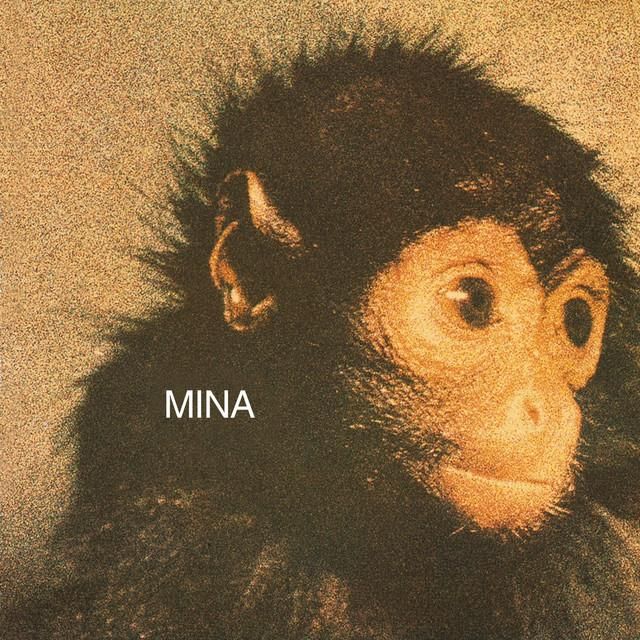



According to semiologist Luciano Spaziante, all of Mina’s album covers live in a paradox: the persistence of the subject through its deformation. In each cover, the singer’s real features, although blended with ever-changing aesthetics and inspirations, are never completely hidden. Years before her final withdrawal, Mazzini, together with her collaborators, began to play with her own image. For example, in Quando tu mi spiavi in cima a un batticuore (1970), the artist is captured in shadow with a neon green face, while in 1971 she released a self-titled album, making a radical gesture: her elegant face was replaced by a photo of a baby monkey.
This choice was interpreted by many as a provocation, but it was actually dictated by practical necessity: Mina was pregnant with her daughter Benedetta and did not want to pose for new photographs. In Altro (1972), Gianni Ronco pushed the metamorphosis into almost expressionist territory: Mina’s face and body were redrawn in a sketchy, nervous line reminiscent of Egon Schiele. In 1973, the collaboration with Mauro Balletti began: in the albums Frutta e Verdura and Amanti di valore, Mina appears with short, teased hair while holding a cigar, immersed in a bokeh atmosphere (later echoed in the international music scene by Kate Bush).
The “Minification” of Art History




One year after her farewell, Mina’s visual experimentation experienced a significant surge. In 1979, she released the album Attila in which she appears completely shaved and pupil-less, with lips stained by a rainbow lollipop. The goal of Ronco and graphic designer Luciano Tallarini was drastic: to completely cleanse Mina’s image of any previous divistic residue through a contrast between the monstrous and the childlike (anticipating an aesthetic later seen in the early 2000s in Bjork’s “Hunter” music video). In the following years, Mina challenged the audience with increasingly extreme transformations, her body inhabiting any form: in Kyrie (1980) her face disappears behind a hockey player’s uniform, in Salomè (1981) she appears bearded, while in Rane supreme (1987) her face is grafted onto the hyper-muscular body of a bodybuilder.
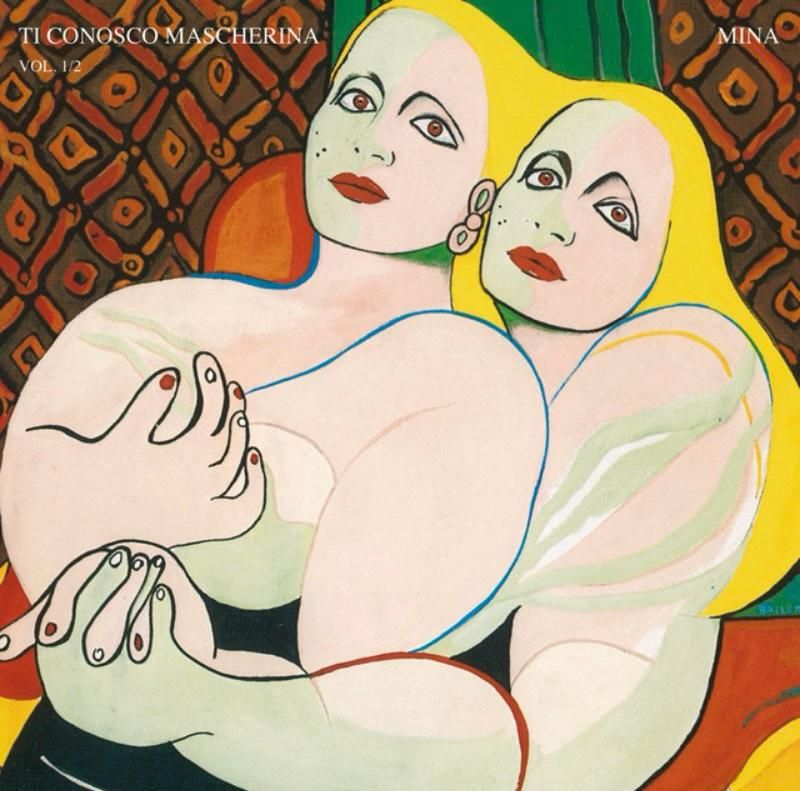

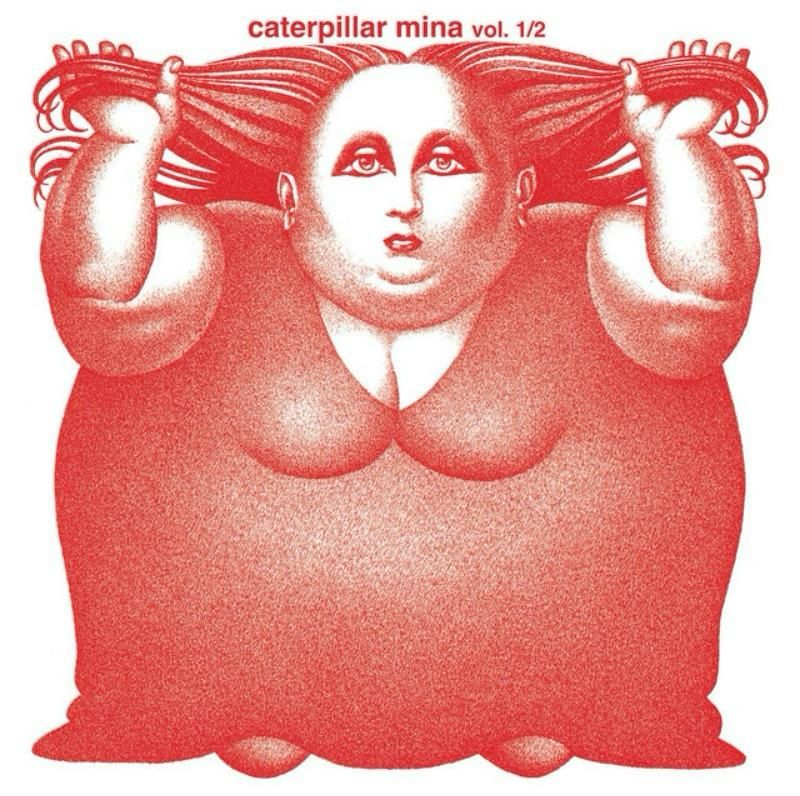
On many covers, Mina’s face becomes the object of a systematic “minification” of art history. Together with Mauro Balletti, the singer has colonized the pictorial imagination of every era: in Ti conosco mascherina (1990) her features are decomposed according to the canons of Picasso and Matisse, on the cover of Olio (1999) she appropriates the enigmatic gaze of the Mona Lisa, while in Caterpillar (1991) she assumes the stately forms of a Botero model. This last image, in particular, is a brilliant sarcastic reaction, a way to silence press commentary on her weight with irony. Mina’s image underwent an identity dissolution through sophisticated use of digital post-production, photomontage, and manipulation techniques.
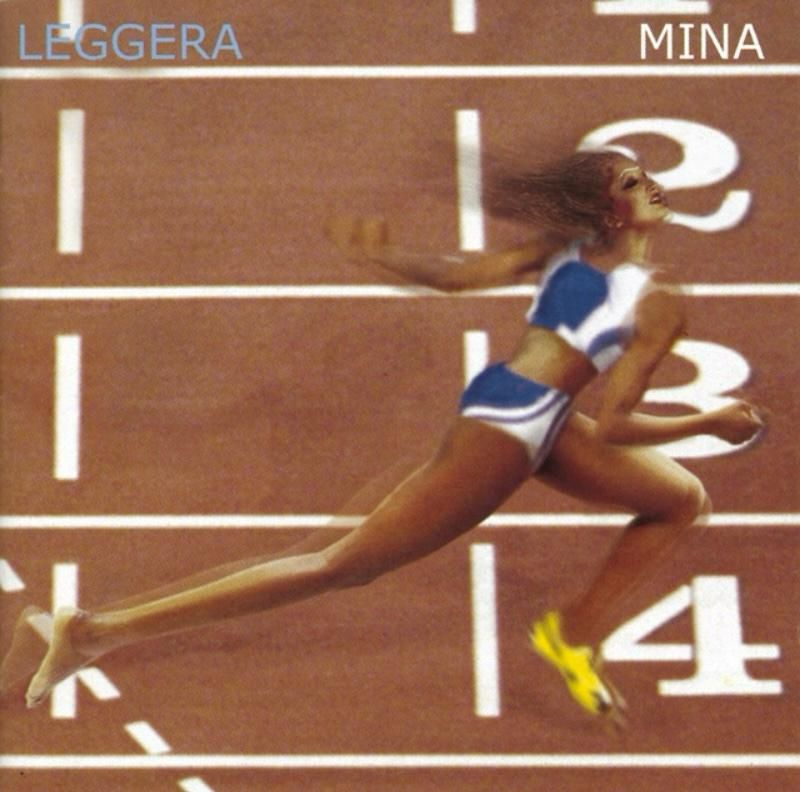




Her team orchestrated real technological transfigurations in which the singer transformed from one object or person to another: an Olympic athlete crossing the finish line in Leggera (1997), a devotional plaque in Dalla terra (2000), a film camera in Sorelle Lumière (1992), jam spread on an Oro Saiwa biscuit in Pappa di latte (1995). This deeply self-ironic spirit, present throughout her visual production, reaches its peak in the album covers in collaboration with Adriano Celentano, where the two artists transform into Disney-inspired characters or, as in the cover of Le migliori (2016), into ladies with an openly kitsch style.
A Timeless Myth
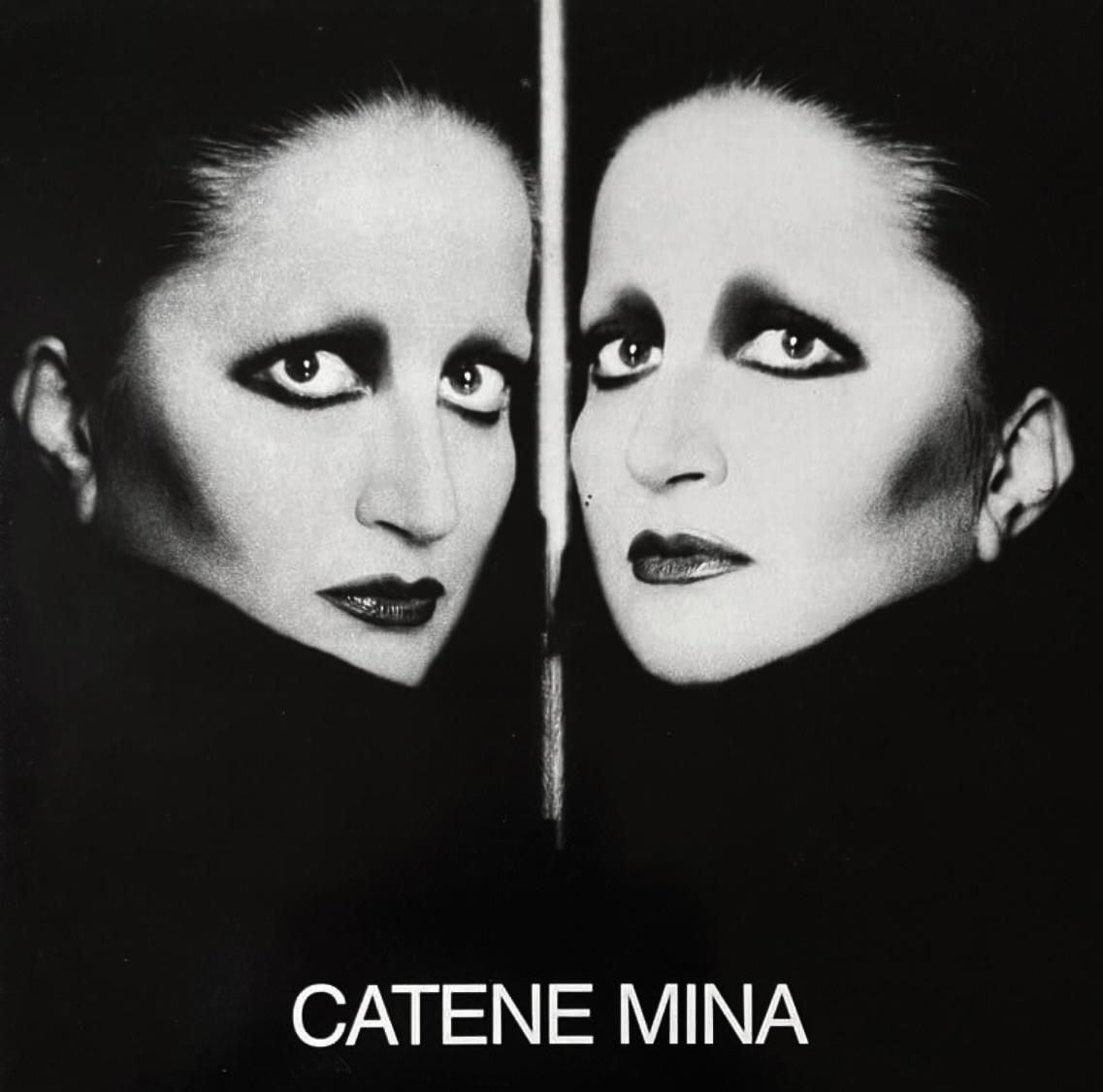


When we think of Mina, our minds almost instantly visualize a stylized figure in black and white, shrouded in mystery and absence. This precise iconographic operation has its roots in the album Catene (1984), where the graphics systematically began to work on subtracting reality in favor of myth. In this noir diptych with Hitchcockian suggestions, Mina’s face ceases to be a portrait and becomes a shadow and profile. Such a powerful imagery fascinates Demna Gvasalia, who, particularly struck by these shots, collaborated in September 2024 with the artist’s team for a capsule collection for Balenciaga.

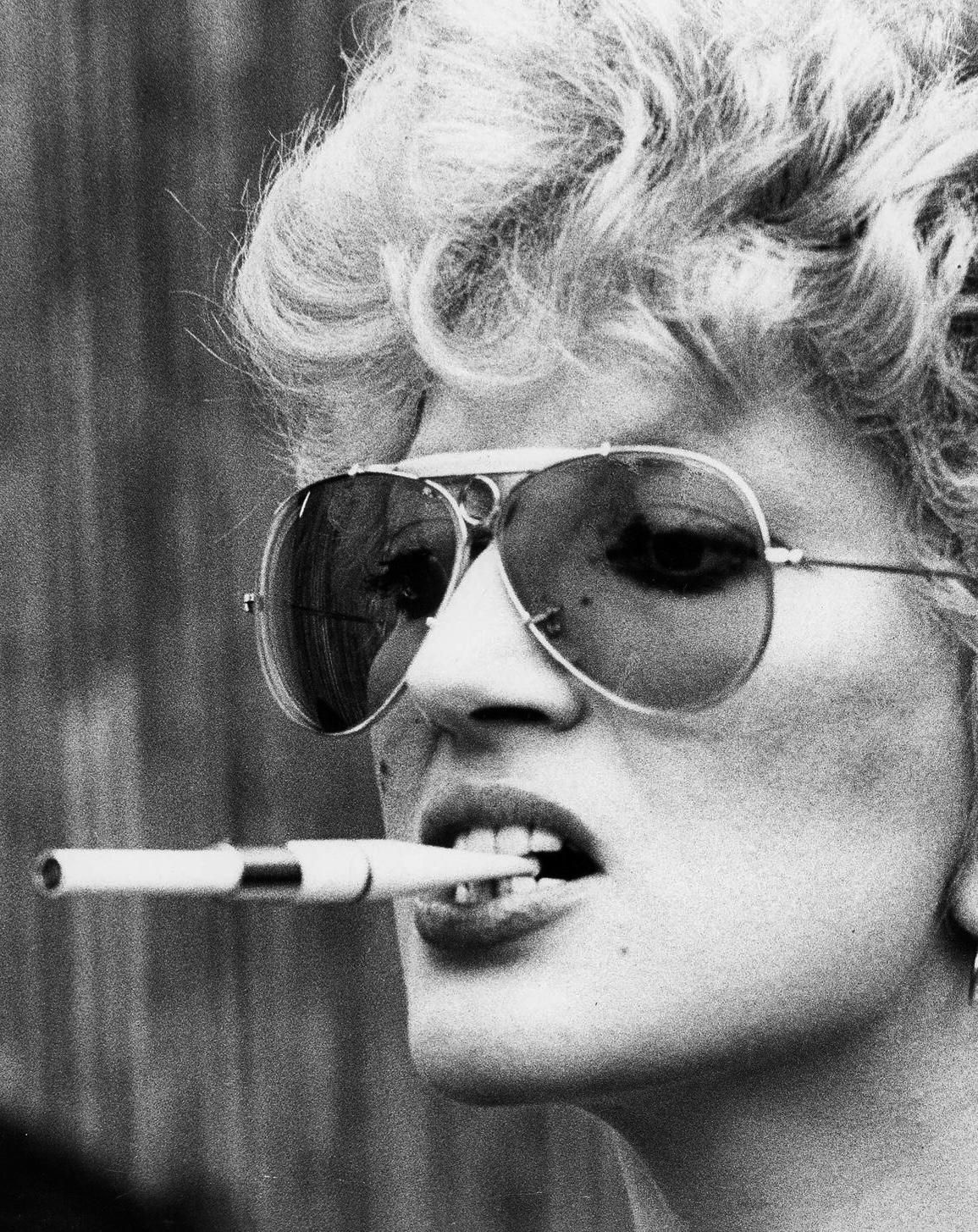



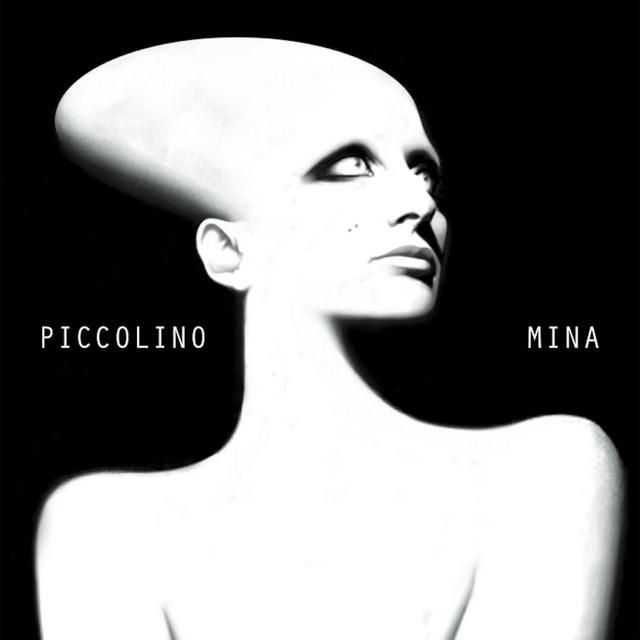
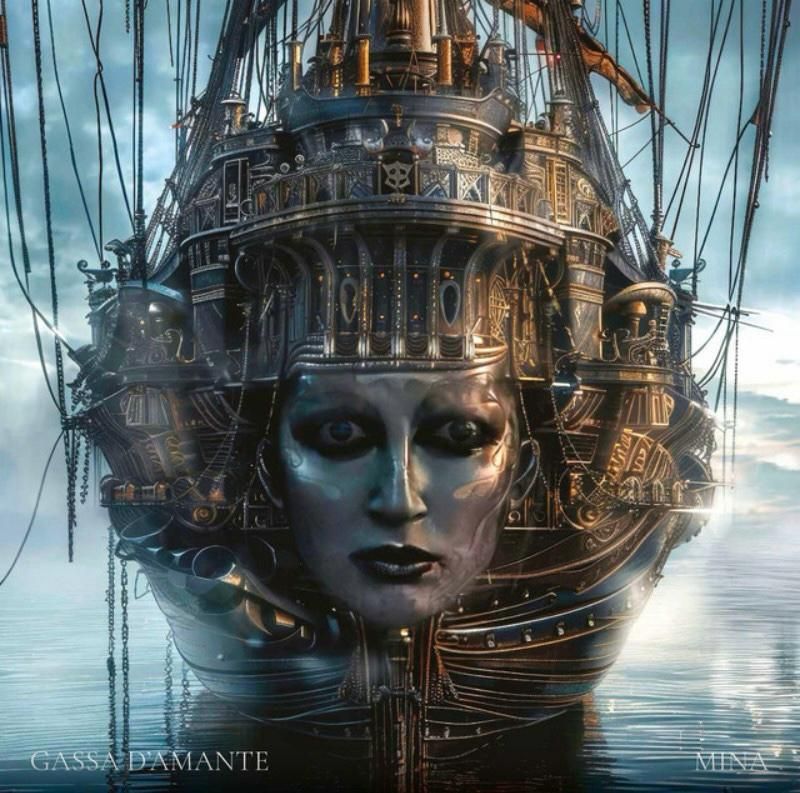
In recent years, Mina’s metamorphoses have pushed toward the boundaries of the post-human. Already with Piccolino (2011) and Maeba (2018), the artist transformed into an alien creature, completing a sort of divinization that sees her migrate definitively from Earth to the galaxy. This aesthetic reflects the strategy of an icon who has today managed to transform absence into a digital omnipresence through collaborations and new musical projects. With the latest album Gassa d’amante (2024), the pioneering use of artificial intelligence for covers and visuals confirms the singer and her team’s ability to inhabit technological revolutions, not merely endure the future