





































Decathlon presents EuroSuit, its first space suit And the first one that can be put on and taken off in less than a minute
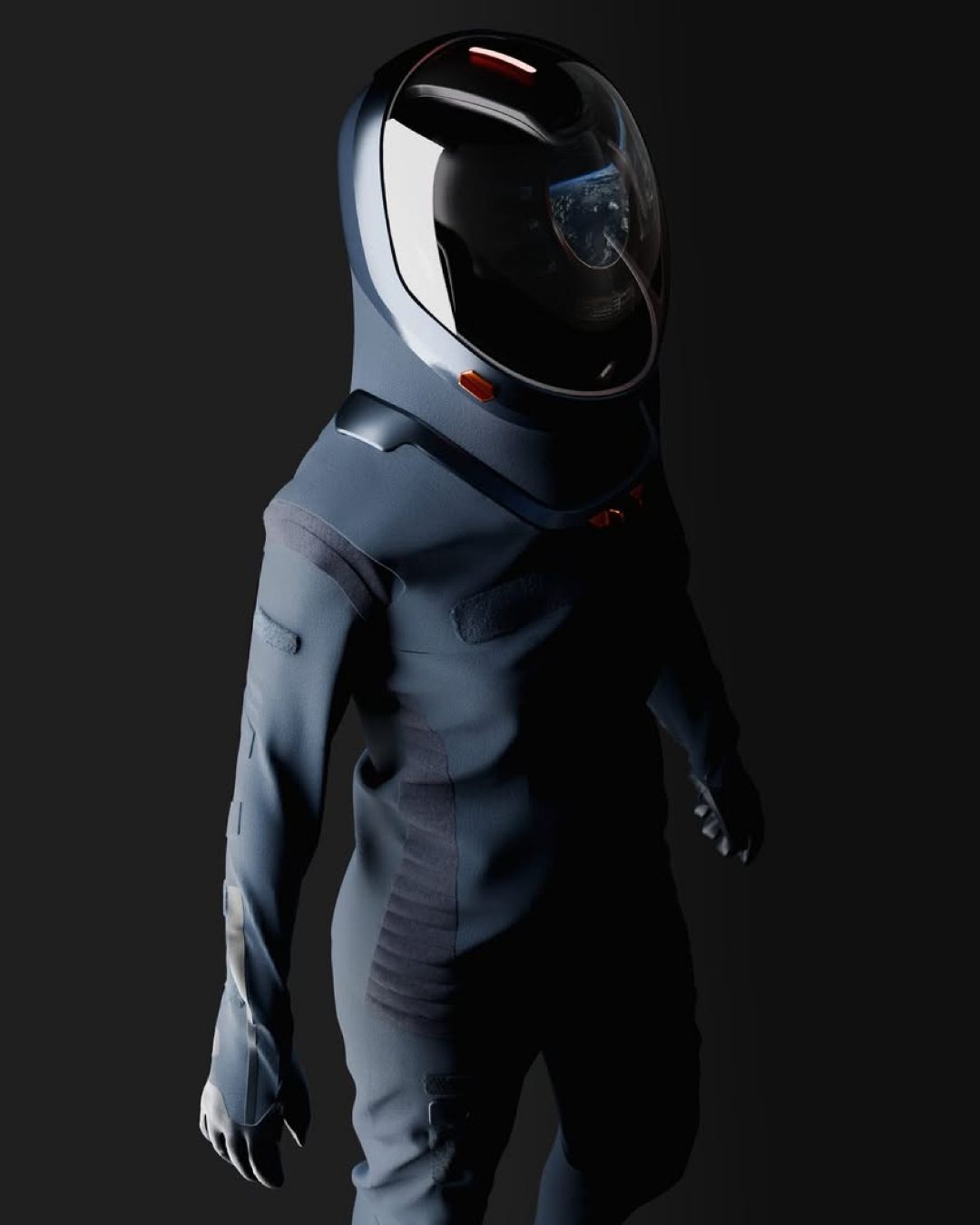
It seems that deep forests, steep terrains and even the vastness of the ocean are no longer enough for Decathlon. The French brand now appears to crave space and aim for the stars, as shown by the announcement of its latest innovation: the creation of a space suit. Alongside the French Space Agency, the start-up Spartan Space, and the French Institute of Space Medicine and Physiology (Medes), it presents the EuroSuit: a suit that can be put on and taken off in less than a minute. A first in the space industry.
Designed to be worn inside a spacecraft, the Iva suit (for intra-vehicular activity) was also created with the aim of ensuring better ergonomics and safety during take-off, landing, and any other critical phase of life in space. It also provides operational responsiveness at lightning speed for the astronauts who wear it, while reducing conceivable risks and dangers during an orbital mission.
But what makes it truly special is the fact that it can be put on and taken off in less than a minute, stopwatch in hand, thanks to its airtight ergonomic zipper closures. Its elasticity also allows astronauts—who, due to the lack of gravity in space, tend to stretch out—to adjust the length of the suit, thus ensuring maximum comfort without feeling constricted in a suit that looks like it shrank in the wash. Of course, a test (ranging from dressing/undressing to manipulating small objects and using a tablet) will be carried out next spring to assess the effectiveness of the prototype and adapt it if necessary.
A lunar project that puts France at the center of the world map
This is a truly French project: it is coordinated by the National Centre for Space Studies (CNES), while the Institute of Space Medicine and Physiology (Medes) is working on an on-board biosurveillance system to monitor the astronaut’s physiological parameters in real time, joined by the French start-up Spartan Space, specialized in human spaceflight systems, life-support technologies and exploration missions. In addition to this alliance between various French organizations, it is French astronaut Sophie Adenot who will have the honor of wearing the suit to test it, making one small step for Man, one giant leap for feminism.
“Today, it’s the Americans who send our astronauts (to the ISS) with SpaceX (Elon Musk’s space company), in exchange for equipment we supply to NASA,” explains Sébastien Barde, deputy director of exploration and human spaceflight at CNES, to Le Parisien. “The Trump administration tends to question this partnership a little. Perhaps the time has come to break free or at least to think about it,” continues the specialist. “We have therefore called on our industries to strengthen their expertise so that, if the time ever comes, we can create a truly European model.”
Is Decathlon the new pioneer of textile innovation?
Il a créé la veste Décathlon ultime
— LONGUE VIE À TOUS MENNÉS (@CaminoTV) October 8, 2025
(ils ont refusé de la sortir)
L’histoire entière pic.twitter.com/wDkspXoZW3
Although this astral journey is a first for Decathlon, the brand proves with this project that it is determined to take a major step forward and no longer limit itself to leggings and nature-colored windbreakers. Textile innovation has become its new guiding principle, particularly with the recent development of a 100% polymer fabric to replace neoprene (a petroleum-derived material) in certain wetsuits. Even its iconic fleece jackets are now being reinvented through increased use of recycled materials. If Pierre Cardin dressed the Milky Way last September in a collaboration with the European Space Agency, the idea that the French brand known for fleece and Quechua tents would do the same certainly wasn’t on our 2025 bingo card. Time will tell where this journey to the stars will take them.
What to read next

Is Decathlon transforming itself into a fully-fledged fashion brand?
When sportswear takes over red carpets and paparazzi photos

In "The Debut" Julianne Moore gives a masterclass in acting
The film, premiering at the Rome Film Fest, hits theaters on January 1, 2027