




































The new ideal home is prefabricated Why more and more Italians are choosing wood over brick
For decades, the idea of home was cast in reinforced concrete: a monolithic structure, synonymous with eternal solidity but also with slow processes, unpredictable costs, and a heavy environmental footprint. Today, this vision is beginning to crack—literally—under the weight of new awareness and desires. It's not just brick that is losing ground, but an entire imaginary tied to complex and often opaque construction. Wood, on the other hand, not only offers concrete answers in terms of sustainability and speed, but also captures the imagination of a generation seeking a home aligned with its values: an intimate refuge, efficient, aesthetically pleasing and, above all, built on certainties. According to data from FederlegnoArredo, wooden constructions are growing at a rate of 10% per year in Italy. In 2023 alone, 10% of new homes were built using prefabricated wood systems, marking an increase of +32% compared to the previous two years. Northern Italy is leading the trend, with Trentino-Alto Adige, Lombardy and Veneto at the forefront, confirming a building culture more oriented toward green construction. In earthquake-affected areas (Umbria, Marche, Abruzzo), demand is also increasing, thanks to the speed of execution and the inherent seismic safety that wood can guarantee.
@montazne_kucice Još jedna pristupačna montažna kuća vrijedna €18K Another budget friendly €18K prefabricated home #prefabricated #prefabricatedhouse #prefabricatedhome #luxuryhome #montaznakuca original sound - montazne_kucice
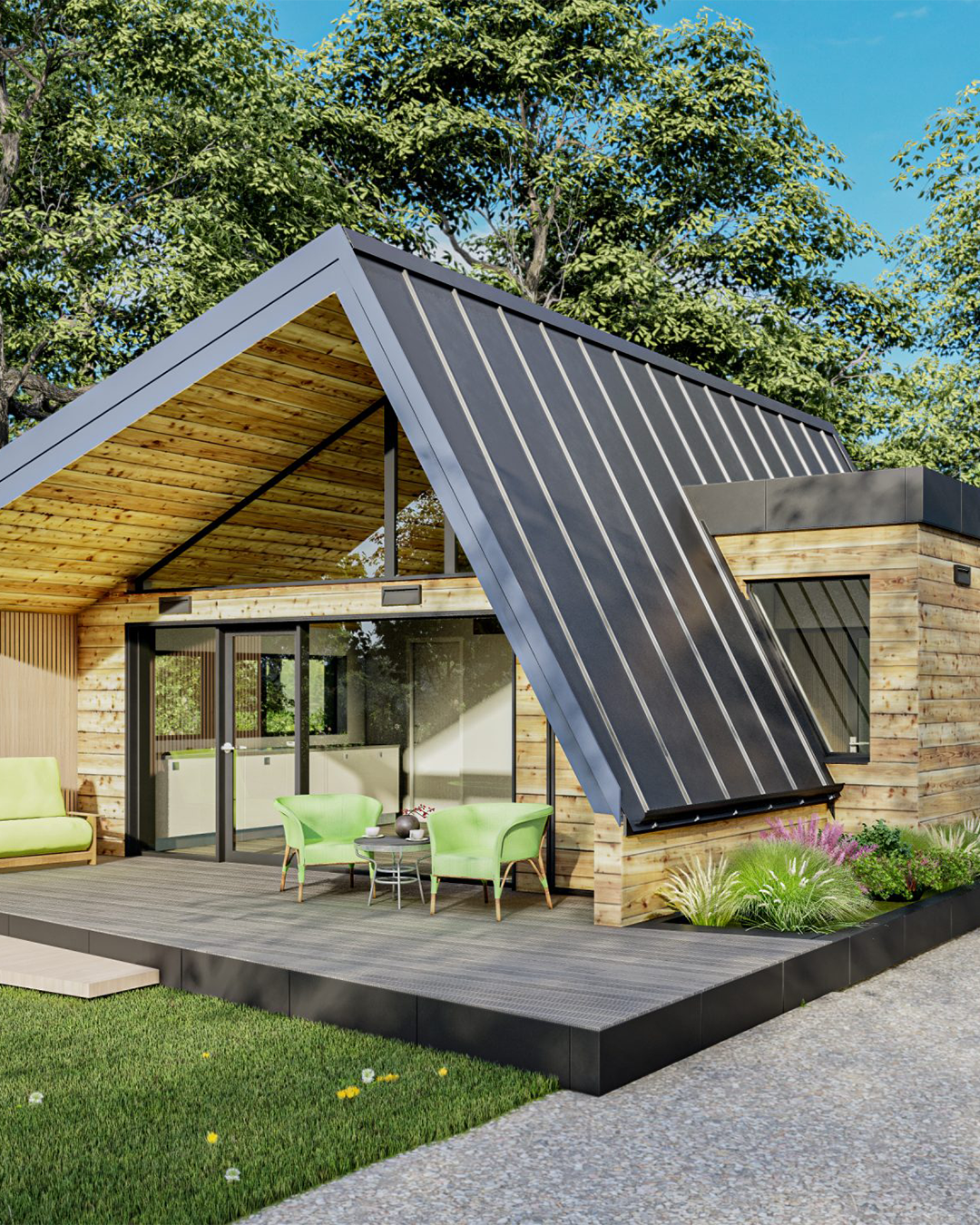
Its success is also measured outside construction sites, in the digital arena. On TikTok and Instagram, hashtags like #TinyHouse, #PrefabHome, and #WoodLife gather millions of views. Nordic design—minimalist and warm—merges with a very contemporary visual storytelling: these homes are small, smart, and incredibly photogenic. They are spaces to live in, but also to share. Companies know this well: many offer virtual tours, online configurators, and "turnkey" processes that feel more like an e-commerce experience than traditional construction. And the point is, it works. A wooden prefab home can be assembled in 3–5 months, compared to the 8–14 months required for traditional construction. The secret behind such speed lies in the prefabrication process: most of the structure and its components (walls, floors, roofs) are built in controlled industrial environments, sheltered from the elements and with precision machinery. This drastically reduces construction times, minimizes errors, and optimizes resource use—shifting the uncertainty of the building site into the efficiency of a factory. Costs are more transparent and often lower: according to Rubner Haus, the average savings compared to a traditional home can exceed 25–30%, thanks to process efficiency and fewer unforeseen issues. All of this comes with high living quality: new structures easily reach Class A or A+, and many are designed to meet NZEB (Nearly Zero Energy Building) standards.
@maddison_cate Finally got around to filming a tiny house tour after nearly 2 years of living in a van travelling Australia and then spending nearly 8 months working closely with our builder to bring this to life, it feels so good to have landed #tinyhome #tinyhouse #tinyliving #offgrid Our Love Was Beautiful - Instrumental Version - Straight White Teeth
Sustainability is not just a claim—it’s a measurable reality. Wood is renewable, lightweight, earthquake-resistant, and highly energy efficient. Most Italian companies use FSC or PEFC certified materials, reduce the use of water and cement, and rely on passive ventilation systems. The living comfort of wooden homes goes beyond mere Class A or A+ numbers. Wood offers excellent acoustic insulation, ensuring peace and privacy, and a sense of warmth and well-being that traditional materials struggle to replicate. In a world where, according to UNEP, the construction sector still generates 36% of global CO₂ emissions, wood prefabrication represents a tangible and measurable response to the climate emergency. New buyers want control, clear timelines, and autonomy—and prefab homes deliver just that. In this sense, it’s not just a matter of materials or costs, but of trust in the process. The user is no longer a passive client waiting: they’re a co-designer, involved in every step, often online. Companies like Biohouse, ABlegno, or A-Fold prove this: customers don’t walk into a traditional showroom—they access an interactive website. They upload a floor plan, design the interiors, request a quote, and receive real-time renderings and execution timelines. It’s a new form of design: faster, more intuitive, more engaging. And it speaks directly to the digital generation.
The rise of prefabricated wooden homes is not just a niche phenomenon—it’s a potential game-changer for the entire housing market. It could push traditional construction to innovate, to improve transparency and efficiency, and to reconsider its sustainability standards. In a time of inflation and prohibitive mortgages, wood prefab homes strike a winning balance between dream and reality, making the purchase of a quality home accessible to a wider audience. The result is a new idea of living: more conscious, sustainable, designed not only to endure in physical time but to communicate a lifestyle model. These homes are resilient not only to earthquakes or weather, but also to mindset shifts and economic crises. Thus, a prefab becomes the perfect content: reassuring yet innovative, natural yet high-tech, accessible yet “cool.” It reflects a contemporary desire to live better without having to endure endless bureaucracy—and perhaps even without asking for permission to dream of a home that truly feels one’s own.