




























Is a pair of jeans really political? Over the summer, three viral campaigns reignited the debate on the political nature of denim.
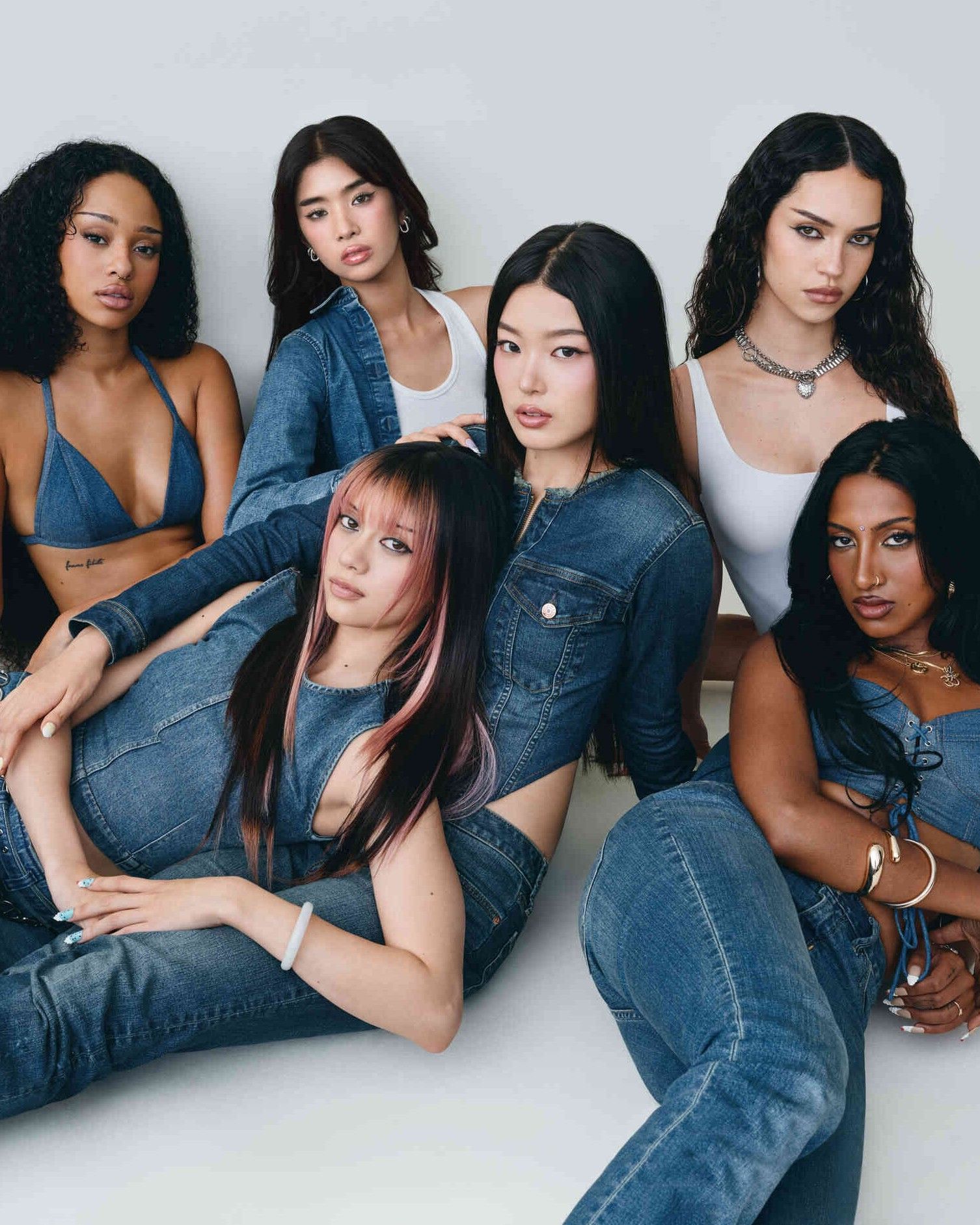
Like it or not, the American Eagle advertisement featuring Sydney Sweeney has now reached the proportions of a cultural watershed and a sign of the times. Not only has the phrase "has great jeans," playing on the phonetic ambiguity between actual jeans and "genes," become a sort of meme and recurring joke among the terminally online; but the cultural relevance of Sydney Sweeney’s ad has generated, over the summer, two other campaigns, by Gap and Lucky Brand respectively, that sought to respond to the popularity and implicit messages of American Eagle’s campaign. Many have interpreted the campaign’s slogan as a nod to "genetic superiority" represented by a white, blonde, attractive woman, following the near-total abandonment of the more or less superficial ambitions of diversity and inclusivity championed since 2020. The fact that the Trump administration expressed appreciation for the campaign, that Sydney Sweeney herself is a registered member of the Republican Party, and that the brand’s CEO, Jay Schottenstein, and his family are considered by some to be (financial) supporters of the Republican Party and Trump did not help dispel suspicions that the ad alluded to something beyond just jeans. And while social media was filled with debates about beauty, white privilege, and representation, Gap responded with an inclusive campaign featuring the girl group KATSEYE, a global ensemble dancing to the rhythm of Milkshake by Kelis, amassing over 20 million views on Instagram. Adding a confusing final note to the back-and-forth was Lucky Brand, which featured Addison Rae in a pair of ultra-low-rise jeans in a more explicitly sensual video that sparked discussions about the performativity of nostalgia and the commodification of the body. But why has the humble pair of jeans become such a fierce object of contention?
The Katseye Gap Jeans advert is the perfect antidote to the white supremacists American Eagle Jeans advert with Sydney Sweeney. It totally trounces it.
— Glow Lee (@GlowanneLee) August 22, 2025
Who would have thought that in 2025 people calling themselves Christians would support anti diversity and inclusivity… https://t.co/yvyEPVzXBu
The truth is that perhaps the internet populace is reading too deeply into an issue where timing and coincidences have played a more significant role than ideology. Not only is American Eagle’s ad a blatant remake of Calvin Klein’s with Brooke Shields, using the exact same words, which somewhat invalidates accusations of promoting eugenics propaganda; but, conspiracy theories aside, it’s a traditional practice for denim to be promoted with high-profile campaigns in the summer, anticipating the back-to-school season and the time when everyone buys new clothes for the colder seasons. Their accumulation over the summer months is, therefore, no coincidence. Considering the timelines of video production that include one or more talents (an actress in the case of Sydney Sweeney, an entire group of performers like KATSEYE, and a pop star like Addison Rae), it’s unthinkable that Gap’s ad, with all its choreography, dancers, and the need to authorize the song’s reproduction, was a “response” to American Eagle’s. It’s more realistic to think it required months of preparation and was ready well before Sydney Sweeney’s ad was released. The same applies to Addison Rae’s. It’s more the internet populace, half-composed of bots tasked with making us angrier and angrier, that gets heated defending the same ideology under ever-changing guises—tomorrow it could be a fizzy drink or a Disney movie, and the core of the argument will remain the same.
However, the volume of the debate tells us that this pseudo-intellectualism (no matter how much it’s argued, we’re talking about a simple advertisement, not a book or a cultural movement) is instrumentalized to distract the public with trivial squabbles. In short, people argue over which worldview is better, trading insults since neither side will ever persuade the other. In a neoliberal world, the real winner of the quarrel won’t be the smartest or most outraged commentator but the mega-brand that sells the most jeans. Incidentally, in this radical-chic brouhaha, no one has ever asked how and where these jeans are produced. And it’s not the first time denim has become controversial to fuel sales and etch itself into the consumer’s memory. Beyond the archetype of American Eagle’s campaign, back in 1980, it was Brooke Shields, then only 15, who uttered the phrase "You want to know what comes between me and my Calvins? Nothing" in a Calvin Klein campaign accused of sexualizing a minor and representing, in essence, the climate of decadent hedonism and somewhat corrupted morality that dominated the ‘80s. In ’95, Calvin Klein again captured the growing allure of grunge and the sense of doomed romanticism that permeated the decade, with a campaign full of teenage models in suggestive poses, withdrawn after accusations of promoting "heroin chic", which President Bill Clinton called "outrageous." Not to mention the "For Successful Living" series from 1991-2000 by Diesel, created by Jocke Jonason, which used increasingly caustic irony to thrust themes like politics, religion, sexuality, and race into the spotlight with ironic and satirical images.
@dv73london Addison Rae’s in new jean ad campaign #fyp #addisonraeedit #dv73world #auraarchive #visualisation #aura original sound -
What today’s campaigns and the controversies they spark tell us, however, is of a society far different from the one Calvin Klein or Diesel sought to shock with relative candor and naivety. This summer’s three politically charged denim campaigns have been analyzed far more deeply and in real-time, existing in opposition to one another and ultimately being the product of an era of hyper-connectivity where marketing is no longer just about sales but about generating engagement that can be quantified as a mere percentage but consists, in effect, of a heated, pervasive debate, at times excessive relative to their original purpose of driving sales. This very debate has revealed the existence of a fragmented society, where consumerism intertwines with activism and rage-baiting to capture attention in a saturated attention economy. But does it make sense to argue so much over what is, in the end, a metaphor? The debate over these jeans shows just how easy it is to mislead the public, which will more eagerly discuss the superficial semiotics of an ad and what it says about today’s world than, for example, where and how the denim of these brands is produced—a question whose answer could truly reveal which company is more “ethical.” Denim, in the end, is just a finger pointing at the moon: a symbol that distracts from a more complex ideological struggle, made up of capitalism, the decline of cultural values, and the search for authenticity in an increasingly commercialized world. By continuing to argue over jeans, we lose sight of the real battle: not the fabric, but what it represents and conceals.