
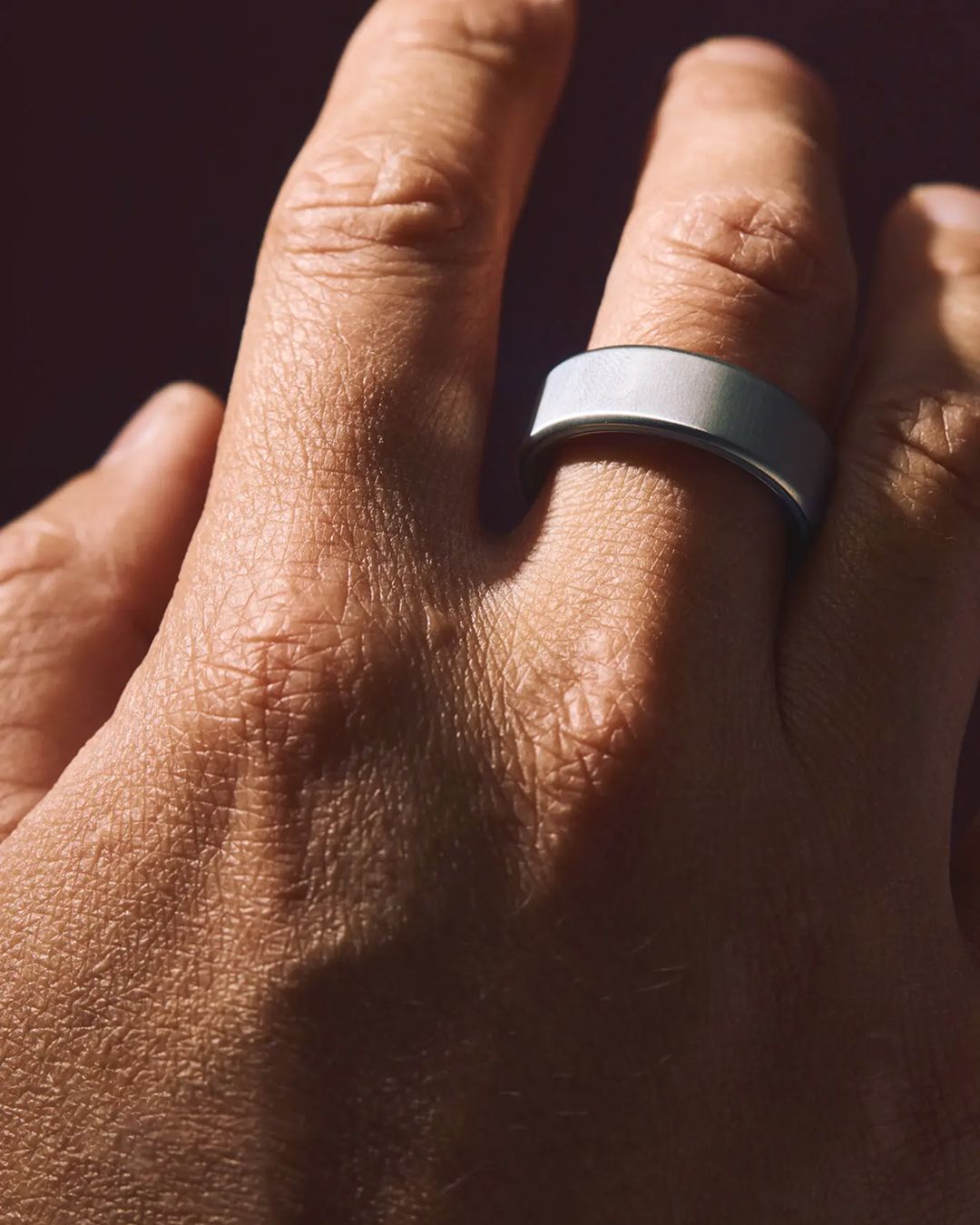
Everything there is to know about Oura Health's IPO The smart ring company is approaching a market capitalization of $14.1 billion
Oura Health, a company specializing in health and fitness monitoring devices, is preparing to make its debut on the US stock market: according to Business of Fashion, the company intends to raise up to $2.2 billion through an IPO — that is, a public offering through which a company makes its shares available for the first time. 50 million shares will be placed on the market, priced between $40 and $44 each; this would give the company a market capitalization of approximately $14.1 billion.
Founded in 2013, Oura Health has built its market around a fairly simple idea: allowing consumers to collect and analyze data about their own health through a device more discreet than the more traditional smartwatch — namely, a ring. Its products monitor parameters related to, among other things, sleep, physical activity, and cardiovascular health, transferring the information to a dedicated app.
In the past year alone, the company has sold over 3 million smart rings.
Understanding the potential of Oura Health
@stephthefounder oura ring, one of the most iconic consumer / health tech / hardware companies filed for ipo! everything you need to know in 90 seconds (, a former investment banker who still nerds out on financial docs) ipo breakdowns part 5! stay tuned for many more this year
original sound - stephthefounder
Oura Health's rings have become part of a broader ecosystem that includes apps and digital solutions, as well as services such as Oura Advisor, an artificial intelligence-based assistant that processes personal data to provide users with guidance and insights. The company also sells its rings in various finishes, with products costing up to $500 for premium versions.
Oura Health's business model, however, is not based solely on smart ring sales. The company also offers Oura Membership, a paid service that provides access to dozens of metrics and health analyses recorded by the ring. Areas covered by the membership — which has over 5 million subscribers — include nutrition, fertility and conception planning, as well as medication and therapy tracking.
Oura Health's IPO comes at a particularly buoyant time for the US stock market. In 2026, SpaceX carried out what has been described as the largest public listing ever recorded globally. Further offerings of comparable scale could soon follow: OpenAI and Anthropic, two of the world's leading artificial intelligence companies, have both expressed their intention to list on the New York Stock Exchange.
What do smart rings have to do with US politics?
Since 2024, Oura Health has significantly stepped up its lobbying activities in the United States, raising its annual budget from around $40,000 to over one million dollars. This growth in lobbying activity coincides with the company's expansion in the North American market, where it now controls approximately two-thirds of the smart ring sector. In 2025, Oura Health also signed an agreement with the US Department of Defense, which has become one of its major clients, to supply rings as a benefit to a portion of its civilian and military personnel.
The agreement between Oura Health and the US Department of Defense also includes a collaboration with Palantir, a data analytics company that has long been active in the security and defense sector, with well-established ties to the US government and military institutions in several countries. The partnership has fueled speculation on social media, where the theory has spread that Oura may be sharing ring-collected data with Palantir for surveillance purposes. The company has rejected these allegations, however, clarifying that its operations are conducted in compliance with privacy regulations in both the United States and the European Union.
Smart rings have become particularly popular in circles close to the Donald Trump administration, driven by the belief that monitoring physical parameters can help detect certain health conditions early and, according to this view, contribute to reducing costs borne by the federal healthcare system over the long term. Smart rings, specifically, have become one of the devices most closely associated with the MAHA (Make America Healthy Again) movement, which is closely aligned with the Republican sphere and characterized by critical stances toward vaccines and certain aspects of conventional medicine. Among the leading figures of this movement is Robert F. Kennedy Jr., the US Secretary of Health, who has repeatedly championed the importance of wearable devices in taking a more active and independent role in managing one's own health.