
Will we build data centers in space? Elon Musk's proposal, now that the United States will be cutting investments in AI
During the campaign for the midterm elections of November 3, which the Democratic Party won by a landslide, opposition to the spread of data centers was one of the few issues on which conservative and progressive candidates were aligned. Representatives of both sides declared their intention to obstruct the construction of new data centers in the country — a stance that taps into a fairly evident and cross-partisan discontent among the American population and beyond.
Trump's declining popularity is also tied to this issue. The U.S. president has repeatedly described data centers as an opportunity for economic growth, opposing the introduction of stricter regulatory constraints on American companies developing artificial intelligence systems. The concern, under this framework, is that overly stringent regulations would end up putting the United States at a disadvantage in its technological competition with China. This policy line, however, struggles to find support even among conservative voters themselves — and that is no coincidence: many projects for the construction of new data centers affect rural areas, often located in the very territories where the Republican Party enjoys its strongest support.
In just four years, the number of operational data centers in the United States has nearly doubled. Estimates suggest that in the medium term the number of these facilities could exceed 4,000 units spread across the country. At the same time, the number of local governments seeking to curb this expansion is also growing, with restrictions being introduced on the construction of new facilities — as the state of New York has recently done, for example.
A cost the United States no longer wants to bear
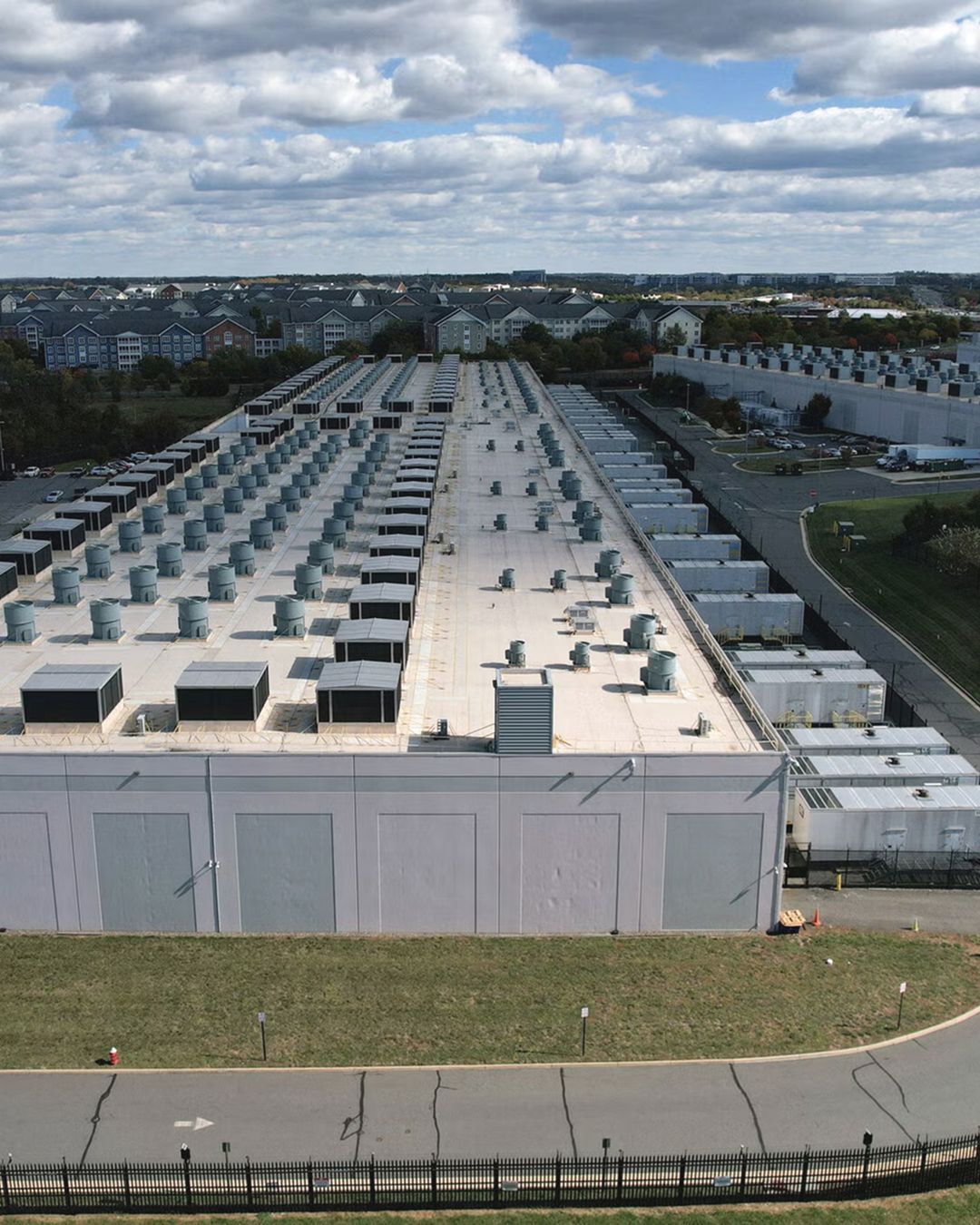
Data centers are enormous industrial complexes that house the computing infrastructure required for the operation of digital services and the systems of major technology companies. To function, however, they require vast amounts of electricity and water — used primarily to cool servers and keep facilities at appropriate temperatures — in addition to the constant noise produced by ventilation and cooling systems, which can be particularly disruptive for those living nearby. These are the main reasons behind the opposition from many residents: the prospect of finding themselves next to large industrial structures, often poorly integrated with the surrounding area, noisy, characterized by high energy consumption, and potentially carrying environmental consequences.
The shift in attitudes toward data centers and artificial intelligence was far from inevitable. When ChatGPT launched in 2022, the sector was buoyed by strong enthusiasm and very high expectations. In the years that followed, however, public perception of AI gradually changed. Concerns about the consequences for the labor market and social equilibrium, combined with doubts about the power and accountability of technology companies, have fueled growing distrust of the entire sector. This trend is confirmed by the data: according to a recent poll by U.S. broadcaster ABC, more than 70% of respondents are opposed to the construction of a data center near their home.
Elon Musk's proposal
Companies in the sector tend to emphasize above all the positive economic benefits that the construction of new facilities could generate for individual communities, starting with the creation of new jobs. A significant portion of that employment, however, involves the workers and tradespeople hired during the initial construction phase: once operational, data centers require relatively little maintenance — managing an entire facility generally requires no more than a few dozen staff members, up to a few hundred in the largest complexes.
Against this backdrop, some major technology companies are exploring the possibility of relocating part of their data centers to Space in the future. Supporting the growth of artificial intelligence systems will require increasingly large, energy-intensive infrastructure that is difficult to build on Earth, not least due to resistance from local communities and environmental constraints. Companies such as Google, OpenAI, and Elon Musk's xAI are therefore looking to Space as a possible alternative for expanding, with greater freedom, the computing power needed to train and run artificial intelligence systems.
One of the main advantages of this solution would be the ability to harness solar energy more continuously and without the losses caused by the atmosphere and the alternation of day and night. The goal, at least in the most ambitious projections, is to build constellations of thousands of servers powered directly by the Sun. The plan, however, is still far from being realized, partly due to a series of technical and logistical challenges that would be relatively straightforward to manage on Earth but become far more complex in Space. In all of this, Elon Musk's xAI could nonetheless start from a position of advantage over other technology groups, thanks to Starlink, the satellite network that provides Internet connectivity via satellite links.
What to read next

This holiday season is a gamer's paradise
"Zelda: Ocarina of Time" and "GTA VI" are betting on nostalgia
The "AI panic" triggered one of the worst financial crashes in recent years
Has the financial market placed too much trust in data centers?