
The 5 most iconic designs by Jony Ive Did you know that Apple and Ferrari share a designer?
Ferrari unveiled last night the brand’s very first fully electric automotive model, the Ferrari Luce. Priced at around €550,000, the car marks a drastic departure from the brand’s previous vehicles: for the first time ever, Ferrari has developed a five-seat model. The idea came from the mind of Jony Ive, the legendary British industrial designer and former Chief Design Officer at Apple. After leaving the Cupertino company in 2019 following twenty-seven years there, Ive founded his creative agency – LoveFrom – and has since collaborated with clients including Moncler, Airbnb and, most recently, Ferrari. Considered one of the pioneers of contemporary design, Ive’s revolutionary creations are countless, although some are undeniably more memorable than others. Here’s a timeline of the 5 best objects designed by Jony Ive.
iPod (2001)
@barachoplays iPod Classic - commercial 2000s #iPod #ipodclassic #ipodsongs #itunes #apple #2000s #2000sthrowback #oldcommercials #jet #appleipod #ipodchallenge #dance som original - Baracho plays
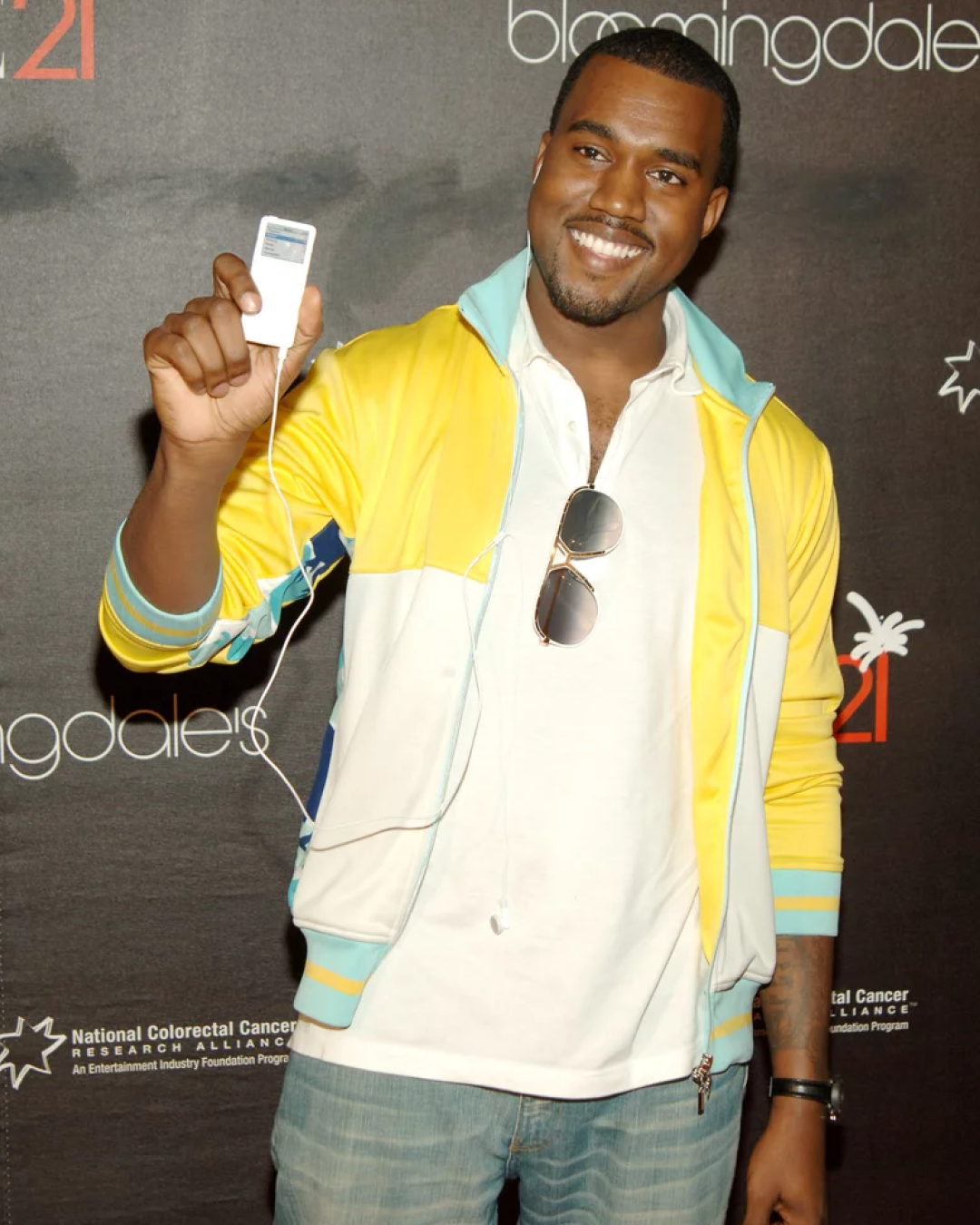
After becoming vice president of Apple’s industrial design division, in 2001 Jony Ive released his second major project: the iPod. Far more than just a simple MP3 player, the iPod revolutionised the way people listened to music and how music itself was communicated to the masses. At a time when music players were cluttered with buttons, removable batteries and almost non-existent interfaces, Ive imagined a minimalist object, white and almost sterile-looking, dominated by a single large central wheel. Now considered a relic, the iPod was Apple’s first step toward the design identity we know today.
iPhone (2007)
When Apple unveiled the first iPhone in 2007, the phone industry was dominated by Blackberry, Nokia and Motorola. Smartphones already existed, but they were primarily designed for work: physical keyboards, tiny screens and overly complex interfaces. Together with Steve Jobs, Jony Ive imagined something completely different: the first iPhone eliminated almost every button and transformed the entire screen into the interface itself. The iPhone’s design didn’t just change Apple, it redefined contemporary aesthetics as a whole. According to an old presentation video, Ive once said he had an almost obsessive fixation with surface continuity, rounded edges and the idea that technology should feel “human” rather than mechanical.
The Leica Digital Rangefinder Camera (2013)
In 2013, together with designer Marc Newson, Ive created a one-of-a-kind Leica M for a charity auction organised by the (RED) foundation. The project required more than five hundred prototypes and months of development, before eventually being sold at auction for nearly $2 million, making it one of the most expensive cameras ever sold. The camera featured an anodised aluminium body sculpted as a single continuous block, eliminating every unnecessary element.
Christie’s podium (2026)
Despite the recurring minimalist leitmotif, not all of Ive’s projects are tied to the tech industry. In recent years, the British designer has increasingly moved toward the world of luxury and cultural experiences, even collaborating with Christie’s. For one of the company’s latest international auctions, LoveFrom designed a new modular podium intended to redefine how objects are displayed during public sales. Once again, Ive worked through radical subtraction: no decorative elements, no invasive branding, while the lines and corners of the solid wood structure became fluid and harmonious, vaguely recalling the old iPhone.
OpenAI’s first device (2027)
Sam Altman explains that OpenAI approached Jony Ive’s team after realizing computers had suddenly become able to think and understand.
— Wes Roth (@WesRoth) November 25, 2025
He emphasizes that the current hardware paradigm feels limiting for this new intelligence.
Their collaboration began as an open-ended… pic.twitter.com/lEpjcFvXxG
The most anticipated project connected to Jony Ive is probably the one that still hasn’t been released yet. After months of rumours, in 2025 OpenAI announced the acquisition of io Products, the startup founded by Ive together with Sam Altman. The goal is reportedly to develop the first major consumer hardware product built around generative artificial intelligence. According to several Silicon Valley sources, the product could have an impact similar to the iPhone back in 2007. It’s still unclear whether it will be a wearable, a home assistant or some kind of hybrid object never seen before, but the mere fact that Ive has returned to consumer hardware has already reignited Silicon Valley’s obsession with industrial design.