






























Is the sneaker industry in decline? Everything you need to know according to the latest market reports
Over the past twenty years, the sneaker market has undergone an unprecedented evolution: from shoes primarily intended for sports activities, they have made their way into daily wear, significantly influencing the fashion industry. This phenomenon reached its peak during the pandemic, when sportswear also became acceptable in more formal settings, such as workplaces. Today, however, the initial momentum of the sneaker market seems to have partially waned.
After at least two decades of uninterrupted growth, the sneaker sector appears to have entered a contraction phase, and publications such as The Business of Fashion are beginning to notice it. In an article based on a report obtained exclusively from Bank of America, one of the leading financial institutions in the United States, the presentation of Nike's new flagship product, a non-sneaker called the Nike ReactX Rejuven8, has led the publication—and the entire industry—to question the current relevance of sneakers in the market.
Do Sneakers Still Sell?
To describe the current situation, The Business of Fashion points to the sales decline of the famous Adidas Samba, which had achieved enormous success between 2023 and 2024, as a warning sign. For this reason, Bank of America has downgraded the company's stock, essentially advising its clients, and more broadly anyone involved in finance, not to invest in the company—a decision that has been widely commented on, even beyond professional circles.
While a slowdown is expected for Adidas, Nike seems to be on a clear rebound. For example, sales of non-sneaker footwear have increased by 5,811% on platforms like StockX. This dynamic could reduce the scope and effectiveness of competitors’ strategies, or at least limit their ability to operate as they have in recent years. In a sense, Nike’s rise may benefit not only its own interests but also the overall market balance.
More generally, over the past three years, the entire sportswear segment has stagnated: while in 2022 sales had grown by over 10%, by 2025 this growth had barely surpassed 1%. Several analysts note, however, that when a sector reaches very high revenue levels, it is entirely normal to experience a slowdown, if not an actual decline.
What’s Happening in the Resell Market?
Considering the relevance of sneakers in the global market makes sense only if one looks not only at retail data but also at resell figures—a practice that, at the right time, contributed to the rapid spread of sneakers.
BoF has observed that the sneaker industry is in the midst of a downcycle caused by the "casualisation trend,” the phenomenon by which clothing has become progressively more informal, with casual pieces entering everyday wardrobes thanks to streetwear, athleisure, and the sneaker boom. This insight helps shift the reflection to resell, which, unlike retail, shows a very different reality.
According to StockX’s report “Big Facts: Current Culture Index,” a leading platform for the buying and selling of sneakers and streetwear, the secondary market in the past year was not defined by a single category or trend, but by a series of particularly relevant releases, whose products, characterized by high desirability, automatically end up on resell platforms. Looking toward 2026 and beyond, brands that will prevail are those able to understand the value of scarcity, storytelling, and community, not just scale.
Companies that have moved quickly, focused on innovation, and collaborated with the right partners have benefited. The Current Culture Index identifies nearly 200 brands that last year reached their record annual sales on StockX, from established leaders to emerging and independent labels. For the third consecutive year, Nike, Jordan, Adidas, New Balance, and ASICS remained the top-selling sneaker brands. Nike and Jordan show the first signs of recovery, with an average price increase of 5% and 6% year-on-year, respectively.
The most significant growth comes from less conventional brands. Mizuno was the fastest-growing sneaker brand in 2025 (+124%), thanks to more casual designs like the MXR and Wave Prophecy Moc. Even the chunky model, once considered outdated, is returning to resell platforms, as in the case of Maison Mihara Yasuhiro (+91%) and its distressed models. Other rapidly growing brands include Saucony (+59%) and Salomon (+58%), confirming interest in styles that combine performance and lifestyle.
Can We Talk About a Crisis?
It remains difficult, at least for now, to imagine a true commercial substitute for sneakers, which continue to play a central role in footwear purchasing decisions for a wide range of consumers. At the same time, however, it is true that changes are occurring in the sector: some recently launched sneaker models distance themselves from the strongly sporty aesthetic of classic athletic shoes, favoring more minimal and elegant forms, as in the case of Puma’s “Speedcat” or the MM6 X Salomon XT-Mary J.
This trend may signal a new transition phase in the market. Rather than declaring the end of sneakers, the sector appears oriented toward reinterpreting and transforming them, adapting to different needs and sensibilities. In this sense, the future of athletic shoes may not coincide with a “post-sneaker” era, but rather with their gradual redefinition within the codes and trends of fashion.
What to read next
Fashion Graduate Italia presents “Speak Up”
A new edition dedicated to young future professionals in the fashion world
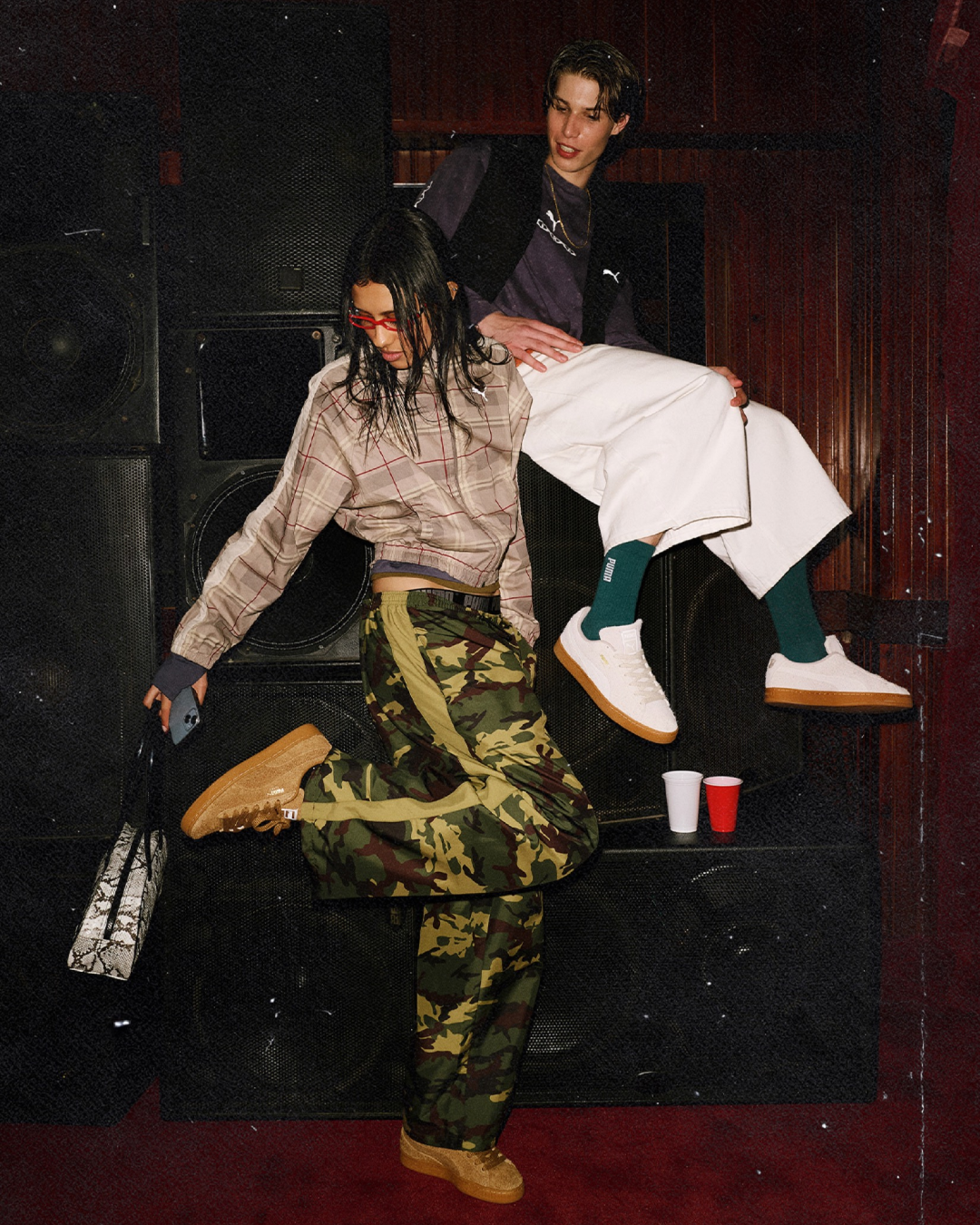
The PUMA Suede Forever proves that classics never go out of style
Three new colorways and a silhouette spanning nearly sixty years of history — the latest chapter of Never Not Suede goes back to its roots

Ploom* reinvents soft clubbing with T-Club
DJ sets, non-alcoholic drinks inspired by the new LYO* range, and exclusive gadgets