
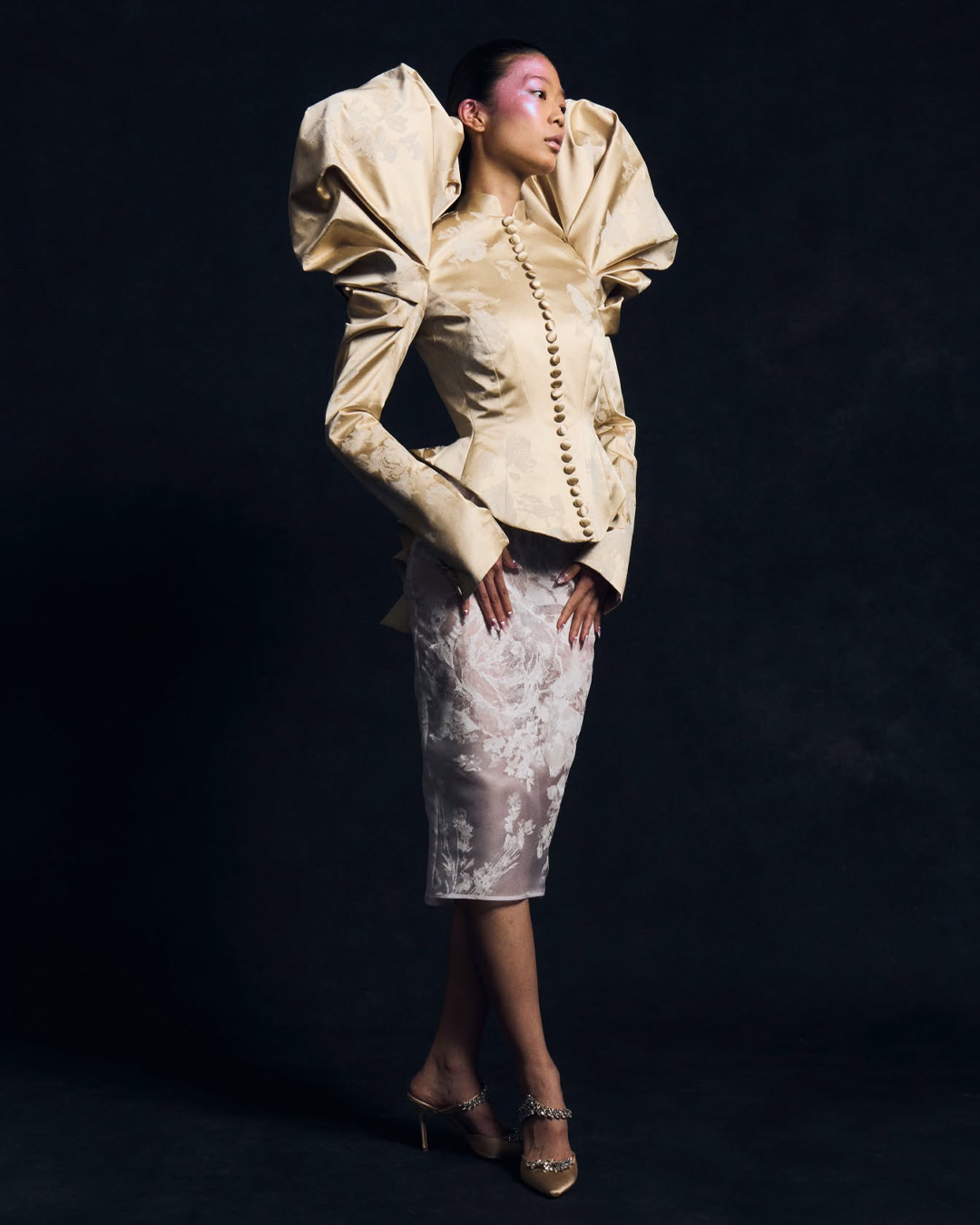
Will fashion ever tire of taffeta? Much rustle, little luxury
The return of taffeta to the runway comes at a moment when designers are reinterpreting certain maximalist phases of fashion history through a contemporary lens, including the Victorian era, the Romantic nineteenth century, and the kitsch of the '80s. What unites these seemingly distant aesthetics is precisely the use of this fabric. There is just one small detail: whereas taffeta was once synonymous with pure, precious silk, today its dominant form is very often an industrial petroleum derivative. The result? Brands are selling us eye-wateringly expensive evening gowns that share the same plastic origins as the lunch box we use at the office.
The history of a fabric that makes a sound
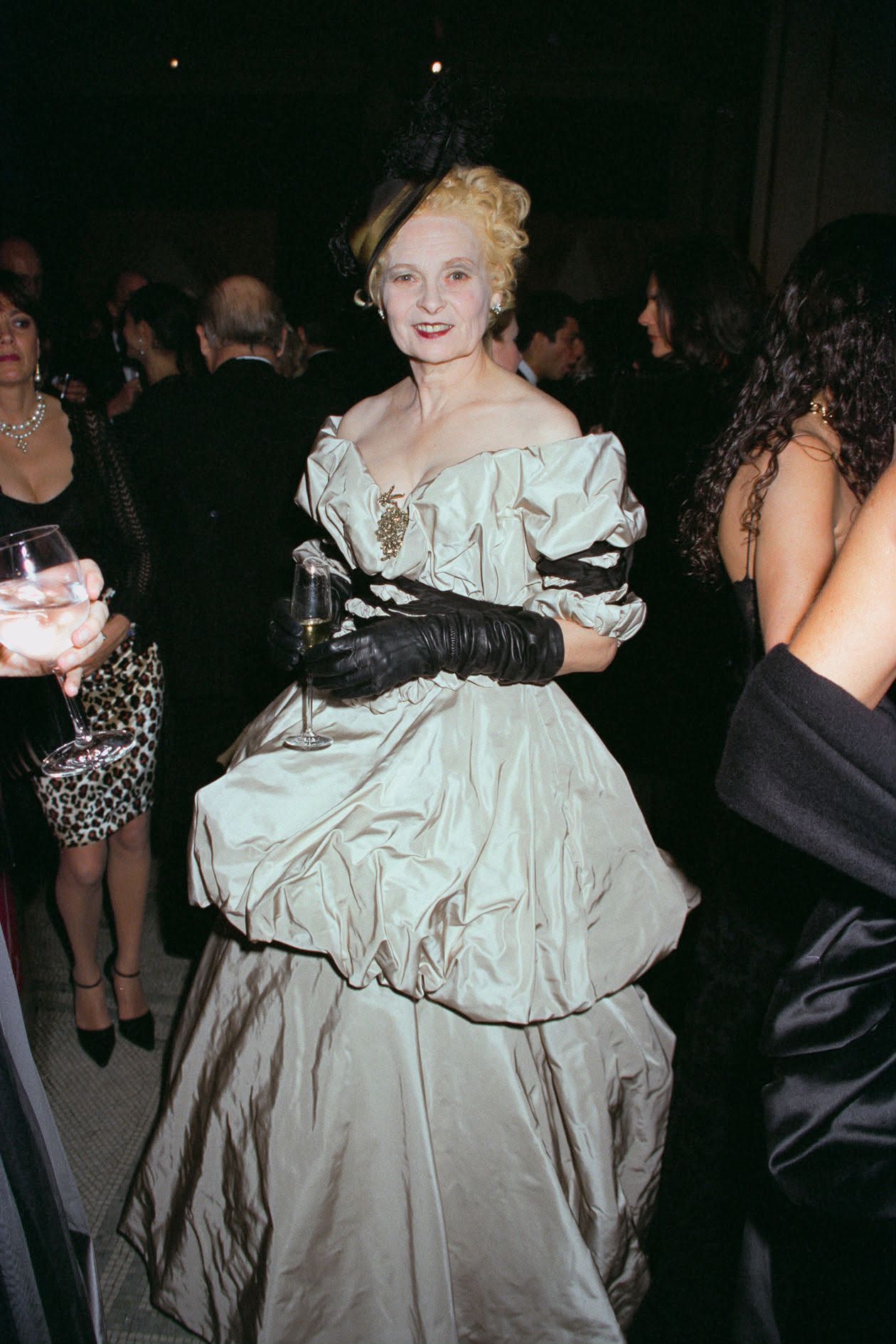
To understand how this fabric made the journey from dressing Renaissance courts to our synthetic wardrobes, we need to travel back to medieval Persia. The word taftah comes from Persian and literally means woven or twisted. Unlike more complex weaves such as jacquard, taffeta is born from a simpler, more straightforward interlacing: the plain weave. Its secret lies in thread density: the vertical threads (the warp) are far more tightly packed and numerous than the horizontal ones (the weft), and it is precisely this interplay that gives taffeta its stiff, compact, and structured feel.
Having arrived in Europe via the Silk Road and been refined by French and Italian weavers, taffeta evolved into variants with uniquely distinctive visual qualities: there is the classic shot taffeta (shot silk), which plays with light reflections; moiré, with its characteristic wave-like pattern reminiscent of wood grain; and more sought-after historical versions such as nineteenth-century faccionato, fiammato with its almost three-dimensional texture, and Gros de Naples, a taffeta of Neapolitan origin made from considerably thicker-than-usual yarns, created to construct sculptural, durable garments.
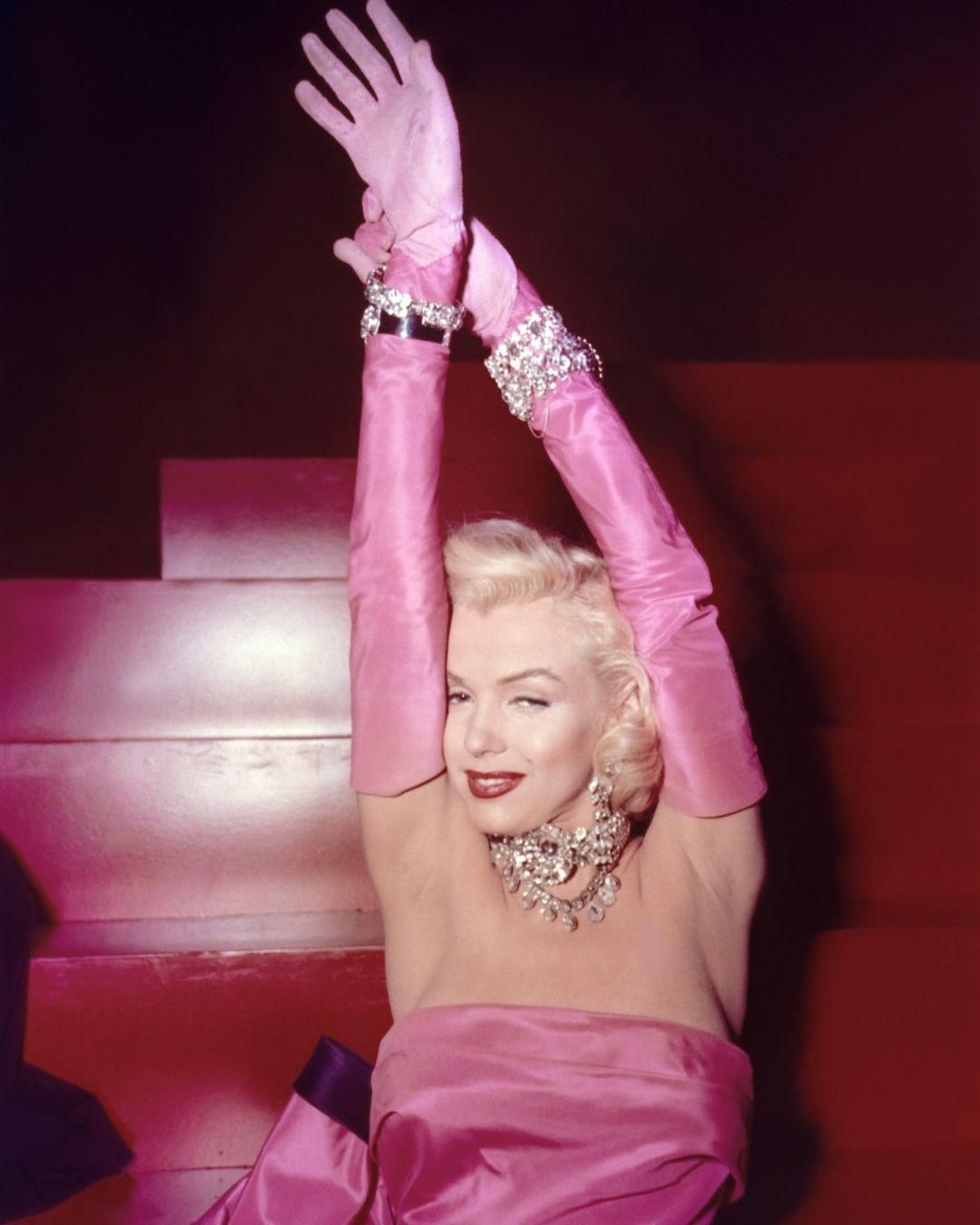
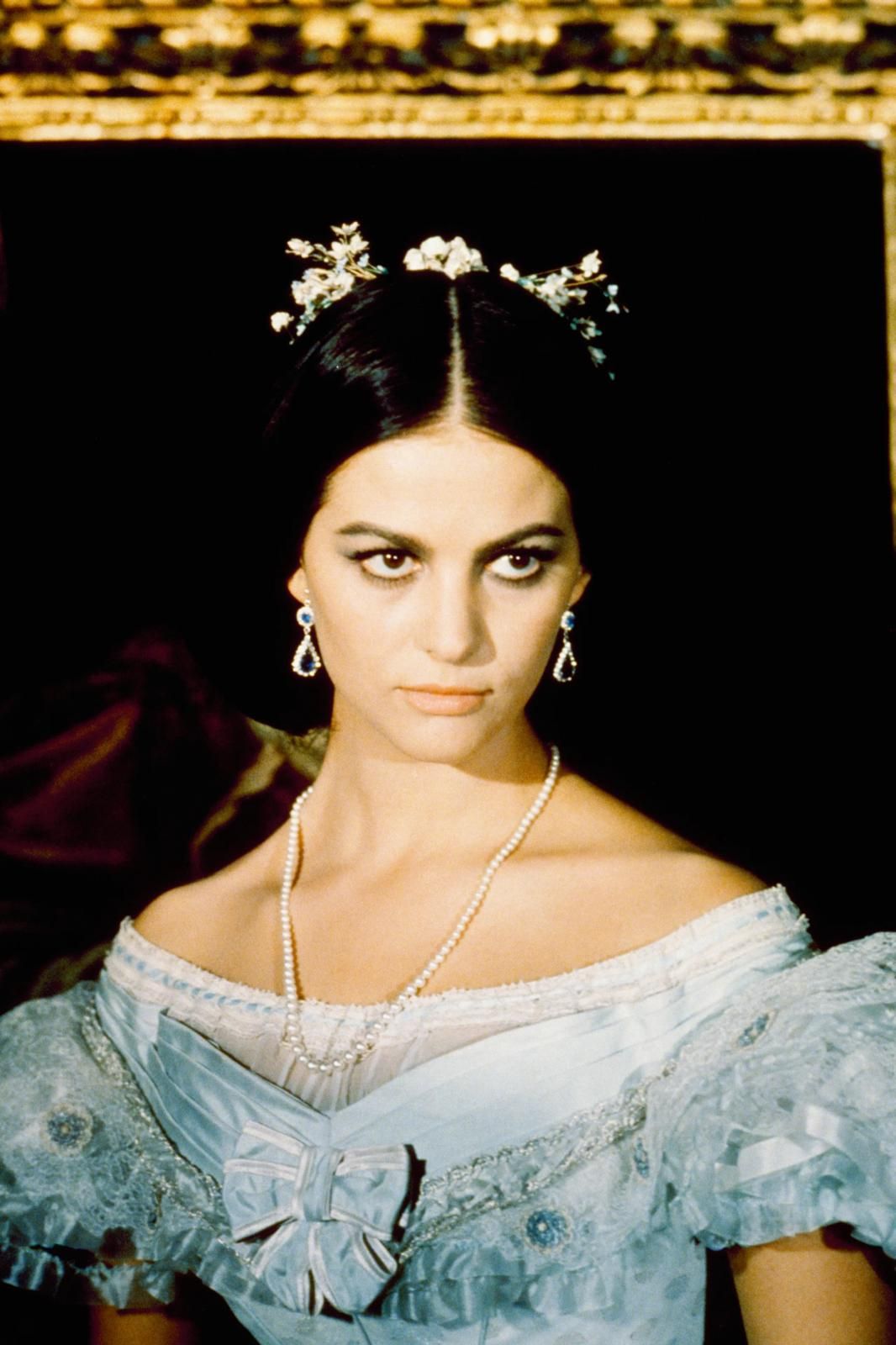
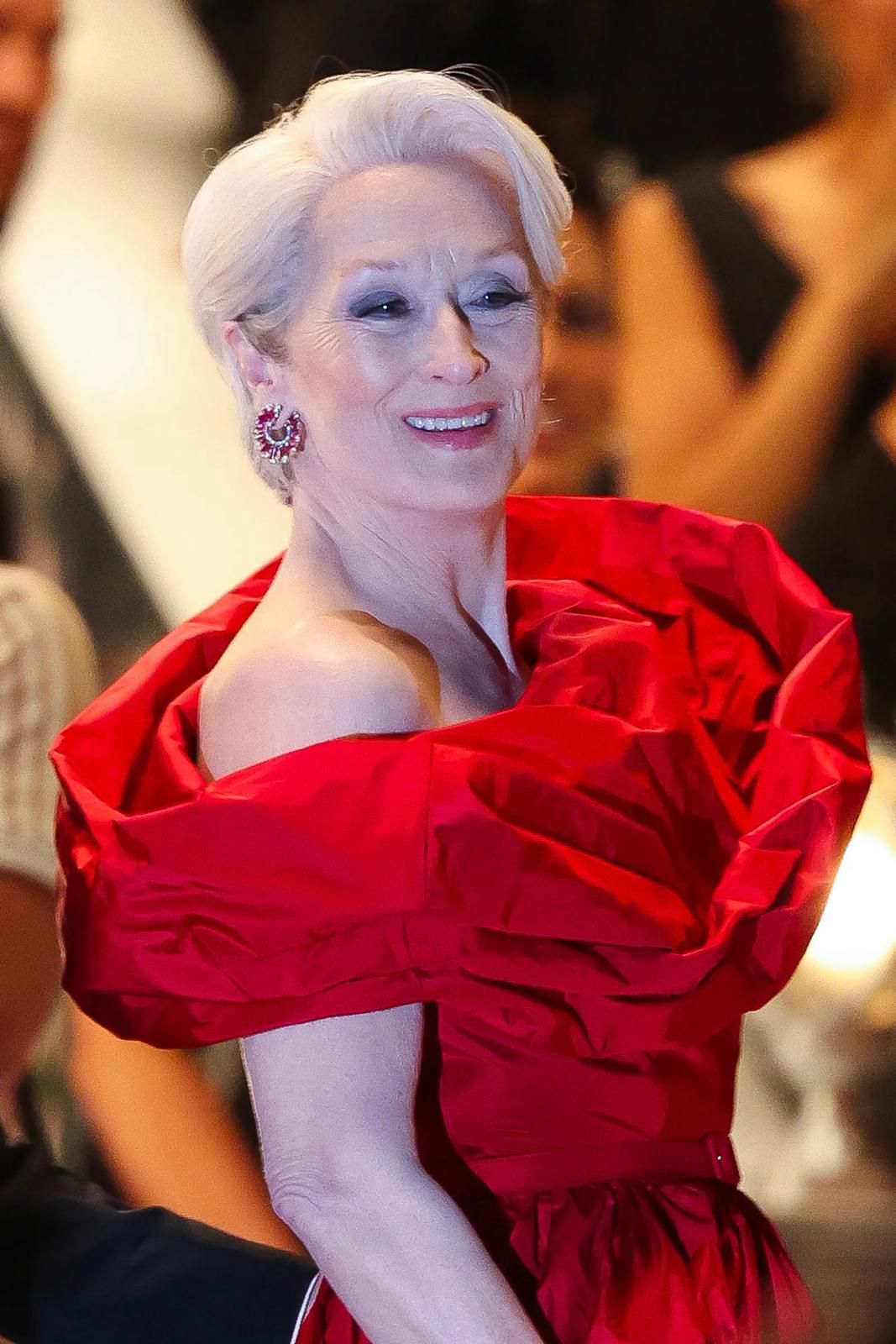
Whether on a theatre stage, a film set, in royal salons, or under the spotlights of the runway, taffeta has moved through the history of costume as a leading player. Tailors, costume designers, and fashion designers have all recognised its regal and seductive power: this is demonstrated by Piero Tosi's creations for The Leopard, the iconic shocking-pink sheath dress worn by Marilyn Monroe in Gentlemen Prefer Blondes, and, more recently, the pompous red Balenciaga gown worn by Meryl Streep in the sequel to The Devil Wears Prada.
Taffeta is indeed a dual material: majestic and cumbersome at the same time, capable of expressing the dazzling joy of a wedding gown as well as the solitude of mourning. Its weave reflects stage lighting in a sharp, clean way, making it possible to construct architectural volumes, gigot sleeves, and monumental trains without resorting to suffocating cages and understructures. But taffeta also has another defining characteristic: a voice. Its celebrated metallic rustle (in French, craquant) has always been the greatest ally of opera singers, who announce their arrival from the wings before even setting foot on stage through the unmistakable sound of their gown. Perhaps it was precisely these textile qualities that captivated the great designers of fashion history: Cristóbal Balenciaga saw in taffeta the ideal block of marble from which to erect his architectures; Christian Lacroix and Gianfranco Ferré frequently used this fabric for their opulent, baroque couture gowns; while Vivienne Westwood stripped this structured silk of its aristocratic aura and reinterpreted it through a punk lens.
Taffeta on the runway
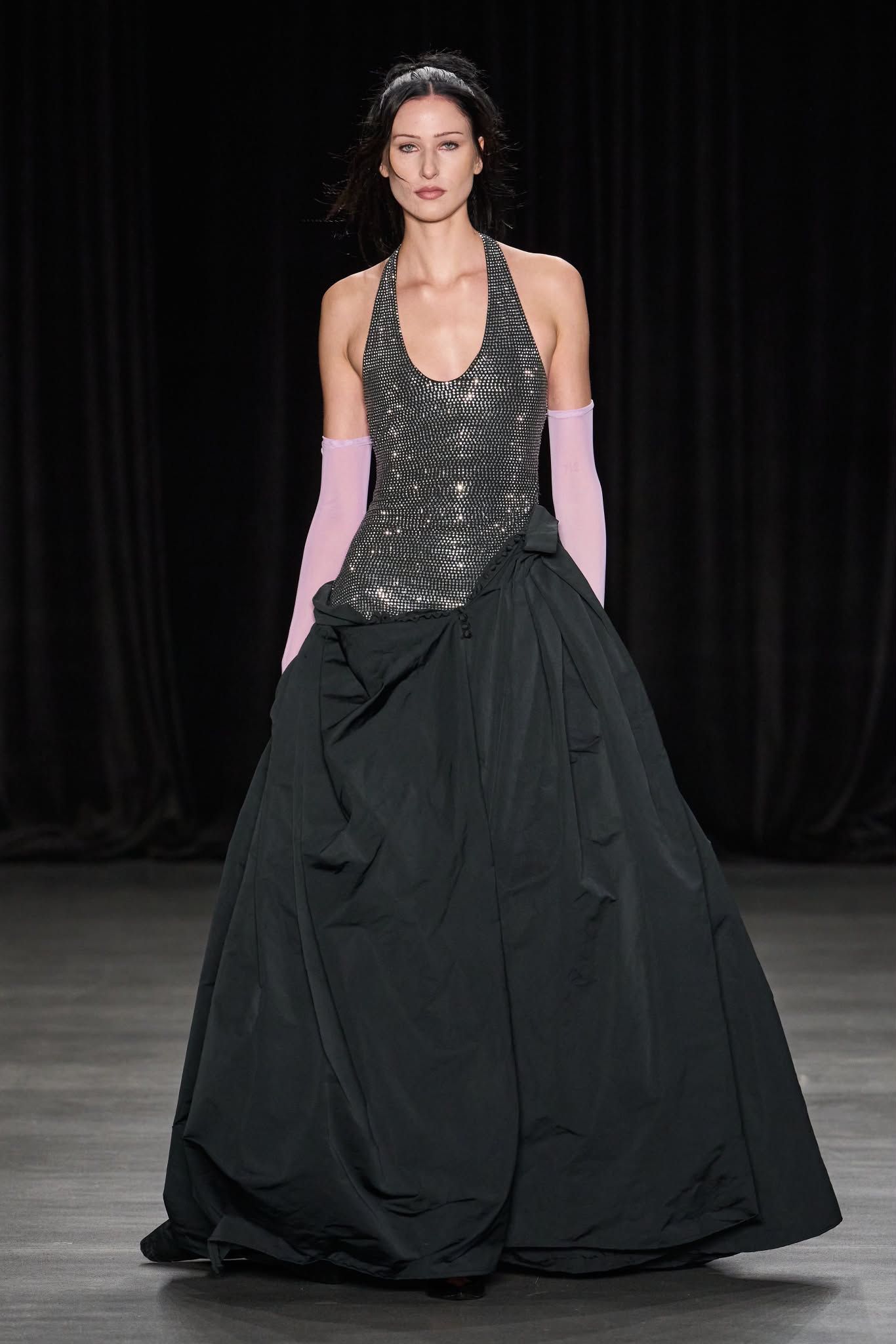
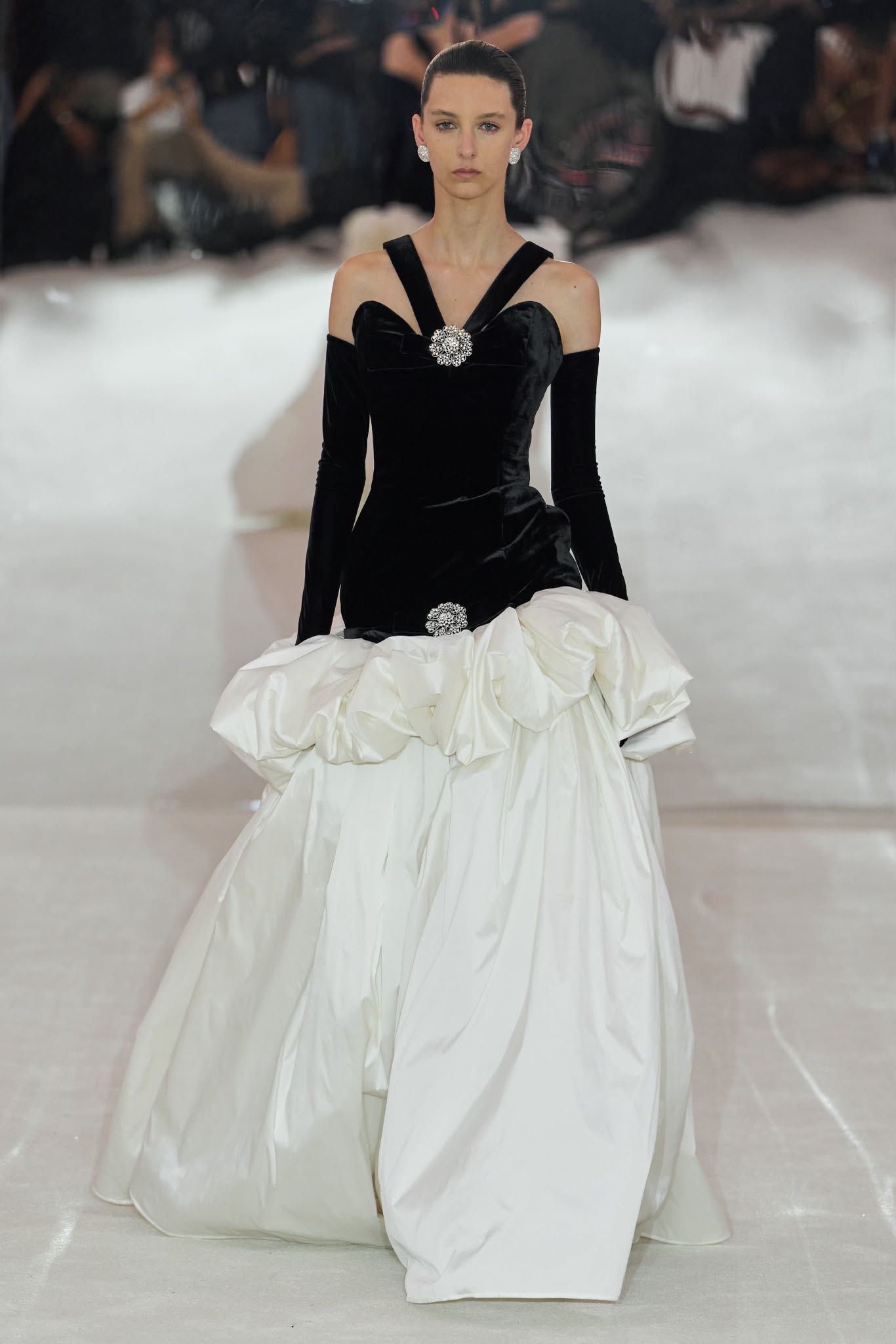
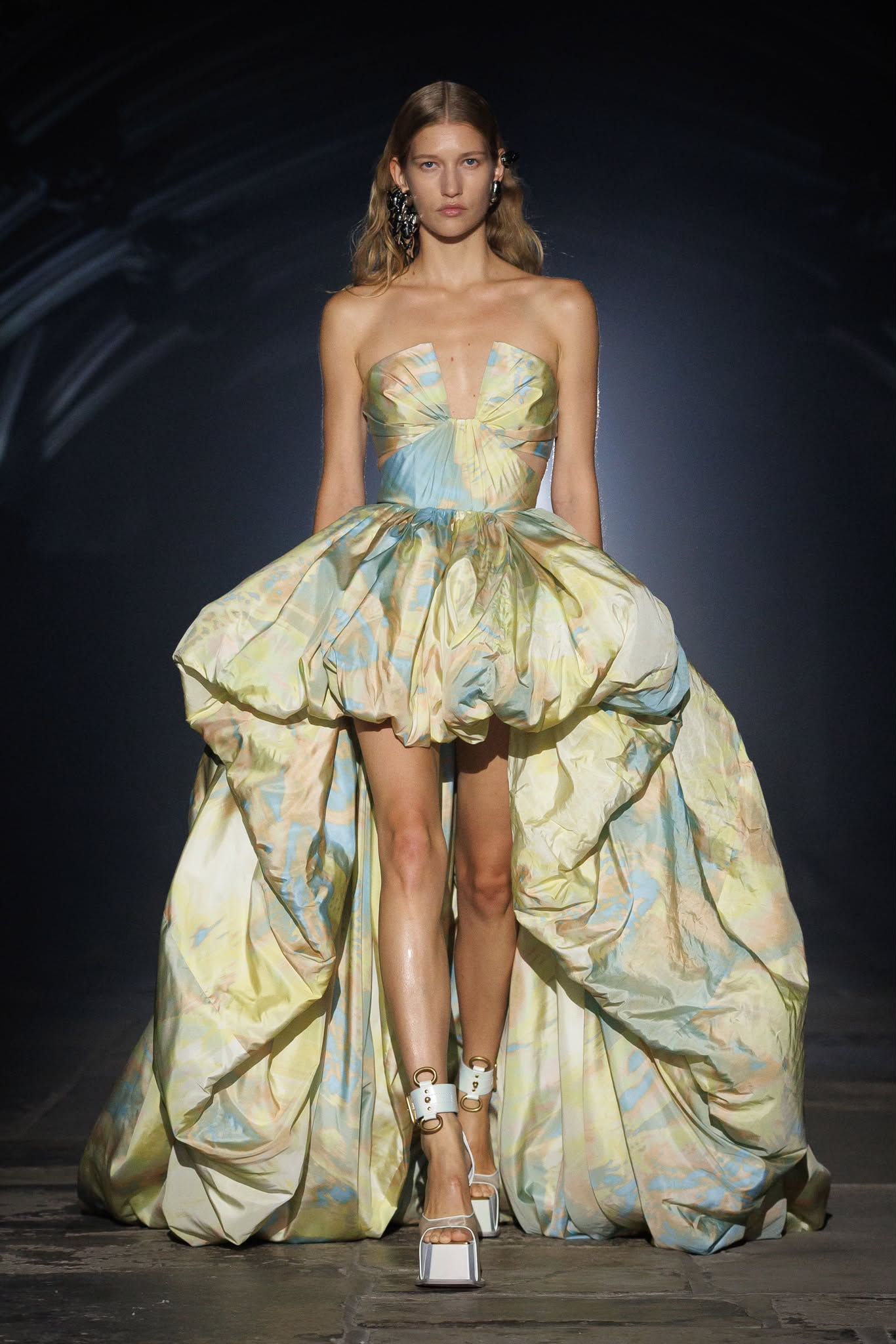
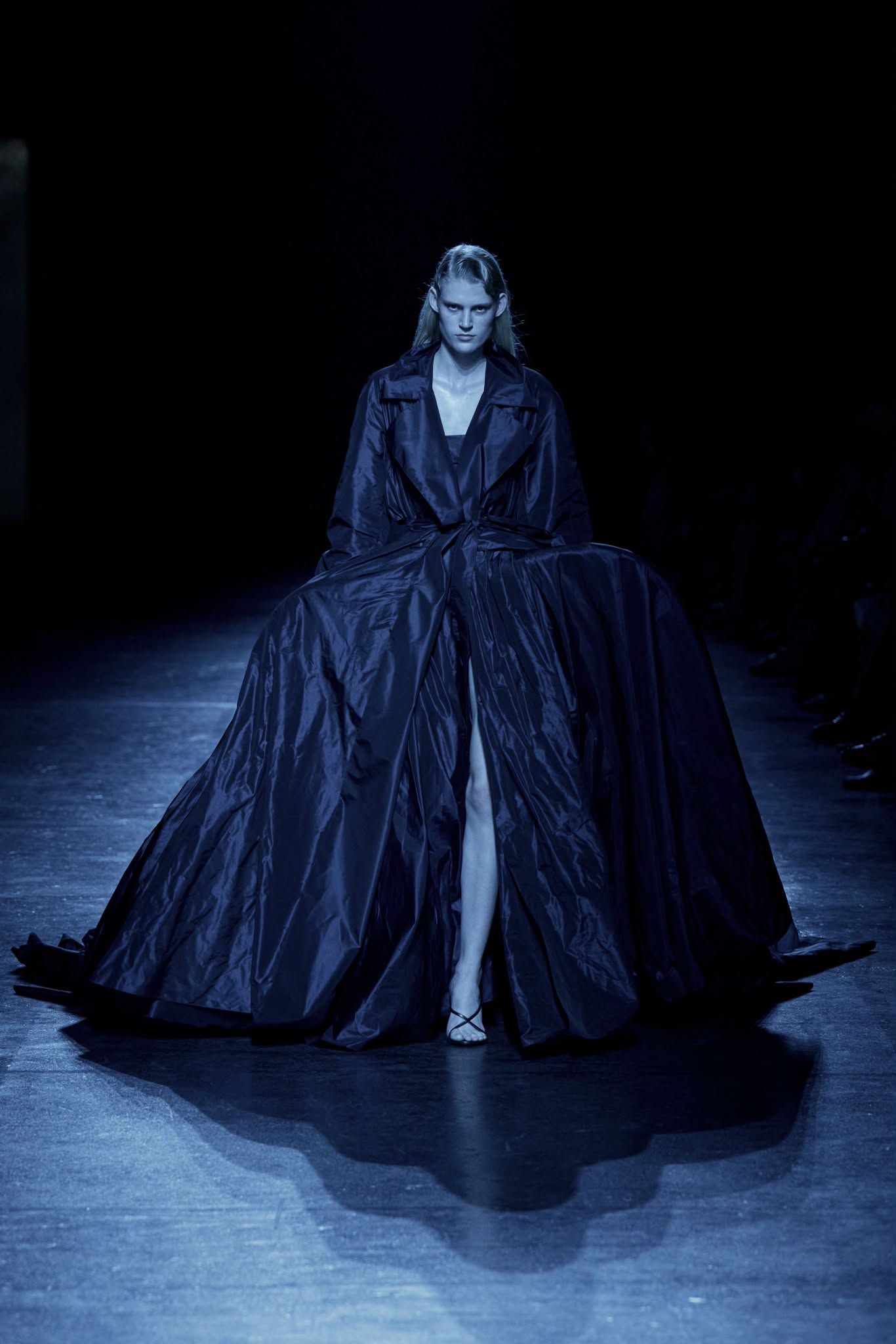
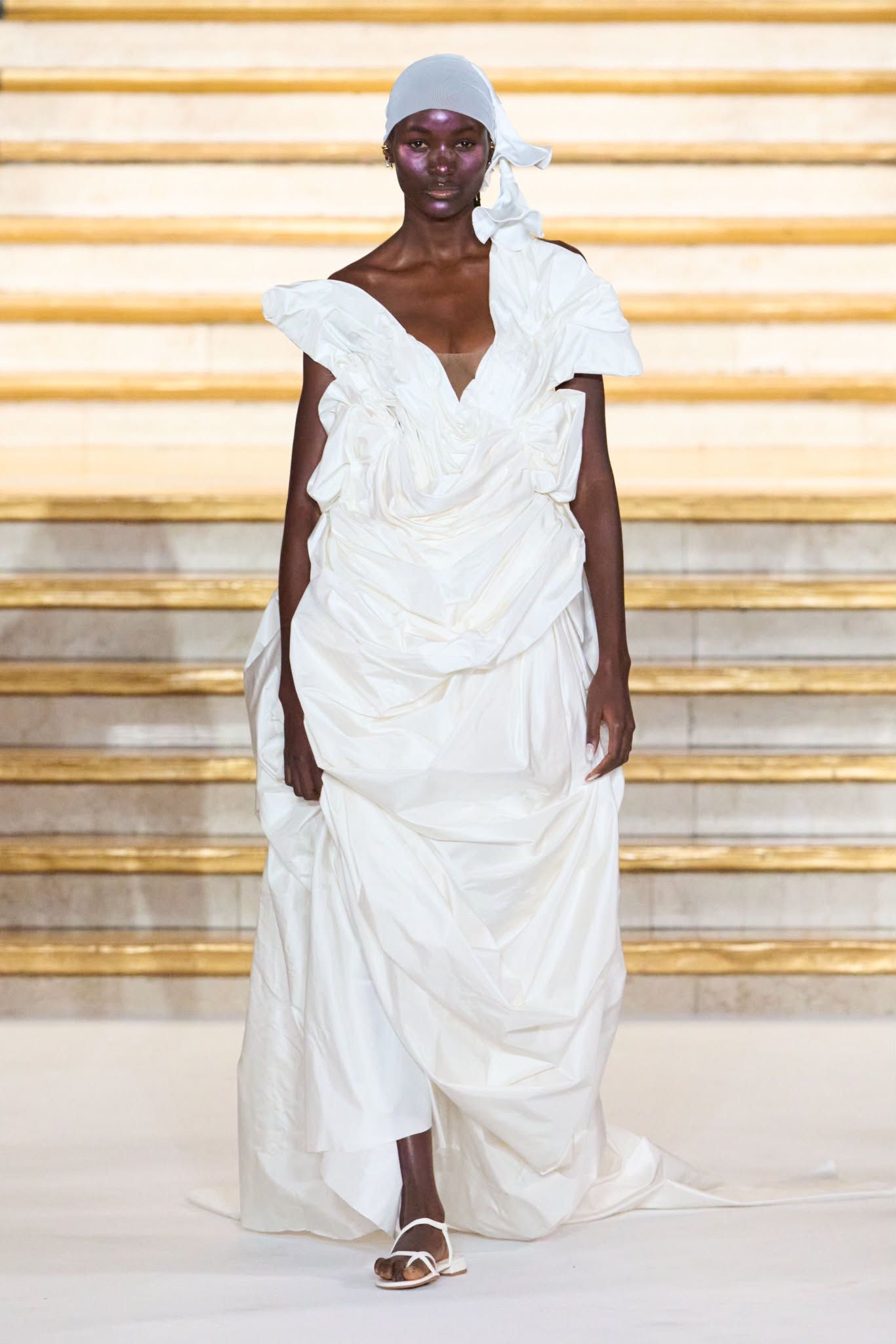
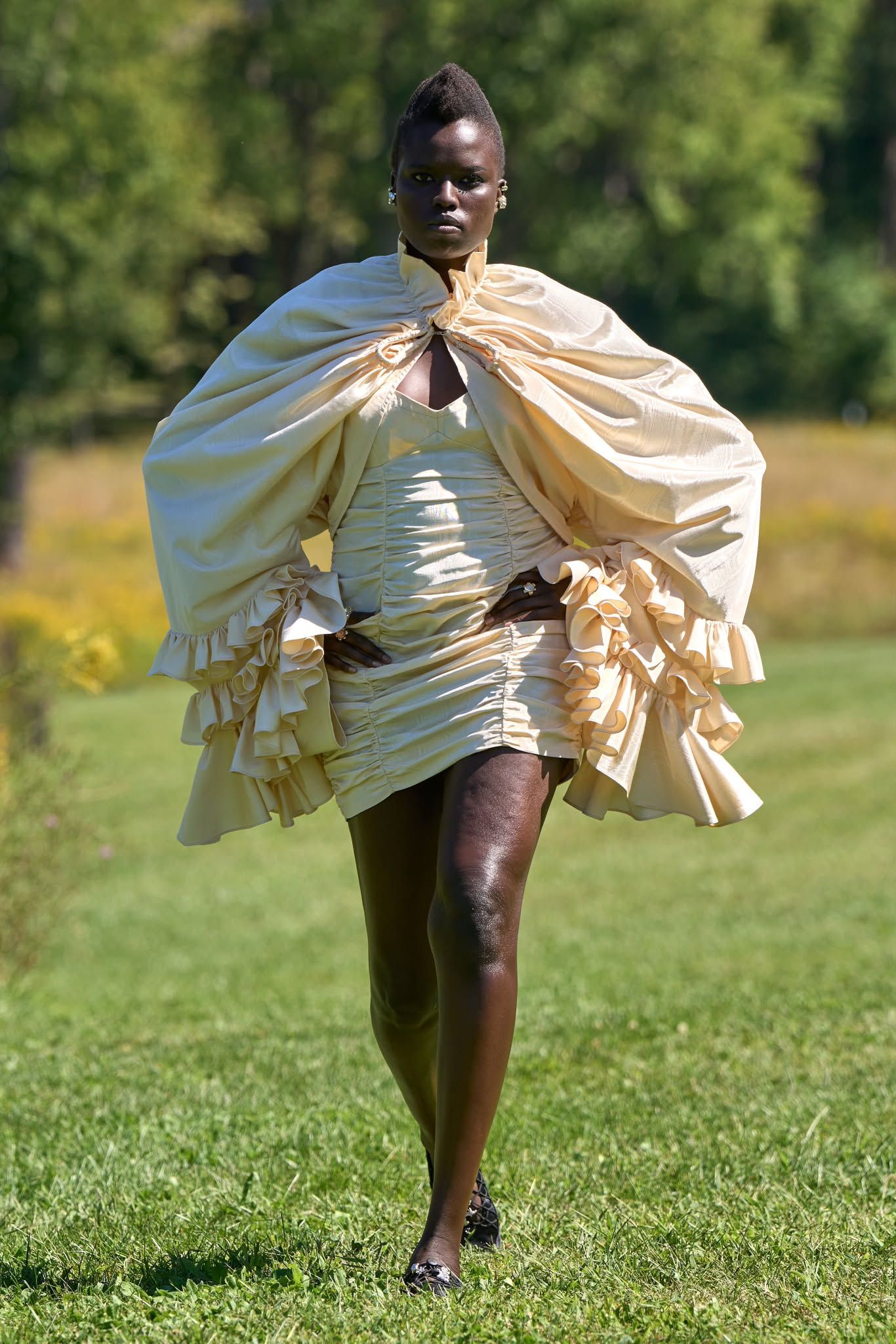
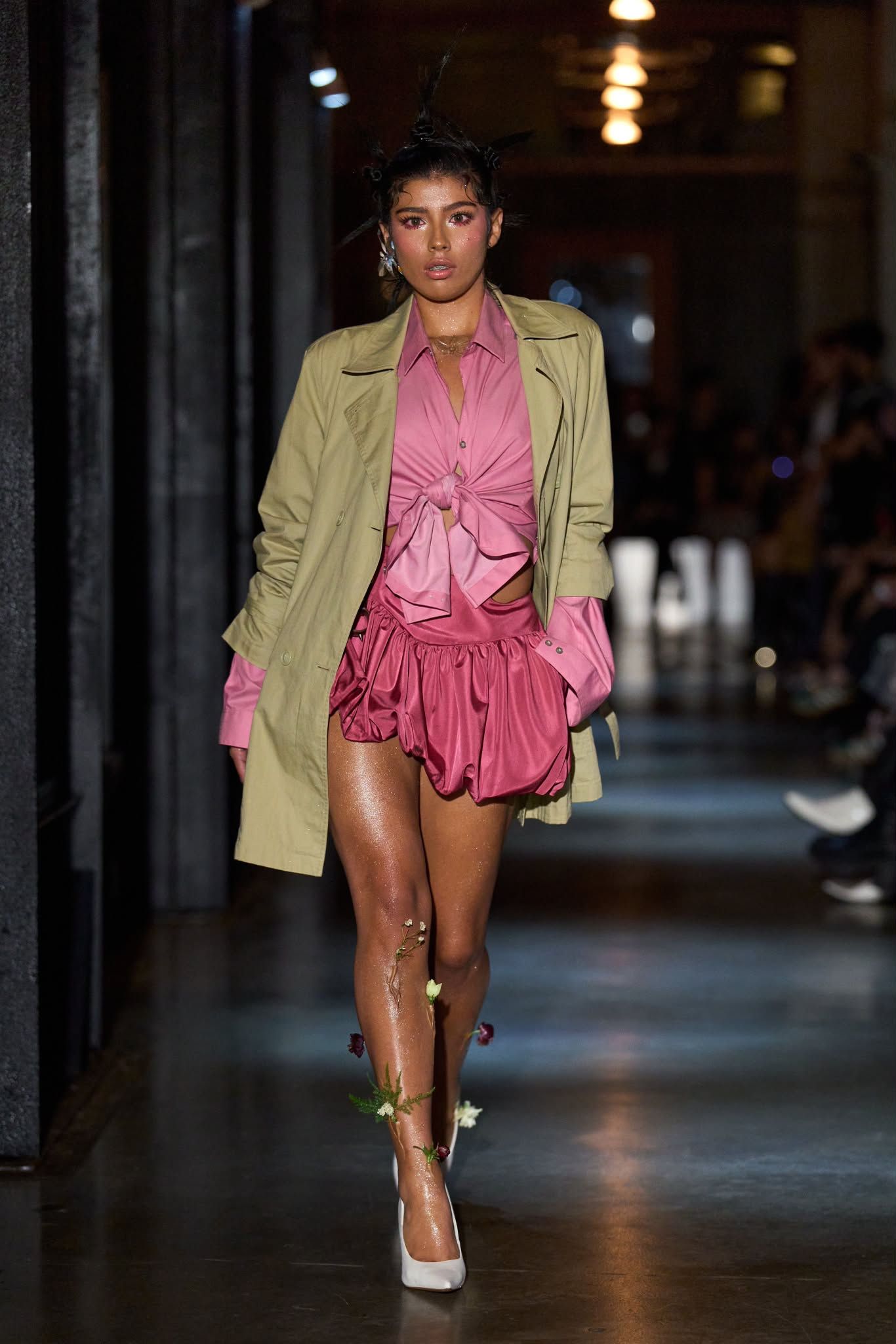
Looking at the latest wave of runway shows, taffeta's return proves to be anything but a fleeting moment. In the most recent collections, designers such as Harris Reed, Christian Cowan, and Richard Quinn have re-embraced its most traditional and theatrical dimension, sending monumental creations laden with bows and regal references down the runway. Olivier Theyskens opened the debut show of his brand Boloria some months ago with gothic, dramatic taffeta looks that seem to have stepped straight out of a Charlotte Brontë novel or a Tim Burton film, while in London Sean McGirr created a pompous pastel-hued gown for McQueen.
Di Petsa for SS27 celebrates motherhood through milk-white taffeta peplums, while at Area the fabric is used to create a dress reminiscent of a glossy duvet. With a decidedly lighter and more dynamic sensibility, Collina Strada and Rio also put forward taffeta pieces: in the former case, the American brand sends very coquettish Marie Antoinette-style capes down the runway, while the latter offers strictly unisex draped microskirts. On a similar note, the brand Toga has created men's taffeta dresses and shorts featuring a sophisticated pleated finish.
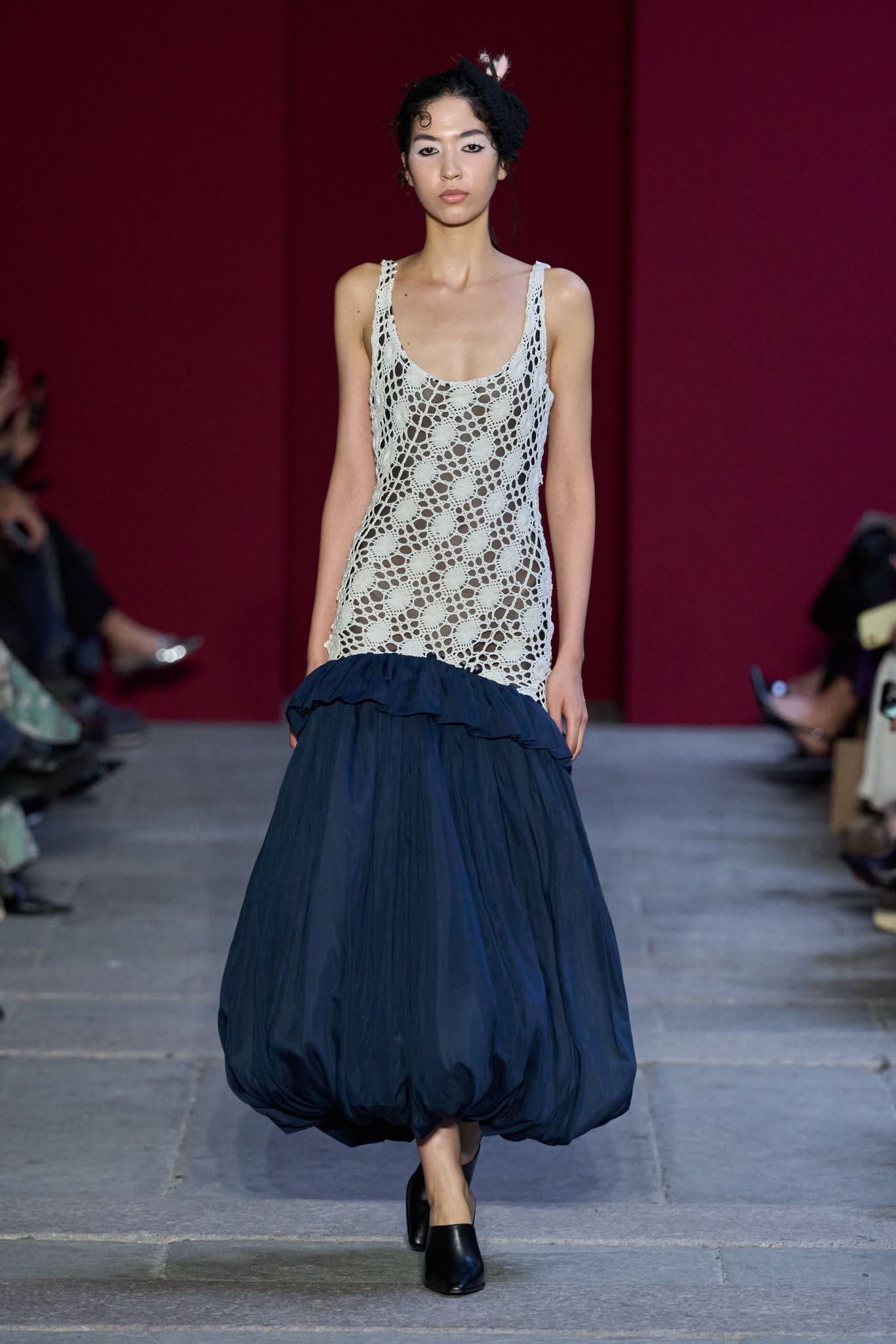
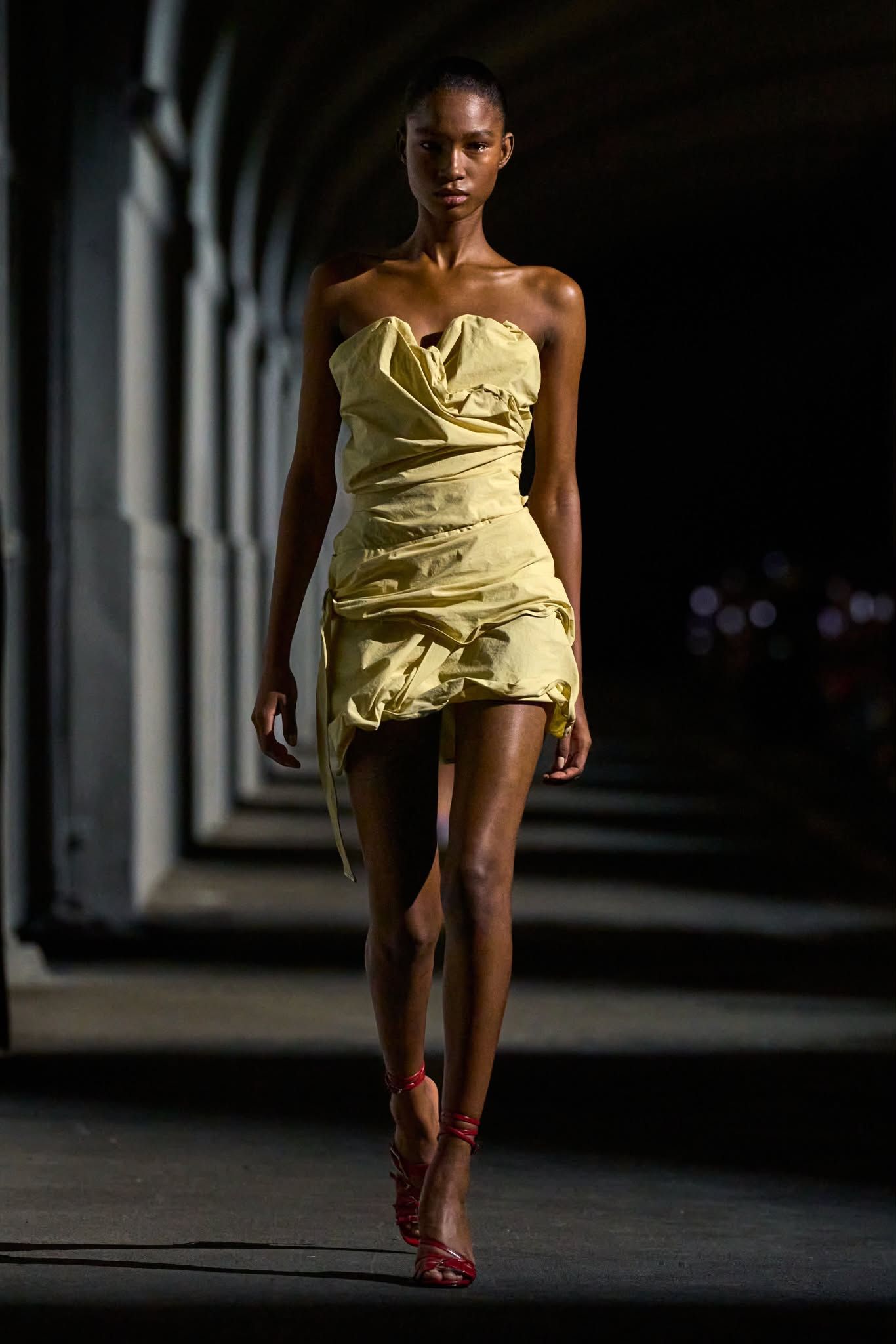
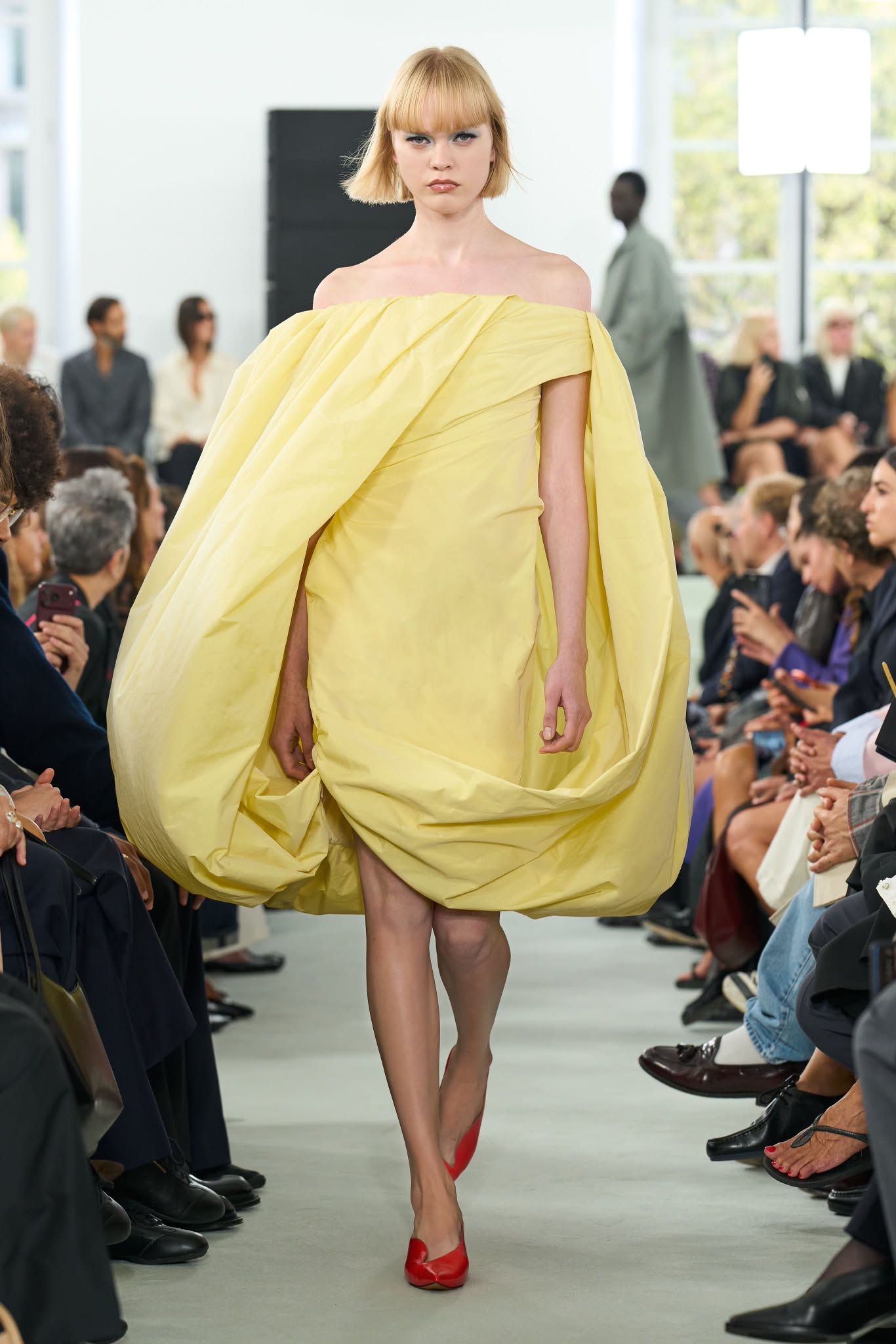
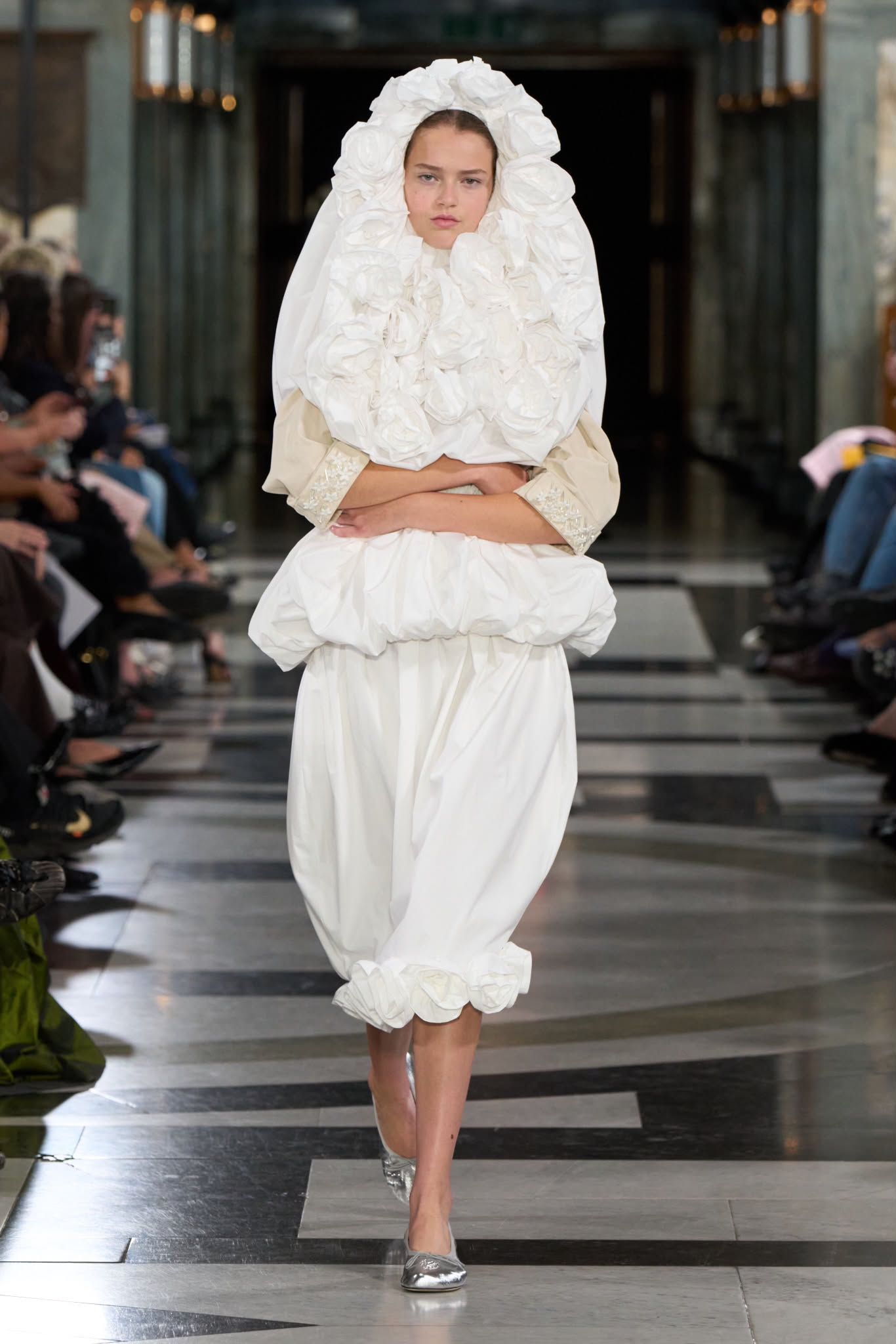
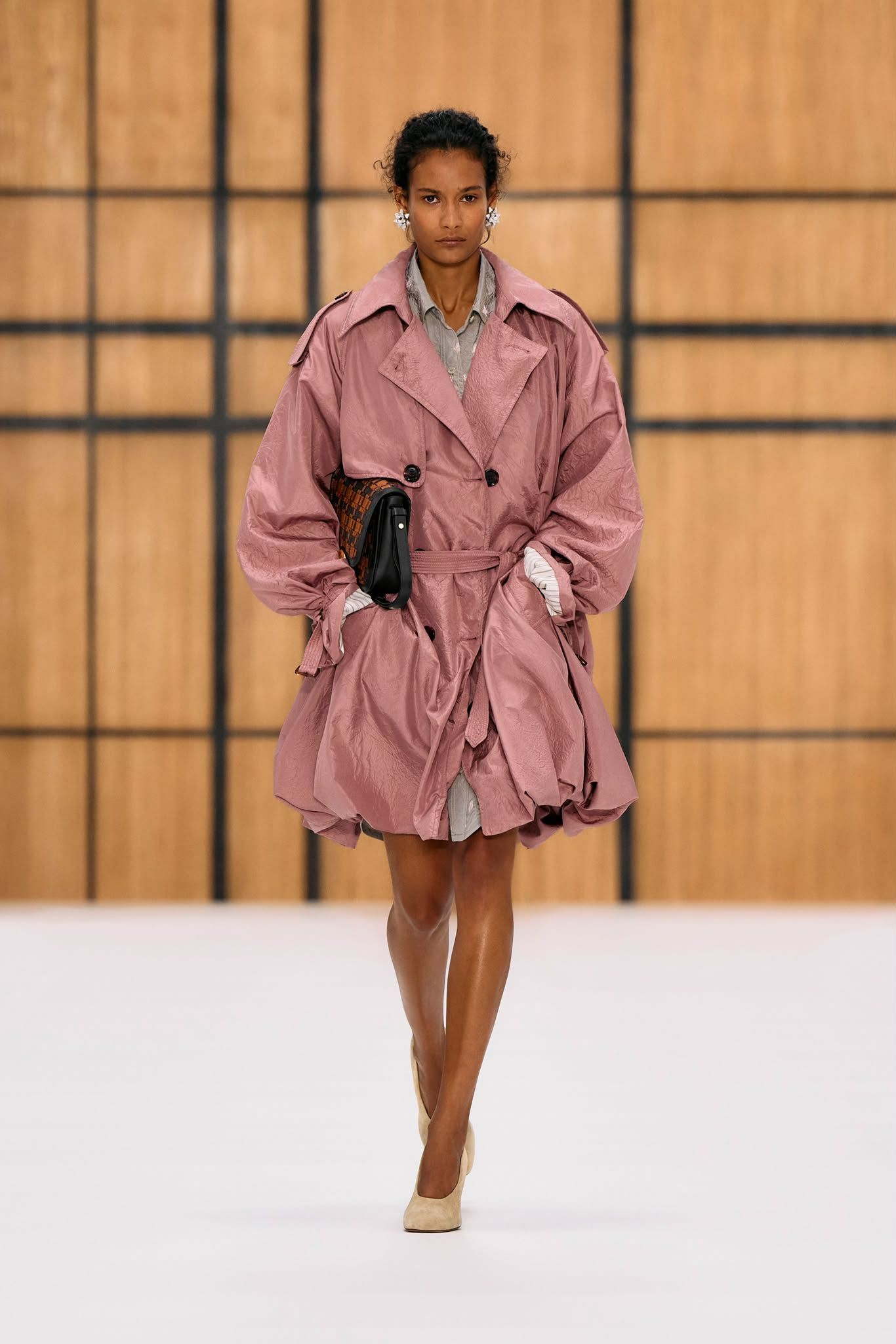
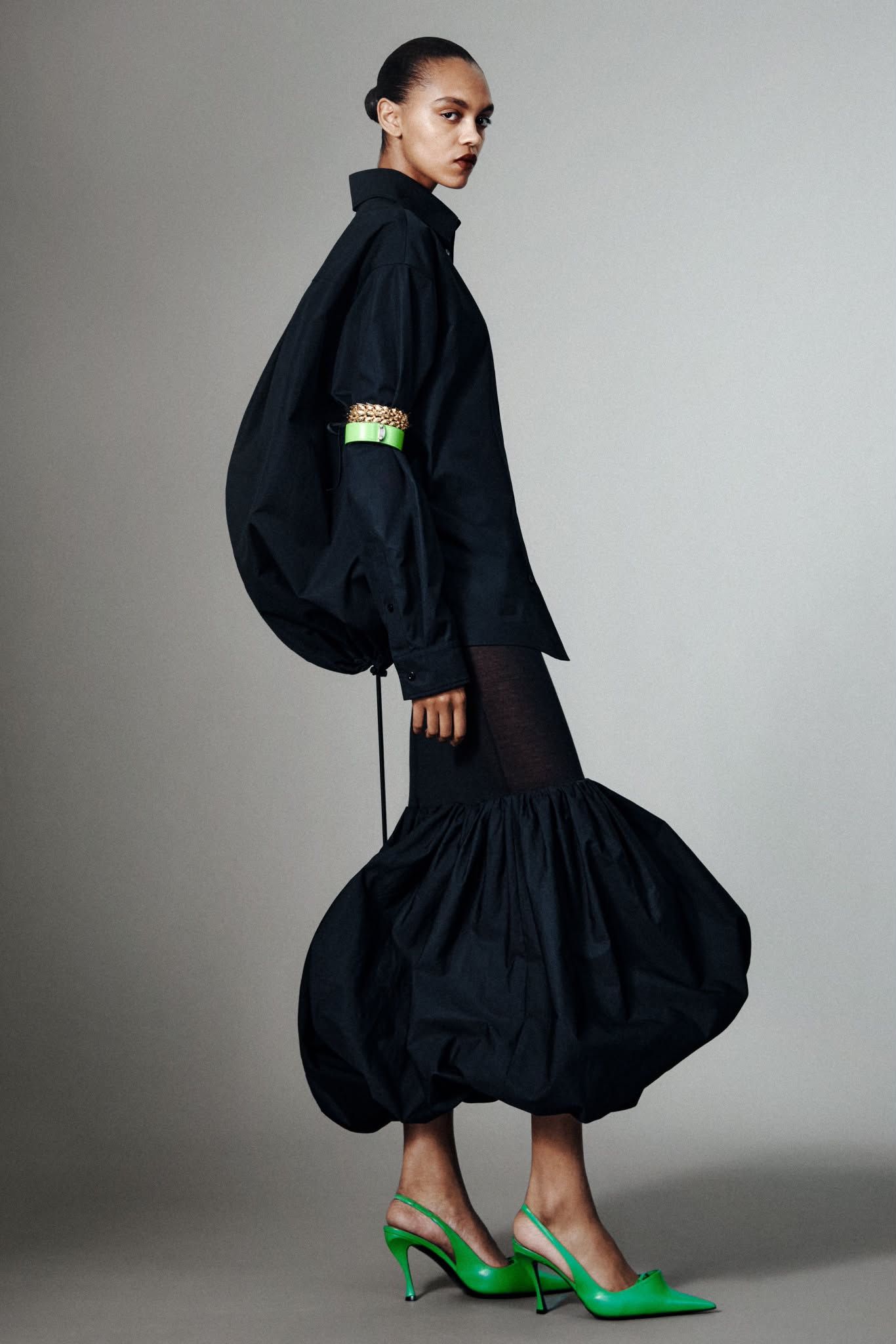
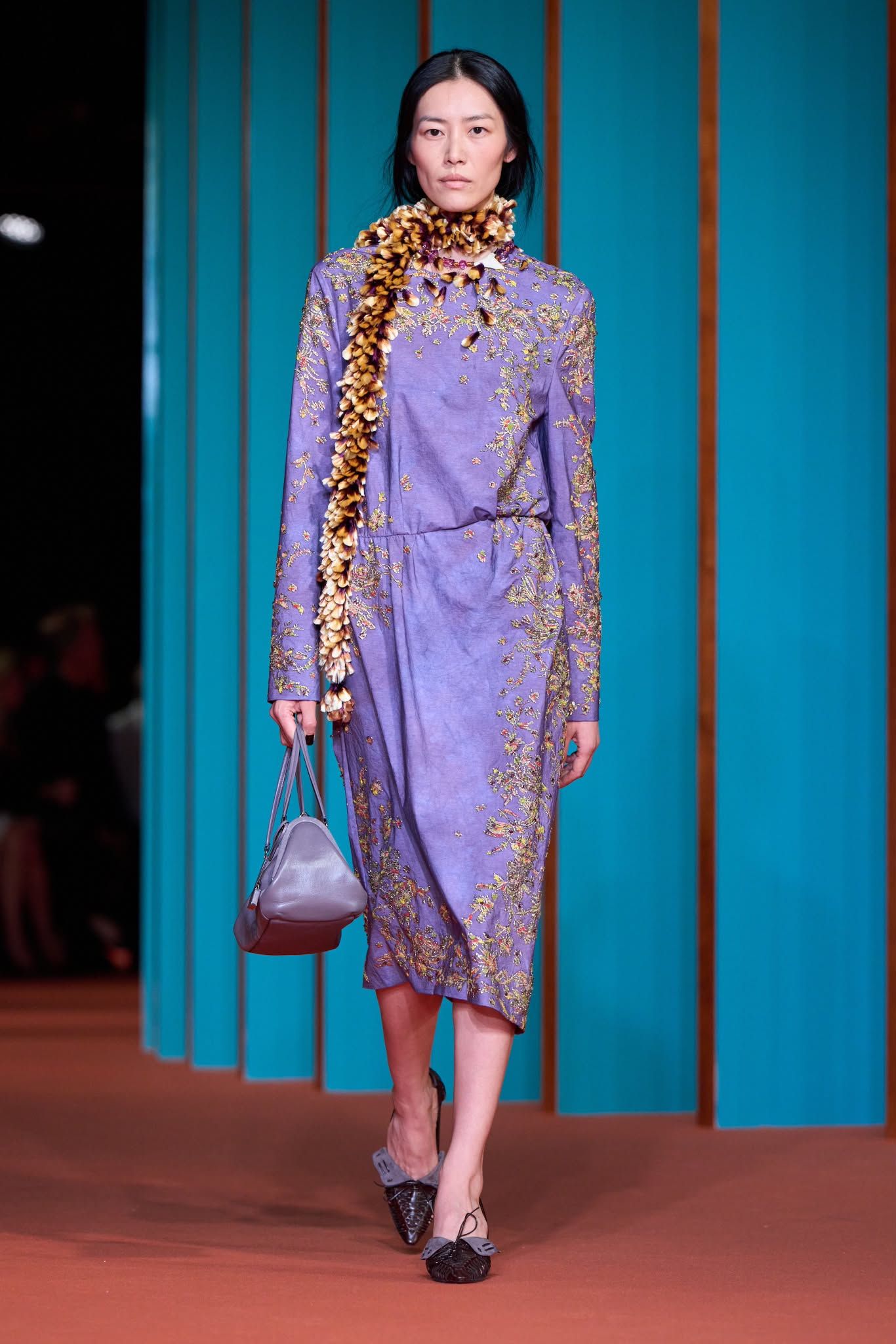
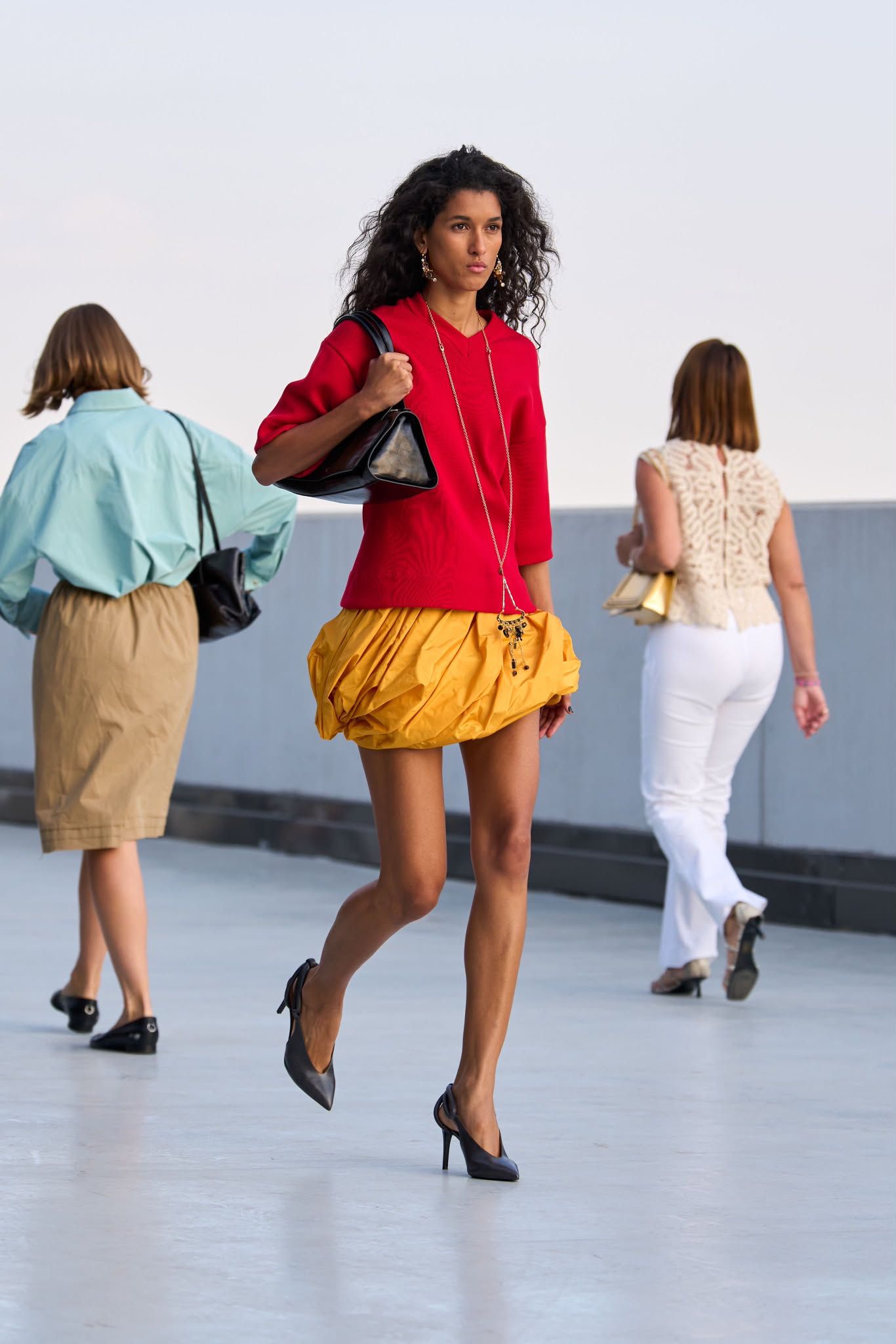
This fabric, once confined exclusively to red carpets and weddings, is increasingly being used to create everyday wear: Tory Burch, for example, produced tie-dye cotton taffeta dresses decorated with floral motifs, feathers, and crystals for her latest summer collection, while at Balenciaga, Pierpaolo Piccioli uses taffeta not only in Couture but also to create utility jackets and cargo trousers. Daniel Lee at Burberry used the fabric to offer a more romantic and aristocratic take on the London brand's classic gabardine trenches, and staying with romantic atmospheres, the Simone Rocha woman will next summer be wearing sack-like dresses studded with taffeta bows and roses that frame the décolletage and sometimes the face.
Taffeta also made itself seen and heard on the Milan runways: in their first show for Moschino, Loris Messina and Simone Rizzo created skirts with a crumpled effect, while Simone Bellotti at Jil Sander proposes balloon dresses for SS27 that seem to almost swallow the body in a glossy, liquid cloud of paper floating through the air. While at The Attico crinkled, almost iridescent taffeta sheaths shimmer in the half-light, at Bottega Veneta and Marco Rambaldi we find draped blouses and skirts with a matte texture. The trend found its most recent expression in Julie Kegels' show in Paris: for SS27, the LVMH Prize winner sent "gravity-defying" looks down the runway in which the rigid structure of a taffeta skirt is deconstructed and layered over sheer lycra T-shirts.
Is it truly a luxurious fabric?
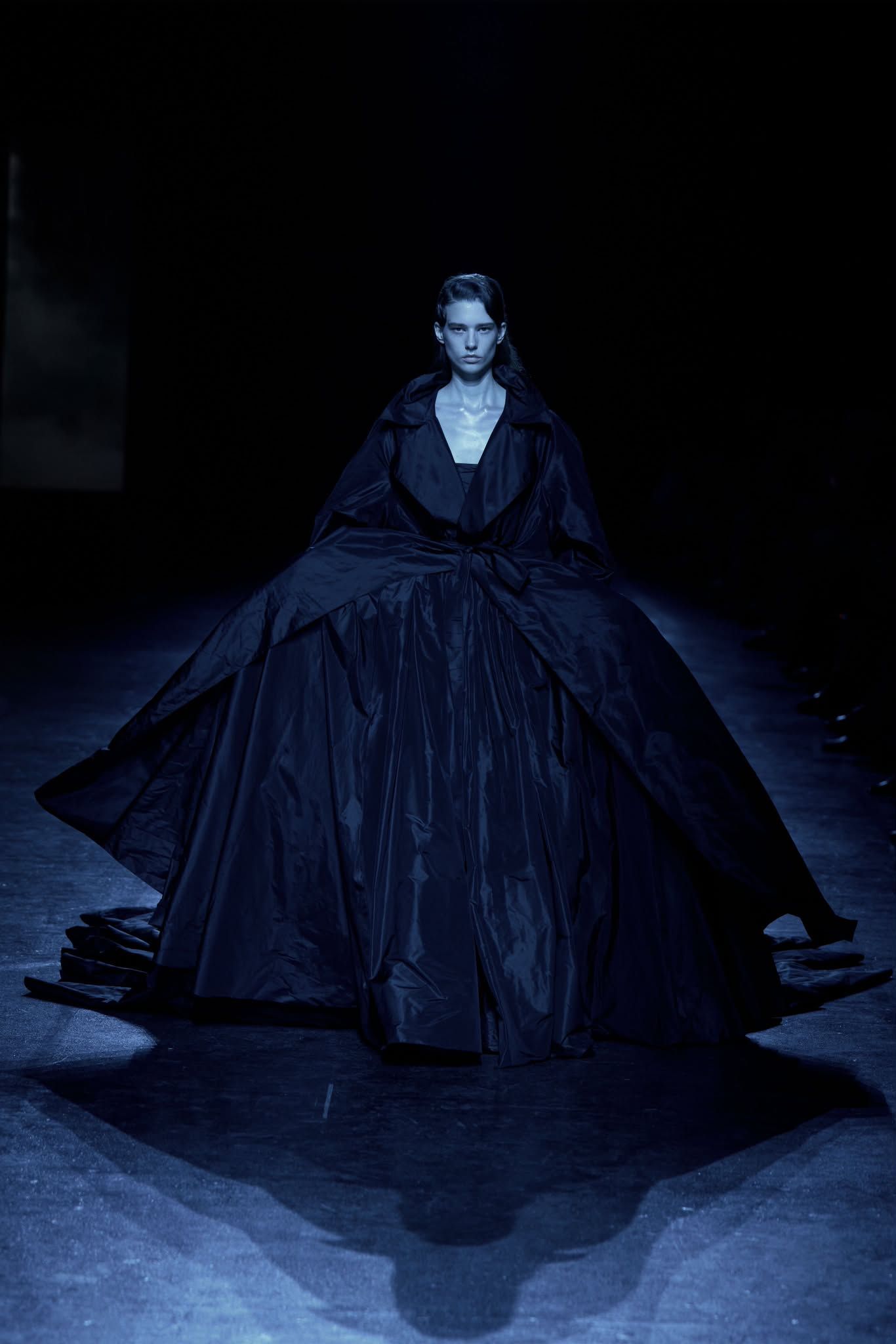
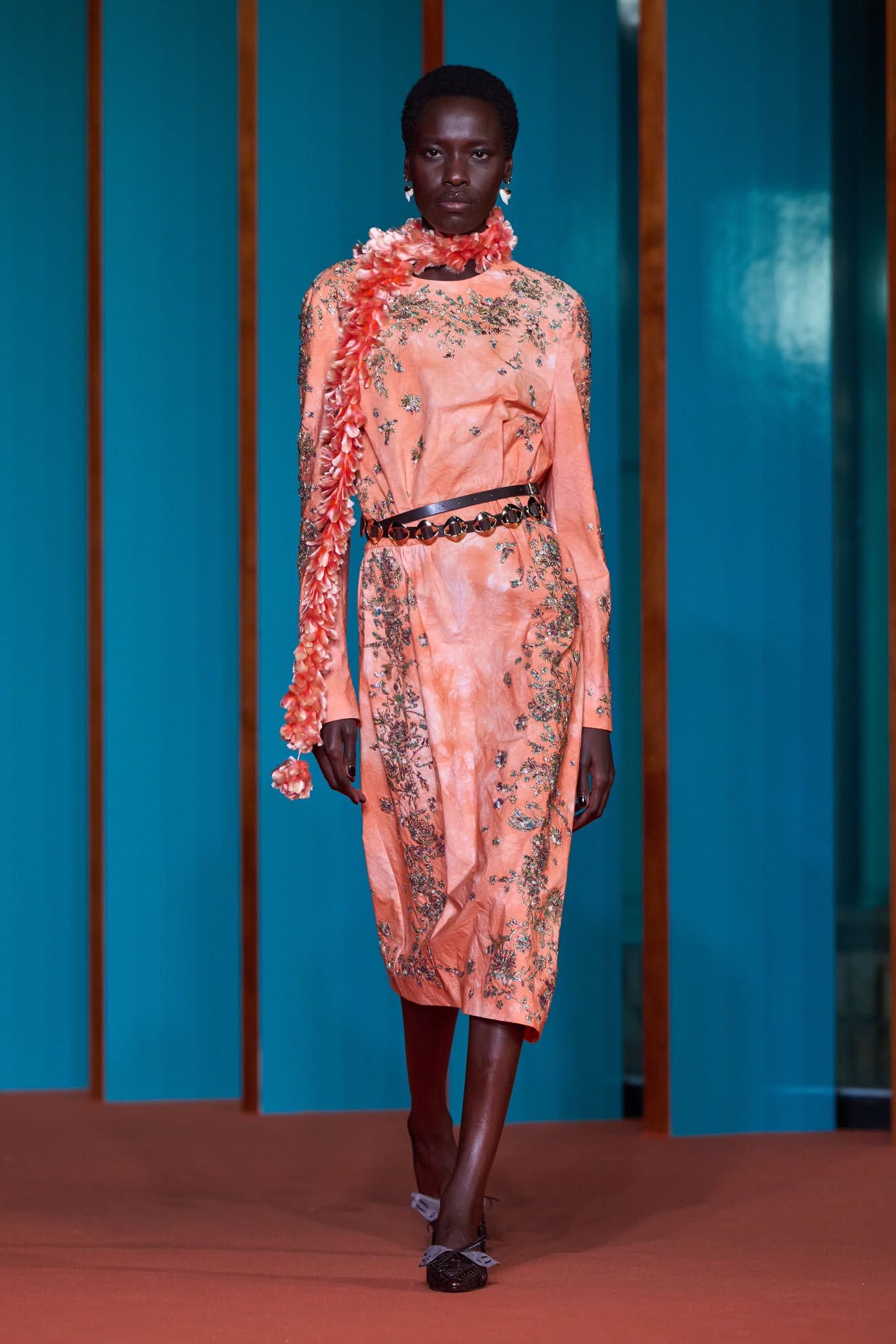
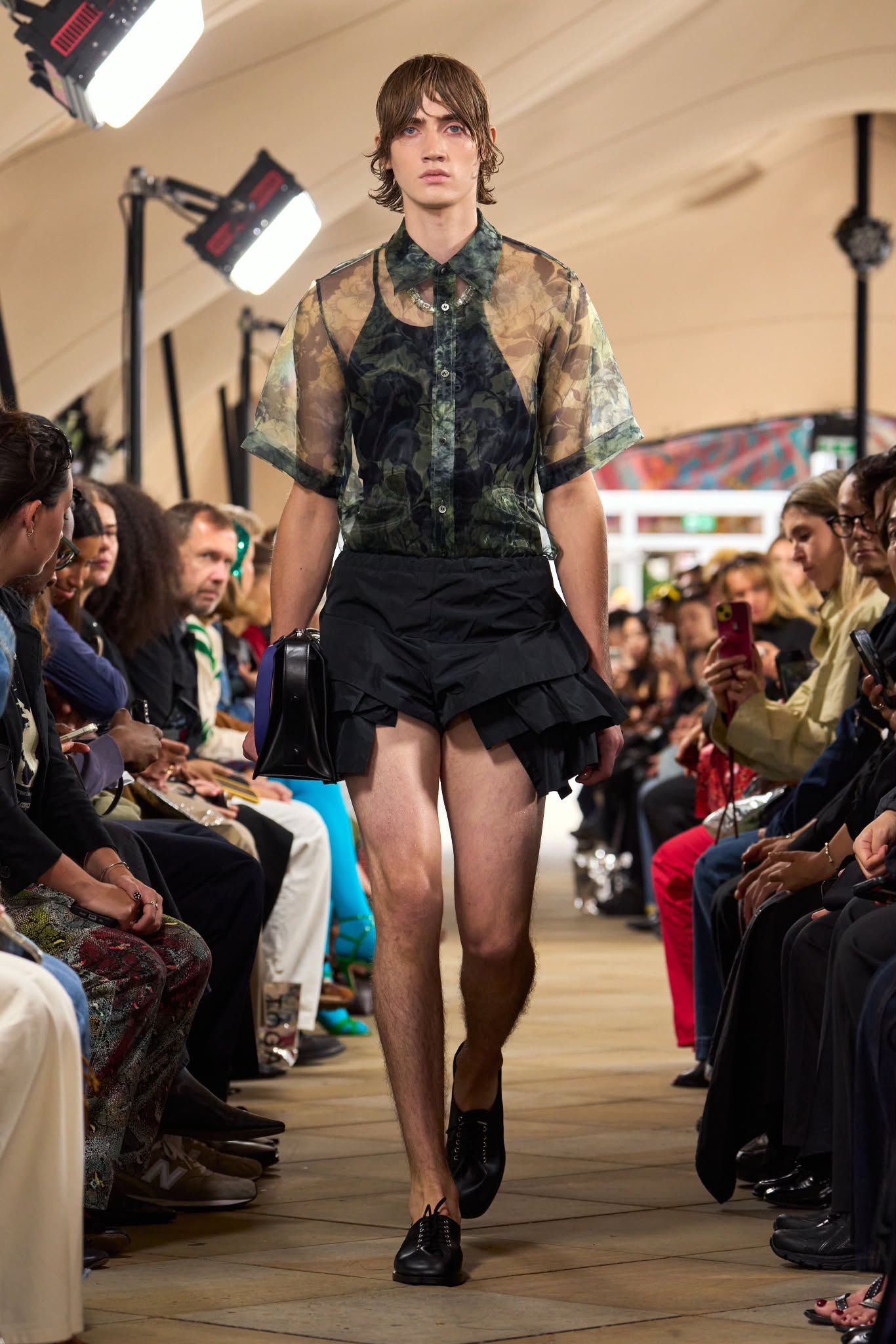
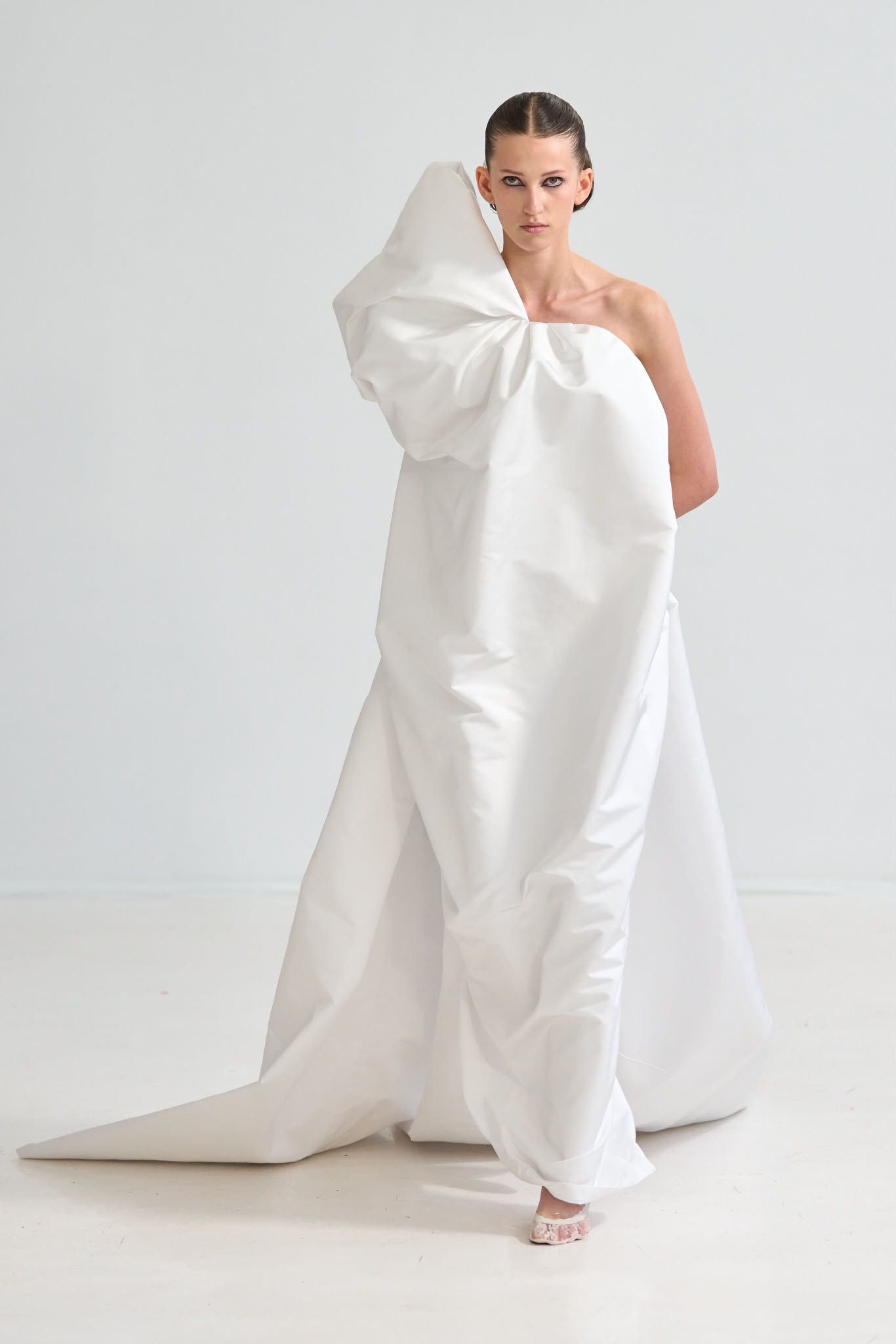
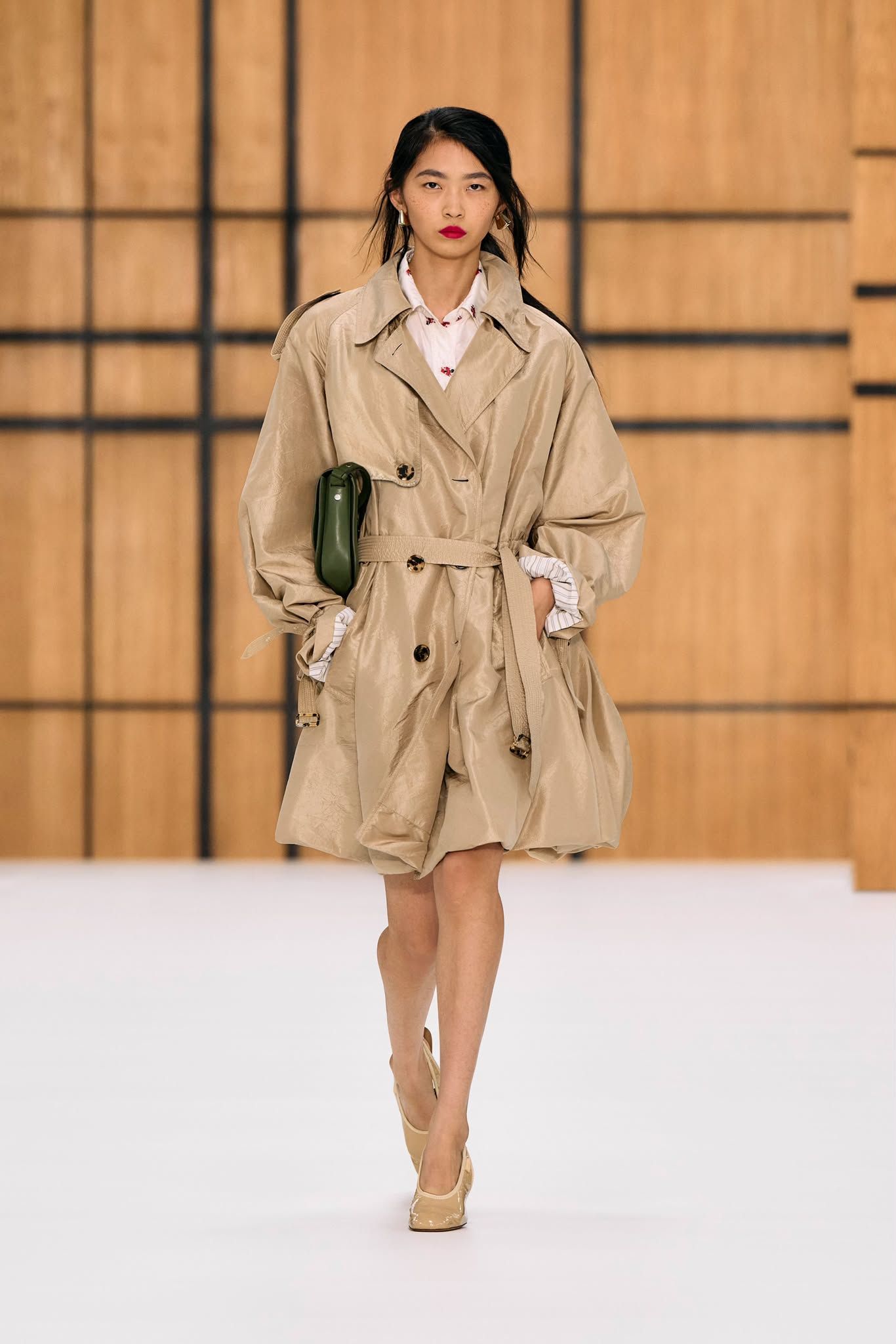
The majority of the taffeta we see on runways today is no longer made from silk, but is instead produced using synthetic fibres such as nylon, acetate, and polyester. Despite its composition being far less noble than it once was, this fabric continues to convey a strong sense of richness and luxury thanks to its historical prestige. But the use of polyester, now widespread among luxury brands, is not merely a matter of cost: it is above all a question of practicality, durability, and the ability to hold a shape — since, particularly in the case of taffeta, pure silk often risks losing its structure over time.
The final word inevitably belongs to the consumer: is it better to favour the quality of a noble material while accepting its fragility, or to opt for a durable, perfectly structured garment that is, in essence, not as luxurious as it appears?