




















Forget K-pop, Thai actors are dominating Fashion Week The data from the new report by Karla Otto and Lefty confirm this
When a nation manages to achieve cultural hegemony, it becomes a powerhouse, capable of shaping conversations even in opposing spheres and expanding more easily into historically established spaces. In Asia, over the past decade, after a period of strong Chinese influence, all eyes turned to South Korea: it was dubbed “hallyu” (K-wave), the phenomenon that saw the Korean peninsula expand into virtually every sector of fashion, beauty, and entertainment.
Season after season, K-pop idols have become regulars at the biggest fashion shows, Korean skincare has reached unprecedented levels of virality, and Seoul has become the new Hollywood — with K-dramas topping every streaming chart and film productions winning the most coveted awards in cinema. Over the past year, however, amid market oversaturation and socio-cultural crises within the industry, interest in Korean culture appears to be slowing down.
Meanwhile, another Asian country is steadily gaining momentum: Thailand. Once seen mainly as a tourist paradise, the Southeast Asian nation is becoming the new luxury hotspot, with Thai celebrities capturing the same zeitgeist once dominated by K-pop idols and Korean actors. While recent seasons hinted at a shift, FW26 made it official: the baton of Asian soft power in fashion has passed from K-pop idols to Thai actors.
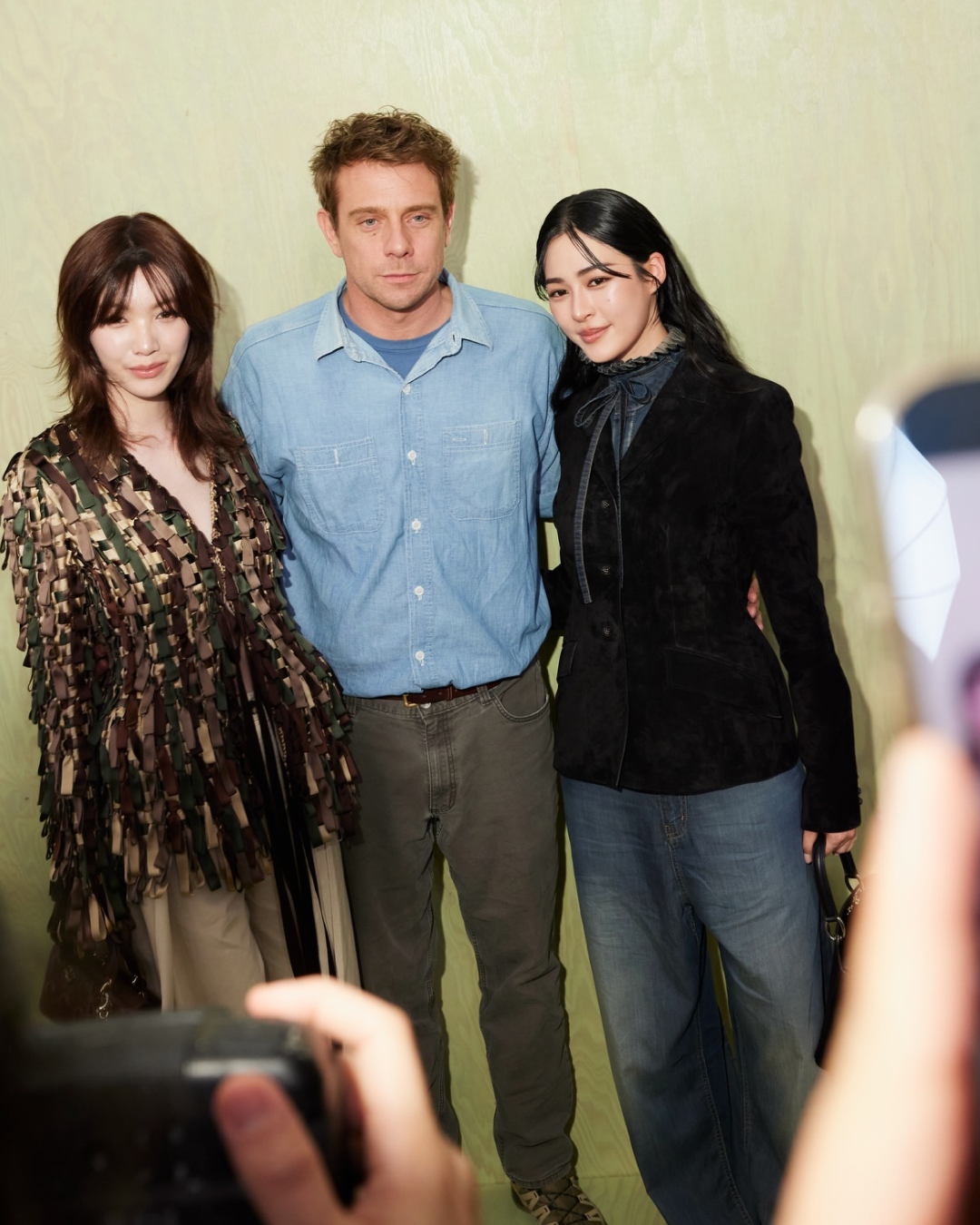
Thai celebrities during FW26
@nssmagazine A quick chat with Gemini after the Chanel FW26 show by Matthieu Blazy #gemininorawit #geminixChanel #gemini_nt #tiktokfashion #chanel audio originale - nss magazine
Dominating the rankings are primarily faces from Thai television productions, with Orm Kornnaphat and Lingling Kwong leading the way, generating over $21 million in EMV and engagement rates exceeding 40% during Dior shows. Alongside them, new names such as Lena Lalina and Miu Natsha, stars of the series My Safe Zone, are quickly gaining international visibility.
Social rankings reveal an increasingly hybrid landscape, where Thai actresses coexist — and often outperform — global icons like Jennie from BLACKPINK and Felix from Stray Kids. What sets them apart is not just volume, but the quality of engagement, with significantly higher interaction rates compared to music-driven celebrities. The shift in hierarchy is also reflected in regional data, with South Korea declining by -22% and Thailand growing by +85%, marking a redefinition of Asian soft power within the global fashion system.
Thai fashion is on the rise
@prada Prada Ambassador Win Metawin takes you on an exclusive tour of the Prada industrial headquarters in Valvigna, Tuscany. #Prada #WinMetawin original sound - Prada
When it comes to fashion, it’s not just the “front-end” that is increasingly opening up to Thailand. While Shanghai Fashion Week continues to move closer to the Big Four season after season, and Korean designers are gaining ground in major calendars (just think of Miss Sohee’s Haute Couture debut), Thai creatives are also establishing themselves on the international stage.
Data reported by WWD highlights a rapidly expanding market: in 2023, Thai fashion e-commerce sales are expected to reach $276.4 billion, with most revenue coming from China. By 2029, the number of users interested in Thailand’s fashion sector is projected to reach 18.1 million. The goal of the New York event is precisely to expand business opportunities toward the United States, showcasing the versatility and creative potential of Thai designers to a broader international audience.
Thailand as an Asian powerhouse
We have K-pop & K-drama in books, now I wanna see the Thai wave coming strong in stories and YES MARK MY WORDS ILL WRITE ONE SOMEDAY!!
— J-Nike is writing/querying (@Jnike9393) February 15, 2024
What once seemed like speculation is now a reality: Thailand is no longer a secondary market, and is actively building the foundations of what many define as the “T-Wave.” Much like South Korea after the 1997 crisis, Thailand has leveraged the economic uncertainty of 2024 to invest heavily in creative and cultural industries, identifying soft power as a key driver of growth. The appointment of Srettha Thavisin as prime minister in 2023 further accelerated this vision.
The academic journal East Asia Forum reports that the government aims to create 20 million jobs within four years and generate annual revenues of around 4 trillion baht (over $100 billion), allocating 5.1 billion baht to 11 cultural sectors, including food, sports, and festivals. The idea is simple: to make the creative economy a central pillar of the country, much like South Korea did with the “K-wave.”
However, there is a risk of conflating the promotion of soft power with the mere expansion of cultural industries. Initiatives such as the “One Family One Soft Power” (OFOS) project aim to train 20 million citizens to become cultural ambassadors, but risk being overly ambitious without clear guidelines on implementation and on which creative skills should be prioritized.
Luxury expands in Southeast Asia
On the luxury and lifestyle front, Thailand is experiencing a true “luxuryfication”. In December 2024, Dior opened its new concept store in Bangkok, nicknamed “Gold House” for its façade of 300 gold-covered windows. According to Jing Daily, Thailand could even become “the new K-pop,” although it has not yet reached a level that truly challenges Korea’s dominance, especially considering the strategic importance of Chinese consumers.
Attention is at an all-time high, but it remains to be seen whether the political and economic framework will sustain cultural industries consistently over time. Thailand now stands at a crossroads: it can either complete its transition into a global cultural powerhouse or risk dispersing its energy across disconnected initiatives. What is certain is that the “T-Wave” is already in motion — and stopping it seems unlikely.