How Marc Jacobs wants to become a billion-dollar brand Under LVMH, the brand's revenue was $509 million a year
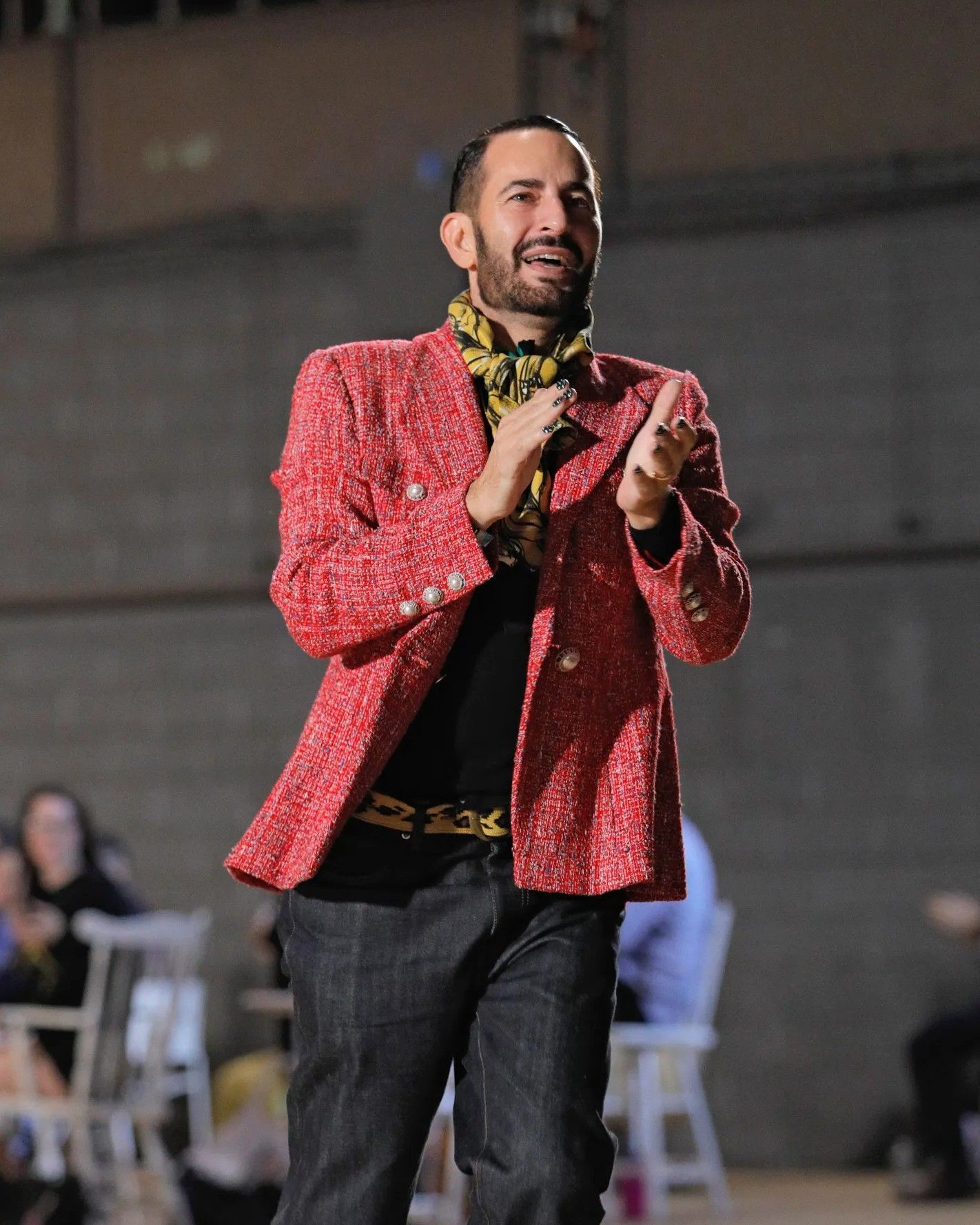
A lot of things are about to change at Marc Jacobs under the new leadership of G-III Apparel Group and WHP Global. Speaking with BoF some time ago, the designer himself said he had wanted to leave LVMH because the luxury group was not focusing on the brand's growth. And he was right, because, as WWD reports, the new owners have highly ambitious goals for the brand — namely, to double its revenue.
In its last year under LVMH ownership, the brand generated $509 million in revenue and, as G-III Apparel CEO Morris Goldfarb put it, "In the long term, we believe Marc Jacobs can generate annual revenue of $1 billion for G-III." But how?
A matter of numbers
A document filed with the U.S. federal securities regulator has shed more light on the mechanics behind the brand. In 2025, under LVMH, Marc Jacobs generated revenues of $509 million. This operating profit includes cost of goods sold ($158.6 million), selling expenses ($183.8 million), marketing expenses ($48.9 million), and general costs ($10.9 million), bringing operating income to $106.8 million. After deducting financing interest ($35.1 million, with total financing amounting to $525 million owed to LVMH) and other items, the actual net profit came to $71.1 million.
Within the brand's revenues, licensing income — consisting mostly of Coty fragrances — accounts for approximately $32.1 million which, after costs, comes down to $19.1 million. That's roughly 12% of operating income. This is why Morris Goldfarb explained that approximately two-thirds of Marc Jacobs' revenues come from the direct-to-consumer business, which includes over a hundred owned stores and its own e-commerce platform. The majority of those points of sale are, however, outlets, which apparently perform quite well. Bags, small leather goods, and accessories are the strongest categories.
Now, a large portion of the sum paid by the two new companies at the time of acquisition (a total figure close to $900 million) went toward settling the debts owed to LVMH. It is therefore clear that the new owners now want to make their investment pay off, given that the brand they acquired cost them nearly twice its annual revenue. A shift in business direction is therefore imminent, but the inherent risk is that of — if you'll pardon the expression — pulling the wrong thread and unraveling the whole thing. So what is set to change?
The new plans
Given that Marc Jacobs will continue to sign the runway shows and lead the creative direction, the big news is that the diffusion line Marc by Marc Jacobs will also return, and efforts will be made to make the licensing area more profitable. The stated goal, as mentioned above, is to double revenue. But it is precisely the brand's presence in the accessible segment — the one most likely to grow in this period — that makes the project not so much ambitious as it is achievable.
Historically, G-III Apparel has built its success primarily in wholesale, focusing on multi-brand retailers and department stores. "Their stores are relatively small," Goldfarb said. "They offer a limited range of product categories. And we have a different approach. We have a model that has worked incredibly well for us, as seen with Karl Lagerfeld, DKNY, and now Donna Karan. And before that, the powerhouse we built with Calvin Klein and Tommy Hilfiger, which was practically nonexistent before, creating categories that enjoy multiple visibility in department stores." The idea is therefore to apply a similar logic to Marc Jacobs as well, expanding the categories beyond the current core of bags and accessories.
This is precisely why the decision was made to bring back Marc by Marc Jacobs, in an attempt to recapture a broader customer base, while the expansion of licensing should increase the name's presence across complementary categories such as beauty and (we presume) underwear. But the operation essentially involves leaving the brand's core intact while restructuring everything else around it: from direct retail and an offering concentrated on leather goods and accessories, the aim is to go mass-market, broadening commercial reach.
Mass or quality?
I sone missed the luxury conversations but coach, kate spade, Michael Kors, Tory Burch, and Marc by Marc Jacobs ARE luxury brands they’re just contemporary. The whole purpose IS to saturate the market so that EVERYONE can get a feel of having luxury items from top designers
— Ken tha Don (@KENIHANNA) December 27, 2020
On one hand, the strategy makes sense. Without meaning any offense to Jacobs, his brand occupies a market segment that is certainly not luxury. Which is actually a good thing, given that the mass of customers outside the luxury sphere is enormous and, indeed, it makes sense to embrace this audience without pretending to be something one is not. The brand therefore needs to gain mass. But does it plan to shed it someday? That is the sticking point. Let's say that through a steady stream of logo merchandise, multi-brand distribution, and category expansion, the brand becomes a kind of new Calvin Klein — will it then gradually raise prices and try to gain prestige? Or will it choose to remain what one might call a cheap brand?
As colossal as it has become, Calvin Klein, for example, continues to push for elevation in actual clothing and fashion. The trouble is that, as we saw with the Veronica Leoni case, it is difficult to sell thousand-dollar-plus garments and stage runway shows when the product you are known for and on which everything is staked is underwear or hyper-accessible fragrances. Unlike Calvin Klein, however, it seems that the owners of Marc Jacobs have no qualms about embracing the mass market. The intention to develop both a mainline and a diffusion line does suggest a desire to nonetheless preserve the brand's equity, channeling accessible clothing and widely distributed collections into the secondary line. It's an interesting bet, but there is a great deal at stake.
What to read next

Phoebe Philo has landed at Dover Street Market Los Angeles
The designer's semi-independent brand continues to expand
Three business lessons we can learn from Victoria Beckham's comeback
The first one is: being obscenely rich

E-commerce has once again shifted its focus on aspirational customers
As luxury gets more exclusive, affordable brands are gaining traction