Three business lessons we can learn from Victoria Beckham's comeback The first one is: being obscenely rich
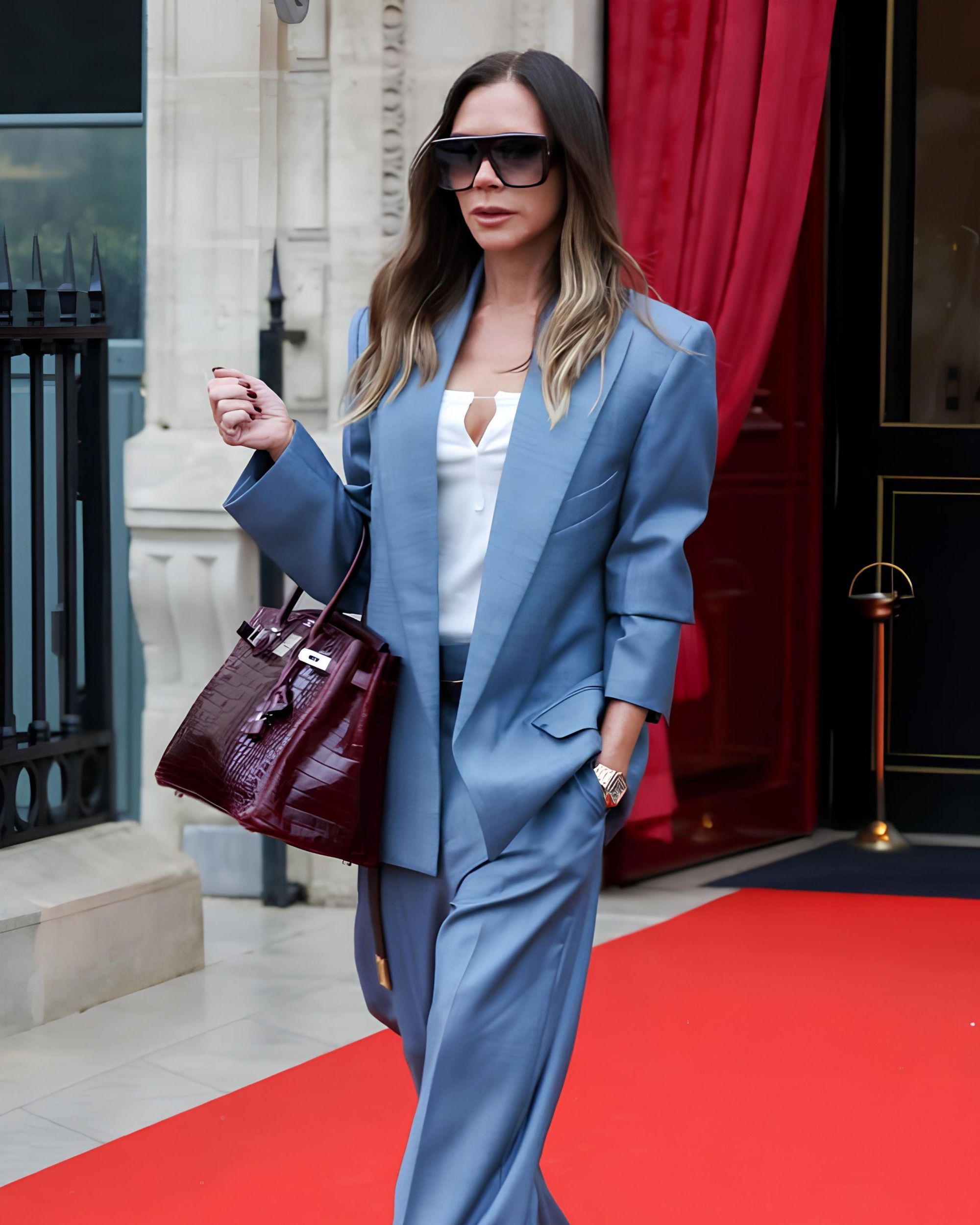
In this world, there are families and there are dynasties. The Beckhams belong to the second category. If in the early 2000s the founding couple, David and Victoria, seemed like just another celebrity couple among thousands, over the decades we have watched their ventures (and their fortunes) multiply. Today the scale of the Beckham business has reached the proportions of a true empire, branching out in many directions with their children playing leading roles as well.
This year, however, what has generated the most buzz is the financial trajectory of Victoria Beckham Holdings, which appears to have reached a turning point after nearly twenty years of losses. But is it all it's cracked up to be? The answer, in truth, is partly yes and partly no.
The British designer's group closed the financial year with the first positive operating result in its history, paving the way for a potential capital transaction entrusted to investment bank Rothschild, which is reportedly considering a valuation in the region of 700 million dollars (approximately 638 million euros). But when did this turnaround happen? And why is Victoria Beckham suddenly being talked about as a success story, when the brand was kept on life support for years?
There is a great deal to learn from her story. We have identified three key lessons.
Fifteen years of losses
After the Spice Girls disbanded in 2001, Victoria Beckham attempted a solo music career that never took off — it must be said that she had always been more admired for her personal style than for her vocal talents. And so the pop star reinvented herself as a fashion designer and, in September 2008, presented her first collection of ready-to-wear at New York Fashion Week, where she would remain until 2018. The press was (and remained) sceptical, but buyers placed orders and celebrities such as Beyoncé, Jennifer Lopez and Kate Winslet wore her pieces. In 2011, a diffusion line, Victoria, Victoria Beckham, was also launched.
Even as the brand's stores remained open and the runway shows continued, from 2008 to 2021 the label closed every financial year in the red, accumulating losses of over £66 million. In 2018, the company was losing approximately £4,000 a day, with an annual deficit of £12.5 million and revenues down 16%. Staying afloat required a constant injection of liquidity, which came over fifteen years in the form of £30 million in loans from other Beckham companies. David and Victoria Beckham also dipped into their own pockets for a further £6.2 million, alongside the fund that had meanwhile taken a stake in the company.
The first turning point came with the entry of private equity fund Neo Investment Partners, which in 2017 acquired a 30% stake in the brand for £30 million. During that phase, the fund conducted an audit that revealed those notorious losses were the result of fairly reckless spending — which Victoria herself later described when her Netflix documentary came out: £85,000 a year on office plants, chairs for events and shows shipped between continents, and a sloppily managed supply chain that devoured funds at an alarming rate.
Things were sorted out quickly: in 2018, a new CEO arrived, Marie Leblanc de Reynies, who rationalised expenditure and stemmed the losses, cut around twenty jobs, focused on direct-to-consumer sales and digital growth. In 2021, rather than eliminating the diffusion line, the decision was made to merge it with the mainline, cutting prices by 40%. At the time, The Guardian attributed the move to a kind of "post-pandemic panic," but in reality it was precisely during the pandemic that it became clear that, beyond occasion wear, knitwear, eyewear and the collaboration with Reebok, the brand was selling very well.
With considerable foresight, the founder and CEO sensed that the entire market was about to raise its prices and that, by keeping theirs low, they could secure the brand's future. And indeed, revenues tripled, rising from £36 million in 2020 to £89.1 million in 2023, and then to £112.7 million in 2024 — a 26% increase and the fourth consecutive year of double-digit growth. Meanwhile, from 2022, the brand joined the Paris Fashion Week calendar, gaining an additional layer of credibility. In 2025, a new CEO arrived: Sybille Darricarrère Lunel, a Dior veteran. More recently, the brand has also ventured into collaborations: the first with Westwing on tableware, and another, last month, with Gap. But the real change happened elsewhere.
The beauty business
Victoria Beckham's comeback is owed, as is so often the case with brands and celebrities, to a successful investment in the beauty space, launched in 2019. In the first three months, the initial eye makeup products generated £2 million, as reported by The Times. This was followed by a skincare collaboration with Augustinus Bader, which gave rise to the Cell Rejuvenating Power Serum, and in 2023 came the fragrances. The Satin Kajal Liner pencil, priced at £32, is the best-selling product at Selfridges in London, moving approximately one unit every thirty seconds across all channels, according to the brand itself.
And, as MF Fashion reports, by 2024 beauty accounted for roughly half of total revenues. Other sources put the proportion at two thirds. MF Fashion also explains that Rothschild & Co., tasked with exploring potential financial options, has now valued the company at £600 million. In its own analysis, Il Sole 24 Ore also points to a recovery in clothing sales (both denim and eveningwear) linked to the boost in brand awareness generated by the Netflix documentary.
But it is not all plain sailing: while the first operating profit came in at £7.3 million, the net result was actually a loss of £1.5 million, given that £2.8 million went on interest from intra-group loans. Debt interest is therefore eating up a significant portion of the operating margin, and financial sustainability remains a goal yet to be fully achieved. The brand is theoretically working — but how?
Three business lessons to learn from Victoria Beckham
Crazy how Victoria Beckham was frowned upon by the fashion industry when she was a WAG and now she’s literally the reference. pic.twitter.com/INux5f2sz5
— andrianaシ (@BOTTEGAHOENETA) October 10, 2025
The first lesson this story teaches us is that customers spend when you let them. What is the point of clinging to a luxury positioning if nothing is selling? The brand cut prices by 40% and merged its two lines. As if by magic, sales picked up again, driven by more everyday pieces such as denim, knitwear and "easy" categories like eyewear. Occasion wear recovered afterwards. There is no point in entrenching yourself in an exclusivity that is, in reality, just isolation: there are far more people willing to spend a little more for accessible luxury than people willing to spend astronomical sums for exclusive luxury.
It is clear, however, that the brand's first positive result could never have been achieved without the beauty category. That this category sells exceptionally well is well established, but in Victoria Beckham's case the real lesson is that an accessible hero product can drive more business than an entire clothing collection. The brand has three of them: the Satin Kajal Liner, The Foundation Drops, and the Portofino '97 fragrance line, which has been extended across a wide range of products. These are items whose purchase requires no soul-searching, but above all they serve as a point of entry: those who buy them will be won over by the brand and come back to buy more, spending increasingly larger amounts and ultimately becoming loyal customers.
The third and final lesson concerns financial sustainability: a sustainable business is worth more than a desirable brand. Focusing solely on pure desirability (Beckham herself has said that the waste of so much money stemmed from a lack of financial preparation and from being surrounded by yes-men who never challenged her) leads to working towards grand ideals that then get lost in practical execution. What is the point of showing in Paris or pouring vast sums into plants, furnishings and similar trappings if you then have to take out loans just to keep the lights on? Waste and inefficiency often cost more than missed sales: knowing and managing your resources is the only way to grow them.
What to read next
E-commerce has once again shifted its focus on aspirational customers
As luxury gets more exclusive, affordable brands are gaining traction
Have luxury boutiques turned into museums?
From Prada to Gentle Monster, more and more brands are turning their stores into exhibition spaces
Giorgio Armani may have found his new minority partners
They were the ones everyone expected: L'Oréal and EssilorLuxottica