
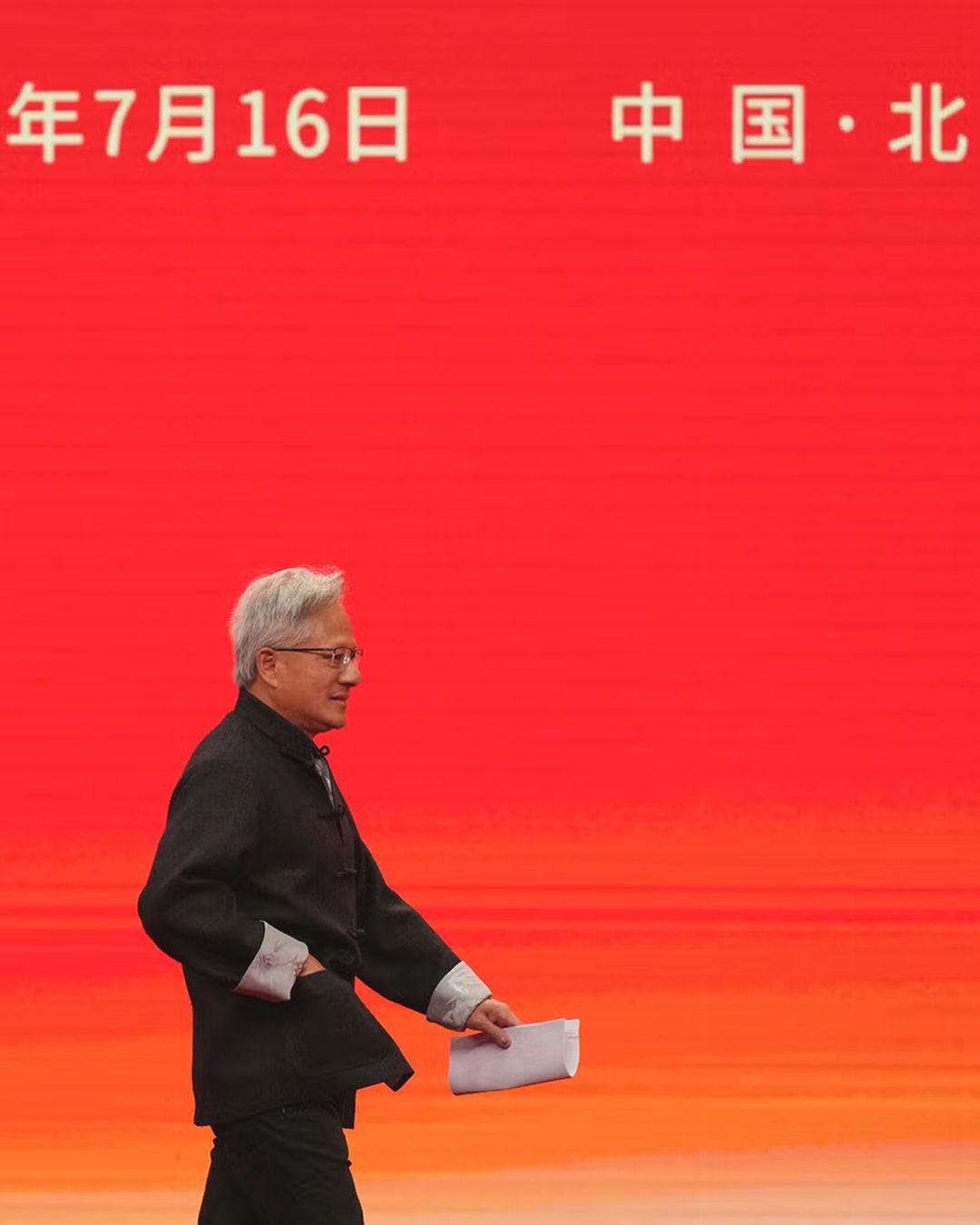
What's going on at Nvidia? The fallout following the scandal involving CEO Jensen Huang
Recently, Nvidia has launched an internal investigation to independently verify whether its co-founder and chief executive officer, Jensen Huang, was unknowingly involved in an alleged espionage operation linked to China. The decision by the American technology company comes after Huang confirmed he had an extramarital affair with a businesswoman who, according to intelligence assessments, had collaborated with the Chinese government.
The woman in question is named Alice Huang (though she has no family connection to Jensen Huang — the two share only a surname that is particularly common in China), and she is believed to have been recruited by the Chinese Ministry of State Security with the aim of getting close to the Nvidia CEO in order to obtain confidential information about both him and the company. According to reporting by the New York Times, US authorities are said to have begun monitoring Alice Huang's movements — also known by the name Huang Le — and her activities for at least a year.
What implications does the investigation have for Jensen Huang
The affair involving Jensen Huang has taken on particular significance due to Nvidia's strategic importance in the global economy. The company is among the highest market-cap businesses in the world and is one of the key players in the development of the artificial intelligence sector: its microchips are essential for training and running AI systems. Jensen Huang's position also adds to the sensitivity of the case: the entrepreneur is one of Trump's most trusted interlocutors on technology matters and has been actively involved in discussions with his administration regarding restrictions on microchip exports to China.
According to the New York Times, Alice Huang allegedly attempted to exploit her relationship with the Nvidia CEO to exert a form of influence — more or less direct — over the US government's decisions on artificial intelligence. This hypothesis takes on particular relevance especially in light of recent developments: Jensen Huang had in fact helped persuade Trump to ease certain restrictions on Nvidia's microchip exports to the Chinese market — a strategically significant issue both for the technology industry and for trade relations between Washington and Beijing.
Markets, however, reacted negatively to the news surrounding the case involving Jensen Huang. At the opening of the New York Stock Exchange, Nvidia shares fell by more than 7%, reducing the company’s market capitalization – the total market value of all its outstanding shares – by more than $300 billion (€270 billion). Investors began selling Nvidia shares, fearing that the affair could have negative repercussions for the company.
More recently, Trump announced that the FBI, the US federal law enforcement agency, is investigating the matter. Meanwhile, a group of shareholders has filed a class-action lawsuit against Nvidia, accusing the company of concealing the relationship between its CEO and the Chinese entrepreneur, thereby affecting its stock price and putting the company’s financial stability at risk.
Why Nvidia is considered so important
The New York Times also reports that Trump had been informed of suspicions that Alice Huang had been working for the Chinese government while simultaneously maintaining a relationship with the Nvidia CEO. Despite this, the US president had chosen not to intervene. When asked about the matter, Trump stated that he had full confidence in Jensen Huang.
This unusual stance can be explained — at least in part — by the weight the executive carries within the company: having led Nvidia for over thirty years (making him one of the longest-serving CEOs in Silicon Valley), Huang is regarded as the primary architect of the strategic and industrial decisions that have transformed the company into one of the most important players in the global technology industry.
The leniency shown toward the Nvidia CEO by the highest office in the US government, as well as by numerous prominent industry insiders, can be further understood by considering how critical the company's chips are to the sector: some of the industry's leading companies depend on this technology, including OpenAI, Anthropic, Microsoft, Meta, and Google. The company's strategic weight also helps explain why, despite the controversy, Jensen Huang is not facing pressure to step down as CEO — a rather unusual circumstance for a company of this size; it comes as no surprise, therefore, that to date there is not even a designated successor to lead the company.
What to read next

Will we build data centers in space?
Elon Musk's proposal, now that the United States will be cutting investments in AI
This holiday season is a gamer's paradise
"Zelda: Ocarina of Time" and "GTA VI" are betting on nostalgia