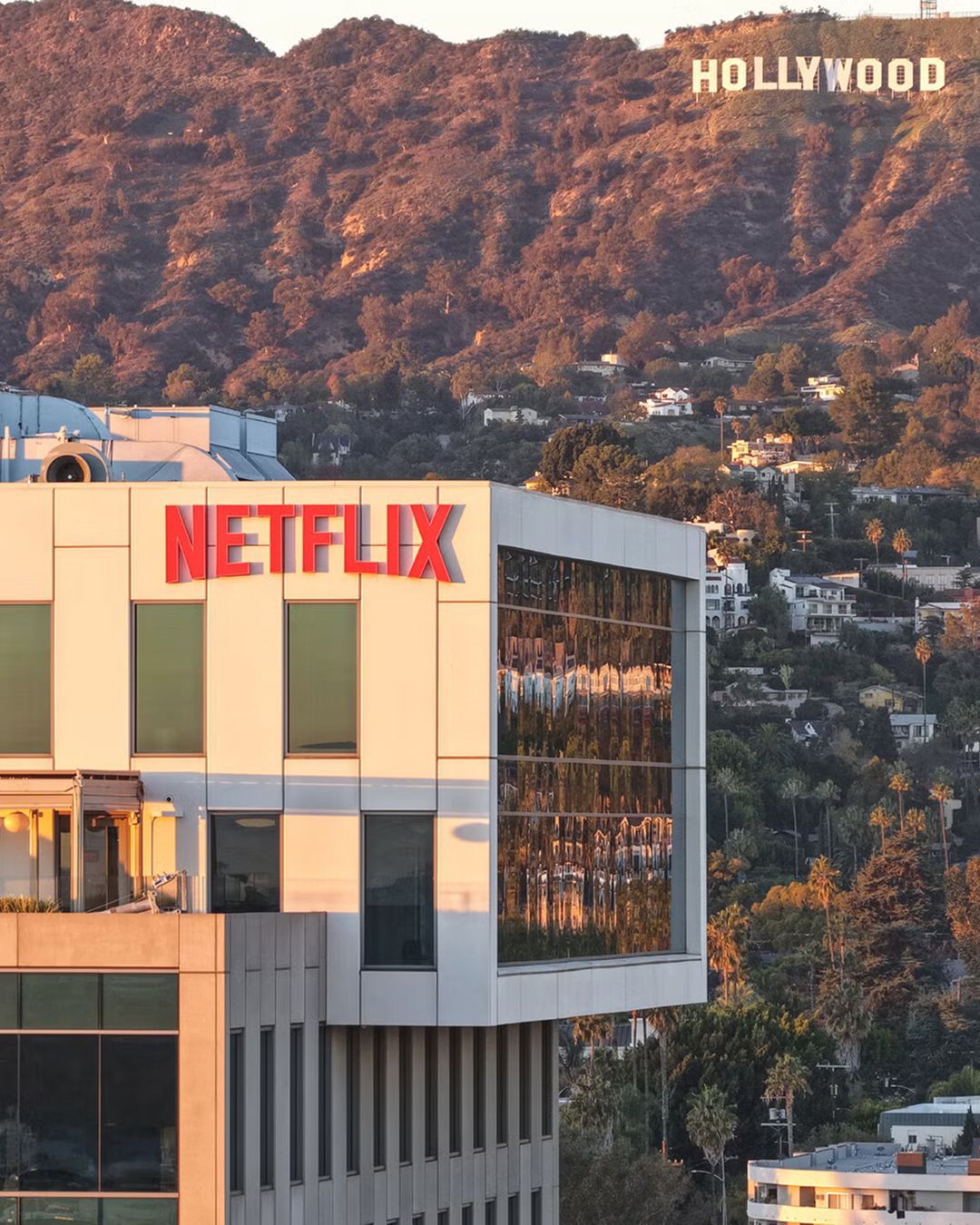
What is going on at Netflix? The company is facing a major crisis period, but already has a strategy
Netflix has announced the layoff of around a thousand employees, equivalent to approximately 6% of its workforce — the largest round of job cuts since 2022. Around the same time, the company removed three senior executives from their roles in the division overseeing film and TV series production: these are chief content officer Bela Bajaria (who had overseen projects such as Stranger Things, Adolescence, and Beef), head of films Dan Lin, and his deputy Doug Belgrad.
Replacing chief content officer Bela Bajaria will be Peter Rice, formerly an executive at Walt Disney Television, Disney's television production arm, where he oversaw hundreds of productions — including iconic series such as The Bear. According to observers, among the tasks the company will require of him, Rice will need to develop original TV series capable of drawing significantly greater audience attention.
All of this is part of an internal restructuring that will in all likelihood change — at least in part — the platform's core offering. And there is a reason why the company's leadership has decided to launch this operation: Netflix is growing below expectations.
Why Netflix appears to be struggling
Although the company's revenue continues to grow, Netflix has had to revise its growth forecasts. The company has, for instance, lowered its estimates for advertising revenue in 2026, while for the final quarter of the year it is expecting revenue slightly below analyst projections. In the first half of 2026, moreover, the number of platform subscribers did increase, but not by enough.
Against this backdrop, the company's share price has lost more than 40% of its value compared to last year. Investors have interpreted Netflix's failure to acquire the well-known American media company Warner Bros. Discovery — subsequently purchased by entertainment giant Paramount — as a sign of weakness in the company's growth outlook. All of this is also generating considerable discontent among employees, who, as is customary in the United States, receive part of their compensation in the form of shares.
More broadly, Netflix has for some time been losing part of its appeal: the platform appears to be struggling to deliver major hit original content on the scale of Stranger Things or Squid Game. According to the Wall Street Journal, Ted Sarandos, one of Netflix's two CEOs, reportedly blamed the company's creative division directly for its inability to keep pace with competitors — who are indeed becoming increasingly formidable.
What Netflix's "Project Meridian" is
To address its loss of relevance, Netflix is said to have launched what is known internally as "Project Meridian": the plan involves channelling the bulk of financial resources into TV series and films, considered the platform's flagship content, while simultaneously reducing investment in other "secondary" formats such as podcasts and video games, among other things. In recent years Netflix had invested heavily in sectors beyond film and television in order to compete with YouTube and TikTok, whose short-form content has been drawing potential users away from the platform; the strategy, however, does not appear to have worked.
Netflix's internal restructuring will also affect film distribution, which will more closely follow the traditional model — meaning an exclusive theatrical window before titles arrive on streaming: this represents a genuine shift in direction for Netflix, which in recent years had set itself apart through its unconventional approach to distribution.
What to read next


If you're in trouble, call "Un bon avocat"
But only to spend a nice evening on the couch with Netflix's new title