
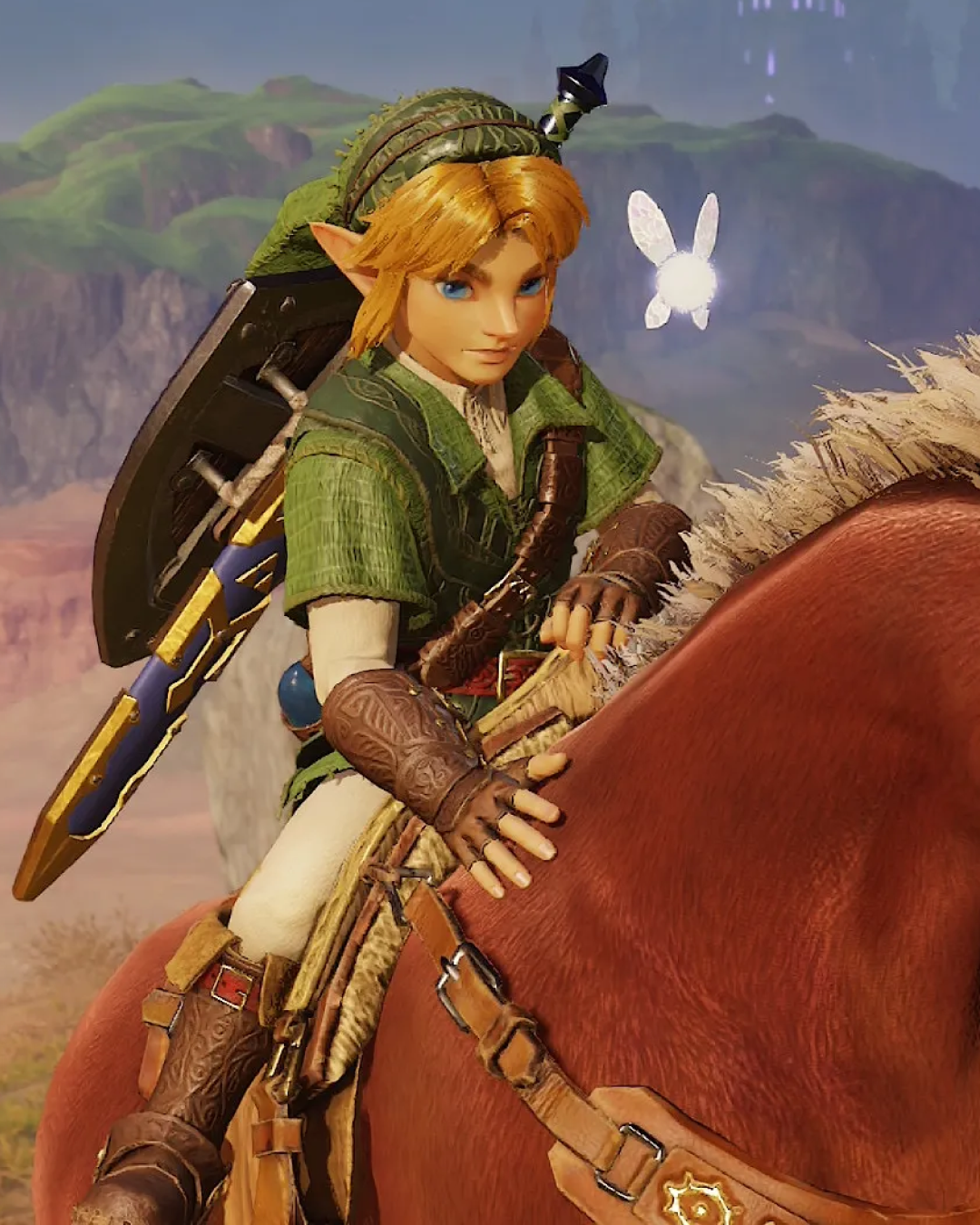
This holiday season is a gamer's paradise "Zelda: Ocarina of Time" and "GTA VI" are betting on nostalgia
The first choice a gamer must make in life is deciding on their console: the more «cozy» types tend to go with Nintendo, the mainstream crowd pledges its loyalty to Sony consoles, the nostalgic ones stay faithful to Xbox even at a time when the competition seems to have died down, while the «real» gamers build and upgrade their own PCs to chase frame rates (FPS) that are almost higher than the human eye can perceive.
The second choice, on the other hand, is swearing allegiance to a title that, despite the passage of time, will perhaps remain one of the few certainties in their life. And there's no point in denying that some video games are more appealing to die-hard fans than others: Zelda and GTA definitely occupy two spots on the gaming podium. For this very reason, November 2026 seems like a month conjured up by a gamer's mind, as after years of waiting both franchises return with two of the most anticipated titles in recent memory: the remake of the cult classic The Legend of Zelda: Ocarina of Time and (finally) GTA VI.
When video games become cultural phenomena
To grasp the cultural magnitude of these two releases, consider that within hours of Ocarina of Time's launch, the game's dedicated category on Twitch surpassed 50,000 concurrent viewers. Which is all the more remarkable given that the game is not new — Nintendo chose to rebuild from scratch one of the most influential video games in history, originally released in 1998 for the Nintendo 64, preserving its storyline while updating the graphics, controls, and dialogue to suit the Japanese giant's new console, the Switch 2.
The remake received 96 out of 100 on Metacritic, making it the highest-rated video game of 2026 and earning a place among the 30 best-reviewed titles of all time. An even more significant achievement when you consider that the 1998 original still holds the platform's all-time record, with a score of 99/100.
GTA VI and the business that exists beyond the game
While Nintendo has built much of its strategy around leveraging nostalgia, Rockstar has turned the wait for GTA VI into a commercial operation spanning multiple sectors of the entertainment industry. The new installment arrives on November 19, thirteen years after GTA V, which has since sold nearly 230 million copies.
Ahead of the release, Rockstar announced a 34-track original soundtrack in collaboration with Atlantic Records, featuring artists such as Travis Scott, PinkPantheress, and Rauw Alejandro. Sony unveiled two limited-edition DualSense controllers, and Nike and Cactus Jack have just released a preview of a pair of limited-edition Air Force 1 Lows inspired by the game. Even Miami, the city that inspired Vice City, is involved through a $3.9 million advertising deal that will bring the video game's aesthetic from the airport to the county's public spaces.
Has gaming truly survived the attention economy?
filling out 1 job application and rewarding myself with 8 hours of gaming
— TooManySaplings (@faunaswag) April 29, 2026
There is finally one issue that these two releases share: time. On one side, a game from 1998 rebuilt nearly thirty years later; on the other, a sequel for which audiences waited thirteen years. In the age of the attention economy, where films, television series, and music must compete with a constant stream of new content, the ability of video games to sustain interest over such long periods represents a remarkable exception.
Gaming, too, is subject to the logic of attention, especially given the success of free-to-play games and titles that are continuously updated to retain users. And yet, Zelda and GTA prove that there is still a public willing to wait years and dedicate hundreds of hours to a single experience. The most telling data point concerns the very way video games are consumed: their value depends in part on the time required to explore, complete, and return to them, often years later. And it is perhaps for this reason that, while much of the entertainment industry scrambles to adapt to an ever-shrinking attention span, video games remain among the few cultural products for which audiences are willing to invest an amount of time that elsewhere seems to have become unsustainable.
What to read next

The "AI panic" triggered one of the worst financial crashes in recent years
Has the financial market placed too much trust in data centers?
Young people made the difference in the American Midterm elections
Far more American under-30s than expected voted for the Democratic Party