Copenhagen is the best European city for vintage shopping Kaiia's report reveals the 10 European cities with the highest number of vintage shops, antique stores and flea markets
Some people travel to visit museums, others to sample the local cuisine, and others have already pinpointed every vintage shop at their destination on Google Maps before even booking their flight. For this last category, a new ranking is worth keeping in mind: a study just published by Kaiia has identified the ten best European cities for vintage shopping. The research was based on the number of secondhand shops, antique stores, and flea markets, alongside clothing and footwear price levels.
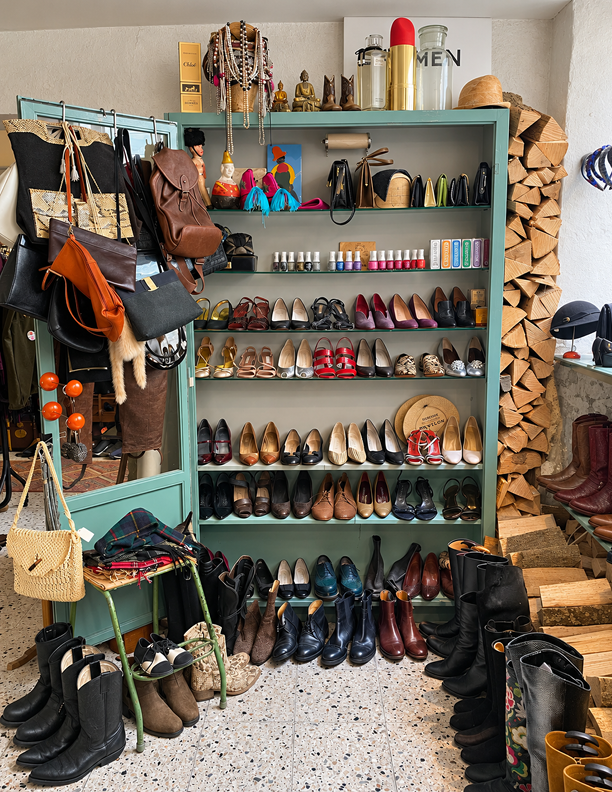
Taking first place is Copenhagen, which, in addition to being the world's most liveable city for the second consecutive year, with its 200 vintage and secondhand shops, 103 antique stores, and 47 flea markets, also confirms itself as a must-visit destination for those who love hunting for hidden treasures.
In second place we find Amsterdam, where, with prices 7% below the European average, your wallet can breathe a sigh of relief. Here, however, the real advantage is logistical: 191 vintage shops and 85 antique stores within short distances of one another make it possible to plan a full-on shopping marathon on foot through the Dutch capital. On the third step of the podium stands Berlin, which needs no introduction when it comes to alternative culture and aesthetic experimentation: with 326 vintage shops, 209 antique stores, and over 60 weekend flea markets, it is the ideal destination for those seeking out-of-the-ordinary pieces and items that are hard to find elsewhere.
The top five continues with Prague, which boasts over 150 vintage shops and clothing and footwear prices 3.6% below the European average, and Helsinki, with 172 secondhand shops and more than 50 flea markets. Outside the top three, but still worth noting for your next trip, are London, Stockholm, Vienna, Sofia, and Budapest. The English capital deserves a special mention: with 488 vintage and secondhand shops and 595 antique stores, it holds the European record for the number of thrift stores. Sofia, meanwhile, is the most affordable destination on the list, with clothing and footwear prices 20.9% below the European average.
What stands out most in this ranking is the absence of Paris and Milan from the top positions: two fashion capitals that, at least on paper, we might have expected to rank far higher in a list dedicated to vintage shopping. Beyond the numbers, the report confirms that vintage is no longer merely a budget-friendly alternative or a pastime for archive fashion enthusiasts, but an increasingly widespread approach to building one's wardrobe. This is backed up by research from Vinted, cited by Kaiia, which found that 37% of the 100,000 users surveyed across seven European countries buy at least half of their clothes secondhand. This shift particularly involves Millennials and Gen Z, and sits within a regulatory landscape that is paying ever greater attention to textile waste, with new responsibilities for brands regarding collection and recycling.
What to read next

Here's what went down at the launch of the new Clifton 11 by HOKA and MARNI
Color, performance and softness at the heart of an immersive installation in Milan