
Are you ready for the Abercrombie comeback? Gen Z wants to dress like teenagers back in the 2010s
There is a rather traumatic moment in the life of every generation: the one when the clothes of your adolescence stop being merely dated and become vintage. It happened to Gen X in the 2000s when they watched grunge make a comeback, and it's happening now to Millennials, who are being forced to watch barely-legal teenagers obsessively scouring Vinted and Depop for the hoodies, jackets, and t-shirts from Abercrombie & Fitch and Hollister that used to hang in their high school wardrobes.
This is more than just a vague feeling — it's a matter of hard fact: according to Business of Fashion, Abercrombie is heading into its quarterly earnings release on the back of 14 consecutive quarters of revenue growth, with analysts forecasting a further 2.8% increase in sales and the group targeting full-year growth of between 3% and 5%. Meanwhile, Hollister continues to show a remarkable ability to draw people into its stores, where foot traffic rose 13% in the second quarter. The two mall brands par excellence, in short, have become desirable again.
When Abercrombie and Hollister Were a Status Symbol
@fluzb0 love the vintage brands of these sm! #fyp #xyzabc #foryoupage #abercrombie #hollister join me in death demo - gabi
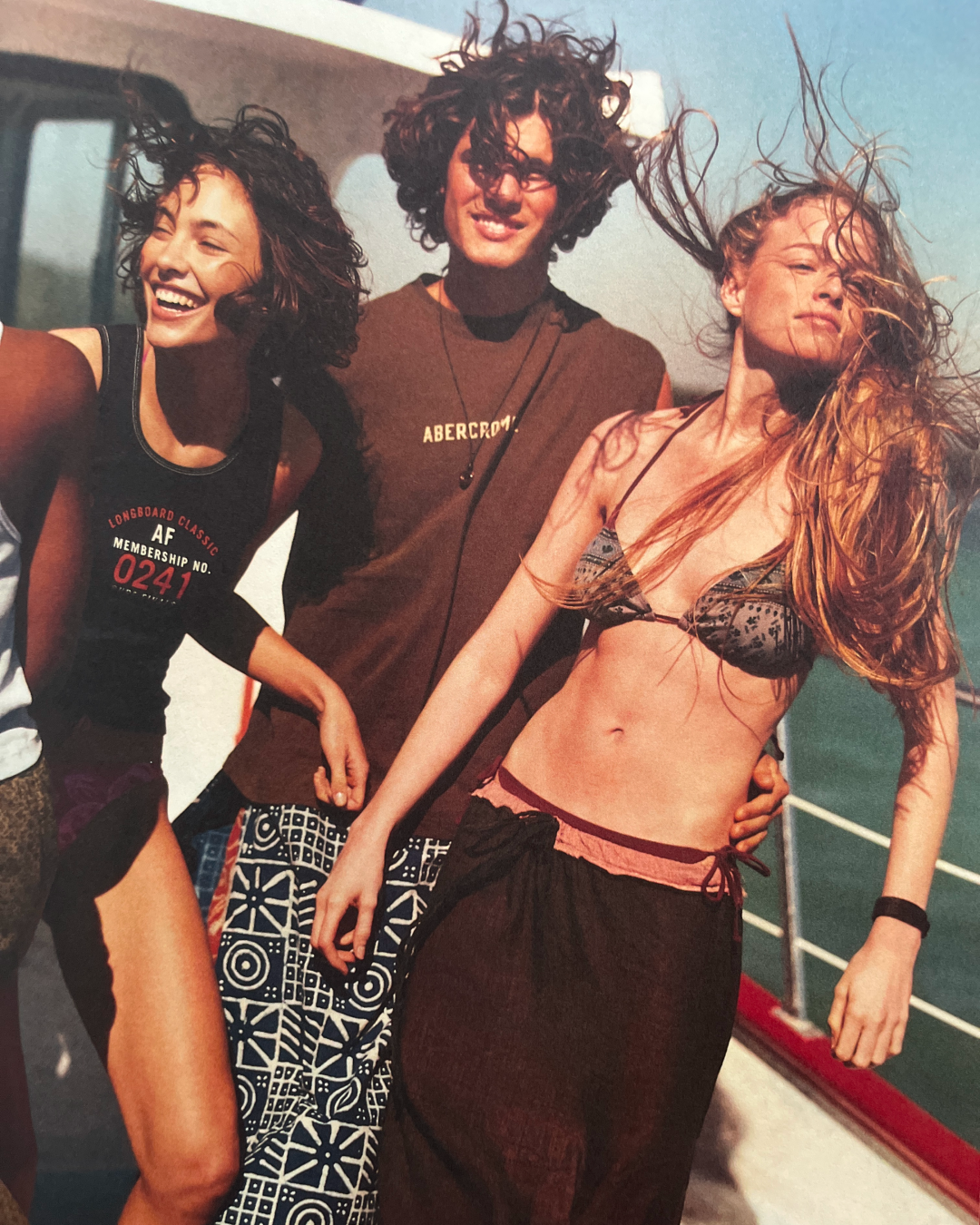
To understand why this is significant, you have to remember what Abercrombie and Hollister meant in the 2000s. More than selling clothes, the two brands were selling access to a very specific version of the American adolescence: faded jeans, fitted polos, hoodies with enormous embroidered logos, miniskirts, cargos, flip-flops, and fur-trimmed hooded jackets, worn by tanned kids who seemed to live permanently somewhere between an East Coast college campus and a California beach. The darkened stores, the blaring music, the perfume sprayed everywhere, and the sales staff selected partly on the basis of their looks turned shopping into a kind of initiation ritual.
That same construction of exclusivity later contributed to its downfall. During the 2010s, the aesthetic model promoted by the group began to look increasingly incompatible with a culture that was challenging unrealistic beauty standards, discrimination, and exclusivity (there were also allegations of sex trafficking), while, stylistically speaking, oversized logos, layered polos, and washed-out jeans became the emblem of a suddenly passé aesthetic. Abercrombie was, in a sense, cancelled before the concept of cancel culture had even truly taken hold. In the years that followed, the group progressively shed that identity, expanding its size range and fits, overhauling its communications, and transforming Abercrombie in particular into a far more grown-up, broadly appealing brand.
Why Does Gen Z Want the Old Abercrombie?
The paradox is that Gen Z now seems drawn to precisely the Abercrombie that existed before that transformation — so much so that the brand itself appears to have begun recognising the value its own past has acquired. In August 2026, Reddit users documented the appearance in select Abercrombie stores of vintage pieces from the brand being put back on sale, drawn directly from the aesthetic the company had spent years trying to leave behind.
It is almost the ultimate consecration of a process that began earlier on social media and in the secondhand market, where old Hollister hoodies, fitted t-shirts, denim, and above all the iconic fur hooded jackets have become objects of desire for a generation that was often not even old enough to wear them when they first came out. The fur-trimmed hooded jacket in particular looks set to become one of the most coveted items of this winter.
Their return coincides above all with a broader shift in the way we are looking at basics. It is a new form of normcore, filtered, however, through nostalgia for the late 2000s and early 2010s: Twilight, Tumblr, skinny jeans, zip-up hoodies, Uggs, and wardrobes that seemed far less self-conscious about constructing an aesthetic. These are basics that already have a history — simple enough to be worn today, and dated enough to feel new to anyone who was too young to want them back in 2008. For Millennials, there remains only one piece of news that is slightly harder to swallow: the hoodies they threw out ten years ago are back in fashion.