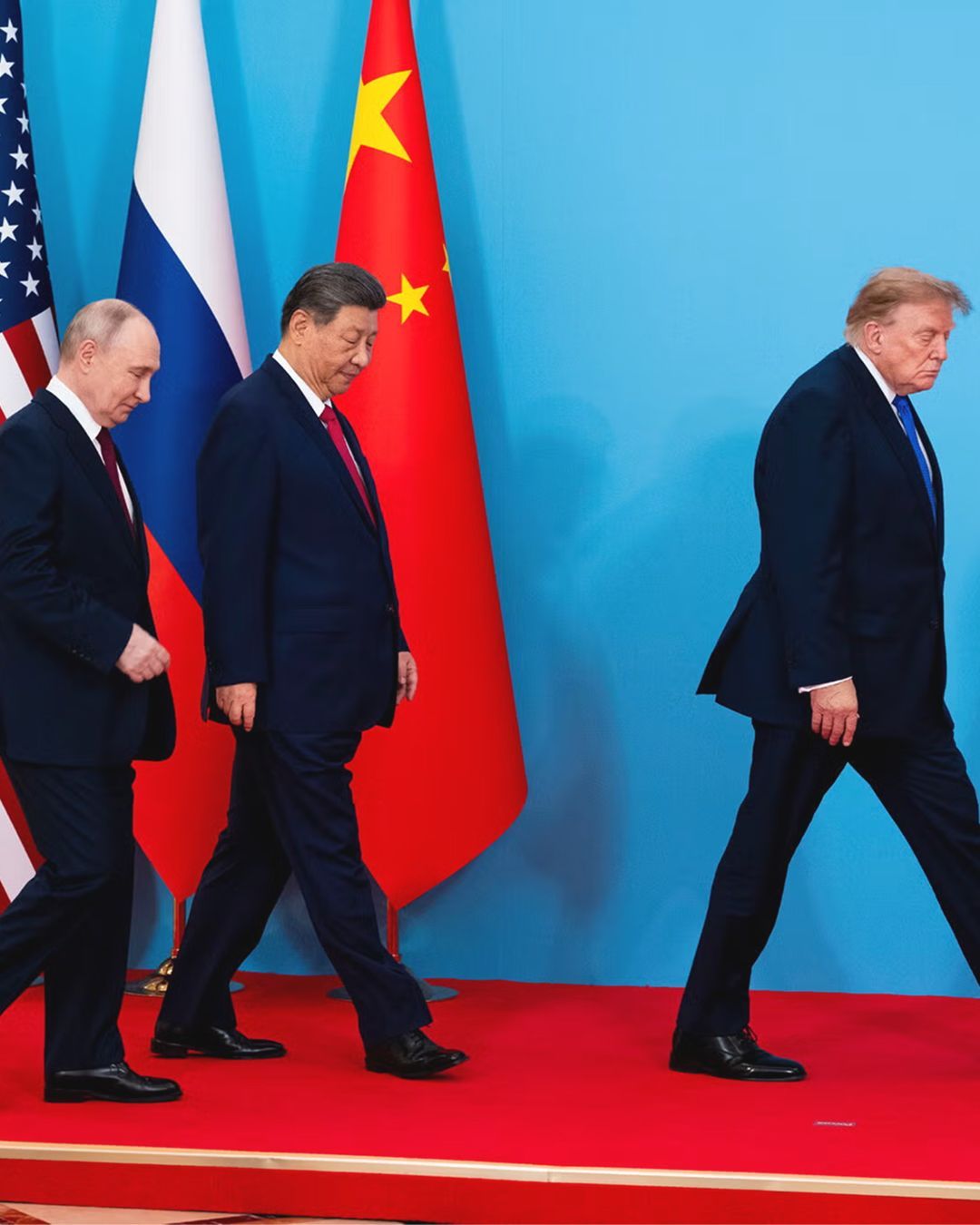
The historic meeting between Trump, Putin, and Xi Jinping may not have been so historic after all It failed to produce concrete results even on hot-button issues like AI
On Thursday, November 19, in Shenzhen, in southern China, the first trilateral meeting in history took place between the leaders of the United States, Russia, and China. Despite the unprecedented nature of the initiative, experts considered it unlikely that any significant agreements would emerge from the summit. For U.S. President Donald Trump, Russian President Vladimir Putin, and Chinese President Xi Jinping, the most meaningful outcome may therefore have been simply the fact of sitting down together at the same table.
Putin was able to demonstrate that he is not internationally isolated following the invasion of Ukraine, Trump was able to present himself as a central figure in international diplomacy after his party's defeat in the midterm elections, and for Xi, hosting two leaders from such significant countries was already a diplomatic success in itself. Beyond that, the United States, China, and Russia hold very divergent positions on many of the potential topics for discussion.
Trump, Putin, and Xi Jinping could have spoken at length about AI
JUST IN: Trilateral meeting between President Trump, Xi Jinping, and Putin officially begins. https://t.co/VTFRoUiaPe
— BRICS News (@BRICSinfo) November 19, 2026
The meeting among the three countries also included bilateral summits: the one between Trump and Putin lasted about 40 minutes, and upon entering the room the U.S. president greeted his Russian counterpart by saying "who is he? He's a friend of mine." During his meeting with Xi Jinping as well, which lasted about an hour, Trump emphasized that he had "a very special relationship" with the Chinese leader, adding that as long as both remained in power there would be no "problems" between the two countries.
Trump, Putin, and Xi Jinping would have had many topics to discuss, including the development of artificial intelligence and the risks associated with its unchecked growth. However, this and other subjects — such as the wars in Ukraine and the Middle East — risked putting at least one of the three leaders in a difficult position: for this reason, the individual presidents had deliberately chosen to exclude them from the meeting or to avoid exploring them in depth.
With regard to artificial intelligence, the most concrete outcome expected from the summit was an agreement to exclude the use of these systems from decisions relating to the deployment of nuclear weapons, following the precedent already set in 2024 by Xi Jinping and then-U.S. President Joe Biden. The issue remained particularly sensitive for Russia, however, which lagged far behind the United States and China in the development of artificial intelligence. Another possible goal was to strengthen communication and coordination among the three countries on issues related to the sector.
What you need to know about this unprecedented meeting
WATCH: Trump lends Xi Jinping a hand on the escalator. Looks like they are getting along very nicely. https://t.co/ZxKj1nugIj
— Open Source Intel (@Osint613) November 19, 2026
After a brief series of opening remarks, the trilateral meeting continued behind closed doors, without following a set agenda. In his speech, Trump — who on this occasion read from a prepared statement rather than improvising as he usually does — mentioned the issue of nuclear arms control and confirmed that ongoing international conflicts would also be discussed, expressing hope for diplomatic progress. The U.S. and Chinese presidents also ruled out any discussion at the summit of the case that had recently involved Nvidia and its former CEO Jensen Huang — suspected of having carried on two extramarital affairs, one of which was allegedly with a Chinese spy who may have had access to sensitive company information. The scandal, in short, was an embarrassment to both the Chinese and U.S. governments.
The day before the summit, Xi had made a gesture toward Trump that was quite unusual for a Chinese leader: personally welcoming the president of another country — something that had not happened since 1959. Normally, government delegates are sent to receive foreign guests. Upon Trump's arrival at Shenzhen airport, however, Xi appeared in person on the tarmac and even embraced the U.S. leader.
It is clear that the three presidents sought to present themselves as cordial and to avoid friction despite the many potential sources of conflict, particularly on "hot-button" issues such as artificial intelligence and the trade war also linked to the rise of the sector that Trump helped set in motion. Although it was unlikely that anything significant would emerge from the meeting, European and Asian countries feared that the three presidents might make decisions affecting them in their absence: that did not happen.
What to read next

So, what is GTA VI like?
According to critics, Rockstar Games' highly anticipated video game has actually exceeded expectations


Will the European Union's Digital Fairness Act save us from brainrot?
Everything you need to know about the proposed law to protect consumers from doomscrolling