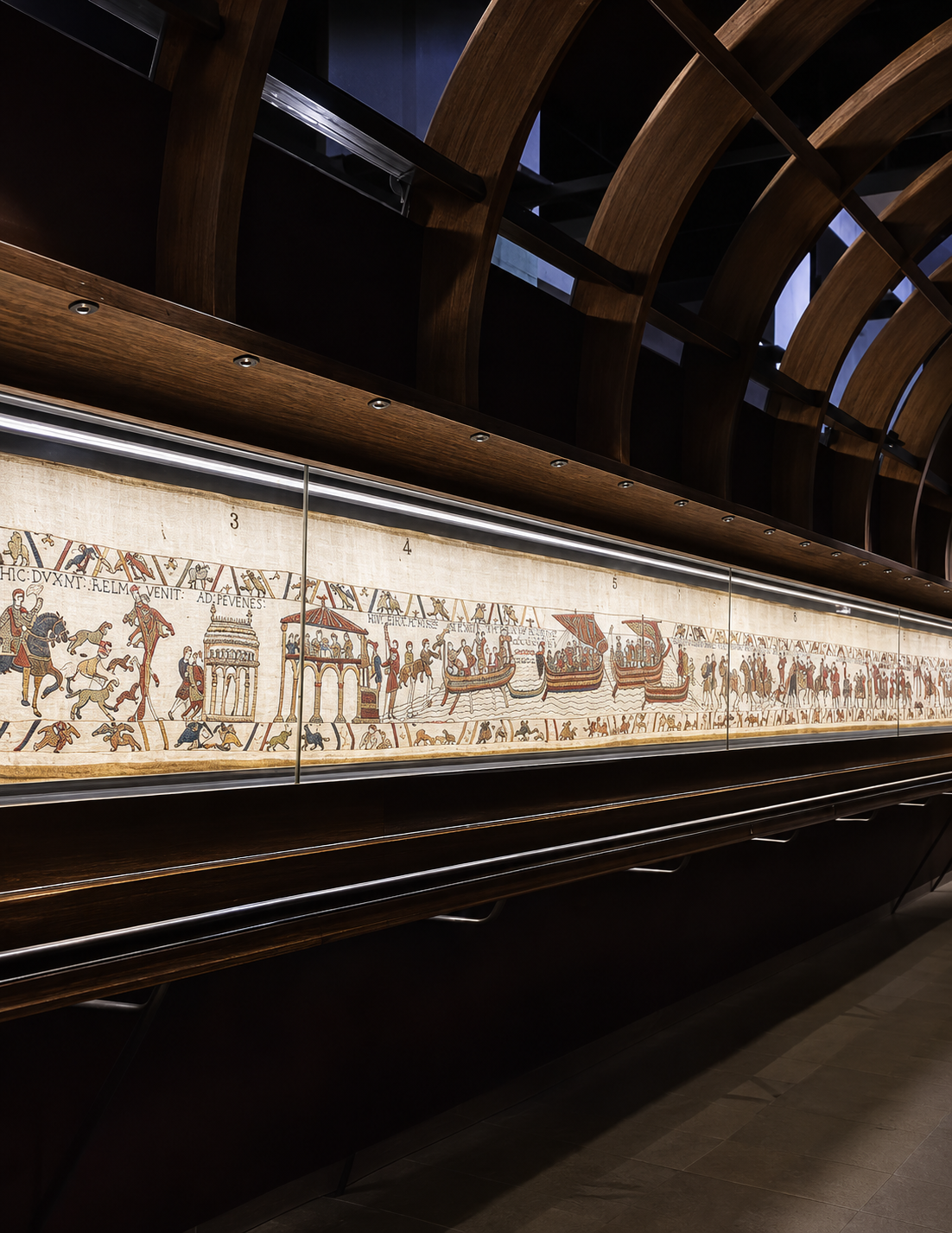
Among young people, the Bayeux Tapestry outperformed the new Spider-Man Monzo research reveals that 55% of tickets sold in the first hour were purchased by under-35s
The Bayeux Tapestry, 70 metres of linen embroidered in wool depicting the Battle of Hastings of 1066, one of the key events in English history, would not normally rank among the most popular attractions with younger generations. Yet, having arrived at the British Museum in London after nearly a thousand years of preservation in France, it appears to have enjoyed surprising success among young people, according to research conducted by Monzo: during the first hour of the most recent ticket sale for the exhibition, which is open until 11 July 2027, 55% of tickets purchased were bought by people under the age of 35.
Record spending and numbers to rival a pop event
Based on ticket purchase data, this piece of history has sparked greater interest among young people than some of the year's major film releases, including the new Spider-Man and The Odyssey. Despite exhibition tickets being considerably more expensive than a standard cinema ticket, interest in the show has proved exceptional — buyers spent an average of £97 each, five times the £19 recorded on the opening day of Spider-Man ticket sales. Within two hours, total spending by Monzo users had already reached £30,500, generating a phenomenon comparable to major pop culture events such as Glastonbury festival and the Oasis reunion.
Even the past can become a pop phenomenon
The interesting finding, however, is not simply the number of tickets sold, but what it reveals about the cultural habits of younger generations. But what made a medieval artefact capable of generating the dynamics typical of the greatest contemporary pop phenomena — anticipation, desirability, virtual queues and sold-out events? There is a tendency to measure younger generations' cultural engagement through traditional forms of participation, assuming that anything belonging to the past is remote from their world.
The more interesting reflection might instead be to question the way in which we define all of this. The tapestry's success could suggest that it is not necessarily culture itself that has stopped speaking to young people, but rather the way in which it is communicated that determines its ability to engage them. The question, then, is not how interested young people are in culture, but how well culture can still find a language through which to make itself desirable.
Culture must find a new language to speak to Gen Z
Associating Gen Z with rapid and fragmented consumption of digital content does not seem to tell the whole story. The exhibition's success points to a different perspective: interest in history, art and cultural heritage has not disappeared, but can express itself through new forms of participation. Contributing factors may have included the exceptional nature of the occasion, amplified by media coverage and digital word of mouth, which transformed a museum visit into a must-attend event.
Perhaps, rather than being disengaged from culture, young people are simply looking for experiences capable of surprising and captivating them — proving that even a 70-metre-long embroidery can find a place in the contemporary imagination.
What to read next


The price of independence for A24
Would we still watch their films if it were to be acquired?

The choice of James Bond is the cheapest marketing for the franchise
James Bond, Amazon and the "Marvel treatment"