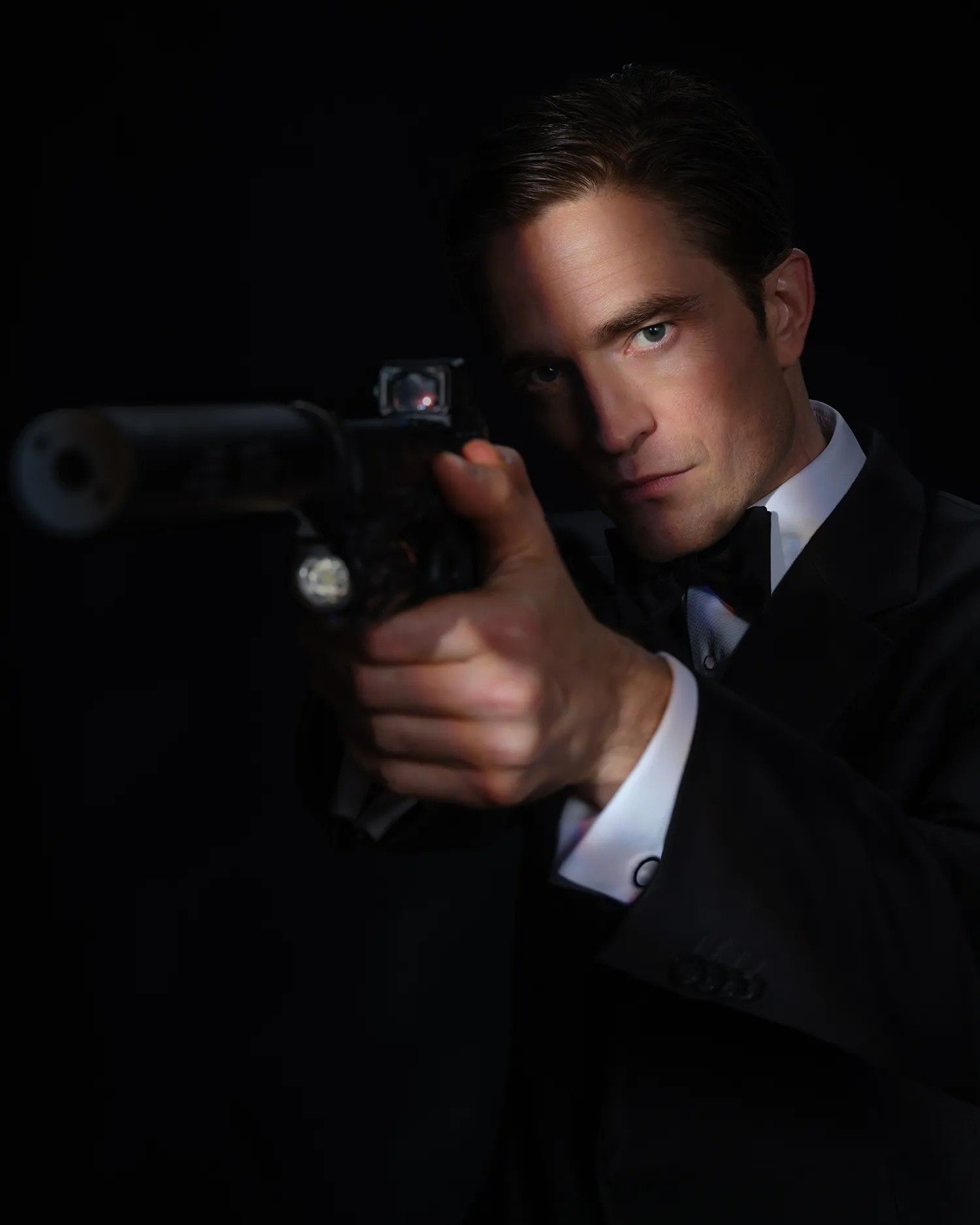
Which brands will the new James Bond wear? Unlike his predecessors, Robert Pattinson is already an ambassador for two brands
From the very first novel in the saga — Casino Royale, published in 1953 — and throughout the entire run of its extraordinarily long film franchise, James Bond has been synonymous with product placement. Secret agent 007 is inseparable from his high-end lifestyle and, especially on screen, is defined by his cars, his suits, his drinks and his watches. And until now, no actor had come to the role of James Bond with pre-existing advertising contracts — emphasis on "until now." Yesterday, Robert Pattinson was officially announced as the new Bond. But which brands will define him? The question is an interesting one, given that Pattinson will be stepping into the role of 007 already serving as a longstanding ambassador for Dior and, very recently, for Jaeger-LeCoultre as well. But let's take things one step at a time.
A spy's wardrobe
For the vast majority of the film saga's run, James Bond has worn English suits from Savile Row. Anthony Sinclair has been 007's tailor since the 1960s and even created a specific cut for Sean Connery known as the "Conduit" cut (Sinclair had his atelier on Conduit Street), which the specialist website Bond Suits describes as follows: "a low button stance, soft shoulders with rounded sleeve heads, a generous chest that sometimes features additional fullness at the sides known as 'drape,' and a slightly suppressed waist. Sinclair's trouser cut is characterised by a high rise that sits right at the natural waist, a close but not tight fit through the hips and thighs, and tapered legs finishing with a slightly narrow opening."
From 1971 onwards, there followed a succession of English tailors. The most notable names include Cyril Castle, Douglas Hayward, Dimi Major and Angelo Roma. In the 1980s, Timothy Dalton wore Benjamin Simon and the Neapolitan brand Stefano Ricci, while from the 1990s onwards, Pierce Brosnan made Brioni Bond's signature brand. With Daniel Craig, things changed: the franchise became increasingly entangled with marketing. Most of the suits were by Tom Ford, with other formal looks by Brunello Cucinelli and Massimo Alba. But Craig was also frequently seen in more casual attire, so over the course of his five films we saw leather jackets by Armani and outerwear by Dior, knitwear by John Smedley and N.Peal, and various pieces by Sunspel. In his final film, No Time to Die, a Prada tie also makes an appearance.
One thing no ones talking about with the new Bond: THEY NEED TO DITCH THE ULTRA TIGHT TOM FORD SUITS pic.twitter.com/8uA4NBkvsK
— Low-Value Target (@Bullittindahead) November 16, 2026
Robert Pattinson won't appear on screen as Bond for another two years or so, but those clothes will in all likelihood be by Dior. Not only has the actor been an ambassador for the brand since 2013 (beginning with ads for Dior Homme fragrance), but the brand itself has become increasingly intertwined — more or less indirectly — with cinema in recent years, reaffirming its relationship with Hollywood at the most recent Cruise show; and Jonathan Anderson has begun designing the costumes for several Guadagnino films. In short, all the pieces of the puzzle seem to be falling into place for a perfect branding storm. Even if — and perhaps not many people will remember this — in two of his most suit-heavy roles (namely Tenet and The Batman), Pattinson did not wear Dior despite already being an ambassador.
But it is honestly hard to imagine that the brand and its creative director won't want to capitalise on the visibility that a James Bond film starring Robert Pattinson could bring. The real challenge, should it come to that, is reconciling Anderson's more avant-garde vision — which, incidentally, produced the suits Daniel Craig wore in Queer, thereby dressing a Bond actor — with the more classical, rigorous tailoring that is traditionally associated with Bond. But the real question mark hangs over the watches.
What does a man of action wear on his wrist?
Every Bond has his watch. The classic Bond association is with Rolex: Ian Fleming himself established it in the 1960s novels Live and Let Die and On Her Majesty's Secret Service. In the first novel, no specific model is mentioned, but in the second we read that it is a Rolex Oyster Perpetual. Again, the exact line is not specified, but since Fleming himself wore the Explorer 1016, it is generally accepted that this was Bond's true watch. Things changed with Sean Connery, who instead wore a Submariner. The significance of the Rolex lay in the fact that even today the brand is the preferred choice of divers for its precision in calculating the duration of oxygen tanks.
Over the course of the films, however, many models have appeared: in his final two films, Connery wore Breitling and Gruen; Lazenby returned to Rolex, wearing two different models in a single film; Moore began by wearing a Hamilton, then for the next two films returned to Rolex, and for all his remaining films wore Seiko, as the brand was among the film's sponsors. With Timothy Dalton, the franchise returned to luxury, with Tag Heuer and Rolex for the first and second films respectively, while from Pierce Brosnan onwards — that is, from as far back as 1995 — James Bond wore nothing but Omega. The brand earned considerable revenue from the films and even produced a model dedicated to 007. With Pattinson, however, things could change, as the actor signed a contract with Jaeger-LeCoultre just a few months ago.
Now, Jaeger-LeCoultre produces watches that are less sporty and more elegant than those typically worn by Bond. And yet, given agent 007's taste for more technical steel chronographs, one might suppose that the Jaeger-LeCoultre model we could see on Pattinson's wrist will be a Master Control or a Polaris. Although we will admit that, for the classic casino scenes and elegant dinners in which Bond so often finds himself, it would be rather pleasing to catch a glimpse of a Reverso on the wrist of the secret agent — provided it survives the film.
What to read next
Robert Pattinson as James Bond is the laziest casting choice they could have made
We're sure he'll do a fine job, even if Amazon MGM Studios has little faith in its audience
Liu Jo has transformed a Milanese Gallery into an Italian-style story
An immersive space where fashion, design, gastronomy and independent publishing come together
Gucci Will Show in Shanghai for the Cruise 2028 Collection
To celebrate the brand's thirtieth anniversary in China