
After a thirty-year romance, Louis Vuitton enters a zone of turbulence in China Between slowing sales in Europe and a fierce defense of its Monogram, the Parisian trunk-maker is playing a delicate hand in the Middle Kingdom



A pioneer of Western luxury in China since 1992, the house of Louis Vuitton has spent more than three decades building a true commercial and cultural empire among Chinese clientele, who have become the primary driver of its global growth. Through monumental exhibitions, artistic collaborations, and boutique openings, the Parisian trunk-maker has forged a privileged bond with the Middle Kingdom. Yet behind the optimistic official rhetoric, this romance is now entering a zone of turbulence: between the sharp slowdown in Asian spending, the decline in tourist purchases in Europe, and sensitive legal battles over the protection of its famous Monogram, the world’s leading luxury brand must now navigate a Chinese market that is more complex and demanding than ever.
A thirty-year love story
Since opening its very first boutique at the Peninsula Palace Hotel in Beijing in 1992, Louis Vuitton has pursued its conquest of the Chinese market. However, it was not until the “Louis Vuitton: Voyages” exhibition at the National Museum of China in 2009 that the house’s history and philosophy were systematically presented to the local public, sealing its cultural integration in Asia.
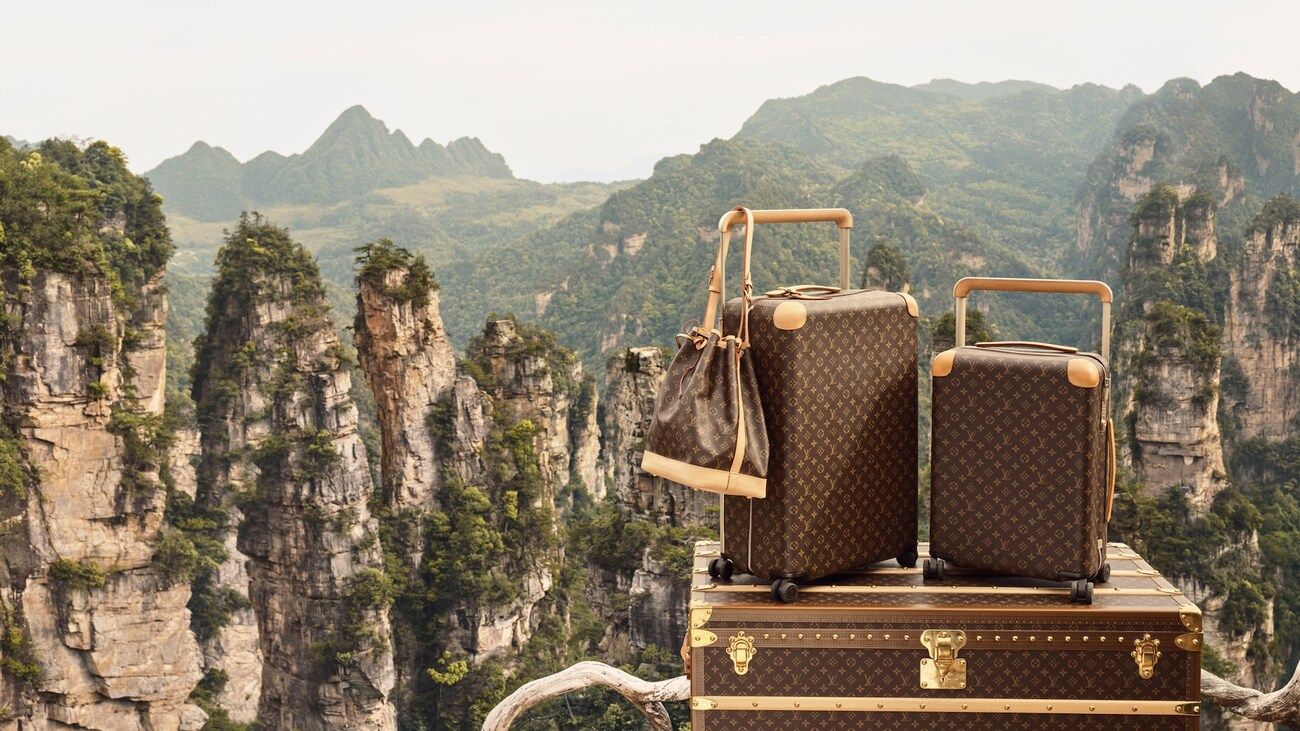
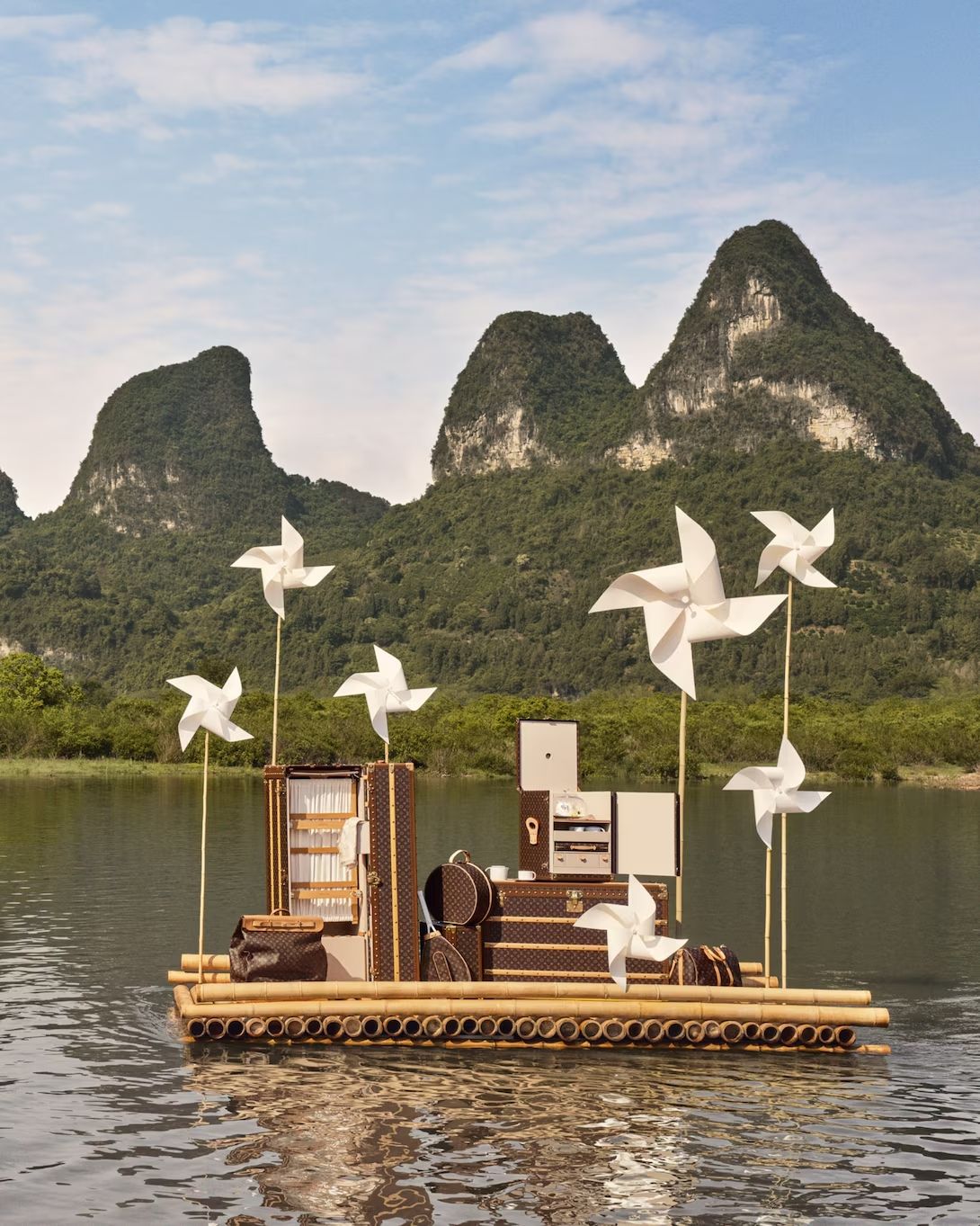
The Middle Kingdom occupies a central place in the travel ethos cultivated by the brand. Through its publications - the “City Guides,” the “Fashion Eye” photography collection, and the illustrated “Travel Book” series - the trunk-maker has crafted a universe dedicated to exploration. In 2025, American photographer Alec Soth traveled across the country for a special installment of the “Spirit of Travel” campaign, capturing the Horizon suitcase and the Speedy bag against the landscapes of the Li River in Guilin, the Hanging Temple of Datong, and the sandstone peaks of Zhangjiajie.
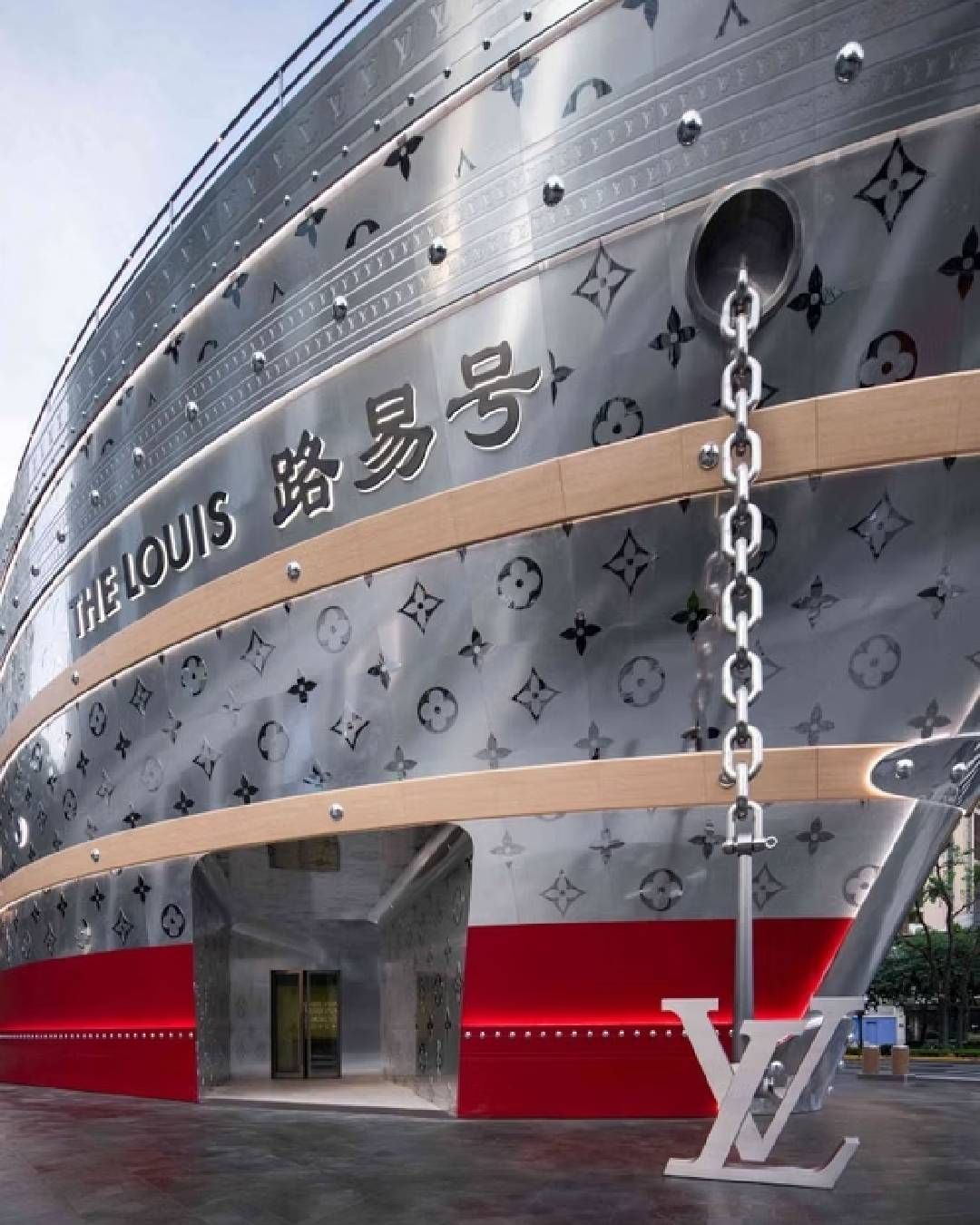
The house is also multiplying local artistic and architectural dialogues. At the end of June 2025, it inaugurated “The Louis” in Shanghai, inside the Taikoo Hui complex on Wujiang Road. This ship-shaped structure pays tribute to the house’s nautical heritage and, above all, to the city’s port history, housing a 1,200 sq. m. exhibition designed with architectural firm OMA as well as localized dining options, including Monogram-stamped dumplings. Following this same approach, Artistic Director Nicolas Ghesquière invited Chinese artist Sun Yitian to collaborate on the Women’s Pre-Fall 2024 show at Shanghai’s Long Museum West Bund, featuring her brightly colored paintings of animals resembling inflatable toys across coats, dresses, handbags, and perfume bottles.
A sharp decline in the asian market
Beyond commercial stakes, the house must also defend its image and intellectual property rights on local soil, even at the risk of alienating part of the public. Last July, the French giant won its legal case against Molly Tea, a rapidly expanding Chinese tea-house chain with nearly 2,000 outlets.
At the heart of the dispute was the local brand’s use of a four-petal floral logo deemed too similar to Louis Vuitton’s famous Monogram flower. The court ordered Molly Tea to pay $1.5 million in damages to the French house, an amount it was required to settle within ten days of receiving the ruling. While the Parisian trunk-maker prevailed in court, the severity of the penalty sparked mixed reactions, demonstrating that a legal victory does not always guarantee the support of Chinese public opinion.
Thirty years after its first steps in Beijing, the world’s leading luxury brand is playing a delicate hand in China - torn between celebrating a shared cultural heritage, managing a sharp economic slowdown, and fiercely protecting its signature codes against local players. Despite the optimism voiced by its leadership, Louis Vuitton’s ability to maintain its hegemony while safeguarding its image with the Chinese public is being put to the test. To be continued.
What to read next

La Beauté Louis Vuitton celebrates 130 years of its Monogram
A holiday collection reinventing the iconic canvas in makeup form
Luxury wants some Jellycat magic
Chanel and Louis Vuitton's penguins appeal to cuteness (and the Chinese market)