

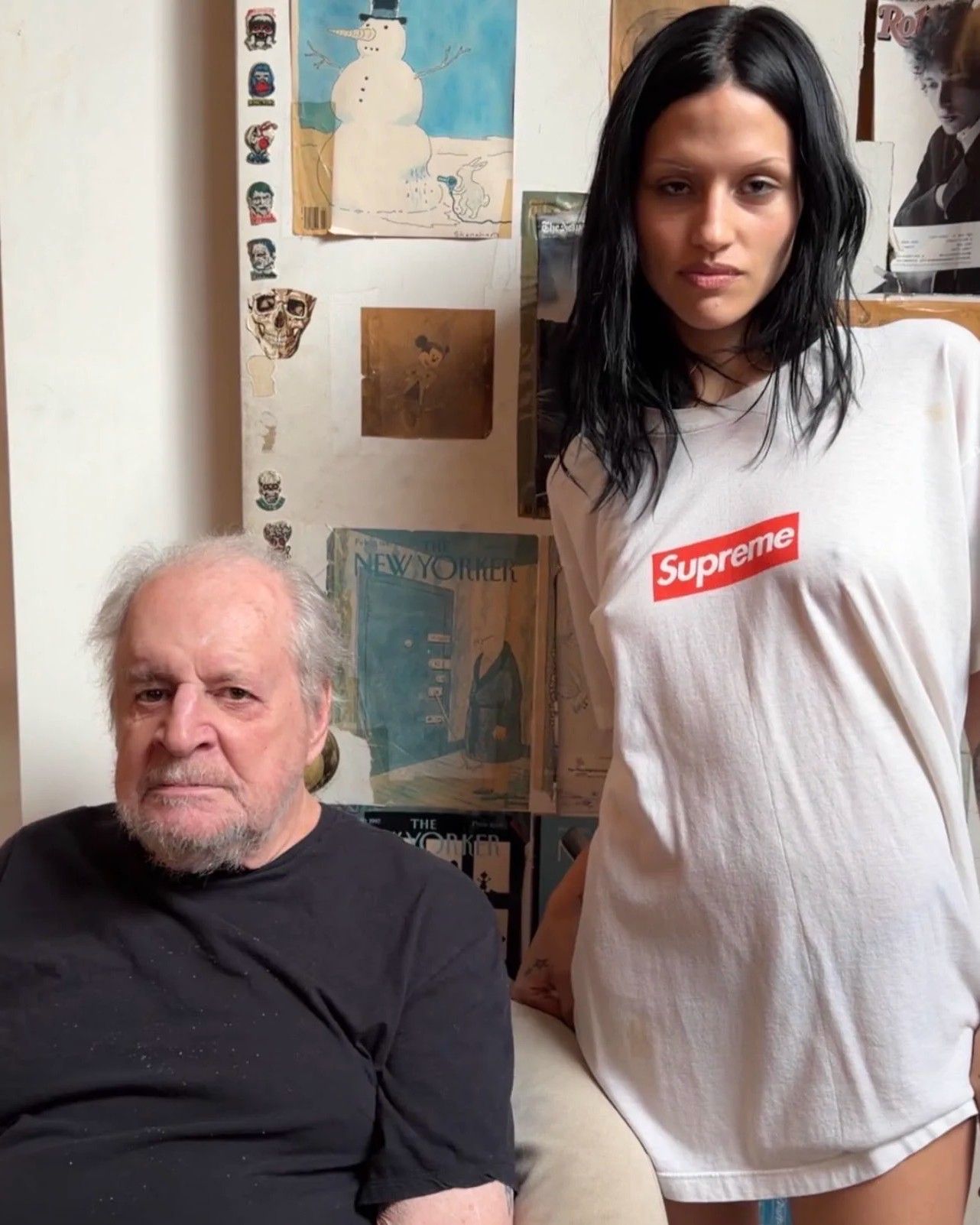
Is Supreme really coming back? The effects of the new management are starting to show
Few people remember that, in the summer of two years ago, Supreme changed hands: VF Corp, which had acquired it in 2020 for $2.1 billion, sold the brand to EssilorLuxottica for $1.5 billion, losing no small amount of money in the transaction. Now, that $600 million difference in brand value had struck everyone as a concrete depreciation — or rather, a sign that the brand-symbol of streetwear was doing poorly. And yet, as hypbeasts were disappearing and drops and collaborations were making less and less noise, the brand continued its quiet existence. But what was really happening to it?
The brand was, in fact, repositioning itself in the market: the archive fashion circles, populated by more mature buyers who nonetheless remained focused on sportier or skate-inspired styles, kept wearing its pieces, and Supreme transitioned from the hype machine into a reference name for premium pieces with a certain character. The mainline, rather than collaborations, became the focus. Today, as BoF reports, after two years under new management the brand appears on the verge of reclaiming its cultural weight. But first, let's look at some figures.
A slow but steady recovery
To tell the story of the brand's recovery in numbers, BoF draws on Consumer Edge credit card panel data. These figures show that direct US customer spending at Supreme fell by around 20% in both 2023 and 2024. From the end of 2025, however, a recovery began that surpassed 35% across the first three quarters of 2026. The rebound was driven primarily by the 18–24 and 25–34 age brackets, with a notable rejuvenation of the customer base returning to buy from the brand. Looking at the composition of that customer base, the brand also appears to have spread among those earning under $40,000 as well as those earning over $150,000.
Other figures cited by the magazine on traffic to the official website point to a surge in public interest: from 2.52 million visits in September 2023 to 3.92 million in the same month of 2026, when the FW26 collection was presented. On the secondary market, StockX ranked Supreme as the best-selling apparel brand of 2026, for the first time since 2021, with a 38% year-on-year increase in sales volume. eBay also reports a 9% rise in the global average selling price. Another factor identified by BoF is pricing, which has remained very restrained relative to the industry average — meaning that someone who was buying ten years ago can still purchase the brand's pieces on the same budget today.
Turning to EssilorLuxottica's data, where there are no brand-specific sections, we can infer an improvement in performance by looking at the report's direct-to-consumer business line, which covers — among other things — both the brand's physical retail network and its e-commerce operations. That particular EssilorLuxottica channel has, overall, posted exceptional results in 2026, with a 10.6% revenue increase in the third quarter and a 6.8% like-for-like sales rise. Again, the figures do not relate solely to Supreme but do include it: we can therefore assume the brand is performing better. But why?
The appeal of a familiar brand
Several assessments gathered by BoF point to a certain consistency in how its business is managed as the reason for Supreme's comeback: among the factors considered in the article are the unpredictability of collaborations capable of stoking curiosity or tapping into the cultural clout of a moment — as was the case with the Spider-Man-themed collaboration — as well as its ability to engage with niche designers such as A.Presse, Martine Rose, Vaquera, and Number (N)ine, and to work with artists with underground appeal like Salem and Lil B.
In keeping with the renewed importance of the physical store, the brand's longstanding commitment to making its stores gathering places — with skate ramps and event programming — has paid off. So too has the continued inclusion of artists popular with young people in its lookbooks: this year we saw AgusFortnite2008 and Turrobaby, Argentine rap artists; skater Kader Sylla; and Gabbriette, who appeared in the campaign for the collaboration with Larry Clark.
In general, beyond the more overtly commercial pieces of recent years — the various Box Logos, the more sportswear-oriented products, and so on — we would add that the fact that the brand has not been oversaturated has done a great deal for its perception. Not so much with regard to the more heavily logoed and, if you'll pardon the term, "fakeable" pieces, but rather with respect to products like jackets, trousers, and knitwear featuring distinctive colours or graphics, which have allowed the brand to keep a foot in both camps: the young or very young customer who wants the hoodie can still find it, and the adult looking for an everyday piece with more character can find that too.
The brand's perceived identity means that a pair of Supreme trousers or a workwear piece — perhaps with a discreet logo — communicates a certain connoisseur's sensibility which, precisely because it feels dated relative to the new wave of Iberian streetwear that has swept Europe, carries its own historicity and, with it, a kind of distinction. After years and years, and despite the concessions made to commerciality, the brand's niche appeal — now stripped of the irritating hype that had diluted it — has once again come to stand for a certain authenticity: in a world dominated by Inditex brands and department stores, spending a modest premium on Supreme has the flavour of a deliberate choice and, therefore, of a genuine pursuit.
And in a streetwear market that has seen slowdowns, acquisitions, and declarations of crisis, Supreme seems to be proving that staying true to a language built over thirty years — with ties to local communities, surprising collaborations, still-accessible prices, and a strong heritage — may be the most effective strategy of all.