
Influencer marketing generates 9 billion euros in France, but hides a two-tier economic reality While French influence is experiencing record growth, wealth concentration and public distrust reveal a system on the brink of collapse
The French content creator sector is the stuff of dreams: billions of euros generated, millions of followers, and a leading status in Europe. Yet behind the idyllic palm-tree posts and high-profile success stories lies a ruthless economic engine marked by extreme wealth concentration and endemic precariousness.
It is a true economic juggernaut. According to the Creator Economy Report 2026 by consulting firm Coherent Market Insights (CMI), the French content creator market is set to flirt with 9 billion euros, recording a staggering 23.7% year-on-year growth. On an international scale, the Creator Economy is exploding at $217.3 billion. France is punching well above its weight, securing a spot on the European podium - behind the UK and Germany - and ranking seventh worldwide. Better yet, France is undergoing a spectacular acceleration, as its annual growth rate has literally doubled compared to the 2020–2025 period. With 227,000 full-time equivalent jobs and $6 billion in direct value added (representing 0.17% of French GDP), influencing is no longer just a hobby, but an industrial pillar. As advertising budgets shift massively toward social platforms, brands now rely almost exclusively on these new profiles to capture the attention of younger generations.
An unequal pyramid
Yet this digital fairytale carries a bitter taste of illusion. While iconic figures like Léna Situations or Squeezie pull in millions of euros and are held up as success stories, they obscure a vast majority of invisible workers.
The sector actually takes the shape of a pyramid. More than 80% of influencers cannot make a living from their activity and are forced to hold side jobs to make ends meet. For most of them, content creation is merely used as a way to supplement their income and earn extra cash. In France, the cold, hard numbers fall like a hammer blow: out of the 330,000 people struggling to monetize their content, 56.1% earn just over 4,000 euros gross per year. At the other end of the spectrum, only 9.5% reach around 28,000 euros, while the median creator salary tops out at 1,600 euros gross per month - a far cry from the glamour showcased on Instagram or TikTok. The financial windfall is swallowed up by a tiny minority of household names, leaving mid-tier and beginner creators fighting over breadcrumbs.
A failing model?
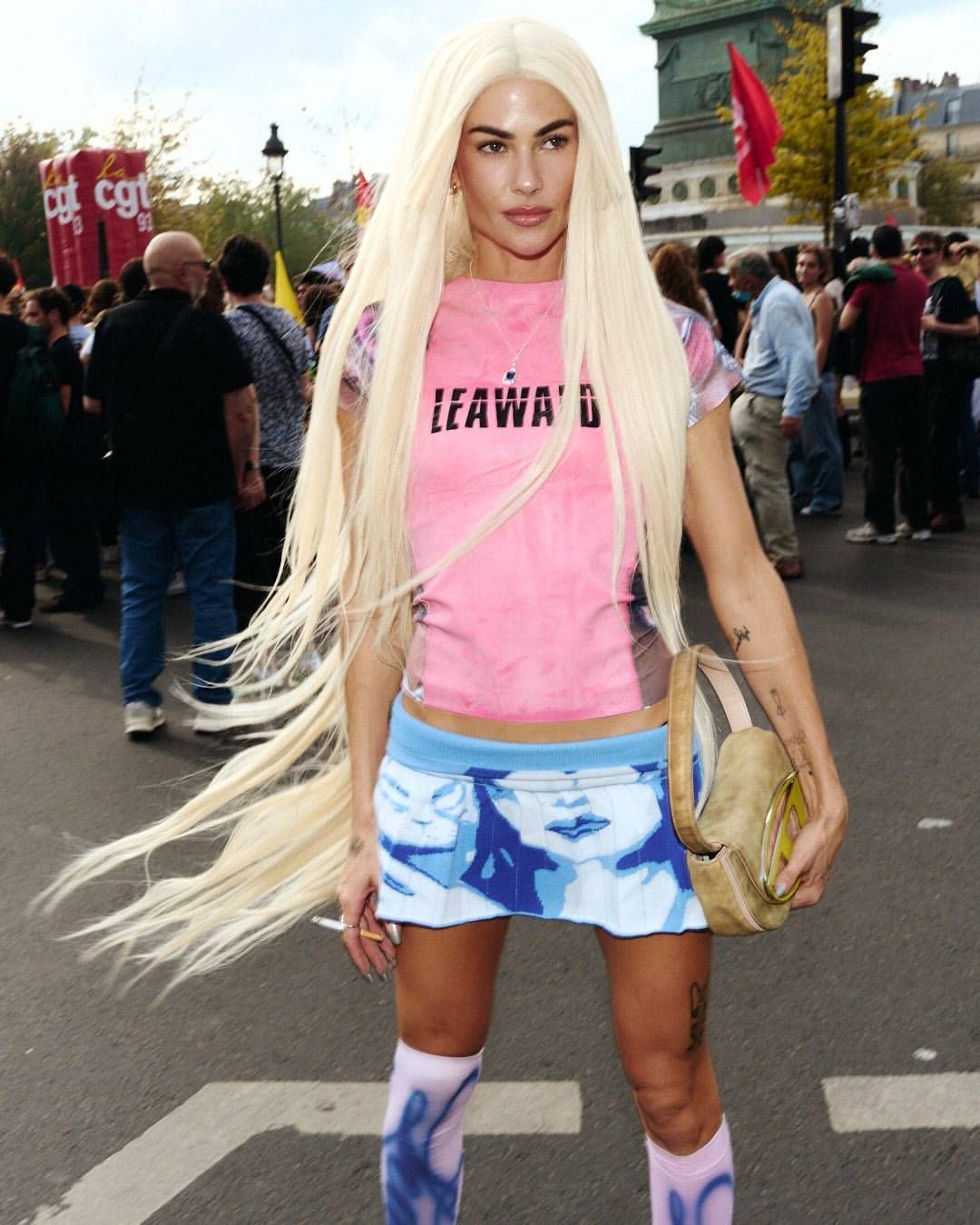
This career path continues to exert a powerful pull on younger generations, even as a turning point is unfolding: the high-school and nationwide protests ongoing since late September have highlighted a growing distrust toward these influencer figures, who are increasingly seen as disconnected from social realities. Certain creators are criticized either for showing indifference toward social struggles or - worse yet - for co-opting protests as aesthetic backdrops for their posts. A prime example was influencer Clara Berry, callously called out for posing nonchalantly outside a fashion show in front of a demonstration.
It must be said that influencers have largely taken advantage of their audience's trust and the legal grey zone to build their empires. To curb this lack of transparency and deceptive product placements, the French law of June 9, 2023, finally called time on the free-for-all by mandating explicit disclosure of sponsored content. Despite this legislation, recent inspections by the DGCCRF (France's anti-fraud agency) uncovered a staggering non-compliance rate of nearly 60% among audited creators, leading to numerous criminal proceedings. Between a frantic race for algorithms, precariousness, and mercenary abuses, the model is reaching its limits.
Despite figures showing the sector's financial health, the reality proves far less glamorous once you look closer. While French influence continues to grow on the surface, internal fractures keep widening: on one side, a handful of giants capturing the bulk of the profits; on the other, a vast majority of creators facing hardship. Between the myth of success for all and the darker reality behind the scenes, will the spell hold much longer?
What to read next

The paradox of "day in the life" videos by influencers with ordinary jobs
Becoming famous thanks to your job and no longer being able to leave it
A new study reveals that consumers don't want new products but styling advice
But the ASOS-commissioned research even shows that 67% of consumers still draw inspiration from social media for their outfits
In 2026, the only influencers we trust are intellectuals
The attention economy is in crisis, users are seeking originality and knowledge