Is Paris being taken over by coffee shops? The new recipe for success?
Between the good old neighborhood bistro and the temple of the flat white, the rift is as much aesthetic as it is cultural. In Paris, short wine glasses and zinc countertops are giving way to polished concrete, hanging plants, and menus packed with plant-based creations. Facing a wave of over 1,400 establishments, one question naturally arises: are we witnessing a simple revival of the Parisian art of living, or the gradual homogenization of our streets?
The statistics are striking: a coffee shop opens every three days in Paris. According to data from Collectif Café, France is now home to around 3,500 coffee shops, nearly 1,400 of which are in the capital alone. And momentum isn't slowing down - quite the opposite. Between 2025 and 2026, 165 new independent coffee shops sprang up in Parisian streets in just fifteen months. Nationally, the trend is dizzying: the number of coffee shops has surged by 74% since 2010, propelling an industry now worth nearly €750 million. This boom is fueled by France's unshakeable love for caffeine, with nearly 80% of French people drinking coffee regularly, according to a November 2025 Xerfi study.
From the zinc bar to the minimalist counter
This meteoric success fits into a decisive post-COVID-19 era. Coming out of the pandemic - which saw social media usage explode - our relationship with consumption transformed: going out for a coffee became a moment to capture, or even "monetize" in the form of visual experiences.
As these new habits take root, the historical landscape is eroding. In the late 1960s, France still had nearly 200,000 traditional cafés; today, only about 30,000 remain. Squeezed by rising rents, inflation, and shifting lifestyles, old-school bistros are closing one after another, leaving vacant commercial spaces that coffee shops quickly snap up. As Libération points out, a true "cultural battle" is playing out before our eyes between two visions of the city and commerce. Gone is the quick espresso downed at the bar for a little over a euro: make way for an all-encompassing, slower, pricier, but above all highly ritualized experience.
The secret behind these new hot spots is their ability to reinvent the formula. Some are "cafés" in name only, having diversified their menus to win over a younger generation seeking novelty and wellness. Spiced plant-based lattes, iced superfood drinks, and even hyaluronic acid-infused creations: the menu is tailored to the aspirations of an ultra-connected audience.
Consequently, the beverage becomes a tool for self-expression and a marker of social distinction. The coffee shop no longer just sells a product; it sells an image, a status, a lifestyle - especially given the steep price tag, averaging around €5 for a latte and €7 for a matcha. Each meticulously chosen cup is designed to be photographed and shared instantly.
Toward a homogenization of our streets?
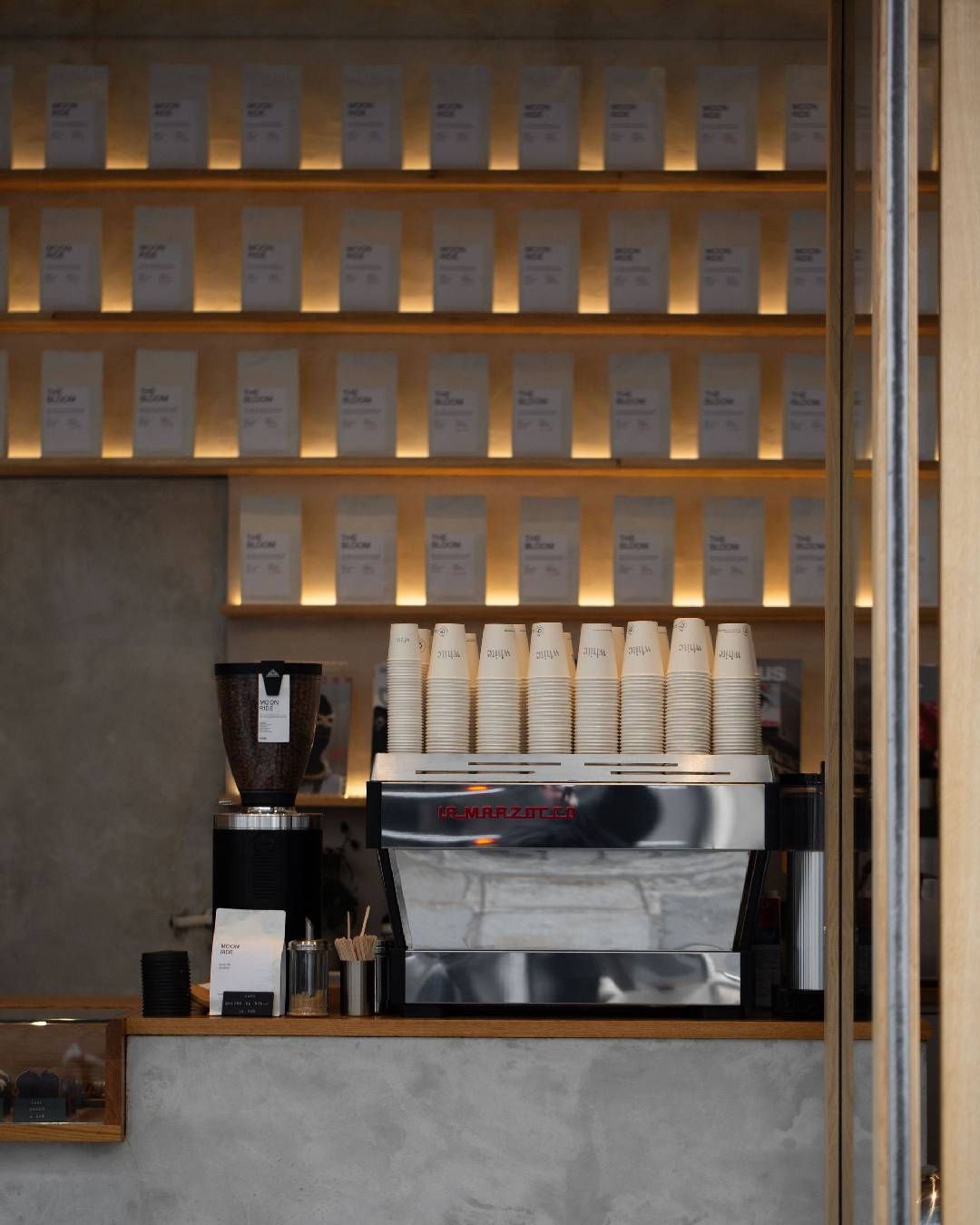
Despite the popularity of these countless new addresses, a feeling of saturation is starting to set in. The sticking point is uniformity. When a single street boasts four coffee shops while the last independent bookstore has shut its doors - Paris lost 96 cultural shops (bookstores and instrument sellers) between 2023 and 2026 - the urban landscape loses its character. We are witnessing a copycat phenomenon where shopfronts change, but the aesthetic remains identical. From Paris to Brussels, London, New York, or Copenhagen, the experience is the same. Coffee shops are establishing themselves everywhere with an instantly recognizable visual identity: large display windows, sleek (and often uncomfortable) furniture, raw materials (light wood, polished concrete, stainless steel), and dimmed lighting.
Behind this aesthetic uniformity lies a fundamental question: what do we want our neighborhoods to look like? Do we prefer a parade of profitable, Instagrammable concepts with comforting similarities, or a diverse mix of unique businesses capable of meeting the real, varied needs of local residents?
Ultimately, the boom of coffee shops in Paris extends far beyond a passing specialty coffee trend: it outlines the aesthetic gentrification of our living spaces. While the search for quality and welcoming venues is legitimate, it raises a central question for the future of the capital: will Paris preserve the diversity and soul of its neighborhoods, or will it succumb to the siren song of an interchangeable backdrop?
What to read next

In South Korea there's a delivery app that doesn't actually deliver
The phenomenon of 'dopamine apps'
How to become food designer
With the founders of Douceurs Capitales, eeeat and Forniture Pallotta