

Design that nobody notices: the stadium seat Why are stadiums full of plastic seats?
This article is part of the series "Design Nobody Notices." Previous chapters explore the shopping cart and the school desk.
Walking into an empty stadium makes the seats almost more visible than when they're occupied. Thousands of identical seats fill the stands, often in the same two or three colors, bolted to the concrete and separated by just a few centimeters. They probably look like the simplest part of the entire venue, but their shape tells quite a clear story about how stadiums have changed over recent decades. Each seat occupies a precise space, corresponds to a number and therefore to a ticket, allows a set distance from the row in front, and must simultaneously withstand rain, sun, impacts, and thousands of different people.
The evolution of stadiums
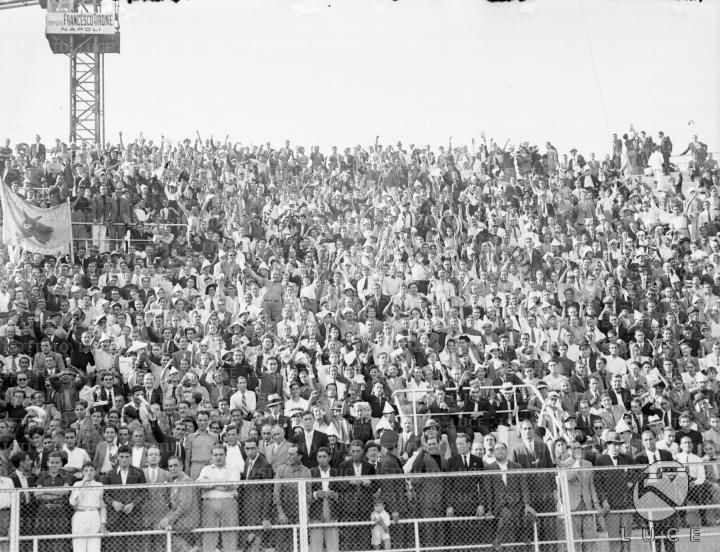

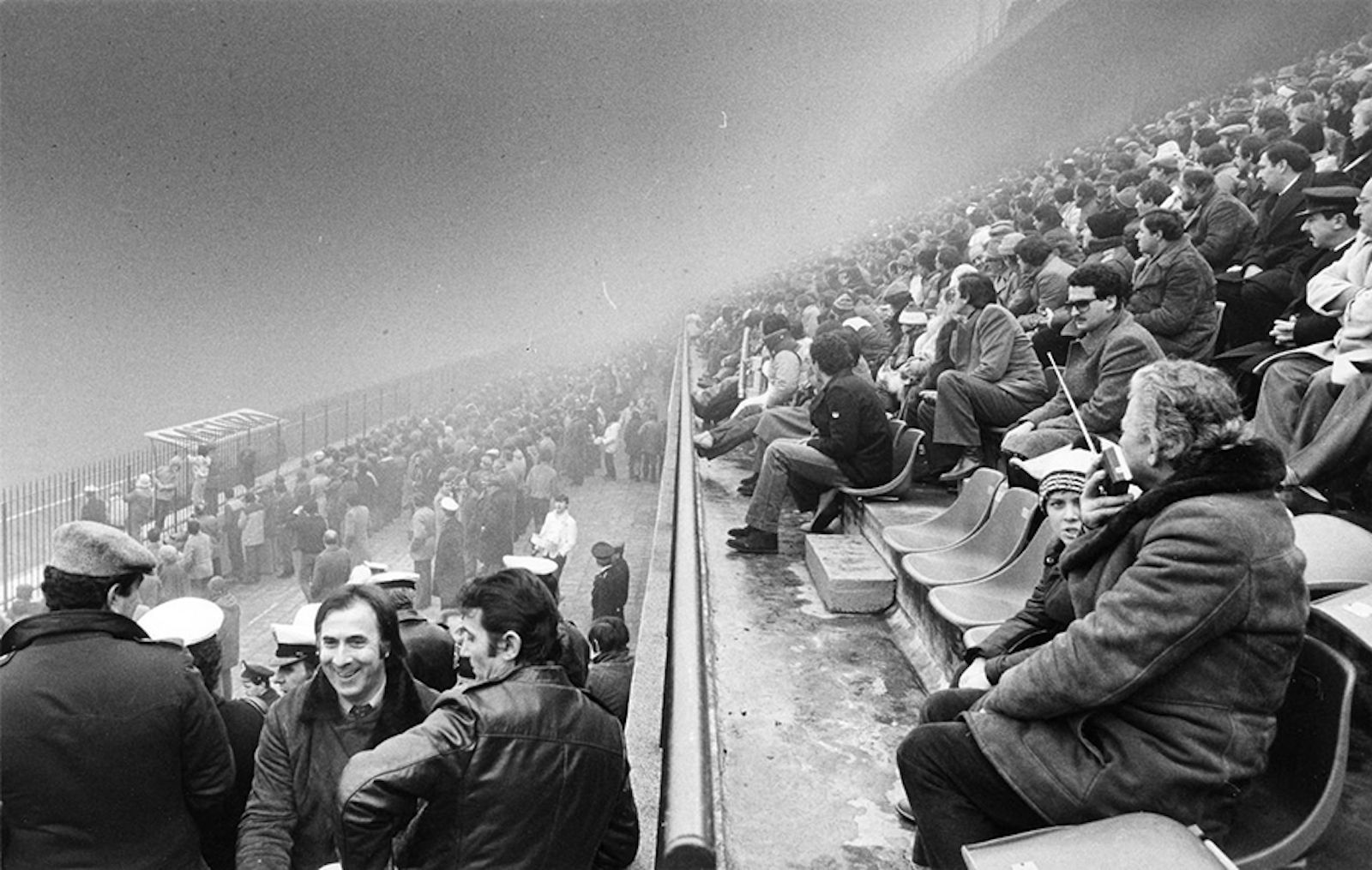
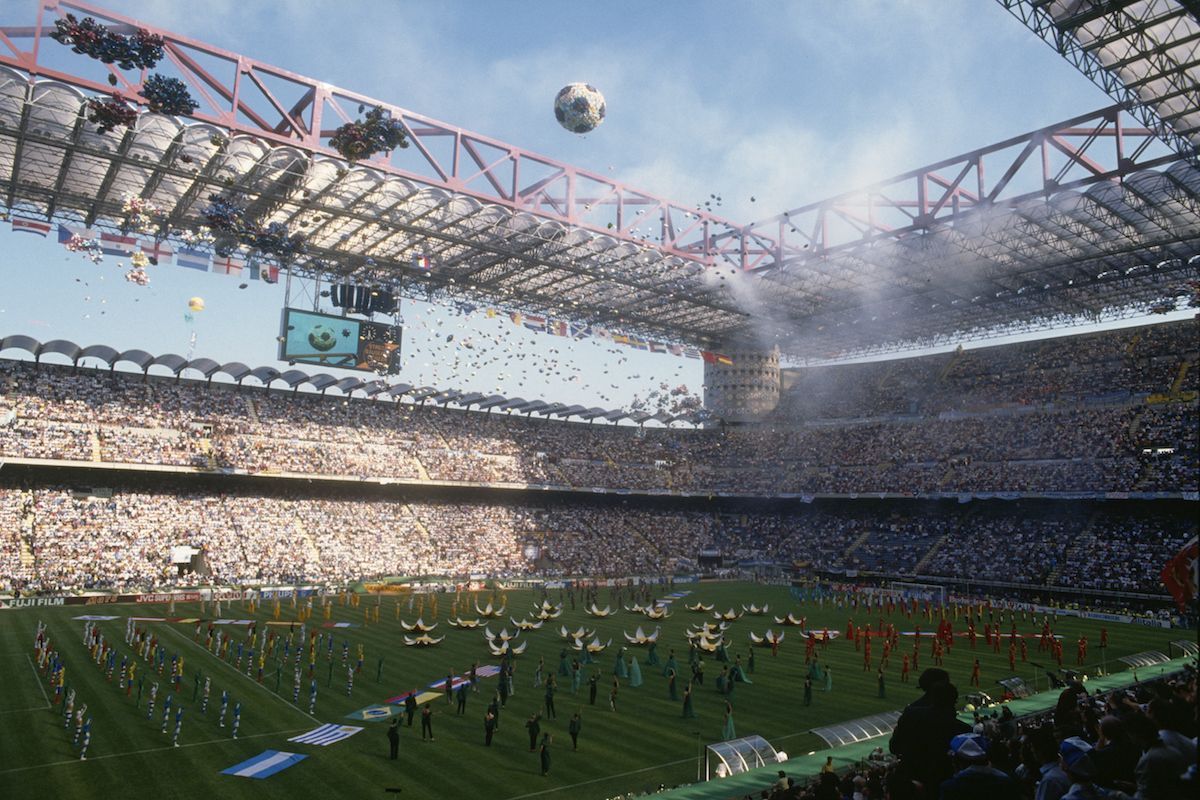
For much of the history of European football, stadiums worked differently. Large portions of the stands were terraces where fans watched matches standing up, while the grandstands featured seats and benches sometimes made of wood. The most significant change came between the Eighties and Nineties, when venue safety became central to the debate around European football.
Following the Hillsborough disaster on 15 April 1989, the final report of the inquiry led by Lord Justice Taylor recommended the introduction of all-seater stadiums for the top English divisions. The report saw individual seating as a way to more precisely control crowd density and know how many people were in any given section. The British government subsequently adopted this policy, and the leading English clubs were required to convert their terraces by 1994.
Plastic, however, had already begun making its way into stadium seating well before that transformation. In Italy, for example, OMSI began producing plastic seats in the late Sixties, and the first mold developed in-house by the company was a polypropylene seat with metal legs. Ahead of the 1990 World Cup in Italy, the M90 model for sports venues followed, installed at venues including the Dall'Ara in Bologna, the Tardini in Parma, and the Sant'Elia in Cagliari.
Plastic, millimeters, and aisles
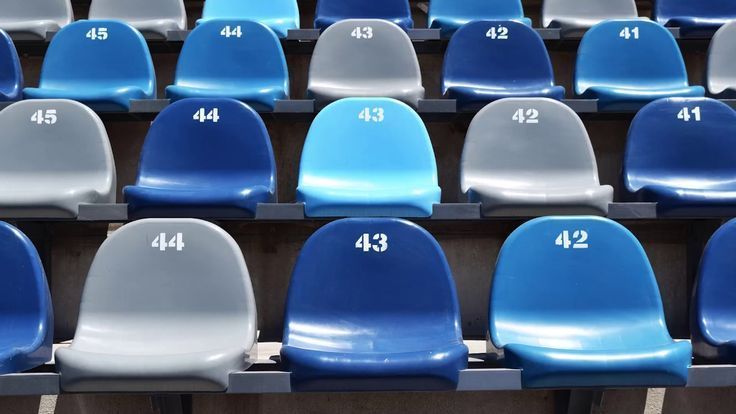
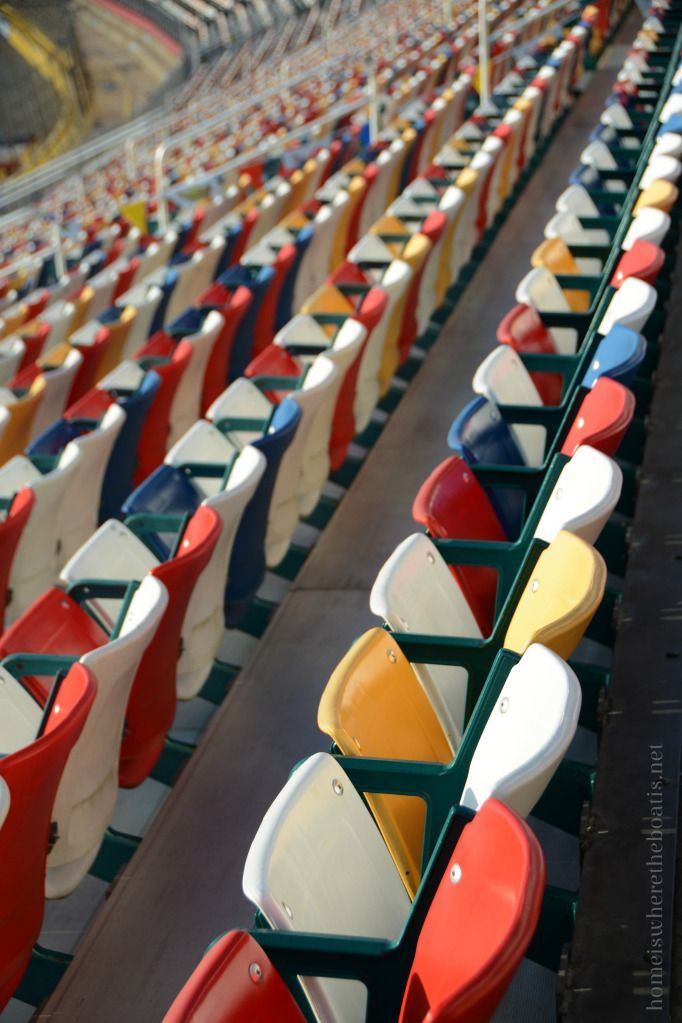
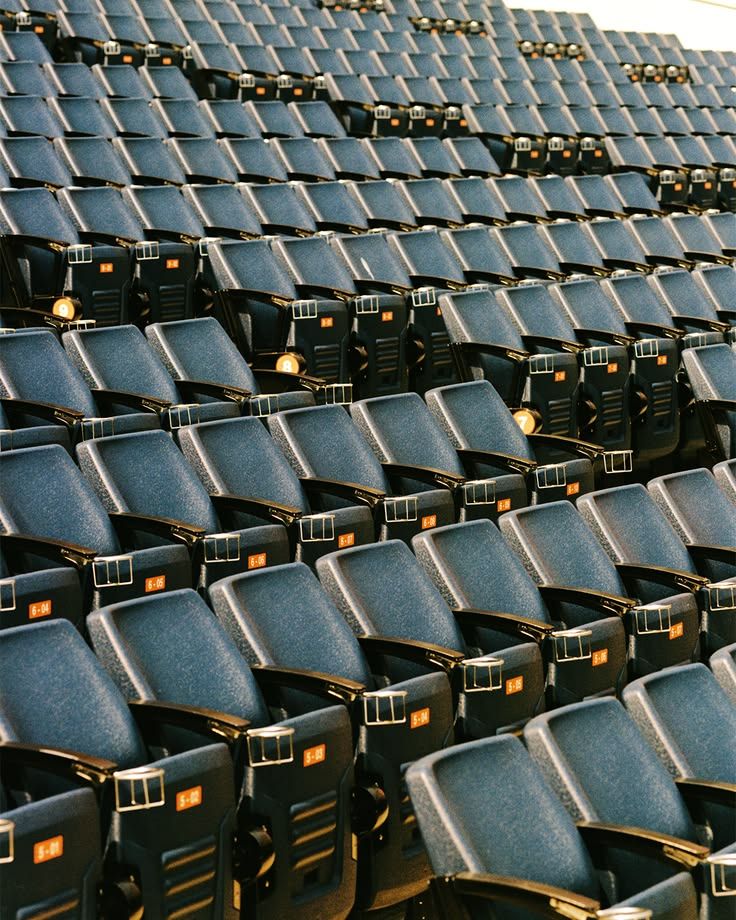
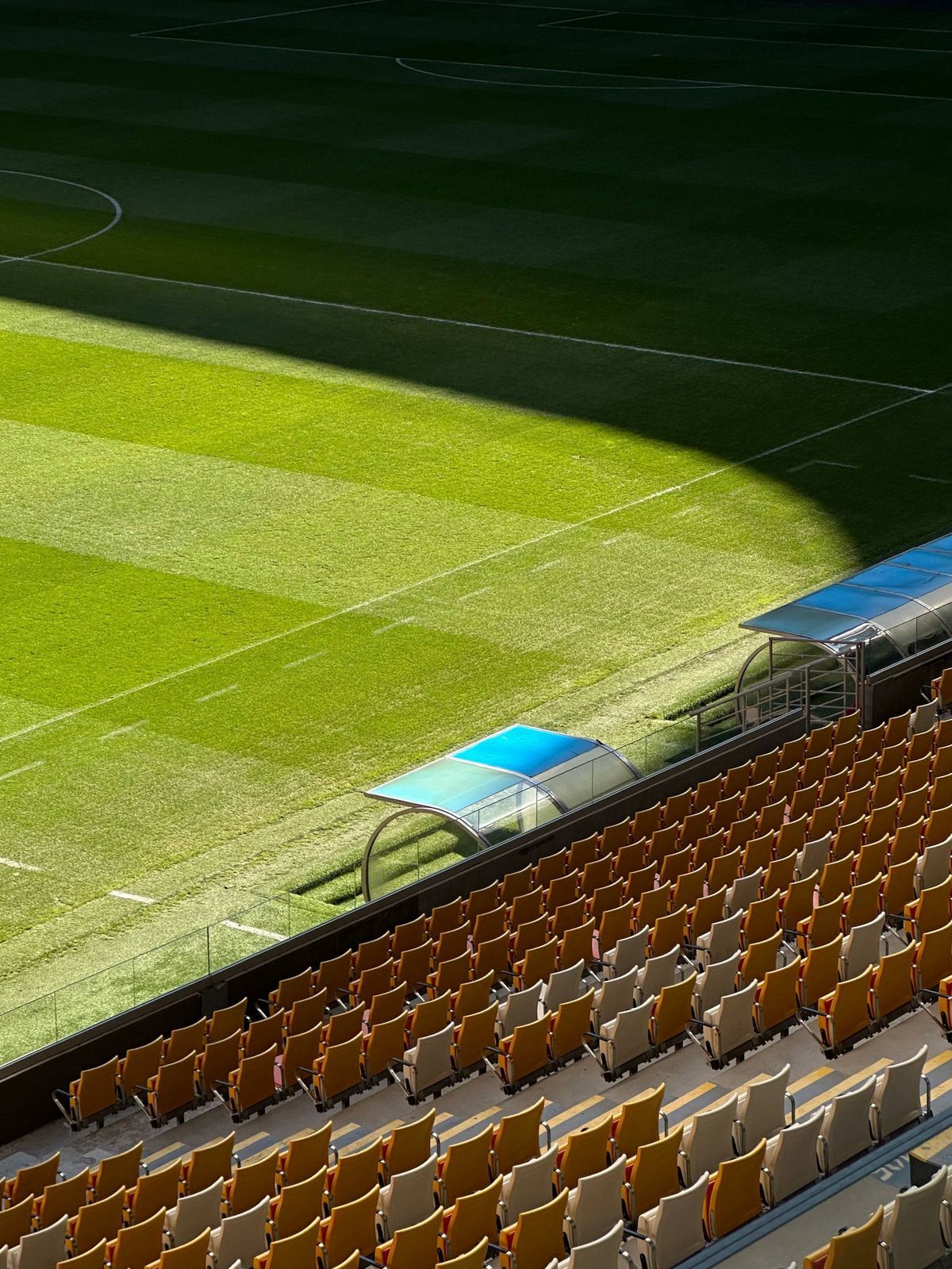
Polypropylene works particularly well in a stadium because it allows for the production of lightweight seats that are durable and relatively easy to maintain in large quantities. Contemporary models are made with UV-stabilized materials, easy-to-clean surfaces, and shapes that allow water to drain away rather than pool on the seat. Color can be incorporated into the material, and fixings attach the seat directly to the stand or to a metal structure. The European standard EN 13200-4:2023 dedicated to seating for sports facilities also considers resistance to stress, weathering, durability, and fixing systems among the aspects to be verified.
The shape is far less free than it might appear. FIFA guidelines recommend a minimum of 500 millimeters between the center of one seat and the next for standard places, and a row depth of at least 800 millimeters. In front of the seat there should also be a clear passageway of at least 400 millimeters, necessary to allow people to move along the row and exit safely in an emergency.
The same guide indicates approximately 28 seats between two aisles as good practice, a number that is halved when a row can only be accessed from one side. A few centimeters repeated tens of thousands of times therefore end up determining both the capacity, the size of the stadium, and the way people move around inside it.
The seat as a unit of measurement
@all_fromabove A Haunting Symphony: Capturing the Empty Camp Nou Stadium with Barça's Anthem #barca #spain #catalunya #campnou #spotify #spotifycampnou #messi #xavi #iniesta #gavi #pedri #lewandowski #football #laliga #championsleague #barcelona #stadium sonido original - fcbarcelona
UEFA infrastructure regulations in turn establish precise requirements for spectator seats, which must be individual, numbered, firmly fixed, sturdy, and made from materials suitable for use inside a stadium. The seat we find in the stands is therefore the result of very precise requirements, translated into a form simple enough to be replicated thousands of times without taking up more space than necessary.
The fact that every place has a number also changes quite a lot about how the stadium functions. FIFA guidelines require that each seat be identified by clearly visible numbering, while sections, entrances, and levels are linked to the wayfinding system and the ticket. The Taylor Report already noted in 1990 that a numbered seat made it possible to assign each spectator to a precise location and to have a better understanding of the number of people present. The seat thus also becomes a small unit through which the stadium measures and organizes its audience.
Why stadium seats are those colors
Color is probably the aspect we notice most, and there is far more design thinking behind it than it might seem. Seats can reflect a club's team colors, form lettering and patterns, or visually help distinguish different sections. In other cases they are used to alter the perception of the stadium when it is empty. At Brentford Community Stadium in London, for example, AFL Architects distributed seats in different colors to create a visual effect capable of making empty seats less conspicuous, a choice that also had implications for how the stands appeared on television.
In the end, the stadium seat has to do a great many things without appearing particularly designed, and it becomes a fundamental part of the stadium's architecture, helping to determine how many people can enter and how they can move around inside. It looks simply like a fairly uncomfortable plastic chair on which to sit for ninety minutes, while in reality it is one of the modules through which we have transformed a crowd into a series of precise, numbered and organized places.