




































Design Nobody Notices: School and University Seating Who Decided How We Should Sit to Learn?
Also part of this series is Design that nobody notices: the shopping cart
Walking into a classroom, finding a seat, and sitting down at a desk is one of those gestures we learn so early that we no longer pay it any attention. Schools, universities, teachers, and subjects may change, but the scene stays much the same: a chair, a surface in front of you, someone talking, and a group of people all facing the same direction. Bodies, however, vary considerably. Height, hip width, and posture differ from person to person, yet for much of our lives we study on chairs and desks produced in just a few standard sizes — at university, often bolted to the floor.
A History of the School Desk
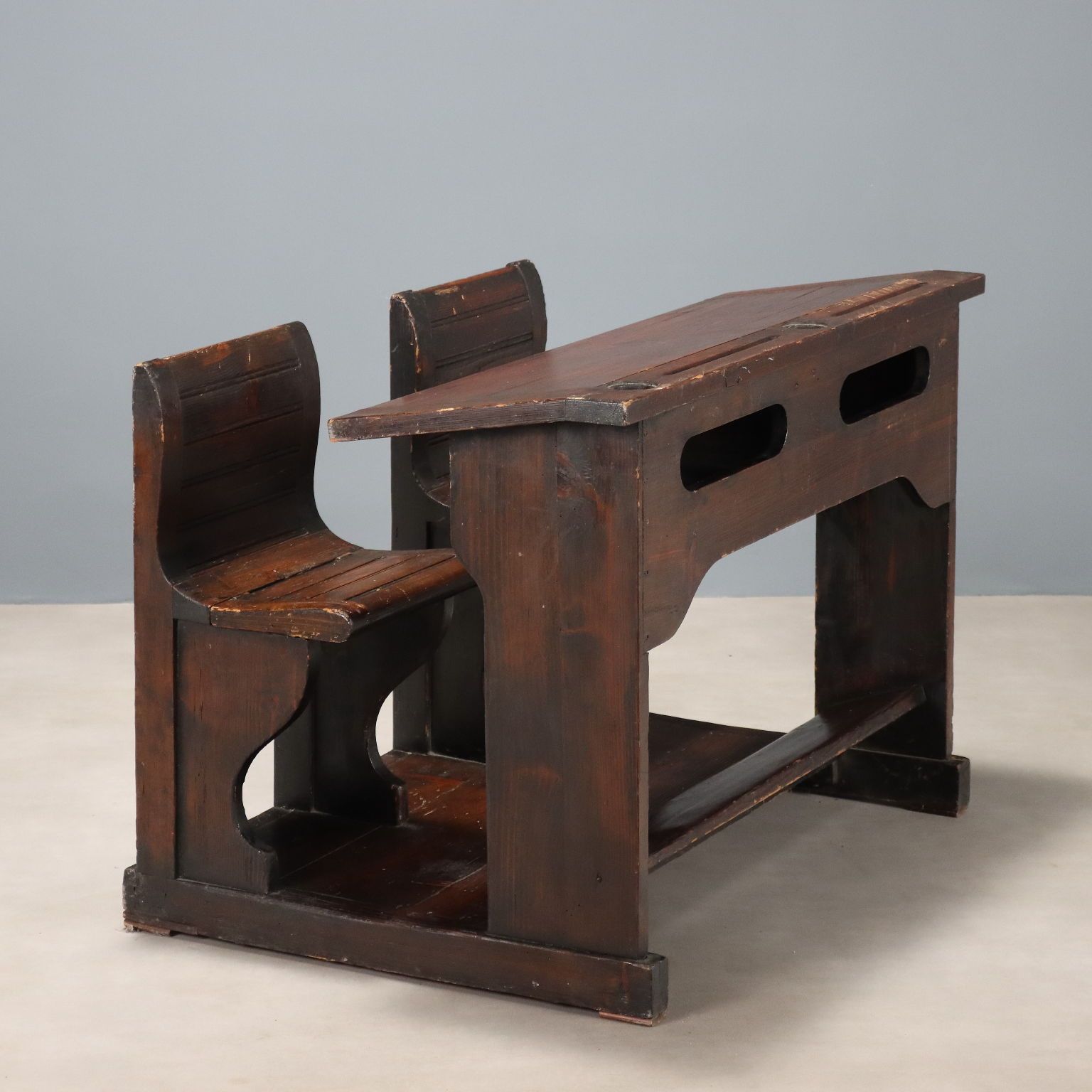
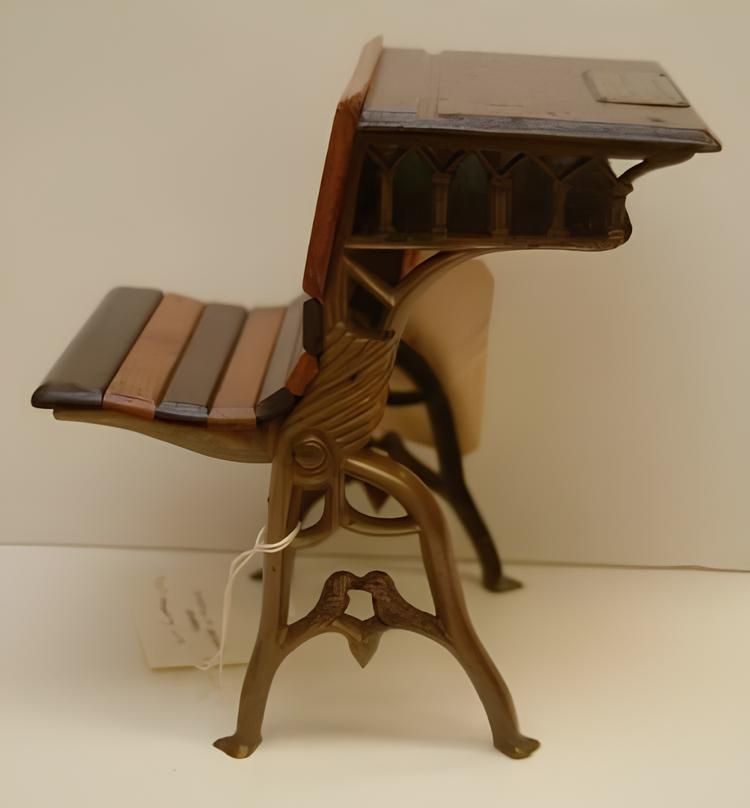
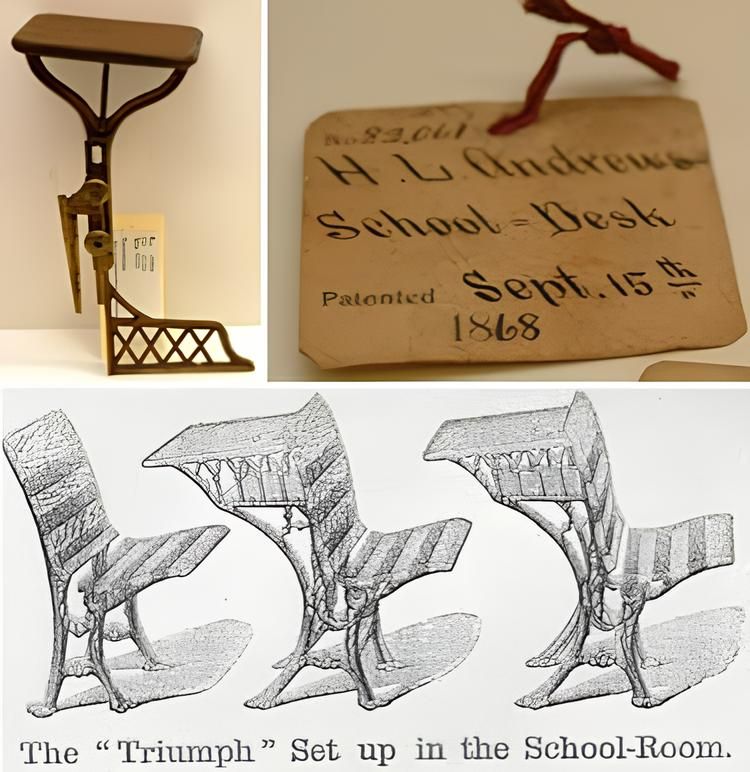
This arrangement took shape with the spread of public education in the nineteenth century, when growing student numbers made it necessary to find furniture that was affordable, durable, and capable of organizing large numbers of people in the same room. The Smithsonian National Museum of American History holds around 150 patented models of nineteenth-century school furniture, including curved seats, backrests, folding mechanisms, and structures made of wood and cast iron. They had to last, take up little space, and be easy to manage — but above all, they had to allow students to be arranged in an orderly fashion. Many desks were linked together or built as a single unit combining seat and work surface, creating neat rows and orienting everyone toward the same point.
Something very similar was happening in Italy. The Museum of Education at the University of Padua notes that the Regulations for Primary Schools of 15 September 1860 required study desks with enough places for all pupils, and, according to the museum, the physical organization of Italian classrooms remained essentially unchanged from 1861 through to the early 1960s.
For roughly a century, books, curricula, and teachers might change, while the desk continued to serve the same function: organizing space and assigning each student a precise position. That position, however, must work for different bodies. The ergonomics of a seat depend on precise measurements such as the distance from the floor to the knee, thigh length, elbow height, and hip width — and just a few centimeters can change the way we rest our feet, use the backrest, or reach the desk surface.
An Uncomfortable Seat
@jickollo_ Dove sono gli ingegneri quando servono #università #banco #studio Peer Gynt Suite, Morning mood - AllMusicGallery
In 2019, a study published in the International Journal of Industrial Ergonomics measured 225 university students and compared their dimensions with the furniture in their classrooms, finding an incompatibility with seat height in 44.45% of cases and a 100% mismatch for seat depth.
Similar findings appear in other research as well. A study of American students found that fewer than 20% had an adequate match between chair and desk, while in 2024 a study of 149 university students observed their posture while writing at a standard combination of fixed desk and chair, identifying ergonomic problems in the majority of participants. A systematic review published in Ergonomics identifies the compatibility between body measurements and furniture as one of the key factors in students' physical responses.
Adapting Furniture to People
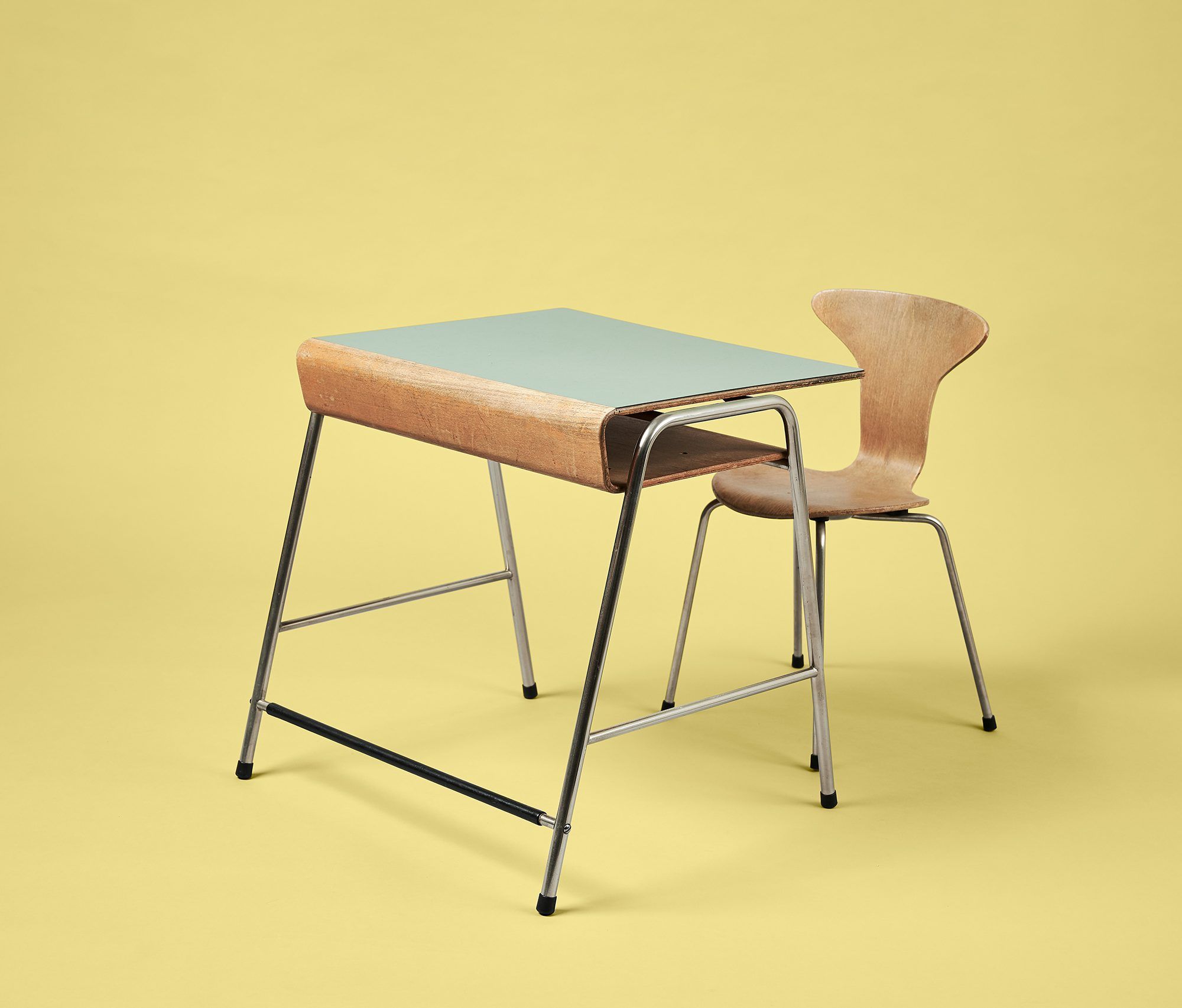
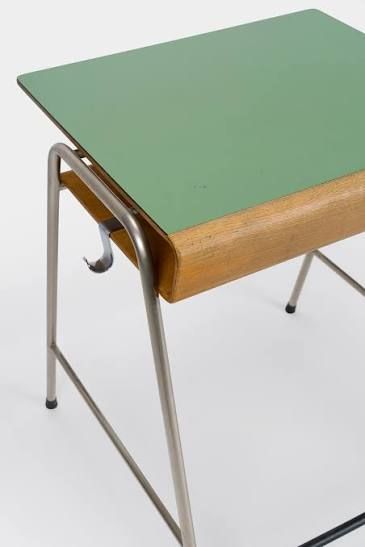
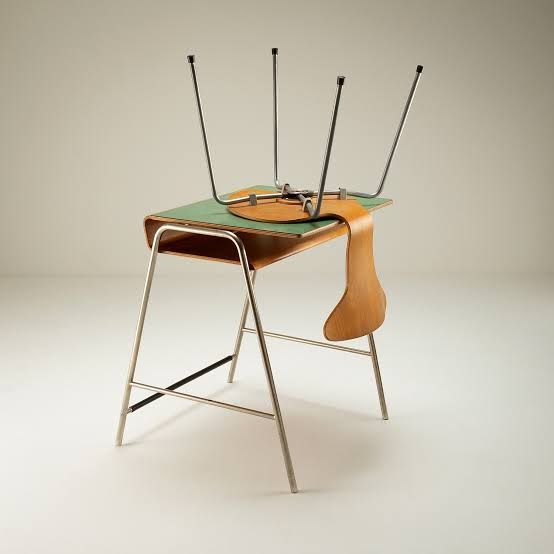
The idea of adapting furniture to people has existed for some time. In the 1950s, Arne Jacobsen designed the Munkegaard School near Copenhagen along with much of its interior. The Munkegaard Chair was lightweight and easy to move, while the school furniture was produced in three different sizes based on the age of the students. The same principle appears today in UNI EN 1729-1:2016, which sets out functional dimensions for school chairs and tables and covers both fixed and adjustable furniture.
The standard does not, however, cover ranked seating — the classic tiered rows found in a great many universities — and this is where the system becomes most apparent. The chair is often fixed to the room, the writing tablet has a set position. It is a configuration that works very well for fitting large numbers of people into a lecture hall and allowing them to follow a frontal lesson, but it becomes more restrictive the moment you need to move around, form a group, or simply shift position.
Design That Nobody Notices
@hannahskids Cozy seats = ready-to-learn kiddos #fyp #classroom #flexibleseating #teachersoftiktok #flexibleseatingclassroom Olivia Dean with a Touch Of Funk - touchoffunk
In recent years, active learning classrooms have been attempting to overcome this rigidity through movable tables and chairs that can be rearranged during a lesson. A review published in PLOS One found mixed results regarding academic performance, while several studies reported greater student engagement. The most significant change, however, concerns the space itself: a movable chair can be repositioned, a table can become part of a group arrangement, whereas a seat bolted to the floor determines, from the outset, most of what we are able to do.
And that is precisely what makes school desks and chairs a perfect example of design that nobody notices. In the nineteenth century, they served to organize a growing number of students within the new schools, and since then we have improved materials, dimensions, safety, and ergonomics while leaving the original principle almost entirely intact: large numbers of different people learning while seated in more or less the same way. We have spent more than a century designing better chairs for studying. Perhaps it is worth also asking ourselves why we decided that, in order to study, we all have to sit like this.