

































What about Project 2025? Even though Trump had distanced himself from it, the document seems to be becoming reality
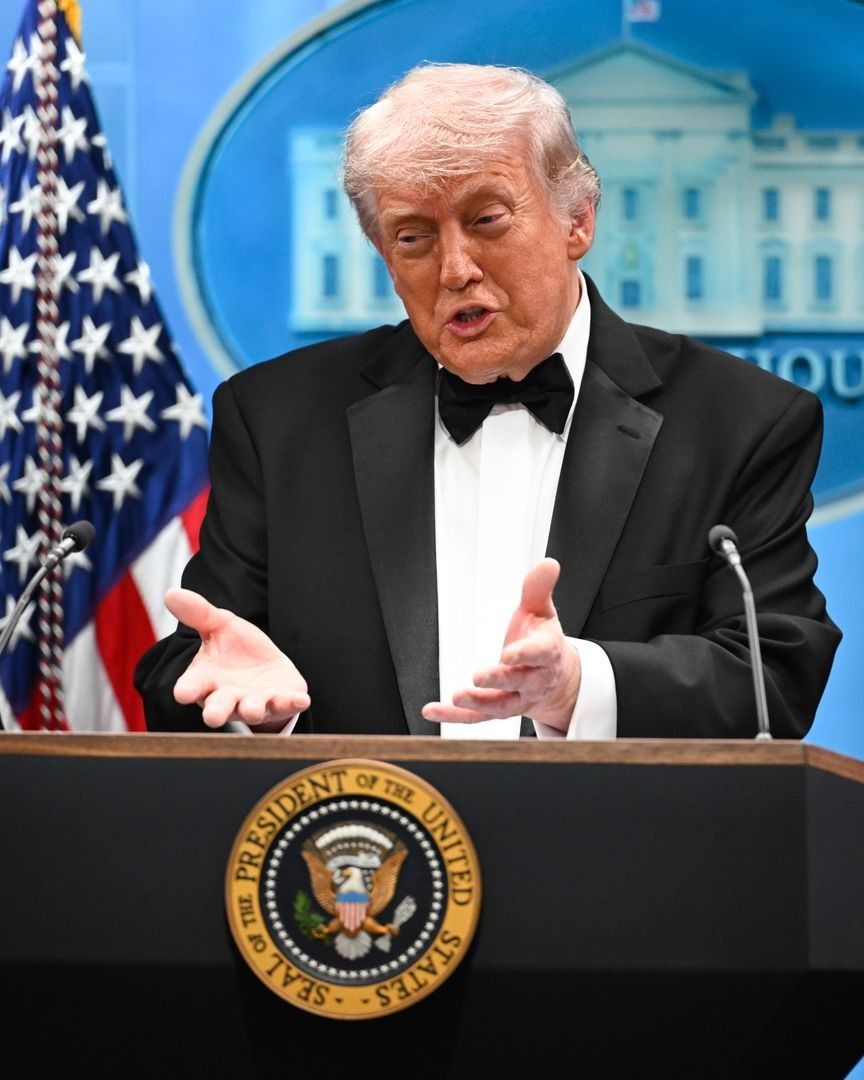
Project 2025 was the name given, during the presidential campaign, to a controversial government program designed in anticipation of a possible right-wing administration in the United States. The project was coordinated by dozens of conservative organizations under the direction of the Heritage Foundation, an influential think tank within the American right. Democrats labeled Project 2025, which quickly became a major media topic, as a sort of Republican Party manifesto, highlighting its most extreme and radical proposals in an attempt to discredit Trump himself. The latter, however, had partially distanced himself from the plan, aware that some of its policies could be perceived negatively by a segment of the right-wing electorate.
For this reason, Trump repeatedly described Project 2025 as «ridiculous», stressing on multiple occasions that he had nothing to do with it and did not know the people who drafted it. However, many of those who had worked on the project were closely connected to Trump. The CNN, for example, after analyzing the profiles of more than one thousand individuals who contributed to the initiative, found that at least 140 people had worked with the Trump administration during his first term. Moreover, the former director of the Heritage Foundation had been appointed by Trump in 2021 as chief of staff of a federal agency.
What is Project 2025?
@nowthisimpact Project 2025 is nearly 50% complete — and Trump was in on it the whole time. Now he’s finally admitted it. Here’s how the Heritage Foundation’s conservative blueprint is central to Trump’s second term.
original sound - NowThis Impact
But what exactly did Project 2025 propose, and why was it considered so controversial? In short, the many directives within the document, which was nearly a thousand pages long, sought to achieve three main goals: to centralize executive power in the hands of the White House, promote a conservative agenda across several areas including the economy and immigration, and restrict various civil rights based on a more traditionalist vision of American society. Among other things, the plan proposed reducing healthcare spending in favor of military expenditures, halting environmental policies aimed at combating climate change, and drastically limiting access to abortion while promoting a highly traditional view of family values.
Although not entirely identical to Project 2025, Trump’s electoral platform did in part reflect its core principles. Many of the themes contained in the document, such as skepticism toward climate change, opposition to gender identity recognition, and a hardline stance on immigration, mirrored positions Trump had long embraced.
Trump’s first year
Since returning to the White House, Trump has used presidential powers in increasingly controversial ways, relying on questionable legal interpretations and on his influence as both president and leader of the Republican Party. In line with the Project 2025 guidelines, he has pushed aggressive policies to limit both legal and illegal immigration, often through highly disputed procedures. In other instances, he has deployed the military at his own discretion, sending troops into Democrat-led cities to respond to supposed emergencies, such as an alleged crime wave in Washington that was not supported by data.
Several public officials critical of the administration were subsequently fired or threatened with dismissal. At the same time, Trump has targeted some of the country’s most prestigious universities, announcing he would cut billions in public funding if they failed to align their policies with his demands, an extreme move even by Republican standards that has nonetheless proven rather effective.
Trump and media censorship
The president of the United States has also recently tried to influence media outlets he perceives as hostile, publicly targeting several well-known figures including Jimmy Kimmel. The communication strategy adopted by Trump and his team has become increasingly aggressive: it is now common for official federal agency channels to share bizarre AI-generated videos or images attacking political opponents, heavily relying on inflammatory rhetoric. Finally, Trump is threatening to fire thousands of federal employees as a result of the ongoing shutdown, which has led the government to suspend most of its activities (except essential ones) after Congress failed to reach an agreement on the budget bill.
Responsibility for the shutdown is shared between Republicans and Democrats, but Trump is using the situation to his political advantage, blaming the Democrats and reinforcing an increasingly polarized vision of American politics. In the end, it seems that the kind of society outlined in Project 2025 is gradually taking shape.