
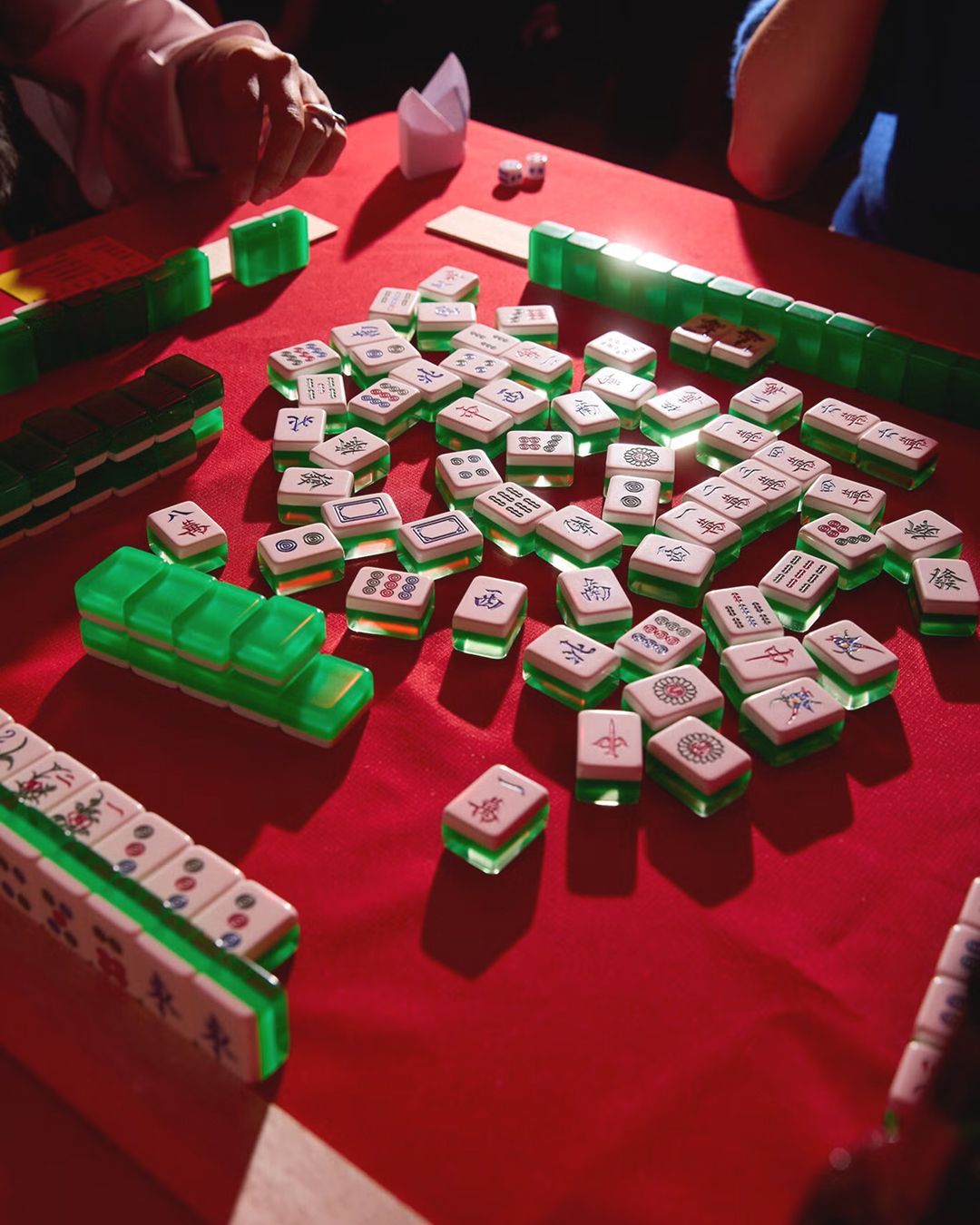
Is mahjong here to stay? Luxury brands have also noticed the commercial power of the Chinese board game
The mahjong, the celebrated board game widely popular in China, has in recent years begun to gain considerable appreciation in Western countries as well, even among the young. In various European capitals, as well as in New York, evenings and tournaments dedicated to the game are already a common occurrence, sometimes drawing hundreds of participants.
According to the Economist, the number of TikTok posts dedicated to mahjong between 2025 and 2026 increased by approximately 70%: it comes as no surprise, then, that, as WWD notes, several luxury brands, including Brunello Cucinelli, Ralph Lauren, Hermès, Prada, and Louis Vuitton, have begun offering their own versions of game sets.
Mahjong regained popularity during the Covid-19 pandemic, as happened with other board games and home pastimes. As NPR also reports, people were looking for an accessible hobby that would help them disconnect from their smartphones during lockdown.
How mahjong works
Mahjong is generally played in groups of four people around a table, using a set made up of 144 tiles featuring illustrations and symbols drawn from Chinese culture. To put it simply and in very general terms, in the classic version of mahjong each player receives 13 tiles and, on their turn, draws one and discards another: the goal is to complete a hand made up of various combinations of pairs, triplets, or sequences, each carrying its own score.
Various studies have highlighted that playing mahjong can help strengthen memory, manage stress, and foster a sense of community. The game also requires a great deal of patience, which must nonetheless be paired with a certain strategic mindset, and it is this combination that makes it so well regarded.
Where mahjong comes from
According to the most widely accepted account, mahjong originated in the second half of the nineteenth century in Shanghai, as an evolution of older card games. Initially associated with gambling and underworld circles, it subsequently enjoyed growing success among urban elites, before gradually spreading throughout the rest of China.
Mahjong spread to the United States around the 1920s, thanks to an individual who had spent a long time in China for work and who developed a simplified version, helping to make it highly fashionable in the country. At roughly the same time, the game also spread to Italy, driven by an interest in Asian aesthetics and the imagery of the continent. Its popularity was fostered above all by several major Italian port cities, among them Naples, Bari, Venice, and Ravenna, where the Italian Mah Jong Federation was founded in 1987.
To this day, mahjong remains especially deeply rooted in Emilia-Romagna, particularly in the province of Ravenna, where local variants have developed over time — differing even from town to town. This curious spread of the game was also chronicled in the 2020 documentary Il drago di Romagna, which traces the history of mahjong's rise in the Ravenna area, where it is known as "magiò", weaving together its Chinese origins with its remarkable integration into local culture.
What to read next

Willy Chavarria makes his debut in leather goods
The American designer has unveiled his first handbag collection made in Italy
Which brands will the new James Bond wear?
Unlike his predecessors, Robert Pattinson is already an ambassador for two brands
Liu Jo has transformed a Milanese Gallery into an Italian-style story
An immersive space where fashion, design, gastronomy and independent publishing come together