
Vaquera SS27, or the art of showmanship A joyful ode to those who refuse to blend in
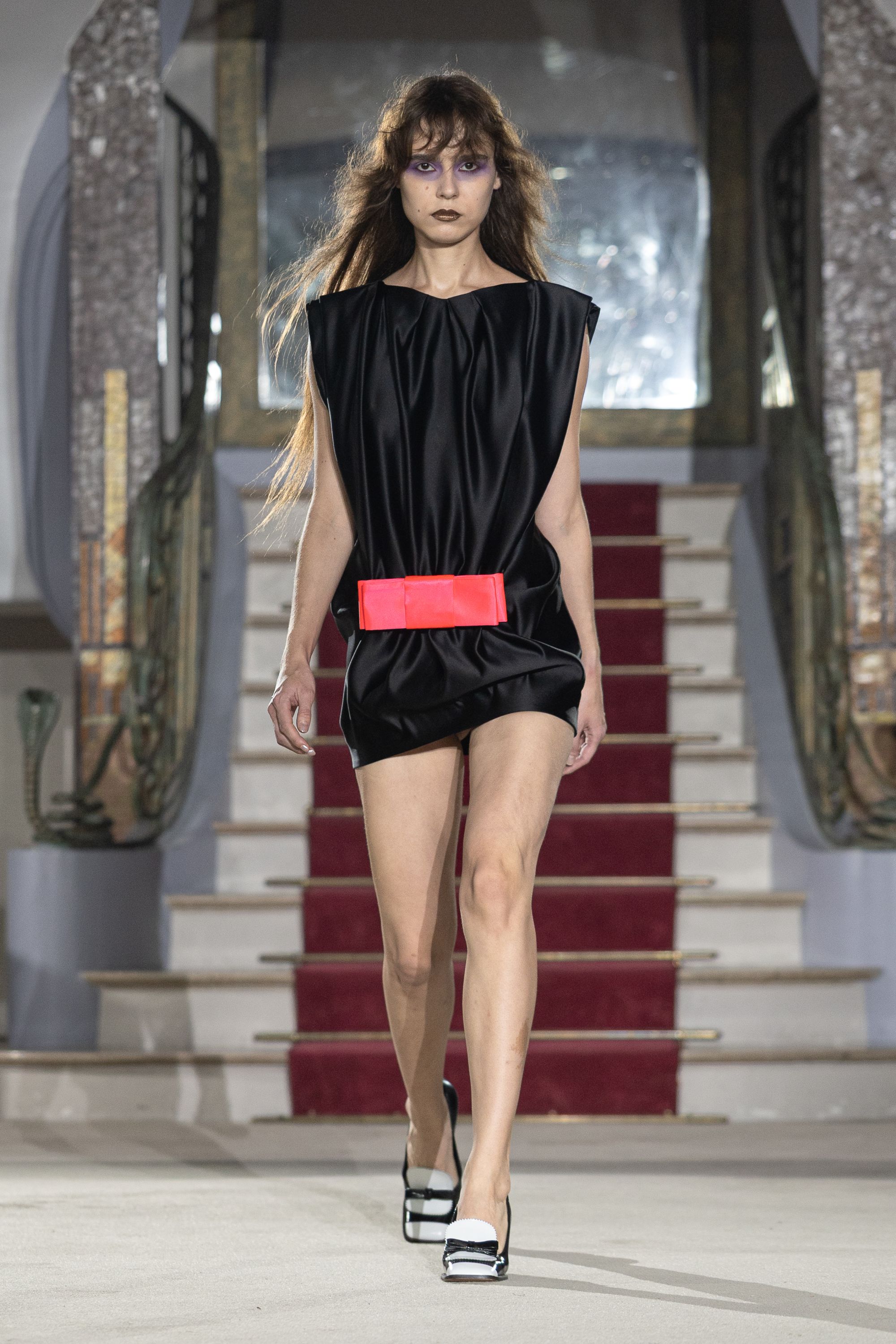
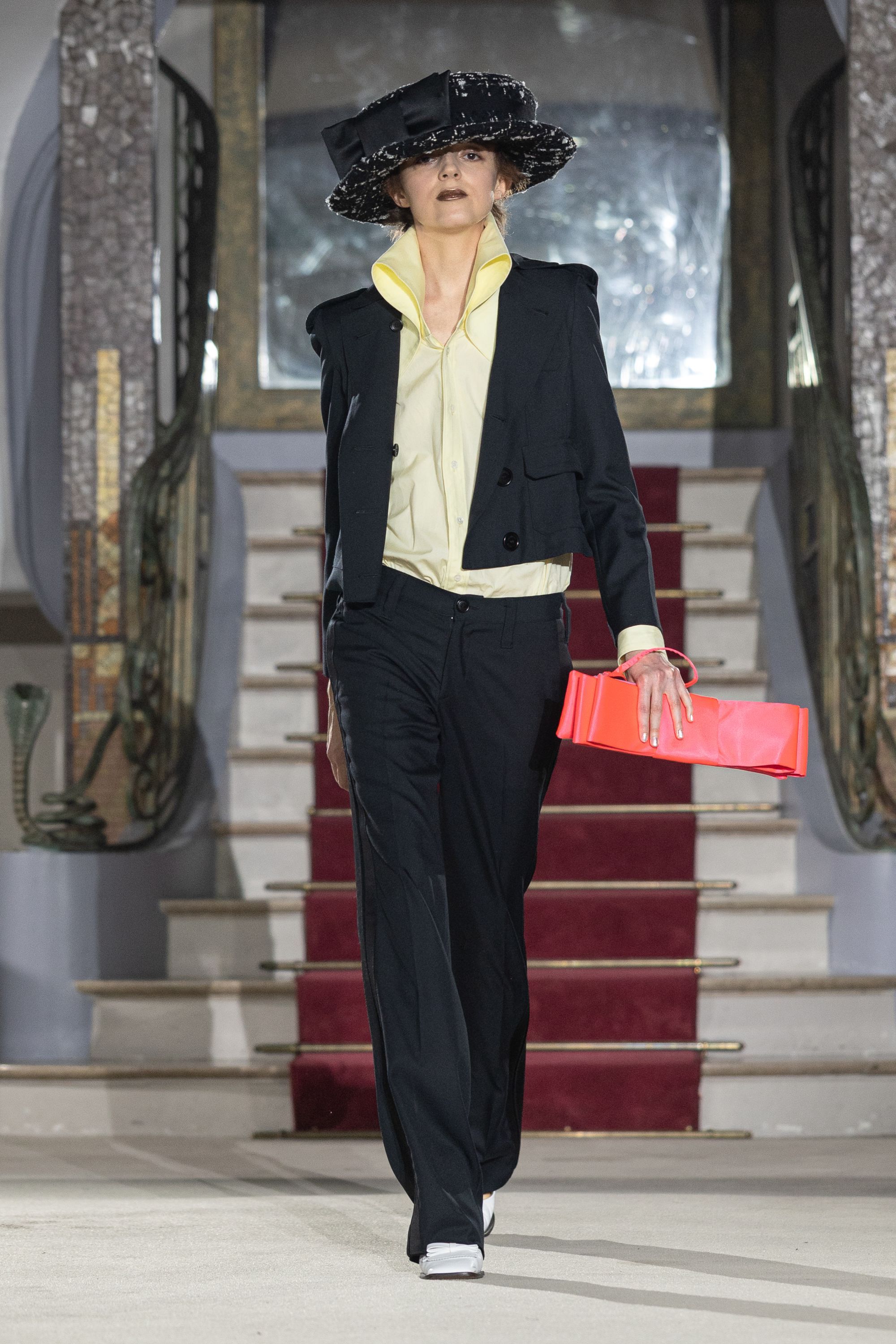
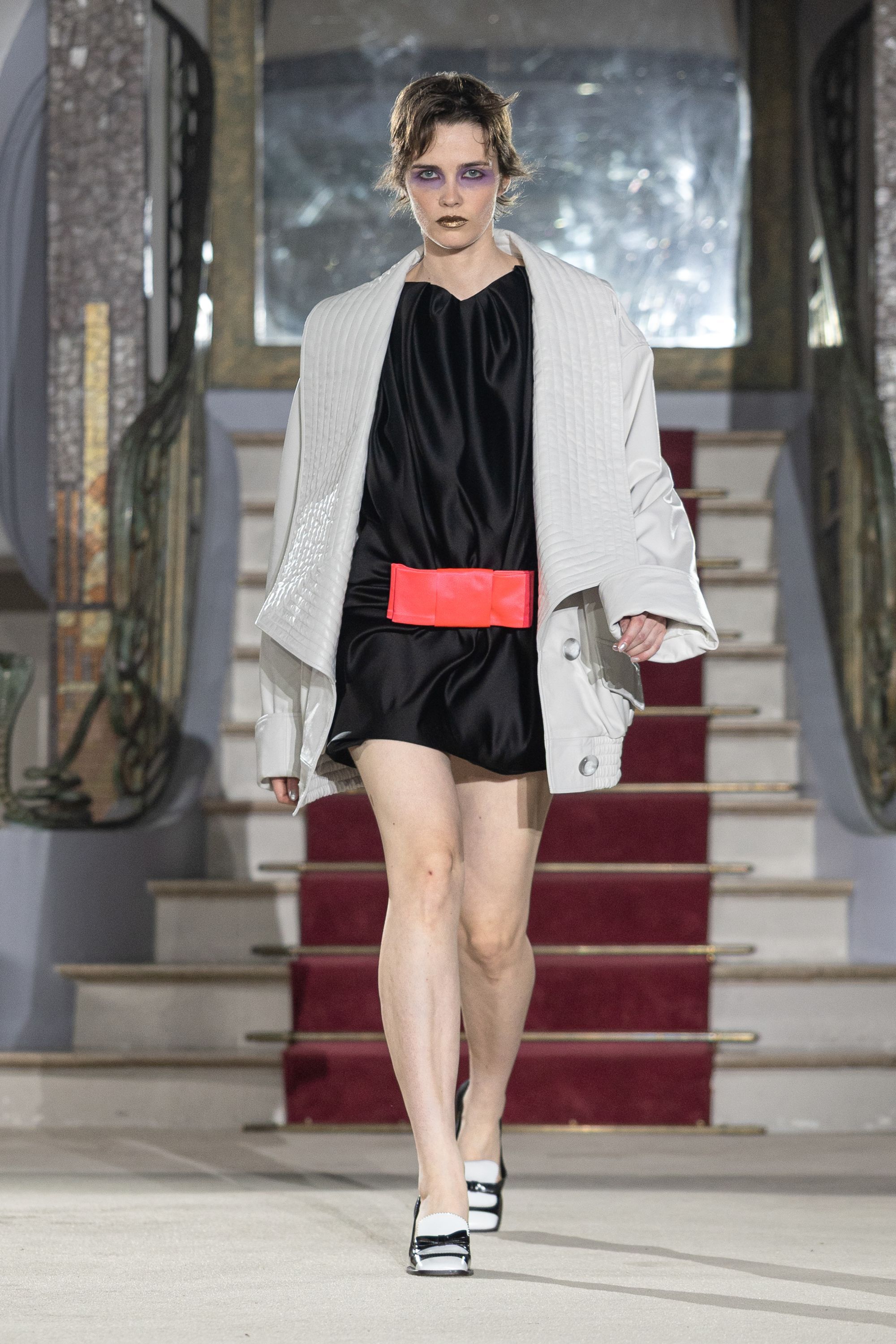
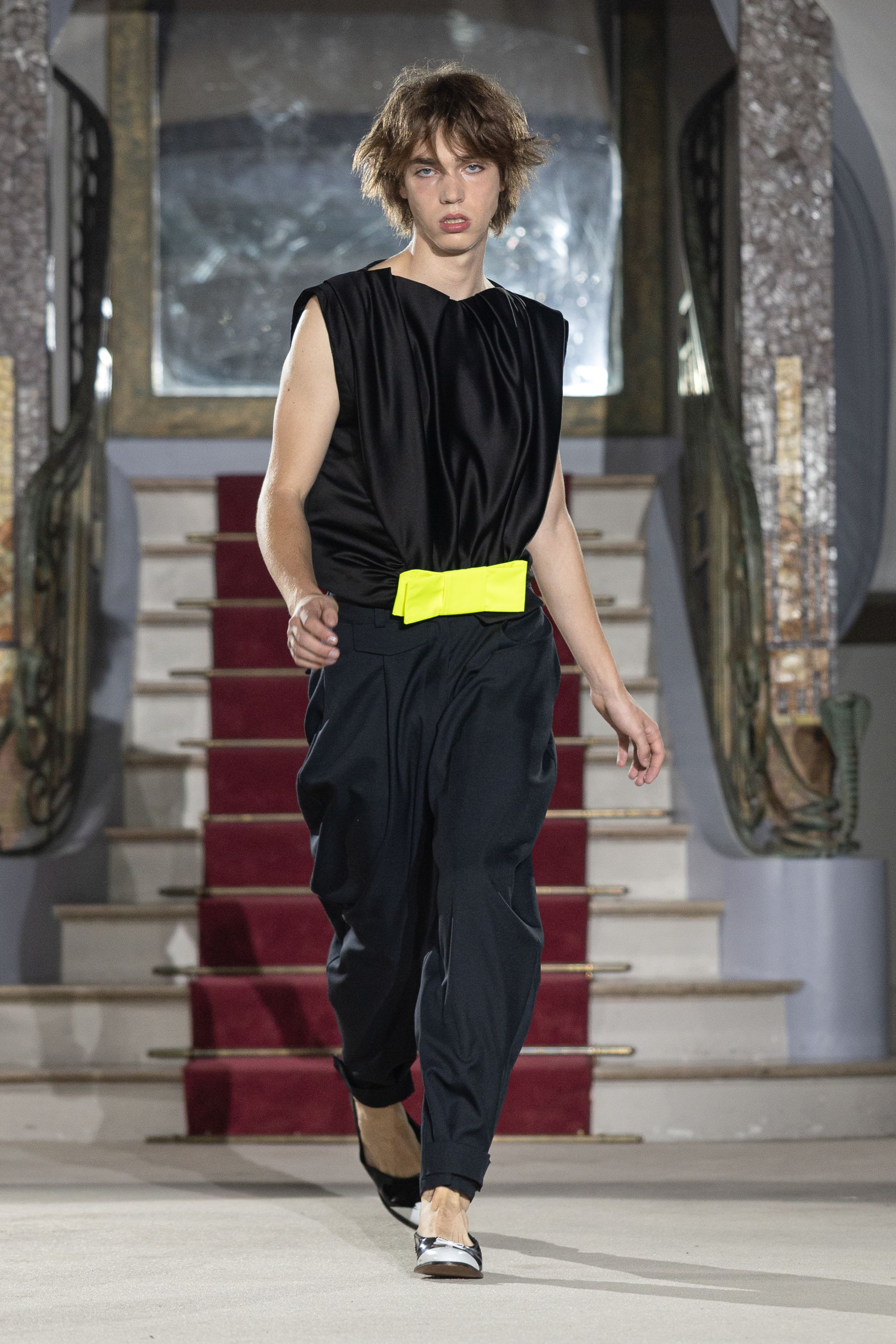
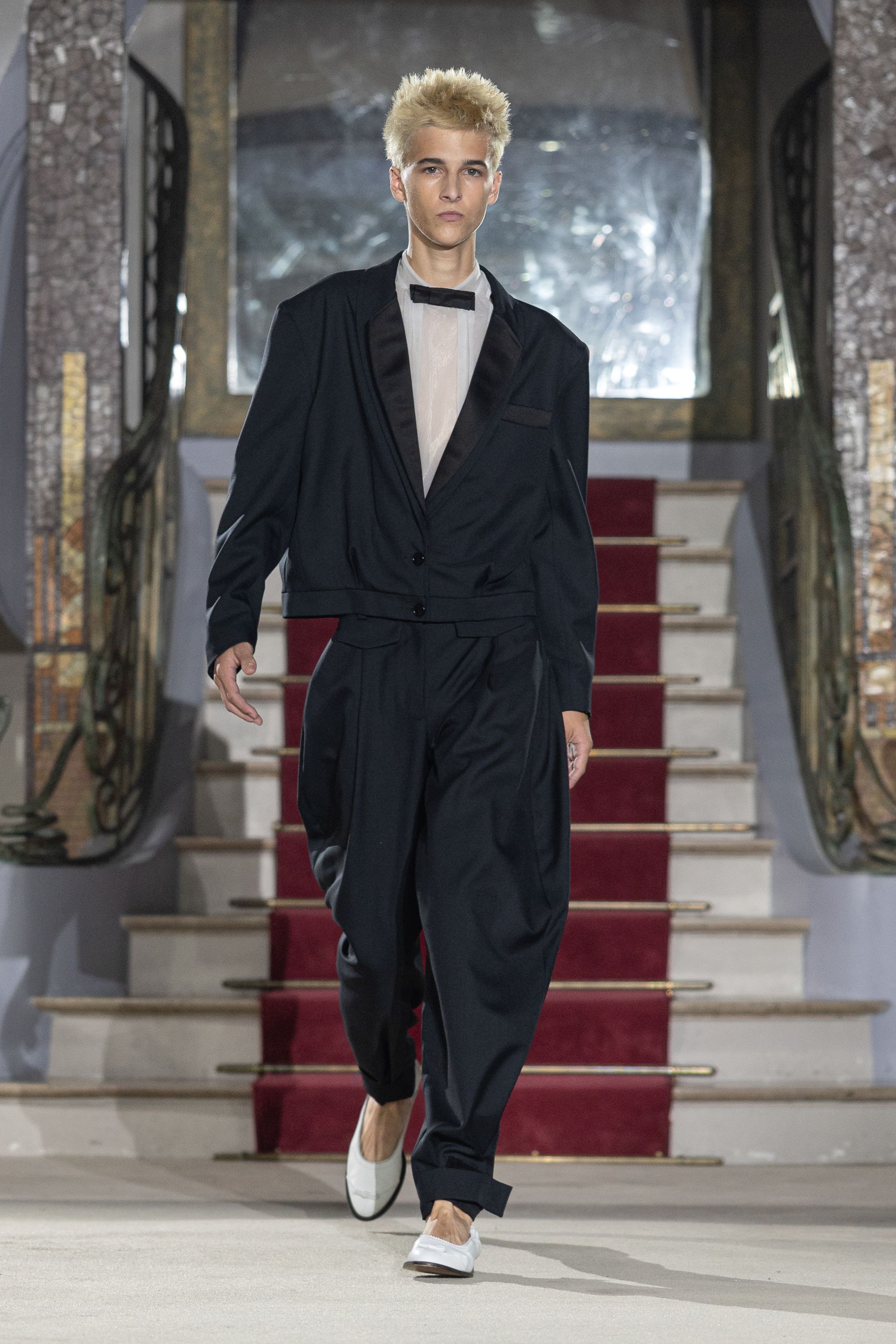
A runway final is always a suspended moment. Backstage, the pressure finally recedes; out front, the audience grasps the impact of a full vision. For designers, it is usually a time for an understated, almost timid bow. For Patric DiCaprio and Bryn Taubensee, the duo at the helm of Vaquera, modesty was never on the agenda: they made their entrance singing Sonny & Cher's iconic “I Got You Babe” as a duet. Pure poetry.
Yet the tone was set the moment the invitations landed, stamped with a statement reading: “I’m a put-on-a-show kind of girl.” Far more than a passing nod, it was a true declaration of intent - a way of declaring “I’m going to take up space,” “I won’t go unnoticed.” This collection stands as an ode to women who dare, to those who sidestep convention with a touch of defiance and a thumbed nose at decorum. A vibrant tribute to awkwardness, a celebration of those who unreservedly embrace doing too much.
Purity put to the test
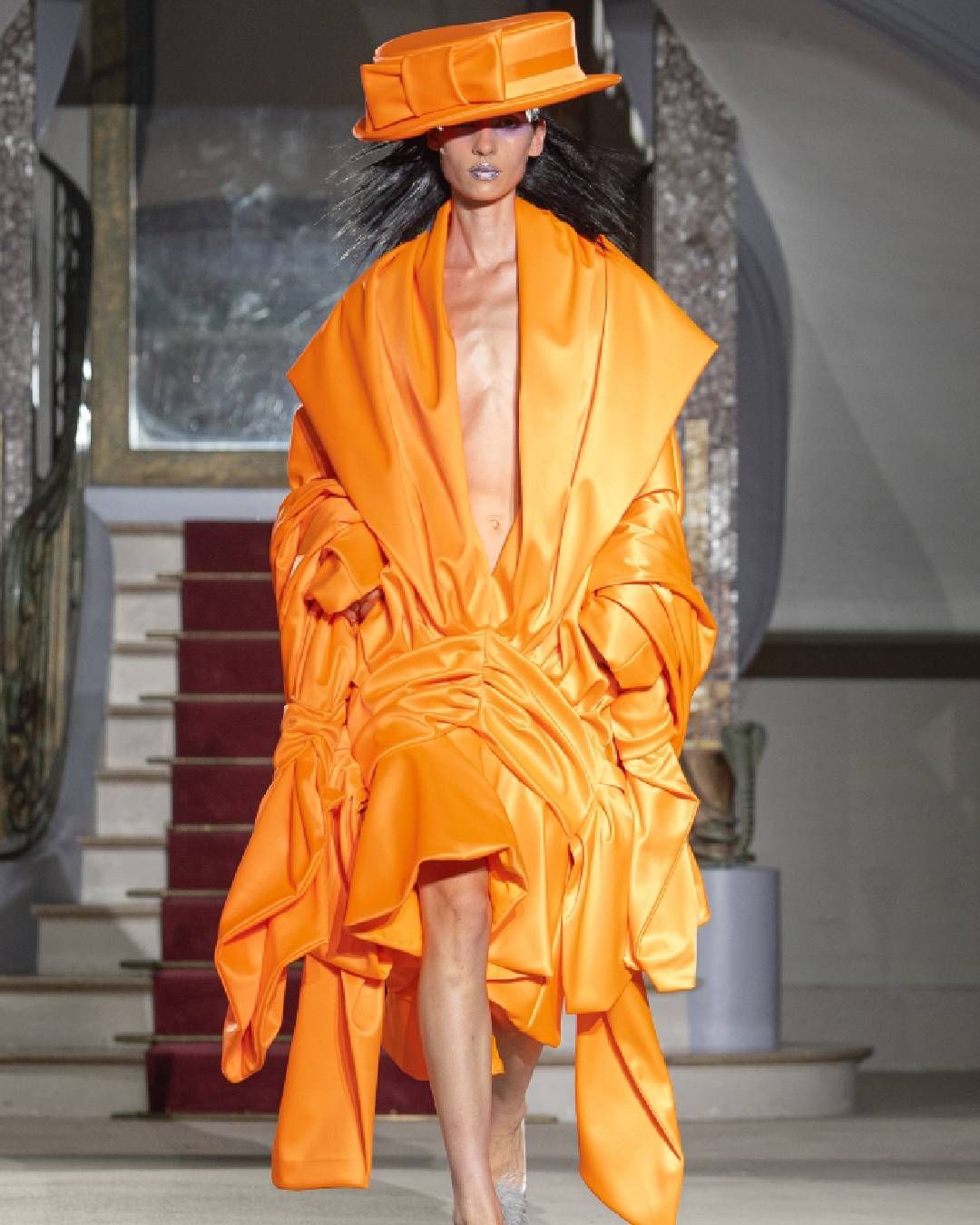
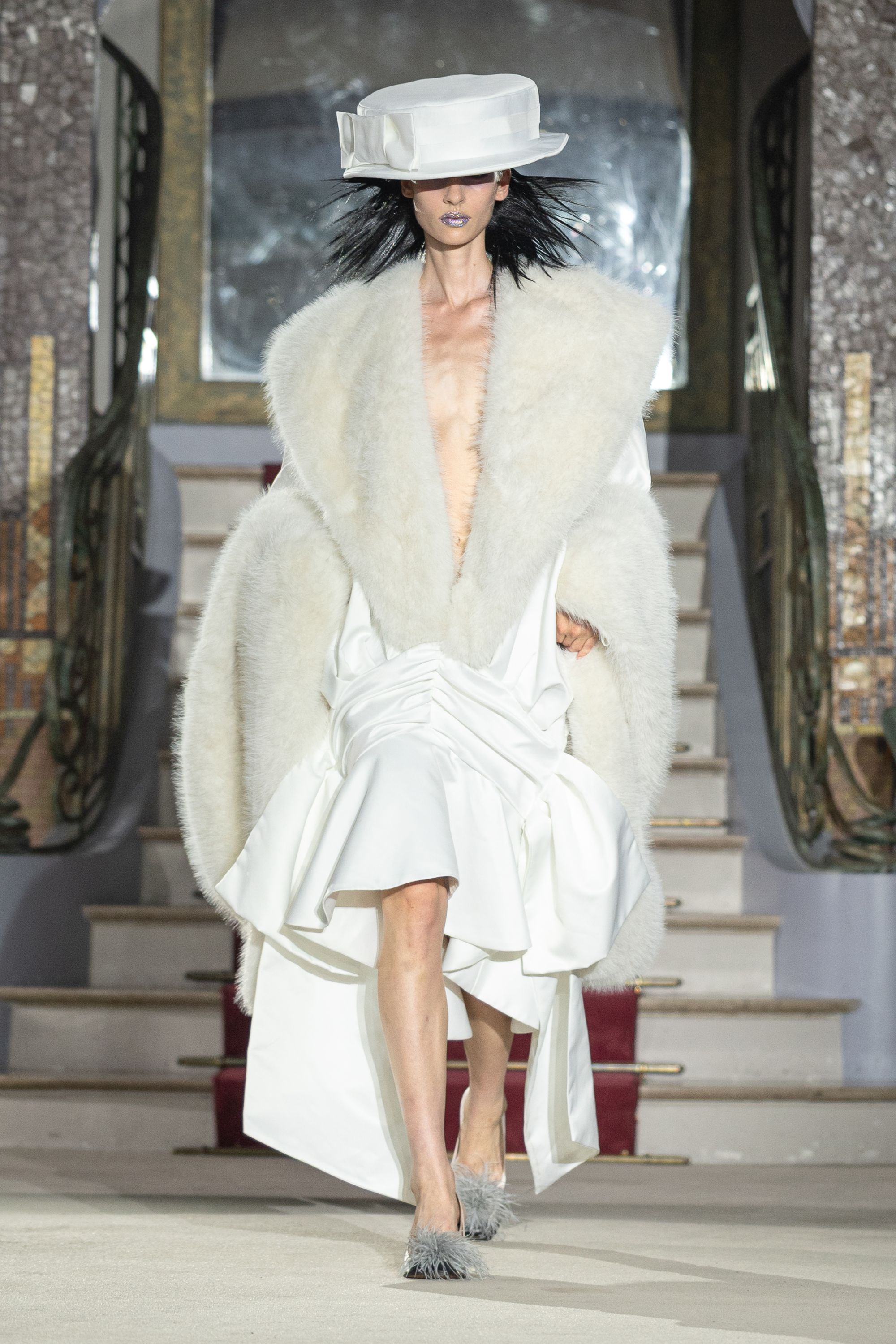
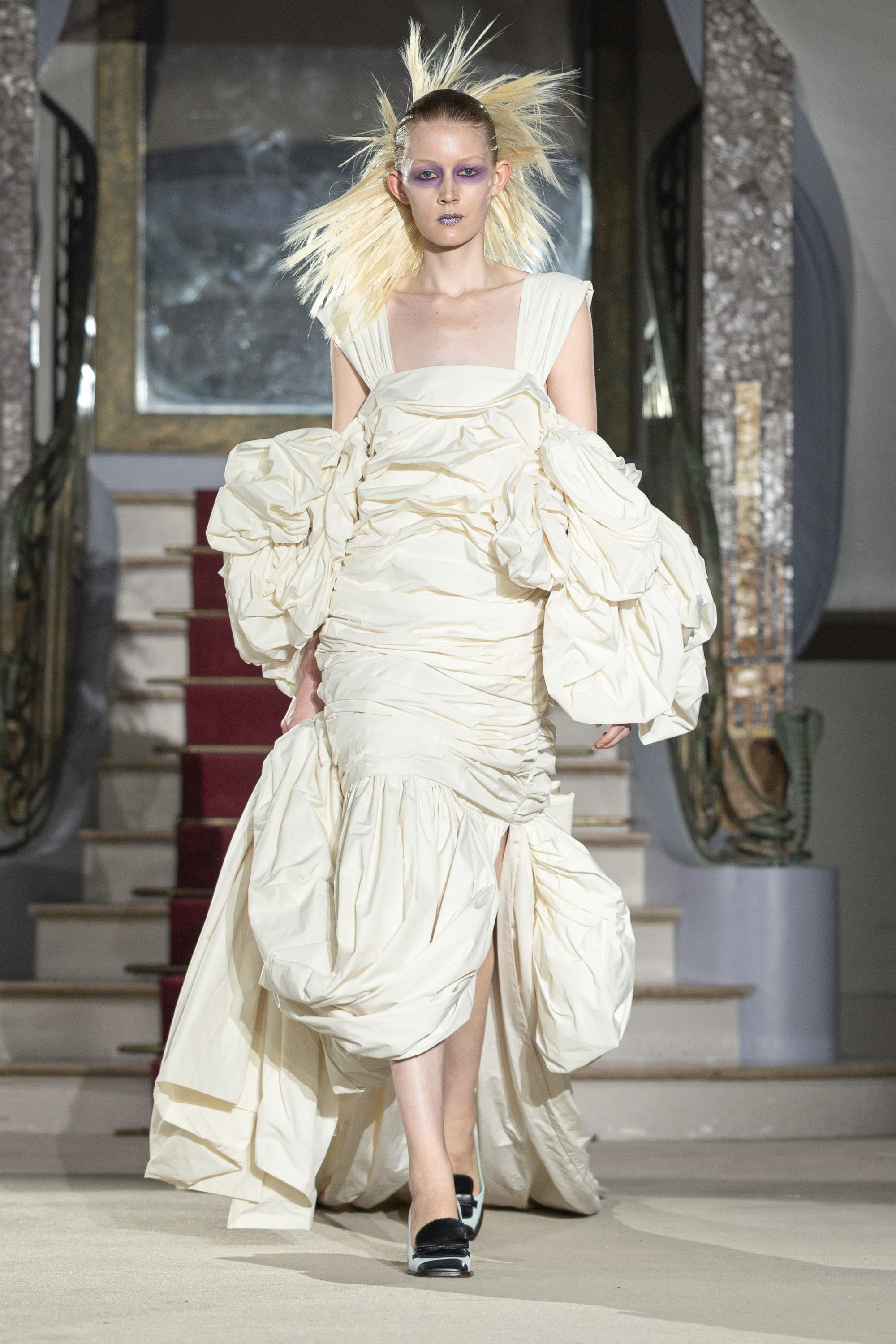
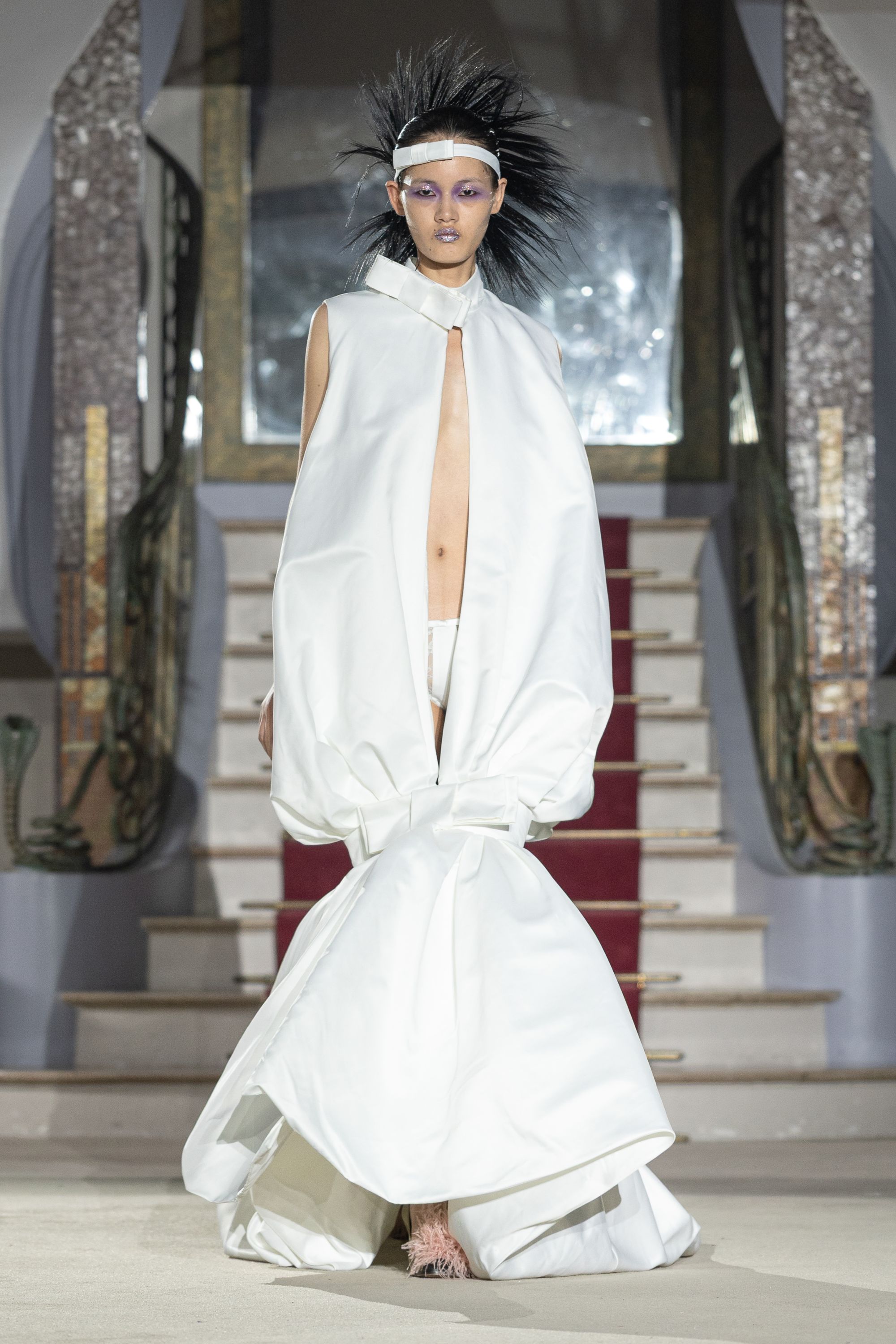
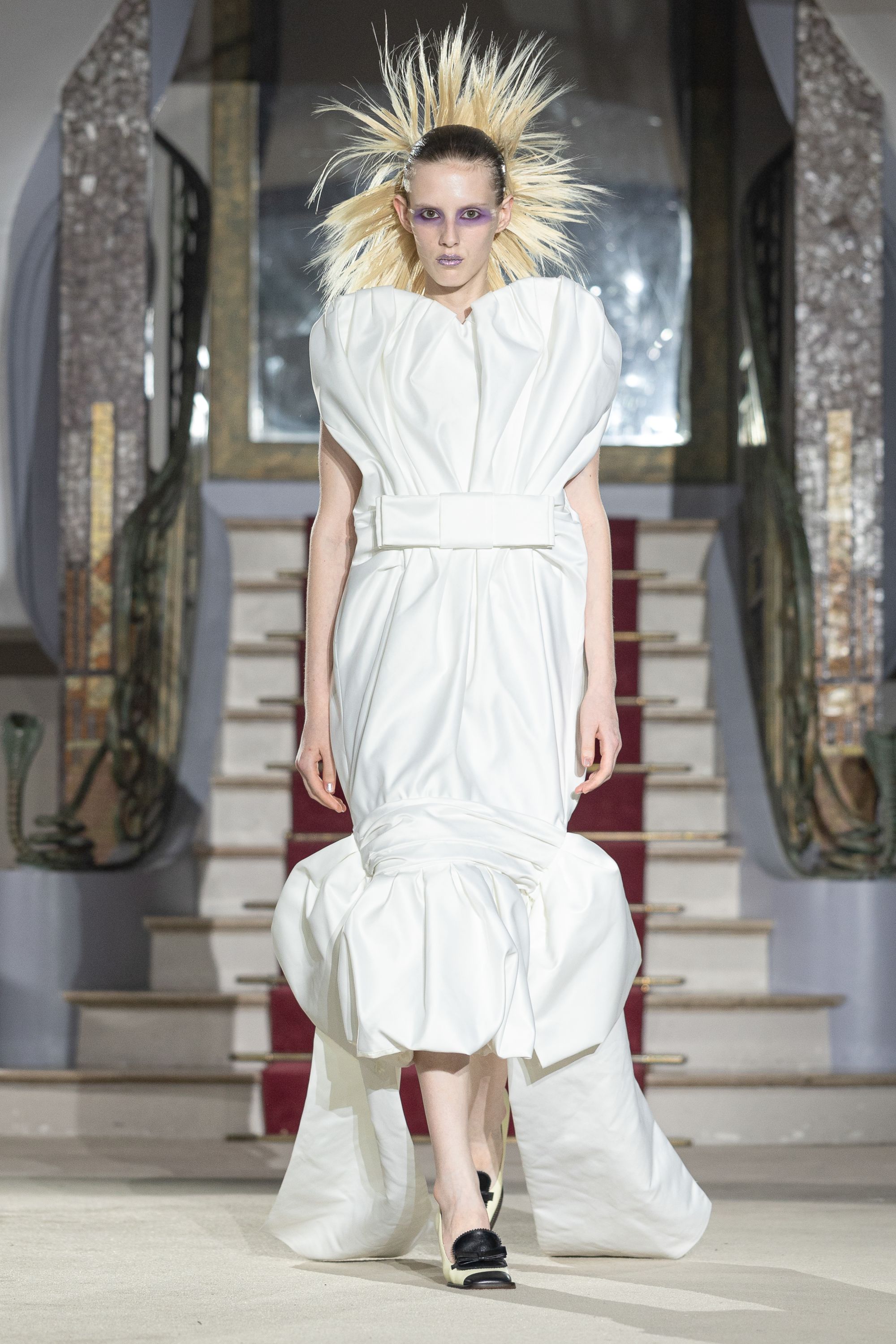
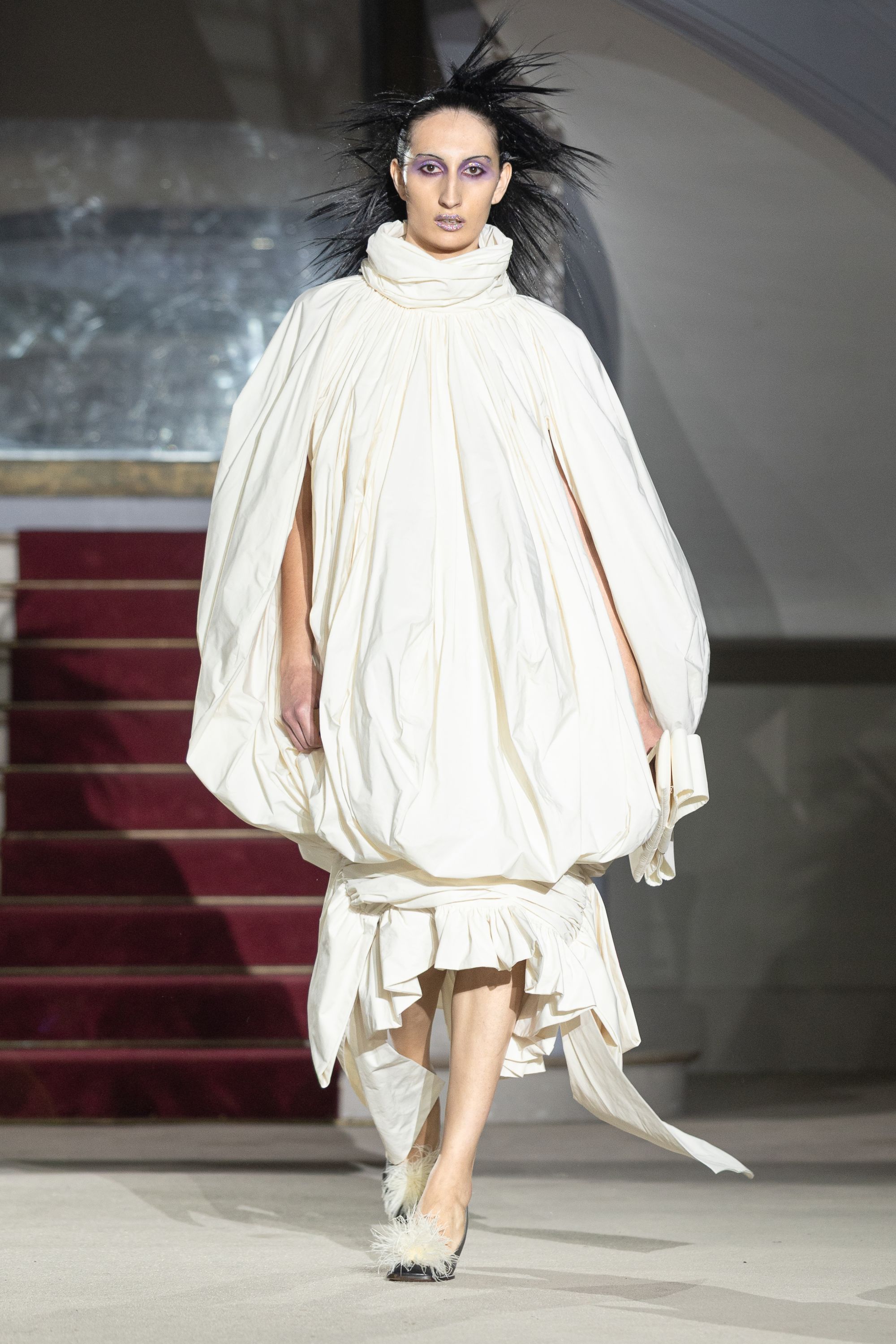
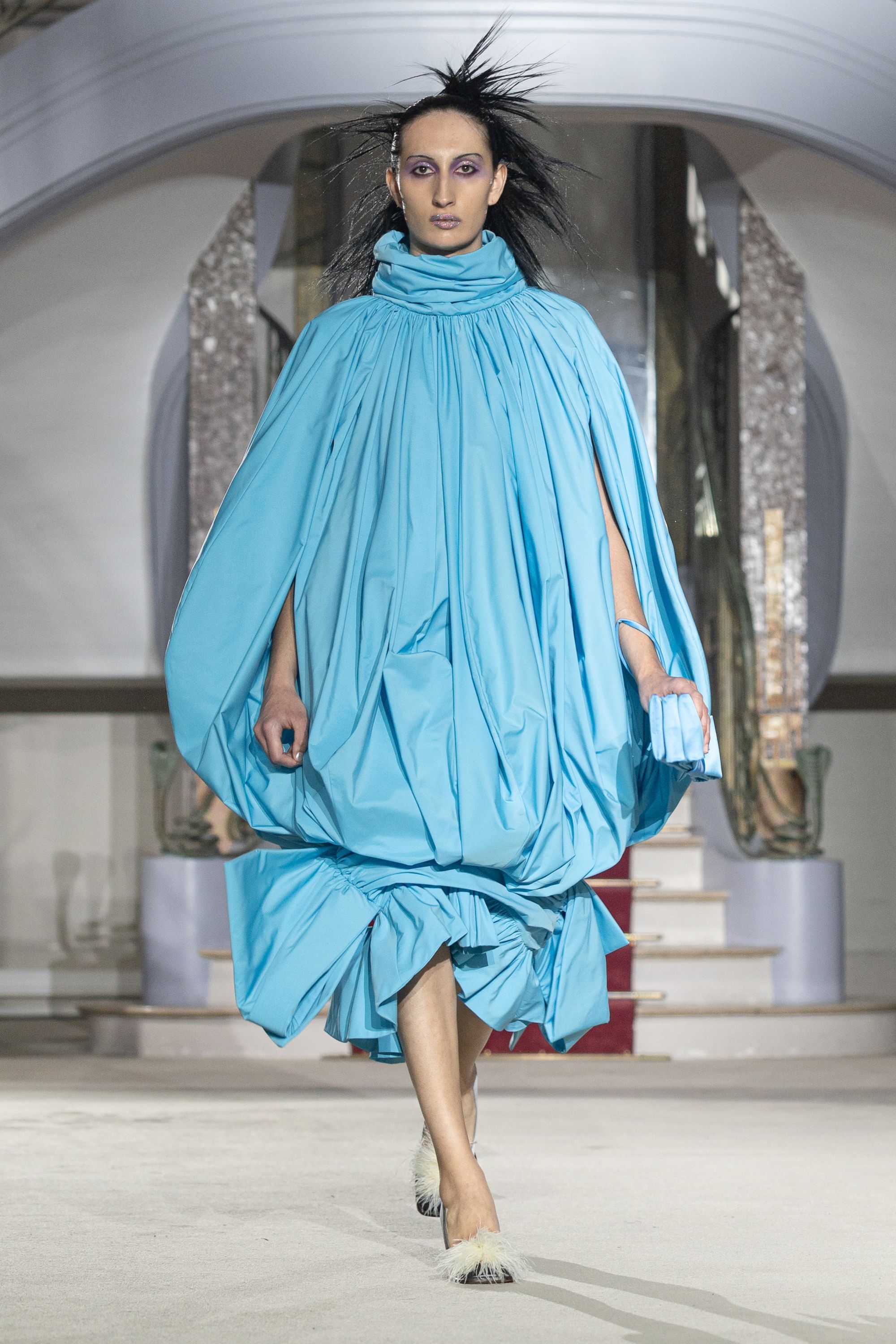
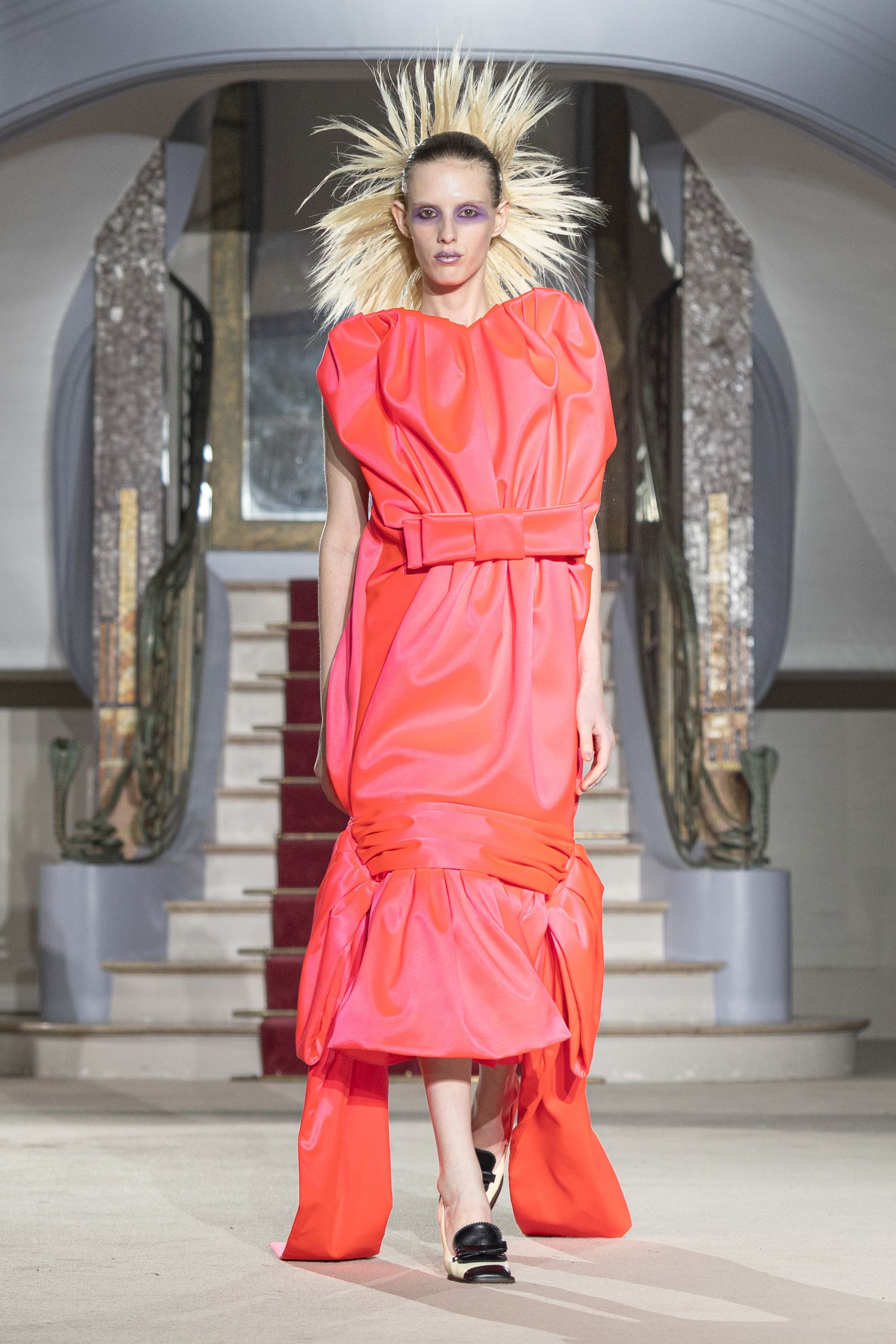
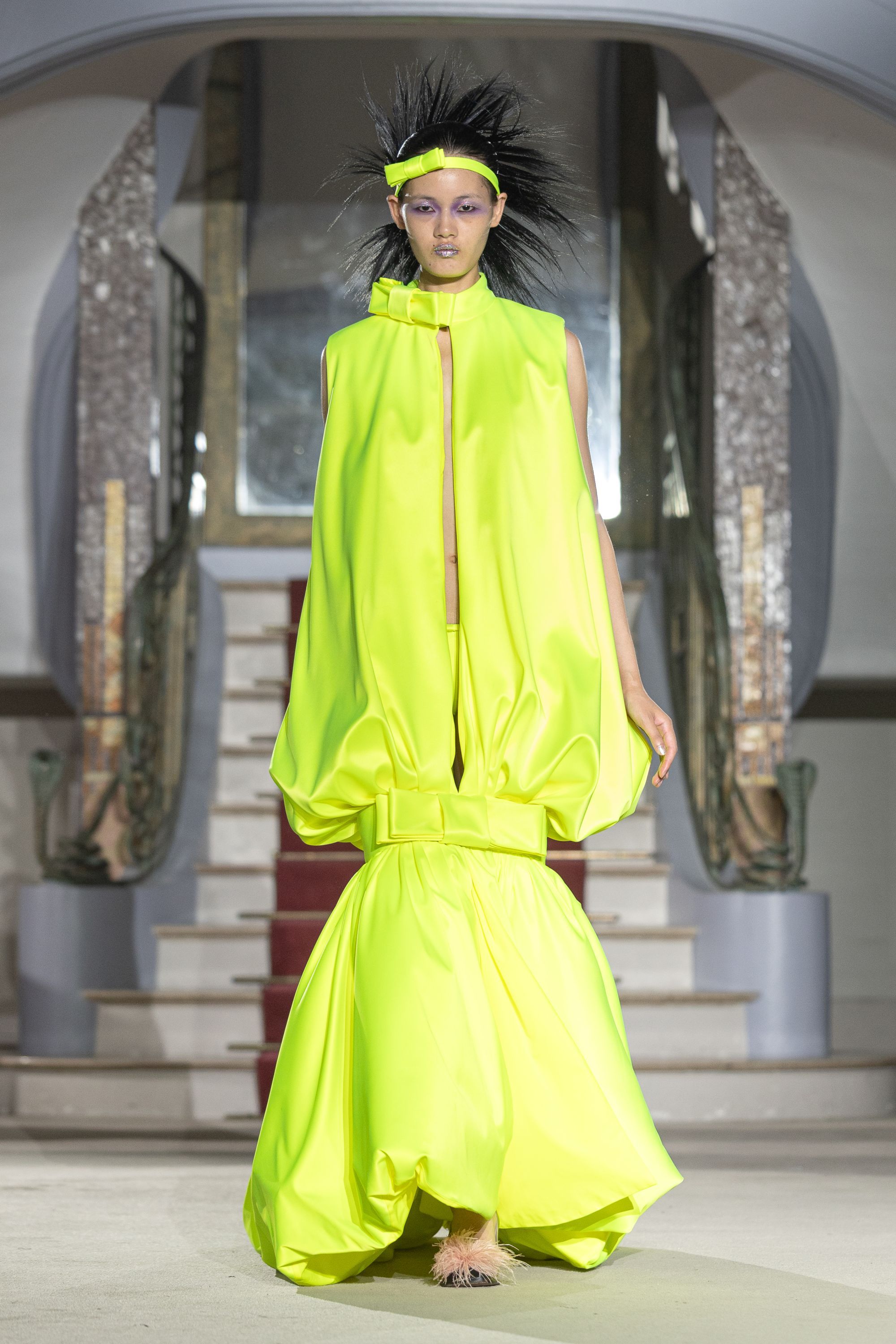
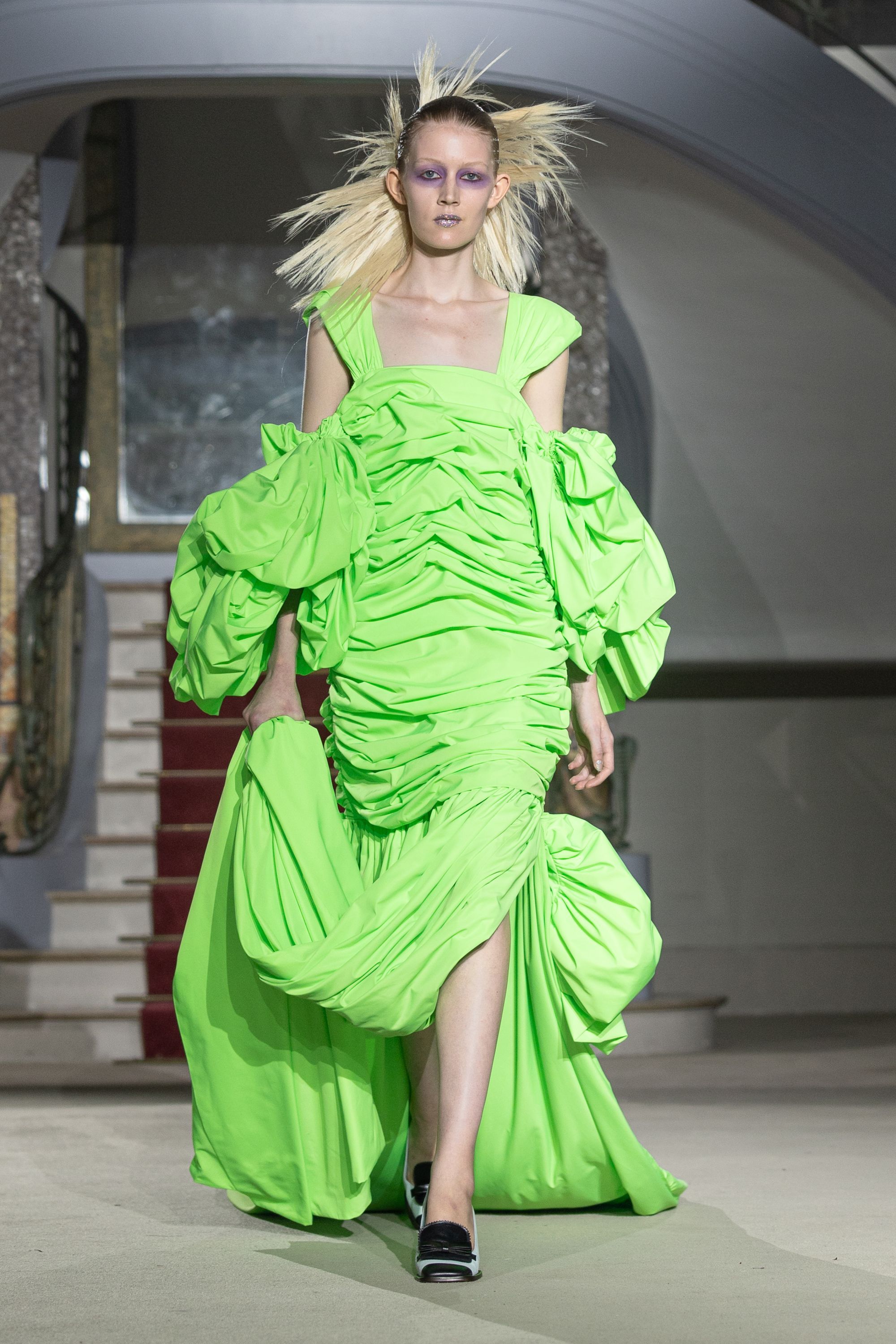
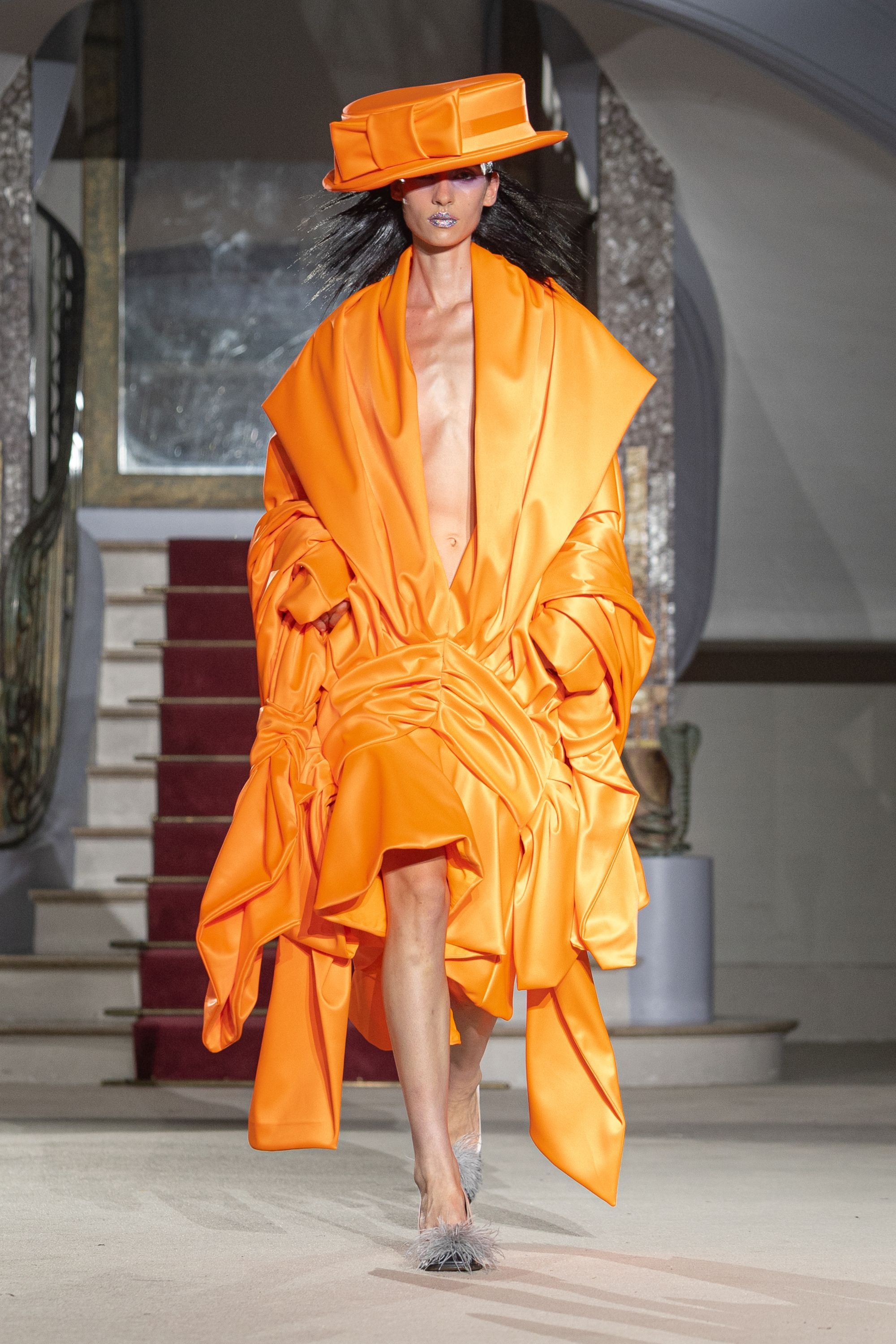
To open, five pristine white looks step out. Deeply anchored in a distinctly 80s aesthetic, they are dressed in white from head to toe. The collection revolves around a striking circularity: these exact same five cuts return to close the show, this time reimagined in jarring, vivid shades.
This metamorphosis raises the question of perception. While the silhouettes remain strictly identical, their meaning shifts entirely. Pristine white evokes purity, weddings, and the weight of tradition. Neon, by contrast, taps into a completely different realm: brighter, louder, inherently alive, with a touch of deliberate kitsch. A certain artificiality radiates from these electric hues we thought had been left behind, yet which the designers have been rehabilitating for several seasons. Moving from immaculate white to neon is like stepping from calm into a storm: double or nothing.
Between these two anchors, the show unfolds in a series of rhythmic tableaux, grouping looks by threes, fives, or sixes - each an iteration on a single fabric, a precise theme, or a specific vision of maximalism.
A succession of theatrical tableaux
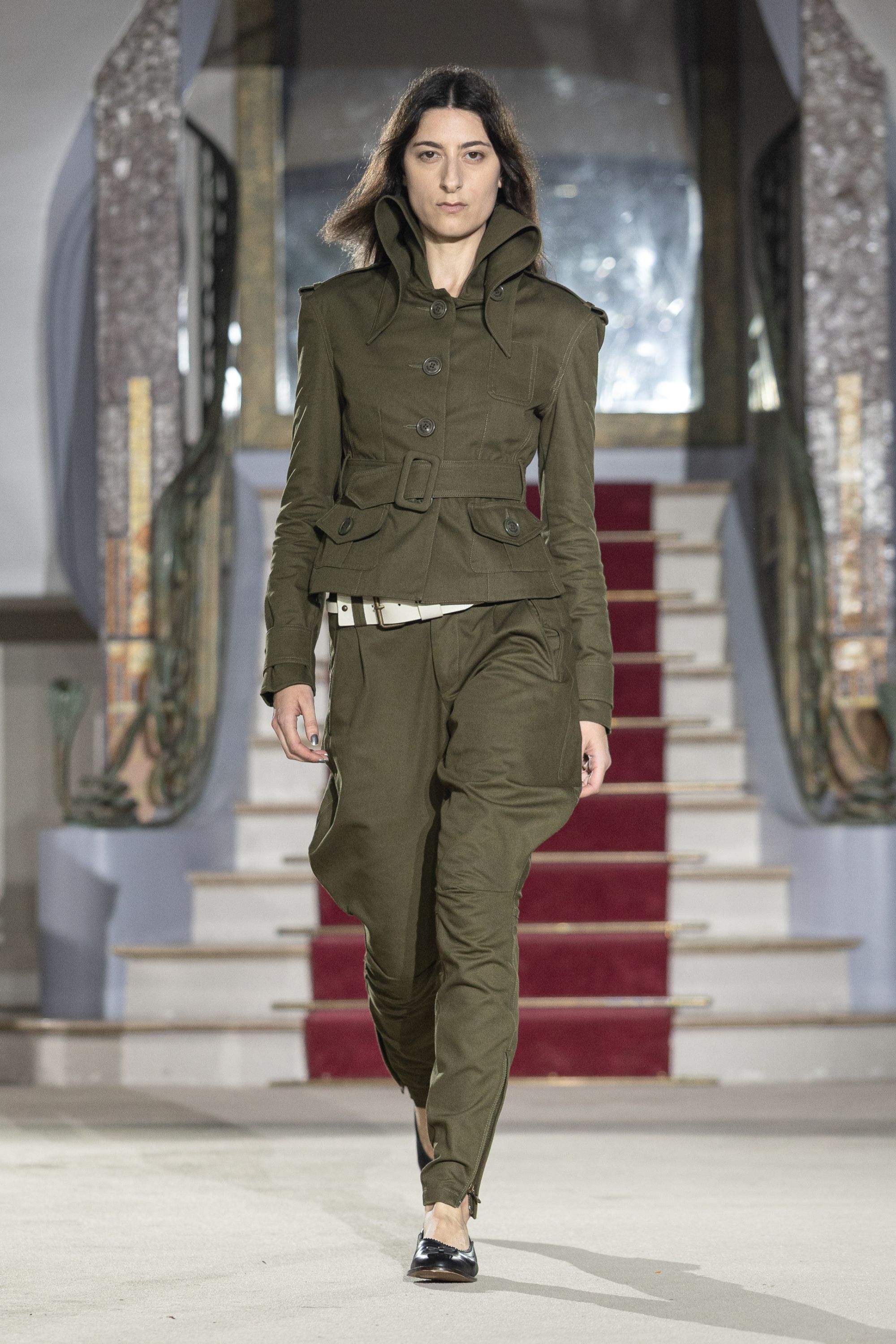
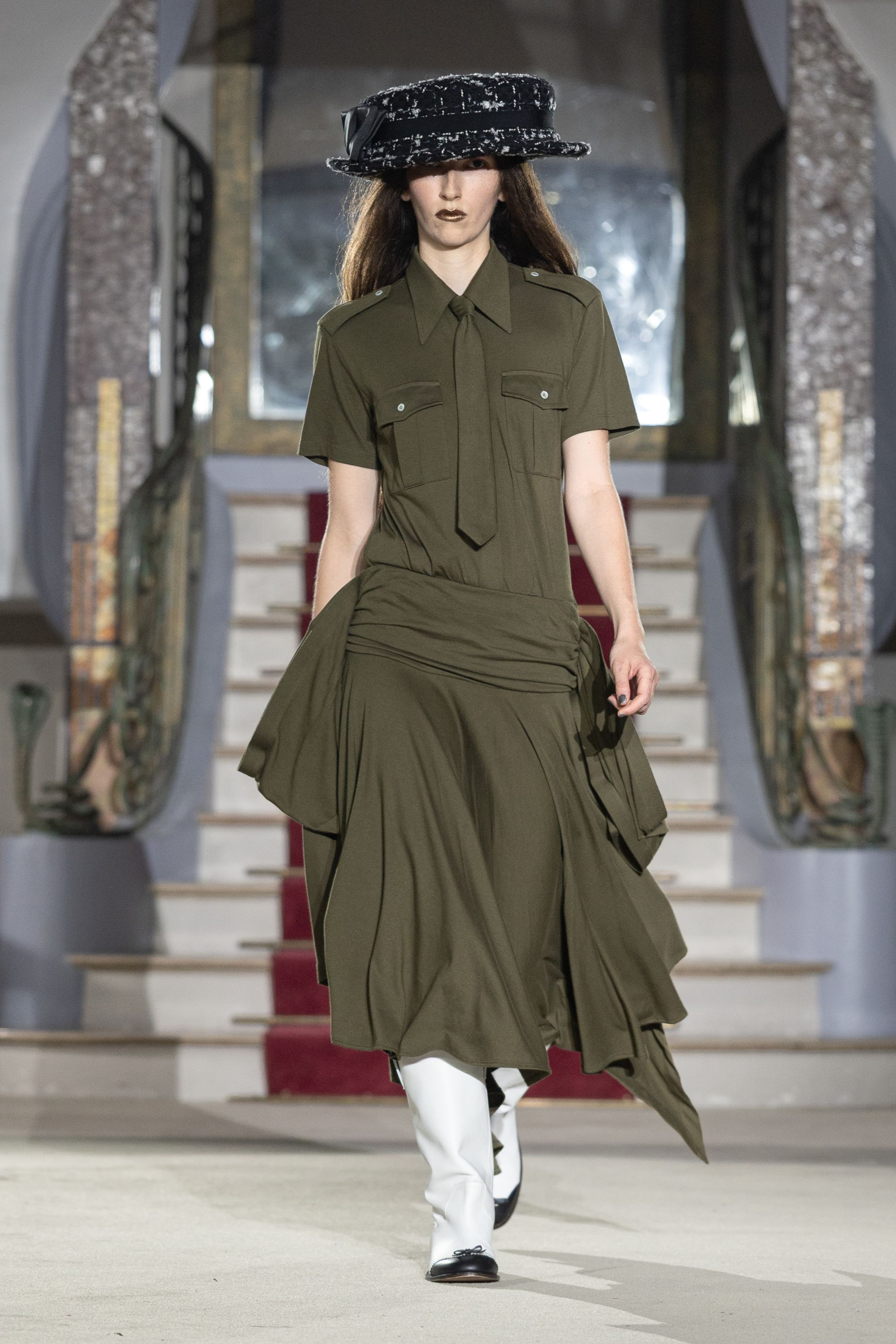
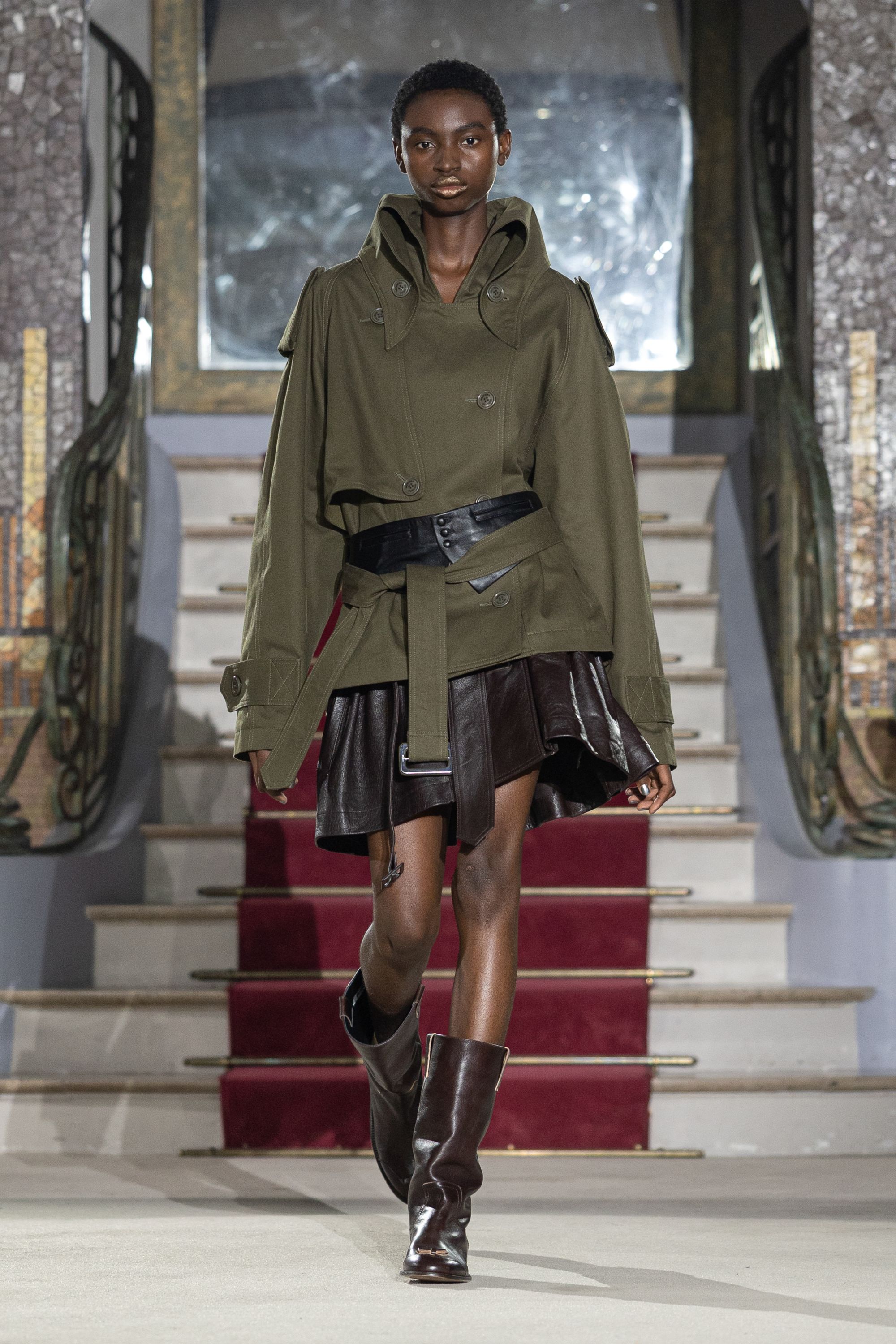
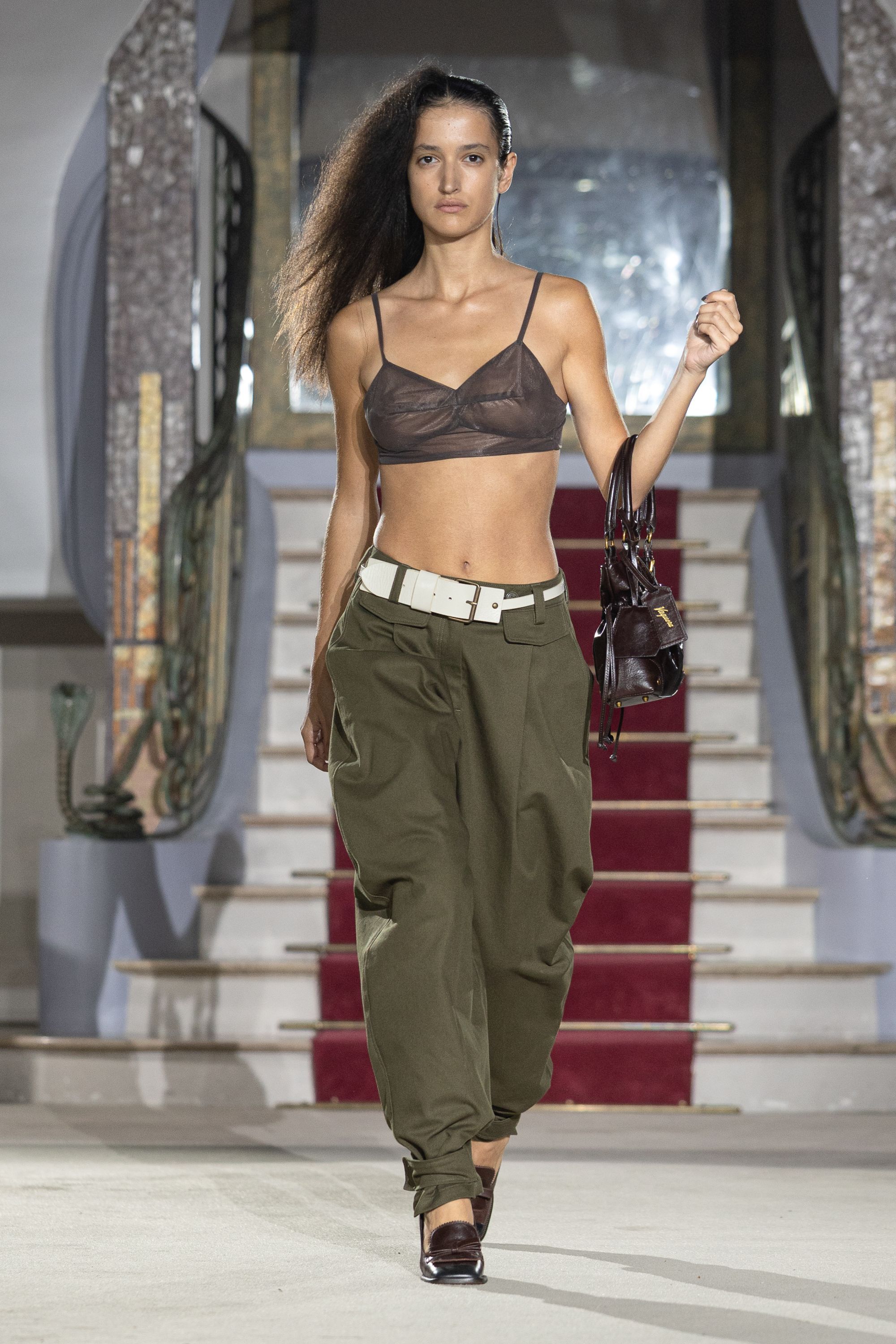
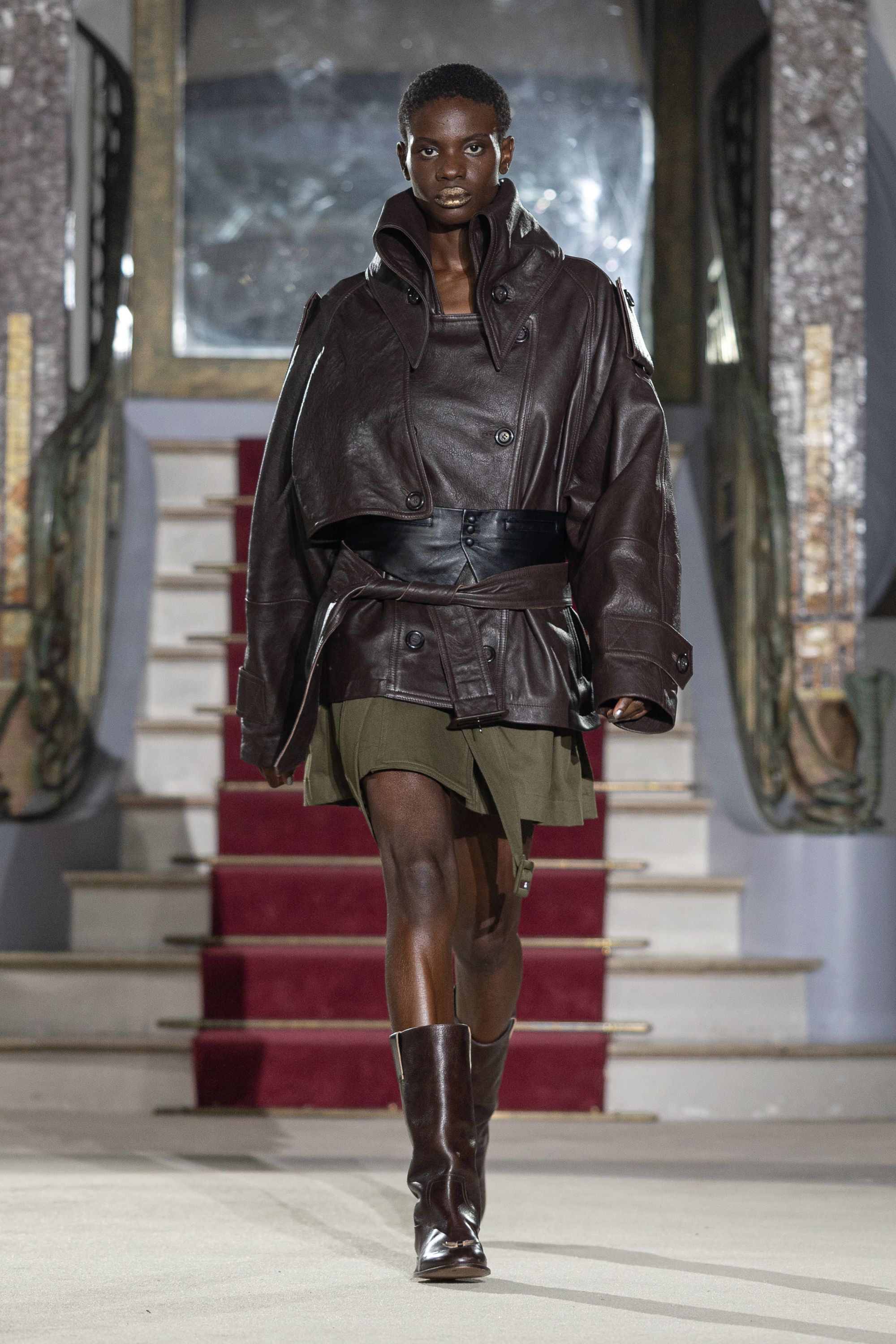
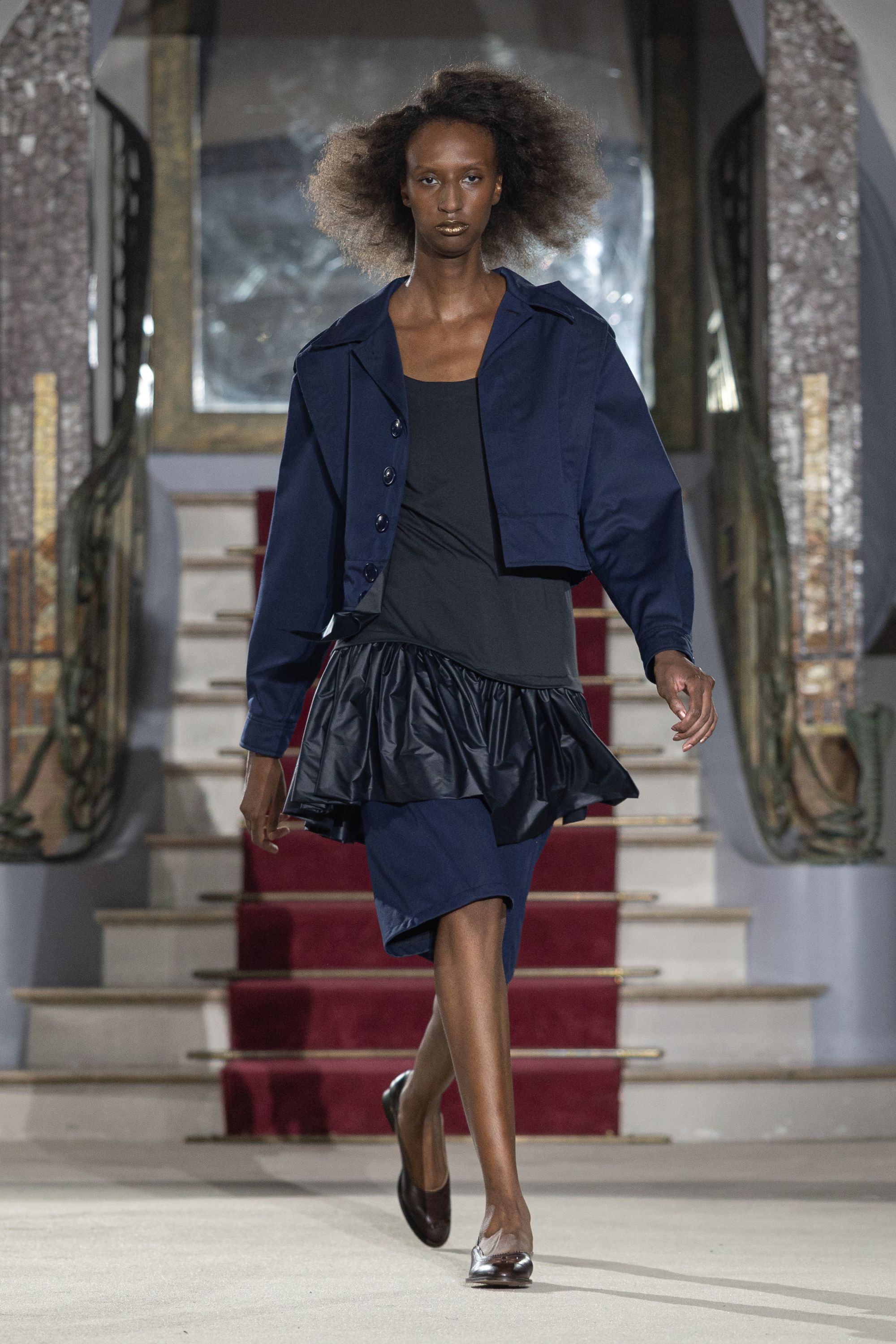
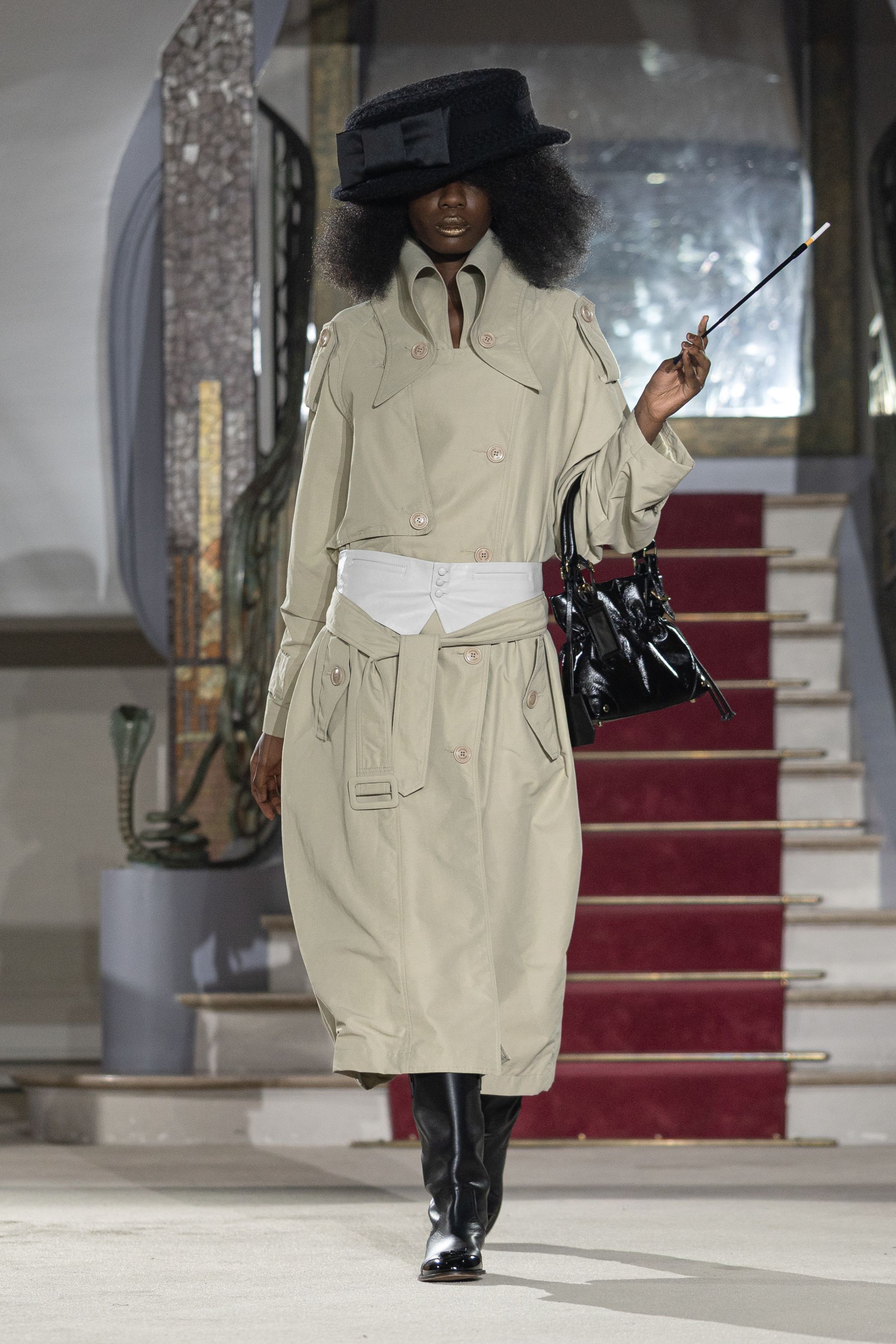
Following the associations of white comes khaki, a color inseparable from military wear. Vaquera claims martial codes only to subvert them: the army shirt retains its shoulder straps, while the officer jacket is cinched at the waist with an oversized collar - also featured on a trench coat. Down below, trousers take cues from First World War uniforms, full through the thighs and tapered at the calf.
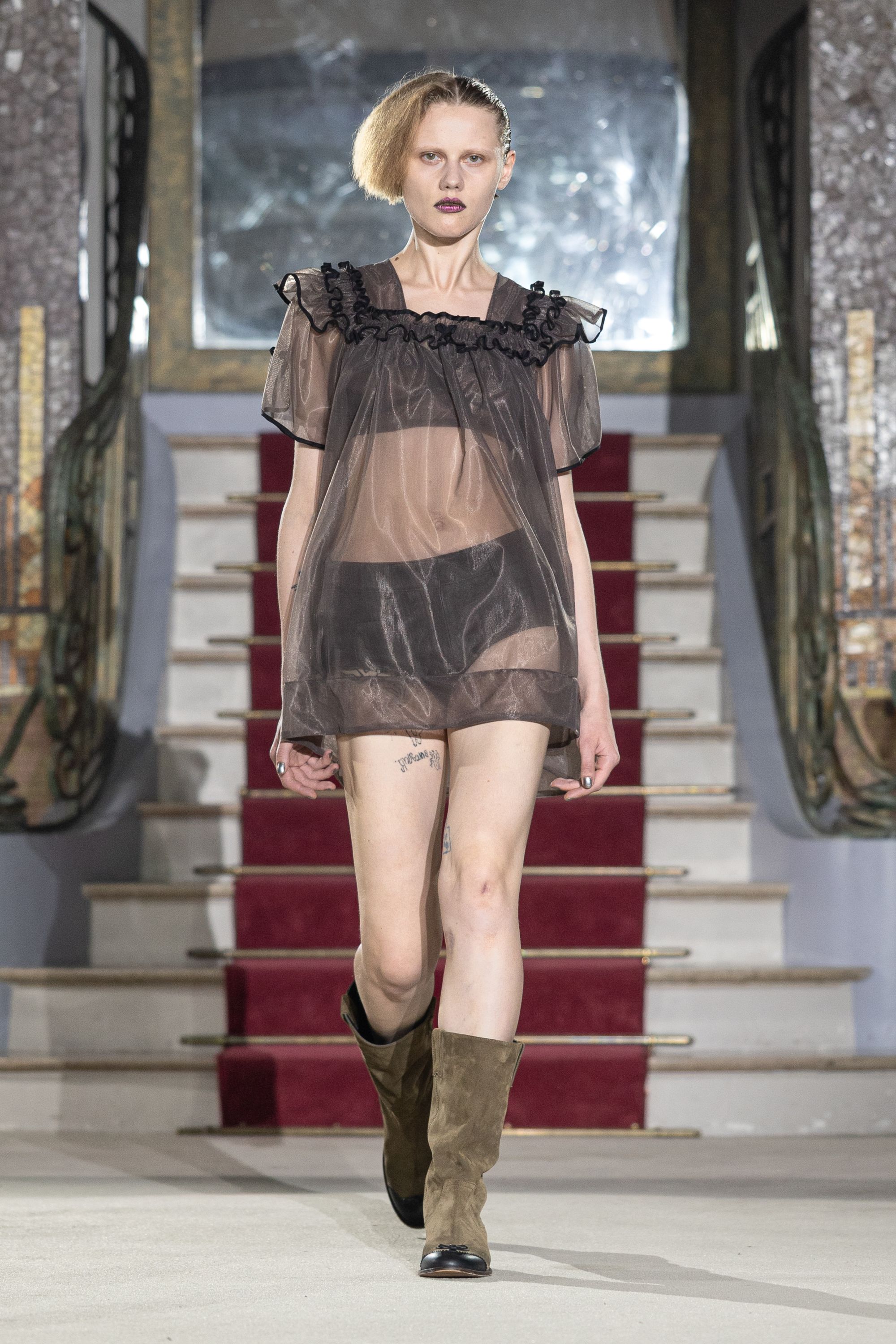
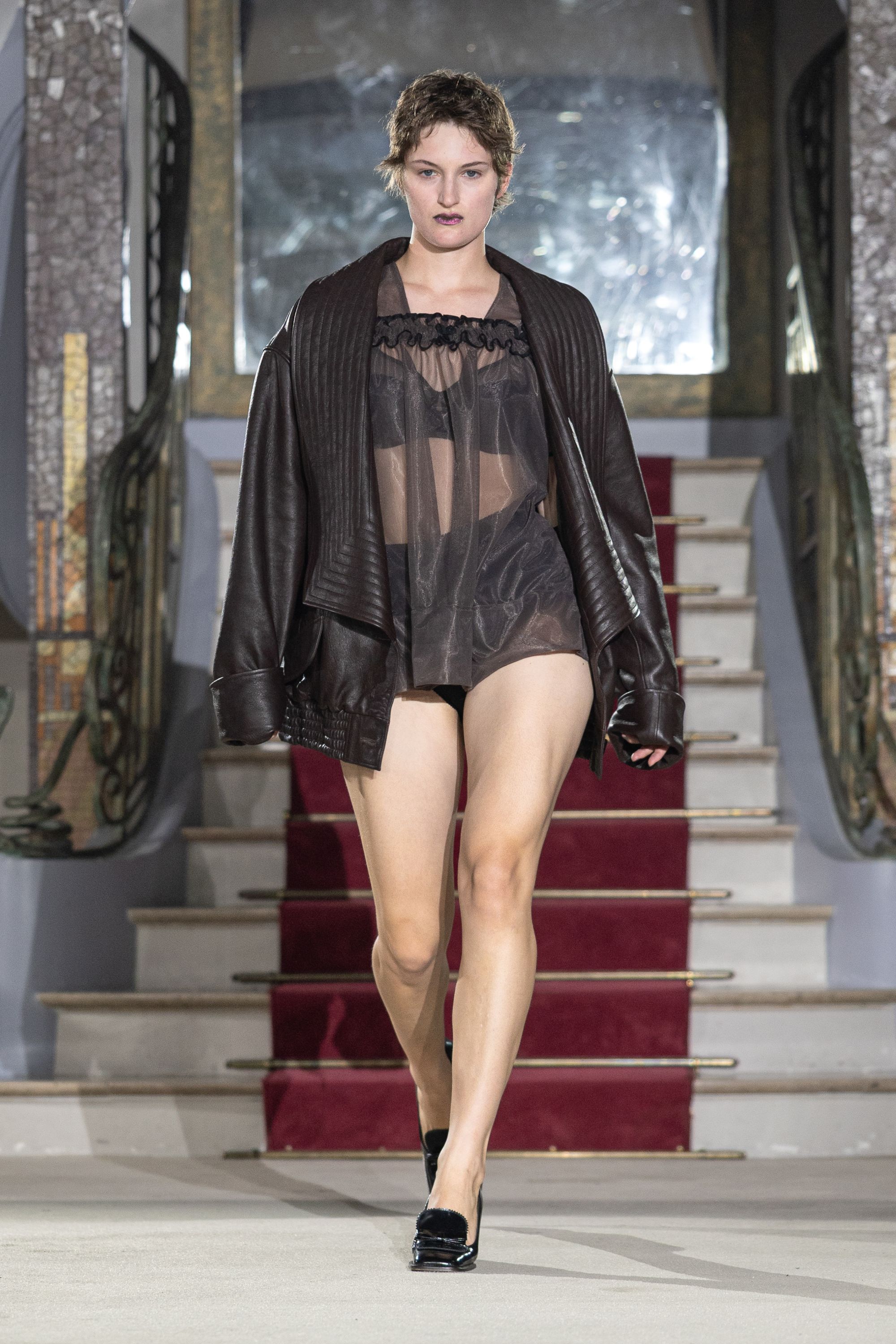
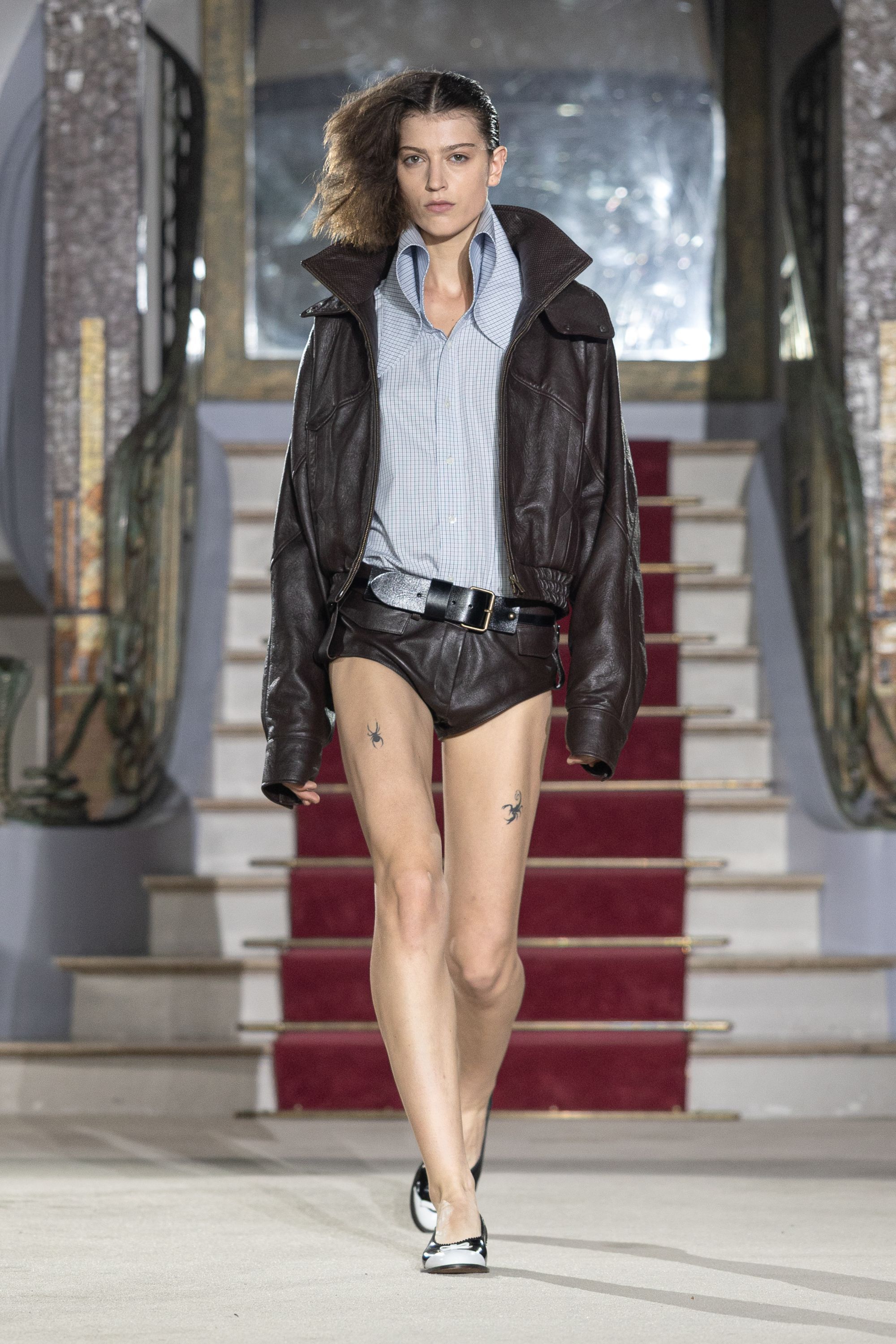
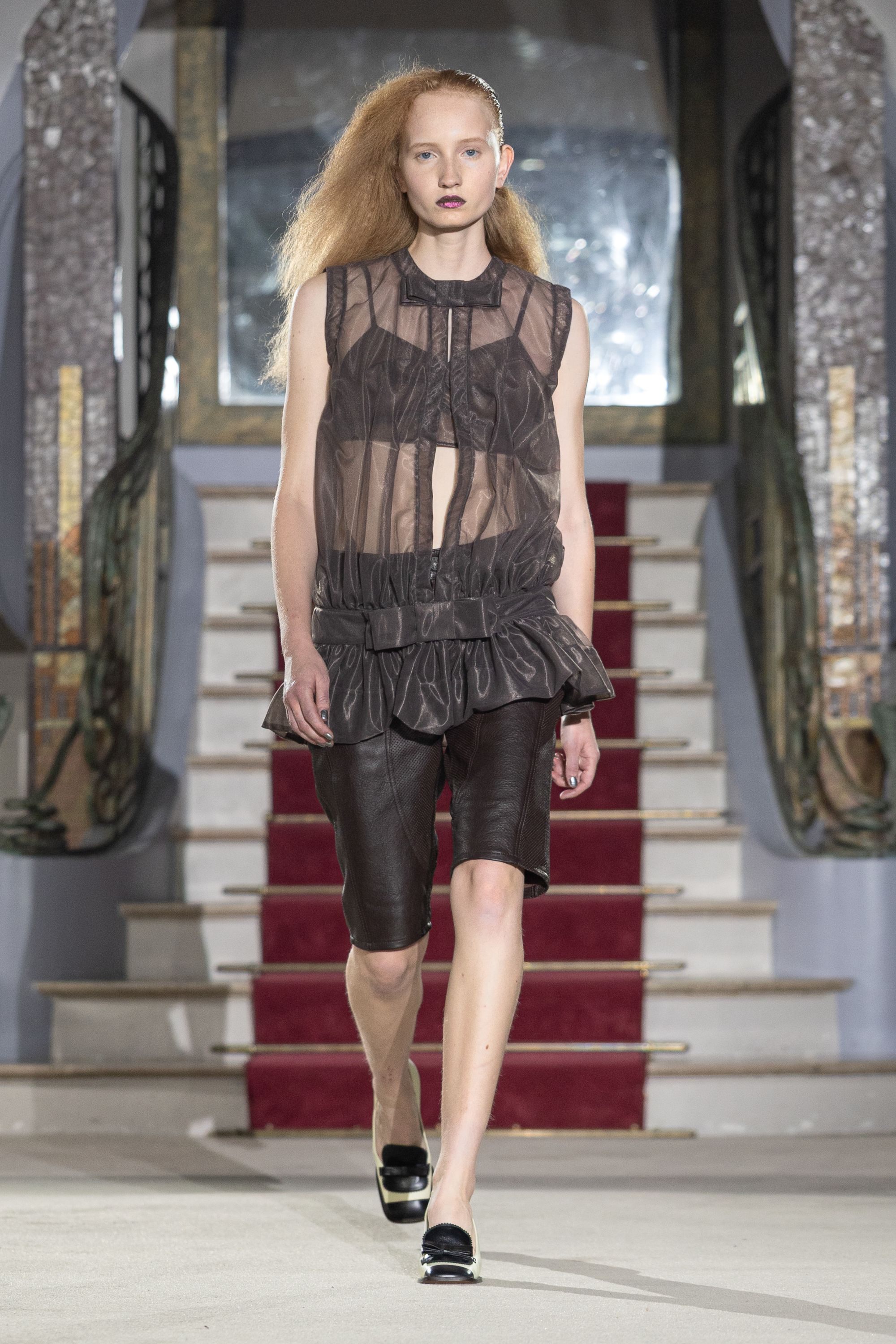
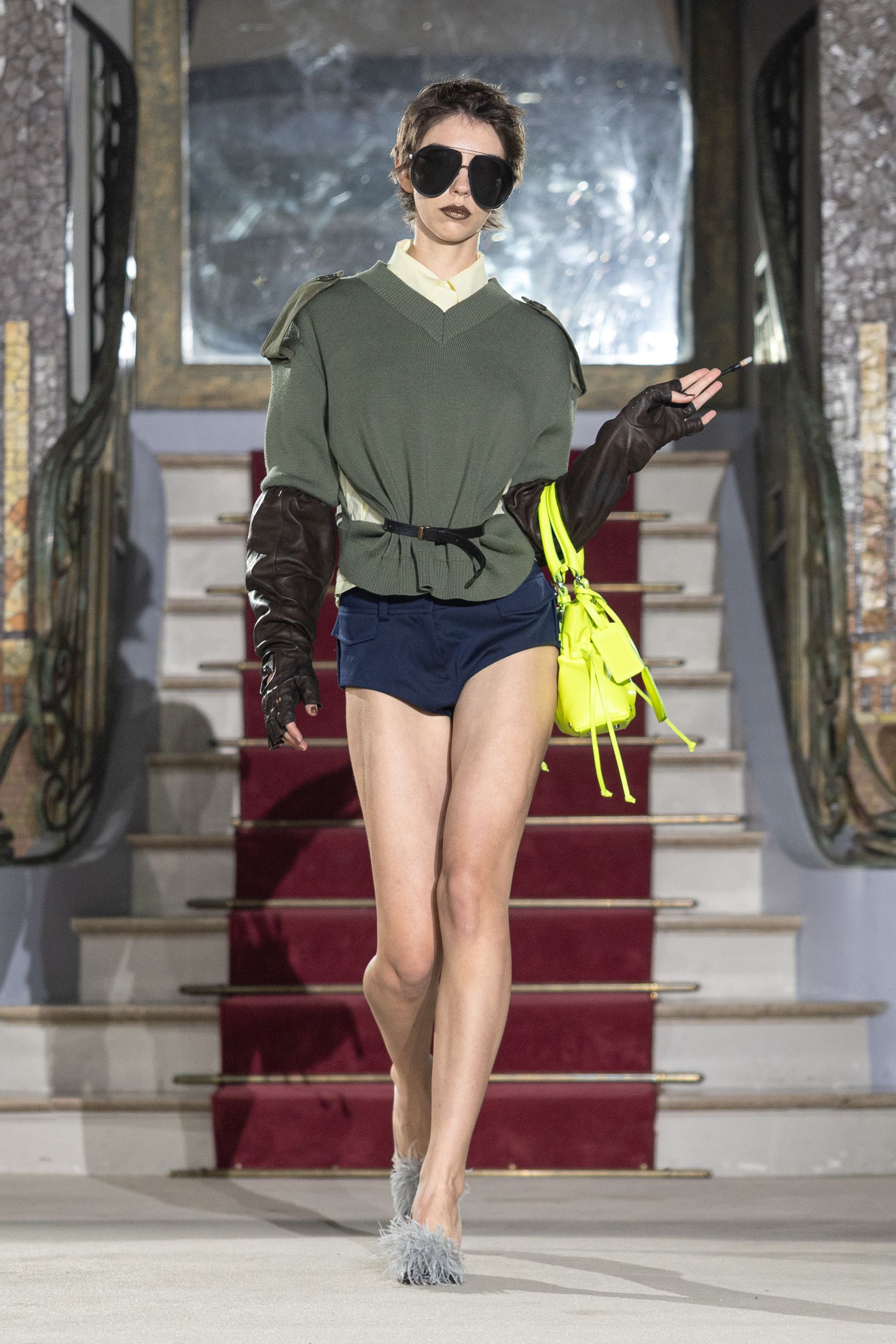
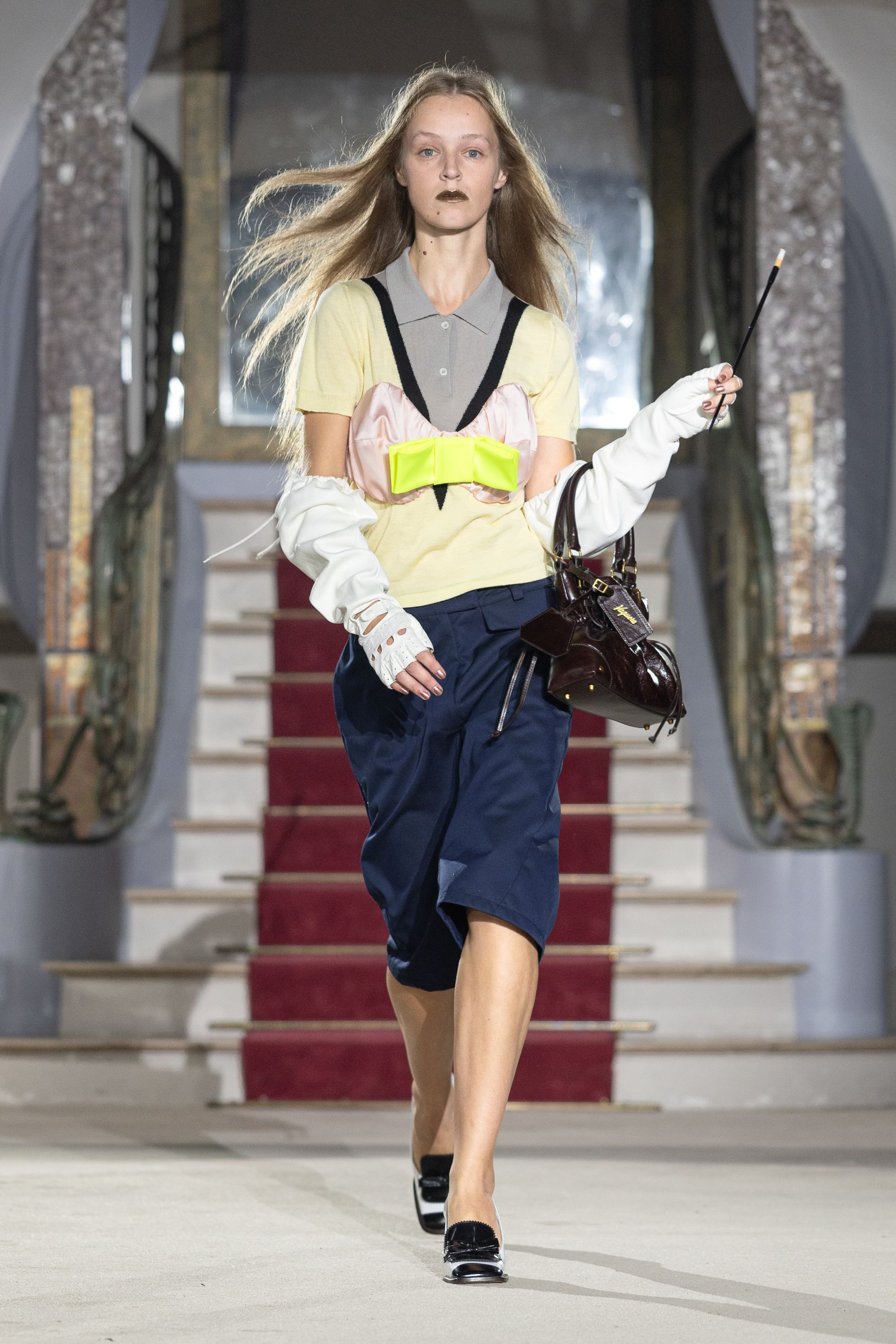
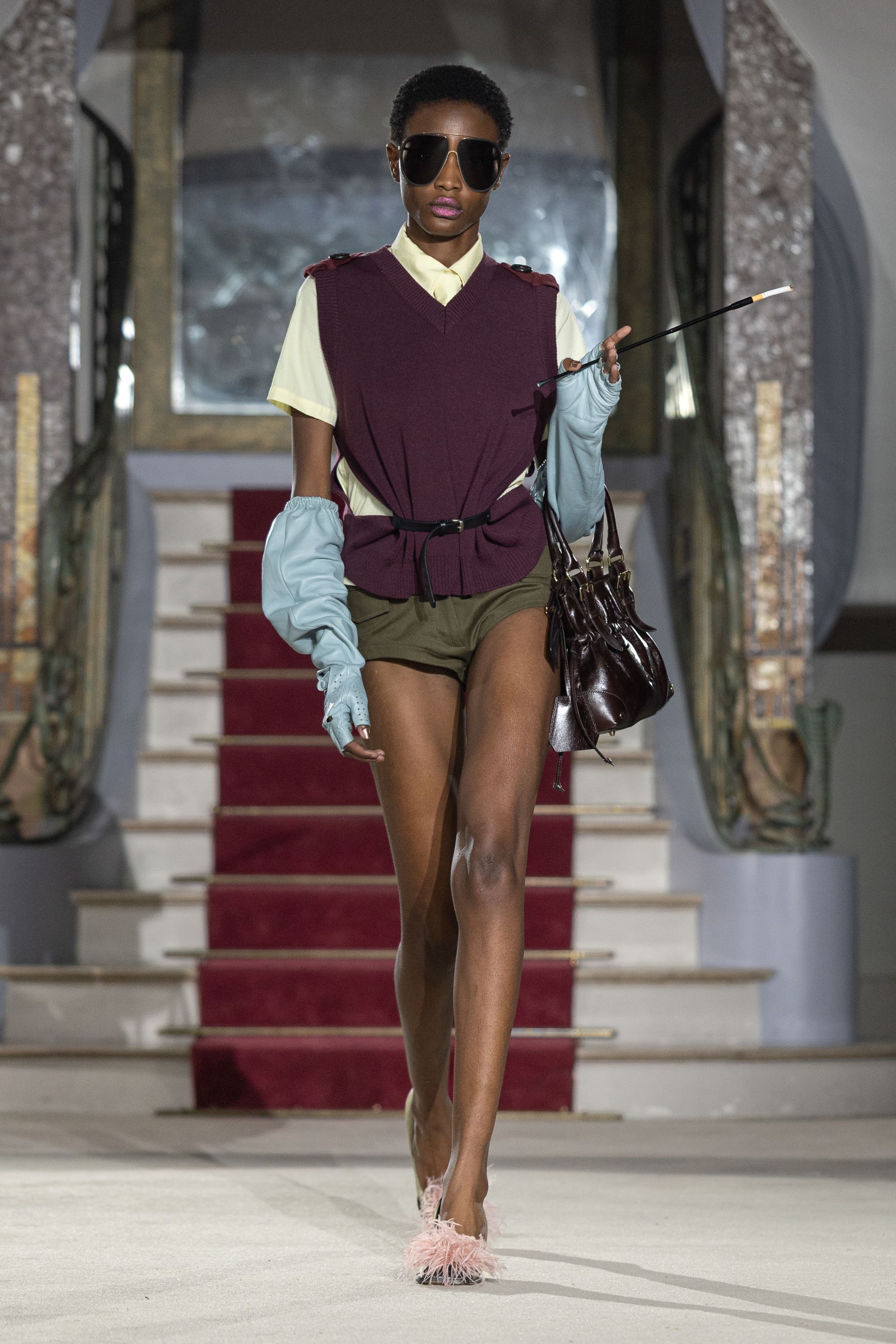
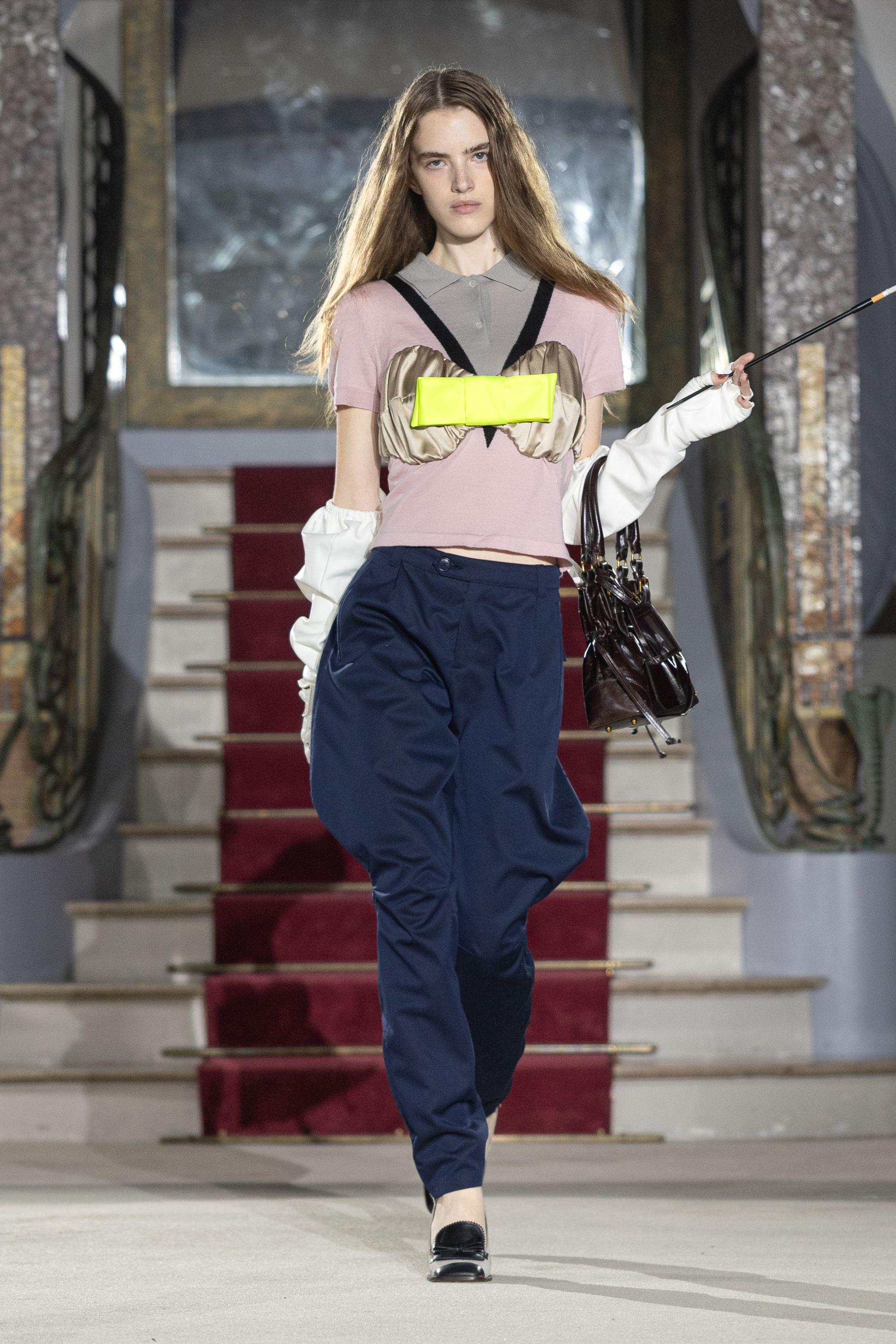
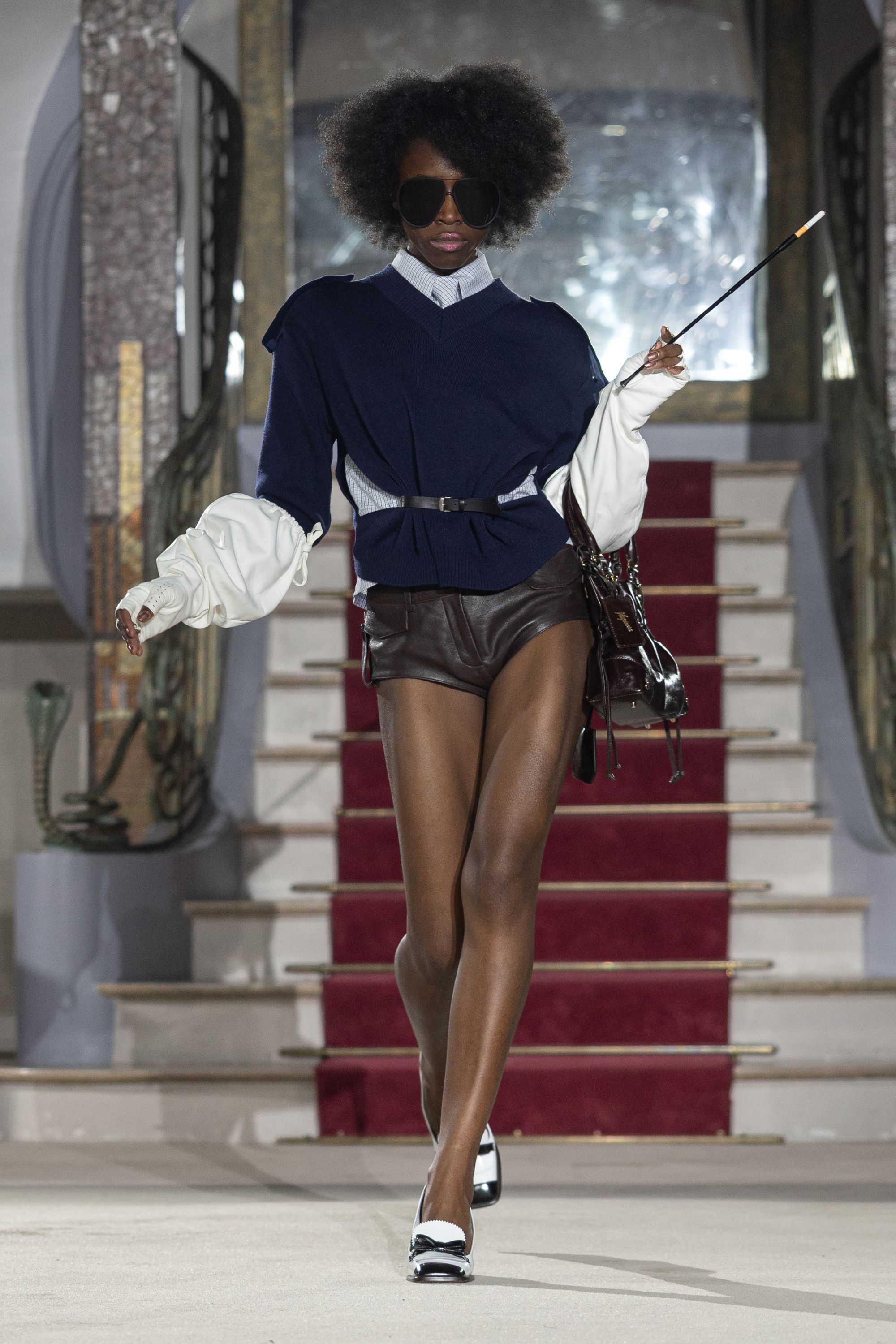
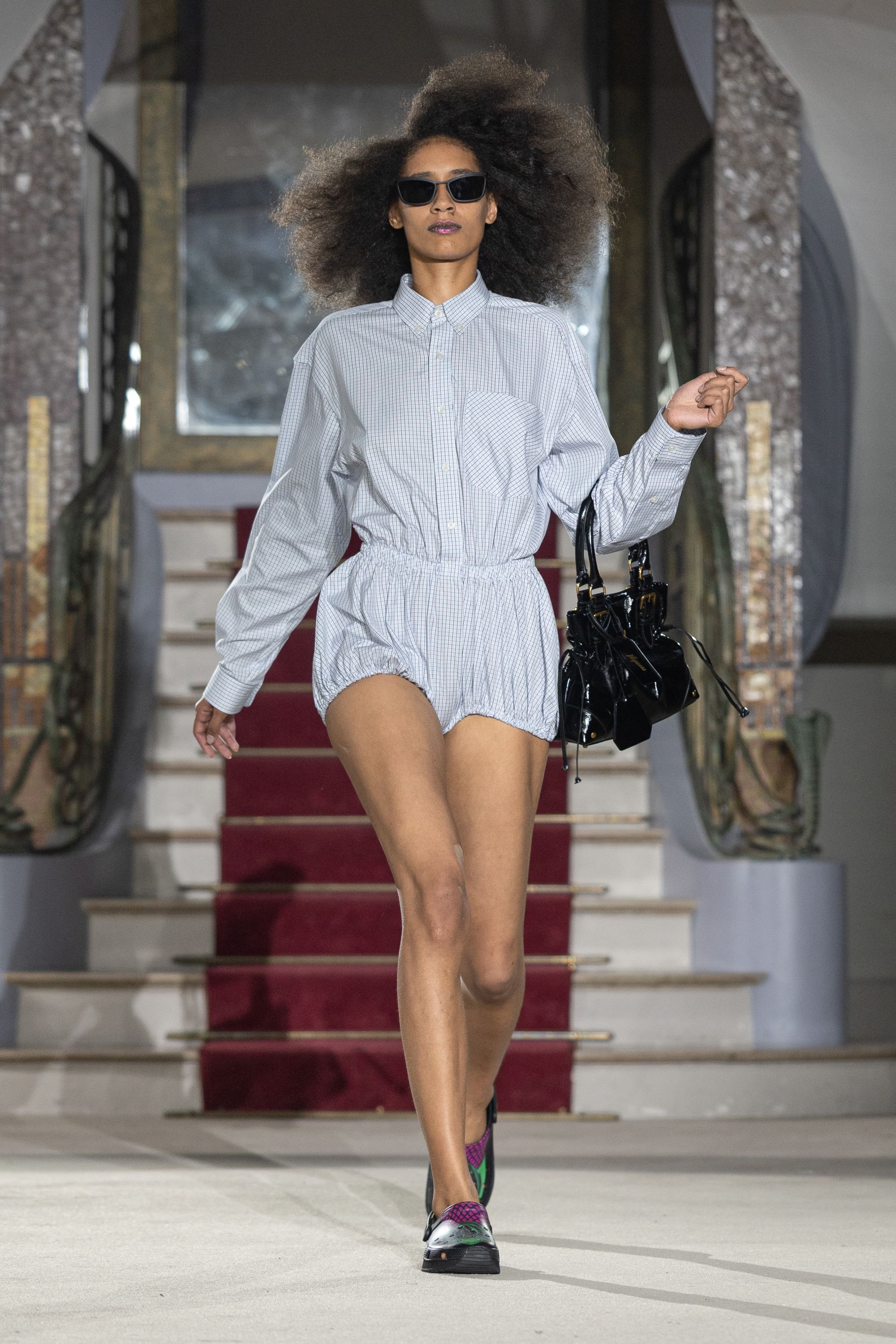
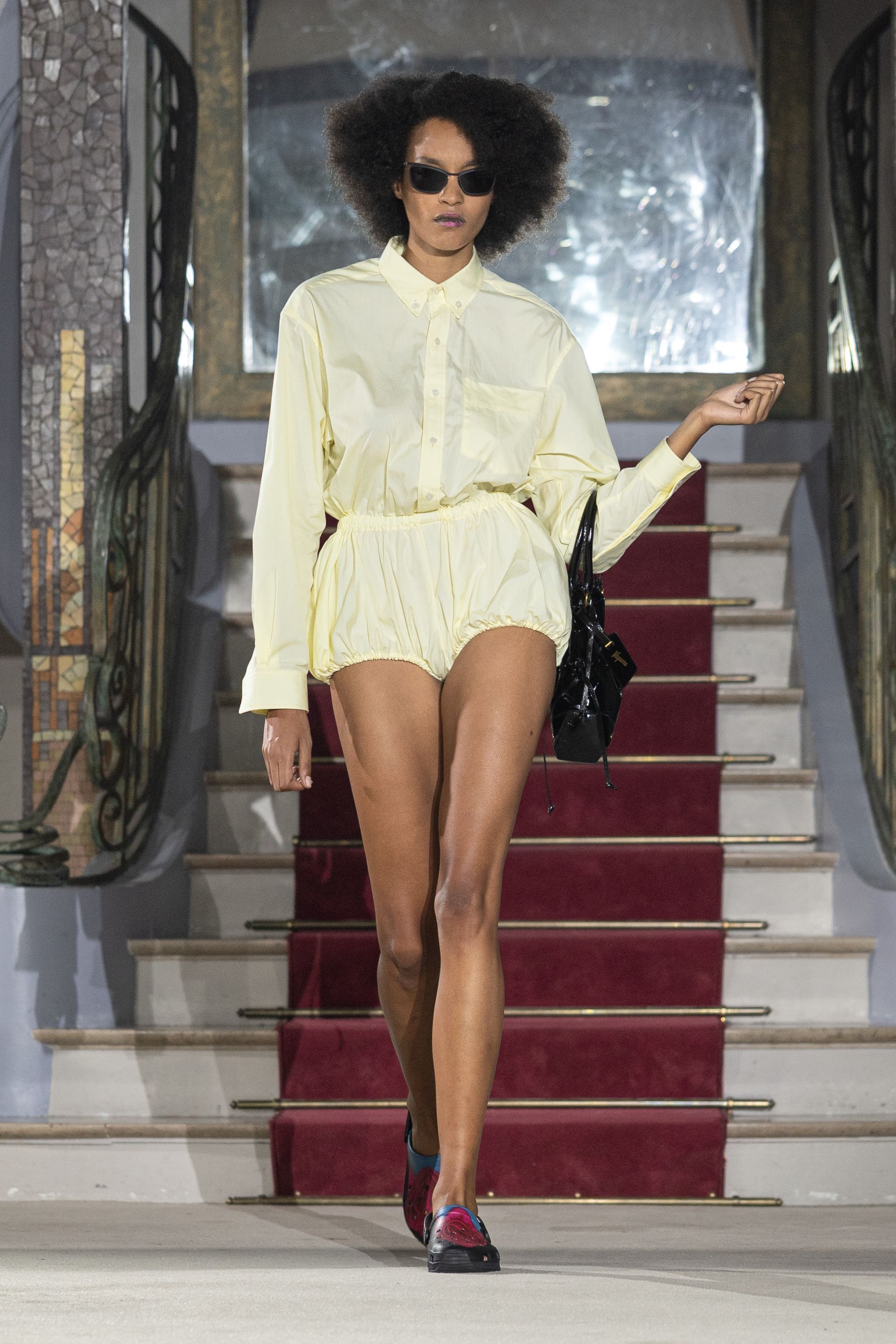
Military severity then yields to a lighter wardrobe featuring games of transparency and an almost bridal delicacy, which nonetheless keeps a thread to the preceding sequence through tough leather pieces like oversized jackets. The martial attire strips down step by step through V-neck sweaters with epaulets, leather cuffs, and mask-like XXL aviator sunglasses. Yet one detail disrupts this disciplined picture - not a missing pair of trousers, but the sudden appearance of a neon handbag, a subtle first nod to the show's finale. This neon motif creeps in with surgical precision. Bralettes are layered over sweaters or blouses, displaying a neon rectangle sewn on like a visible tag - almost a flare. This small patch of bright color reappears as a belt, a bag, and eventually a bow tie.
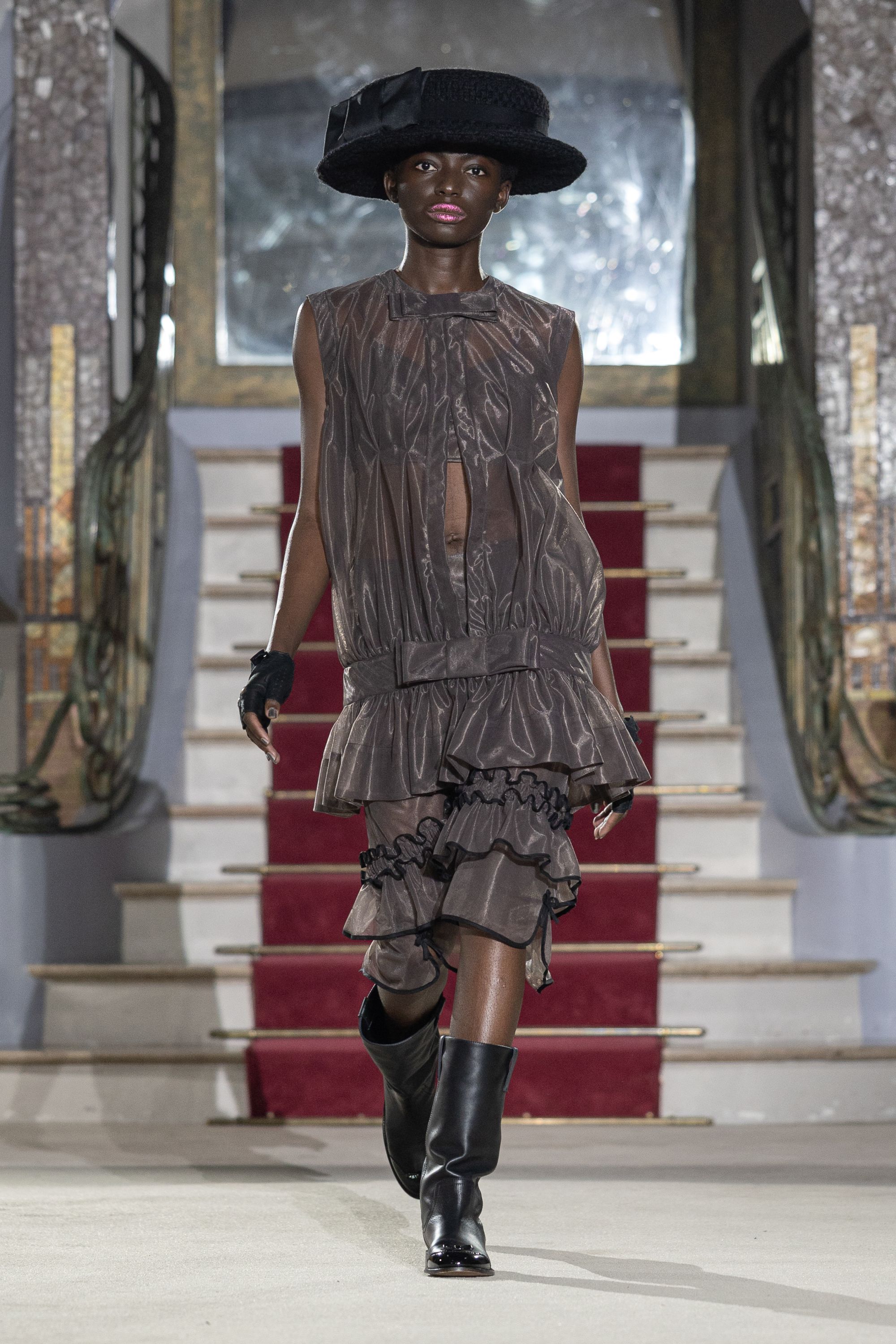
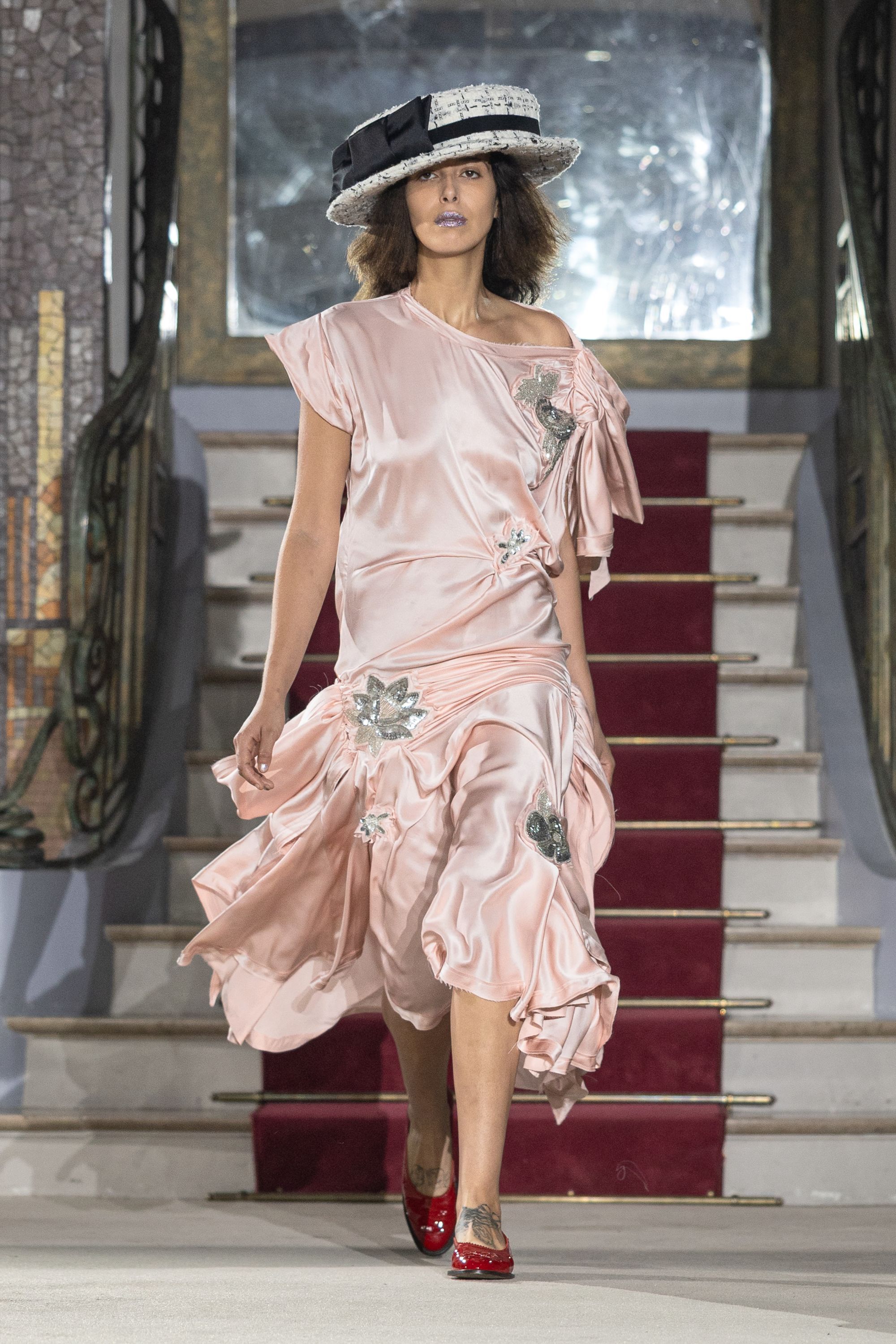
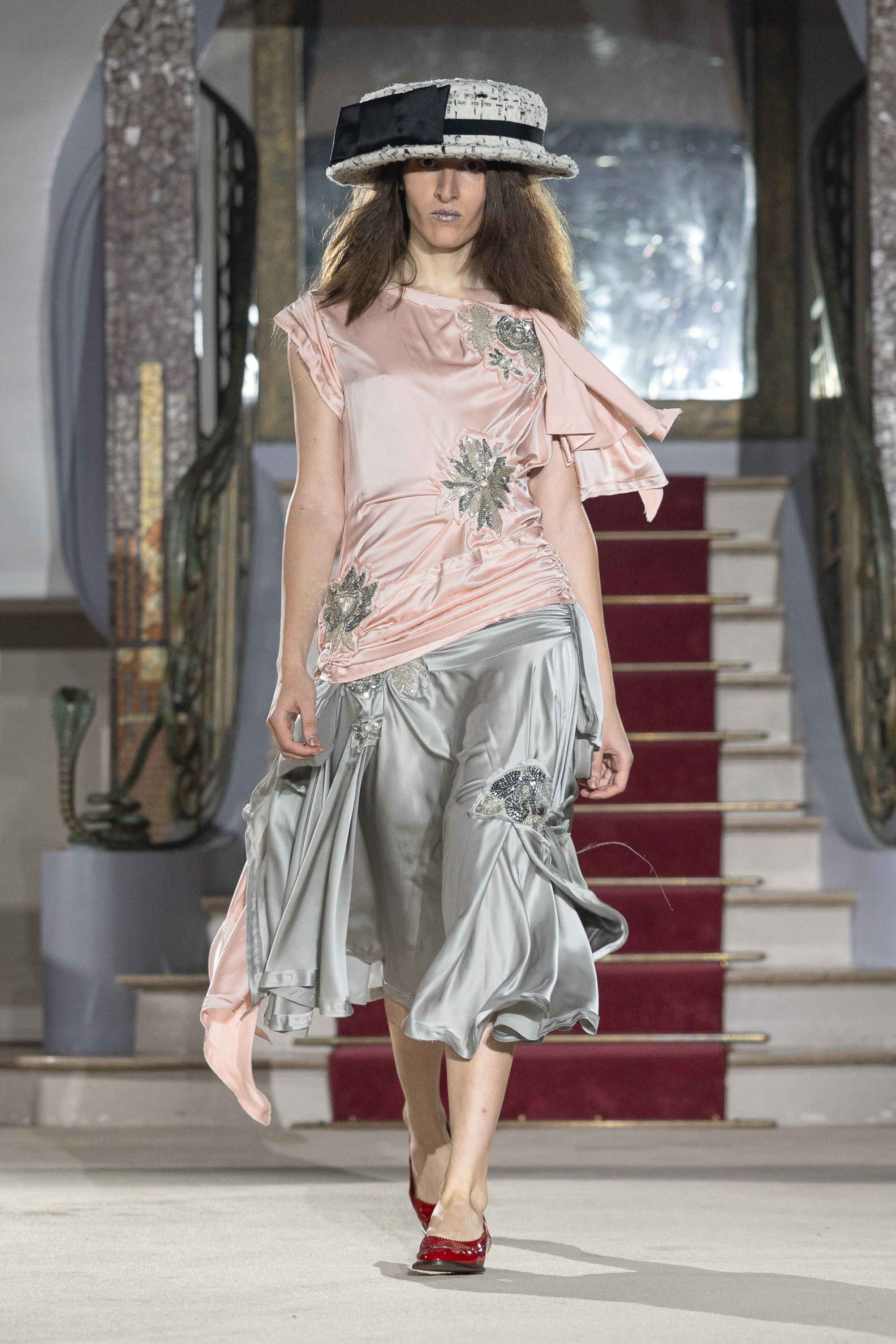
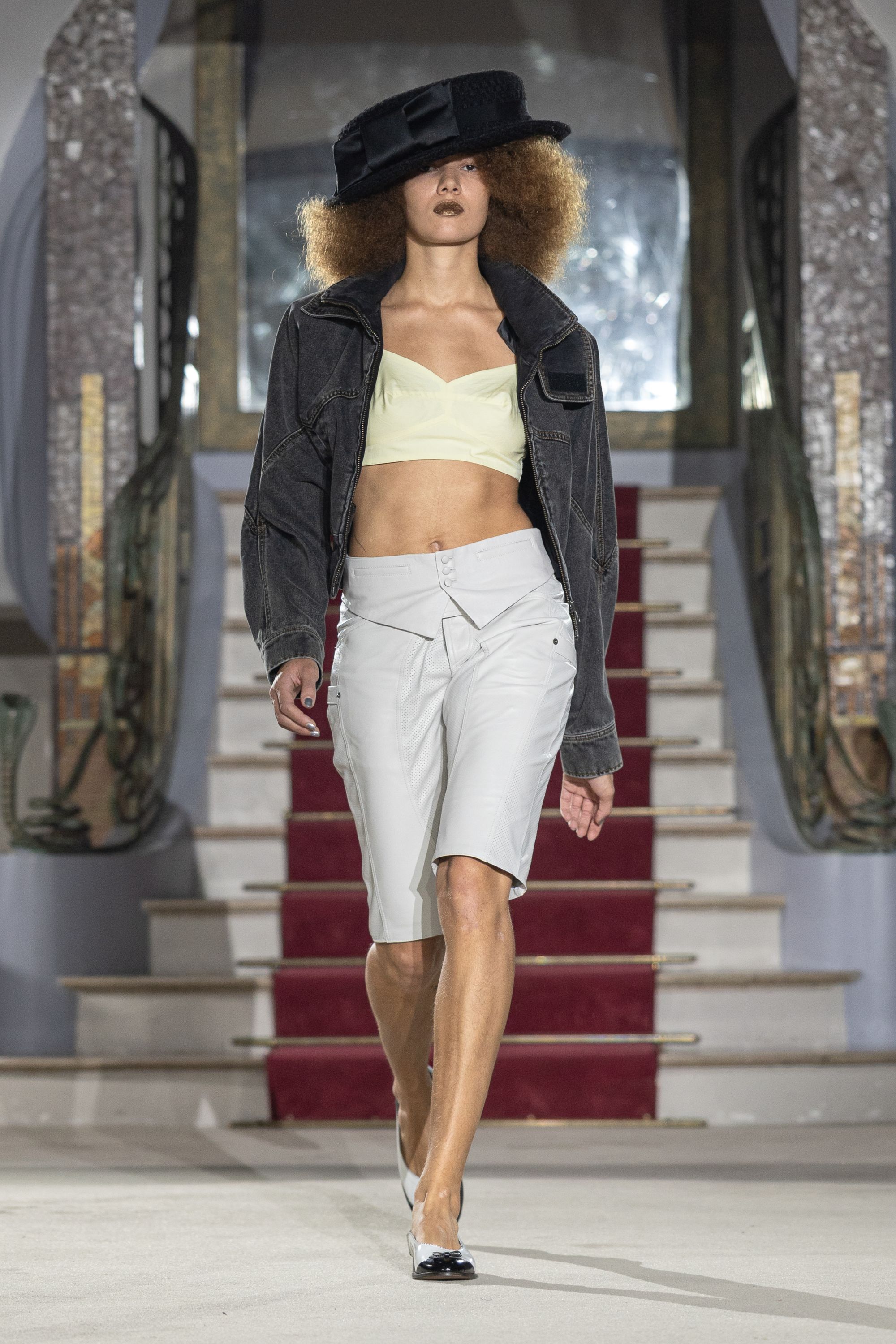
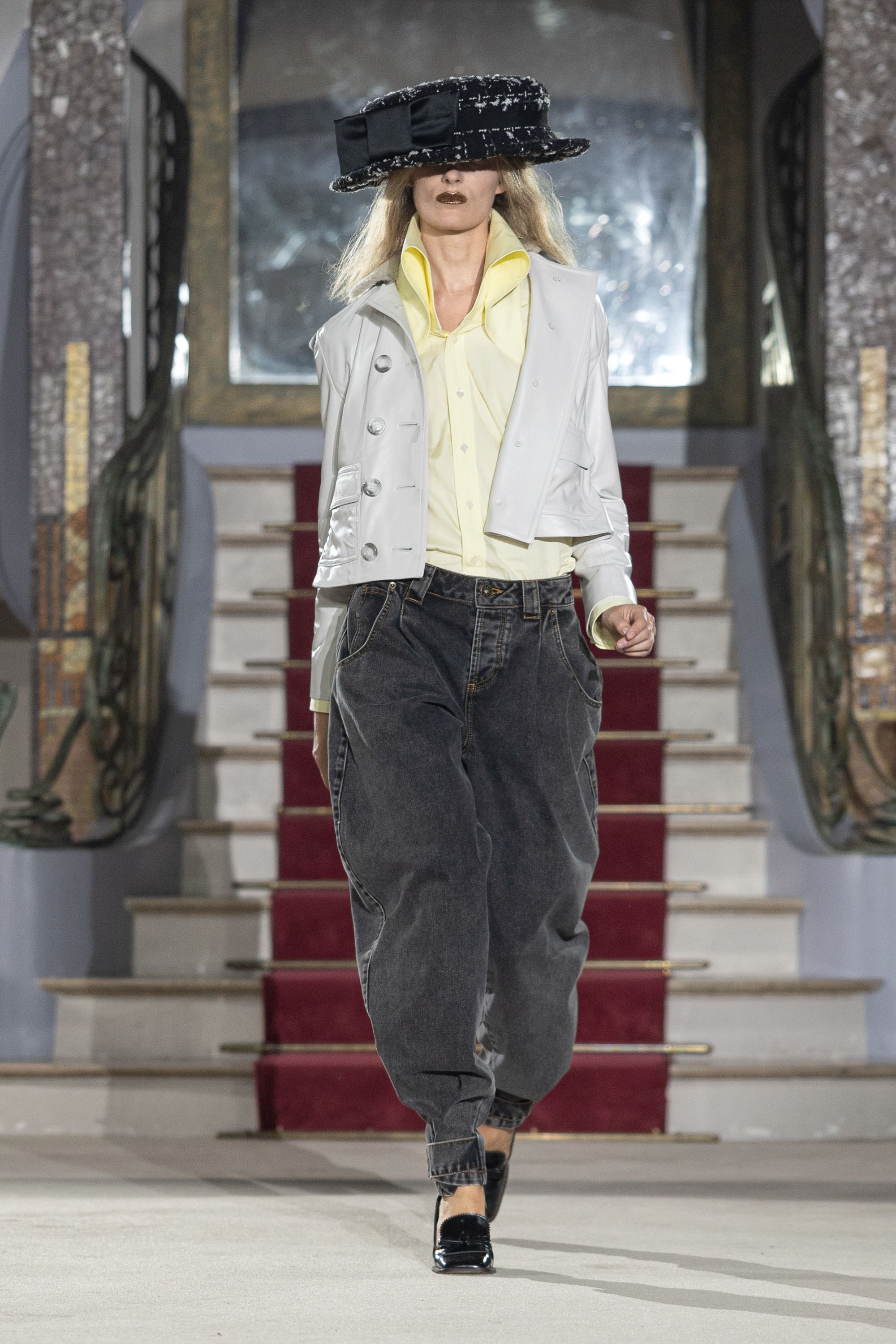
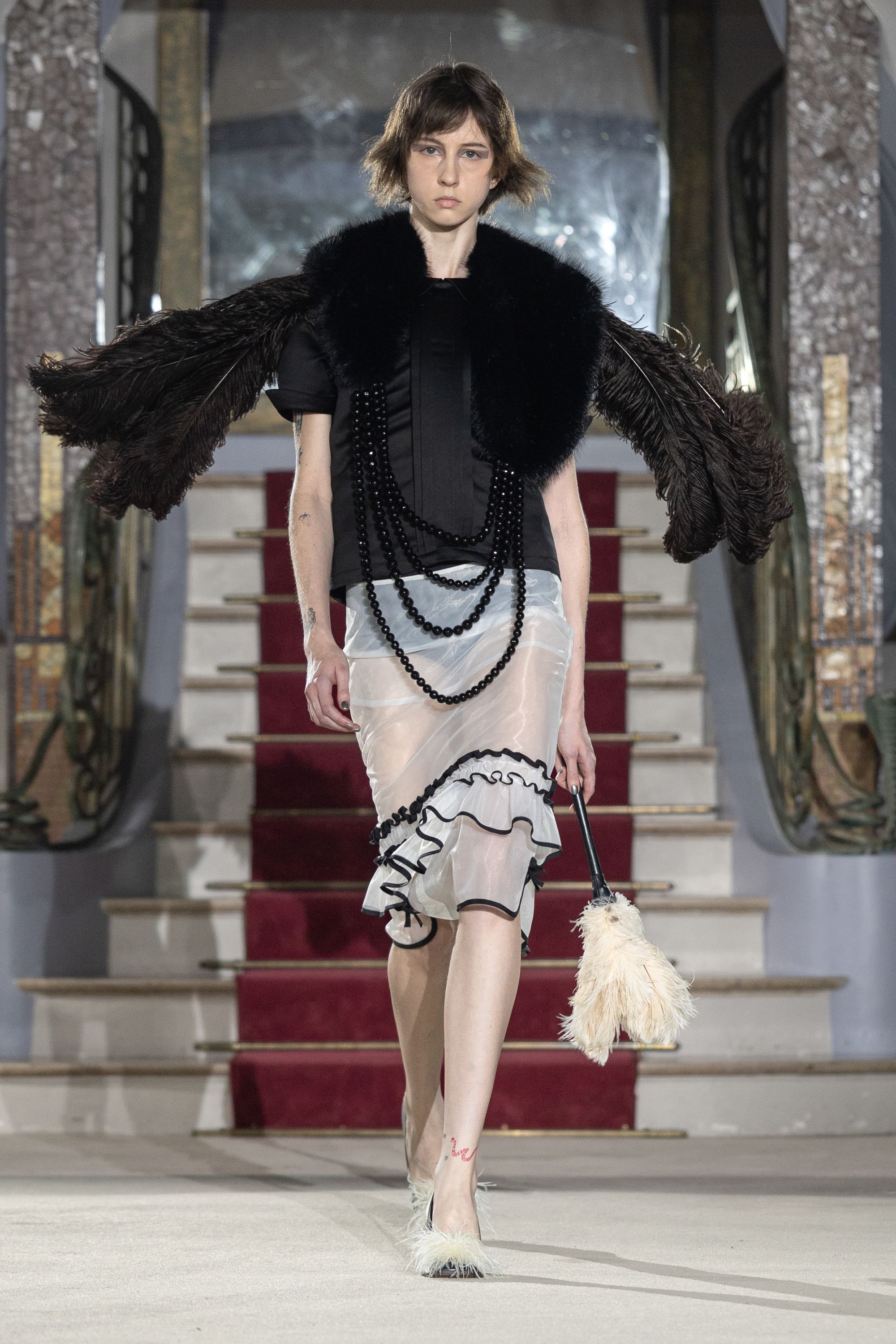
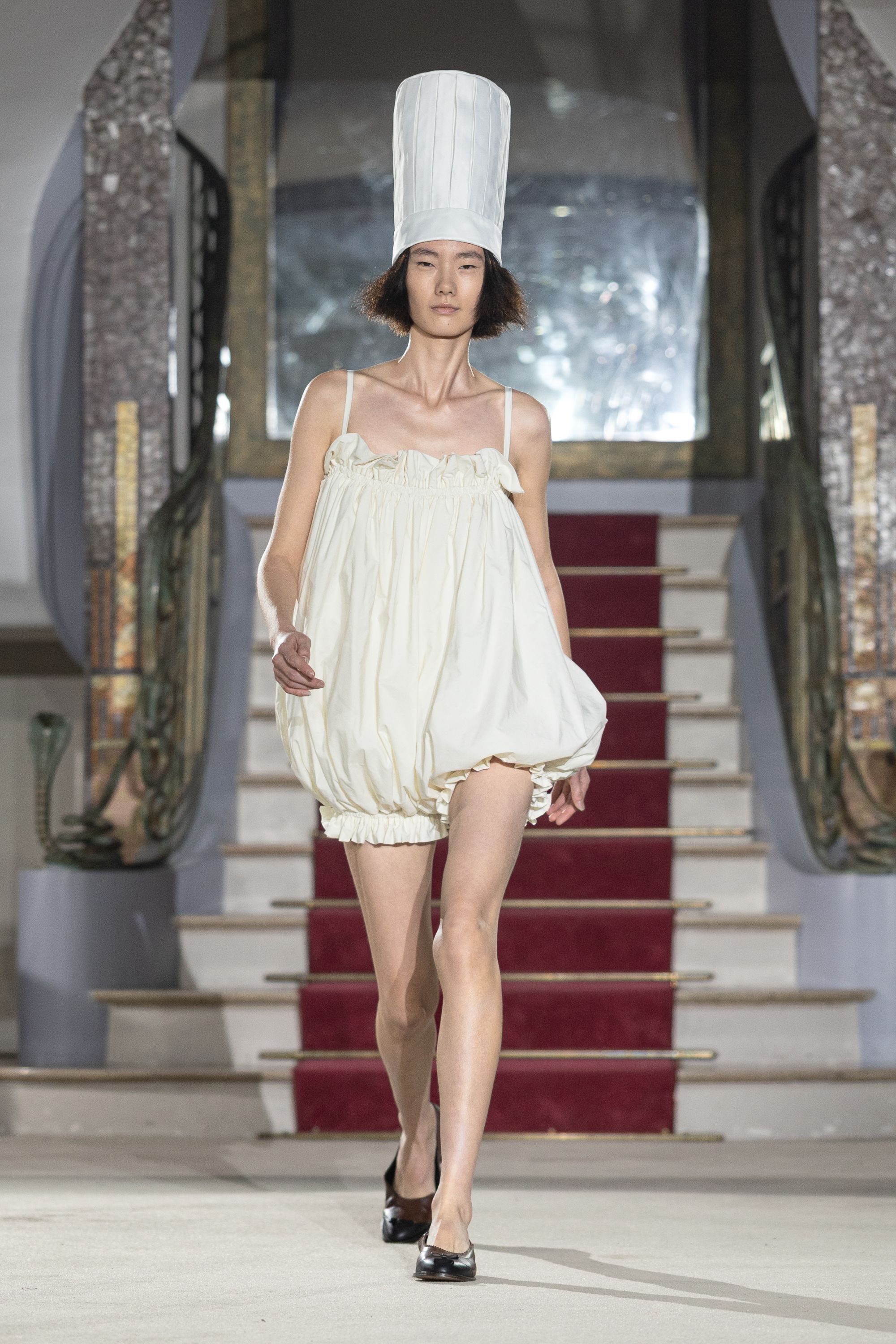
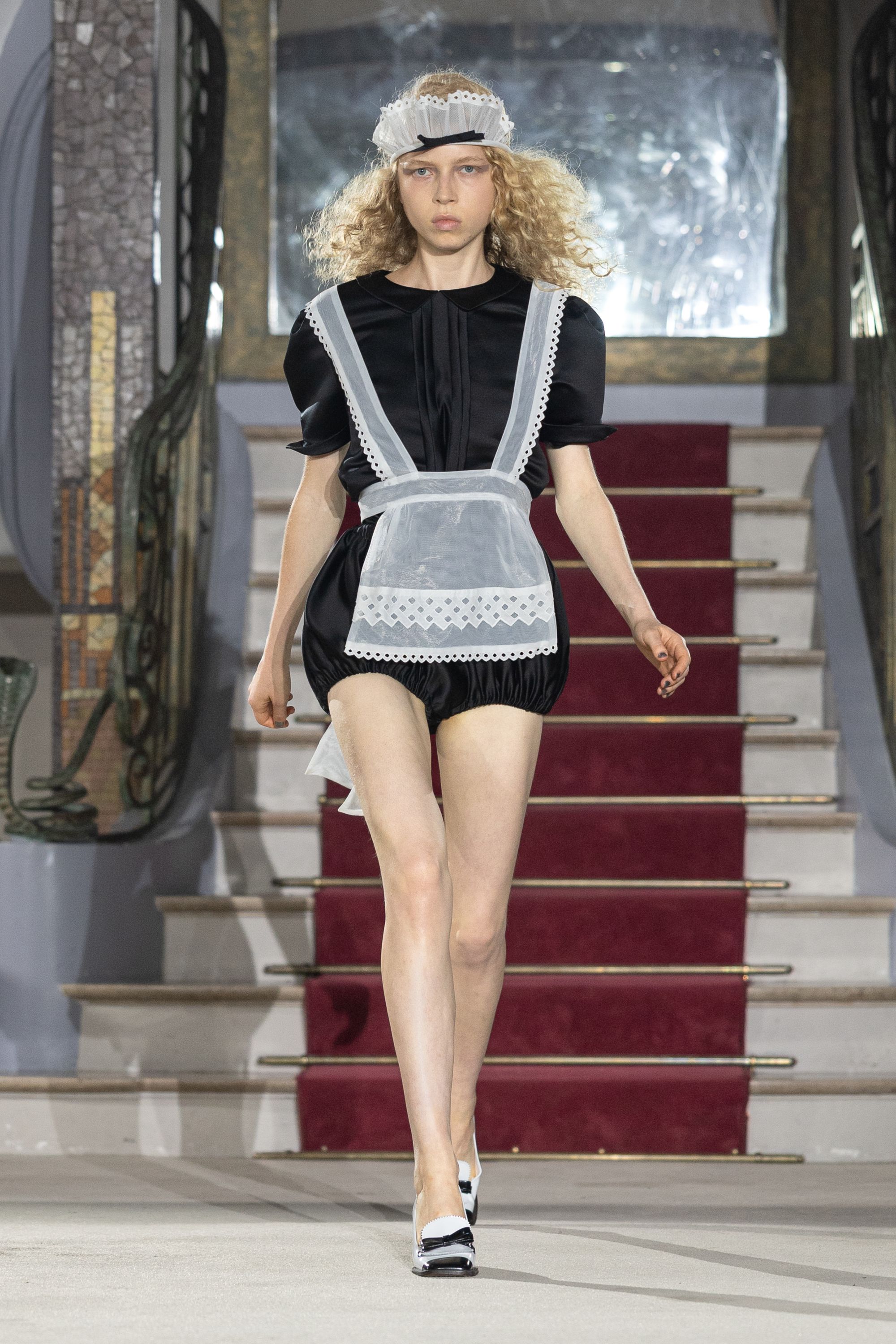
Accessories push the celebration of disproportion even further: tweed boater hats crown the models, worn straight or cocked at an angle. One slips down far enough to obscure half a model’s face. These exaggerated proportions feed into the collection's intentional awkwardness, where nothing feels entirely tamed or controlled. Next, a good dozen looks dive into a 1930s aesthetic, calling to mind an era of opulence and reclaimed freedom. Vintage details like cigar holders and chef hats bring a carnival-like, theatrical dimension to the lineup.
The show reaches its climax with the return of the five opening looks in neon, showcasing remarkable work on volume and draped technique. Then comes the final surprise: the design duo’s live vocal rendition of “I Got You Babe.” Ultimately, it is an exceptionally surprising collection. Beneath the rich layer of references, Vaquera maintains a clear, resonant narrative: offering a powerful statement on the space women choose to occupy and the freedom they claim to make their presence felt.