
The Incomplete Revolution of Matièrés Fécales' SS27 Collection The brand stages its biggest show ever, but the message overshadows the design
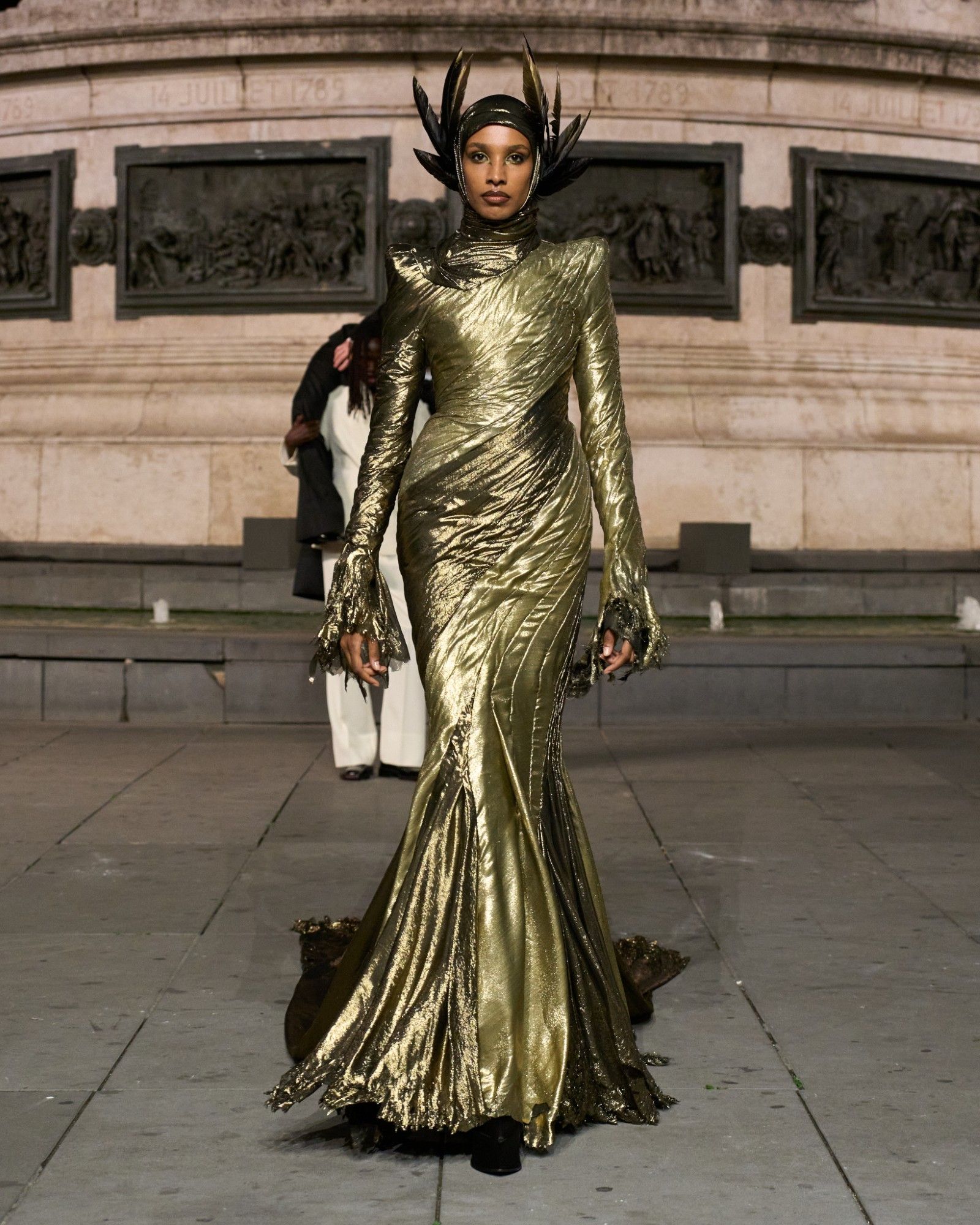
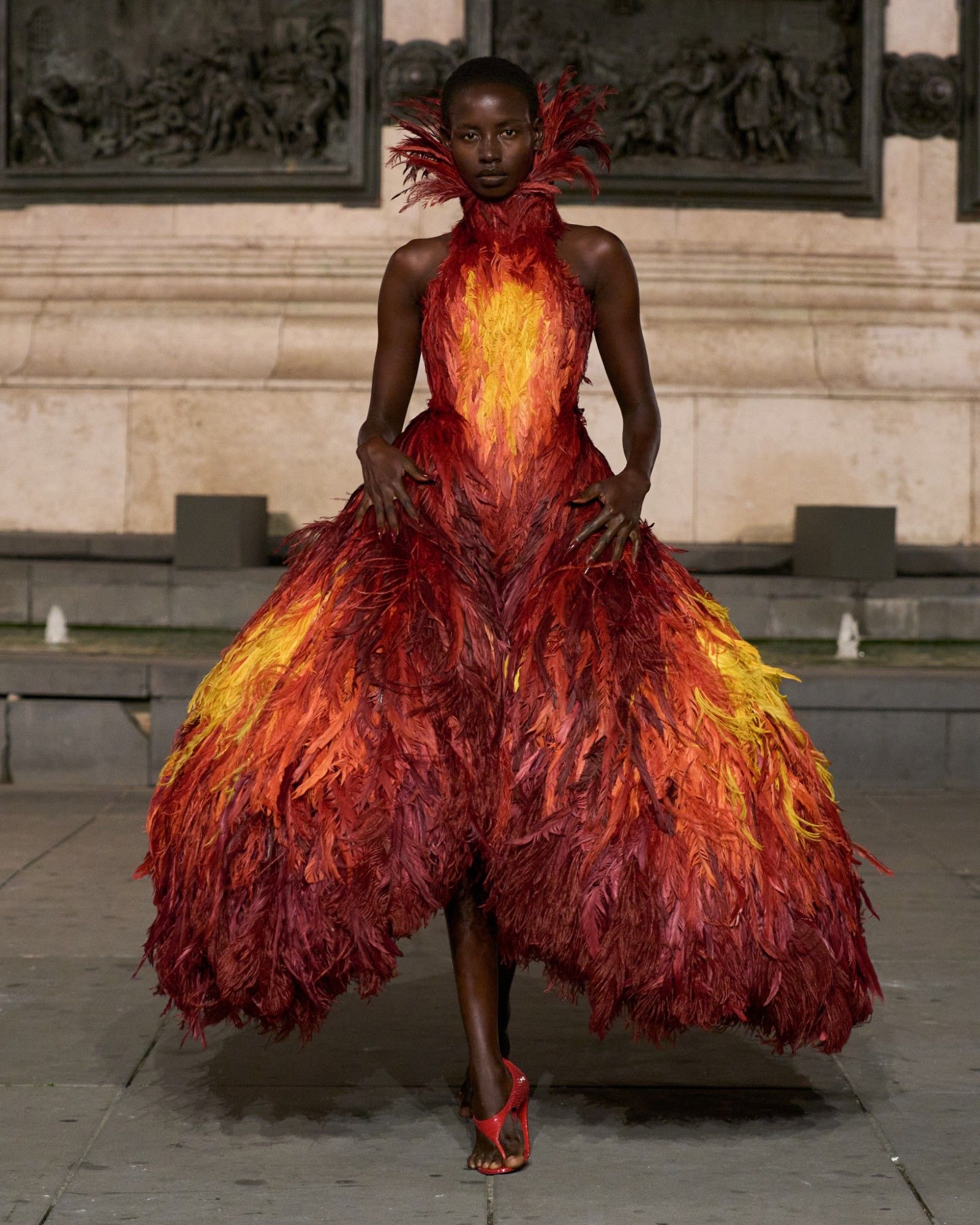
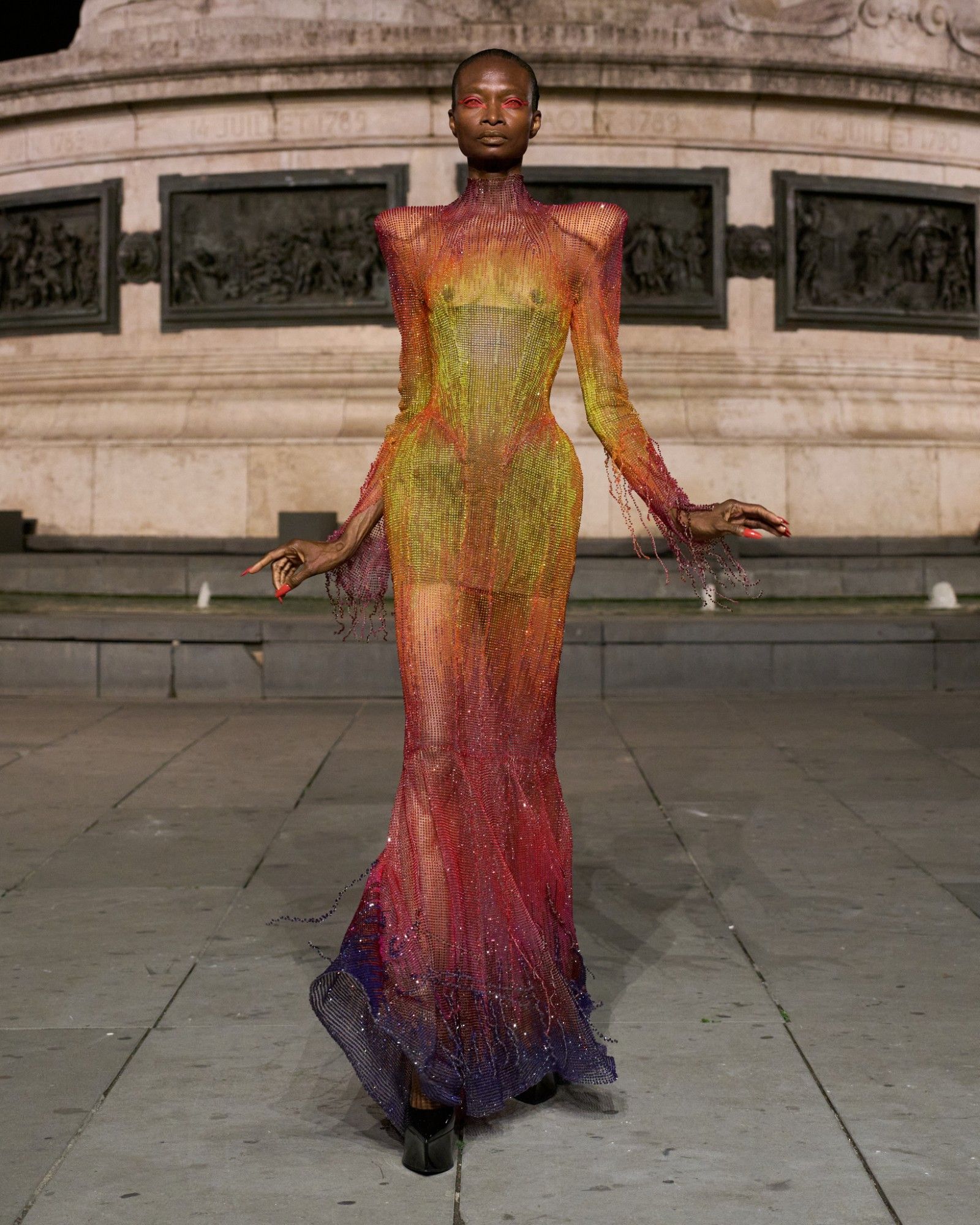
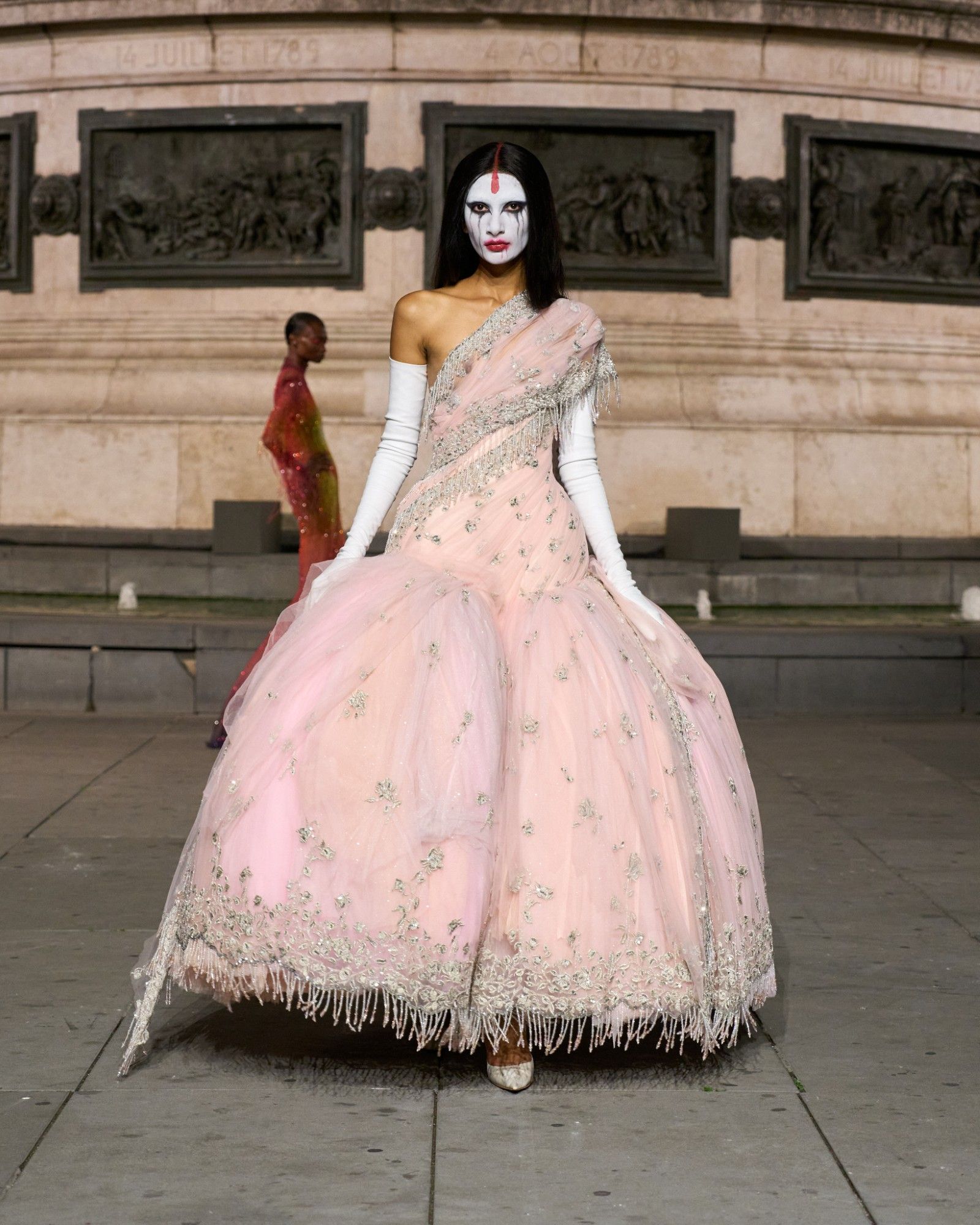
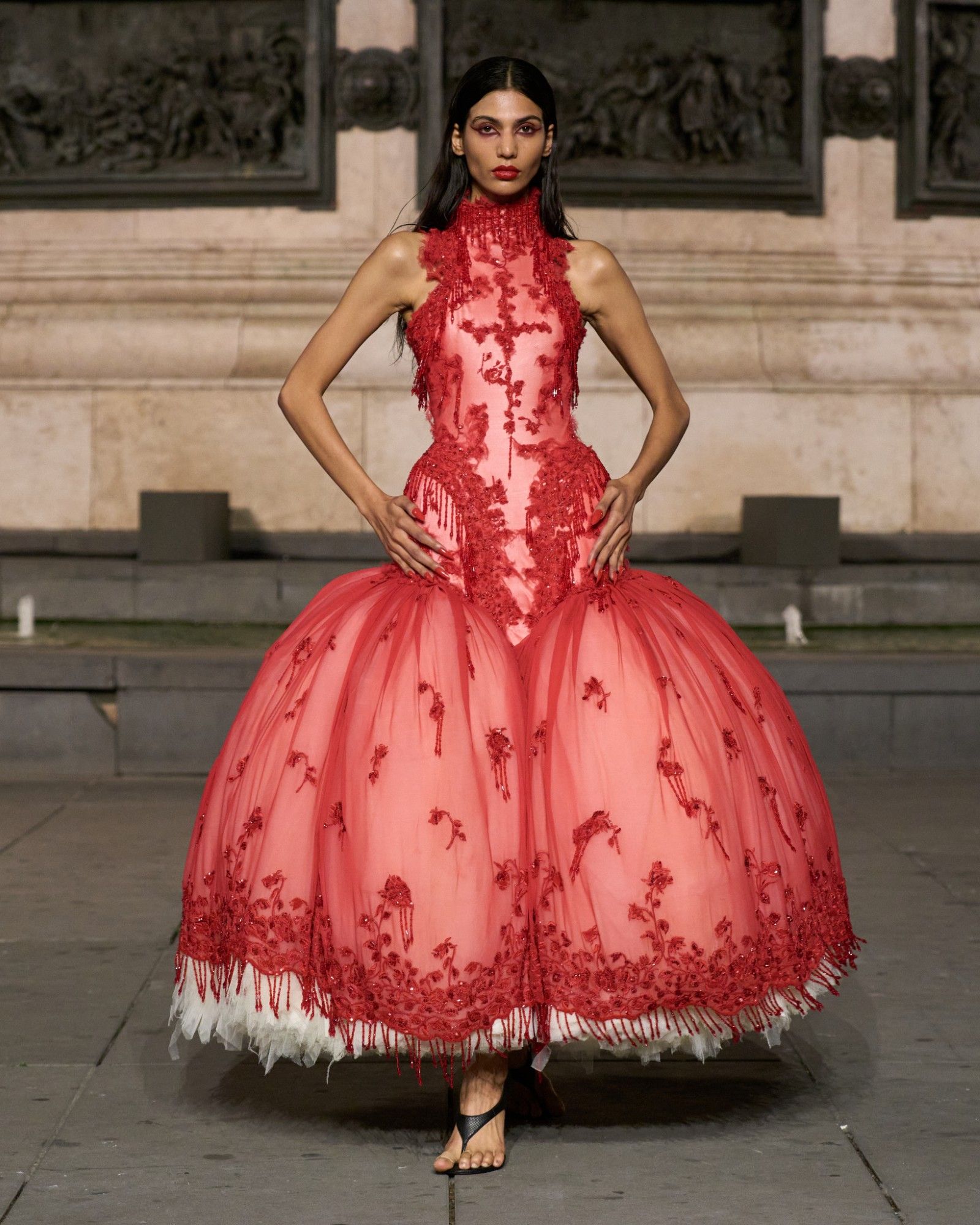
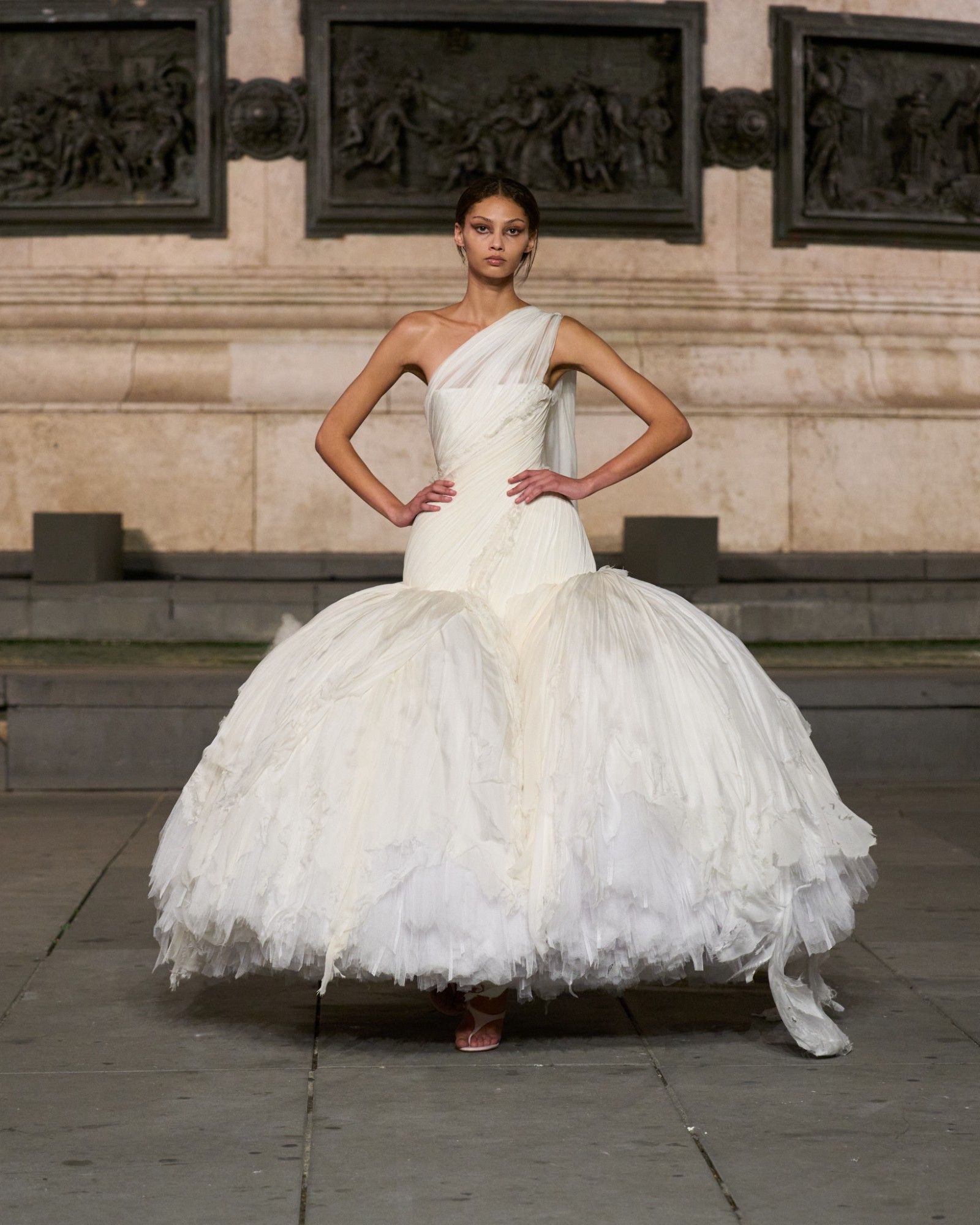
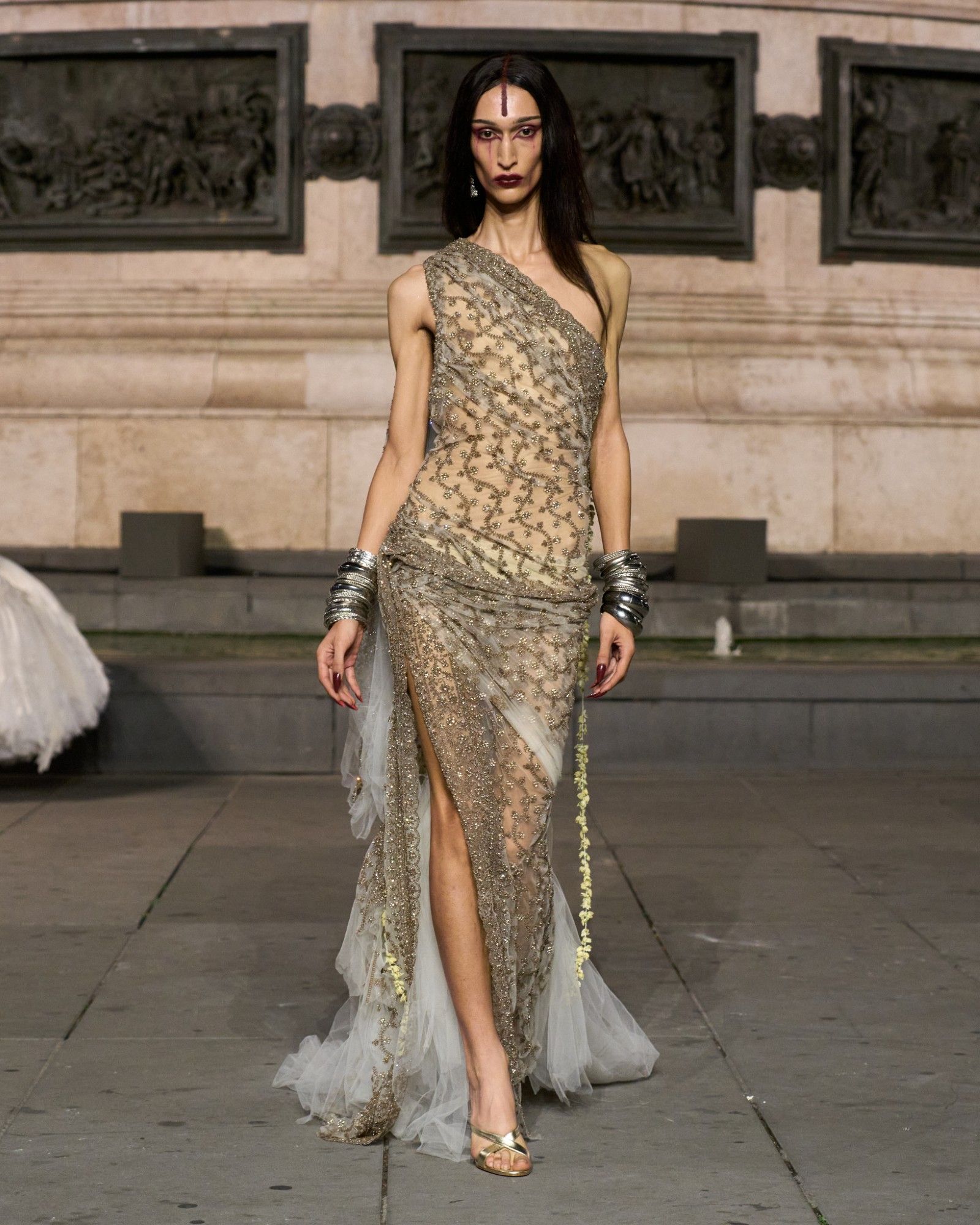
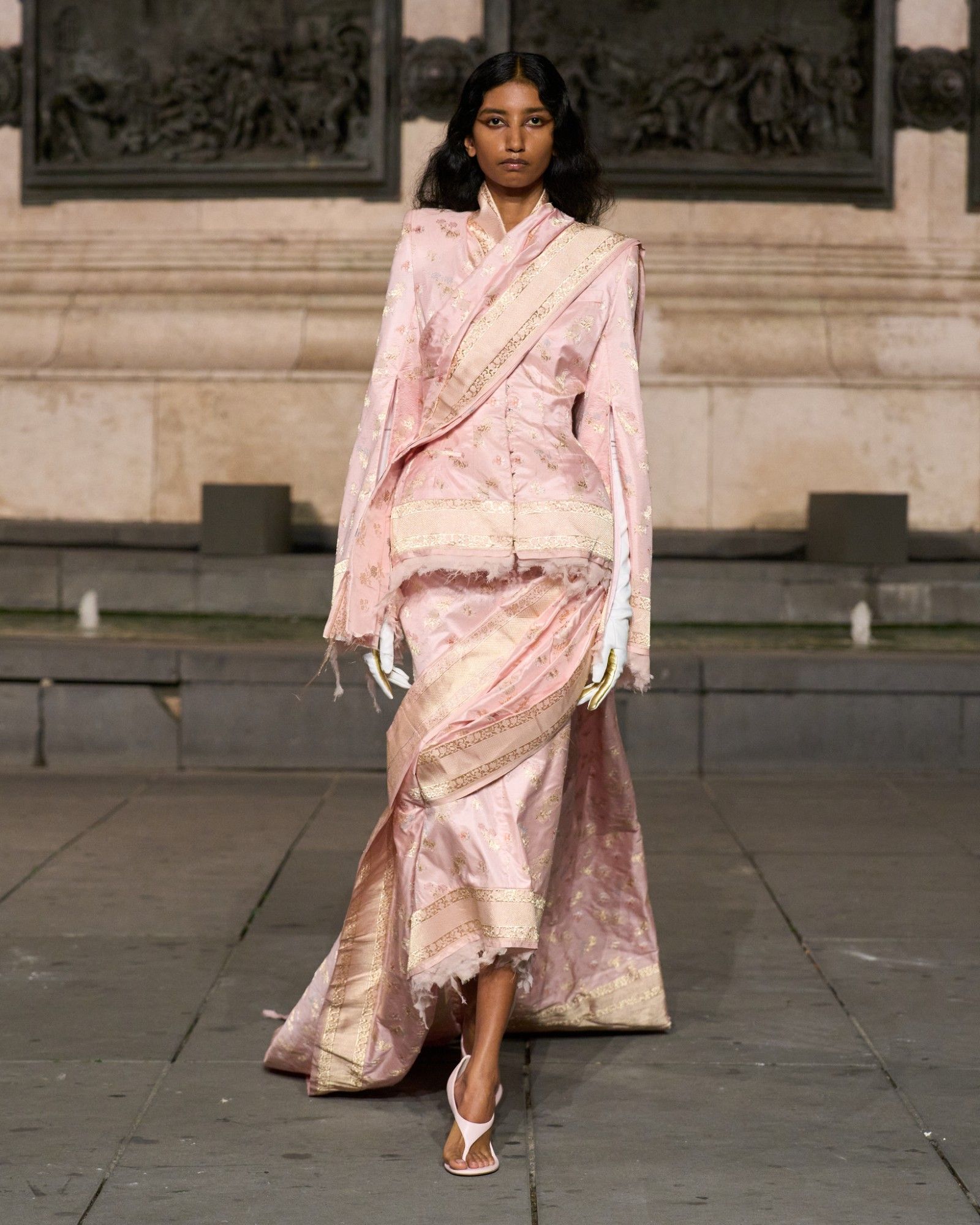
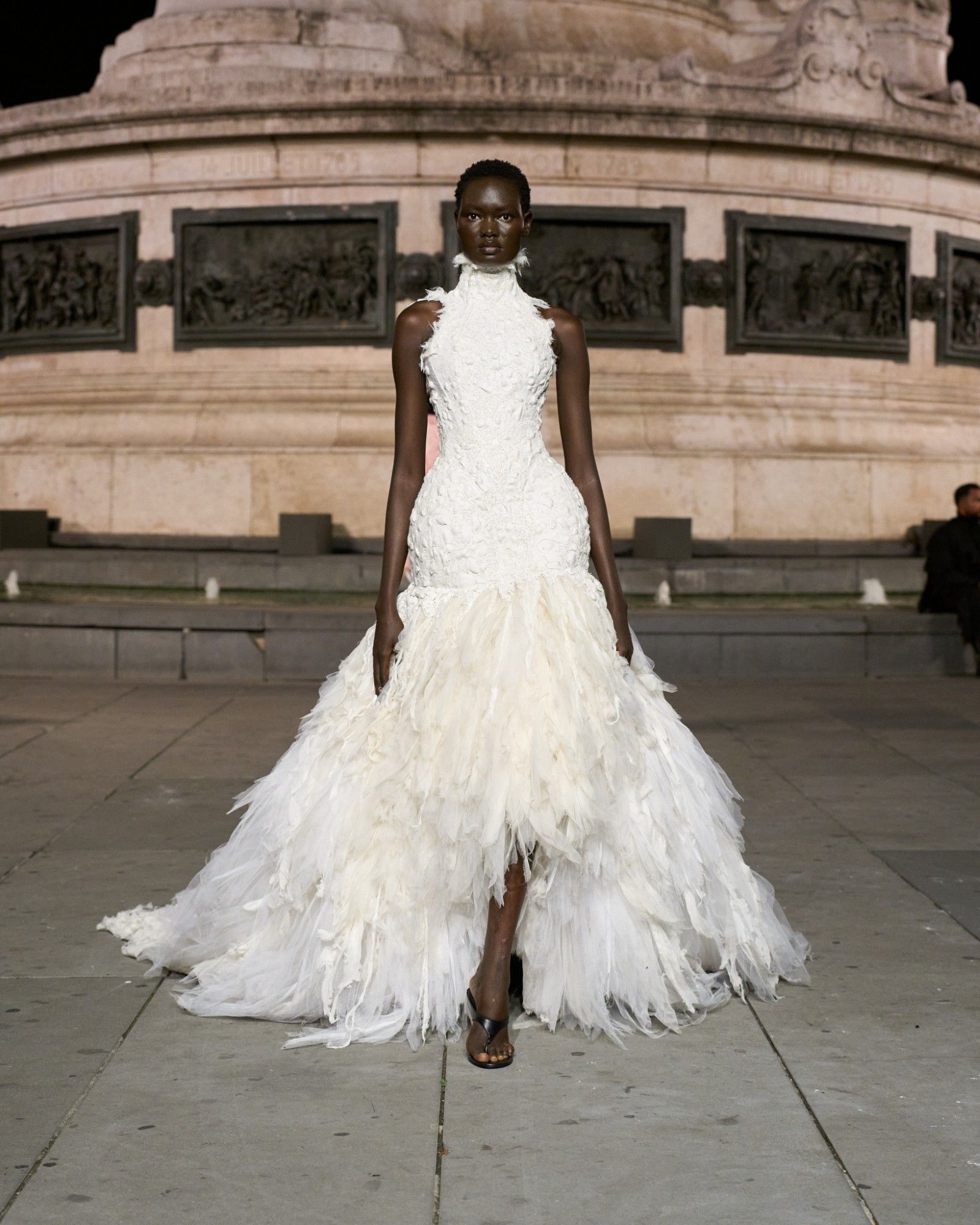
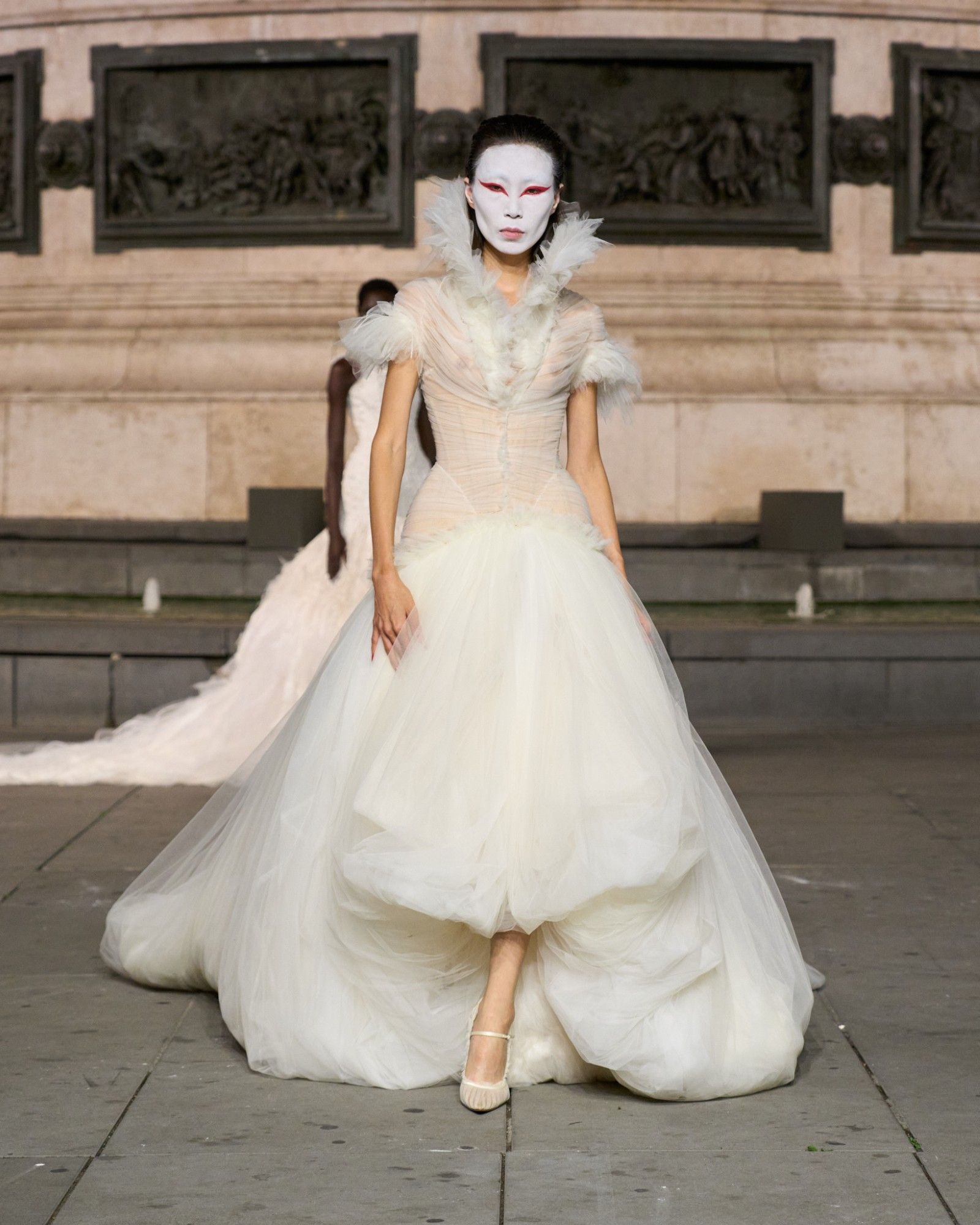
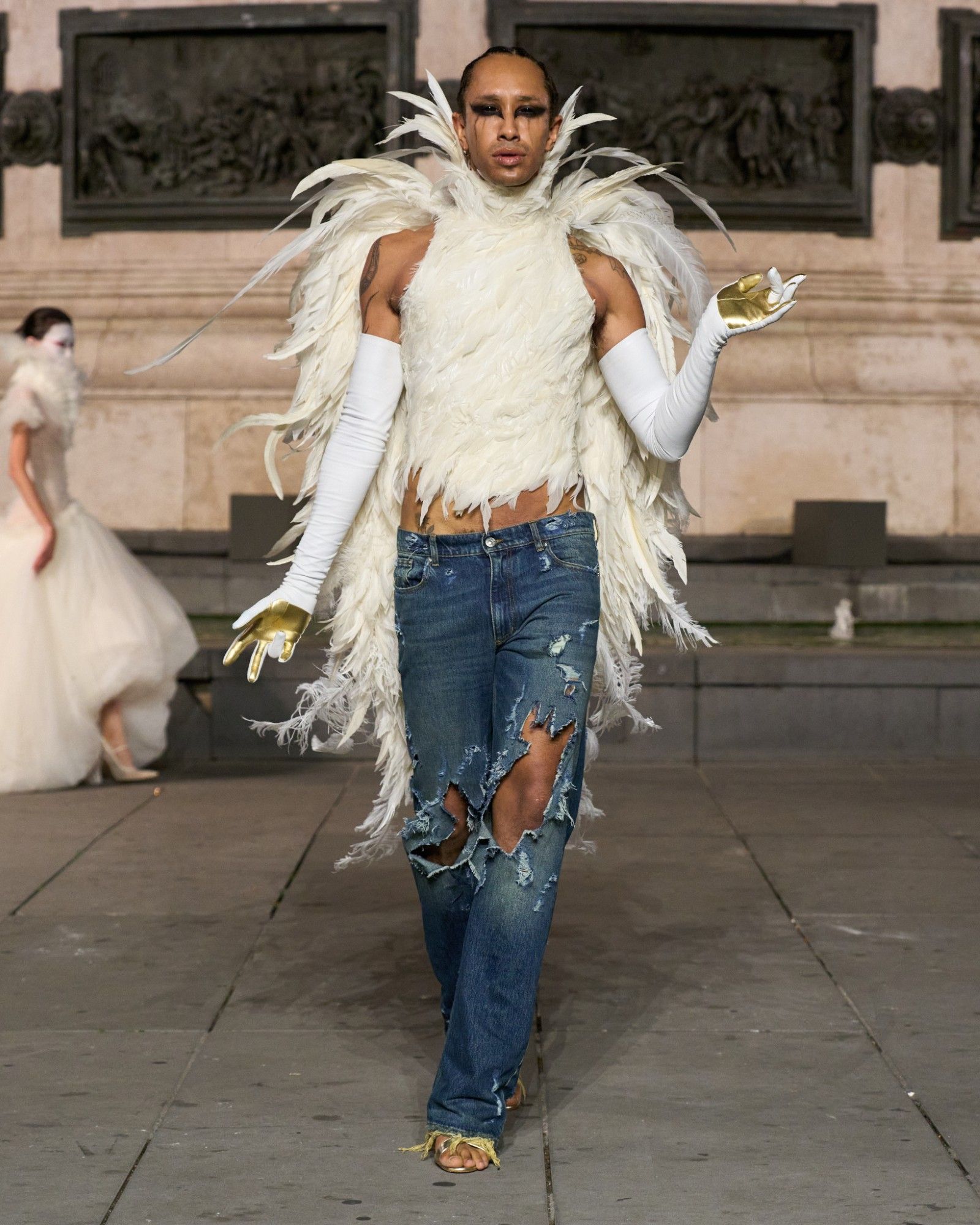
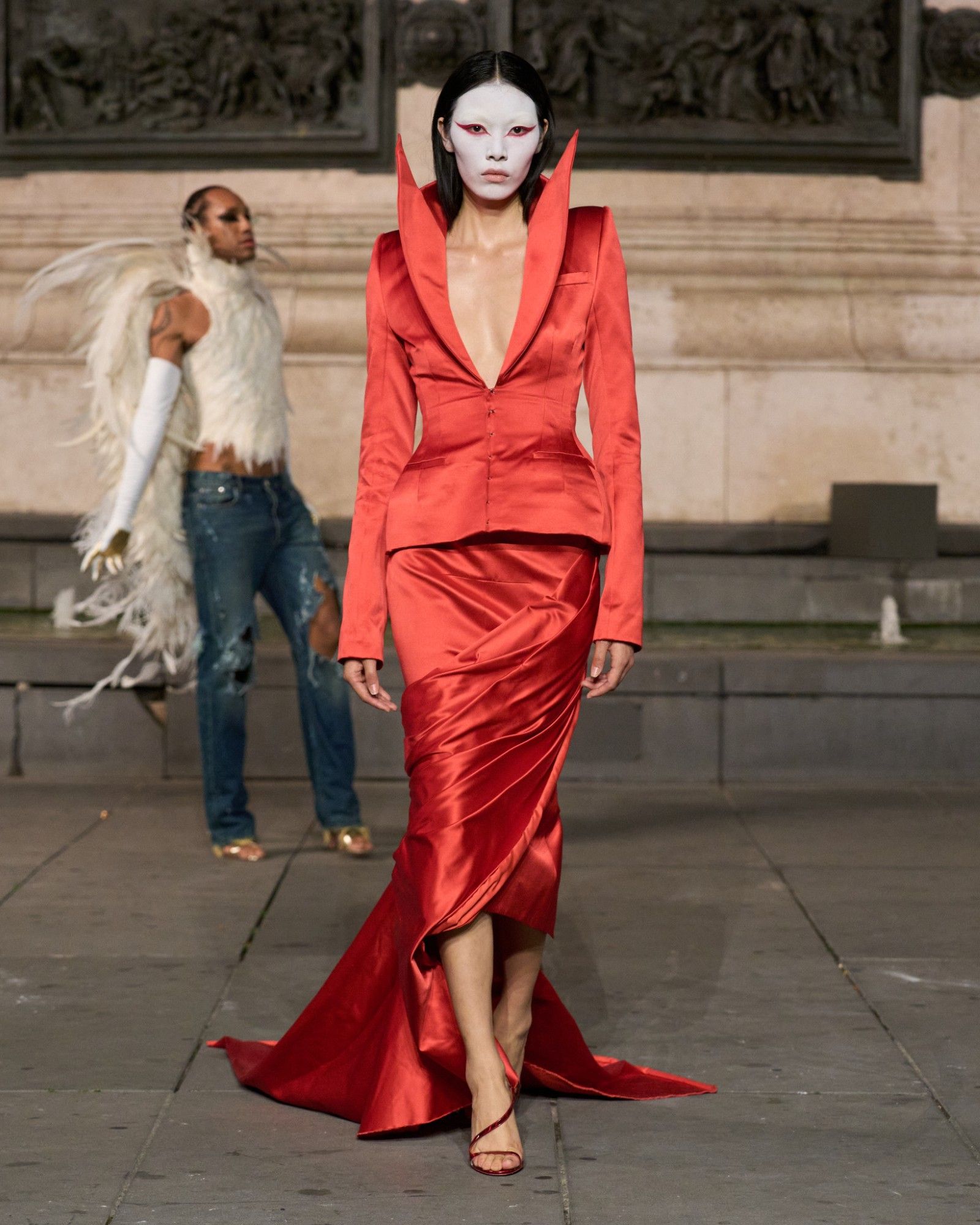
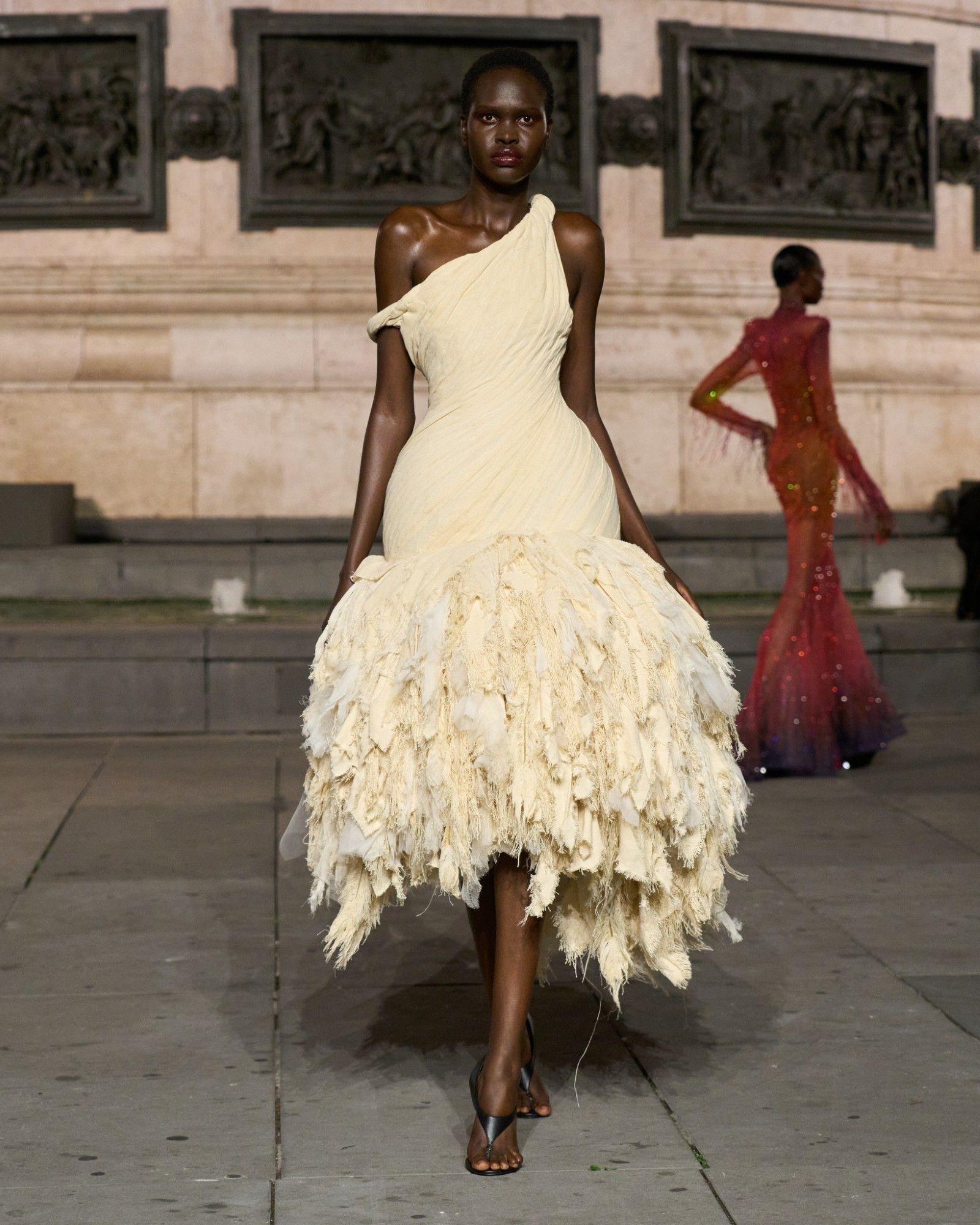
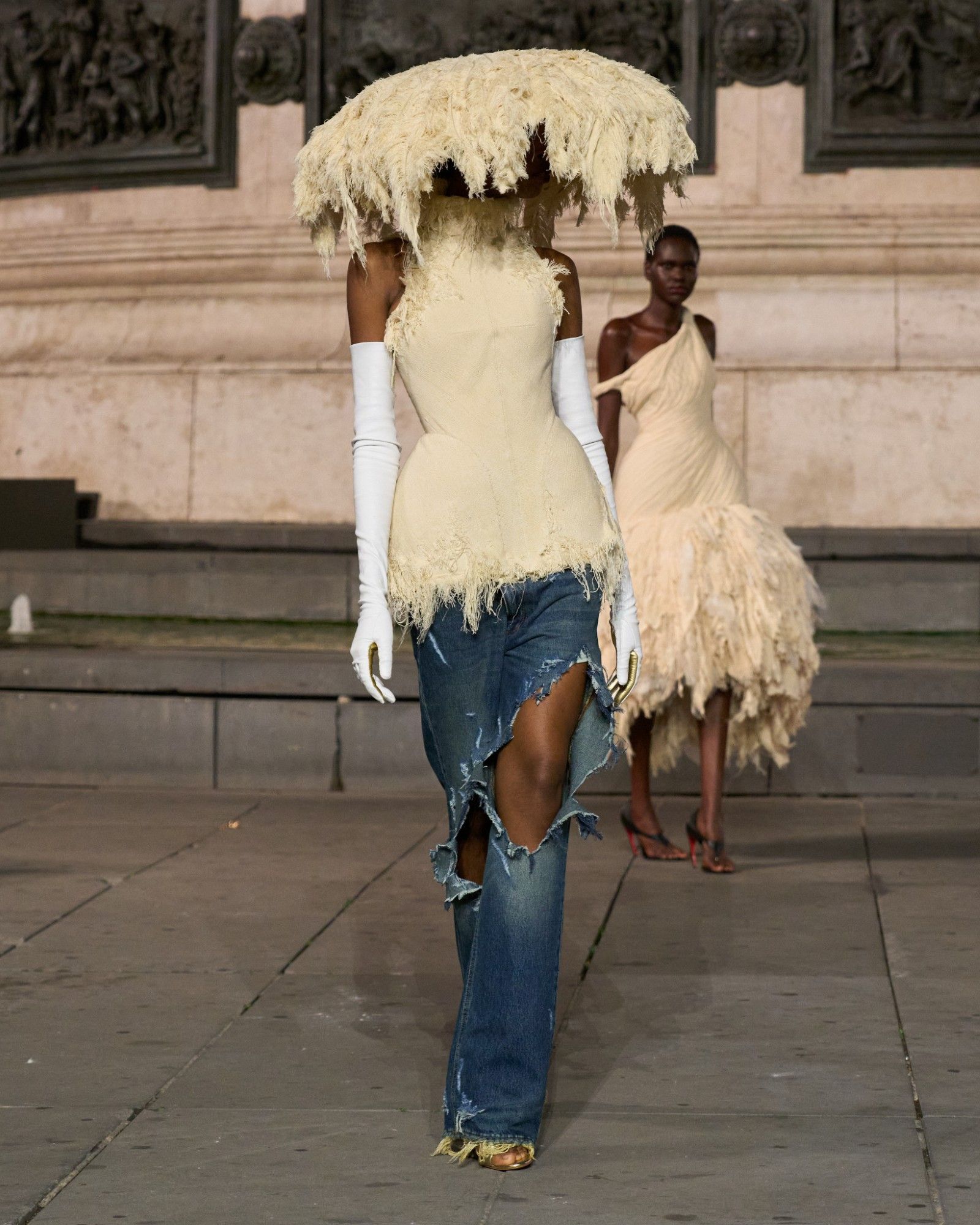
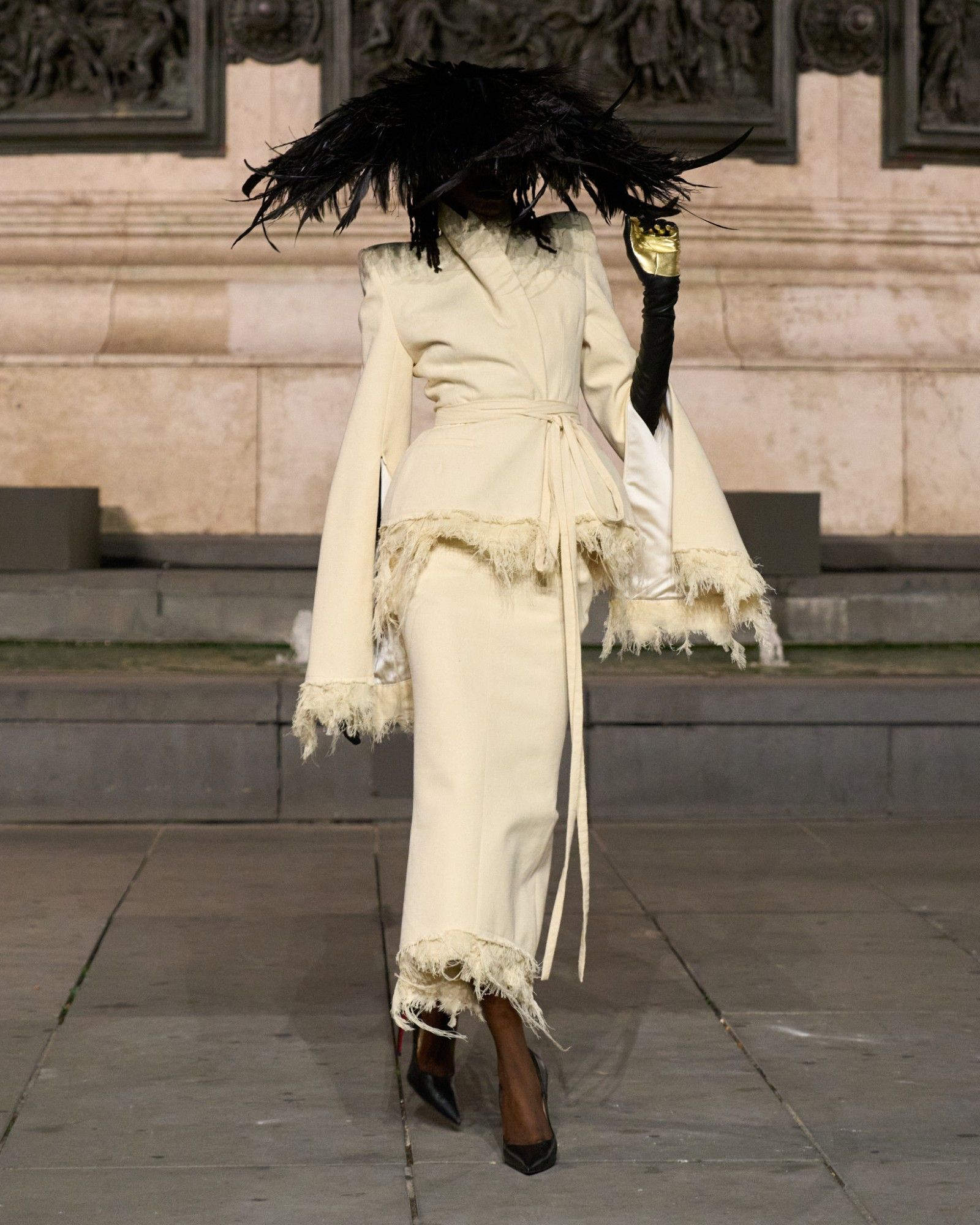
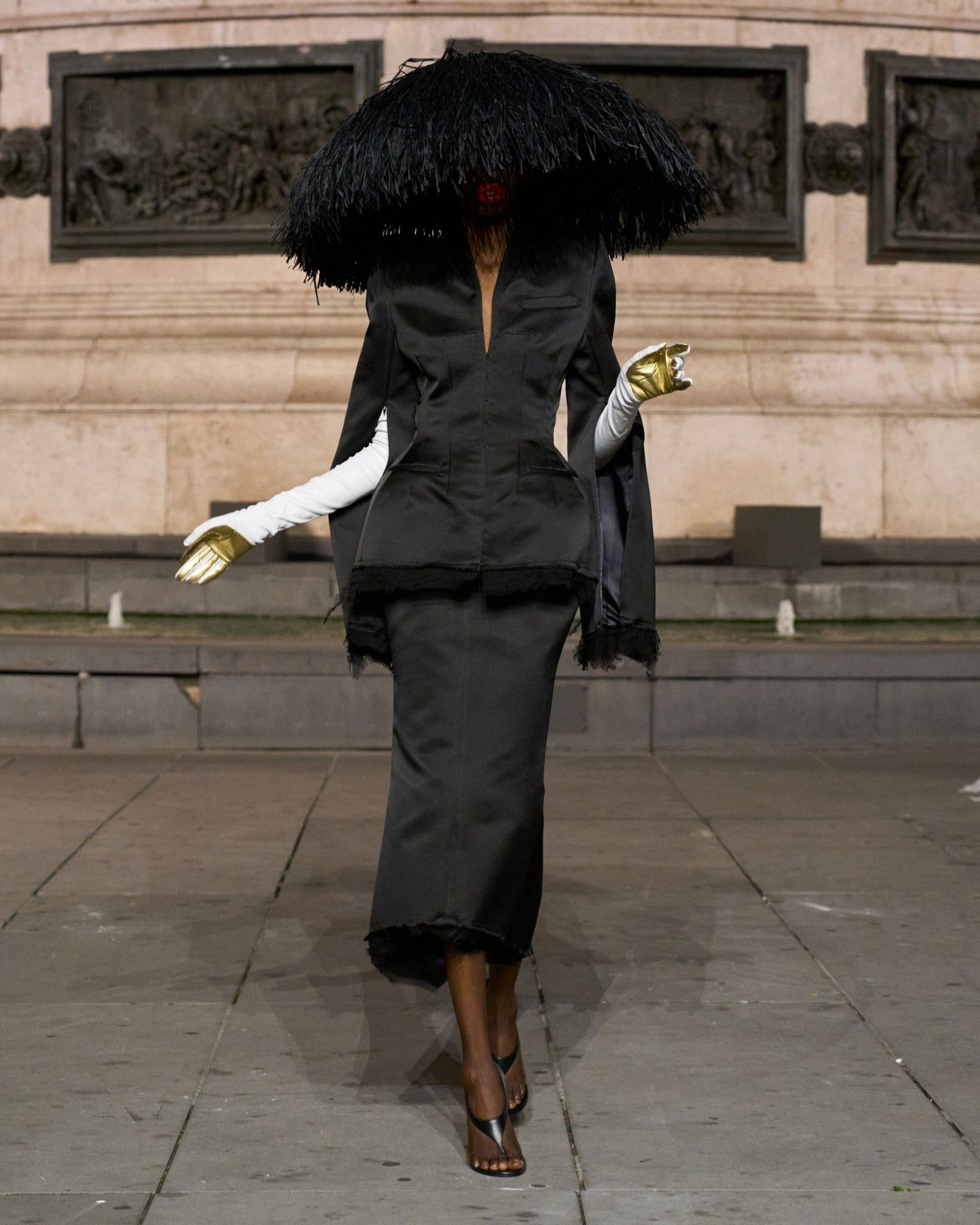
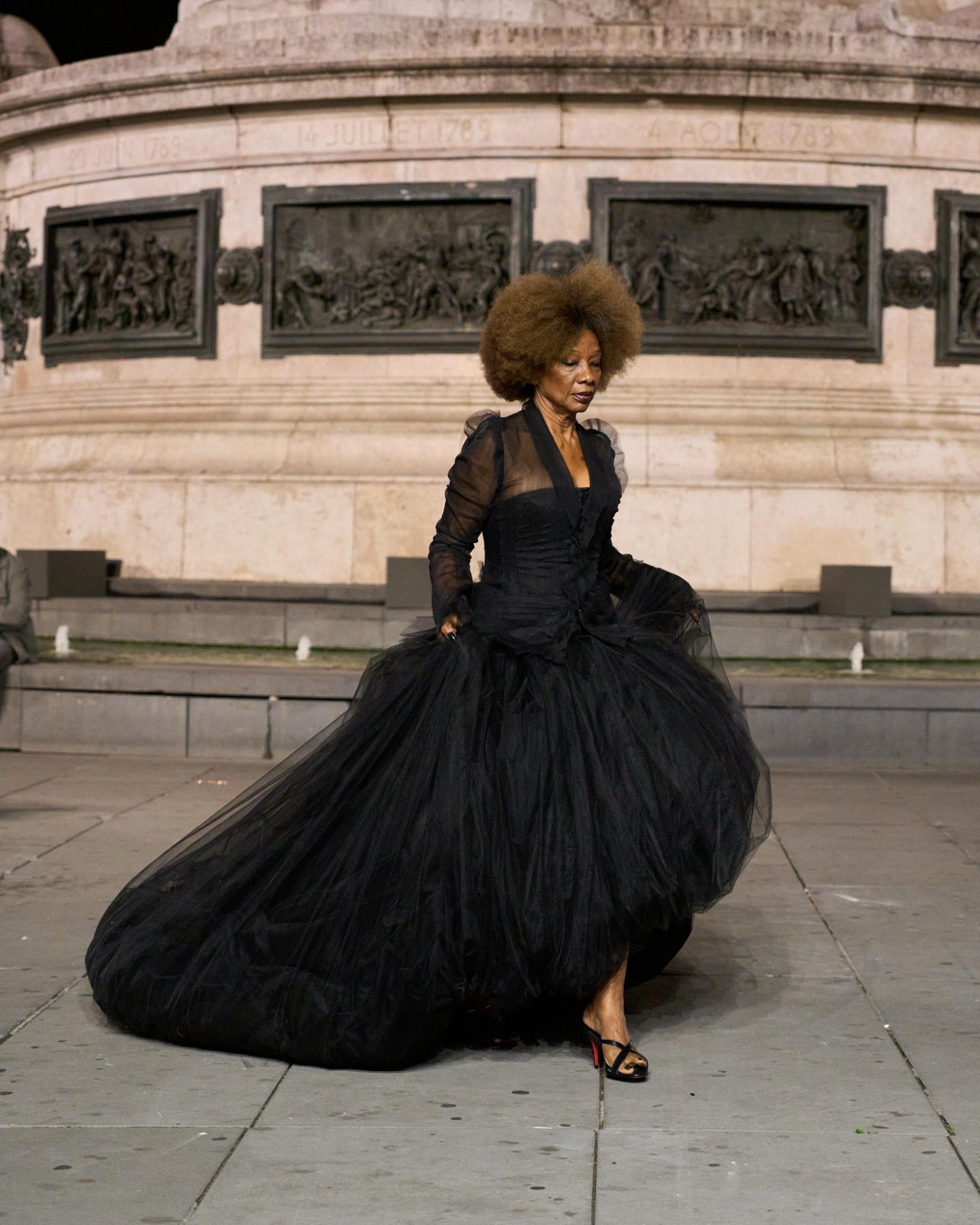
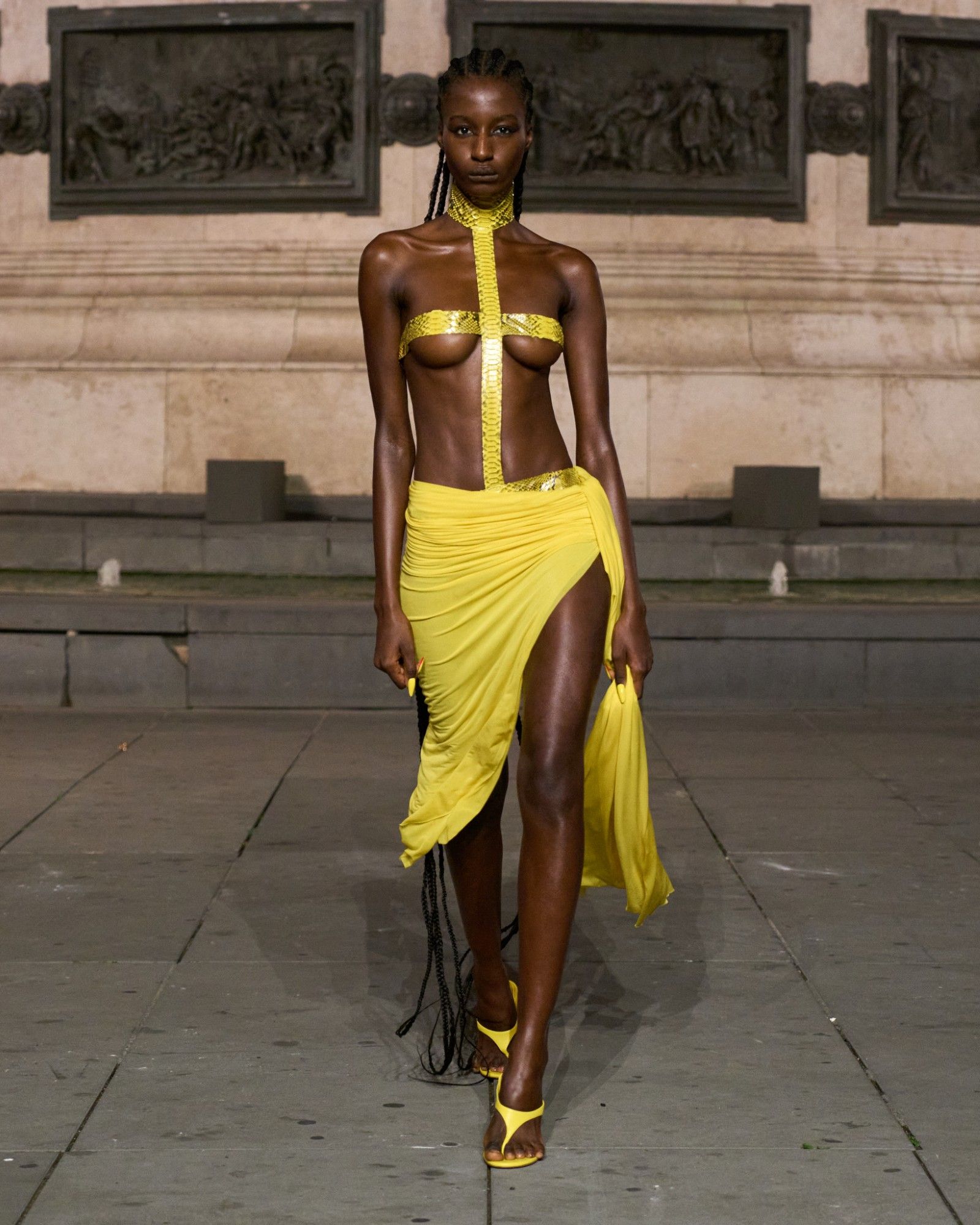
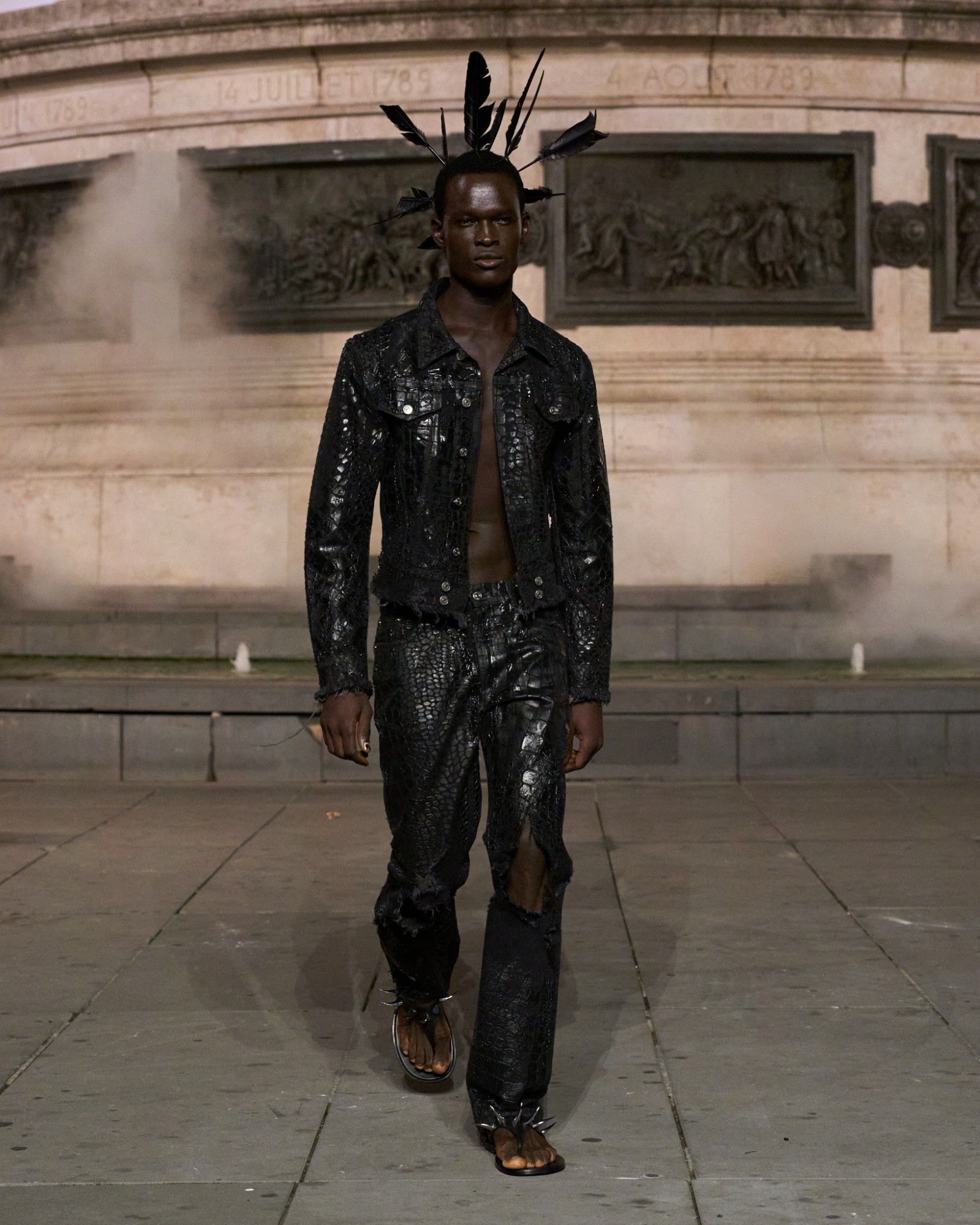
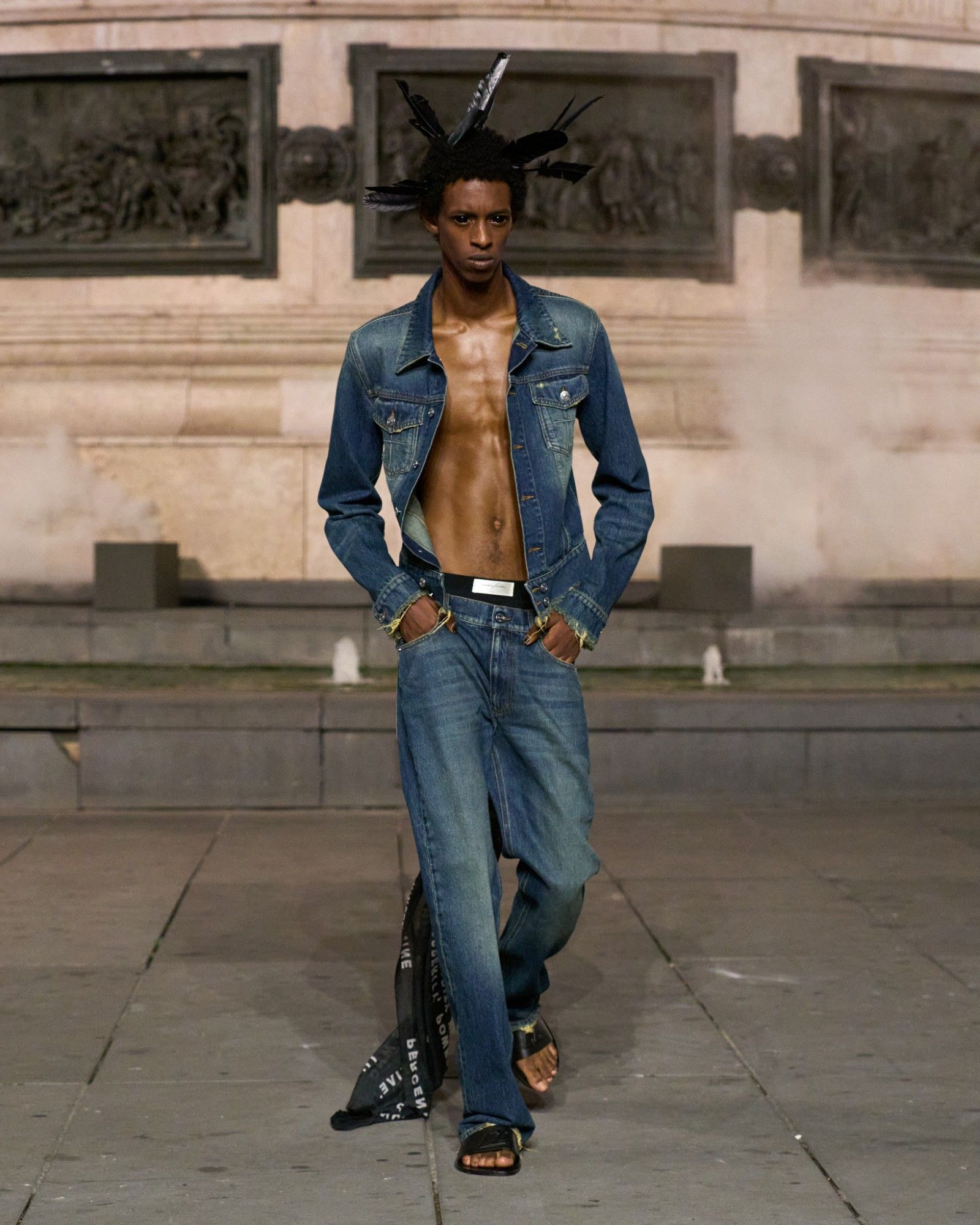
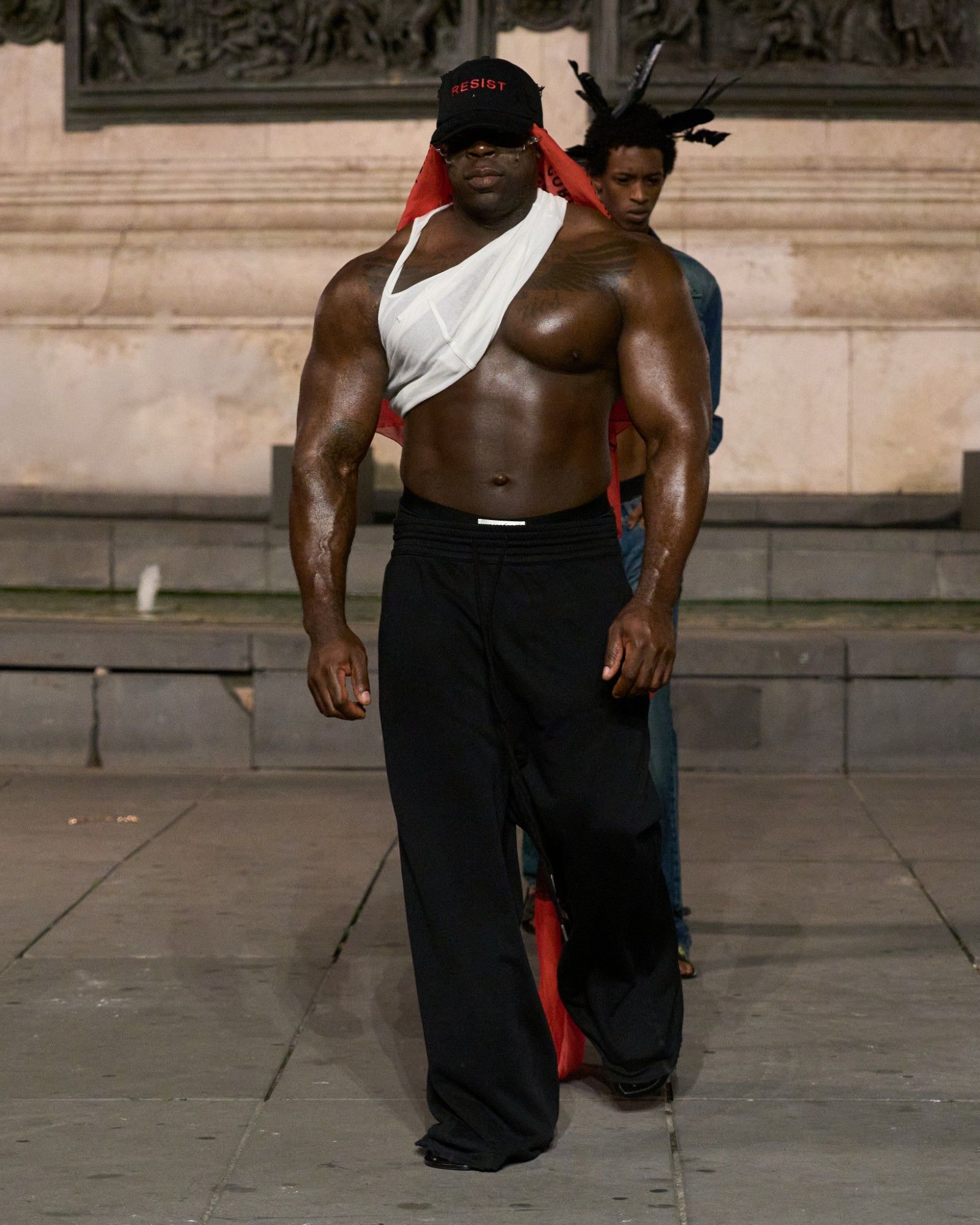
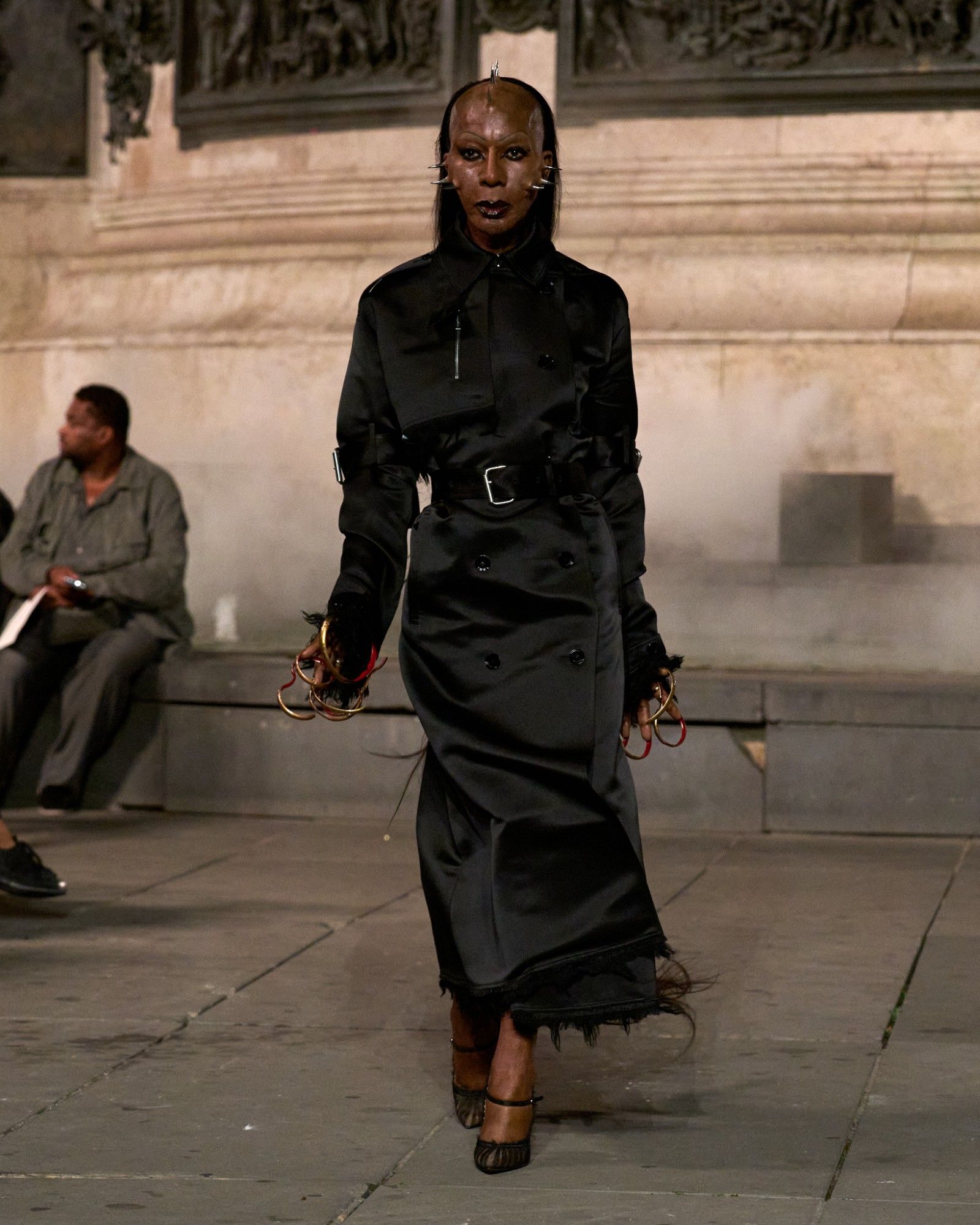
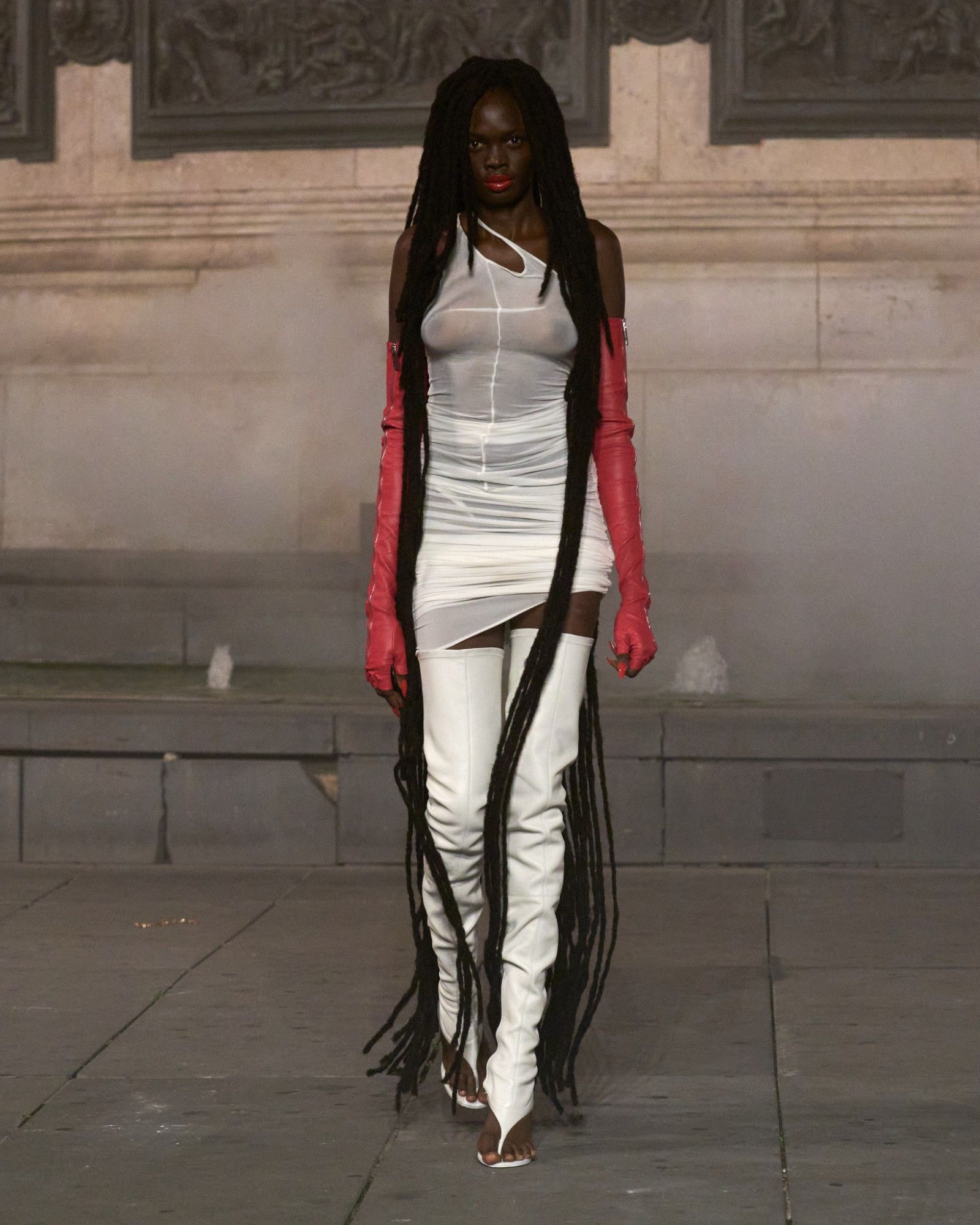
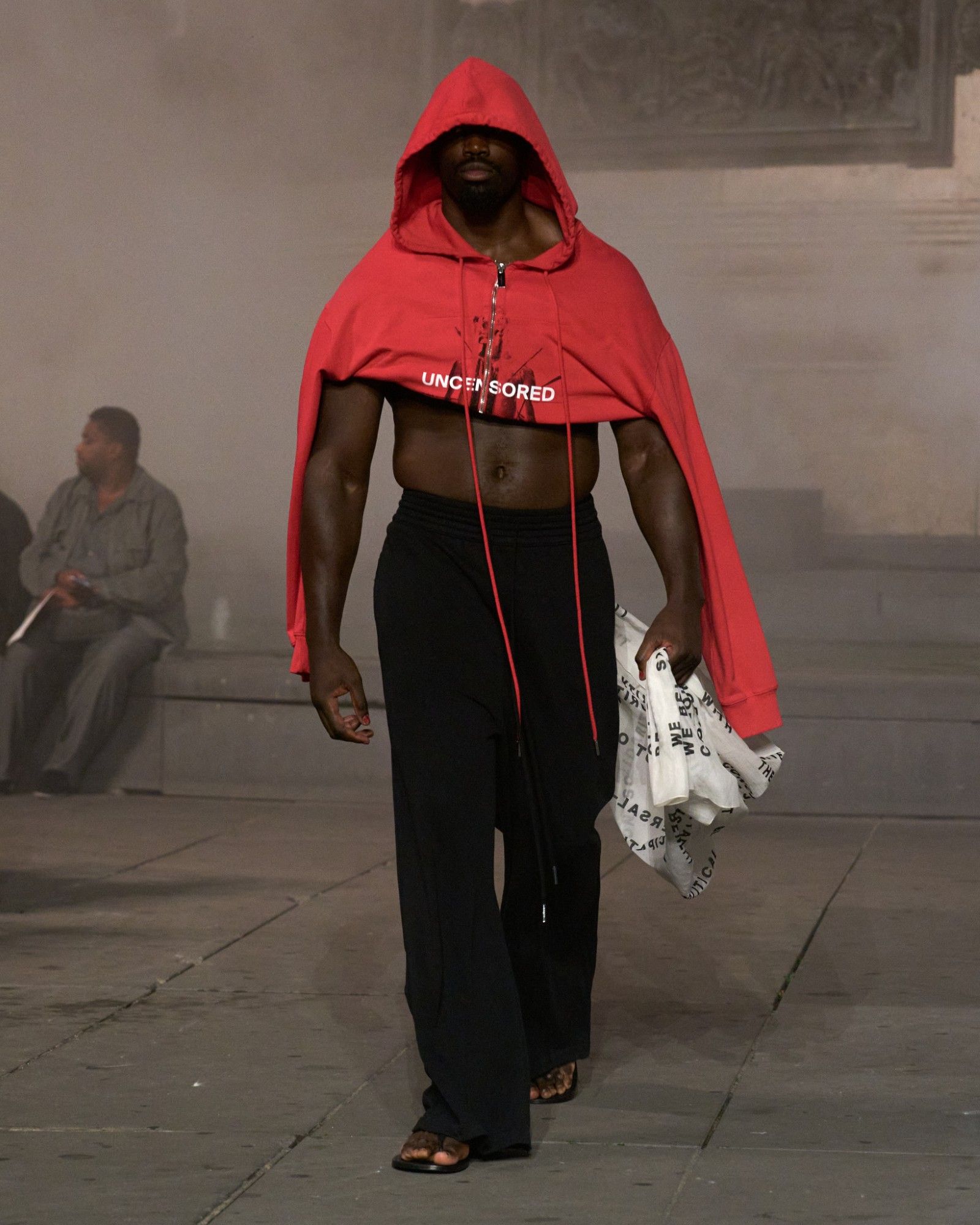
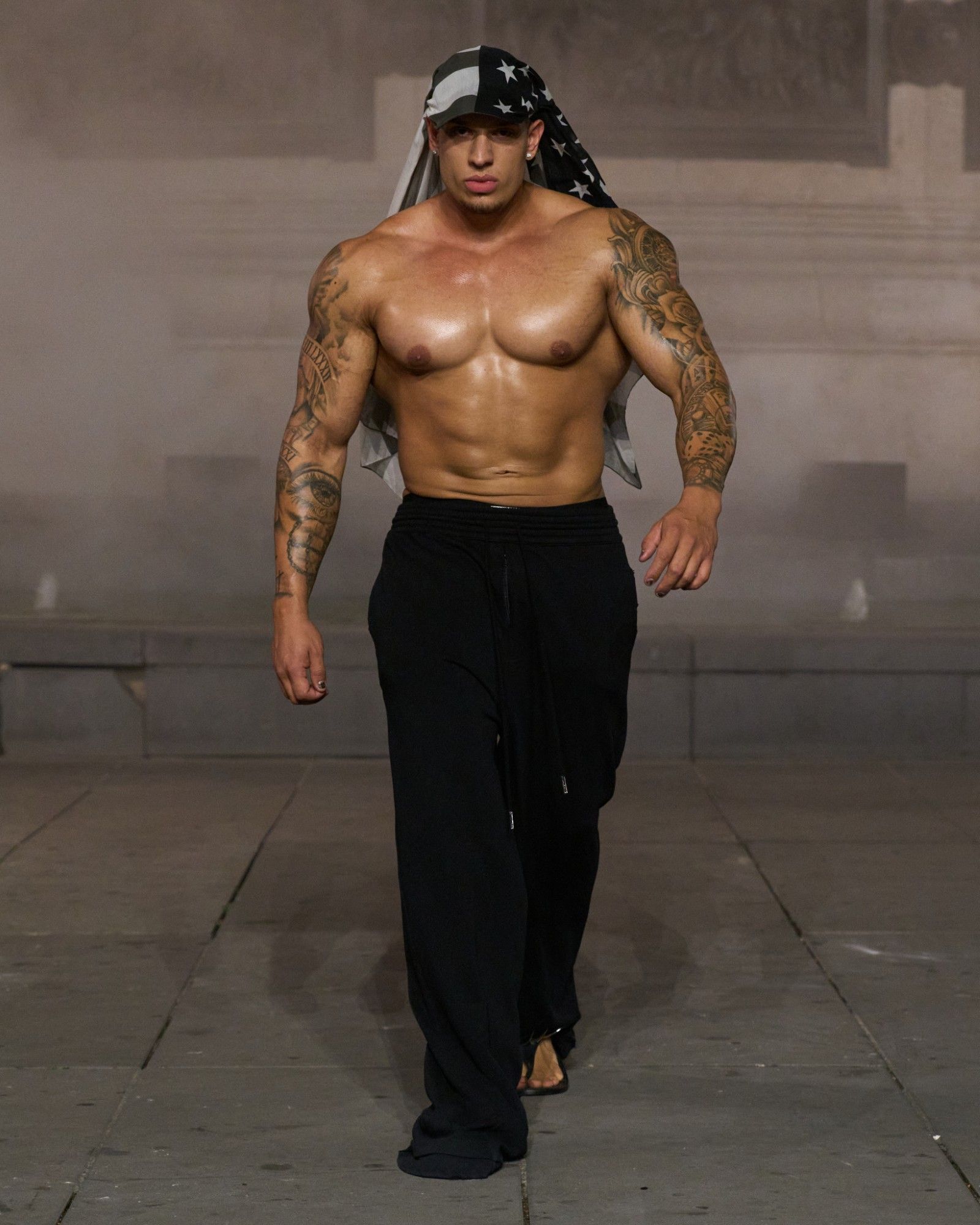
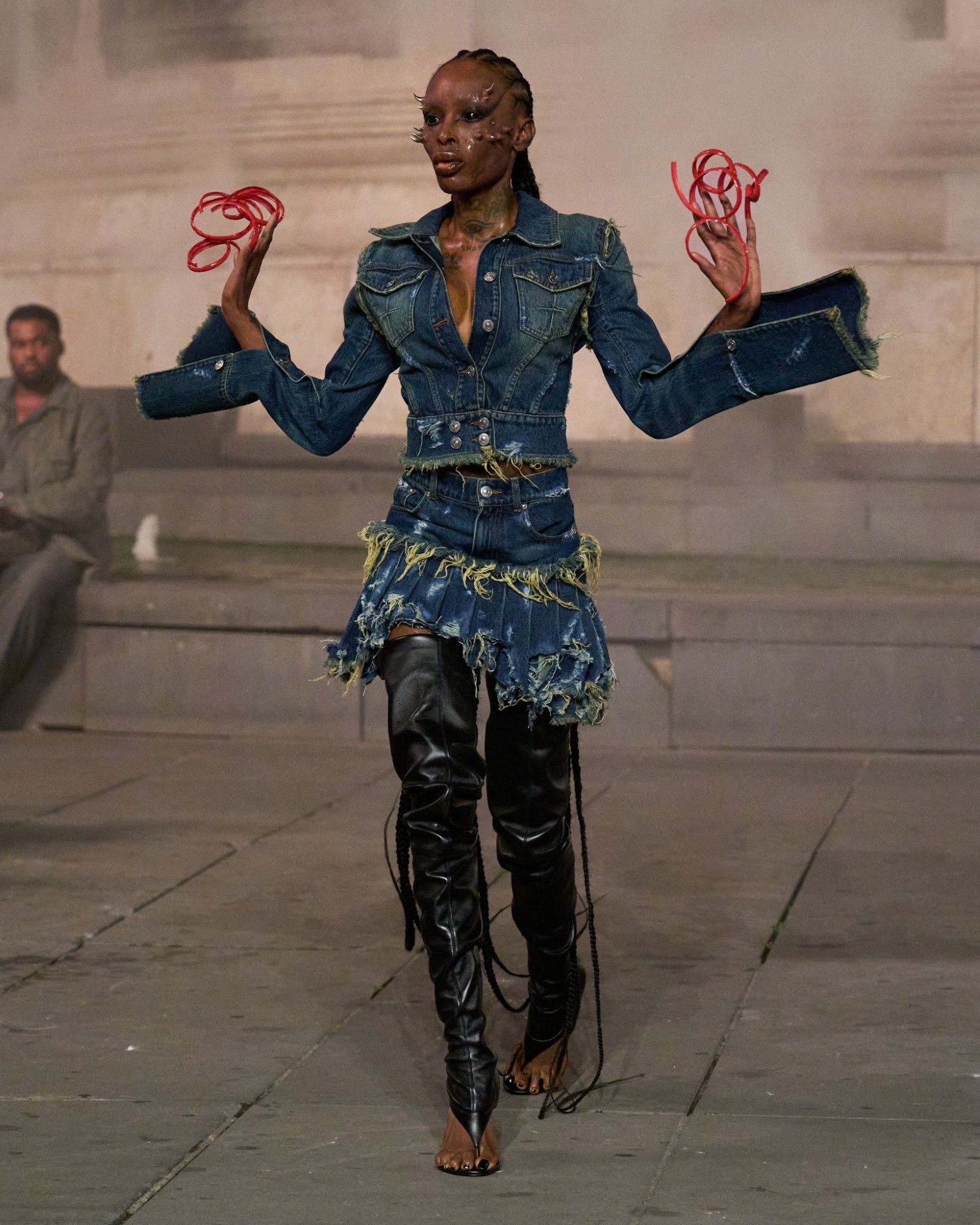
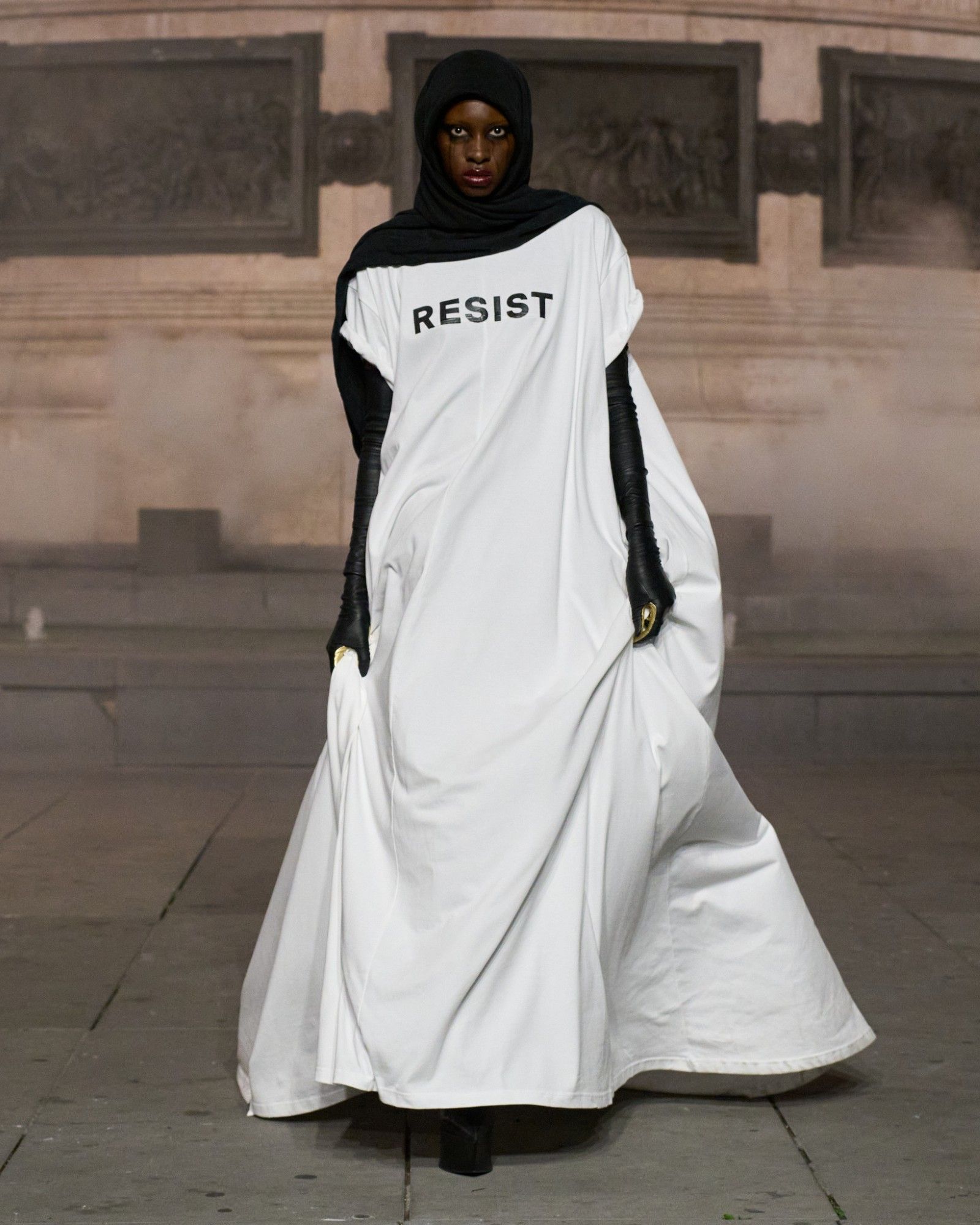
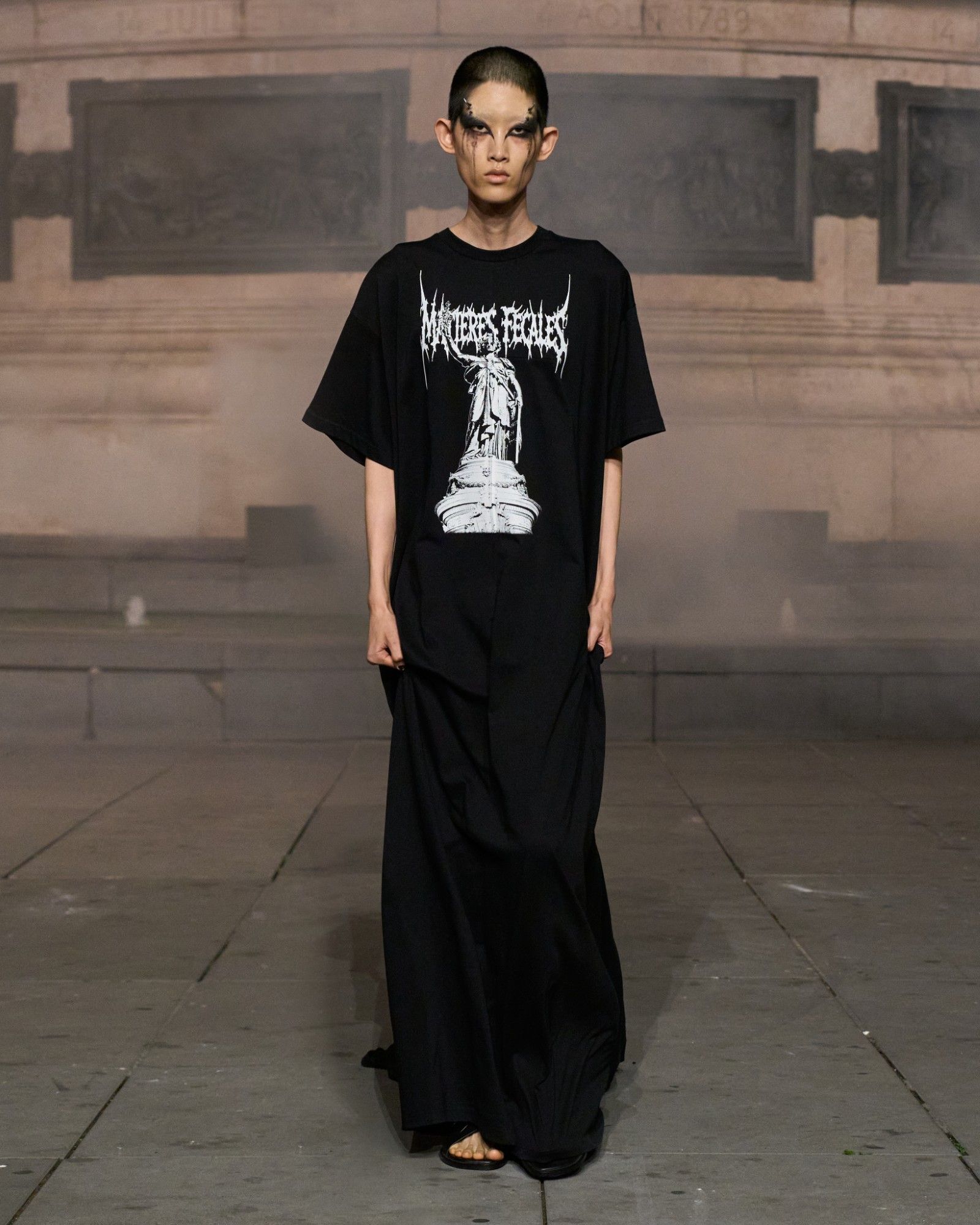
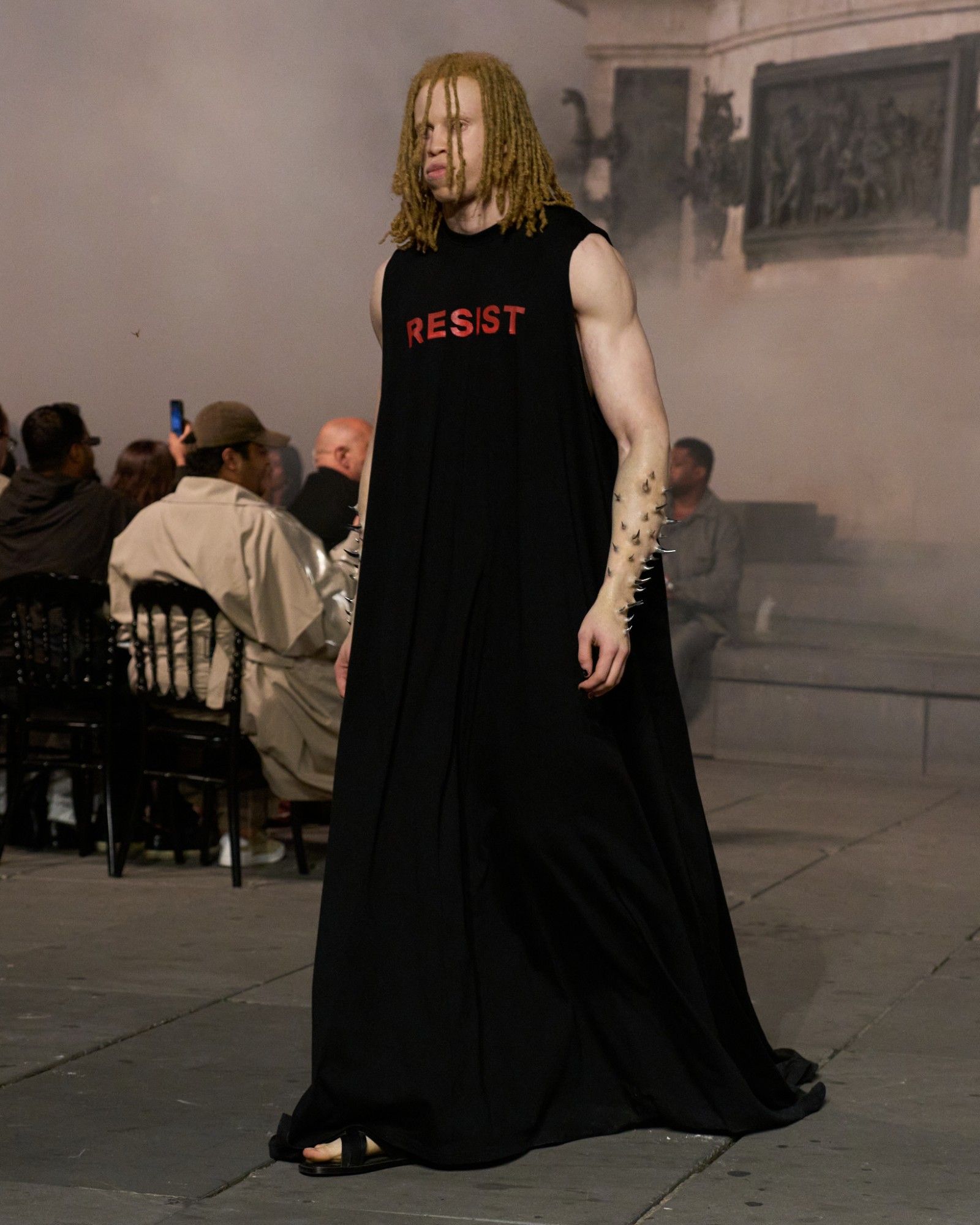
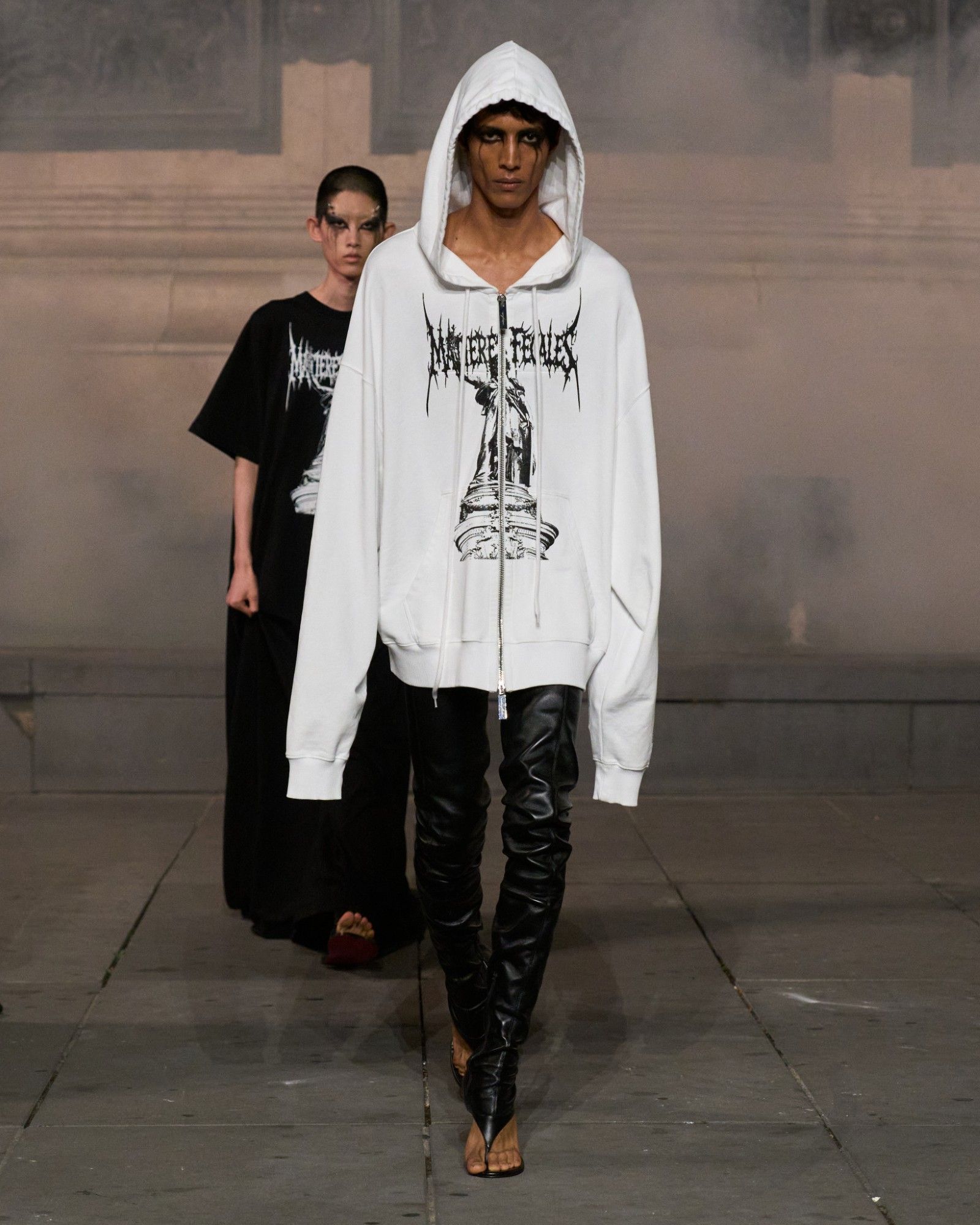
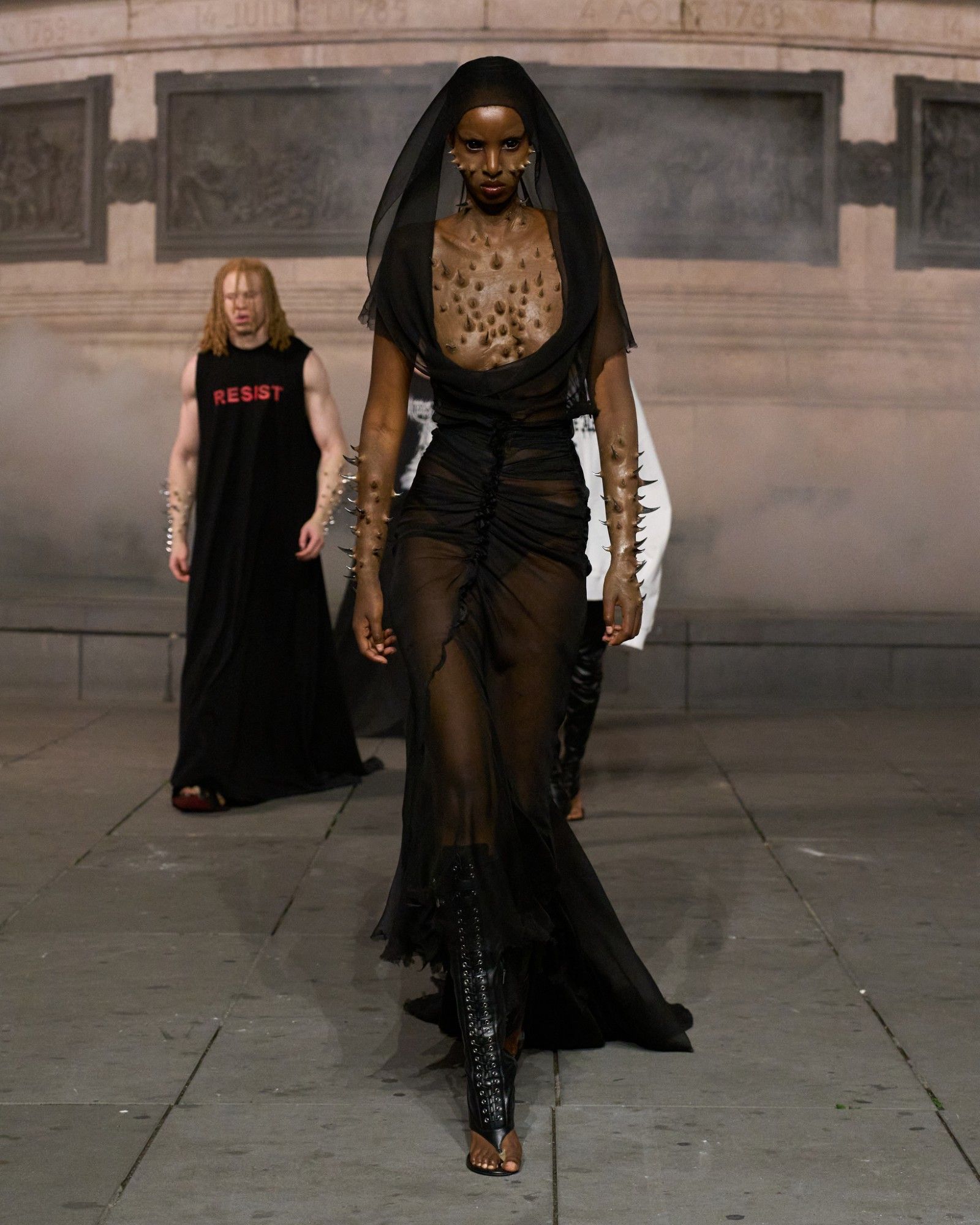
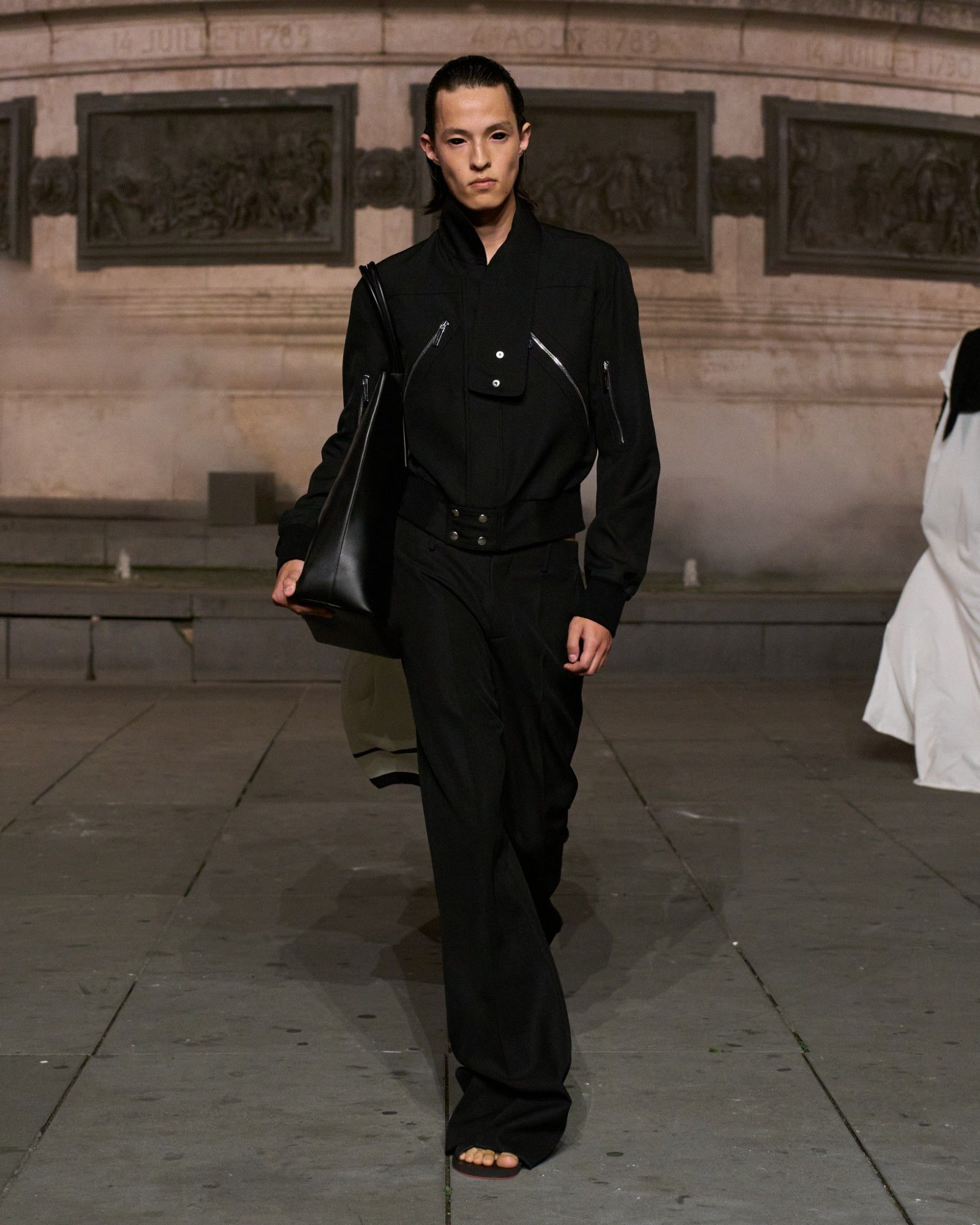
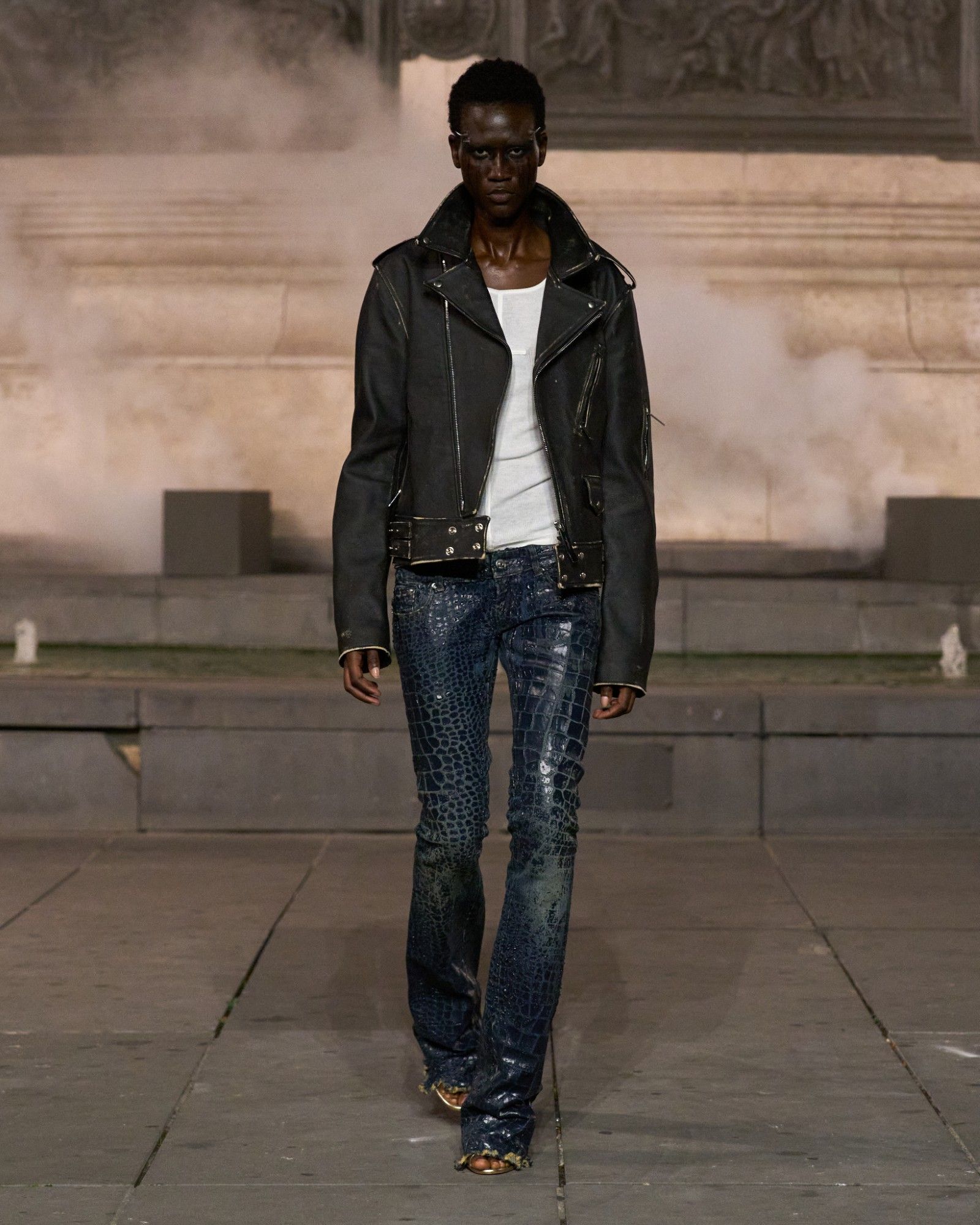
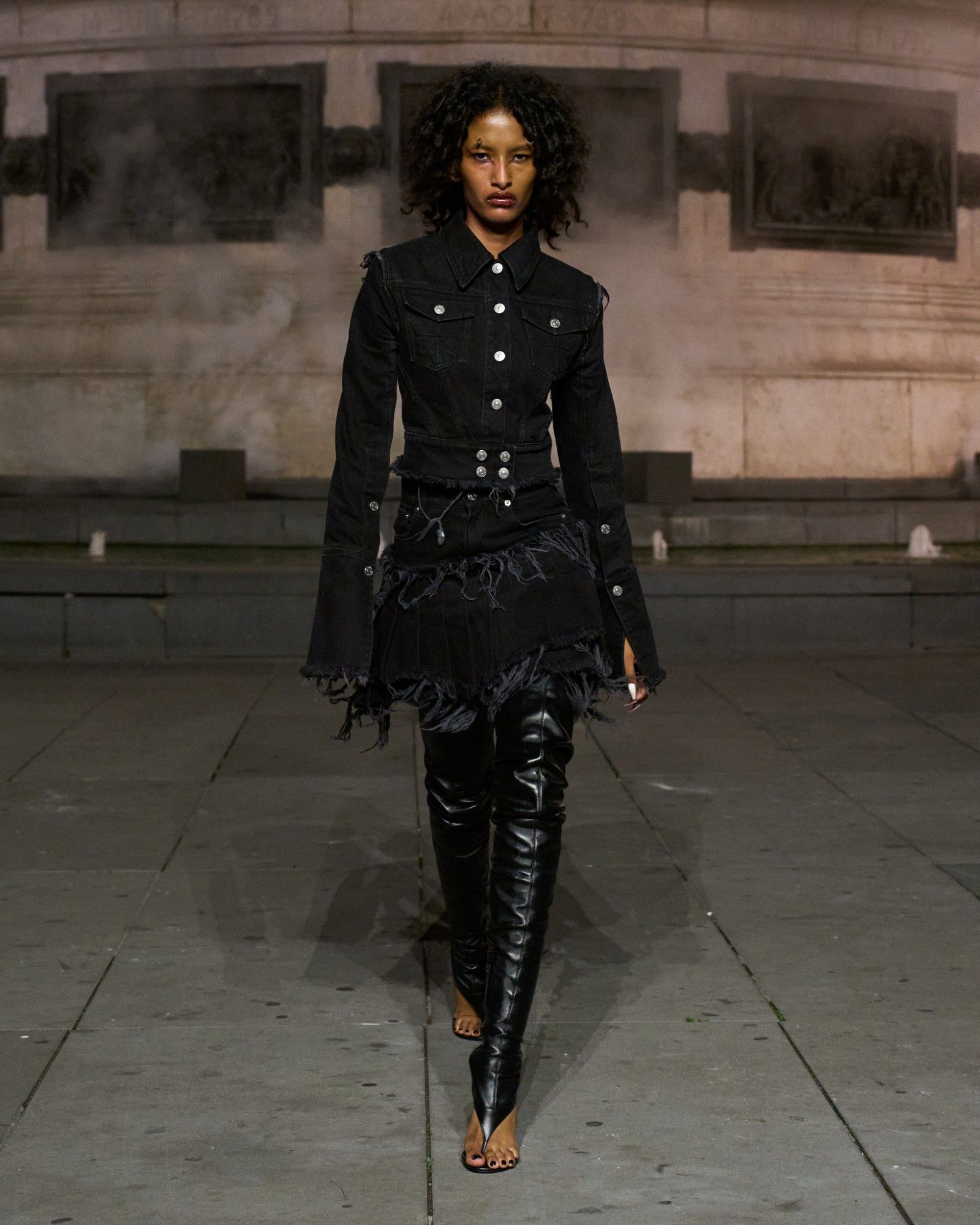
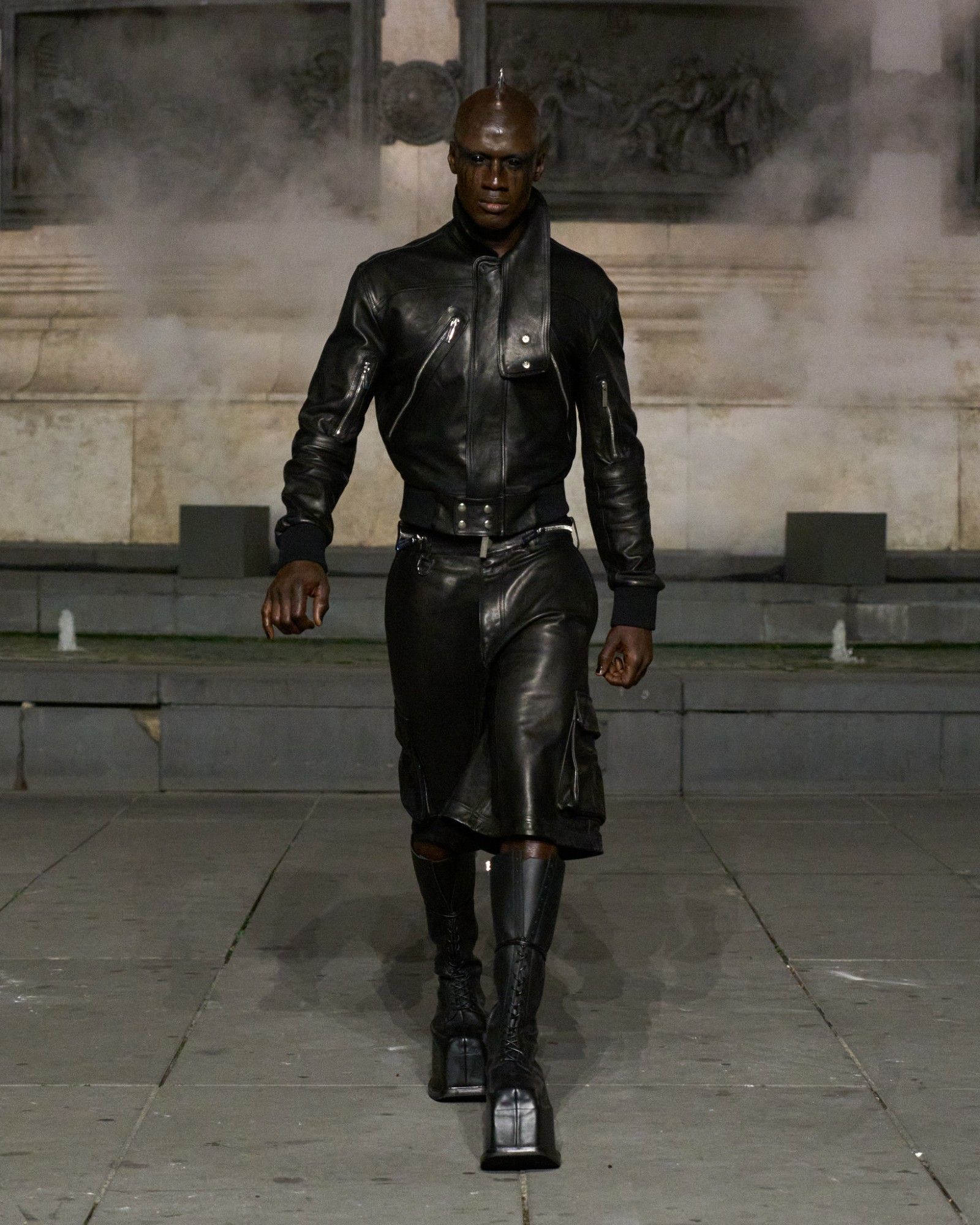
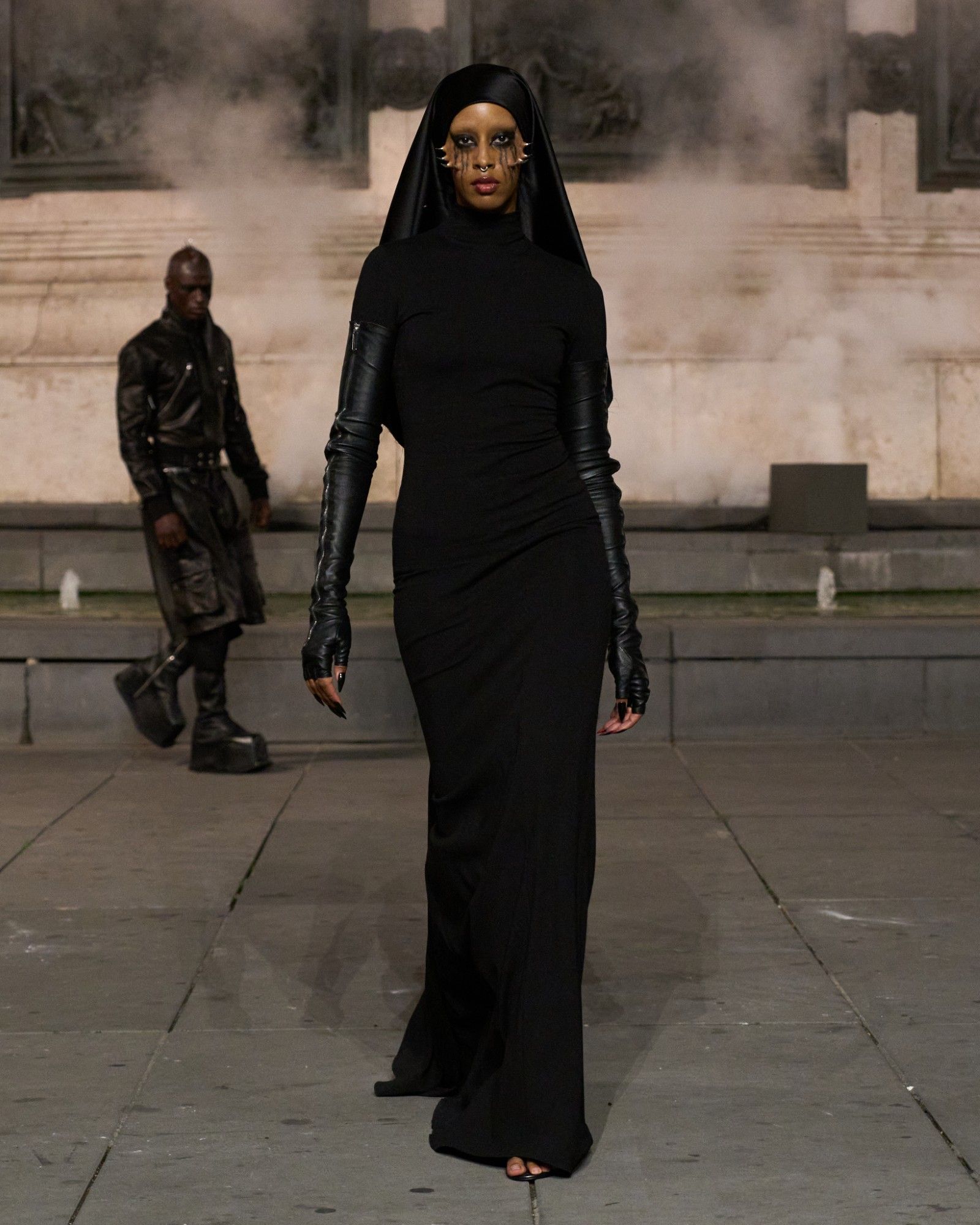
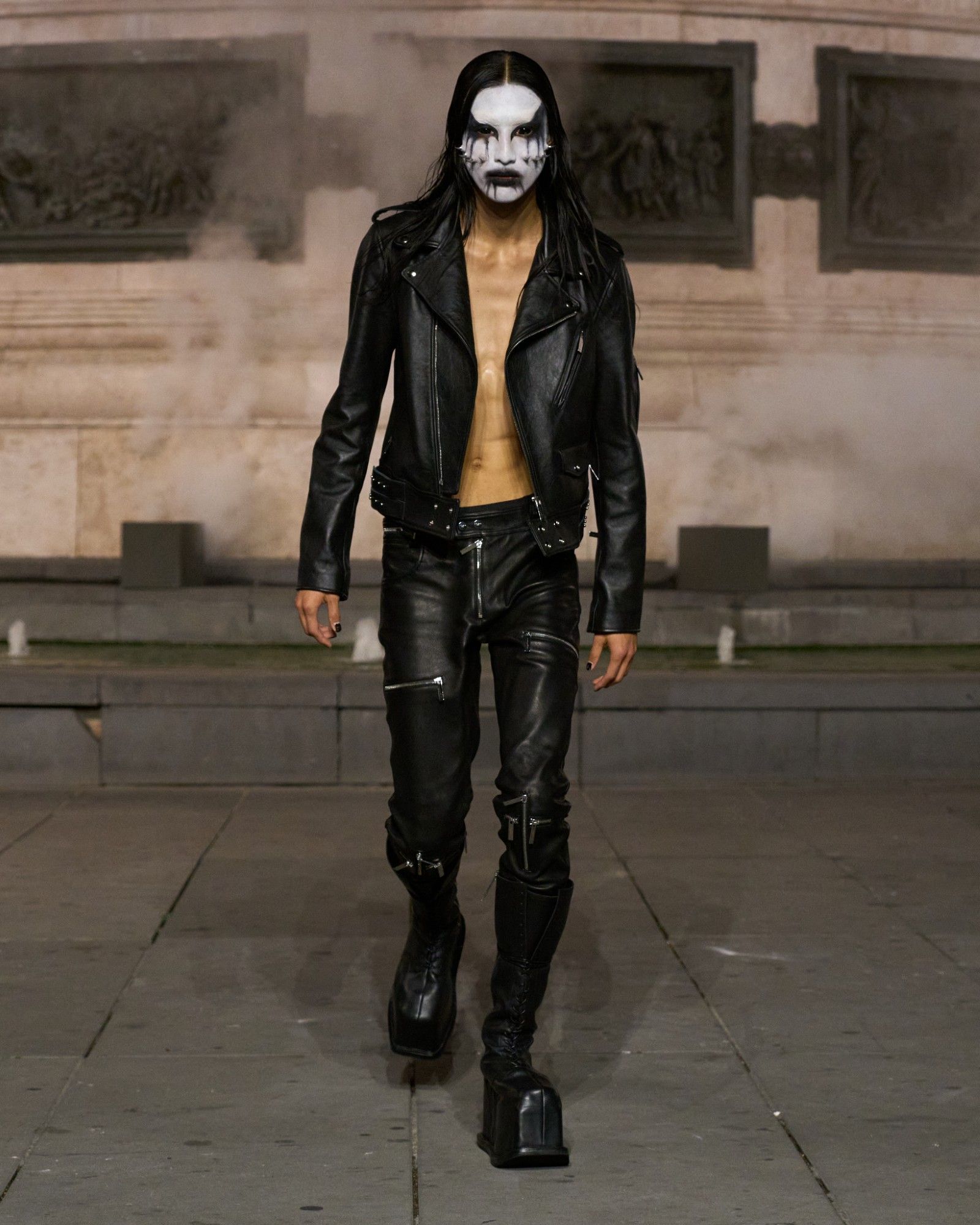
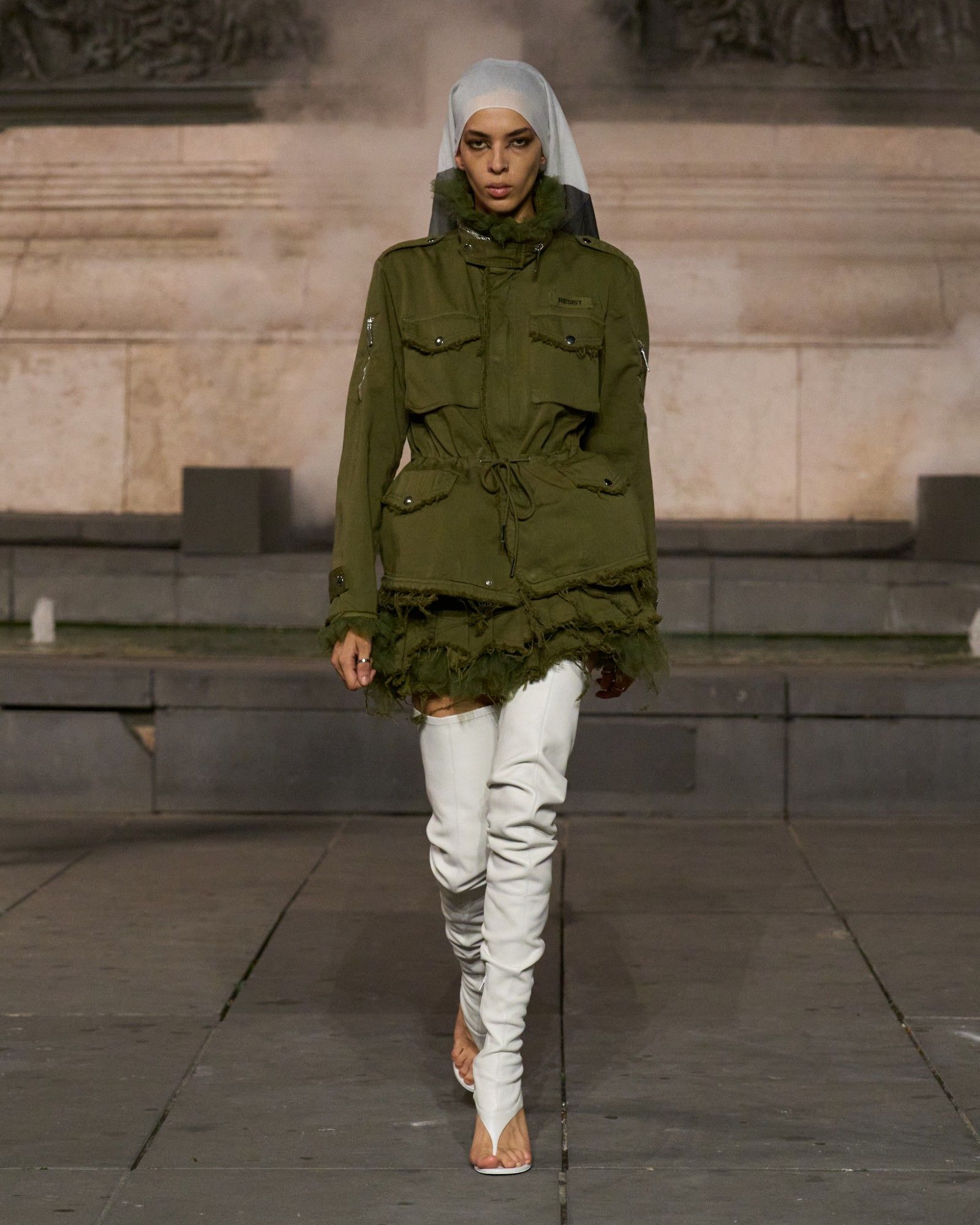
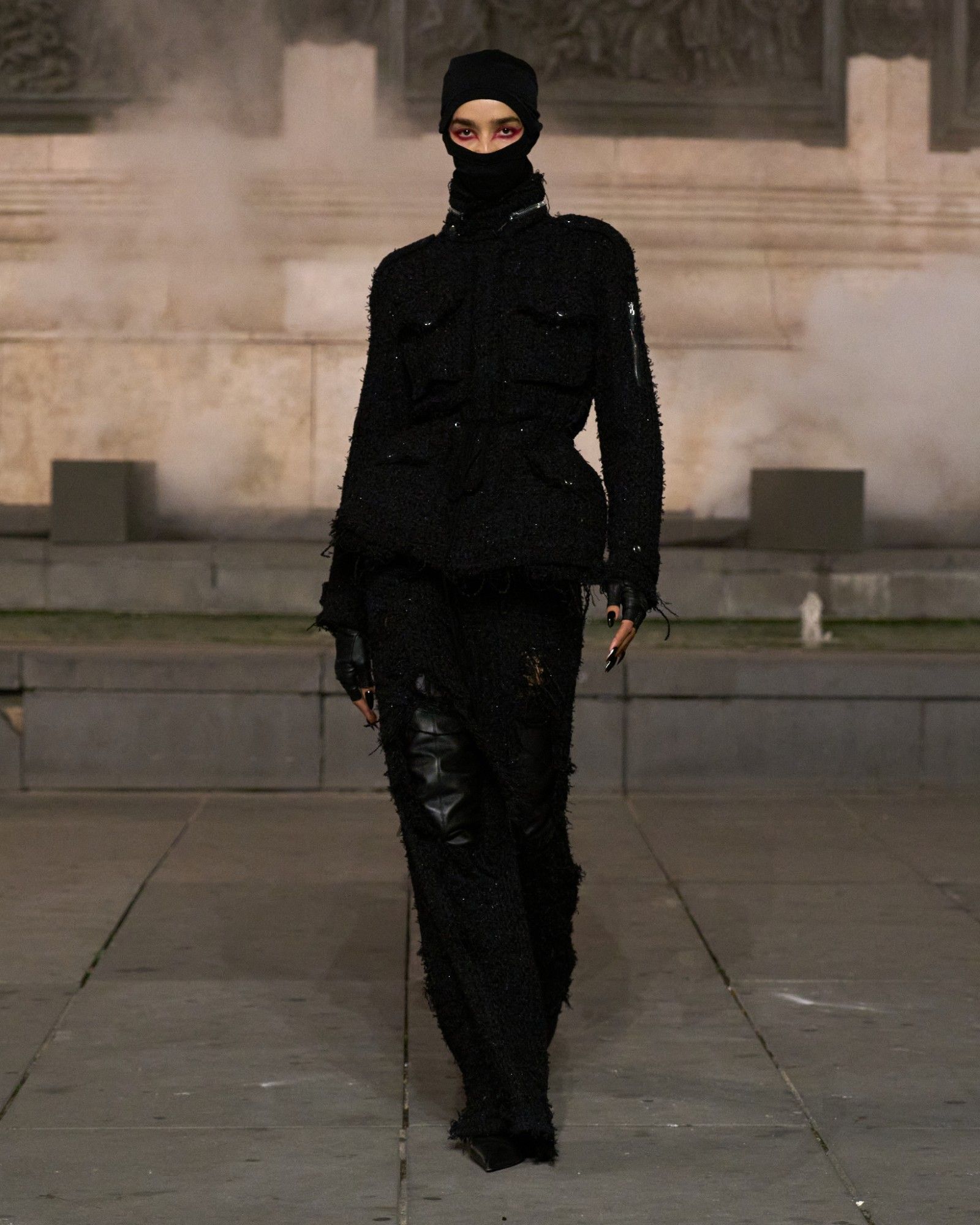
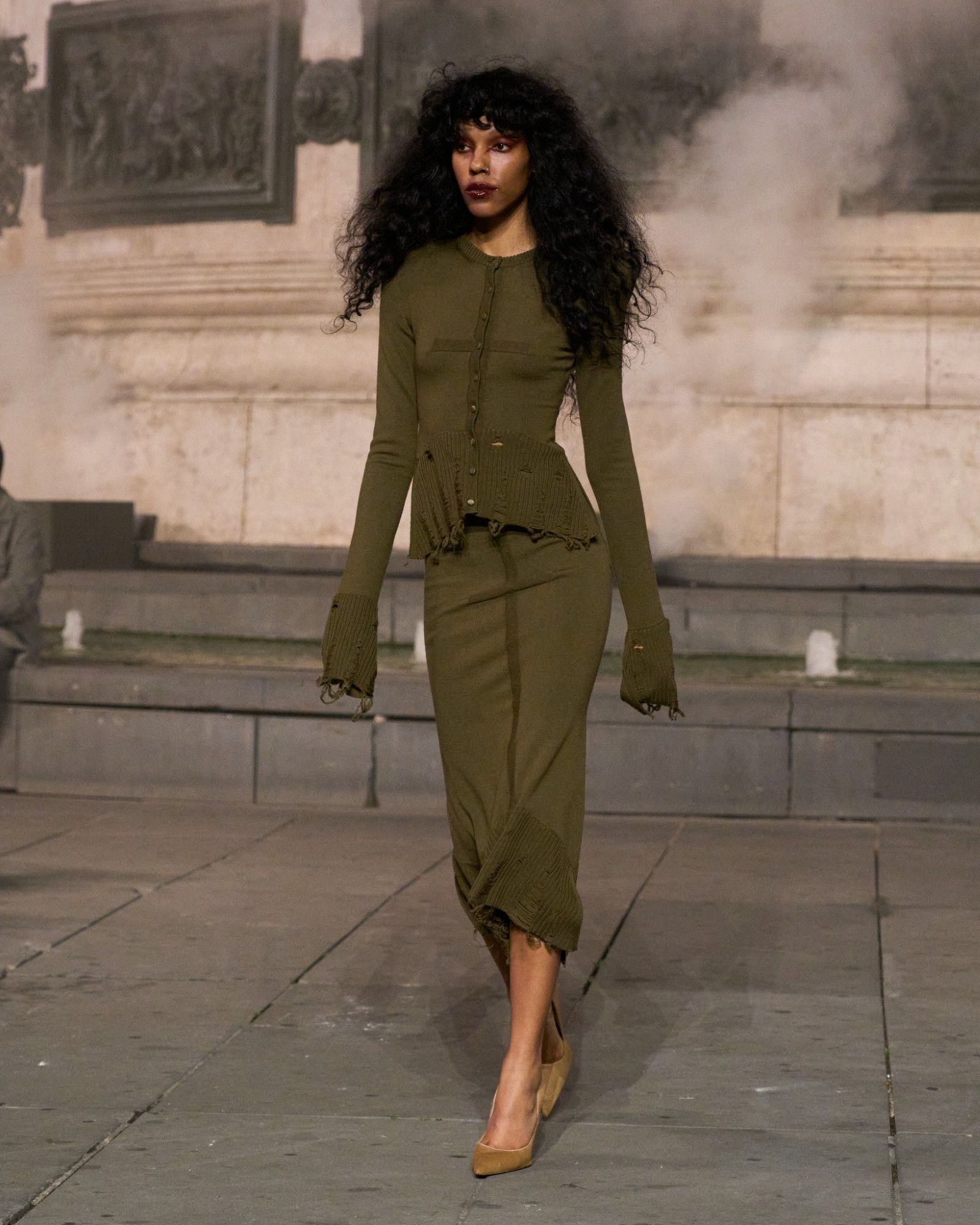
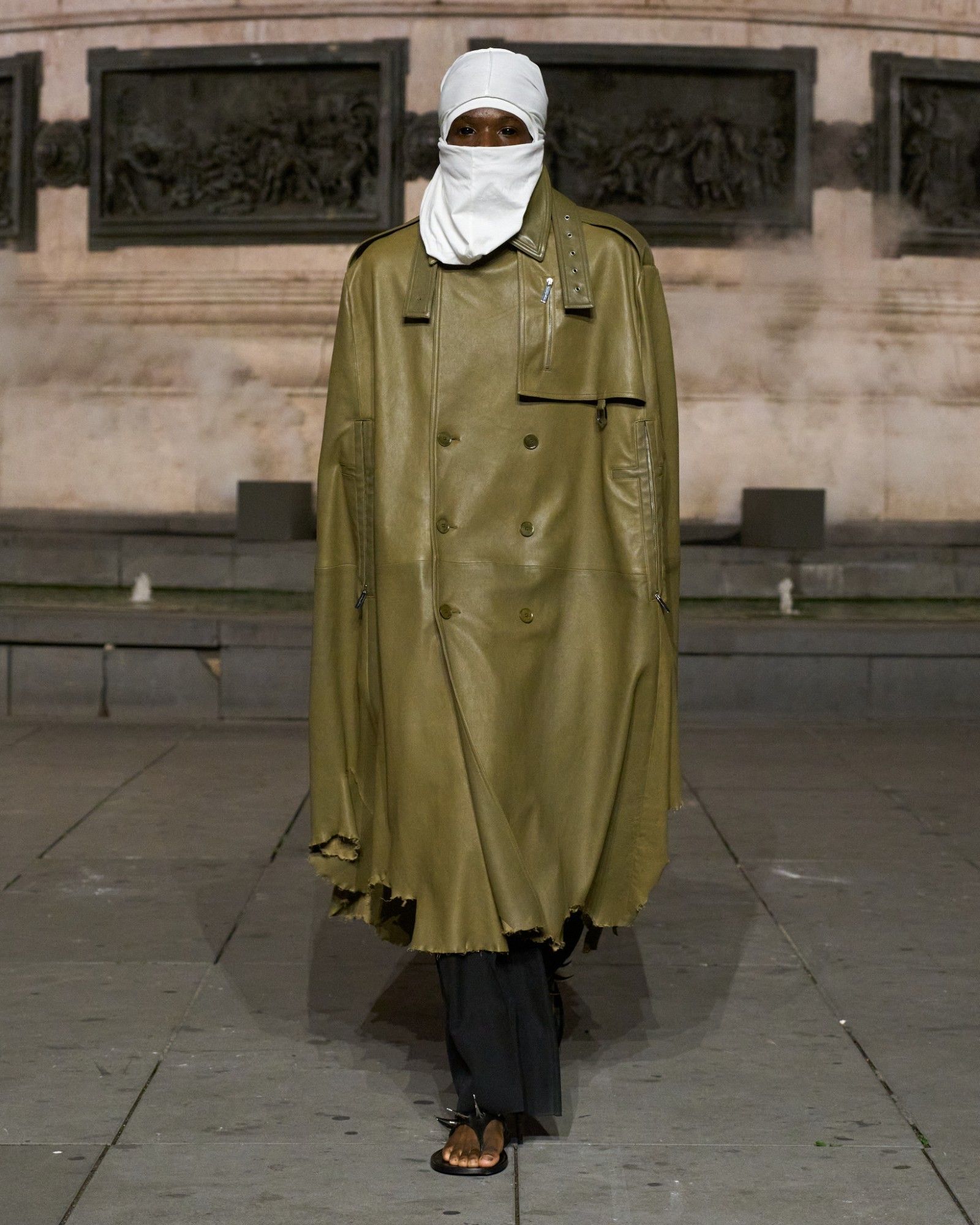
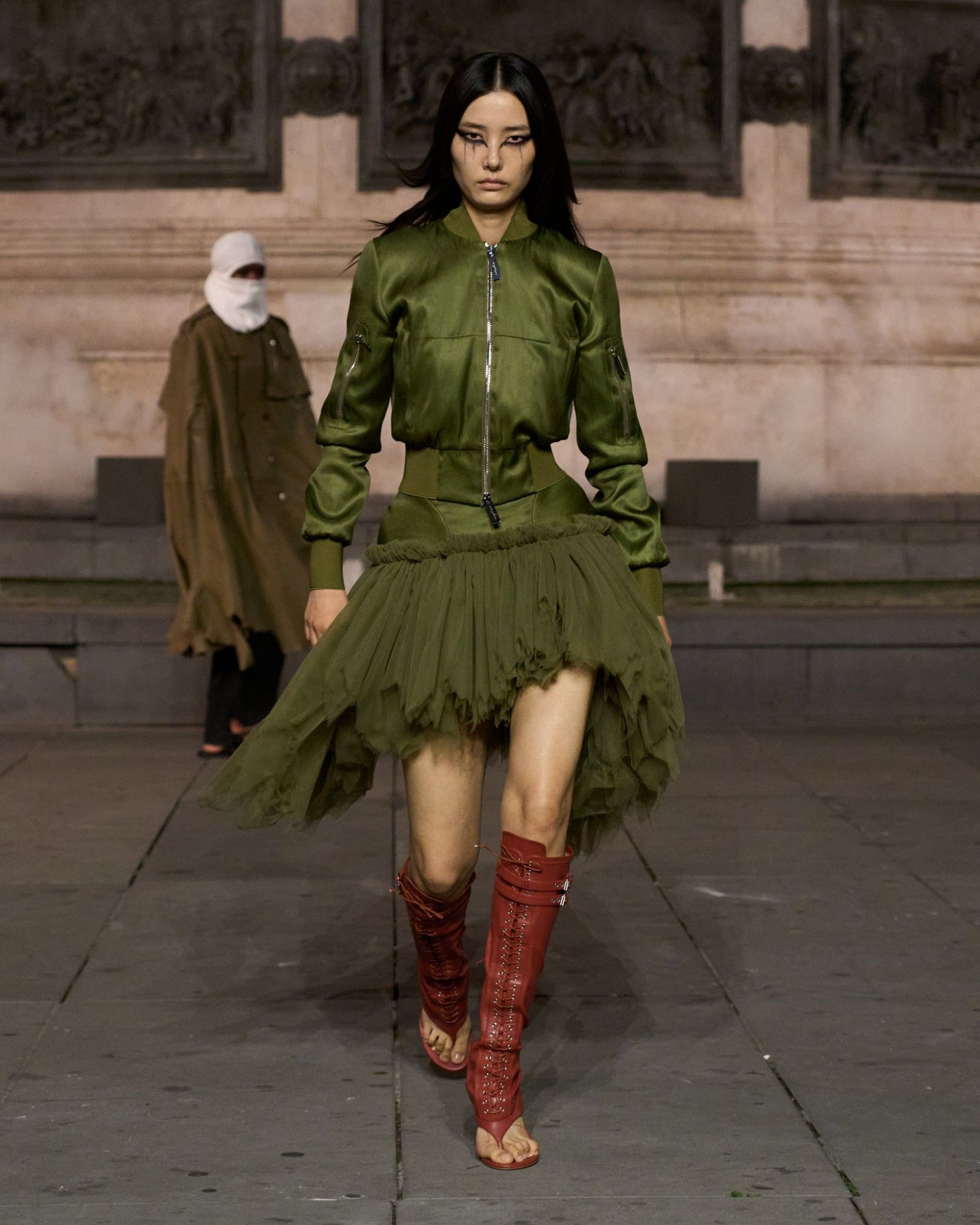
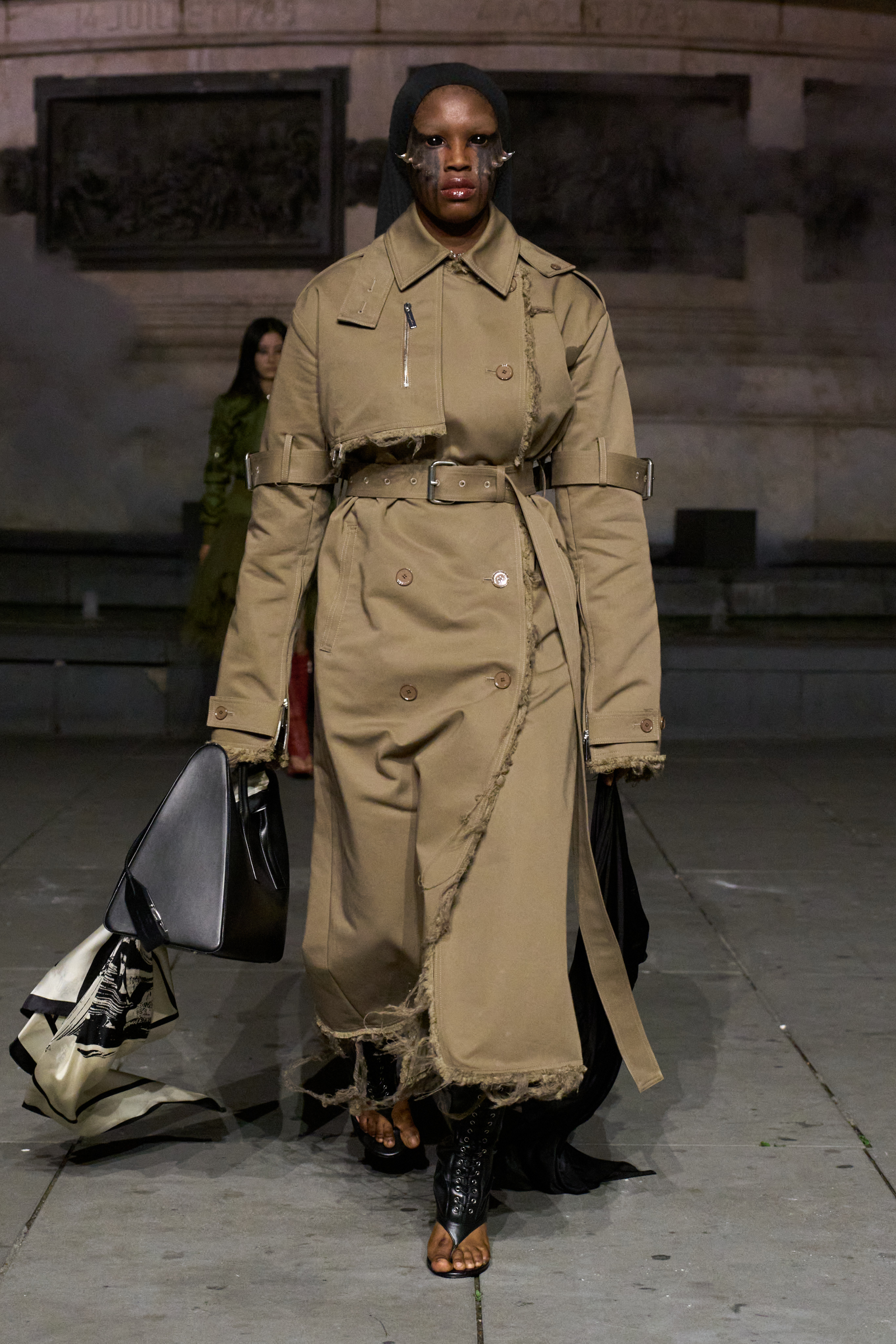
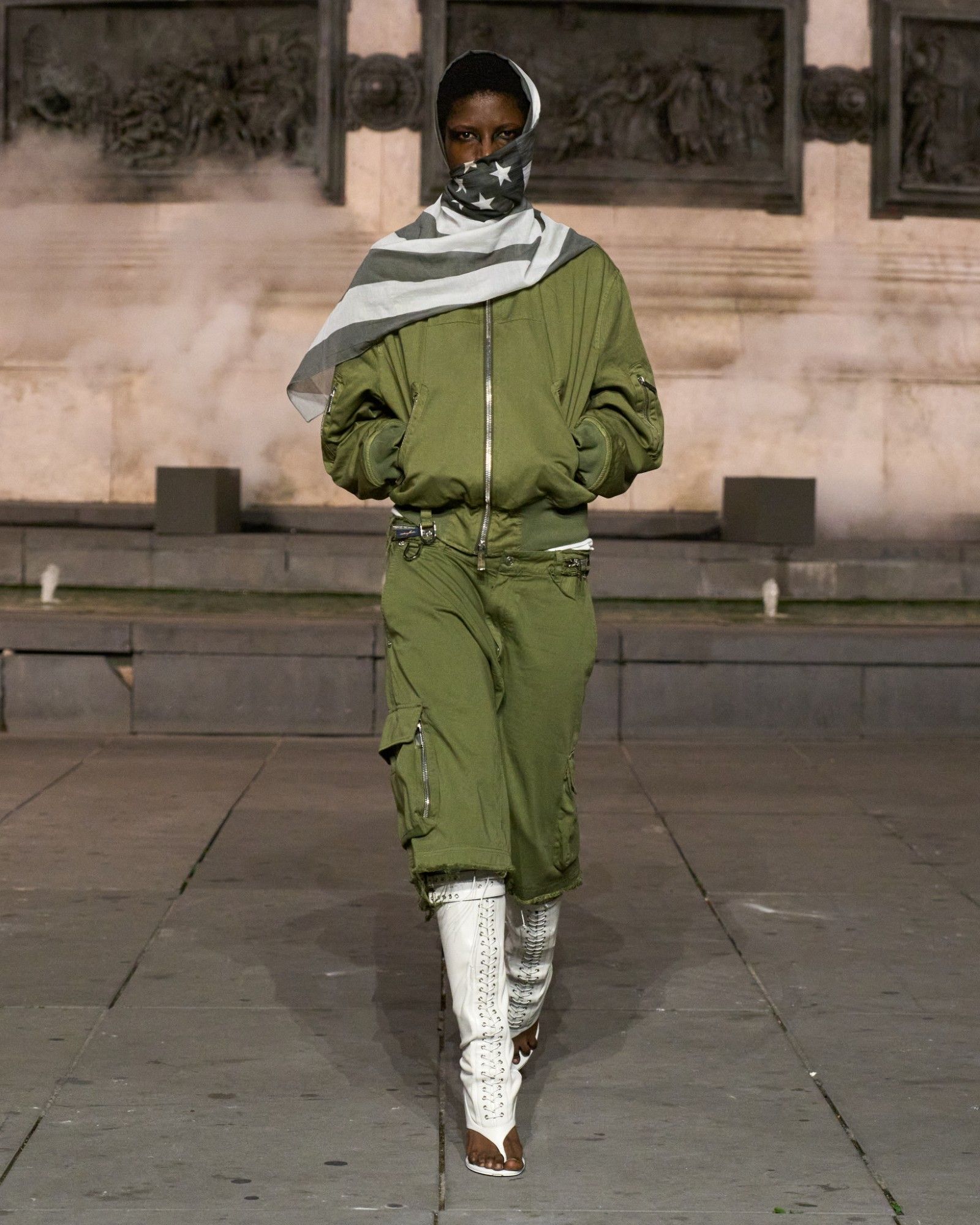
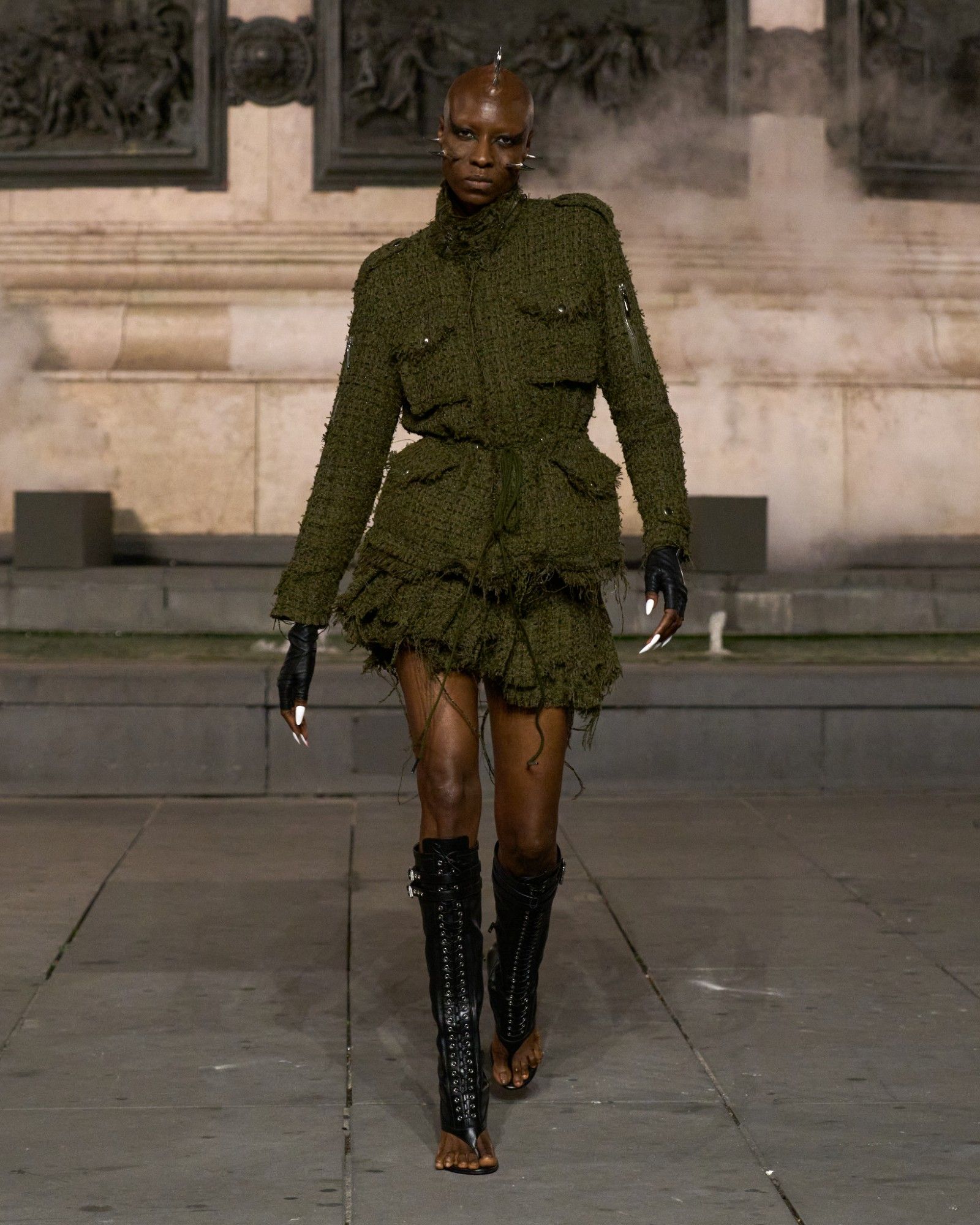
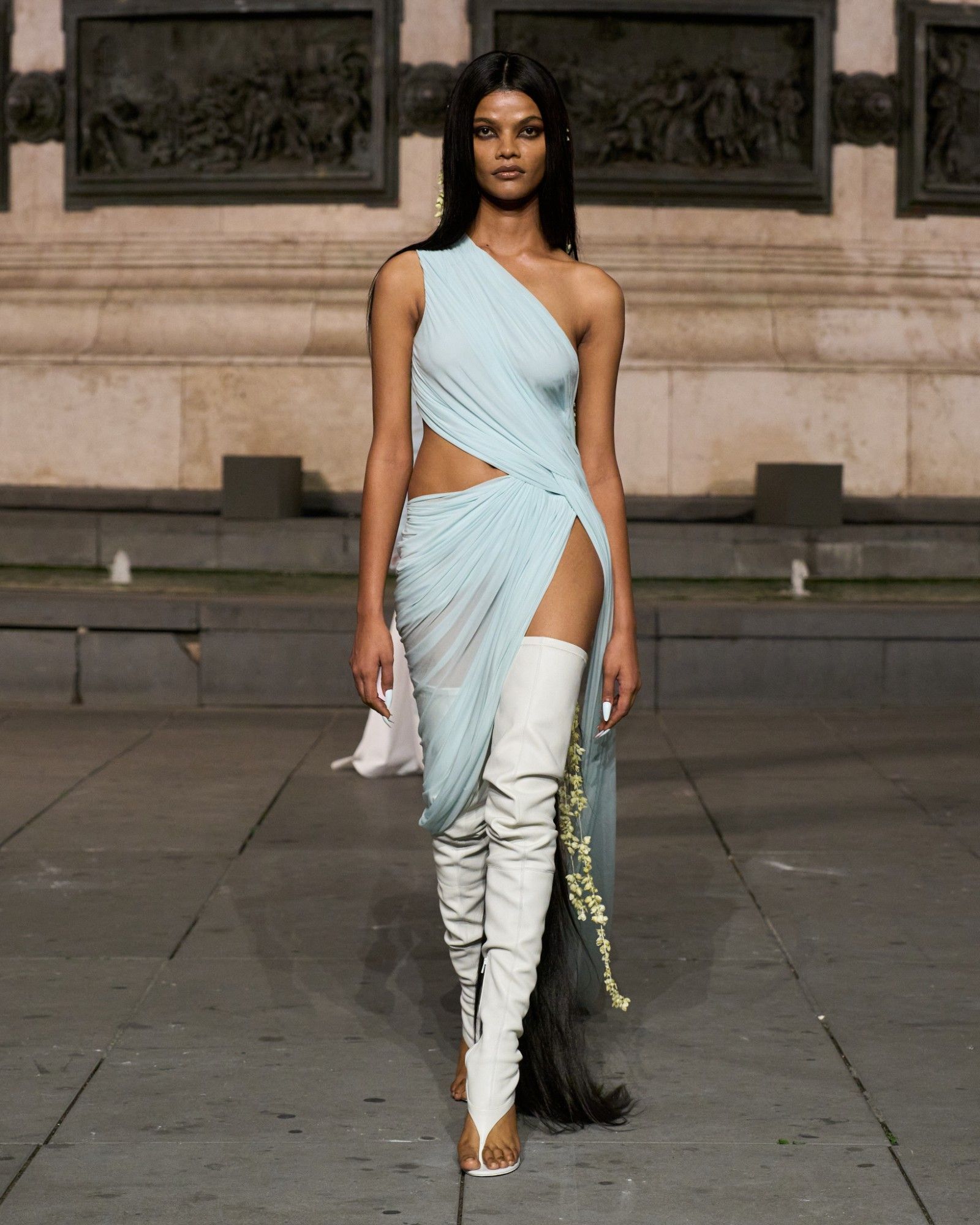
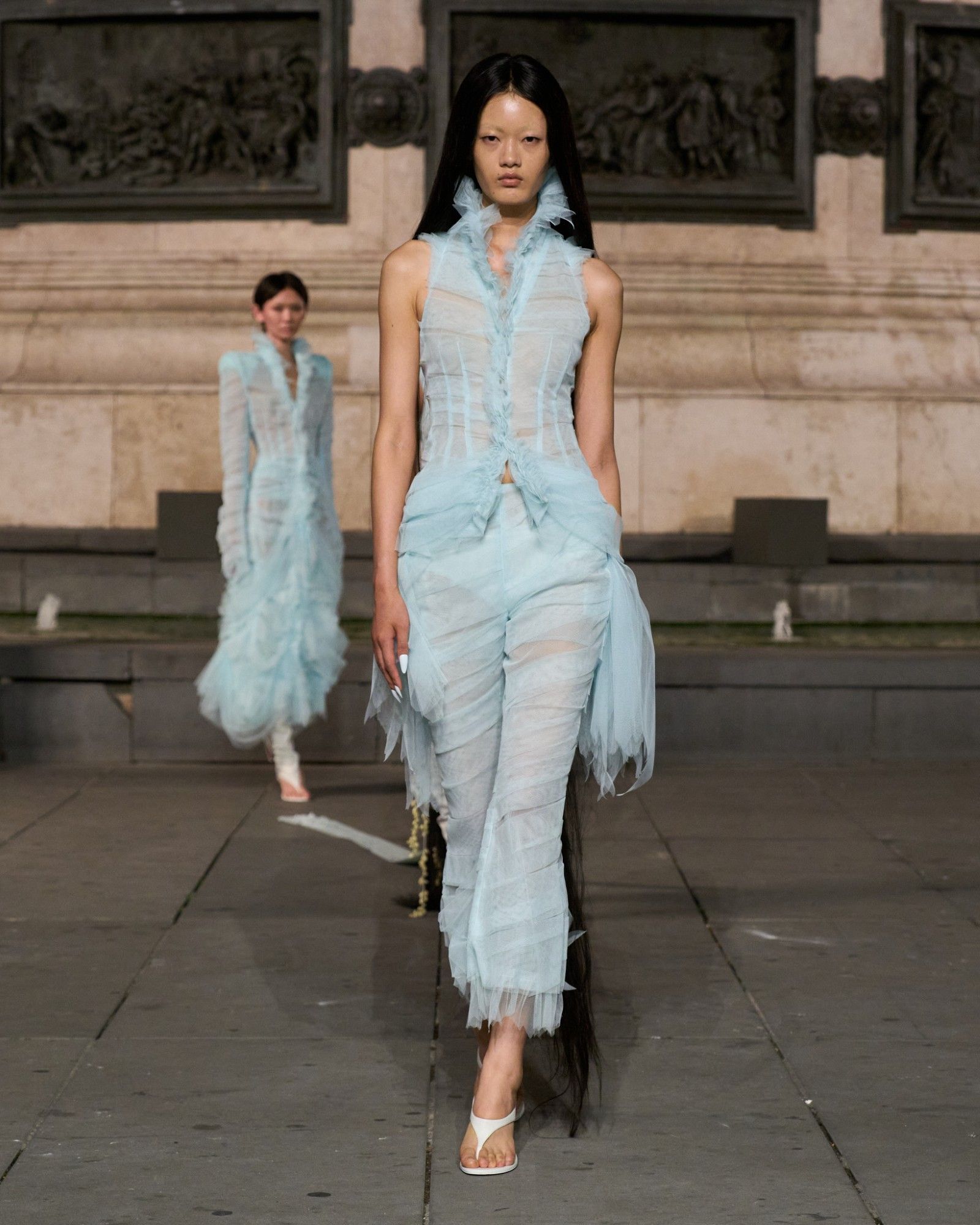
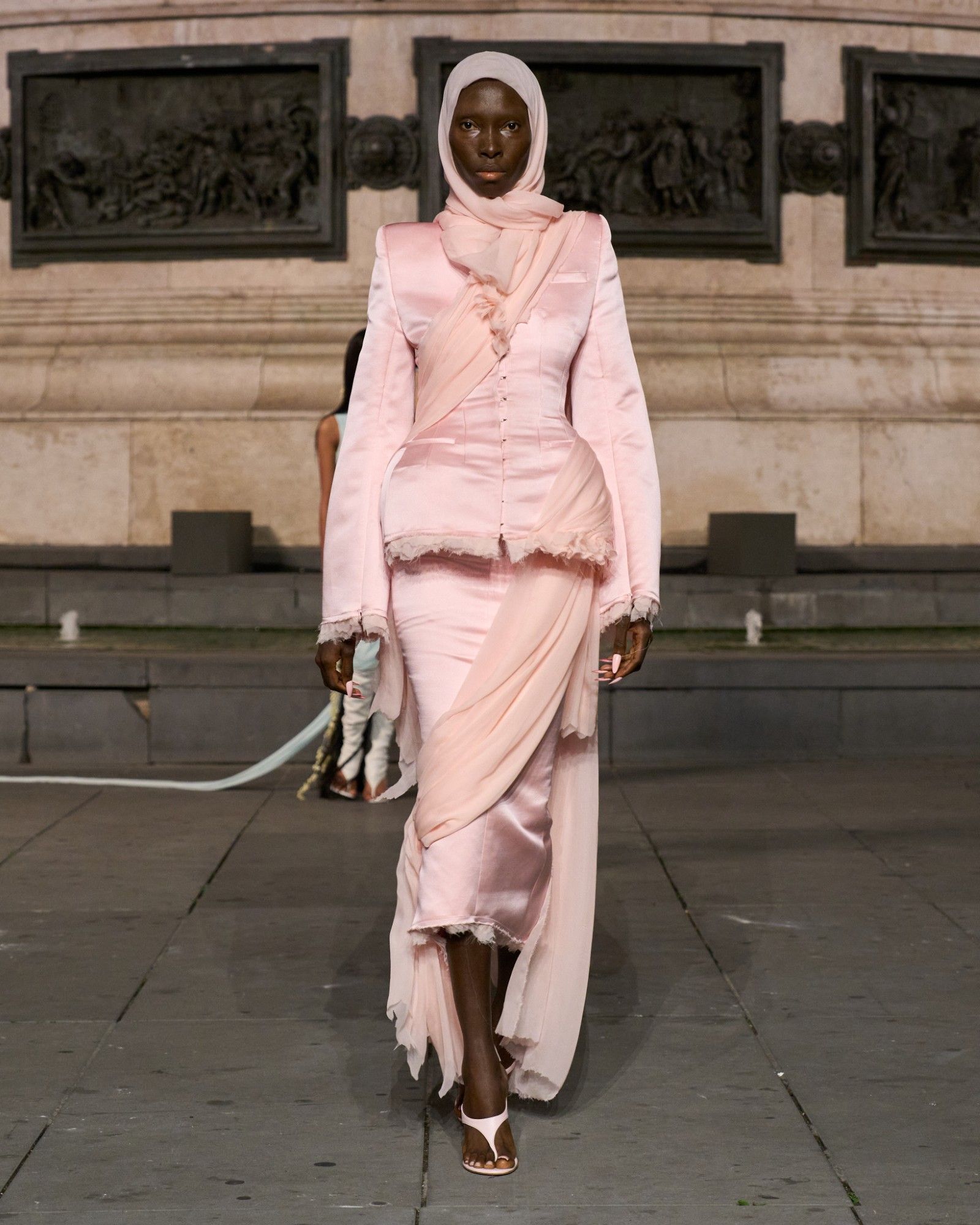
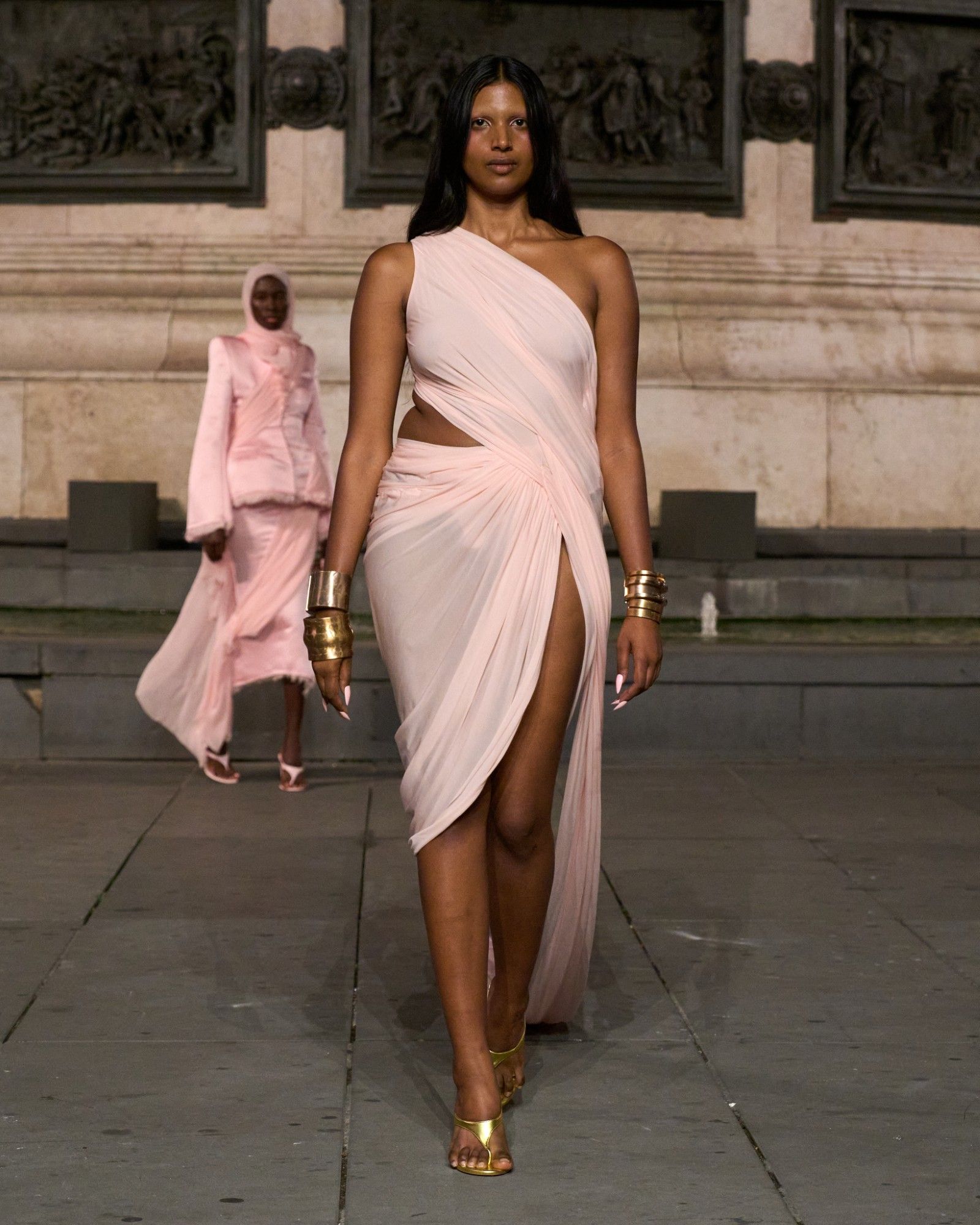
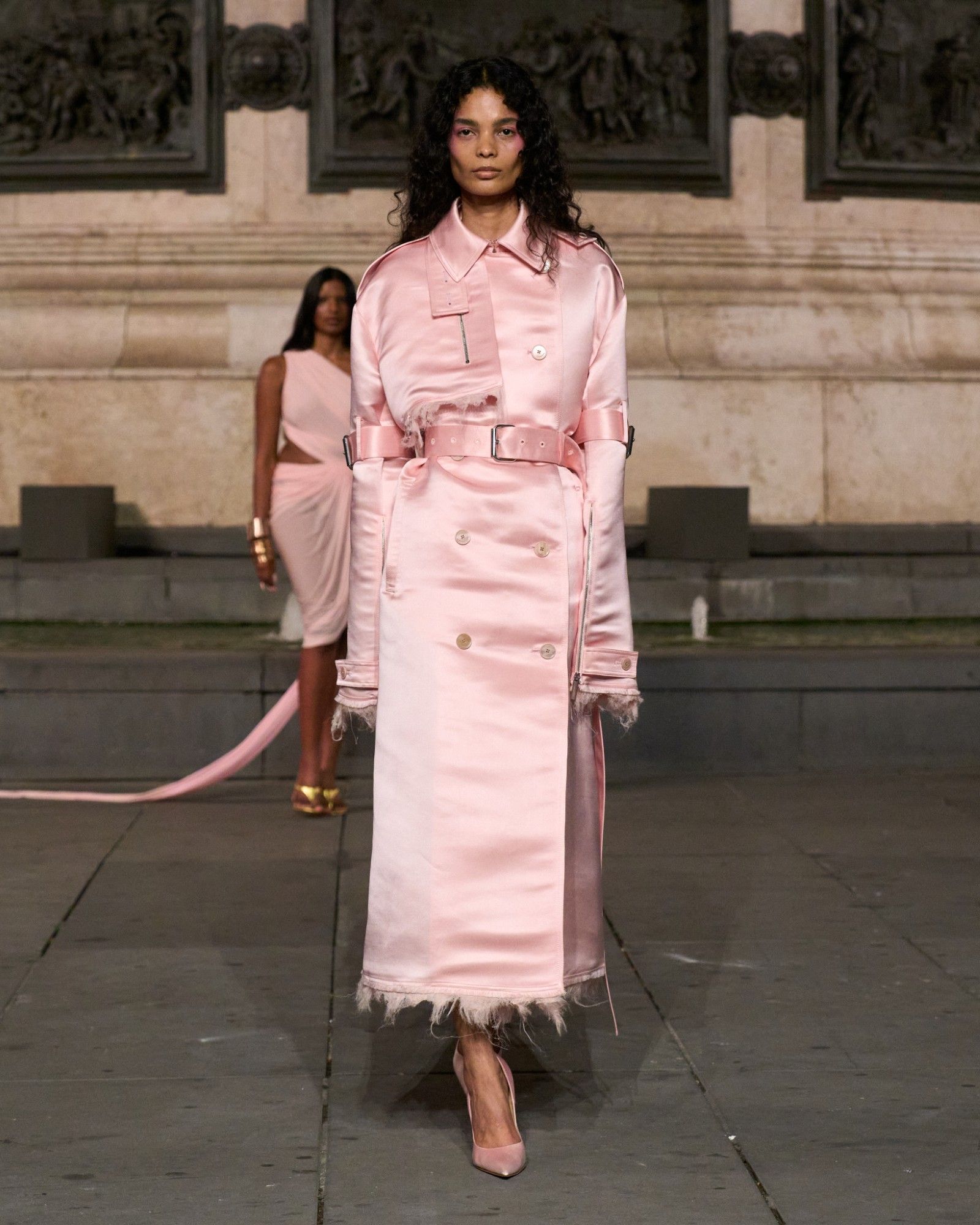
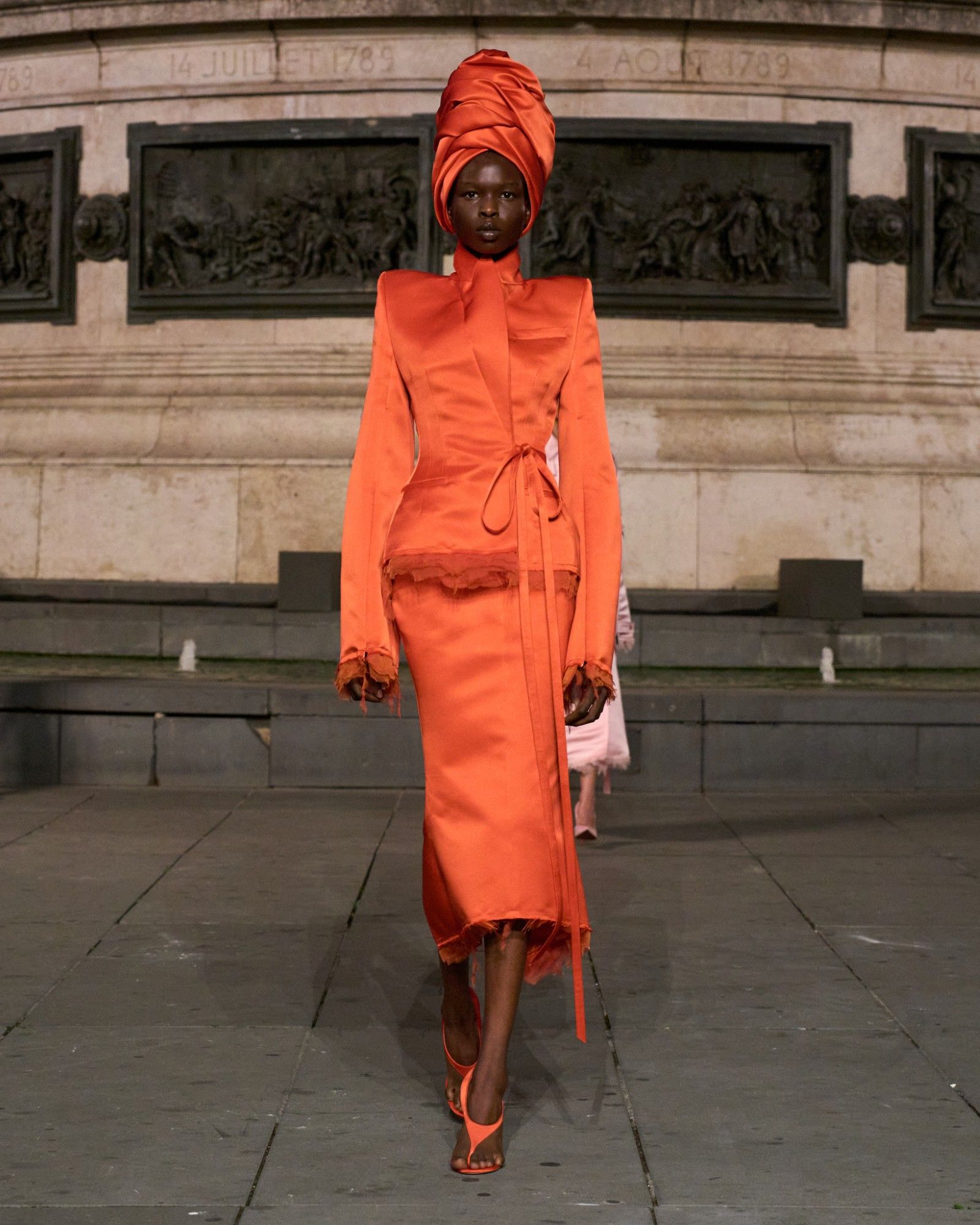
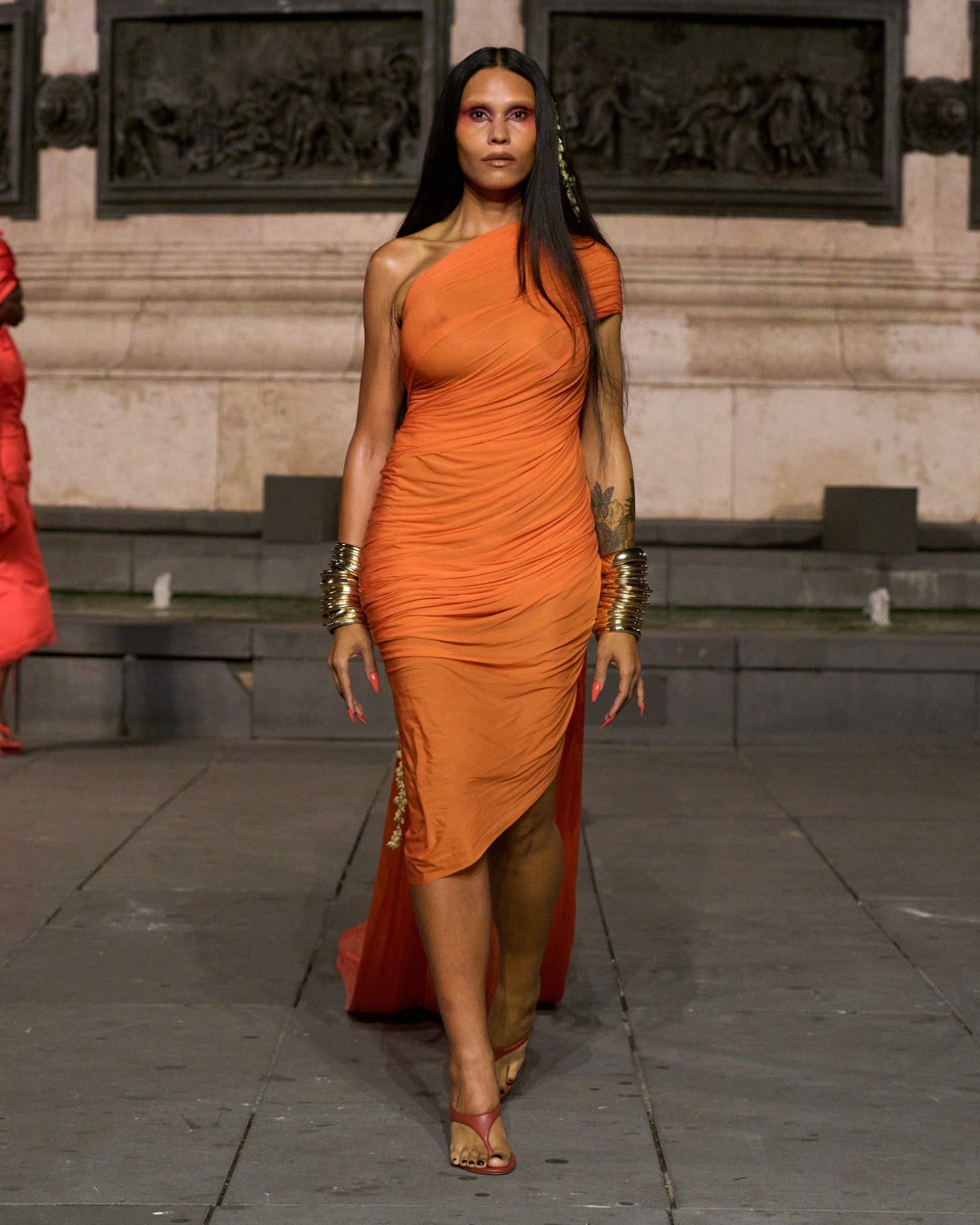
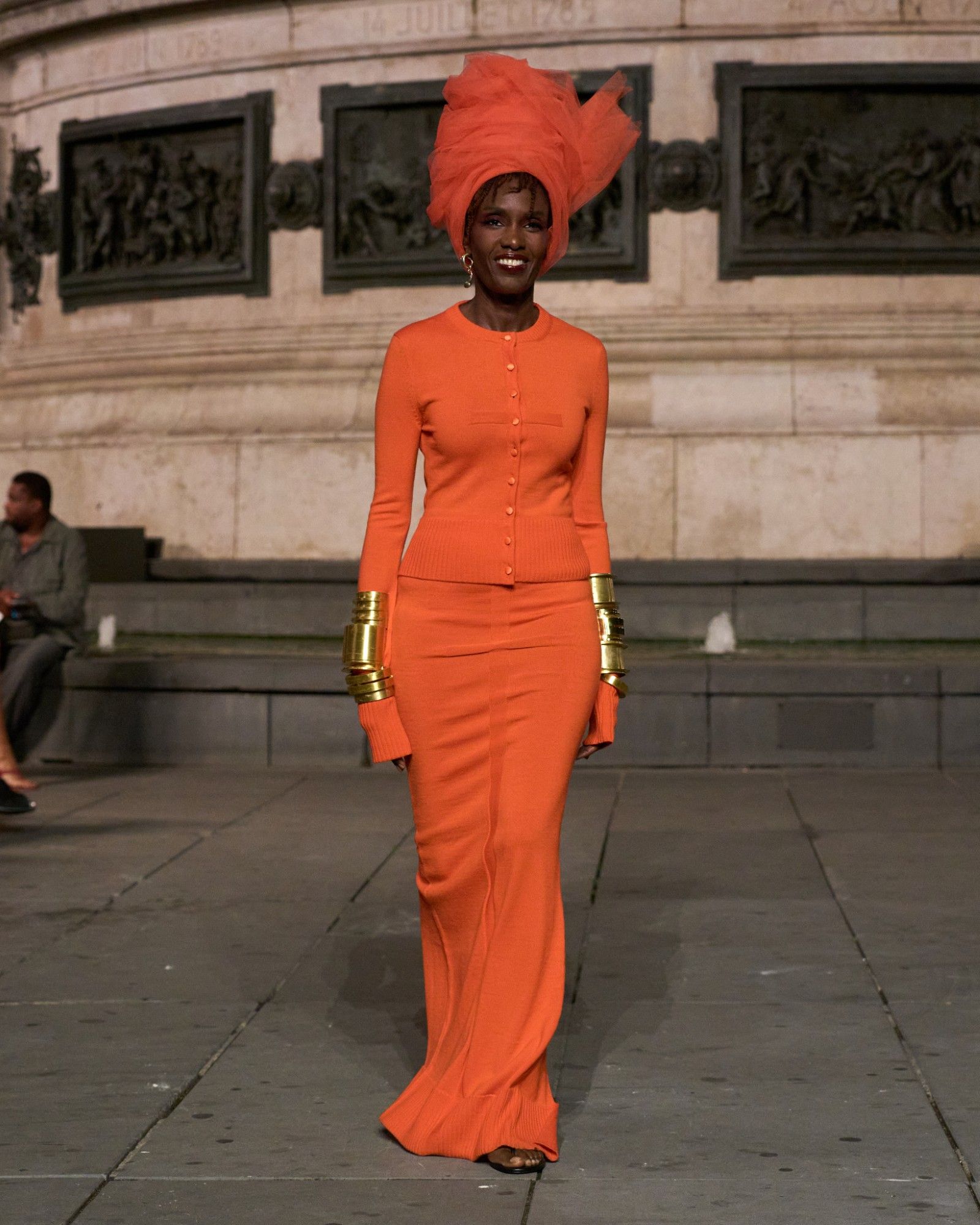
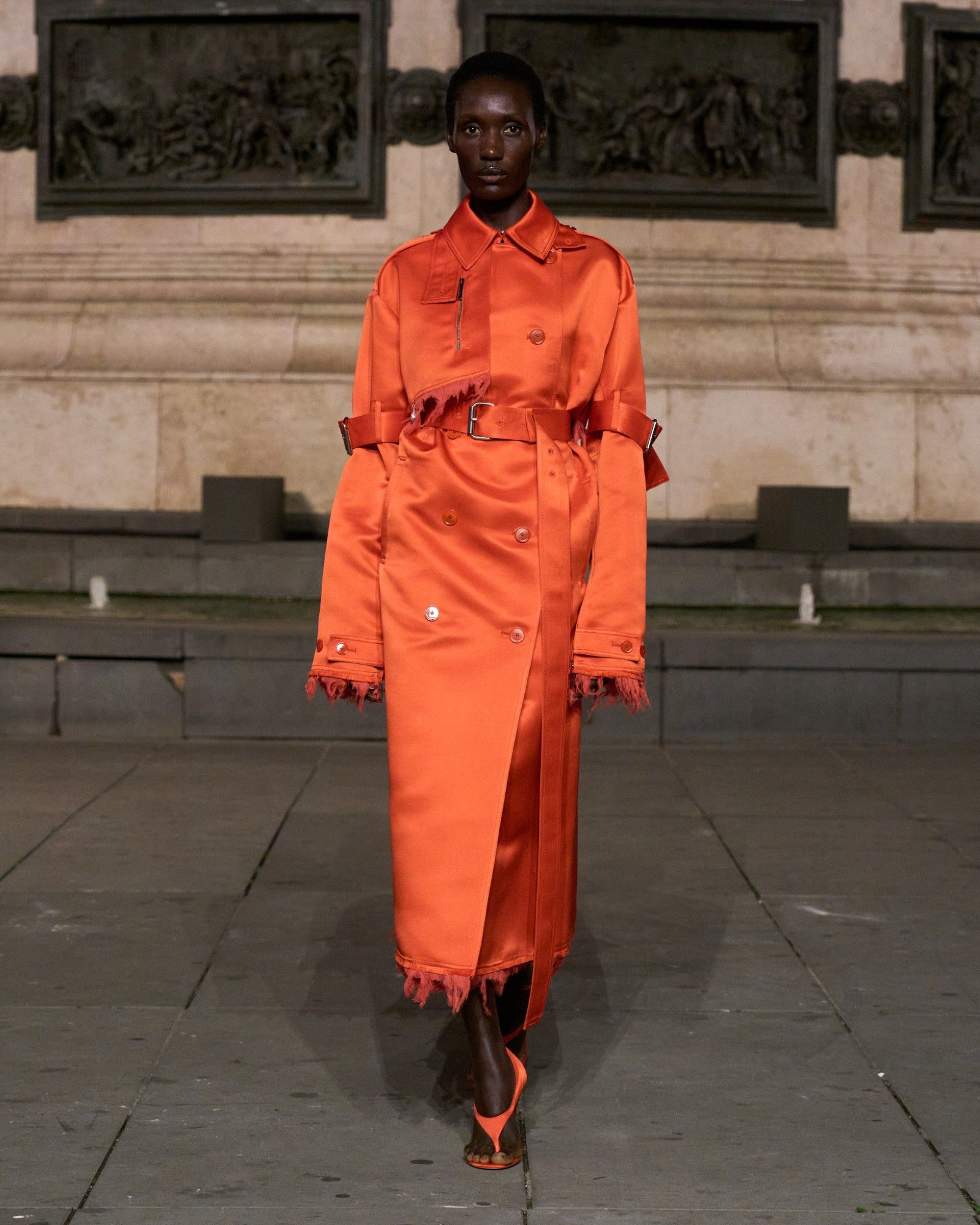
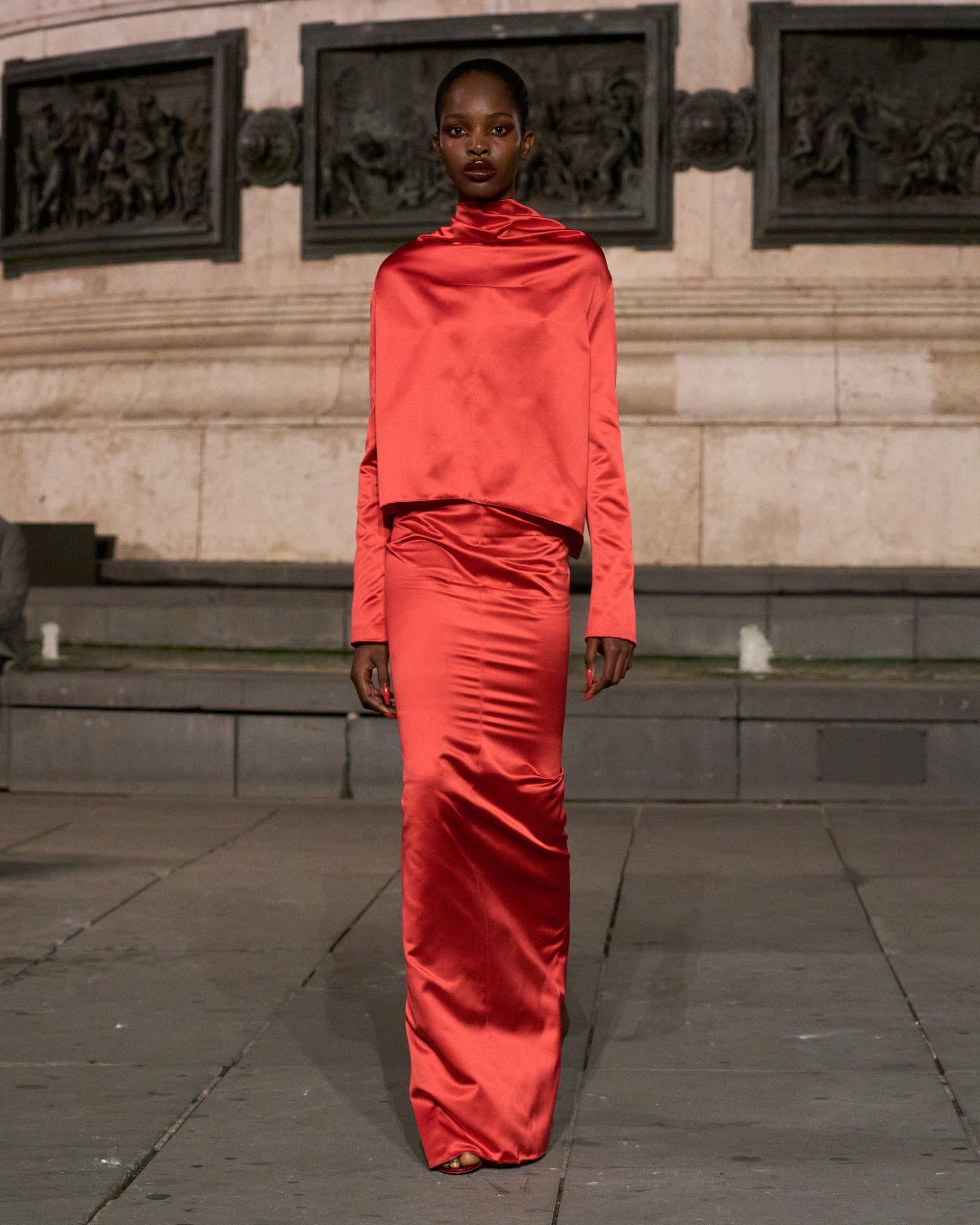
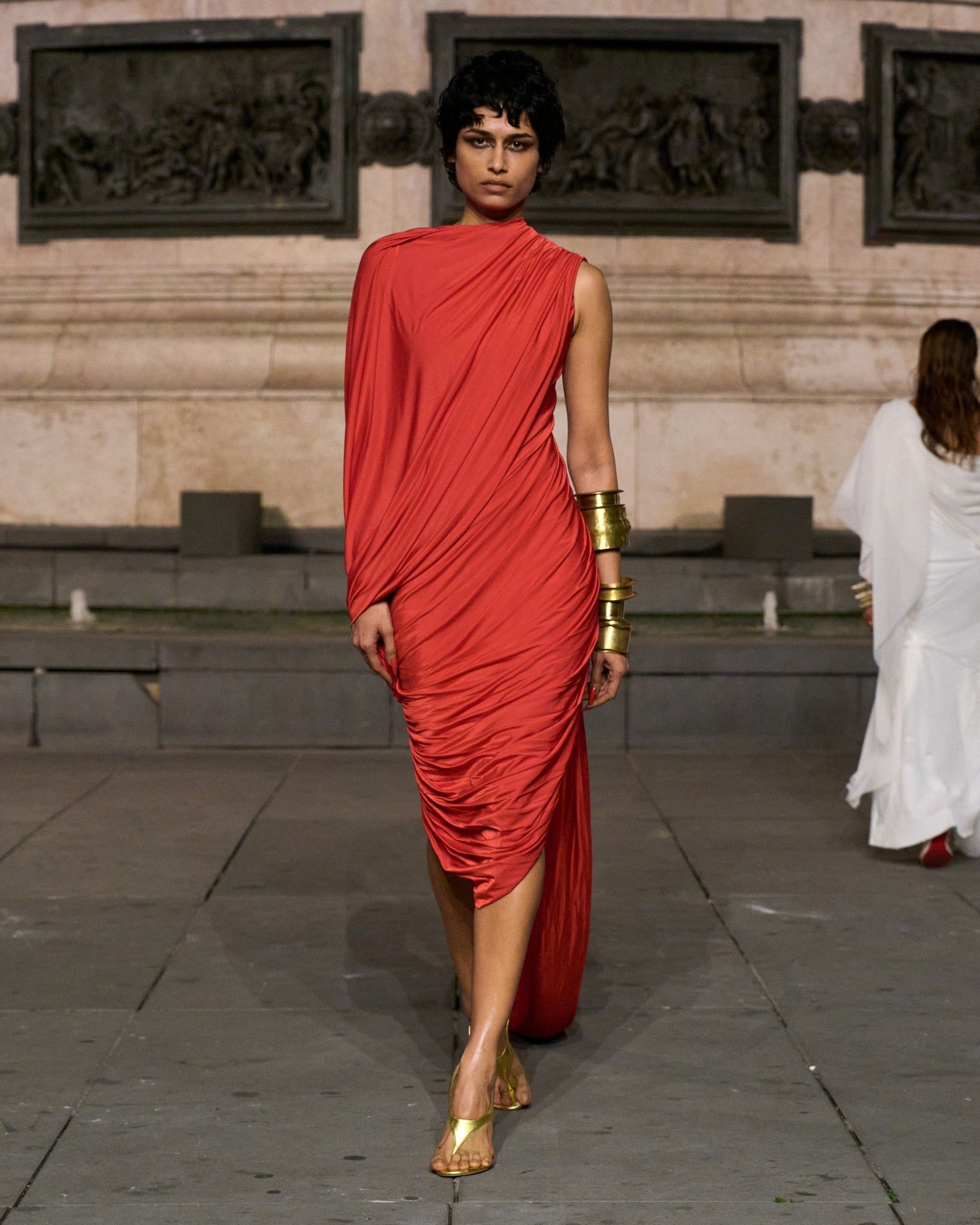
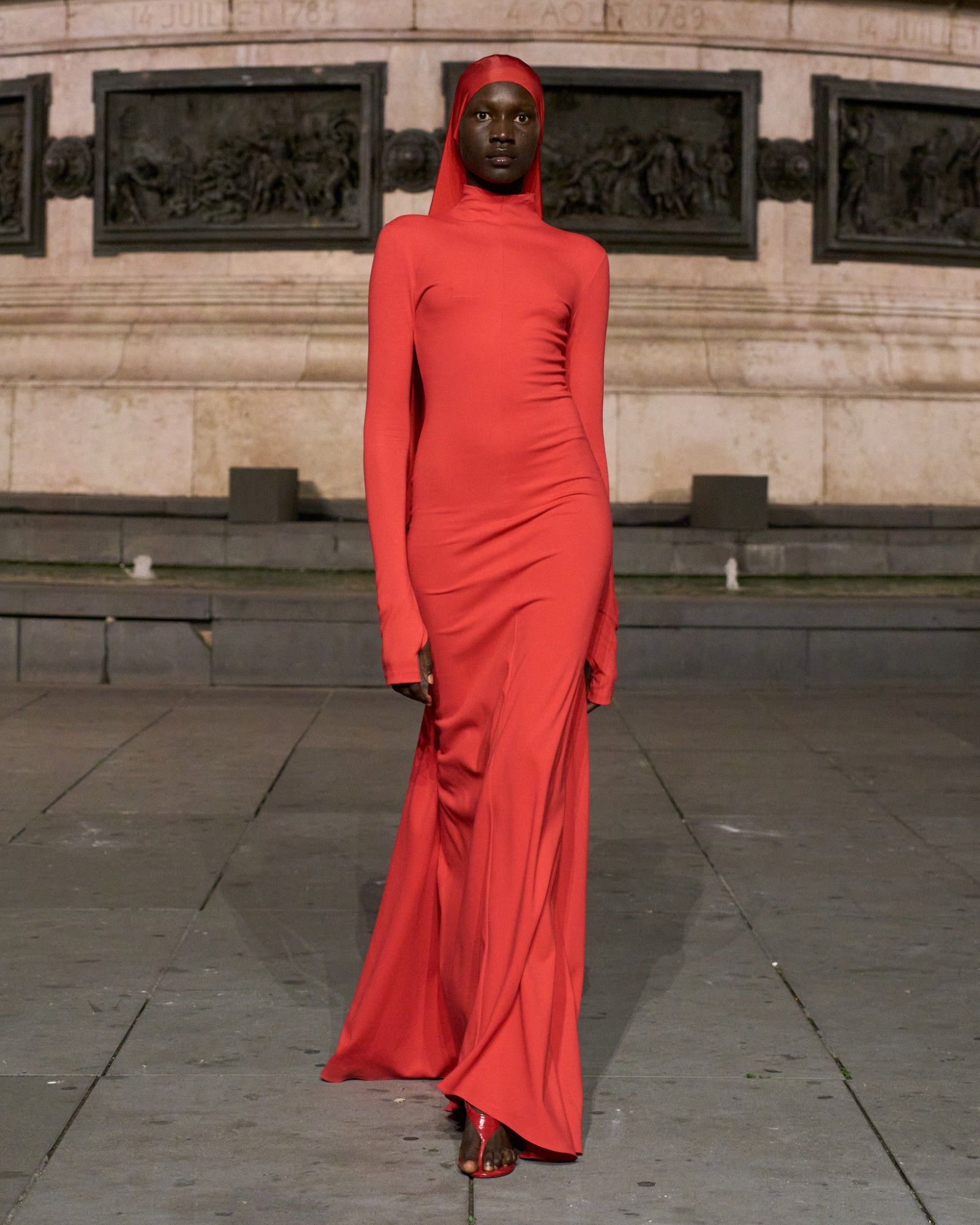
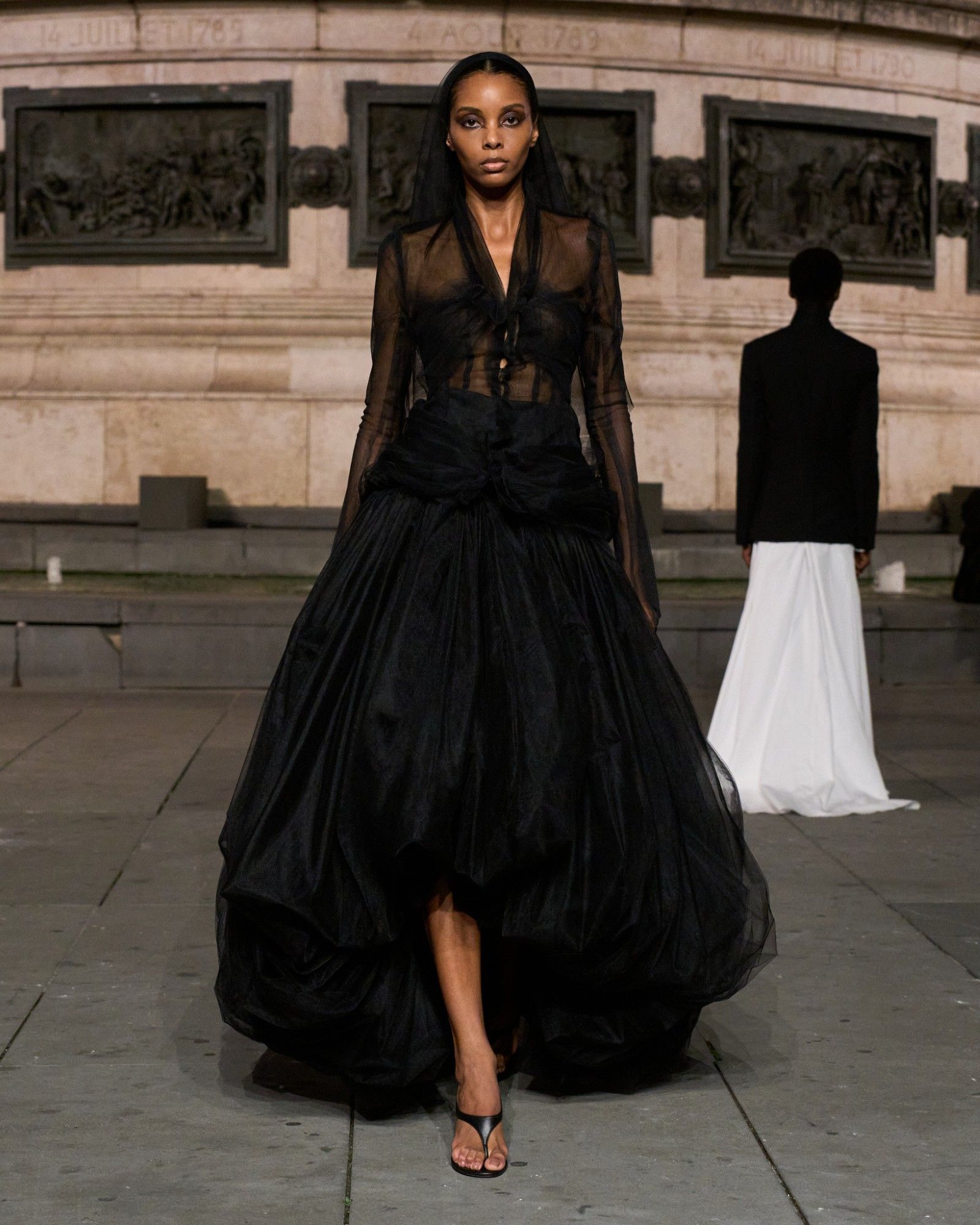
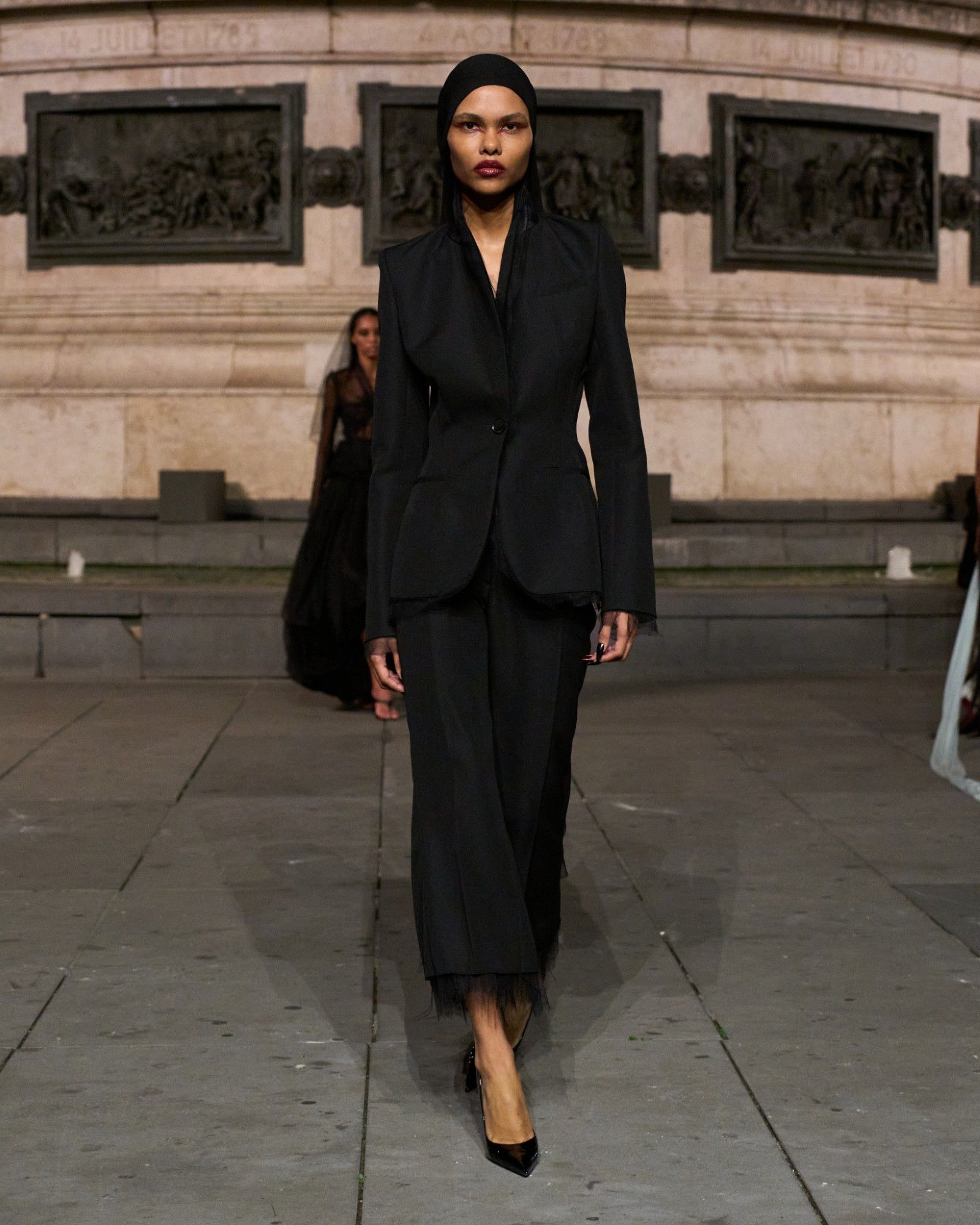
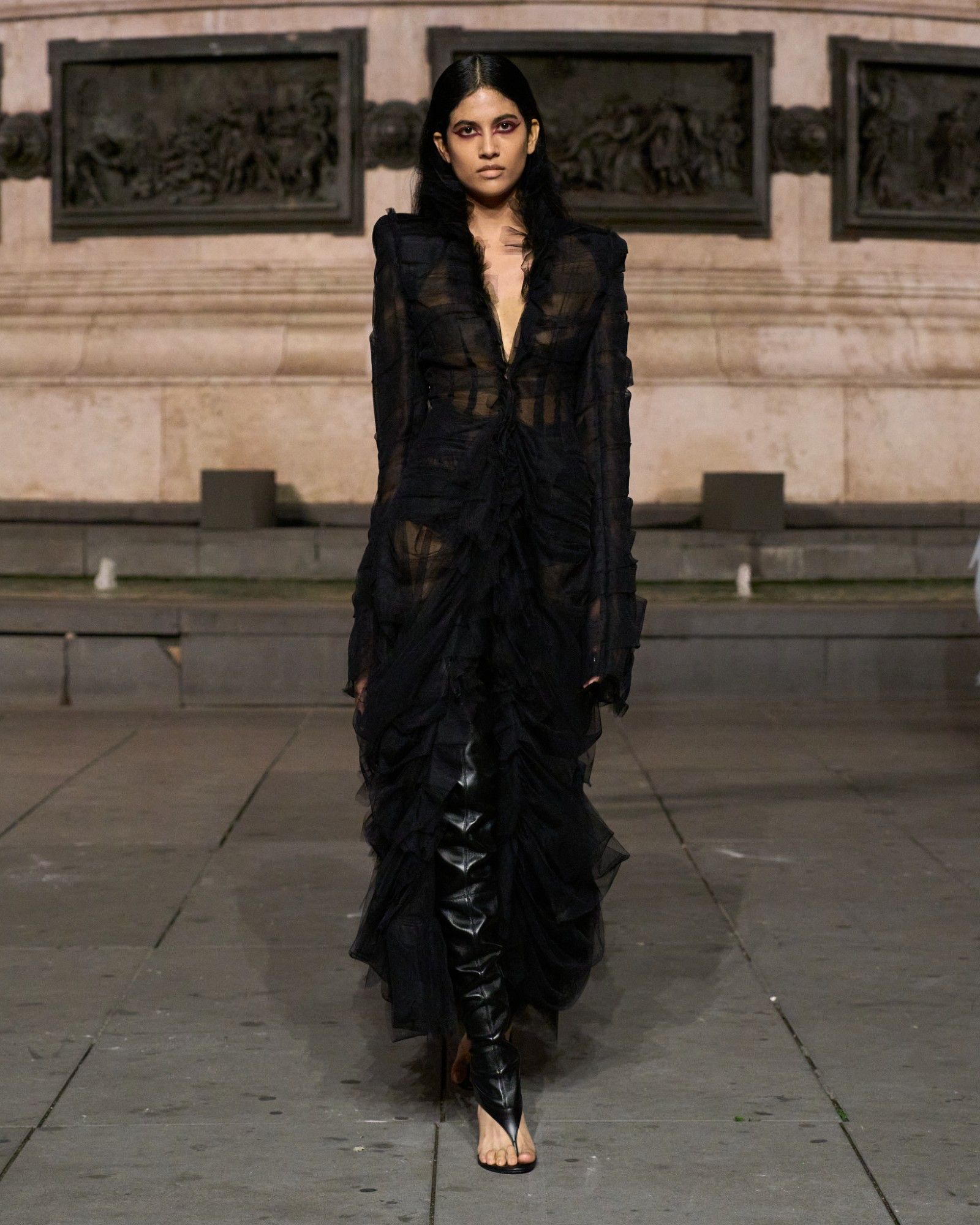
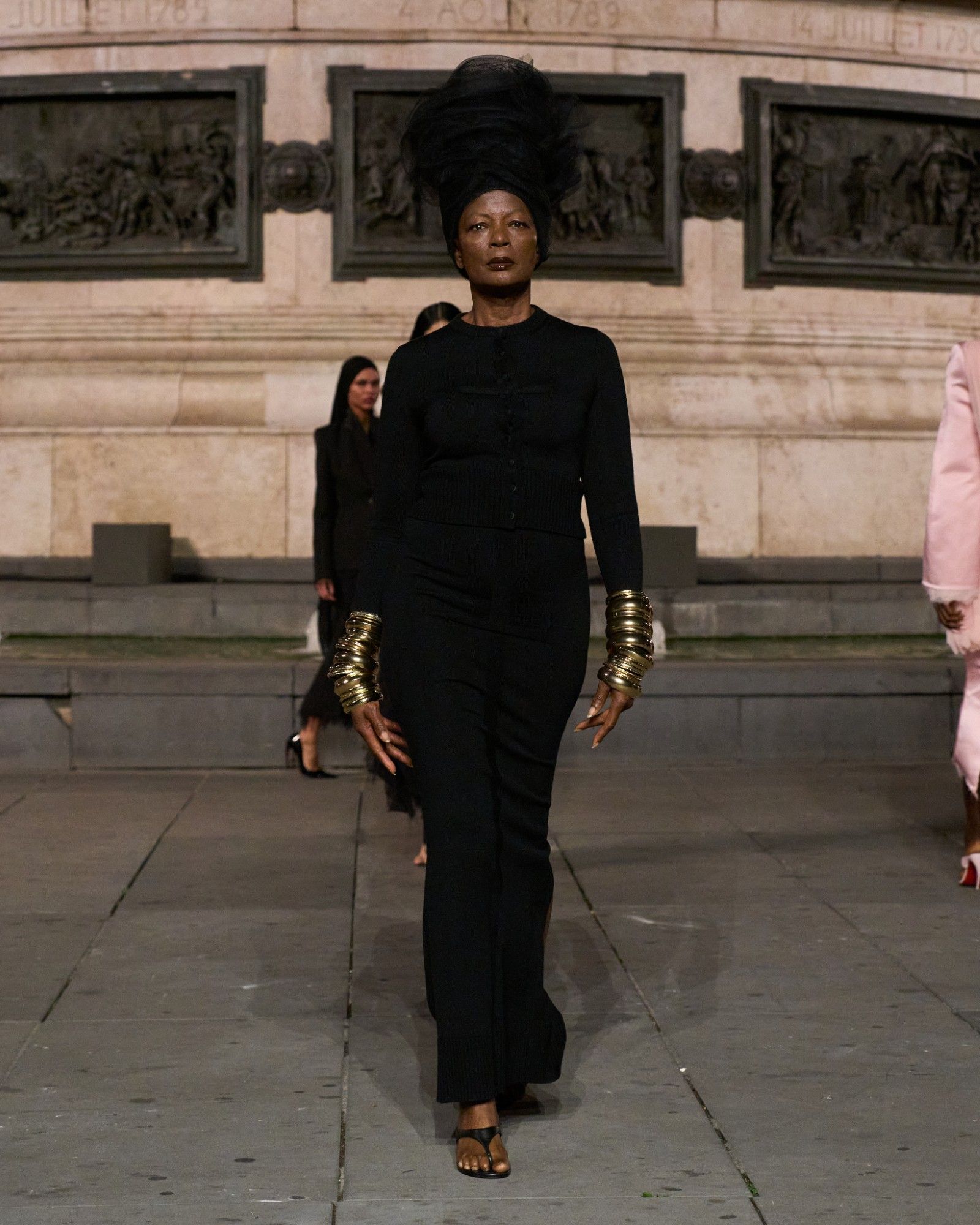
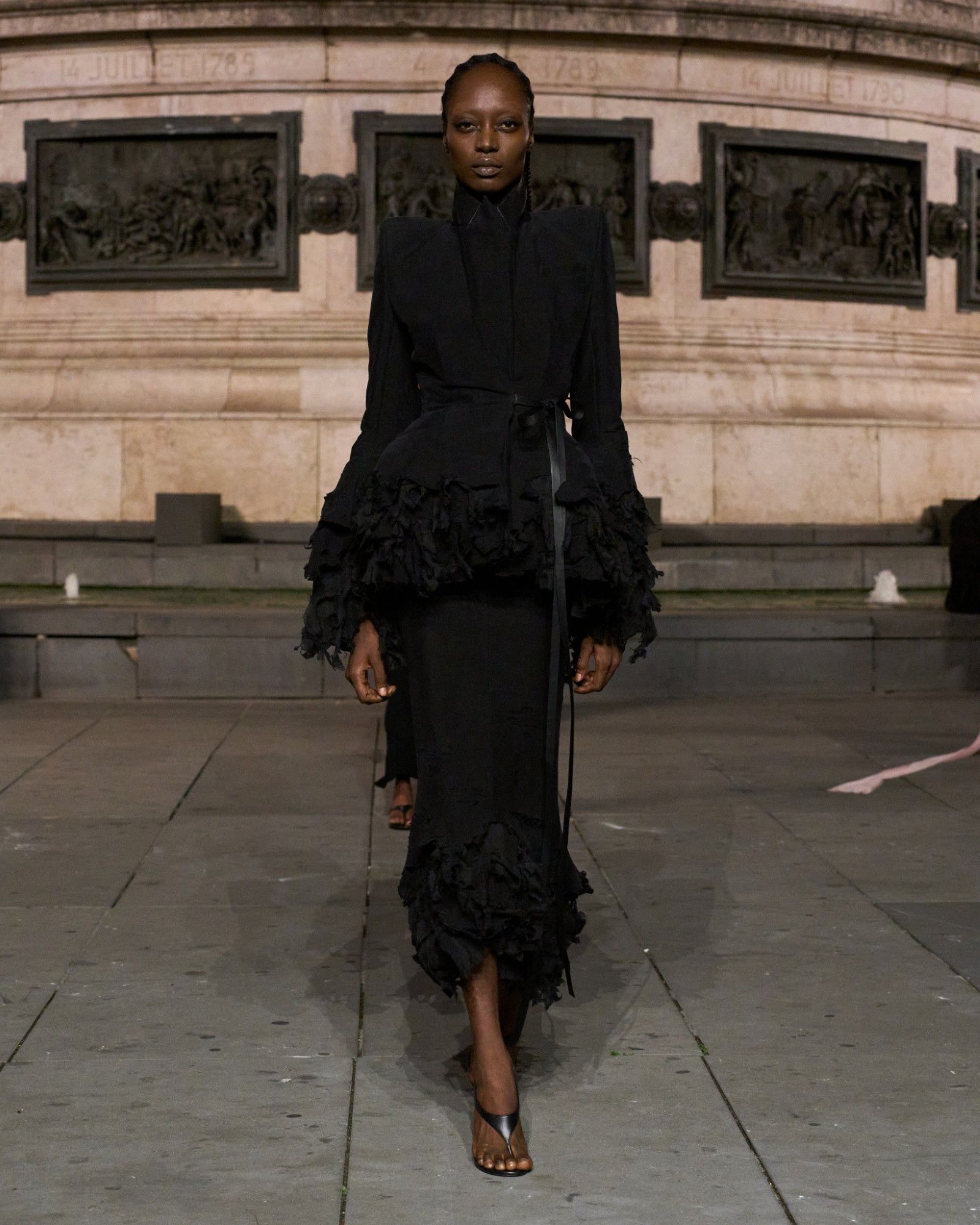
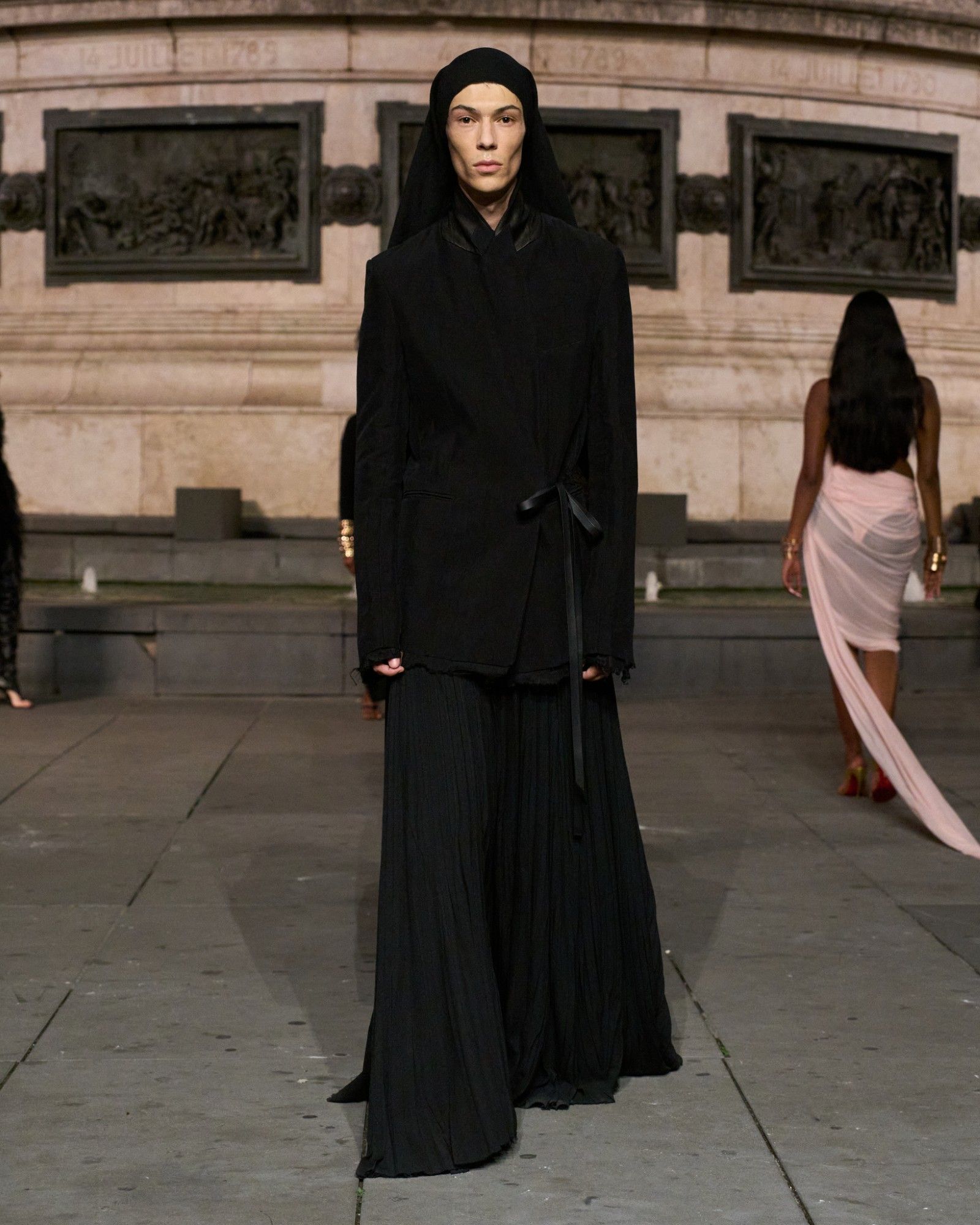
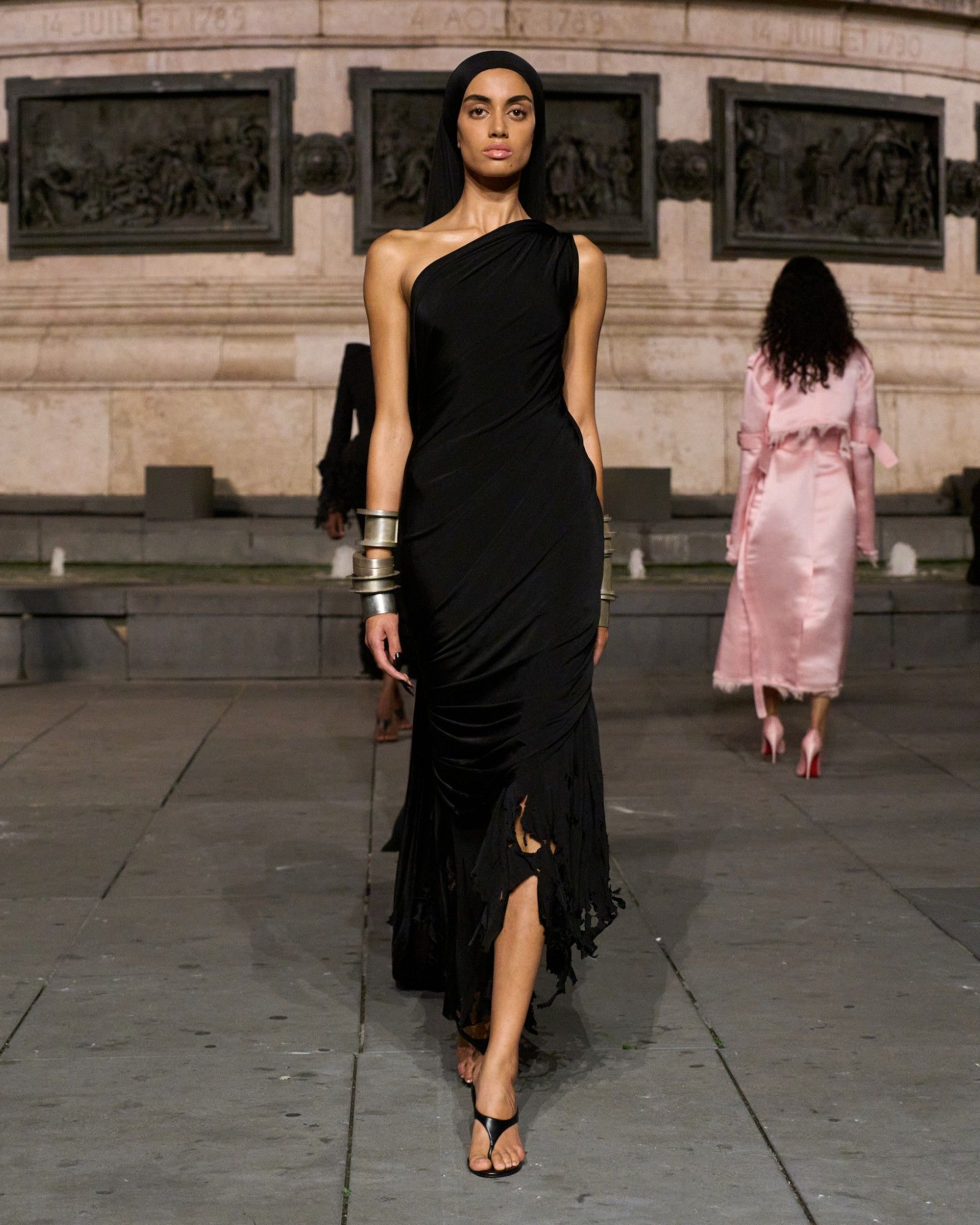
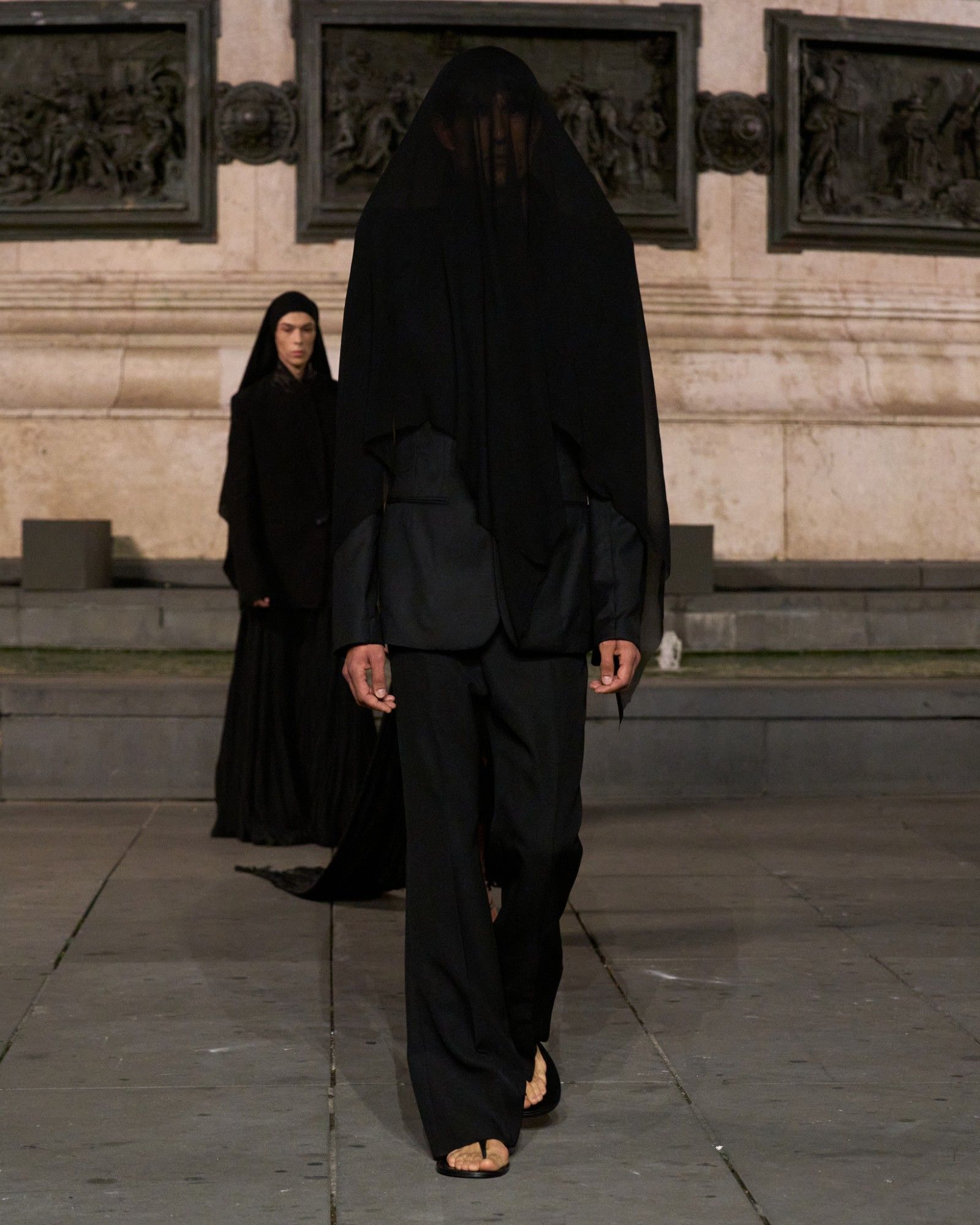
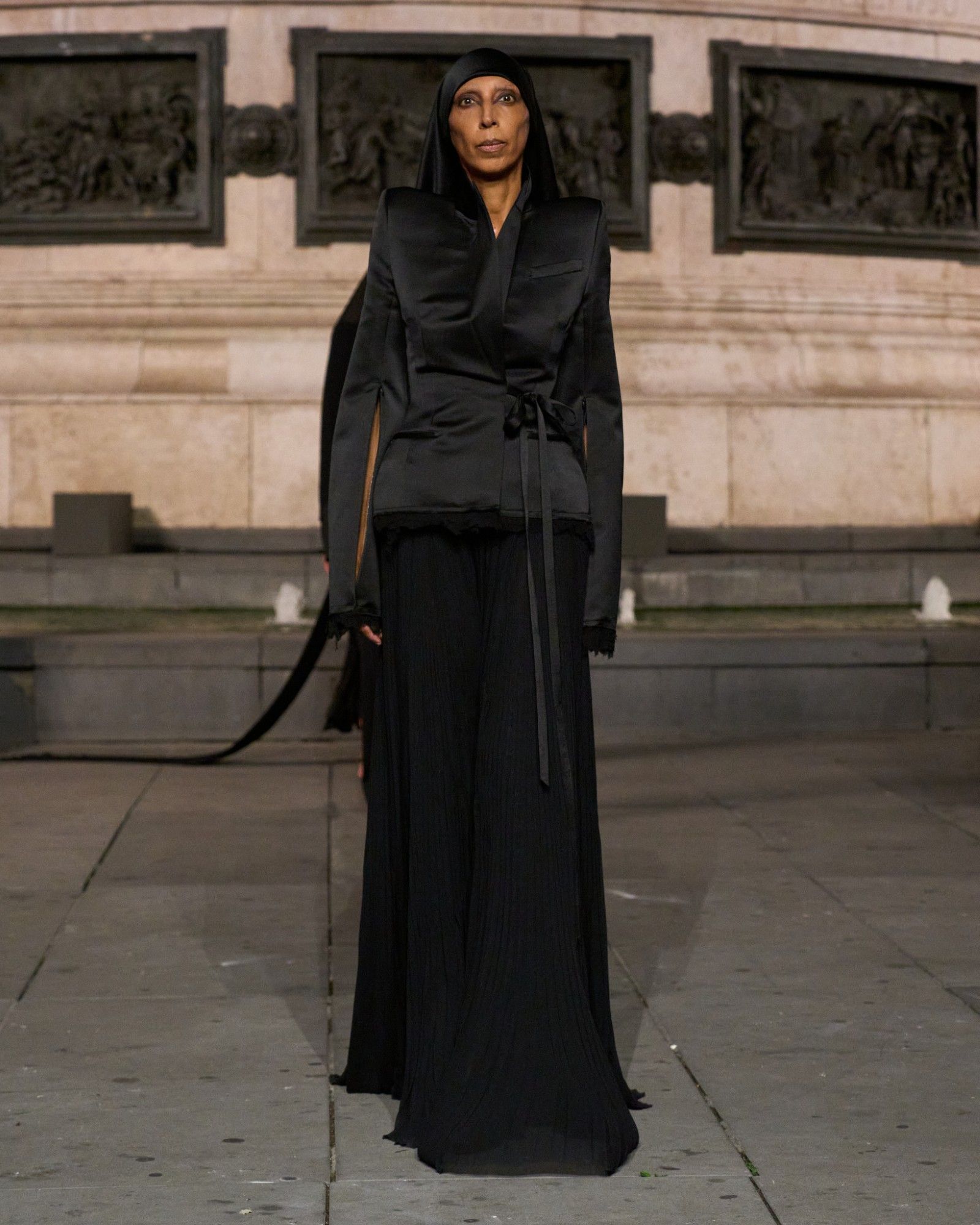
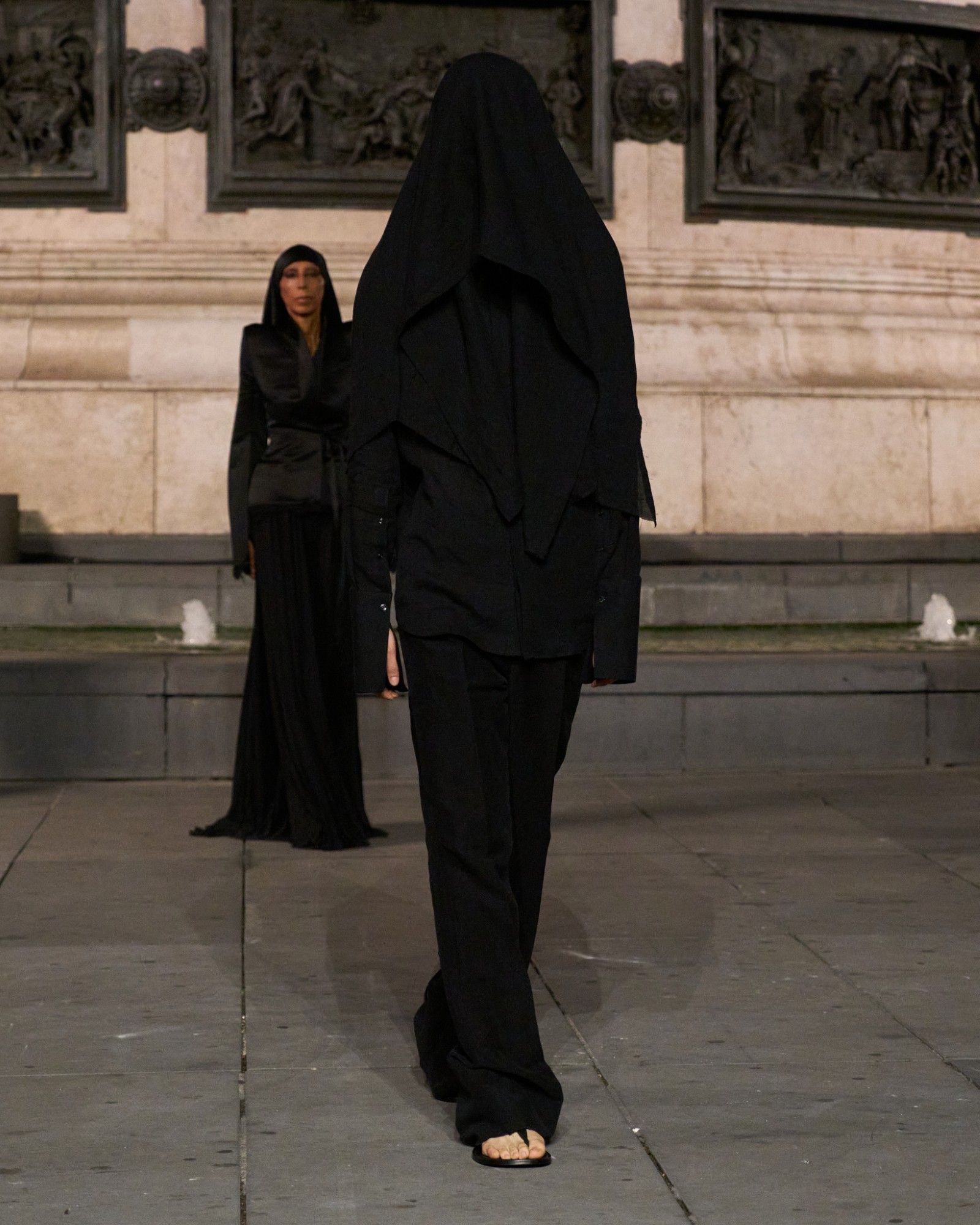
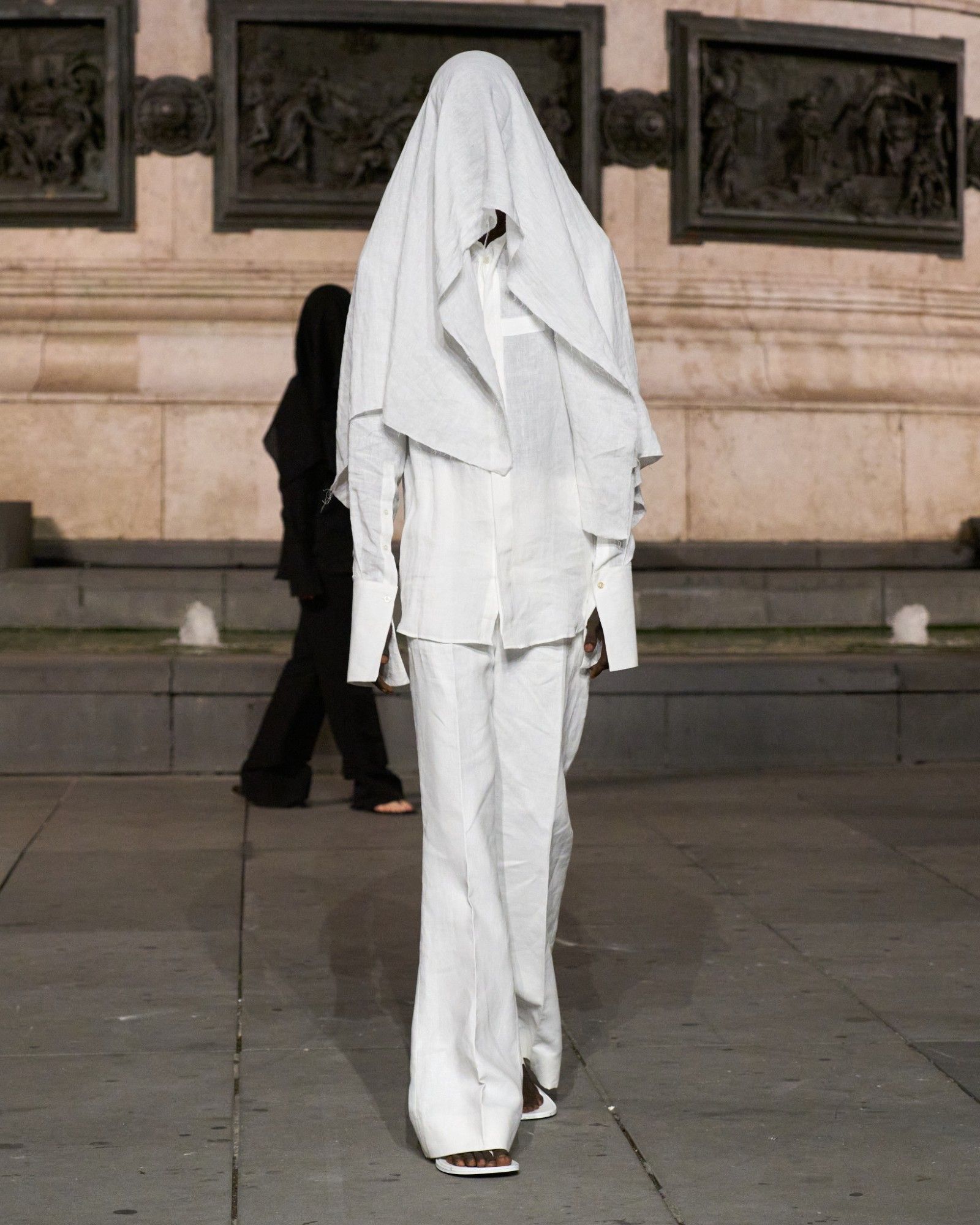
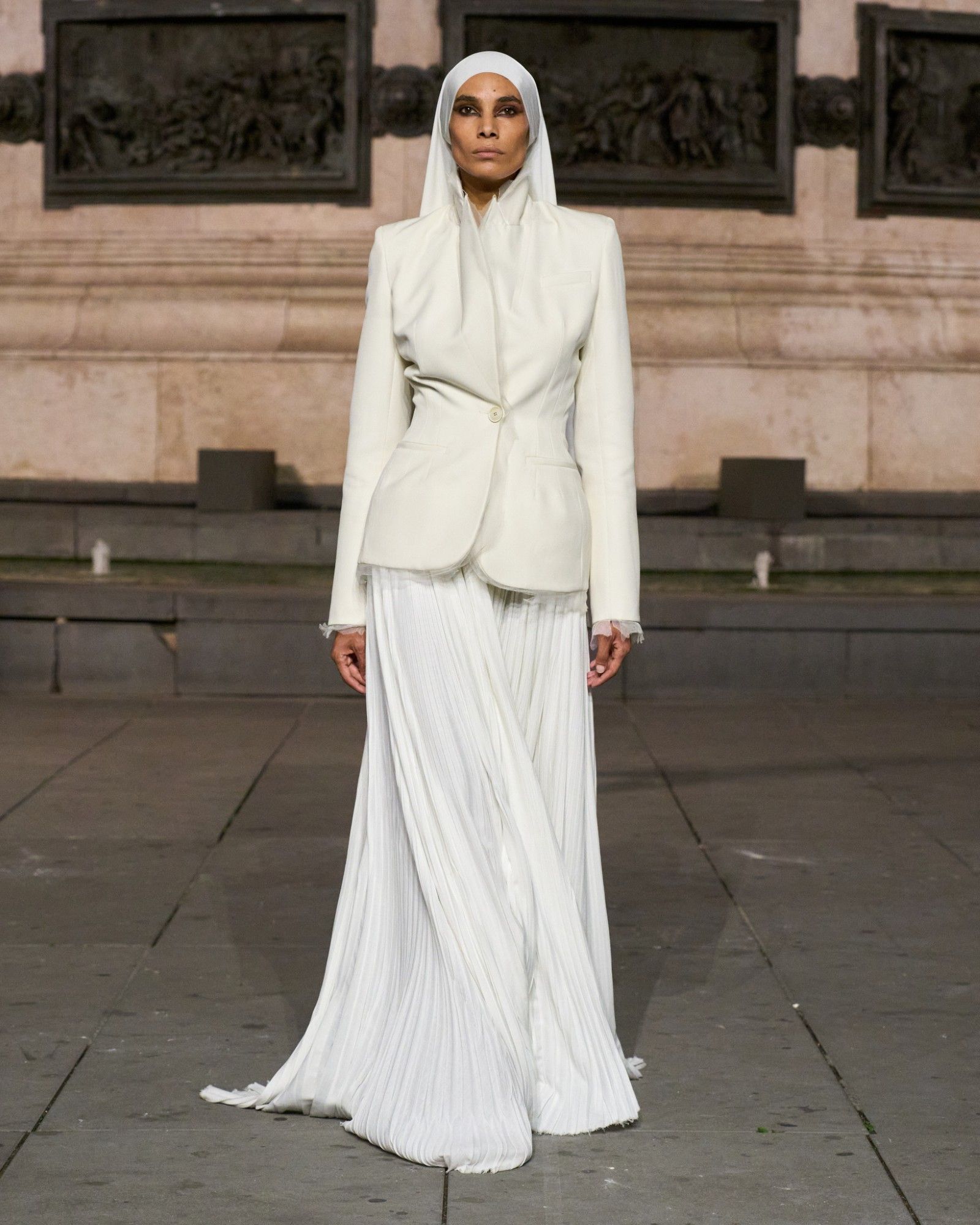
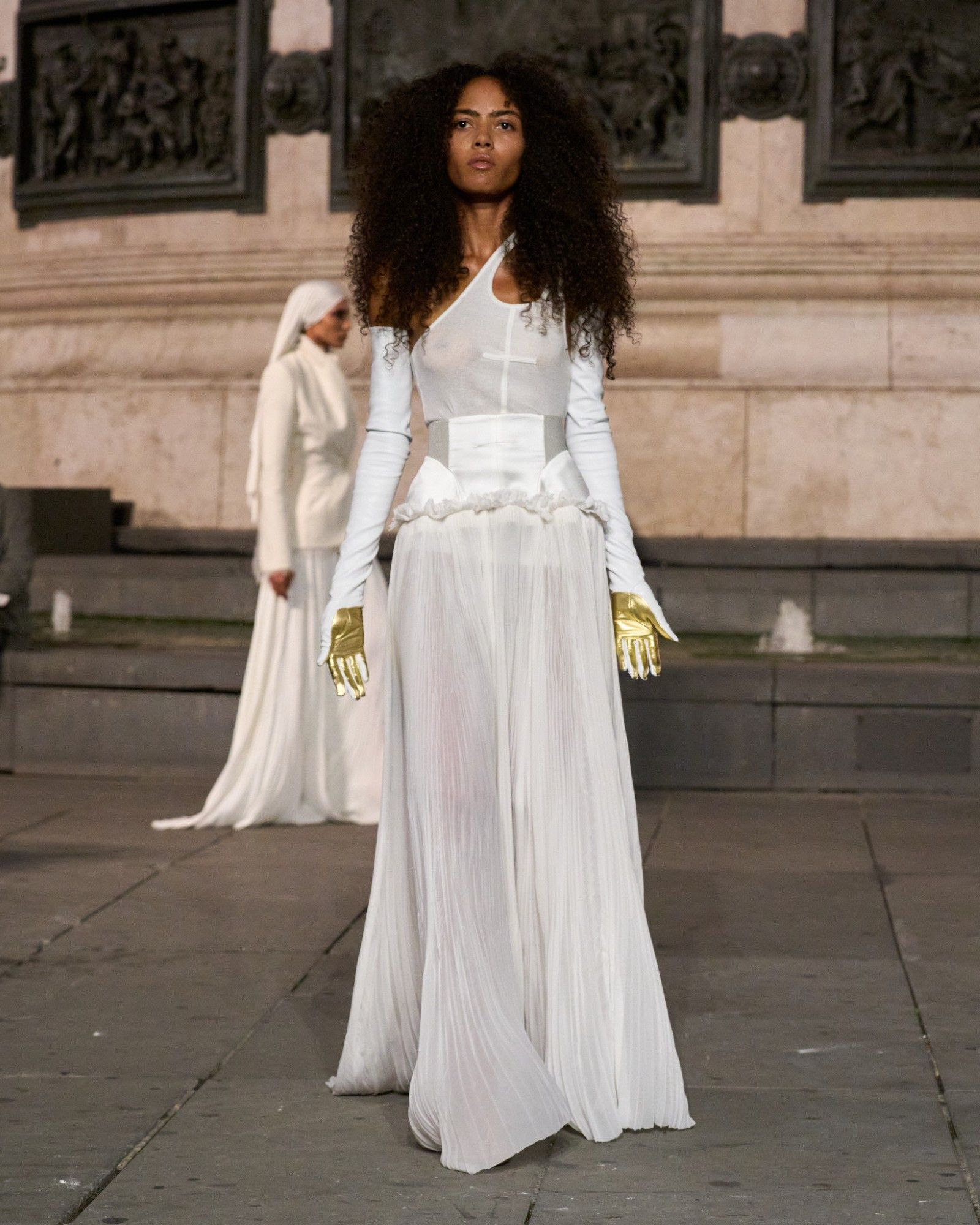
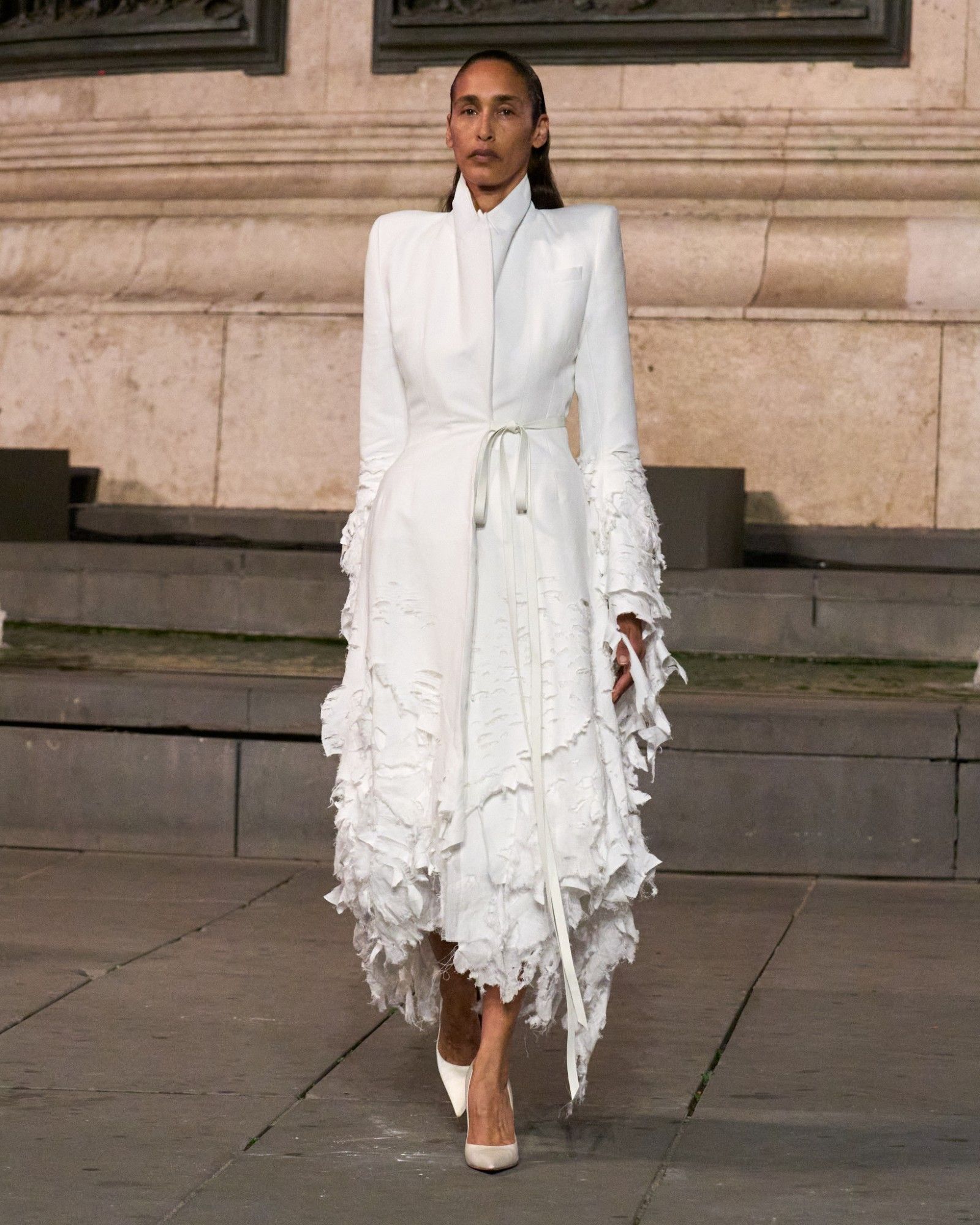
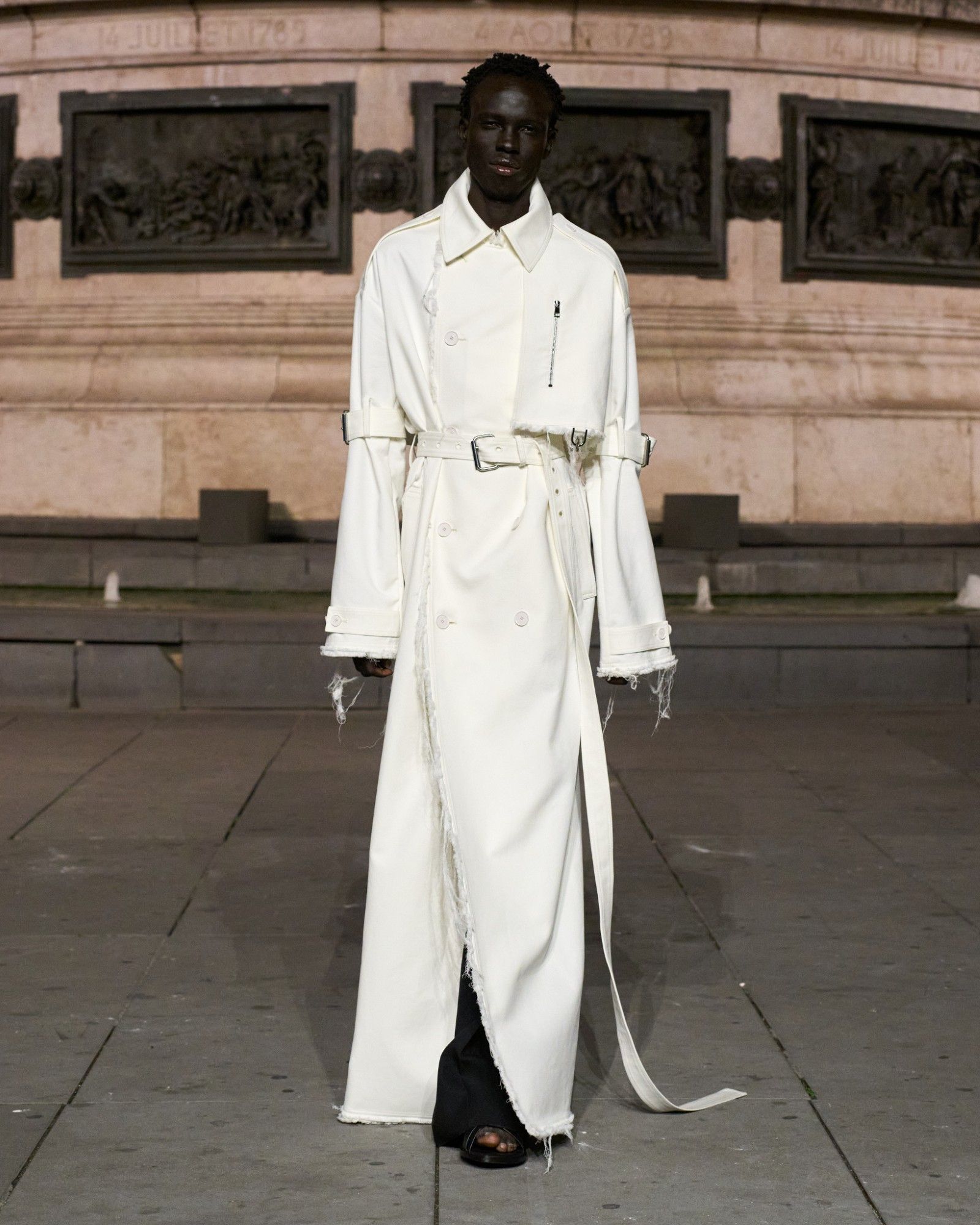
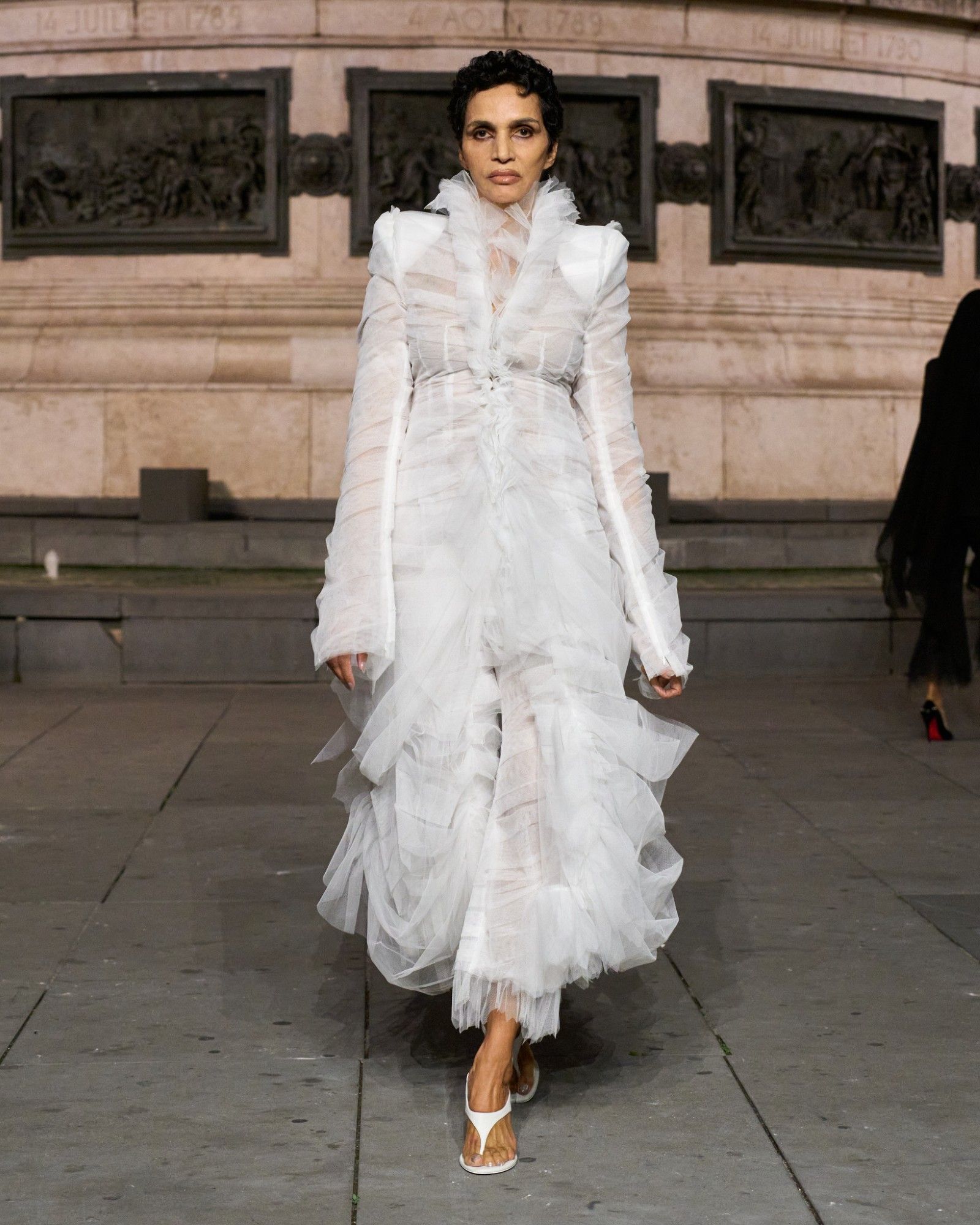
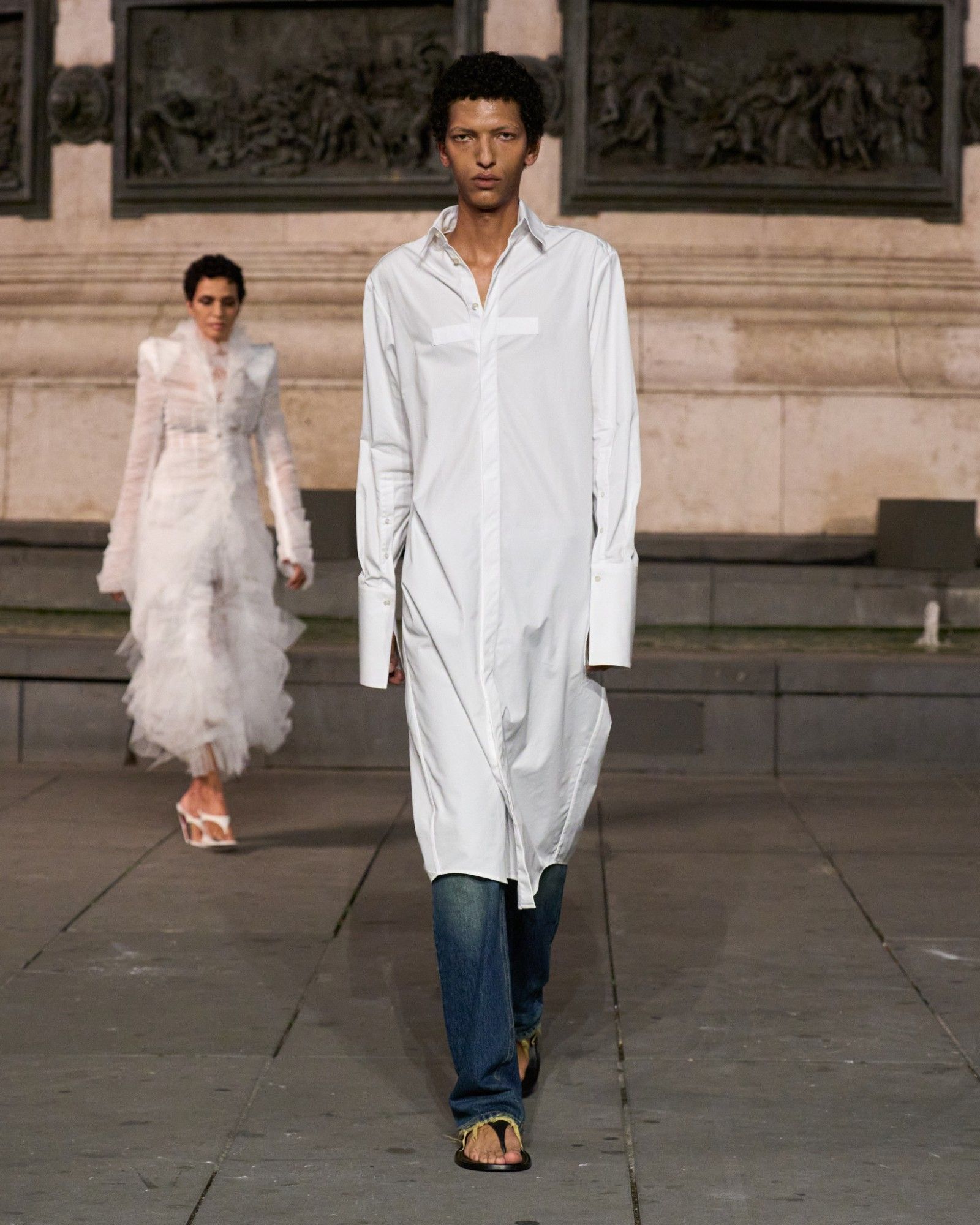
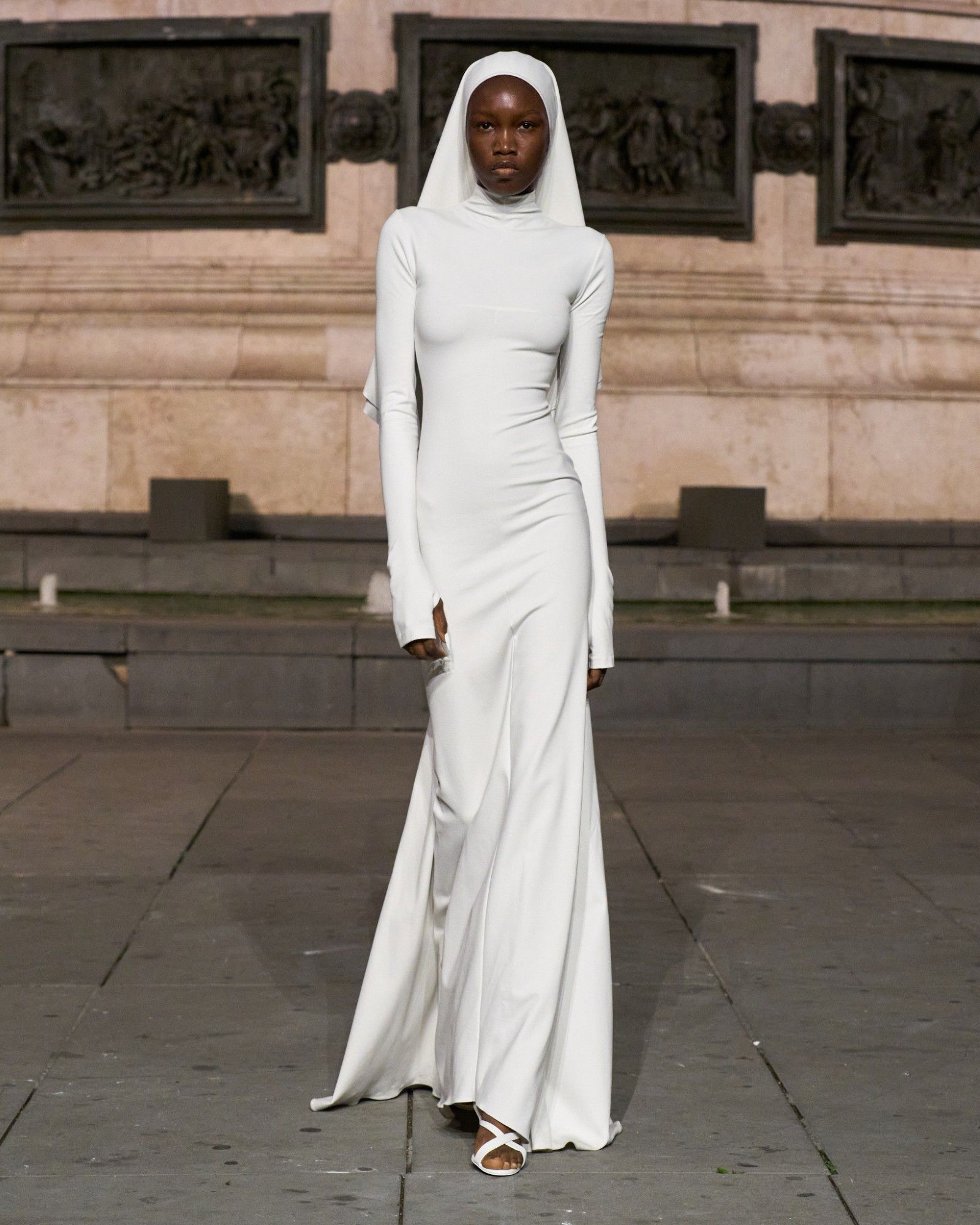
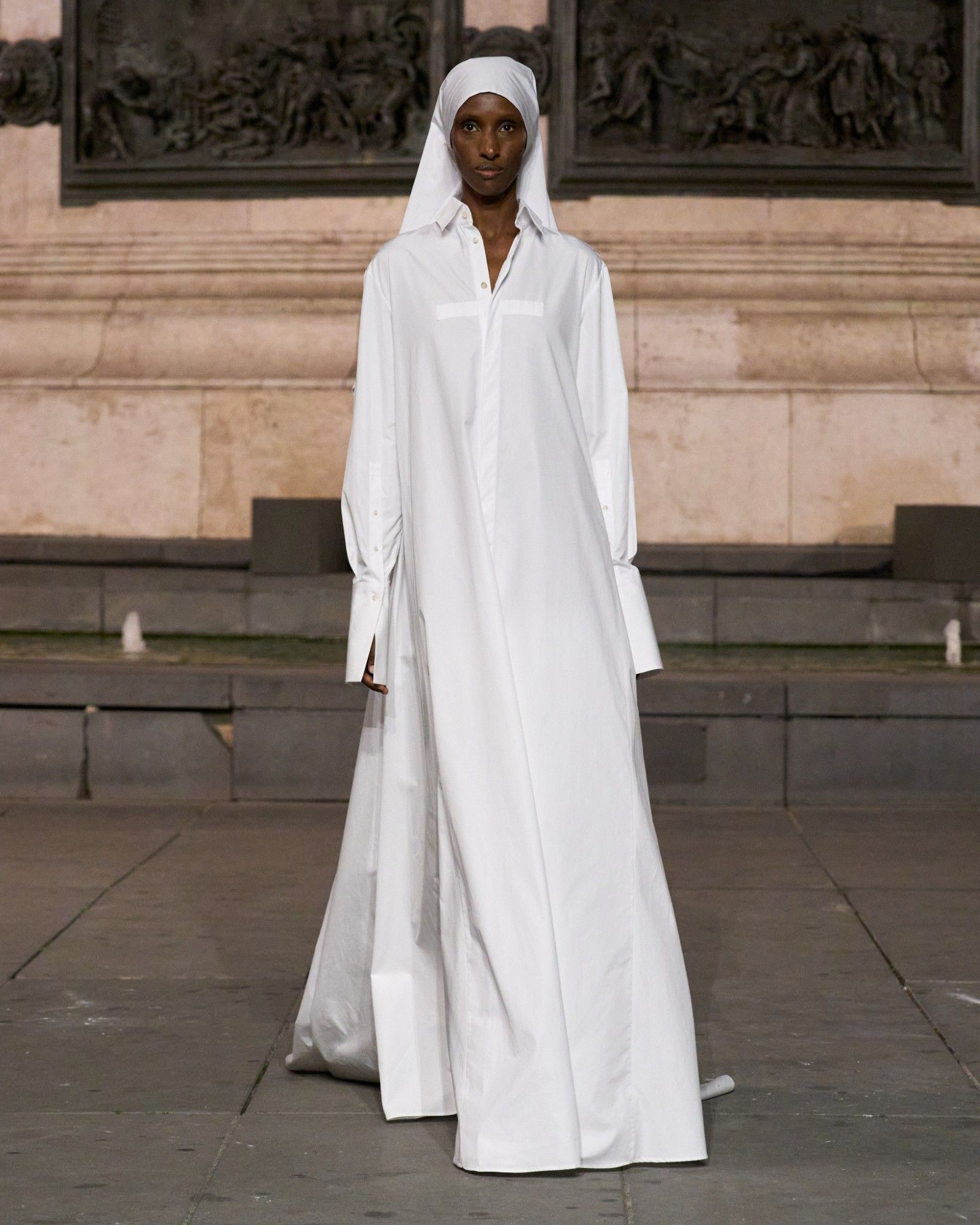
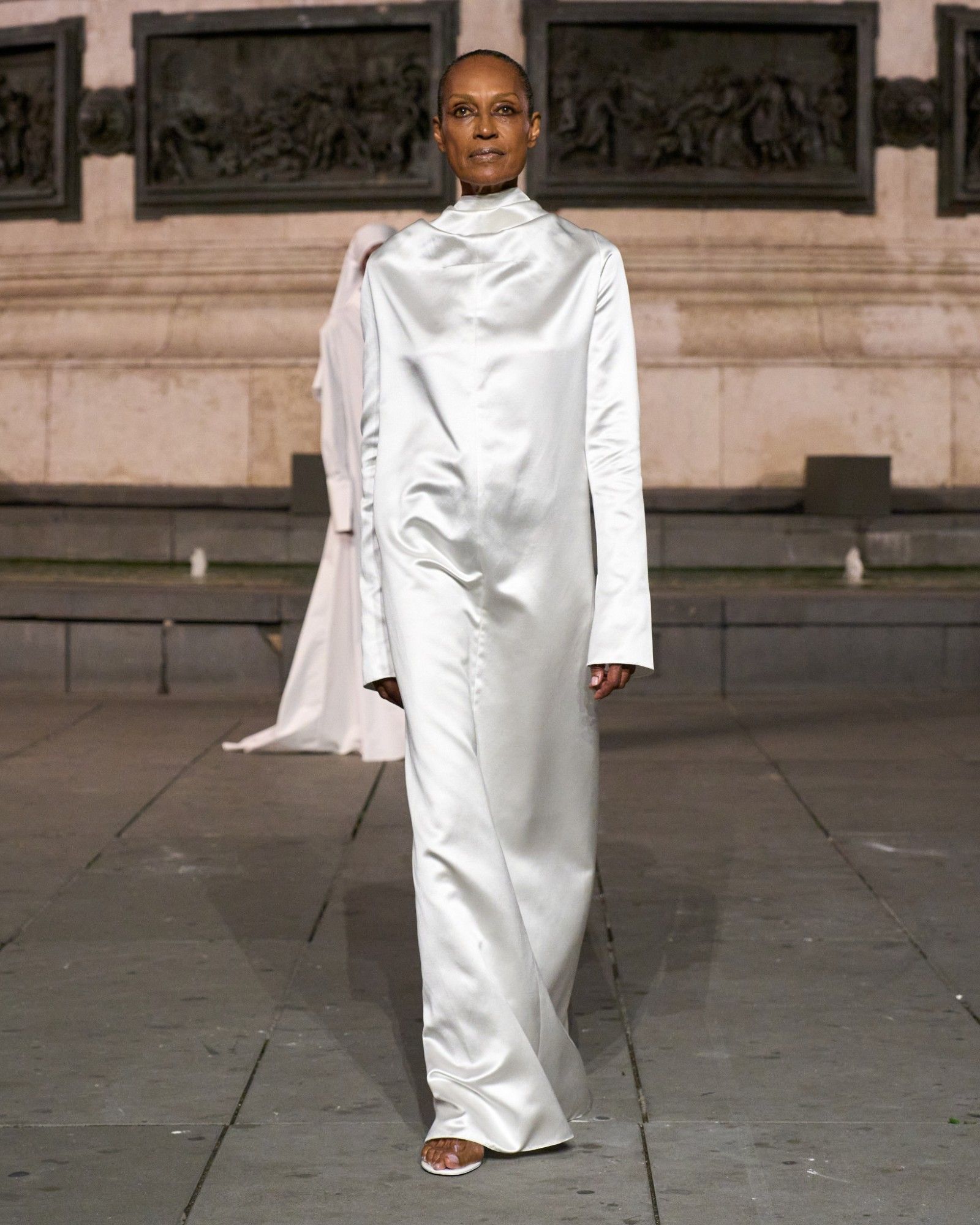
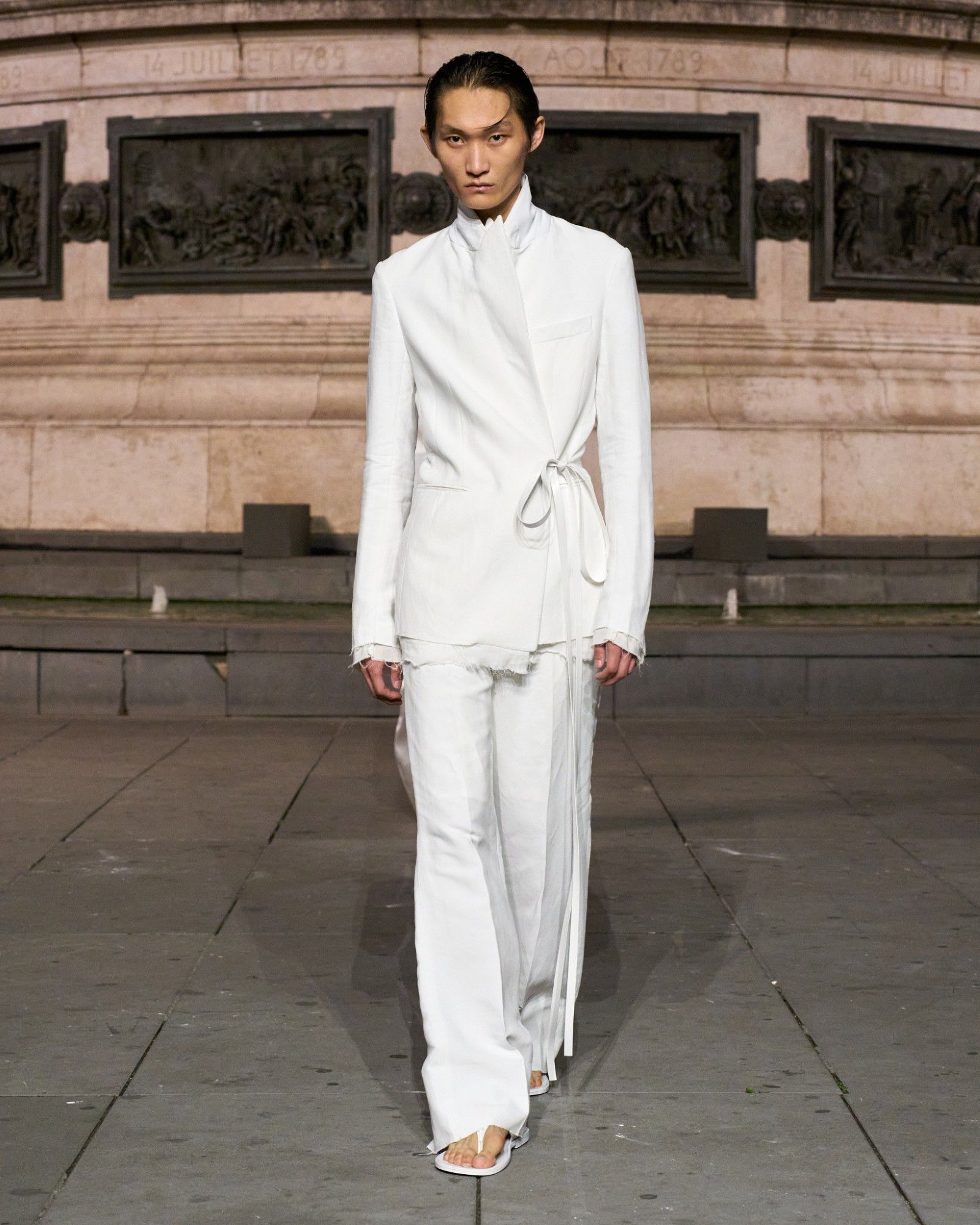
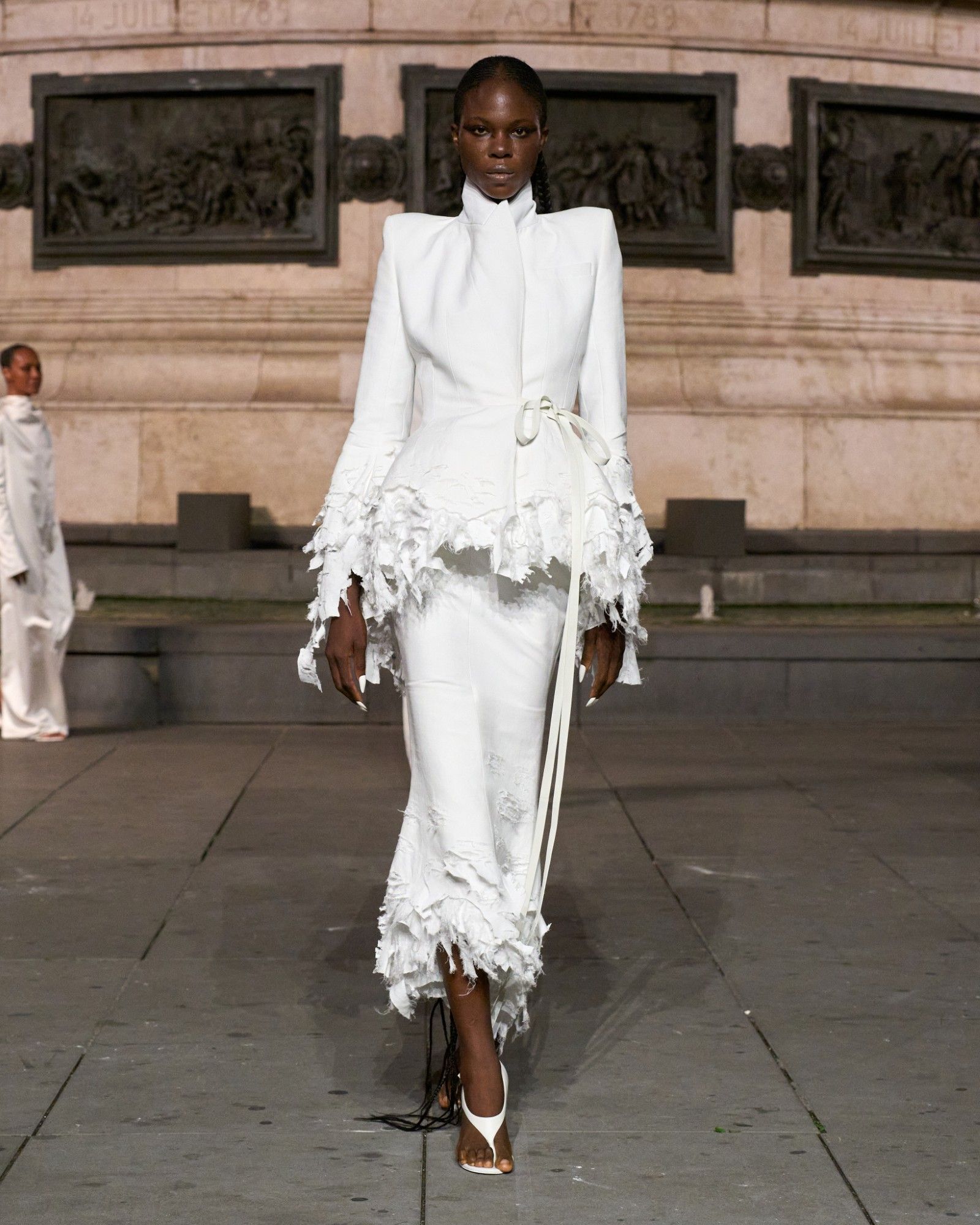
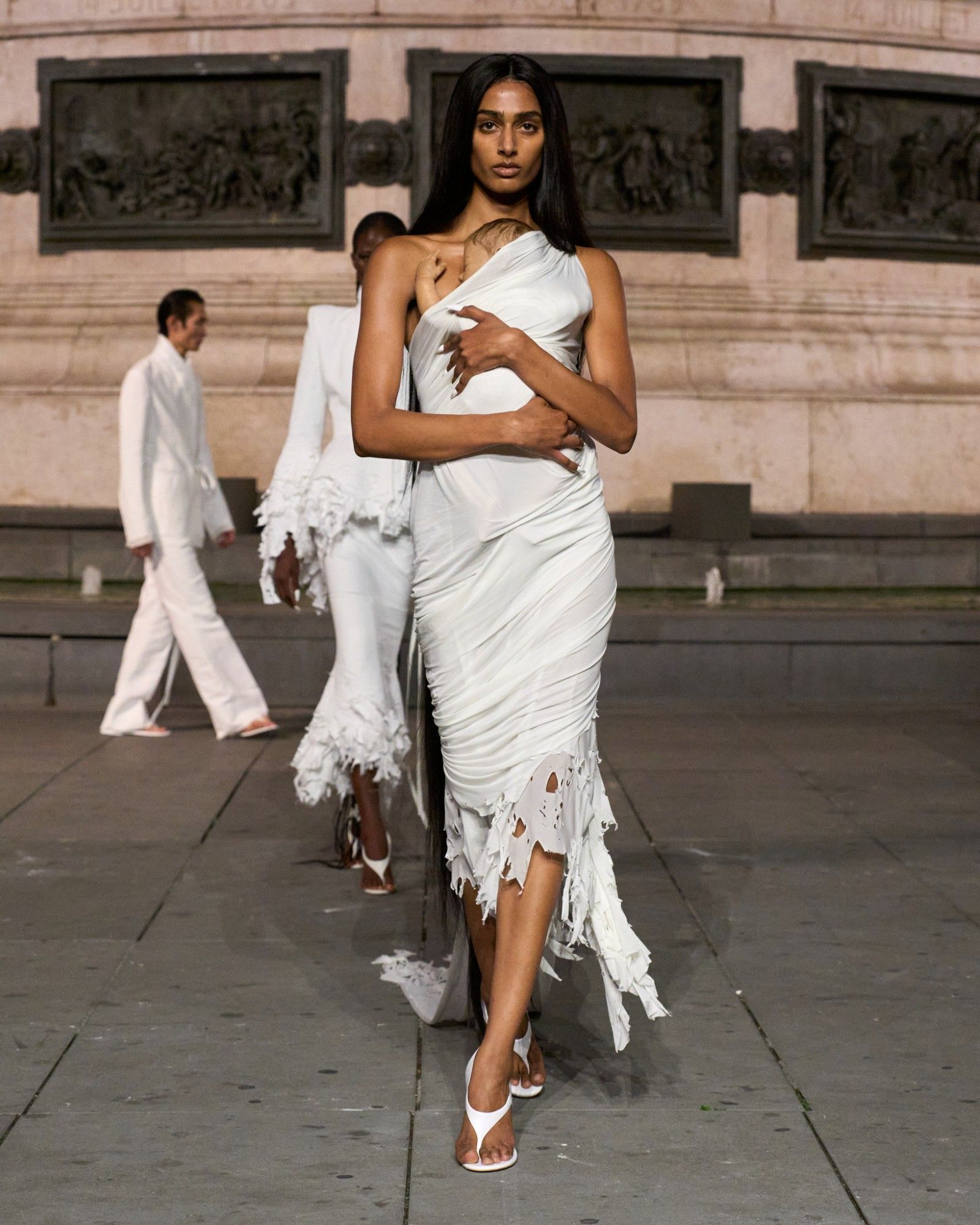
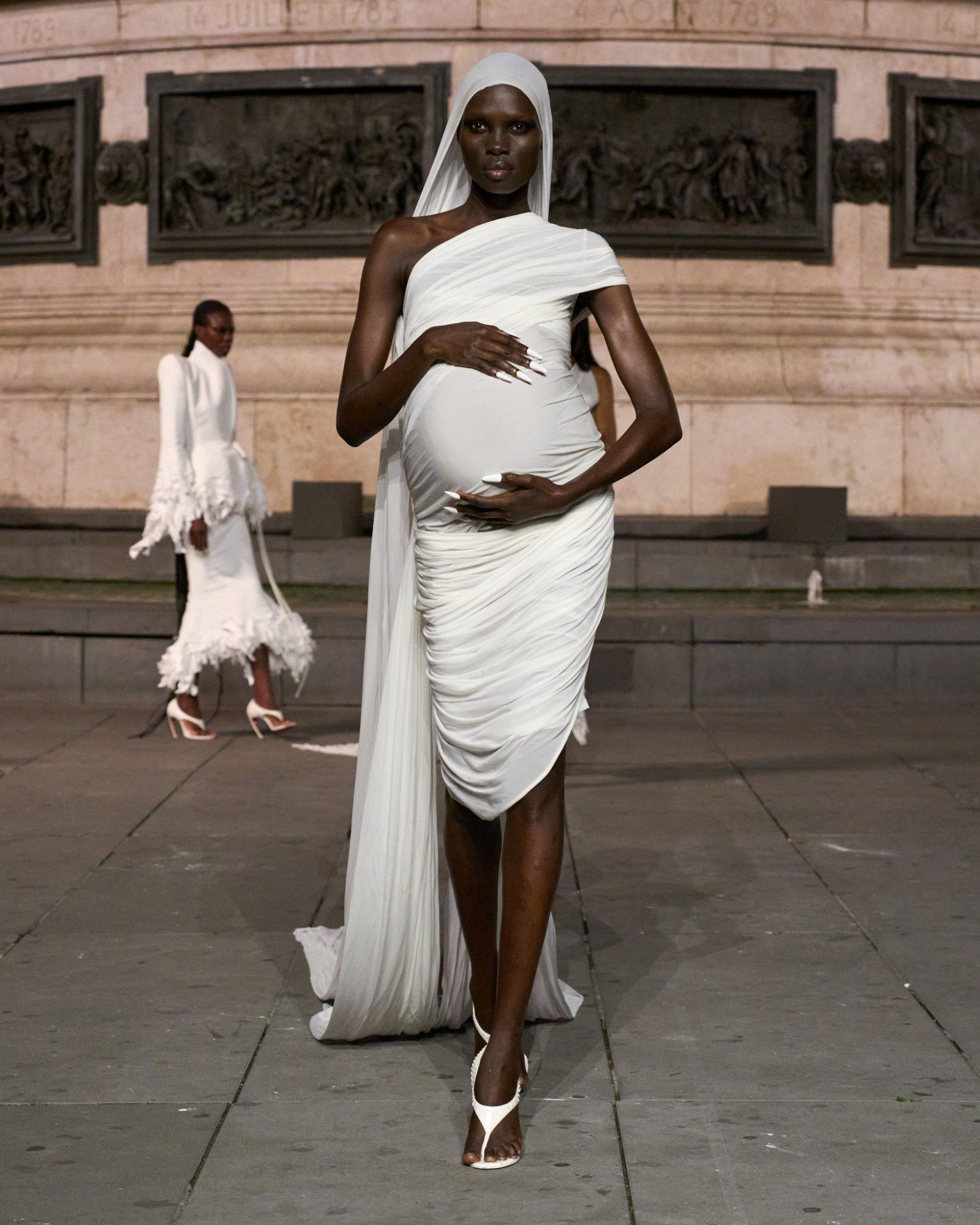
There is an Italian saying that you can't sing and carry the cross at the same time: in other words, it is often difficult to do two opposite things at once. And that is more or less what happened at Matières Fécales yesterday in Paris, where the brand presented its SS27 collection in Place de la République. Now, Matières Fécales is one of the new superstar brands of Paris Fashion Week, having grown under the wing of Rick Owens until it was able to take flight on its own, and last March its satirical show about the 1% was one of the best and most interesting of the season. This season, however, the brand wanted to go for a double (and not in a metaphorical sense — the looks were nearly twice as many as in the previous show), but the result is that the message so thoroughly overshadowed the design that the fashion show became an allegorical procession, almost against its own will.
A Symbolic Rebellion
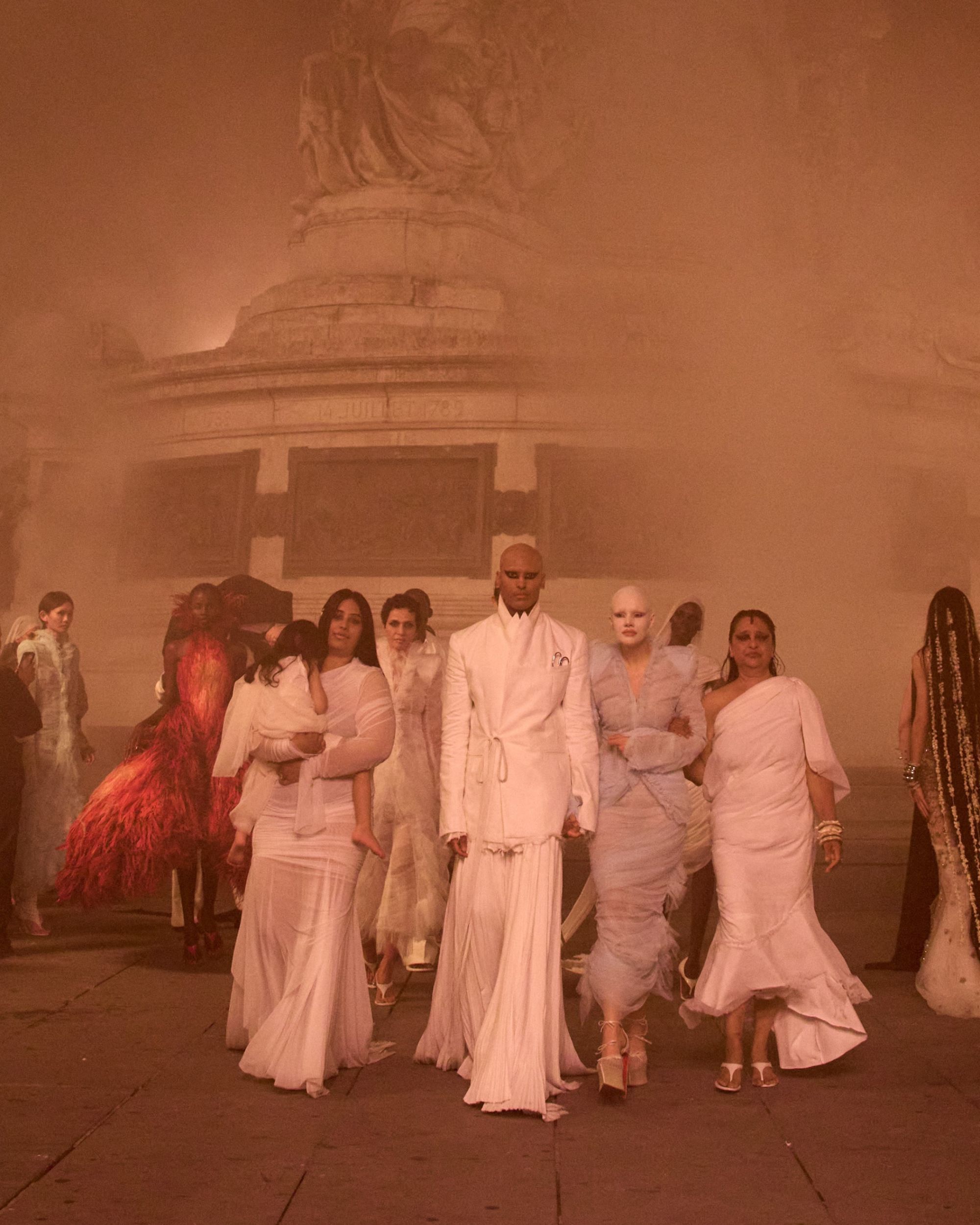
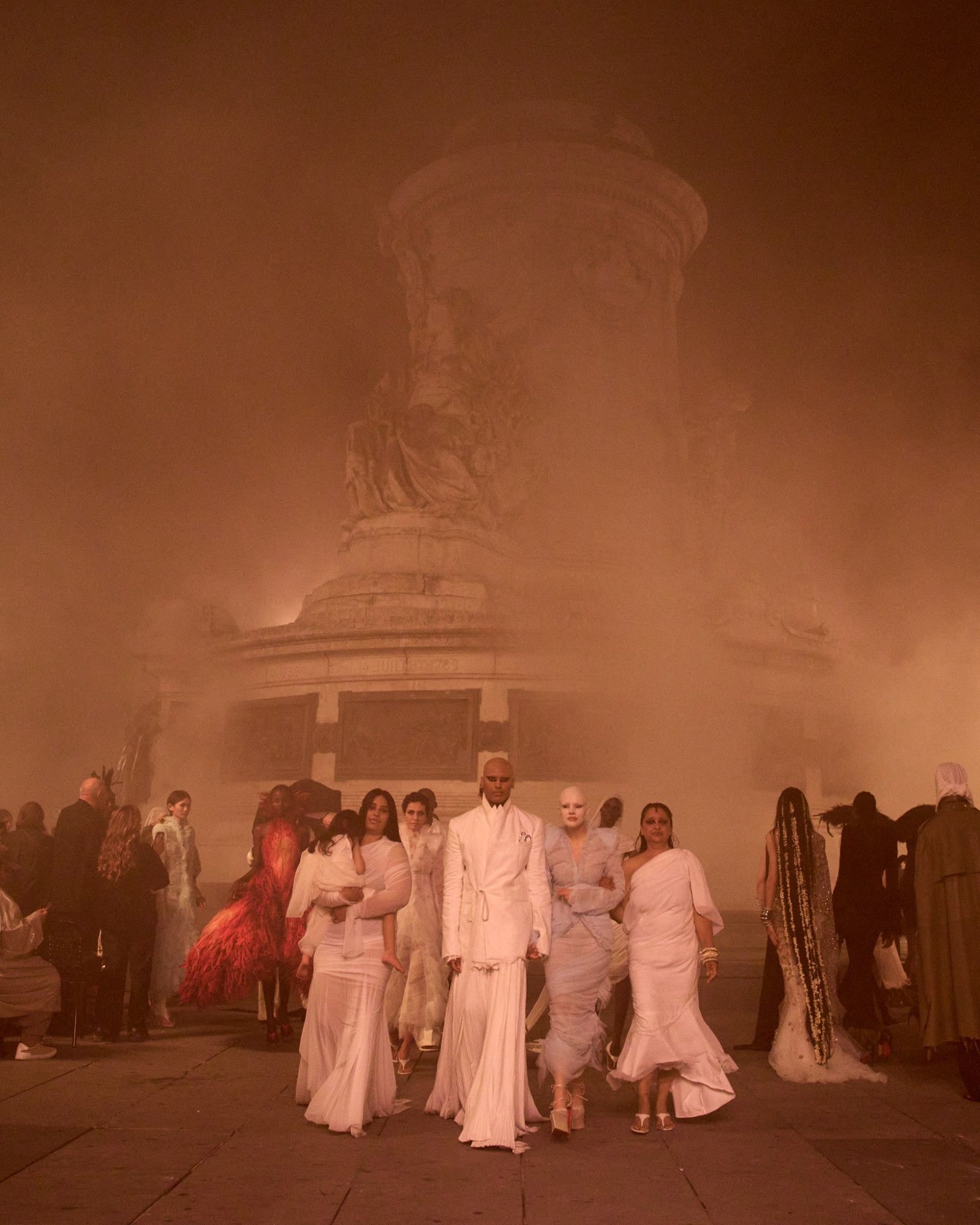
Yesterday's show followed on from the one in March, and having staged a satire of the elites, this show spoke of the masses those elites oppress. The 99%, in short. In homage to the concept, the show featured 99 looks, all of which walked in Place de la République, the traditional gathering place and site of protest in Paris, dominated by the statue of Marianne — the embodiment of the post-revolutionary republic. In addition to boasting a truly titanic production, the show also sought to situate itself in the most public place in the city, its largest pedestrian square.
Nonetheless, the concept of populism that the brand staged in this symbolic location ran up against several ideological stumbling blocks. In no particular order: how do you organize a show dedicated to the 99% when you are physically closing off an entire public square to a select group of guests? How do you speak of working classes and minorities with a show of extremely expensive garments that are practically haute couture? Why did the social justice message centered on the 99% not more broadly represent all the people affected by the same power dynamics, including the European component? How do you reconcile the message that the oppressed classes carry the world's billionaires on their backs with the fact that the show could not begin for a full 63 minutes while everyone waited for Rihanna to arrive? To quote @insidethemood, the show «spoke of resistance and marginalization from behind a velvet rope».
But the fact that rebellion and resistance were staged purely as ideals that already seemed unworkable in the very organization of the show for logistical reasons does not diminish the power of the message behind the whole affair — a message that is, tragically, rare in fashion today. Its intent was indeed to be a performance, a symbolic theater, with this great public space as its backdrop. Therein lies all the nobility and ambition of the brand's intentions. And yet the presence of a message so important and ultimately so urgent — given the current state of the world (just yesterday the CEO of Palantir bought 15 hectares of virgin forest in Sweden, one wonders why) — ended up overwhelming the very fashion being presented.
Many Looks, Many Styles
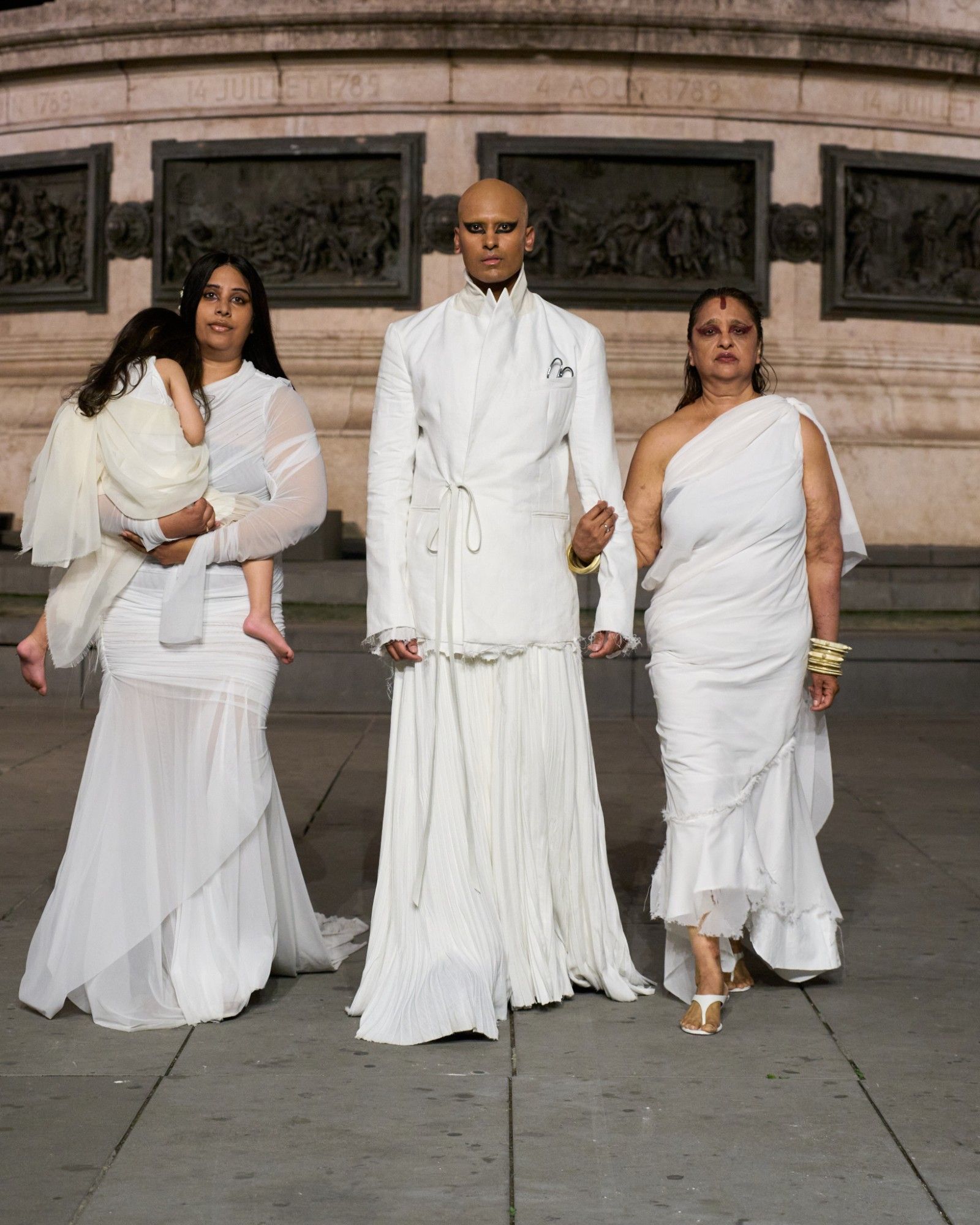
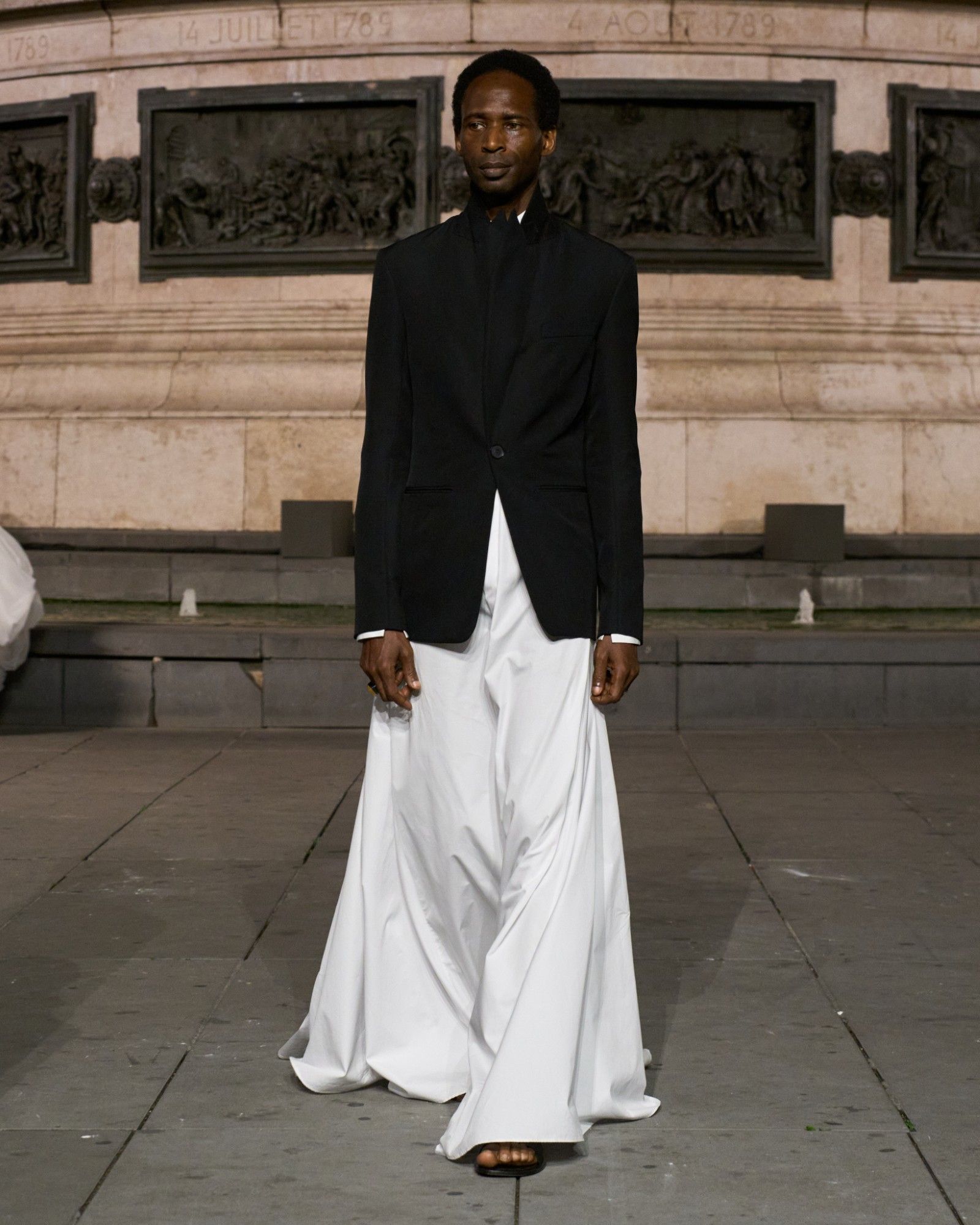
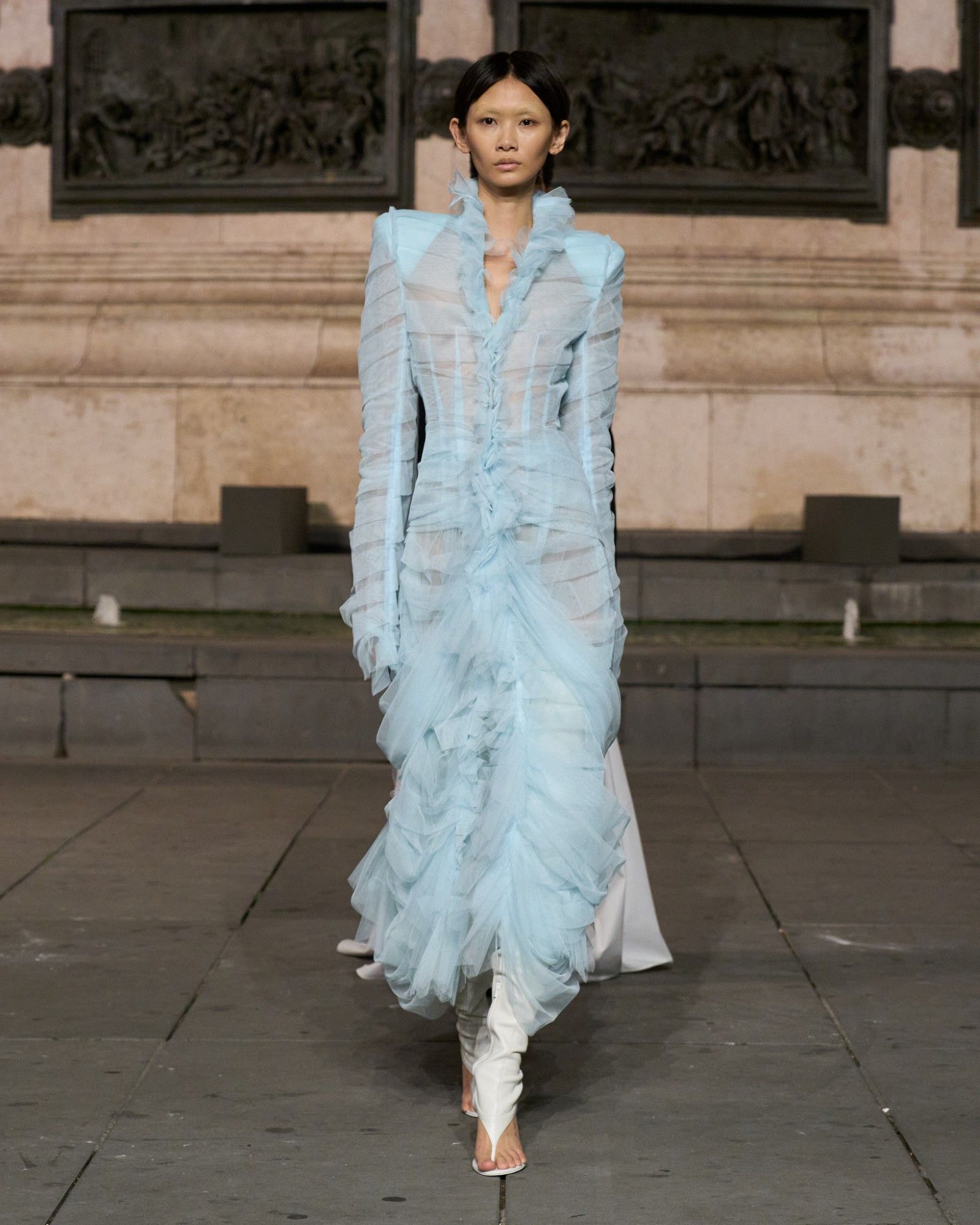
The main limitation of the collection itself is its sheer scale. Ninety-nine looks is an enormous number, and unfortunately the brand's creative capacities simply began to show the proverbial strain. But let us proceed in order. The show is divided into roughly three "acts." The first comprises the first forty looks and consists of a series of silhouettes that begin simply and grow progressively more complex, moving from black and white into color: red, orange, pink, light blue, and then white again for the final collective look featuring an entire Indian family dressed in white.
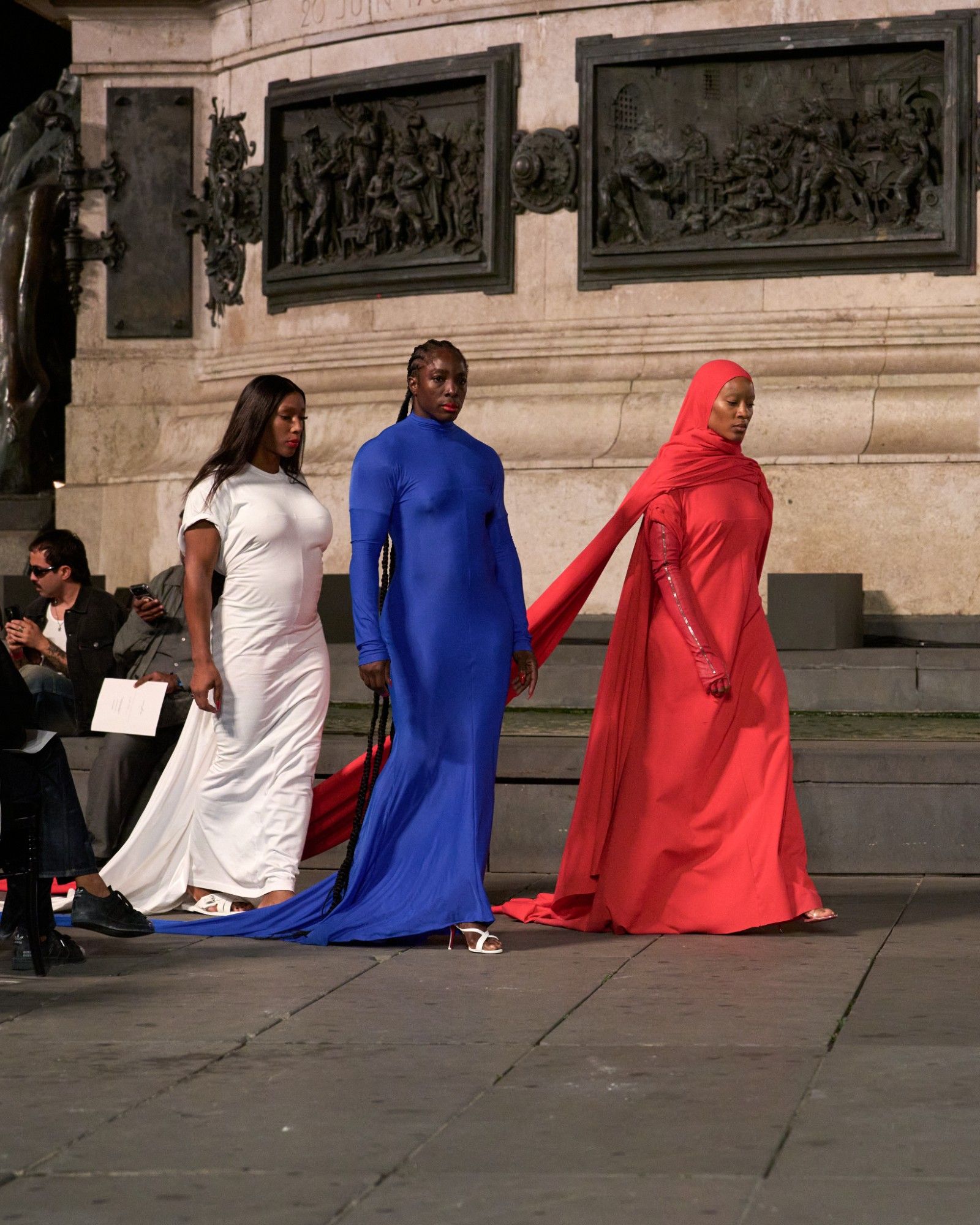
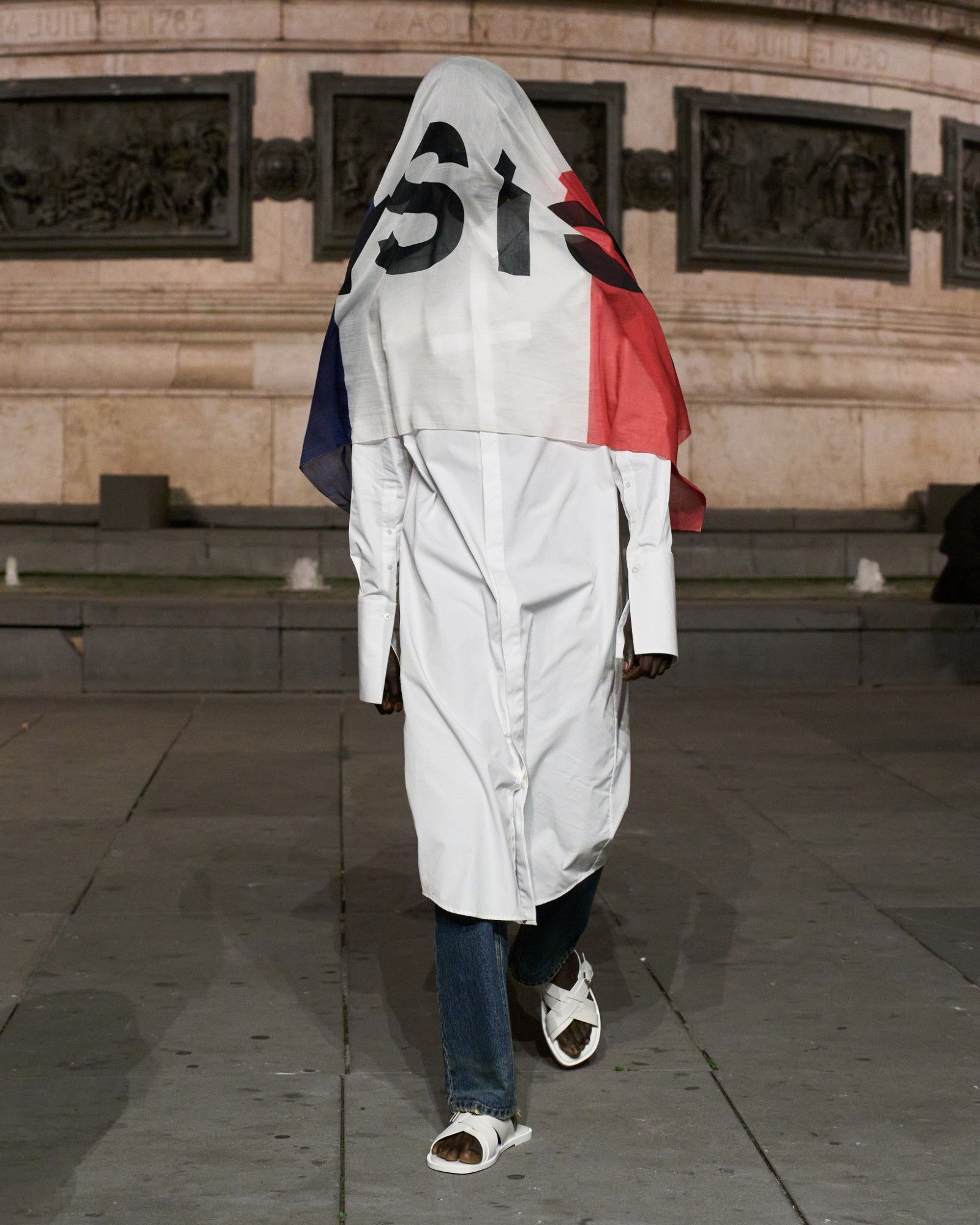
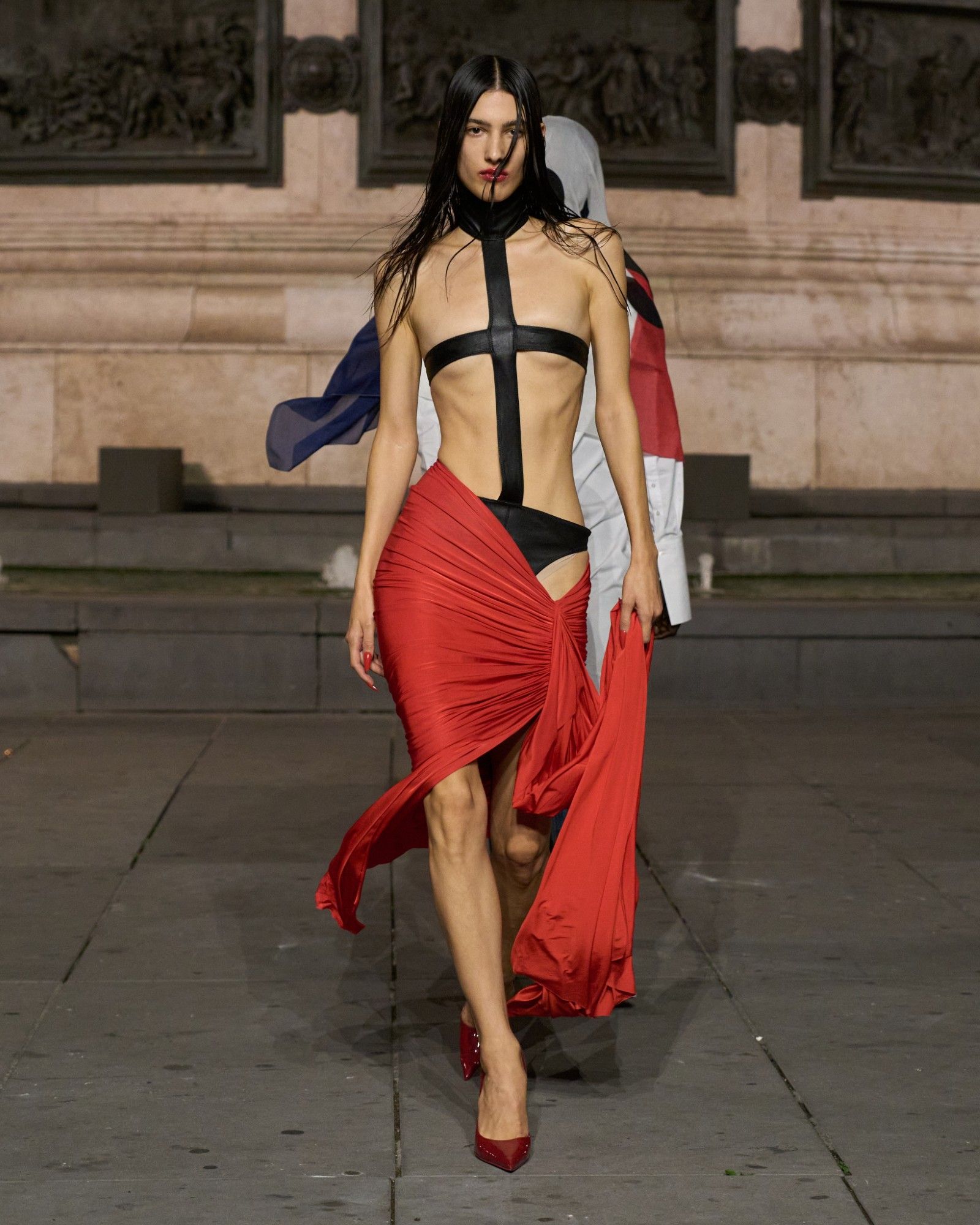
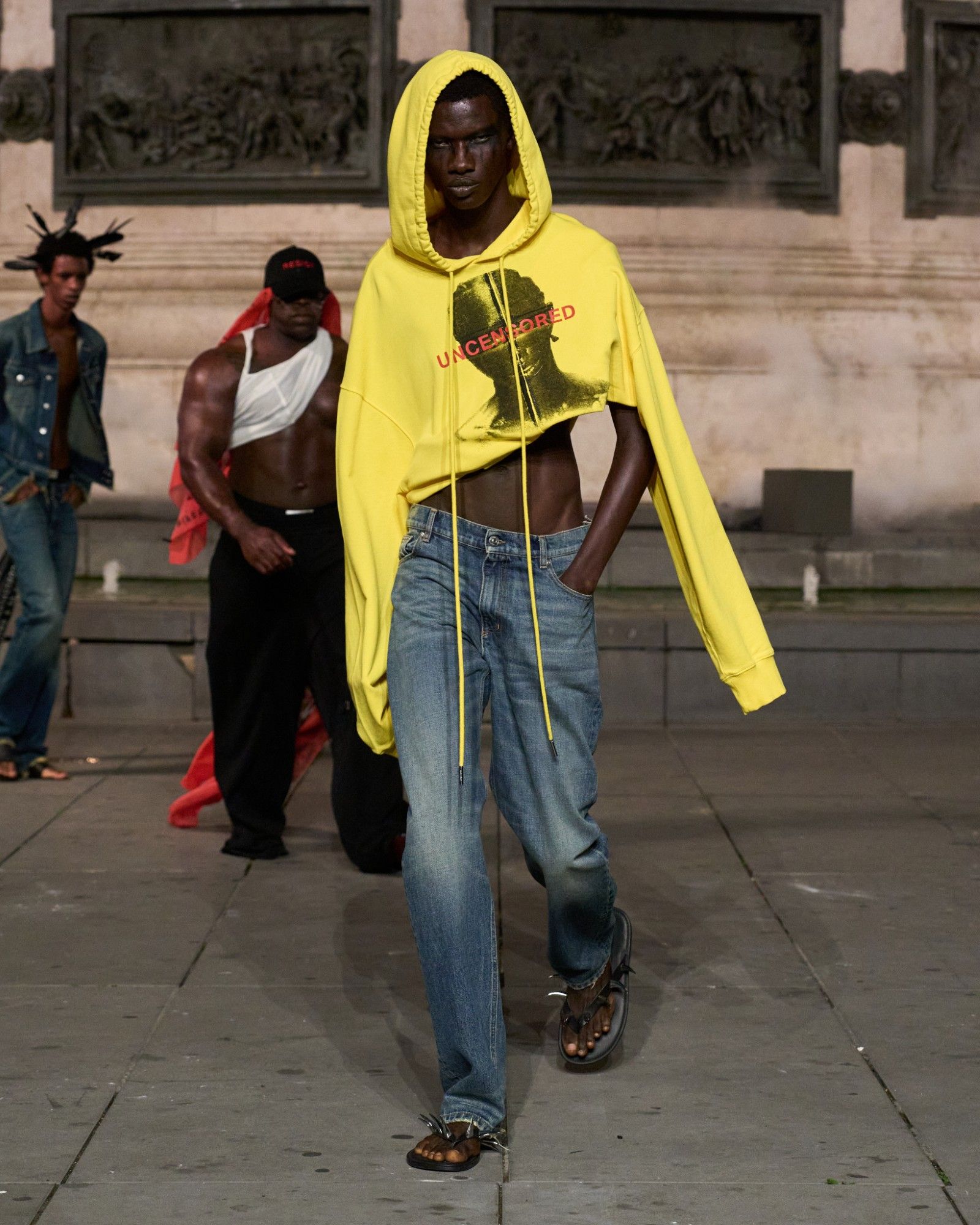
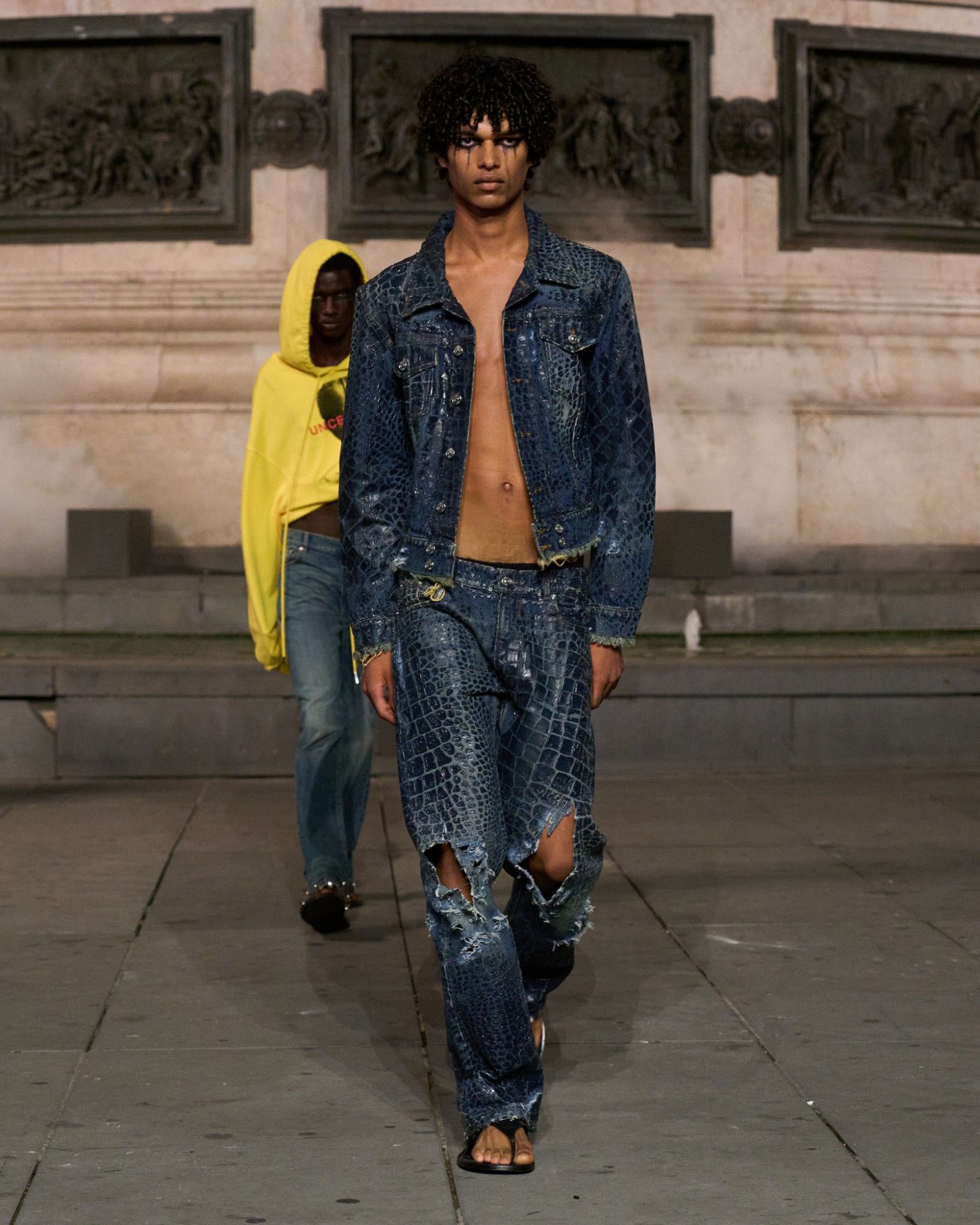
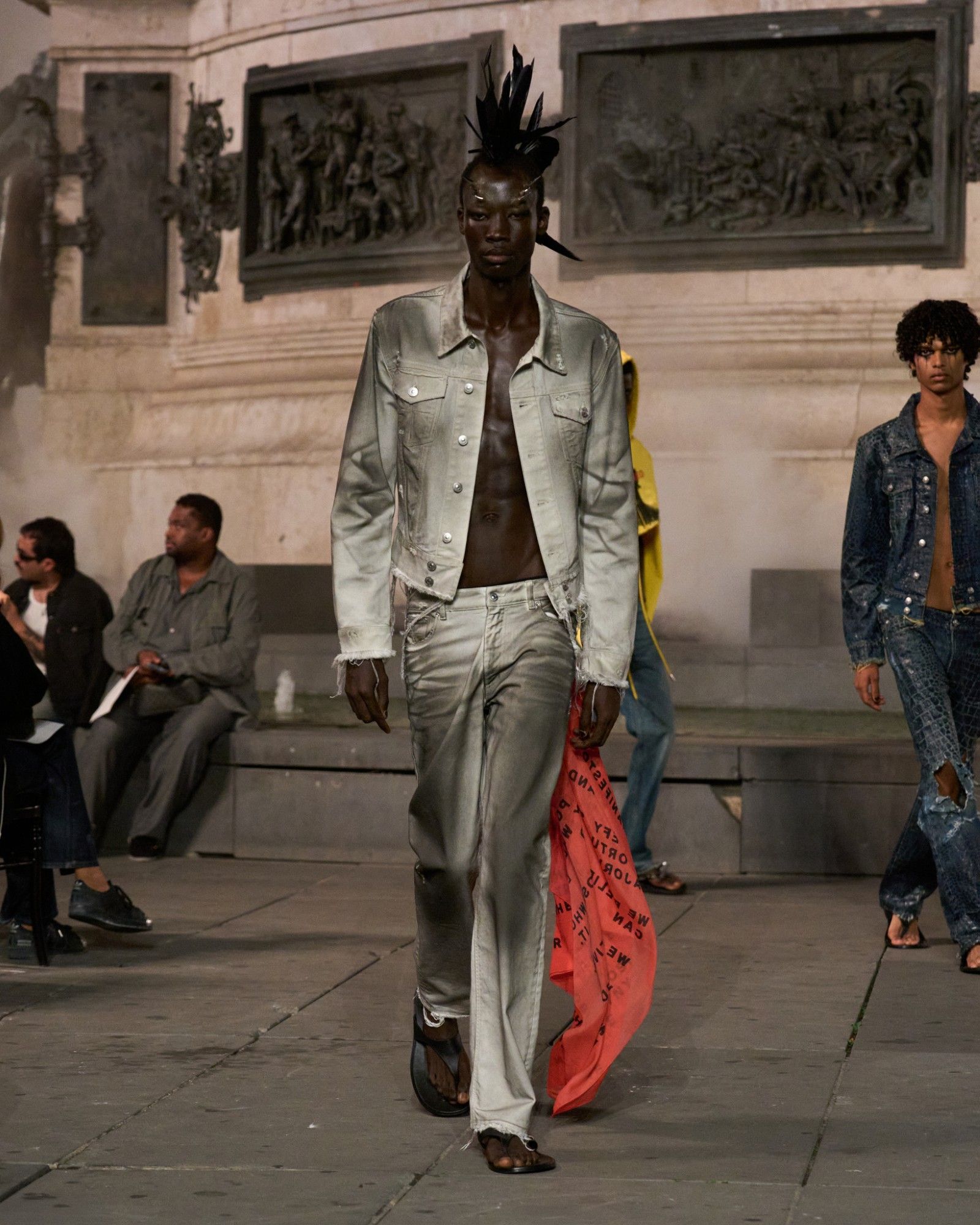
After them begins the more political second act, which runs through look 76. Here the draping and simplicity of single fabrics give way to a more contemporary section: military garments paired with face coverings reminiscent of hijabs, heavy-metal makeup, leather jackets, crocodile-effect lacquered jeans, printed hoodies (also with a metal edge), and even a dress bearing the word "Resist." Then come denim suits, a couple of sadomasochistic harness dresses, and finally three models walking together in tunics of three colors representing the French tricolor.
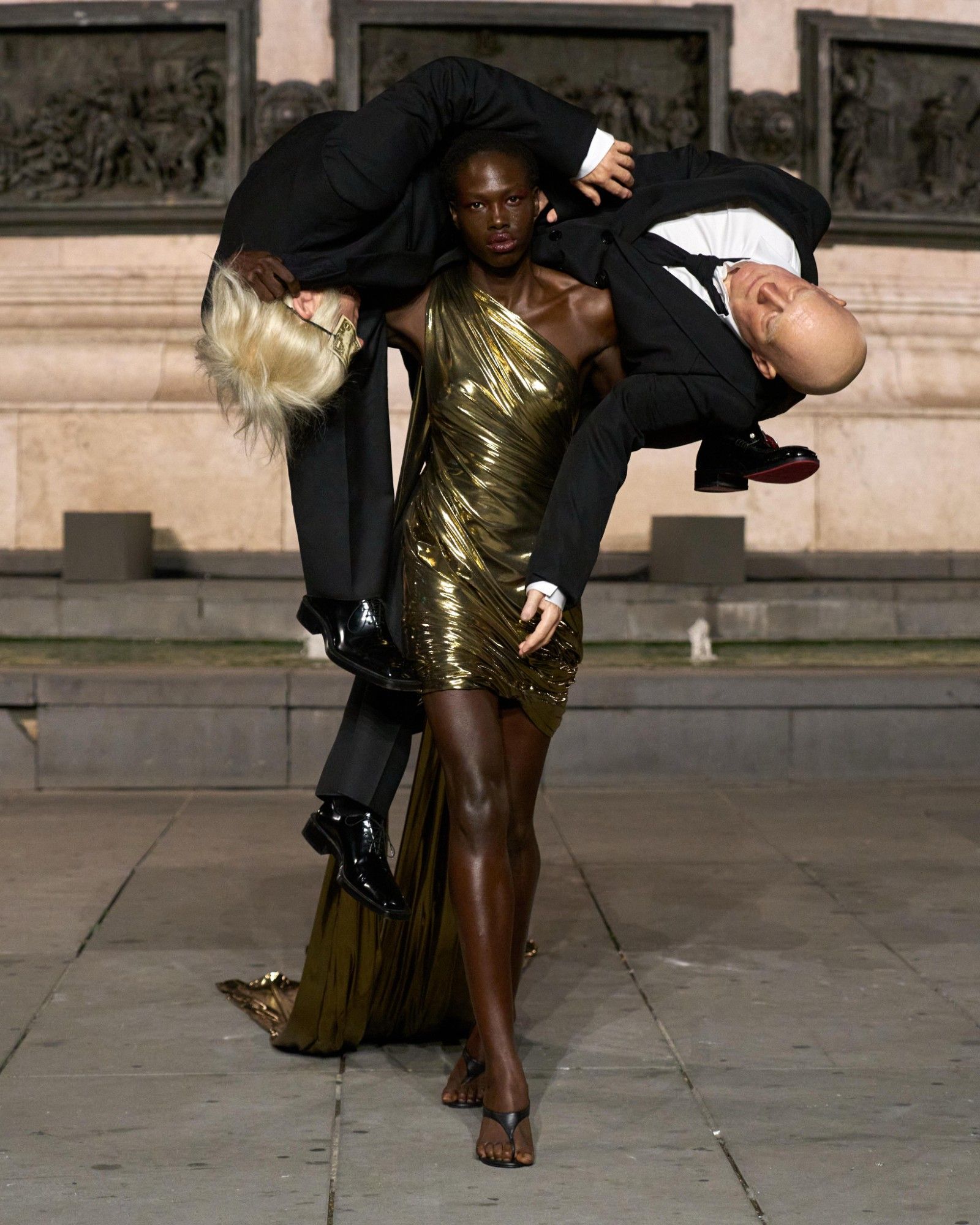
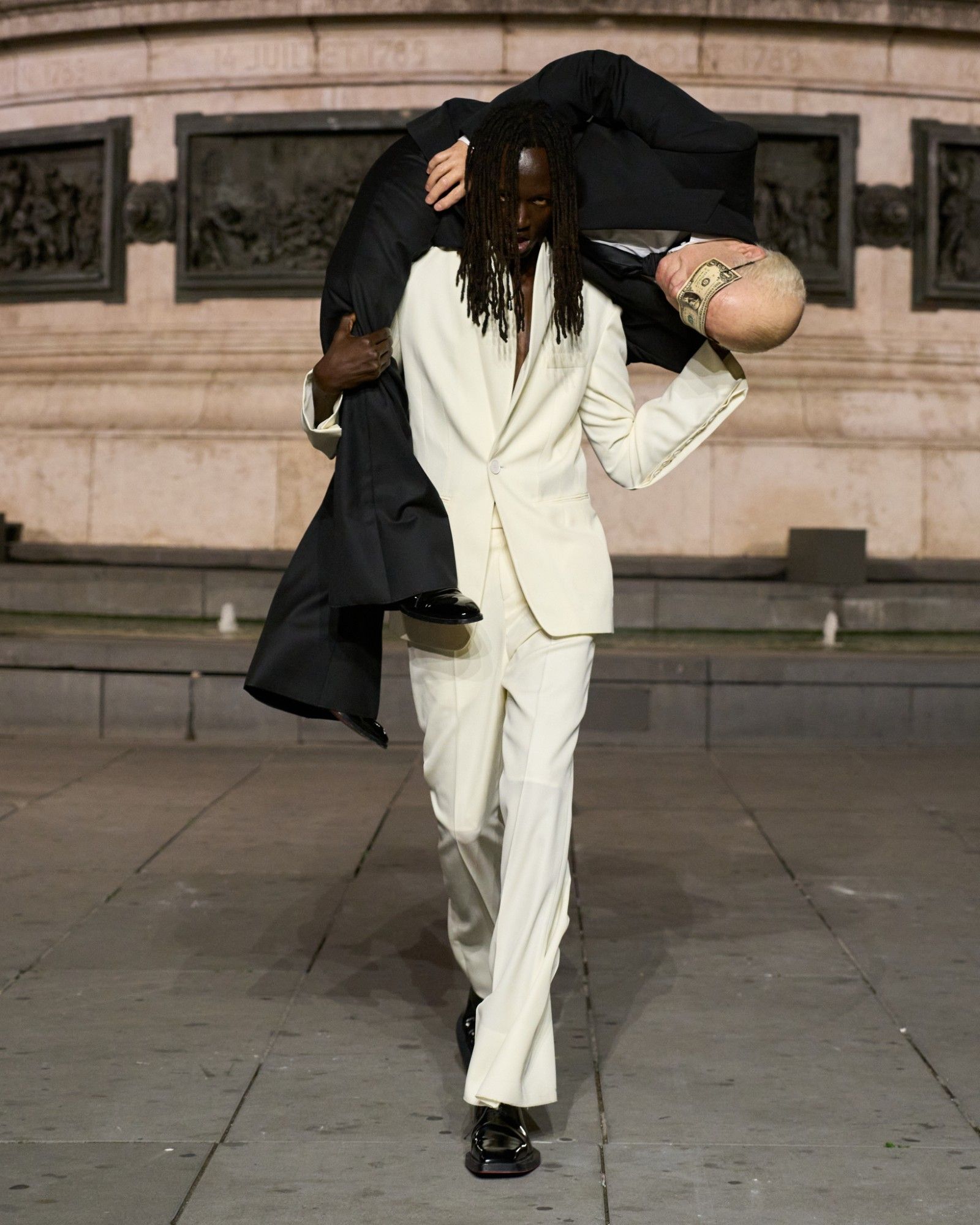
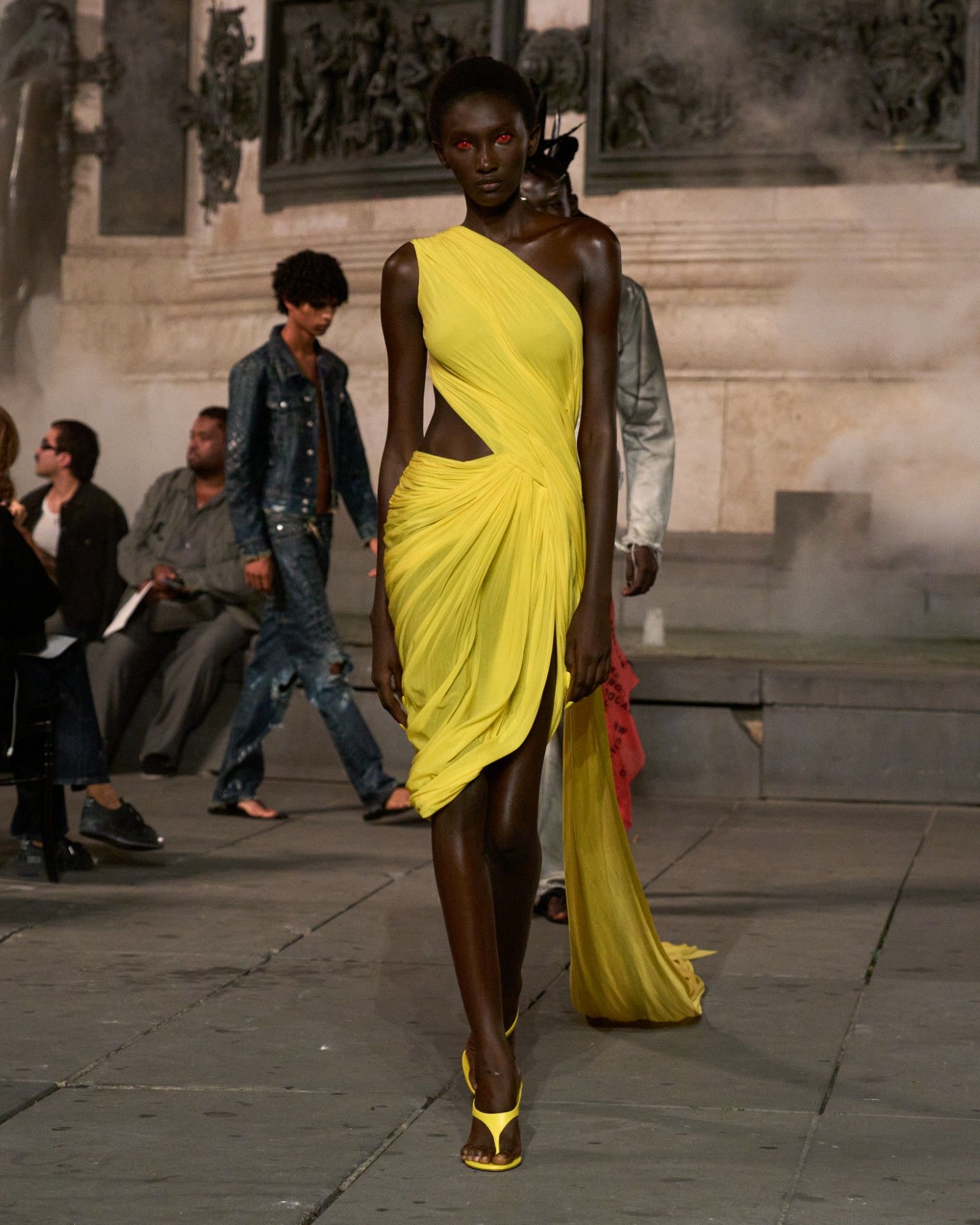
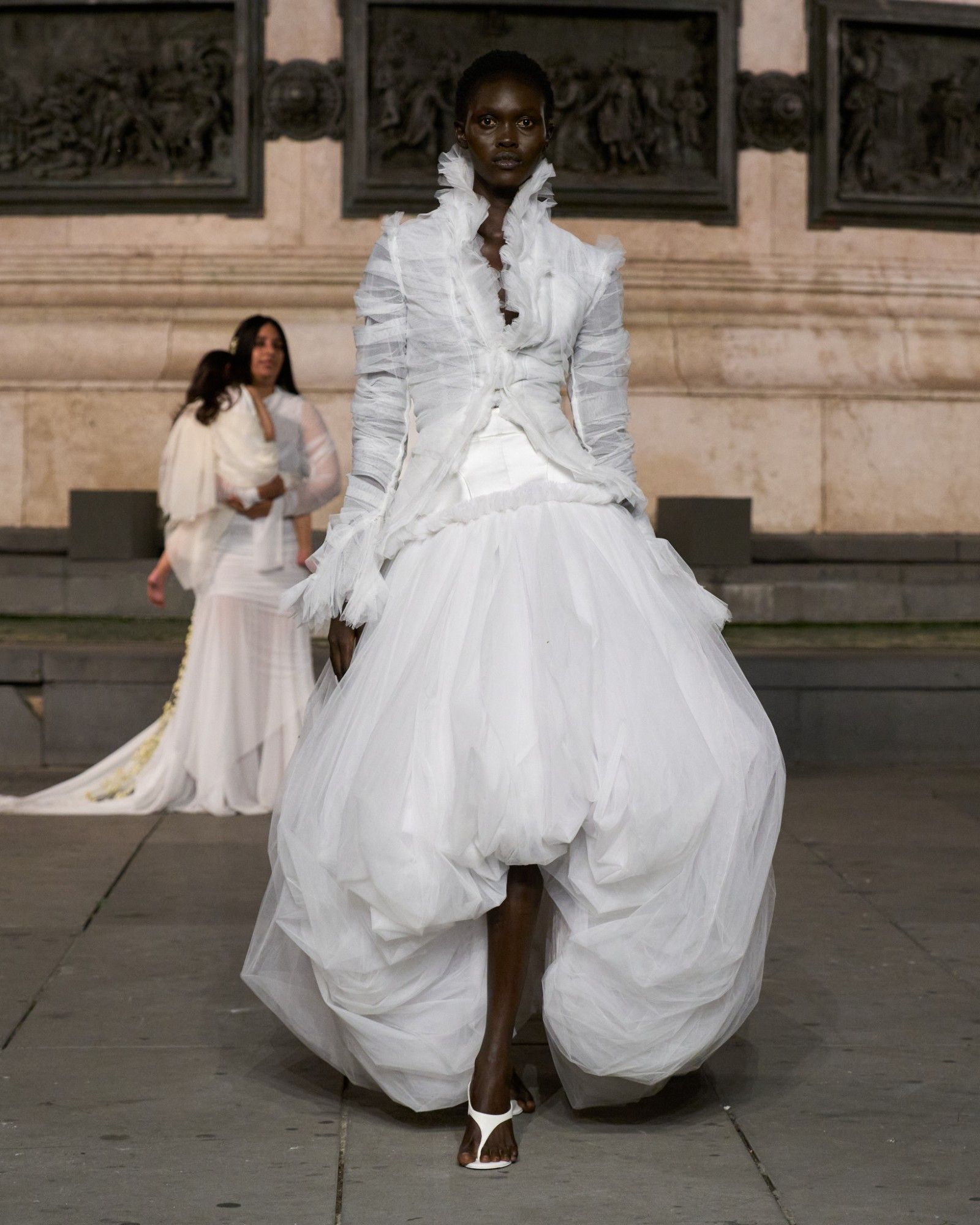
From there through look 99 comes the third act, which featured the actual couture aesthetic the brand had already explored in the previous season, with a series of stunning ballgowns constructed from the fabric of traditional ceremonial Indian saris (these were the most beautiful and inspired looks in the collection), several feathered looks paired with jeans, entirely white facial makeup somewhere between a geisha and Gene Simmons of Kiss, and finally two looks - one menswear, one womenswear - in which two models carry on their shoulders realistic effigies of elderly, privileged Europeans metaphorically blinded by a dollar-sign mask. In short: a collection more focused on a single theme and a single aesthetic would have driven the message home in a far less scattered way. In the great flood of looks and idealism, however, that very style became severely diluted.