"El ser querido" with Javier Bardem explains how the world is changing The film is directed by Rodrigo Sorogoyen and stars Javier Bardem and Victoria Luengo
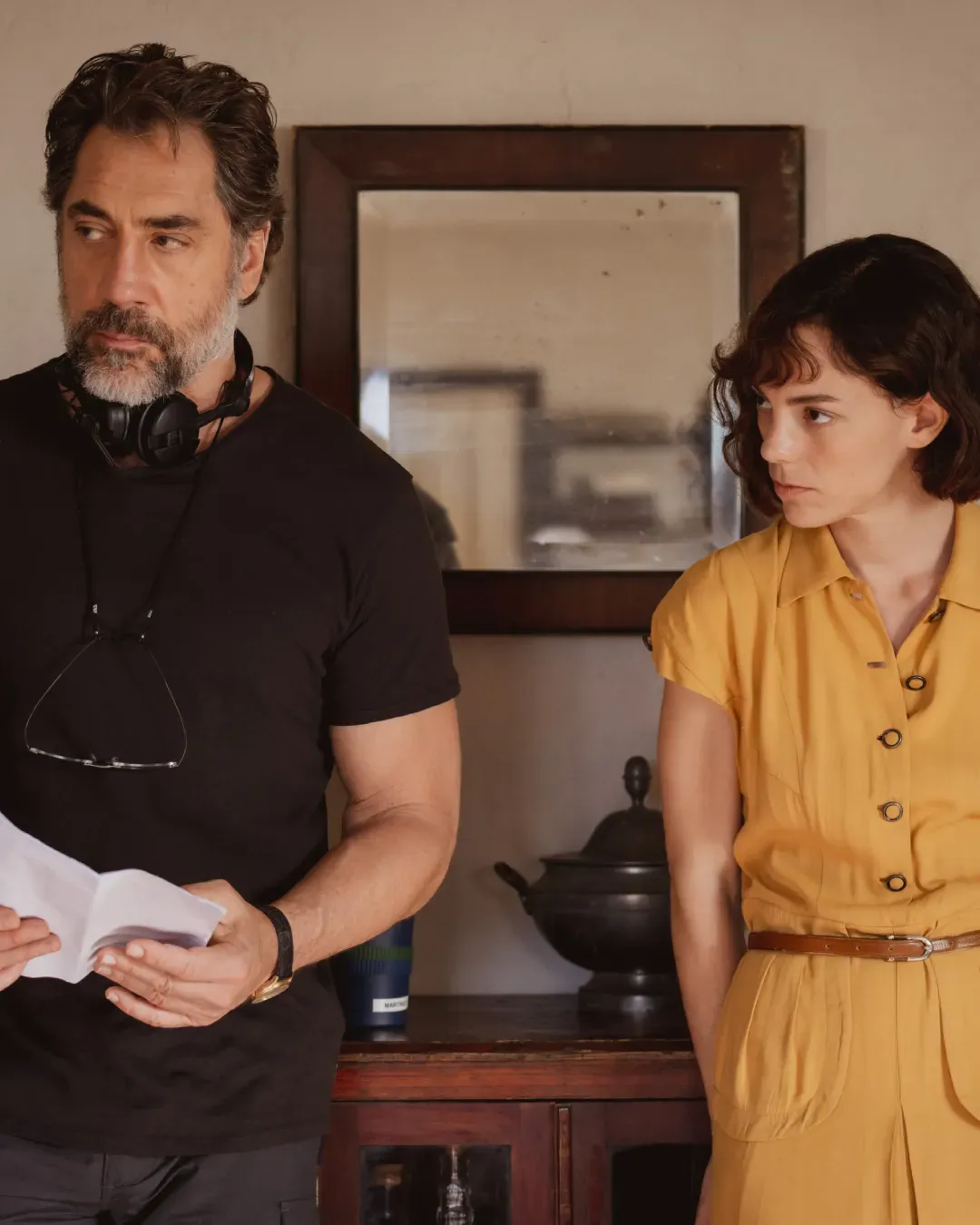
There is a scene in El ser querido by Rodrigo Sorogoyen, released in Italy under the title L'essere amato, that captures exactly what the world looks like today. The microcosm of a film set becomes a window through which to observe the contemporary moment we are living in, offering an analytical and considered portrait of how society is divided. A fundamental rift that, in this sequence as throughout the film, is embodied by the characters played by Javier Bardem and Victoria Luengo — a father and daughter with a fractured relationship whose contact intensifies when the man, a celebrated director and Oscar winner, decides to cast the young woman as the lead in his new film.
The conflict at the heart of El ser querido calls into question the relationship between the author's personal experience and that of his actress daughter, implicating their respective roles not only on set, but within the society we inhabit.
The director seems convinced that his role and the control he exerts over the project grant him the right to behave without limits. A position his daughter-actress reads as a form of outright tyranny. On set, the man shows no willingness to lower his tone, let alone engage in dialogue. The protagonist, by contrast, chooses to push back, bringing to the surface the rifts that define their relationship in private life as well — rifts that the pressures, the stress, and the dynamics of the profession inevitably push to breaking point.
Bardem finds himself at the centre of a sequence set during a lunch scene, in which the director demands a certain degree of realism, dissatisfied with the way the actors are handling the moment of eating. His instructions go unheeded, and with each new take his irritation mounts until it erupts into shouting and insults directed at the cast. Unlike what might once have been the case, the character played by Luengo is no longer willing to passively accept this behaviour. Hers is a genuine act of defiance against authority.
For this reason, the scene operates on a dual level: there is a reflection on the present day — never didactic, yet rendered eloquently through dialogue, glances, and the framing Sorogoyen brings to it — and alongside it, the portrait of a broken family whose gradual rapprochement is possible, but incapable of healing fractures that will always remain.
These are the same fractures that shaped an absent father and a daughter who grew up with a sense of abandonment. If art may bring director Esteban and actress Emilia closer together, it cannot fully mend two lives and two characters that have grown irreconcilable. For this, the insufferable figure played by Javier Bardem will be called upon to answer for his failings, while the film's crew, despite acknowledging the director's genius, will take sides — aligning themselves against a way of wielding power that is now outdated and obsolete.
Esteban is a pretentious man, convinced he can read the shifts in society, yet unable to fully acknowledge that his own role is now being called into question. This is a world in which authoritative figures, once considered untouchable, are finally being challenged — whether they are artists or fathers, and sometimes both at once. It is precisely this transformation that bears down on the masculine, forced to reckon with the loss of an authority it long took for granted. Rodrigo Sorogoyen needs only a single sequence to lay bare its full weight.
What to read next
"Look Back" is the story of friendship and competition by Hirokazu Kore-eda
The live-action film, adapted from a manga and an anime, won five awards at Venice83
"ChiaroScuro" could have been different, but it's the usual Netflix crime show
Even if set in the art world
The price of independence for A24
Would we still watch their films if it were to be acquired?