
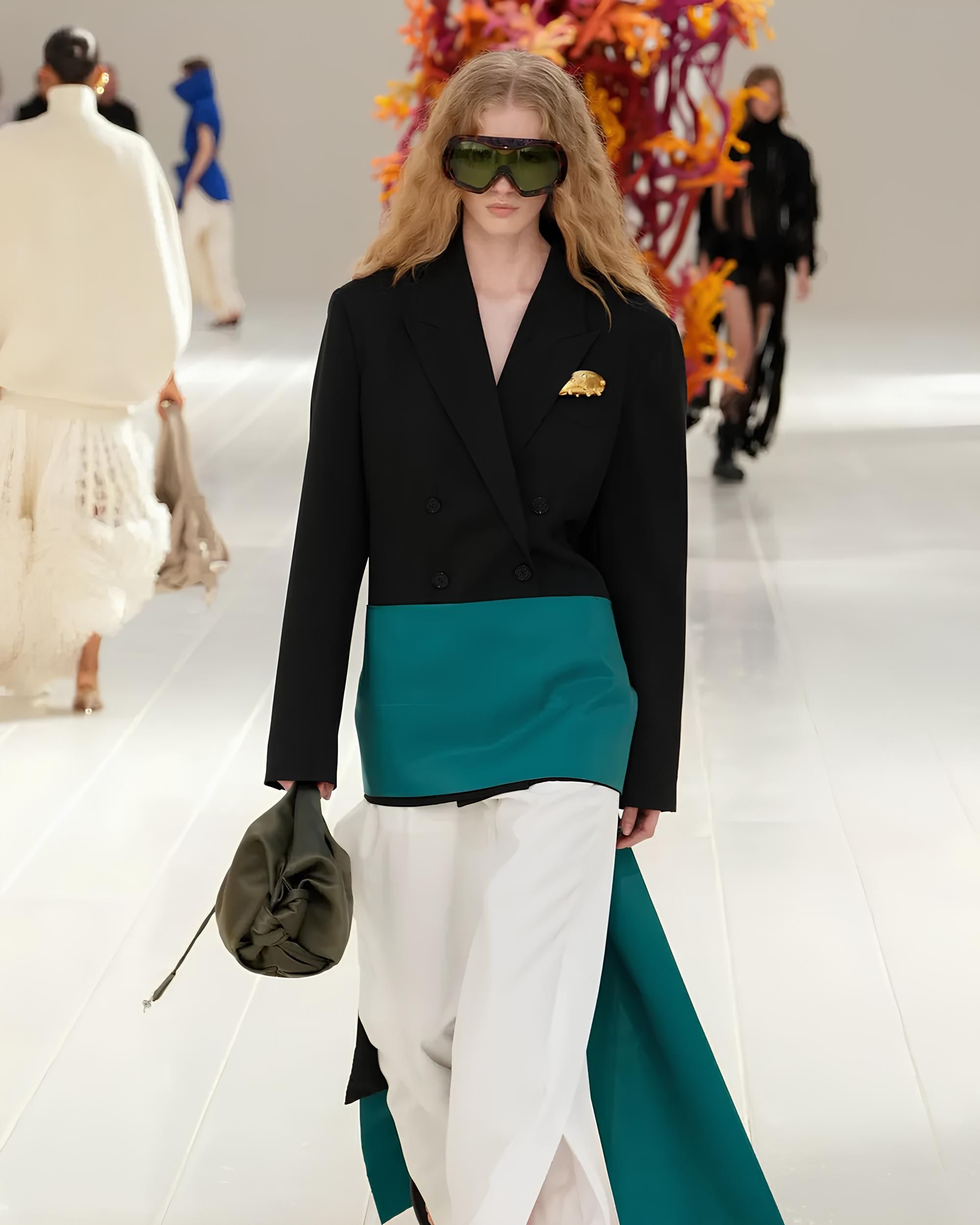
The Sober Versatility of Balenciaga's SS27 Collection Pierpaolo Piccioli does what he does best: elegance with a understated personality
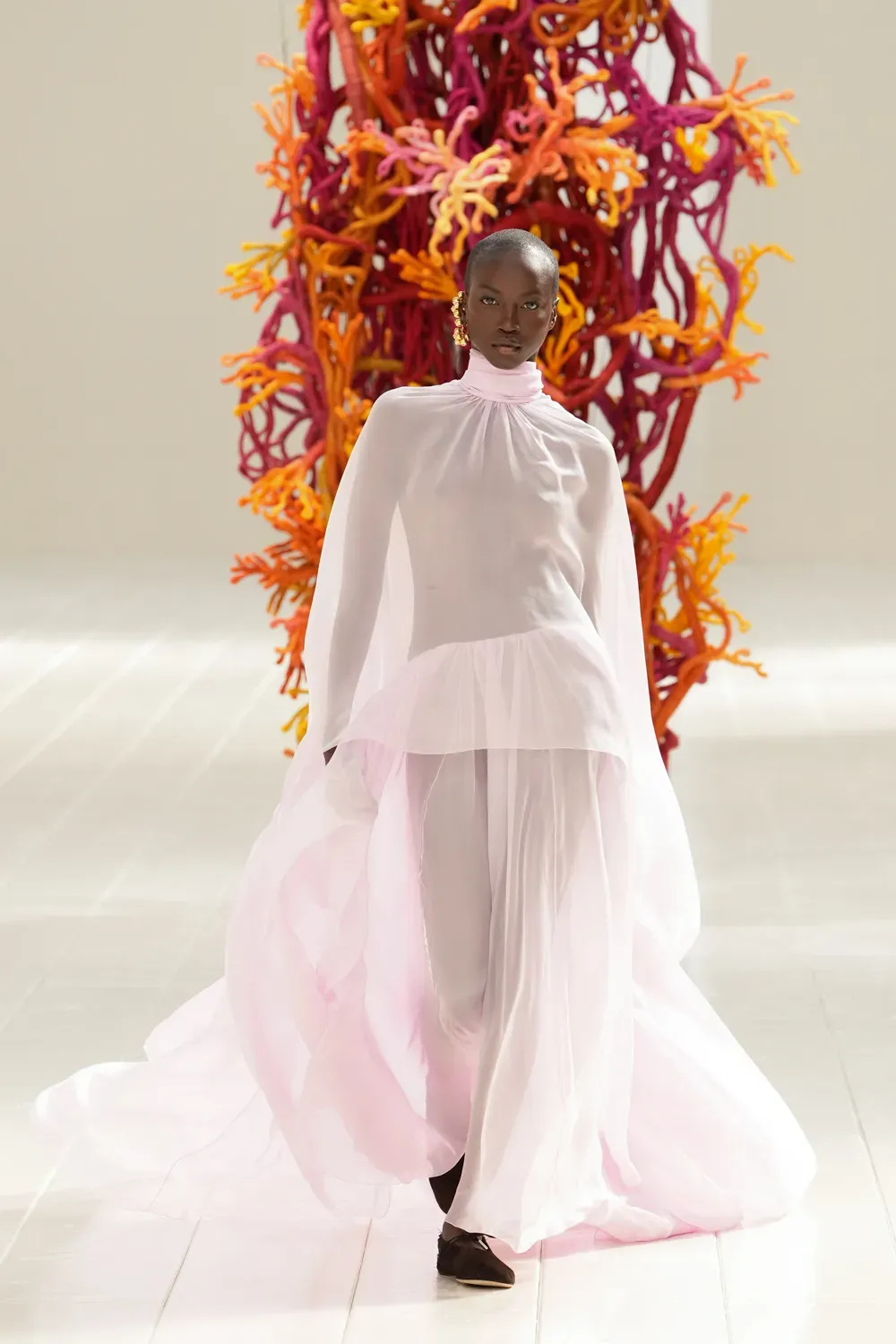
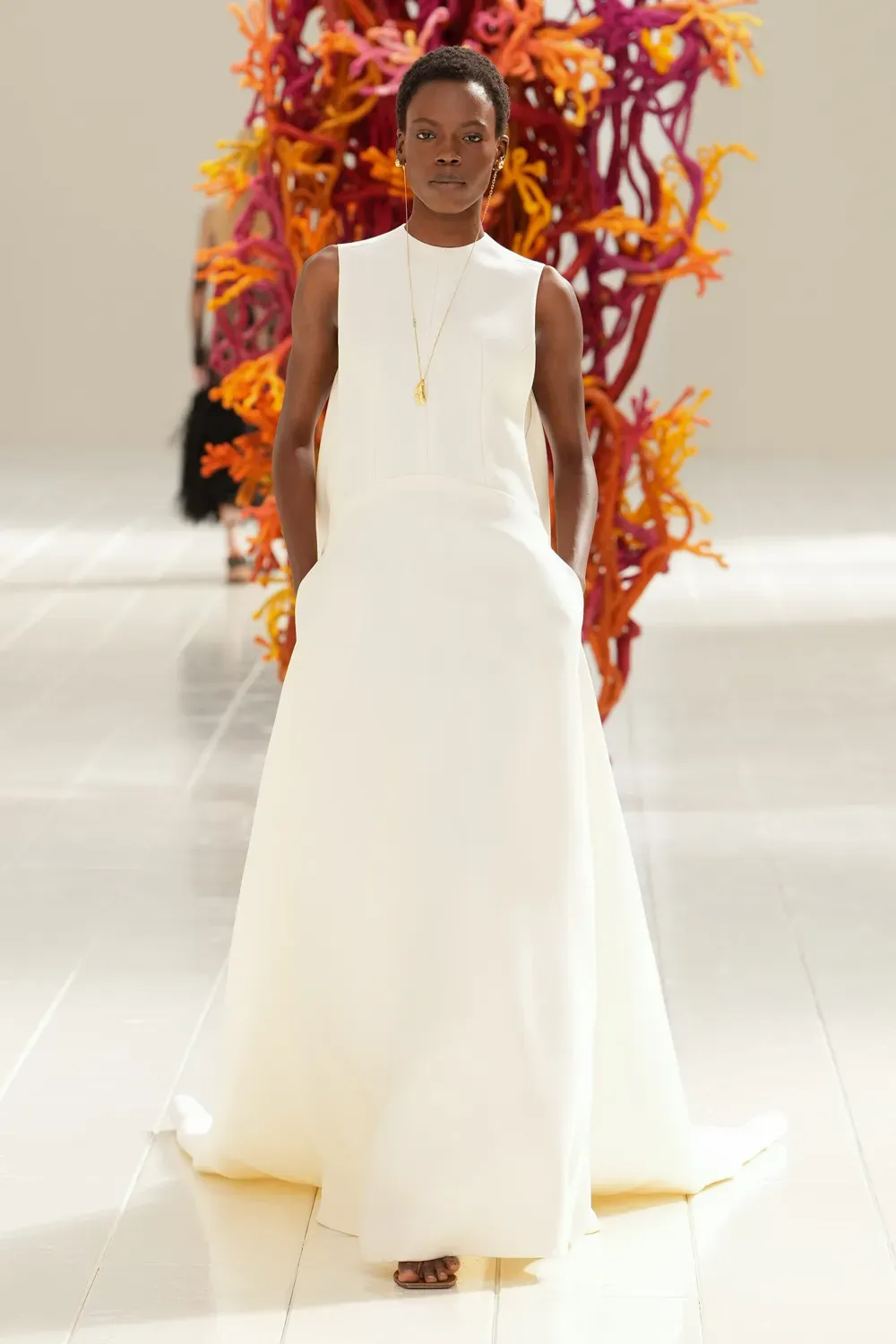
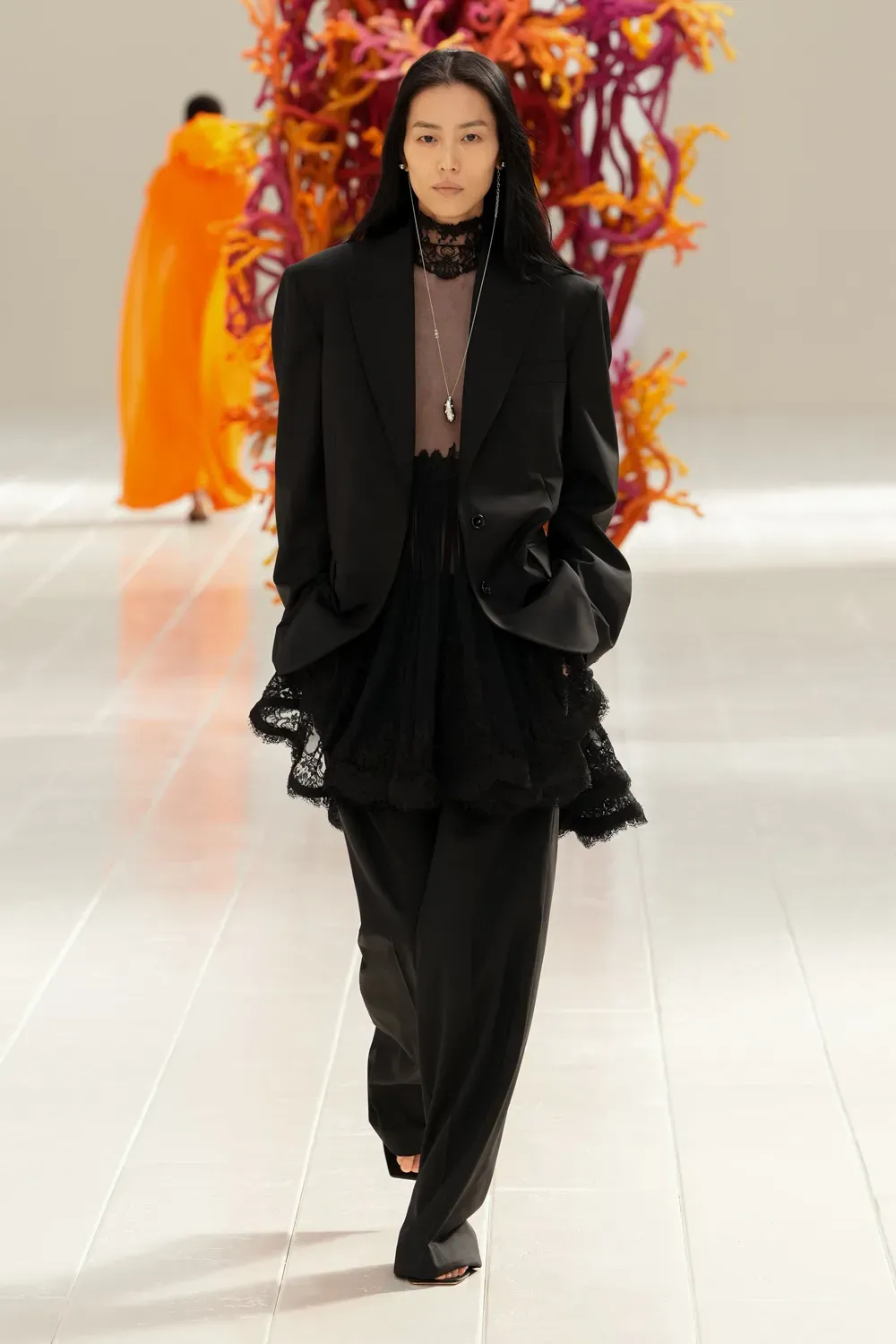
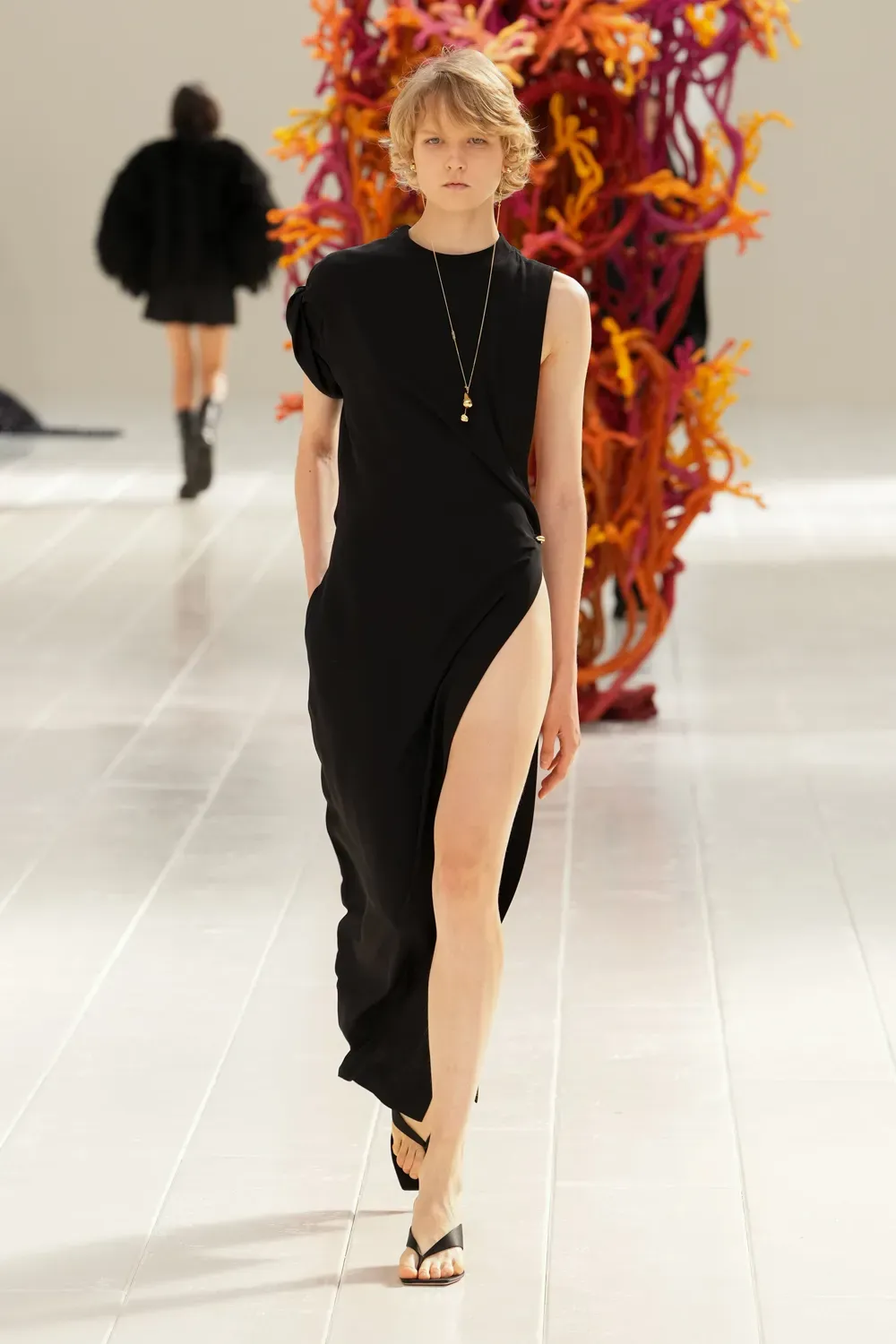
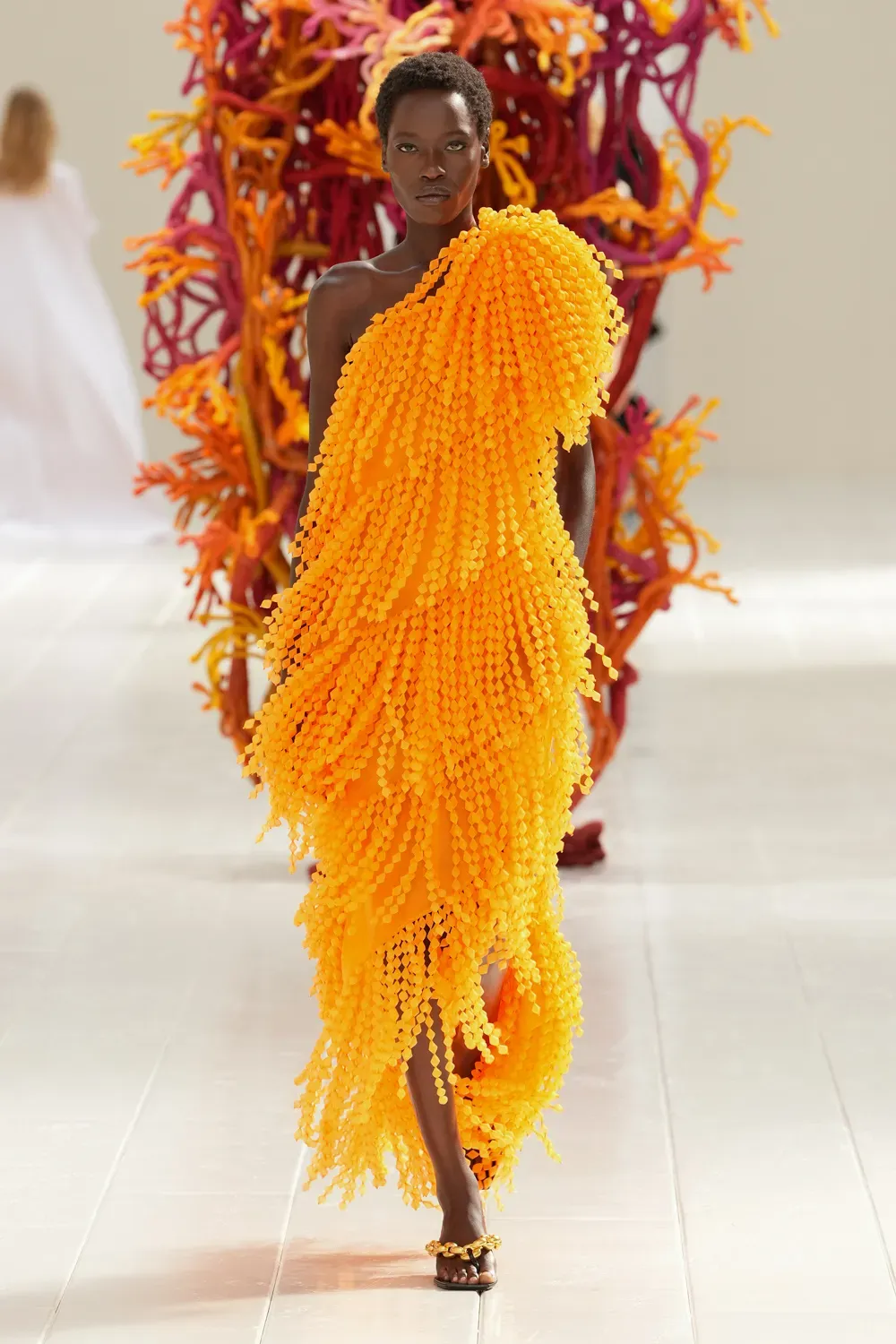
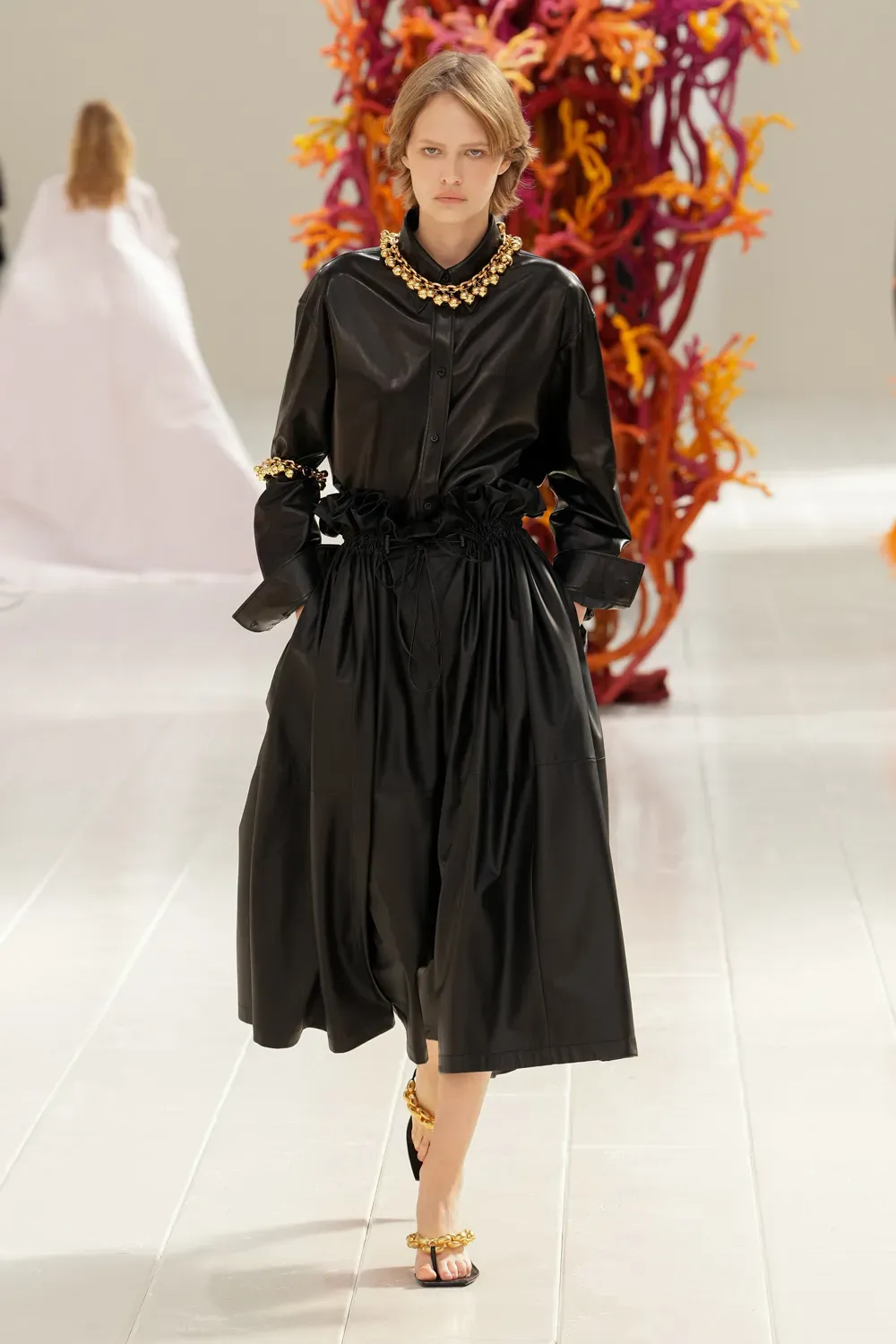
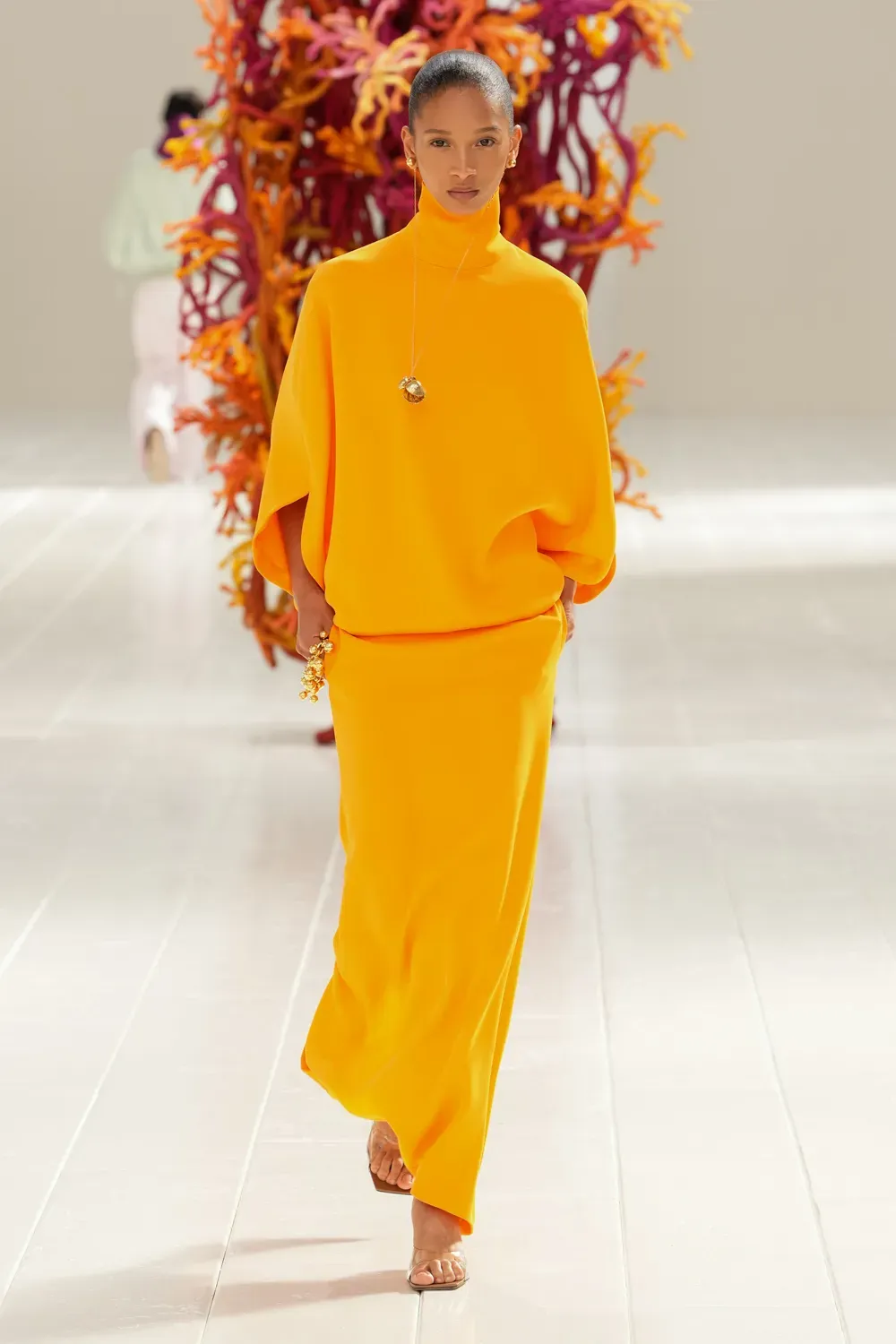
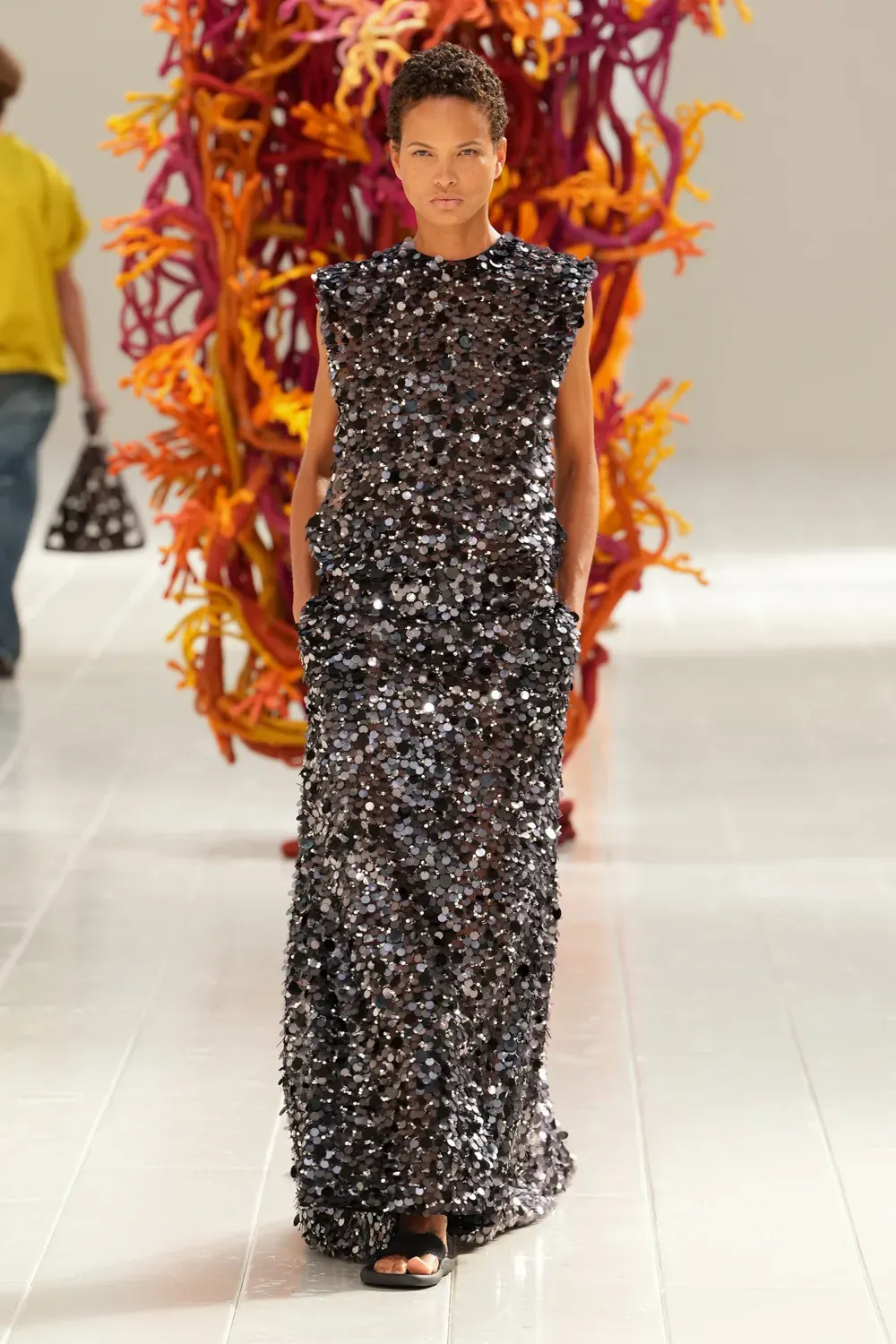
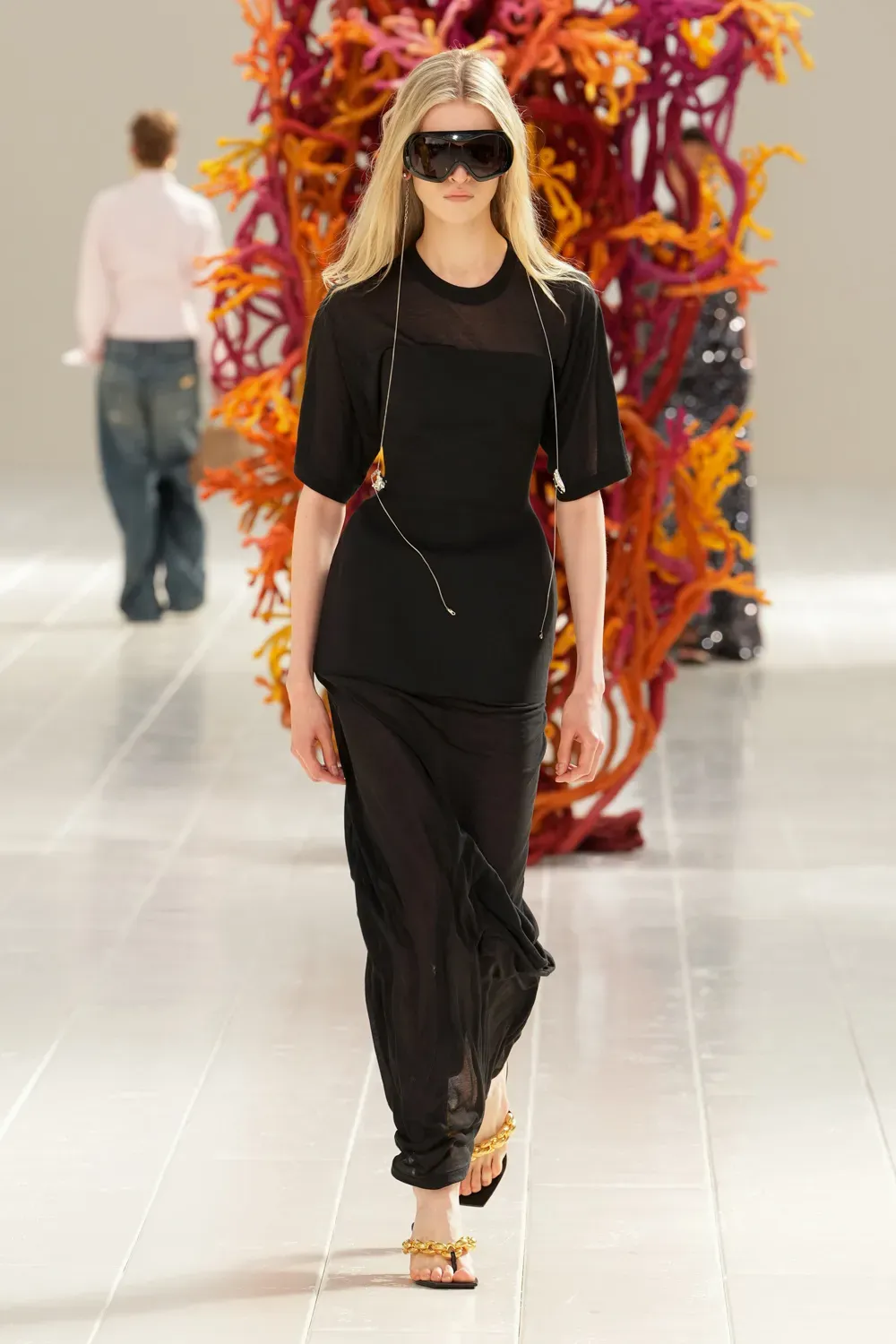
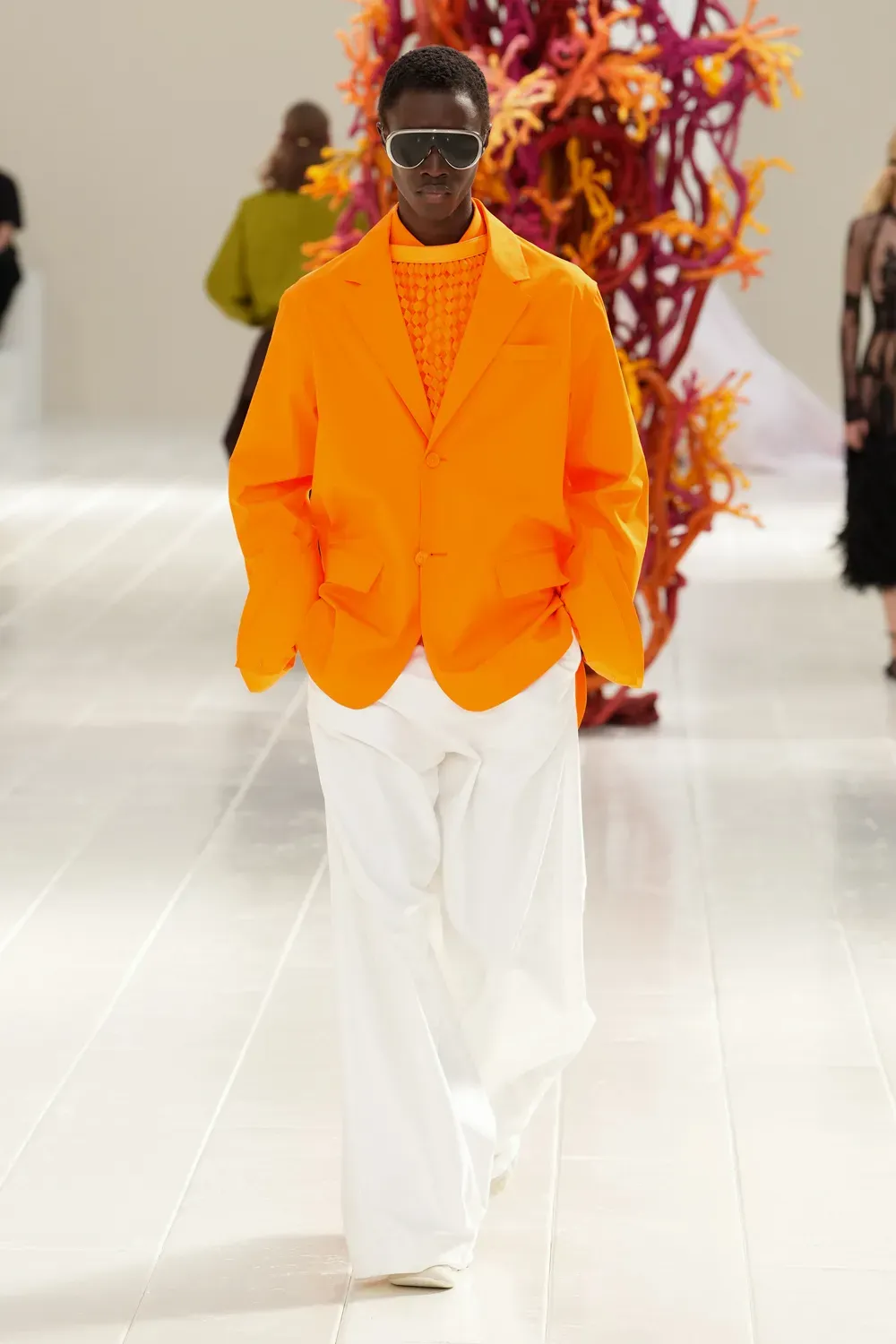
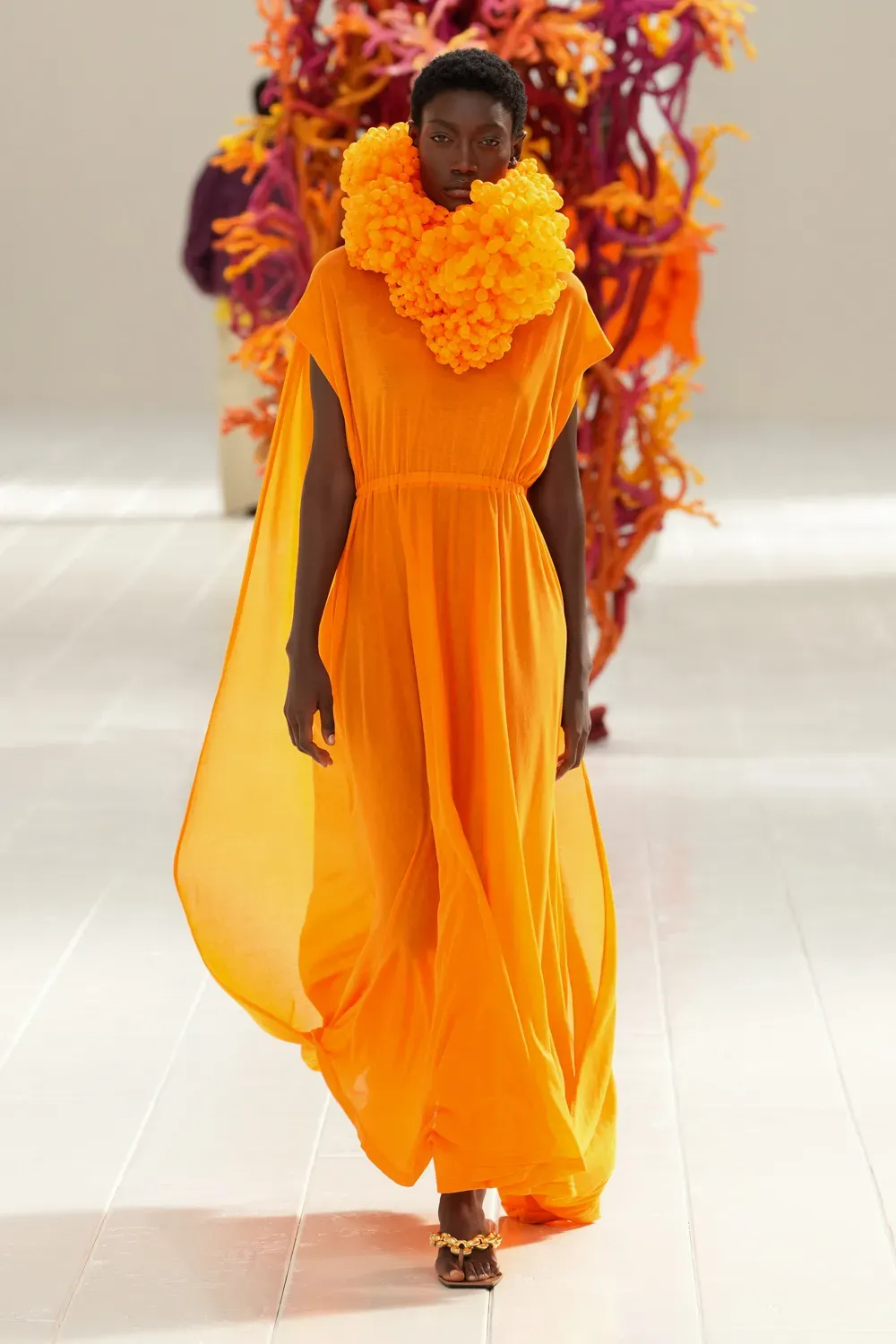
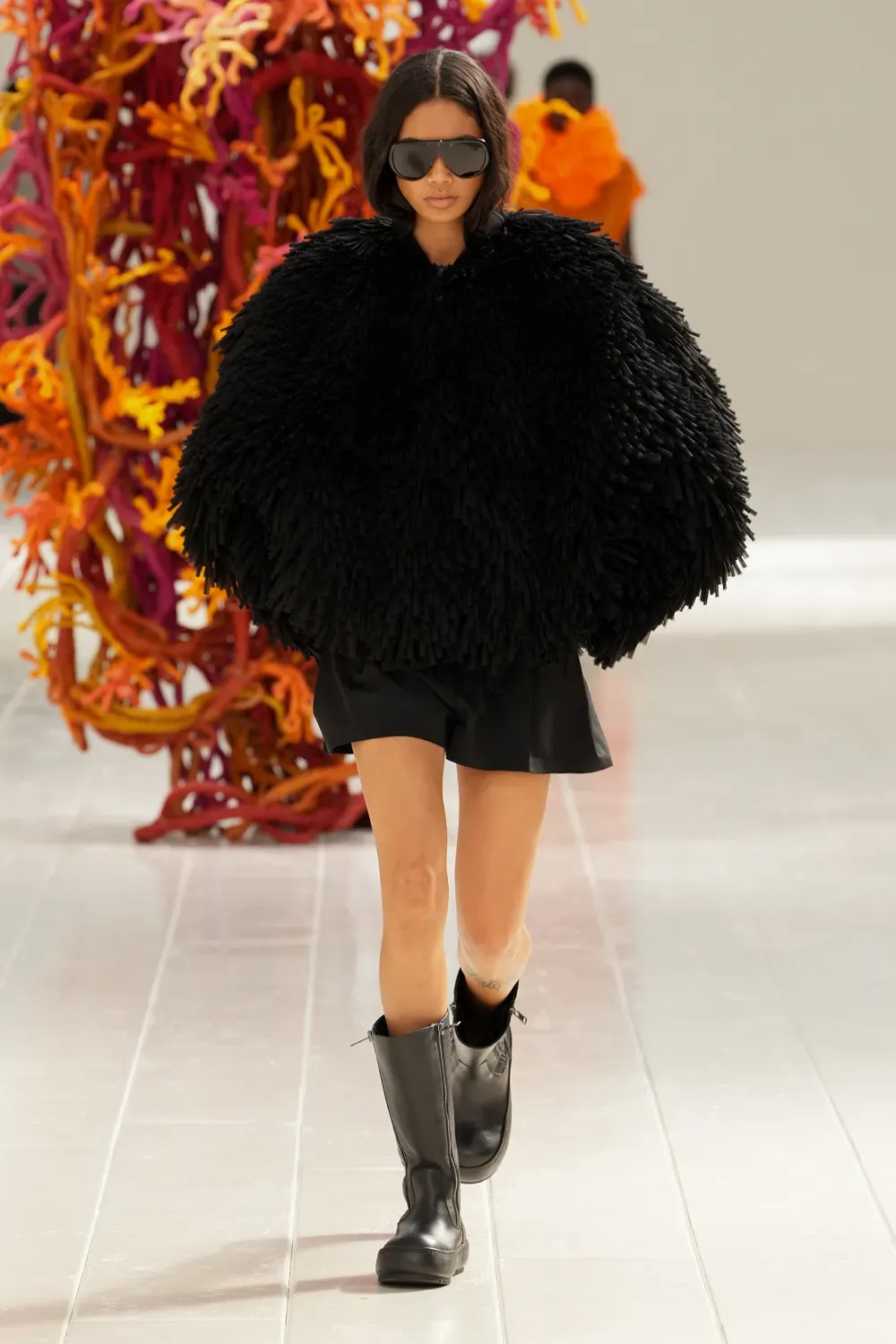
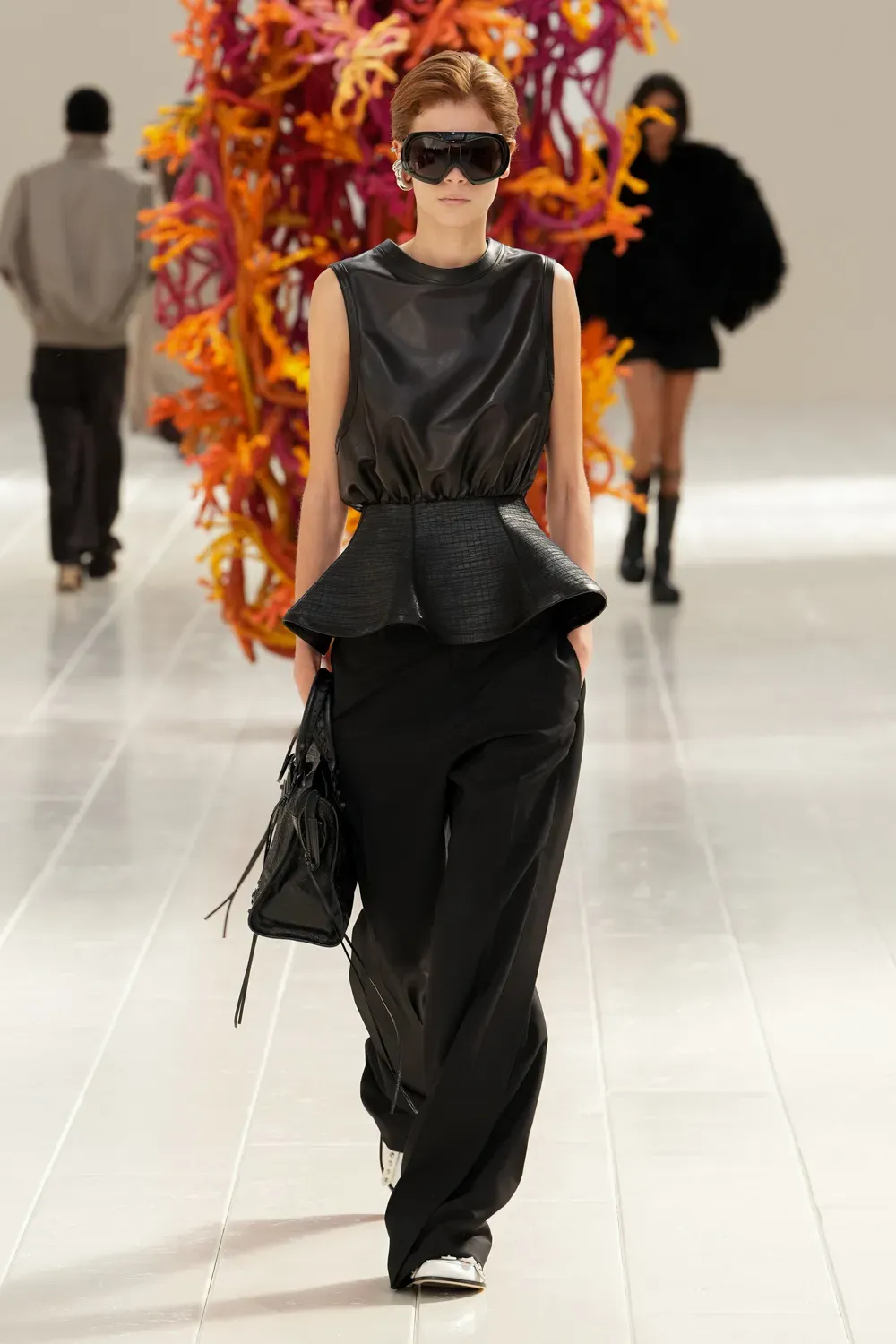
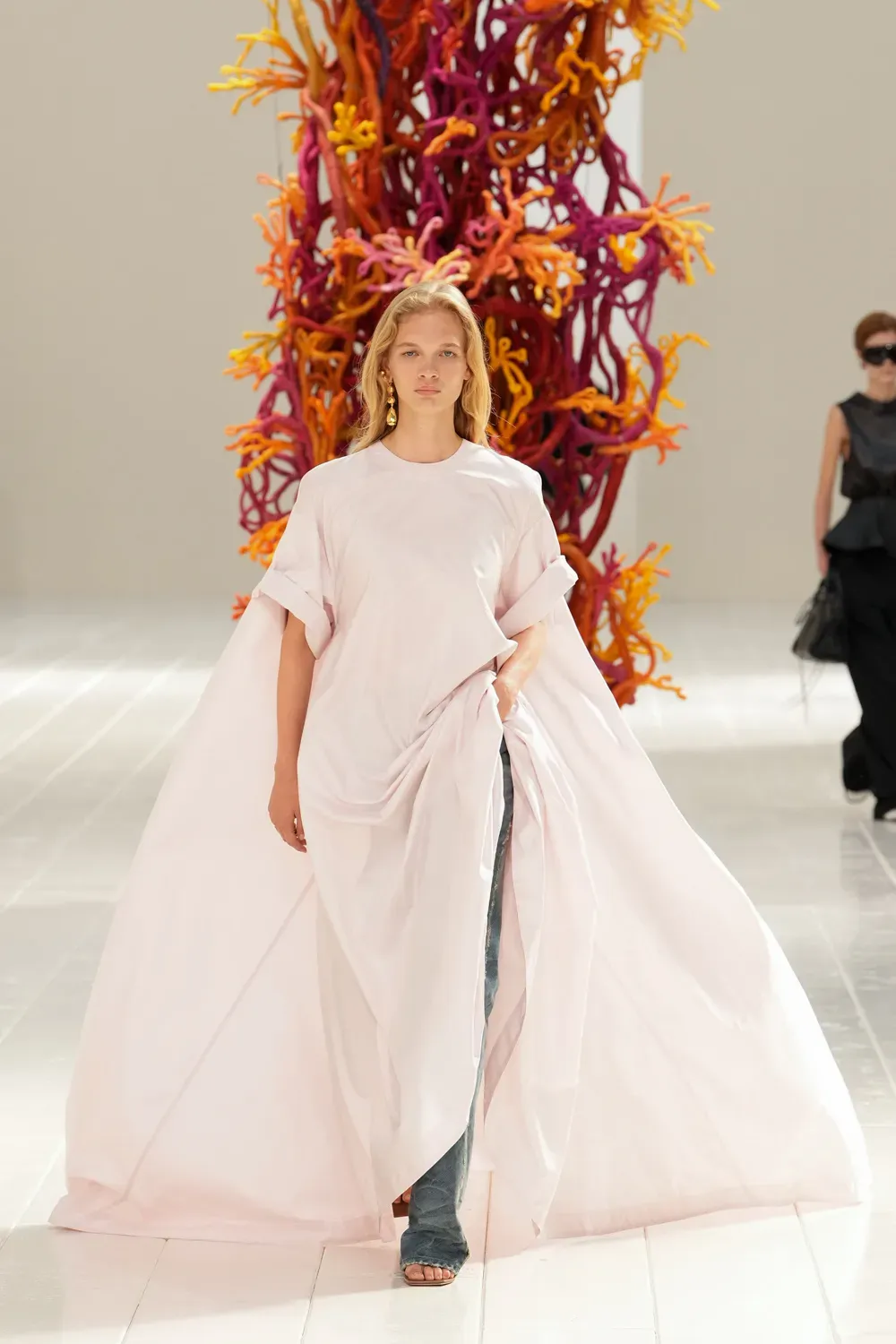
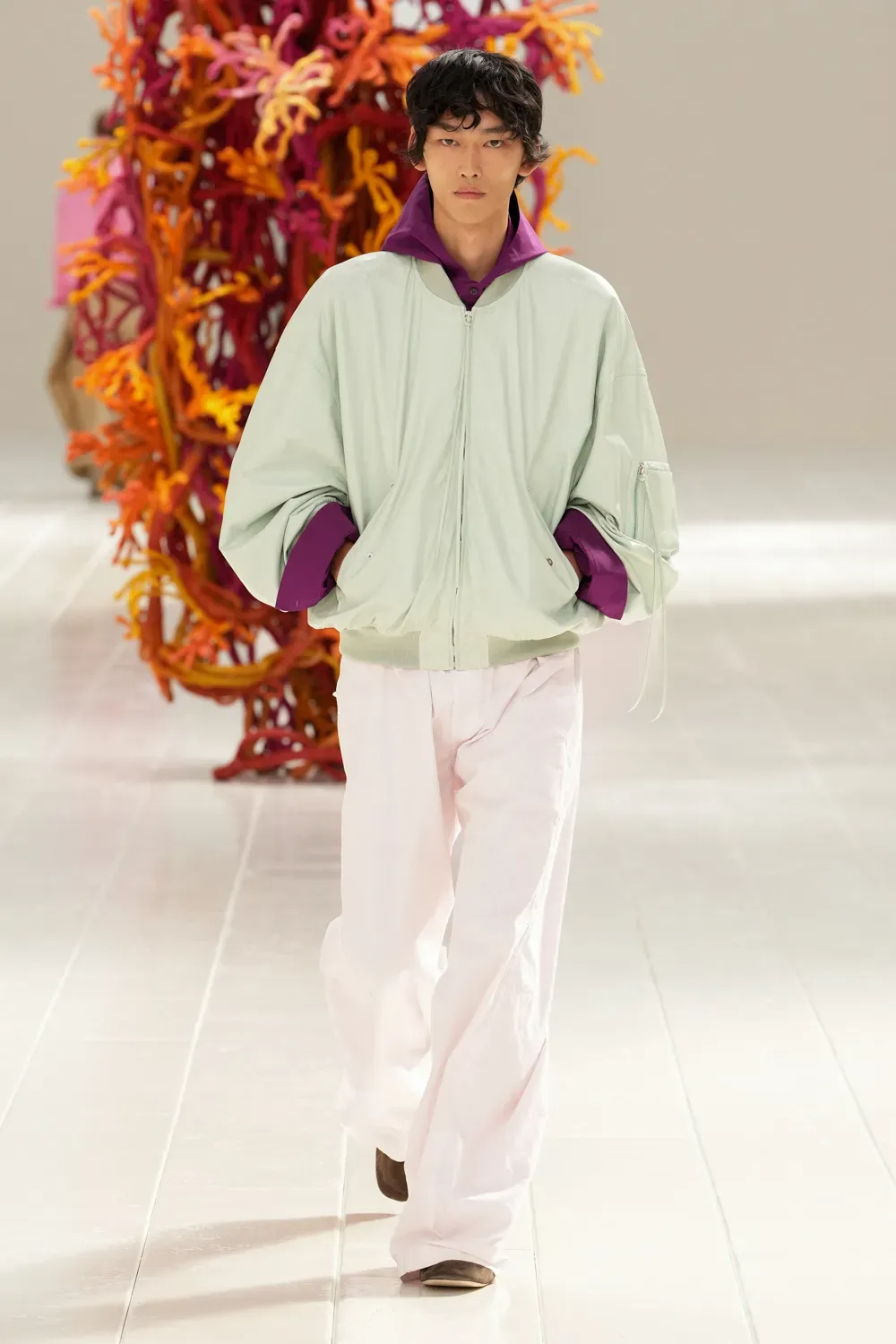
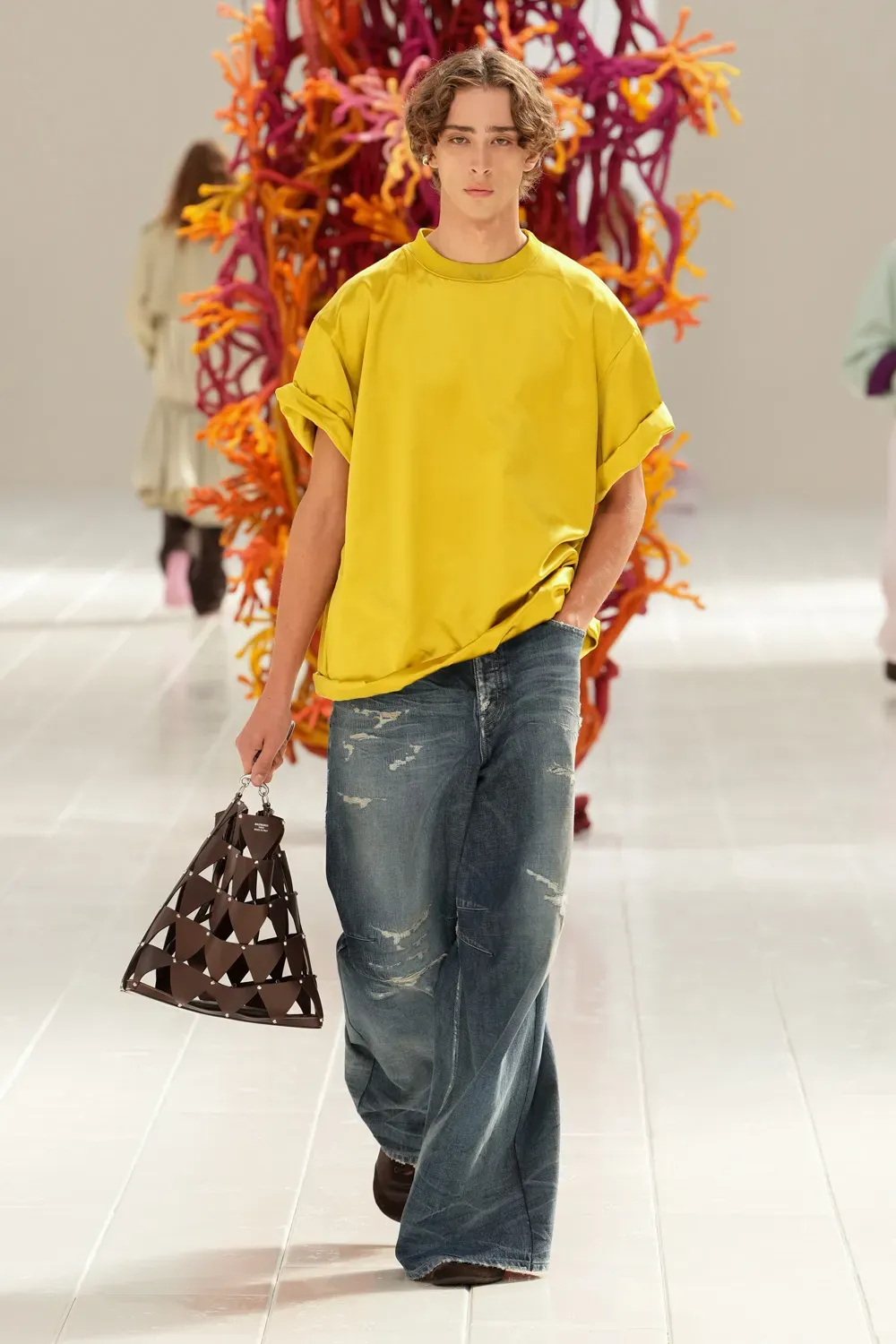
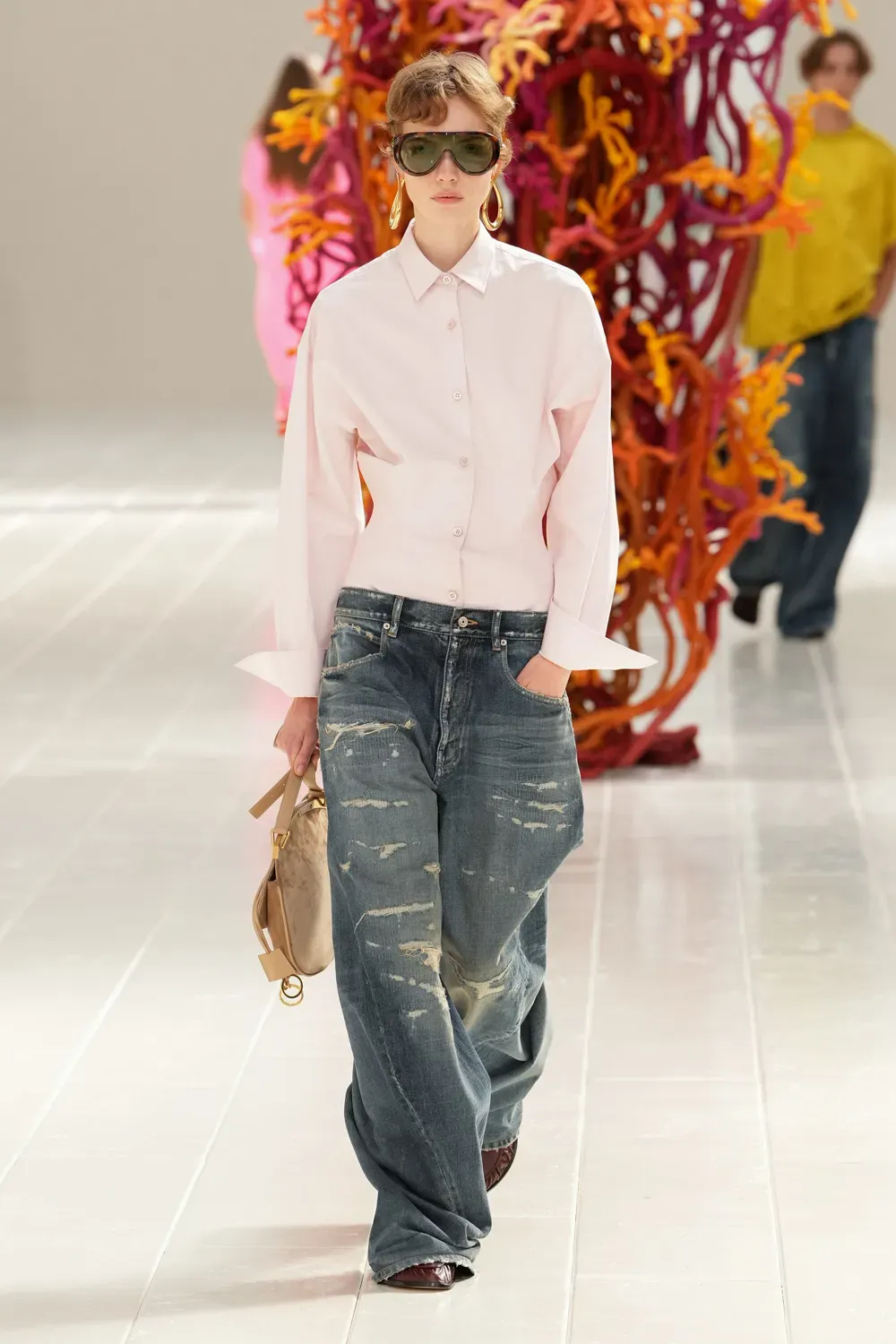
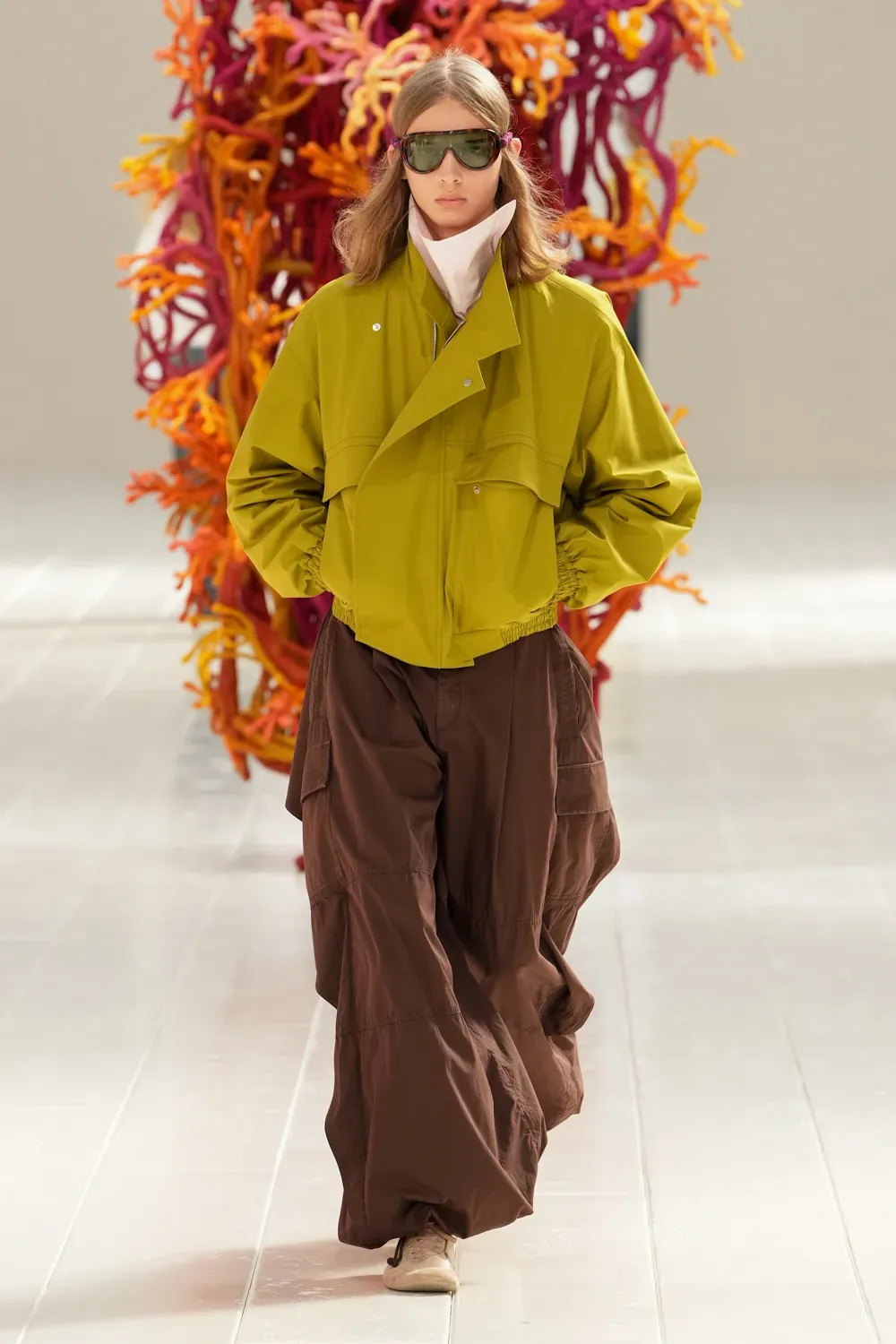
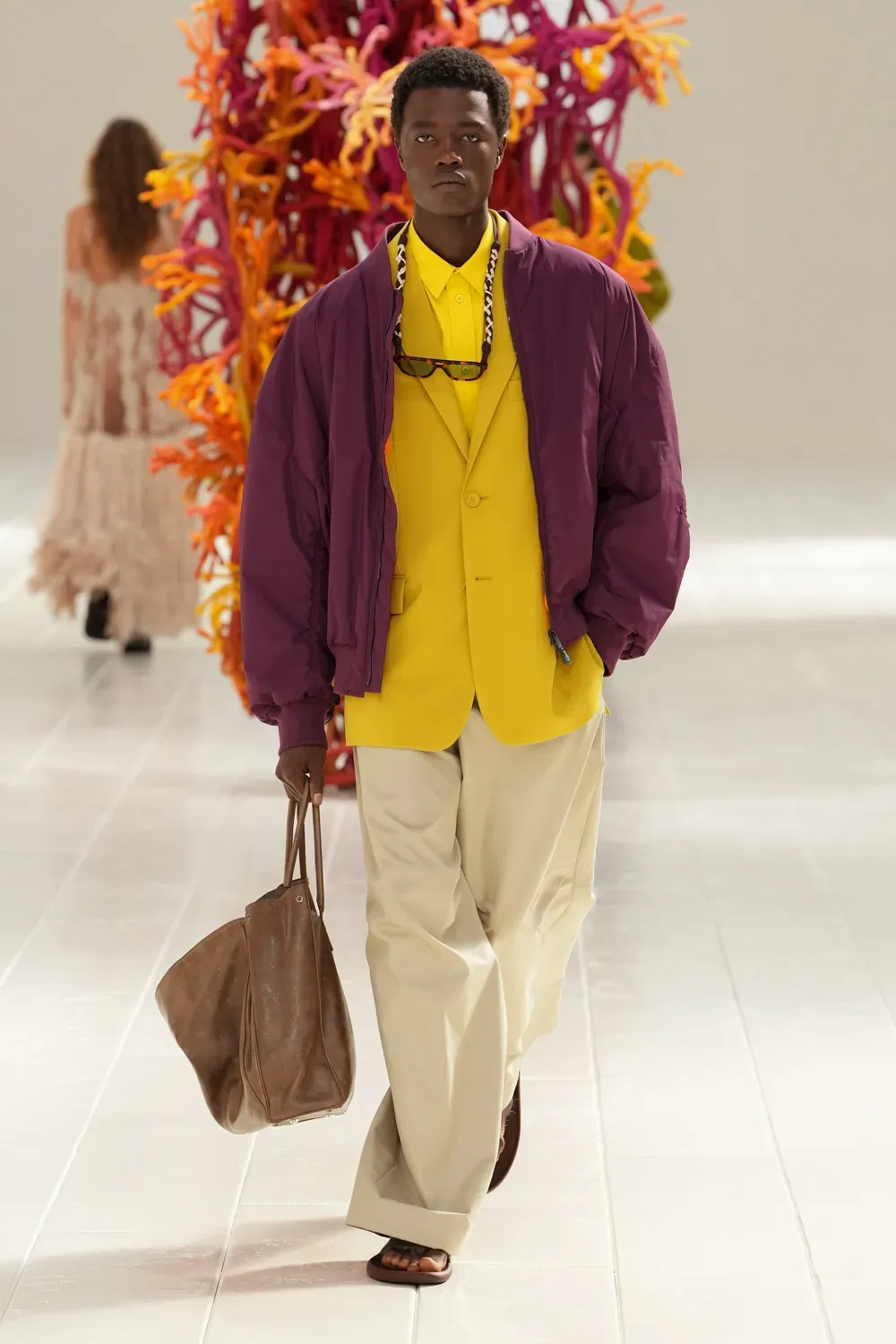
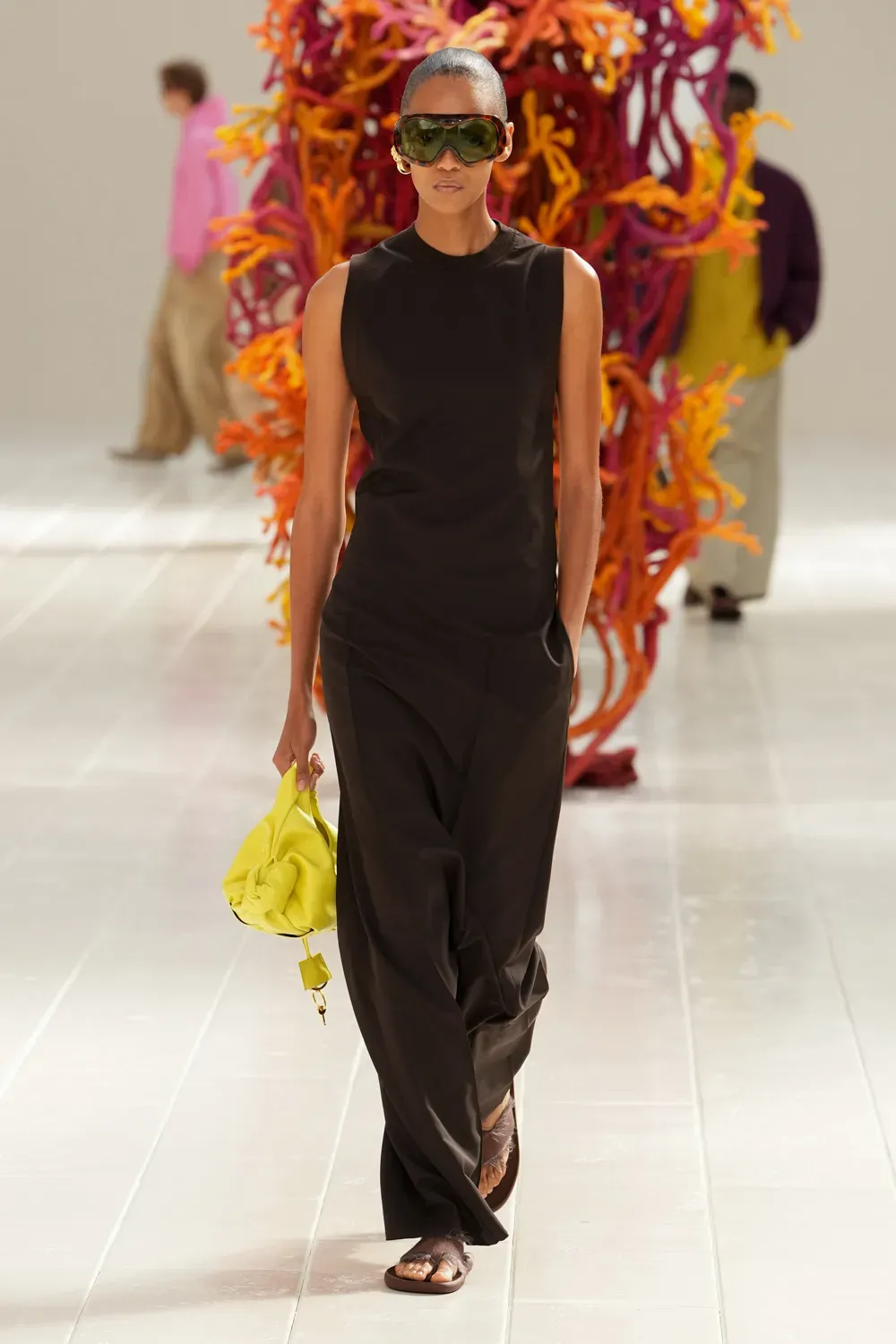
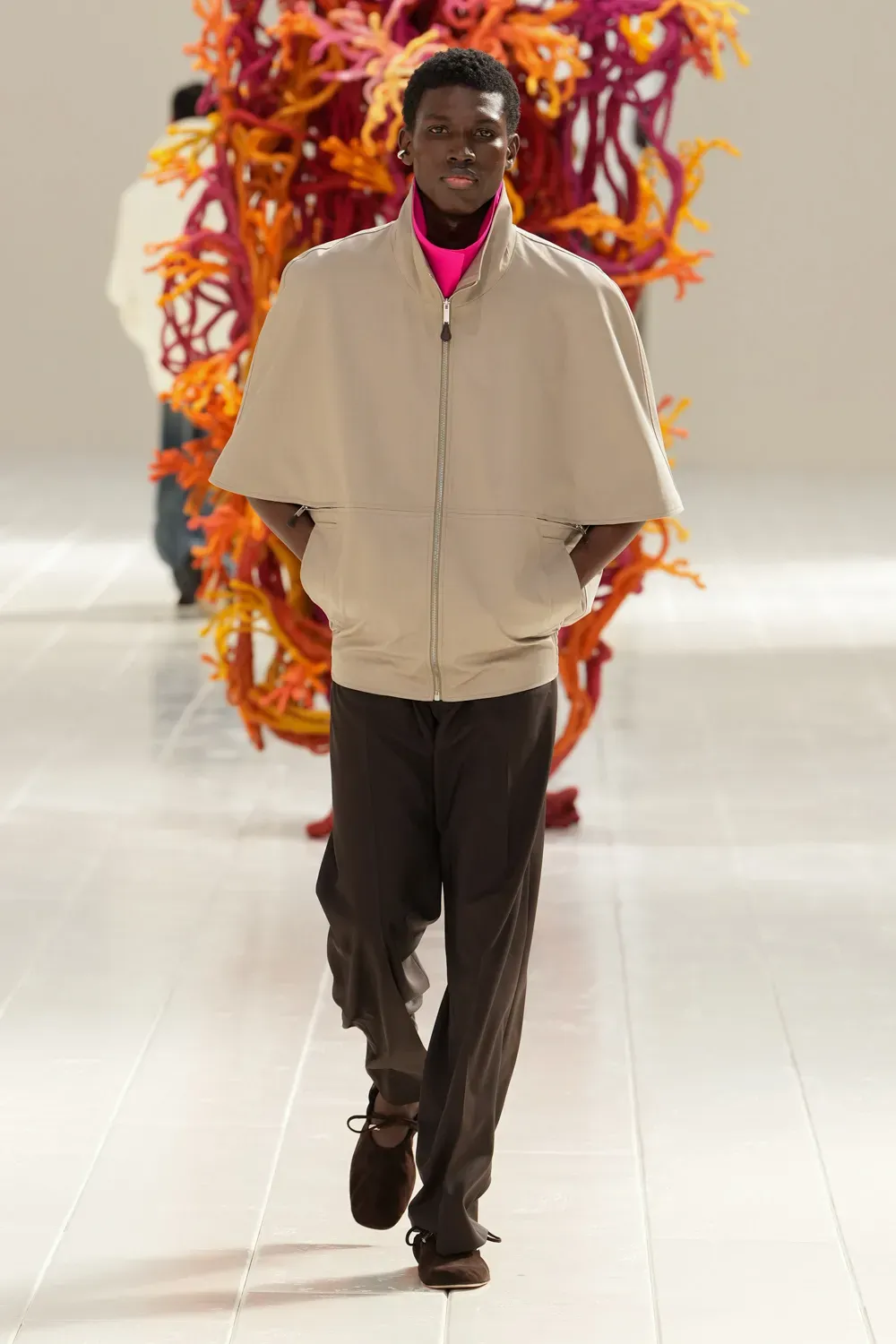
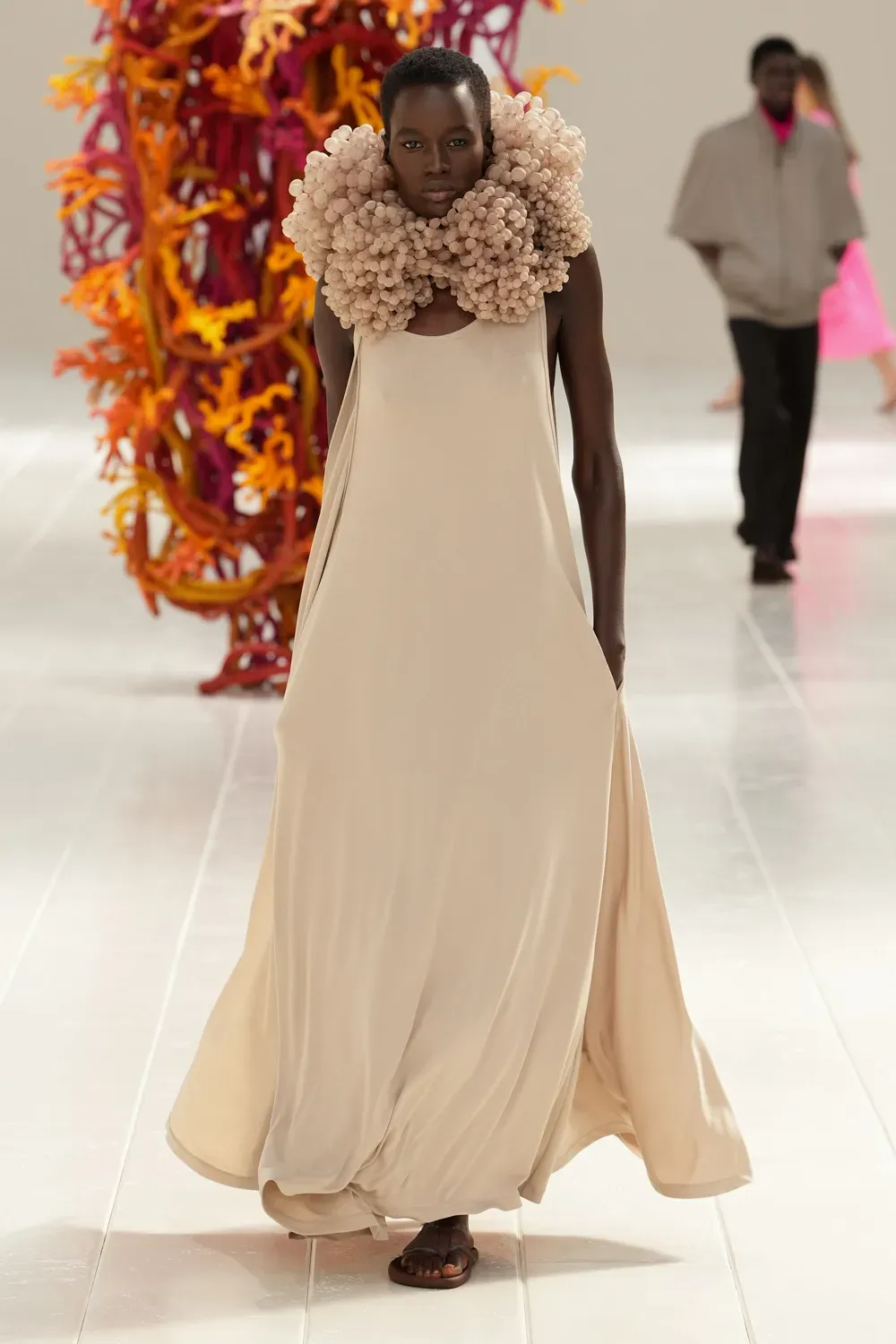
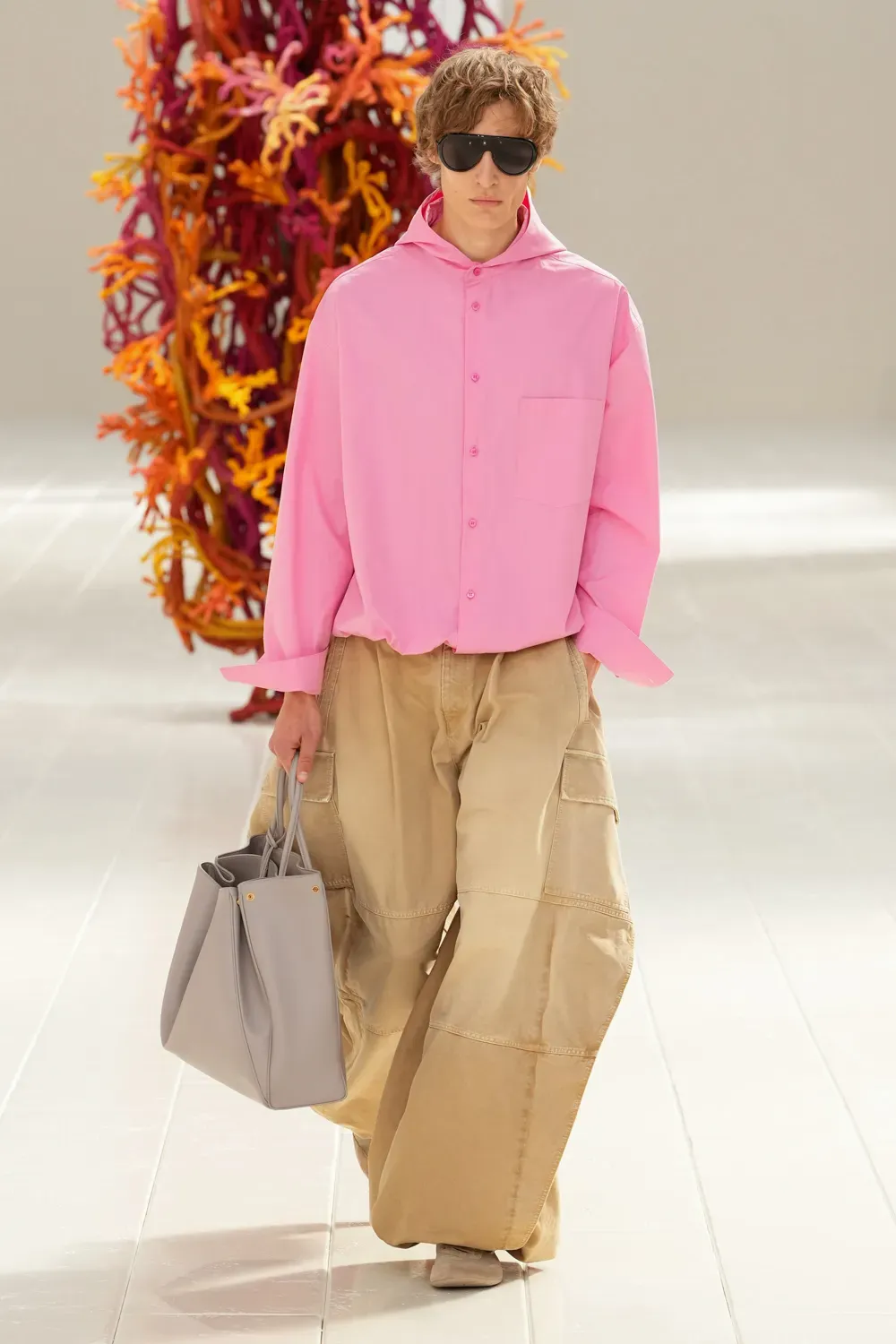
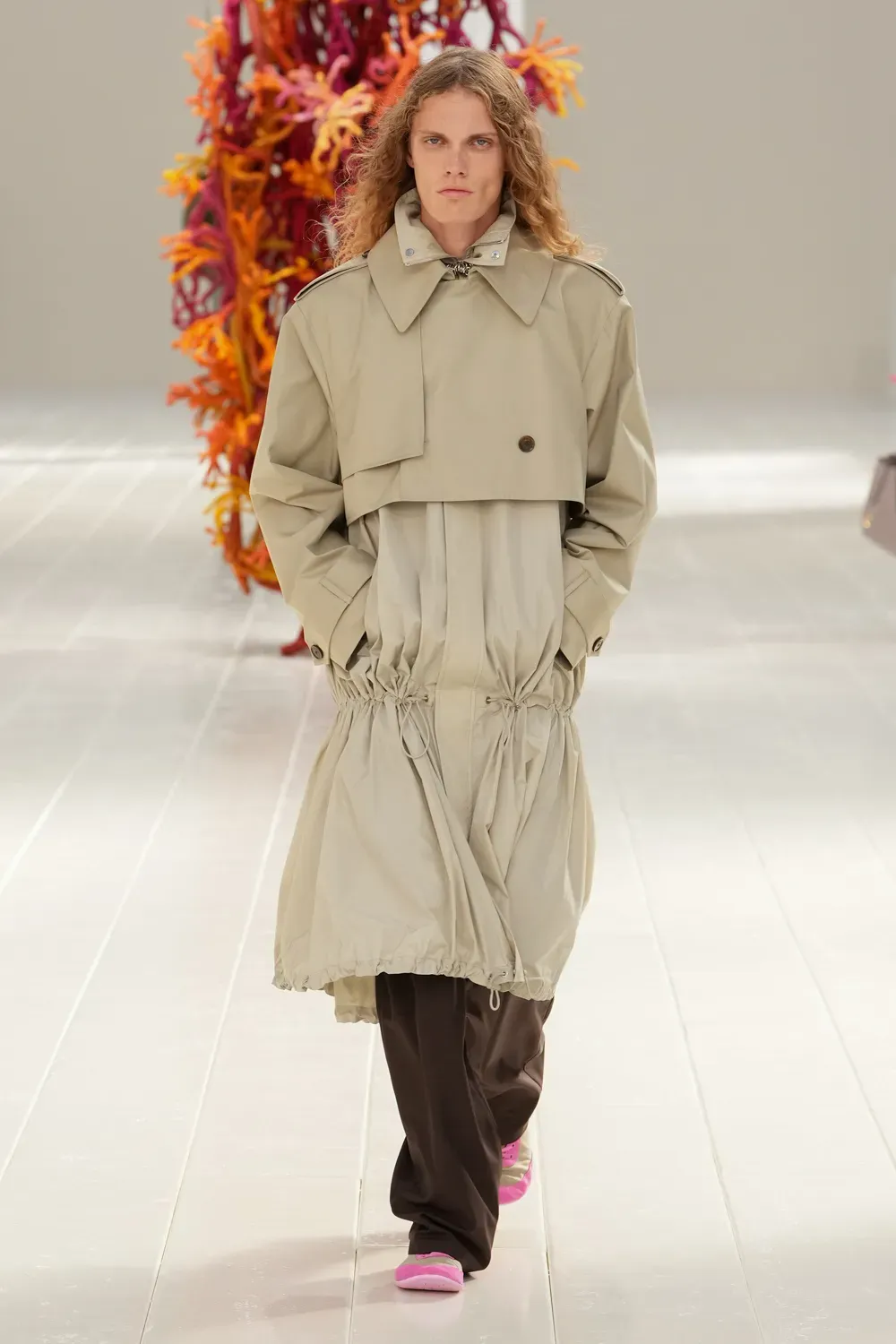
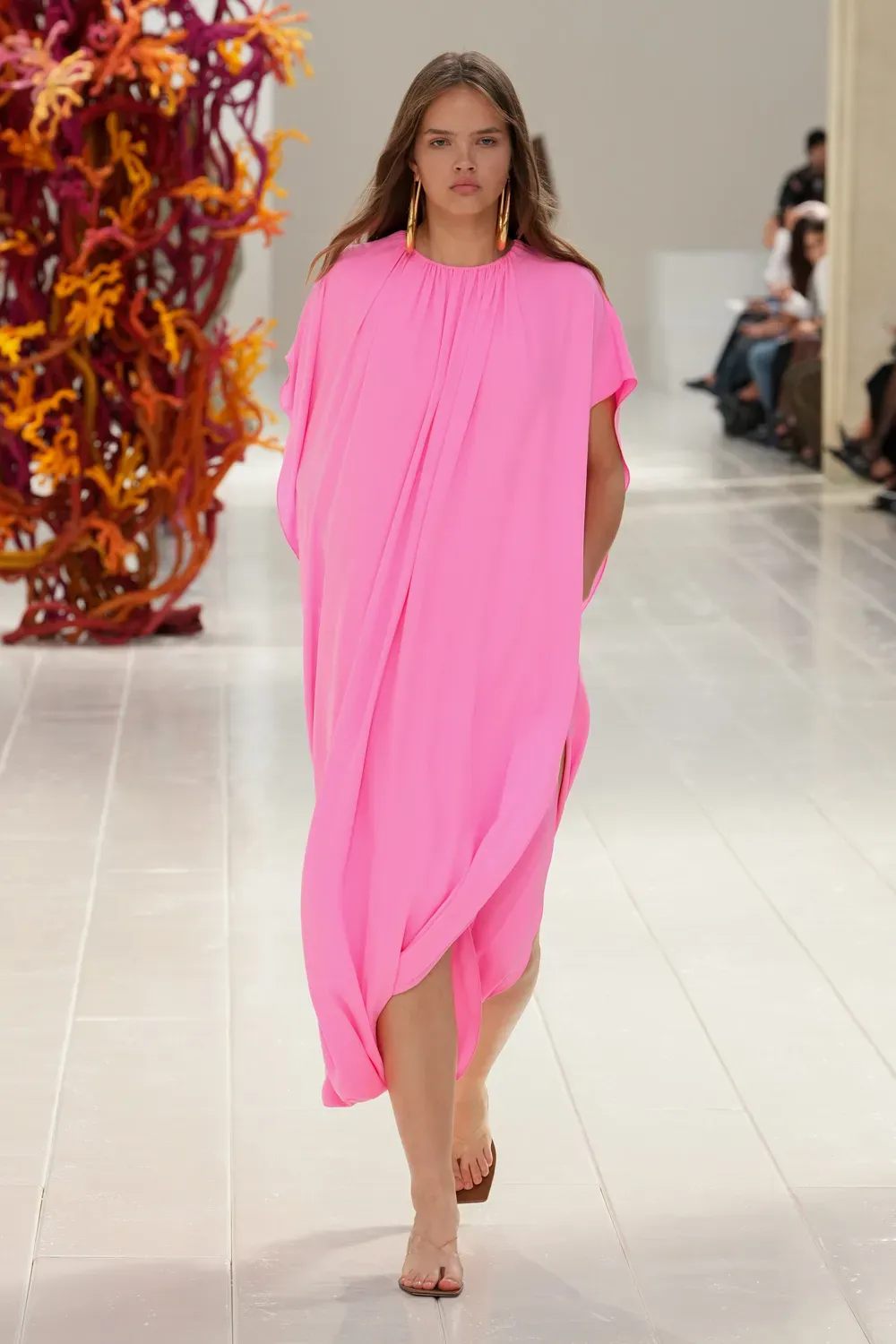
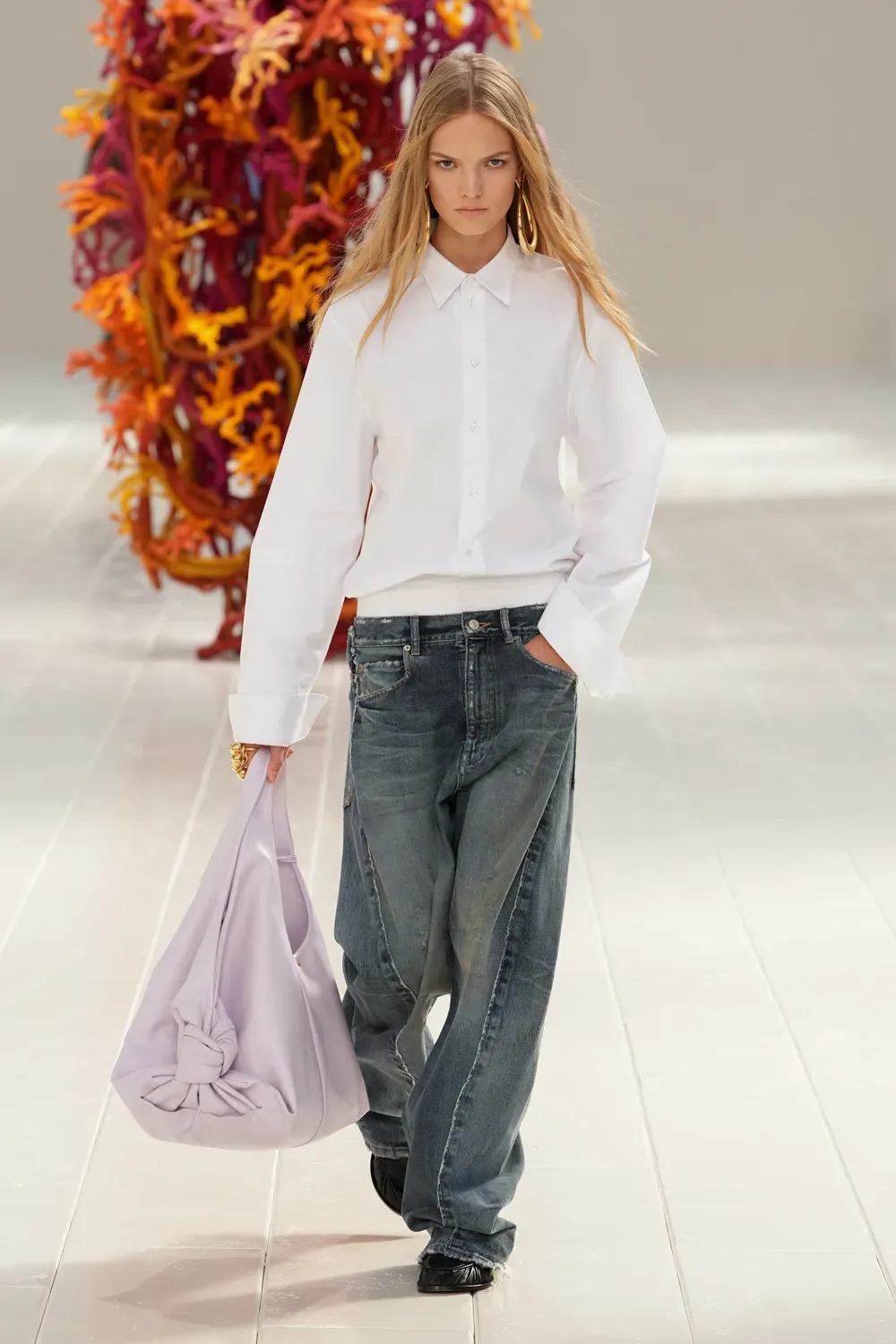
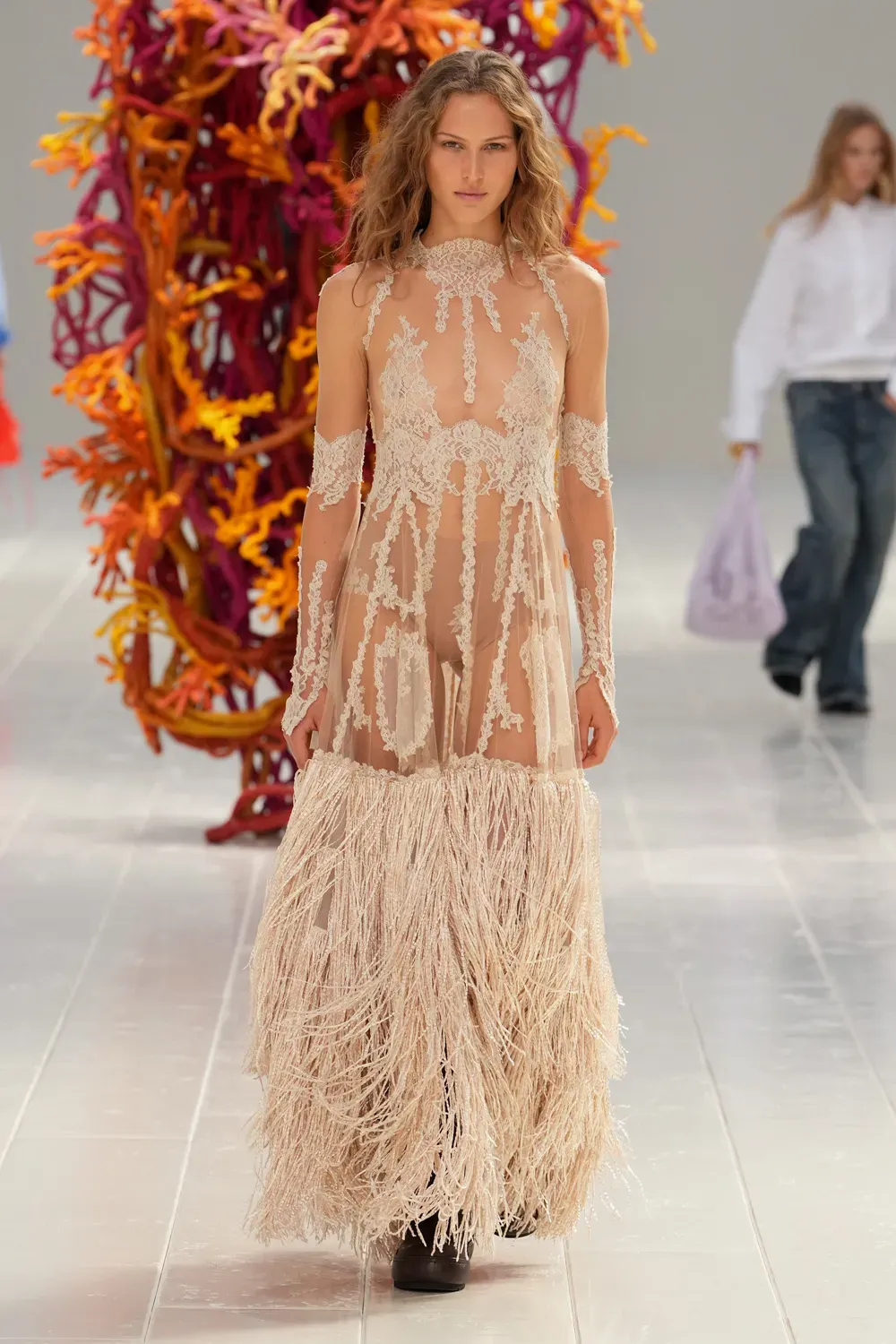
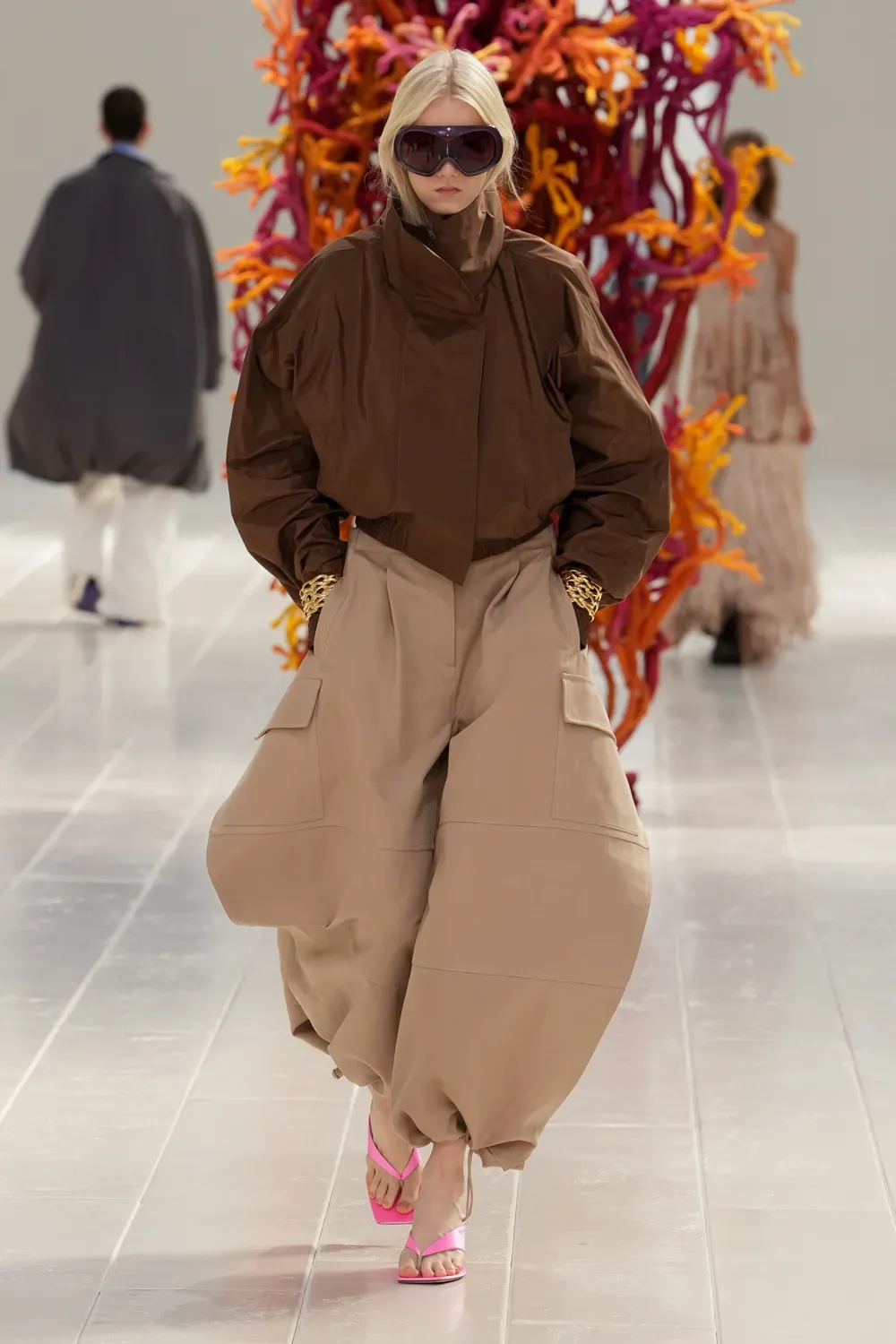
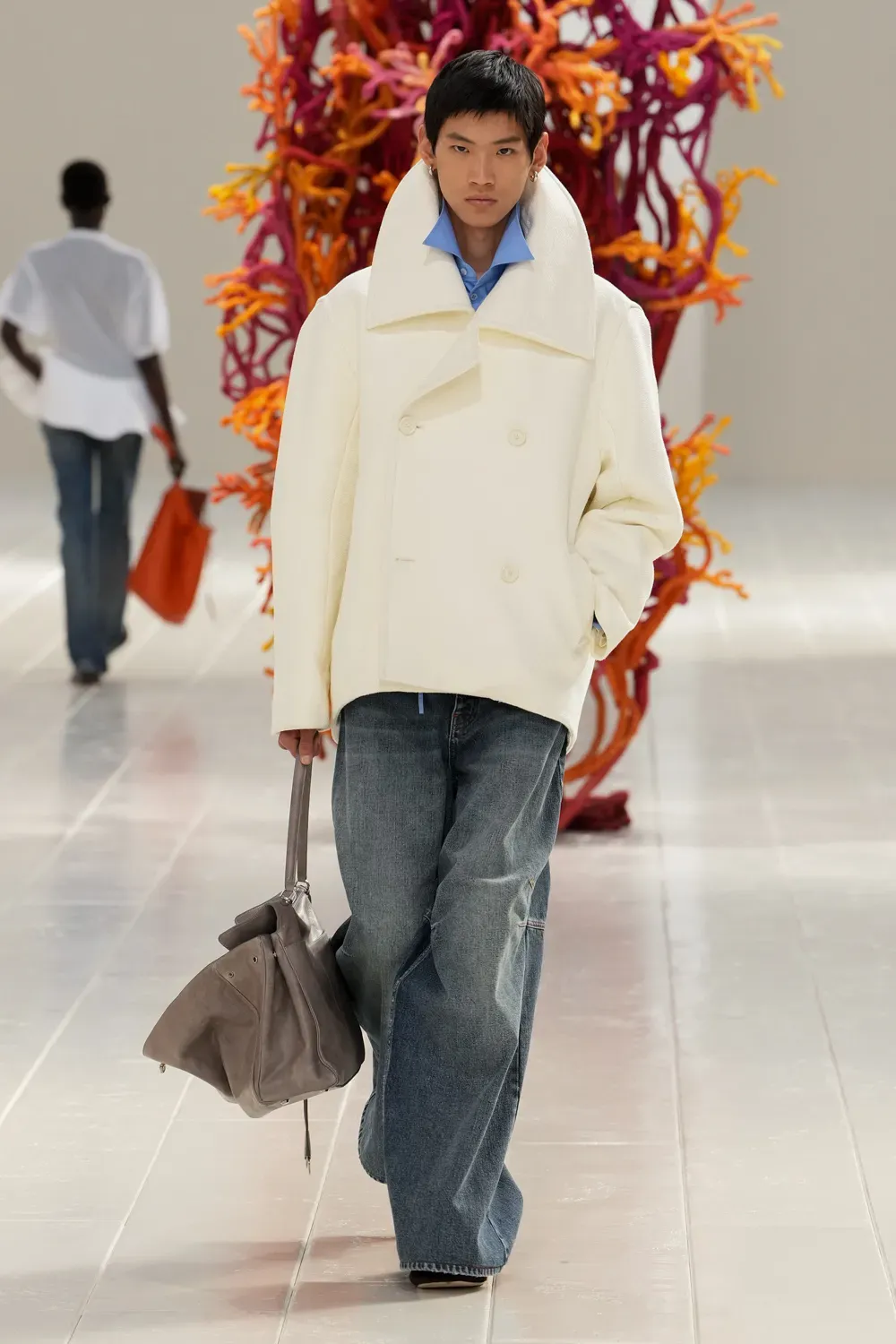
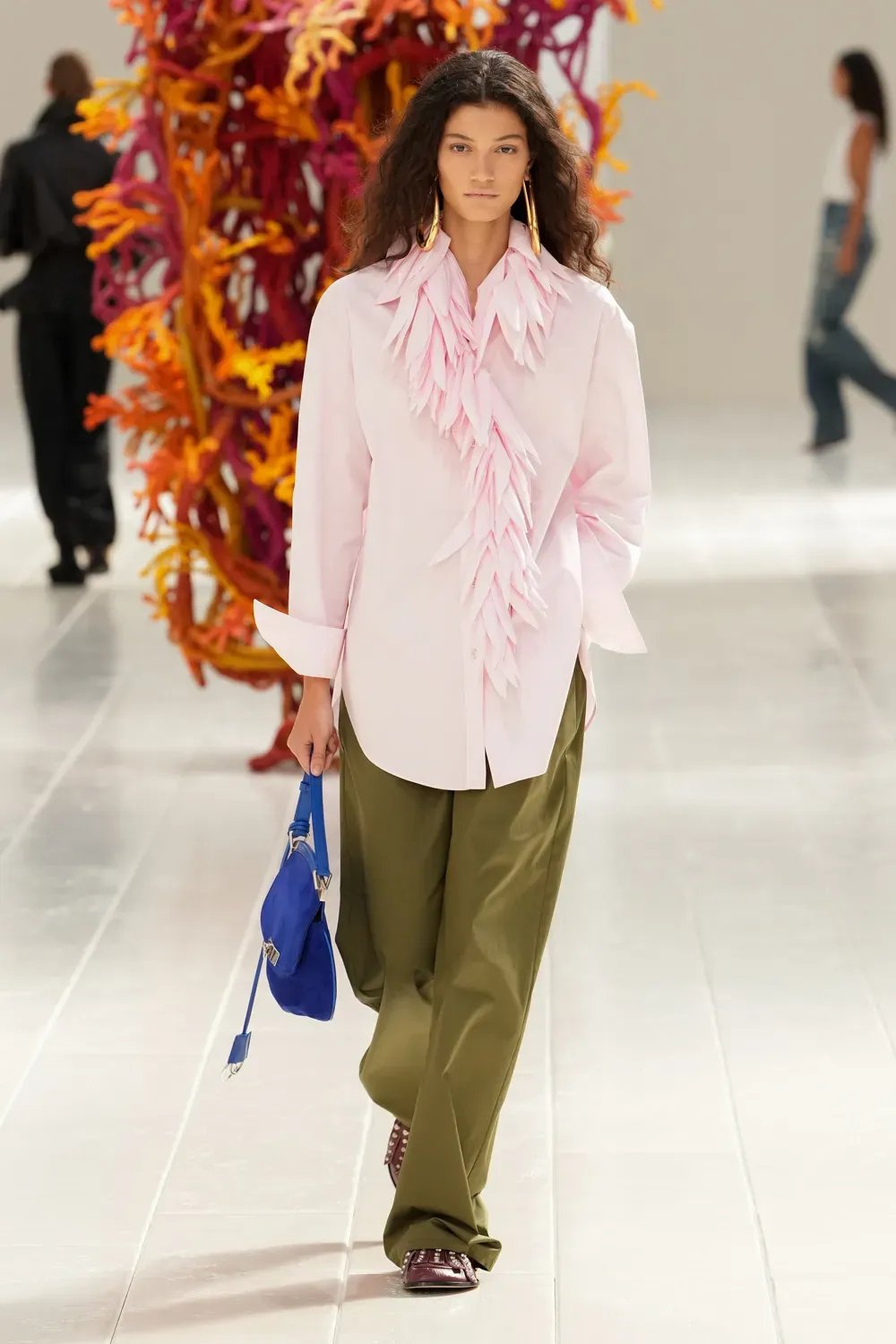
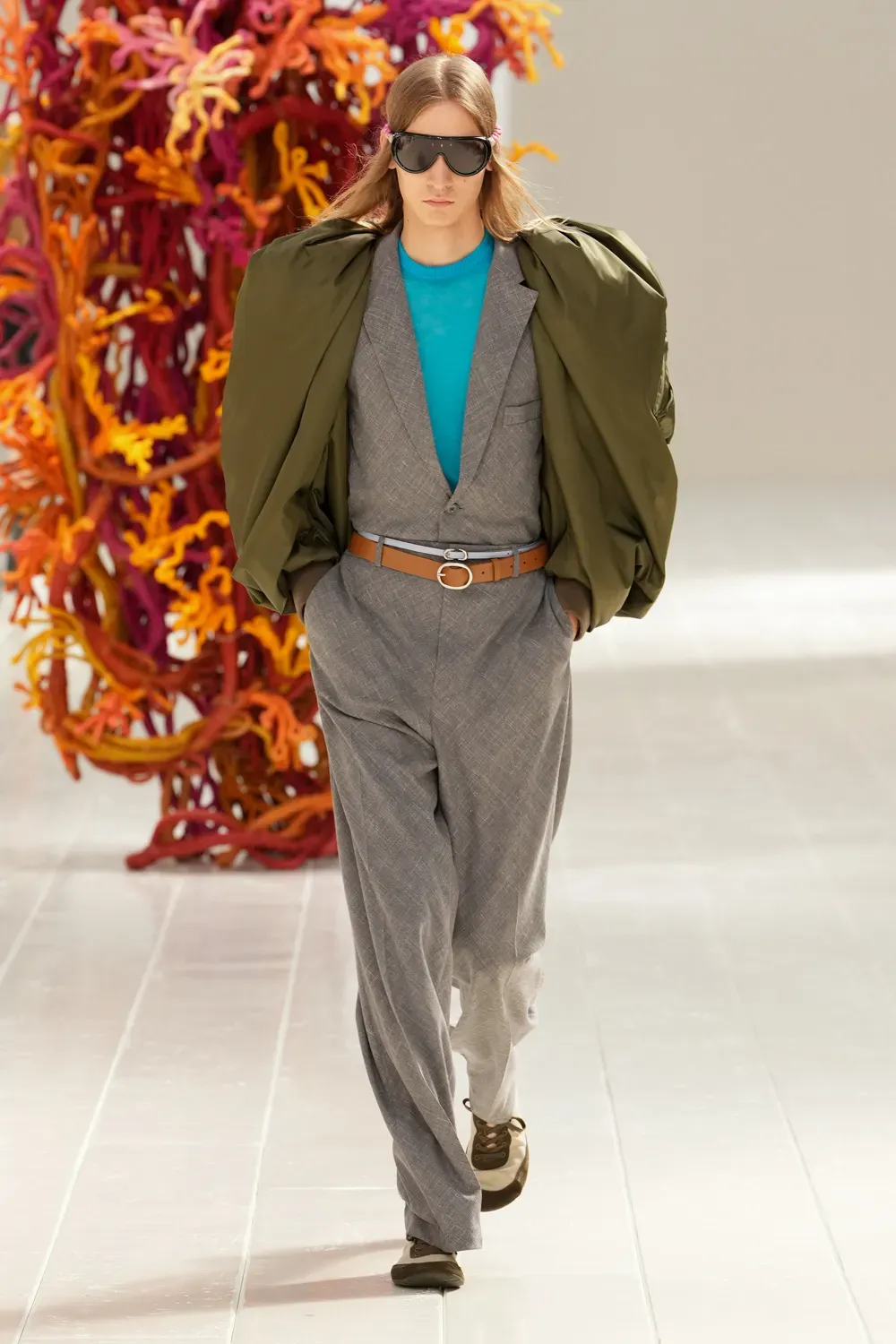
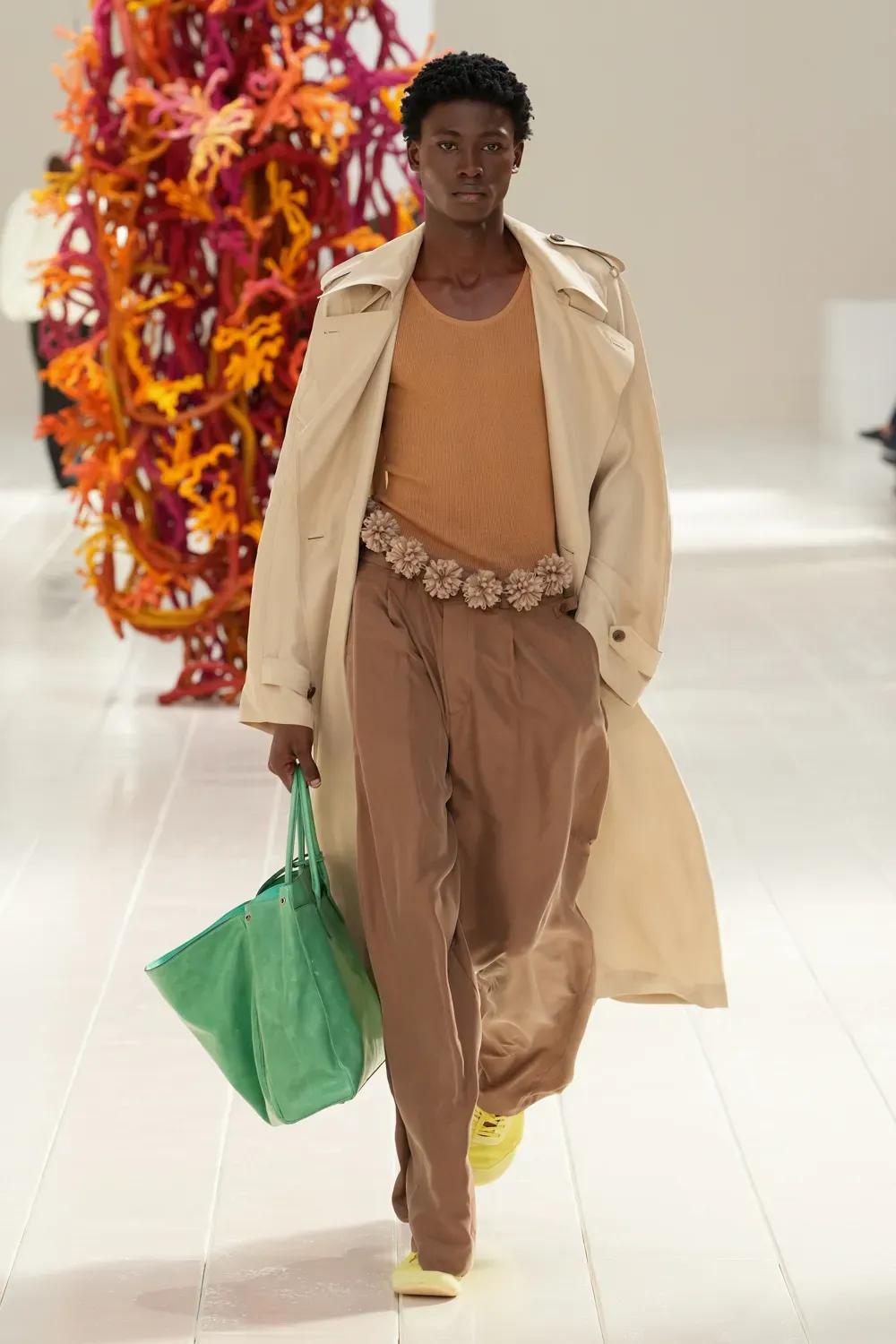
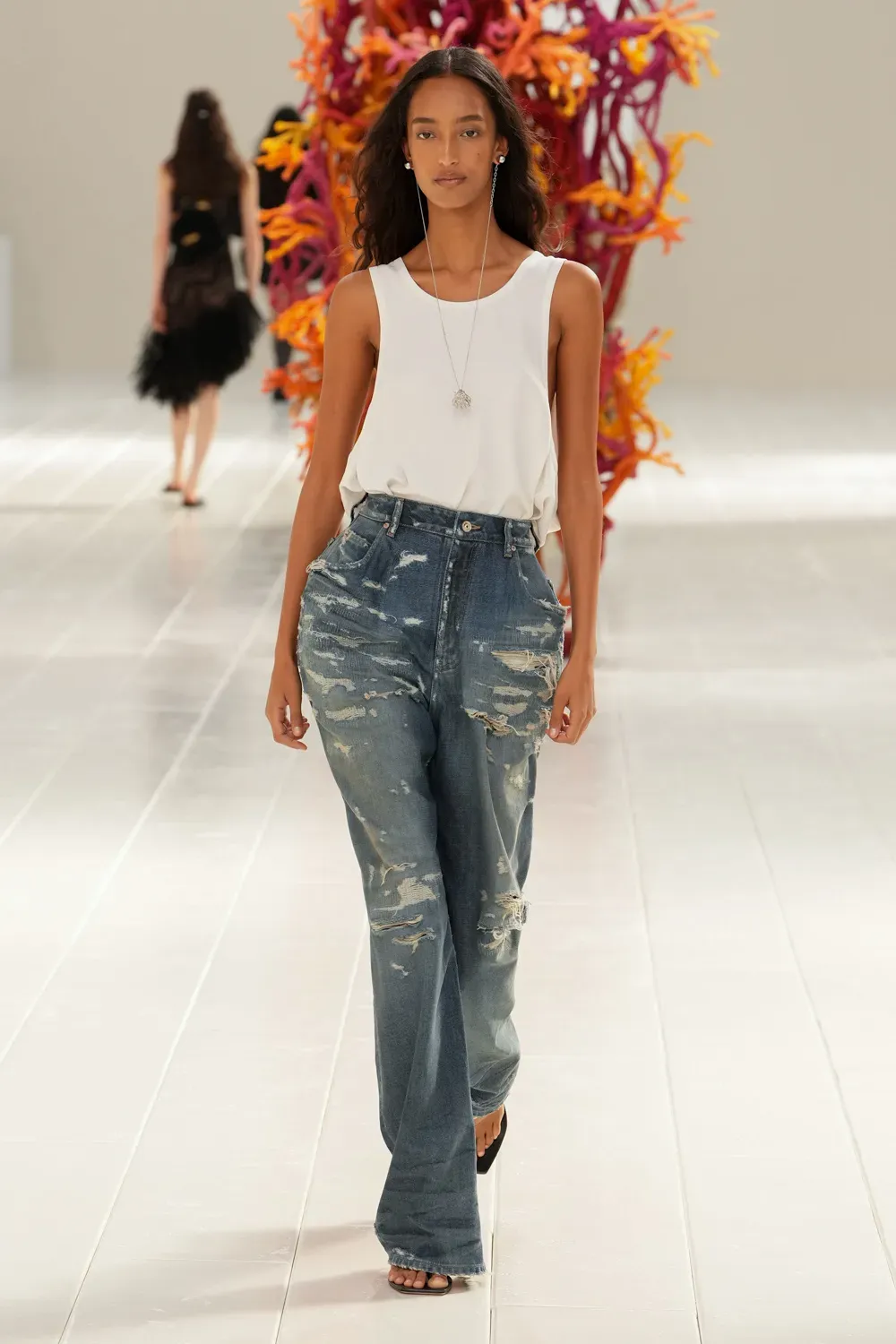
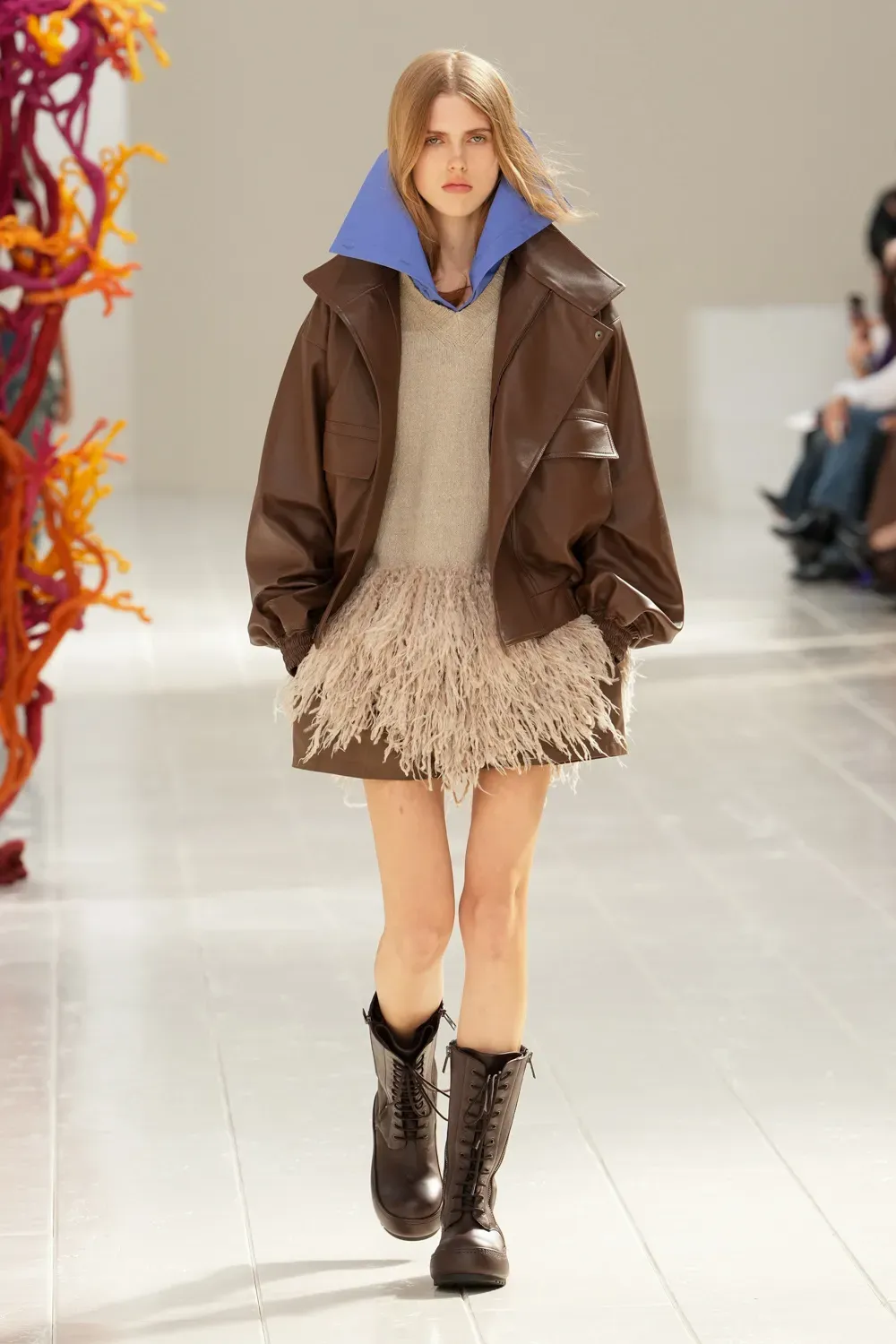
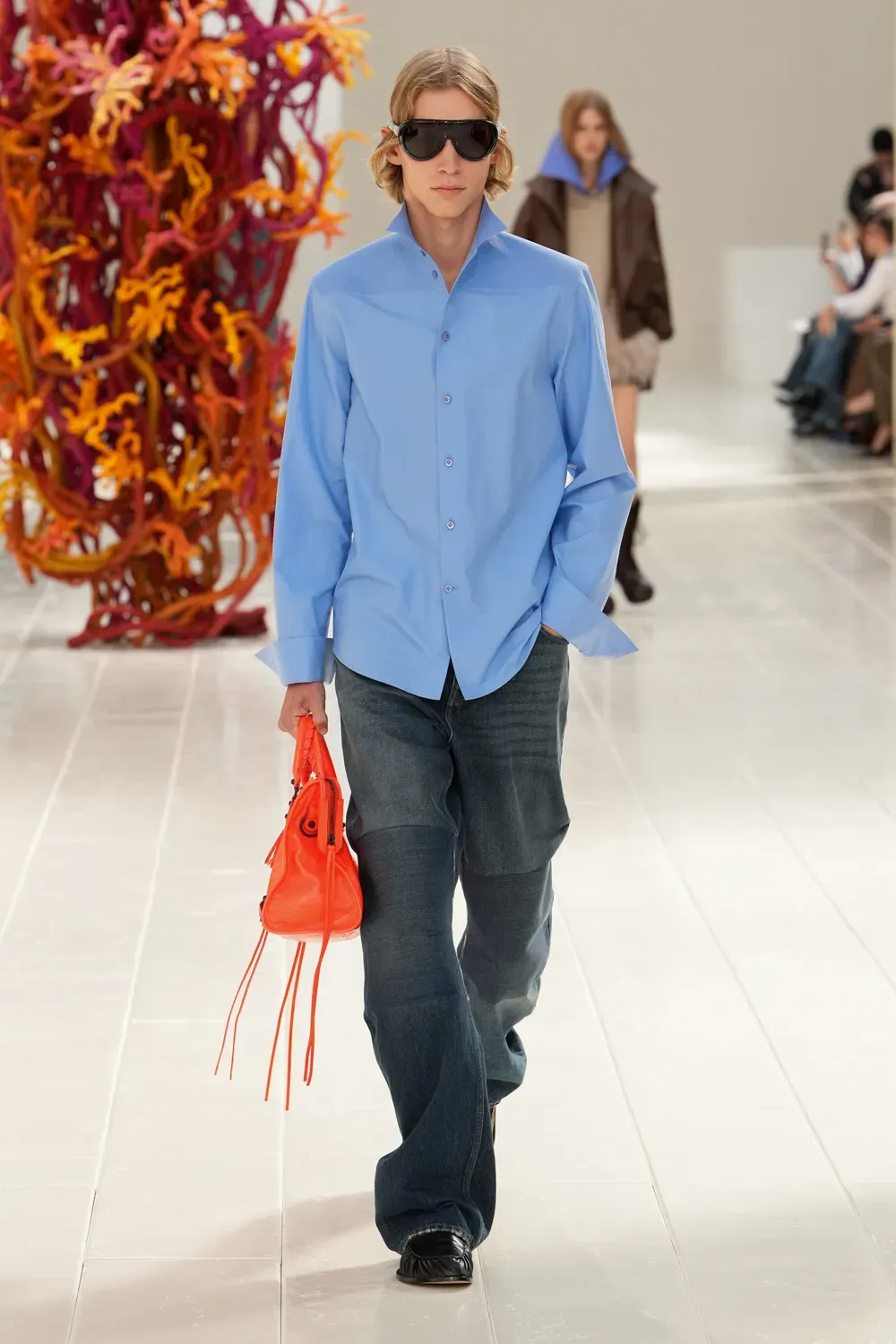
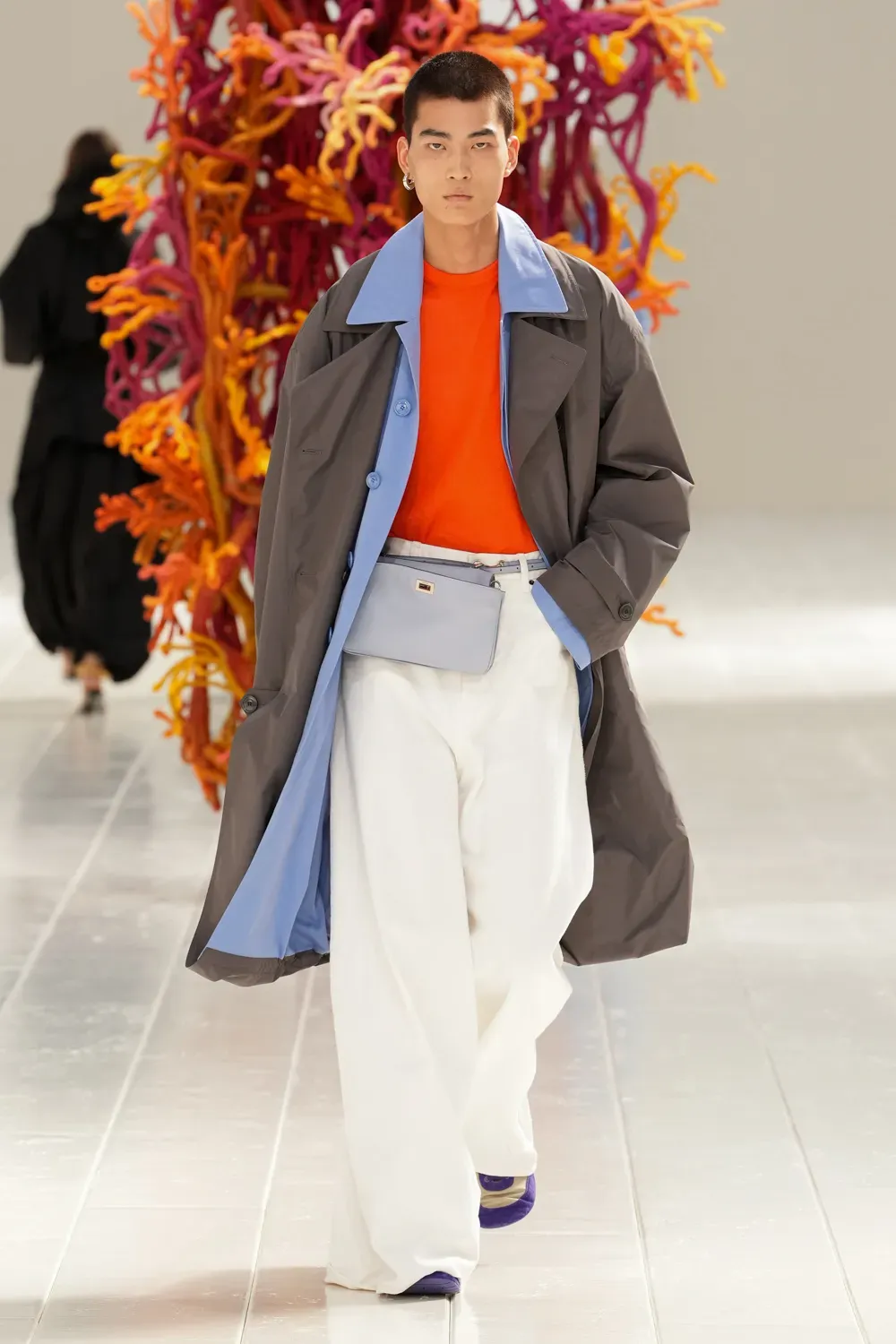
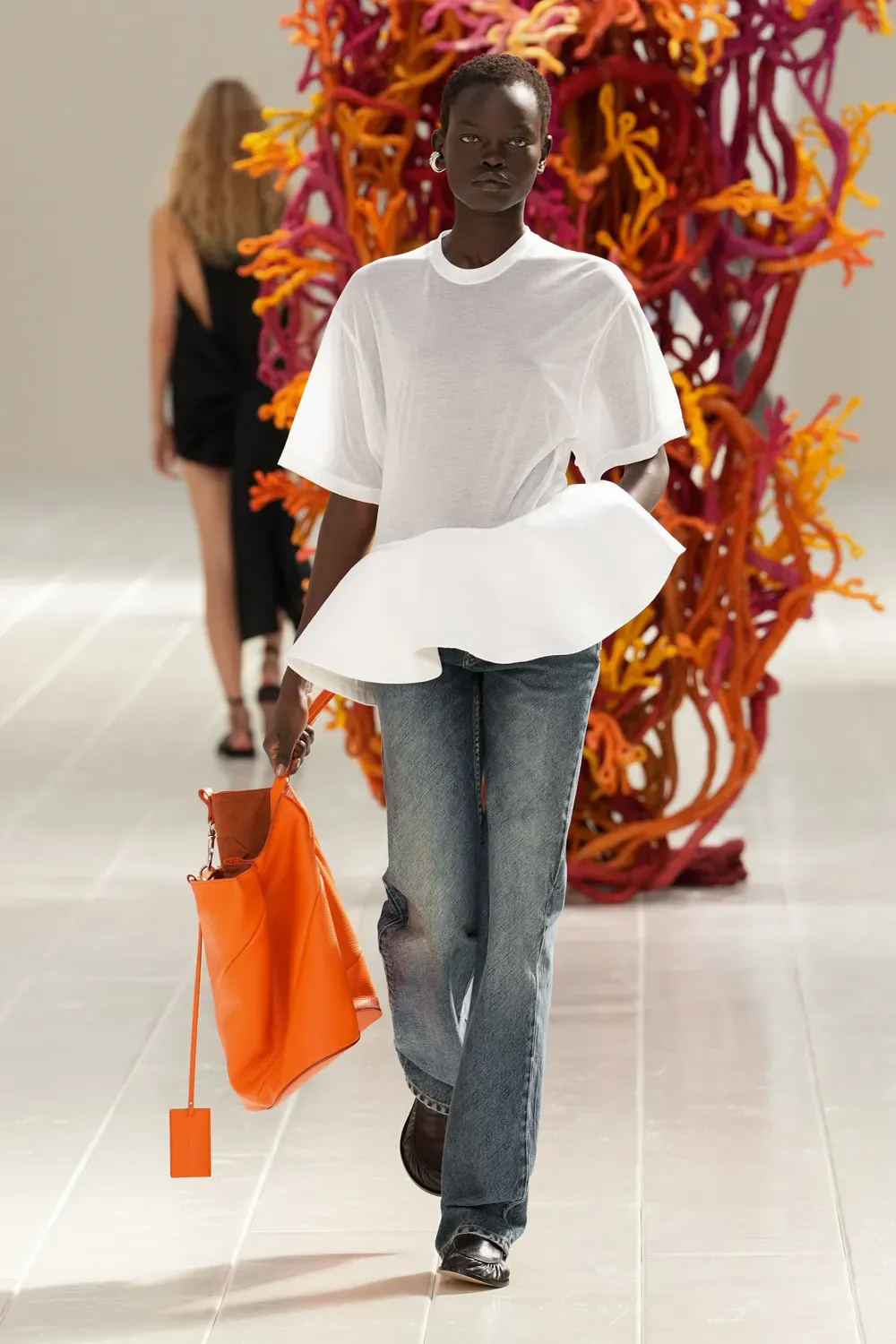
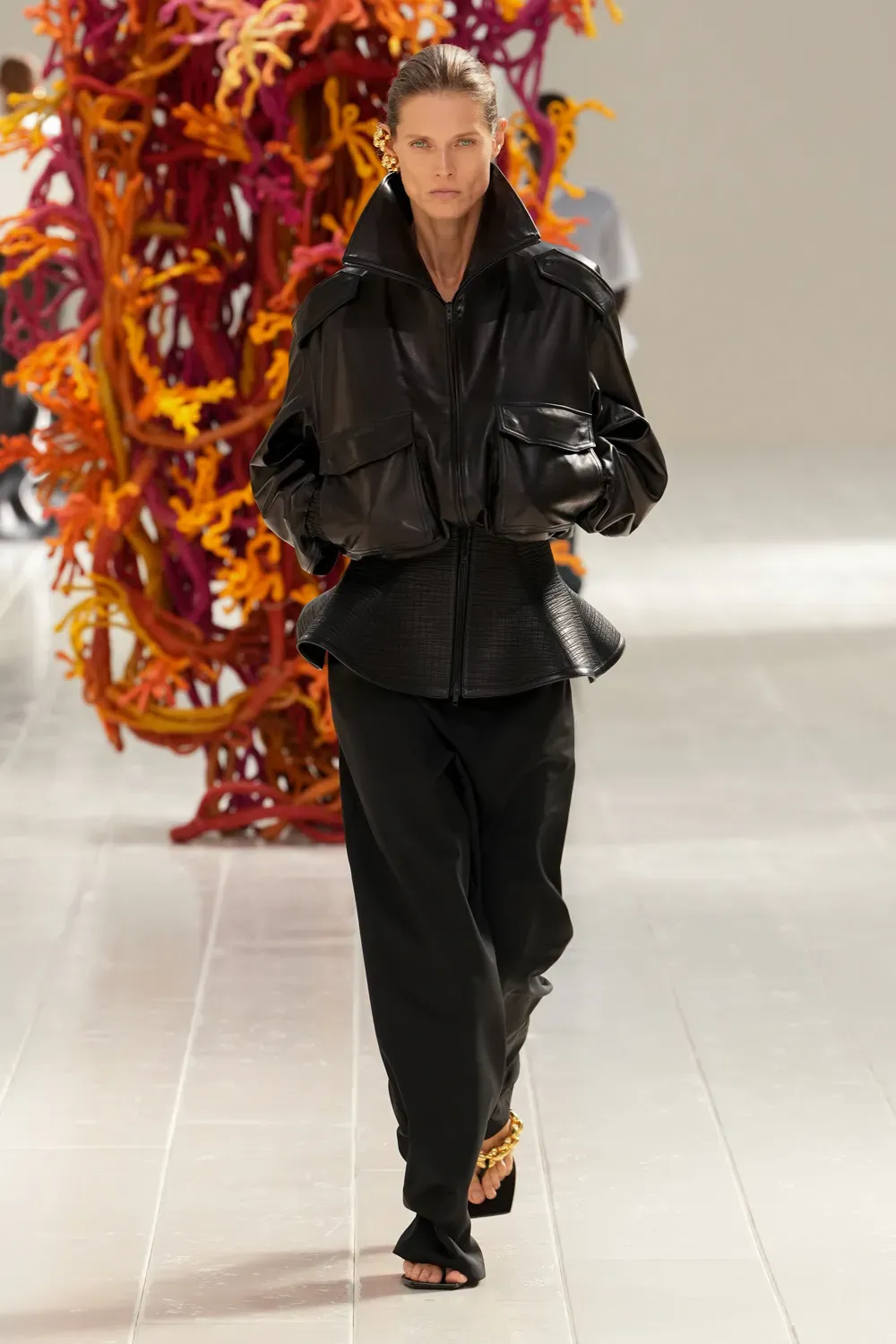
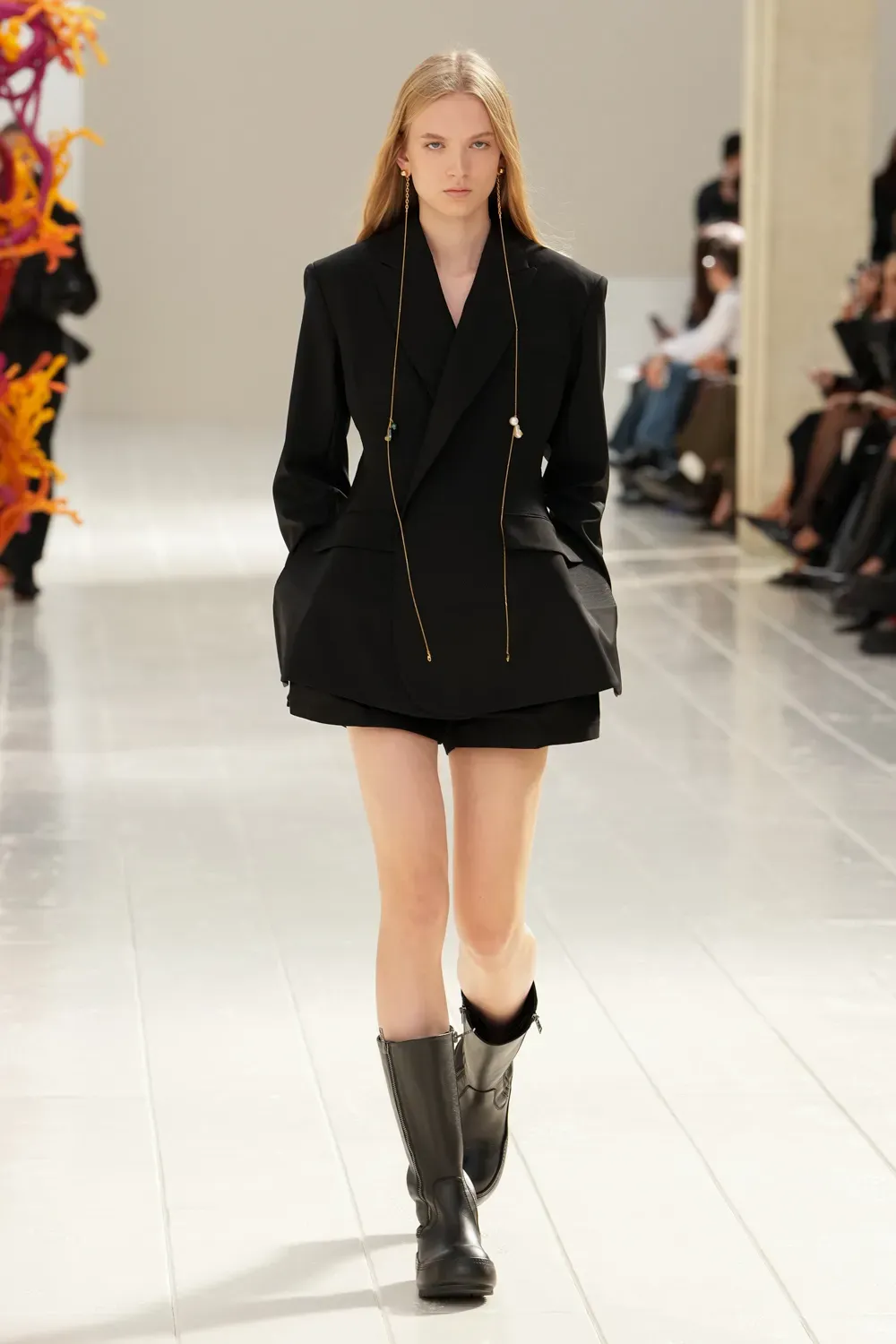
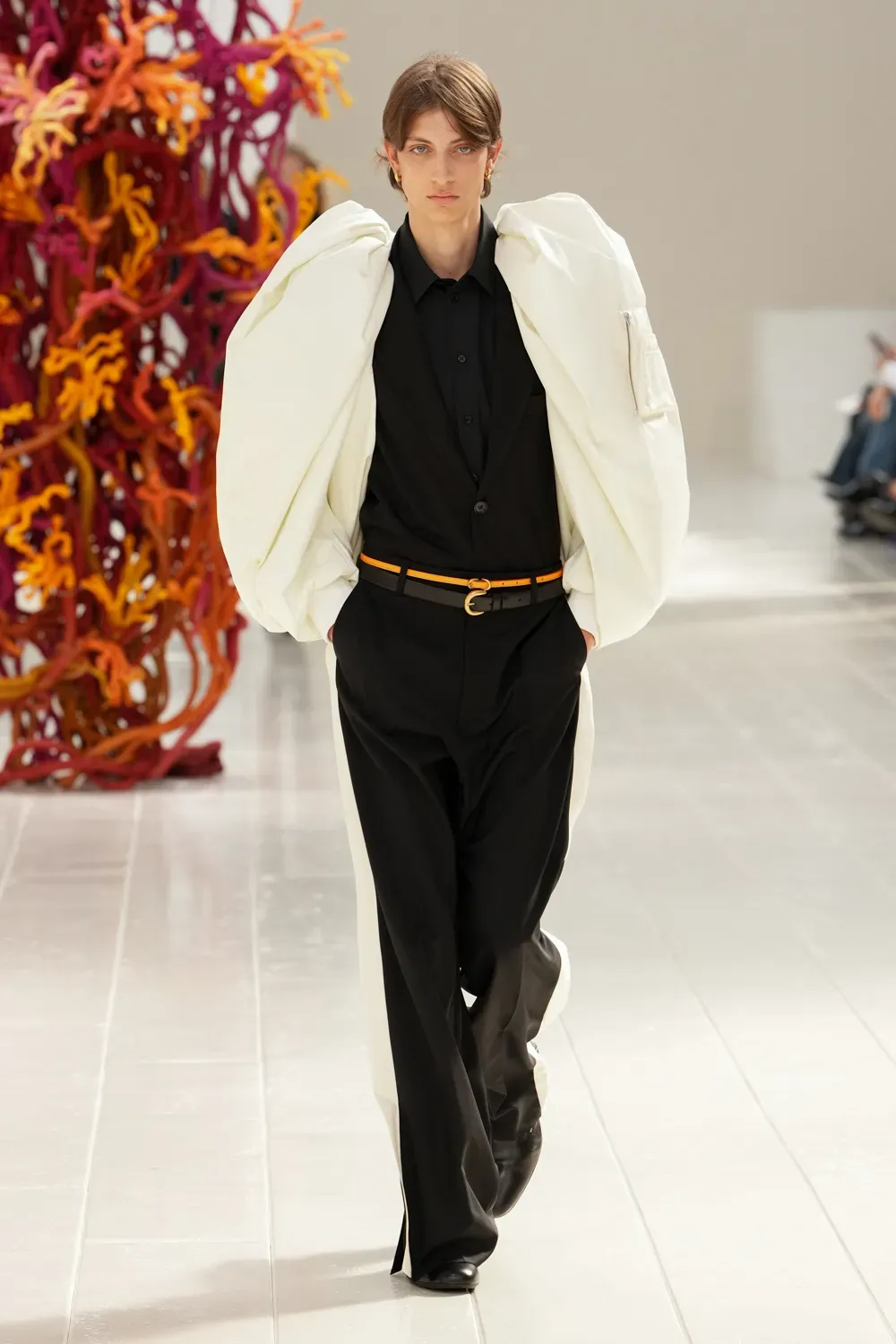
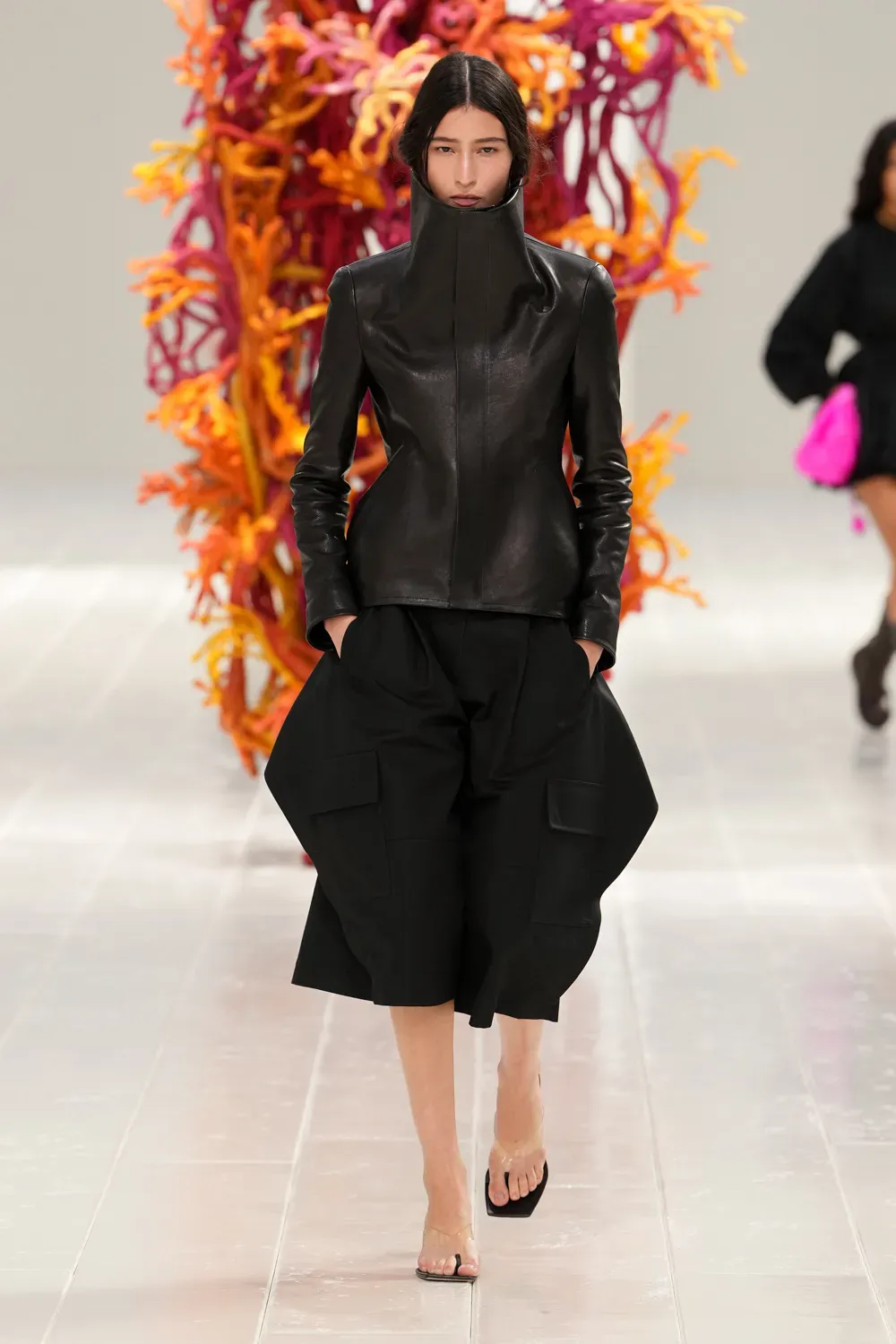
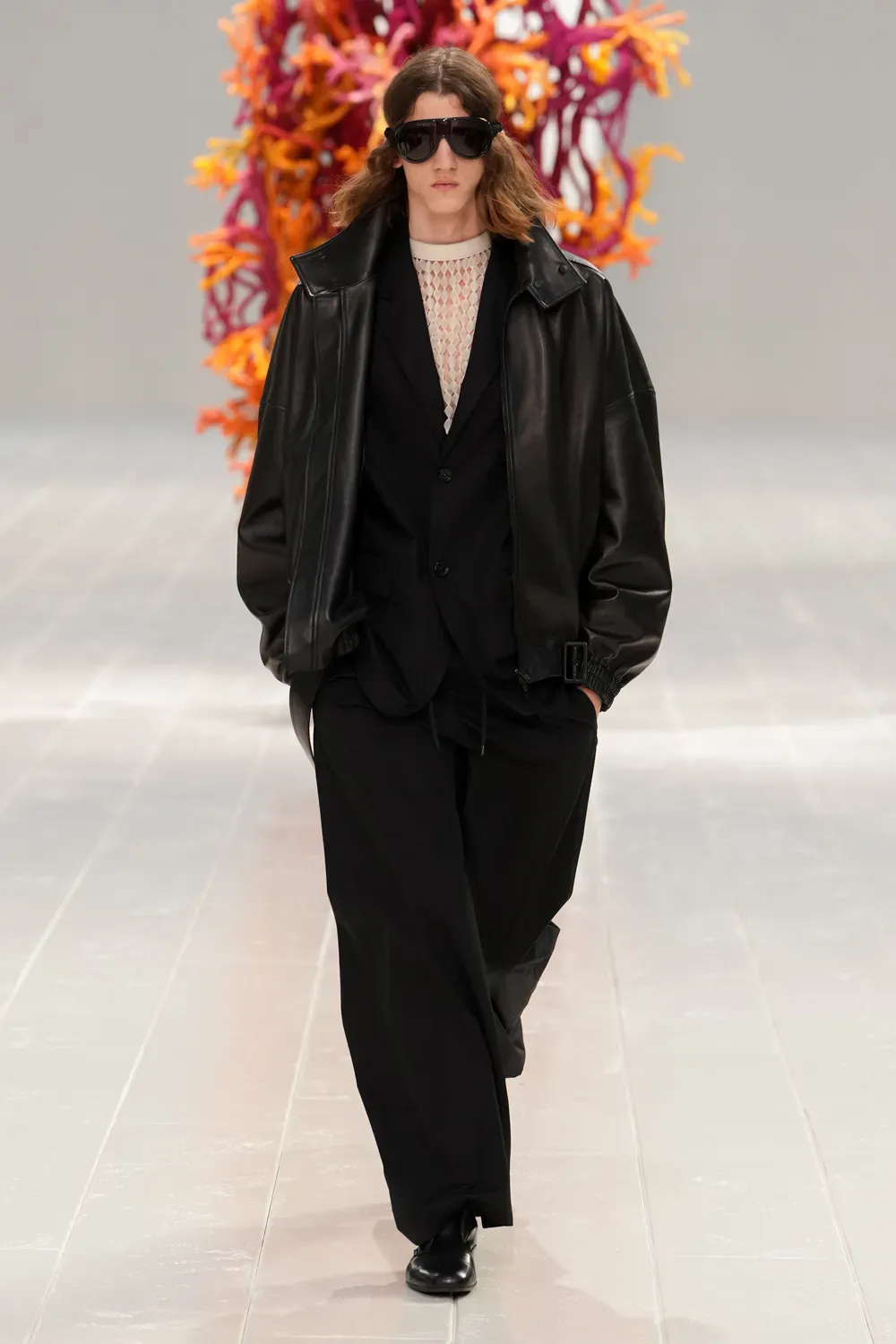
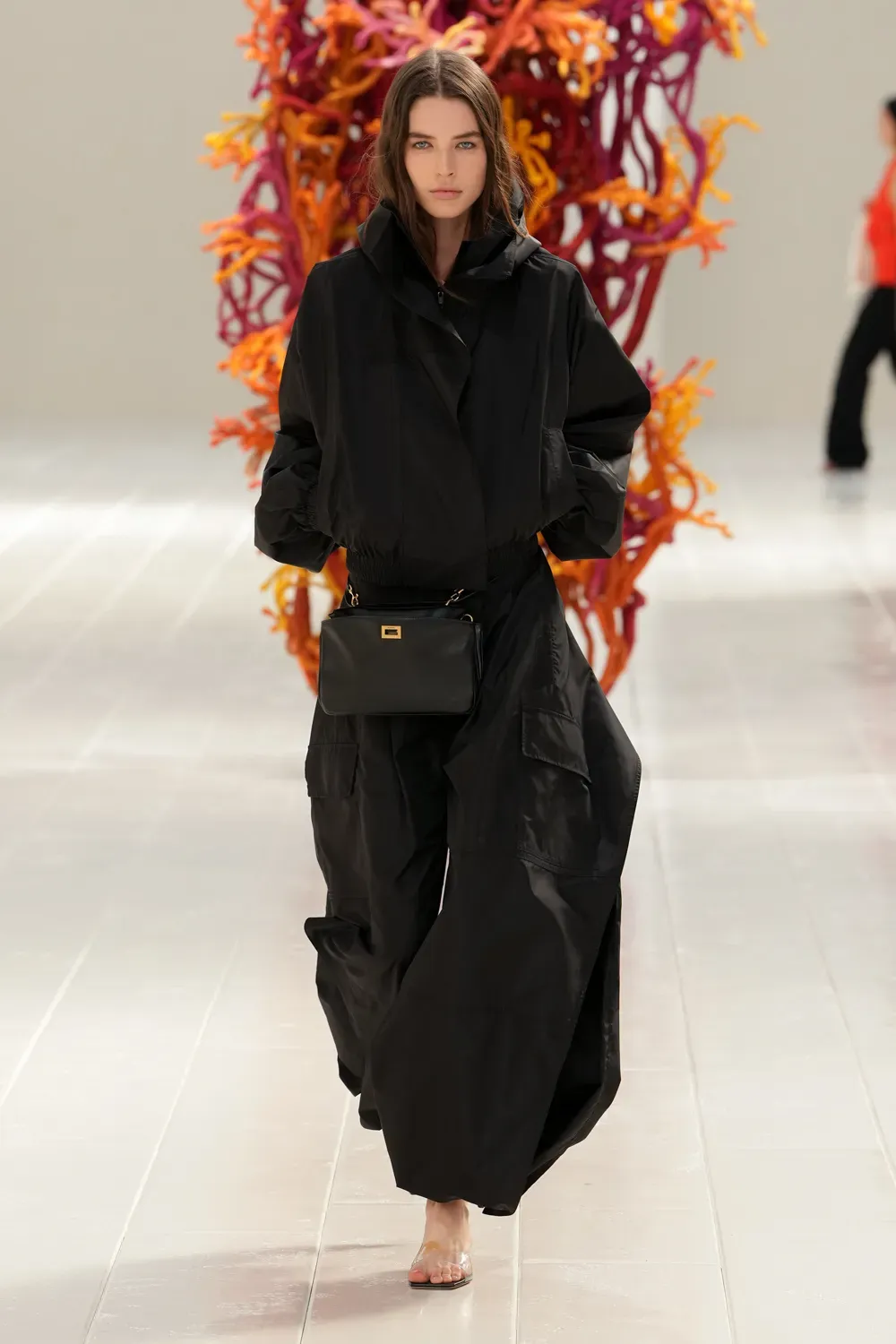
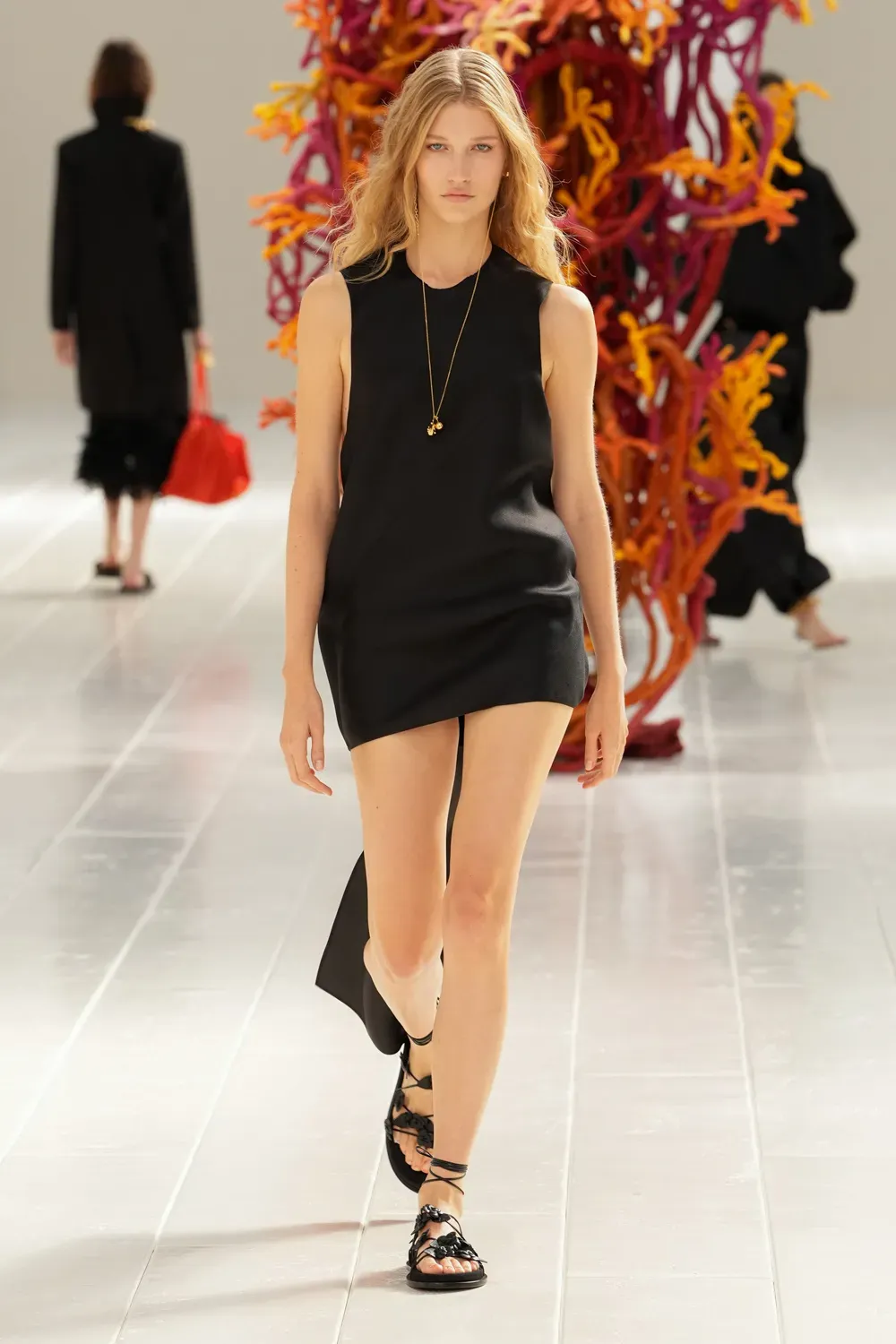
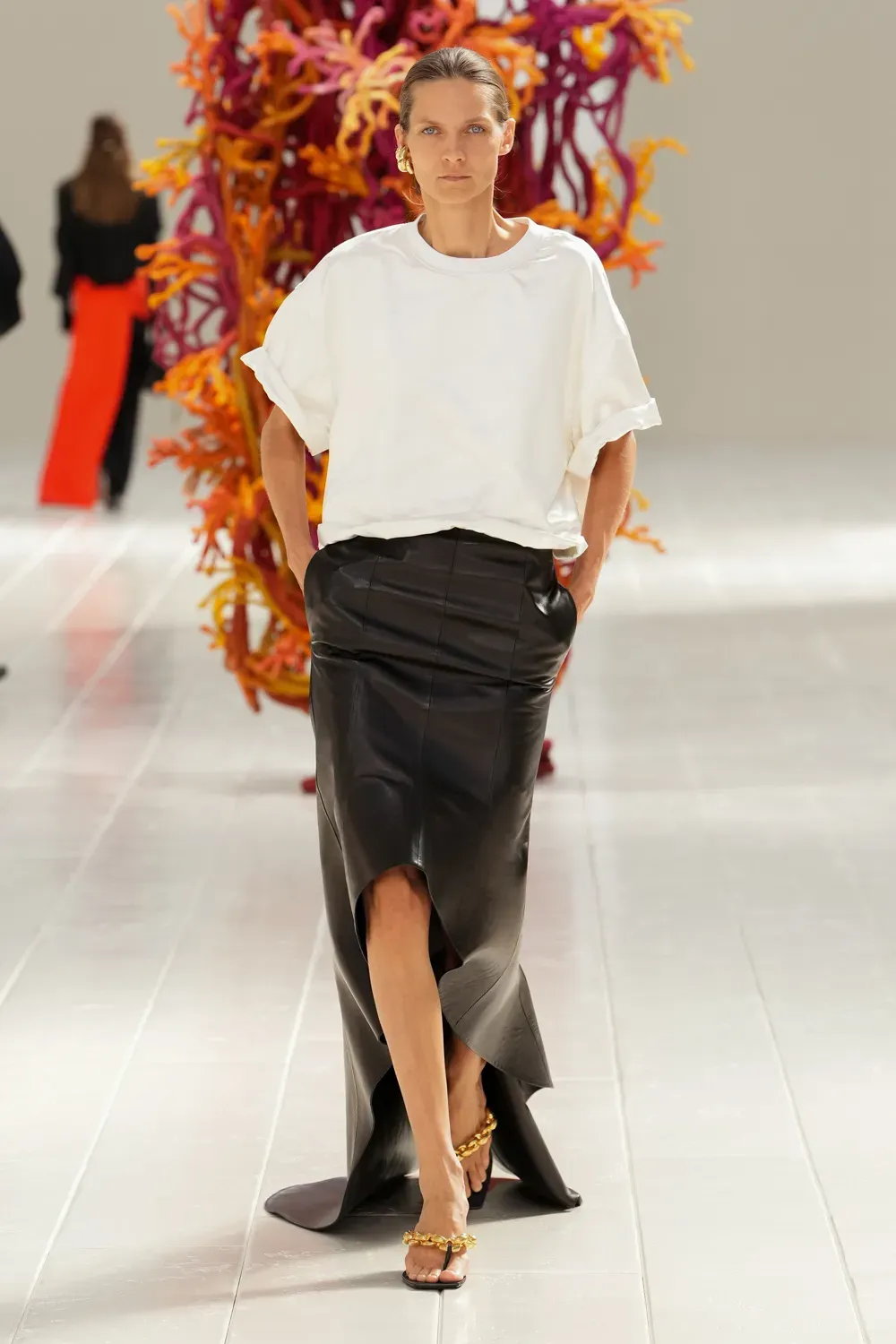
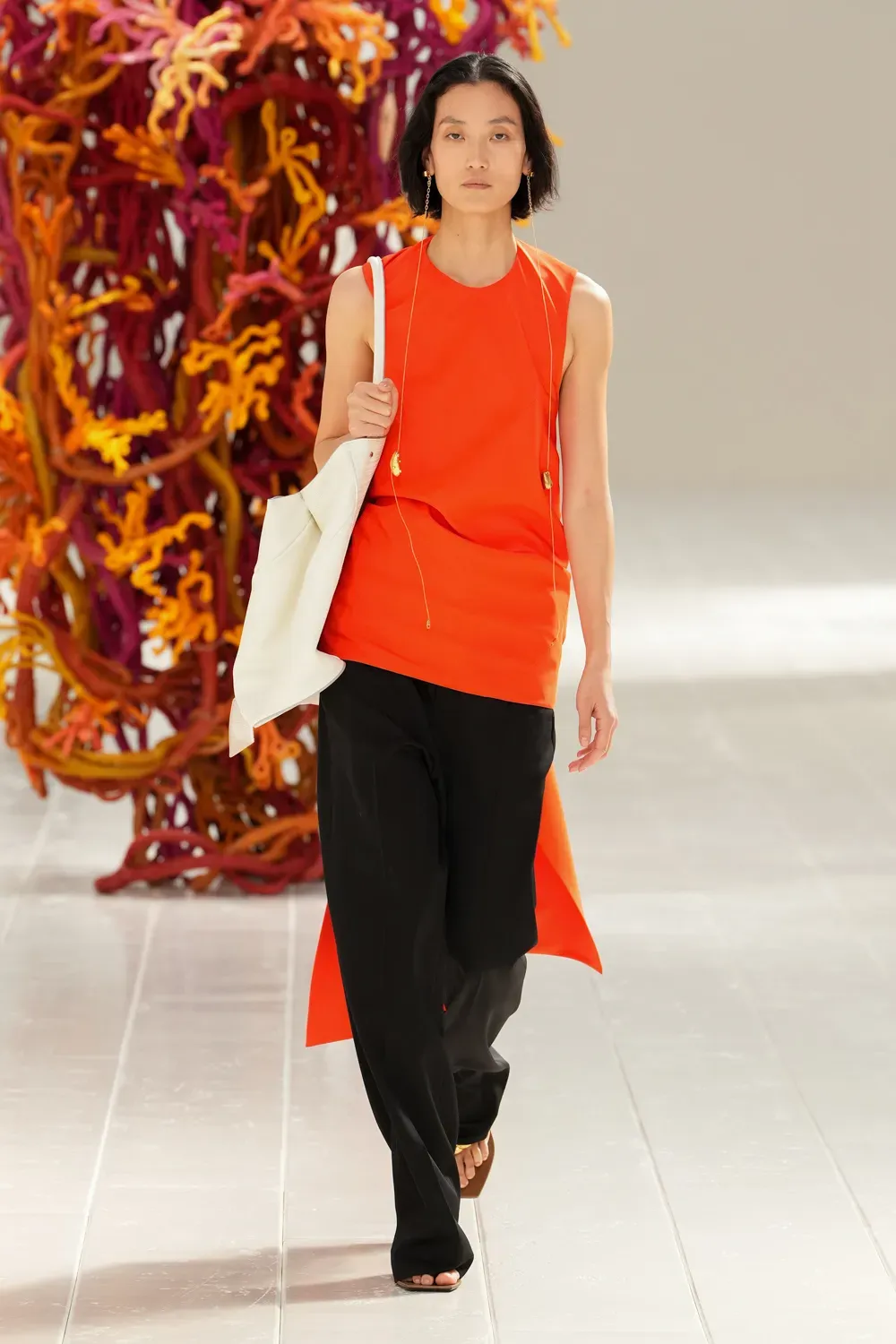
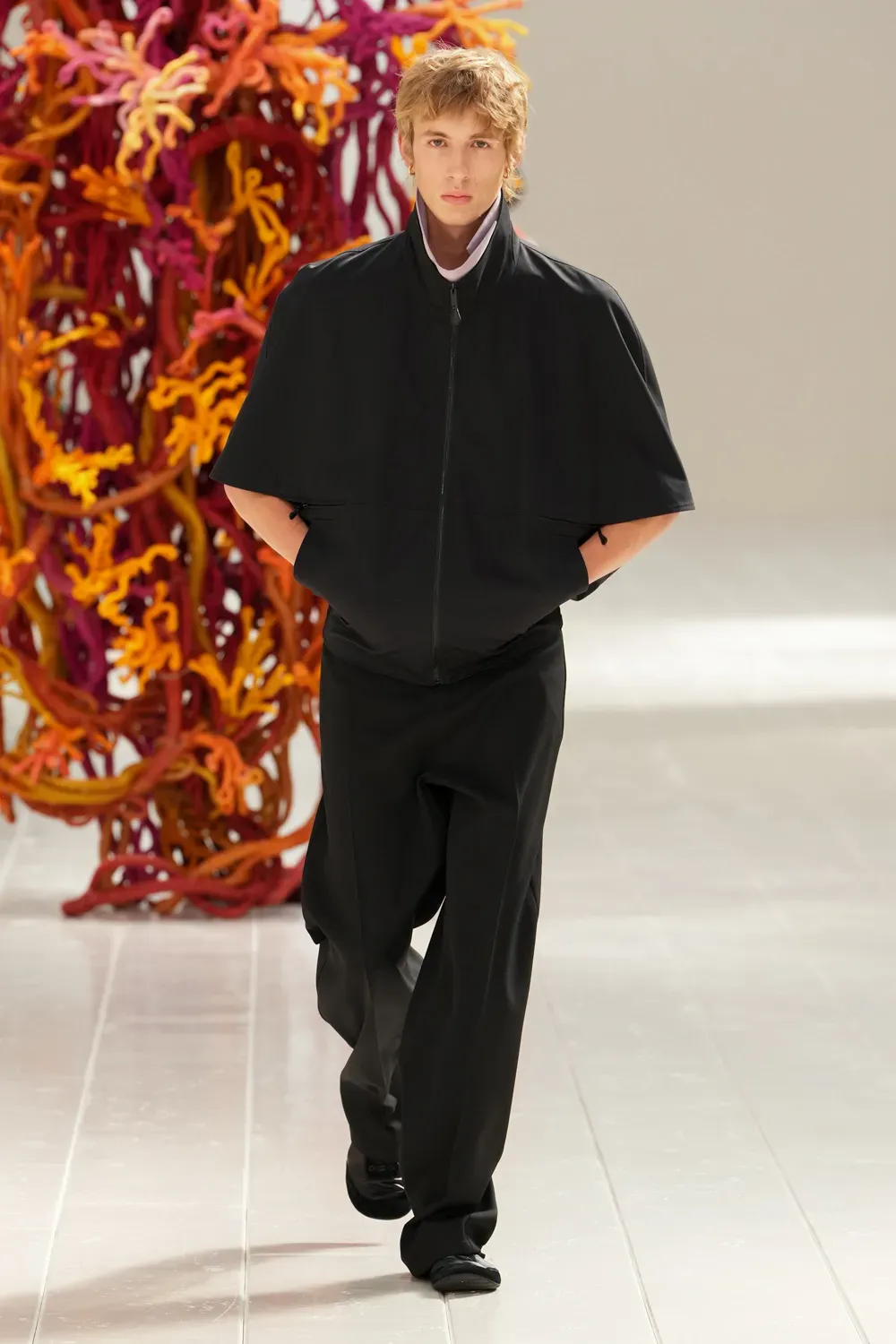
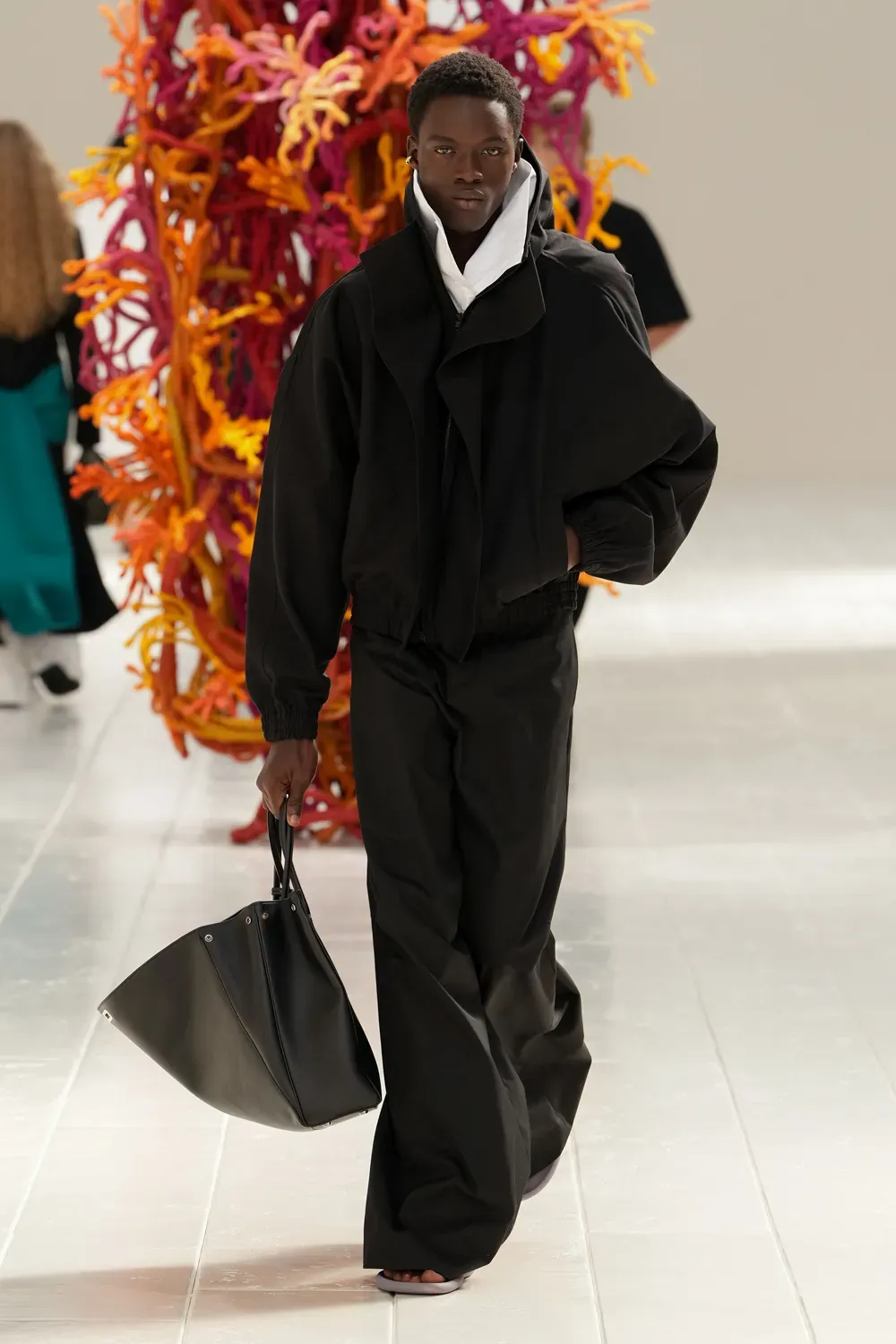
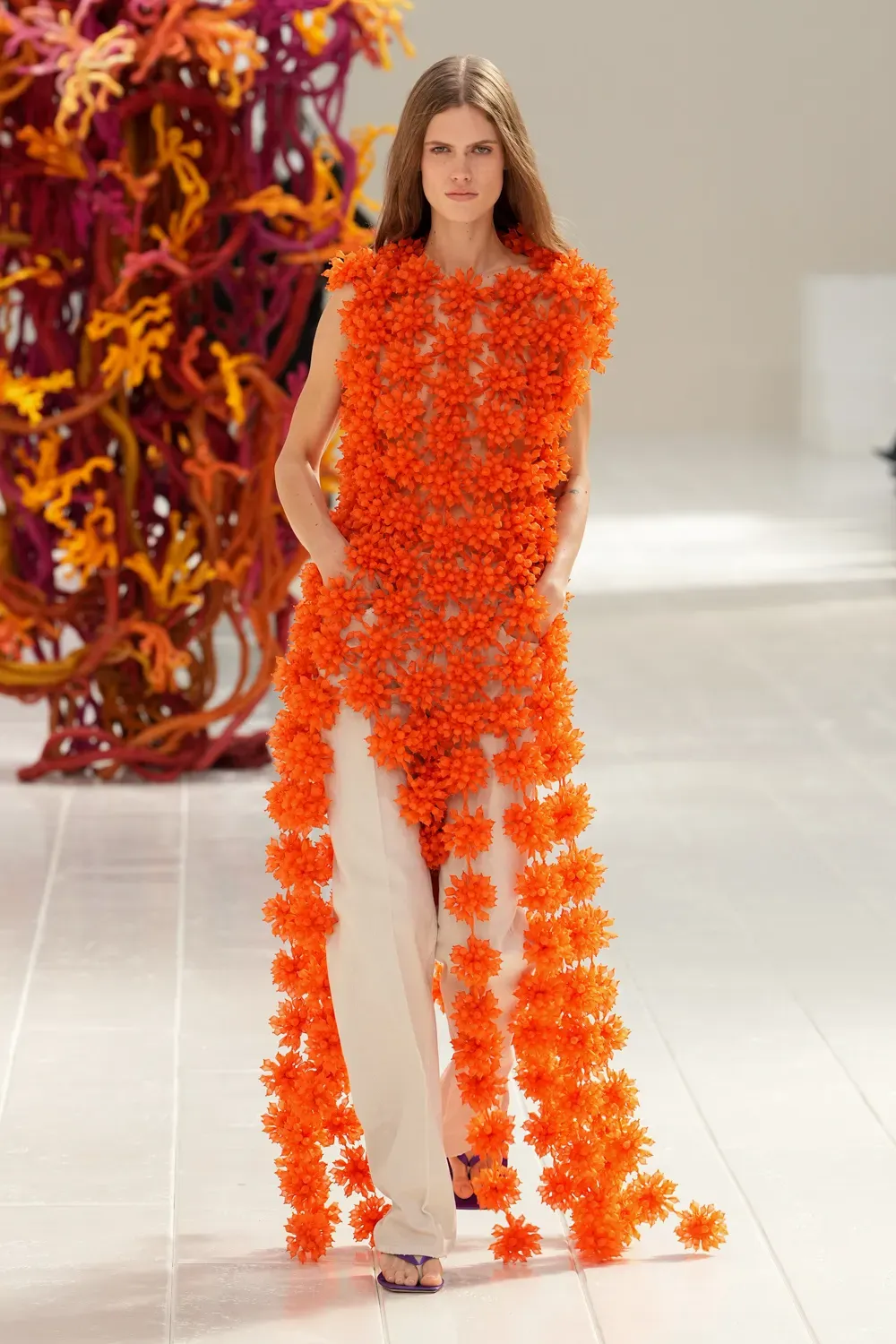
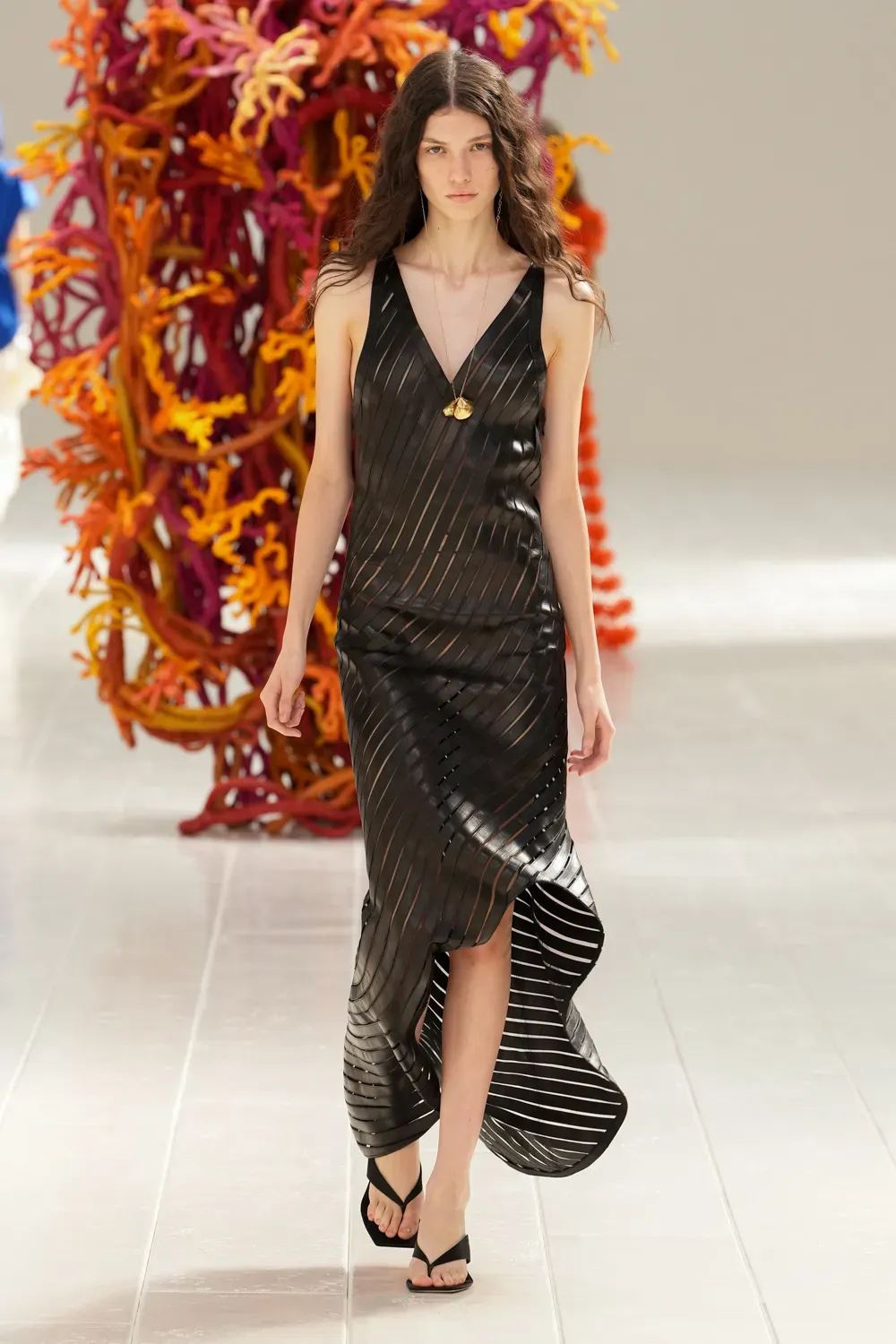
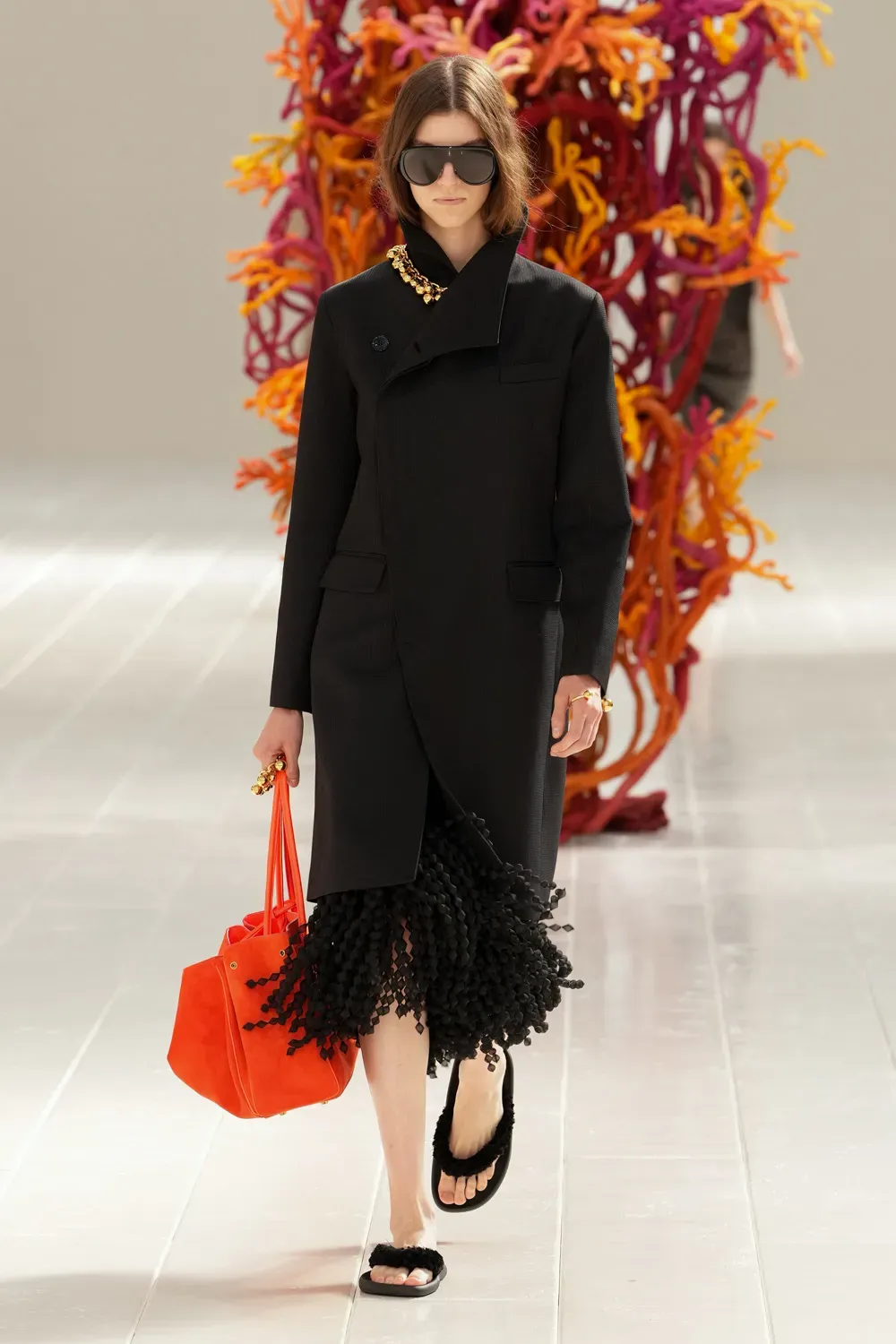
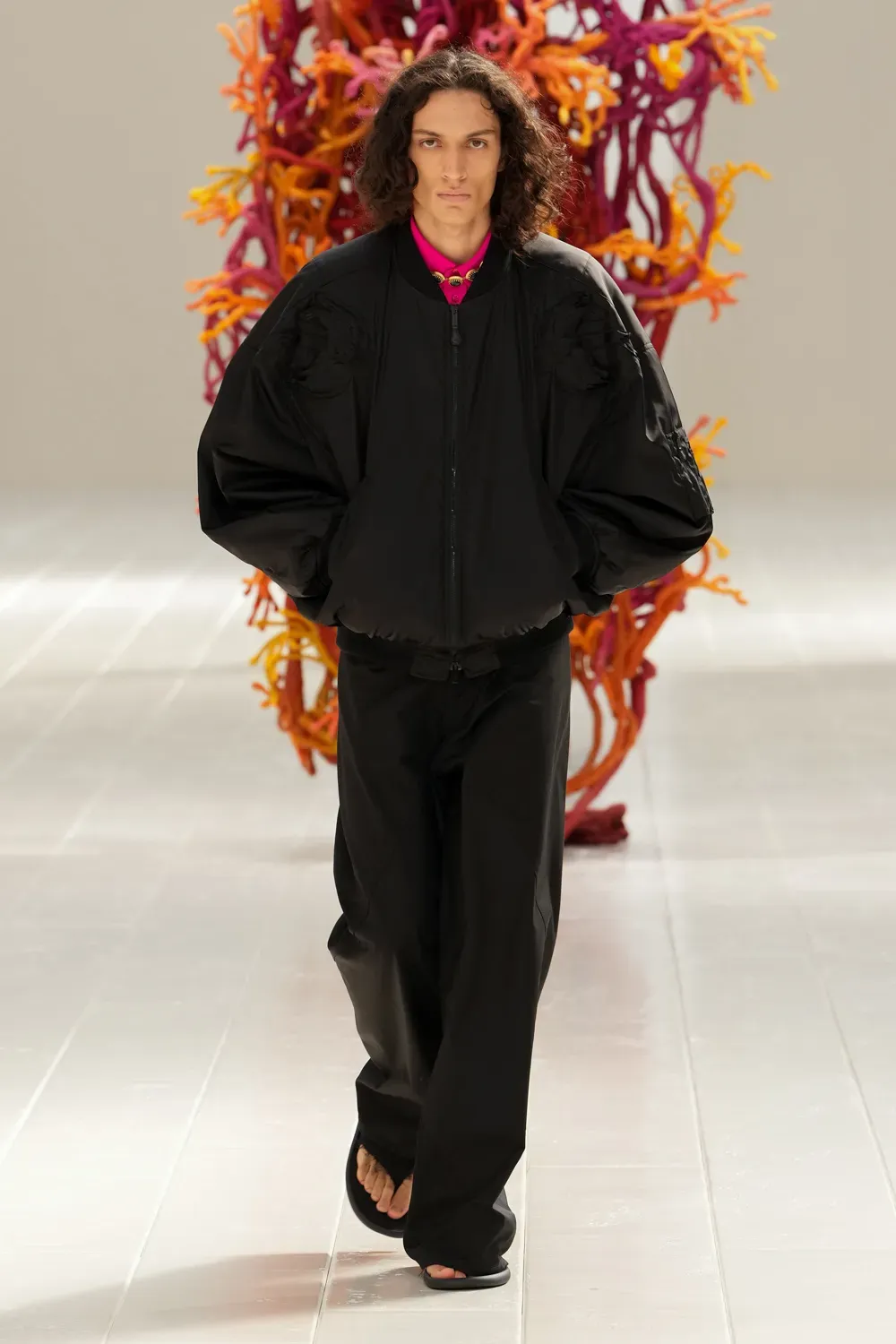
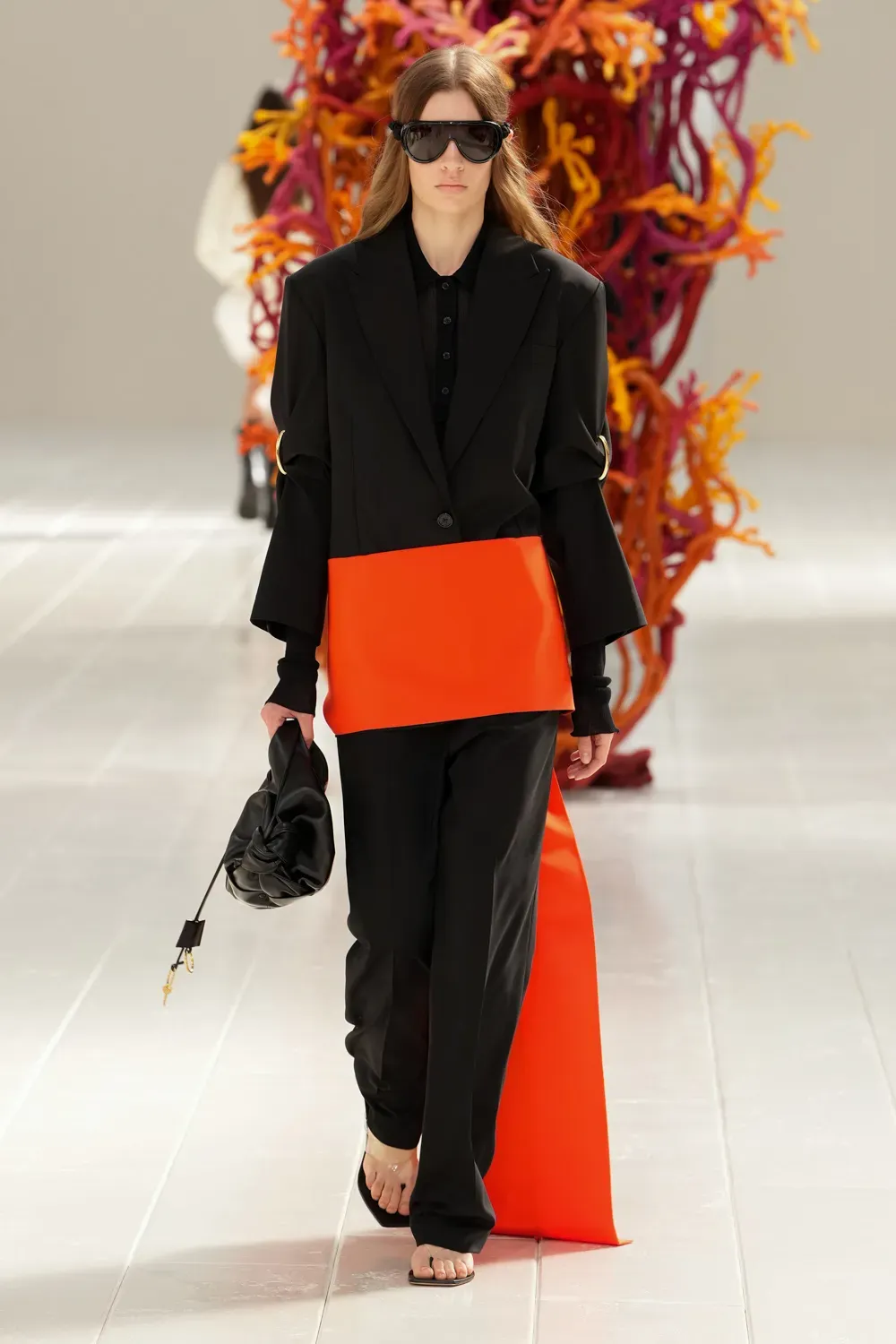
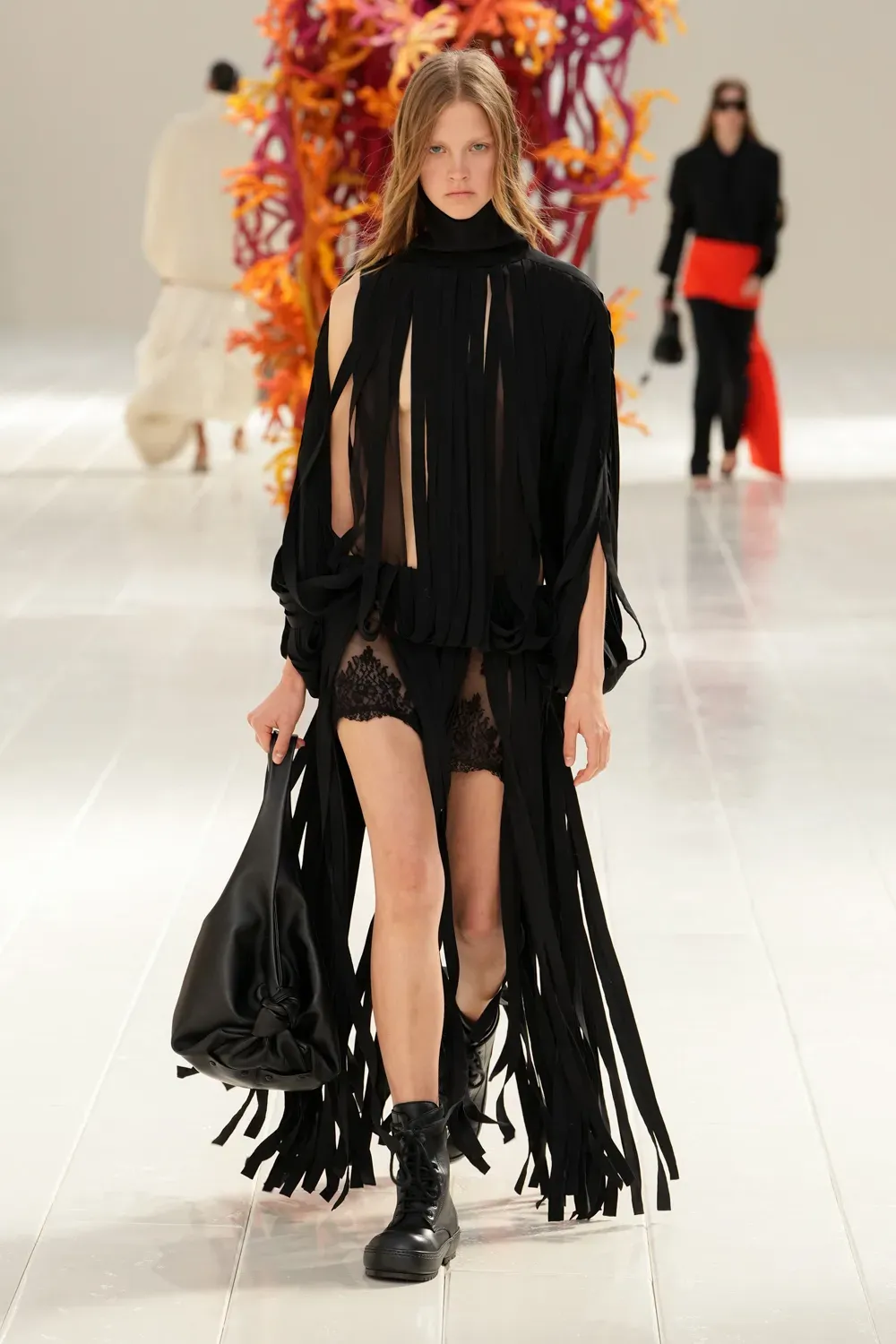
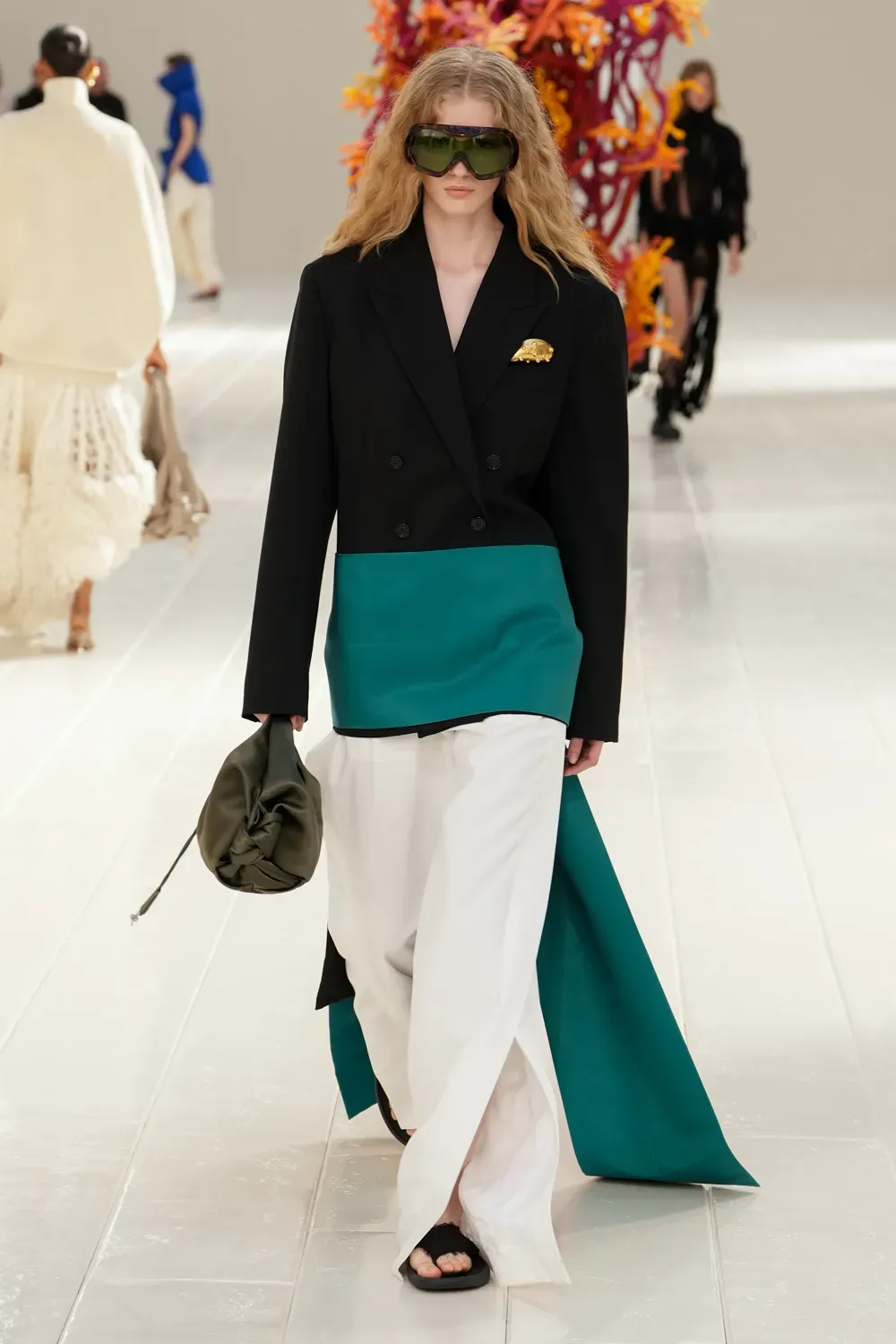
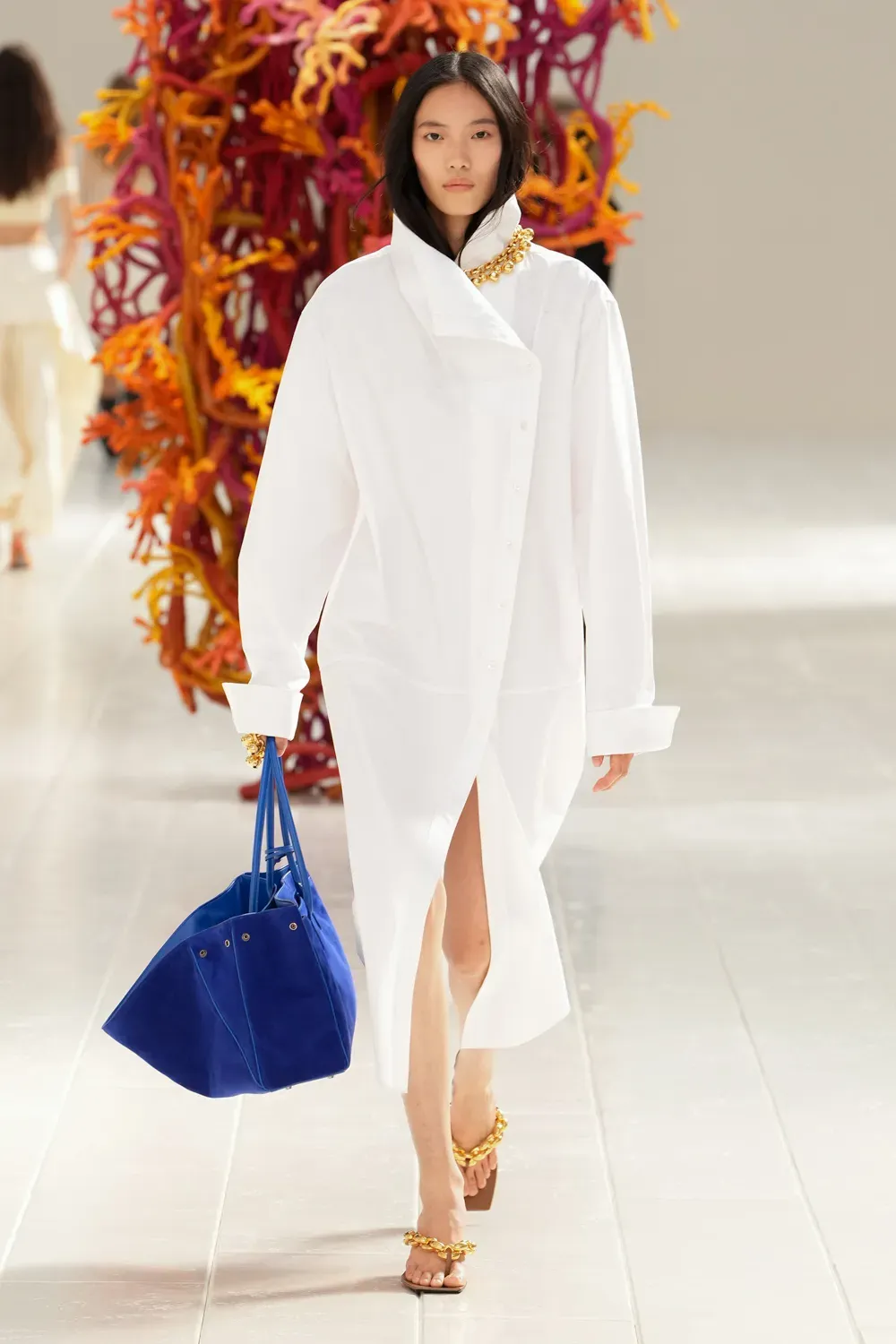
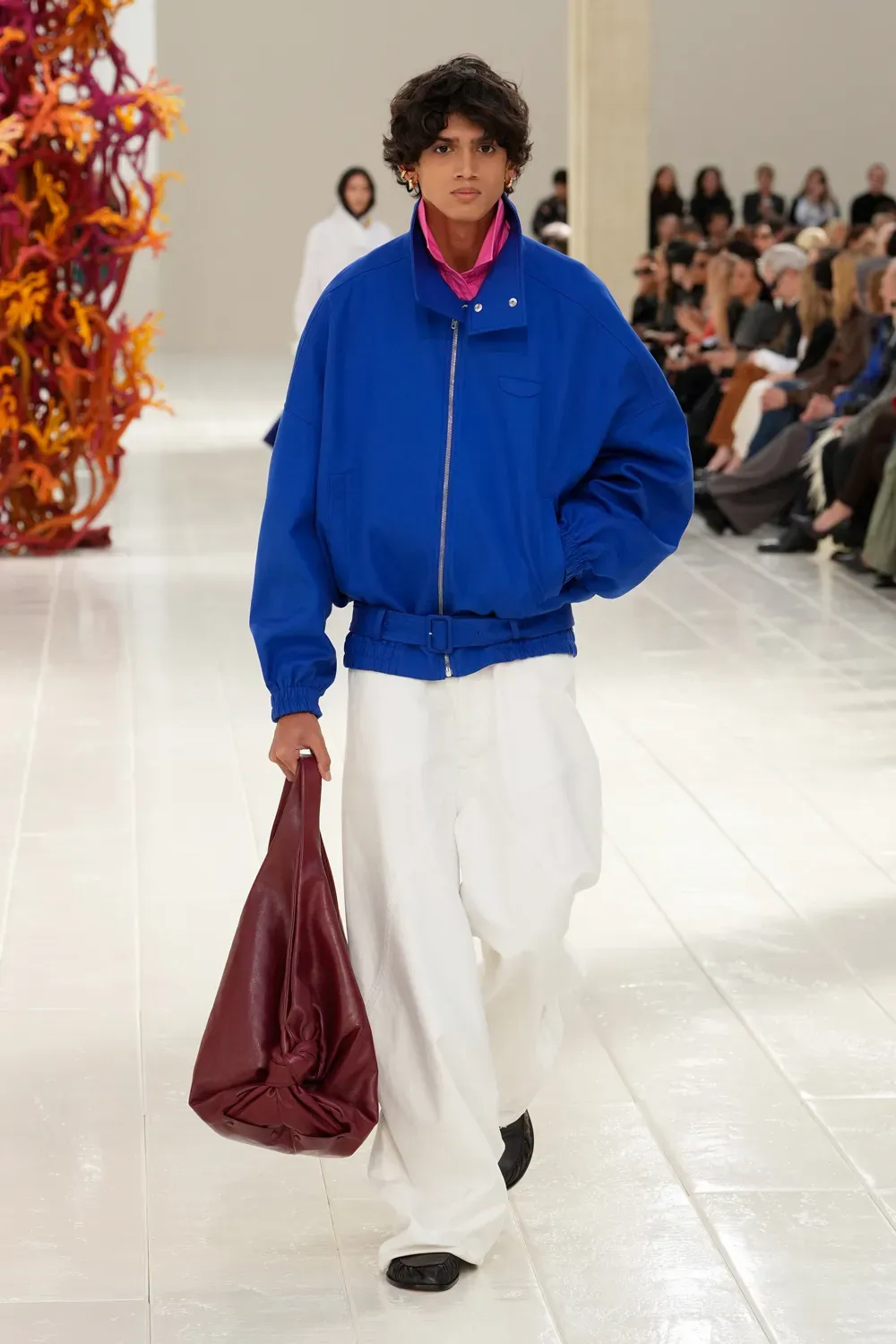
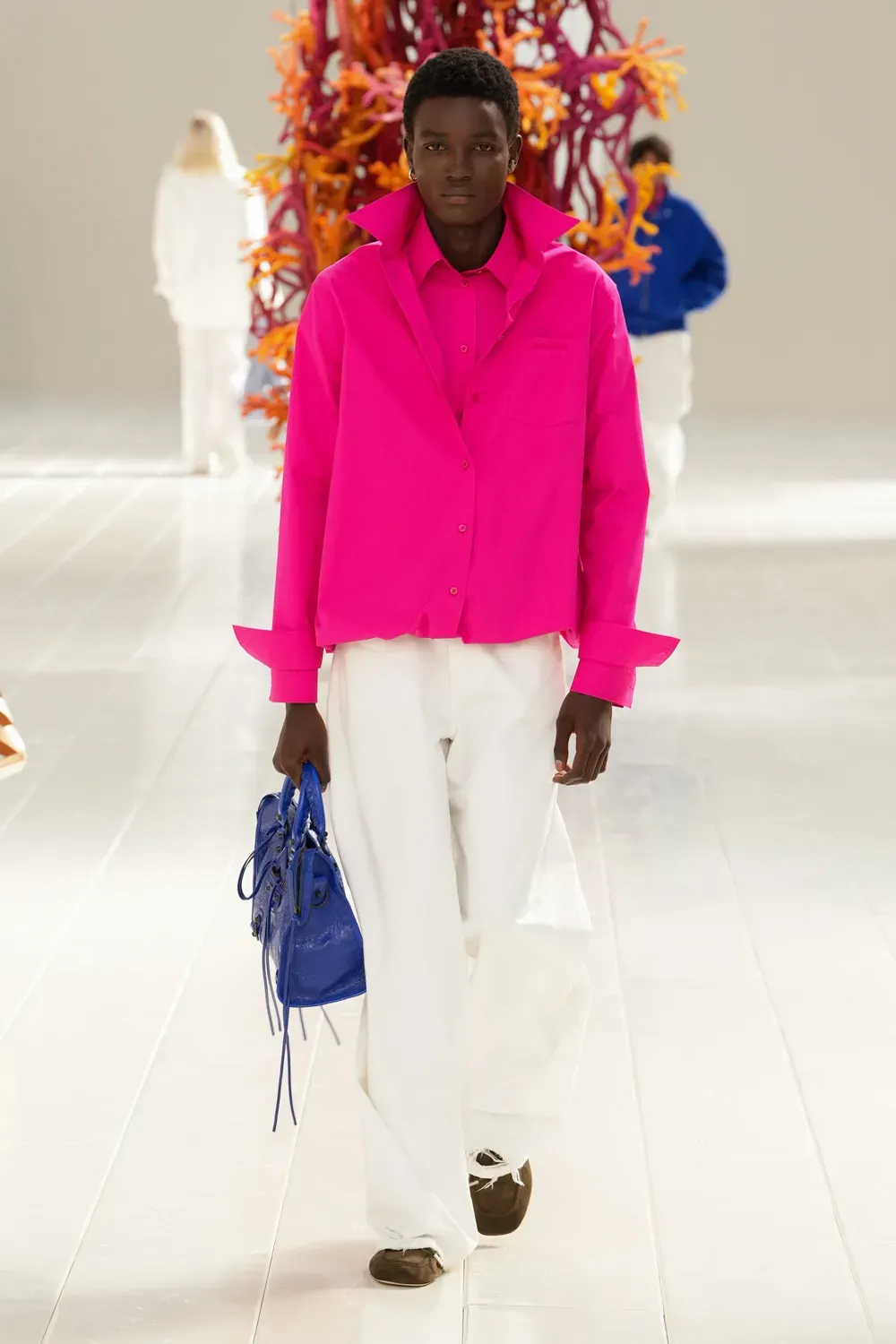
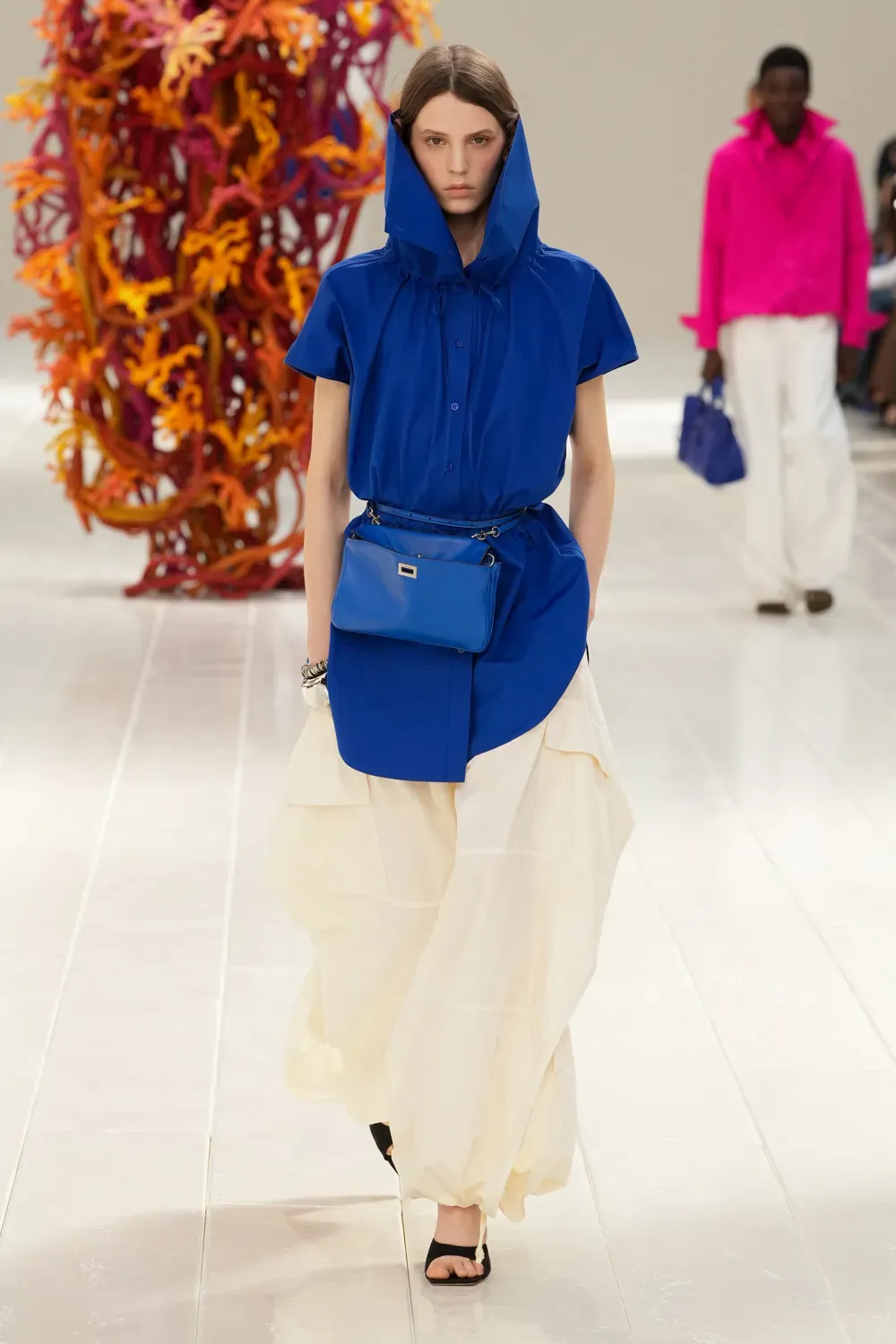
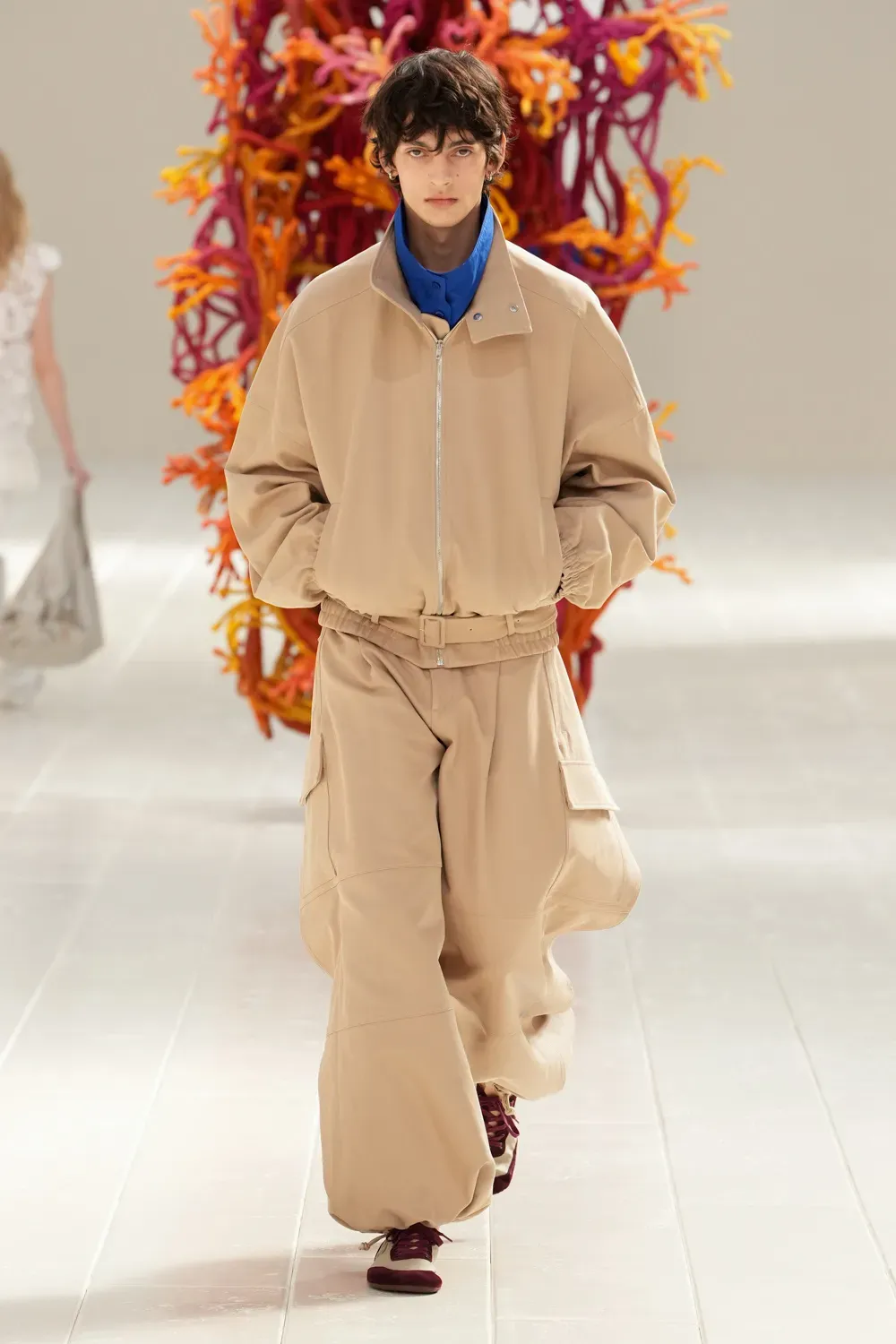
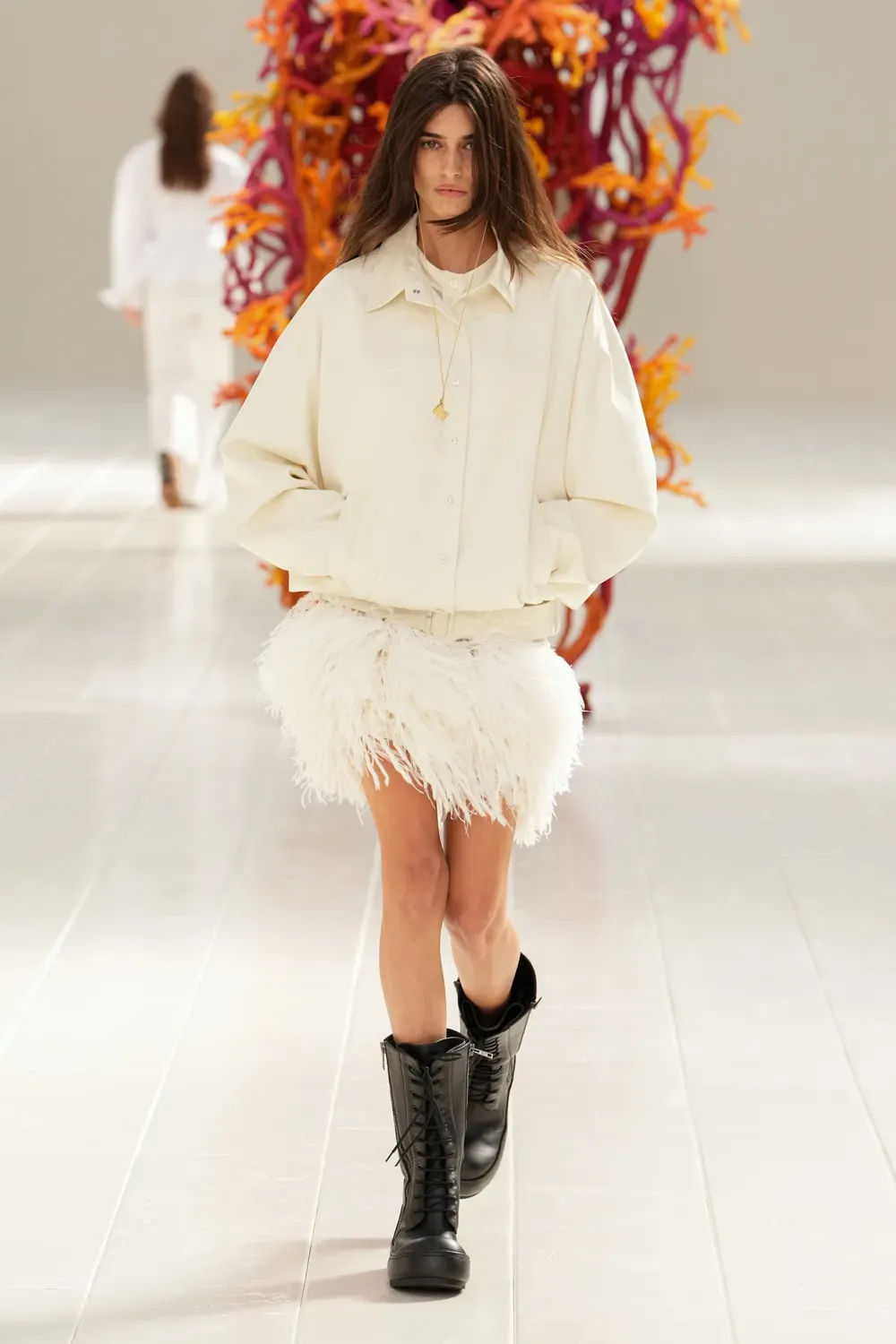
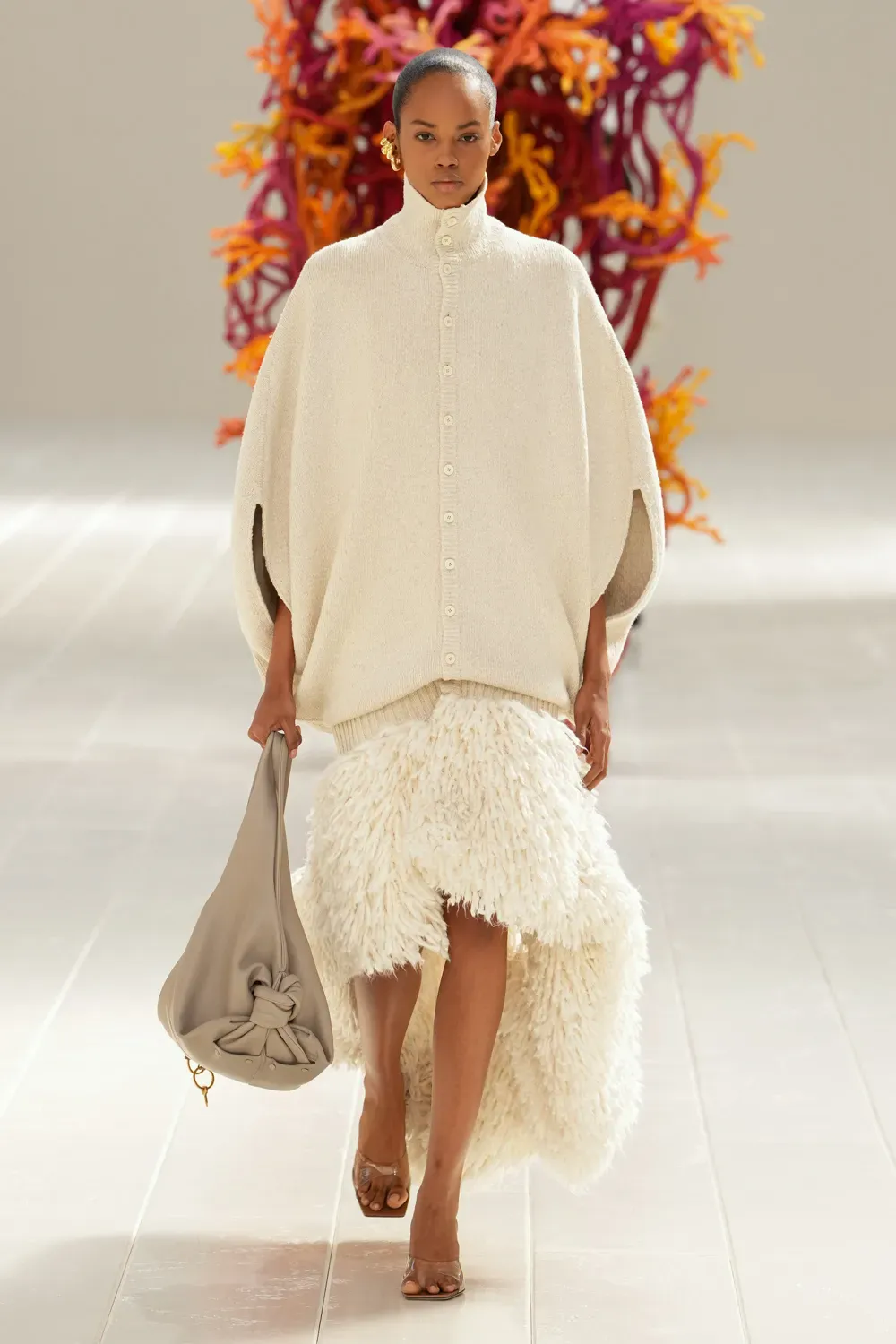
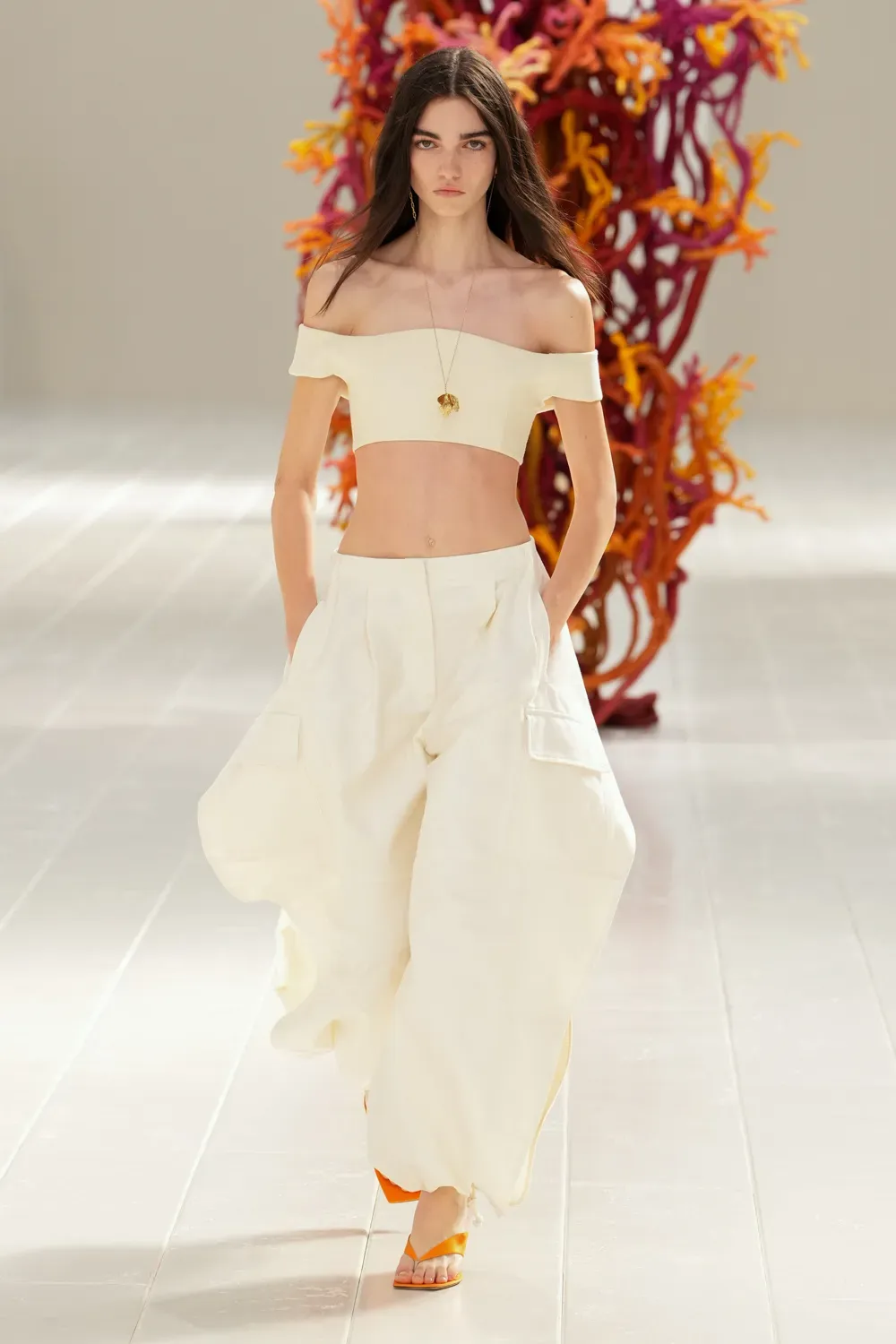
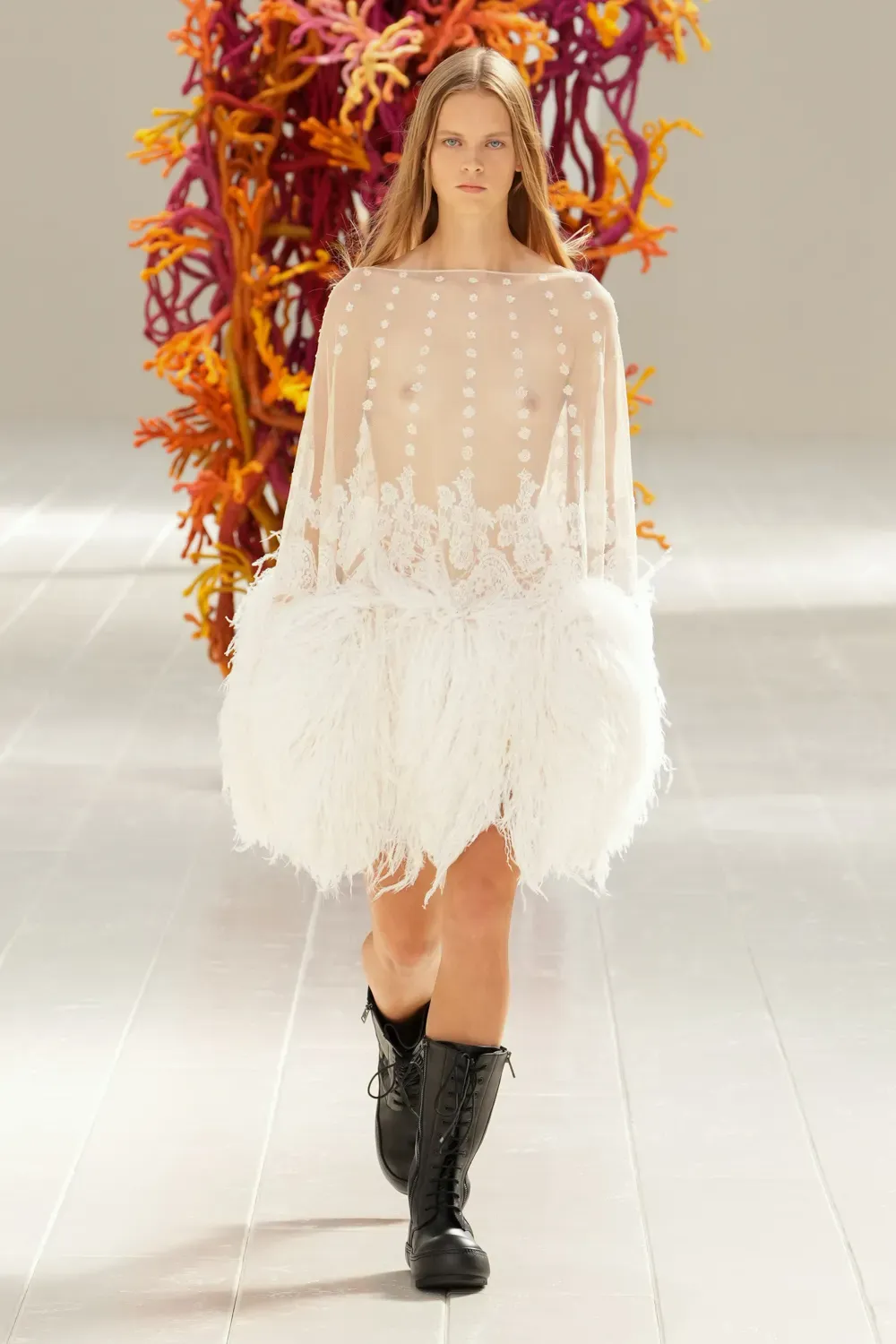
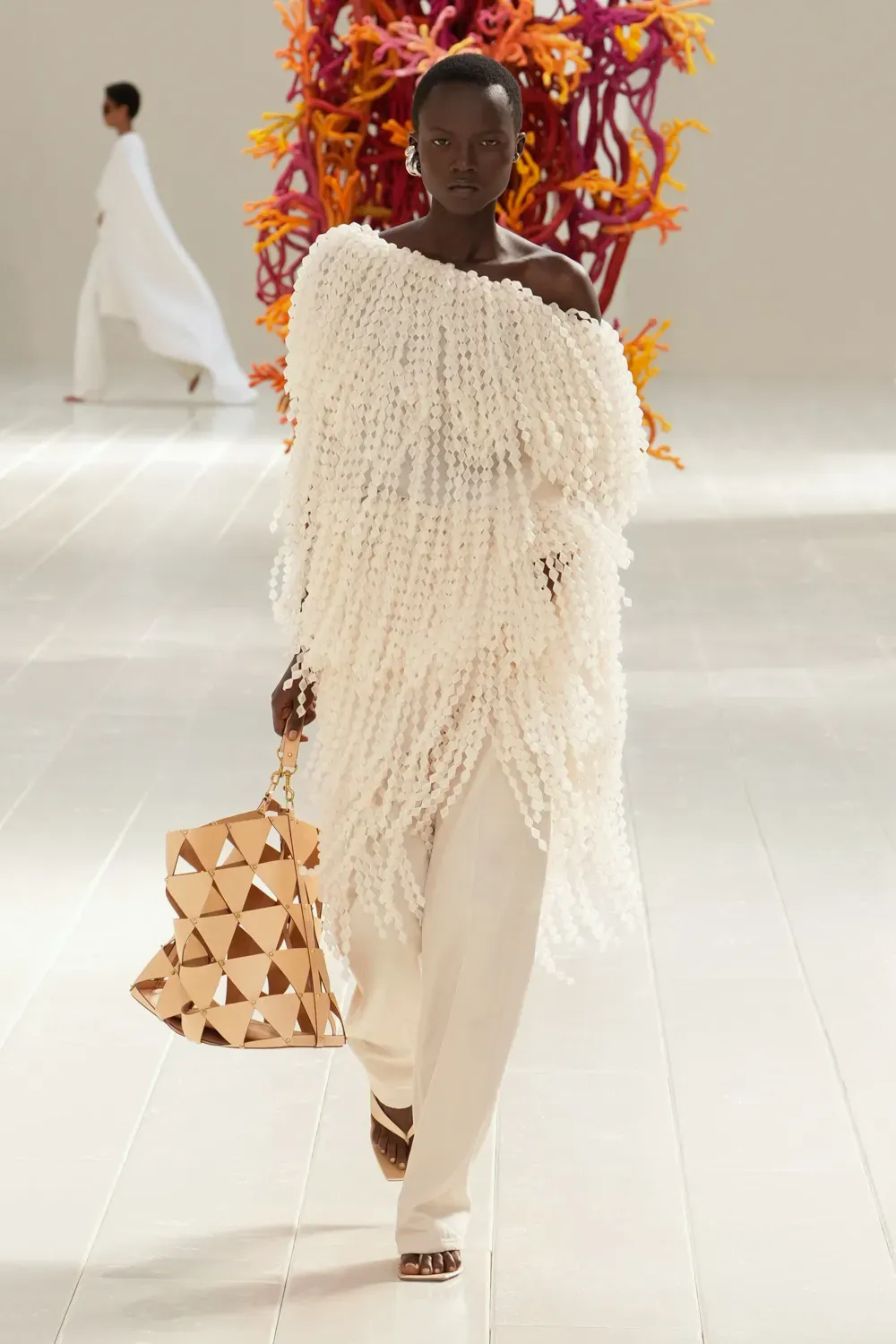
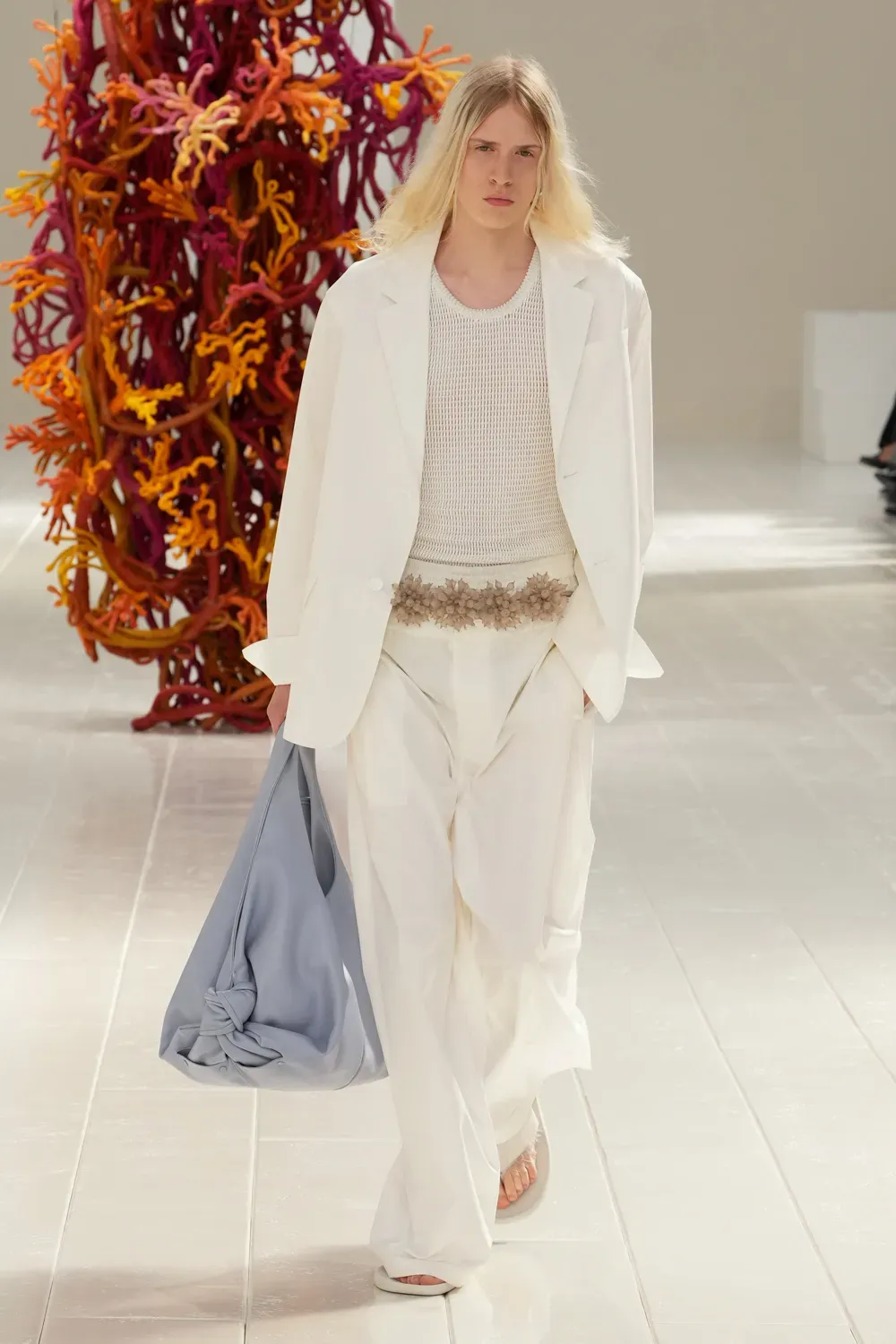
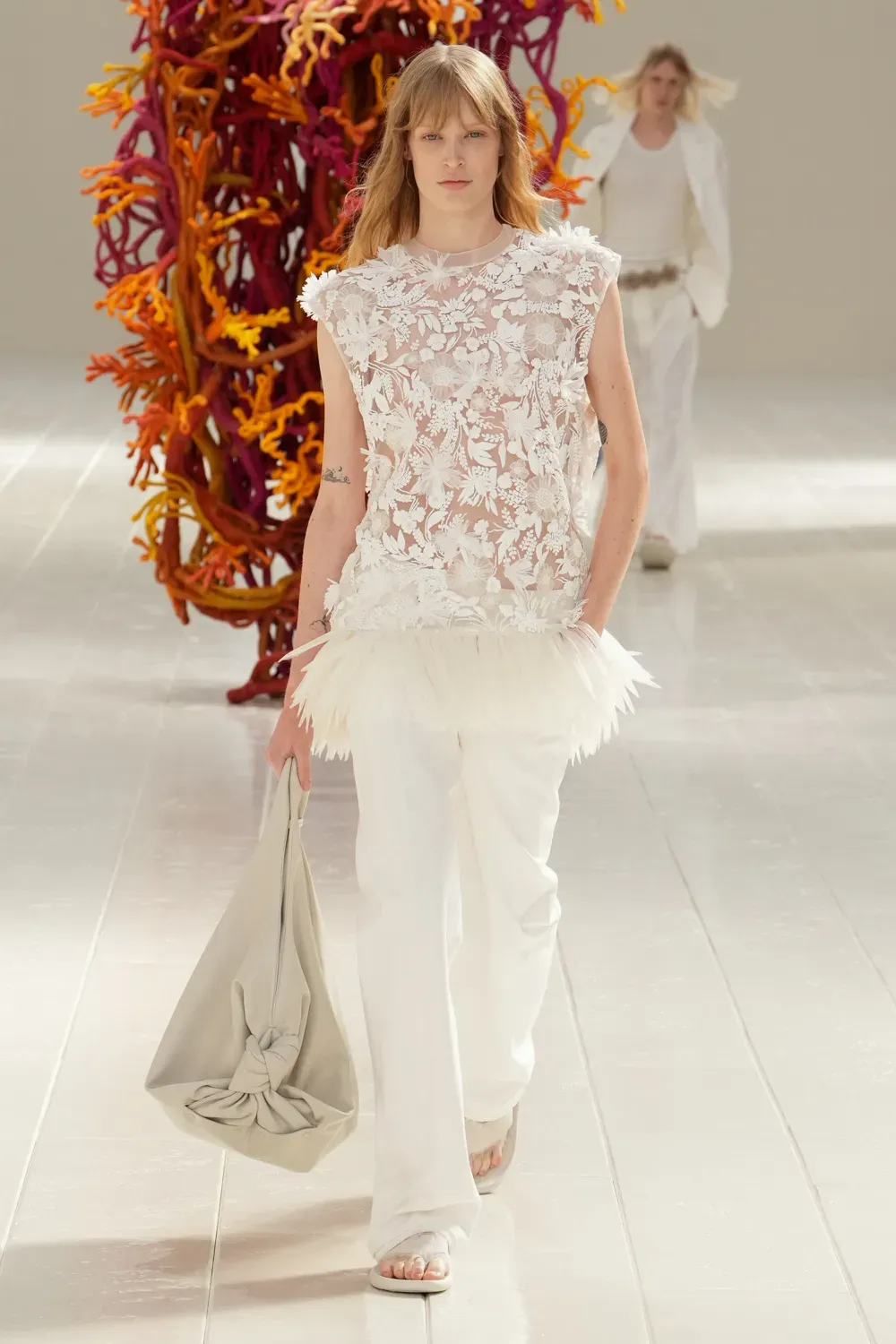
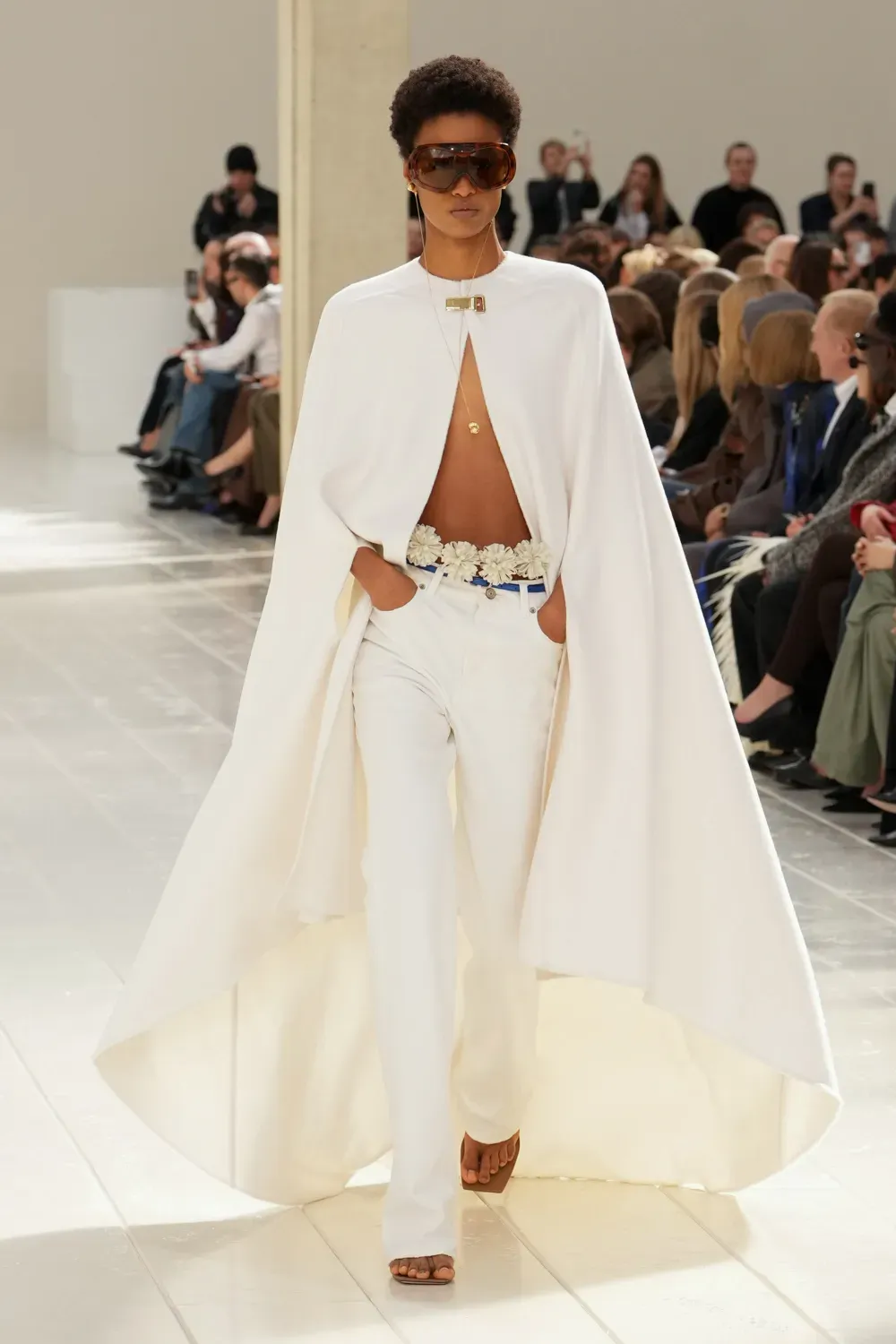
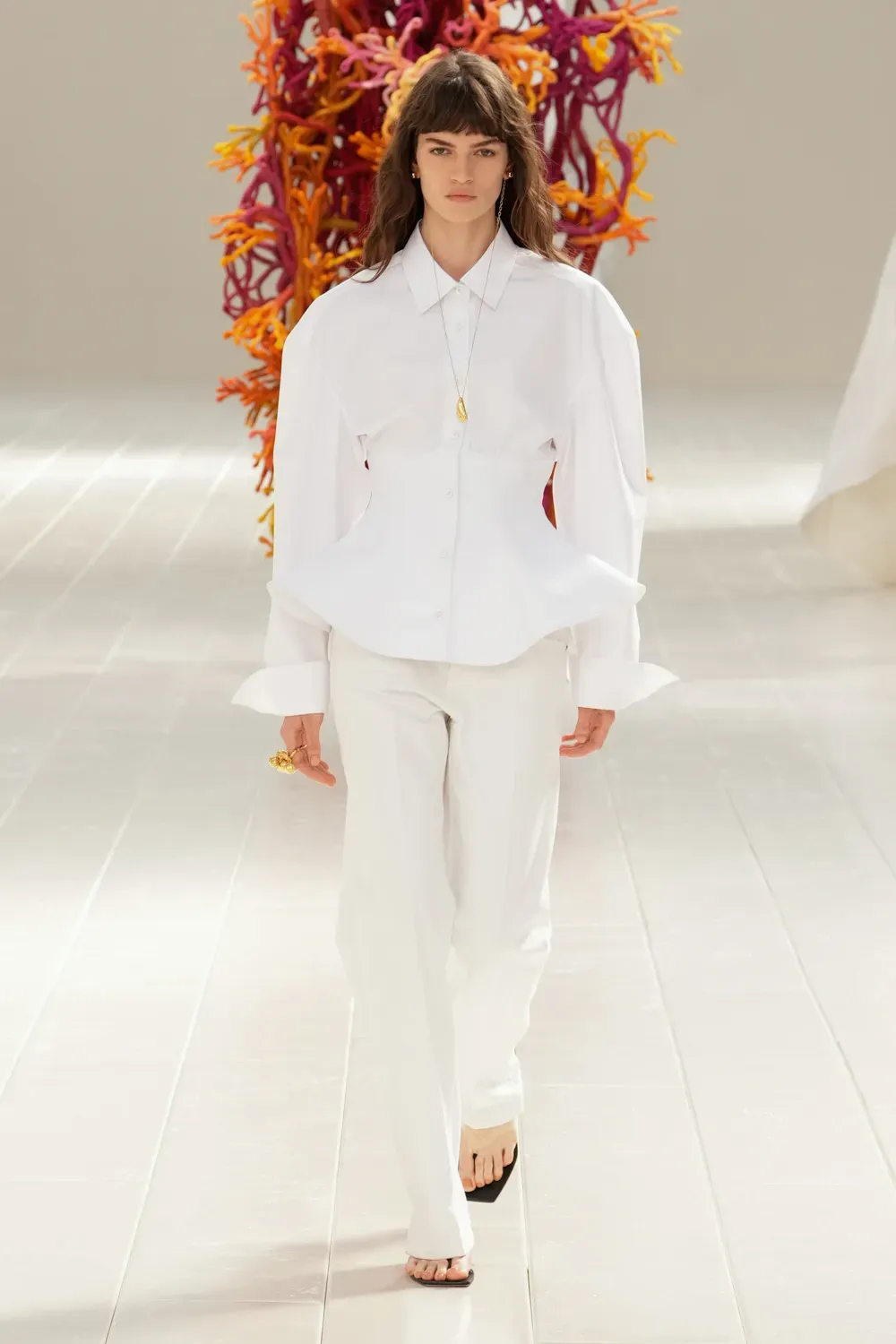
Looking at Balenciaga's SS27 collection presented just a few hours ago in Paris, the first effect is not visual but tactile. On Pierpaolo Piccioli's runway, the clothes seem designed to be worn before they are looked at. The underlying idea is noble and clear. Techniques born within the culture of haute couture — and in particular those developed for the maison's 55th Couture Collection — are transferred onto an everyday wardrobe: denim, shirts, T-shirts, bombers, leather jackets, for women and men alike. The bias cut softens the evening gown as much as the jeans, the shirt, and the men's suit, which remain perfectly recognizable yet change their relationship with the body, falling and moving in a different way.
The most convincing element is the transposition of topstitching, which originates as a hidden gesture of internal tailoring and here becomes an outward mark: it serves to create volume on cottons and leathers and to draw those narrow-waisted silhouettes of Basque tradition that reference Cristóbal Balenciaga's archives without retracing them, shifted onto T-shirts and leather jackets. Every piece begins its life in the ateliers, through draping and shaping on the mannequin, and you can feel it.
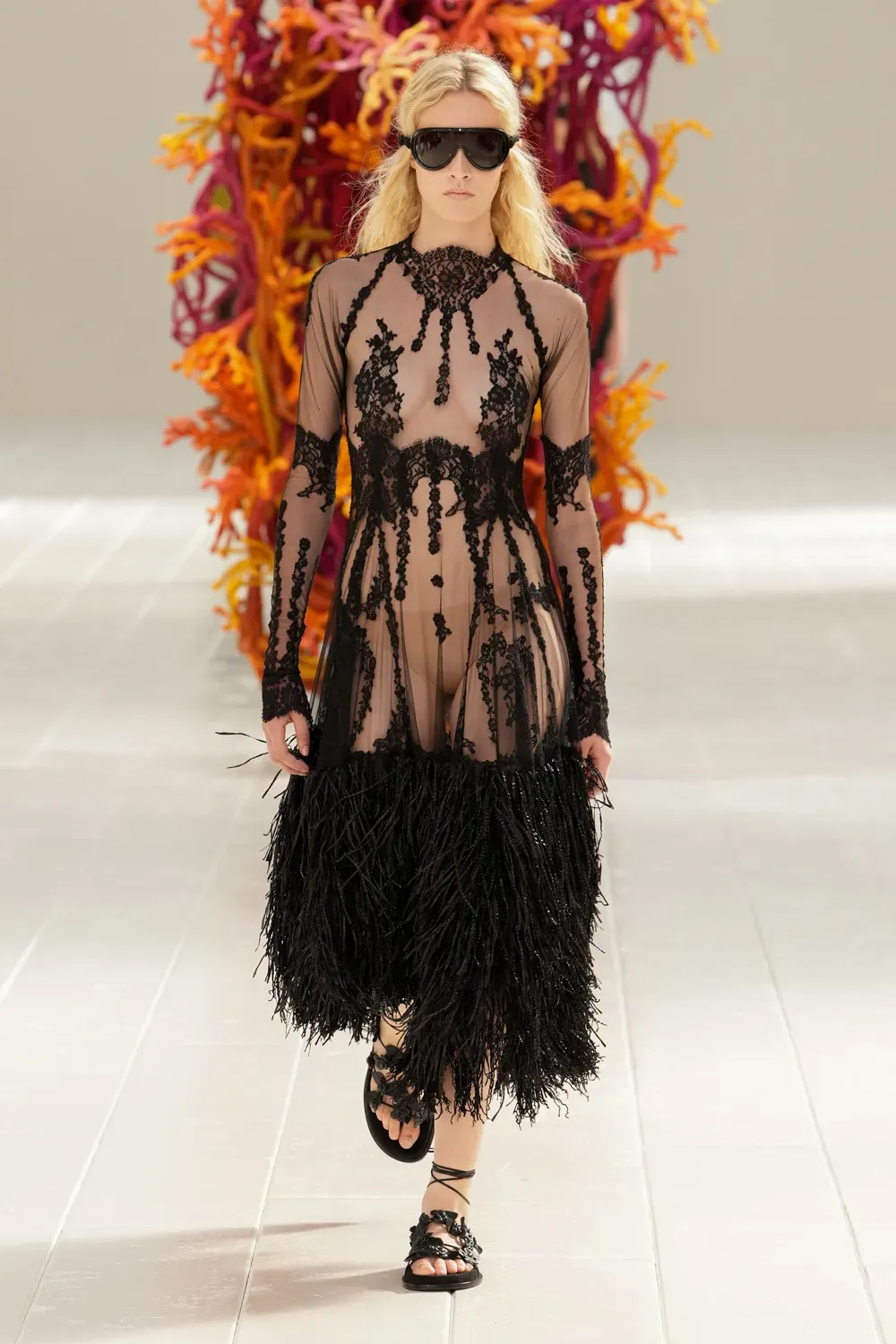
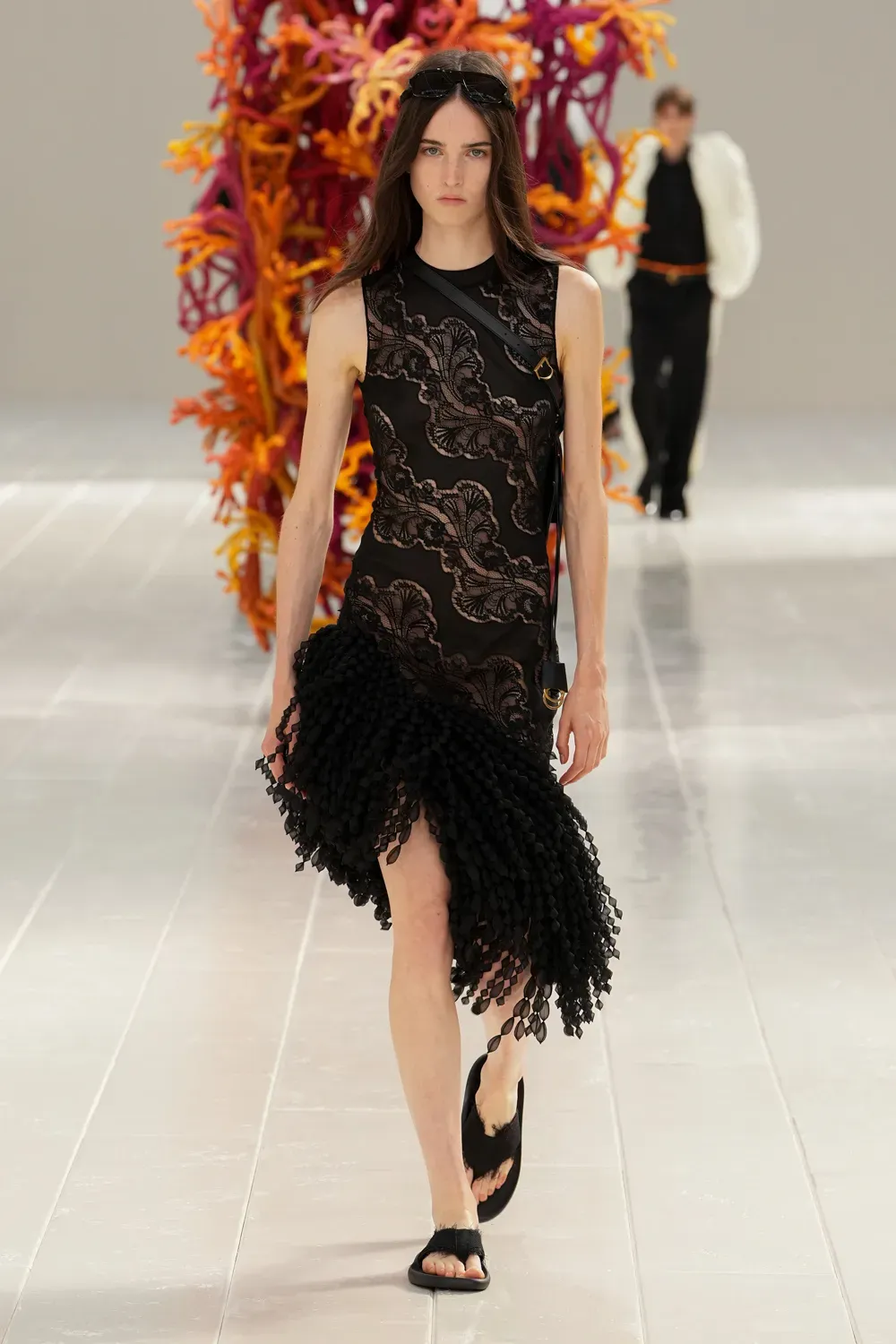
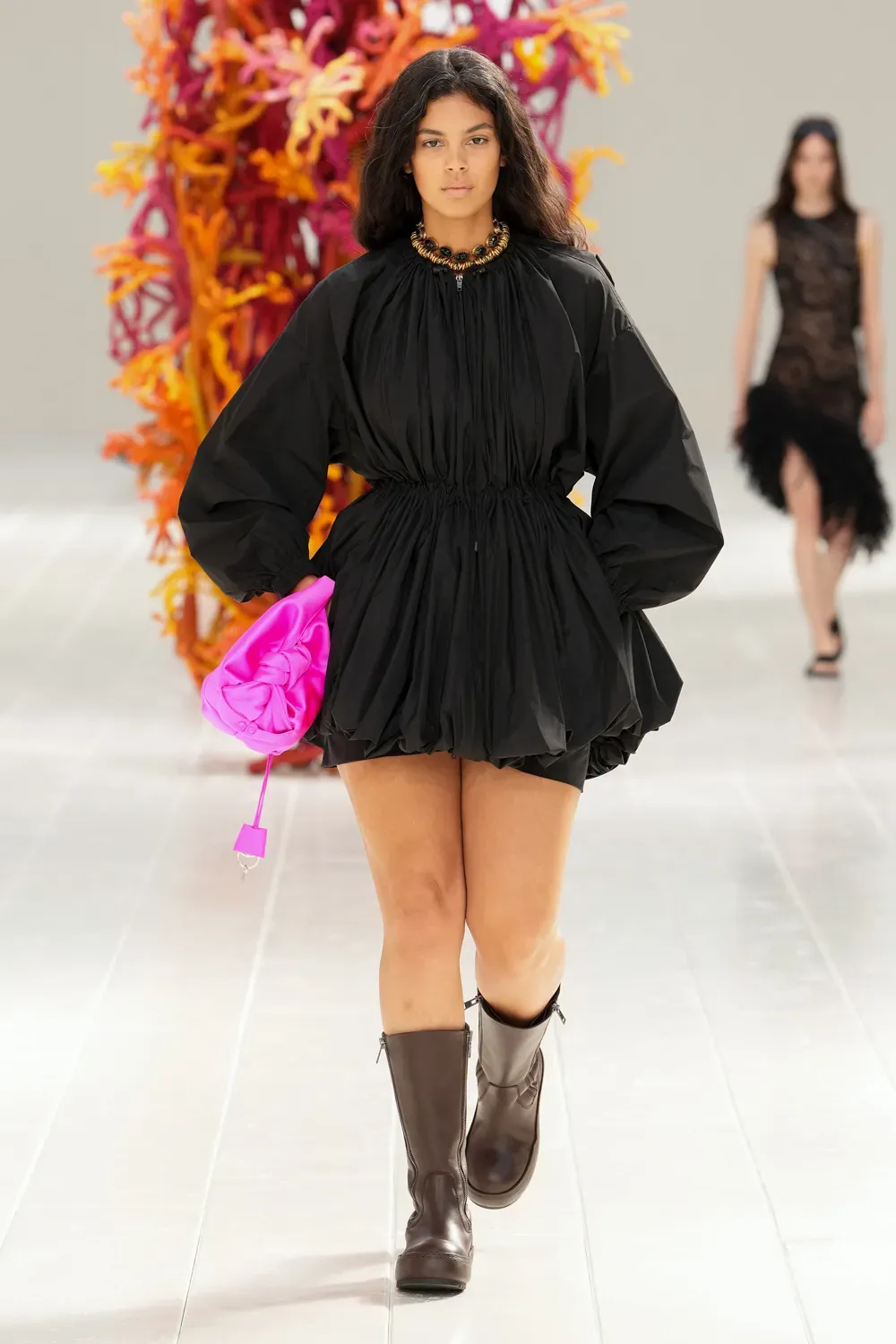
As for accessories, the show featured a flat flip-flop sandal in waxed canvas, a mule with a heel that has the suppleness of a slipper, as well as a new sneaker called the Lounge, which appears to have no structure whatsoever and lets the foot inhabit it rather than containing it. The bags, with their strongly volumetric appeal, are crafted in hand-shaped and hand-draped leather, with an irregular rhythm that evokes the artisanal quality of the brand's ateliers. There are also the Bow Mask glasses with hand-worked temples, and the Getaria jewels, inspired by shells, have the air of things gathered on the shore rather than designed objects. After seasons of armored fashion, this is a collection that disarms.
The most beautiful detail is the least declared. The imaginary flowers in organza, swollen with compressed air, echo the volumes of the garments with an almost mathematical rhythm, and Piccioli demonstrates that ornament can be a structural solution before it is an affectation. The same principle applies to Calais lace, inserted as load-bearing elements and as open windows onto the skin rather than as trimming, to the cords that regulate fit without fanfare, and to the buttoned collars. Even the fabrics act upon the bearing of those who wear them, and lightness becomes a way of inhabiting one's own body. A clear priority pervades the collection — comfort, treated as a design value rather than a concession.
The backbone of the show is provided by the work of French artist Aude Franjou, a fiber sculpture wound thread by thread, which gives the show its title and articulates its ethos: the slowness of the repeated gesture, and the idea that no one shines alone, that a maison lives on exchange just as a coral reef does. It is a generous image, and on the runway it translates into a collective elegance, built from crafts passing the baton to one another.
One question lingers at the margins, though it takes nothing away from the pleasure of looking. Everything is so well-mannered, so harmonious and polished, that you leave the venue with a feeling that is deeply pleasant and slightly difficult to put into words. Each piece, taken individually, is beautiful, but lined up together it is their gentleness that becomes the dominant trait. One might wish the Maison, in the coming season, the courage of a sharper statement, of a grammar recognizable from ten meters away, even if that were to cost a few rough edges and some of that so carefully calibrated grace. For now, though, there is much to love: the knowing hand, the living material, the promise that haute couture can speak to new generations through their everyday clothes. It is a promise made with delicacy, and for this season, that is enough.