.gif 2000w)



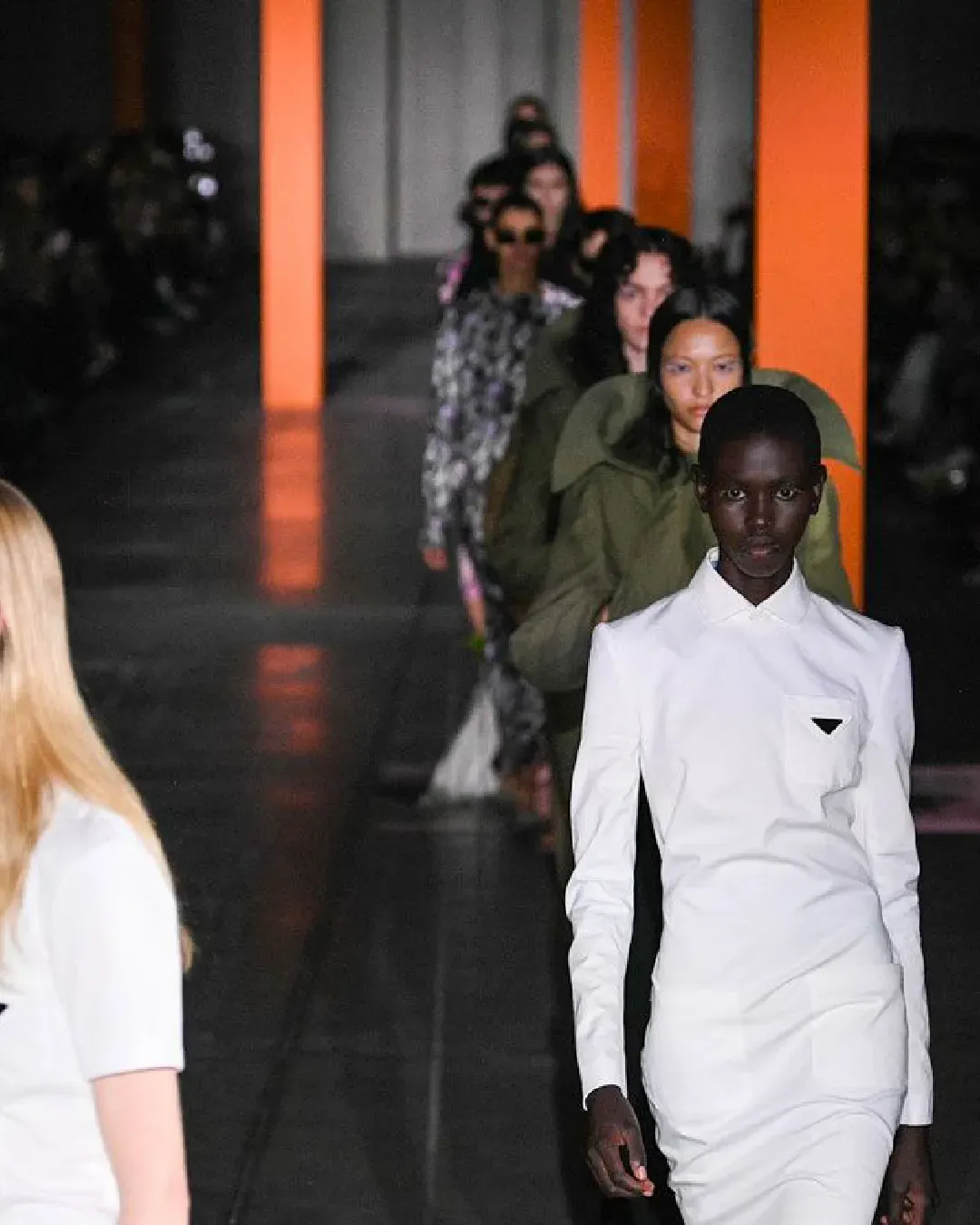























The post-modern skirts of Prada's SS27 collection Creating fashion for a world that no longer exists
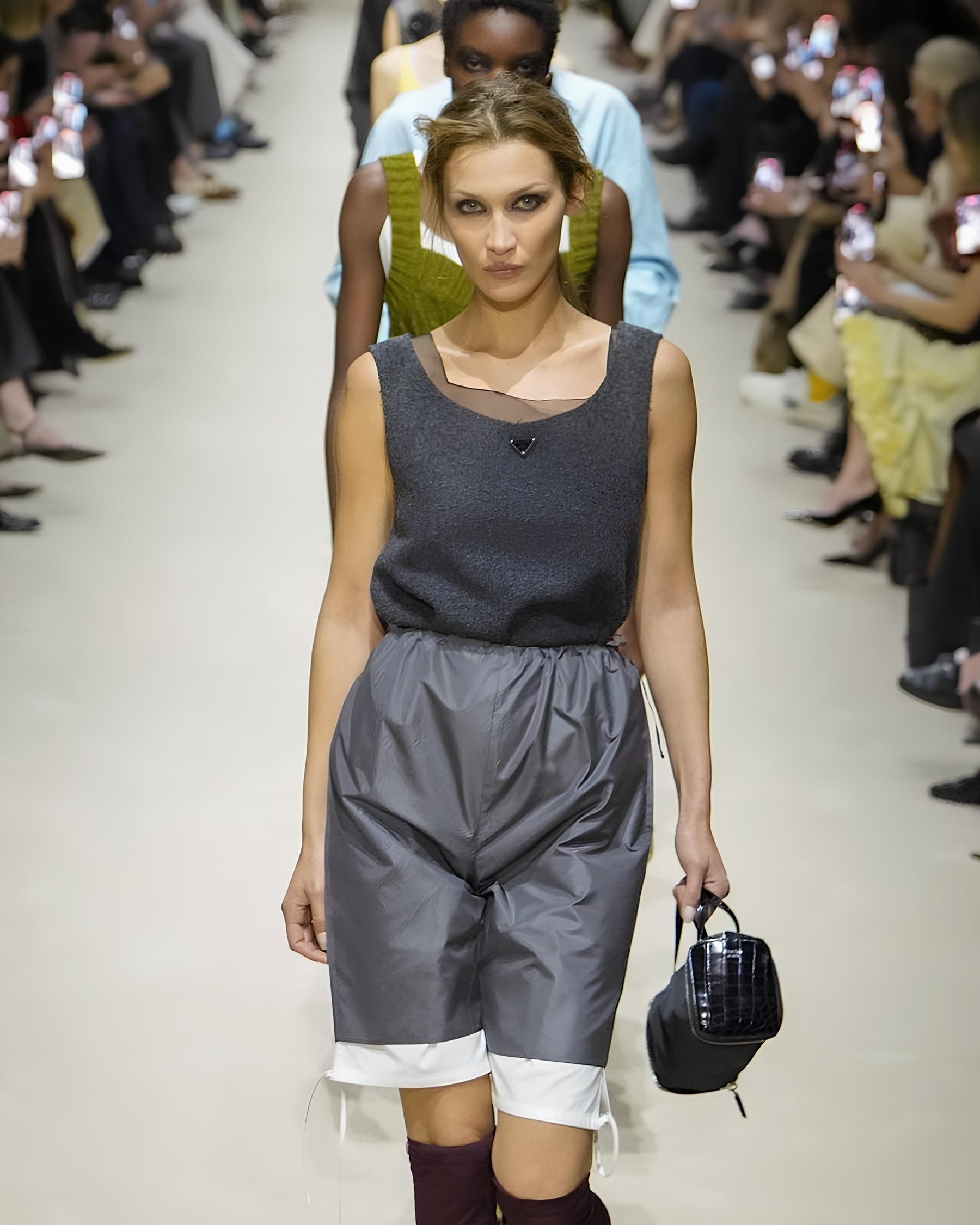
The most important question in science fiction was posed in 1968 by Isaac Asimov when, on the most celebrated cover, he asked: Do androids dream of electric sheep? Questioning, at its core, where the boundary between man and machine lay, and the idea that artificial beings might develop a consciousness. Today, Prada's SS27 show opened with a song by Malcolm McLaren, Madam Butterfly, which takes the very human notes of Giacomo Puccini and translates them into a synthetic beat, typical of the '80s: an organic melody, conceived for human voices, woodwinds, and violin strings, transformed into the product of an electronic machine. And the dichotomy between organic and synthetic, between reality and representation, was apparent from the very first look: a futuristic-looking cigarette skirt paired with a lace bra.
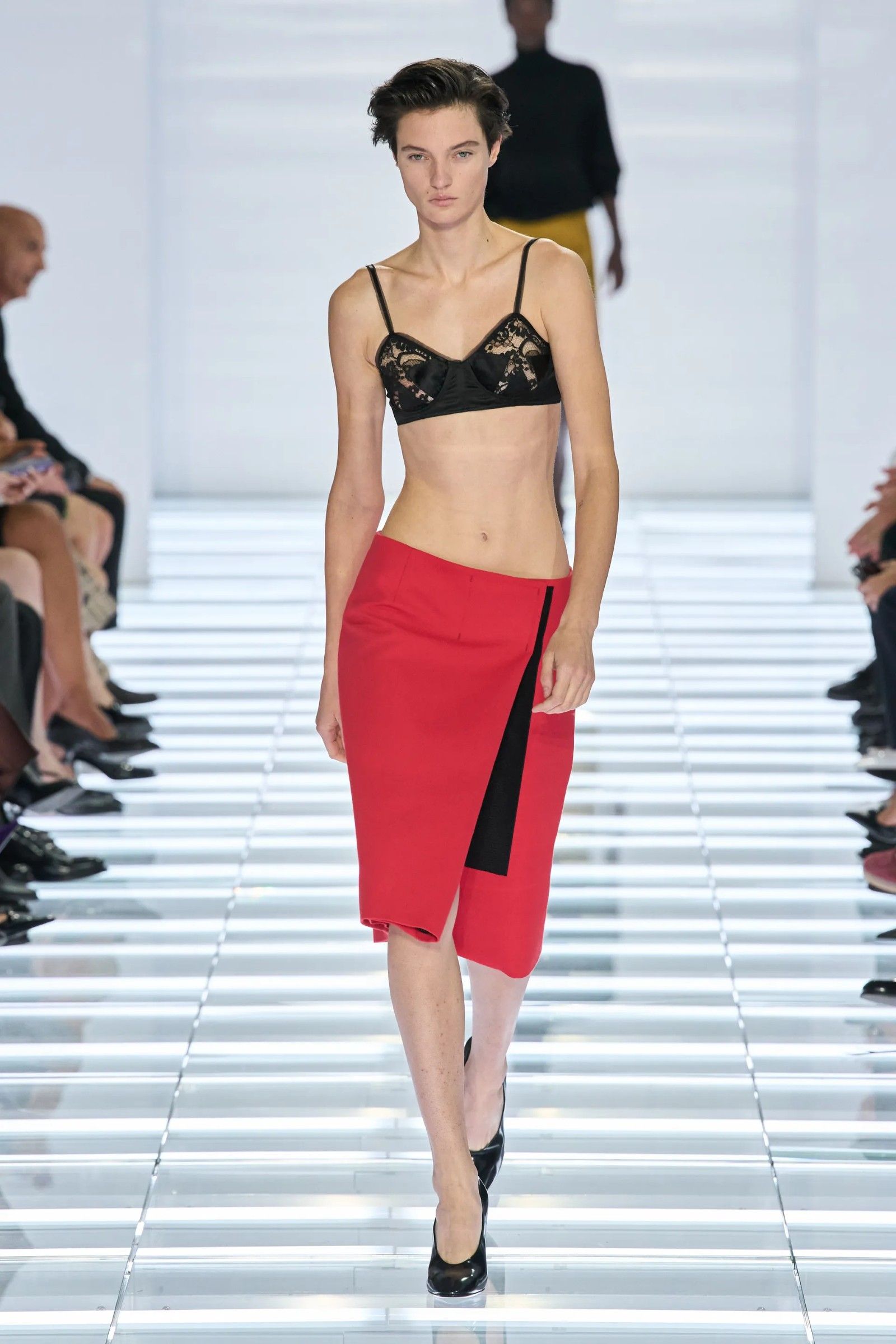
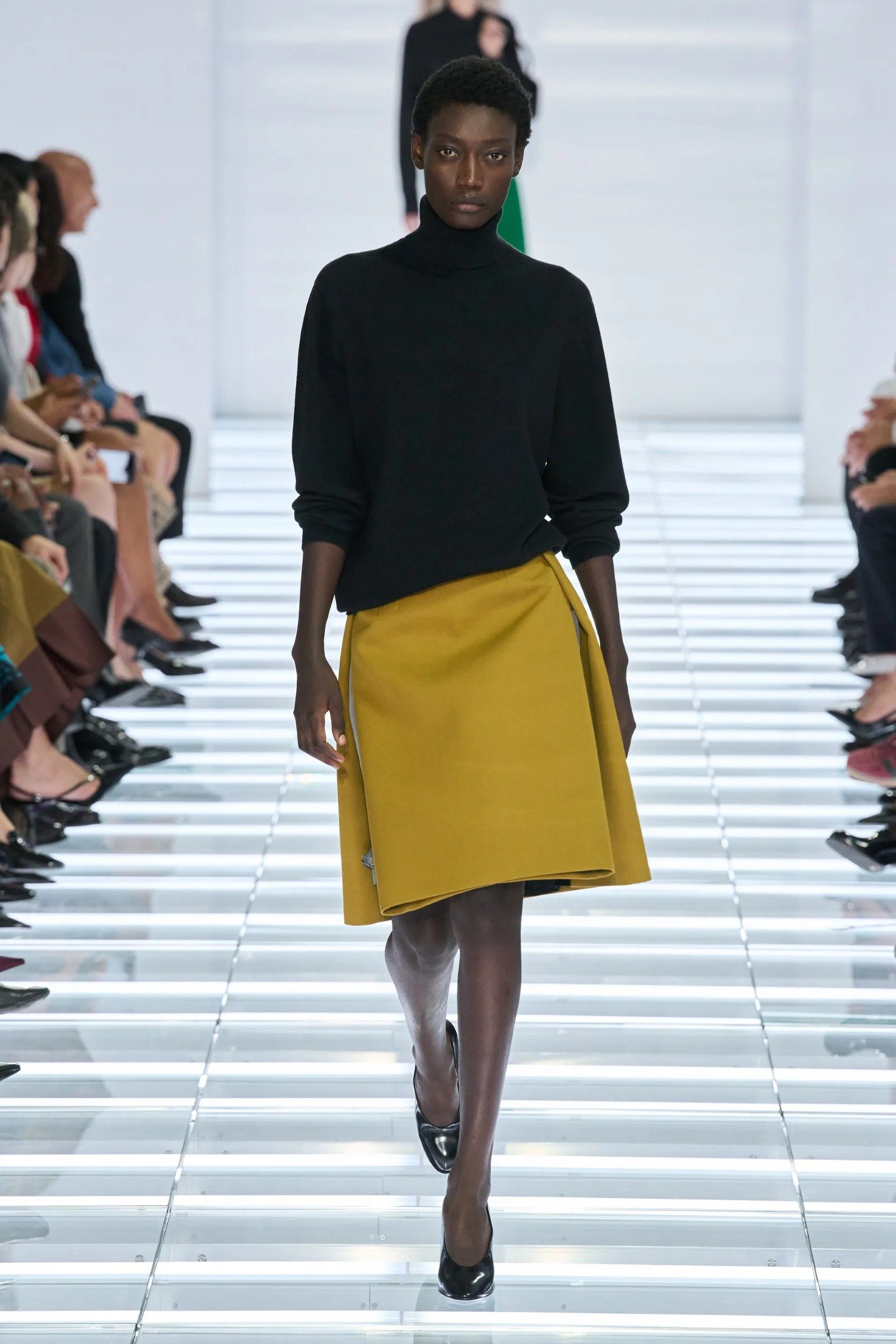
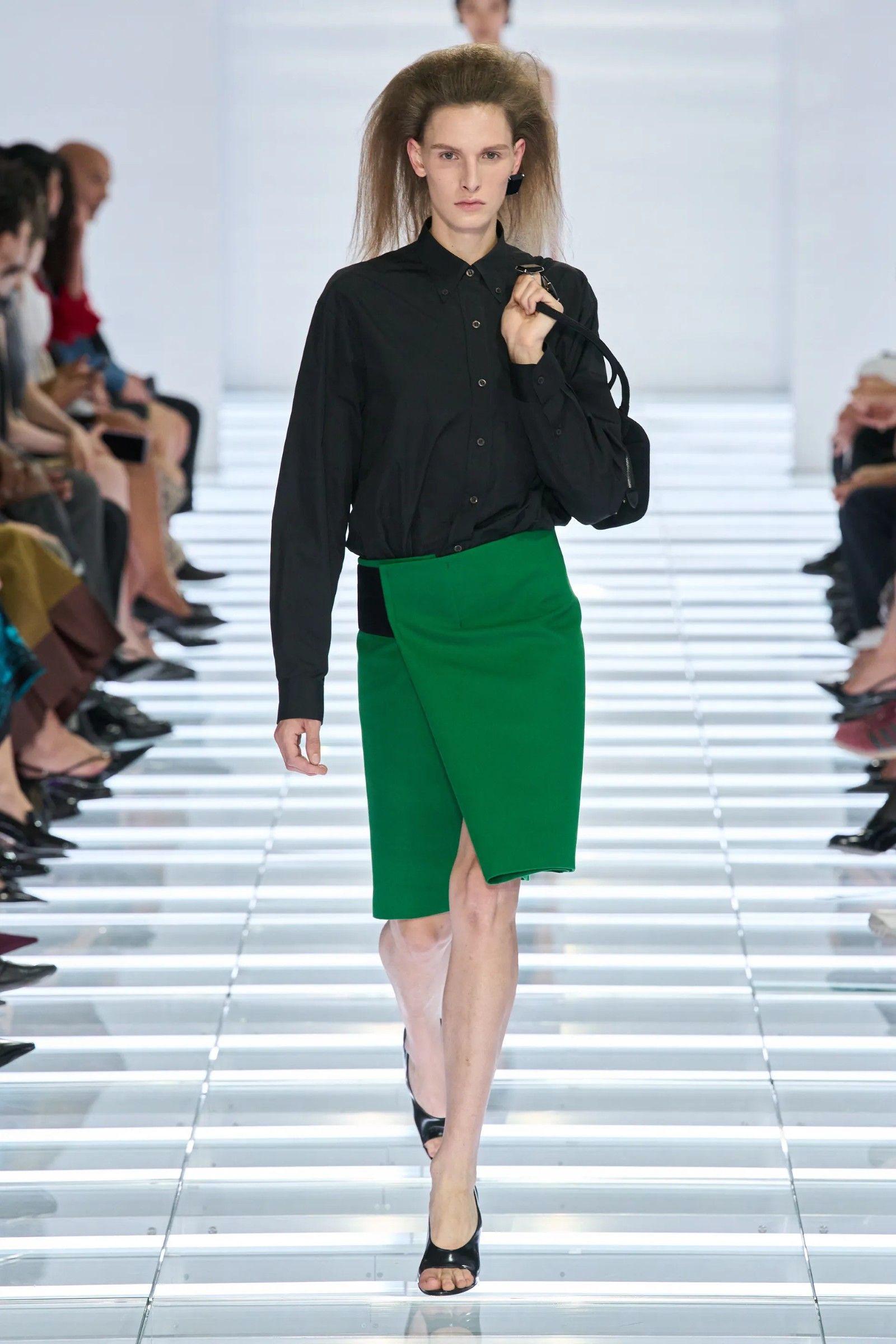
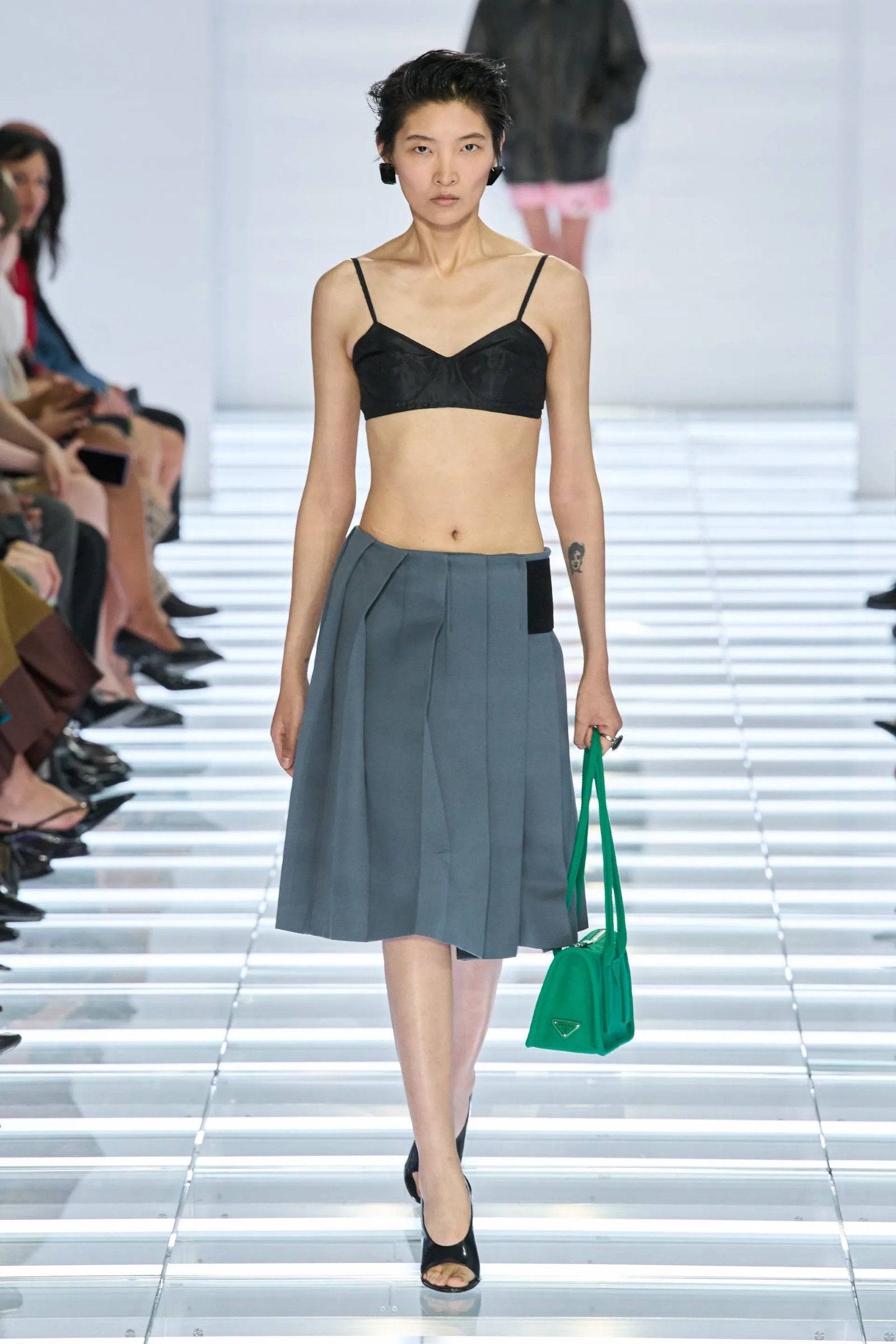
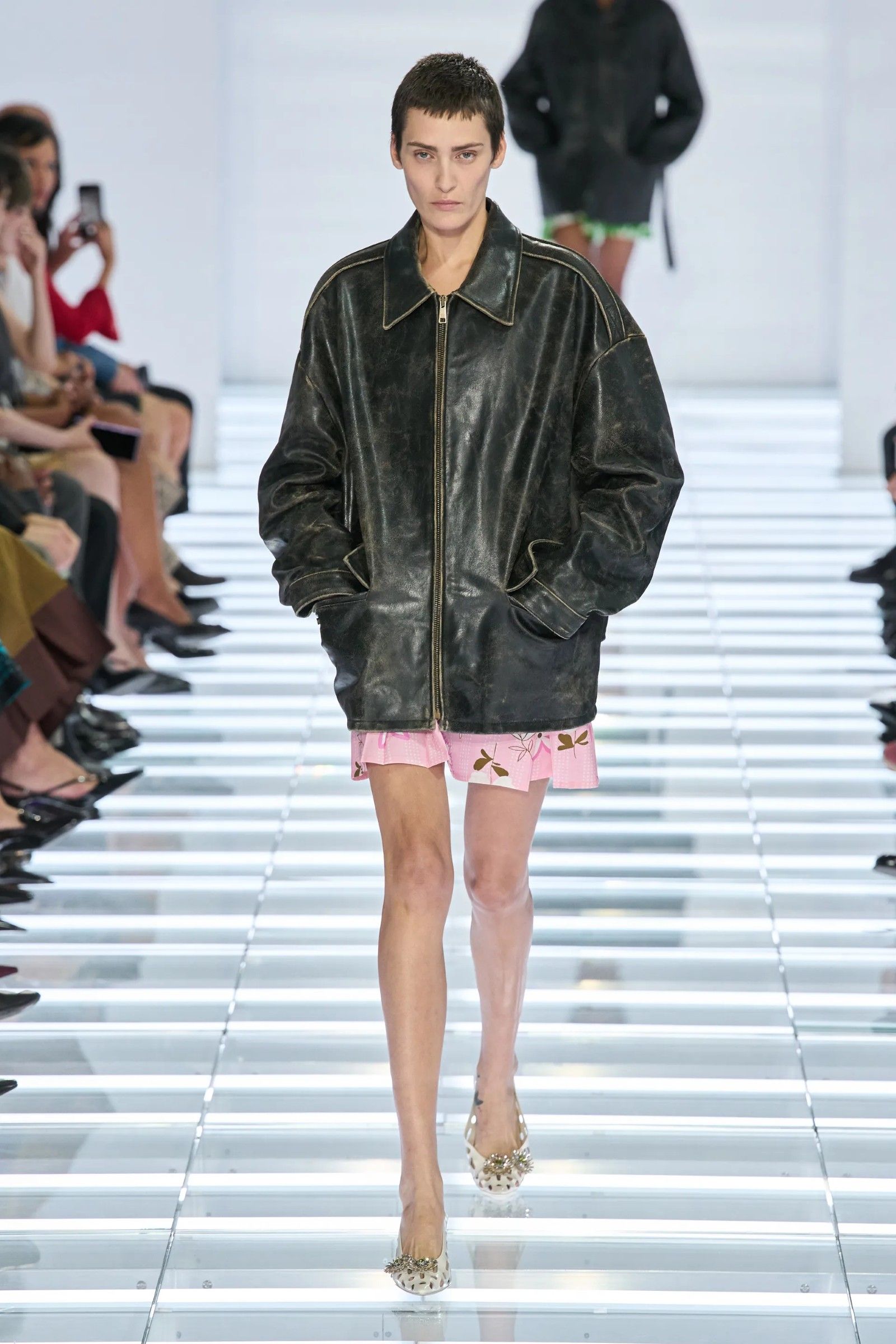
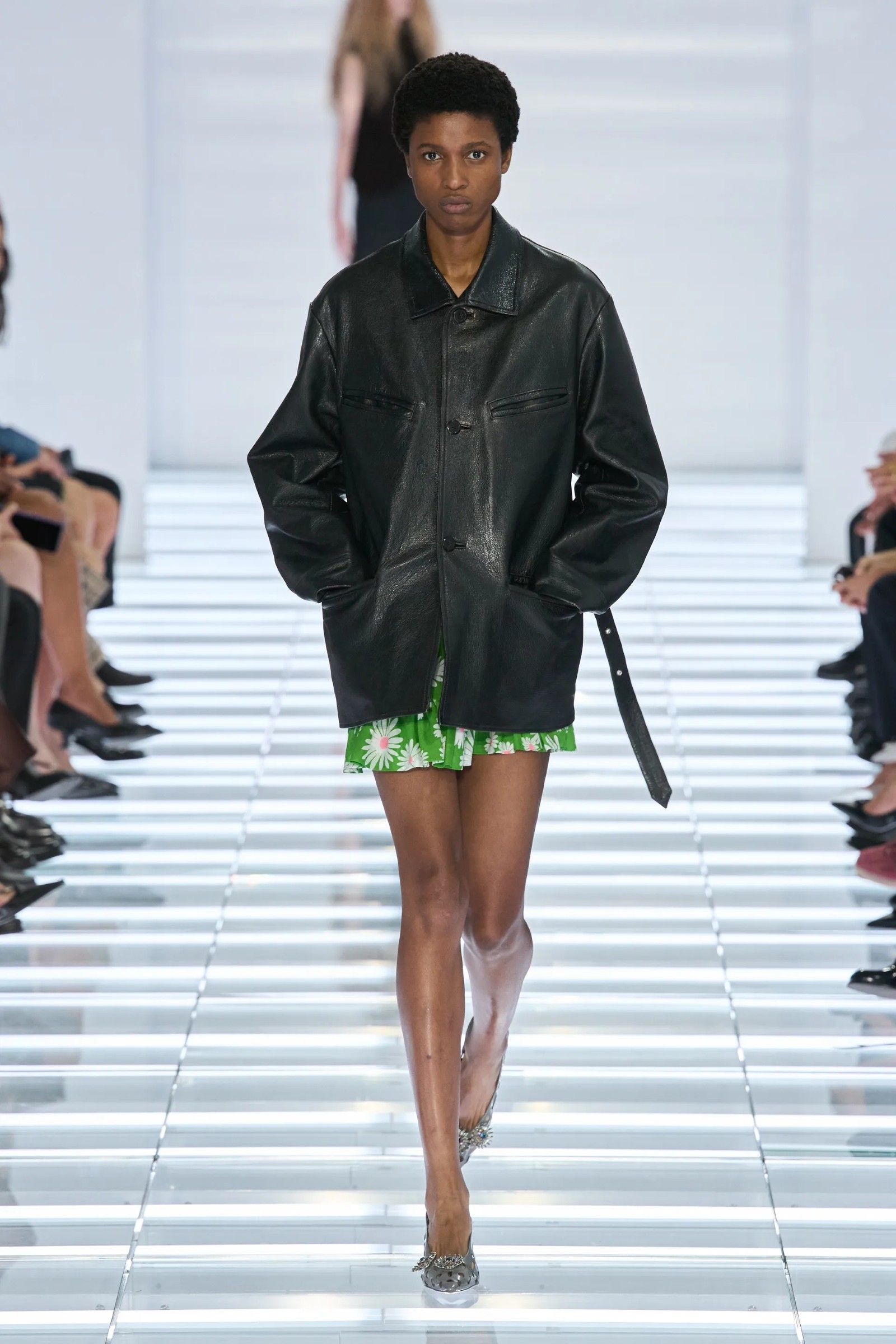
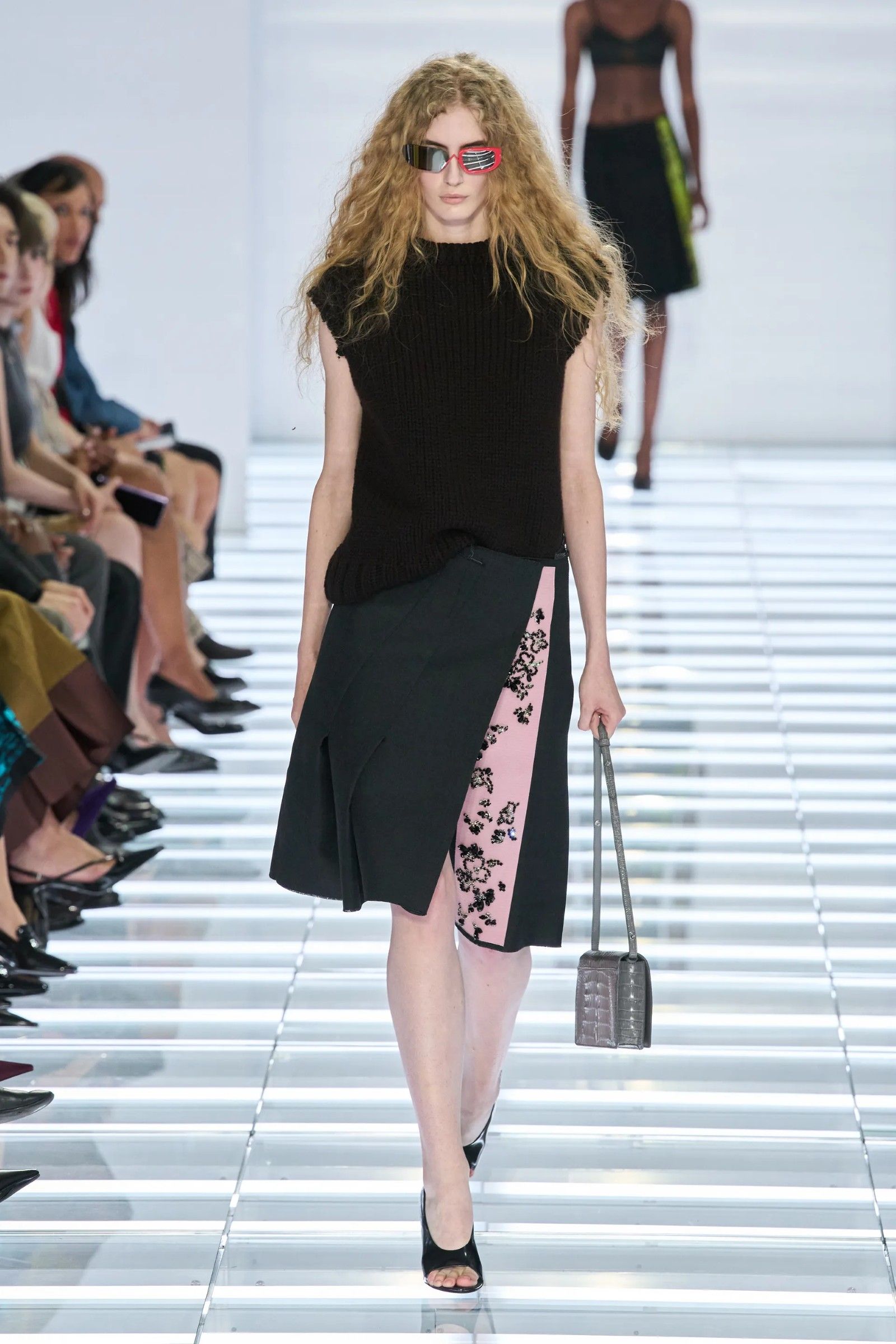
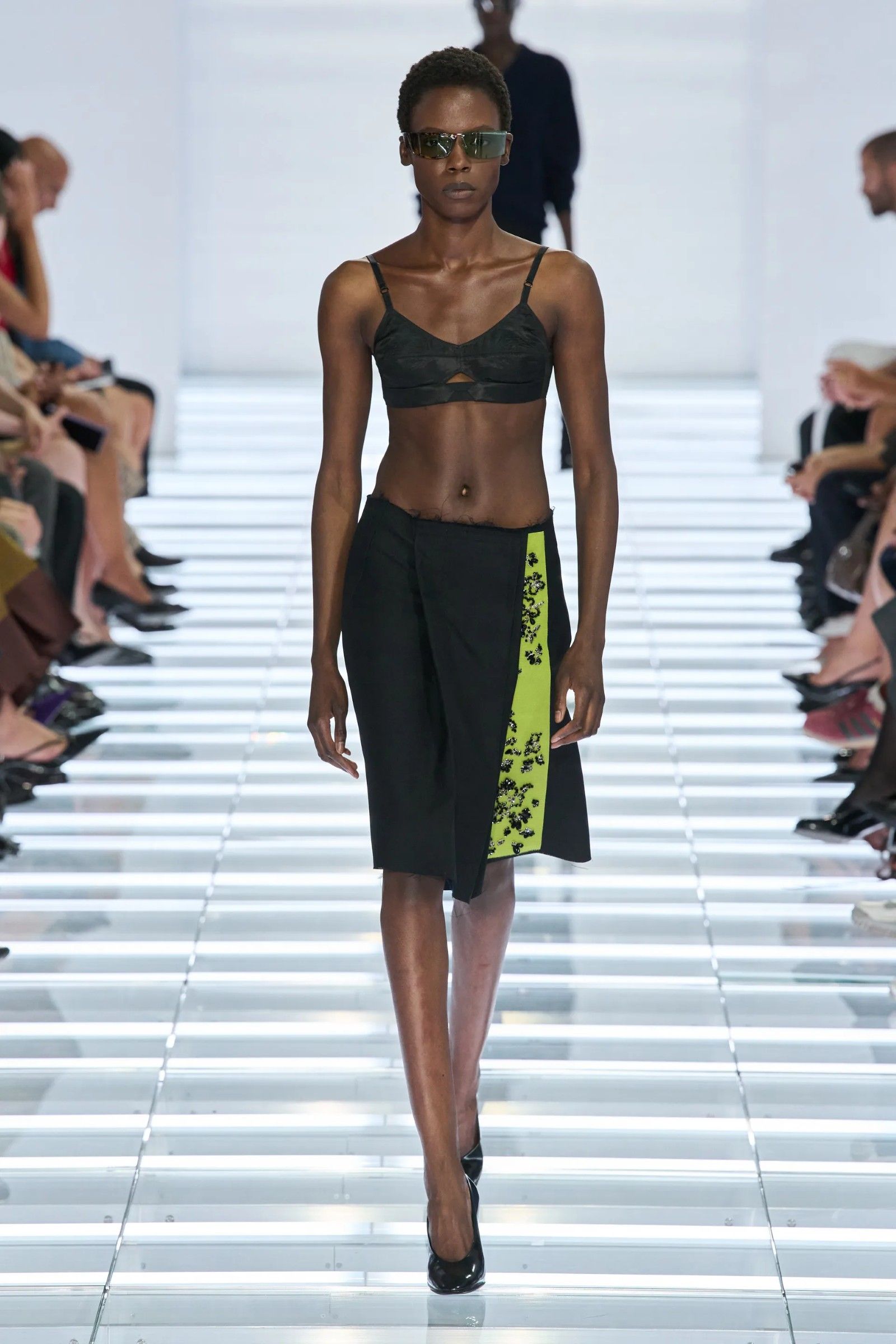
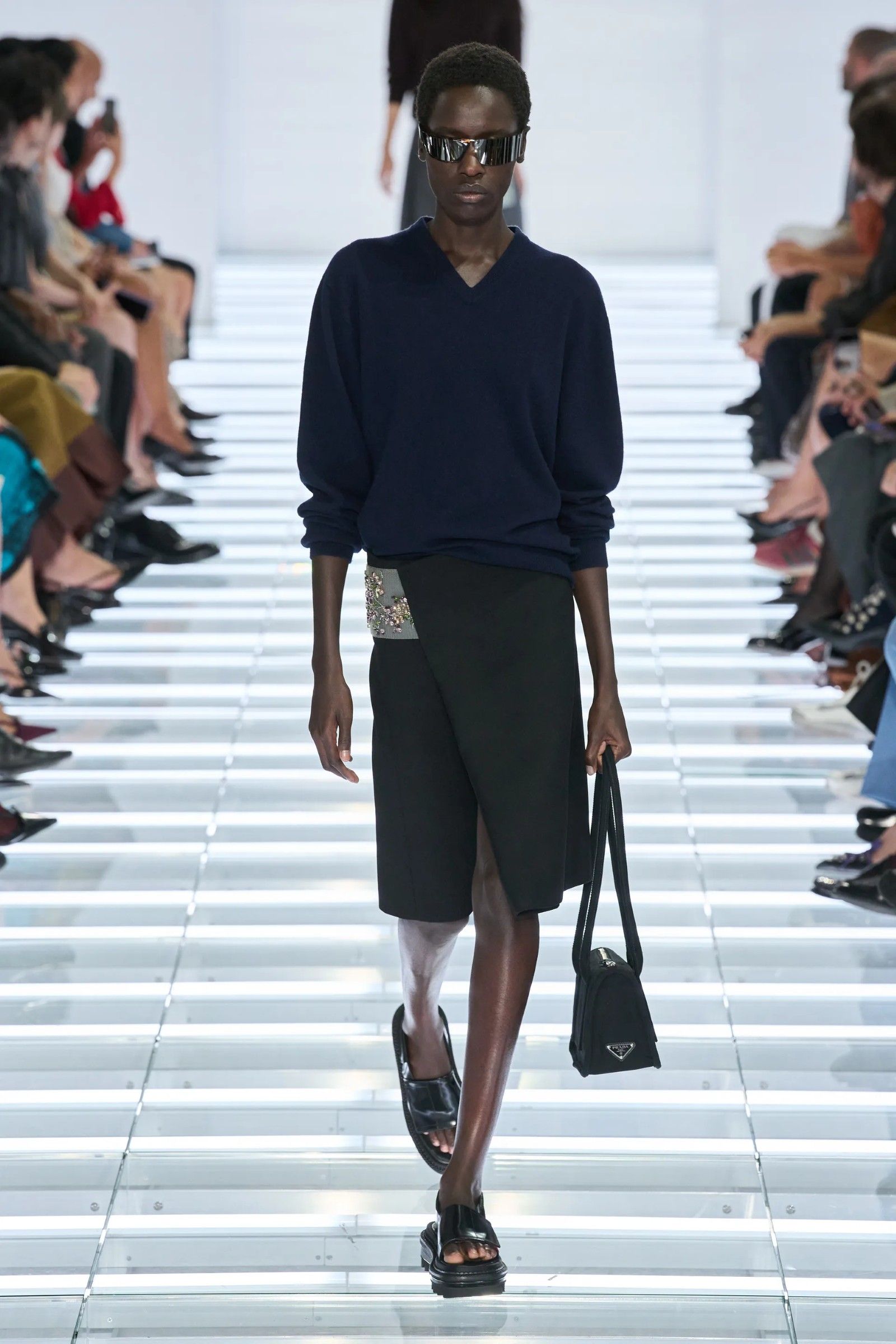
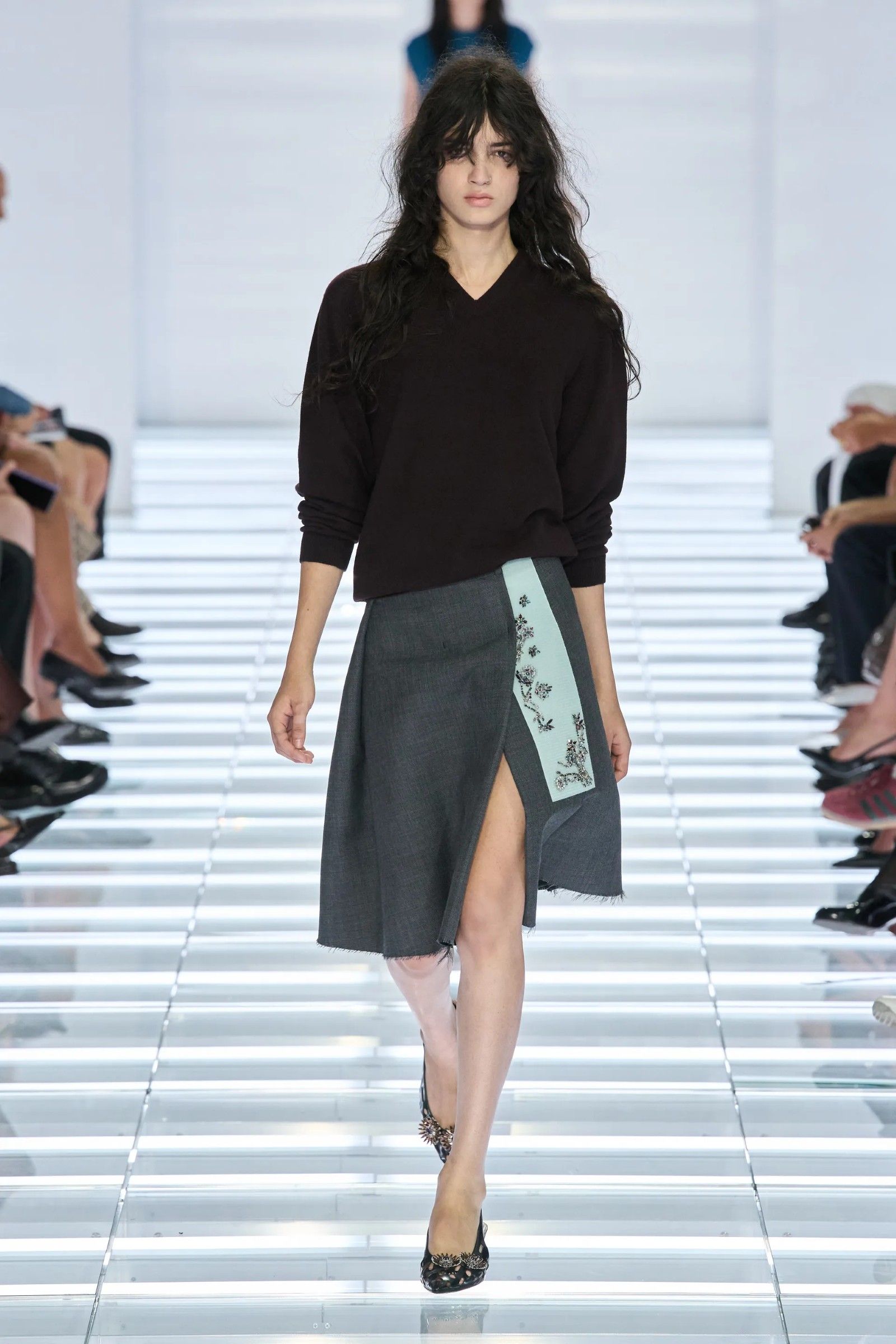
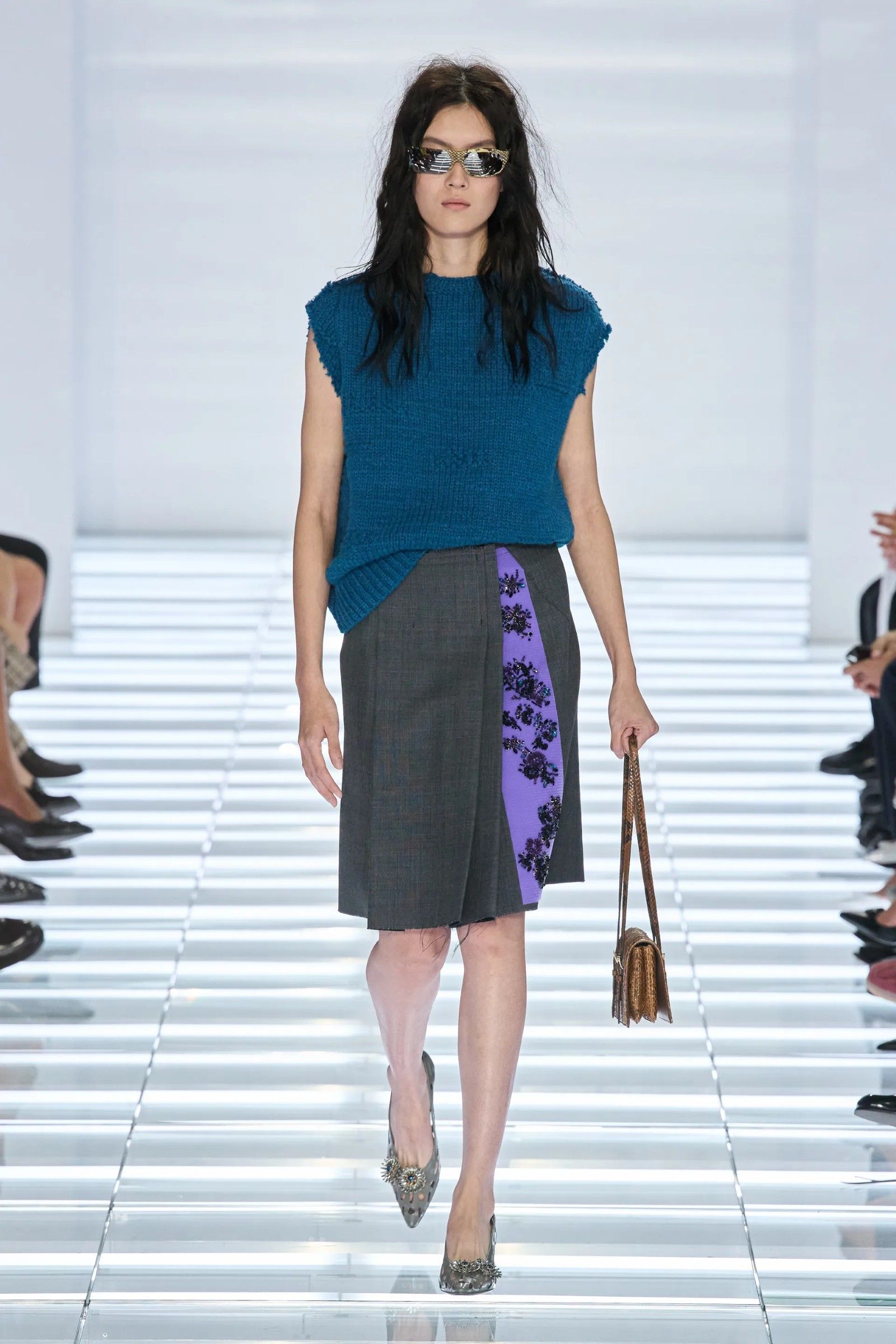
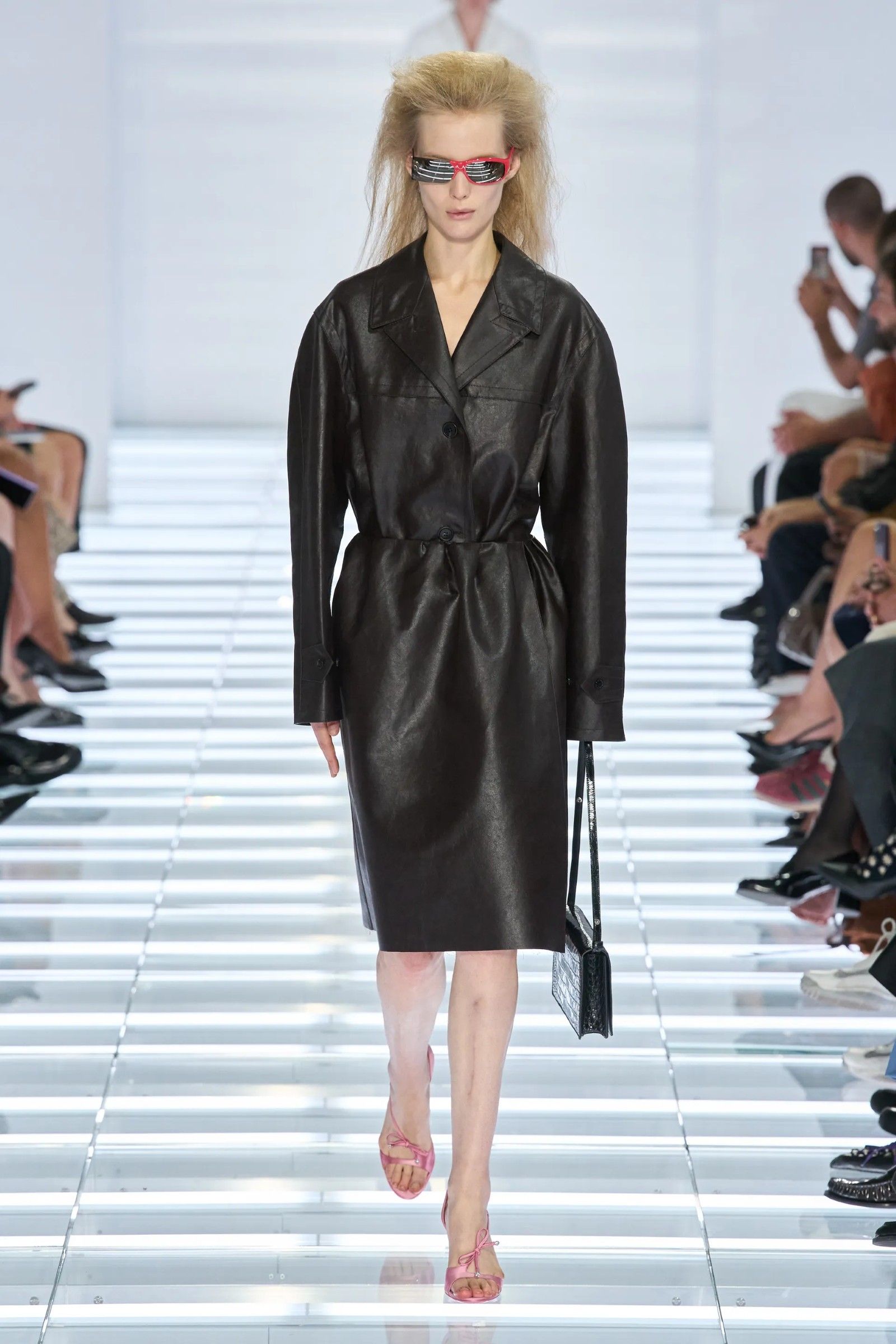
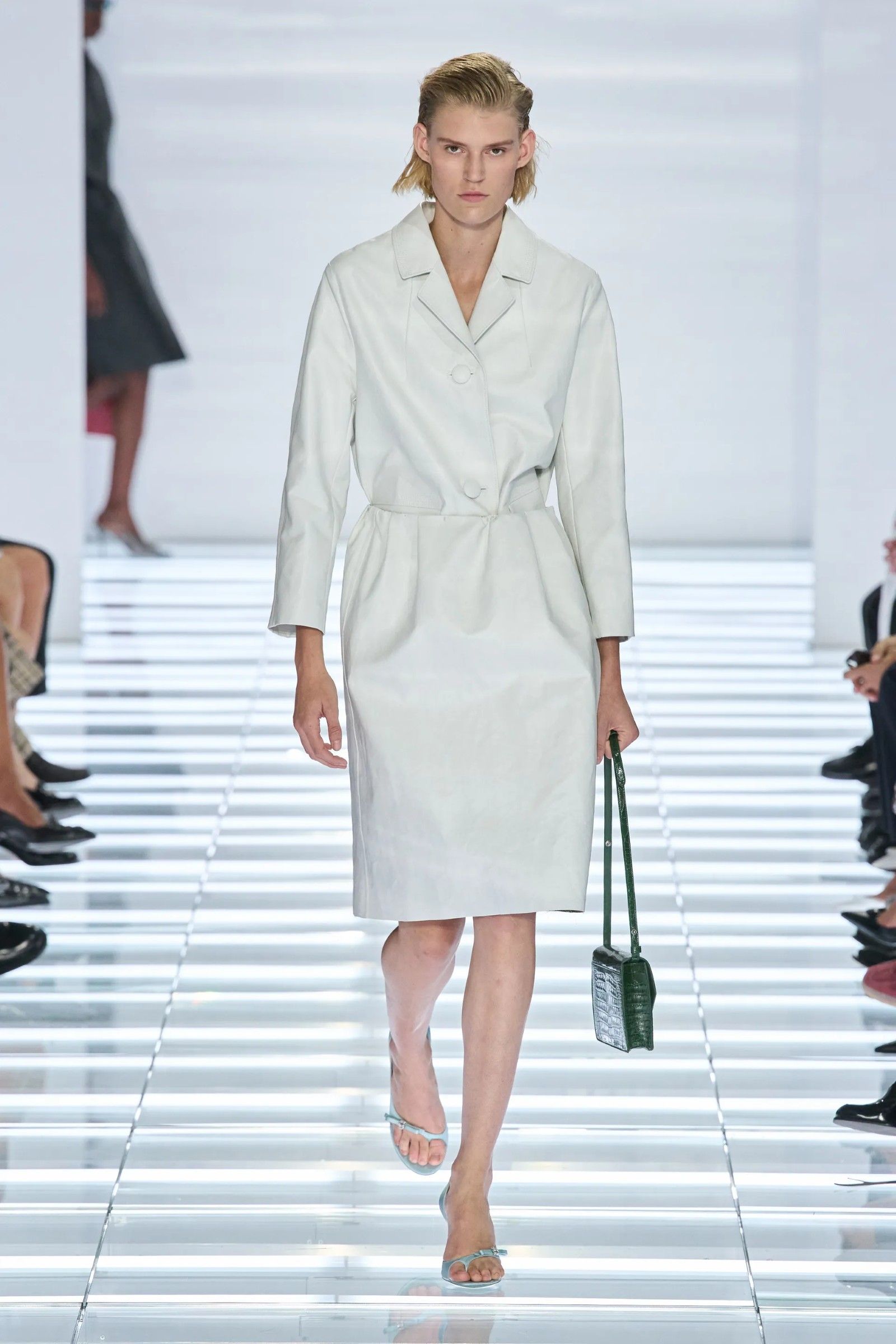
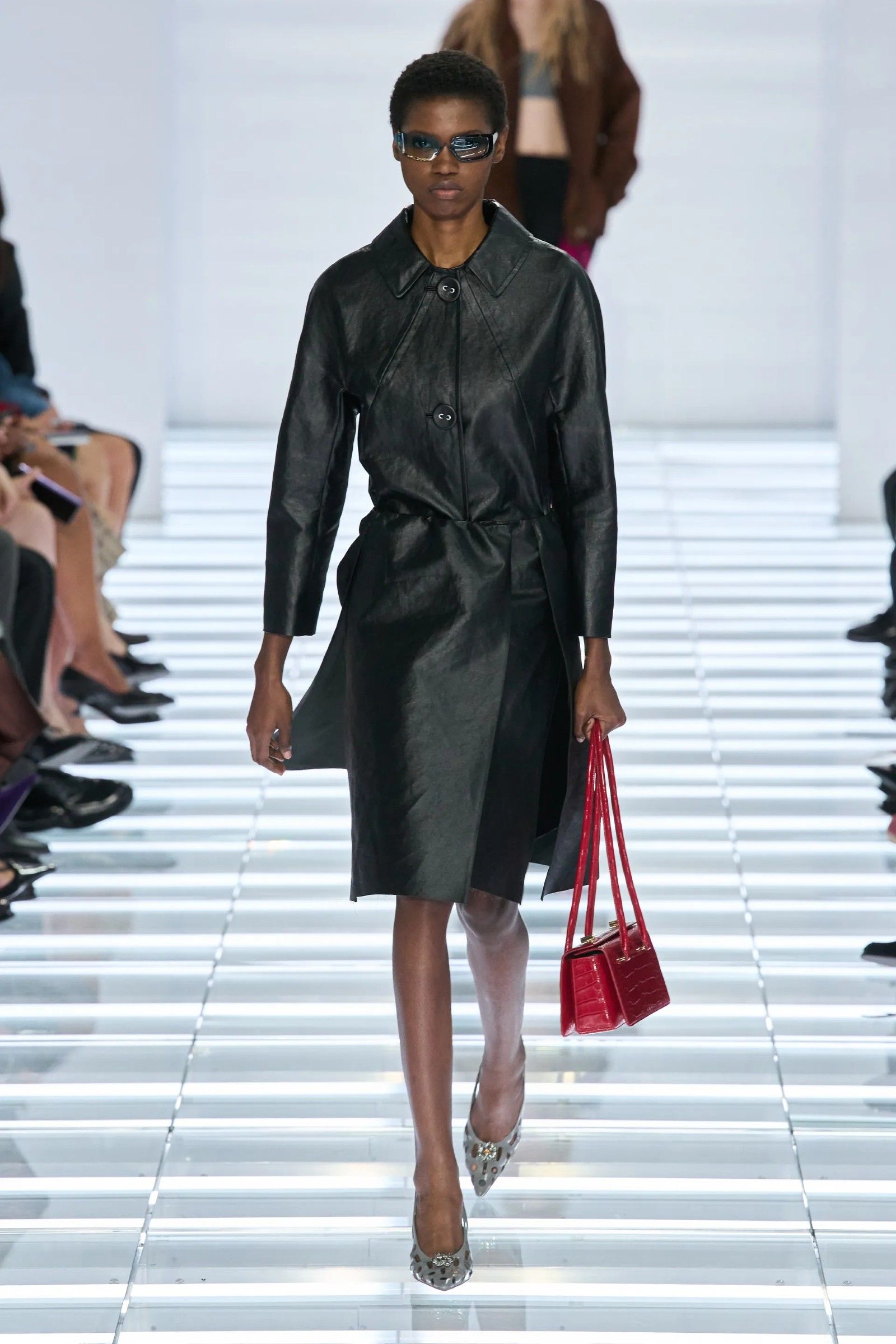
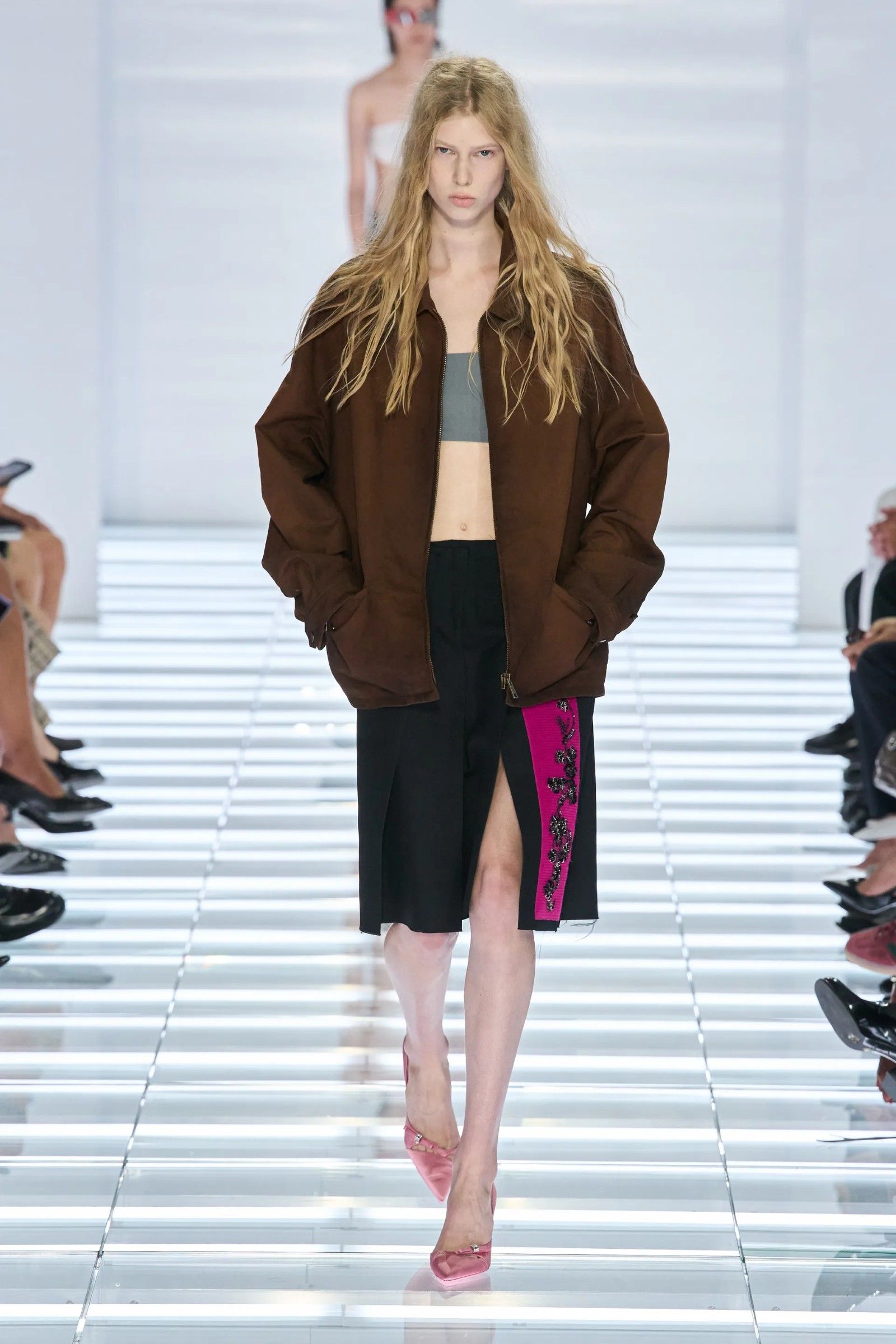
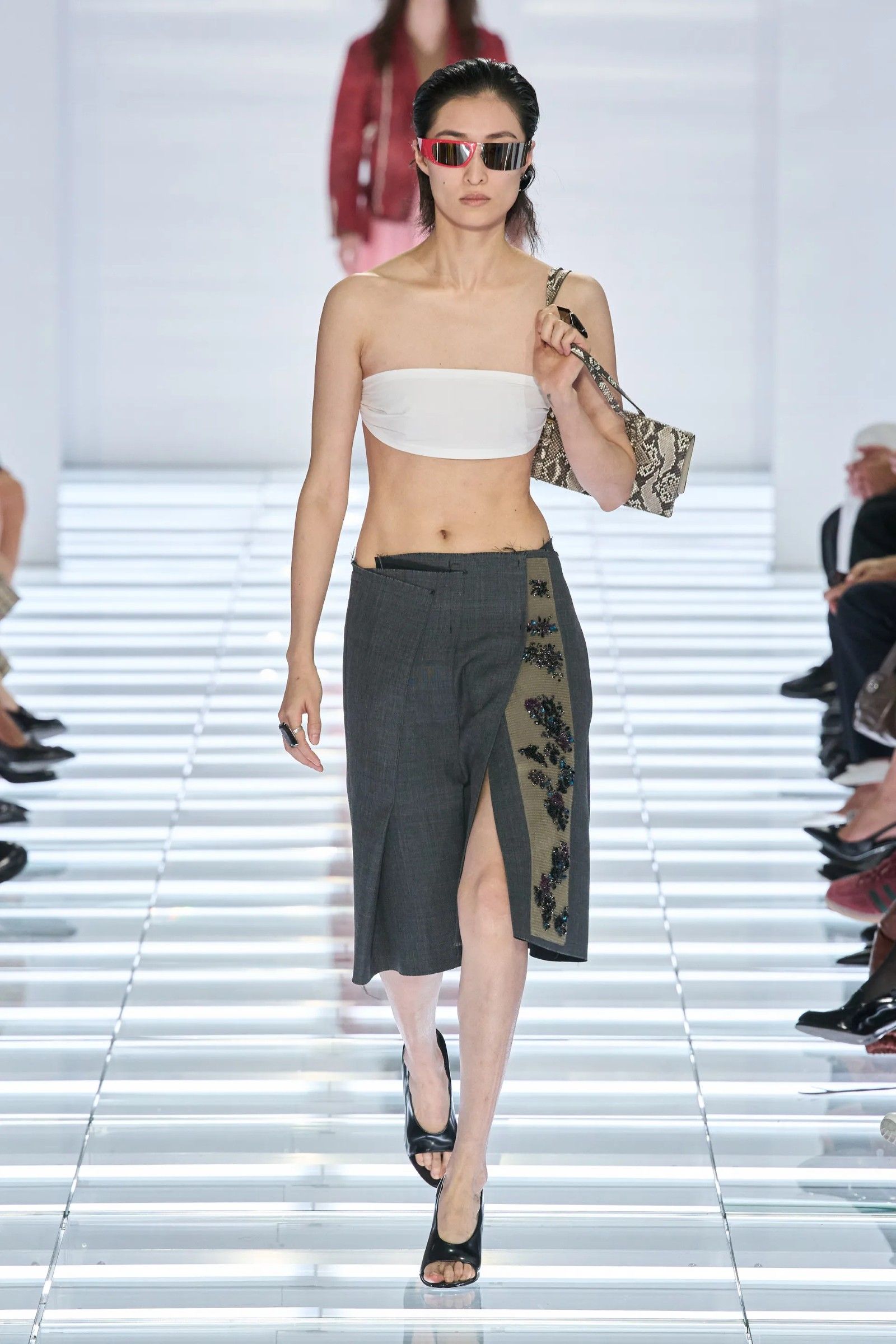
The leitmotif of the show was this combination of skirt and bra. And the bra itself appeared quite traditional in the first look, only to become increasingly futuristic and science-fictional as the show progressed. The idea was, on one hand, a nod to the early 2000s trend of wearing decorative bras—often very much on display—as a layering element. But these bras then evolved, becoming progressively more sporty, then more embellished and form-fitting, and finally transforming into a sort of micro-top (very micro, it must be said), which in two instances was wrapped around the models' arms in a way that recalled a kind of breastplate.
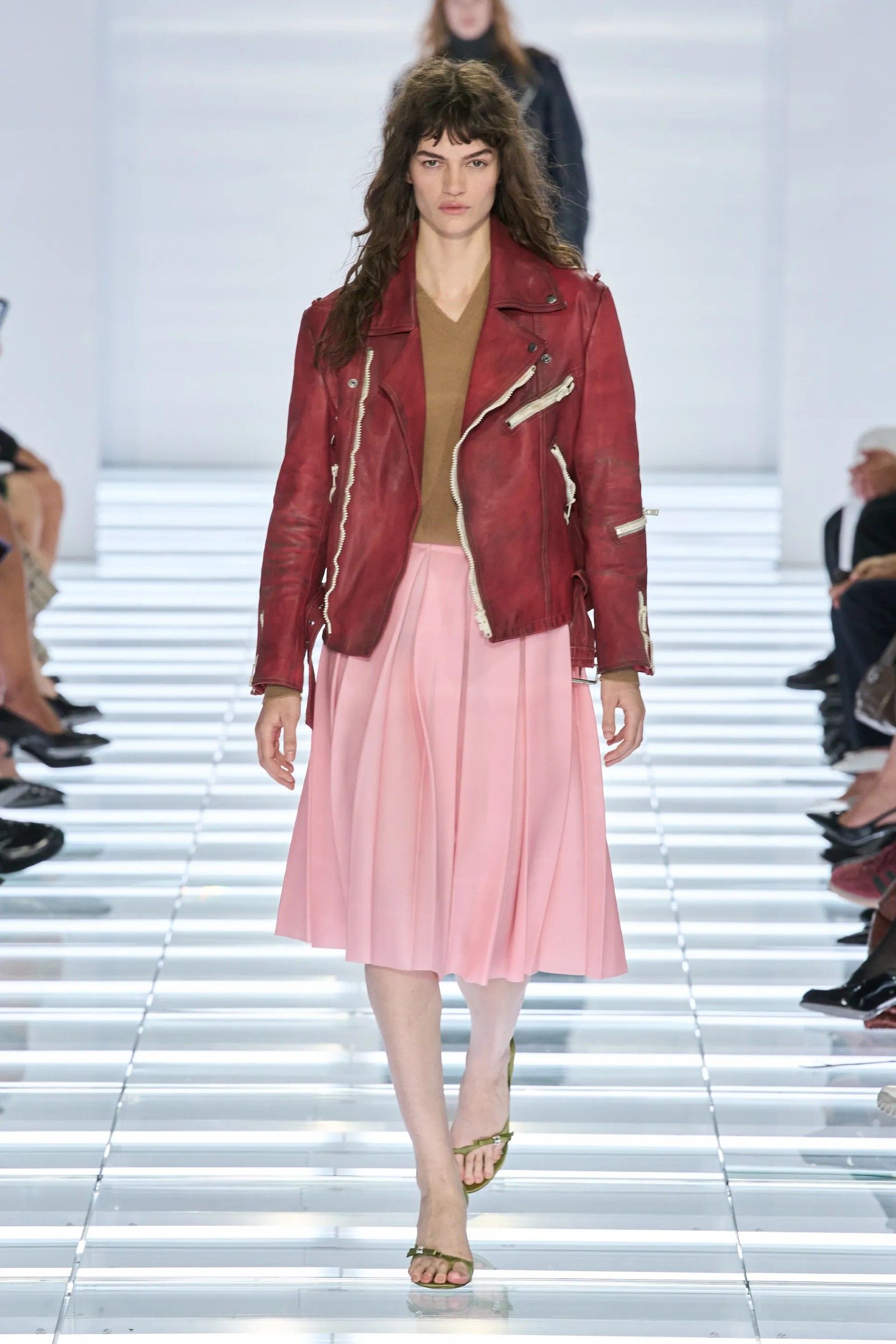
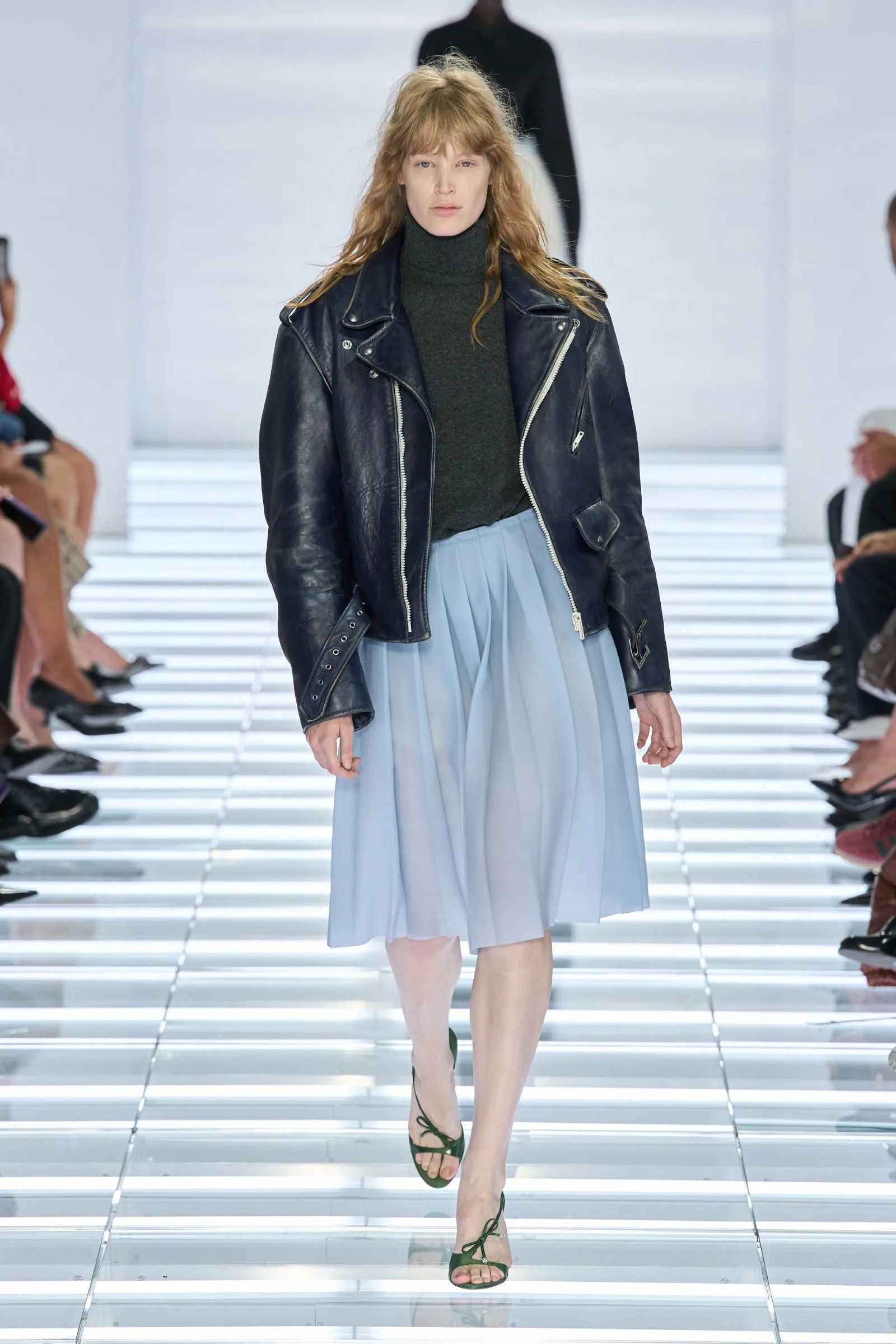
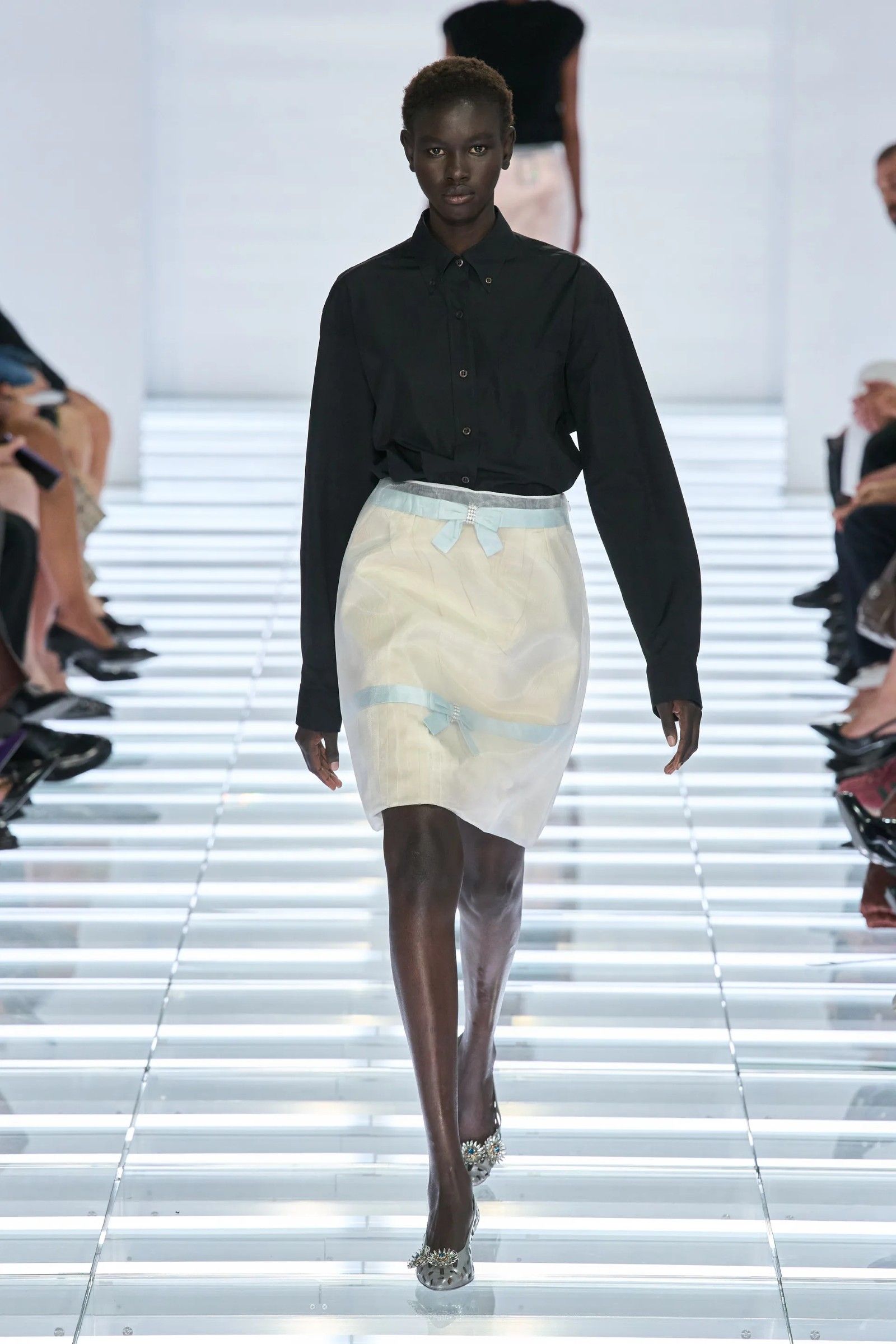
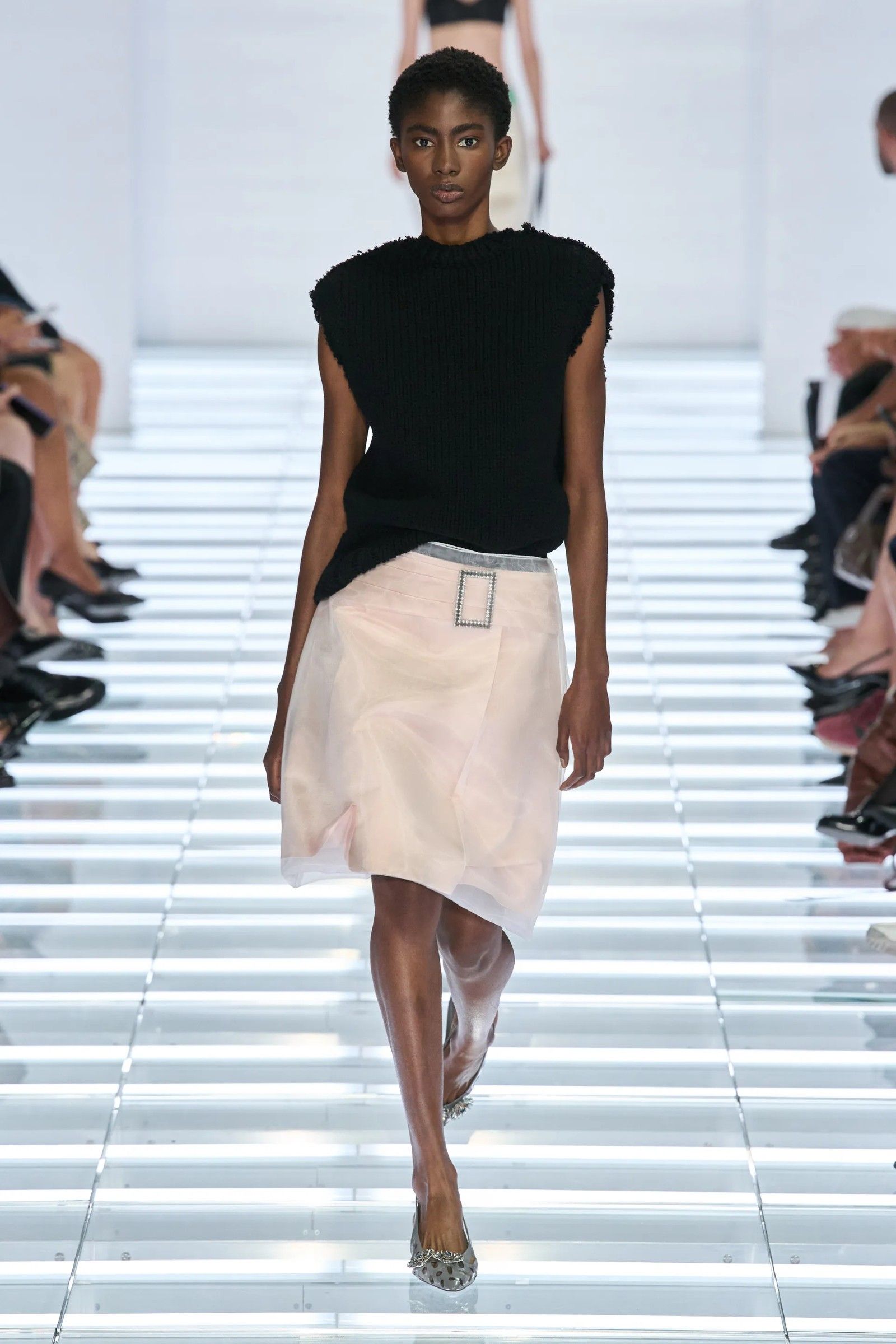
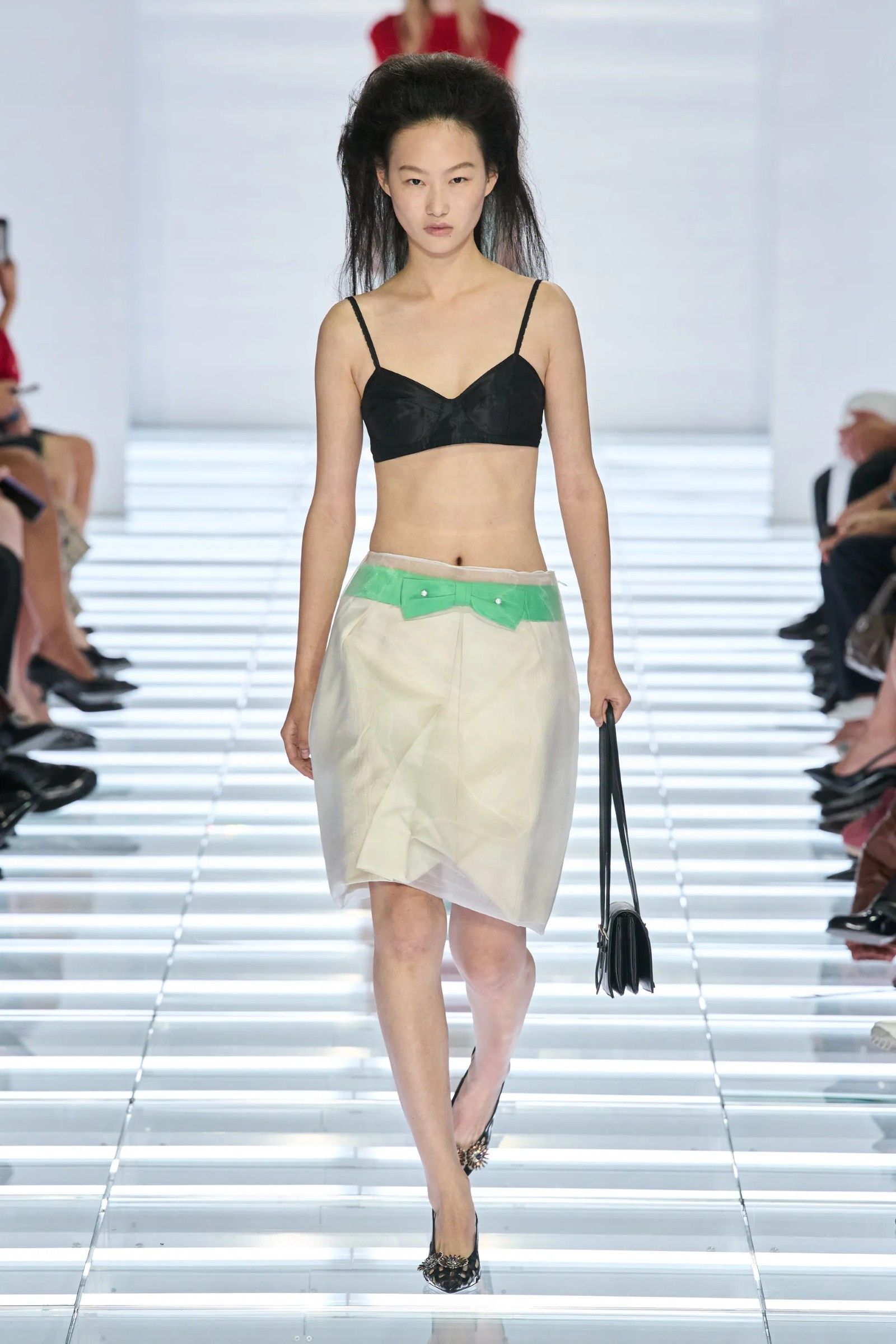
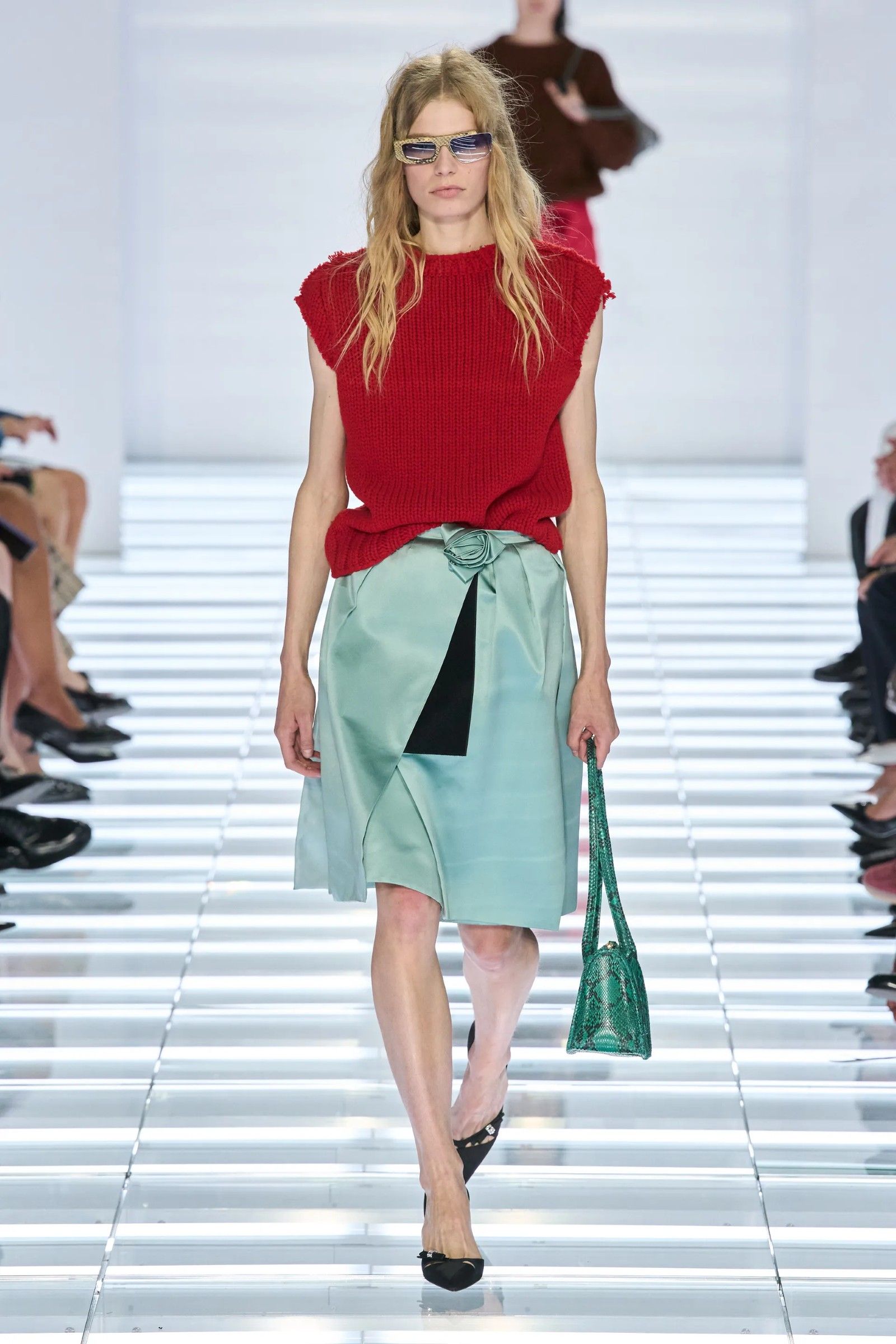
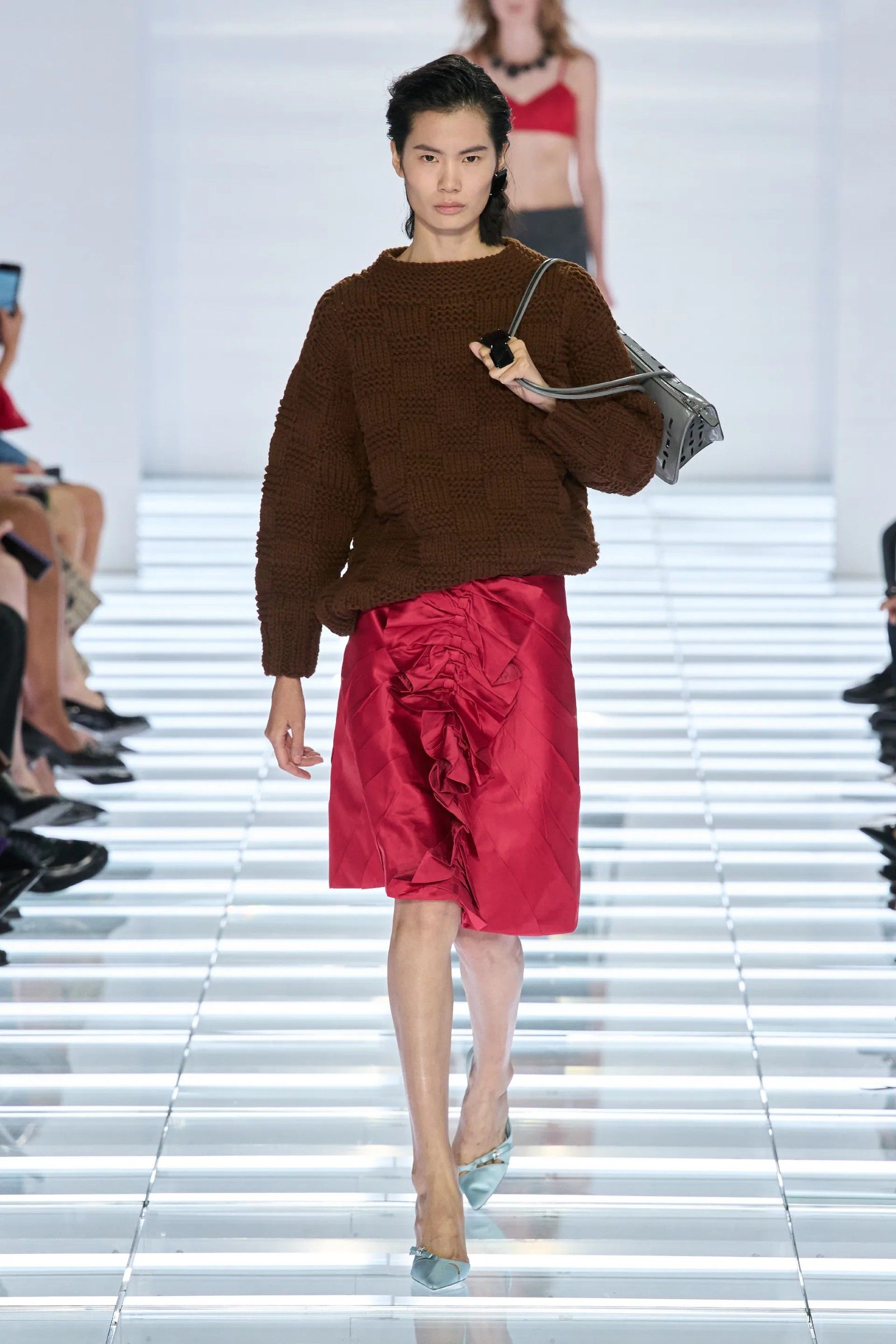
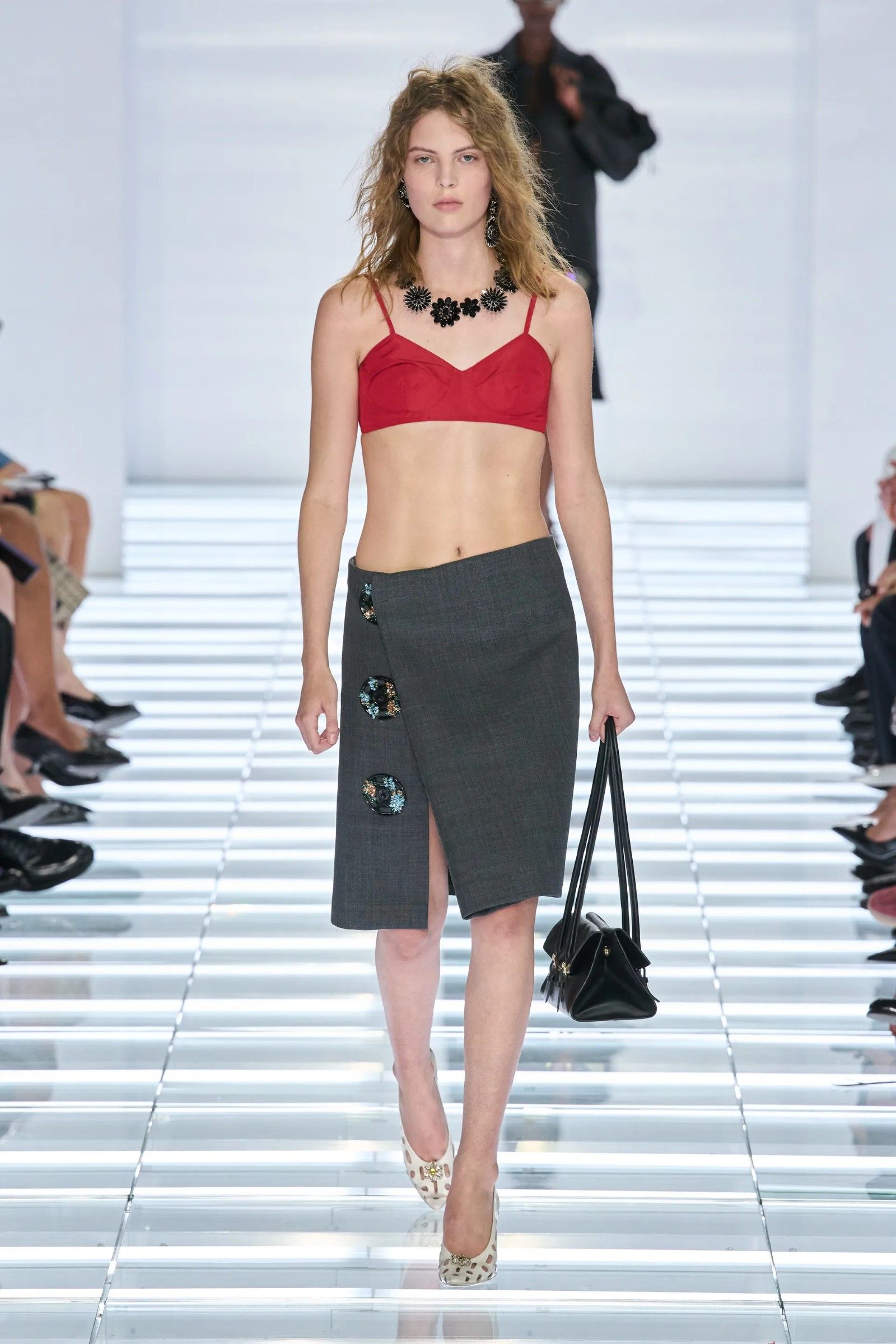
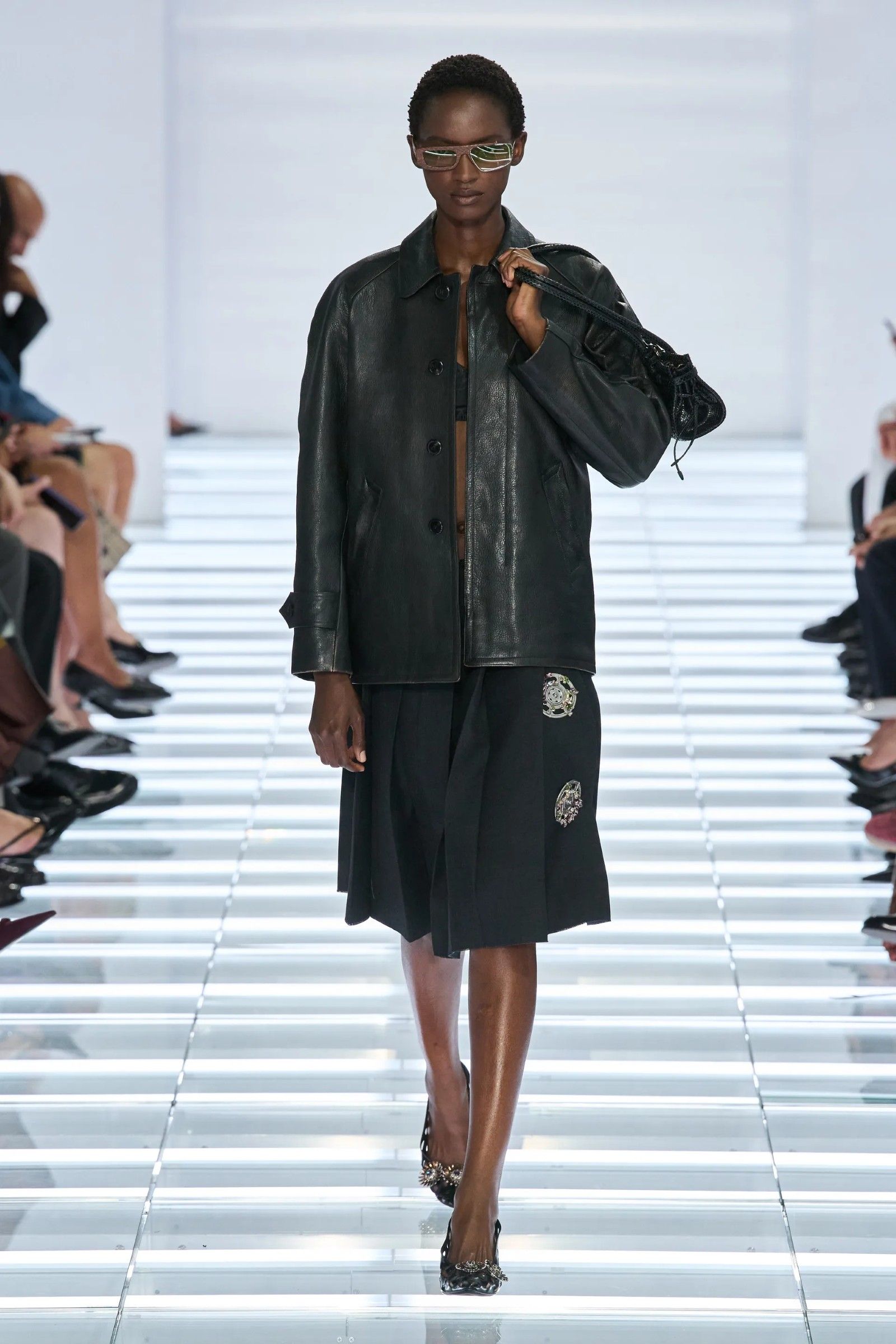
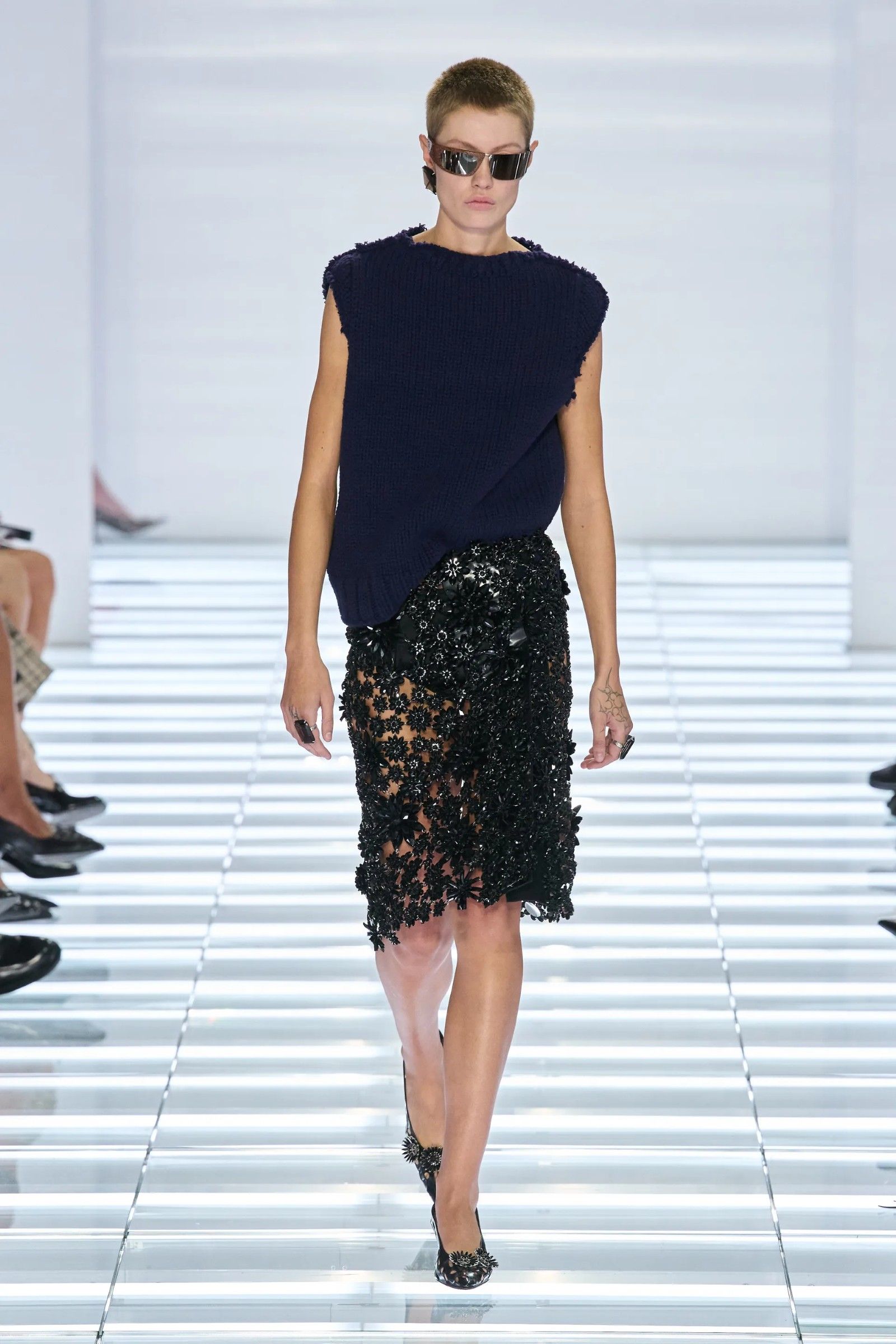
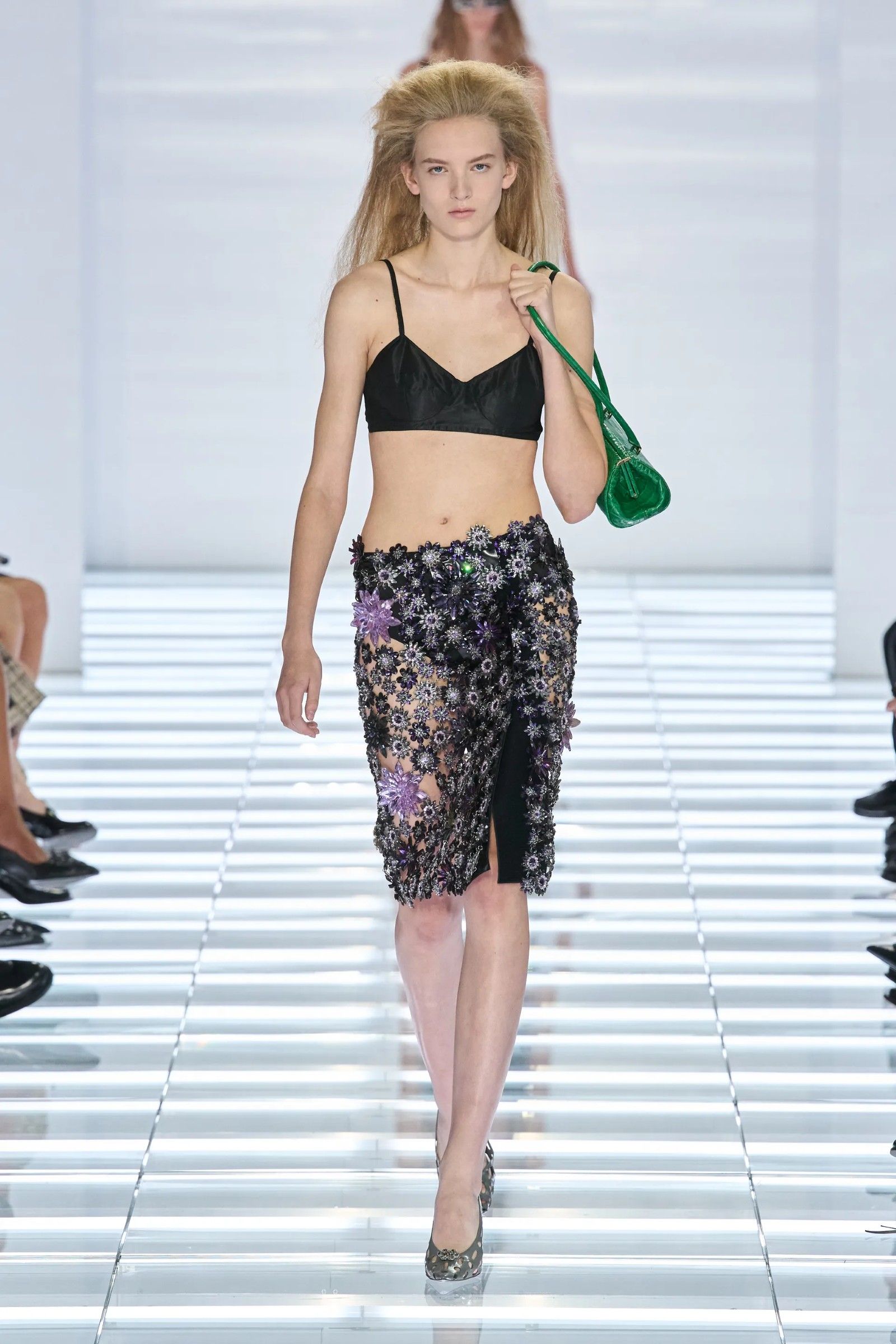
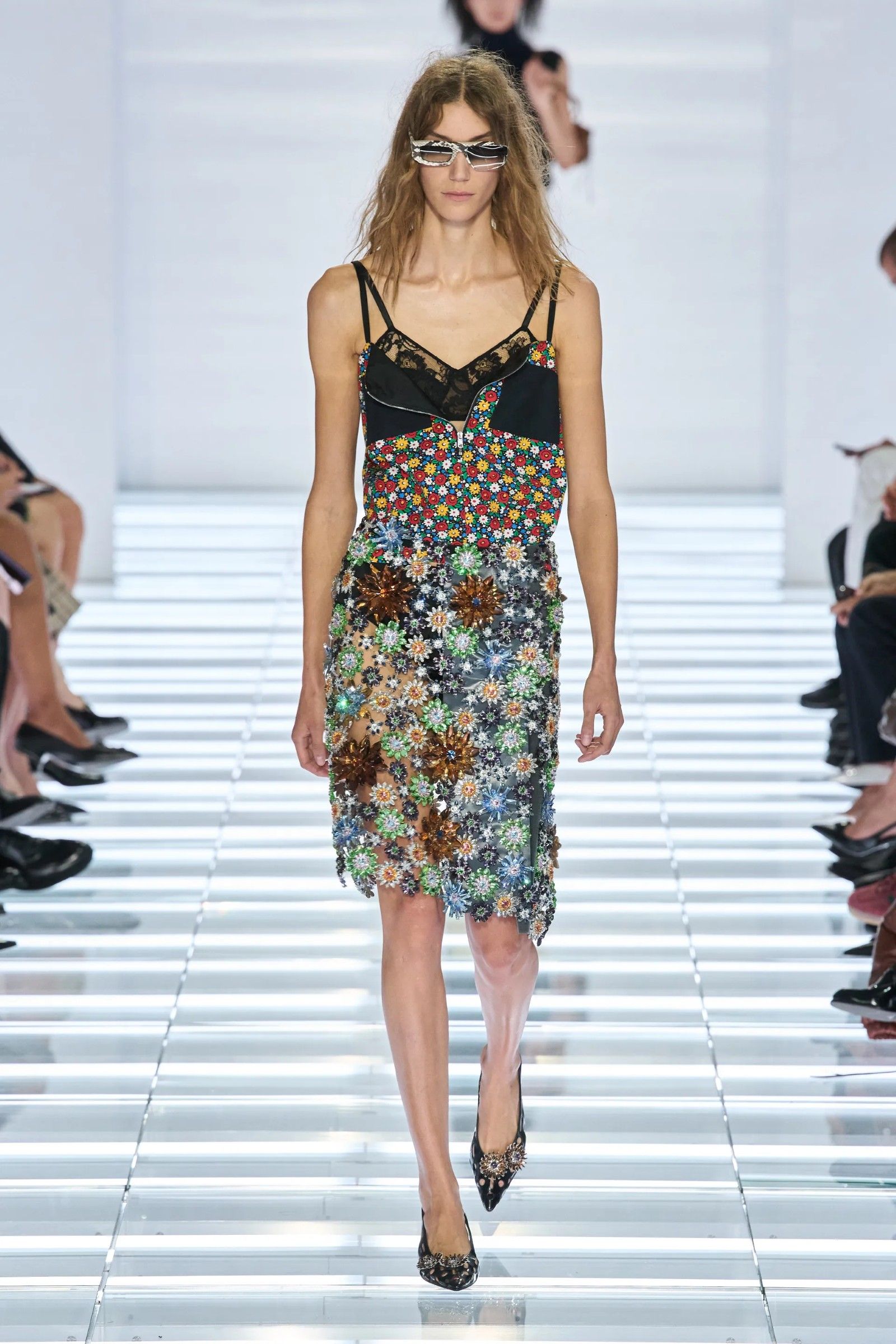
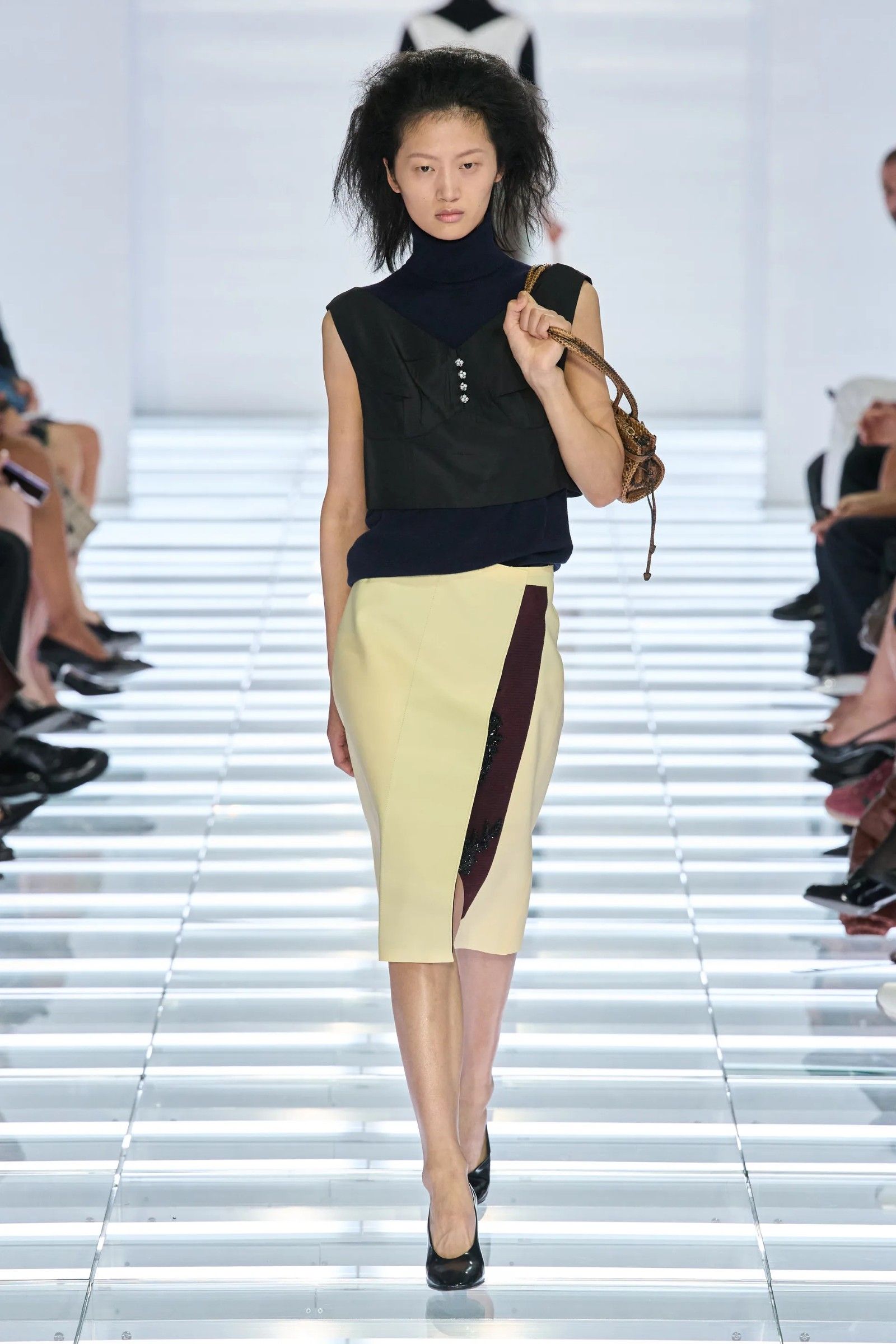
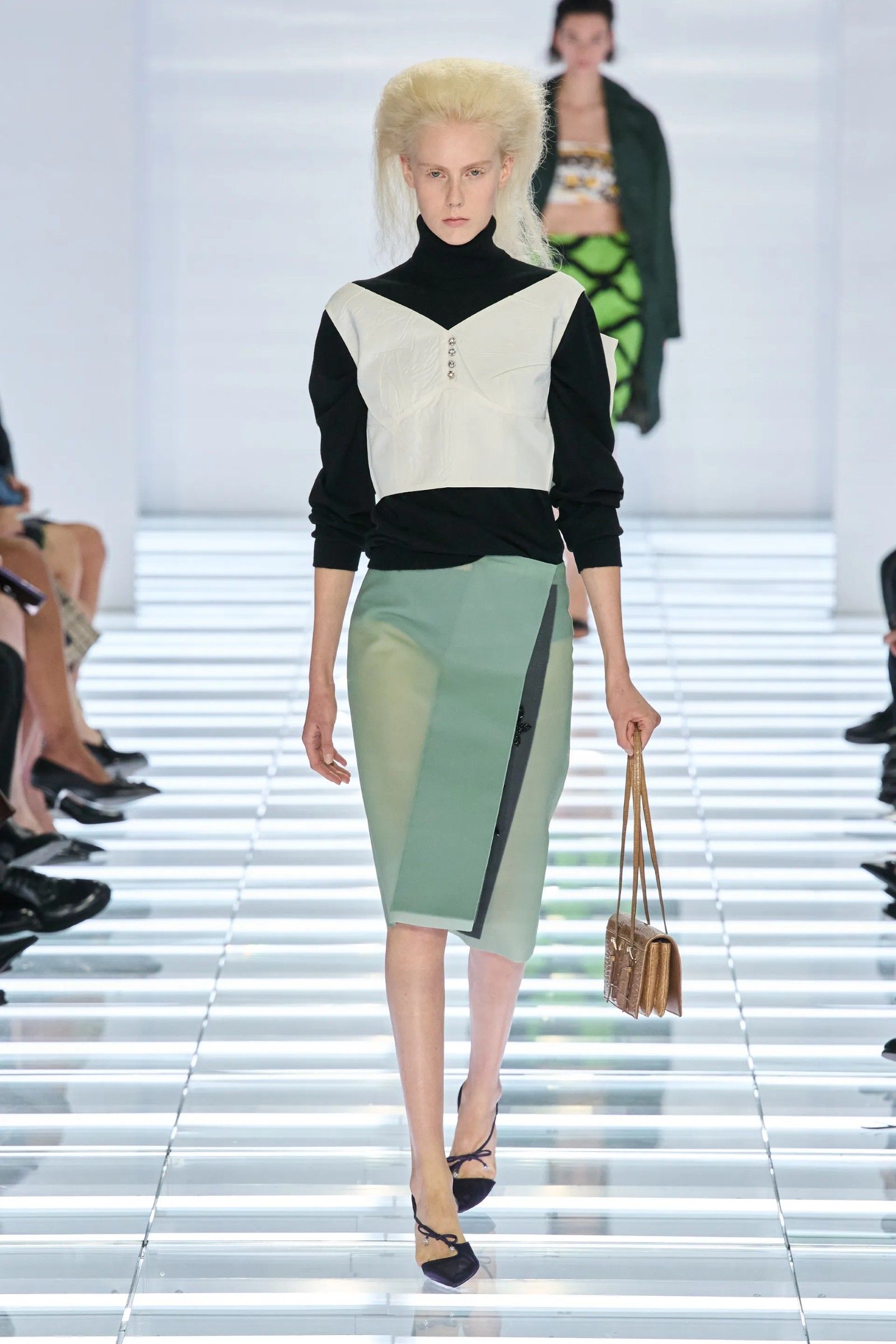
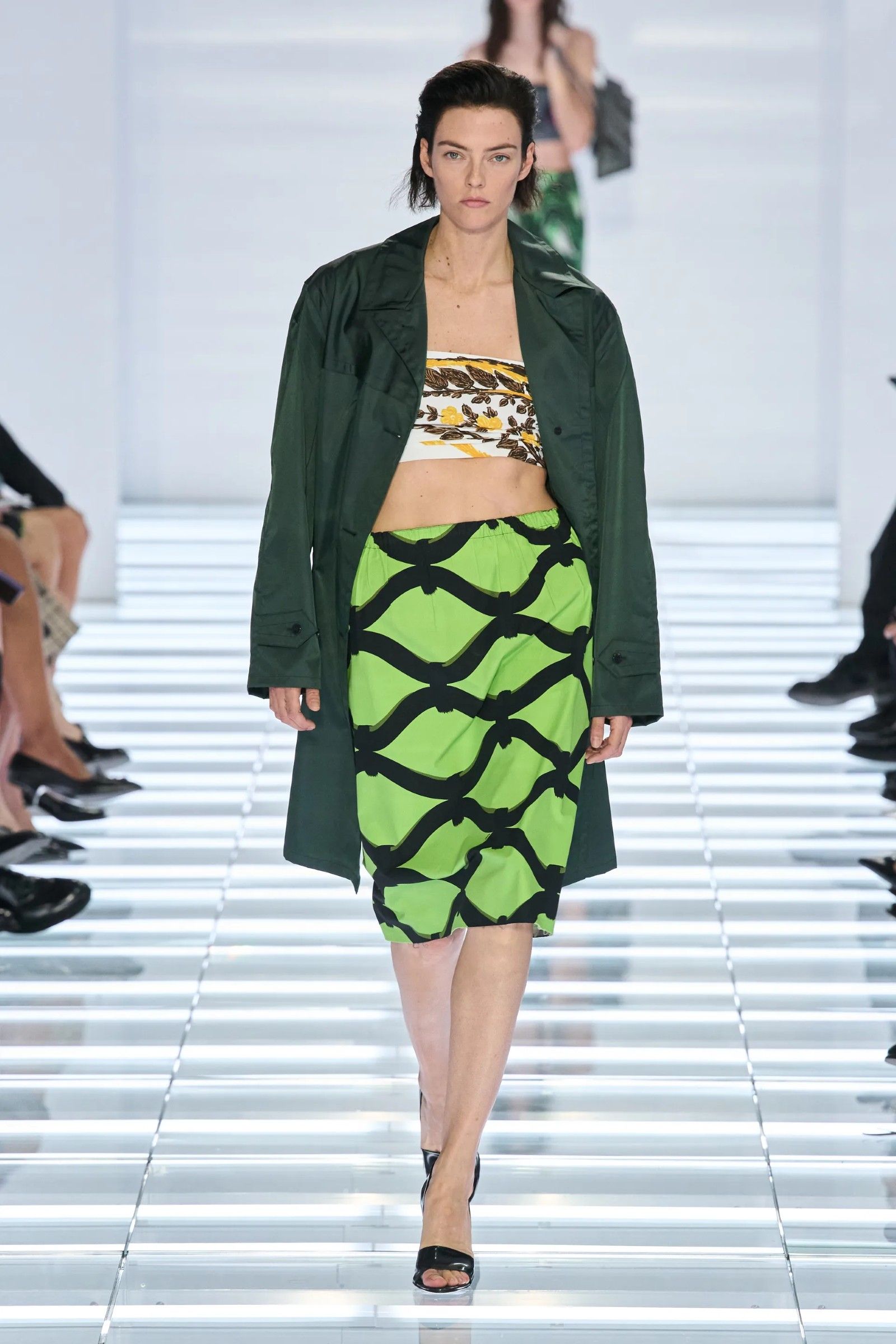
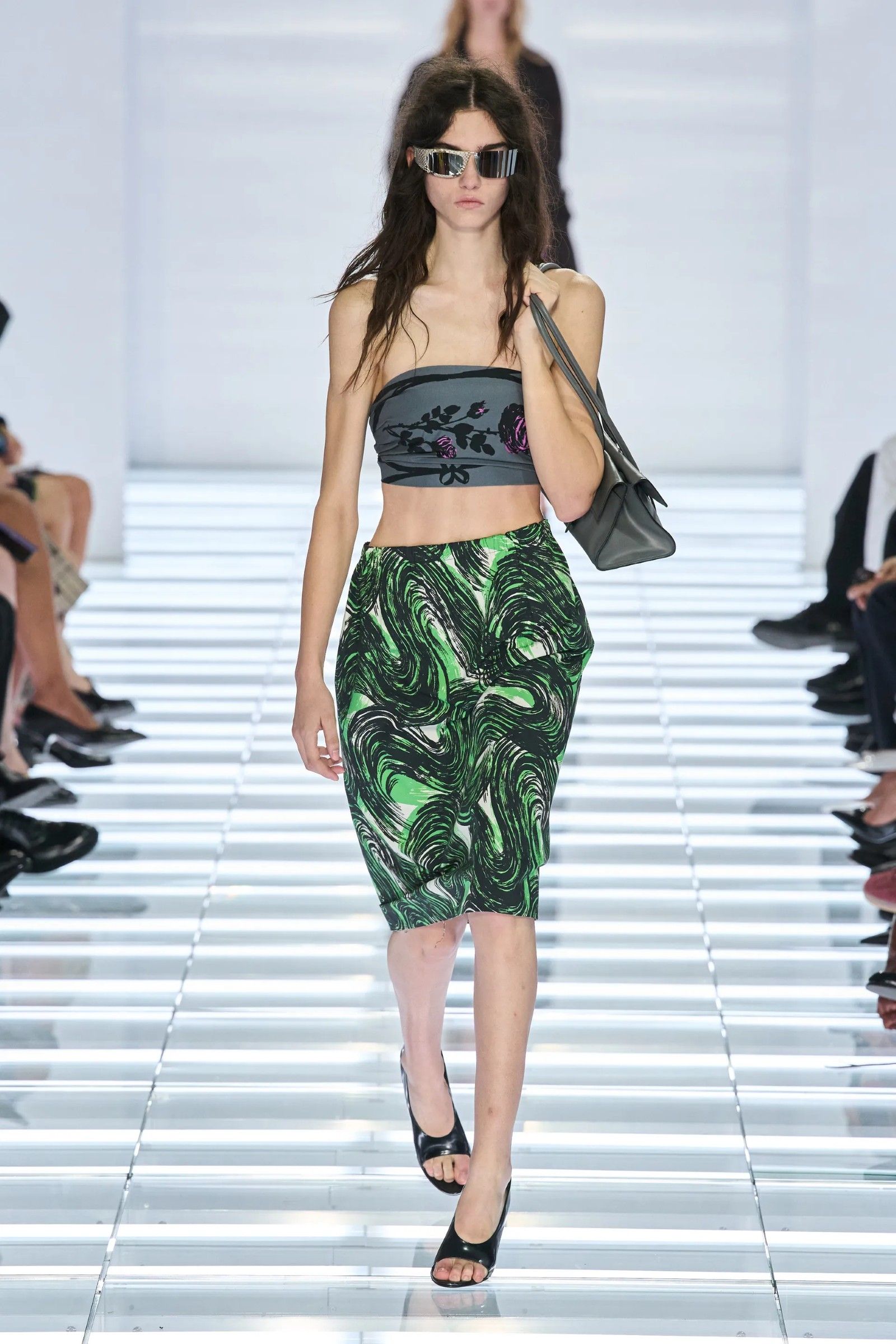
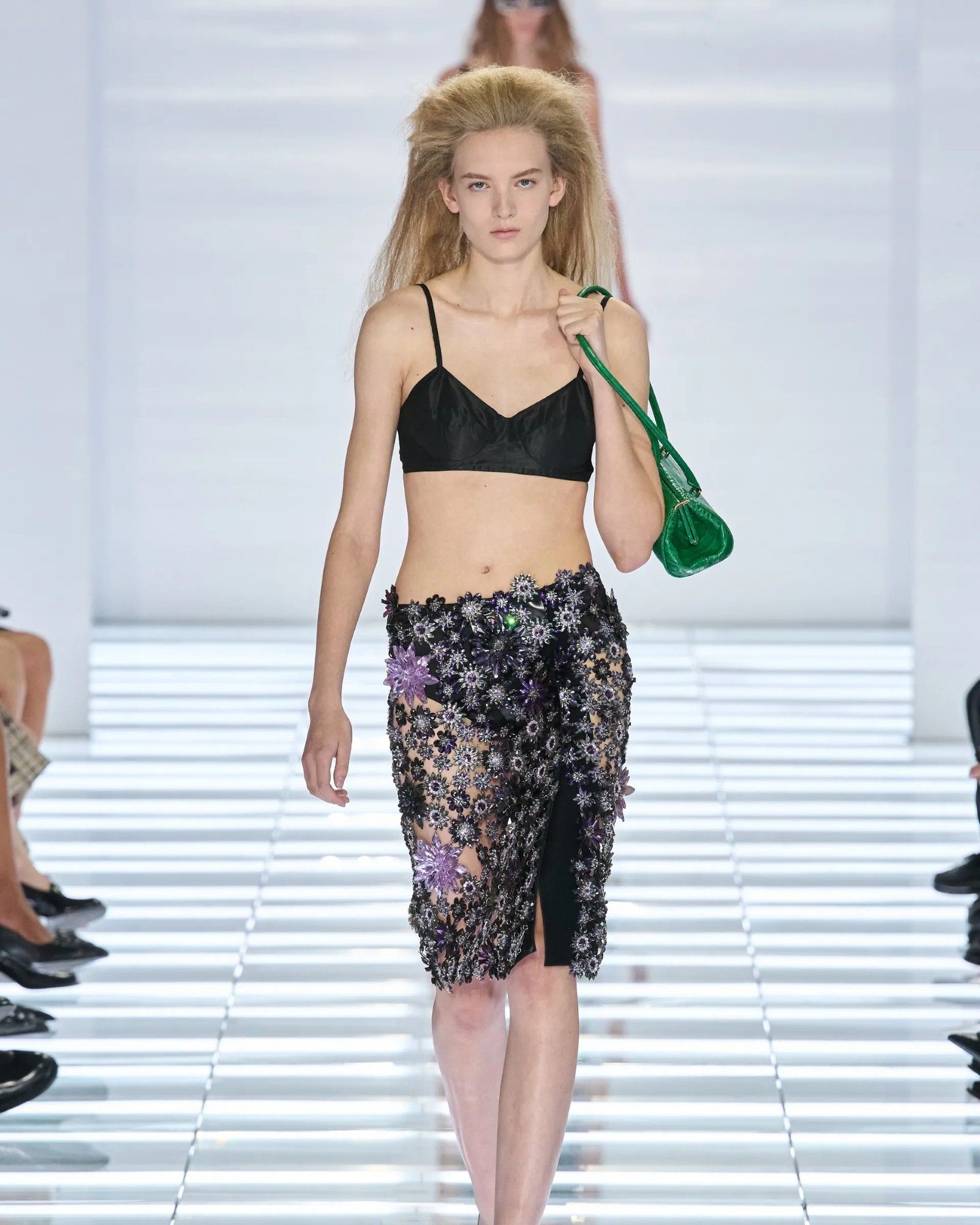
But when the top narrows and disappears, the protagonist becomes the skirt, whose shape and construction was perhaps the conceptual backbone of the show. Many of these skirts were traditional but adorned with a contrasting colored velcro band used both as a futuristic, functional closure and as a base for crystal embellishments, or with the internal crinolines left exposed. Some skirts had slits fastened with jewel buttons that doubled as decoration; others were made of delicate crystal flowers as fine as lace; still others were plain and bow-trimmed but appeared enclosed within another skirt of transparent fabric.
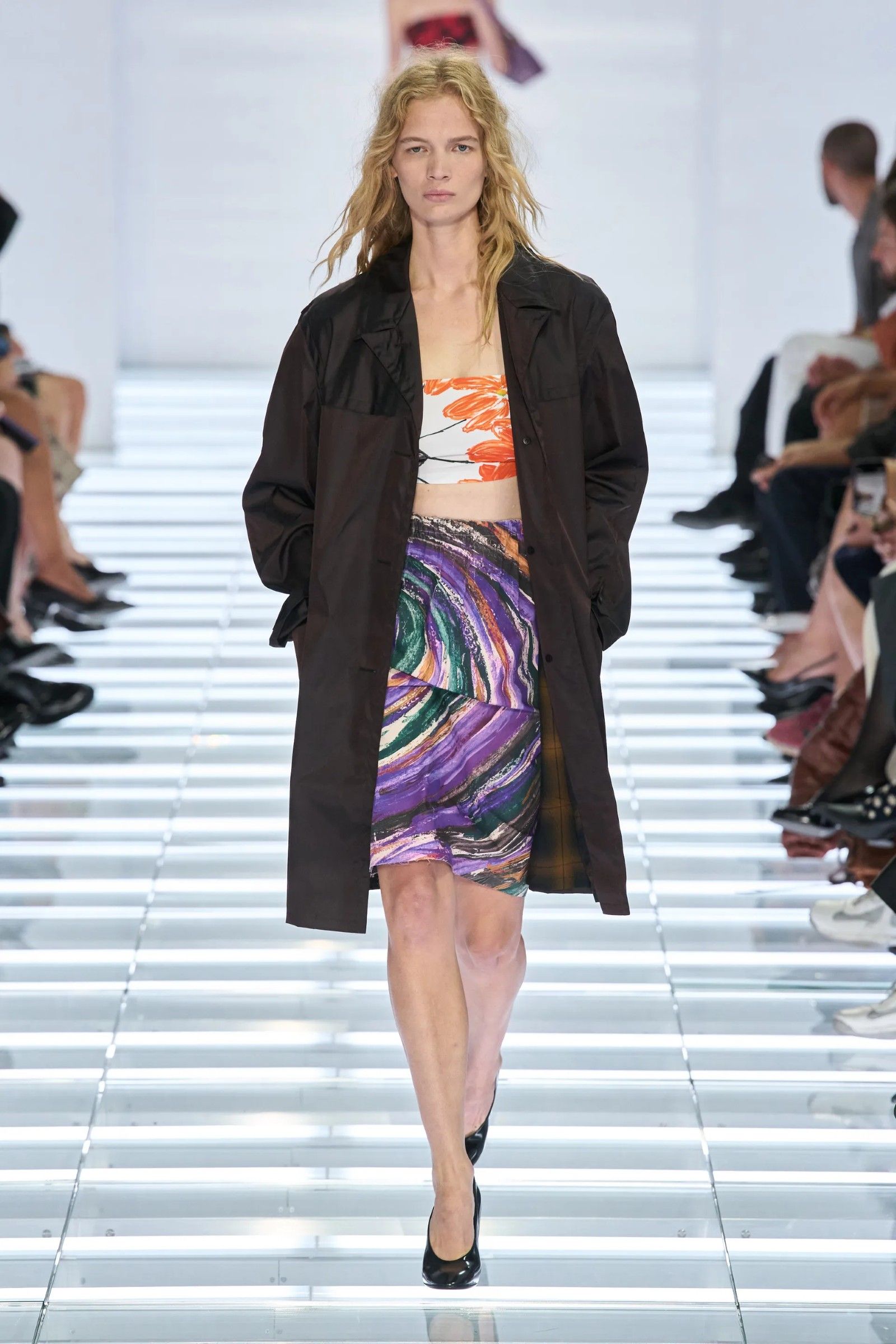
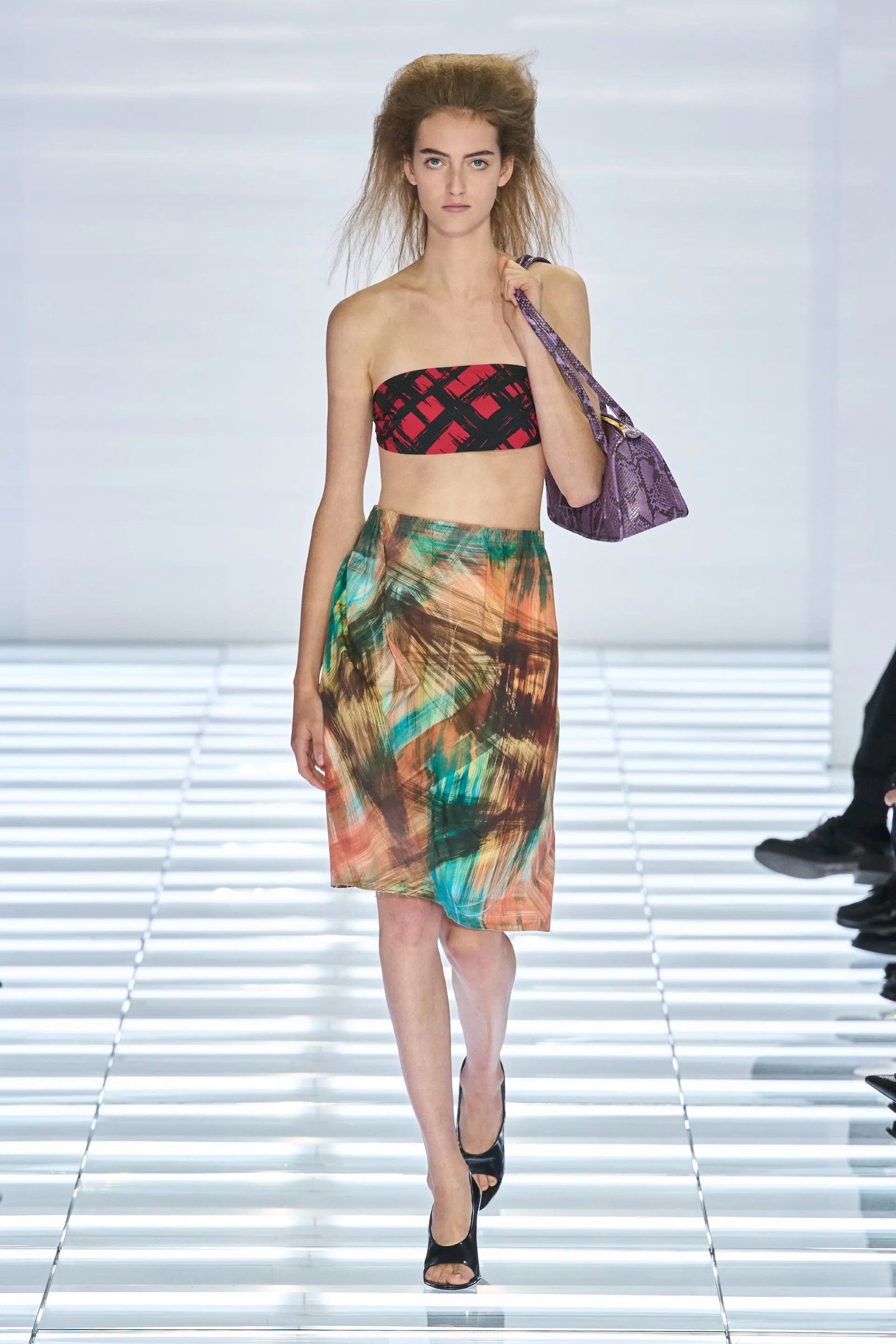
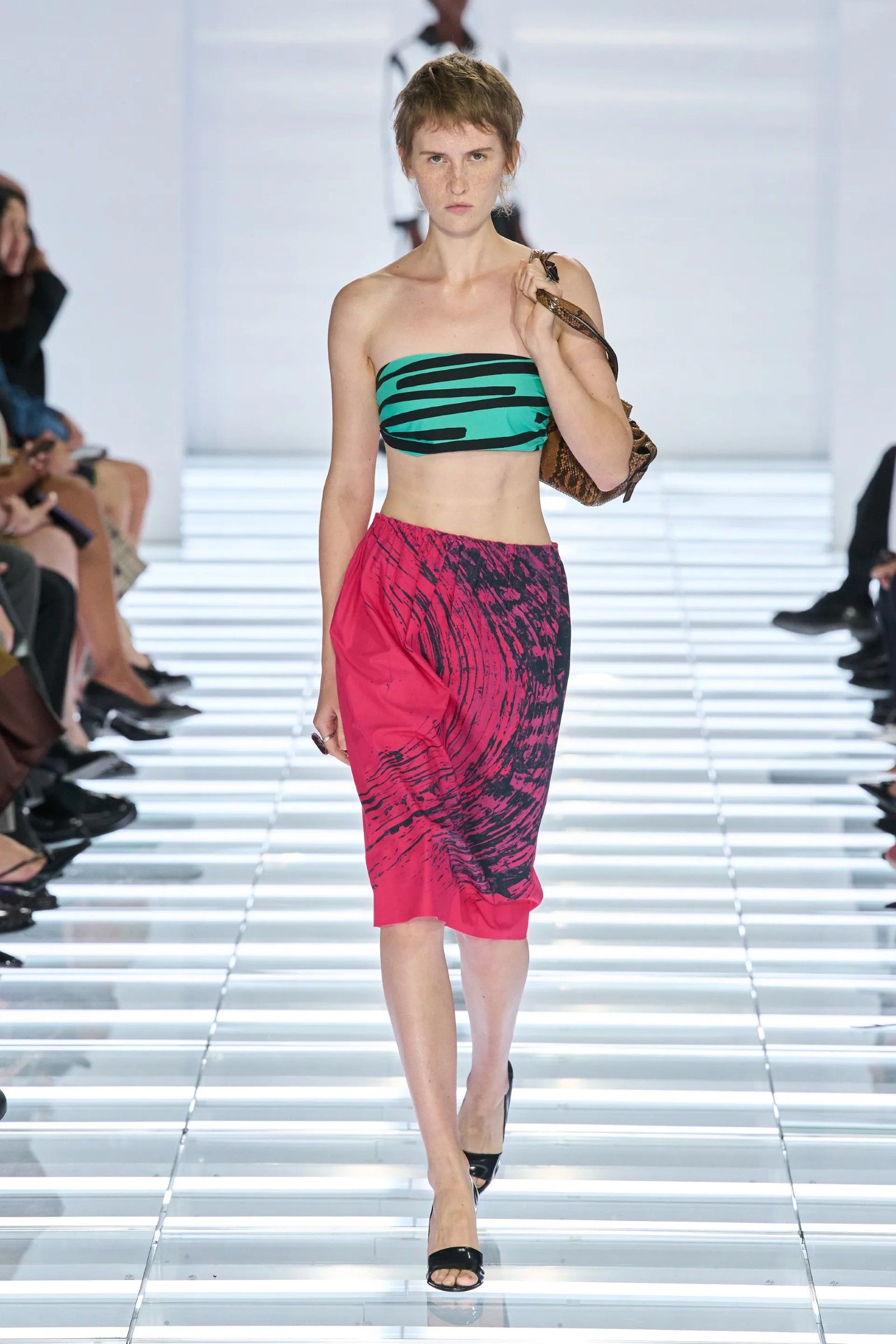
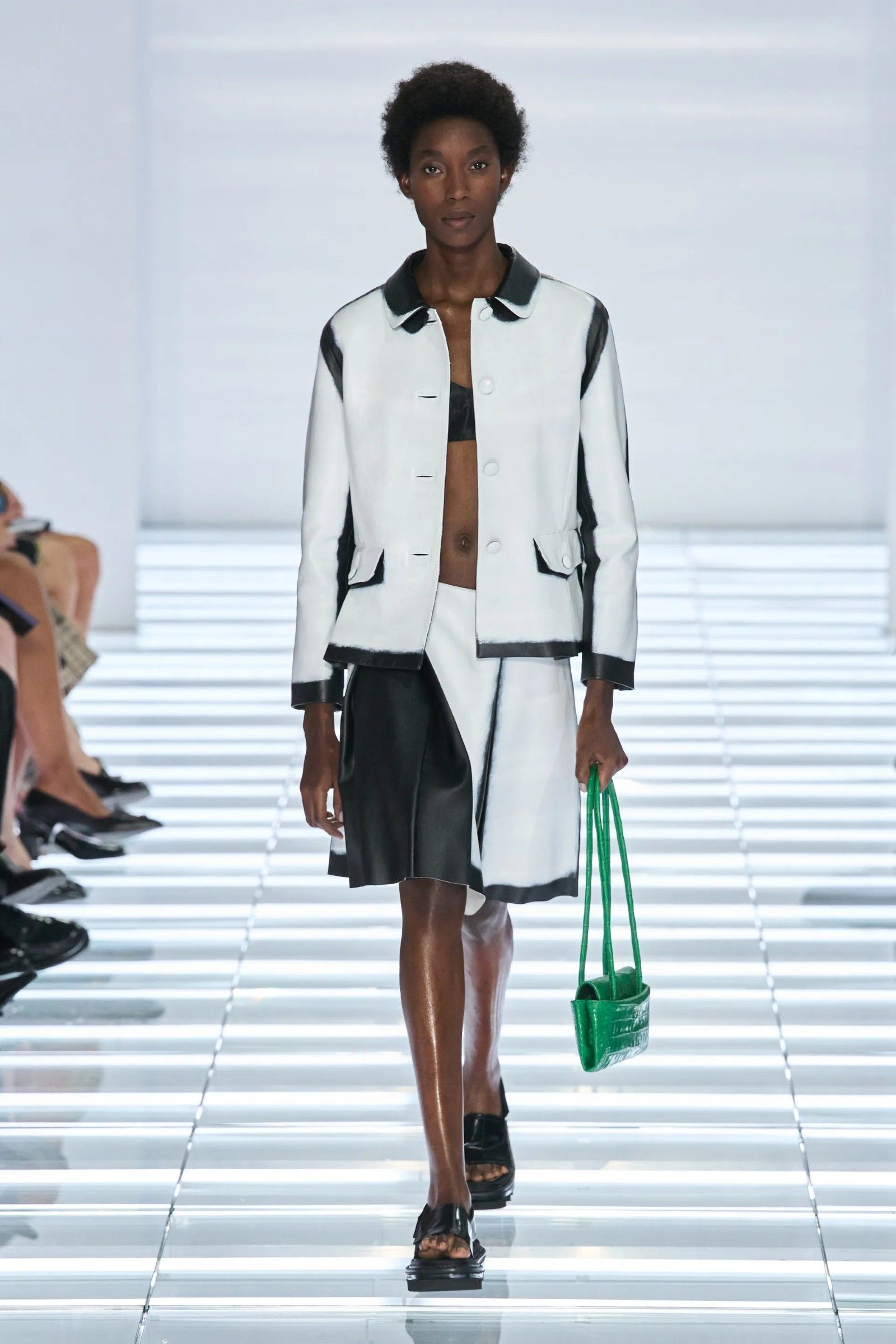
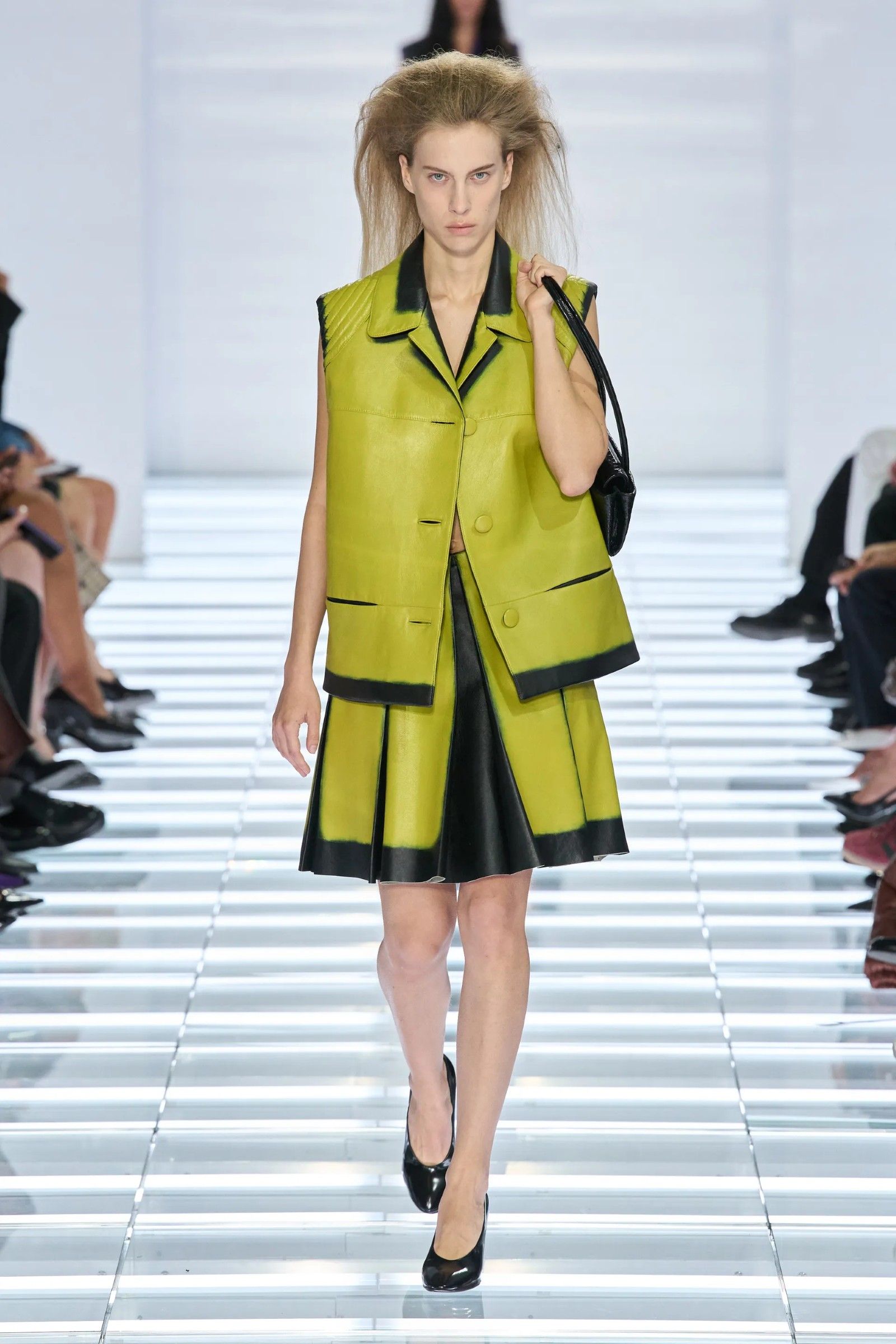
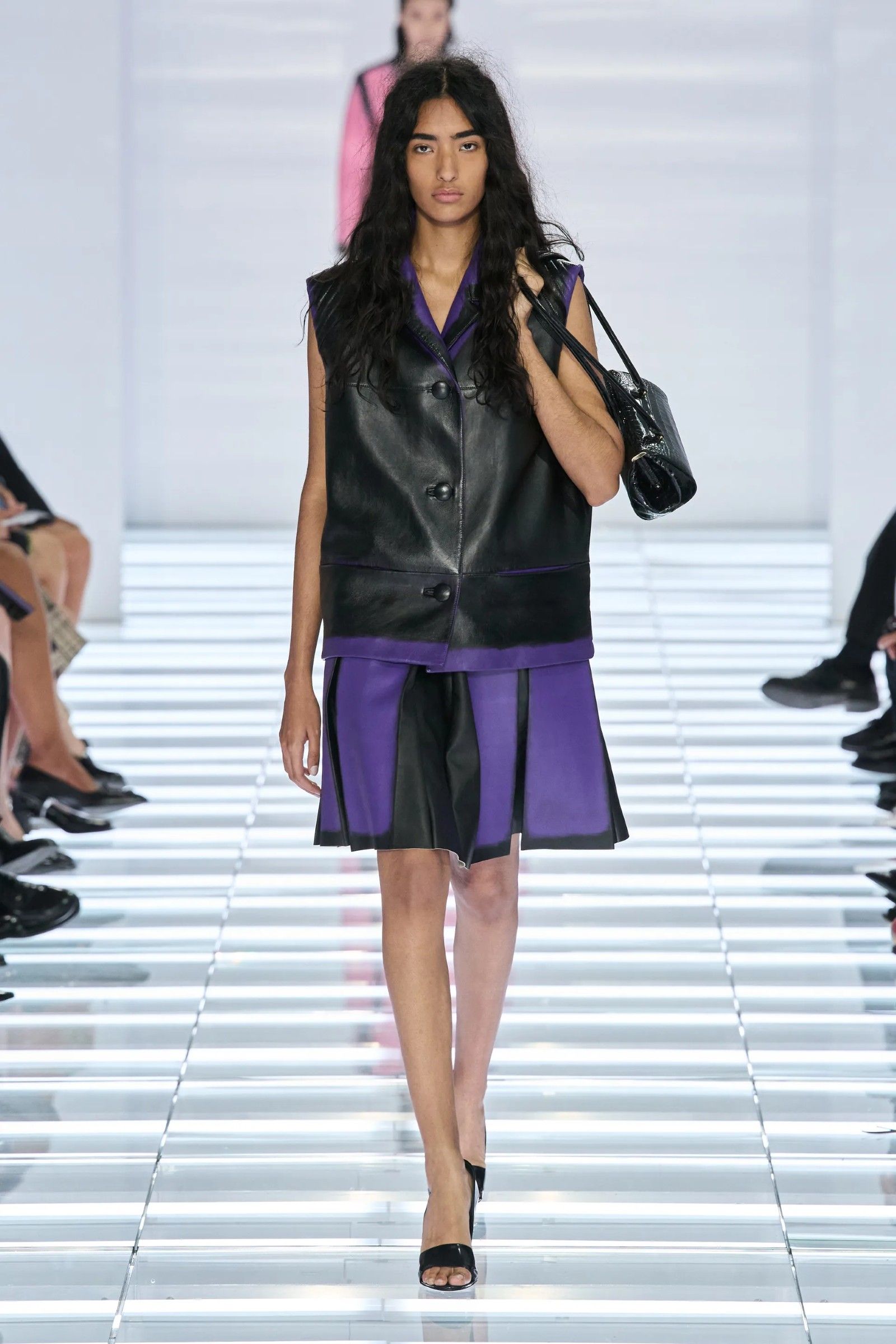
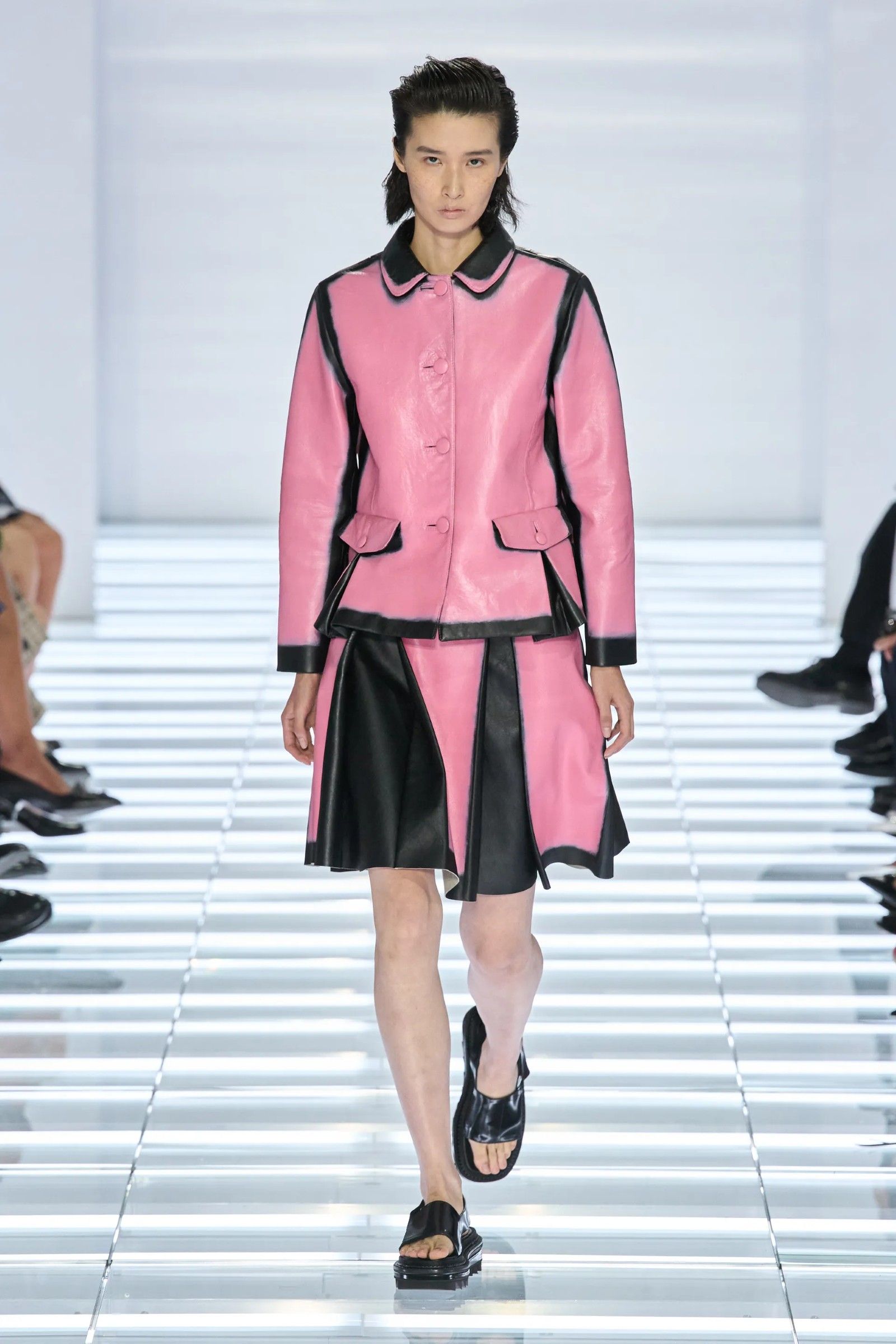
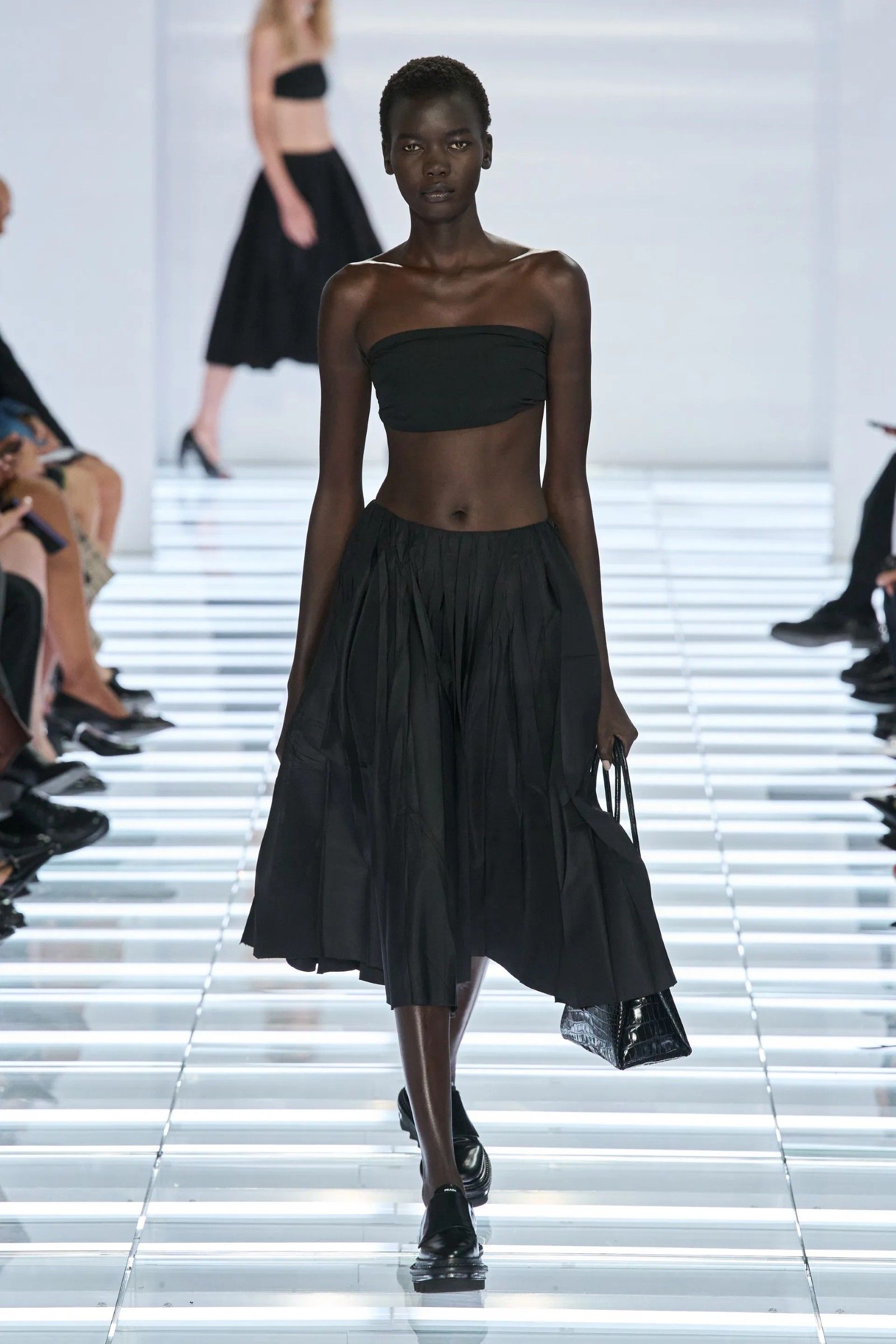
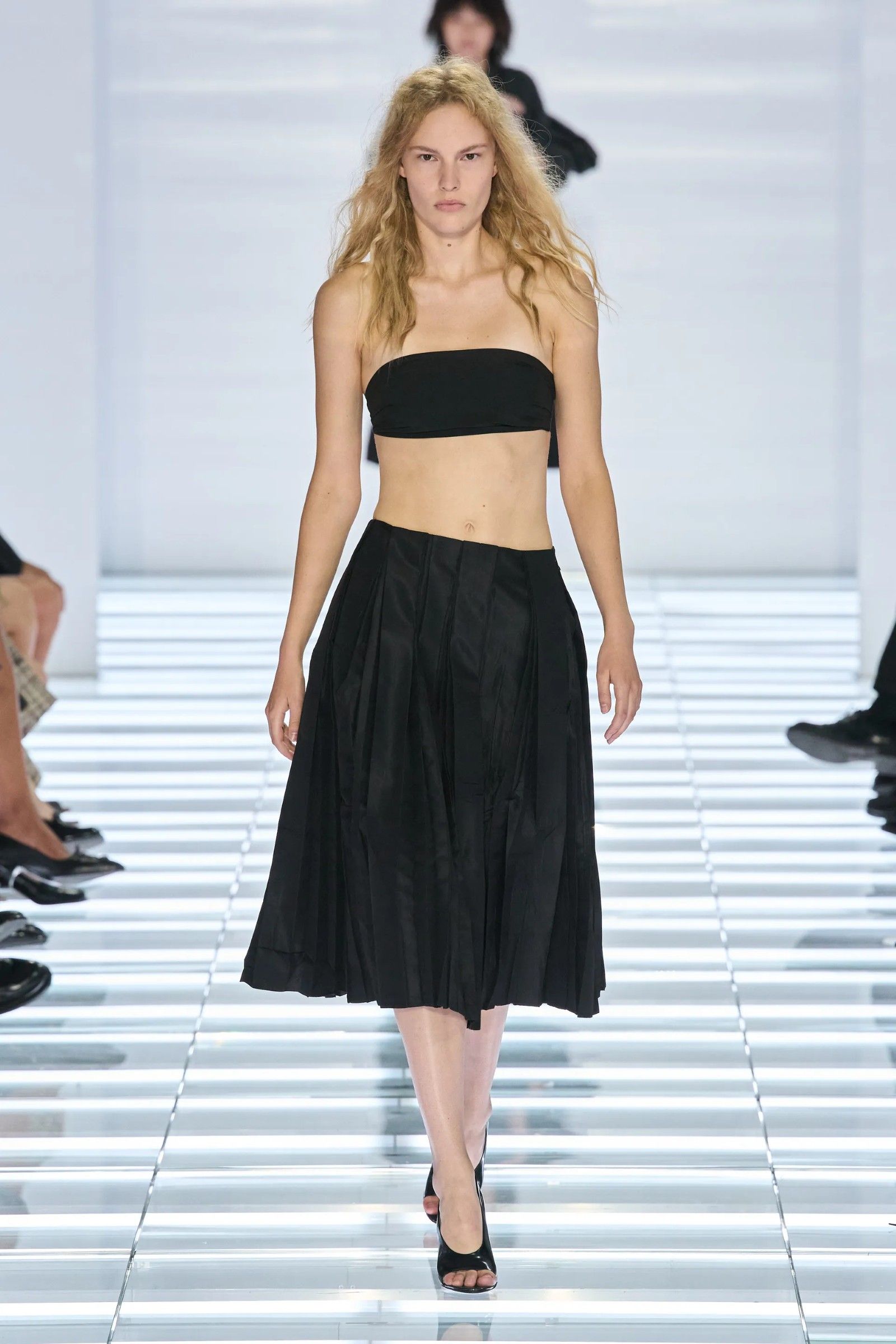
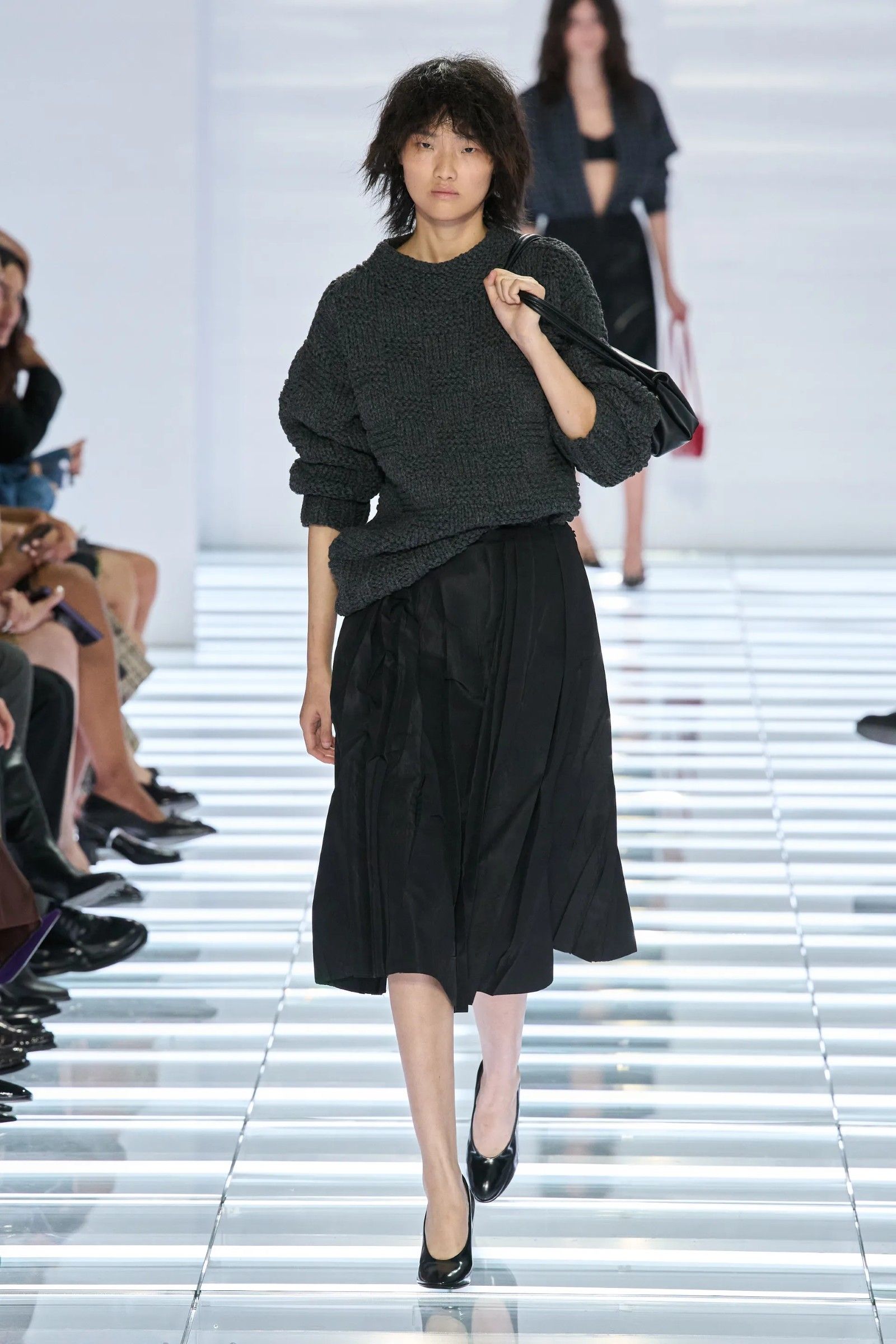
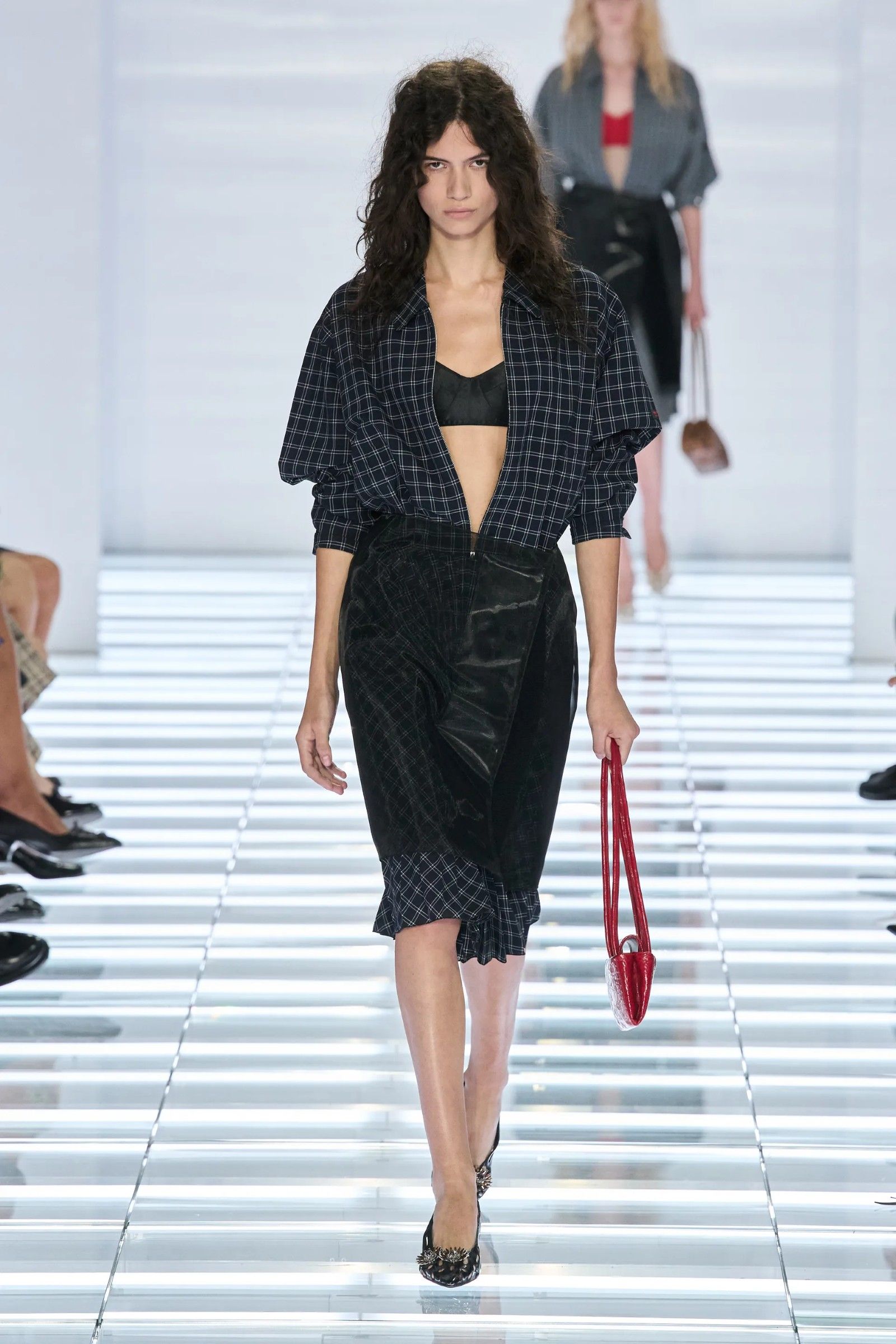
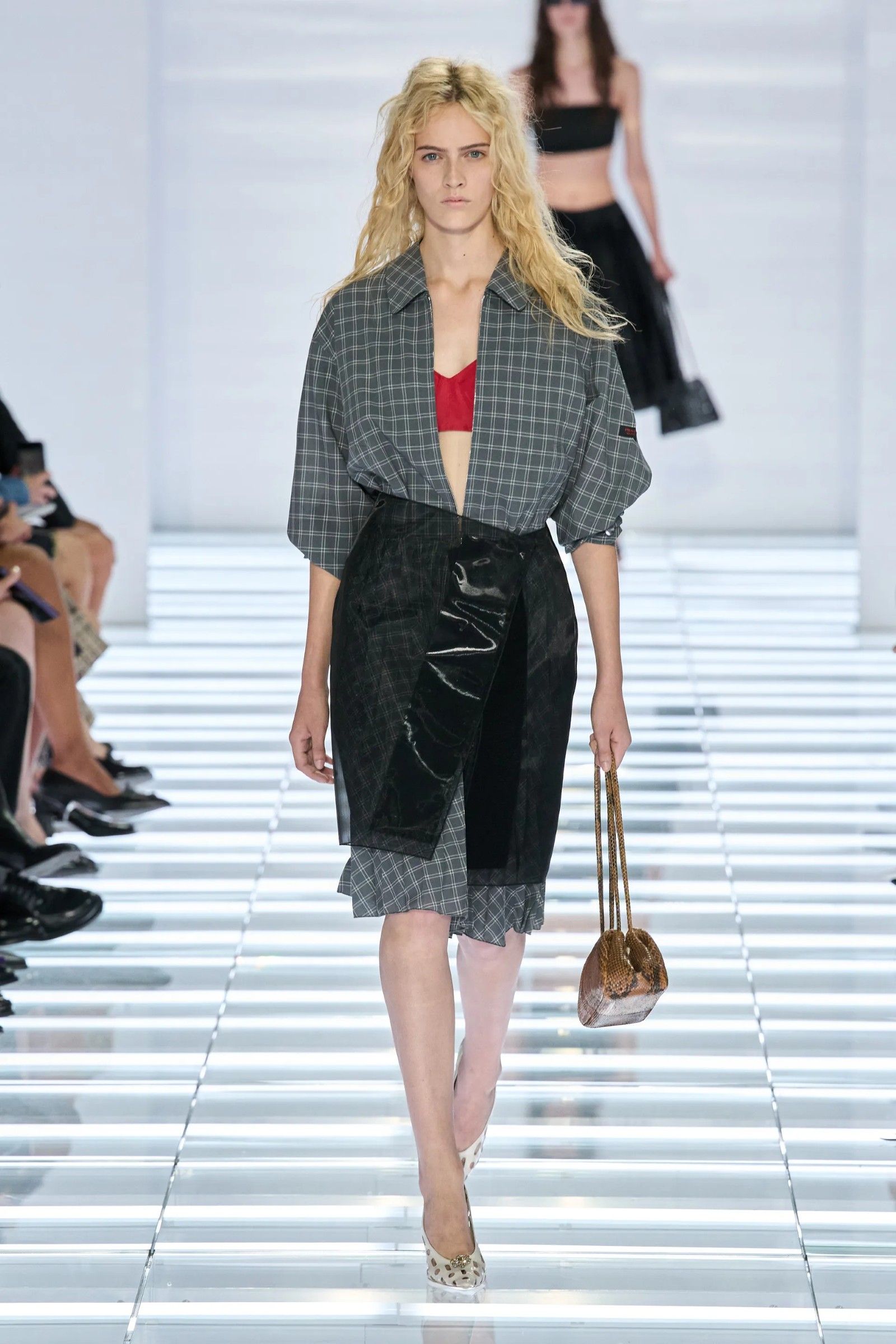
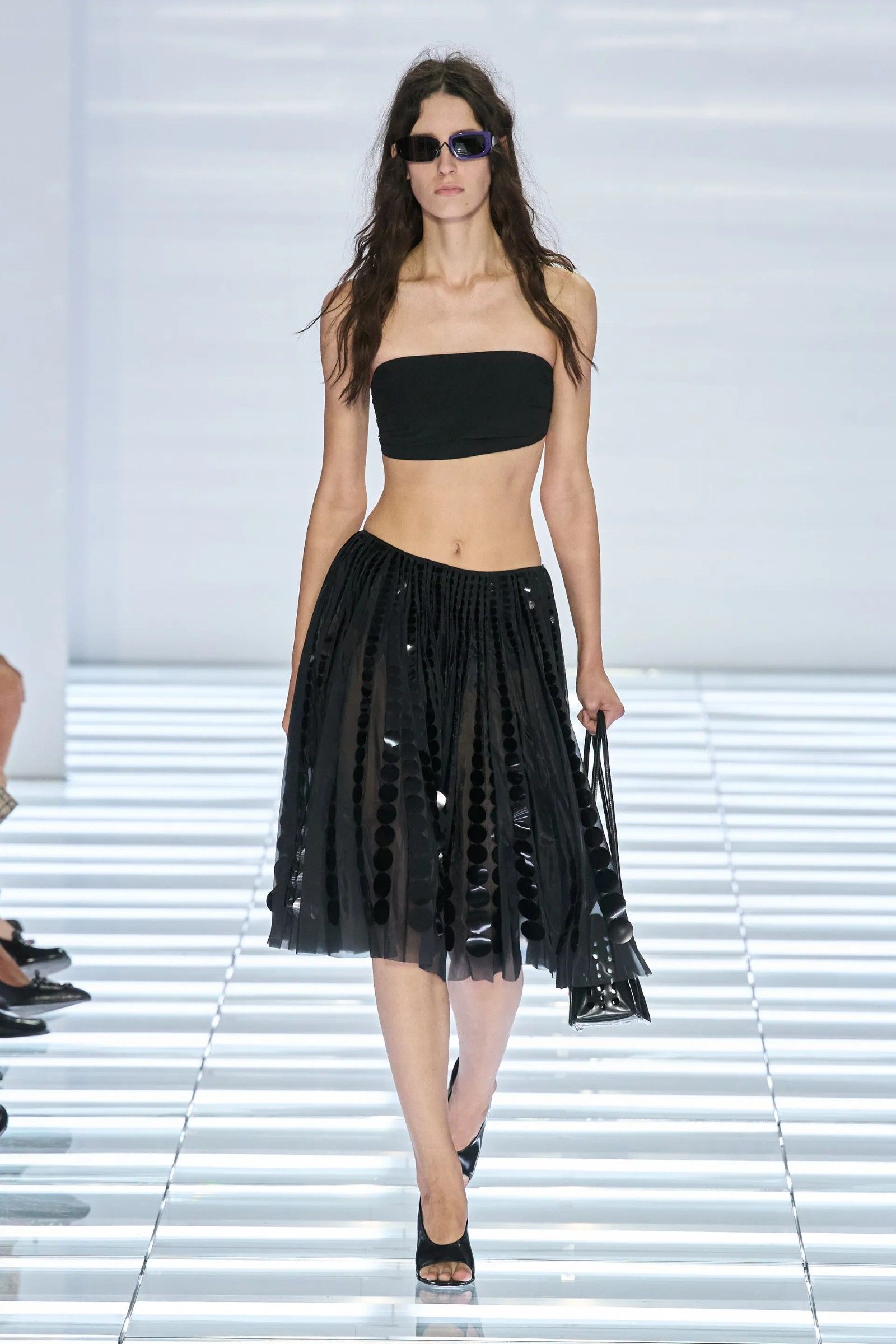
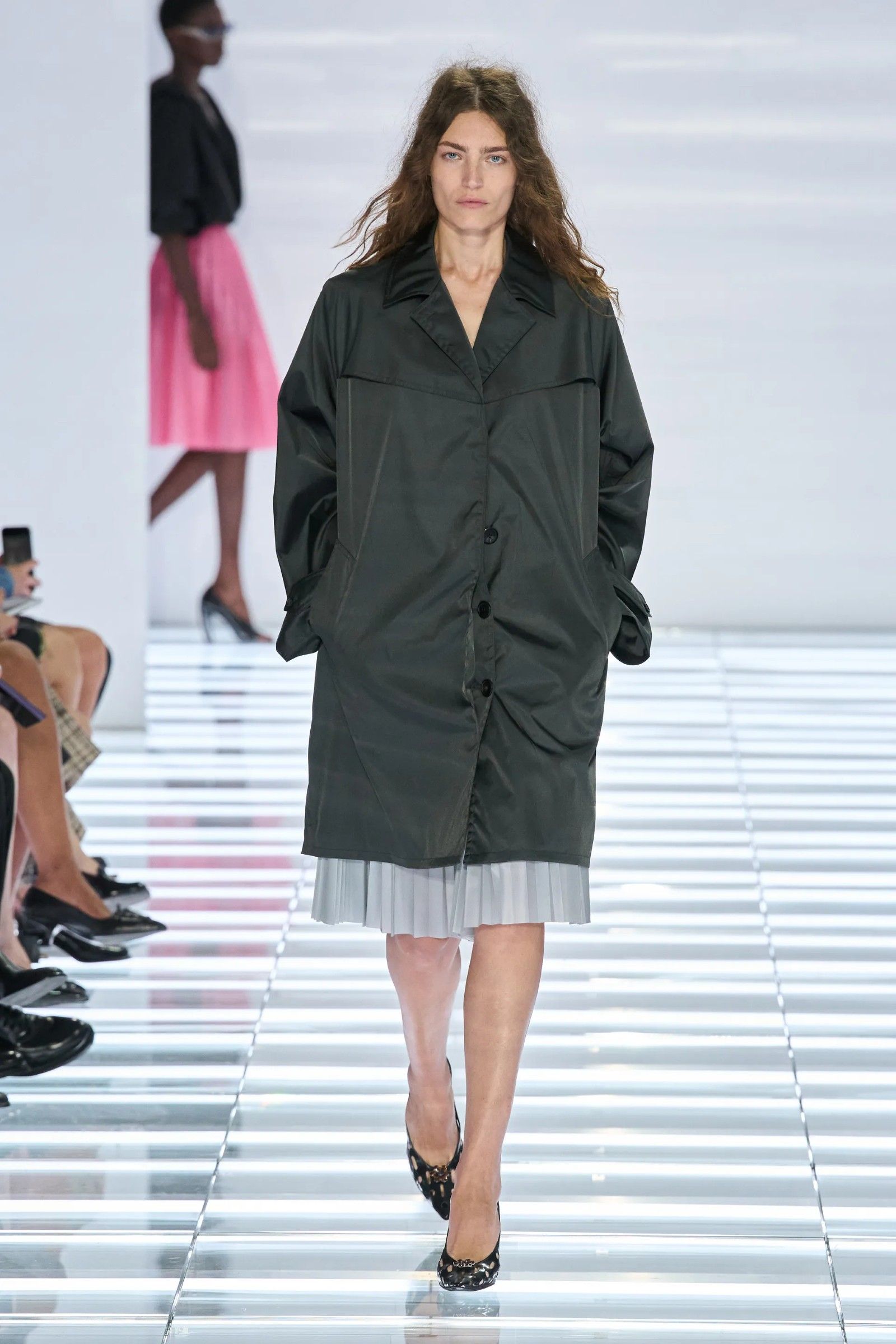
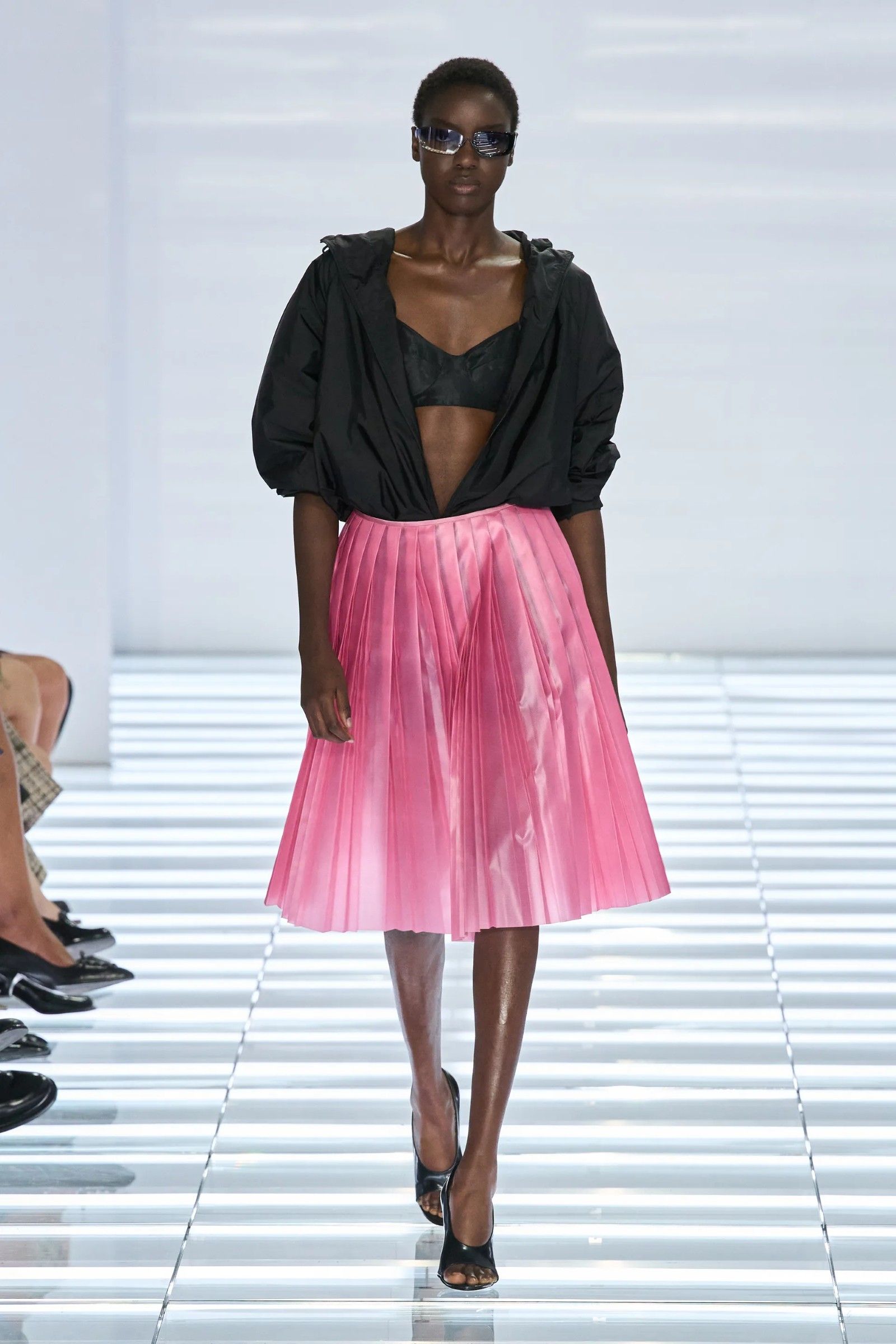
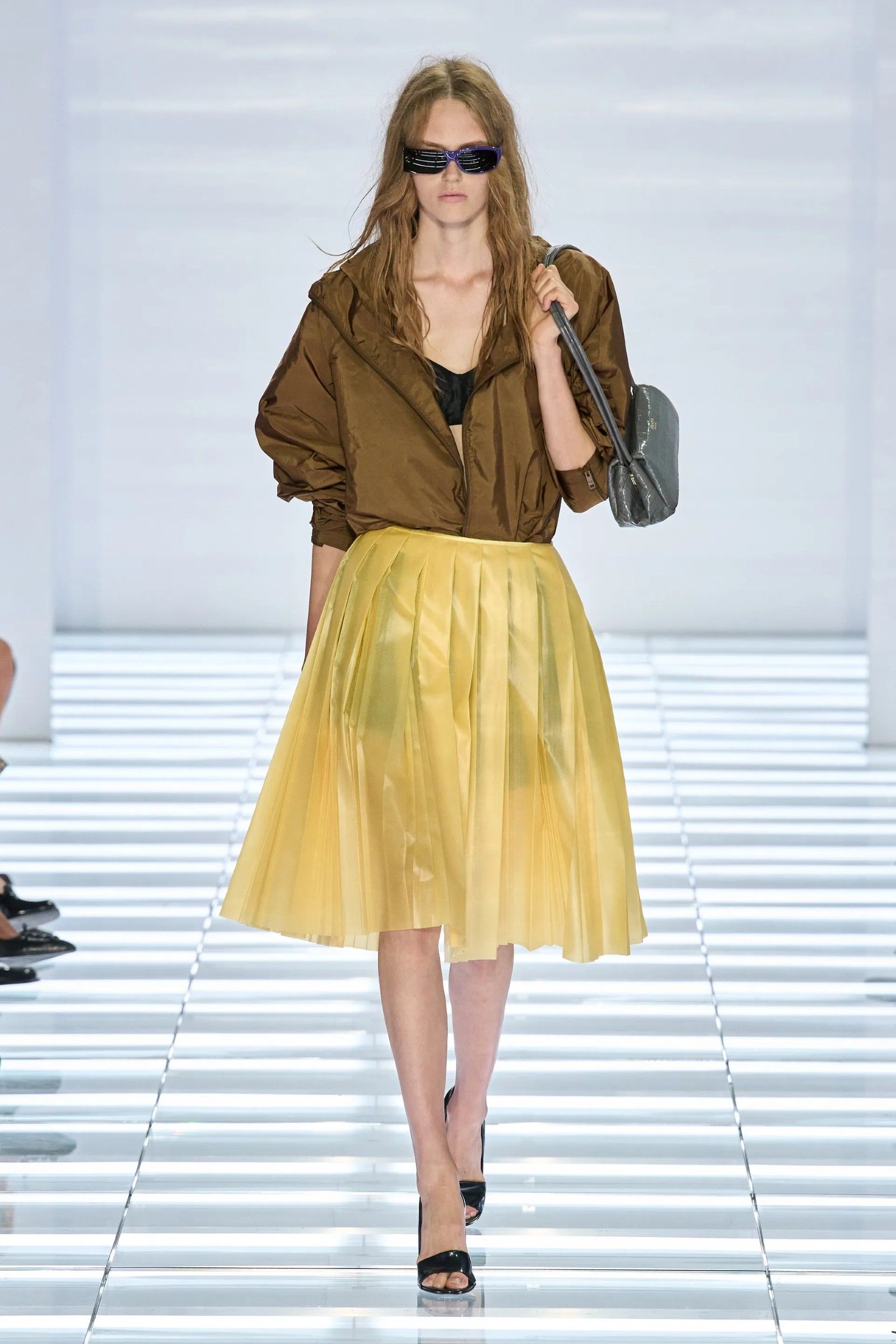
The most interesting pieces, which echoed the science-fictional tones discussed at the outset, were simple pleated skirts made of synthetic material. Others, also synthetic, closed over long shirt-like robes (the bra always visible, incidentally), while the most conceptual ones were meant to be gripped in the hand while walking, so that the wearer's gesture altered their shape. All had a fairly severe and traditional silhouette—very 1950s in some cases—yet were transfigured in substance and structure while their form remained identical.
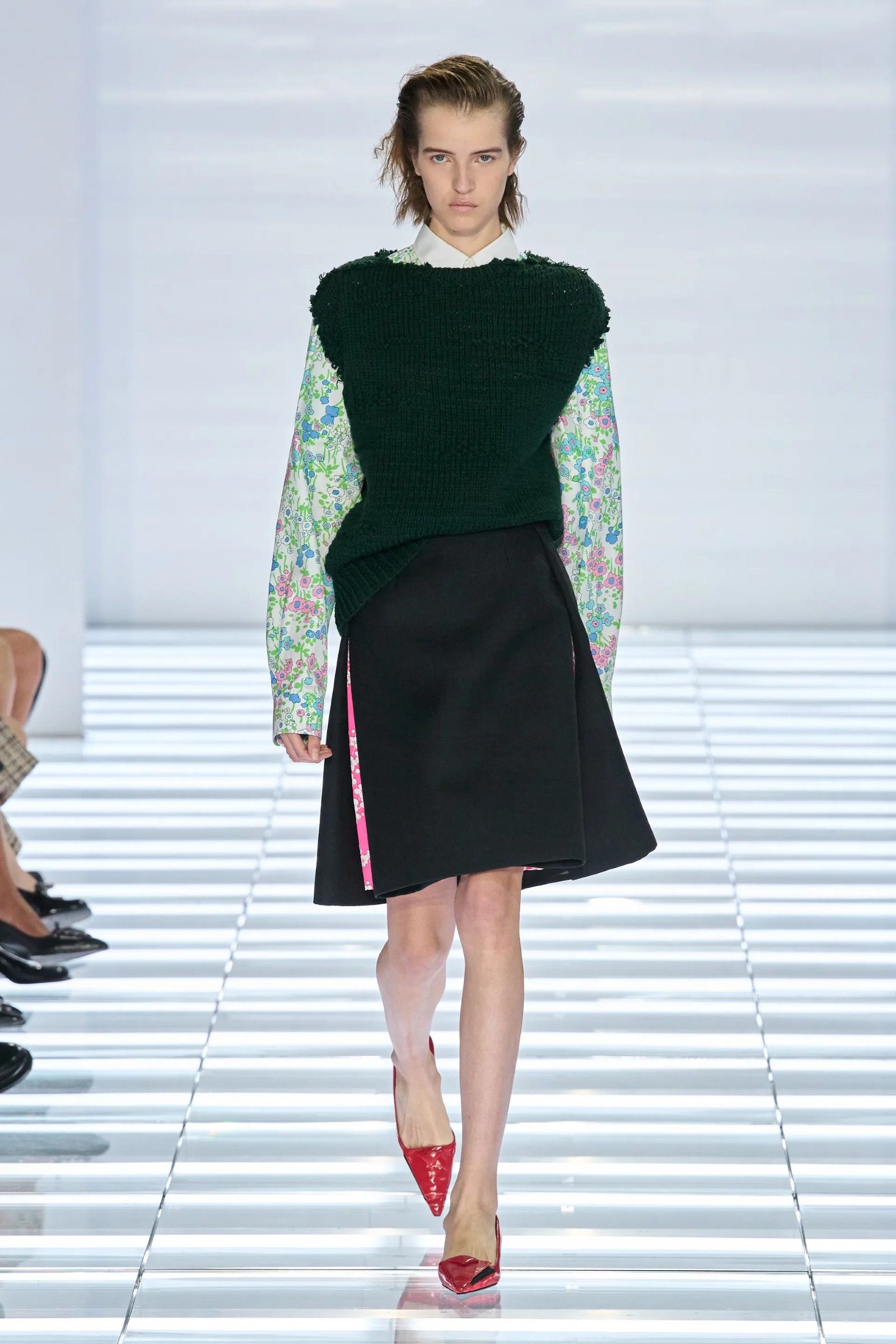
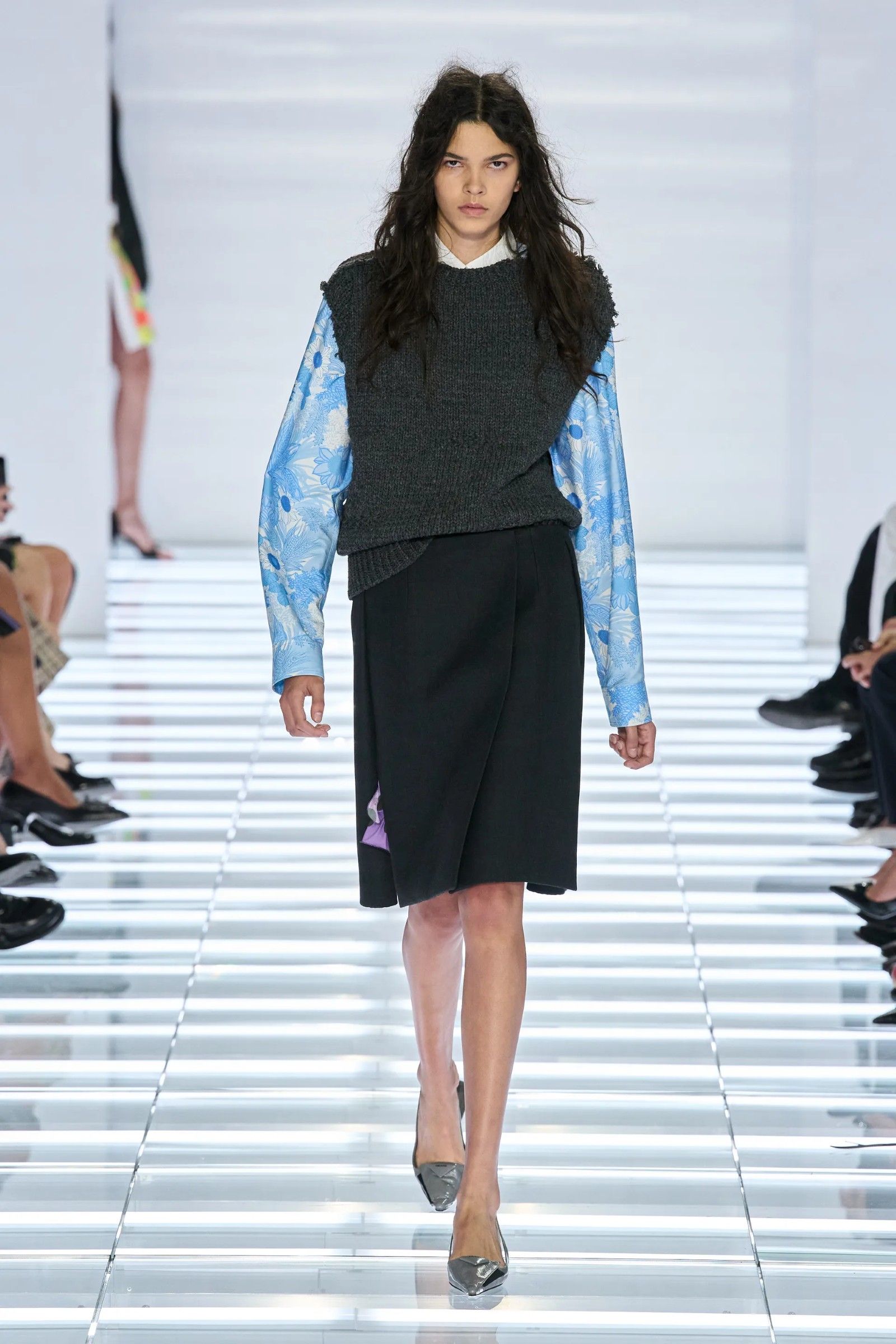
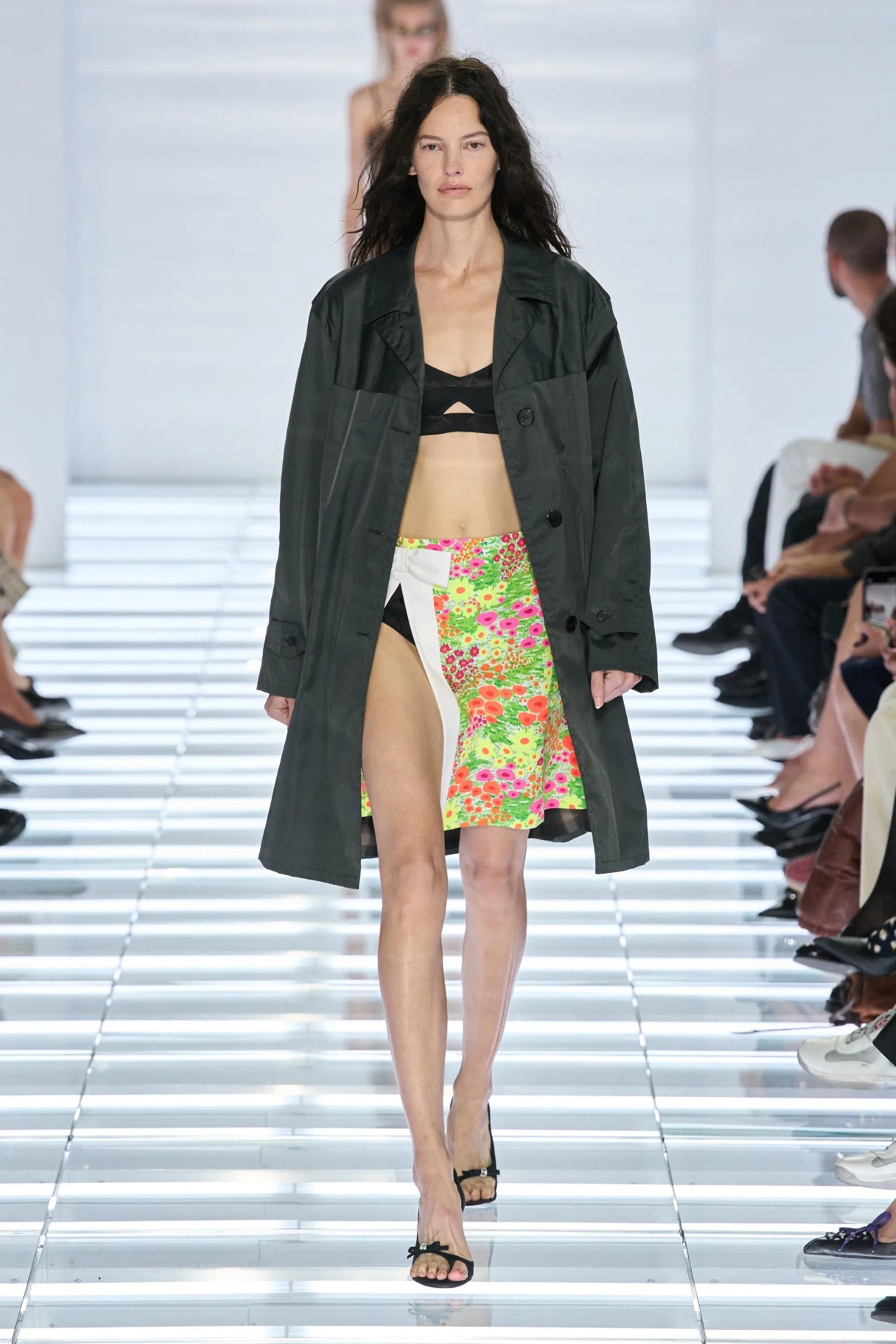
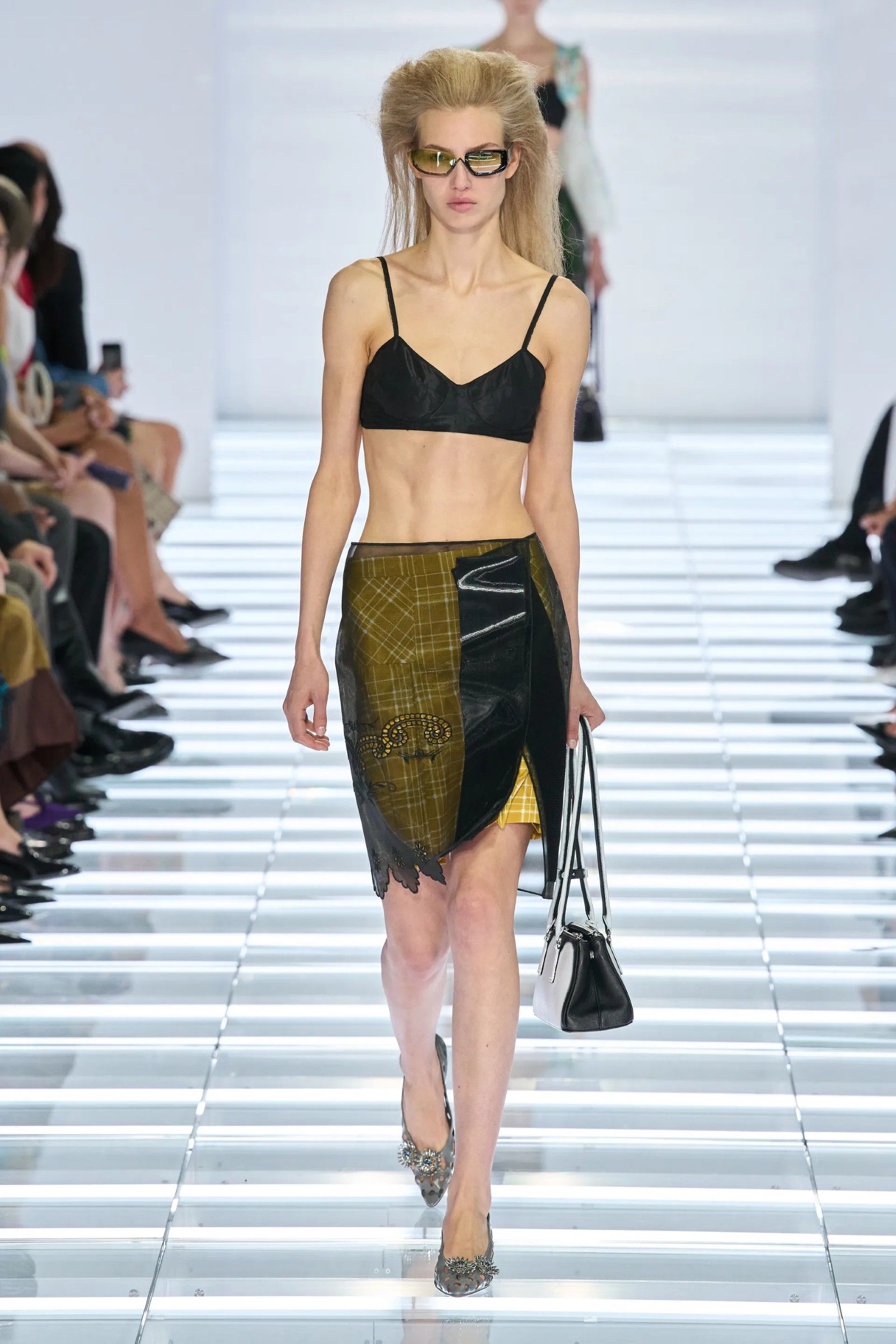
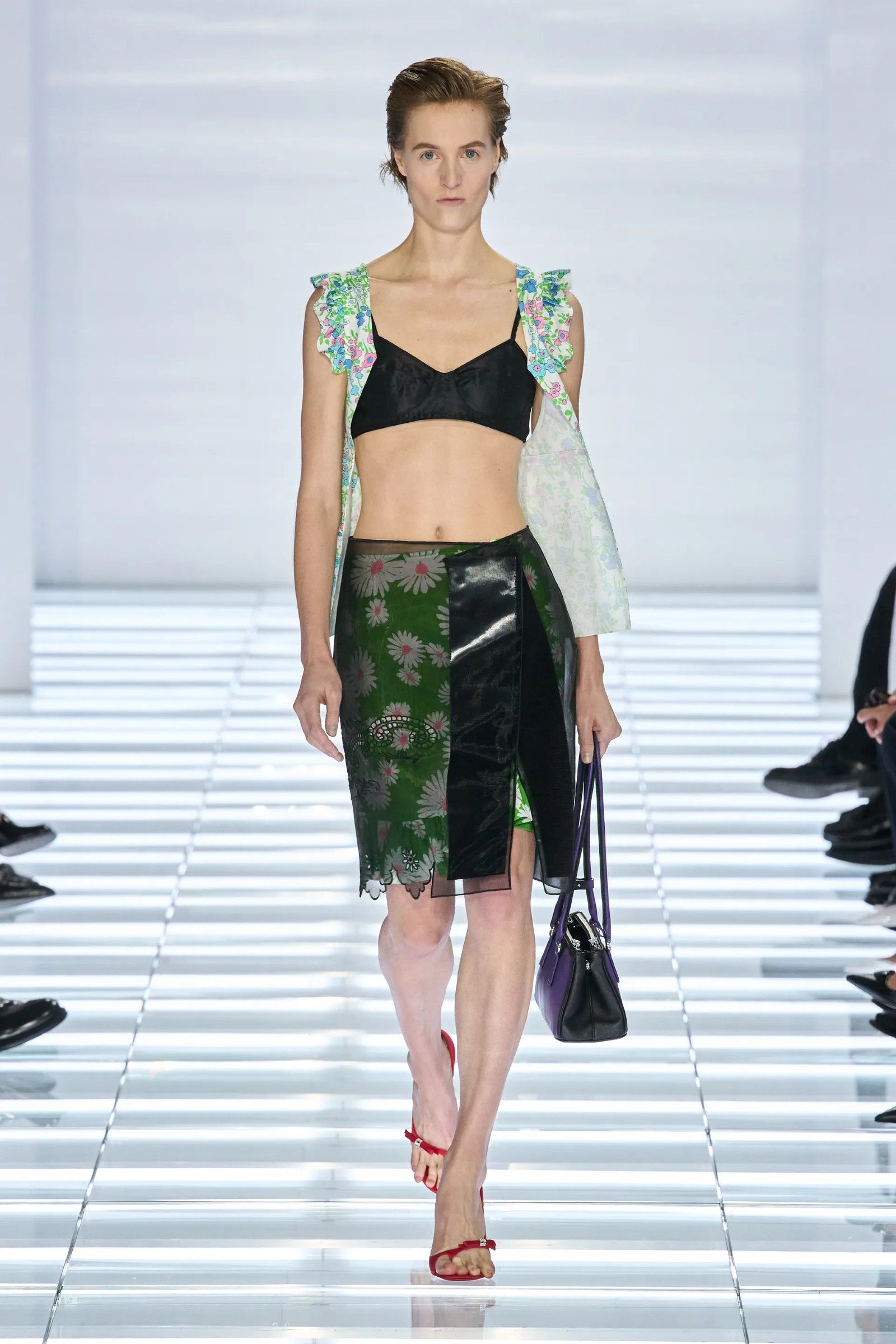
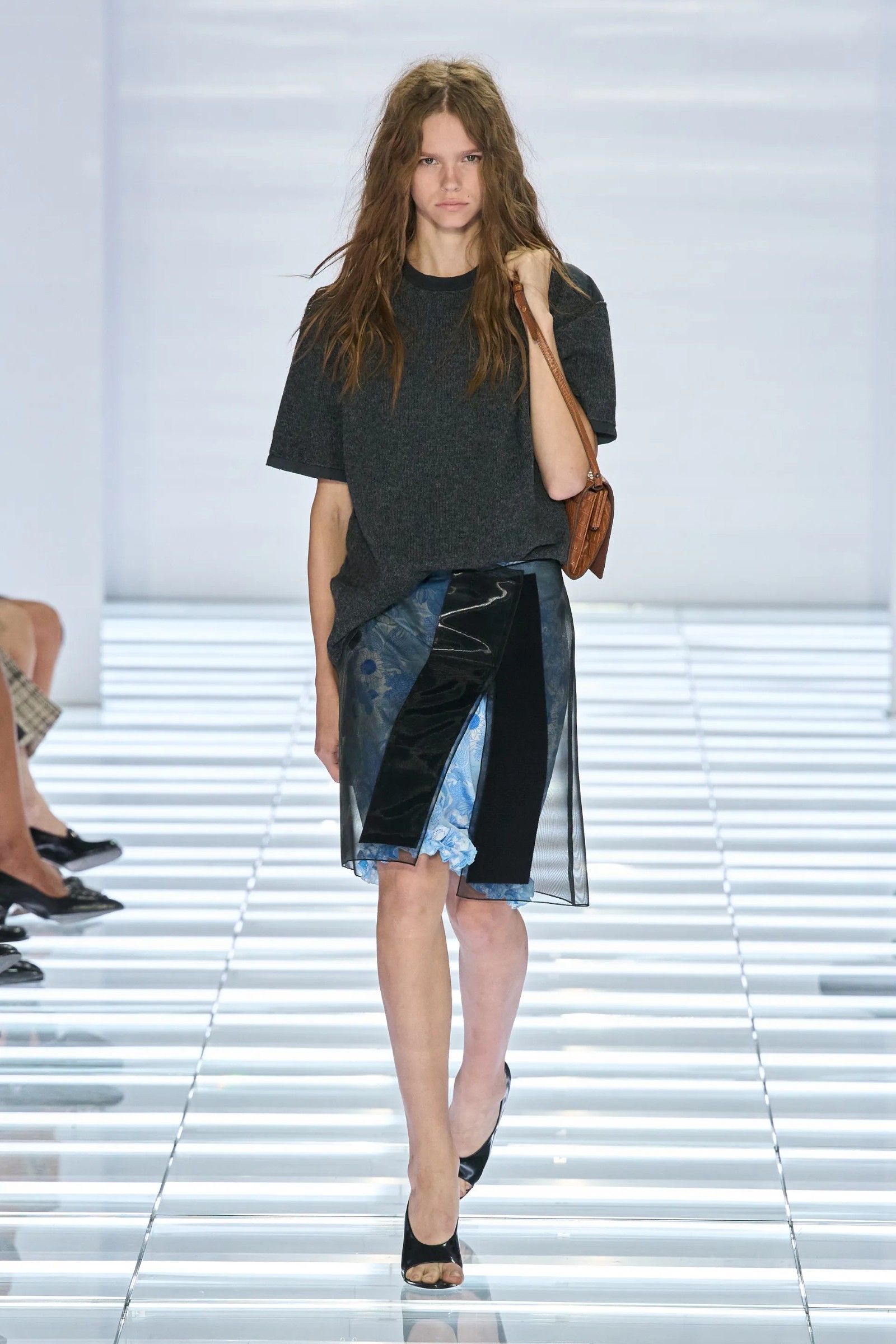
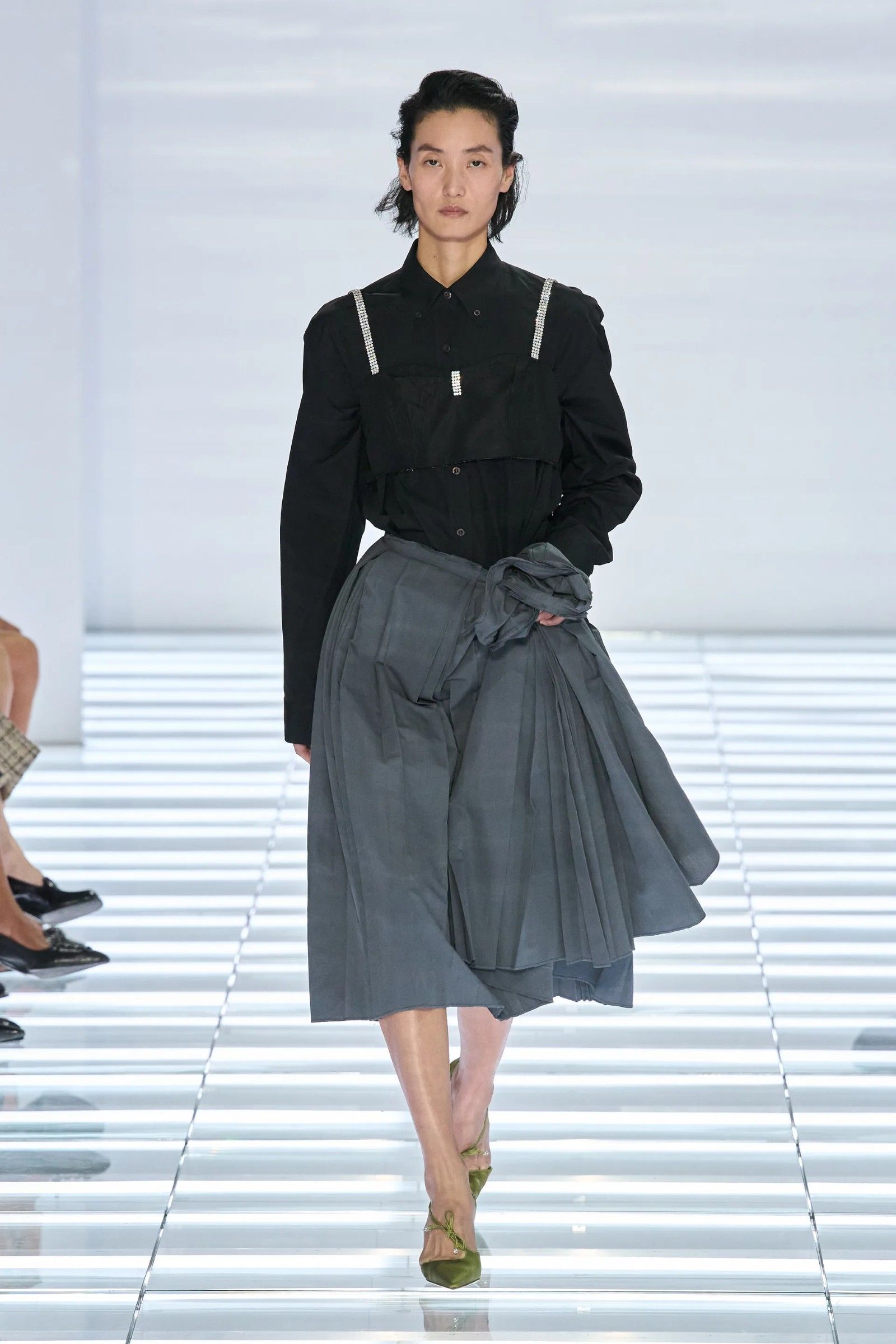
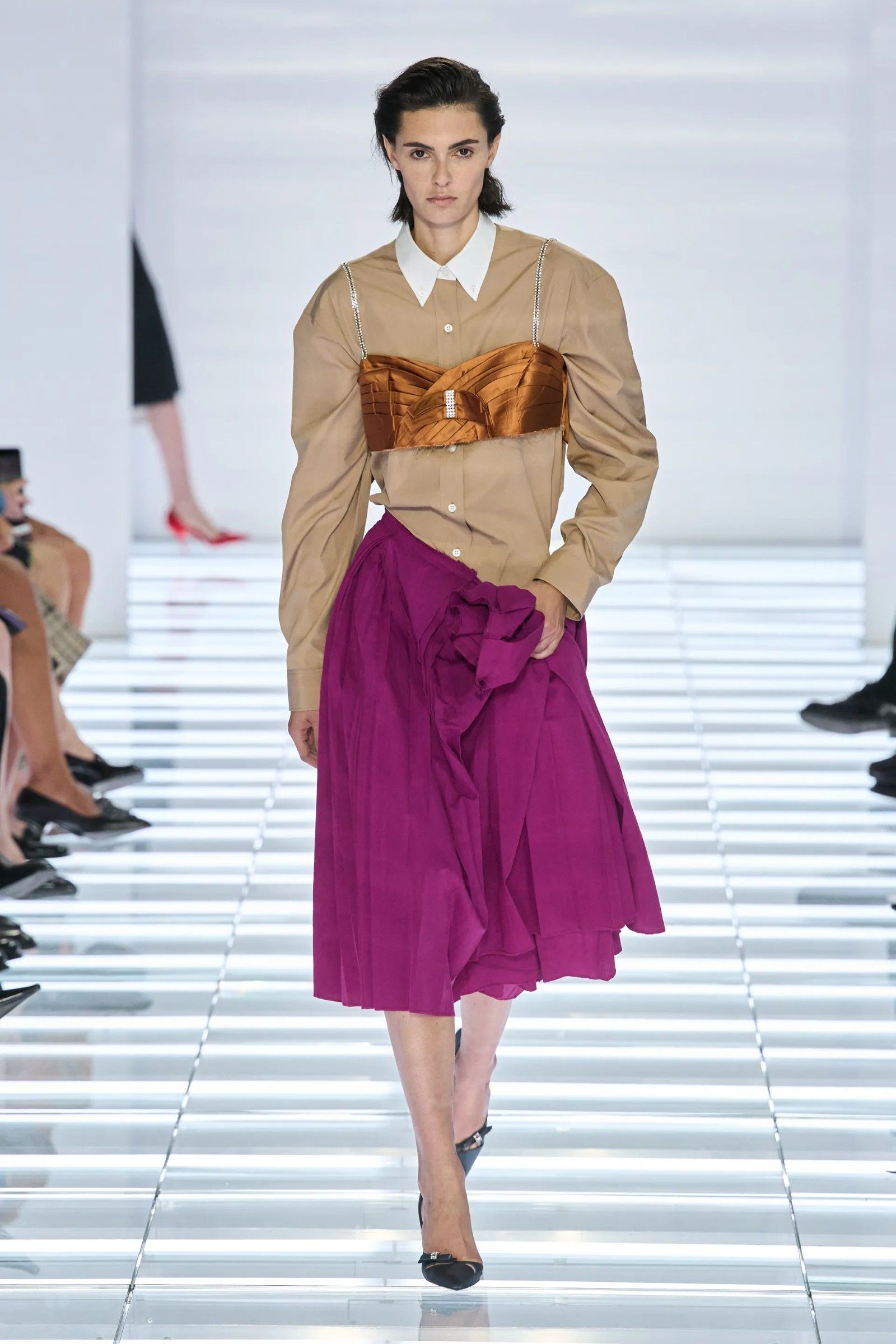
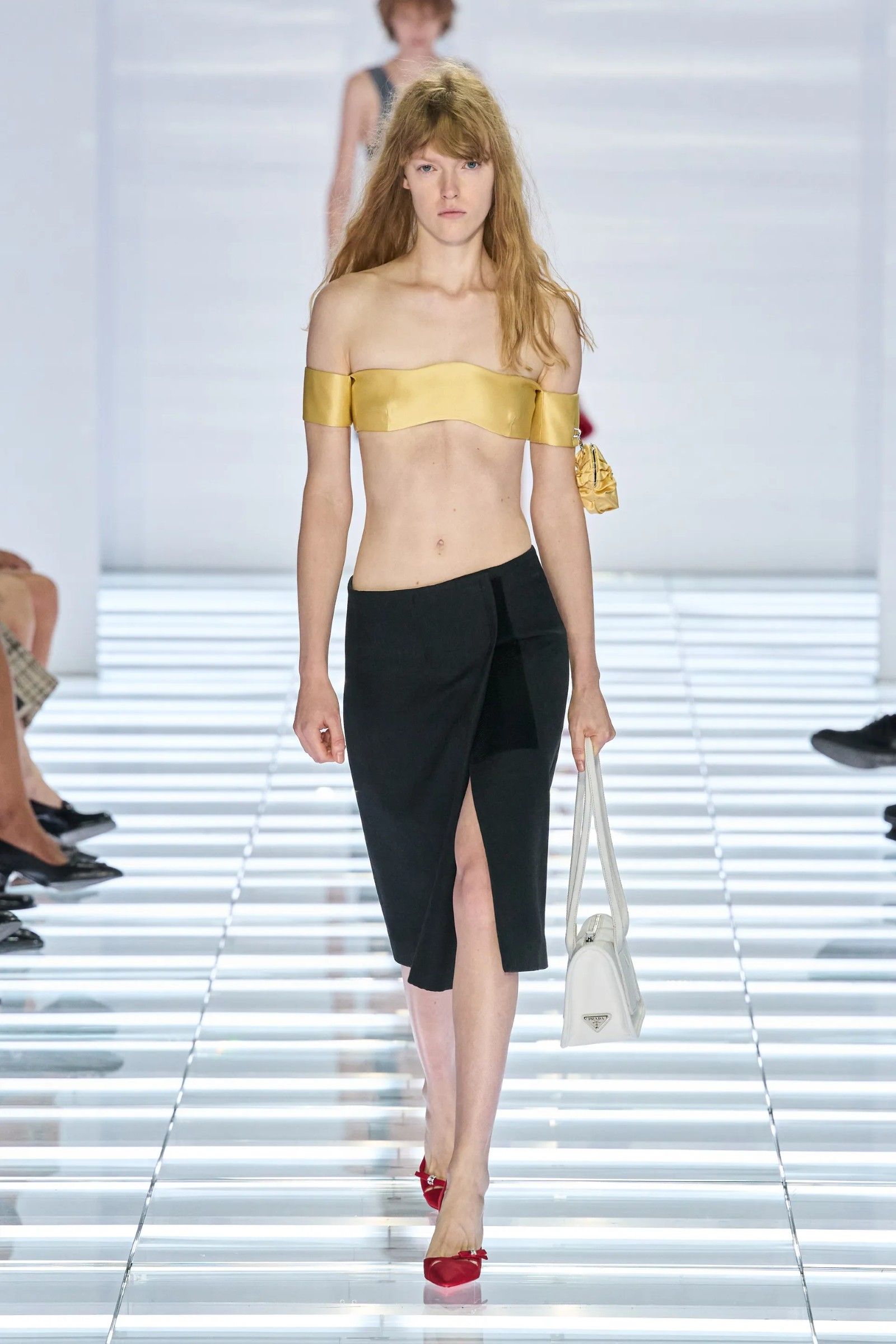
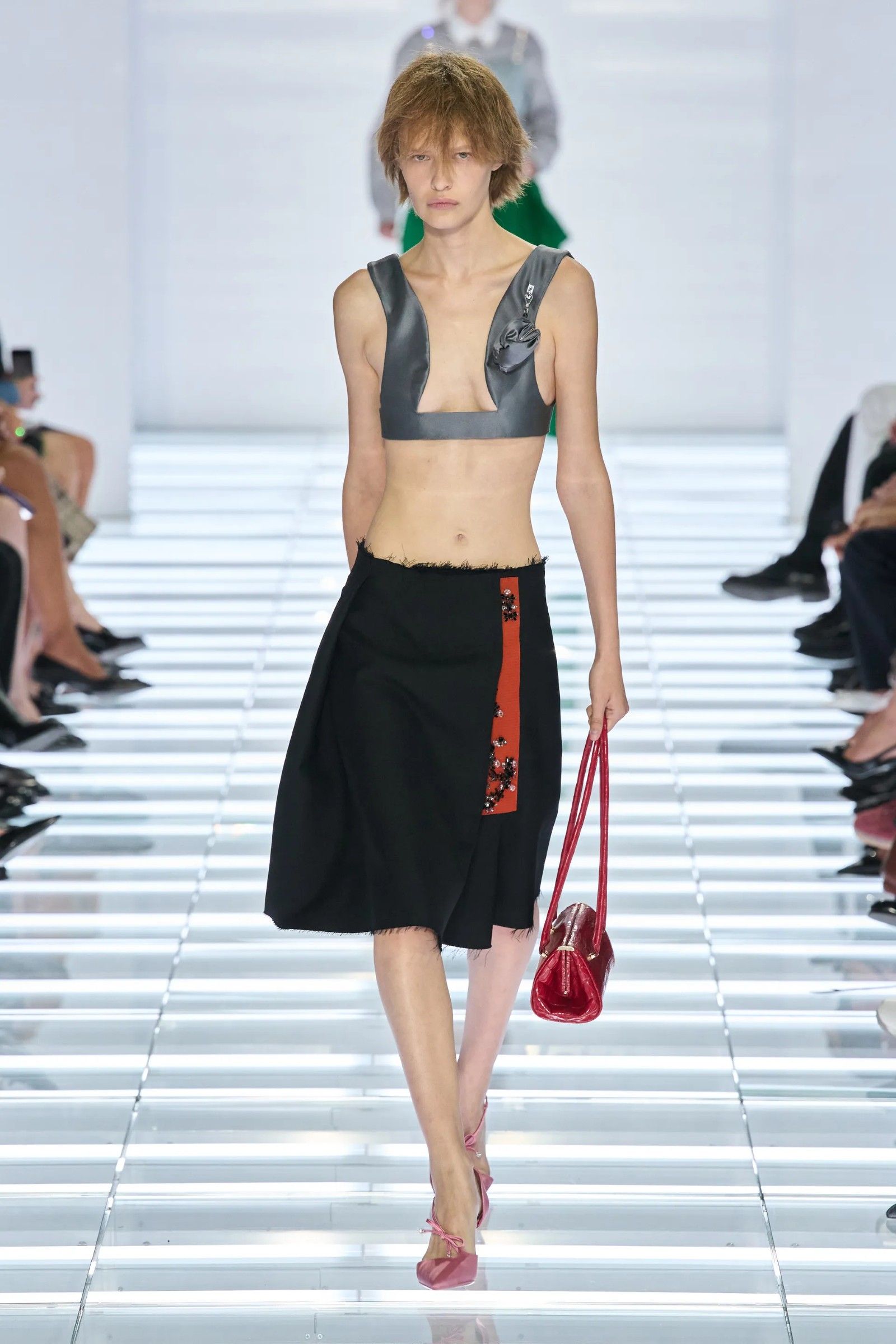
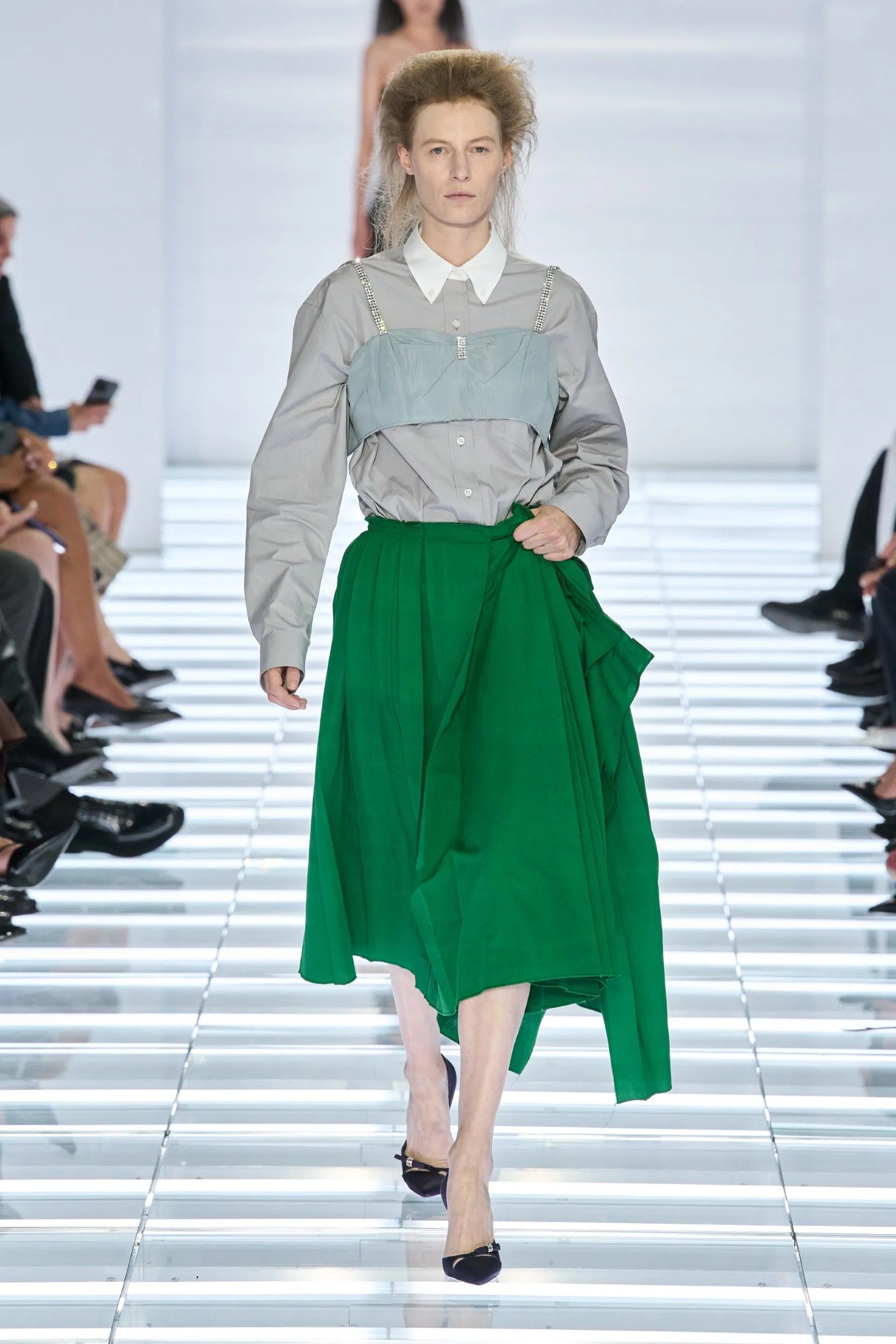
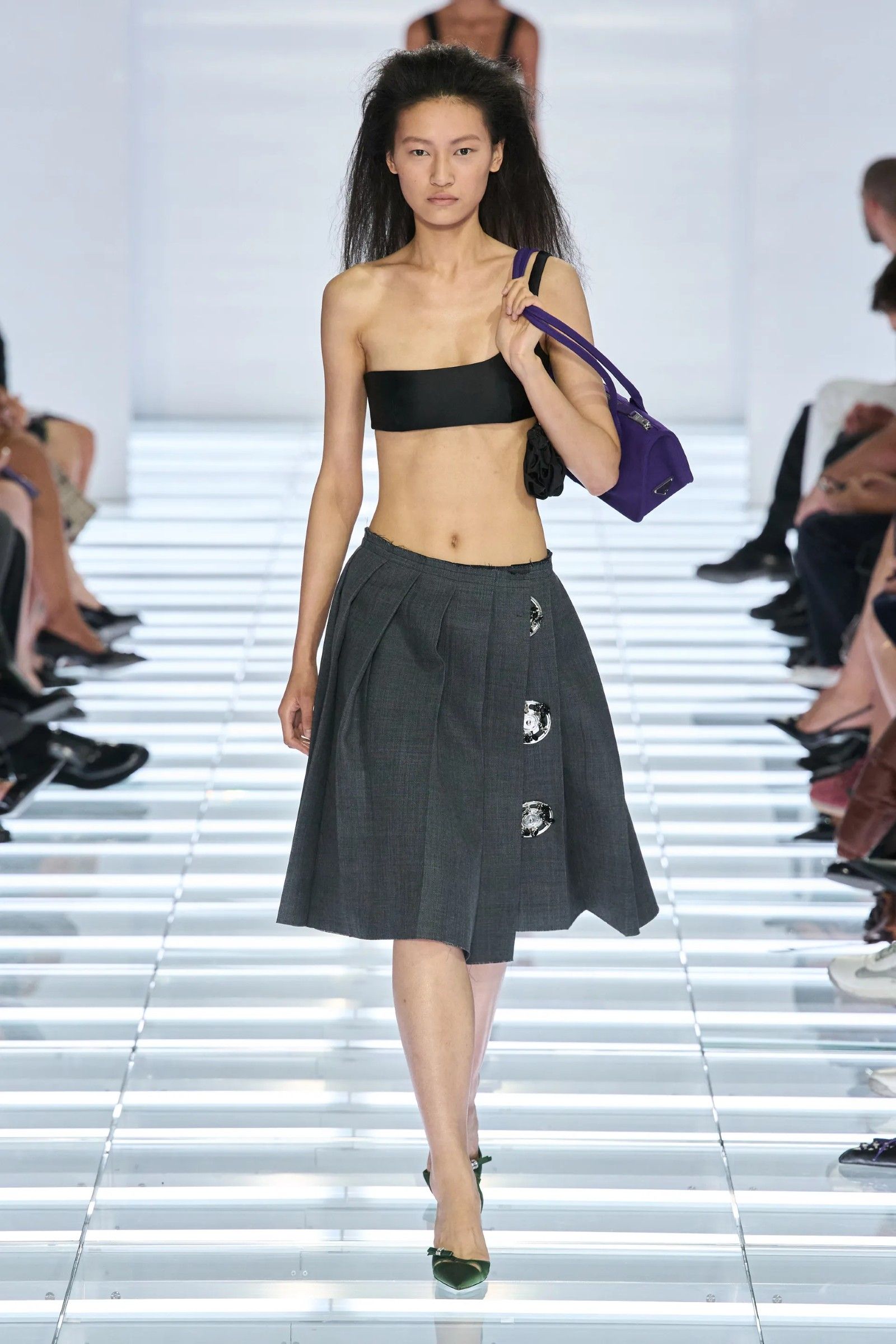
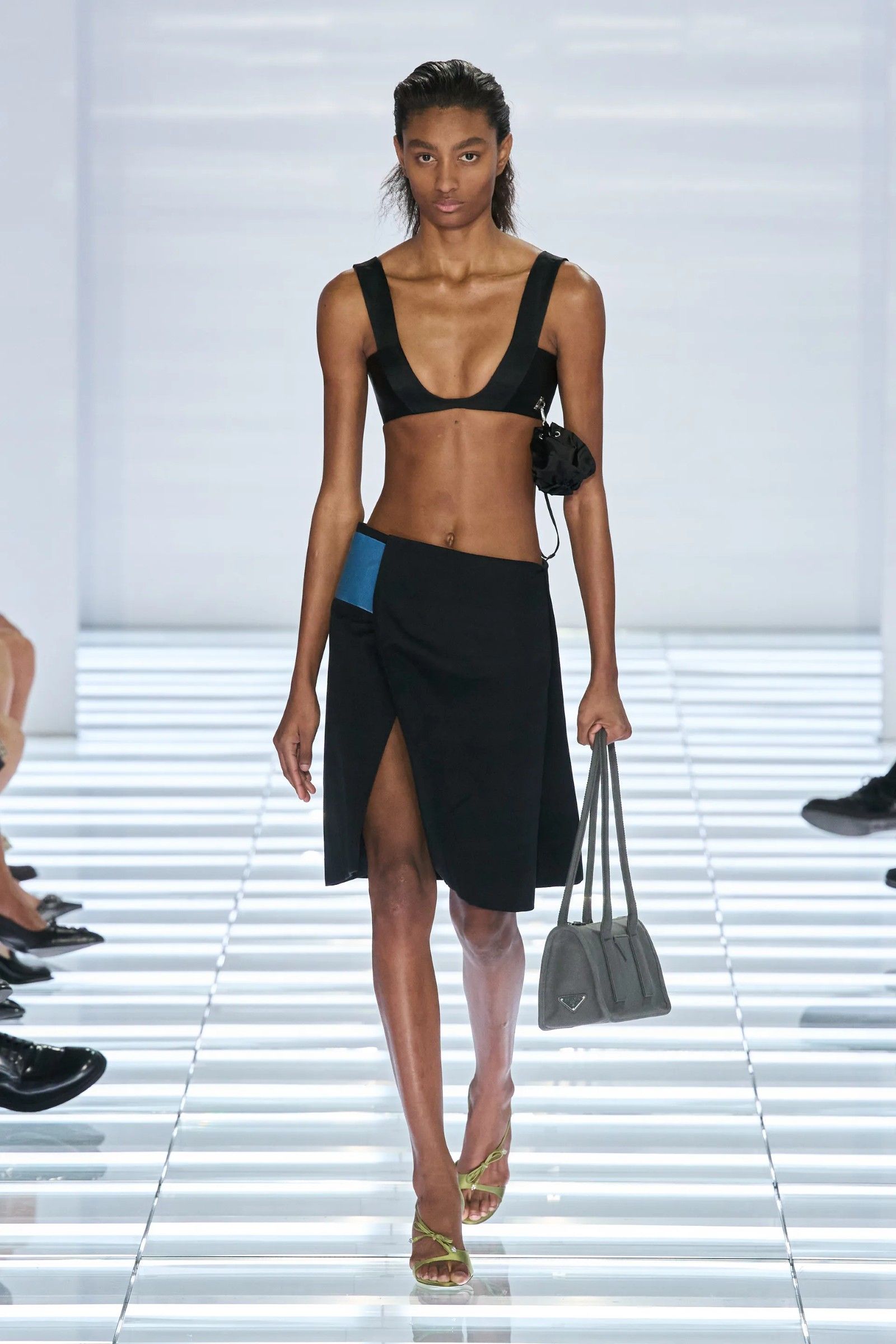
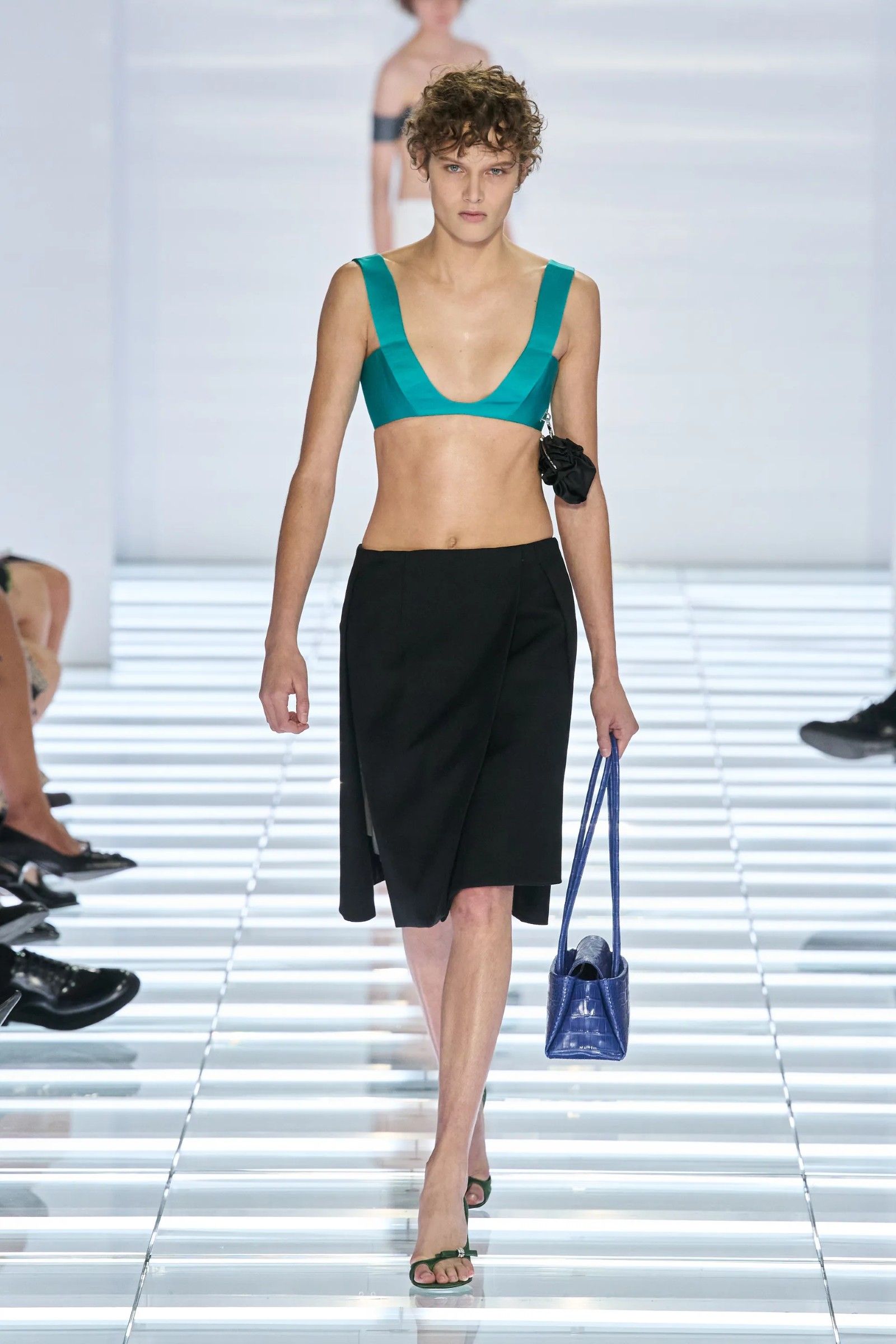
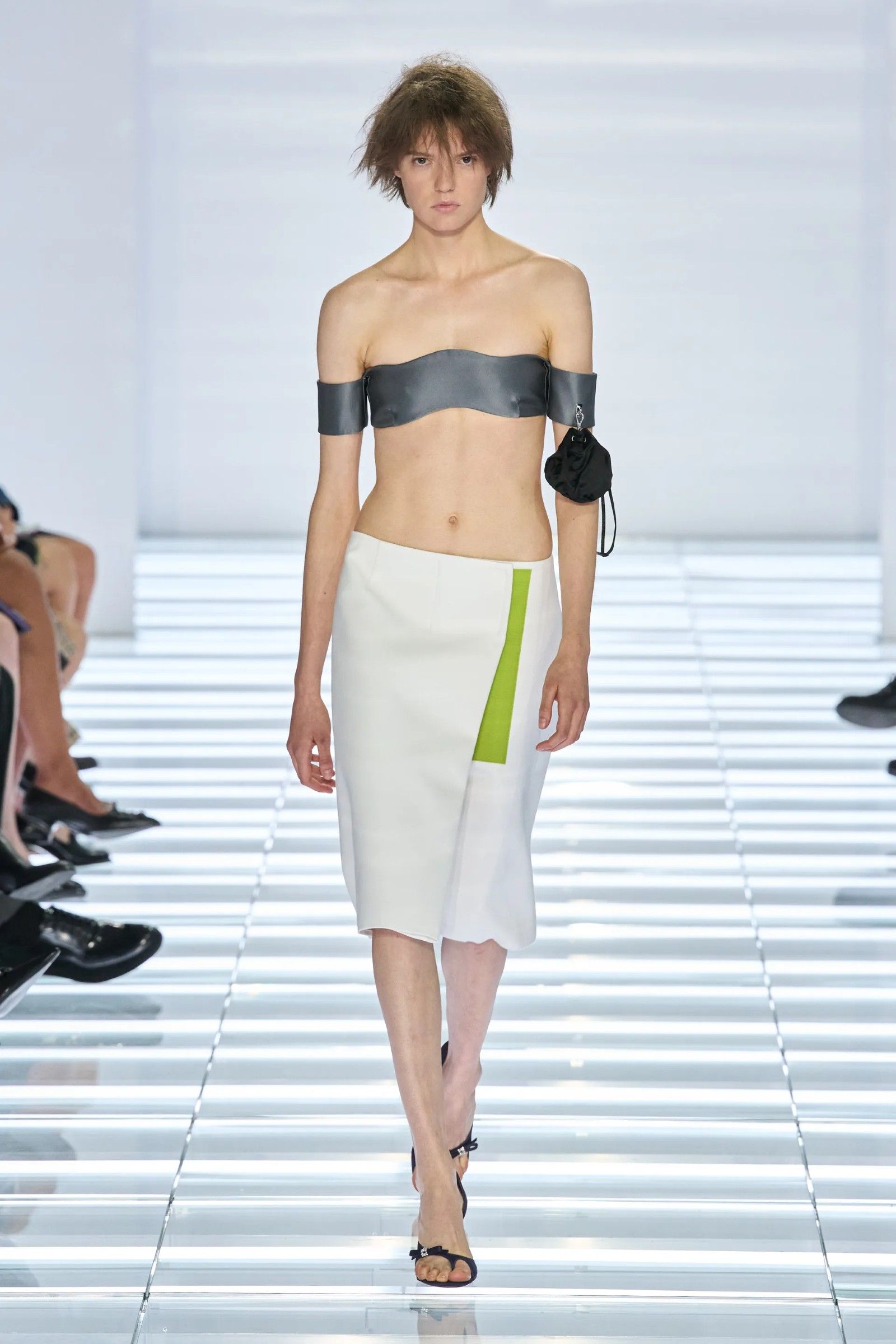
More than an intellectual analysis of the skirt itself—or beyond and despite such an analysis—the thought these looks provoked concerned the nature of things in an age of artificiality, in which cotton can look like suede, nylon like silk, crystal like lace, and velcro can become a setting for jewels. Of this traditional garment, only an external simulacrum remains, in which everything looks identical to what it once was yet nothing is truly the same in terms of construction, materials, function, or cultural assumptions. The concept of the classic skirt is thus revisited within a contemporary context in which the reality that had made it possible no longer exists. What remains is therefore the sign of a skirt that, paradoxically, calls into question the very notion of how a skirt is made, constructed, or what purpose it serves.