Does making streets pedestrian-friendly improve shopping? The answer is: it depends on what kind of shopping
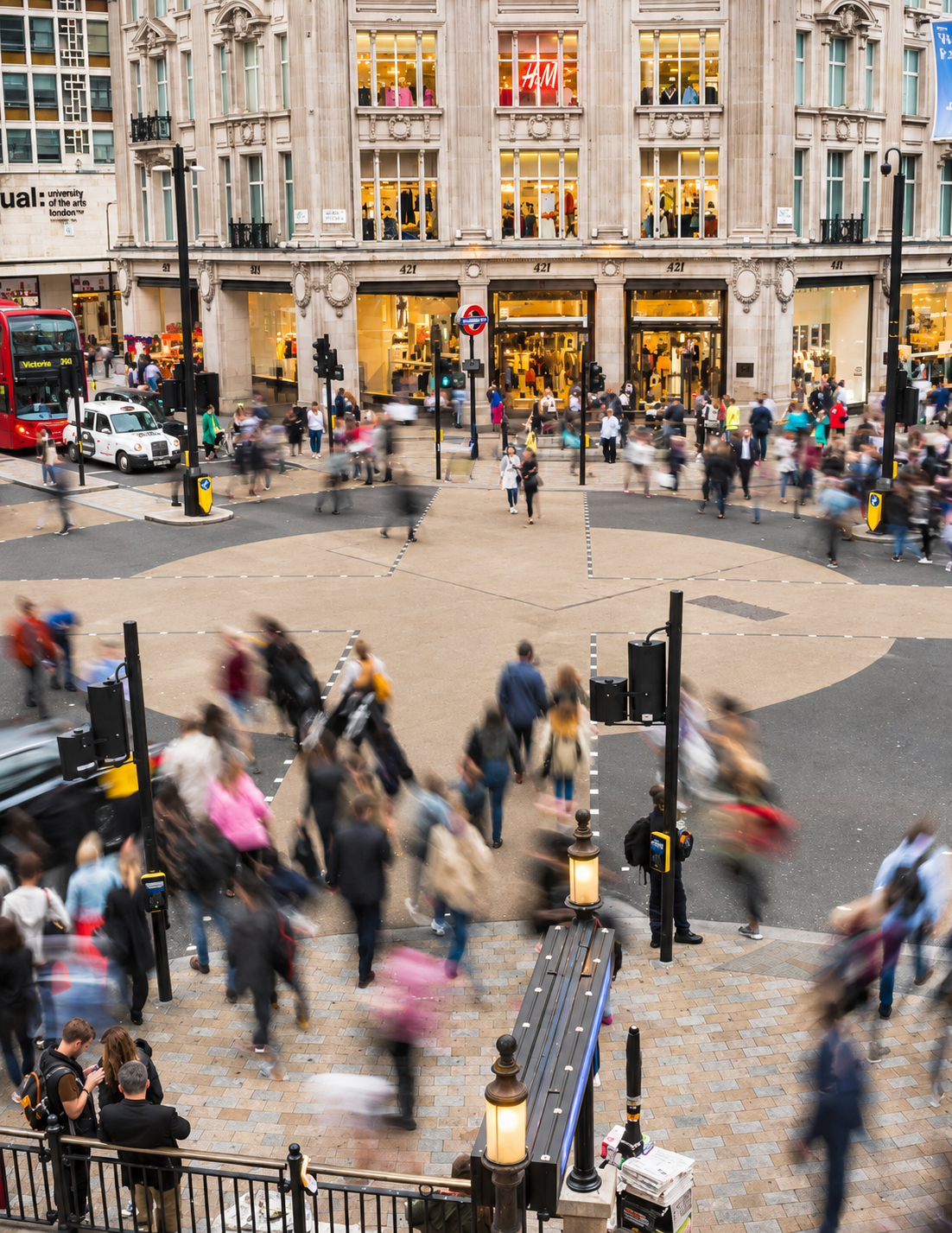
In London, the famous Oxford Street has been pedestrianised for one week. The more traditionalist voices have not been pleased, but in practice, according to data released by City Hall and the Oxford Street Development Corporation, footfall on the street has increased by 16% compared to the same week the previous year. But why does this figure matter? Because a recent survey by Adyen, which studied around forty shops in the area, correlated the rise in pedestrian traffic with growth in both the number of transactions and the overall value of receipts. Which leads us to ask: do pedestrian zones actually sell more goods?
The data would seem to say yes: as Fashion Network also reports, spending was up by 28% compared to the previous year and by 12% compared to the previous week. And the effect extends to the part of Oxford Street that has not been pedestrianised, where, on an annual basis, footfall has risen by 9%. Of these visitors, British visitors grew by 14%, while international visitors grew by 42%. Furthermore, after 6 p.m. — outside traditional shopping hours — visits increased by 19%. This is undoubtedly a model we could learn something from.
So does pedestrianising streets actually work?
In the case of Oxford Street in London, the data, as we have seen, are positive — though it remains to be seen whether the increase in footfall will hold steady or whether it is simply a novelty effect. What is certain is that the debate over pedestrianisation of urban areas is quite heated today: many people would welcome it, but for residents on those streets or for logistics-related services, fully pedestrianising a given area is no easy task. The issue has been a hot topic in recent years, and studies on the subject keep coming. Generally speaking, the various studies on individual European cities that we will examine shortly point toward a positive answer: in a pedestrian area, people tend to spend more and more freely.
A report from last February on Stockholm, for example, shows that on certain streets in the Swedish capital, pedestrian flows increased by between 30% and 50% after roads were closed to cars. For retail, the improvement was too variable to be quantified but was generally considered positive. Another study on Sweden links pedestrianisation to rising property prices and thus to greater commercial demand and desirability for a range of businesses. In Japan, in Osaka, a 2025 study showed that when an area is temporarily pedestrianised, sales volumes for retailers on the street and in nearby roads increased noticeably.
From Spain, the results are more mixed. As for Madrid, another study from last year showed that, two years after the pedestrianisation of two large areas, 57–58% of businesses reported an increase in sales, with only 8% reporting declines. In Barcelona, on the other hand, a study from last April states that "pedestrianisation, while capable of reshaping local retail dynamics, does not in itself trigger full processes of commercial gentrification. On the contrary, other factors — particularly tourist pressure — appear to have a greater influence in driving the replacement of existing businesses with discretionary, leisure-oriented retail." In short, the benefits exist either in the short or long term, but in between there is a settling-in phase. And what about Italy?
Pedestrians in Milan
In Milan, the situation is even more ambiguous. Corso Vittorio Emanuele II, which Mayor Tognoli fought to pedestrianise in the 1980s, has over the decades become one of Europe's most robust retail axes. Today it records tens of millions of footfalls per year, rising rents (recently up 17% according to data from Idealista, reaching high levels of thousands of euros per square metre) and few closures or vacant units. The key point here, however, is that the street is intensely busy — also thanks to tourists — and sells fast-moving consumer goods, especially mass-market clothing brands. For luxury, things are different.
Just over a year ago, with the introduction of the ZTL (restricted traffic zone) in Montenapoleone, we reported on nss magazine that, according to the Montenapoleone District association, a reduction in traffic of around 20% had been recorded, along with declared revenue drops of up to 60% for some members during the trial period — running counter to the trend of the preceding months. But, as we also noted at the time, the data were somewhat one-sided, not least because they correlated the area's closure to traffic with a downturn in spending without accounting for the broader luxury slowdown.
Even more ambiguous is the situation on Corso Buenos Aires, which by rights should mirror the performance of Corso Vittorio Emanuele — albeit with a less tourist-heavy profile — but where, also in 2025, works to create protected cycle lanes and widen pavements were linked by local traders to a drop in footfall of around 20% compared to pre-Covid levels, and to declarations of falling revenues from 85% of those surveyed in research by Il Giorno.
In the absence of more complete data, it can nonetheless be said that pedestrianising a street brings benefits either immediately or after some time: the public needs, at its core, to be either surprised or won over gradually. But between these two outcomes lies an interval during which pedestrianisation is a disadvantage — whether due to the nature of the shops affected by the change or the type of people who frequent the area. Not all improvements are necessarily positive, or even linear.
For luxury specifically, a pedestrian zone is not an automatic "sales multiplier" in the way it can be for cafés, restaurants or convenience retail. It can be said, however, that it works better when dedicated logistics and accessibility solutions are in place, when it occurs in areas with a strong pedestrian vocation or a significant tourist presence, and — crucially — when sufficient time is allowed for the adjustment: the declines reported in Milan show that the first few months can be critical, even if historically many of the positive effects emerge after 18 to 24 months.