






























How Italian pizza makers became superstars In Italy, pizza has always been a serious matter
Forbes Italia, the local division of the American magazine focused on business and entrepreneurial news, has just awarded the 35 most influential personalities in the pizza industry operating nationwide. The ranking shows how, in recent years, a true culture surrounding pizza has become firmly established in Italy, even more evidently than in the past. Over time, this dish has become the subject of research and experimentation, also thanks to a number of chefs, pizzaioli, and restaurateurs who have helped redefine the standards of the industry – both in Italy and beyond.
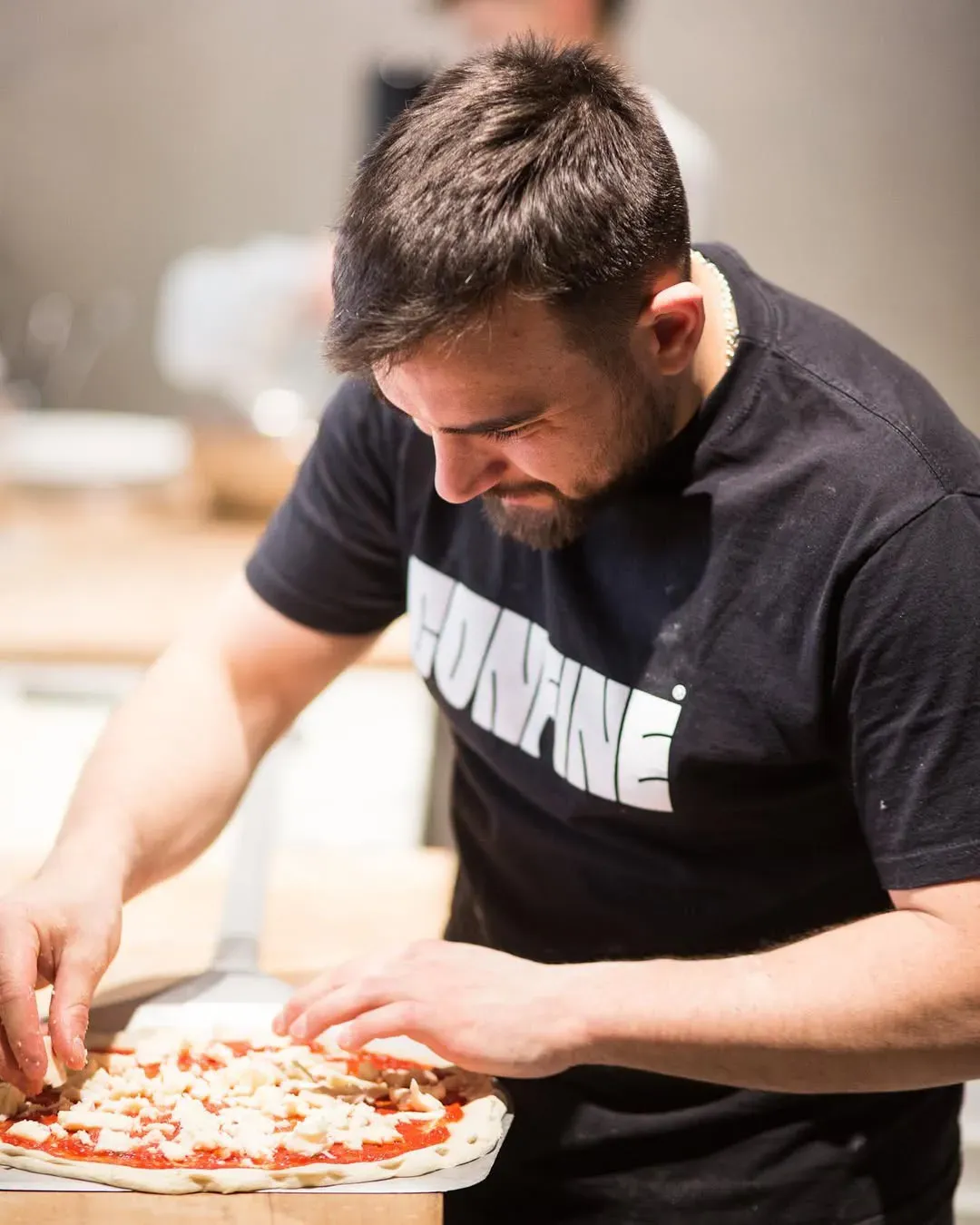
On the podium of Forbes’ new ranking of the world’s most influential pizzaioli are only Italians: in first place is Francesco Capece of Confine in Milan, followed by Lorenzo Sirabella of Dry Milano, and Renato Bosco of Renato Bosco Pizzeria in San Martino Buon Albergo. The platform also recognized Salvatore Grasso of Pizzeria Gorizia 1916 in Naples and Francesco Martucci of I Masanielli in Caserta.
Alongside the more traditional idea of pizza as a simple and informal food, still widely popular, a very different approach has emerged in recent years: several pizzerias have transformed into true fine dining restaurants, where the offering is no longer limited to the traditional product, but includes carefully crafted doughs, sophisticated ingredients, and highly unconventional combinations. One example moving in this direction is the Milanese pizzeria Confine, which offers structured tasting menus and carefully pairs each course with beverages, bringing the overall experience closer to the standards of haute cuisine.
Why is pizza still so successful in Italy?
@renatobosc_o Vi mostro come preparo la mia freschissima Pizza Crunch Tatin Pomodoro L’avete già provata? #RenatoBosco #PizzaCrunch #farina #food #pizza suono originale - renatobosco
In recent years, the number of pizzerias in Italy’s major cities has grown, supported by consistently high demand. According to an estimate released by the organizers of the World Pizza Championship, in 2024 the number of pizzerias increased by 25% compared to the previous year – a figure that continues to reflect not only the product’s popularity, but also its ability to generate new business opportunities.
This expansion has been accompanied by an evolution in the pizzeria model itself. Alongside the traditional concept, more structured and ambitious formats are emerging: on one side are businesses focusing on external investments and scalability strategies, with the goal of building real groups or chains; on the other are projects aiming to move closer to fine dining, where attention to service, the gastronomic offering, and ingredient research is even more elevated.
Understanding the success of contemporary pizzerias
Among the first pizzeria brands to invest in a more structured and distinctive identity was Berberè in Bologna. Over time, this model has been replicated by other businesses, including Marghe, Pizzium and Cocciuto, which share a similar approach: all are highly recognizable brands with multiple locations, aiming to attract a clientele focused on quality.
In these cases, the visual identity is often polished and consistent across the various locations, with interiors designed according to a contemporary aesthetic; communication also follows similar principles: an informal yet thoughtful tone, strong emphasis on ingredients and transparency in the production process, with the aim of positioning pizza not just as an accessible product, but as a conscious gastronomic experience.
@vincenzo_capuano A POMIGLIANO D’ ARCO in esclusiva per tutta la settimana c’è la pizza di Halloween Padellino crunch ai carboni attivi, zucca infornata, pepperoni, provola affumicata e cacioricotta Cilentana #capvin #napoli #pizza #zucca suono originale - Vincenzo Capuano
At the same time, the growing attention toward Neapolitan pizza and its various interpretations has helped several pizzaioli already well known in Naples gain recognition nationwide. Figures such as Gino Sorbillo and Vincenzo Capuano, among many others, have successfully expanded their presence far beyond Naples, supported by effective communication strategies and a strong presence on social media. To some extent, a similar process has more recently been taking place with Roman-style pizza, thanks to personalities such as Luca Pezzetta and the Trecca brothers, among others.